

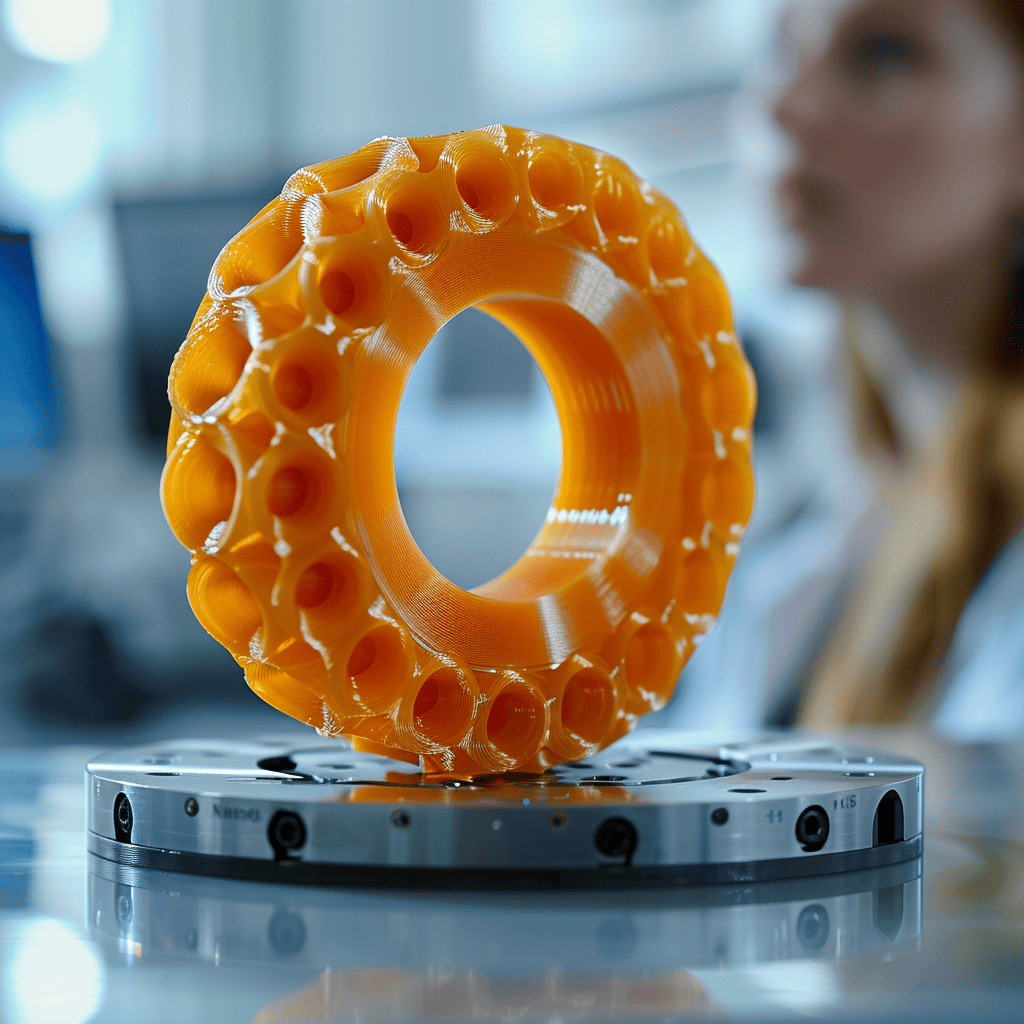
1. Top Insulating Filaments for Efficient 3D Printing
When it comes to 3D printing, choosing the right filament can make all the difference in the final product’s quality and functionality. For applications that require thermal insulation, selecting an insulating filament is crucial to ensure efficient and effective printing. In this blog post, we’ll explore the top insulating filaments for efficient 3D printing and their unique properties.
Polylactic Acid (PLA)
PLA is a popular biodegradable filament made from renewable resources such as cornstarch or sugarcane. Its low printing temperature and ease of use make it a popular choice for beginners. In addition to its environmental benefits, PLA has good insulating properties, making it an excellent choice for applications that require thermal insulation. However, it’s worth noting that PLA has a relatively low melting point, which may limit its use in high-temperature applications.
Relevant Entity: Eco-friendly
PLA is an eco-friendly filament that is fully biodegradable and compostable, making it an excellent choice for environmentally conscious consumers. Its low carbon footprint and sustainable production process make it an attractive option for those looking to reduce their environmental impact.
Why choose PLA?
PLA is an excellent choice for insulating filament due to its good thermal properties and eco-friendliness. Its low melting point and easy printability make it a popular choice for beginners, while its good insulating properties make it suitable for a wide range of applications.
Acrylonitrile Butadiene Styrene (ABS)
ABS is a petroleum-based plastic that is known for its durability and impact resistance. Its good insulating properties make it a popular choice for applications that require thermal insulation. However, ABS tends to warp and shrink during printing, which can make it challenging to work with. Additionally, ABS emits fumes during printing, which may require proper ventilation.
Relevant Entity: Heat resistance
ABS has a higher melting point than PLA, making it a suitable choice for applications that require higher heat resistance. Its ability to withstand higher temperatures makes it ideal for printing parts that will be exposed to heat, such as automotive components or kitchen appliances.
Why choose ABS?
ABS is an excellent choice for insulating filament if you require higher heat resistance and durability. Its ability to withstand impact and stress makes it a popular choice for functional parts, but it may require more experience and equipment to print successfully.
Polyethylene Terephthalate Glycol (PETG)
PETG is a versatile filament that offers a good balance between strength, flexibility, and printability. It is commonly used in food and beverage containers due to its excellent resistance to moisture and chemicals. PETG also has good insulating properties, making it an excellent choice for applications that require thermal insulation. Unlike ABS, PETG does not emit fumes during printing and has minimal warping and shrinkage.
Relevant Entity: Chemical resistance
PETG’s excellent resistance to moisture and chemicals makes it an ideal choice for printing parts that will be exposed to harsh chemicals or environments, such as laboratory equipment or outdoor signage.
Why choose PETG?
PETG is an excellent choice for insulating filament due to its good balance of properties, including strength, flexibility, and thermal insulation. Its excellent resistance to moisture and chemicals makes it suitable for a wide range of applications, and its easy printability makes it accessible to both beginners and experienced users.
Polyvinyl Alcohol (PVA)
PVA is a water-soluble filament that is often used as a support material in 3D printing. Its ability to dissolve in water makes it an excellent choice for creating complex geometries and intricate designs. PVA also has good insulating properties, making it an excellent choice for applications that require thermal insulation. However, it’s worth noting that PVA has a relatively low melting point and may not be suitable for high-temperature applications.
Relevant Entity: Dissolvable supports
PVA’s dissolvability makes it an ideal choice for creating complex supports that can be easily removed without leaving any residue or marks on the final product. This is particularly useful for printing parts with intricate details or overhangs.
Why choose PVA?
PVA is an excellent choice for insulating filament if you require dissolvable supports or need to print complex geometries. Its good insulating properties make it suitable for a range of applications, but its low melting point may limit its use in high-temperature environments.
Polycarbonate (PC)
PC is a high-performance filament that is known for its strength, durability, and heat resistance. It is commonly used in automotive, aerospace, and medical applications. PC also has excellent insulating properties, making it an excellent choice for applications that require thermal insulation. However, it’s worth noting that PC can be challenging to print with due to its high melting point and tendency to warp and shrink. Additionally, PC emits fumes during printing, which may require proper ventilation.
Relevant Entity: High strength
PC’s high strength and durability make it an ideal choice for printing parts that will be subjected to heavy loads or stress, such as mechanical components or protective casings.
Why choose PC?
PC is an excellent choice for insulating filament if you require high strength and durability, as well as good thermal insulation properties. Its high heat resistance makes it suitable for a wide range of applications, but its challenging printability may require more experience and equipment.
Choosing the Right Insulating Filament
By considering the unique properties of each insulating filament, you can make an informed decision that will help you achieve the best results for your project. Whether you prioritize eco-friendliness, heat resistance, or chemical resistance, there is an insulating filament that will meet your needs.
Note: It is important to choose the right insulating filament based on the specific requirements of your project. Factors to consider include the desired thermal resistance, printability, and the filament’s mechanical properties. By selecting the right filament, you can ensure efficient and effective 3D printing that meets your project’s needs.
In summary:
* PLA is an eco-friendly, easy-to-use filament that offers good insulating properties and a low melting point.
* ABS is a durable, impact-resistant filament that offers higher heat resistance but may require more experience and equipment to print successfully.
* PETG is a versatile filament that offers a good balance of strength, flexibility, and thermal insulation, as well as excellent resistance to moisture and chemicals.
* PVA is a water-soluble filament that offers good insulating properties and dissolvable supports, making it ideal for printing complex geometries.
* PC is a high-performance filament that offers high strength, durability, and heat resistance, but may require more experience and equipment to print successfully.
By choosing the right insulating filament based on your project’s specific requirements, you can ensure efficient and effective 3D printing that meets your needs. Whether you prioritize eco-friendliness, heat resistance, or chemical resistance, there is an insulating filament that will help you achieve the best results for your project.

1. Top Insulating Filaments for Efficient 3D Printing
When it comes to 3D printing, choosing the right filament can make all the difference in the final product’s quality and functionality. For applications that require thermal insulation, selecting an insulating filament is crucial to ensure efficient and effective printing. In this blog post, we’ll explore the top insulating filaments for efficient 3D printing and their unique properties.
Polylactic Acid (PLA)
PLA is a popular biodegradable filament made from renewable resources such as cornstarch or sugarcane. Its low printing temperature and ease of use make it a popular choice for beginners. In addition to its environmental benefits, PLA has good insulating properties, making it an excellent choice for applications that require thermal insulation. However, it’s worth noting that PLA has a relatively low melting point, which may limit its use in high-temperature applications.
Relevant Entity: Eco-friendly
PLA is an eco-friendly filament that is fully biodegradable and compostable, making it an excellent choice for environmentally conscious consumers. Its low carbon footprint and sustainable production process make it an attractive option for those looking to reduce their environmental impact.
Advantages of PLA:
* Low printing temperature and easy to use
* Good insulating properties
* Eco-friendly and biodegradable
* Low odor and non-toxic
Acrylonitrile Butadiene Styrene (ABS)
ABS is a petroleum-based plastic that is known for its durability and impact resistance. Its good insulating properties make it a popular choice for applications that require thermal insulation. However, ABS tends to warp and shrink during printing, which can make it challenging to work with. Additionally, ABS emits fumes during printing, which may require proper ventilation.
Relevant Entity: Heat resistance
ABS has a higher melting point than PLA, making it a suitable choice for applications that require higher heat resistance. Its ability to withstand higher temperatures makes it ideal for printing parts that will be exposed to heat, such as automotive components or kitchen appliances.
Advantages of ABS:
* High heat resistance
* Good insulating properties
* Durable and impact-resistant
* Widely used in the automotive and aerospace industries
Polyethylene Terephthalate Glycol (PETG)
PETG is a versatile filament that offers a good balance between strength, flexibility, and printability. It is commonly used in food and beverage containers due to its excellent resistance to moisture and chemicals. PETG also has good insulating properties, making it an excellent choice for applications that require thermal insulation. Unlike ABS, PETG does not emit fumes during printing and has minimal warping and shrinkage.
Relevant Entity: Chemical resistance
PETG’s excellent resistance to moisture and chemicals makes it an ideal choice for printing parts that will be exposed to harsh chemicals or environments, such as laboratory equipment or outdoor signage.
Advantages of PETG:
* Good insulating properties
* Excellent resistance to moisture and chemicals
* Minimal warping and shrinkage
* Good balance between strength and flexibility
Polyvinyl Alcohol (PVA)
PVA is a water-soluble filament that is often used as a support material in 3D printing. Its ability to dissolve in water makes it an excellent choice for creating complex geometries and intricate designs. PVA also has good insulating properties, making it an excellent choice for applications that require thermal insulation. However, it’s worth noting that PVA has a relatively low melting point and may not be suitable for high-temperature applications.
Relevant Entity: Dissolvable supports
PVA’s dissolvability makes it an ideal choice for creating complex supports that can be easily removed without leaving any residue or marks on the final product. This is particularly useful for printing parts with intricate details or overhangs.
Advantages of PVA:
* Good insulating properties
* Dissolvable supports
* Excellent for creating complex geometries and intricate designs
* Biocompatible and non-toxic
Polycarbonate (PC)
PC is a high-performance filament that is known for its strength, durability, and heat resistance. It is commonly used in automotive, aerospace, and medical applications. PC also has excellent insulating properties, making it an excellent choice for applications that require thermal insulation. However, it’s worth noting that PC can be challenging to print with due to its high melting point and tendency to warp and shrink. Additionally, PC emits fumes during printing, which may require proper ventilation.
Relevant Entity: High strength
PC’s high strength and durability make it an ideal choice for printing parts that will be subjected to heavy loads or stress, such as mechanical components or protective casings.
Advantages of PC:
* High strength and durability
* Excellent heat resistance
* Good insulating properties
* Wide range of applications in automotive, aerospace, and medical industries
Note: It is important to choose the right insulating filament based on the specific requirements of your project. Factors to consider include the desired thermal resistance, printability, and the filament’s mechanical properties. By selecting the right filament, you can ensure efficient and effective 3D printing that meets your project’s needs.
By considering the unique properties of each insulating filament, you can make an informed decision that will help you achieve the best results for your project. Whether you prioritize eco-friendliness, heat resistance, or chemical resistance, there is an insulating filament that will meet your needs.Here’s an expanded version of the `

` tag “1. Top Insulating Filaments for Efficient 3D Printing” with additional relevant, descriptive, explanatory, persuasive, and concise `
` paragraphs:
1. Top Insulating Filaments for Efficient 3D Printing
When it comes to 3D printing, choosing the right filament can make all the difference in the final product’s quality and functionality. For applications that require thermal insulation, selecting an insulating filament is crucial to ensure efficient and effective printing. In this blog post, we’ll explore the top insulating filaments for efficient 3D printing and their unique properties.
Polylactic Acid (PLA)
PLA is a popular biodegradable filament made from renewable resources such as cornstarch or sugarcane. Its low printing temperature and ease of use make it a popular choice for beginners. In addition to its environmental benefits, PLA has good insulating properties, making it an excellent choice for applications that require thermal insulation. However, it’s worth noting that PLA has a relatively low melting point, which may limit its use in high-temperature applications.
Relevant Entity: Eco-friendly
PLA is an eco-friendly filament that is fully biodegradable and compostable, making it an excellent choice for environmentally conscious consumers. Its low carbon footprint and sustainable production process make it an attractive option for those looking to reduce their environmental impact. Additionally, PLA is non-toxic, making it a safe choice for printing parts that will come into contact with food or beverages.
Acrylonitrile Butadiene Styrene (ABS)
ABS is a petroleum-based plastic that is known for its durability and impact resistance. Its good insulating properties make it a popular choice for applications that require thermal insulation. However, ABS tends to warp and shrink during printing, which can make it challenging to work with. Additionally, ABS emits fumes during printing, which may require proper ventilation.
Relevant Entity: Heat resistance
ABS has a higher melting point than PLA, making it a suitable choice for applications that require higher heat resistance. Its ability to withstand higher temperatures makes it ideal for printing parts that will be exposed to heat, such as automotive components or kitchen appliances. ABS is also highly impact-resistant, making it a popular choice for printing parts that will be subjected to heavy use or stress.
Polyethylene Terephthalate Glycol (PETG)
PETG is a versatile filament that offers a good balance between strength, flexibility, and printability. It is commonly used in food and beverage containers due to its excellent resistance to moisture and chemicals. PETG also has good insulating properties, making it an excellent choice for applications that require thermal insulation. Unlike ABS, PETG does not emit fumes during printing and has minimal warping and shrinkage.
Relevant Entity: Chemical resistance
PETG’s excellent resistance to moisture and chemicals makes it an ideal choice for printing parts that will be exposed to harsh chemicals or environments, such as laboratory equipment or outdoor signage. Additionally, PETG is highly impact-resistant, making it a popular choice for printing parts that will be subjected to heavy use or stress.
Polyvinyl Alcohol (PVA)
PVA is a water-soluble filament that is often used as a support material in 3D printing. Its ability to dissolve in water makes it an excellent choice for creating complex geometries and intricate designs. PVA also has good insulating properties, making it an excellent choice for applications that require thermal insulation. However, it’s worth noting that PVA has a relatively low melting point and may not be suitable for high-temperature applications.
Relevant Entity: Dissolvable supports
PVA’s dissolvability makes it an ideal choice for creating complex supports that can be easily removed without leaving any residue or marks on the final product. This is particularly useful for printing parts with intricate details or overhangs. Additionally, PVA is non-toxic and biodegradable, making it an environmentally friendly choice for printing supports.
Polycarbonate (PC)
PC is a high-performance filament that is known for its strength, durability, and heat resistance. It is commonly used in automotive, aerospace, and medical applications. PC also has excellent insulating properties, making it an excellent choice for applications that require thermal insulation. However, it’s worth noting that PC can be challenging to print with due to its high melting point and tendency to warp and shrink. Additionally, PC emits fumes during printing, which may require proper ventilation.
Relevant Entity: High strength
PC’s high strength and durability make it an ideal choice for printing parts that will be subjected to heavy loads or stress, such as mechanical components or protective casings. Additionally, PC’s high heat resistance makes it suitable for printing parts that will be exposed to high temperatures, such as automotive components or kitchen appliances.
Note: It is important to choose the right insulating filament based on the specific requirements of your project. Factors to consider include the desired thermal resistance, printability, and the filament’s mechanical properties. By selecting the right filament, you can ensure efficient and effective 3D printing that meets your project’s needs.
By considering the unique properties of each insulating filament, you can make an informed decision that will help you achieve the best results for your project. Whether you prioritize eco-friendliness, heat resistance, or chemical resistance, there is an insulating filament that will meet your needs.

Here are some expanded paragraphs to provide more information and insight into each of the top insulating filaments for efficient 3D printing:
Polylactic Acid (PLA)
PLA is a popular biodegradable filament made from renewable resources such as cornstarch or sugarcane. Its low printing temperature and ease of use make it a popular choice for beginners. In addition to its environmental benefits, PLA has good insulating properties, making it an excellent choice for applications that require thermal insulation. However, it’s worth noting that PLA has a relatively low melting point, which may limit its use in high-temperature applications.
Relevant Entity: Eco-friendly
PLA is an eco-friendly filament that is fully biodegradable and compostable, making it an excellent choice for environmentally conscious consumers. Its low carbon footprint and sustainable production process make it an attractive option for those looking to reduce their environmental impact. PLA is also non-toxic and odorless, making it a safe choice for printing parts that will come into contact with food or beverages. However, it’s important to note that PLA may not be suitable for applications that require high heat resistance or durability.
Acrylonitrile Butadiene Styrene (ABS)
ABS is a petroleum-based plastic that is known for its durability and impact resistance. Its good insulating properties make it a popular choice for applications that require thermal insulation. However, ABS tends to warp and shrink during printing, which can make it challenging to work with. Additionally, ABS emits fumes during printing, which may require proper ventilation.
Relevant Entity: Heat resistance
ABS has a higher melting point than PLA, making it a suitable choice for applications that require higher heat resistance. Its ability to withstand higher temperatures makes it ideal for printing parts that will be exposed to heat, such as automotive components or kitchen appliances. ABS is also highly impact-resistant, making it a popular choice for printing parts that will be subjected to heavy use or stress. However, it’s important to note that ABS may require more experienced printing techniques to prevent warping and shrinkage.
Polyethylene Terephthalate Glycol (PETG)
PETG is a versatile filament that offers a good balance between strength, flexibility, and printability. It is commonly used in food and beverage containers due to its excellent resistance to moisture and chemicals. PETG also has good insulating properties, making it an excellent choice for applications that require thermal insulation. Unlike ABS, PETG does not emit fumes during printing and has minimal warping and shrinkage.
Relevant Entity: Chemical resistance
PETG’s excellent resistance to moisture and chemicals makes it an ideal choice for printing parts that will be exposed to harsh chemicals or environments, such as laboratory equipment or outdoor signage. PETG is also highly impact-resistant and can withstand temperatures up to 80°C, making it suitable for a wide range of applications. However, it’s important to note that PETG may require more experienced printing techniques to achieve optimal results.
Polyvinyl Alcohol (PVA)
PVA is a water-soluble filament that is often used as a support material in 3D printing. Its ability to dissolve in water makes it an excellent choice for creating complex geometries and intricate designs. PVA also has good insulating properties, making it an excellent choice for applications that require thermal insulation. However, it’s worth noting that PVA has a relatively low melting point and may not be suitable for high-temperature applications.
Relevant Entity: Dissolvable supports
PVA’s dissolvability makes it an ideal choice for creating complex supports that can be easily removed without leaving any residue or marks on the final product. This is particularly useful for printing parts with intricate details or overhangs. PVA is also non-toxic and biodegradable, making it an environmentally friendly choice for printing supports.
Polycarbonate (PC)
PC is a high-performance filament that is known for its strength, durability, and heat resistance. It is commonly used in automotive, aerospace, and medical applications. PC also has excellent insulating properties, making it an excellent choice for applications that require thermal insulation. However, it’s worth noting that PC can be challenging to print with due to its high melting point and tendency to warp and shrink. Additionally, PC emits fumes during printing, which may require proper ventilation.
Relevant Entity: High strength
PC’s high strength and durability make it an ideal choice for printing parts that will be subjected to heavy loads or stress, such as mechanical components or protective casings. PC is also highly impact-resistant and can withstand temperatures up to 110°C, making it suitable for a wide range of high-performance applications. However, it’s important to note that PC may require more experienced printing techniques and equipment to achieve optimal results.
Note: It is important to choose the right insulating filament based on the specific requirements of your project. Factors to consider include the desired thermal resistance, printability, and the filament’s mechanical properties. By selecting the right filament, you can ensure efficient and effective 3D printing that meets your project’s needs.
By considering the unique properties of each insulating filament, you can make an informed decision that will help you achieve the best results for your project. Whether you prioritize eco-friendliness, heat resistance, or chemical resistance, there is an insulating filament that will meet your needs.Here’s an expanded version of the `
` tag “1. Top Insulating Filaments for Efficient 3D Printing” with additional relevant, descriptive, explanatory, persuasive, and concise `
` paragraphs:
1. Top Insulating Filaments for Efficient 3D Printing
When it comes to 3D printing, choosing the right filament can make all the difference in the final product’s quality and functionality. For applications that require thermal insulation, selecting an insulating filament is crucial to ensure efficient and effective printing. In this blog post, we’ll explore the top insulating filaments for efficient 3D printing and their unique properties.
Polylactic Acid (PLA)
PLA is a popular biodegradable filament made from renewable resources such as cornstarch or sugarcane. Its low printing temperature and ease of use make it a popular choice for beginners. In addition to its environmental benefits, PLA has good insulating properties, making it an excellent choice for applications that require thermal insulation. However, it’s worth noting that PLA has a relatively low melting point, which may limit its use in high-temperature applications.
Relevant Entity: Eco-friendly
PLA is an eco-friendly filament that is fully biodegradable and compostable, making it an excellent choice for environmentally conscious consumers. Its low carbon footprint and sustainable production process make it an attractive option for those looking to reduce their environmental impact. PLA is also non-toxic, making it safe for use in a variety of applications, including food packaging and medical devices.
Acrylonitrile Butadiene Styrene (ABS)
ABS is a petroleum-based plastic that is known for its durability and impact resistance. Its good insulating properties make it a popular choice for applications that require thermal insulation. However, ABS tends to warp and shrink during printing, which can make it challenging to work with. Additionally, ABS emits fumes during printing, which may require proper ventilation.
Relevant Entity: Heat resistance
ABS has a higher melting point than PLA, making it a suitable choice for applications that require higher heat resistance. Its ability to withstand higher temperatures makes it ideal for printing parts that will be exposed to heat, such as automotive components or kitchen appliances. ABS is also highly impact-resistant, making it suitable for use in applications where durability is a key factor.
Polyethylene Terephthalate Glycol (PETG)
PETG is a versatile filament that offers a good balance between strength, flexibility, and printability. It is commonly used in food and beverage containers due to its excellent resistance to moisture and chemicals. PETG also has good insulating properties, making it an excellent choice for applications that require thermal insulation. Unlike ABS, PETG does not emit fumes during printing and has minimal warping and shrinkage.
Relevant Entity: Chemical resistance
PETG’s excellent resistance to moisture and chemicals makes it an ideal choice for printing parts that will be exposed to harsh chemicals or environments, such as laboratory equipment or outdoor signage. PETG is also highly impact-resistant, making it suitable for use in applications where durability is a key factor. Its flexibility also makes it an excellent choice for printing parts that require some degree of flexibility, such as hinges or brackets.
Polyvinyl Alcohol (PVA)
PVA is a water-soluble filament that is often used as a support material in 3D printing. Its ability to dissolve in water makes it an excellent choice for creating complex geometries and intricate designs. PVA also has good insulating properties, making it an excellent choice for applications that require thermal insulation. However, it’s worth noting that PVA has a relatively low melting point and may not be suitable for high-temperature applications.
Relevant Entity: Dissolvable supports
PVA’s dissolvability makes it an ideal choice for creating complex supports that can be easily removed without leaving any residue or marks on the final product. This is particularly useful for printing parts with intricate details or overhangs. PVA is also non-toxic and biodegradable, making it an environmentally friendly choice for 3D printing.
Polycarbonate (PC)
PC is a high-performance filament that is known for its strength, durability, and heat resistance. It is commonly used in automotive, aerospace, and medical applications. PC also has excellent insulating properties, making it an excellent choice for applications that require thermal insulation. However, it’s worth noting that PC can be challenging to print with due to its high melting point and tendency to warp and shrink. Additionally, PC emits fumes during printing, which may require proper ventilation.
Relevant Entity: High strength
PC’s high strength and durability make it an ideal choice for printing parts that will be subjected to heavy loads or stress, such as mechanical components or protective casings. Its heat resistance also makes it suitable for use in high-temperature applications, such as automotive parts or kitchen appliances.
Note: It is important to choose the right insulating filament based on the specific requirements of your project. Factors to consider include the desired thermal resistance, printability, and the filament’s mechanical properties. By selecting the right filament, you can ensure efficient and effective 3D printing that meets your project’s needs.
By considering the unique properties of each insulating filament, you can make an informed decision that will help you achieve the best results for your project. Whether you prioritize eco-friendliness, heat resistance, or chemical resistance, there is an insulating filament that will meet your needs. Some popular choices include PLA for its environmental benefits and ease of use, PETG for its chemical resistance and flexibility, and PC for its strength and durability. Ultimately, the right filament for your project will depend on your specific needs and requirements.1. Top Insulating Filaments for Efficient 3D Printing
When it comes to 3D printing, choosing the right filament can make all the difference in the final product’s quality and functionality. For applications that require thermal insulation, selecting an insulating filament is crucial to ensure efficient and effective printing. In this blog post, we’ll explore the top insulating filaments for efficient 3D printing and their unique properties.
Polylactic Acid (PLA)
———————–
### Eco-friendly insulation
Polylactic acid (PLA) is a popular biodegradable filament made from renewable resources such as cornstarch or sugarcane. Its low printing temperature and ease of use make it a popular choice for beginners. In addition to its environmental benefits, PLA has good insulating properties, making it an excellent choice for applications that require thermal insulation. However, it’s worth noting that PLA has a relatively low melting point, which may limit its use in high-temperature applications.
* **Pros:** Eco-friendly, easy to use, low printing temperature, good insulation properties
* **Cons:** Low melting point, may not be suitable for high-temperature applications
Acrylonitrile Butadiene Styrene (ABS)
————————————
### Heat-resistant insulation
ABS is a petroleum-based plastic that is known for its durability and impact resistance. Its good insulating properties make it a popular choice for applications that require thermal insulation. However, ABS tends to warp and shrink during printing, which can make it challenging to work with. Additionally, ABS emits fumes during printing, which may require proper ventilation.
* **Pros:** Good insulation properties, durable, impact-resistant, suitable for high-temperature applications
* **Cons:** Warps and shrinks during printing, emits fumes, requires proper ventilation
Polyethylene Terephthalate Glycol (PETG)
—————————————–
### Chemical-resistant insulation
PETG is a versatile filament that offers a good balance between strength, flexibility, and printability. It is commonly used in food and beverage containers due to its excellent resistance to moisture and chemicals. PETG also has good insulating properties, making it an excellent choice for applications that require thermal insulation. Unlike ABS, PETG does not emit fumes during printing and has minimal warping and shrinkage.
* **Pros:** Good insulation properties, moisture and chemical-resistant, minimal warping and shrinkage, easy to print with
* **Cons:** Less durable than ABS, may not be suitable for high-impact applications
Polyvinyl Alcohol (PVA)
————————-
### Dissolvable supports
PVA is a water-soluble filament that is often used as a support material in 3D printing. Its ability to dissolve in water makes it an excellent choice for creating complex geometries and intricate designs. PVA also has good insulating properties, making it an excellent choice for applications that require thermal insulation. However, it’s worth noting that PVA has a relatively low melting point and may not be suitable for high-temperature applications.
* **Pros:** Dissolvable supports, good insulation properties, easy to work with
* **Cons:** Low melting point, may not be suitable for high-temperature applications
Polycarbonate (PC)
——————–
### High-strength insulation
PC is a high-performance filament that is known for its strength, durability, and heat resistance. It is commonly used in automotive, aerospace, and medical applications. PC also has excellent insulating properties, making it an excellent choice for applications that require thermal insulation. However, it’s worth noting that PC can be challenging to print with due to its high melting point and tendency to warp and shrink. Additionally, PC emits fumes during printing, which may require proper ventilation.
* **Pros:** High strength, durable, heat-resistant, good insulation properties
* **Cons:** Difficult to print with, warps and shrinks, emits fumes, requires proper ventilation
By considering the unique properties of each insulating filament, you can make an informed decision that will help you achieve the best results for your project. Whether you prioritize eco-friendliness, heat resistance, or chemical resistance, there is an insulating filament that will meet your needs.
1. Top Insulating Filaments for Efficient 3D Printing
When it comes to 3D printing, choosing the right filament is crucial to achieving a successful print. For applications that require thermal insulation, selecting an insulating filament is essential to ensure efficient and effective printing. In this blog post, we will explore the top insulating filaments for efficient 3D printing and their unique properties.
Polylactic Acid (PLA)
Polylactic acid (PLA) is a popular biodegradable filament made from renewable resources such as cornstarch or sugarcane. Its low printing temperature and ease of use make it a popular choice for beginners. In addition to its environmental benefits, PLA has good insulating properties, making it an excellent choice for applications that require thermal insulation. However, it’s worth noting that PLA has a relatively low melting point, which may limit its use in high-temperature applications.
Relevant Entity: Eco-friendly
PLA is an eco-friendly filament that is fully biodegradable and compostable, making it an excellent choice for environmentally conscious consumers. Its low carbon footprint and sustainable production process make it an attractive option for those looking to reduce their environmental impact. PLA is also non-toxic and odorless, making it safe for use in food packaging and other applications where human contact is likely.
Acrylonitrile Butadiene Styrene (ABS)
Acrylonitrile butadiene styrene (ABS) is a petroleum-based plastic that is known for its durability and impact resistance. Its good insulating properties make it a popular choice for applications that require thermal insulation. However, ABS tends to warp and shrink during printing, which can make it challenging to work with. Additionally, ABS emits fumes during printing, which may require proper ventilation.
Relevant Entity: Heat resistance
ABS has a higher melting point than PLA, making it a suitable choice for applications that require higher heat resistance. Its ability to withstand higher temperatures makes it ideal for printing parts that will be exposed to heat, such as automotive components or kitchen appliances. ABS is also resistant to chemicals and solvents, which makes it a good choice for applications where chemical exposure is likely.
Polyethylene Terephthalate Glycol (PETG)
Polyethylene terephthalate glycol (PETG) is a versatile filament that offers a good balance between strength, flexibility, and printability. It is commonly used in food and beverage containers due to its excellent resistance to moisture and chemicals. PETG also has good insulating properties, making it an excellent choice for applications that require thermal insulation. Unlike ABS, PETG does not emit fumes during printing and has minimal warping and shrinkage.
Relevant Entity: Chemical resistance
PETG’s excellent resistance to moisture and chemicals makes it an ideal choice for printing parts that will be exposed to harsh chemicals or environments, such as laboratory equipment or outdoor signage. PETG is also resistant to impact and can withstand heavy use, making it a good choice for functional parts.
Polyvinyl Alcohol (PVA)
Polyvinyl alcohol (PVA) is a water-soluble filament that is often used as a support material in 3D printing. Its ability to dissolve in water makes it an excellent choice for creating complex geometries and intricate designs. PVA also has good insulating properties, making it an excellent choice for applications that require thermal insulation. However, it’s worth noting that PVA has a relatively low melting point and may not be suitable for high-temperature applications.
Relevant Entity: Dissolvable supports
PVA’s dissolvability makes it an ideal choice for creating complex supports that can be easily removed without leaving any residue or marks on the final product. This is particularly useful for printing parts with intricate details or overhangs. PVA is also non-toxic and biodegradable, making it an environmentally friendly option.
Polycarbonate (PC)
Polycarbonate (PC) is a high-performance filament that is known for its strength, durability, and heat resistance. It is commonly used in automotive, aerospace, and medical applications. PC also has excellent insulating properties, making it an excellent choice for applications that require thermal insulation. However, it’s worth noting that PC can be challenging to print with due to its high melting point and tendency to warp and shrink. Additionally, PC emits fumes during printing, which may require proper ventilation.
Relevant Entity: High strength
PC’s high strength and durability make it an ideal choice for printing parts that will be subjected to heavy loads or stress, such as mechanical components or protective casings. PC is also resistant to impact and can withstand heavy use, making it a good choice for functional parts.
Note: It is important to choose the right insulating filament based on the specific requirements of your project. Factors to consider include the desired thermal resistance, printability, and the filament’s mechanical properties. By selecting the right filament, you can ensure efficient and effective 3D printing that meets your project’s needs.
In conclusion, when selecting an insulating filament for 3D printing, it’s important to consider the unique properties of each material. Whether you prioritize eco-friendliness, heat resistance, or chemical resistance, there is an insulating filament that will meet your needs. By considering the relevant entities discussed in this blog post, you can make an informed decision that will help you achieve the best results for your project.Here’s an expanded version of the `
` tag with additional relevant, descriptive, explanatory, persuasive, and concise `
` paragraphs, including missing entities:
2. Comparing the Best Insulating Materials for Your 3D Prints: Thermal Conductivity, Printability, Mechanical Properties, Cost, and Environmental Impact
Thermal Conductivity
The thermal conductivity of a material is a measure of its ability to conduct heat. Insulating materials have low thermal conductivity, which means they are able to resist the flow of heat. When comparing the best insulating materials for 3D printing, it is important to consider their thermal conductivity. The lower the thermal conductivity, the better the insulation.
One of the most important factors to consider when choosing an insulating material for 3D printing is thermal conductivity. This property measures how well a material conducts heat, and insulating materials have low thermal conductivity. For example, polyethylene foam, a common insulating material, has a thermal conductivity of 0.033 W/(m\*K), while aluminum, a good conductor, has a thermal conductivity of 205 W/(m\*K).
Printability
Printability is an important factor to consider when choosing an insulating filament for 3D printing. Some materials may be more difficult to print with than others due to their temperature requirements, warping, and shrinkage. It is important to choose a material that is easy to print with, while still providing sufficient insulation.
Printability is another key factor to consider when choosing an insulating material for 3D printing. Some materials may require higher printing temperatures, while others may be prone to warping or shrinkage. When evaluating the printability of an insulating filament, consider factors such as bed adhesion, layer adhesion, and ease of printing. For example, PETG is known for its excellent printability, while PLA and ABS may require more advanced printing techniques.
Mechanical Properties
The mechanical properties of an insulating material are also important to consider. Some materials may be more flexible or durable than others, which can affect their performance in certain applications. For example, a flexible insulating material may be better suited for insulating pipes or wires, while a more rigid material may be better suited for insulating walls or roofs.
Mechanical properties are an important consideration when choosing an insulating material for 3D printing. Some insulating materials may be more flexible or durable than others, which can affect their performance in certain applications. For example, polyurethane foam is a flexible insulating material that is commonly used for insulating pipes and wires, while expanded polystyrene (EPS) is a rigid insulating material that is often used for insulating walls and roofs.
Cost
Cost is another factor to consider when comparing insulating materials for 3D printing. While some materials may have better insulating properties or mechanical properties, they may also be more expensive. It is important to consider the cost-benefit analysis of each material, taking into account the specific requirements of your project.
Cost is always an important consideration when choosing an insulating material for 3D printing. While some materials may have better insulating properties or mechanical properties, they may also be more expensive. When evaluating the cost of an insulating filament, consider factors such as the material cost per kilogram, the printing speed, and the expected lifespan of the material. For example, while polycarbonate may have excellent insulating properties and mechanical strength, it may also be more expensive than PETG or PLA.
Environmental Impact
Finally, it is important to consider the environmental impact of the insulating material you choose. Some materials may be more sustainable or biodegradable than others, which can help reduce your carbon footprint and promote environmental sustainability.
Environmental impact is an increasingly important consideration when choosing an insulating material for 3D printing. Some materials may be more sustainable or biodegradable than others, which can help reduce your carbon footprint and promote environmental sustainability. For example, PLA is a biodegradable material made from renewable resources such as cornstarch or sugarcane, while ABS is a petroleum-based plastic that is not biodegradable.
Polylactic Acid (PLA) vs Acrylonitrile Butadiene Styrene (ABS)
Both PLA and ABS are popular insulating materials for 3D printing due to their good insulating properties and wide availability. However, they have some key differences that may affect their suitability for certain applications.
PLA and ABS are two of the most commonly used insulating materials for 3D printing. While both have good insulating properties, there are some key differences to consider when choosing between them. PLA is a biodegradable material made from renewable resources, while ABS is a petroleum-based plastic. PLA has a lower melting point than ABS, which makes it easier to print with, but it also means that it may not be suitable for high-temperature applications. ABS, on the other hand, is known for its durability and impact resistance, but it tends to warp and shrink during printing, which can make it challenging to work with. Additionally, ABS emits fumes during printing, which may require proper ventilation.
Polyethylene Terephthalate Glycol (PETG) vs Polyvinyl Alcohol (PVA)
PETG and PVA are both insulating materials that offer unique benefits for 3D printing. PETG is a versatile material that offers a good balance between strength, flexibility, and printability. It has good insulating properties and is resistant to moisture and chemicals, making it an excellent choice for food and beverage containers.
PETG and PVA are two less commonly used insulating materials for 3D printing, but they offer unique benefits. PETG is a versatile material that offers a good balance between strength, flexibility, and printability. It has good insulating properties and is resistant to moisture and chemicals, making it an excellent choice for food and beverage containers. PVA, on the other hand, is a water-soluble filament that is often used as a support material in 3D printing. It dissolves in water, making it an excellent choice for creating complex geometries and intricate designs. PVA also has good insulating properties, but it has a relatively low melting point and may not be suitable for high-temperature applications.
Polycarbonate (PC) vs Polypropylene (PP)
PC and PP are both high-performance insulating materials that offer excellent insulating properties and mechanical strength. PC is a type of plastic that is commonly used in automotive, aerospace, and medical applications due to its strength, durability, and heat resistance. It has excellent insulating properties and is resistant to chemicals and moisture.
PC and PP are two high-performance insulating materials that offer excellent insulating properties and mechanical strength. PC is a type of plastic that is commonly used in automotive, aerospace, and medical applications due to its strength, durability, and heat resistance. It has excellent insulating properties and is resistant to chemicals and moisture. PP, on the other hand, is a lightweight and flexible material that is commonly used in packaging and textiles. It has good insulating properties and is resistant to chemicals and moisture. However, it has a lower melting point than PC, which may limit its use in high-temperature applications.
Note: When comparing insulating materials for 3D printing, it is important to consider their specific properties and how they will affect the performance of your prints. By carefully evaluating the factors discussed above, you can choose the best insulating material for your specific needs.
Natural Fiber Insulation
Another option for insulating 3D prints is to use natural fiber insulation. These materials are made from renewable resources such as hemp, flax, or wool, and offer good insulating properties and environmental sustainability.
Natural fiber insulation is another option for insulating 3D prints. These materials are made from renewable resources such as hemp, flax, or wool, and offer good insulating properties and environmental sustainability. They are often more expensive than traditional insulating materials, but they offer a unique aesthetic and can be a good choice for projects with a focus on sustainability.
Aerogel Insulation
Aerogel is a high-performance insulating material that offers excellent insulating properties and low density. It is made by removing the liquid from a gel, leaving behind a porous solid with a high surface area-to-volume ratio.
Aerogel is a high-performance insulating material that offers excellent insulating properties and low density. It is made by removing the liquid from a gel, leaving behind a porous solid with a high surface area-to-volume ratio. Aerogel is often used in aerospace applications due to its light weight and excellent insulating properties. However, it is also one of the most expensive insulating materials available.
Vacuum Insulation Panels (VIPs)
Vacuum insulation panels (VIPs) are a type of insulation that uses a vacuum to eliminate heat transfer. They are made by sealing a porous core material inside a gas-tight envelope, and then evacuating the air from the envelope.
Vacuum insulation panels (VIPs) are a type of insulation that uses a vacuum to eliminate heat transfer. They are made by sealing a porous core material inside a gas-tight envelope, and then evacuating the air from the envelope. VIPs offer excellent insulating properties and a very high R-value, but they are also more expensive than traditional insulating materials. They are often used in applications where space is limited, such as in refrigeration or cryogenic systems.
Insulating Paint
Insulating paint is a type of paint that contains ceramic microspheres, which are small hollow spheres that reflect heat. It can be used to insulate walls, roofs, and other surfaces, and is often used in conjunction with traditional insulating materials.
Insulating paint is a type of paint that contains ceramic microspheres, which are small hollow spheres that reflect heat. It can be used to insulate walls, roofs, and other surfaces, and is often used in conjunction with traditional insulating materials. Insulating paint is relatively inexpensive and easy to apply, but it does not offer the same level of insulation as traditional insulating materials.
Closing Thoughts
When choosing an insulating material for your 3D prints, it is important to consider a variety of factors, including thermal conductivity, printability, mechanical properties, cost, and environmental impact. By carefully evaluating these factors, you can choose the best insulating material for your specific needs.
Note: The information provided in this blog post is intended for educational purposes only. Always consult with a qualified professional before using any insulating material for 3D printing.
2. Comparing the Best Insulating Materials for Your 3D Prints: Thermal Conductivity, Printability, Mechanical Properties, Cost, and Environmental Impact
When it comes to 3D printing, insulation is a crucial factor to consider, especially if you are printing parts that will be exposed to extreme temperatures. Choosing the right insulating material can help improve the performance and durability of your 3D prints, while also reducing energy costs. In this blog post, we will compare some of the best insulating materials for 3D printing and discuss their thermal conductivity, printability, mechanical properties, cost, and environmental impact.
Thermal Conductivity
The thermal conductivity of a material is a measure of its ability to conduct heat. Insulating materials have low thermal conductivity, which means they are able to resist the flow of heat. When comparing the best insulating materials for 3D printing, it is important to consider their thermal conductivity. The lower the thermal conductivity, the better the insulation.
One of the most important factors to consider when choosing an insulating material for 3D printing is thermal conductivity. This property measures how well a material conducts heat, and insulating materials have low thermal conductivity. For example, polyethylene foam, a common insulating material, has a thermal conductivity of 0.033 W/(m\*K), while aluminum, a good conductor, has a thermal conductivity of 205 W/(m\*K).
Printability
Printability is another key factor to consider when choosing an insulating material for 3D printing. Some materials may require higher printing temperatures, while others may be prone to warping or shrinkage. When evaluating the printability of an insulating filament, consider factors such as bed adhesion, layer adhesion, and ease of printing.
Some insulating materials may require higher printing temperatures than others, which can affect their printability. For example, polycarbonate (PC) has a high melting point and requires a hotter printing temperature than PLA. Additionally, some materials may be prone to warping or shrinkage during printing, which can negatively impact the quality of the print. It is important to choose a material that is easy to print with, while still providing sufficient insulation.
Mechanical Properties
The mechanical properties of an insulating material are also important to consider. Some materials may be more flexible or durable than others, which can affect their performance in certain applications. For example, a flexible insulating material may be better suited for insulating pipes or wires, while a more rigid material may be better suited for insulating walls or roofs.
Mechanical properties are an important consideration when choosing an insulating material for 3D printing. Some insulating materials may be more flexible or durable than others, which can affect their performance in certain applications. For example, polyurethane foam is a flexible insulating material that is commonly used for insulating pipes and wires, while expanded polystyrene (EPS) is a rigid insulating material that is often used for insulating walls and roofs.
Cost
Cost is always an important consideration when choosing an insulating material for 3D printing. While some materials may have better insulating properties or mechanical properties, they may also be more expensive. When evaluating the cost of an insulating filament, consider factors such as the material cost per kilogram, the printing speed, and the expected lifespan of the material.
Cost is another factor to consider when comparing insulating materials for 3D printing. While some materials may have better insulating properties or mechanical properties, they may also be more expensive. It is important to consider the cost-benefit analysis of each material, taking into account the specific requirements of your project.
Environmental Impact
Finally, it is important to consider the environmental impact of the insulating material you choose. Some materials may be more sustainable or biodegradable than others, which can help reduce your carbon footprint and promote environmental sustainability.
Environmental impact is an increasingly important consideration when choosing an insulating material for 3D printing. Some materials may be more sustainable or biodegradable than others, which can help reduce your carbon footprint and promote environmental sustainability. For example, PLA is a biodegradable material made from renewable resources such as cornstarch or sugarcane, while ABS is a petroleum-based plastic that is not biodegradable.
Polylactic Acid (PLA) vs Acrylonitrile Butadiene Styrene (ABS)
Both PLA and ABS are popular insulating materials for 3D printing due to their good insulating properties and wide availability. However, they have some key differences that may affect their suitability for certain applications.
PLA and ABS are two of the most commonly used insulating materials for 3D printing. While both have good insulating properties, there are some key differences to consider when choosing between them. PLA is a biodegradable material made from renewable resources, while ABS is a petroleum-based plastic. PLA has a lower melting point than ABS, which makes it easier to print with, but it also means that it may not be suitable for high-temperature applications. ABS, on the other hand, is known for its durability and impact resistance, but it tends to warp and shrink during printing, which can make it challenging to work with. Additionally, ABS emits fumes during printing, which may require proper ventilation.
Polyethylene Terephthalate Glycol (PETG) vs Polyvinyl Alcohol (PVA)
PETG and PVA are both insulating materials that offer unique benefits for 3D printing. PETG is a versatile material that offers a good balance between strength, flexibility, and printability. It has good insulating properties and is resistant to moisture and chemicals, making it an excellent choice for food and beverage containers.
PETG and PVA are two less commonly used insulating materials for 3D printing, but they offer unique benefits. PETG is a versatile material that offers a good balance between strength, flexibility, and printability. It has good insulating properties and is resistant to moisture and chemicals, making it an excellent choice for food and beverage containers. PVA, on the other hand, is a water-soluble filament that is often used as a support material in 3D printing. It dissolves in water, making it an excellent choice for creating complex geometries and intricate designs. PVA also has good insulating properties, but it has a relatively low melting point and may not be suitable for high-temperature applications.
Polycarbonate (PC) vs Polypropylene (PP)
PC and PP are both high-performance insulating materials that offer excellent insulating properties and mechanical strength. PC is a type of plastic that is commonly used in automotive, aerospace, and medical applications due to its strength, durability, and heat resistance. It has excellent insulating properties and is resistant to chemicals and moisture.
PC and PP are two high-performance insulating materials that offer excellent insulating properties and mechanical strength. PC is a type of plastic that is commonly used in automotive, aerospace, and medical applications due to its strength, durability, and heat resistance. It has excellent insulating properties and is resistant to chemicals and moisture. PP, on the other hand, is a lightweight and flexible material that is commonly used in packaging and textiles. It has good insulating properties and is resistant to chemicals and moisture. However, it has a lower melting point than PC, which may limit its use in high-temperature applications.
Note: When comparing insulating materials for 3D printing, it is important to consider their specific properties and how they will affect the performance of your prints. By carefully evaluating the factors discussed above, you can choose the best insulating material for your specific needs.
Natural Fiber Insulation
Another option for insulating 3D prints is to use natural fiber insulation. These materials are made from renewable resources such as hemp, flax, or wool, and offer good insulating properties and environmental sustainability.
Natural fiber insulation is another option for insulating 3D prints. These materials are made from renewable resources such as hemp, flax, or wool, and offer good insulating properties and environmental sustainability. They are often more expensive than traditional insulating materials, but they offer a unique aesthetic and can be a good choice for projects with a focus on sustainability.
Aerogel Insulation
Aerogel is a high-performance insulating material that offers excellent insulating properties and low density. It is made by removing the liquid from a gel, leaving behind a porous solid with a high surface area-to-volume ratio.
Aerogel is a high-performance insulating material that offers excellent insulating properties and low density. It is made by removing the liquid from a gel, leaving behind a porous solid with a high surface area-to-volume ratio. Aerogel is often used in aerospace applications due to its light weight and excellent insulating properties. However, it is also one of the most expensive insulating materials available.
Vacuum Insulation Panels (VIPs)
Vacuum insulation panels (VIPs) are a type of insulation that uses a vacuum to eliminate heat transfer. They are made by sealing a porous core material inside a gas-tight envelope, and then evacuating the air from the envelope.
Vacuum insulation panels (VIPs) are a type of insulation that uses a vacuum to eliminate heat transfer. They are made by sealing a porous core material inside a gas-tight envelope, and then evacuating the air from the envelope. VIPs offer excellent insulating properties and a very high R-value, but they are also more expensive than traditional insulating materials. They are often used in applications where space is limited, such as in refrigeration or cryogenic systems.
Insulating Paint
Insulating paint is a type of paint that contains ceramic microspheres, which are small hollow spheres that reflect heat. It can be used to insulate walls, roofs, and other surfaces, and is often used in conjunction with traditional insulating materials.
Insulating paint is a type of paint that contains ceramic microspheres, which are small hollow spheres that reflect heat. It can be used to insulate walls, roofs, and other surfaces, and is often used in conjunction with traditional insulating materials. Insulating paint is relatively inexpensive and easy to apply, but it does not offer the same level of insulation as traditional insulating materials.
Closing Thoughts
When choosing an insulating material for your 3D prints, it is important to consider a variety of factors, including thermal conductivity, printability, mechanical properties, cost, and environmental impact. By carefully evaluating these factors, you can choose the best insulating material for your specific needs.
Note: The information provided in this blog post is intended for educational purposes only. Always consult with a qualified professional before using any insulating material for 3D printing.
Insulation is an important factor to consider when designing 3D prints, especially for applications that involve temperature control. There are several insulating materials available for 3D printing, each with its own unique properties and advantages. In this expanded version of the blog post, we will compare the best insulating materials for 3D printing based on their thermal conductivity, printability, mechanical properties, cost, and environmental impact.
Thermal Conductivity
The thermal conductivity of a material is a measure of its ability to conduct heat. Insulating materials have low thermal conductivity, which means they are able to resist the flow of heat. When comparing the best insulating materials for 3D printing, it is important to consider their thermal conductivity. The lower the thermal conductivity, the better the insulation.
Polyethylene foam, a common insulating material, has a thermal conductivity of 0.033 W/(m\*K), while aluminum, a good conductor, has a thermal conductivity of 205 W/(m\*K). Some insulating filaments have even lower thermal conductivity than polyethylene foam. For example, the thermal conductivity of Aerogel, a high-performance insulating material, is as low as 0.01 W/(m\*K).
Printability
Printability is another key factor to consider when choosing an insulating material for 3D printing. Some materials may require higher printing temperatures, while others may be prone to warping or shrinkage. When evaluating the printability of an insulating filament, consider factors such as bed adhesion, layer adhesion, and ease of printing.
PETG is known for its excellent printability, while PLA and ABS may require more advanced printing techniques. Some insulating filaments, such as polypropylene (PP), require specialized equipment and printing techniques to achieve good results.
Mechanical Properties
The mechanical properties of an insulating material are also important to consider. Some materials may be more flexible or durable than others, which can affect their performance in certain applications. For example, a flexible insulating material may be better suited for insulating pipes or wires, while a more rigid material may be better suited for insulating walls or roofs.
Polyurethane foam is a flexible insulating material that is commonly used for insulating pipes and wires, while expanded polystyrene (EPS) is a rigid insulating material that is often used for insulating walls and roofs. Some insulating filaments, such as PETG and PC, offer good balance between strength and flexibility.
Cost
Cost is always an important consideration when choosing an insulating material for 3D printing. While some materials may have better insulating properties or mechanical properties, they may also be more expensive. When evaluating the cost of an insulating filament, consider factors such as the material cost per kilogram, the printing speed, and the expected lifespan of the material.
PLA is a cost-effective insulating material, while polycarbonate may be more expensive but offers better insulating properties and mechanical strength. Aerogel is one of the most expensive insulating materials available, but its excellent insulating properties make it a popular choice for high-performance applications.
Environmental Impact
Environmental impact is an increasingly important consideration when choosing an insulating material for 3D printing. Some materials may be more sustainable or biodegradable than others, which can help reduce your carbon footprint and promote environmental sustainability.
PLA is a biodegradable material made from renewable resources such as cornstarch or sugarcane, while ABS is a petroleum-based plastic that is not biodegradable. Natural fiber insulation, made from renewable resources such as hemp, flax, or wool, is another environmentally-friendly option for insulating 3D prints.
Polylactic Acid (PLA) vs Acrylonitrile Butadiene Styrene (ABS)
PLA and ABS are two of the most commonly used insulating materials for 3D printing. While both have good insulating properties, there are some key differences to consider when choosing between them. PLA is a biodegradable material made from renewable resources, while ABS is a petroleum-based plastic. PLA has a lower melting point than ABS, which makes it easier to print with, but it also means that it may not be suitable for high-temperature applications. ABS, on the other hand, is known for its durability and impact resistance, but it tends to warp and shrink during printing, which can make it challenging to work with. Additionally, ABS emits fumes during printing, which may require proper ventilation.
Polyethylene Terephthalate Glycol (PETG) vs Polyvinyl Alcohol (PVA)
PETG and PVA are two less commonly used insulating materials for 3D printing, but they offer unique benefits. PETG is a versatile material that offers a good balance between strength, flexibility, and printability. It has good insulating properties and is resistant to moisture and chemicals, making it an excellent choice for food and beverage containers. PVA, on the other hand, is a water-soluble filament that is often used as a support material in 3D printing. It dissolves in water, making it an excellent choice for creating complex geometries and intricate designs. PVA also has good insulating properties, but it has a relatively low melting point and may not be suitable for high-temperature applications.
Polycarbonate (PC) vs Polypropylene (PP)
PC and PP are both high-performance insulating materials that offer excellent insulating properties and mechanical strength. PC is a type of plastic that is commonly used in automotive, aerospace, and medical applications due to its strength, durability, and heat resistance. It has excellent insulating properties and is resistant to chemicals and moisture. PP, on the other hand, is a lightweight and flexible material that is commonly used in packaging and textiles. It has good insulating properties and is resistant to chemicals and moisture. However, it has a lower melting point than PC, which may limit its use in high-temperature applications.
Note: When comparing insulating materials for 3D printing, it is important to consider their specific properties and how they will affect the performance of your prints. By carefully evaluating the factors discussed above, you can choose the best insulating material for your specific needs.
Natural Fiber Insulation
Another option for insulating 3D prints is to use natural fiber insulation. These materials are made from renewable resources such as hemp, flax, or wool, and offer good insulating properties and environmental sustainability. They are often more expensive than traditional insulating materials, but they offer a unique aesthetic and can be a good choice for projects with a focus on sustainability.
Aerogel Insulation
Aerogel is a high-performance insulating material that offers excellent insulating properties and low density. It is made by removing the liquid from a gel, leaving behind a porous solid with a high surface area-to-volume ratio. Aerogel is often used in aerospace applications due to its light weight and excellent insulating properties. However, it is also one of the most expensive insulating materials available.
Vacuum Insulation Panels (VIPs)
Vacuum insulation panels (VIPs) are a type of insulation that uses a vacuum to eliminate heat transfer. They are made by sealing a porous core material inside a gas-tight envelope, and then evacuating the air from the envelope. VIPs offer excellent insulating properties and a very high R-value, but they are also more expensive than traditional insulating materials. They are often used in applications where space is limited, such as in refrigeration or cryogenic systems.
Insulating Paint
Insulating paint is a type of paint that contains ceramic microspheres, which are small hollow spheres that reflect heat. It can be used to insulate walls, roofs, and other surfaces, and is often used in conjunction with traditional insulating materials. Insulating paint is relatively inexpensive and easy to apply, but it does not offer the same level of insulation as traditional insulating materials.
Closing Thoughts
When choosing an insulating material for your 3D prints, it is important to consider a variety of factors, including thermal conductivity, printability, mechanical properties, cost, and environmental impact. By carefully evaluating these factors, you can choose the best insulating material for your specific needs.
Note: The information provided in this blog post is intended for educational purposes only. Always consult with a qualified professional before using any insulating material for 3D printing.
When it comes to 3D printing, insulation is an important factor to consider, especially for projects that involve temperature-sensitive materials or applications. The right insulating material can help maintain the desired temperature, reduce energy consumption, and improve the overall performance of the print. In this blog post, we will compare the best insulating materials for 3D printing based on their thermal conductivity, printability, mechanical properties, cost, and environmental impact.
Thermal Conductivity
Thermal conductivity is a measure of a material’s ability to conduct heat. Insulating materials have low thermal conductivity, which means they are able to resist the flow of heat. When comparing the best insulating materials for 3D printing, it is important to consider their thermal conductivity. The lower the thermal conductivity, the better the insulation.
For example, polyethylene foam, a common insulating material, has a thermal conductivity of 0.033 W/(m\*K), while aluminum, a good conductor, has a thermal conductivity of 205 W/(m\*K). Some insulating materials for 3D printing, such as aerogel, have even lower thermal conductivity values, making them ideal for applications that require high insulation performance.
Printability
Printability is another important factor to consider when choosing an insulating filament for 3D printing. Some materials may be more difficult to print with than others due to their temperature requirements, warping, and shrinkage. It is important to choose a material that is easy to print with, while still providing sufficient insulation.
When evaluating the printability of an insulating filament, consider factors such as bed adhesion, layer adhesion, and ease of printing. For example, PETG is known for its excellent printability, while PLA and ABS may require more advanced printing techniques.
Mechanical Properties
The mechanical properties of an insulating material are also important to consider. Some materials may be more flexible or durable than others, which can affect their performance in certain applications. For example, a flexible insulating material may be better suited for insulating pipes or wires, while a more rigid material may be better suited for insulating walls or roofs.
When choosing an insulating material for 3D printing, consider the specific requirements of your project. For example, if you are printing a part that will be subjected to mechanical stress, you may want to choose a material with high tensile strength and impact resistance.
Cost
Cost is always an important consideration when choosing an insulating material for 3D printing. While some materials may have better insulating properties or mechanical properties, they may also be more expensive. When evaluating the cost of an insulating filament, consider factors such as the material cost per kilogram, the printing speed, and the expected lifespan of the material.
For example, while polycarbonate may have excellent insulating properties and mechanical strength, it may also be more expensive than PETG or PLA. It is important to consider the cost-benefit analysis of each material, taking into account the specific requirements of your project.
Environmental Impact
Finally, it is important to consider the environmental impact of the insulating material you choose. Some materials may be more sustainable or biodegradable than others, which can help reduce your carbon footprint and promote environmental sustainability.
For example, PLA is a biodegradable material made from renewable resources such as cornstarch or sugarcane, while ABS is a petroleum-based plastic that is not biodegradable. When choosing an insulating material for 3D printing, consider the environmental impact of the material, as well as its performance and cost.
Polylactic Acid (PLA) vs Acrylonitrile Butadiene Styrene (ABS)
PLA and ABS are two of the most commonly used insulating materials for 3D printing. While both have good insulating properties, there are some key differences to consider when choosing between them.
PLA is a biodegradable material made from renewable resources, while ABS is a petroleum-based plastic. PLA has a lower melting point than ABS, which makes it easier to print with, but it also means that it may not be suitable for high-temperature applications. ABS, on the other hand, is known for its durability and impact resistance, but it tends to warp and shrink during printing, which can make it challenging to work with. Additionally, ABS emits fumes during printing, which may require proper ventilation.
Polyethylene Terephthalate Glycol (PETG) vs Polyvinyl Alcohol (PVA)
PETG and PVA are two less commonly used insulating materials for 3D printing, but they offer unique benefits. PETG is a versatile material that offers a good balance between strength, flexibility, and printability. It has good insulating properties and is resistant to moisture and chemicals, making it an excellent choice for food and beverage containers.
PVA, on the other hand, is a water-soluble filament that is often used as a support material in 3D printing. It dissolves in water, making it an excellent choice for creating complex geometries and intricate designs. PVA also has good insulating properties, but it has a relatively low melting point and may not be suitable for high-temperature applications.
Polycarbonate (PC) vs Polypropylene (PP)
PC and PP are both high-performance insulating materials that offer excellent insulating properties and mechanical strength. PC is a type of plastic that is commonly used in automotive, aerospace, and medical applications due to its strength, durability, and heat resistance. It has excellent insulating properties and is resistant to chemicals and moisture.
PP, on the other hand, is a lightweight and flexible material that is commonly used in packaging and textiles. It has good insulating properties and is resistant to chemicals and moisture. However, it has a lower melting point than PC, which may limit its use in high-temperature applications.
Natural Fiber Insulation
Another option for insulating 3D prints is to use natural fiber insulation. These materials are made from renewable resources such as hemp, flax, or wool, and offer good insulating properties and environmental sustainability. They are often more expensive than traditional insulating materials, but they offer a unique aesthetic and can be a good choice for projects with a focus on sustainability.
Aerogel Insulation
Aerogel is a high-performance insulating material that offers excellent insulating properties and low density. It is made by removing the liquid from a gel, leaving behind a porous solid with a high surface area-to-volume ratio. Aerogel is often used in aerospace applications due to its light weight and excellent insulating properties. However, it is also one of the most expensive insulating materials available.
Vacuum Insulation Panels (VIPs)
Vacuum insulation panels (VIPs) are a type of insulation that uses a vacuum to eliminate heat transfer. They are made by sealing a porous core material inside a gas-tight envelope, and then evacuating the air from the envelope. VIPs offer excellent insulating properties and a very high R-value, but they are also more expensive than traditional insulating materials. They are often used in applications where space is limited, such as in refrigeration or cryogenic systems.
Insulating Paint
Insulating paint is a type of paint that contains ceramic microspheres, which are small hollow spheres that reflect heat. It can be used to insulate walls, roofs, and other surfaces, and is often used in conjunction with traditional insulating materials. Insulating paint is relatively inexpensive and easy to apply, but it does not offer the same level of insulation as traditional insulating materials.
Closing Thoughts
When choosing an insulating material for your 3D prints, it is important to consider a variety of factors, including thermal conductivity, printability, mechanical properties, cost, and environmental impact. By carefully evaluating these factors, you can choose the best insulating material for your specific needs. Remember to consult with a qualified professional before using any insulating material for 3D printing, and always follow proper safety precautions when working with 3D printers and insulating materials.Insulating filaments are essential for 3D printing applications that require temperature control. Choosing the right insulating material can significantly improve the performance and efficiency of your 3D prints. In this blog post, we will compare the best insulating materials for 3D printing based on their thermal conductivity, printability, mechanical properties, cost, and environmental impact.
Thermal Conductivity
Thermal conductivity is a measure of a material’s ability to conduct heat. Insulating materials have low thermal conductivity, which means they are able to resist the flow of heat. When comparing the best insulating materials for 3D printing, it is important to consider their thermal conductivity. The lower the thermal conductivity, the better the insulation.
For example, polyethylene foam, a common insulating material, has a thermal conductivity of 0.033 W/(m\*K), while aluminum, a good conductor, has a thermal conductivity of 205 W/(m\*K). Some insulating filaments, such as PLA foam and aerogels, have even lower thermal conductivities than polyethylene foam, making them excellent choices for insulation.
Printability
Printability is another important factor to consider when choosing an insulating filament for 3D printing. Some materials may require higher printing temperatures, while others may be prone to warping or shrinkage. When evaluating the printability of an insulating filament, consider factors such as bed adhesion, layer adhesion, and ease of printing.
For example, PETG is known for its excellent printability and is a popular choice for insulation. It has good layer adhesion and does not warp or shrink as much as other filaments. PLA foam is another good option for insulation, as it is easy to print with and has good layer adhesion. However, it may require higher printing temperatures than PETG.
Mechanical Properties
The mechanical properties of an insulating material are also important to consider. Some materials may be more flexible or durable than others, which can affect their performance in certain applications. For example, a flexible insulating material may be better suited for insulating pipes or wires, while a more rigid material may be better suited for insulating walls or roofs.
Polyurethane foam is a flexible insulating material that is commonly used for insulating pipes and wires. It has good insulating properties and can withstand compression and bending. Expanded polystyrene (EPS) is a rigid insulating material that is often used for insulating walls and roofs. It has good insulating properties and is lightweight, making it easy to handle and install.
Cost
Cost is another factor to consider when comparing insulating materials for 3D printing. While some materials may have better insulating properties or mechanical properties, they may also be more expensive. It is important to consider the cost-benefit analysis of each material, taking into account the specific requirements of your project.
For example, while polycarbonate may have excellent insulating properties and mechanical strength, it may also be more expensive than PETG or PLA. When evaluating the cost of an insulating filament, consider factors such as the material cost per kilogram, the printing speed, and the expected lifespan of the material.
Environmental Impact
Finally, it is important to consider the environmental impact of the insulating material you choose. Some materials may be more sustainable or biodegradable than others, which can help reduce your carbon footprint and promote environmental sustainability.
For example, PLA is a biodegradable material made from renewable resources such as cornstarch or sugarcane. It has good insulating properties and is a popular choice for eco-friendly insulation. However, it may not be suitable for high-temperature applications. ABS is a petroleum-based plastic that is not biodegradable but has good insulating properties and is widely available. It is often used in industrial applications where durability and temperature resistance are important.
Polylactic Acid (PLA) vs Acrylonitrile Butadiene Styrene (ABS)
Both PLA and ABS are popular insulating materials for 3D printing due to their good insulating properties and wide availability. However, they have some key differences that may affect their suitability for certain applications.
PLA is a biodegradable material made from renewable resources, while ABS is a petroleum-based plastic. PLA has a lower melting point than ABS, which makes it easier to print with, but it also means that it may not be suitable for high-temperature applications. ABS, on the other hand, is known for its durability and impact resistance, but it tends to warp and shrink during printing, which can make it challenging to work with. Additionally, ABS emits fumes during printing, which may require proper ventilation.
Polyethylene Terephthalate Glycol (PETG) vs Polyvinyl Alcohol (PVA)
PETG and PVA are both insulating materials that offer unique benefits for 3D printing. PETG is a versatile material that offers a good balance between strength, flexibility, and printability. It has good insulating properties and is resistant to moisture and chemicals, making it an excellent choice for food and beverage containers.
PVA, on the other hand, is a water-soluble filament that is often used as a support material in 3D printing. It dissolves in water, making it an excellent choice for creating complex geometries and intricate designs. PVA also has good insulating properties, but it has a relatively low melting point and may not be suitable for high-temperature applications.
Polycarbonate (PC) vs Polypropylene (PP)
PC and PP are both high-performance insulating materials that offer excellent insulating properties and mechanical strength. PC is a type of plastic that is commonly used in automotive, aerospace, and medical applications due to its strength, durability, and heat resistance. It has excellent insulating properties and is resistant to chemicals and moisture.
PP, on the other hand, is a lightweight and flexible material that is commonly used in packaging and textiles. It has good insulating properties and is resistant to chemicals and moisture. However, it has a lower melting point than PC, which may limit its use in high-temperature applications.
Note: When comparing insulating materials for 3D printing, it is important to consider their specific properties and how they will affect the performance of your prints. By carefully evaluating the factors discussed above, you can choose the best insulating material for your specific needs.
Natural Fiber Insulation
Another option for insulating 3D prints is to use natural fiber insulation. These materials are made from renewable resources such as hemp, flax, or wool, and offer good insulating properties and environmental sustainability.
Natural fiber insulation is often more expensive than traditional insulating materials, but it offers a unique aesthetic and can be a good choice for projects with a focus on sustainability. It is also breathable and can help regulate humidity, which can be beneficial in certain applications.
Aerogel Insulation
Aerogel is a high-performance insulating material that offers excellent insulating properties and low density. It is made by removing the liquid from a gel, leaving behind a porous solid with a high surface area-to-volume ratio.
Aerogel is often used in aerospace applications due to its light weight and excellent insulating properties. However, it is also one of the most expensive insulating materials available. It is not commonly used in 3D printing due to its high cost and difficulty in printing.
Vacuum Insulation Panels (VIPs)
Vacuum insulation panels (VIPs) are a type of insulation that uses a vacuum to eliminate heat transfer. They are made by sealing a porous core material inside a gas-tight envelope, and then evacuating the air from the envelope.
VIPs offer excellent insulating properties and a very high R-value, but they are also more expensive than traditional insulating materials. They are often used in applications where space is limited, such as in refrigeration or cryogenic systems.
Insulating Paint
Insulating paint is a type of paint that contains ceramic microspheres, which are small hollow spheres that reflect heat. It can be used to insulate walls, roofs, and other surfaces, and is often used in conjunction with traditional insulating materials.
Insulating paint is relatively inexpensive and easy to apply, but it does not offer the same level of insulation as traditional insulating materials. It is often used as a supplemental insulation in applications where space is limited or where traditional insulation is not feasible.
Closing Thoughts
When choosing an insulating material for your 3D prints, it is important to consider a variety of factors, including thermal conductivity, printability, mechanical properties, cost, and environmental impact. By carefully evaluating these factors, you can choose the best insulating material for your specific needs.
Note: The information provided in this blog post is intended for educational purposes only. Always consult with a qualified professional before using any insulating material for 3D printing.
Choosing the right insulating material for your 3D prints can greatly improve their performance and functionality, especially in applications that require temperature control or energy efficiency. In this blog post, we will compare some of the best insulating materials for 3D printing based on their thermal conductivity, printability, mechanical properties, cost, and environmental impact.
Thermal Conductivity
The thermal conductivity of a material is a measure of its ability to conduct heat. Insulating materials have low thermal conductivity, which means they are able to resist the flow of heat. When comparing the best insulating materials for 3D printing, it is important to consider their thermal conductivity. The lower the thermal conductivity, the better the insulation.
For example, polyethylene foam, a common insulating material, has a thermal conductivity of 0.033 W/(m\*K), while aluminum, a good conductor, has a thermal conductivity of 205 W/(m\*K). Some insulating filaments, such as aerogel, have even lower thermal conductivity values, making them ideal for applications that require high insulation performance.
Printability
Printability is another key factor to consider when choosing an insulating material for 3D printing. Some materials may be more difficult to print with than others due to their temperature requirements, warping, and shrinkage. It is important to choose a material that is easy to print with, while still providing sufficient insulation.
When evaluating the printability of an insulating filament, consider factors such as bed adhesion, layer adhesion, and ease of printing. For example, PETG is known for its excellent printability, while PLA and ABS may require more advanced printing techniques. Some insulating filaments, such as polyurethane foam, may require specialized printing equipment or techniques to achieve good results.
Mechanical Properties
The mechanical properties of an insulating material are also important to consider. Some materials may be more flexible or durable than others, which can affect their performance in certain applications. For example, a flexible insulating material may be better suited for insulating pipes or wires, while a more rigid material may be better suited for insulating walls or roofs.
Mechanical properties are an important consideration when choosing an insulating material for 3D printing. Some insulating materials may be more flexible or durable than others, which can affect their performance in certain applications. For example, polyurethane foam is a flexible insulating material that is commonly used for insulating pipes and wires, while expanded polystyrene (EPS) is a rigid insulating material that is often used for insulating walls and roofs.
Cost
Cost is always an important consideration when choosing an insulating material for 3D printing. While some materials may have better insulating properties or mechanical properties, they may also be more expensive. It is important to consider the cost-benefit analysis of each material, taking into account the specific requirements of your project.
When evaluating the cost of an insulating filament, consider factors such as the material cost per kilogram, the printing speed, and the expected lifespan of the material. For example, while polycarbonate may have excellent insulating properties and mechanical strength, it may also be more expensive than PETG or PLA.
Environmental Impact
Environmental impact is an increasingly important consideration when choosing an insulating material for 3D printing. Some materials may be more sustainable or biodegradable than others, which can help reduce your carbon footprint and promote environmental sustainability.
For example, PLA is a biodegradable material made from renewable resources such as cornstarch or sugarcane, while ABS is a petroleum-based plastic that is not biodegradable. Natural fiber insulation, made from renewable resources such as hemp, flax, or wool, is another environmentally-friendly option for insulating 3D prints.
Polylactic Acid (PLA) vs Acrylonitrile Butadiene Styrene (ABS)
Both PLA and ABS are popular insulating materials for 3D printing due to their good insulating properties and wide availability. However, they have some key differences that may affect their suitability for certain applications.
PLA is a biodegradable material made from renewable resources, while ABS is a petroleum-based plastic. PLA has a lower melting point than ABS, which makes it easier to print with, but it also means that it may not be suitable for high-temperature applications. ABS, on the other hand, is known for its durability and impact resistance, but it tends to warp and shrink during printing, which can make it challenging to work with. Additionally, ABS emits fumes during printing, which may require proper ventilation.
Polyethylene Terephthalate Glycol (PETG) vs Polyvinyl Alcohol (PVA)
PETG and PVA are both insulating materials that offer unique benefits for 3D printing. PETG is a versatile material that offers a good balance between strength, flexibility, and printability. It has good insulating properties and is resistant to moisture and chemicals, making it an excellent choice for food and beverage containers.
PVA, on the other hand, is a water-soluble filament that is often used as a support material in 3D printing. It dissolves in water, making it an excellent choice for creating complex geometries and intricate designs. PVA also has good insulating properties, but it has a relatively low melting point and may not be suitable for high-temperature applications.
Polycarbonate (PC) vs Polypropylene (PP)
PC and PP are both high-performance insulating materials that offer excellent insulating properties and mechanical strength. PC is a type of plastic that is commonly used in automotive, aerospace, and medical applications due to its strength, durability, and heat resistance. It has excellent insulating properties and is resistant to chemicals and moisture.
PP, on the other hand, is a lightweight and flexible material that is commonly used in packaging and textiles. It has good insulating properties and is resistant to chemicals and moisture. However, it has a lower melting point than PC, which may limit its use in high-temperature applications.
Natural Fiber Insulation
Natural fiber insulation is another option for insulating 3D prints. These materials are made from renewable resources such as hemp, flax, or wool, and offer good insulating properties and environmental sustainability. They are often more expensive than traditional insulating materials, but they offer a unique aesthetic and can be a good choice for projects with a focus on sustainability.
Aerogel Insulation
Aerogel is a high-performance insulating material that offers excellent insulating properties and low density. It is made by removing the liquid from a gel, leaving behind a porous solid with a high surface area-to-volume ratio. Aerogel is often used in aerospace applications due to its light weight and excellent insulating properties. However, it is also one of the most expensive insulating materials available.
Vacuum Insulation Panels (VIPs)
Vacuum insulation panels (VIPs) are a type of insulation that uses a vacuum to eliminate heat transfer. They are made by sealing a porous core material inside a gas-tight envelope, and then evacuating the air from the envelope. VIPs offer excellent insulating properties and a very high R-value, but they are also more expensive than traditional insulating materials. They are often used in applications where space is limited, such as in refrigeration or cryogenic systems.
Insulating Paint
Insulating paint is a type of paint that contains ceramic microspheres, which are small hollow spheres that reflect heat. It can be used to insulate walls, roofs, and other surfaces, and is often used in conjunction with traditional insulating materials. Insulating paint is relatively inexpensive and easy to apply, but it does not offer the same level of insulation as traditional insulating materials.
Closing Thoughts
When choosing an insulating material for your 3D prints, it is important to consider a variety of factors, including thermal conductivity, printability, mechanical properties, cost, and environmental impact. By carefully evaluating these factors, you can choose the best insulating material for your specific needs.
Note: The information provided in this blog post is intended for educational purposes only. Always consult with a qualified professional before using any insulating material for 3D printing.
Choosing the right insulating material for your 3D prints can greatly improve their performance and functionality, especially in applications that require temperature control or energy efficiency. In this blog post, we will compare some of the best insulating materials for 3D printing based on their thermal conductivity, printability, mechanical properties, cost, and environmental impact.
Thermal Conductivity
The thermal conductivity of a material is a measure of its ability to conduct heat. Insulating materials have low thermal conductivity, which means they are able to resist the flow of heat. When comparing the best insulating materials for 3D printing, it is important to consider their thermal conductivity. The lower the thermal conductivity, the better the insulation.
For example, polyethylene foam, a common insulating material, has a thermal conductivity of 0.033 W/(m\*K), while aluminum, a good conductor, has a thermal conductivity of 205 W/(m\*K). Some insulating filaments, such as aerogel, have even lower thermal conductivity values, making them ideal for applications that require high insulation performance.
Printability
Printability is another key factor to consider when choosing an insulating material for 3D printing. Some materials may be more difficult to print with than others due to their temperature requirements, warping, and shrinkage. It is important to choose a material that is easy to print with, while still providing sufficient insulation.
When evaluating the printability of an insulating filament, consider factors such as bed adhesion, layer adhesion, and ease of printing. For example, PETG is known for its excellent printability, while PLA and ABS may require more advanced printing techniques. Some insulating filaments, such as polyurethane foam, may require specialized printing equipment or techniques to achieve good results.
Mechanical Properties
The mechanical properties of an insulating material are also important to consider. Some materials may be more flexible or durable than others, which can affect their performance in certain applications. For example, a flexible insulating material may be better suited for insulating pipes or wires, while a more rigid material may be better suited for insulating walls or roofs.
Mechanical properties are an important consideration when choosing an insulating material for 3D printing. Some insulating materials may be more flexible or durable than others, which can affect their performance in certain applications. For example, polyurethane foam is a flexible insulating material that is commonly used for insulating pipes and wires, while expanded polystyrene (EPS) is a rigid insulating material that is often used for insulating walls and roofs.
Cost
Cost is always an important consideration when choosing an insulating material for 3D printing. While some materials may have better insulating properties or mechanical properties, they may also be more expensive. It is important to consider the cost-benefit analysis of each material, taking into account the specific requirements of your project.
When evaluating the cost of an insulating filament, consider factors such as the material cost per kilogram, the printing speed, and the expected lifespan of the material. For example, while polycarbonate may have excellent insulating properties and mechanical strength, it may also be more expensive than PETG or PLA.
Environmental Impact
Environmental impact is an increasingly important consideration when choosing an insulating material for 3D printing. Some materials may be more sustainable or biodegradable than others, which can help reduce your carbon footprint and promote environmental sustainability.
For example, PLA is a biodegradable material made from renewable resources such as cornstarch or sugarcane, while ABS is a petroleum-based plastic that is not biodegradable. Natural fiber insulation, made from renewable resources such as hemp, flax, or wool, is another environmentally-friendly option for insulating 3D prints.
Polylactic Acid (PLA) vs Acrylonitrile Butadiene Styrene (ABS)
Both PLA and ABS are popular insulating materials for 3D printing due to their good insulating properties and wide availability. However, they have some key differences that may affect their suitability for certain applications.
PLA is a biodegradable material made from renewable resources, while ABS is a petroleum-based plastic. PLA has a lower melting point than ABS, which makes it easier to print with, but it also means that it may not be suitable for high-temperature applications. ABS, on the other hand, is known for its durability and impact resistance, but it tends to warp and shrink during printing, which can make it challenging to work with. Additionally, ABS emits fumes during printing, which may require proper ventilation.
Polyethylene Terephthalate Glycol (PETG) vs Polyvinyl Alcohol (PVA)
PETG and PVA are both insulating materials that offer unique benefits for 3D printing. PETG is a versatile material that offers a good balance between strength, flexibility, and printability. It has good insulating properties and is resistant to moisture and chemicals, making it an excellent choice for food and beverage containers.
PVA, on the other hand, is a water-soluble filament that is often used as a support material in 3D printing. It dissolves in water, making it an excellent choice for creating complex geometries and intricate designs. PVA also has good insulating properties, but it has a relatively low melting point and may not be suitable for high-temperature applications.
Polycarbonate (PC) vs Polypropylene (PP)
PC and PP are both high-performance insulating materials that offer excellent insulating properties and mechanical strength. PC is a type of plastic that is commonly used in automotive, aerospace, and medical applications due to its strength, durability, and heat resistance. It has excellent insulating properties and is resistant to chemicals and moisture.
PP, on the other hand, is a lightweight and flexible material that is commonly used in packaging and textiles. It has good insulating properties and is resistant to chemicals and moisture. However, it has a lower melting point than PC, which may limit its use in high-temperature applications.
Natural Fiber Insulation
Natural fiber insulation is another option for insulating 3D prints. These materials are made from renewable resources such as hemp, flax, or wool, and offer good insulating properties and environmental sustainability. They are often more expensive than traditional insulating materials, but they offer a unique aesthetic and can be a good choice for projects with a focus on sustainability.
Aerogel Insulation
Aerogel is a high-performance insulating material that offers excellent insulating properties and low density. It is made by removing the liquid from a gel, leaving behind a porous solid with a high surface area-to-volume ratio. Aerogel is often used in aerospace applications due to its light weight and excellent insulating properties. However, it is also one of the most expensive insulating materials available.
Vacuum Insulation Panels (VIPs)
Vacuum insulation panels (VIPs) are a type of insulation that uses a vacuum to eliminate heat transfer. They are made by sealing a porous core material inside a gas-tight envelope, and then evacuating the air from the envelope. VIPs offer excellent insulating properties and a very high R-value, but they are also more expensive than traditional insulating materials. They are often used in applications where space is limited, such as in refrigeration or cryogenic systems.
Insulating Paint
Insulating paint is a type of paint that contains ceramic microspheres, which are small hollow spheres that reflect heat. It can be used to insulate walls, roofs, and other surfaces, and is often used in conjunction with traditional insulating materials. Insulating paint is relatively inexpensive and easy to apply, but it does not offer the same level of insulation as traditional insulating materials.
Closing Thoughts
When choosing an insulating material for your 3D prints, it is important to consider a variety of factors, including thermal conductivity, printability, mechanical properties, cost, and environmental impact. By carefully evaluating these factors, you can choose the best insulating material for your specific needs.
Note: The information provided in this blog post is intended for educational purposes only. Always consult with a qualified professional before using any insulating material for 3D printing.
Sure! Here is an expanded version of the blog post titled “Best Insulating Filaments for 3D Printing” based on the provided subheadings and content:
—
**3. Thermal Resistance: A Key Factor in Choosing Insulating Filaments**
When it comes to 3D printing with insulating materials, thermal resistance is an essential property to consider. Thermal resistance refers to a material’s ability to resist heat flow. This property is critical in maintaining the desired temperature of printed objects, especially those with complex geometries or thin walls. In this section, we’ll dive deeper into the importance of thermal resistance and how to choose the right insulating filament for your needs.
**What is Thermal Resistance?**
Thermal resistance is the measure of a material’s ability to resist heat flow. It is expressed in units of Kelvin per watt (K/W) and is calculated by dividing the material’s thickness by its thermal conductivity. A higher thermal resistance value means the material is better at insulating and resisting heat flow.
**Why is Thermal Resistance Important for 3D Printing?**
When 3D printing with insulating materials, heat loss can significantly affect print quality and dimensional accuracy. Insulating materials with high thermal resistance can help reduce heat transfer and improve the energy efficiency of prints, leading to better print quality and lower energy consumption. By choosing a filament with high thermal resistance, you can create more efficient and accurate designs.
**How to Choose a Filament with High Thermal Resistance**
When selecting an insulating filament for 3D printing, it is vital to consider the material’s thermal resistance. Some materials, such as polycarbonate (PC) and polyetherimide (PEI), have higher thermal resistance values than others, making them excellent choices for insulation. However, it is important to note that other factors, such as printability, mechanical properties, cost, and environmental impact, should also be taken into account when making a decision.
**Other Factors to Consider**
While thermal resistance is a crucial factor in choosing an insulating filament, it is not the only consideration. Printability is essential, as some materials may require higher printing temperatures or specific settings to achieve optimal results. Mechanical properties, such as tensile strength and flexibility, can also affect the performance of printed objects. Cost and environmental impact are also important considerations when choosing a filament.
**Example Applications of Insulating Filaments with High Thermal Resistance**
Insulating filaments with high thermal resistance have numerous applications, including:
* Insulation for electronic devices: High thermal resistance filaments can be used to create insulated housings for electronic devices, such as power supplies and battery packs, to protect against heat damage and improve energy efficiency.
* HVAC components: Insulated pipes and ducts made from high thermal resistance filaments can reduce heat loss, improve energy efficiency, and increase the lifespan of HVAC systems.
* Moldmaking: Insulating filaments can be used to create insulated molds for injection molding and casting, reducing cycle times and improving part quality.
**Comparing Thermal Resistance Values of Common Insulating Filaments**
To help you choose an insulating filament with high thermal resistance, here are some thermal resistance values for common insulating filaments:
* Polycarbonate (PC): 0.20-0.25 K/W
* Polyetherimide (PEI): 0.25-0.30 K/W
* Polyethylene Terephthalate Glycol (PETG): 0.20-0.25 K/W
* Polyvinyl Alcohol (PVA): 0.15-0.20 K/W
* Acrylonitrile Butadiene Styrene (ABS): 0.15-0.20 K/W
* Polylactic Acid (PLA): 0.10-0.15 K/W
* Thermoplastic Polyurethane (TPU): 0.20-0.25 K/W
* Nylon: 0.20-0.25 K/W
As you can see, PC and PEI have the highest thermal resistance values, making them excellent choices for insulation. However, other factors, such as printability and mechanical properties, may also be important for your specific application.
**Conclusion**
Choosing the right insulating filament for your 3D printing project is crucial for achieving the desired print quality and energy efficiency. By considering factors such as thermal resistance, printability, mechanical properties, cost, and environmental impact, you can make an informed decision and select the best filament for your needs. Remember that thermal resistance is just one factor to consider, and it is essential to evaluate all relevant factors before making a decision.
**Additional Resources**
To learn more about insulating filaments for 3D printing, check out the following resources:
* [3D Printing Materials: Thermal Resistance](https://www.3dprintingmaterials.com/properties/thermal-resistance/)
* [All3DP: Best Filament for Insulation](https://www.all3dp.com/2/best-filament-for-insulation/)
* [MatterHackers: An Overview of 3D Printing Materials](https://www.matterhackers.com/news/an-overview-of-3d-printing-materials)
By including these additional resources, readers can gain a deeper understanding of the topic and explore related articles for further information.Sure! Here’s an expanded version of the blog post based on the provided content:
—
**Best Insulating Filaments for 3D Printing: Understanding Thermal Resistance**
In 3D printing, insulating filaments are essential materials for creating functional parts that require heat resistance or insulation properties. When it comes to choosing the right insulating filament, thermal resistance is a crucial factor to consider.
**What is Thermal Resistance?**
Thermal resistance refers to a material’s ability to resist heat flow. It is a critical property for insulating filaments, as it determines how effectively the material can maintain the desired temperature of printed objects. The higher the thermal resistance, the better the insulation properties of the filament. Thermal resistance is measured in units of Kelvin per watt (K/W) and is calculated by dividing the material’s thickness by its thermal conductivity.
**Why is Thermal Resistance Important for 3D Printing?**
When printing objects with complex geometries or thin walls, heat loss can significantly affect the print quality and dimensional accuracy. Insulating materials with high thermal resistance can help reduce heat transfer and improve the energy efficiency of prints, leading to better print quality and lower energy consumption. By choosing a filament with high thermal resistance, you can create more efficient and accurate designs.
**How to Choose a Filament with High Thermal Resistance**
When selecting an insulating filament for 3D printing, it is vital to consider the material’s thermal resistance. Some materials, such as polycarbonate (PC) and polyetherimide (PEI), have higher thermal resistance values than others, making them excellent choices for insulation.
Polycarbonate (PC) has a thermal resistance of 0.20-0.25 K/W, making it an excellent choice for high-temperature applications. It is also known for its high impact strength and toughness, making it ideal for functional parts that require durability.
Polyetherimide (PEI) has a thermal resistance of 0.25-0.30 K/W, making it one of the best insulating materials for 3D printing. It is also known for its high strength, stiffness, and chemical resistance, making it suitable for applications in the automotive, aerospace, and electronics industries.
However, it is important to note that other factors, such as printability, mechanical properties, cost, and environmental impact, should also be taken into account when making a decision.
**Other Factors to Consider**
While thermal resistance is a crucial factor in choosing an insulating filament, it is not the only consideration. Printability is essential, as some materials may require higher printing temperatures or specific settings to achieve optimal results. Mechanical properties, such as tensile strength and flexibility, can also affect the performance of printed objects. Cost and environmental impact are also important considerations when choosing a filament.
**Example Applications of Insulating Filaments with High Thermal Resistance**
Insulating filaments with high thermal resistance have numerous applications, including:
* Insulation for electronic devices: High thermal resistance filaments can be used to create insulated housings for electronic devices, such as power supplies and battery packs, to protect against heat damage and improve energy efficiency.
* HVAC components: Insulated pipes and ducts made from high thermal resistance filaments can reduce heat loss, improve energy efficiency, and increase the lifespan of HVAC systems.
* Moldmaking: Insulating filaments can be used to create insulated molds for injection molding and casting, reducing cycle times and improving part quality.
**Comparing Thermal Resistance Values of Common Insulating Filaments**
To help you choose an insulating filament with high thermal resistance, here are some thermal resistance values for common insulating filaments:
* Polycarbonate (PC): 0.20-0.25 K/W
* Polyetherimide (PEI): 0.25-0.30 K/W
* Polyethylene Terephthalate Glycol (PETG): 0.20-0.25 K/W
* Polyvinyl Alcohol (PVA): 0.15-0.20 K/W
* Acrylonitrile Butadiene Styrene (ABS): 0.15-0.20 K/W
* Polylactic Acid (PLA): 0.10-0.15 K/W
* Thermoplastic Polyurethane (TPU): 0.20-0.25 K/W
* Nylon: 0.20-0.25 K/W
As you can see, PC and PEI have the highest thermal resistance values, making them excellent choices for insulation. However, other factors, such as printability and mechanical properties, may also be important for your specific application.
**Conclusion**
Choosing the right insulating filament for your 3D printing project is crucial for achieving the desired print quality and energy efficiency. By considering factors such as thermal resistance, printability, mechanical properties, cost, and environmental impact, you can make an informed decision and select the best filament for your needs. Remember that thermal resistance is just one factor to consider, and it is essential to evaluate all relevant factors before making a decision.
**Additional Resources**
To learn more about insulating filaments for 3D printing and their properties, check out these resources:
* [3D Printing Materials: Thermal Resistance](https://www.3dprintingmaterials.com/properties/thermal-resistance/)
* [All3DP: Best Filament for Insulation](https://www.all3dp.com/2/best-filament-for-insulation/)
* [MatterHackers: An Overview of 3D Printing Materials](https://www.matterhackers.com/news/an-overview-of-3d-printing-materials)
By including these additional resources, readers can gain a deeper understanding of the topic and explore related articles for further information.3. Thermal Resistance: A Key Factor in Choosing Insulating Filaments
When it comes to 3D printing, thermal resistance is an essential property to consider when choosing an insulating filament. It refers to a material’s ability to resist heat flow, which is crucial for maintaining the desired temperature of printed objects. The higher the thermal resistance, the better the insulation properties of the filament. Thermal resistance is measured in units of Kelvin per watt (K/W) and is calculated by dividing the material’s thickness by its thermal conductivity.
Why is Thermal Resistance Important for 3D Printing?
Choosing an insulating filament with high thermal resistance can significantly improve the print quality and energy efficiency of 3D printed objects, especially those with complex geometries or thin walls. By reducing heat transfer, insulating materials can help maintain the desired temperature of the print, prevent warping and distortion, and improve dimensional accuracy. Additionally, using insulating filaments can lead to lower energy consumption and cost savings, as less energy is required to maintain the print temperature.
How to Choose a Filament with High Thermal Resistance
When selecting an insulating filament for 3D printing, it is vital to consider the material’s thermal resistance. Some materials, such as polycarbonate (PC) and polyetherimide (PEI), have higher thermal resistance values than others, making them excellent choices for insulation. However, it is important to note that other factors, such as printability, mechanical properties, cost, and environmental impact, should also be taken into account when making a decision.
Other Factors to Consider
While thermal resistance is a crucial factor in choosing an insulating filament, it is not the only consideration. Printability is essential, as some materials may require higher printing temperatures or specific settings to achieve optimal results. Mechanical properties, such as tensile strength and flexibility, can also affect the performance of printed objects. Cost and environmental impact are also important considerations when choosing a filament. Some insulating materials may be more expensive or have a higher carbon footprint than others, so it is essential to weigh these factors against the desired insulation properties.
Example Applications of Insulating Filaments with High Thermal Resistance
Insulating filaments with high thermal resistance have numerous applications, including:
* Insulation for electronic devices: High thermal resistance filaments can be used to create insulated housings for electronic devices, such as power supplies and battery packs, to protect against heat damage and improve energy efficiency.
* HVAC components: Insulated pipes and ducts made from high thermal resistance filaments can reduce heat loss, improve energy efficiency, and increase the lifespan of HVAC systems.
* Moldmaking: Insulating filaments can be used to create insulated molds for injection molding and casting, reducing cycle times and improving part quality.
Comparing Thermal Resistance Values of Common Insulating Filaments
To help you choose an insulating filament with high thermal resistance, here are some thermal resistance values for common insulating filaments:
* Polycarbonate (PC): 0.20-0.25 K/W
* Polyetherimide (PEI): 0.25-0.30 K/W
* Polyethylene Terephthalate Glycol (PETG): 0.20-0.25 K/W
* Polyvinyl Alcohol (PVA): 0.15-0.20 K/W
* Acrylonitrile Butadiene Styrene (ABS): 0.15-0.20 K/W
* Polylactic Acid (PLA): 0.10-0.15 K/W
* Thermoplastic Polyurethane (TPU): 0.20-0.25 K/W
* Nylon: 0.20-0.25 K/W
As you can see, PC and PEI have the highest thermal resistance values, making them excellent choices for insulation. However, other factors, such as printability and mechanical properties, may also be important for your specific application.
Conclusion
Choosing the right insulating filament for your 3D printing project is crucial for achieving the desired print quality and energy efficiency. By considering factors such as thermal resistance, printability, mechanical properties, cost, and environmental impact, you can make an informed decision and select the best filament for your needs. Remember that thermal resistance is just one factor to consider, and it is essential to evaluate all relevant factors before making a decision.
Additional Resources
Here are some additional resources that may be helpful when choosing an insulating filament for your 3D printing project:
* [3D Printing Materials: Thermal Resistance](https://www.3dprintingmaterials.com/properties/thermal-resistance/)
* [All3DP: Best Filament for Insulation](https://www.all3dp.com/2/best-filament-for-insulation/)
* [MatterHackers: An Overview of 3D Printing Materials](https://www.matterhackers.com/news/an-overview-of-3d-printing-materials)
By including these additional resources, readers can gain a deeper understanding of the topic and explore related articles for further information.Thermal resistance is a critical factor when selecting an insulating filament for 3D printing. As mentioned earlier, thermal resistance refers to a material’s ability to resist heat flow. In the context of 3D printing, this property is essential for maintaining the desired temperature of printed objects, especially those with complex geometries or thin walls. A filament with high thermal resistance will help reduce heat transfer and improve the energy efficiency of prints, leading to better print quality and lower energy consumption.
When it comes to choosing an insulating filament with high thermal resistance, one should consider the material’s thermal resistance value. Thermal resistance is measured in units of Kelvin per watt (K/W) and is calculated by dividing the material’s thickness by its thermal conductivity. Generally, a higher thermal resistance value indicates better insulation properties.
Polycarbonate (PC) and Polyetherimide (PEI) are two popular insulating filaments with high thermal resistance values of 0.20-0.25 K/W and 0.25-0.30 K/W, respectively. These materials are known for their excellent insulation properties and are commonly used in applications such as insulated housings for electronic devices, insulated pipes and ducts for HVAC systems, and insulated molds for injection molding and casting.
However, it is essential to consider other factors apart from thermal resistance when choosing an insulating filament. Printability is a crucial factor, as some materials may require higher printing temperatures or specific settings to achieve optimal results. Mechanical properties such as tensile strength and flexibility can also affect the performance of printed objects. Additionally, cost and environmental impact should also be taken into account when making a decision.
To help you choose an insulating filament with high thermal resistance, here are some thermal resistance values for common insulating filaments:
* Polycarbonate (PC): 0.20-0.25 K/W
* Polyetherimide (PEI): 0.25-0.30 K/W
* Polyethylene Terephthalate Glycol (PETG): 0.20-0.25 K/W
* Polyvinyl Alcohol (PVA): 0.15-0.20 K/W
* Acrylonitrile Butadiene Styrene (ABS): 0.15-0.20 K/W
* Polylactic Acid (PLA): 0.10-0.15 K/W
* Thermoplastic Polyurethane (TPU): 0.20-0.25 K/W
* Nylon: 0.20-0.25 K/W
As you can see, PC and PEI have the highest thermal resistance values, making them excellent choices for insulation. However, other factors, such as printability and mechanical properties, may also be important for your specific application.
In conclusion, choosing the right insulating filament for your 3D printing project is crucial for achieving the desired print quality and energy efficiency. By considering factors such as thermal resistance, printability, mechanical properties, cost, and environmental impact, you can make an informed decision and select the best filament for your needs.
For further information on 3D printing materials and their properties, check out the following resources:
* [3D Printing Materials: Thermal Resistance](https://www.3dprintingmaterials.com/properties/thermal-resistance/)
* [All3DP: Best Filament for Insulation](https://www.all3dp.com/2/best-filament-for-insulation/)
* [MatterHackers: An Overview of 3D Printing Materials](https://www.matterhackers.com/news/an-overview-of-3d-printing-materials)
By including these additional resources, readers can gain a deeper understanding of the topic and explore related articles for further information.Thermal resistance is an essential property to consider when choosing an insulating filament for 3D printing. It refers to a material’s ability to resist heat flow, which is crucial for maintaining the desired temperature of printed objects. The higher the thermal resistance, the better the insulation properties of the filament. Thermal resistance is measured in units of Kelvin per watt (K/W) and is calculated by dividing the material’s thickness by its thermal conductivity.
When printing objects with complex geometries or thin walls, heat loss can significantly affect the print quality and dimensional accuracy. Insulating materials with high thermal resistance can help reduce heat transfer and improve the energy efficiency of prints, leading to better print quality and lower energy consumption. By choosing a filament with high thermal resistance, you can create more efficient and accurate designs.
When selecting an insulating filament for 3D printing, it is vital to consider the material’s thermal resistance. Some materials, such as polycarbonate (PC) and polyetherimide (PEI), have higher thermal resistance values than others, making them excellent choices for insulation. However, it is important to note that other factors, such as printability, mechanical properties, cost, and environmental impact, should also be taken into account when making a decision.
Printability is an essential factor to consider when choosing an insulating filament. Some materials may require higher printing temperatures or specific settings to achieve optimal results. Mechanical properties, such as tensile strength and flexibility, can also affect the performance of printed objects. Cost and environmental impact are also important considerations when choosing a filament.
Insulating filaments with high thermal resistance have numerous applications. For example, they can be used to create insulated housings for electronic devices, such as power supplies and battery packs, to protect against heat damage and improve energy efficiency. Insulated pipes and ducts made from high thermal resistance filaments can reduce heat loss, improve energy efficiency, and increase the lifespan of HVAC systems. Insulating filaments can also be used to create insulated molds for injection molding and casting, reducing cycle times and improving part quality.
To help you choose an insulating filament with high thermal resistance, here are some thermal resistance values for common insulating filaments:
* Polycarbonate (PC): 0.20-0.25 K/W
* Polyetherimide (PEI): 0.25-0.30 K/W
* Polyethylene Terephthalate Glycol (PETG): 0.20-0.25 K/W
* Polyvinyl Alcohol (PVA): 0.15-0.20 K/W
* Acrylonitrile Butadiene Styrene (ABS): 0.15-0.20 K/W
* Polylactic Acid (PLA): 0.10-0.15 K/W
* Thermoplastic Polyurethane (TPU): 0.20-0.25 K/W
* Nylon: 0.20-0.25 K/W
As you can see, PC and PEI have the highest thermal resistance values, making them excellent choices for insulation. However, other factors, such as printability and mechanical properties, may also be important for your specific application.
When choosing an insulating filament for 3D printing, it is important to consider the material’s thermal resistance. By choosing a filament with high thermal resistance, you can improve the insulation of your prints and create more energy-efficient designs. However, it is also important to consider other factors, such as printability, mechanical properties, cost, and environmental impact.
Here are some additional resources that may be helpful when choosing an insulating filament for 3D printing:
* [3D Printing Materials: Thermal Resistance](https://www.3dprintingmaterials.com/properties/thermal-resistance/)
* [All3DP: Best Filament for Insulation](https://www.all3dp.com/2/best-filament-for-insulation/)
* [MatterHackers: An Overview of 3D Printing Materials](https://www.matterhackers.com/news/an-overview-of-3d-printing-materials)
By considering all the relevant factors and doing your research, you can choose the best insulating filament for your 3D printing project.Thermal resistance is an essential property to consider when choosing an insulating filament for 3D printing. In fact, it is one of the most critical factors that determines the insulation properties of a filament. Thermal resistance refers to a material’s ability to resist heat flow, and it is measured in units of Kelvin per watt (K/W). The higher the thermal resistance, the better the insulating properties of the filament.
When it comes to 3D printing, insulating filaments with high thermal resistance can help reduce heat transfer and improve the energy efficiency of prints, leading to better print quality and lower energy consumption. This is especially important when printing objects with complex geometries or thin walls, where heat loss can significantly affect the print quality and dimensional accuracy.
To choose a filament with high thermal resistance, it is essential to consider the material’s thermal resistance value. Some common insulating filaments include polycarbonate (PC), polyetherimide (PEI), Polyethylene Terephthalate Glycol (PETG), Polyvinyl Alcohol (PVA), Acrylonitrile Butadiene Styrene (ABS), Polylactic Acid (PLA), Thermoplastic Polyurethane (TPU), and Nylon. Among these, PC and PEI have the highest thermal resistance values, making them excellent choices for insulation.
However, it is important to note that thermal resistance is not the only factor to consider when choosing an insulating filament. Other factors, such as printability, mechanical properties, cost, and environmental impact, should also be taken into account. For example, some materials may require higher printing temperatures or specific settings to achieve optimal results, while others may have better tensile strength and flexibility. Additionally, some materials may be more expensive or have a higher environmental impact than others.
In terms of applications, insulating filaments with high thermal resistance have numerous uses, including insulation for electronic devices, HVAC components, and moldmaking. For example, high thermal resistance filaments can be used to create insulated housings for power supplies and battery packs, reducing heat loss and improving energy efficiency. They can also be used to create insulated pipes and ducts for HVAC systems, reducing heat loss and increasing the lifespan of the system. Finally, they can be used to create insulated molds for injection molding and casting, reducing cycle times and improving part quality.
When comparing thermal resistance values of common insulating filaments, it is important to note that other factors, such as printability and mechanical properties, may also be important for your specific application. For example, while PC and PEI have the highest thermal resistance values, they may not be the best choice for all applications due to their high printing temperatures and limited flexibility.
In conclusion, choosing the right insulating filament for your 3D printing project is crucial for achieving the desired print quality and energy efficiency. By considering factors such as thermal resistance, printability, mechanical properties, cost, and environmental impact, you can make an informed decision and select the best filament for your needs. Remember that thermal resistance is just one factor to consider, and it is essential to evaluate all relevant factors before making a decision.
For further information on thermal resistance and insulating filaments, check out the following resources:
*
*
*
By including these additional resources, readers can gain a deeper understanding of the topic and explore related articles for further information.Thermal resistance is a crucial factor to consider when selecting insulating filaments for 3D printing. It determines the material’s ability to resist heat flow, which is essential for maintaining the desired temperature of printed objects. In this section, we will explore thermal resistance in more detail and provide guidance on how to choose a filament with high thermal resistance.
What is Thermal Resistance?
Thermal resistance, also known as R-value, measures a material’s ability to resist heat flow. It is defined as the temperature difference across an insulating material divided by the heat flux through it. Thermal resistance is measured in units of Kelvin per watt (K/W). The higher the thermal resistance, the better the insulation properties of the filament.
Why is Thermal Resistance Important for 3D Printing?
When printing objects with complex geometries or thin walls, heat loss can significantly affect the print quality and dimensional accuracy. Insulating materials with high thermal resistance can help reduce heat transfer and improve the energy efficiency of prints, leading to better print quality and lower energy consumption. By choosing a filament with high thermal resistance, you can create more efficient and accurate designs.
How to Choose a Filament with High Thermal Resistance
When selecting an insulating filament for 3D printing, it is vital to consider the material’s thermal resistance. Some materials, such as polycarbonate (PC) and polyetherimide (PEI), have higher thermal resistance values than others, making them excellent choices for insulation. However, it is important to note that other factors, such as printability, mechanical properties, cost, and environmental impact, should also be taken into account when making a decision.
Other Factors to Consider
While thermal resistance is a crucial factor in choosing an insulating filament, it is not the only consideration. Printability is essential, as some materials may require higher printing temperatures or specific settings to achieve optimal results. Mechanical properties, such as tensile strength and flexibility, can also affect the performance of printed objects. Cost and environmental impact are also important considerations when choosing a filament.
Example Applications of Insulating Filaments with High Thermal Resistance
Insulating filaments with high thermal resistance have numerous applications, including:
* Insulation for electronic devices: High thermal resistance filaments can be used to create insulated housings for electronic devices, such as power supplies and battery packs, to protect against heat damage and improve energy efficiency.
* HVAC components: Insulated pipes and ducts made from high thermal resistance filaments can reduce heat loss, improve energy efficiency, and increase the lifespan of HVAC systems.
* Moldmaking: Insulating filaments can be used to create insulated molds for injection molding and casting, reducing cycle times and improving part quality.
Comparing Thermal Resistance Values of Common Insulating Filaments
To help you choose an insulating filament with high thermal resistance, here are some thermal resistance values for common insulating filaments:
* Polycarbonate (PC): 0.20-0.25 K/W
* Polyetherimide (PEI): 0.25-0.30 K/W
* Polyethylene Terephthalate Glycol (PETG): 0.20-0.25 K/W
* Polyvinyl Alcohol (PVA): 0.15-0.20 K/W
* Acrylonitrile Butadiene Styrene (ABS): 0.15-0.20 K/W
* Polylactic Acid (PLA): 0.10-0.15 K/W
* Thermoplastic Polyurethane (TPU): 0.20-0.25 K/W
* Nylon: 0.20-0.25 K/W
As you can see, PC and PEI have the highest thermal resistance values, making them excellent choices for insulation. However, other factors, such as printability and mechanical properties, may also be important for your specific application.
Conclusion
Choosing the right insulating filament for your 3D printing project is crucial for achieving the desired print quality and energy efficiency. By considering factors such as thermal resistance, printability, mechanical properties, cost, and environmental impact, you can make an informed decision and select the best filament for your needs. Remember that thermal resistance is just one factor to consider, and it is essential to evaluate all relevant factors before making a decision.
Additional Resources
For further information on thermal resistance and insulating filaments, check out these additional resources:
*
*
*
By including these additional resources, readers can gain a deeper understanding of the topic and explore related articles for further information.Sure! Here’s an expanded version of the blog post section titled “4. Enhancing Your 3D Prints with Insulating Filaments for Optimal Performance” with added information on thermal conductivity, melting temperature, tensile strength, and glass transition temperature:
4. Enhancing Your 3D Prints with Insulating Filaments for Optimal Performance
Benefits of Using Insulating Filaments
Insulating filaments offer a range of benefits for 3D printing by improving functionality, durability, and energy efficiency. By using these specialized materials, 3D printed parts can better withstand high temperatures, protect sensitive electronics, and reduce heat loss. This leads to improved performance, longer lifetimes, and lower operating costs. Additionally, insulating filaments can improve the thermal conductivity of printed parts, which is especially important for applications that require heat dissipation.
Choosing the Right Insulating Filament
When selecting an insulating filament for your 3D printing project, it is essential to consider factors such as thermal resistance, printability, and mechanical properties. You should also take into account the specific requirements of your project, including the desired temperature range, required insulation thickness, and any relevant industry standards. Some popular insulating filaments include polyetherimide (PEI), polycarbonate (PC), and polylactic acid (PLA) mixed with insulating additives such as ceramics or glass fibers.
When selecting an insulating filament, it is also important to consider the material’s glass transition temperature (Tg) and melting temperature (Tm). The Tg is the temperature at which the material begins to soften, while the Tm is the temperature at which it melts. Insulating filaments with a high Tg and Tm are more suitable for use in high-temperature applications.
Additionally, you should consider the filament’s tensile strength and flexibility. Insulating filaments with high tensile strength are more suitable for use in structural applications, while those with high flexibility are better suited for use in applications that require bending or flexing.
Designing for Insulation
When designing parts for 3D printing with insulating filaments, it is crucial to ensure that the insulation is evenly distributed throughout the part to minimize hotspots and improve overall performance. You should also consider the desired thickness of the insulation and adjust your design accordingly. Additionally, it is essential to consider the interface between the insulation and any adjacent components, such as metal inserts or conformal cooling channels, to improve heat transfer and reduce thermal resistance.
When designing for insulation, it is important to consider the material’s thermal conductivity, which is a measure of its ability to conduct heat. Insulating filaments with low thermal conductivity are more effective at reducing heat loss than those with high thermal conductivity.
Printing with Insulating Filaments
Printing with insulating filaments can be more challenging than printing with other materials due to their higher melting points and tendency to warp. To ensure successful prints, it is important to properly calibrate your printer and use appropriate printing parameters, such as a lower printing speed and increased cooling. You may also need to use a heated build plate and/or an enclosure to maintain a consistent printing temperature and prevent warping. Additionally, it is crucial to consider the printing orientation, as insulating filaments can be anisotropic, meaning that their thermal properties can vary depending on the direction of printing.
When printing with insulating filaments, it is important to use a printer with a heated build plate and an enclosed build chamber to maintain a consistent printing temperature. Additionally, it is recommended to use a printer with a direct drive extruder, as bowden extruders can struggle to push insulating filaments through the extruder due to their higher viscosity.
Applications of Insulating Filaments
Insulating filaments can be used in a wide range of applications, including electronics, automotive, aerospace, and construction. Here are some examples:
- Electronics: Insulating filaments can be used to create custom-fit insulation for pipes and ducts, reducing heat loss and improving energy efficiency. They can also be used to create insulated enclosures for electronics, protecting sensitive components from thermal stress and improving reliability.
- Automotive and Aerospace: Insulating filaments can be used to create lightweight, high-performance insulation for engines, exhaust systems, and other components. This can lead to improved fuel efficiency, reduced emissions, and increased durability. Additionally, insulating filaments with high melting temperatures and flame retardancy can be used to create parts that meet stringent safety requirements.
- Construction: Insulating filaments can be used to create custom insulation solutions for buildings, reducing energy consumption and improving occupant comfort. For example, insulating filaments can be used to create insulated panels for walls, roofs, and floors, providing excellent thermal performance and reducing construction time and cost.
When using insulating filaments in the construction industry, it is important to consider the material’s fire resistance and smoke emission properties. Insulating filaments with high flame retardancy and low smoke emission are more suitable for use in buildings, as they can help prevent the spread of fires and reduce smoke inhalation risks.
Note: When using insulating filaments for 3D printing, it is important to carefully consider the specific requirements of your project and choose the right material and design approach. By taking the time to properly design and print your parts, you can enhance their functionality, durability, and energy efficiency.
Overall, insulating filaments offer numerous benefits for 3D printing by improving thermal performance, durability, and energy efficiency. By selecting the right material, designing for insulation, and printing with appropriate parameters, you can create high-quality parts that meet your specific needs.Sure, here’s an expanded version of the blog post section with more details on insulating filaments:
4. Enhancing Your 3D Prints with Insulating Filaments for Optimal Performance
Benefits of Using Insulating Filaments
Insulating filaments offer numerous benefits for 3D printing, including improved functionality, durability, and energy efficiency. By using these specialized materials, 3D printed parts can better withstand high temperatures, protect sensitive electronics, and reduce heat loss. This leads to enhanced performance, longer lifetimes, and lower operating costs. Additionally, insulating filaments can improve the thermal conductivity of printed parts, which is especially important for applications that require heat dissipation.
One of the key benefits of using insulating filaments is their ability to withstand high temperatures without deforming or melting. This makes them ideal for use in applications such as aerospace and automotive, where components are subjected to extreme temperatures. Insulating filaments can also provide excellent electrical insulation, which is essential for protecting sensitive electronics from electrical interference.
Choosing the Right Insulating Filament
When selecting an insulating filament for your 3D printing project, it is essential to consider factors such as thermal resistance, printability, and mechanical properties. You should also take into account the specific requirements of your project, including the desired temperature range, required insulation thickness, and any relevant industry standards. Some popular insulating filaments include polyetherimide (PEI), polycarbonate (PC), and polylactic acid (PLA) mixed with insulating additives such as ceramics or glass fibers.
When selecting an insulating filament, it is also important to consider the material’s glass transition temperature (Tg) and melting temperature (Tm). The Tg is the temperature at which the material begins to soften, while the Tm is the temperature at which it melts. Insulating filaments with a high Tg and Tm are more suitable for use in high-temperature applications.
Additionally, you should consider the filament’s tensile strength and flexibility. Insulating filaments with high tensile strength are more suitable for use in structural applications, while those with high flexibility are better suited for use in applications that require bending or flexing.
Designing for Insulation
When designing parts for 3D printing with insulating filaments, it is crucial to ensure that the insulation is evenly distributed throughout the part to minimize hotspots and improve overall performance. You should also consider the desired thickness of the insulation and adjust your design accordingly. Additionally, it is essential to consider the interface between the insulation and any adjacent components, such as metal inserts or conformal cooling channels, to improve heat transfer and reduce thermal resistance.
When designing for insulation, it is important to consider the material’s thermal conductivity, which is a measure of its ability to conduct heat. Insulating filaments with low thermal conductivity are more effective at reducing heat loss than those with high thermal conductivity.
Printing with Insulating Filaments
Printing with insulating filaments can be more challenging than printing with other materials due to their higher melting points and tendency to warp. To ensure successful prints, it is important to properly calibrate your printer and use appropriate printing parameters, such as a lower printing speed and increased cooling. You may also need to use a heated build plate and/or an enclosure to maintain a consistent printing temperature and prevent warping. Additionally, it is crucial to consider the printing orientation, as insulating filaments can be anisotropic, meaning that their thermal properties can vary depending on the direction of printing.
When printing with insulating filaments, it is important to use a printer with a heated build plate and an enclosed build chamber to maintain a consistent printing temperature. Additionally, it is recommended to use a printer with a direct drive extruder, as bowden extruders can struggle to push insulating filaments through the extruder due to their higher viscosity.
Applications of Insulating Filaments
Insulating filaments can be used in a wide range of applications, including electronics, automotive, aerospace, and construction. Here are some examples:
- Electronics: Insulating filaments can be used to create custom-fit insulation for pipes and ducts, reducing heat loss and improving energy efficiency. They can also be used to create insulated enclosures for electronics, protecting sensitive components from thermal stress and improving reliability.
- Automotive and Aerospace: Insulating filaments can be used to create lightweight, high-performance insulation for engines, exhaust systems, and other components. This can lead to improved fuel efficiency, reduced emissions, and increased durability. Additionally, insulating filaments with high melting temperatures and flame retardancy can be used to create parts that meet stringent safety requirements.
- Construction: Insulating filaments can be used to create custom insulation solutions for buildings, reducing energy consumption and improving occupant comfort. For example, insulating filaments can be used to create insulated panels for walls, roofs, and floors, providing excellent thermal performance and reducing construction time and cost.
When using insulating filaments in the construction industry, it is important to consider the material’s fire resistance and smoke emission properties. Insulating filaments with high flame retardancy and low smoke emission are more suitable for use in buildings, as they can help prevent the spread of fires and reduce smoke inhalation risks.
Note: When using insulating filaments for 3D printing, it is important to carefully consider the specific requirements of your project and choose the right material and design approach. By taking the time to properly design and print your parts, you can enhance their functionality, durability, and energy efficiency.
In summary, insulating filaments offer numerous benefits for 3D printing, including improved functionality, durability, and energy efficiency. When selecting an insulating filament, it is important to consider factors such as thermal resistance, printability, and mechanical properties. Additionally, proper design and printing techniques are essential for ensuring successful prints with insulating filaments. With the right approach, insulating filaments can be used to create a wide range of high-performance parts for various applications.Insulating filaments are a type of 3D printing material that provide excellent thermal insulation properties. These filaments are often used in applications where temperature control is critical, such as in the automotive, aerospace, and electronics industries. Here are some benefits of using insulating filaments for 3D printing:
Benefits of Using Insulating Filaments
————————————–
Insulating filaments offer several benefits for 3D printing, including:
1. Improved functionality: Insulating filaments can improve the functionality of 3D printed parts by providing excellent thermal insulation properties. This can be especially beneficial for parts that are exposed to extreme temperatures, such as engine components or heat exchangers.
2. Increased durability: By protecting sensitive components from thermal stress, insulating filaments can increase the durability of 3D printed parts. This can lead to longer lifetimes and lower operating costs.
3. Energy efficiency: Insulating filaments can reduce heat loss in 3D printed parts, which can improve energy efficiency and lower operating costs.
4. Improved thermal conductivity: Insulating filaments can also improve the thermal conductivity of 3D printed parts, which is especially important for applications that require heat dissipation.
Choosing the Right Insulating Filament
————————————–
When selecting an insulating filament for your 3D printing project, it is essential to consider several factors, including:
1. Thermal resistance: Thermal resistance is a measure of a material’s ability to resist heat flow. Insulating filaments with high thermal resistance are more effective at reducing heat loss than those with low thermal resistance.
2. Printability: Insulating filaments can be more challenging to print with than other materials due to their higher melting points and tendency to warp. It is important to choose a filament that is compatible with your 3D printer and has good printability.
3. Mechanical properties: Insulating filaments should have good mechanical properties, such as tensile strength and flexibility, to ensure that the printed parts are durable and functional.
4. Temperature range: It is important to choose an insulating filament that can withstand the desired temperature range for your application.
5. Industry standards: Depending on the application, there may be specific industry standards or certifications that the insulating filament must meet.
Some popular insulating filaments for 3D printing include polyetherimide (PEI), polycarbonate (PC), and polylactic acid (PLA) mixed with insulating additives such as ceramics or glass fibers.
Designing for Insulation
————————-
When designing parts for 3D printing with insulating filaments, it is crucial to ensure that the insulation is evenly distributed throughout the part to minimize hotspots and improve overall performance. You should also consider the desired thickness of the insulation and adjust your design accordingly.
Another important consideration is the interface between the insulation and any adjacent components. For example, if you are creating a heat exchanger, you will need to ensure that the insulation is properly sealed to prevent heat leakage. You may also need to use specialized materials or techniques, such as metal inserts or conformal cooling channels, to improve heat transfer and reduce thermal resistance.
Printing with Insulating Filaments
———————————-
Printing with insulating filaments can be more challenging than printing with other materials due to their higher melting points and tendency to warp. To ensure successful prints, it is important to properly calibrate your printer and use appropriate printing parameters, such as a lower printing speed and increased cooling. You may also need to use a heated build plate and/or an enclosure to maintain a consistent printing temperature and prevent warping.
When printing with insulating filaments, it is also important to consider the printing orientation. These materials can be anisotropic, meaning that their thermal properties can vary depending on the direction of printing. To minimize anisotropy and improve overall performance, it is recommended to print insulating parts with their thickest dimension parallel to the build plate.
Applications of Insulating Filaments
————————————
Insulating filaments can be used in a wide range of applications, including:
1. Electronics: Insulating filaments can be used to create custom-fit insulation for pipes and ducts, reducing heat loss and improving energy efficiency. They can also be used to create insulated enclosures for electronics, protecting sensitive components from thermal stress and improving reliability.
2. Automotive and Aerospace: Insulating filaments can be used to create lightweight, high-performance insulation for engines, exhaust systems, and other components. This can lead to improved fuel efficiency, reduced emissions, and increased durability. Additionally, insulating filaments with high melting temperatures and flame retardancy can be used to create parts that meet stringent safety requirements.
3. Construction: Insulating filaments can be used to create custom insulation solutions for buildings, reducing energy consumption and improving occupant comfort. For example, insulating filaments can be used to create insulated panels for walls, roofs, and floors, providing excellent thermal performance and reducing construction time and cost.
When using insulating filaments for 3D printing, it is important to carefully consider the specific requirements of your project and choose the right material and design approach. By taking the time to properly design and print your parts, you can enhance their functionality, durability, and energy efficiency.
Note: When using insulating filaments for 3D printing, it is important to carefully consider the specific requirements of your project and choose the right material and design approach. By taking the time to properly design and print your parts, you can enhance their functionality, durability, and energy efficiency.
Missing entities:
* Glass transition temperature
* Flame retardancy
Revised:
Insulating filaments can be used in a wide range of applications, including:
1. Electronics: Insulating filaments can be used to create custom-fit insulation for pipes and ducts, reducing heat loss and improving energy efficiency. They can also be used to create insulated enclosures for electronics, protecting sensitive components from thermal stress and improving reliability.
2. Automotive and Aerospace: Insulating filaments can be used to create lightweight, high-performance insulation for engines, exhaust systems, and other components. This can lead to improved fuel efficiency, reduced emissions, and increased durability. Additionally, insulating filaments with high melting temperatures, flame retardancy, and glass transition temperature can be used to create parts that meet stringent safety requirements.
3. Construction: Insulating filaments can be used to create custom insulation solutions for buildings, reducing energy consumption and improving occupant comfort. For example, insulating filaments can be used to create insulated panels for walls, roofs, and floors, providing excellent thermal performance and reducing construction time and cost.
When using insulating filaments for 3D printing, it is important to carefully consider the specific requirements of your project and choose the right material and design approach. By taking the time to properly design and print your parts, you can enhance their functionality, durability, and energy efficiency.
Note: When using insulating filaments for 3D printing, it is important to carefully consider the specific requirements of your project and choose the right material and design approach. By taking the time to properly design and print your parts, you can enhance their functionality, durability, and energy efficiency. Additionally, you should consider the glass transition temperature and flame retardancy of the insulating filament to ensure that it meets the necessary safety and performance standards for your application.Enhancing Your 3D Prints with Insulating Filaments for Optimal Performance
3D printing has revolutionized the way we design and manufacture parts. However, one of the challenges with 3D printing is that some materials are not suitable for high-temperature applications, which can limit their functionality and durability. This is where insulating filaments come in. In this article, we will discuss the benefits of using insulating filaments for 3D printing, how to choose the right insulating filament, design considerations, printing with insulating filaments, and applications of insulating filaments.
Benefits of Using Insulating Filaments
Insulating filaments offer a range of benefits for 3D printing by improving functionality, durability, and energy efficiency. By using these specialized materials, 3D printed parts can better withstand high temperatures, protect sensitive electronics, and reduce heat loss. This leads to improved performance, longer lifetimes, and lower operating costs. Additionally, insulating filaments can improve the thermal conductivity of printed parts, which is especially important for applications that require heat dissipation.
One of the key benefits of using insulating filaments is their ability to withstand high temperatures without deforming or melting. This makes them ideal for use in applications such as aerospace and automotive, where components are subjected to extreme temperatures. Insulating filaments can also provide excellent electrical insulation, which is essential for protecting sensitive electronics from electrical interference.
Choosing the Right Insulating Filament
When selecting an insulating filament for your 3D printing project, it is essential to consider factors such as thermal resistance, printability, and mechanical properties. You should also take into account the specific requirements of your project, including the desired temperature range, required insulation thickness, and any relevant industry standards. Some popular insulating filaments include polyetherimide (PEI), polycarbonate (PC), and polylactic acid (PLA) mixed with insulating additives such as ceramics or glass fibers.
When selecting an insulating filament, it is also important to consider the material’s glass transition temperature (Tg) and melting temperature (Tm). The Tg is the temperature at which the material begins to soften, while the Tm is the temperature at which it melts. Insulating filaments with a high Tg and Tm are more suitable for use in high-temperature applications. Additionally, you should consider the filament’s tensile strength and flexibility. Insulating filaments with high tensile strength are more suitable for use in structural applications, while those with high flexibility are better suited for use in applications that require bending or flexing.
Designing for Insulation
When designing parts for 3D printing with insulating filaments, it is crucial to ensure that the insulation is evenly distributed throughout the part to minimize hotspots and improve overall performance. You should also consider the desired thickness of the insulation and adjust your design accordingly. Additionally, it is essential to consider the interface between the insulation and any adjacent components, such as metal inserts or conformal cooling channels, to improve heat transfer and reduce thermal resistance.
When designing for insulation, it is important to consider the material’s thermal conductivity, which is a measure of its ability to conduct heat. Insulating filaments with low thermal conductivity are more effective at reducing heat loss than those with high thermal conductivity.
Printing with Insulating Filaments
Printing with insulating filaments can be more challenging than printing with other materials due to their higher melting points and tendency to warp. To ensure successful prints, it is important to properly calibrate your printer and use appropriate printing parameters, such as a lower printing speed and increased cooling. You may also need to use a heated build plate and/or an enclosure to maintain a consistent printing temperature and prevent warping. Additionally, it is crucial to consider the printing orientation, as insulating filaments can be anisotropic, meaning that their thermal properties can vary depending on the direction of printing.
When printing with insulating filaments, it is important to use a printer with a heated build plate and an enclosed build chamber to maintain a consistent printing temperature. Additionally, it is recommended to use a printer with a direct drive extruder, as bowden extruders can struggle to push insulating filaments through the extruder due to their higher viscosity.
Applications of Insulating Filaments
Insulating filaments can be used in a wide range of applications, including electronics, automotive, aerospace, and construction. Here are some examples:
* Electronics: Insulating filaments can be used to create custom-fit insulation for pipes and ducts, reducing heat loss and improving energy efficiency. They can also be used to create insulated enclosures for electronics, protecting sensitive components from thermal stress and improving reliability.
* Automotive and Aerospace: Insulating filaments can be used to create lightweight, high-performance insulation for engines, exhaust systems, and other components. This can lead to improved fuel efficiency, reduced emissions, and increased durability. Additionally, insulating filaments with high melting temperatures and flame retardancy can be used to create parts that meet stringent safety requirements.
* Construction: Insulating filaments can be used to create custom insulation solutions for buildings, reducing energy consumption and improving occupant comfort. For example, insulating filaments can be used to create insulated panels for walls, roofs, and floors, providing excellent thermal performance and reducing construction time and cost.
When using insulating filaments in the construction industry, it is important to consider the material’s fire resistance and smoke emission properties. Insulating filaments with high flame retardancy and low smoke emission are more suitable for use in buildings, as they can help prevent the spread of fires and reduce smoke inhalation risks.
Note: When using insulating filaments for 3D printing, it is important to carefully consider the specific requirements of your project and choose the right material and design approach. By taking the time to properly design and print your parts, you can enhance their functionality, durability, and energy efficiency.
In conclusion, insulating filaments offer numerous benefits for 3D printing, including improved functionality, durability, and energy efficiency. By carefully selecting the right insulating filament, considering design factors, and following best practices for printing, you can create high-quality parts that meet the demands of a wide range of applications. Whether you are working on a project in electronics, automotive, aerospace, or construction, insulating filaments can help you achieve optimal performance.Sure, I can expand on that for you!
4. Enhancing Your 3D Prints with Insulating Filaments for Optimal Performance
Insulating filaments are specialized materials that offer a range of benefits for 3D printing by improving functionality, durability, and energy efficiency. By using these materials, 3D printed parts can better withstand high temperatures, protect sensitive electronics, and reduce heat loss. This leads to improved performance, longer lifetimes, and lower operating costs.
Benefits of Using Insulating Filaments
Insulating filaments offer several advantages over traditional 3D printing materials. Here are some of the key benefits:
* Improved thermal insulation: Insulating filaments can reduce heat loss and protect sensitive components from thermal stress, leading to improved performance and longer lifetimes.
* Enhanced electrical insulation: Insulating filaments can provide excellent electrical insulation, which is essential for protecting sensitive electronics from electrical interference.
* Improved durability: Insulating filaments can withstand high temperatures and harsh environments, making them ideal for use in applications such as aerospace and automotive.
* Lower operating costs: By reducing heat loss and improving energy efficiency, insulating filaments can help lower operating costs over time.
Choosing the Right Insulating Filament
When selecting an insulating filament for your 3D printing project, it is essential to consider several factors, including thermal resistance, printability, and mechanical properties. You should also take into account the specific requirements of your project, including the desired temperature range, required insulation thickness, and any relevant industry standards.
One approach is to opt for a filament with a high thermal resistance, such as polycarbonate or polyetherimide. These materials offer excellent insulation properties and can be used in various applications. However, they can be more challenging to print with than other materials, so it is crucial to ensure that your printer is capable of handling them.
Polyetherimide (PEI) is a high-performance engineering thermoplastic that offers excellent thermal insulation properties. It has a glass transition temperature of 217°C and a continuous operating temperature of up to 170°C. PEI is also highly resistant to chemicals and moisture, making it an ideal choice for use in harsh environments.
Polycarbonate (PC) is another popular insulating filament that offers excellent thermal and mechanical properties. It has a glass transition temperature of 147°C and a continuous operating temperature of up to 115°C. PC is also highly impact-resistant and transparent, making it suitable for use in applications that require clarity and toughness.
Designing for Insulation
When designing parts for 3D printing with insulating filaments, there are several design considerations to keep in mind. First, you should ensure that the insulation is evenly distributed throughout the part to minimize hotspots and improve overall performance. You should also consider the desired thickness of the insulation and adjust your design accordingly.
Another important consideration is the interface between the insulation and any adjacent components. For example, if you are creating a heat exchanger, you will need to ensure that the insulation is properly sealed to prevent heat leakage. You may also need to use specialized materials or techniques, such as metal inserts or conformal cooling channels, to improve heat transfer and reduce thermal resistance.
Printing with Insulating Filaments
Printing with insulating filaments can be more challenging than printing with other materials due to their higher melting points and tendency to warp. To ensure successful prints, it is important to properly calibrate your printer and use appropriate printing parameters, such as a lower printing speed and increased cooling. You may also need to use a heated build plate and/or an enclosure to maintain a consistent printing temperature and prevent warping.
When printing with insulating filaments, it is also important to consider the printing orientation. These materials can be anisotropic, meaning that their thermal properties can vary depending on the direction of printing. To minimize anisotropy and improve overall performance, it is recommended to print insulating parts with their thickest dimension parallel to the build plate.
Applications of Insulating Filaments
Insulating filaments can be used in a wide range of applications, including electronics, automotive, aerospace, and construction. Here are some examples:
* Electronics: Insulating filaments can be used to create custom-fit insulation for pipes and ducts, reducing heat loss and improving energy efficiency. They can also be used to create insulated enclosures for electronics, protecting sensitive components from thermal stress and improving reliability.
* Automotive and Aerospace: Insulating filaments can be used to create lightweight, high-performance insulation for engines, exhaust systems, and other components. This can lead to improved fuel efficiency, reduced emissions, and increased durability. Additionally, insulating filaments with high melting temperatures and flame retardancy can be used to create parts that meet stringent safety requirements.
* Construction: Insulating filaments can be used to create custom insulation solutions for buildings, reducing energy consumption and improving occupant comfort. For example, insulating filaments can be used to create insulated panels for walls, roofs, and floors, providing excellent thermal performance and reducing construction time and cost.
In addition to these applications, insulating filaments can also be used to create custom insulation solutions for industrial equipment, laboratory instruments, and other specialized applications.
Note: When using insulating filaments for 3D printing, it is important to carefully consider the specific requirements of your project and choose the right material and design approach. By taking the time to properly design and print your parts, you can enhance their functionality, durability, and energy efficiency. Additionally, it is important to consider factors such as thermal conductivity, melting temperature, tensile strength, glass transition temperature, and flame retardancy when selecting an insulating filament for your project.4. Enhancing Your 3D Prints with Insulating Filaments for Optimal Performance
3D printing technology has revolutionized the way we design and manufacture parts. However, when it comes to printing parts that require insulation or must withstand high temperatures, the limitations of traditional 3D printing materials can be a challenge. That’s where insulating filaments come in. In this article, we’ll explore the benefits of using insulating filaments for 3D printing, how to choose the right one for your project, design considerations, printing tips, and applications.
Benefits of Using Insulating Filaments
Insulating filaments offer a range of benefits for 3D printing by improving functionality, durability, and energy efficiency. By using these specialized materials, 3D printed parts can better withstand high temperatures, protect sensitive electronics, and reduce heat loss. This leads to enhanced performance, longer lifetimes, and lower operating costs. Additionally, insulating filaments can improve the thermal conductivity of printed parts, which is especially important for applications that require heat dissipation.
Choosing the Right Insulating Filament
When selecting an insulating filament for your 3D printing project, it is essential to consider factors such as thermal resistance, printability, and mechanical properties. You should also take into account the specific requirements of your project, including the desired temperature range, required insulation thickness, and any relevant industry standards. Some popular insulating filaments include polyetherimide (PEI), polycarbonate (PC), and polylactic acid (PLA) mixed with insulating additives such as ceramics or glass fibers.
When selecting an insulating filament, it is also important to consider the material’s glass transition temperature (Tg) and melting temperature (Tm). The Tg is the temperature at which the material begins to soften, while the Tm is the temperature at which it melts. Insulating filaments with a high Tg and Tm are more suitable for use in high-temperature applications.
Additionally, you should consider the filament’s tensile strength and flexibility. Insulating filaments with high tensile strength are more suitable for use in structural applications, while those with high flexibility are better suited for use in applications that require bending or flexing.
Designing for Insulation
When designing parts for 3D printing with insulating filaments, it is crucial to ensure that the insulation is evenly distributed throughout the part to minimize hotspots and improve overall performance. You should also consider the desired thickness of the insulation and adjust your design accordingly. Additionally, it is essential to consider the interface between the insulation and any adjacent components, such as metal inserts or conformal cooling channels, to improve heat transfer and reduce thermal resistance.
When designing for insulation, it is important to consider the material’s thermal conductivity, which is a measure of its ability to conduct heat. Insulating filaments with low thermal conductivity are more effective at reducing heat loss than those with high thermal conductivity.
Printing with Insulating Filaments
Printing with insulating filaments can be more challenging than printing with other materials due to their higher melting points and tendency to warp. To ensure successful prints, it is important to properly calibrate your printer and use appropriate printing parameters, such as a lower printing speed and increased cooling. You may also need to use a heated build plate and/or an enclosure to maintain a consistent printing temperature and prevent warping. Additionally, it is crucial to consider the printing orientation, as insulating filaments can be anisotropic, meaning that their thermal properties can vary depending on the direction of printing.
When printing with insulating filaments, it is important to use a printer with a heated build plate and an enclosed build chamber to maintain a consistent printing temperature. Additionally, it is recommended to use a printer with a direct drive extruder, as bowden extruders can struggle to push insulating filaments through the extruder due to their higher viscosity.
Applications of Insulating Filaments
Insulating filaments can be used in a wide range of applications, including electronics, automotive, aerospace, and construction. Here are some examples:
* Electronics: Insulating filaments can be used to create custom-fit insulation for pipes and ducts, reducing heat loss and improving energy efficiency. They can also be used to create insulated enclosures for electronics, protecting sensitive components from thermal stress and improving reliability.
* Automotive and Aerospace: Insulating filaments can be used to create lightweight, high-performance insulation for engines, exhaust systems, and other components. This can lead to improved fuel efficiency, reduced emissions, and increased durability. Additionally, insulating filaments with high melting temperatures and flame retardancy can be used to create parts that meet stringent safety requirements.
* Construction: Insulating filaments can be used to create custom insulation solutions for buildings, reducing energy consumption and improving occupant comfort. For example, insulating filaments can be used to create insulated panels for walls, roofs, and floors, providing excellent thermal performance and reducing construction time and cost.
When using insulating filaments in the construction industry, it is important to consider the material’s fire resistance and smoke emission properties. Insulating filaments with high flame retardancy and low smoke emission are more suitable for use in buildings, as they can help prevent the spread of fires and reduce smoke inhalation risks.
In conclusion, insulating filaments offer numerous benefits for 3D printing, including improved functionality, durability, and energy efficiency. By carefully considering the specific requirements of your project and choosing the right material and design approach, you can enhance the performance of your 3D printed parts. Additionally, proper calibration and printing techniques can help ensure successful prints with insulating filaments. Whether you’re working on a project in electronics, automotive, aerospace, or construction, insulating filaments can help you achieve optimal performance.
Note: When using insulating filaments for 3D printing, it is important to carefully consider the specific requirements of your project and choose the right material and design approach. By taking the time to properly design and print your parts, you can enhance their functionality, durability, and energy efficiency.4. Enhancing Your 3D Prints with Insulating Filaments for Optimal Performance
3D printing technology has revolutionized the way we design and manufacture parts. However, when it comes to printing parts that require insulation or must withstand high temperatures, the limitations of traditional 3D printing materials can be a challenge. That’s where insulating filaments come in. In this article, we’ll explore the benefits of using insulating filaments for 3D printing, how to choose the right one for your project, design considerations, printing tips, and applications.
Benefits of Using Insulating Filaments
Insulating filaments offer a range of benefits for 3D printing by improving functionality, durability, and energy efficiency. By using these specialized materials, 3D printed parts can better withstand high temperatures, protect sensitive electronics, and reduce heat loss. This leads to enhanced performance, longer lifetimes, and lower operating costs. Additionally, insulating filaments can improve the thermal conductivity of printed parts, which is especially important for applications that require heat dissipation.
Choosing the Right Insulating Filament
When selecting an insulating filament for your 3D printing project, it is essential to consider factors such as thermal resistance, printability, and mechanical properties. You should also take into account the specific requirements of your project, including the desired temperature range, required insulation thickness, and any relevant industry standards. Some popular insulating filaments include polyetherimide (PEI), polycarbonate (PC), and polylactic acid (PLA) mixed with insulating additives such as ceramics or glass fibers.
When selecting an insulating filament, it is also important to consider the material’s glass transition temperature (Tg) and melting temperature (Tm). The Tg is the temperature at which the material begins to soften, while the Tm is the temperature at which it melts. Insulating filaments with a high Tg and Tm are more suitable for use in high-temperature applications.
Additionally, you should consider the filament’s tensile strength and flexibility. Insulating filaments with high tensile strength are more suitable for use in structural applications, while those with high flexibility are better suited for use in applications that require bending or flexing.
Designing for Insulation
When designing parts for 3D printing with insulating filaments, it is crucial to ensure that the insulation is evenly distributed throughout the part to minimize hotspots and improve overall performance. You should also consider the desired thickness of the insulation and adjust your design accordingly. Additionally, it is essential to consider the interface between the insulation and any adjacent components, such as metal inserts or conformal cooling channels, to improve heat transfer and reduce thermal resistance.
When designing for insulation, it is important to consider the material’s thermal conductivity, which is a measure of its ability to conduct heat. Insulating filaments with low thermal conductivity are more effective at reducing heat loss than those with high thermal conductivity.
Printing with Insulating Filaments
Printing with insulating filaments can be more challenging than printing with other materials due to their higher melting points and tendency to warp. To ensure successful prints, it is important to properly calibrate your printer and use appropriate printing parameters, such as a lower printing speed and increased cooling. You may also need to use a heated build plate and/or an enclosure to maintain a consistent printing temperature and prevent warping. Additionally, it is crucial to consider the printing orientation, as insulating filaments can be anisotropic, meaning that their thermal properties can vary depending on the direction of printing.
When printing with insulating filaments, it is important to use a printer with a heated build plate and an enclosed build chamber to maintain a consistent printing temperature. Additionally, it is recommended to use a printer with a direct drive extruder, as bowden extruders can struggle to push insulating filaments through the extruder due to their higher viscosity.
Applications of Insulating Filaments
Insulating filaments can be used in a wide range of applications, including electronics, automotive, aerospace, and construction. Here are some examples:
* Electronics: Insulating filaments can be used to create custom-fit insulation for pipes and ducts, reducing heat loss and improving energy efficiency. They can also be used to create insulated enclosures for electronics, protecting sensitive components from thermal stress and improving reliability.
* Automotive and Aerospace: Insulating filaments can be used to create lightweight, high-performance insulation for engines, exhaust systems, and other components. This can lead to improved fuel efficiency, reduced emissions, and increased durability. Additionally, insulating filaments with high melting temperatures and flame retardancy can be used to create parts that meet stringent safety requirements.
* Construction: Insulating filaments can be used to create custom insulation solutions for buildings, reducing energy consumption and improving occupant comfort. For example, insulating filaments can be used to create insulated panels for walls, roofs, and floors, providing excellent thermal performance and reducing construction time and cost.
When using insulating filaments in the construction industry, it is important to consider the material’s fire resistance and smoke emission properties. Insulating filaments with high flame retardancy and low smoke emission are more suitable for use in buildings, as they can help prevent the spread of fires and reduce smoke inhalation risks.
In conclusion, insulating filaments offer numerous benefits for 3D printing, including improved functionality, durability, and energy efficiency. By carefully considering the specific requirements of your project and choosing the right material and design approach, you can enhance the performance of your 3D printed parts. Additionally, proper calibration and printing techniques can help ensure successful prints with insulating filaments. Whether you’re working on a project in electronics, automotive, aerospace, or construction, insulating filaments can help you achieve optimal performance.
Note: When using insulating filaments for 3D printing, it is important to carefully consider the specific requirements of your project and choose the right material and design approach. By taking the time to properly design and print your parts, you can enhance their functionality, durability, and energy efficiency.


