
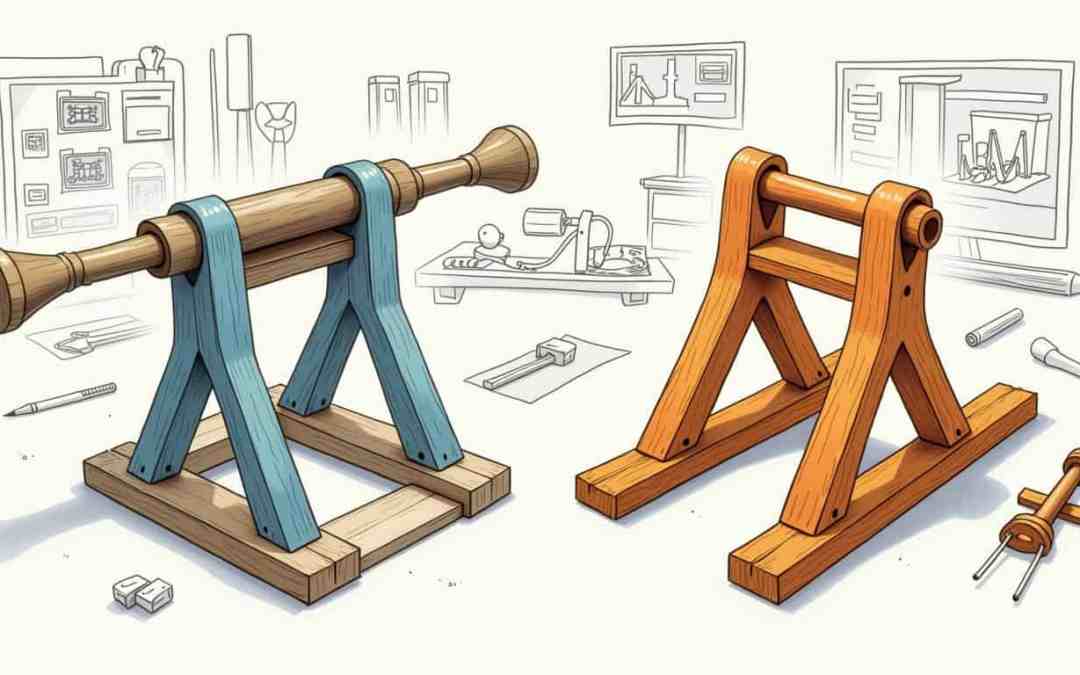
Unleashing the Power of Medieval Engineering: A Comparative Guide to 3D Printed Catapults vs. Traditional Catapults
Introduction
Catapults have fascinated engineers and hobbyists for centuries with their simplicity and power, turning potential energy into projectile force. In today’s world, these ancient siege engines are experiencing a renaissance through modern technology such as 3D printing. This blog post will delve into two distinct approaches: the innovative world of 3D Printed Catapults and the Tried and True Mechanics of Traditional Catapults. Whether you are a hobbyist, STEM educator, or a historical enthusiast, understanding these two paradigms will enhance your appreciation and skills in catapult crafting.
Table of Key Differences
| Feature | 3D Printed Catapults | Traditional Catapults |
|---|---|---|
| Price | Varies based on materials | Generally affordable |
| Performance | Consistently reaches 10-25 meters | Dependent on materials and design |
| Usability | Easy with pre-made files | Moderate; DIY assembly required |
| Support | Extensive online resources | Limited modern discussions |
Performance Showdown: Which Idea Delivers More?
3D Printed Catapults
3D printed catapults feature advanced mechanisms like leaf springs for superior performance. The innovative design capitalizes on kinematic efficiencies, ensuring maximum force at an optimal launch angle—consistently achieving ranges up to 25 meters.
Traditional Catapults
These rely on conventional power sources like torsion springs. While offering a robust structure with proven methods, the performance varies widely depending on craftsmanship and materials. They utilize elastic and torsion energy effectively but can lag in consistency compared to finely tuned printed models.
Key Takeaways: 3D printed catapults offer consistent performance with modern design innovations, while traditional designs can excel with careful tuning and material choice.
User Experience: Navigating Ease of Use
3D Printed Catapults
The ease of downloading ready-to-print files from sources like Thingiverse simplifies the process significantly. The assembly, aided by detailed guides, provides an accessible entry for beginners and a playground for experts wanting customization.
Traditional Catapults
These require a more hands-on approach with DIY assembly from scratch, leading to a steeper learning curve. This method, however, offers a rewarding challenge and the opportunity for deep engagement with mechanical principles.
Key Takeaways: For beginners, 3D printed models are easier to use, whereas traditional builds can offer a more fulfilling experience for those interested in craftsmanship.
Cost Analysis: Getting the Best Value
3D Printed Catapults
The cost hinges on material and printer availability, offering a wide range from budget-friendly DIY projects to high-end specialized materials.
Traditional Catapults
Traditional builds are generally low-cost, utilizing common and affordable materials like rubber bands and wooden sticks.
Key Takeaways: Traditional catapults provide a budget-friendly option, while 3D printed models may vary but offer greater customization potential.
Long-Term Support: Reliability Over Time
3D Printed Catapults
These benefit from a strong online community and regular design updates, with accessibility to numerous resources for troubleshooting and modifications.
Traditional Catapults
While offering a time-tested framework, support can be limited, relying on historical texts and less contemporary community input.
Key Takeaways: 3D printed designs are backed by extensive online communities, while traditional methods rely more on historical documentation.
Putting Ideas Into Practice
3D Printed Catapults
These are perfect for educational projects, competitions, and historical replicas due to easy customization and reliable performance.
Traditional Catapults
Ideal for hands-on learning and historical re-enactments, offering an immersive experience in ancient engineering.
Key Takeaways: Both approaches offer valuable applications, with 3D printed models favoring modern educational and competitive environments.
Weighing the Advantages and Disadvantages
3D Printed Catapults
Pros: Ease of use, consistency, adaptability, extensive online support.
Cons: Initial investment in a 3D printer, reliance on digital resources.
Traditional Catapults
Pros: Cost-effectiveness, rewarding manual work, adaptability.
Cons: Requires skill and time, potentially inconsistent performance.
Key Takeaways: Choose 3D printed models for modern efficiency and ease, or traditional builds for rewarding hands-on craftsmanship.
Final Verdict: Choosing the Right Idea for You
Summary
Both 3D printed and traditional catapults bring unique strengths to the table, catering to different interests and objectives. Whether you value the cutting-edge potential of digital fabrication or the hands-on legacy of historical mechanics, there’s a catapult project waiting to launch your journey into engineering.
Recommendations
– Choose 3D Printed Catapults if you prefer convenience, customization, and learning through modern technology.
– Opt for Traditional Catapults if you enjoy hands-on building, cost savings, and exploring historical engineering nuances.
Call to Action
Share your experiences, leave comments, or explore additional resources to dive deeper into the innovative world of catapults. Your next engineering challenge awaits!


