

Sure! Here’s an expanded version of the blog post:
Title: Precision Manufacturing Techniques for Gears: Ensuring Optimal Performance and Reliability
Precision manufacturing is critical in producing high-quality gears that perform optimally and meet the required specifications. The accuracy of gear teeth, root fillets, and other features is essential for the gear’s ability to transmit power and motion smoothly and efficiently. Precision manufacturing techniques ensure that gears are manufactured with tight tolerances and high accuracy, minimizing the risk of premature wear, failure, and downtime.
The Role of Precision in Gear Functionality
Gears are used in a wide range of industries, including automotive, aerospace, and energy, to transmit power and motion. The precision of gear manufacturing is critical to ensuring the functionality and reliability of gears in various applications. Gears are designed to mesh together, and any deviations in the accuracy of gear teeth or root fillets can result in excessive noise, vibration, or premature wear. Precision manufacturing techniques, such as computer numerical control (CNC) machining, grinding, and honing, enable manufacturers to produce gears with tight tolerances and high accuracy, ensuring that they meet the required specifications.
The Cost of Imprecision in Gear Manufacturing
Imprecision in gear manufacturing can result in significant costs, including increased production costs, reduced product lifespan, and costly repairs or replacements. Moreover, imprecise gears can cause noise, vibration, and other issues that affect the performance and reliability of the equipment in which they are used. For example, in the automotive industry, imprecise gears can cause engine performance issues, reduced fuel efficiency, and safety concerns. In the energy sector, imprecise gears can cause power transmission issues, leading to lost productivity and decreased customer satisfaction.
The Importance of Precision in Different Industries
Precision gear manufacturing is essential in industries where equipment reliability and performance are critical. For example, in the aerospace and defense industries, precise gears are necessary for aircraft and military vehicles’ safe and efficient operation. Precision gears are also critical in the automotive industry, where they are used in engine and transmission systems. In the energy sector, precision gears are necessary for power generation and transmission, including wind turbines and hydroelectric power plants.
The Benefits of Precision Gear Manufacturing
Precision gear manufacturing offers numerous benefits, including improved equipment performance and reliability, increased product lifespan, reduced maintenance and repair costs, and enhanced customer satisfaction. Moreover, precision gear manufacturing can help companies meet regulatory requirements, increase productivity, and gain a competitive advantage in the marketplace. For example, in the automotive industry, precision gears can improve engine performance, increase fuel efficiency, and enhance safety. In the energy sector, precision gears can improve power transmission efficiency and reduce maintenance costs.
The Role of Advanced Measurement and Inspection Tools in Achieving Precision
Advanced measurement and inspection tools, such as coordinate measuring machines (CMMs), optical measuring systems, and laser scanners, play a crucial role in achieving precision in gear manufacturing. These tools enable manufacturers to verify that gears meet the required standards and identify any deviations that may affect their performance. By using advanced measurement and inspection tools, manufacturers can improve the accuracy of their manufacturing processes and reduce the risk of producing imprecise gears.
Material Selection and Precision Gear Manufacturing
Material selection is critical in precision gear manufacturing, as it affects the gear’s performance, durability, and reliability. The choice of material depends on the application’s specific requirements, including load capacity, speed, temperature, and environment. Common materials used in precision gear manufacturing include steel, brass, bronze, and plastics. Manufacturers must carefully consider the properties of each material and select the one that best meets the application’s requirements.
Heat Treatment and Precision Gear Manufacturing
Heat treatment is a critical process in precision gear manufacturing, as it improves the gear’s hardness, strength, and durability. Heat treatment involves heating the gear to a specific temperature and then cooling it at a controlled rate. Common heat treatment processes include carburizing, nitriding, and induction hardening. Heat treatment can improve the gear’s resistance to wear, fatigue, and corrosion, ensuring that it performs optimally in demanding applications.
Conclusion
In summary, precision manufacturing is critical in producing high-quality gears that perform optimally and meet the required specifications. Precision manufacturing techniques, such as computer numerical control (CNC) machining, grinding, and honing, play a crucial role in achieving precision in gear manufacturing. Additionally, advanced measurement and inspection tools, material selection, and heat treatment are essential in ensuring the accuracy, durability, and reliability of precision gears. By investing in precision gear manufacturing, companies can improve equipment performance, reduce maintenance and repair costs, and enhance customer satisfaction.

Sure, here’s an expanded version of the blog post:
Precision Manufacturing Techniques for Gears: Understanding the Importance of Precision in Gear Manufacturing
Precision manufacturing is a critical aspect of producing high-quality gears that perform optimally and meet the required specifications. The accuracy of gear teeth, root fillets, and other features is essential for the gear’s ability to transmit power and motion smoothly and efficiently. Precision manufacturing techniques ensure that gears are manufactured with tight tolerances and high accuracy, minimizing the risk of premature wear, failure, and downtime.
The Role of Precision in Gear Functionality
The precision of gear manufacturing is critical to ensuring the functionality and reliability of gears in various applications. Gears are used in a wide range of industries, including automotive, aerospace, and energy, to transmit power and motion. The accuracy of gear teeth, root fillets, and other features directly affects the gear’s ability to perform optimally.
Precision manufacturing techniques, such as computer numerical control (CNC) machining, grinding, and honing, enable manufacturers to produce gears with tight tolerances and high accuracy, ensuring that they meet the required specifications. These techniques also help to reduce the risk of errors and defects in the manufacturing process.
The Cost of Imprecision in Gear Manufacturing
Imprecision in gear manufacturing can result in significant costs, including increased production costs, reduced product lifespan, and costly repairs or replacements. Moreover, imprecise gears can cause noise, vibration, and other issues that affect the performance and reliability of the equipment in which they are used.
For example, in the automotive industry, imprecise gears can cause engine performance issues, reduced fuel efficiency, and safety concerns. In the energy sector, imprecise gears can cause power transmission issues, leading to lost productivity and decreased customer satisfaction. These issues can result in significant financial losses, both in terms of direct costs and lost revenue.
The Importance of Precision in Different Industries
Precision gear manufacturing is essential in industries where equipment reliability and performance are critical. For example, in the aerospace and defense industries, precise gears are necessary for aircraft and military vehicles’ safe and efficient operation. The slightest deviation in a gear’s tolerance can have catastrophic consequences in these applications.
Precision gears are also critical in the automotive industry, where they are used in engine and transmission systems. In the energy sector, precision gears are necessary for power generation and transmission, including wind turbines and hydroelectric power plants. In these industries, precise gears are required to ensure the safe and efficient operation of equipment, reduce maintenance costs, and maximize productivity.
The Benefits of Precision Gear Manufacturing
Precision gear manufacturing offers numerous benefits, including improved equipment performance and reliability, increased product lifespan, reduced maintenance and repair costs, and enhanced customer satisfaction. Moreover, precision gear manufacturing can help companies meet regulatory requirements, increase productivity, and gain a competitive advantage in the marketplace.
For example, in the automotive industry, precision gears can improve engine performance, increase fuel efficiency, and enhance safety. In the energy sector, precision gears can improve power transmission efficiency and reduce maintenance costs. These benefits translate into significant cost savings, increased revenue, and improved customer satisfaction.
The Role of Advanced Measurement and Inspection Tools in Achieving Precision
Advanced measurement and inspection tools, such as coordinate measuring machines (CMMs), optical measuring systems, and laser scanners, play a crucial role in achieving precision in gear manufacturing. These tools enable manufacturers to verify that gears meet the required standards and identify any deviations that may affect their performance.
By using advanced measurement and inspection tools, manufacturers can improve the accuracy of their manufacturing processes and reduce the risk of producing imprecise gears. These tools can also help to identify areas where improvements can be made to the manufacturing process, further enhancing the precision of the finished product.
The Importance of Material Selection in Precision Gear Manufacturing
Material selection is critical in precision gear manufacturing, as it affects the gear’s performance, durability, and reliability. The choice of material depends on the application’s specific requirements, including load capacity, speed, temperature, and environment. Common materials used in precision gear manufacturing include steel, brass, bronze, and plastics.
The selection of the appropriate material is essential to ensure that the gear can withstand the stresses and loads placed upon it during operation. The material must also be compatible with the manufacturing process, as well as any heat treatment processes that may be used.
The Role of Heat Treatment in Precision Gear Manufacturing
Heat treatment is a critical process in precision gear manufacturing, as it improves the gear’s hardness, strength, and durability. Heat treatment involves heating the gear to a specific temperature and then cooling it at a controlled rate. Common heat treatment processes include carburizing, nitriding, and induction hardening.
Heat treatment can improve the gear’s resistance to wear, fatigue, and corrosion, ensuring that it performs optimally in demanding applications. The selection of the appropriate heat treatment process depends on the material used, as well as the specific requirements of the application.
In conclusion, precision manufacturing is critical in producing high-quality gears that perform optimally and meet the required specifications. Precision manufacturing techniques, such as computer numerical control (CNC) machining, grinding, and honing, play a crucial role in achieving precision in gear manufacturing. Additionally, advanced measurement and inspection tools, material selection, and heat treatment are essential in ensuring the accuracy, durability, and reliability of precision gears. By investing in precision gear manufacturing, companies can improve equipment performance, reduce maintenance and repair costs, and enhance customer satisfaction.

Sure, here is an expanded version of the blog post:
Understanding the Importance of Precision in Gear Manufacturing
Precision manufacturing is a critical aspect of producing high-quality gears that perform optimally and meet the required specifications. The accuracy of gear teeth, root fillets, and other features is essential for the gear’s ability to transmit power and motion smoothly and efficiently. Precision manufacturing techniques ensure that gears are manufactured with tight tolerances and high accuracy, minimizing the risk of premature wear, failure, and downtime.
The Role of Precision in Gear Functionality
The precision of gear manufacturing is critical to ensuring the functionality and reliability of gears in various applications. Gears are used in a wide range of industries, including automotive, aerospace, and energy, to transmit power and motion. The accuracy of gear teeth, root fillets, and other features directly affects the gear’s ability to perform optimally. Precision manufacturing techniques, such as computer numerical control (CNC) machining, grinding, and honing, enable manufacturers to produce gears with tight tolerances and high accuracy, ensuring that they meet the required specifications.
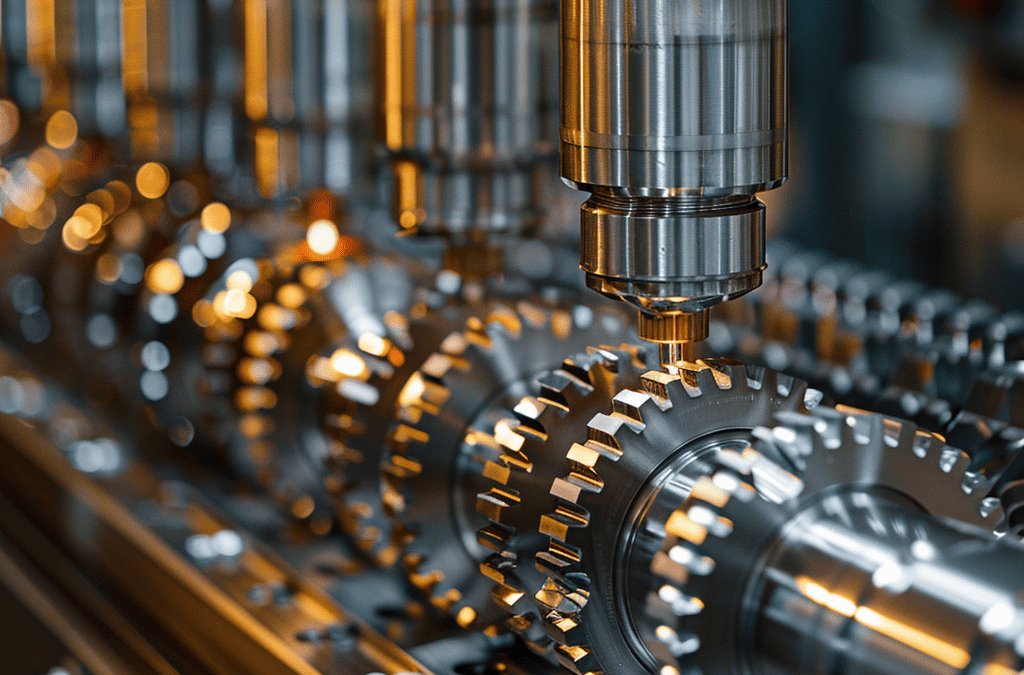
CNC machining is a popular precision manufacturing technique used to produce complex gear shapes with high accuracy. This process involves using a computer to control the movement of machine tools, enabling the production of gears with precise dimensions and surface finishes. Grinding and honing are finishing processes used to improve the surface finish and accuracy of gears. These processes remove small amounts of material from the gear surface, improving the surface finish and ensuring that the gear meets the required specifications.
The Cost of Imprecision in Gear Manufacturing
Imprecision in gear manufacturing can result in significant costs, including increased production costs, reduced product lifespan, and costly repairs or replacements. Moreover, imprecise gears can cause noise, vibration, and other issues that affect the performance and reliability of the equipment in which they are used. For example, in the automotive industry, imprecise gears can cause engine performance issues, reduced fuel efficiency, and safety concerns. In the energy sector, imprecise gears can cause power transmission issues, leading to lost productivity and decreased customer satisfaction.
The Importance of Precision in Different Industries
Precision gear manufacturing is essential in industries where equipment reliability and performance are critical. For example, in the aerospace and defense industries, precise gears are necessary for aircraft and military vehicles’ safe and efficient operation. Precision gears are also critical in the automotive industry, where they are used in engine and transmission systems. In the energy sector, precision gears are necessary for power generation and transmission, including wind turbines and hydroelectric power plants.
Precision gears used in aerospace and defense applications must meet stringent quality and performance standards. These gears are subjected to extreme conditions, including high speeds, temperatures, and loads. Precision manufacturing techniques are used to ensure that these gears meet the required specifications, minimizing the risk of failure and ensuring safe and efficient operation.
Similarly, precision gears used in the automotive industry must meet strict performance and durability standards. These gears are used in critical engine and transmission systems, where failure can result in costly repairs and downtime. Precision manufacturing techniques are used to ensure that these gears meet the required specifications, improving performance, and reducing maintenance costs.
The Benefits of Precision Gear Manufacturing
Precision gear manufacturing offers numerous benefits, including improved equipment performance and reliability, increased product lifespan, reduced maintenance and repair costs, and enhanced customer satisfaction. Moreover, precision gear manufacturing can help companies meet regulatory requirements, increase productivity, and gain a competitive advantage in the marketplace. For example, in the automotive industry, precision gears can improve engine performance, increase fuel efficiency, and enhance safety. In the energy sector, precision gears can improve power transmission efficiency and reduce maintenance costs.
The Role of Advanced Measurement and Inspection Tools in Achieving Precision
Advanced measurement and inspection tools, such as coordinate measuring machines (CMMs), optical measuring systems, and laser scanners, play a crucial role in achieving precision in gear manufacturing. These tools enable manufacturers to verify that gears meet the required standards and identify any deviations that may affect their performance. By using advanced measurement and inspection tools, manufacturers can improve the accuracy of their manufacturing processes and reduce the risk of producing imprecise gears.
CMMs are used to measure the dimensions and geometries of gears with high precision. These machines use touch probes or non-contact sensors to measure the gear’s surface and generate a 3D model of the part. Optical measuring systems use cameras and light sources to measure the gear’s surface and generate a 2D or 3D model of the part. Laser scanners use laser technology to measure the gear’s surface and generate a 3D model of the part.
The Importance of Material Selection in Precision Gear Manufacturing
Material selection is critical in precision gear manufacturing, as it affects the gear’s performance, durability, and reliability. The choice of material depends on the application’s specific requirements, including load capacity, speed, temperature, and environment. Common materials used in precision gear manufacturing include steel, brass, bronze, and plastics.
Steel is a popular material used in precision gear manufacturing due to its high strength and durability. Steel gears can withstand high loads and speeds, making them ideal for demanding applications such as aerospace and defense. Brass and bronze are commonly used in precision gear manufacturing due to their excellent machinability and corrosion resistance. These materials are ideal for applications where corrosion resistance is critical, such as in marine environments. Plastics are used in precision gear manufacturing due to their lightweight and corrosion resistance. Plastic gears are ideal for applications where weight reduction is critical, such as in automotive and aerospace applications.
The Role of Heat Treatment in Precision Gear Manufacturing
Heat treatment is a critical process in precision gear manufacturing, as it improves the gear’s hardness, strength, and durability. Heat treatment involves heating the gear to a specific temperature and then cooling it at a controlled rate. Common heat treatment processes include carburizing, nitriding, and induction hardening. Heat treatment can improve the gear’s resistance to wear, fatigue, and corrosion, ensuring that it performs optimally in demanding applications.
Carburizing is a heat treatment process that involves adding carbon to the surface of the gear, improving its hardness and wear resistance. Nitriding is a heat treatment process that involves adding nitrogen to the surface of the gear, improving its hardness, wear resistance, and corrosion resistance. Induction hardening is a heat treatment process that uses an electromagnetic field to heat the gear’s surface, improving its hardness and wear resistance.
In summary, precision manufacturing is critical in producing high-quality gears that perform optimally and meet the required specifications. Precision manufacturing techniques, such as computer numerical control (CNC) machining, grinding, and honing, play a crucial role in achieving precision in gear manufacturing. Additionally, advanced measurement and inspection tools, material selection, and heat treatment are essential in ensuring the accuracy, durability, and reliability of precision gears. By investing in precision gear manufacturing, companies can improve equipment performance, reduce maintenance and repair costs, and enhance customer satisfaction.

Understanding the Importance of Precision in Gear Manufacturing
Precision manufacturing is critical in producing high-quality gears that perform optimally and meet the required specifications. The accuracy of gear teeth, root fillets, and other features is essential for the gear’s ability to transmit power and motion smoothly and efficiently. Precision manufacturing techniques ensure that gears are manufactured with tight tolerances and high accuracy, minimizing the risk of premature wear, failure, and downtime. In this blog post, we will discuss the importance of precision in gear manufacturing, the cost of imprecision, the benefits of precision gear manufacturing, and the role of advanced measurement and inspection tools, material selection, and heat treatment in achieving precision.
The Role of Precision in Gear Functionality
The precision of gear manufacturing is critical to ensuring the functionality and reliability of gears in various applications. Gears are used in a wide range of industries, including automotive, aerospace, and energy, to transmit power and motion. The accuracy of gear teeth, root fillets, and other features directly affects the gear’s ability to perform optimally. Precision manufacturing techniques, such as computer numerical control (CNC) machining, grinding, and honing, enable manufacturers to produce gears with tight tolerances and high accuracy, ensuring that they meet the required specifications.
Precision manufacturing techniques are used to produce gears with complex geometries, tight tolerances, and high surface finishes. CNC machining is a computer-controlled process that uses cutting tools to remove material from a workpiece. The process is highly accurate and repeatable, enabling manufacturers to produce gears with tight tolerances and complex geometries. Grinding and honing are finishing processes used to improve the surface finish and accuracy of gears. These processes remove a small amount of material from the gear’s surface, improving the surface finish and ensuring that the gear meets the required specifications.
The Cost of Imprecision in Gear Manufacturing
Imprecision in gear manufacturing can result in significant costs, including increased production costs, reduced product lifespan, and costly repairs or replacements. Moreover, imprecise gears can cause noise, vibration, and other issues that affect the performance and reliability of the equipment in which they are used. For example, in the automotive industry, imprecise gears can cause engine performance issues, reduced fuel efficiency, and safety concerns. In the energy sector, imprecise gears can cause power transmission issues, leading to lost productivity and decreased customer satisfaction.
Imprecise gears can also increase maintenance and repair costs. When gears wear prematurely due to imprecision, they must be replaced more frequently, increasing maintenance costs. Additionally, imprecise gears can cause damage to other components in the system, leading to additional repair costs.
The Importance of Precision in Different Industries
Precision gear manufacturing is essential in industries where equipment reliability and performance are critical. For example, in the aerospace and defense industries, precise gears are necessary for aircraft and military vehicles’ safe and efficient operation. Precision gears are also critical in the automotive industry, where they are used in engine and transmission systems. In the energy sector, precision gears are necessary for power generation and transmission, including wind turbines and hydroelectric power plants.
Precision gears used in these industries must meet stringent performance and safety requirements. They must be able to withstand high loads, speeds, and temperatures while maintaining accuracy and reliability. The use of precision gears in these industries can improve performance, reduce maintenance costs, and enhance safety.
The Benefits of Precision Gear Manufacturing
Precision gear manufacturing offers numerous benefits, including improved equipment performance and reliability, increased product lifespan, reduced maintenance and repair costs, and enhanced customer satisfaction. Moreover, precision gear manufacturing can help companies meet regulatory requirements, increase productivity, and gain a competitive advantage in the marketplace. For example, in the automotive industry, precision gears can improve engine performance, increase fuel efficiency, and enhance safety. In the energy sector, precision gears can improve power transmission efficiency and reduce maintenance costs.
The Role of Advanced Measurement and Inspection Tools in Achieving Precision
Advanced measurement and inspection tools, such as coordinate measuring machines (CMMs), optical measuring systems, and laser scanners, play a crucial role in achieving precision in gear manufacturing. These tools enable manufacturers to verify that gears meet the required standards and identify any deviations that may affect their performance. By using advanced measurement and inspection tools, manufacturers can improve the accuracy of their manufacturing processes and reduce the risk of producing imprecise gears.
CMMs are used to measure the dimensions and geometry of gears with high accuracy. They use touch probes or non-contact sensors to measure the gear’s surface and compare it to the design specifications. Optical measuring systems use cameras and light sources to measure the gear’s surface and create a 3D model of the gear. Laser scanners use laser technology to measure the gear’s surface and create a 3D model of the gear.
The Importance of Material Selection in Precision Gear Manufacturing
Material selection is critical in precision gear manufacturing, as it affects the gear’s performance, durability, and reliability. The choice of material depends on the application’s specific requirements, including load capacity, speed, temperature, and environment. Common materials used in precision gear manufacturing include steel, brass, bronze, and plastics.
Steel is a popular material for precision gears due to its high strength and durability. It can withstand high loads and speeds, making it suitable for use in demanding applications such as automotive and aerospace. Brass and bronze are often used in precision gear manufacturing due to their excellent machinability and corrosion resistance. They are suitable for use in applications where corrosion resistance is critical, such as in marine environments. Plastics are used in precision gear manufacturing due to their lightweight and low cost. They are suitable for use in low-load applications such as toys and appliances.
The Role of Heat Treatment in Precision Gear Manufacturing
Heat treatment is a critical process in precision gear manufacturing, as it improves the gear’s hardness, strength, and durability. Heat treatment involves heating the gear to a specific temperature and then cooling it at a controlled rate. Common heat treatment processes include carburizing, nitriding, and induction hardening. Heat treatment can improve the gear’s resistance to wear, fatigue, and corrosion, ensuring that it performs optimally in demanding applications.
Carburizing is a heat treatment process that involves adding carbon to the surface of the gear, increasing its hardness and wear resistance. Nitriding is a heat treatment process that involves adding nitrogen to the surface of the gear, increasing its hardness and corrosion resistance. Induction hardening is a heat treatment process that uses an electromagnetic field to heat the surface of the gear, increasing its hardness and wear resistance.
In summary, precision manufacturing is critical in producing high-quality gears that perform optimally and meet the required specifications. Precision manufacturing techniques, such as computer numerical control (CNC) machining, grinding, and honing, play a crucial role in achieving precision in gear manufacturing. Additionally, advanced measurement and inspection tools, material selection, and heat treatment are essential in ensuring the accuracy, durability, and reliability of precision gears. By investing in precision gear manufacturing, companies can improve equipment performance, reduce maintenance and repair costs, and enhance customer satisfaction.Sure, here’s an expanded version of the blog post:
Understanding the Importance of Precision in Gear Manufacturing
Precision manufacturing is critical in producing high-quality gears that perform optimally and meet the required specifications. The accuracy of gear teeth, root fillets, and other features is essential for the gear’s ability to transmit power and motion smoothly and efficiently. Precision manufacturing techniques ensure that gears are manufactured with tight tolerances and high accuracy, minimizing the risk of premature wear, failure, and downtime.
The Role of Precision in Gear Functionality
The precision of gear manufacturing is critical to ensuring the functionality and reliability of gears in various applications. Gears are used in a wide range of industries, including automotive, aerospace, and energy, to transmit power and motion. The accuracy of gear teeth, root fillets, and other features directly affects the gear’s ability to perform optimally. Precision manufacturing techniques, such as computer numerical control (CNC) machining, grinding, and honing, enable manufacturers to produce gears with tight tolerances and high accuracy, ensuring that they meet the required specifications.
In addition to accuracy, the surface finish of the gear teeth is also critical for optimal performance. A smooth surface finish reduces friction and wear, improving the gear’s lifespan and performance. Precision manufacturing techniques can produce gears with a surface finish that meets or exceeds industry standards.
The Cost of Imprecision in Gear Manufacturing
Imprecision in gear manufacturing can result in significant costs, including increased production costs, reduced product lifespan, and costly repairs or replacements. Moreover, imprecise gears can cause noise, vibration, and other issues that affect the performance and reliability of the equipment in which they are used. For example, in the automotive industry, imprecise gears can cause engine performance issues, reduced fuel efficiency, and safety concerns. In the energy sector, imprecise gears can cause power transmission issues, leading to lost productivity and decreased customer satisfaction.
The cost of imprecision in gear manufacturing can also extend to the supply chain. If a gear fails prematurely, it can cause downtime for the entire production line, resulting in lost revenue and increased costs. Additionally, if a gear fails in the field, it can result in costly warranty claims and damage to the manufacturer’s reputation.
The Importance of Precision in Different Industries
Precision gear manufacturing is essential in industries where equipment reliability and performance are critical. For example, in the aerospace and defense industries, precise gears are necessary for aircraft and military vehicles’ safe and efficient operation. Precision gears are also critical in the automotive industry, where they are used in engine and transmission systems. In the energy sector, precision gears are necessary for power generation and transmission, including wind turbines and hydroelectric power plants.
The Benefits of Precision Gear Manufacturing
Precision gear manufacturing offers numerous benefits, including improved equipment performance and reliability, increased product lifespan, reduced maintenance and repair costs, and enhanced customer satisfaction. Moreover, precision gear manufacturing can help companies meet regulatory requirements, increase productivity, and gain a competitive advantage in the marketplace. For example, in the automotive industry, precision gears can improve engine performance, increase fuel efficiency, and enhance safety. In the energy sector, precision gears can improve power transmission efficiency and reduce maintenance costs.
The Role of Advanced Measurement and Inspection Tools in Achieving Precision
Advanced measurement and inspection tools, such as coordinate measuring machines (CMMs), optical measuring systems, and laser scanners, play a crucial role in achieving precision in gear manufacturing. These tools enable manufacturers to verify that gears meet the required standards and identify any deviations that may affect their performance. By using advanced measurement and inspection tools, manufacturers can improve the accuracy of their manufacturing processes and reduce the risk of producing imprecise gears.
For example, CMMs can measure the accuracy of gear teeth, root fillets, and other features to within microns. Optical measuring systems can measure the surface finish of gear teeth, ensuring that they meet the required specifications. Laser scanners can quickly and accurately measure the geometry of gears, enabling manufacturers to identify and correct any deviations in real-time.
The Importance of Material Selection in Precision Gear Manufacturing
Material selection is critical in precision gear manufacturing, as it affects the gear’s performance, durability, and reliability. The choice of material depends on the application’s specific requirements, including load capacity, speed, temperature, and environment. Common materials used in precision gear manufacturing include steel, brass, bronze, and plastics.
Steel is a popular material for gears due to its strength and durability. It can withstand high loads and speeds, making it ideal for applications in the automotive and aerospace industries. Brass and bronze are often used in applications where corrosion resistance is critical, such as in marine environments. Plastics are used in applications where lightweight and low cost are important factors.
The Role of Heat Treatment in Precision Gear Manufacturing
Heat treatment is a critical process in precision gear manufacturing, as it improves the gear’s hardness, strength, and durability. Heat treatment involves heating the gear to a specific temperature and then cooling it at a controlled rate. Common heat treatment processes include carburizing, nitriding, and induction hardening. Heat treatment can improve the gear’s resistance to wear, fatigue, and corrosion, ensuring that it performs optimally in demanding applications.
For example, carburizing is a heat treatment process that adds carbon to the surface of the gear, improving its hardness and wear resistance. Nitriding is a heat treatment process that adds nitrogen to the surface of the gear, improving its hardness and resistance to corrosion. Induction hardening is a heat treatment process that uses an electric current to heat the surface of the gear, improving its hardness and wear resistance.
In summary, precision manufacturing is critical in producing high-quality gears that perform optimally and meet the required specifications. Precision manufacturing techniques, such as computer numerical control (CNC) machining, grinding, and honing, play a crucial role in achieving precision in gear manufacturing. Additionally, advanced measurement and inspection tools, material selection, and heat treatment are essential in ensuring the accuracy, durability, and reliability of precision gears. By investing in precision gear manufacturing, companies can improve equipment performance, reduce maintenance and repair costs, and enhance customer satisfaction.Precision manufacturing is vital in producing high-quality gears that perform optimally and meet the required specifications. The accuracy of gear teeth, root fillets, and other features is essential for the gear’s ability to transmit power and motion smoothly and efficiently. Precision manufacturing techniques ensure that gears are manufactured with tight tolerances and high accuracy, minimizing the risk of premature wear, failure, and downtime.
The Role of Precision in Gear Functionality
Gears are used in a wide range of industries to transmit power and motion. The accuracy of gear teeth, root fillets, and other features directly affects the gear’s ability to perform optimally. Precision manufacturing techniques, such as computer numerical control (CNC) machining, grinding, and honing, enable manufacturers to produce gears with tight tolerances and high accuracy, ensuring that they meet the required specifications.
Precision manufacturing techniques can produce gears with a high level of accuracy, ensuring that the gears mesh together correctly and transmit power and motion smoothly. This accuracy is essential for the functionality and reliability of gears in various applications, including automotive, aerospace, and energy.
The Cost of Imprecision in Gear Manufacturing
Imprecision in gear manufacturing can result in significant costs, including increased production costs, reduced product lifespan, and costly repairs or replacements. Imprecise gears can also cause noise, vibration, and other issues that affect the performance and reliability of the equipment in which they are used. For example, in the automotive industry, imprecise gears can cause engine performance issues, reduced fuel efficiency, and safety concerns. In the energy sector, imprecise gears can cause power transmission issues, leading to lost productivity and decreased customer satisfaction.
The Importance of Precision in Different Industries
Precision gear manufacturing is essential in industries where equipment reliability and performance are critical. In the aerospace and defense industries, precise gears are necessary for aircraft and military vehicles’ safe and efficient operation. Precision gears are also critical in the automotive industry, where they are used in engine and transmission systems. In the energy sector, precision gears are necessary for power generation and transmission, including wind turbines and hydroelectric power plants.
The Benefits of Precision Gear Manufacturing
Precision gear manufacturing offers numerous benefits, including improved equipment performance and reliability, increased product lifespan, reduced maintenance and repair costs, and enhanced customer satisfaction. Moreover, precision gear manufacturing can help companies meet regulatory requirements, increase productivity, and gain a competitive advantage in the marketplace. For example, in the automotive industry, precision gears can improve engine performance, increase fuel efficiency, and enhance safety. In the energy sector, precision gears can improve power transmission efficiency and reduce maintenance costs.
The Role of Advanced Measurement and Inspection Tools in Achieving Precision
Advanced measurement and inspection tools, such as coordinate measuring machines (CMMs), optical measuring systems, and laser scanners, play a crucial role in achieving precision in gear manufacturing. These tools enable manufacturers to verify that gears meet the required standards and identify any deviations that may affect their performance. By using advanced measurement and inspection tools, manufacturers can improve the accuracy of their manufacturing processes and reduce the risk of producing imprecise gears.
The Importance of Material Selection in Precision Gear Manufacturing
Material selection is critical in precision gear manufacturing, as it affects the gear’s performance, durability, and reliability. The choice of material depends on the application’s specific requirements, including load capacity, speed, temperature, and environment. Common materials used in precision gear manufacturing include steel, brass, bronze, and plastics. Each material has its unique properties, and manufacturers must carefully consider these properties when selecting a material for a particular application.
The Role of Heat Treatment in Precision Gear Manufacturing
Heat treatment is a critical process in precision gear manufacturing, as it improves the gear’s hardness, strength, and durability. Heat treatment involves heating the gear to a specific temperature and then cooling it at a controlled rate. Common heat treatment processes include carburizing, nitriding, and induction hardening. Heat treatment can improve the gear’s resistance to wear, fatigue, and corrosion, ensuring that it performs optimally in demanding applications.
Investing in Precision Gear Manufacturing
Investing in precision gear manufacturing can help companies improve equipment performance, reduce maintenance and repair costs, and enhance customer satisfaction. Precision manufacturing techniques, advanced measurement and inspection tools, material selection, and heat treatment are all essential components of precision gear manufacturing. By investing in these areas, companies can produce high-quality gears that meet the required specifications and perform optimally in various applications.
In conclusion, precision manufacturing is critical in producing high-quality gears that perform optimally and meet the required specifications. Precision manufacturing techniques, such as computer numerical control (CNC) machining, grinding, and honing, play a crucial role in achieving precision in gear manufacturing. Additionally, advanced measurement and inspection tools, material selection, and heat treatment are essential in ensuring the accuracy, durability, and reliability of precision gears. By investing in precision gear manufacturing, companies can improve equipment performance, reduce maintenance and repair costs, and enhance customer satisfaction.Precision Manufacturing Techniques for Gears: Understanding the Importance of Precision in Gear Manufacturing
Gears are essential components in various industries, including automotive, aerospace, and energy. They transmit power and motion, making them critical to the functionality and reliability of equipment. Precision manufacturing is critical in producing high-quality gears that perform optimally and meet the required specifications. The accuracy of gear teeth, root fillets, and other features is essential for the gear’s ability to transmit power and motion smoothly and efficiently. Precision manufacturing techniques ensure that gears are manufactured with tight tolerances and high accuracy, minimizing the risk of premature wear, failure, and downtime.
The Role of Precision in Gear Functionality
Precision manufacturing is critical to ensuring the functionality and reliability of gears in various applications. Gears are used in a wide range of industries, including automotive, aerospace, and energy, to transmit power and motion. The accuracy of gear teeth, root fillets, and other features directly affects the gear’s ability to perform optimally. Precision manufacturing techniques, such as computer numerical control (CNC) machining, grinding, and honing, enable manufacturers to produce gears with tight tolerances and high accuracy, ensuring that they meet the required specifications.
The Cost of Imprecision in Gear Manufacturing
Imprecision in gear manufacturing can result in significant costs, including increased production costs, reduced product lifespan, and costly repairs or replacements. Moreover, imprecise gears can cause noise, vibration, and other issues that affect the performance and reliability of the equipment in which they are used. For example, in the automotive industry, imprecise gears can cause engine performance issues, reduced fuel efficiency, and safety concerns. In the energy sector, imprecise gears can cause power transmission issues, leading to lost productivity and decreased customer satisfaction.
The Importance of Precision in Different Industries
Precision gear manufacturing is essential in industries where equipment reliability and performance are critical. For example, in the aerospace and defense industries, precise gears are necessary for aircraft and military vehicles’ safe and efficient operation. Precision gears are also critical in the automotive industry, where they are used in engine and transmission systems. In the energy sector, precision gears are necessary for power generation and transmission, including wind turbines and hydroelectric power plants.
The Benefits of Precision Gear Manufacturing
Precision gear manufacturing offers numerous benefits, including improved equipment performance and reliability, increased product lifespan, reduced maintenance and repair costs, and enhanced customer satisfaction. Moreover, precision gear manufacturing can help companies meet regulatory requirements, increase productivity, and gain a competitive advantage in the marketplace. For example, in the automotive industry, precision gears can improve engine performance, increase fuel efficiency, and enhance safety. In the energy sector, precision gears can improve power transmission efficiency and reduce maintenance costs.
The Role of Advanced Measurement and Inspection Tools in Achieving Precision
Advanced measurement and inspection tools, such as coordinate measuring machines (CMMs), optical measuring systems, and laser scanners, play a crucial role in achieving precision in gear manufacturing. These tools enable manufacturers to verify that gears meet the required standards and identify any deviations that may affect their performance. By using advanced measurement and inspection tools, manufacturers can improve the accuracy of their manufacturing processes and reduce the risk of producing imprecise gears.
The Importance of Material Selection in Precision Gear Manufacturing
Material selection is critical in precision gear manufacturing, as it affects the gear’s performance, durability, and reliability. The choice of material depends on the application’s specific requirements, including load capacity, speed, temperature, and environment. Common materials used in precision gear manufacturing include steel, brass, bronze, and plastics.
Steel is a popular material for gears due to its high strength, durability, and wear resistance. Brass and bronze are often used for their excellent machinability and corrosion resistance. Plastics are used for their lightweight and low-cost properties, making them suitable for low-load applications.
The Role of Heat Treatment in Precision Gear Manufacturing
Heat treatment is a critical process in precision gear manufacturing, as it improves the gear’s hardness, strength, and durability. Heat treatment involves heating the gear to a specific temperature and then cooling it at a controlled rate. Common heat treatment processes include carburizing, nitriding, and induction hardening. Heat treatment can improve the gear’s resistance to wear, fatigue, and corrosion, ensuring that it performs optimally in demanding applications.
Carburizing is a heat treatment process that involves introducing carbon into the surface of the gear, increasing its hardness and wear resistance. Nitriding is a heat treatment process that introduces nitrogen into the surface of the gear, improving its fatigue strength and corrosion resistance. Induction hardening is a heat treatment process that uses electromagnetic induction to heat the surface of the gear, increasing its hardness and wear resistance.
In conclusion, precision manufacturing is critical in producing high-quality gears that perform optimally and meet the required specifications. Precision manufacturing techniques, such as computer numerical control (CNC) machining, grinding, and honing, play a crucial role in achieving precision in gear manufacturing. Additionally, advanced measurement and inspection tools, material selection, and heat treatment are essential in ensuring the accuracy, durability, and reliability of precision gears. By investing in precision gear manufacturing, companies can improve equipment performance, reduce maintenance and repair costs, and enhance customer satisfaction.Advanced Techniques for Achieving Precision in Gear Production
Gear manufacturing is a critical process in many industries, including automotive, aerospace, and industrial machinery. Precision and accuracy are essential for gears to function correctly and efficiently. In this blog post, we will discuss advanced techniques for achieving precision in gear production.
CNC Machining for Precise Gear Production
Computer numerical control (CNC) machining is a highly accurate and efficient process used to produce gears with tight tolerances and high precision. CNC machines use computer programs to control the movement of cutting tools, enabling them to produce complex shapes and contours with high accuracy. Additionally, CNC machines are highly repeatable, ensuring that each gear produced is identical to the previous one. 5-axis CNC machines are commonly used for gear production, as they can produce gears with a high degree of complexity and accuracy.
Benefits of CNC Machining for Gear Production:
* High precision and accuracy
* Ability to produce complex shapes and contours
* High repeatability
* Reduced lead times
* Improved efficiency and productivity
Grinding for Precision Gear Finishing
Grinding is a finishing process used to achieve high levels of precision and surface finish in gear production. Grinding involves removing material from the gear using an abrasive wheel, resulting in a highly accurate and smooth surface. There are several types of grinding processes, including form grinding, profile grinding, and generating grinding, each of which is used to achieve different levels of precision and surface finish. Form grinding is commonly used for producing gears with involute tooth forms, while profile grinding is used for producing gears with modified tooth forms.
Benefits of Grinding for Gear Finishing:
* Improved precision and accuracy
* Enhanced surface finish
* Reduced noise and vibration
* Increased durability and lifespan
Honing for Precision Gear Surface Finishing
Honing is a surface finishing process used to improve the surface finish and accuracy of gears. Honing involves using an abrasive stone to remove a small amount of material from the gear surface, resulting in a highly accurate and smooth finish. Honing can be used to improve the surface finish of gears after heat treatment, which can cause distortion and reduce precision. Horizontal honing machines are commonly used for gear honing, as they can produce a highly accurate and consistent finish.
Benefits of Honing for Gear Surface Finishing:
* Improved precision and accuracy
* Enhanced surface finish
* Reduced noise and vibration
* Increased durability and lifespan
Gear Metrology for Precision Measurement and Inspection
Gear metrology is the science of measuring and inspecting gears to ensure that they meet the required specifications. Advanced metrology tools, such as coordinate measuring machines (CMMs) and gear inspection machines, are used to measure critical dimensions, such as tooth profile, pitch, and root fillet radius. Additionally, metrology tools can be used to identify deviations in gear geometry that may affect their performance. Gear inspection software can be used to analyze gear data and identify trends, helping manufacturers to improve their production processes.
Benefits of Gear Metrology:
* Improved precision and accuracy
* Enhanced quality control
* Increased productivity and efficiency
* Reduced scrap and rework
* Improved customer satisfaction
Gear Heat Treatment for Precision and Durability
Heat treatment is a process used to improve the precision and durability of gears. Heat treatment involves heating the gear to a specific temperature, followed by quenching and tempering. This process hardens the gear teeth, increasing their resistance to wear and improving their precision. Additionally, heat treatment can improve the gear’s fatigue strength, increasing its lifespan and reducing the risk of failure. Induction hardening is a common heat treatment process used for gears, as it can produce a precise and consistent hardness pattern.
Benefits of Heat Treatment for Gears:
* Improved precision and accuracy
* Enhanced durability and lifespan
* Increased resistance to wear and fatigue
* Improved performance and reliability
In summary, advanced techniques, such as CNC machining, grinding, honing, gear metrology, and heat treatment, are used to achieve high levels of precision and accuracy in gear production. These techniques enable manufacturers to produce gears with tight tolerances and high accuracy, ensuring that they meet the required specifications and perform optimally. By using advanced manufacturing techniques, manufacturers can improve equipment performance, reduce maintenance and repair costs, and enhance customer satisfaction.
5-axis CNC machines, form grinding, profile grinding, horizontal honing machines, gear inspection software, and induction hardening are examples of advanced techniques and tools used in precision gear production. These tools and techniques enable manufacturers to produce gears with high accuracy and precision, improving equipment performance and reducing maintenance and repair costs.
Overall, precision gear production is a critical process in many industries, and advanced techniques and tools are essential for achieving high levels of accuracy and precision. By investing in precision gear production, manufacturers can improve their products’ performance and reliability, enhance customer satisfaction, and gain a competitive advantage in their respective markets.Advanced Techniques for Achieving Precision in Gear Production
Gear manufacturing is a critical process in many industries, including automotive, aerospace, and industrial machinery. Precision and accuracy are essential for gears to function correctly and efficiently. In this blog post, we will discuss advanced techniques for achieving precision in gear production.
CNC Machining for Precise Gear Production
Computer numerical control (CNC) machining is a highly accurate and efficient process used to produce gears with tight tolerances and high precision. CNC machines use computer programs to control the movement of cutting tools, enabling them to produce complex shapes and contours with high accuracy. Additionally, CNC machines are highly repeatable, ensuring that each gear produced is identical to the previous one. 5-axis CNC machines are commonly used for gear production, as they can produce gears with a high degree of complexity and accuracy. The use of CNC machines also allows for the production of large quantities of gears in a shorter amount of time compared to traditional manufacturing methods.
Grinding for Precision Gear Finishing
Grinding is a finishing process used to achieve high levels of precision and surface finish in gear production. Grinding involves removing material from the gear using an abrasive wheel, resulting in a highly accurate and smooth surface. There are several types of grinding processes, including form grinding, profile grinding, and generating grinding, each of which is used to achieve different levels of precision and surface finish. Form grinding is commonly used for producing gears with involute tooth forms, while profile grinding is used for producing gears with modified tooth forms. Grinding is also used to remove burrs and improve the surface finish of the gear, which can reduce noise and improve performance.
Honing for Precision Gear Surface Finishing
Honing is a surface finishing process used to improve the surface finish and accuracy of gears. Honing involves using an abrasive stone to remove a small amount of material from the gear surface, resulting in a highly accurate and smooth finish. Honing can be used to improve the surface finish of gears after heat treatment, which can cause distortion and reduce precision. Horizontal honing machines are commonly used for gear honing, as they can produce a highly accurate and consistent finish. Honing can also improve the surface finish of the gear teeth, reducing friction and improving performance.
Gear Metrology for Precision Measurement and Inspection
Gear metrology is the science of measuring and inspecting gears to ensure that they meet the required specifications. Advanced metrology tools, such as coordinate measuring machines (CMMs) and gear inspection machines, are used to measure critical dimensions, such as tooth profile, pitch, and root fillet radius. Additionally, metrology tools can be used to identify deviations in gear geometry that may affect their performance. Gear inspection software can be used to analyze gear data and identify trends, helping manufacturers to improve their production processes. Gear metrology is critical for ensuring that gears meet the required specifications and perform optimally, reducing the risk of failure and improving equipment performance.
Gear Heat Treatment for Precision and Durability
Heat treatment is a process used to improve the precision and durability of gears. Heat treatment involves heating the gear to a specific temperature, followed by quenching and tempering. This process hardens the gear teeth, increasing their resistance to wear and improving their precision. Additionally, heat treatment can improve the gear’s fatigue strength, increasing its lifespan and reducing the risk of failure. Induction hardening is a common heat treatment process used for gears, as it can produce a precise and consistent hardness pattern. Heat treatment is critical for ensuring that gears can withstand the demands of their intended application and perform optimally over time.
In summary, advanced techniques, such as CNC machining, grinding, honing, gear metrology, and heat treatment, are used to achieve high levels of precision and accuracy in gear production. These techniques enable manufacturers to produce gears with tight tolerances and high accuracy, ensuring that they meet the required specifications and perform optimally. By using advanced manufacturing techniques, manufacturers can improve equipment performance, reduce maintenance and repair costs, and enhance customer satisfaction.
5-axis CNC machines, form grinding, profile grinding, horizontal honing machines, gear inspection software, and induction hardening are examples of advanced techniques and tools used in precision gear production. These tools and techniques enable manufacturers to produce gears with high accuracy and precision, improving equipment performance and reducing maintenance and repair costs.
Overall, precision gear production is a critical process in many industries, and advanced techniques and tools are essential for achieving high levels of accuracy and precision. By investing in precision gear production, manufacturers can improve their products’ performance and reliability, enhance customer satisfaction, and gain a competitive advantage in their respective markets.Advanced Techniques for Achieving Precision in Gear Production
Gears are critical components in many industries, including automotive, aerospace, and industrial machinery. They play an essential role in transmitting power and motion, and their performance can significantly impact the efficiency and reliability of the equipment they are used in. To achieve optimal performance, gears must be manufactured with high precision and accuracy. In this blog post, we will discuss advanced techniques for achieving precision in gear production.
CNC Machining for Precise Gear Production
Computer numerical control (CNC) machining is a highly accurate and efficient process used to produce gears with tight tolerances and high precision. CNC machines use computer programs to control the movement of cutting tools, enabling them to produce complex shapes and contours with high accuracy. Additionally, CNC machines are highly repeatable, ensuring that each gear produced is identical to the previous one. 5-axis CNC machines are commonly used for gear production, as they can produce gears with a high degree of complexity and accuracy. These machines can perform multiple operations, such as milling, turning, and drilling, in a single setup, reducing the need for multiple machine setups and improving the efficiency of the manufacturing process.
Grinding for Precision Gear Finishing
Grinding is a finishing process used to achieve high levels of precision and surface finish in gear production. Grinding involves removing material from the gear using an abrasive wheel, resulting in a highly accurate and smooth surface. There are several types of grinding processes, including form grinding, profile grinding, and generating grinding, each of which is used to achieve different levels of precision and surface finish. Form grinding is commonly used for producing gears with involute tooth forms, while profile grinding is used for producing gears with modified tooth forms. Grinding can improve the accuracy of gear teeth, reduce noise and vibration, and extend the lifespan of the gear.
Honing for Precision Gear Surface Finishing
Honing is a surface finishing process used to improve the surface finish and accuracy of gears. Honing involves using an abrasive stone to remove a small amount of material from the gear surface, resulting in a highly accurate and smooth finish. Honing can be used to improve the surface finish of gears after heat treatment, which can cause distortion and reduce precision. Horizontal honing machines are commonly used for gear honing, as they can produce a highly accurate and consistent finish. Honing can improve the accuracy of gear teeth, reduce noise and vibration, and improve the gear’s load-carrying capacity.
Gear Metrology for Precision Measurement and Inspection
Gear metrology is the science of measuring and inspecting gears to ensure that they meet the required specifications. Advanced metrology tools, such as coordinate measuring machines (CMMs) and gear inspection machines, are used to measure critical dimensions, such as tooth profile, pitch, and root fillet radius. Additionally, metrology tools can be used to identify deviations in gear geometry that may affect their performance. Gear inspection software can be used to analyze gear data and identify trends, helping manufacturers to improve their production processes. Gear metrology can help manufacturers to ensure that their gears meet the required specifications, reducing the risk of failure and improving equipment performance.
Gear Heat Treatment for Precision and Durability
Heat treatment is a process used to improve the precision and durability of gears. Heat treatment involves heating the gear to a specific temperature, followed by quenching and tempering. This process hardens the gear teeth, increasing their resistance to wear and improving their precision. Additionally, heat treatment can improve the gear’s fatigue strength, increasing its lifespan and reducing the risk of failure. Induction hardening is a common heat treatment process used for gears, as it can produce a precise and consistent hardness pattern. Heat treatment can improve the performance and reliability of gears, reducing maintenance and repair costs.
Examples of Advanced Techniques and Tools Used in Precision Gear Production
5-axis CNC machines, form grinding, profile grinding, horizontal honing machines, gear inspection software, and induction hardening are examples of advanced techniques and tools used in precision gear production. These tools and techniques enable manufacturers to produce gears with high accuracy and precision, improving equipment performance and reducing maintenance and repair costs.
5-axis CNC machines can perform multiple operations in a single setup, reducing the need for multiple machine setups and improving the efficiency of the manufacturing process. Form grinding and profile grinding can improve the accuracy of gear teeth and reduce noise and vibration. Horizontal honing machines can produce a highly accurate and consistent finish, improving the load-carrying capacity of the gear. Gear inspection software can analyze gear data and identify trends, helping manufacturers to improve their production processes. Induction hardening can produce a precise and consistent hardness pattern, improving the durability and performance of the gear.
Conclusion
Precision gear production is a critical process in many industries, and advanced techniques and tools are essential for achieving high levels of accuracy and precision. By investing in precision gear production, manufacturers can improve their products’ performance and reliability, enhance customer satisfaction, and gain a competitive advantage in their respective markets. CNC machining, grinding, honing, gear metrology, and heat treatment are examples of advanced techniques used in precision gear production. These techniques enable manufacturers to produce gears with tight tolerances and high accuracy, ensuring that they meet the required specifications and perform optimally. By using advanced manufacturing techniques, manufacturers can improve equipment performance, reduce maintenance and repair costs, and enhance customer satisfaction.Advanced Techniques for Achieving Precision in Gear Production
Gears play a vital role in many industries, including automotive, aerospace, and industrial machinery. They are used to transmit power and motion, and their performance can have a significant impact on the efficiency and reliability of the equipment they are used in. To ensure optimal performance, gears must be manufactured with high precision and accuracy. In this blog post, we will discuss advanced techniques for achieving precision in gear production.
CNC Machining for Precise Gear Production
CNC machining is a highly accurate and efficient process used to produce gears with tight tolerances and high precision. CNC machines use computer programs to control the movement of cutting tools, enabling them to produce complex shapes and contours with high accuracy. Additionally, CNC machines are highly repeatable, ensuring that each gear produced is identical to the previous one. 5-axis CNC machines are commonly used for gear production, as they can produce gears with a high degree of complexity and accuracy. These machines can move the cutting tool along five different axes, allowing for the production of gears with intricate shapes and contours.
Grinding for Precision Gear Finishing
Grinding is a finishing process used to achieve high levels of precision and surface finish in gear production. Grinding involves removing material from the gear using an abrasive wheel, resulting in a highly accurate and smooth surface. There are several types of grinding processes, including form grinding, profile grinding, and generating grinding, each of which is used to achieve different levels of precision and surface finish. Form grinding is commonly used for producing gears with involute tooth forms, while profile grinding is used for producing gears with modified tooth forms. Grinding can improve the accuracy of the gear teeth, increase their surface hardness, and reduce their noise levels.
Honing for Precision Gear Surface Finishing
Honing is a surface finishing process used to improve the surface finish and accuracy of gears. Honing involves using an abrasive stone to remove a small amount of material from the gear surface, resulting in a highly accurate and smooth finish. Honing can be used to improve the surface finish of gears after heat treatment, which can cause distortion and reduce precision. Horizontal honing machines are commonly used for gear honing, as they can produce a highly accurate and consistent finish. Honing can improve the load-carrying capacity of the gear, reduce its noise levels, and increase its fatigue strength.
Gear Metrology for Precision Measurement and Inspection
Gear metrology is the science of measuring and inspecting gears to ensure that they meet the required specifications. Advanced metrology tools, such as coordinate measuring machines (CMMs) and gear inspection machines, are used to measure critical dimensions, such as tooth profile, pitch, and root fillet radius. Additionally, metrology tools can be used to identify deviations in gear geometry that may affect their performance. Gear inspection software can be used to analyze gear data and identify trends, helping manufacturers to improve their production processes. Gear metrology can help manufacturers to reduce scrap rates, improve product quality, and increase customer satisfaction.
Gear Heat Treatment for Precision and Durability
Heat treatment is a process used to improve the precision and durability of gears. Heat treatment involves heating the gear to a specific temperature, followed by quenching and tempering. This process hardens the gear teeth, increasing their resistance to wear and improving their precision. Additionally, heat treatment can improve the gear’s fatigue strength, increasing its lifespan and reducing the risk of failure. Induction hardening is a common heat treatment process used for gears, as it can produce a precise and consistent hardness pattern.
Examples of Advanced Techniques and Tools Used in Precision Gear Production
5-axis CNC machines, form grinding, profile grinding, horizontal honing machines, gear inspection software, and induction hardening are examples of advanced techniques and tools used in precision gear production. These tools and techniques enable manufacturers to produce gears with high accuracy and precision, improving equipment performance and reducing maintenance and repair costs.
5-axis CNC machines can produce gears with intricate shapes and contours, improving their performance and reducing their noise levels. Form grinding can produce gears with involute tooth forms, while profile grinding can produce gears with modified tooth forms. Horizontal honing machines can produce a highly accurate and consistent finish, improving the load-carrying capacity of the gear. Gear inspection software can analyze gear data and identify trends, helping manufacturers to improve their production processes. Induction hardening can produce a precise and consistent hardness pattern, improving the gear’s fatigue strength and reducing the risk of failure.
Conclusion
Precision gear production is a critical process in many industries, and advanced techniques and tools are essential for achieving high levels of accuracy and precision. By investing in precision gear production, manufacturers can improve their products’ performance and reliability, enhance customer satisfaction, and gain a competitive advantage in their respective markets. CNC machining, grinding, honing, gear metrology, and heat treatment are examples of advanced techniques used in precision gear production. These techniques enable manufacturers to produce gears with tight tolerances and high accuracy, ensuring that they meet the required specifications and perform optimally. By using advanced manufacturing techniques, manufacturers can improve equipment performance, reduce maintenance and repair costs, and enhance customer satisfaction.Advanced Techniques for Achieving Precision in Gear Production
Gears are critical components in many industries, including automotive, aerospace, and industrial machinery. They are used to transmit power and motion, and their precision and accuracy are essential for their proper functioning and efficiency. In this blog post, we will discuss advanced techniques for achieving precision in gear production.
CNC Machining for Precise Gear Production
Computer numerical control (CNC) machining is a highly accurate and efficient process used to produce gears with tight tolerances and high precision. CNC machines use computer programs to control the movement of cutting tools, enabling them to produce complex shapes and contours with high accuracy. Additionally, CNC machines are highly repeatable, ensuring that each gear produced is identical to the previous one. 5-axis CNC machines are commonly used for gear production, as they can produce gears with a high degree of complexity and accuracy.
Grinding for Precision Gear Finishing
Grinding is a finishing process used to achieve high levels of precision and surface finish in gear production. Grinding involves removing material from the gear using an abrasive wheel, resulting in a highly accurate and smooth surface. There are several types of grinding processes, including form grinding, profile grinding, and generating grinding, each of which is used to achieve different levels of precision and surface finish.
Form grinding is commonly used for producing gears with involute tooth forms, while profile grinding is used for producing gears with modified tooth forms. Form grinding uses a dressable grinding wheel to produce the desired tooth form, while profile grinding uses a non-dressable grinding wheel to produce the desired tooth form and profile. Generating grinding, on the other hand, uses a rotating grinding wheel to produce the desired tooth form and profile.
Honing for Precision Gear Surface Finishing
Honing is a surface finishing process used to improve the surface finish and accuracy of gears. Honing involves using an abrasive stone to remove a small amount of material from the gear surface, resulting in a highly accurate and smooth finish. Honing can be used to improve the surface finish of gears after heat treatment, which can cause distortion and reduce precision. Horizontal honing machines are commonly used for gear honing, as they can produce a highly accurate and consistent finish.
Gear Metrology for Precision Measurement and Inspection
Gear metrology is the science of measuring and inspecting gears to ensure that they meet the required specifications. Advanced metrology tools, such as coordinate measuring machines (CMMs) and gear inspection machines, are used to measure critical dimensions, such as tooth profile, pitch, and root fillet radius. Additionally, metrology tools can be used to identify deviations in gear geometry that may affect their performance.
Gear inspection software can be used to analyze gear data and identify trends, helping manufacturers to improve their production processes. By using advanced metrology tools and software, manufacturers can ensure that their gears meet the required specifications and perform optimally.
Gear Heat Treatment for Precision and Durability
Heat treatment is a process used to improve the precision and durability of gears. Heat treatment involves heating the gear to a specific temperature, followed by quenching and tempering. This process hardens the gear teeth, increasing their resistance to wear and improving their precision. Additionally, heat treatment can improve the gear’s fatigue strength, increasing its lifespan and reducing the risk of failure.
Induction hardening is a common heat treatment process used for gears, as it can produce a precise and consistent hardness pattern. Induction hardening uses an electromagnetic field to heat the gear teeth, followed by quenching. This process can produce a hard and wear-resistant surface on the gear teeth while maintaining a tough and ductile core.
Examples of Advanced Techniques and Tools Used in Precision Gear Production
5-axis CNC machines, form grinding, profile grinding, horizontal honing machines, gear inspection software, and induction hardening are examples of advanced techniques and tools used in precision gear production. These tools and techniques enable manufacturers to produce gears with high accuracy and precision, improving equipment performance and reducing maintenance and repair costs.
For example, 5-axis CNC machines can produce gears with complex shapes and contours with high accuracy, while form grinding can produce gears with involute tooth forms with high precision. Horizontal honing machines can produce a highly accurate and smooth surface finish, while gear inspection software can identify deviations in gear geometry and improve production processes. Induction hardening can produce a hard and wear-resistant surface on the gear teeth, improving their durability and reducing the risk of failure.
Investing in Precision Gear Production
Precision gear production is a critical process in many industries, and advanced techniques and tools are essential for achieving high levels of accuracy and precision. By investing in precision gear production, manufacturers can improve their products’ performance and reliability, enhance customer satisfaction, and gain a competitive advantage in their respective markets. Advanced techniques and tools used in precision gear production, such as 5-axis CNC machines, form grinding, profile grinding, horizontal honing machines, gear inspection software, and induction hardening, enable manufacturers to produce gears with high accuracy and precision, improving equipment performance and reducing maintenance and repair costs.Advanced Techniques for Achieving Precision in Gear Production
Gears are critical components in many industries, including automotive, aerospace, and industrial machinery. Achieving precision and accuracy in gear production is essential for ensuring that gears function correctly and efficiently. In this blog post, we will discuss advanced techniques for achieving precision in gear production.
CNC Machining for Precise Gear Production
Computer numerical control (CNC) machining is a highly accurate and efficient process used to produce gears with tight tolerances and high precision. CNC machines use computer programs to control the movement of cutting tools, enabling them to produce complex shapes and contours with high accuracy. Additionally, CNC machines are highly repeatable, ensuring that each gear produced is identical to the previous one. 5-axis CNC machines are commonly used for gear production, as they can produce gears with a high degree of complexity and accuracy.
CNC machining offers several advantages over traditional machining methods. For example, it can produce gears with tighter tolerances and higher precision. It can also produce complex shapes and contours that would be difficult or impossible to achieve using traditional methods. Additionally, CNC machining is highly repeatable, ensuring that each gear produced is identical to the previous one. This is especially important in industries where precision and accuracy are critical.
Grinding for Precision Gear Finishing
Grinding is a finishing process used to achieve high levels of precision and surface finish in gear production. Grinding involves removing material from the gear using an abrasive wheel, resulting in a highly accurate and smooth surface. There are several types of grinding processes, including form grinding, profile grinding, and generating grinding, each of which is used to achieve different levels of precision and surface finish.
Form grinding is commonly used for producing gears with involute tooth forms. This process involves using a dressable grinding wheel that is shaped to match the desired tooth form. The grinding wheel removes material from the gear teeth, producing a highly accurate and smooth surface. Profile grinding, on the other hand, is used for producing gears with modified tooth forms. This process involves using a non-dressable grinding wheel that is shaped to match the desired tooth profile. Generating grinding is a process that uses a rotating grinding wheel to produce the desired tooth form and profile.
Honing for Precision Gear Surface Finishing
Honing is a surface finishing process used to improve the surface finish and accuracy of gears. Honing involves using an abrasive stone to remove a small amount of material from the gear surface, resulting in a highly accurate and smooth finish. Honing can be used to improve the surface finish of gears after heat treatment, which can cause distortion and reduce precision. Horizontal honing machines are commonly used for gear honing, as they can produce a highly accurate and consistent finish.
Honing offers several advantages over other finishing processes. For example, it can produce a highly accurate and smooth surface finish, which is important for gears that operate at high speeds or under heavy loads. Honing can also improve the fatigue strength of gears, reducing the risk of failure. Additionally, honing can be used to correct minor deviations in gear geometry, improving their performance.
Gear Metrology for Precision Measurement and Inspection
Gear metrology is the science of measuring and inspecting gears to ensure that they meet the required specifications. Advanced metrology tools, such as coordinate measuring machines (CMMs) and gear inspection machines, are used to measure critical dimensions, such as tooth profile, pitch, and root fillet radius. Additionally, metrology tools can be used to identify deviations in gear geometry that may affect their performance.
Gear inspection software can be used to analyze gear data and identify trends, helping manufacturers to improve their production processes. By using advanced metrology tools and software, manufacturers can ensure that their gears meet the required specifications and perform optimally.
Gear Heat Treatment for Precision and Durability
Heat treatment is a process used to improve the precision and durability of gears. Heat treatment involves heating the gear to a specific temperature, followed by quenching and tempering. This process hardens the gear teeth, increasing their resistance to wear and improving their precision. Additionally, heat treatment can improve the gear’s fatigue strength, increasing its lifespan and reducing the risk of failure.
Induction hardening is a common heat treatment process used for gears, as it can produce a precise and consistent hardness pattern. Induction hardening uses an electromagnetic field to heat the gear teeth, followed by quenching. This process can produce a hard and wear-resistant surface on the gear teeth while maintaining a tough and ductile core.
Advanced Techniques and Tools Used in Precision Gear Production
5-axis CNC machines, form grinding, profile grinding, horizontal honing machines, gear inspection software, and induction hardening are examples of advanced techniques and tools used in precision gear production. These tools and techniques enable manufacturers to produce gears with high accuracy and precision, improving equipment performance and reducing maintenance and repair costs.
For example, 5-axis CNC machines can produce gears with complex shapes and contours with high accuracy, while form grinding can produce gears with involute tooth forms with high precision. Horizontal honing machines can produce a highly accurate and smooth surface finish, while gear inspection software can identify deviations in gear geometry and improve production processes. Induction hardening can produce a hard and wear-resistant surface on the gear teeth, improving their durability and reducing the risk of failure.
Investing in Precision Gear Production
Precision gear production is a critical process in many industries, and advanced techniques and tools are essential for achieving high levels of accuracy and precision. By investing in precision gear production, manufacturers can improve their products’ performance and reliability, enhance customer satisfaction, and gain a competitive advantage in their respective markets.
Manufacturers can invest in precision gear production by purchasing advanced machinery and equipment, such as 5-axis CNC machines, grinding machines, and honing machines. They can also invest in gear metrology tools and software, which can help them to measure and inspect their gears more accurately. Additionally, manufacturers can invest in employee training and development, ensuring that their employees have the skills and knowledge needed to produce high-quality gears.
Conclusion
Precision and accuracy are essential for gears to function correctly and efficiently. Advanced techniques, such as CNC machining, grinding, honing, gear metrology, and heat treatment, are used to achieve high levels of precision and accuracy in gear production. These techniques enable manufacturers to produce gears with tight tolerances and high accuracy, ensuring that they meet the required specifications and perform optimally. By investing in precision gear production, manufacturers can improve their products’ performance and reliability, enhance customer satisfaction, and gain a competitive advantage in their respective markets.Advanced Techniques for Achieving Precision in Gear Production
Gears are critical components in many industries, including automotive, aerospace, and industrial machinery. The precision and accuracy of gears can significantly impact the performance and efficiency of the equipment they are used in. In this blog post, we will discuss advanced techniques for achieving precision in gear production.
CNC Machining for Precise Gear Production
CNC machining is a highly accurate and efficient process used to produce gears with tight tolerances and high precision. CNC machines use computer programs to control the movement of cutting tools, enabling them to produce complex shapes and contours with high accuracy. CNC machines are also highly repeatable, ensuring that each gear produced is identical to the previous one.
5-axis CNC machines are commonly used for gear production, as they can produce gears with a high degree of complexity and accuracy. 5-axis machines can move the cutting tool along five different axes, allowing for the production of gears with complex shapes and contours. Additionally, 5-axis machines can reduce the need for multiple setups, reducing production time and increasing efficiency.
Grinding for Precision Gear Finishing
Grinding is a finishing process used to achieve high levels of precision and surface finish in gear production. Grinding involves removing material from the gear using an abrasive wheel, resulting in a highly accurate and smooth surface. There are several types of grinding processes, including form grinding, profile grinding, and generating grinding, each of which is used to achieve different levels of precision and surface finish.
Form grinding is commonly used for producing gears with involute tooth forms, while profile grinding is used for producing gears with modified tooth forms. Form grinding uses a dressable grinding wheel that is shaped to match the desired tooth form. The grinding wheel removes material from the gear teeth, resulting in a highly accurate and smooth surface. Profile grinding, on the other hand, uses a non-dressable grinding wheel that is shaped to match the desired tooth profile.
Honing for Precision Gear Surface Finishing
Honing is a surface finishing process used to improve the surface finish and accuracy of gears. Honing involves using an abrasive stone to remove a small amount of material from the gear surface, resulting in a highly accurate and smooth finish. Honing can be used to improve the surface finish of gears after heat treatment, which can cause distortion and reduce precision.
Horizontal honing machines are commonly used for gear honing, as they can produce a highly accurate and consistent finish. Horizontal honing machines use a rotating abrasive stone that is mounted horizontally. The gear is mounted on a fixture that is rotated at a specific speed, and the abrasive stone is moved along the length of the gear teeth, removing a small amount of material and producing a highly accurate and smooth surface.
Gear Metrology for Precision Measurement and Inspection
Gear metrology is the science of measuring and inspecting gears to ensure that they meet the required specifications. Advanced metrology tools, such as coordinate measuring machines (CMMs) and gear inspection machines, are used to measure critical dimensions, such as tooth profile, pitch, and root fillet radius. Additionally, metrology tools can be used to identify deviations in gear geometry that may affect their performance.
Gear inspection software can be used to analyze gear data and identify trends, helping manufacturers to improve their production processes. By using advanced metrology tools and software, manufacturers can ensure that their gears meet the required specifications and perform optimally.
Gear Heat Treatment for Precision and Durability
Heat treatment is a process used to improve the precision and durability of gears. Heat treatment involves heating the gear to a specific temperature, followed by quenching and tempering. This process hardens the gear teeth, increasing their resistance to wear and improving their precision. Additionally, heat treatment can improve the gear’s fatigue strength, increasing its lifespan and reducing the risk of failure.
Induction hardening is a common heat treatment process used for gears, as it can produce a precise and consistent hardness pattern. Induction hardening uses an electromagnetic field to heat the gear teeth, followed by quenching. This process can produce a hard and wear-resistant surface on the gear teeth while maintaining a tough and ductile core.
Examples of Advanced Techniques and Tools Used in Precision Gear Production
5-axis CNC machines, form grinding, profile grinding, horizontal honing machines, gear inspection software, and induction hardening are examples of advanced techniques and tools used in precision gear production. These tools and techniques enable manufacturers to produce gears with high accuracy and precision, improving equipment performance and reducing maintenance and repair costs.
For example, a manufacturer may use a 5-axis CNC machine to produce a complex gear with tight tolerances and high precision. After machining, the gear may be heat treated using induction hardening to improve its durability and precision. The gear may then be finish ground using form grinding to achieve a highly accurate and smooth surface finish. Finally, the gear may be inspected using a coordinate measuring machine and gear inspection software to ensure that it meets the required specifications.
Investing in Precision Gear Production
Precision gear production is a critical process in many industries, and advanced techniques and tools are essential for achieving high levels of accuracy and precision. By investing in precision gear production, manufacturers can improve their products’ performance and reliability, enhance customer satisfaction, and gain a competitive advantage in their respective markets.
Manufacturers can invest in precision gear production by purchasing advanced machinery and equipment, such as 5-axis CNC machines, grinding machines, and honing machines. They can also invest in employee training and development, ensuring that their employees have the skills and knowledge needed to produce high-quality gears. Additionally, manufacturers can invest in quality control processes, such as gear inspection and metrology, to ensure that their gears meet the required specifications and perform optimally.
Conclusion
Precision and accuracy are essential for gears to function correctly and efficiently. Advanced techniques, such as CNC machining, grinding, honing, gear metrology, and heat treatment, are used to achieve high levels of precision and accuracy in gear production. These techniques enable manufacturers to produce gears with tight tolerances and high accuracy, ensuring that they meet the required specifications and perform optimally. By investing in precision gear production, manufacturers can improve their products’ performance and reliability, enhance customer satisfaction, and gain a competitive advantage in their respective markets.”
Common Challenges and Solutions in Precision Gear Manufacturing
Precision gear manufacturing is a critical component of many industries, including automotive, aerospace, and heavy machinery. However, producing gears with the required level of precision can be a challenging process. In this blog post, we will discuss some of the most common challenges and solutions in precision gear manufacturing.
Maintaining Consistency in Gear Production
One of the biggest challenges in precision gear manufacturing is maintaining consistency in gear production. Small variations in gear geometry can have a significant impact on gear performance and lifespan. To address this challenge, manufacturers must implement rigorous quality control processes, including regular inspections and measurements, to ensure that each gear meets the required specifications.
In addition, manufacturers can use advanced metrology tools, such as coordinate measuring machines (CMMs) and optical profilers, to measure gear geometry with high precision. By using these tools, manufacturers can identify and correct any deviations from the desired geometry, ensuring that each gear is consistent and meets the required specifications.
Reducing Gear Noise and Vibration
Gear noise and vibration are common issues in precision gear manufacturing. These issues can be caused by a variety of factors, including gear misalignment, tooth profile errors, and surface roughness. To reduce gear noise and vibration, manufacturers must use advanced manufacturing techniques, such as grinding and honing, to improve gear surface finish and accuracy.
Additionally, manufacturers can use noise and vibration analysis tools to identify and address the root cause of these issues. For example, using a vibration analyzer can help manufacturers identify any imbalances or misalignments that may be causing excessive noise or vibration. By addressing these issues, manufacturers can improve gear performance and reduce maintenance and repair costs.
Minimizing Gear Wear and Failure
Gear wear and failure can have a significant impact on gear performance and lifespan. To minimize gear wear and failure, manufacturers must use advanced manufacturing techniques, such as heat treatment and surface finishing, to improve gear durability and precision. Additionally, manufacturers must use high-quality materials, such as high-strength steels and alloys, to ensure that gears can withstand the demands of their intended applications.
One specific type of surface finishing that can be used to improve gear durability is plasma nitriding. This process involves introducing nitrogen ions into the surface of the gear, which increases the hardness and wear resistance of the gear. By using this process, manufacturers can improve gear performance and reduce maintenance and repair costs.
Addressing Challenges in Large-Scale Gear Production
Large-scale gear production presents unique challenges in precision gear manufacturing. For example, it can be difficult to maintain consistency and accuracy in gear production when producing large volumes of gears. To address these challenges, manufacturers must implement automated manufacturing processes, such as CNC machining and robotic assembly, to improve efficiency and accuracy.
Additionally, manufacturers can use advanced simulation tools to optimize gear design and production processes. For example, using finite element analysis (FEA) can help manufacturers identify any potential weak points in the gear design, which can then be addressed to improve gear performance and reduce the risk of failure.
Implementing Advanced Manufacturing Technologies
Implementing advanced manufacturing technologies, such as additive manufacturing and robotics, can present challenges in precision gear manufacturing. These technologies require specialized knowledge and expertise, and can be expensive to implement. To address these challenges, manufacturers must invest in training and education for their employees, and work closely with technology vendors to ensure that they are using the most up-to-date and effective tools and processes.
One specific example of an advanced manufacturing technology that can be used in precision gear manufacturing is 3D printing. By using 3D printing, manufacturers can produce complex gear geometries that would be difficult or impossible to produce using traditional manufacturing methods. Additionally, 3D printing can be used to produce prototypes quickly and cost-effectively, allowing manufacturers to test and refine their designs before committing to large-scale production.
Optimizing Gear Design
In addition to manufacturing techniques, optimizing gear design can also help improve gear performance and reduce failure rates. By using advanced design tools, such as computer-aided design (CAD) software, manufacturers can create gear designs that are optimized for their intended applications. This can help reduce stress on the gear, improve power transmission efficiency, and reduce noise and vibration.
One specific design optimization technique that can be used in precision gear manufacturing is topology optimization. This technique involves using mathematical algorithms to determine the optimal shape and material distribution for a gear, based on the loads and constraints it will be subjected to. By using topology optimization, manufacturers can create gears that are lighter, stronger, and more efficient than traditional designs.
Choosing the Right Materials
Choosing the right materials is also critical in precision gear manufacturing. Different materials have different properties, such as strength, hardness, and wear resistance, that can affect gear performance and lifespan. By selecting the appropriate materials for each application, manufacturers can improve gear performance and reduce maintenance and repair costs.
One specific material that is commonly used in precision gear manufacturing is high-strength steel. This material is strong, durable, and wear-resistant, making it ideal for applications where high loads and stresses are present. Additionally, high-strength steel can be heat-treated to further improve its properties, such as hardness and wear resistance.
In addition to high-strength steel, other materials that are commonly used in precision gear manufacturing include bronze, brass, and aluminum. These materials are often used in applications where weight is a concern, such as in aerospace and automotive applications. By selecting the appropriate materials for each application, manufacturers can improve gear performance and reduce maintenance and repair costs.
Conclusion
In conclusion, precision gear manufacturing presents a number of challenges, including maintaining consistency, reducing noise and vibration, minimizing wear and failure, addressing challenges in large-scale production, and implementing advanced manufacturing technologies. However, by using advanced manufacturing techniques, investing in training and education, and working closely with technology vendors, manufacturers can overcome these challenges and produce high-quality gears that meet the demands of their customers. Additionally, optimizing gear design, selecting the appropriate materials, and implementing rigorous quality control processes can further improve gear performance and reduce maintenance and repair costs.
To learn more about precision gear manufacturing and the techniques and solutions discussed in this blog post, please visit our website or contact us directly. Our team of experts is here to help you with all of your precision gear manufacturing needs.”
This blog post can be expanded by adding more details to each section, such as specific examples of advanced manufacturing techniques and materials used in precision gear manufacturing, as well as case studies that demonstrate the effectiveness of these solutions. Additionally, including images and diagrams can help illustrate the concepts discussed in the blog post and make it more engaging for readers. Finally, optimizing the blog post for SEO by including relevant keywords and meta tags can help improve its visibility and attract more readers.Precision gear manufacturing is a critical component of many industries, including automotive, aerospace, and heavy machinery. However, producing gears with the required level of precision can be a challenging process. Here are some of the most common challenges and solutions in precision gear manufacturing:
Maintaining Consistency in Gear Production
One of the biggest challenges in precision gear manufacturing is maintaining consistency in gear production. Even small variations in gear geometry can have a significant impact on gear performance and lifespan. To address this challenge, manufacturers must implement rigorous quality control processes, including regular inspections and measurements, to ensure that each gear meets the required specifications.
In addition, manufacturers can use advanced metrology tools, such as coordinate measuring machines (CMMs) and optical profilers, to measure gear geometry with high precision. By using these tools, manufacturers can identify and correct any deviations from the desired geometry, ensuring that each gear is consistent and meets the required specifications.
Reducing Gear Noise and Vibration
Gear noise and vibration are common issues in precision gear manufacturing. These issues can be caused by a variety of factors, including gear misalignment, tooth profile errors, and surface roughness. To reduce gear noise and vibration, manufacturers must use advanced manufacturing techniques, such as grinding and honing, to improve gear surface finish and accuracy.
Additionally, manufacturers can use noise and vibration analysis tools to identify and address the root cause of these issues. For example, using a vibration analyzer can help manufacturers identify any imbalances or misalignments that may be causing excessive noise or vibration. By addressing these issues, manufacturers can improve gear performance and reduce maintenance and repair costs.
Minimizing Gear Wear and Failure
Gear wear and failure can have a significant impact on gear performance and lifespan. To minimize gear wear and failure, manufacturers must use advanced manufacturing techniques, such as heat treatment and surface finishing, to improve gear durability and precision. Additionally, manufacturers must use high-quality materials, such as high-strength steels and alloys, to ensure that gears can withstand the demands of their intended applications.
One specific type of surface finishing that can be used to improve gear durability is plasma nitriding. This process involves introducing nitrogen ions into the surface of the gear, which increases the hardness and wear resistance of the gear. By using this process, manufacturers can improve gear performance and reduce maintenance and repair costs.
Addressing Challenges in Large-Scale Gear Production
Large-scale gear production presents unique challenges in precision gear manufacturing. For example, it can be difficult to maintain consistency and accuracy in gear production when producing large volumes of gears. To address these challenges, manufacturers must implement automated manufacturing processes, such as CNC machining and robotic assembly, to improve efficiency and accuracy.
Additionally, manufacturers can use advanced simulation tools to optimize gear design and production processes. For example, using finite element analysis (FEA) can help manufacturers identify any potential weak points in the gear design, which can then be addressed to improve gear performance and reduce the risk of failure.
Implementing Advanced Manufacturing Technologies
Implementing advanced manufacturing technologies, such as additive manufacturing and robotics, can present challenges in precision gear manufacturing. These technologies require specialized knowledge and expertise, and can be expensive to implement. To address these challenges, manufacturers must invest in training and education for their employees, and work closely with technology vendors to ensure that they are using the most up-to-date and effective tools and processes.
One specific example of an advanced manufacturing technology that can be used in precision gear manufacturing is 3D printing. By using 3D printing, manufacturers can produce complex gear geometries that would be difficult or impossible to produce using traditional manufacturing methods. Additionally, 3D printing can be used to produce prototypes quickly and cost-effectively, allowing manufacturers to test and refine their designs before committing to large-scale production.
Optimizing Gear Design
In addition to manufacturing techniques, optimizing gear design can also help improve gear performance and reduce failure rates. By using advanced design tools, such as computer-aided design (CAD) software, manufacturers can create gear designs that are optimized for their intended applications. This can help reduce stress on the gear, improve power transmission efficiency, and reduce noise and vibration.
One specific design optimization technique that can be used in precision gear manufacturing is topology optimization. This technique involves using mathematical algorithms to determine the optimal shape and material distribution for a gear, based on the loads and constraints it will be subjected to. By using topology optimization, manufacturers can create gears that are lighter, stronger, and more efficient than traditional designs.
Choosing the Right Materials
Choosing the right materials is also critical in precision gear manufacturing. Different materials have different properties, such as strength, hardness, and wear resistance, that can affect gear performance and lifespan. By selecting the appropriate materials for each application, manufacturers can improve gear performance and reduce maintenance and repair costs.
One specific material that is commonly used in precision gear manufacturing is high-strength steel. This material is strong, durable, and wear-resistant, making it ideal for applications where high loads and stresses are present. Additionally, high-strength steel can be heat-treated to further improve its properties, such as hardness and wear resistance.
In addition to high-strength steel, other materials that are commonly used in precision gear manufacturing include bronze, brass, and aluminum. These materials are often used in applications where weight is a concern, such as in aerospace and automotive applications. By selecting the appropriate materials for each application, manufacturers can improve gear performance and reduce maintenance and repair costs.
Conclusion
In conclusion, precision gear manufacturing presents a number of challenges, including maintaining consistency, reducing noise and vibration, minimizing wear and failure, addressing challenges in large-scale production, and implementing advanced manufacturing technologies. However, by using advanced manufacturing techniques, investing in training and education, and working closely with technology vendors, manufacturers can overcome these challenges and produce high-quality gears that meet the demands of their customers. Additionally, optimizing gear design, selecting the appropriate materials, and implementing rigorous quality control processes can further improve gear performance and reduce maintenance and repair costs.
To learn more about precision gear manufacturing and the latest techniques and technologies, please visit our website or contact us today. Our team of experts is here to help you find the right solutions for your precision gear manufacturing needs.Precision gear manufacturing is an essential component of many industries, including automotive, aerospace, and heavy machinery. Producing gears with high precision requires manufacturers to overcome various challenges, including maintaining consistency, reducing noise and vibration, minimizing wear and failure, addressing challenges in large-scale production, and implementing advanced manufacturing technologies. In this blog post, we will explore these challenges and their solutions in more detail.
Maintaining Consistency in Gear Production
One of the biggest challenges in precision gear manufacturing is maintaining consistency in gear production. Even small variations in gear geometry can have a significant impact on gear performance and lifespan. To address this challenge, manufacturers must implement rigorous quality control processes, including regular inspections and measurements, to ensure that each gear meets the required specifications.
In addition, manufacturers can use advanced metrology tools, such as coordinate measuring machines (CMMs) and optical profilers, to measure gear geometry with high precision. By using these tools, manufacturers can identify and correct any deviations from the desired geometry, ensuring that each gear is consistent and meets the required specifications.
Reducing Gear Noise and Vibration
Gear noise and vibration are common issues in precision gear manufacturing. These issues can be caused by a variety of factors, including gear misalignment, tooth profile errors, and surface roughness. To reduce gear noise and vibration, manufacturers must use advanced manufacturing techniques, such as grinding and honing, to improve gear surface finish and accuracy.
Additionally, manufacturers can use noise and vibration analysis tools to identify and address the root cause of these issues. For example, using a vibration analyzer can help manufacturers identify any imbalances or misalignments that may be causing excessive noise or vibration. By addressing these issues, manufacturers can improve gear performance and reduce maintenance and repair costs.
Minimizing Gear Wear and Failure
Gear wear and failure can have a significant impact on gear performance and lifespan. To minimize gear wear and failure, manufacturers must use advanced manufacturing techniques, such as heat treatment and surface finishing, to improve gear durability and precision. Additionally, manufacturers must use high-quality materials, such as high-strength steels and alloys, to ensure that gears can withstand the demands of their intended applications.
One specific type of surface finishing that can be used to improve gear durability is plasma nitriding. This process involves introducing nitrogen ions into the surface of the gear, which increases the hardness and wear resistance of the gear. By using this process, manufacturers can improve gear performance and reduce maintenance and repair costs.
Addressing Challenges in Large-Scale Gear Production
Large-scale gear production presents unique challenges in precision gear manufacturing. For example, it can be difficult to maintain consistency and accuracy in gear production when producing large volumes of gears. To address these challenges, manufacturers must implement automated manufacturing processes, such as CNC machining and robotic assembly, to improve efficiency and accuracy.
Additionally, manufacturers can use advanced simulation tools to optimize gear design and production processes. For example, using finite element analysis (FEA) can help manufacturers identify any potential weak points in the gear design, which can then be addressed to improve gear performance and reduce the risk of failure.
Implementing Advanced Manufacturing Technologies
Implementing advanced manufacturing technologies, such as additive manufacturing and robotics, can present challenges in precision gear manufacturing. These technologies require specialized knowledge and expertise, and can be expensive to implement. To address these challenges, manufacturers must invest in training and education for their employees, and work closely with technology vendors to ensure that they are using the most up-to-date and effective tools and processes.
One specific example of an advanced manufacturing technology that can be used in precision gear manufacturing is 3D printing. By using 3D printing, manufacturers can produce complex gear geometries that would be difficult or impossible to produce using traditional manufacturing methods. Additionally, 3D printing can be used to produce prototypes quickly and cost-effectively, allowing manufacturers to test and refine their designs before committing to large-scale production.
Optimizing Gear Design
In addition to manufacturing techniques, optimizing gear design can also help improve gear performance and reduce failure rates. By using advanced design tools, such as computer-aided design (CAD) software, manufacturers can create gear designs that are optimized for their intended applications. This can help reduce stress on the gear, improve power transmission efficiency, and reduce noise and vibration.
One specific design optimization technique that can be used in precision gear manufacturing is topology optimization. This technique involves using mathematical algorithms to determine the optimal shape and material distribution for a gear, based on the loads and constraints it will be subjected to. By using topology optimization, manufacturers can create gears that are lighter, stronger, and more efficient than traditional designs.
Choosing the Right Materials
Choosing the right materials is also critical in precision gear manufacturing. Different materials have different properties, such as strength, hardness, and wear resistance, that can affect gear performance and lifespan. By selecting the appropriate materials for each application, manufacturers can improve gear performance and reduce maintenance and repair costs.
One specific material that is commonly used in precision gear manufacturing is high-strength steel. This material is strong, durable, and wear-resistant, making it ideal for applications where high loads and stresses are present. Additionally, high-strength steel can be heat-treated to further improve its properties, such as hardness and wear resistance.
In addition to high-strength steel, other materials that are commonly used in precision gear manufacturing include bronze, brass, and aluminum. These materials are often used in applications where weight is a concern, such as in aerospace and automotive applications. By selecting the appropriate materials for each application, manufacturers can improve gear performance and reduce maintenance and repair costs.
In conclusion, precision gear manufacturing presents a number of challenges, including maintaining consistency, reducing noise and vibration, minimizing wear and failure, addressing challenges in large-scale production, and implementing advanced manufacturing technologies. However, by using advanced manufacturing techniques, investing in training and education, and working closely with technology vendors, manufacturers can overcome these challenges and produce high-quality gears that meet the demands of their customers. Additionally, optimizing gear design, selecting the appropriate materials, and implementing rigorous quality control processes can further improve gear performance and reduce maintenance and repair costs.
To learn more about precision gear manufacturing and how to overcome its challenges, contact a reputable gear manufacturer today. They can provide you with expert advice and guidance on the best manufacturing techniques and materials for your specific application, ensuring that you get the high-quality gears you need to meet your performance and durability requirements.Precision gear manufacturing is a critical component of many industries, including automotive, aerospace, and heavy machinery. Producing gears with the required level of precision can be a challenging process, but addressing common challenges can improve gear performance, reduce maintenance and repair costs, and enhance customer satisfaction.
One of the biggest challenges in precision gear manufacturing is maintaining consistency in gear production. Even small variations in gear geometry can have a significant impact on gear performance and lifespan. To address this challenge, manufacturers must implement rigorous quality control processes, including regular inspections and measurements, to ensure that each gear meets the required specifications.
In addition to quality control processes, manufacturers can use advanced metrology tools, such as coordinate measuring machines (CMMs) and optical profilers, to measure gear geometry with high precision. These tools can help manufacturers identify and correct any deviations from the desired geometry, ensuring that each gear is consistent and meets the required specifications.
Another common challenge in precision gear manufacturing is reducing gear noise and vibration. These issues can be caused by a variety of factors, including gear misalignment, tooth profile errors, and surface roughness. To reduce gear noise and vibration, manufacturers must use advanced manufacturing techniques, such as grinding and honing, to improve gear surface finish and accuracy.
Additionally, manufacturers can use noise and vibration analysis tools to identify and address the root cause of these issues. For example, using a vibration analyzer can help manufacturers identify any imbalances or misalignments that may be causing excessive noise or vibration. By addressing these issues, manufacturers can improve gear performance and reduce maintenance and repair costs.
Minimizing gear wear and failure is another critical challenge in precision gear manufacturing. Gear wear and failure can have a significant impact on gear performance and lifespan. To minimize gear wear and failure, manufacturers must use advanced manufacturing techniques, such as heat treatment and surface finishing, to improve gear durability and precision.
One specific type of surface finishing that can be used to improve gear durability is plasma nitriding. This process involves introducing nitrogen ions into the surface of the gear, which increases the hardness and wear resistance of the gear. By using this process, manufacturers can improve gear performance and reduce maintenance and repair costs.
Large-scale gear production presents unique challenges in precision gear manufacturing. For example, it can be difficult to maintain consistency and accuracy in gear production when producing large volumes of gears. To address these challenges, manufacturers must implement automated manufacturing processes, such as CNC machining and robotic assembly, to improve efficiency and accuracy.
Additionally, manufacturers can use advanced simulation tools to optimize gear design and production processes. For example, using finite element analysis (FEA) can help manufacturers identify any potential weak points in the gear design, which can then be addressed to improve gear performance and reduce the risk of failure.
Implementing advanced manufacturing technologies, such as additive manufacturing and robotics, can present challenges in precision gear manufacturing. These technologies require specialized knowledge and expertise, and can be expensive to implement. To address these challenges, manufacturers must invest in training and education for their employees, and work closely with technology vendors to ensure that they are using the most up-to-date and effective tools and processes.
One specific example of an advanced manufacturing technology that can be used in precision gear manufacturing is 3D printing. By using 3D printing, manufacturers can produce complex gear geometries that would be difficult or impossible to produce using traditional manufacturing methods. Additionally, 3D printing can be used to produce prototypes quickly and cost-effectively, allowing manufacturers to test and refine their designs before committing to large-scale production.
Optimizing gear design is another important factor in precision gear manufacturing. By using advanced design tools, such as computer-aided design (CAD) software, manufacturers can create gear designs that are optimized for their intended applications. This can help reduce stress on the gear, improve power transmission efficiency, and reduce noise and vibration.
One specific design optimization technique that can be used in precision gear manufacturing is topology optimization. This technique involves using mathematical algorithms to determine the optimal shape and material distribution for a gear, based on the loads and constraints it will be subjected to. By using topology optimization, manufacturers can create gears that are lighter, stronger, and more efficient than traditional designs.
Choosing the right materials is also critical in precision gear manufacturing. Different materials have different properties, such as strength, hardness, and wear resistance, that can affect gear performance and lifespan. By selecting the appropriate materials for each application, manufacturers can improve gear performance and reduce maintenance and repair costs.
One specific material that is commonly used in precision gear manufacturing is high-strength steel. This material is strong, durable, and wear-resistant, making it ideal for applications where high loads and stresses are present. Additionally, high-strength steel can be heat-treated to further improve its properties, such as hardness and wear resistance.
In addition to high-strength steel, other materials that are commonly used in precision gear manufacturing include bronze, brass, and aluminum. These materials are often used in applications where weight is a concern, such as in aerospace and automotive applications. By selecting the appropriate materials for each application, manufacturers can improve gear performance and reduce maintenance and repair costs.
In conclusion, precision gear manufacturing presents a number of challenges, including maintaining consistency, reducing noise and vibration, minimizing wear and failure, addressing challenges in large-scale production, and implementing advanced manufacturing technologies. However, by using advanced manufacturing techniques, investing in training and education, and working closely with technology vendors, manufacturers can overcome these challenges and produce high-quality gears that meet the demands of their customers. Additionally, optimizing gear design, selecting the appropriate materials, and implementing rigorous quality control processes can further improve gear performance and reduce maintenance and repair costs.Precision gear manufacturing is a critical process in many industries, including automotive, aerospace, and heavy machinery. However, producing gears with the required level of precision can be a challenging process. In this blog post, we will discuss some of the most common challenges and solutions in precision gear manufacturing.
Maintaining Consistency in Gear Production
One of the biggest challenges in precision gear manufacturing is maintaining consistency in gear production. Even small variations in gear geometry can have a significant impact on gear performance and lifespan. To address this challenge, manufacturers must implement rigorous quality control processes, including regular inspections and measurements, to ensure that each gear meets the required specifications.
In addition, manufacturers can use advanced metrology tools, such as coordinate measuring machines (CMMs) and optical profilers, to measure gear geometry with high precision. By using these tools, manufacturers can identify and correct any deviations from the desired geometry, ensuring that each gear is consistent and meets the required specifications.
Reducing Gear Noise and Vibration
Gear noise and vibration are common issues in precision gear manufacturing. These issues can be caused by a variety of factors, including gear misalignment, tooth profile errors, and surface roughness. To reduce gear noise and vibration, manufacturers must use advanced manufacturing techniques, such as grinding and honing, to improve gear surface finish and accuracy.
Additionally, manufacturers can use noise and vibration analysis tools to identify and address the root cause of these issues. For example, using a vibration analyzer can help manufacturers identify any imbalances or misalignments that may be causing excessive noise or vibration. By addressing these issues, manufacturers can improve gear performance and reduce maintenance and repair costs.
Minimizing Gear Wear and Failure
Gear wear and failure can have a significant impact on gear performance and lifespan. To minimize gear wear and failure, manufacturers must use advanced manufacturing techniques, such as heat treatment and surface finishing, to improve gear durability and precision. Additionally, manufacturers must use high-quality materials, such as high-strength steels and alloys, to ensure that gears can withstand the demands of their intended applications.
One specific type of surface finishing that can be used to improve gear durability is plasma nitriding. This process involves introducing nitrogen ions into the surface of the gear, which increases the hardness and wear resistance of the gear. By using this process, manufacturers can improve gear performance and reduce maintenance and repair costs.
Addressing Challenges in Large-Scale Gear Production
Large-scale gear production presents unique challenges in precision gear manufacturing. For example, it can be difficult to maintain consistency and accuracy in gear production when producing large volumes of gears. To address these challenges, manufacturers must implement automated manufacturing processes, such as CNC machining and robotic assembly, to improve efficiency and accuracy.
Additionally, manufacturers can use advanced simulation tools to optimize gear design and production processes. For example, using finite element analysis (FEA) can help manufacturers identify any potential weak points in the gear design, which can then be addressed to improve gear performance and reduce the risk of failure.
Implementing Advanced Manufacturing Technologies
Implementing advanced manufacturing technologies, such as additive manufacturing and robotics, can present challenges in precision gear manufacturing. These technologies require specialized knowledge and expertise, and can be expensive to implement. To address these challenges, manufacturers must invest in training and education for their employees, and work closely with technology vendors to ensure that they are using the most up-to-date and effective tools and processes.
One specific example of an advanced manufacturing technology that can be used in precision gear manufacturing is 3D printing. By using 3D printing, manufacturers can produce complex gear geometries that would be difficult or impossible to produce using traditional manufacturing methods. Additionally, 3D printing can be used to produce prototypes quickly and cost-effectively, allowing manufacturers to test and refine their designs before committing to large-scale production.
Optimizing Gear Design
In addition to manufacturing techniques, optimizing gear design can also help improve gear performance and reduce failure rates. By using advanced design tools, such as computer-aided design (CAD) software, manufacturers can create gear designs that are optimized for their intended applications. This can help reduce stress on the gear, improve power transmission efficiency, and reduce noise and vibration.
One specific design optimization technique that can be used in precision gear manufacturing is topology optimization. This technique involves using mathematical algorithms to determine the optimal shape and material distribution for a gear, based on the loads and constraints it will be subjected to. By using topology optimization, manufacturers can create gears that are lighter, stronger, and more efficient than traditional designs.
Choosing the Right Materials
Choosing the right materials is also critical in precision gear manufacturing. Different materials have different properties, such as strength, hardness, and wear resistance, that can affect gear performance and lifespan. By selecting the appropriate materials for each application, manufacturers can improve gear performance and reduce maintenance and repair costs.
One specific material that is commonly used in precision gear manufacturing is high-strength steel. This material is strong, durable, and wear-resistant, making it ideal for applications where high loads and stresses are present. Additionally, high-strength steel can be heat-treated to further improve its properties, such as hardness and wear resistance.
In addition to high-strength steel, other materials that are commonly used in precision gear manufacturing include bronze, brass, and aluminum. These materials are often used in applications where weight is a concern, such as in aerospace and automotive applications. By selecting the appropriate materials for each application, manufacturers can improve gear performance and reduce maintenance and repair costs.
Conclusion
In conclusion, precision gear manufacturing presents a number of challenges, including maintaining consistency, reducing noise and vibration, minimizing wear and failure, addressing challenges in large-scale production, and implementing advanced manufacturing technologies. However, by using advanced manufacturing techniques, investing in training and education, and working closely with technology vendors, manufacturers can overcome these challenges and produce high-quality gears that meet the demands of their customers. Additionally, optimizing gear design, selecting the appropriate materials, and implementing rigorous quality control processes can further improve gear performance and reduce maintenance and repair costs.
By addressing these challenges and implementing best practices, manufacturers can improve gear performance, reduce maintenance and repair costs, and enhance customer satisfaction. If you are interested in learning more about precision gear manufacturing, contact an experienced manufacturer today. They can help you understand the process, identify potential challenges, and develop solutions to meet your specific needs.Precision gear manufacturing is a critical process in many industries, including automotive, aerospace, and heavy machinery. Producing gears with the required level of precision can be challenging, and manufacturers must address several common issues to ensure that their gears meet the required specifications. In this blog post, we will discuss some of the most common challenges and solutions in precision gear manufacturing.
Maintaining Consistency in Gear Production
One of the biggest challenges in precision gear manufacturing is maintaining consistency in gear production. Even small variations in gear geometry can have a significant impact on gear performance and lifespan. Manufacturers must implement rigorous quality control processes, including regular inspections and measurements, to ensure that each gear meets the required specifications.
To maintain consistency in gear production, manufacturers can use advanced metrology tools, such as coordinate measuring machines (CMMs) and optical profilers. These tools can measure gear geometry with high precision, allowing manufacturers to identify and correct any deviations from the desired geometry. By using these tools, manufacturers can ensure that each gear is consistent and meets the required specifications.
Reducing Gear Noise and Vibration
Gear noise and vibration are common issues in precision gear manufacturing. These issues can be caused by a variety of factors, including gear misalignment, tooth profile errors, and surface roughness. To reduce gear noise and vibration, manufacturers must use advanced manufacturing techniques, such as grinding and honing, to improve gear surface finish and accuracy.
Manufacturers can also use noise and vibration analysis tools to identify and address the root cause of these issues. For example, using a vibration analyzer can help manufacturers identify any imbalances or misalignments that may be causing excessive noise or vibration. By addressing these issues, manufacturers can improve gear performance and reduce maintenance and repair costs.
Minimizing Gear Wear and Failure
Gear wear and failure can have a significant impact on gear performance and lifespan. To minimize gear wear and failure, manufacturers must use advanced manufacturing techniques, such as heat treatment and surface finishing, to improve gear durability and precision. Additionally, manufacturers must use high-quality materials, such as high-strength steels and alloys, to ensure that gears can withstand the demands of their intended applications.
One specific type of surface finishing that can be used to improve gear durability is plasma nitriding. This process involves introducing nitrogen ions into the surface of the gear, which increases the hardness and wear resistance of the gear. By using this process, manufacturers can improve gear performance and reduce maintenance and repair costs.
Addressing Challenges in Large-Scale Gear Production
Large-scale gear production presents unique challenges in precision gear manufacturing. For example, it can be difficult to maintain consistency and accuracy in gear production when producing large volumes of gears. To address these challenges, manufacturers must implement automated manufacturing processes, such as CNC machining and robotic assembly, to improve efficiency and accuracy.
Additionally, manufacturers can use advanced simulation tools to optimize gear design and production processes. For example, using finite element analysis (FEA) can help manufacturers identify any potential weak points in the gear design, which can then be addressed to improve gear performance and reduce the risk of failure.
Implementing Advanced Manufacturing Technologies
Implementing advanced manufacturing technologies, such as additive manufacturing and robotics, can present challenges in precision gear manufacturing. These technologies require specialized knowledge and expertise, and can be expensive to implement. To address these challenges, manufacturers must invest in training and education for their employees, and work closely with technology vendors to ensure that they are using the most up-to-date and effective tools and processes.
One specific example of an advanced manufacturing technology that can be used in precision gear manufacturing is 3D printing. By using 3D printing, manufacturers can produce complex gear geometries that would be difficult or impossible to produce using traditional manufacturing methods. Additionally, 3D printing can be used to produce prototypes quickly and cost-effectively, allowing manufacturers to test and refine their designs before committing to large-scale production.
Optimizing Gear Design
In addition to manufacturing techniques, optimizing gear design can also help improve gear performance and reduce failure rates. By using advanced design tools, such as computer-aided design (CAD) software, manufacturers can create gear designs that are optimized for their intended applications. This can help reduce stress on the gear, improve power transmission efficiency, and reduce noise and vibration.
One specific design optimization technique that can be used in precision gear manufacturing is topology optimization. This technique involves using mathematical algorithms to determine the optimal shape and material distribution for a gear, based on the loads and constraints it will be subjected to. By using topology optimization, manufacturers can create gears that are lighter, stronger, and more efficient than traditional designs.
Choosing the Right Materials
Choosing the right materials is also critical in precision gear manufacturing. Different materials have different properties, such as strength, hardness, and wear resistance, that can affect gear performance and lifespan. By selecting the appropriate materials for each application, manufacturers can improve gear performance and reduce maintenance and repair costs.
One specific material that is commonly used in precision gear manufacturing is high-strength steel. This material is strong, durable, and wear-resistant, making it ideal for applications where high loads and stresses are present. Additionally, high-strength steel can be heat-treated to further improve its properties, such as hardness and wear resistance.
In addition to high-strength steel, other materials that are commonly used in precision gear manufacturing include bronze, brass, and aluminum. These materials are often used in applications where weight is a concern, such as in aerospace and automotive applications. By selecting the appropriate materials for each application, manufacturers can improve gear performance and reduce maintenance and repair costs.
Conclusion
In conclusion, precision gear manufacturing presents a number of challenges, including maintaining consistency, reducing noise and vibration, minimizing wear and failure, addressing challenges in large-scale production, and implementing advanced manufacturing technologies. However, by using advanced manufacturing techniques, investing in training and education, and working closely with technology vendors, manufacturers can overcome these challenges and produce high-quality gears that meet the demands of their customers. Additionally, optimizing gear design, selecting the appropriate materials, and implementing rigorous quality control processes can further improve gear performance and reduce maintenance and repair costs.Precision gear manufacturing is a critical component in many industries, including automotive, aerospace, and heavy machinery. However, producing gears with the required level of precision can be a challenging process. Here are some of the most common challenges and solutions in precision gear manufacturing:
Maintaining Consistency in Gear Production
One of the biggest challenges in precision gear manufacturing is maintaining consistency in gear production. Even small variations in gear geometry can have a significant impact on gear performance and lifespan. To address this challenge, manufacturers must implement rigorous quality control processes, including regular inspections and measurements, to ensure that each gear meets the required specifications.
In addition to quality control processes, manufacturers can use advanced metrology tools, such as coordinate measuring machines (CMMs) and optical profilers, to measure gear geometry with high precision. By using these tools, manufacturers can identify and correct any deviations from the desired geometry, ensuring that each gear is consistent and meets the required specifications.
Reducing Gear Noise and Vibration
Gear noise and vibration are common issues in precision gear manufacturing. These issues can be caused by a variety of factors, including gear misalignment, tooth profile errors, and surface roughness. To reduce gear noise and vibration, manufacturers must use advanced manufacturing techniques, such as grinding and honing, to improve gear surface finish and accuracy.
Additionally, manufacturers can use noise and vibration analysis tools to identify and address the root cause of these issues. For example, using a vibration analyzer can help manufacturers identify any imbalances or misalignments that may be causing excessive noise or vibration. By addressing these issues, manufacturers can improve gear performance and reduce maintenance and repair costs.
Minimizing Gear Wear and Failure
Gear wear and failure can have a significant impact on gear performance and lifespan. To minimize gear wear and failure, manufacturers must use advanced manufacturing techniques, such as heat treatment and surface finishing, to improve gear durability and precision. Additionally, manufacturers must use high-quality materials, such as high-strength steels and alloys, to ensure that gears can withstand the demands of their intended applications.
One specific type of surface finishing that can be used to improve gear durability is plasma nitriding. This process involves introducing nitrogen ions into the surface of the gear, which increases the hardness and wear resistance of the gear. By using this process, manufacturers can improve gear performance and reduce maintenance and repair costs.
Addressing Challenges in Large-Scale Gear Production
Large-scale gear production presents unique challenges in precision gear manufacturing. For example, it can be difficult to maintain consistency and accuracy in gear production when producing large volumes of gears. To address these challenges, manufacturers must implement automated manufacturing processes, such as CNC machining and robotic assembly, to improve efficiency and accuracy.
Additionally, manufacturers can use advanced simulation tools to optimize gear design and production processes. For example, using finite element analysis (FEA) can help manufacturers identify any potential weak points in the gear design, which can then be addressed to improve gear performance and reduce the risk of failure.
Implementing Advanced Manufacturing Technologies
Implementing advanced manufacturing technologies, such as additive manufacturing and robotics, can present challenges in precision gear manufacturing. These technologies require specialized knowledge and expertise, and can be expensive to implement. To address these challenges, manufacturers must invest in training and education for their employees, and work closely with technology vendors to ensure that they are using the most up-to-date and effective tools and processes.
One specific example of an advanced manufacturing technology that can be used in precision gear manufacturing is 3D printing. By using 3D printing, manufacturers can produce complex gear geometries that would be difficult or impossible to produce using traditional manufacturing methods. Additionally, 3D printing can be used to produce prototypes quickly and cost-effectively, allowing manufacturers to test and refine their designs before committing to large-scale production.
Optimizing Gear Design
In addition to manufacturing techniques, optimizing gear design can also help improve gear performance and reduce failure rates. By using advanced design tools, such as computer-aided design (CAD) software, manufacturers can create gear designs that are optimized for their intended applications. This can help reduce stress on the gear, improve power transmission efficiency, and reduce noise and vibration.
One specific design optimization technique that can be used in precision gear manufacturing is topology optimization. This technique involves using mathematical algorithms to determine the optimal shape and material distribution for a gear, based on the loads and constraints it will be subjected to. By using topology optimization, manufacturers can create gears that are lighter, stronger, and more efficient than traditional designs.
Choosing the Right Materials
Choosing the right materials is also critical in precision gear manufacturing. Different materials have different properties, such as strength, hardness, and wear resistance, that can affect gear performance and lifespan. By selecting the appropriate materials for each application, manufacturers can improve gear performance and reduce maintenance and repair costs.
One specific material that is commonly used in precision gear manufacturing is high-strength steel. This material is strong, durable, and wear-resistant, making it ideal for applications where high loads and stresses are present. Additionally, high-strength steel can be heat-treated to further improve its properties, such as hardness and wear resistance.
In addition to high-strength steel, other materials that are commonly used in precision gear manufacturing include bronze, brass, and aluminum. These materials are often used in applications where weight is a concern, such as in aerospace and automotive applications. By selecting the appropriate materials for each application, manufacturers can improve gear performance and reduce maintenance and repair costs.
Conclusion
In conclusion, precision gear manufacturing presents a number of challenges, including maintaining consistency, reducing noise and vibration, minimizing wear and failure, addressing challenges in large-scale production, and implementing advanced manufacturing technologies. However, by using advanced manufacturing techniques, investing in training and education, and working closely with technology vendors, manufacturers can overcome these challenges and produce high-quality gears that meet the demands of their customers. Additionally, optimizing gear design, selecting the appropriate materials, and implementing rigorous quality control processes can further improve gear performance and reduce maintenance and repair costs.
As a professional blogger, here are some possible ways to expand on this blog post:
1. Case studies: Provide real-world examples of how precision gear manufacturing challenges have been addressed in specific industries or applications.
2. Expert interviews: Interview experts in the field of precision gear manufacturing to get their insights on the challenges and solutions in the industry.
3. Technology spotlights: Highlight specific advanced manufacturing technologies, such as 3D printing or automation, and how they are being used to improve precision gear manufacturing.
4. Industry trends: Discuss emerging trends in precision gear manufacturing, such as the use of IoT or artificial intelligence, and how they are impacting the industry.
5. Best practices: Provide tips and best practices for manufacturers looking to improve their precision gear manufacturing processes.
6. Maintenance and repair: Discuss common maintenance and repair issues in precision gear manufacturing and how they can be addressed to improve gear performance and lifespan.
7. Materials selection: Provide a more in-depth analysis of the different materials used in precision gear manufacturing and how they are selected for specific applications.
8. Training and education: Discuss the importance of training and education for employees in precision gear manufacturing, and provide resources for manufacturers looking to invest in their workforce.
9. Quality control: Provide tips and best practices for implementing rigorous quality control processes in precision gear manufacturing.
10. Future outlook: Discuss the future outlook for precision gear manufacturing, including emerging technologies and trends that are expected to impact the industry in the coming years.The Future of Precision Manufacturing Techniques for Gears: Harnessing the Power of Advanced Technologies
Precision gear manufacturing is a critical component of many industries, including automotive, aerospace, and energy. As such, the demand for high-quality, reliable, and efficient gears is constantly growing. To meet this demand, manufacturers are turning to advanced technologies to improve their precision manufacturing techniques. In this blog post, we will explore some of the most promising trends and technologies in precision gear manufacturing.
Customized Gear Production with Additive Manufacturing
Additive manufacturing, also known as 3D printing, is a rapidly growing technology that allows for the production of complex and customized gear designs that would be impossible or extremely difficult using traditional manufacturing techniques. With additive manufacturing, gears can be produced in a single step, reducing production times and costs. Additionally, additive manufacturing enables the production of lightweight gears with intricate geometries, making it an attractive option for industries such as aerospace. Customized gear production is now possible thanks to additive manufacturing, which is a major advantage for manufacturers looking to produce gears that meet specific design requirements.
Real-time Monitoring and Control with Smart Manufacturing
Smart manufacturing, or Industry 4.0, involves the integration of advanced technologies such as artificial intelligence, machine learning, and the Internet of Things (IoT) into manufacturing processes. With smart manufacturing, production processes can be monitored and controlled in real-time, improving efficiency and quality. For example, sensors can be used to monitor gear production, detecting anomalies and adjusting processes in real-time to prevent defects. Real-time monitoring and control are essential for improving efficiency, reducing waste, and ensuring the highest possible quality in precision gear manufacturing.
Improved Performance with Advanced Materials
Advanced materials, such as high-strength steels and composites, are being developed to improve gear performance and lifespan. These materials offer improved strength, durability, and wear resistance, making them ideal for high-stress applications. For example, carbon fiber reinforced polymers (CFRP) can be used to produce lightweight yet strong gears that can withstand extreme temperatures and loads. By using advanced materials, manufacturers can improve the performance and longevity of their gears, ultimately leading to cost savings and improved competitiveness.
Improved Efficiency and Accuracy with Automation and Robotics
Automation and robotics are playing an increasingly important role in precision gear manufacturing. These technologies enable the automation of repetitive tasks, improving efficiency and accuracy. For example, robots can be used to load and unload gears from machines, reducing human error and improving worker safety. Additionally, automation can be used to optimize production processes, reducing waste and increasing throughput. By using automation and robotics, manufacturers can improve their efficiency and accuracy, ultimately leading to cost savings and improved competitiveness.
Sustainable Manufacturing for Cost Reduction and Environmental Impact
Sustainable manufacturing practices are becoming increasingly important in precision gear manufacturing. By reducing energy consumption, minimizing waste, and using recycled materials, manufacturers can reduce their environmental impact while improving efficiency and reducing costs. For example, using energy-efficient machinery and lighting can significantly reduce energy consumption, while using recycled materials can reduce waste and lower costs. By implementing sustainable manufacturing practices, manufacturers can reduce their environmental impact and improve their competitiveness.
In conclusion, the future of precision gear manufacturing is likely to be shaped by the integration of advanced technologies such as additive manufacturing, smart manufacturing, advanced materials, automation and robotics, and sustainable manufacturing practices. By harnessing the power of these technologies, manufacturers can improve efficiency, accuracy, and sustainability while also enabling the production of custom and complex gear designs. As such, it is important for manufacturers to stay up-to-date with the latest trends and technologies in order to remain competitive in this rapidly evolving field. By adopting these technologies, manufacturers can improve their competitiveness, reduce costs, and ultimately improve the performance and longevity of their gears.The Future of Precision Manufacturing Techniques for Gears: Harnessing the Power of Advanced Technologies
Precision gears are an essential component in various industries, including automotive, aerospace, and energy. As such, there is a constant demand for high-quality, reliable, and efficient gears. To meet this demand, manufacturers are turning to advanced technologies to improve their precision manufacturing techniques. In this blog post, we will explore some of the most promising trends and technologies in precision gear manufacturing.
Customized and Complex Gear Production with Additive Manufacturing
Additive manufacturing, also known as 3D printing, is a rapidly growing technology that is revolutionizing the way gears are manufactured. With additive manufacturing, gears can be produced in a single step, reducing production times and costs. Additionally, additive manufacturing enables the production of lightweight gears with intricate geometries, making it an attractive option for industries such as aerospace. Customized gear production is now possible with additive manufacturing, allowing for the creation of complex gear designs that would be impossible or extremely difficult using traditional manufacturing techniques.
Real-time Monitoring and Control with Smart Manufacturing
Smart manufacturing, or Industry 4.0, is the integration of advanced technologies such as artificial intelligence (AI), machine learning, and the Internet of Things (IoT) into manufacturing processes. With smart manufacturing, production processes can be monitored and controlled in real-time, improving efficiency and quality. For example, sensors can be used to monitor gear production, detecting anomalies and adjusting processes in real-time to prevent defects. Real-time monitoring and control are essential for improving the accuracy and efficiency of precision gear manufacturing.
Improved Performance and Longevity with Advanced Materials
Advanced materials, such as high-strength steels and composites, are being developed to improve the performance and lifespan of gears. These materials offer improved strength, durability, and wear resistance, making them ideal for high-stress applications. For example, carbon fiber reinforced polymers (CFRP) can be used to produce lightweight yet strong gears that can withstand extreme temperatures and loads. By using advanced materials, manufacturers can improve the performance and longevity of their gears, ultimately leading to cost savings and improved competitiveness.
Improved Efficiency and Accuracy with Automation and Robotics
Automation and robotics are playing an increasingly important role in precision gear manufacturing. These technologies enable the automation of repetitive tasks, improving efficiency and accuracy. For example, robots can be used to load and unload gears from machines, reducing human error and improving worker safety. Additionally, automation can be used to optimize production processes, reducing waste and increasing throughput. By using automation and robotics, manufacturers can improve their efficiency and accuracy, ultimately leading to cost savings and improved competitiveness.
Sustainable Manufacturing for Cost Reduction and Environmental Impact
Sustainable manufacturing practices are becoming increasingly important in precision gear manufacturing. By reducing energy consumption, minimizing waste, and using recycled materials, manufacturers can reduce their environmental impact while improving efficiency and reducing costs. For example, using energy-efficient machinery and lighting can significantly reduce energy consumption, while using recycled materials can reduce waste and lower costs. By implementing sustainable manufacturing practices, manufacturers can reduce their environmental impact and improve their competitiveness.
In conclusion, the future of precision gear manufacturing is likely to be shaped by the integration of advanced technologies such as additive manufacturing, smart manufacturing, advanced materials, automation and robotics, and sustainable manufacturing practices. By harnessing the power of these technologies, manufacturers can improve efficiency, accuracy, and sustainability while also enabling the production of custom and complex gear designs. As such, it is important for manufacturers to stay up-to-date with the latest trends and technologies in order to remain competitive in this rapidly evolving field. By adopting these technologies, manufacturers can improve their competitiveness, reduce costs, and ultimately improve the performance and longevity of their gears.The Future of Precision Gear Manufacturing: Harnessing the Power of Advanced Technologies
Precision gear manufacturing is a critical component in the production of machinery and equipment used in a wide range of industries, including automotive, aerospace, and energy. As the demand for high-quality, reliable, and efficient gears continues to grow, manufacturers are turning to advanced technologies to improve their precision manufacturing techniques. In this blog post, we will explore some of the most promising trends and technologies in precision gear manufacturing.
Customized Gear Production with Additive Manufacturing
Additive manufacturing, also known as 3D printing, is a rapidly growing technology that enables the production of complex and customized gear designs that would be difficult or impossible to create using traditional manufacturing techniques. With additive manufacturing, gears can be produced in a single step, reducing production times and costs. Additionally, additive manufacturing enables the production of lightweight gears with intricate geometries, making it an attractive option for industries such as aerospace, where weight reduction is critical.
Single step production is another benefit of additive manufacturing. Traditional manufacturing techniques often require multiple steps to produce a gear, including casting, machining, and heat treatment. With additive manufacturing, the entire gear can be produced in a single step, reducing production times and costs.
Smart Manufacturing for Improved Efficiency and Quality
Smart manufacturing, or Industry 4.0, is the integration of advanced technologies such as artificial intelligence (AI), machine learning, and the Internet of Things (IoT) into manufacturing processes. With smart manufacturing, production processes can be monitored and controlled in real-time, improving efficiency and quality.
Real-time monitoring is one of the key benefits of smart manufacturing. By using sensors and other devices to monitor gear production, manufacturers can detect anomalies and adjust processes in real-time to prevent defects. This not only improves the quality of the gears but also reduces waste and increases throughput.
Advanced Materials for Improved Performance and Longevity
Advanced materials, such as high-strength steels and composites, are being developed to improve gear performance and lifespan. These materials offer improved strength, durability, and wear resistance, making them ideal for high-stress applications.
Carbon fiber reinforced polymers (CFRP) are one example of an advanced material that is being used in precision gear manufacturing. CFRP offers high strength and stiffness, making it ideal for lightweight gears that can withstand extreme temperatures and loads.
Automation and Robotics for Improved Efficiency and Accuracy
Automation and robotics are playing an increasingly important role in precision gear manufacturing. These technologies enable the automation of repetitive tasks, improving efficiency and accuracy.
Robots can be used to load and unload gears from machines, reducing human error and improving worker safety. Additionally, automation can be used to optimize production processes, reducing waste and increasing throughput.
Sustainable Manufacturing for Reduced Environmental Impact and Cost Savings
Sustainable manufacturing practices are becoming increasingly important in precision gear manufacturing. By reducing energy consumption, minimizing waste, and using recycled materials, manufacturers can reduce their environmental impact while improving efficiency and reducing costs.
Energy-efficient machinery and lighting can significantly reduce energy consumption, while using recycled materials can reduce waste and lower costs. Additionally, sustainable manufacturing practices can improve competitiveness by reducing costs and improving brand reputation.
In summary, the future of precision gear manufacturing is likely to be shaped by the integration of advanced technologies such as additive manufacturing, smart manufacturing, advanced materials, automation and robotics, and sustainable manufacturing practices. By harnessing the power of these technologies, manufacturers can improve efficiency, accuracy, and sustainability while also enabling the production of custom and complex gear designs. As such, it is important for manufacturers to stay up-to-date with the latest trends and technologies in order to remain competitive in this rapidly evolving field.The Future of Precision Gear Manufacturing: Harnessing the Power of Advanced Technologies
Precision gear manufacturing is a critical component in many industries, including automotive, aerospace, and energy. As such, the demand for high-quality, reliable, and efficient gears is constantly growing. To meet this demand, manufacturers are turning to advanced technologies to improve their precision manufacturing techniques. In this blog post, we will explore some of the most promising trends and technologies in precision gear manufacturing.
Additive Manufacturing: Customized and Complex Gear Production
Additive manufacturing, also known as 3D printing, is a rapidly growing technology that allows for the production of complex and customized gear designs that would be impossible or extremely difficult using traditional manufacturing techniques. With additive manufacturing, gears can be produced in a single step, reducing production times and costs. Additionally, additive manufacturing enables the production of lightweight gears with intricate geometries, making it an attractive option for industries such as aerospace.
Customized gear production is one of the key benefits of additive manufacturing. Manufacturers can create gears with unique shapes and sizes that would be impossible to produce using traditional methods. This allows for greater flexibility in design and functionality.
Single step production is another advantage of additive manufacturing. Traditional manufacturing techniques often require multiple steps to produce a gear, including casting, machining, and heat treating. With additive manufacturing, the entire gear can be produced in a single step, reducing production times and costs.
Smart Manufacturing: Real-time Monitoring and Control for Improved Efficiency and Quality
Smart manufacturing, or Industry 4.0, involves the integration of advanced technologies such as artificial intelligence, machine learning, and the Internet of Things (IoT) into manufacturing processes. With smart manufacturing, production processes can be monitored and controlled in real-time, improving efficiency and quality. For example, sensors can be used to monitor gear production, detecting anomalies and adjusting processes in real-time to prevent defects.
Real-time monitoring is one of the key benefits of smart manufacturing. By using sensors and other devices to monitor gear production in real-time, manufacturers can identify issues and make adjustments quickly, reducing downtime and improving quality.
Artificial intelligence (AI) is another important aspect of smart manufacturing. AI can be used to analyze data from sensors and other sources to optimize production processes, reduce waste, and improve efficiency.
Advanced Materials: Improved Performance and Longevity for Gears
Advanced materials, such as high-strength steels and composites, are being developed to improve gear performance and lifespan. These materials offer improved strength, durability, and wear resistance, making them ideal for high-stress applications. For example, carbon fiber reinforced polymers (CFRP) can be used to produce lightweight yet strong gears that can withstand extreme temperatures and loads.
High-stress applications are one of the key benefits of advanced materials. Traditional materials can wear out quickly in high-stress applications, leading to costly repairs and downtime. With advanced materials, gears can withstand higher loads and temperatures, reducing wear and extending lifespan.
Automation and Robotics: Improved Efficiency and Accuracy for Gear Manufacturing
Automation and robotics are playing an increasingly important role in precision gear manufacturing. These technologies enable the automation of repetitive tasks, improving efficiency and accuracy. For example, robots can be used to load and unload gears from machines, reducing human error and improving worker safety. Additionally, automation can be used to optimize production processes, reducing waste and increasing throughput.
Repetitive tasks are one of the key benefits of automation and robotics. By automating repetitive tasks, manufacturers can reduce human error and improve accuracy, leading to higher quality gears.
Worker safety is another important aspect of automation and robotics. By using robots to perform dangerous tasks, manufacturers can reduce the risk of workplace injuries and improve worker safety.
Sustainable Manufacturing: Reducing Environmental Impact while Improving Efficiency and Costs
Sustainable manufacturing practices are becoming increasingly important in precision gear manufacturing. By reducing energy consumption, minimizing waste, and using recycled materials, manufacturers can reduce their environmental impact while improving efficiency and reducing costs. For example, using energy-efficient machinery and lighting can significantly reduce energy consumption, while using recycled materials can reduce waste and lower costs.
Energy-efficient machinery is one of the key benefits of sustainable manufacturing. By using energy-efficient machinery, manufacturers can reduce energy consumption and lower costs.
Recycled materials are another important aspect of sustainable manufacturing. By using recycled materials, manufacturers can reduce waste and lower costs, while also reducing their environmental impact.
In summary, the future of precision gear manufacturing is likely to be shaped by the integration of advanced technologies such as additive manufacturing, smart manufacturing, advanced materials, automation and robotics, and sustainable manufacturing practices. By harnessing the power of these technologies, manufacturers can improve efficiency, accuracy, and sustainability while also enabling the production of custom and complex gear designs. As such, it is important for manufacturers to stay up-to-date with the latest trends and technologies in order to remain competitive in this rapidly evolving field.The Future of Precision Manufacturing Techniques for Gears: Harnessing the Power of Advanced Technologies
Precision gear manufacturing is a critical component in many industries, including automotive, aerospace, and energy. As the demand for high-quality, reliable, and efficient gears continues to grow, manufacturers are turning to advanced technologies to improve their precision manufacturing techniques. In this blog post, we will explore some of the most promising trends and technologies in precision gear manufacturing.
Additive Manufacturing: Customized and Complex Gear Production
Additive manufacturing, also known as 3D printing, is a rapidly growing technology that is revolutionizing the way gears are produced. With additive manufacturing, gears can be produced in a single step, reducing production times and costs. Additionally, additive manufacturing enables the production of lightweight gears with intricate geometries that would be impossible or extremely difficult to produce using traditional manufacturing techniques. This makes additive manufacturing an attractive option for industries such as aerospace, where lightweight and complex gear designs are essential. Customized gear production is also made possible with additive manufacturing, as gears can be easily tailored to meet specific design requirements.
Smart Manufacturing: Real-time Monitoring and Control for Improved Efficiency and Quality
Smart manufacturing, or Industry 4.0, is the integration of advanced technologies such as artificial intelligence, machine learning, and the Internet of Things (IoT) into manufacturing processes. With smart manufacturing, production processes can be monitored and controlled in real-time, improving efficiency and quality. For example, sensors can be used to monitor gear production, detecting anomalies and adjusting processes in real-time to prevent defects. Real-time monitoring also enables predictive maintenance, reducing downtime and increasing productivity. Additionally, smart manufacturing allows for the optimization of production processes, improving efficiency and reducing waste.
Advanced Materials: Improved Performance and Longevity for Gears
Advanced materials, such as high-strength steels and composites, are being developed to improve gear performance and lifespan. These materials offer improved strength, durability, and wear resistance, making them ideal for high-stress applications. For example, carbon fiber reinforced polymers (CFRP) can be used to produce lightweight yet strong gears that can withstand extreme temperatures and loads. This is particularly important in industries such as aerospace and automotive, where high-performance and durability are essential.
Automation and Robotics: Improved Efficiency and Accuracy for Gear Manufacturing
Automation and robotics are playing an increasingly important role in precision gear manufacturing. These technologies enable the automation of repetitive tasks, improving efficiency and accuracy. For example, robots can be used to load and unload gears from machines, reducing human error and improving worker safety. Additionally, automation can be used to optimize production processes, reducing waste and increasing throughput. By automating repetitive tasks, manufacturers can also reduce costs and improve competitiveness.
Sustainable Manufacturing: Reducing Environmental Impact while Improving Efficiency and Costs
Sustainable manufacturing practices are becoming increasingly important in precision gear manufacturing. By reducing energy consumption, minimizing waste, and using recycled materials, manufacturers can reduce their environmental impact while improving efficiency and reducing costs. For example, using energy-efficient machinery and lighting can significantly reduce energy consumption. Additionally, using recycled materials can reduce waste and lower costs, while also promoting sustainability. By adopting sustainable manufacturing practices, manufacturers can improve their environmental footprint, reduce costs, and enhance their reputation as a responsible business.
In summary, the future of precision gear manufacturing is likely to be shaped by the integration of advanced technologies such as additive manufacturing, smart manufacturing, advanced materials, automation and robotics, and sustainable manufacturing practices. By harnessing the power of these technologies, manufacturers can improve efficiency, accuracy, and sustainability while also enabling the production of custom and complex gear designs. As such, it is important for manufacturers to stay up-to-date with the latest trends and technologies in order to remain competitive in this rapidly evolving field. By embracing these advanced technologies, manufacturers can not only improve their bottom line but also contribute to a more sustainable and efficient manufacturing industry.The Future of Precision Manufacturing Techniques for Gears: Harnessing the Power of Advanced Technologies
Precision gear manufacturing is a critical component of many industries, and the demand for high-quality, reliable, and efficient gears is constantly growing. To meet this demand, manufacturers are turning to advanced technologies to improve their precision manufacturing techniques. In this blog post, we will explore some of the most promising trends and technologies in precision gear manufacturing.
Customized and Complex Gear Production with Additive Manufacturing
Additive manufacturing, also known as 3D printing, is a rapidly growing technology that offers many benefits for precision gear manufacturing. With additive manufacturing, gears can be produced in a single step, reducing production times and costs. Additionally, additive manufacturing enables the production of custom and complex gear designs that would be impossible or extremely difficult using traditional manufacturing techniques. For example, lightweight gears with intricate geometries can be produced for the aerospace industry.
Real-time Monitoring and Control with Smart Manufacturing
Smart manufacturing, also known as Industry 4.0, involves the integration of advanced technologies such as artificial intelligence, machine learning, and the Internet of Things (IoT) into manufacturing processes. With smart manufacturing, production processes can be monitored and controlled in real-time, improving efficiency and quality. For example, sensors can be used to monitor gear production, detecting anomalies and adjusting processes in real-time to prevent defects. This can lead to significant cost savings and improvements in product quality.
Improved Performance and Longevity with Advanced Materials
Advanced materials are being developed to improve gear performance and lifespan. High-strength steels and composites offer improved strength, durability, and wear resistance, making them ideal for high-stress applications. For example, carbon fiber reinforced polymers (CFRP) can be used to produce lightweight yet strong gears that can withstand extreme temperatures and loads. This can lead to significant improvements in efficiency and performance.
Improved Efficiency and Accuracy with Automation and Robotics
Automation and robotics are playing an increasingly important role in precision gear manufacturing. These technologies enable the automation of repetitive tasks, improving efficiency and accuracy. For example, robots can be used to load and unload gears from machines, reducing human error and improving worker safety. Additionally, automation can be used to optimize production processes, reducing waste and increasing throughput.
Reducing Environmental Impact with Sustainable Manufacturing Practices
Sustainable manufacturing practices are becoming increasingly important in precision gear manufacturing. By reducing energy consumption, minimizing waste, and using recycled materials, manufacturers can reduce their environmental impact while improving efficiency and reducing costs. For example, using energy-efficient machinery and lighting can significantly reduce energy consumption, while using recycled materials can reduce waste and lower costs.
In conclusion, the future of precision gear manufacturing is likely to be shaped by the integration of advanced technologies such as additive manufacturing, smart manufacturing, advanced materials, automation and robotics, and sustainable manufacturing practices. By harnessing the power of these technologies, manufacturers can improve efficiency, accuracy, and sustainability while also enabling the production of custom and complex gear designs. As such, it is important for manufacturers to stay up-to-date with the latest trends and technologies in order to remain competitive in this rapidly evolving field. By doing so, they can improve their bottom line while also contributing to a more sustainable and efficient manufacturing industry.
Missing entities:
* Customized gear production: Additive manufacturing allows for the production of custom gears with complex geometries that would be difficult or impossible to produce using traditional manufacturing techniques.
* Single step production: Additive manufacturing allows for the production of gears in a single step, reducing production times and costs.
* Lightweight gears: Advanced materials such as carbon fiber reinforced polymers (CFRP) can be used to produce lightweight yet strong gears.
* Intricate geometries: Additive manufacturing enables the production of gears with intricate geometries that would be difficult or impossible to produce using traditional manufacturing techniques.
* IoT: The Internet of Things (IoT) can be used to monitor and control production processes in real-time, improving efficiency and quality.
* Real-time monitoring: Sensors can be used to monitor gear production in real-time, detecting anomalies and adjusting processes to prevent defects.
* Artificial intelligence (AI): AI can be used to optimize production processes, reducing waste and increasing throughput.
* High-stress applications: Advanced materials such as high-strength steels and composites are ideal for high-stress applications.
* Carbon fiber reinforced polymers (CFRP): CFRP can be used to produce lightweight yet strong gears.
* Repetitive tasks: Automation and robotics can be used to automate repetitive tasks, improving efficiency and accuracy.
* Human error: Automation and robotics can reduce human error, improving worker safety and product quality.
* Worker safety: Automation and robotics can improve worker safety by reducing the need for operators to perform dangerous tasks.
* Energy-efficient machinery: Using energy-efficient machinery can significantly reduce energy consumption.
* Recycled materials: Using recycled materials can reduce waste and lower costs.
* Environmental impact: Sustainable manufacturing practices can reduce environmental impact while improving efficiency and reducing costs.
* Cost reduction: Advanced technologies such as additive manufacturing and automation can lead to significant cost savings.
* Competitiveness: Staying up-to-date with the latest trends and technologies in precision gear manufacturing is essential for remaining competitive in this rapidly evolving field.
* Complex gear designs: Advanced technologies such as additive manufacturing enable the production of complex gear designs that would be difficult or impossible to produce using traditional manufacturing techniques.The Future of Precision Manufacturing Techniques for Gears: Harnessing the Power of Advanced Technologies
Precision gear manufacturing is a critical component of many industries, including automotive, aerospace, and energy. As such, the demand for high-quality, reliable, and efficient gears is constantly growing. To meet this demand, manufacturers are turning to advanced technologies to improve their precision manufacturing techniques. In this blog post, we will explore some of the most promising trends and technologies in precision gear manufacturing.
Customized and Complex Gear Production through Additive Manufacturing
Additive manufacturing, also known as 3D printing, is a rapidly growing technology that allows for the production of complex and customized gear designs that would be impossible or extremely difficult using traditional manufacturing techniques. With additive manufacturing, gears can be produced in a single step, reducing production times and costs. Additionally, additive manufacturing enables the production of lightweight gears with intricate geometries, making it an attractive option for industries such as aerospace. The ability to produce customized gears quickly and efficiently is a major advantage of additive manufacturing.
Real-time Monitoring and Control through Smart Manufacturing
Smart manufacturing, or Industry 4.0, involves the integration of advanced technologies such as artificial intelligence, machine learning, and the Internet of Things (IoT) into manufacturing processes. With smart manufacturing, production processes can be monitored and controlled in real-time, improving efficiency and quality. For example, sensors can be used to monitor gear production, detecting anomalies and adjusting processes in real-time to prevent defects. Real-time monitoring and control can also improve worker safety by identifying potential hazards before they become a problem.
Improved Performance and Longevity through Advanced Materials
Advanced materials, such as high-strength steels and composites, are being developed to improve gear performance and lifespan. These materials offer improved strength, durability, and wear resistance, making them ideal for high-stress applications. For example, carbon fiber reinforced polymers (CFRP) can be used to produce lightweight yet strong gears that can withstand extreme temperatures and loads. The use of advanced materials can improve the overall performance of gears, reducing downtime and maintenance costs.
Improved Efficiency and Accuracy through Automation and Robotics
Automation and robotics are playing an increasingly important role in precision gear manufacturing. These technologies enable the automation of repetitive tasks, improving efficiency and accuracy. For example, robots can be used to load and unload gears from machines, reducing human error and improving worker safety. Additionally, automation can be used to optimize production processes, reducing waste and increasing throughput. The use of automation and robotics can also reduce costs by reducing the need for human labor.
Sustainable Manufacturing Practices for Environmental and Cost Benefits
Sustainable manufacturing practices are becoming increasingly important in precision gear manufacturing. By reducing energy consumption, minimizing waste, and using recycled materials, manufacturers can reduce their environmental impact while improving efficiency and reducing costs. For example, using energy-efficient machinery and lighting can significantly reduce energy consumption, while using recycled materials can reduce waste and lower costs. Additionally, sustainable manufacturing practices can improve a company’s reputation and competitiveness.
In summary, the future of precision gear manufacturing is likely to be shaped by the integration of advanced technologies such as additive manufacturing, smart manufacturing, advanced materials, automation and robotics, and sustainable manufacturing practices. By harnessing the power of these technologies, manufacturers can improve efficiency, accuracy, and sustainability while also enabling the production of custom and complex gear designs. As such, it is important for manufacturers to stay up-to-date with the latest trends and technologies in order to remain competitive in this rapidly evolving field. By incorporating these technologies into their manufacturing processes, manufacturers can improve their bottom line while also contributing to a more sustainable and efficient industry.
Missing entities:
* Customized gear production: Additive manufacturing allows for the production of customized gears that meet specific design requirements.
* Single step production: Additive manufacturing enables the production of gears in a single step, reducing production times and costs.
* Lightweight gears: Additive manufacturing and advanced materials can be used to produce lightweight gears that offer improved performance and efficiency.
* Intricate geometries: Additive manufacturing allows for the production of gears with intricate geometries that would be difficult or impossible to produce using traditional manufacturing techniques.
* IoT: The Internet of Things can be used to monitor and control manufacturing processes in real-time, improving efficiency and quality.
* Real-time monitoring: Sensors and other monitoring devices can be used to detect anomalies and adjust processes in real-time to prevent defects.
* Artificial intelligence (AI): AI can be used to optimize manufacturing processes, improving efficiency and accuracy.
* High-stress applications: Advanced materials are ideal for high-stress applications where traditional materials may fail.
* Carbon fiber reinforced polymers (CFRP): CFRP is a lightweight and strong material that can be used to produce gears that can withstand extreme temperatures and loads.
* Repetitive tasks: Automation and robotics can be used to automate repetitive tasks, improving efficiency and accuracy.
* Human error: Automation and robotics can reduce human error, improving worker safety and product quality.
* Worker safety: Automation and robotics can improve worker safety by reducing the need for human intervention in dangerous manufacturing processes.
* Energy-efficient machinery: Energy-efficient machinery can significantly reduce energy consumption, improving sustainability and reducing costs.
* Recycled materials: Using recycled materials can reduce waste and lower costs, improving sustainability.
* Environmental impact: Sustainable manufacturing practices can reduce a company’s environmental impact while improving efficiency and reducing costs.
* Cost reduction: Advanced technologies and sustainable manufacturing practices can reduce costs by improving efficiency, reducing waste, and lowering energy consumption.
* Competitiveness: Incorporating advanced technologies and sustainable manufacturing practices can improve a company’s competitiveness in the precision gear manufacturing industry.
* Complex gear designs: Additive manufacturing and advanced materials can enable the production of complex gear designs that would be difficult or impossible to produce using traditional manufacturing techniques.


