
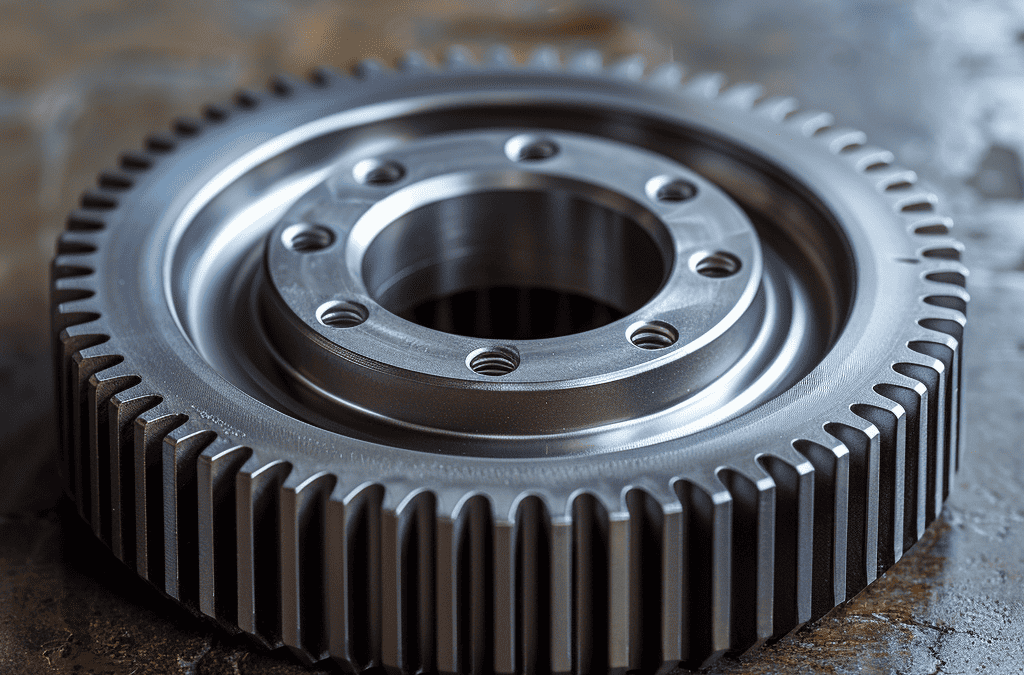

The Fundamentals of Gear Tooth Strength
Gears are an essential component in many machines and equipment used in various industries, including automotive, aerospace, and manufacturing. Gear tooth strength is a vital factor that determines the performance and reliability of gear systems. Gear teeth are designed to transmit power and motion between two shafts, and their strength determines how much load they can handle before failure. Therefore, understanding the fundamentals of gear tooth strength is essential for designing reliable and efficient gear systems.
The Importance of Gear Tooth Strength
Gear tooth failure can result in costly downtime, repair or replacement costs, and even safety hazards. It is essential to design gears with sufficient tooth strength to handle the expected loads and operating conditions. The strength of the gear teeth determines the maximum load that the gear can handle, and failure of the teeth can result in catastrophic failure of the entire system. For example, in automotive transmissions, gear tooth failure can result in loss of power transmission, which can cause accidents and injuries.
How Gear Teeth are Designed
Gear teeth are not simply cut or molded in a random shape. They are carefully designed to optimize their strength, durability, and efficiency. The shape of the tooth profile, the angle of the tooth face, and the size and shape of the fillet (the curved portion where the tooth meets the root) all contribute to the strength and performance of the gear.
The involute profile is the most common type of gear tooth profile, which provides smooth and efficient meshing of the teeth. The involute profile is a curve generated by the unwrapping of a string from a cylinder. The shape of the involute profile ensures that the teeth of two meshing gears have a constant velocity ratio and that the load is distributed evenly over the tooth surface.
The angle of the tooth face and the size and shape of the fillet also play important roles in the strength and performance of the gear. The tooth face angle affects the contact ratio, which is the proportion of the tooth surface that is in contact with the mating gear tooth. A larger contact ratio results in smoother operation and less wear, but it also requires a larger gear size. The fillet size affects the strength of the gear tooth, as a larger fillet radius reduces stress concentrations and improves fatigue life.
Types of Gear Tooth Failure
There are several types of gear tooth failure that can occur, each with its own set of causes and symptoms. The most common types of failure are wear, pitting, bending fatigue, and tooth breakage.
1. Wear: Wear occurs when the surface of the tooth becomes worn or damaged due to friction and contact with other surfaces. It is the most common type of failure and can be caused by poor lubrication, misalignment, or contamination.
2. Pitting: Pitting is a type of fatigue failure that occurs when small cracks form on the surface of the tooth and eventually lead to small craters or pits. It is caused by the repeated cyclic loading of the gear teeth, which creates stress concentrations that can lead to crack formation.
3. Bending fatigue: Bending fatigue occurs when the tooth is subjected to cyclical loading and unloading, causing the tooth to bend and eventually fail. It is caused by the bending stresses that are created when the gear tooth engages with the mating gear tooth.
4. Tooth breakage: Tooth breakage occurs when the tooth is subjected to a sudden overload or shock. It can be caused by a variety of factors, including manufacturing defects, misalignment, or excessive load.
Factors Affecting Gear Tooth Strength
There are several factors that can affect the strength and durability of gear teeth. These include the material properties of the gear, the design and manufacturing process, the operating conditions of the gear, and the type of loading it is subjected to.
1. Material properties: The material properties of the gear, such as hardness, toughness, and fatigue strength, all play a role in determining its strength and durability. The choice of material depends on the application and operating conditions, as well as cost and availability.
2. Design and manufacturing process: The design and manufacturing process can also affect the strength of the gear, as errors or inconsistencies in the manufacturing process can lead to weak spots or defects in the tooth structure. Proper design and manufacturing techniques can help to reduce stress concentrations and improve fatigue life.
3. Operating conditions: The operating conditions of the gear, such as temperature, speed, and lubrication, can also affect its strength and durability. High temperatures can reduce the strength of the material, while poor lubrication can increase wear and reduce fatigue life.
4. Loading: The type of loading that the gear is subjected to, whether it is static or dynamic, and the direction and magnitude of the load, can all impact the strength and durability of the teeth.
Measuring Gear Tooth Strength
There are several methods for measuring the strength and durability of gear teeth. These include static and dynamic testing, fatigue testing, and wear testing.
1. Static testing: Static testing involves subjecting the gear to a single load and measuring its deflection or deformation. This can be used to determine the gear’s strength and stiffness, as well as its ability to withstand sudden loads.
2. Dynamic testing: Dynamic testing involves subjecting the gear to repeated loads and measuring its response over time. This can be used to determine the gear’s fatigue life and its ability to withstand cyclic loading.
3. Fatigue testing: Fatigue testing involves subjecting the gear to cyclical loading and unloading to determine its fatigue strength. This is an important factor in determining the gear’s durability and reliability.
4. Wear testing: Wear testing involves measuring the rate of wear of the gear teeth over time. This can be used to determine the gear’s lubrication requirements and its ability to withstand wear.
Improving Gear Tooth Strength
There are several ways to improve the strength and durability of gear teeth. These include using stronger materials, optimizing the design and manufacturing process, and controlling the operating conditions of the gear.
1. Using stronger materials: Using stronger materials, such as high-strength steel or composite materials, can significantly improve the strength and durability of the gear. However, these materials may be more expensive and harder to work with.
2. Optimizing the design and manufacturing process: Optimizing the design and manufacturing process, by reducing errors and inconsistencies and improving the quality of the tooth structure, can also improve the strength and durability of the gear. This can be achieved through the use of advanced manufacturing techniques, such as precision machining and heat treatment.
3. Controlling the operating conditions: Controlling the operating conditions of the gear, by maintaining proper lubrication and avoiding extreme temperatures and speeds, can also help to improve its strength and durability. Regular maintenance and inspection can also help to identify potential problems before they lead to failure.
Understanding the fundamentals of gear tooth strength is essential for designing reliable and efficient gear systems. By considering factors such as material properties, design and manufacturing process, operating conditions, and load, engineers can optimize gear tooth strength and improve the performance and reliability of gear systems. Regular testing and maintenance can also help to ensure that gears continue to perform optimally over time.

Factors Affecting Gear Tooth Strength and Durability
Gear tooth strength and durability are critical factors that affect the performance and longevity of mechanical systems. Understanding the factors that affect gear tooth strength and durability can help engineers design more efficient and reliable gear systems. In this section, we will discuss the main factors that affect gear tooth strength and durability, including material properties, manufacturing processes, design factors, operating conditions, and maintenance and inspection.
Material Properties
The material properties of the gear are one of the most significant factors affecting its strength and durability. The most common materials used for gears are steel, cast iron, and bronze. Each material has its own unique properties that affect its performance.
- Steel is a strong and durable material that is commonly used for high-load applications. However, it is also more prone to wear and fatigue than other materials. Steel gears can be heat-treated to improve their strength and durability. Heat treatment involves heating the gear to a specific temperature, holding it at that temperature for a specific time, and then cooling it at a specific rate. This process can help improve the hardness, toughness, and wear resistance of the gear.
- Cast iron is less strong than steel, but it is more wear-resistant. It is often used for low-speed applications. Cast iron has good machinability and can be easily cast into complex shapes. However, it has lower strength and stiffness than steel, which can limit its use in high-load applications.
- Bronze is less wear-resistant than cast iron, but it has excellent corrosion resistance. It is often used in marine and offshore applications. Bronze has good machinability and can be easily cast into complex shapes. However, it has lower strength and stiffness than steel, which can limit its use in high-load applications.
The choice of material depends on the specific requirements of the application, including the operating conditions, the load, and the speed of the gear.
Manufacturing Processes
The manufacturing process used to produce the gear can also affect its strength and durability. The most common manufacturing processes used for gears are hobbing, shaping, and milling.
- Hobbing is a fast and efficient process that produces accurate and consistent results. However, it can also produce high levels of stress in the gear teeth. This stress can be reduced by using a process called shot peening, which involves bombarding the gear teeth with small metal balls. This process can help improve the fatigue life of the gear.
- Shaping is a slower process that produces less stress in the teeth. However, it is less accurate than hobbing. Shaping can be used to produce large gears or gears with unusual shapes.
- Milling is a versatile process that can produce complex shapes and profiles. However, it is also more prone to errors and inconsistencies. Milling can be used to produce small gears or gears with special features.
Proper selection of the manufacturing process can help minimize stress and improve the accuracy and consistency of the gear teeth.
Design Factors
The design of the gear can also affect its strength and durability. The most critical design factors include the tooth profile, the pitch, and the helix angle.
- Tooth profile determines the contact area between the gear teeth and the amount of load that can be transmitted. A proper tooth profile can help distribute the load evenly and reduce stress on the gear teeth. The most common tooth profiles are involute and cycloidal.
- Pitch determines the spacing between the teeth and the size of the gear. A proper pitch can help minimize noise and vibration and improve the efficiency of the gear system. Pitch can be measured in several ways, including diametral pitch, circular pitch, and module.
- Helix angle determines the direction of the load and the amount of sliding that occurs between the teeth. A proper helix angle can help reduce wear and improve the efficiency of the gear system. Helix angles can be straight, spiral, or hypoid.
Proper design of these factors can significantly improve the strength and durability of the gear.
Operating Conditions
The operating conditions of the gear can also affect its strength and durability. The most critical operating factors include the load, the speed, and the lubrication.
- Load determines the amount of stress that is placed on the gear teeth. Excessive load can cause premature wear and failure of the gear. Engineers can use various methods to calculate the load capacity of a gear, including the Lewis equation, the AGMA formula, and the ISO standard.
- Speed determines the amount of heat that is generated and the rate of wear that occurs. High speeds can cause overheating and rapid wear of the gear teeth. Engineers can use various methods to calculate the speed capacity of a gear, including the AGMA formula, the ISO standard, and the DIN standard.
- Lubrication determines the amount of friction that occurs between the gear teeth and the amount of wear that is caused by that friction. Proper lubrication can significantly improve the efficiency and longevity of the gear system. Engineers can use various types of lubricants, including oils, greases, and solid lubricants.
Proper control of these operating factors can significantly improve the strength and durability of the gear.
Maintenance and Inspection
Proper maintenance and inspection of the gear can also affect its strength and durability. Regular inspection of the gear can identify any signs of wear or damage before they become serious problems. Regular maintenance can ensure that the gear is properly lubricated and that any worn or damaged parts are replaced.
- Visual inspection can help identify any signs of wear, damage, or misalignment. This can be done using a simple flashlight or a specialized inspection tool.
- Vibration analysis can help identify any signs of imbalance or misalignment. This can be done using specialized equipment that measures the vibration of the gear system.
- Lubrication analysis can help identify any signs of contamination or degradation of the lubricant. This can be done using specialized equipment that measures the properties of the lubricant.
Proper maintenance and inspection can significantly extend the life of the gear and reduce the risk of failure.
By understanding and controlling these factors, engineers can design gear systems that are optimized for their specific application and that provide reliable and efficient performance over the long term. Proper selection of materials, manufacturing processes, design factors, operating conditions, and maintenance and inspection practices can help ensure that the gear system meets or exceeds the required performance specifications.
Heat Treatment
Heat treatment is a process that can significantly improve the strength and durability of gears. Heat treatment involves heating the gear to a specific temperature, holding it at that temperature for a specific time, and then cooling it at a specific rate. This process can help improve the hardness, toughness, and wear resistance of the gear.
- Case hardening is a heat treatment process that hardens the surface of the gear while leaving the core relatively soft. This process can help improve the wear resistance of the gear while maintaining its toughness. Case hardening can be done using several methods, including carburizing, nitriding, and induction hardening.
- Induction hardening is a heat treatment process that uses an electromagnetic field to heat the surface of the gear. This process can help improve the wear resistance of the gear without affecting its core properties. Induction hardening is often used for large gears or gears with complex shapes.
- Carburizing is a heat treatment process that adds carbon to the surface of the gear. This process can help improve the hardness and wear resistance of the gear. Carburizing is often used for high-load applications.
Proper selection of heat treatment processes can help improve the strength and durability of the gear, making it more resistant to wear, fatigue, and failure.

Understanding Gear Tooth Strength: A Mechanical Analysis
Gears are an essential component of many mechanical systems, providing the means to transmit power and motion between rotating shafts. The strength and durability of gear teeth are critical factors in ensuring reliable and efficient performance over the long term.
Mechanical analysis techniques are essential for evaluating gear tooth strength and optimizing gear design. In this blog post, we will discuss the basics of mechanical analysis and the different techniques that can be used to evaluate gear tooth strength.
Background on Gear Teeth
Gears come in many different shapes and sizes, and are used in a wide variety of applications. The most common types of gears are spur gears, helical gears, and bevel gears, each of which has its own unique advantages and disadvantages.
The strength and durability of gear teeth are critical factors in ensuring reliable and efficient performance. Failure of gear teeth can result in significant downtime and repair costs, making it essential to design gears that can withstand the loads and stresses that they will be subjected to.
Mechanical Analysis Techniques for Gear Tooth Strength
Mechanical analysis techniques are used to evaluate the strength and durability of gear teeth by simulating the loads and stresses that the gears will be subjected to. The following are some of the most commonly used mechanical analysis techniques for evaluating gear tooth strength:
Finite Element Analysis (FEA)
FEA is a numerical technique used to analyze the behavior of structures under different types of loads. In the context of gear tooth strength, FEA is used to analyze the stresses and strains that occur in the gear teeth under different loading conditions.
FEA works by dividing the gear tooth into small elements and applying loads and boundary conditions to each element. The software then calculates the stresses and strains that occur in each element and uses this information to determine the overall strength and durability of the gear tooth.
FEA can be used to identify weak points in the design, optimize the tooth profile, and determine the maximum load that the gear can handle.
Fatigue Analysis
Fatigue analysis is a technique used to determine the life expectancy of gear teeth under cyclic loading conditions. Cyclic loading can cause microscopic cracks to form in the gear teeth, which can eventually lead to failure.
Fatigue analysis works by subjecting the gear to a series of loads and measuring the resulting stresses and strains. The software then uses this information to calculate the number of cycles that the gear can withstand before failure occurs.
Fatigue analysis can be used to optimize the design of the gear teeth, select appropriate materials, and determine the proper lubrication requirements.
Contact Analysis
Contact analysis is a technique used to determine the contact stress between gear teeth. High contact stress can lead to wear, pitting, and tooth breakage, making it a critical factor in gear tooth performance.
Contact analysis works by modeling the contact between the gear teeth and calculating the resulting stresses and strains. The software then uses this information to determine the maximum contact stress and the amount of wear that is likely to occur over time.
Contact analysis can be used to optimize the tooth profile, select appropriate materials, and determine the proper lubrication requirements.
Dynamic Analysis
Dynamic analysis is a technique used to determine the response of gear teeth to dynamic loads. Dynamic loads can cause vibrations, noise, and wear in gear teeth.
Dynamic analysis works by modeling the vibrations and calculating the resulting stresses and strains. The software then uses this information to determine the maximum dynamic load that the gear can handle and the amount of wear that is likely to occur over time.
Dynamic analysis can be used to optimize the gear design, select appropriate materials, and determine the proper lubrication requirements.
Experimental Testing
Experimental testing is a technique used to validate the results of the mechanical analysis techniques. By subjecting the gear teeth to actual loads and measuring their performance, engineers can compare the data to the results of the mechanical analysis techniques to determine their accuracy.
Experimental testing can be used to validate new designs, optimize existing designs, and determine the proper lubrication requirements.
Additional Considerations
In addition to these mechanical analysis techniques, there are several other factors that engineers should consider when designing gear teeth. These include the gear’s operating environment, such as temperature and humidity, as well as the type of loading that the gear will be subjected to.
Engineers should also consider the manufacturing process used to produce the gear teeth, as this can affect their strength and durability. For example, heat treatment and surface finishing processes can be used to improve the strength and wear resistance of gear teeth.
Benefits of Mechanical Analysis Techniques
By using mechanical analysis techniques to evaluate gear tooth strength, engineers can:
* Identify weak points in the design and optimize the tooth profile to improve strength and durability.
* Determine the maximum load that the gear can handle, which can help to prevent overloading and reduce the risk of failure.
* Select appropriate materials for the gear teeth, which can improve strength, durability, and wear resistance.
* Determine the proper lubrication requirements, which can reduce friction and wear, improve efficiency, and extend the life of the gear.
Challenges Associated with Mechanical Analysis Techniques
While mechanical analysis techniques are powerful tools for evaluating gear tooth strength, there are also some challenges associated with their use. These challenges include:
* Material properties, manufacturing processes, and environmental factors can all affect the accuracy of the results. Engineers must take these factors into account when interpreting the results of the mechanical analysis techniques.
* Mechanical analysis techniques can be time-consuming and expensive, particularly for complex gear designs. Engineers must balance the cost and time required for mechanical analysis with the potential benefits.
* The results of mechanical analysis techniques are only as accurate as the assumptions and inputs used in the model. Engineers must use their expertise and experience to ensure that the assumptions and inputs are reasonable and accurate.
Case Studies
There are many examples of how mechanical analysis techniques have been used to improve gear tooth strength in real-world applications. For example, in the design of wind turbine gearboxes, engineers used FEA and fatigue analysis to optimize the tooth profile and select appropriate materials. This resulted in a significant increase in the life expectancy of the gearbox.
In another example, engineers used contact analysis to optimize the design of helical gears used in automotive transmissions. By optimizing the tooth profile and selecting appropriate materials, the engineers were able to reduce the contact stress and wear, resulting in improved performance and reduced maintenance costs.
Mechanical analysis techniques are essential for ensuring the strength and durability of gear teeth. By using FEA, fatigue analysis, contact analysis, dynamic analysis, and experimental testing, engineers can optimize the design of gear teeth, select appropriate materials, and determine the proper lubrication requirements. By considering additional factors, such as the operating environment and manufacturing process, engineers can further improve the performance and reliability of gear systems.

Improving Gear Tooth Strength: Design Considerations and Material Selection
Gear tooth strength is a critical factor in ensuring reliable and efficient gear performance. Improving gear tooth strength can help prevent tooth failure, reduce noise, and extend the lifespan of the gear system. In this blog post, we will discuss several design considerations and material selection options that can help improve gear tooth strength.
Optimizing Tooth Profile
The tooth profile is the shape of the tooth that engages with the mating gear. A well-designed tooth profile can distribute the load evenly, reduce stress concentrations, and improve contact conditions. Involute, cycloidal, and Novikov are common tooth profiles. The involute profile is the most commonly used due to its simplicity and ease of manufacturing. However, cycloidal and Novikov profiles can provide better strength and noise reduction.
Benefits of Cycloidal and Novikov Profiles
Cycloidal and Novikov profiles have unique advantages over involute profiles. Cycloidal profiles have rounded tooth tips that can reduce noise and vibration, while Novikov profiles have a curved tooth shape that can improve load distribution and reduce stress concentrations. Additionally, both profiles can provide higher contact ratios, which can improve gear efficiency and reduce wear.
Increasing Tooth Size
Increasing tooth size is another effective way to improve gear tooth strength. Larger teeth can handle higher loads and have a larger surface area for load distribution. However, increasing tooth size can also increase the size of the gear, which may not be feasible in some applications. Additionally, larger teeth may require more material, which can increase cost.
Tradeoffs of Increasing Tooth Size
While increasing tooth size can improve gear tooth strength, there are some tradeoffs to consider. Larger teeth can increase the size and weight of the gear, which can make it more difficult to install and maintain. Additionally, larger teeth can require more material, which can increase cost and reduce efficiency. Engineers must carefully balance these tradeoffs to determine the optimal tooth size for a given application.
Selecting Appropriate Materials
Selecting appropriate materials is critical for gear tooth strength. The material should have good wear resistance, fatigue strength, and toughness. Common materials used for gears include steel, cast iron, and bronze. Steel is the most commonly used material due to its high strength and durability. However, steel can be susceptible to wear and corrosion. Cast iron is less expensive than steel but has lower strength and is more prone to wear. Bronze has good wear resistance and corrosion resistance but is more expensive than steel.
Advantages of Different Materials
Each material has its unique advantages and disadvantages. Steel alloys, such as AISI 4140 and 4340, are commonly used for gears due to their high strength and durability. Cast iron is often used for large, slow-moving gears due to its low cost and good wear resistance. Bronze alloys, such as phosphor bronze and aluminum bronze, are commonly used for gears that require high corrosion resistance and low friction.
Heat Treatment
Heat treatment is a process used to improve the properties of gear materials. Heat treatment involves heating the material to a high temperature and then cooling it rapidly. This process can increase the hardness, strength, and wear resistance of the material. Common heat treatment processes include carburizing, nitriding, and induction hardening.
Effects of Different Heat Treatments
Different heat treatments can have different effects on the material properties. Carburizing, for example, can increase the surface hardness of the gear tooth, while nitriding can improve the fatigue strength and wear resistance. Induction hardening can provide a hard surface layer while maintaining a tough core, which can improve the overall strength and durability of the gear tooth.
Surface Treatments
Surface treatments can also improve gear tooth strength. Surface treatments involve modifying the surface of the gear tooth to improve its properties. Common surface treatments include shot peening, nitriding, and carbonitriding. Shot peening involves bombarding the surface of the gear tooth with small balls, which can increase the fatigue strength and reduce stress concentrations. Nitriding and carbonitriding involve introducing nitrogen or carbon into the surface of the gear tooth, which can improve wear resistance and reduce friction.
Advantages of Surface Treatments
Surface treatments can provide several advantages over untreated surfaces. Shot peening, for example, can increase the fatigue strength of the gear tooth by up to 50%. Nitriding and carbonitriding can improve wear resistance and reduce friction, which can increase the lifespan of the gear system. Additionally, surface treatments can provide a cosmetic benefit by improving the appearance of the gear tooth.
Improving gear tooth strength is critical for ensuring reliable and efficient gear performance. By considering design considerations such as tooth profile and tooth size, as well as material selection and surface treatments, engineers can improve gear tooth strength and ensure reliable and efficient performance in demanding applications. By carefully balancing these factors, engineers can optimize gear design for a given application and improve the overall performance and lifespan of the gear system.
Related Reading
If you found this blog post helpful, be sure to check out our other articles on mechanical engineering and technology:
- Types of Gears: An Overview
- Understanding Gear Ratios: How to Calculate and Use Them
- Gearbox Maintenance: Tips and Best Practices
- Maag Gear Technology Booklet
- What’s New in Gear Manufacturing
- Gear Tooth Strength
* [Gear Design and Analysis](https://www.amazon.com/Gear-Design-Analysis-Second-Edition/dp/0831131049)
* [Finite Element Analysis of Gears](https://www.sciencedirect.com/book/9780080438895/finite-element-analysis-of-gears)
* [Fatigue Analysis of Gears](https://www.sciencedirect.com/science/article/pii/B9780128134817000030)
* [Contact Analysis of Gears](https://www.sciencedirect.com/science/article/pii/B9780128134817000055)
* [Dynamic Analysis of Gears](https://www.sciencedirect.com/science/article/pii/B978012813481700008X)
* [Experimental Testing of Gears](https://www.sciencedirect.com/science/article/pii/B9780128134817000103)
* [Gear Manufacturing Processes](https://www.sciencedirect.com/science/article/pii/B978012813481700011X)
* [Design and Analysis of Wind Turbine Gearboxes](https://www.sciencedirect.com/science/article/pii/B9780128194423000061)
* [Optimization of Helical Gear Design for Automotive Transmissions](https://www.sciencedirect.com/science/article/pii/S2352340918308275)
Stay tuned for more articles and updates on our blog, and don’t hesitate to contact us if you have any questions or comments!


