
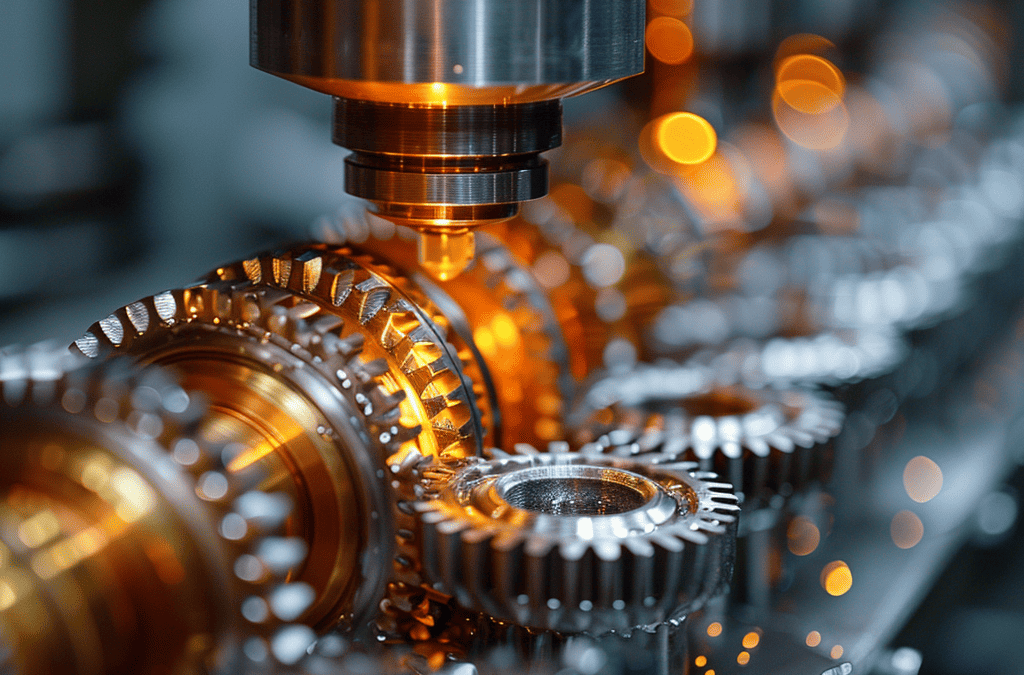

Understanding the Importance of Gear Tooth Surface Treatments
Gears are critical components in mechanical systems, responsible for transmitting power and motion. The performance of these gears depends on various factors, including material selection, design, and manufacturing processes. One factor that significantly impacts gear performance is the surface treatment applied to the gear teeth.
Surface treatments enhance the gear’s resistance to wear, fatigue, and corrosion, extending its service life and improving overall system efficiency. Wear and fatigue are the primary challenges in gear design. Wear occurs due to the sliding and rolling contact between the gear teeth, resulting in material removal from the surface. This wear can cause increased clearance between the gears, leading to reduced transmission efficiency and noise. Fatigue, on the other hand, results from the cyclic loading of the gear teeth, causing microscopic cracks that can propagate and eventually lead to failure.
Surface treatments can help mitigate these issues by improving the hardness, strength, and toughness of the gear teeth. These treatments involve altering the microstructure, chemistry, or surface topology of the material to improve its performance. By carefully selecting and applying the appropriate surface treatment, engineers can significantly improve the performance and longevity of the gears in their systems.
Choosing the Right Surface Treatment for Your Application
Selecting the appropriate surface treatment for a gear depends on various factors, including the operating conditions, the required performance, and the material being used. For instance, case hardening may be suitable for high-load applications, while nitriding or nitrocarburizing might be better for low-load situations. Additionally, the cost and availability of the surface treatment process should be considered. Consulting with experts in the field and conducting thorough testing can help ensure that the chosen surface treatment meets the specific requirements of the application.
The Economic Benefits of Surface Treatments
Investing in surface treatments for gears can yield significant economic benefits in the long run. By enhancing the gear’s resistance to wear and fatigue, these treatments can extend the service life of the components, reducing the frequency of replacement and maintenance. Moreover, improved gear performance can lead to increased system efficiency, saving energy and reducing operating costs. Additionally, surface treatments can help enhance the reliability and durability of mechanical systems, minimizing downtime and improving overall productivity.
Common Surface Treatments for Gear Teeth
Carburizing is a heat treatment process that involves adding carbon to the surface of the gear teeth. This process increases the hardness and wear resistance of the gear teeth, making them more durable and long-lasting.
Nitriding is a surface treatment process that involves introducing nitrogen into the surface of the gear teeth. This process improves the hardness, wear resistance, and fatigue strength of the gear teeth, making them more suitable for high-load applications.
Nitrocarburizing is a surface treatment process that combines the benefits of both nitriding and carburizing. This process increases the hardness, wear resistance, and corrosion resistance of the gear teeth, making them suitable for use in harsh environments.
Coatings are thin layers of material that are applied to the surface of the gear teeth to improve their performance. These coatings can provide additional protection against wear, corrosion, and heat, making them suitable for use in extreme operating conditions.
The Benefits of Surface Treatments for Gear Teeth
Surface treatments can provide numerous benefits for gear teeth, including:
* Increased wear resistance: Surface treatments can improve the hardness and durability of gear teeth, reducing wear and extending their service life.
* Improved fatigue strength: Surface treatments can enhance the fatigue strength of gear teeth, reducing the risk of failure under cyclic loading.
* Enhanced corrosion resistance: Surface treatments can provide additional protection against corrosion, reducing the risk of damage and extending the service life of the gear teeth.
* Improved heat resistance: Surface treatments can improve the heat resistance of gear teeth, making them more suitable for use in high-temperature applications.
* Reduced noise and vibration: Surface treatments can improve the surface finish of gear teeth, reducing noise and vibration and improving overall system performance.
Choosing the Right Surface Treatment for Your Gear Teeth
When selecting a surface treatment for your gear teeth, it’s important to consider the specific requirements of your application. Factors such as operating conditions, required performance, and material selection can all impact the suitability of a particular surface treatment. Consulting with a surface treatment expert can help ensure that the chosen treatment is appropriate for your needs.
Conclusion
Surface treatments play a critical role in the performance and longevity of gear teeth. By carefully selecting and applying the appropriate surface treatment, engineers can significantly improve the resistance of gears to wear, fatigue, and corrosion, leading to increased system efficiency and reduced maintenance costs. Common surface treatments for gear teeth include carburizing, nitriding, nitrocarburizing, and coatings, each with their own unique benefits and applications. Choosing the right surface treatment for your application requires careful consideration of various factors and consultation with experts in the field. Ultimately, investing in surface treatments for gear teeth can yield significant economic benefits in the long run, making it a worthwhile investment for any mechanical system.
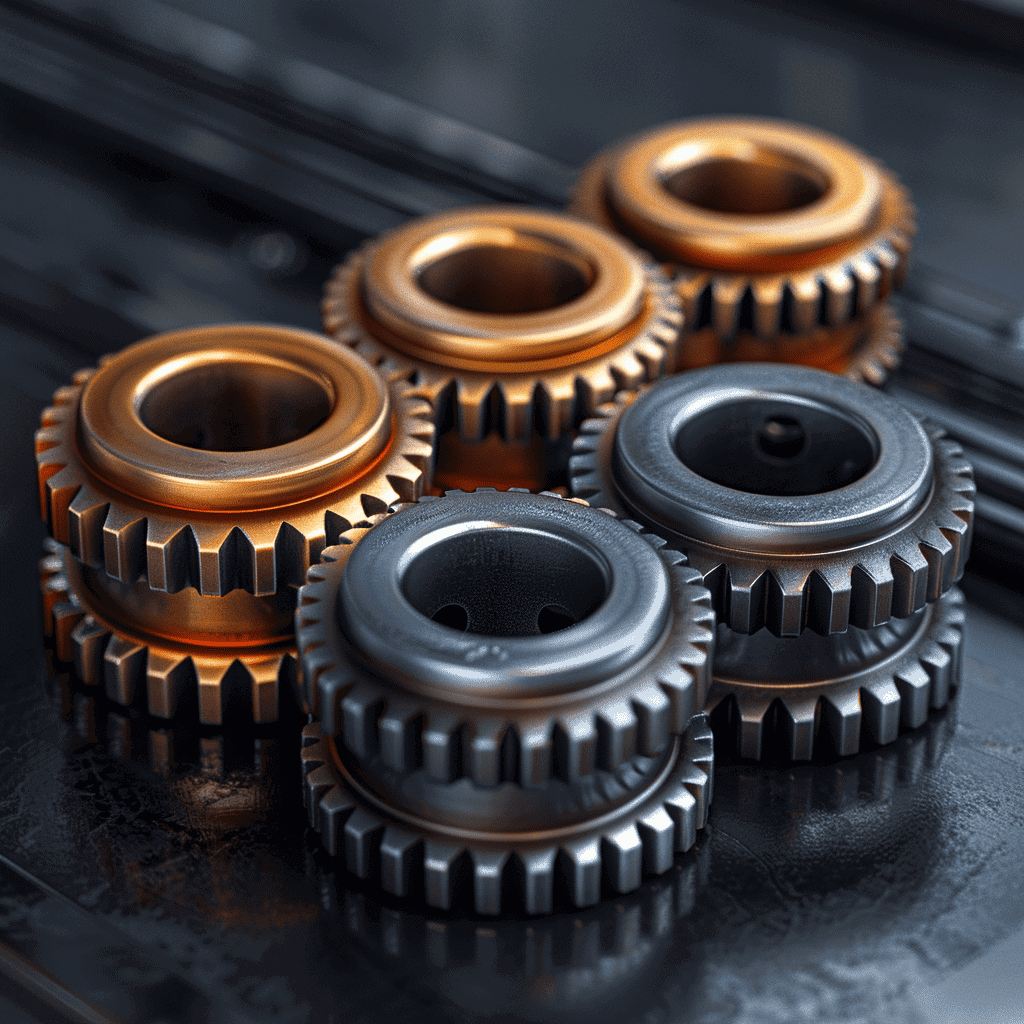
Understanding the Importance of Gear Tooth Surface Treatments
Gears are essential components in various mechanical systems, transmitting power and motion. The performance of these gears depends on factors such as material selection, design, and manufacturing processes. One crucial aspect that significantly impacts gear performance is the surface treatment applied to the gear teeth. Surface treatments enhance the gear’s resistance to wear, fatigue, and corrosion, extending its service life and improving overall system efficiency.
Wear and Fatigue: The Primary Challenges in Gear Design
Gears are subjected to various loads and stresses during operation, leading to wear and fatigue. Wear occurs due to the sliding and rolling contact between the gear teeth, resulting in the removal of material from the surface. This wear can cause increased clearance between the gears, leading to reduced transmission efficiency and noise. On the other hand, fatigue results from the cyclic loading of the gear teeth, causing microscopic cracks that can propagate and eventually lead to failure. Surface treatments can help mitigate these issues by improving the hardness, strength, and toughness of the gear teeth.
Enhancing Gear Resistance with Surface Treatments
Surface treatments are used to modify the properties of the gear tooth surface, enhancing its resistance to wear and fatigue. These treatments involve altering the microstructure, chemistry, or surface topology of the material to improve its performance. Some common surface treatments include case hardening, nitriding, nitrocarburizing, and coatings. By carefully selecting and applying the appropriate surface treatment, engineers can significantly improve the performance and longevity of the gears in their systems.
Choosing the Right Surface Treatment for Your Application
Selecting the appropriate surface treatment for a gear depends on various factors, including the operating conditions, the required performance, and the material being used. For instance, case hardening may be suitable for high-load applications, while nitriding or nitrocarburizing might be better for low-load situations. Additionally, the cost and availability of the surface treatment process should be considered. Consulting with experts in the field and conducting thorough testing can help ensure that the chosen surface treatment meets the specific requirements of the application.
The Economic Benefits of Surface Treatments
Investing in surface treatments for gears can yield significant economic benefits in the long run. By enhancing the gear’s resistance to wear and fatigue, these treatments can extend the service life of the components, reducing the frequency of replacement and maintenance. Moreover, improved gear performance can lead to increased system efficiency, saving energy and reducing operating costs. Additionally, surface treatments can help enhance the reliability and durability of mechanical systems, minimizing downtime and improving overall productivity.
Common Surface Treatments for Gear Teeth
Carburizing is a heat treatment process that involves adding carbon to the surface of the gear teeth. This process increases the hardness and wear resistance of the gear teeth, making them more durable and long-lasting.
Nitriding is a surface treatment process that involves introducing nitrogen into the surface of the gear teeth. This process improves the hardness, wear resistance, and fatigue strength of the gear teeth, making them more suitable for high-load applications.
Nitrocarburizing is a surface treatment process that combines the benefits of both nitriding and carburizing. This process increases the hardness, wear resistance, and corrosion resistance of the gear teeth, making them suitable for use in harsh environments.
Coatings are thin layers of material that are applied to the surface of the gear teeth to improve their performance. These coatings can provide additional protection against wear, corrosion, and heat, making them suitable for use in extreme operating conditions.
The Benefits of Surface Treatments for Gear Teeth
Surface treatments can provide numerous benefits for gear teeth, including:
* Increased wear resistance: Surface treatments can improve the hardness and durability of gear teeth, reducing wear and extending their service life.
* Improved fatigue strength: Surface treatments can enhance the fatigue strength of gear teeth, reducing the risk of failure under cyclic loading.
* Enhanced corrosion resistance: Surface treatments can provide additional protection against corrosion, reducing the risk of damage and extending the service life of the gear teeth.
* Improved heat resistance: Surface treatments can improve the heat resistance of gear teeth, making them more suitable for use in high-temperature applications.
* Reduced noise and vibration: Surface treatments can improve the surface finish of gear teeth, reducing noise and vibration and improving overall system performance.
Choosing the Right Surface Treatment for Your Gear Teeth
When selecting a surface treatment for your gear teeth, it’s important to consider the specific requirements of your application. Factors such as operating conditions, required performance, and material selection can all impact the suitability of a particular surface treatment. Consulting with a surface treatment expert can help ensure that the chosen treatment is appropriate for your needs.
Conclusion
Surface treatments play a critical role in the performance and longevity of gear teeth. By carefully selecting and applying the appropriate surface treatment, engineers can significantly improve the resistance of gears to wear, fatigue, and corrosion, leading to increased system efficiency and reduced maintenance costs. Common surface treatments for gear teeth include carburizing, nitriding, nitrocarburizing, and coatings, each with their own unique benefits and applications.
FAQs
1. What are the primary challenges in gear design?
The primary challenges in gear design are wear and fatigue.
2. How do surface treatments help mitigate wear and fatigue in gears?
Surface treatments improve the hardness, strength, and toughness of gear teeth, increasing their resistance to wear and fatigue.
3. What factors should be considered when choosing a surface treatment for gear teeth?
Factors such as operating conditions, required performance, and material selection should be considered when choosing a surface treatment for gear teeth.
4. What are the common surface treatments for gear teeth?
Common surface treatments for gear teeth include carburizing, nitriding, nitrocarburizing, and coatings.
5. What are the benefits of surface treatments for gear teeth?
Surface treatments can provide numerous benefits for gear teeth, including increased wear resistance, improved fatigue strength, enhanced corrosion resistance, improved heat resistance, and reduced noise and vibration.

Understanding the Importance of Gear Tooth Surface Treatments
Gears are essential components in various mechanical systems, transmitting power and motion. The performance of these gears depends on factors such as material selection, design, and manufacturing processes. One crucial aspect that significantly impacts gear performance is the surface treatment applied to the gear teeth. Surface treatments enhance the gear’s resistance to wear, fatigue, and corrosion, extending its service life and improving overall system efficiency.
Wear and Fatigue: The Primary Challenges in Gear Design
Gears are subjected to various loads and stresses during operation, leading to wear and fatigue. Wear occurs due to the sliding and rolling contact between the gear teeth, resulting in the removal of material from the surface. This wear can cause increased clearance between the gears, leading to reduced transmission efficiency and noise. On the other hand, fatigue results from the cyclic loading of the gear teeth, causing microscopic cracks that can propagate and eventually lead to failure. Surface treatments can help mitigate these issues by improving the hardness, strength, and toughness of the gear teeth.
Enhancing Gear Resistance with Surface Treatments
Surface treatments are used to modify the properties of the gear tooth surface, enhancing its resistance to wear and fatigue. These treatments involve altering the microstructure, chemistry, or surface topology of the material to improve its performance. Some common surface treatments include case hardening, nitriding, nitrocarburizing, and coatings. By carefully selecting and applying the appropriate surface treatment, engineers can significantly improve the performance and longevity of the gears in their systems.
Choosing the Right Surface Treatment for Your Application
Selecting the appropriate surface treatment for a gear depends on various factors, including the operating conditions, the required performance, and the material being used. For instance, case hardening may be suitable for high-load applications, while nitriding or nitrocarburizing might be better for low-load situations. Additionally, the cost and availability of the surface treatment process should be considered. Consulting with experts in the field and conducting thorough testing can help ensure that the chosen surface treatment meets the specific requirements of the application.
The Economic Benefits of Surface Treatments
Investing in surface treatments for gears can yield significant economic benefits in the long run. By enhancing the gear’s resistance to wear and fatigue, these treatments can extend the service life of the components, reducing the frequency of replacement and maintenance. Moreover, improved gear performance can lead to increased system efficiency, saving energy and reducing operating costs. Additionally, surface treatments can help enhance the reliability and durability of mechanical systems, minimizing downtime and improving overall productivity.
Common Surface Treatments for Gear Teeth
Carburizing is a heat treatment process that involves adding carbon to the surface of the gear teeth. This process increases the hardness and wear resistance of the gear teeth, making them more durable and long-lasting.
Nitriding is a surface treatment process that involves introducing nitrogen into the surface of the gear teeth. This process improves the hardness, wear resistance, and fatigue strength of the gear teeth, making them more suitable for high-load applications.
Nitrocarburizing is a surface treatment process that combines the benefits of both nitriding and carburizing. This process increases the hardness, wear resistance, and corrosion resistance of the gear teeth, making them suitable for use in harsh environments.
Coatings are thin layers of material that are applied to the surface of the gear teeth to improve their performance. These coatings can provide additional protection against wear, corrosion, and heat, making them suitable for use in extreme operating conditions.
The Benefits of Surface Treatments for Gear Teeth
Surface treatments can provide numerous benefits for gear teeth, including:
* Increased wear resistance: Surface treatments can improve the hardness and durability of gear teeth, reducing wear and extending their service life.
* Improved fatigue strength: Surface treatments can enhance the fatigue strength of gear teeth, reducing the risk of failure under cyclic loading.
* Enhanced corrosion resistance: Surface treatments can provide additional protection against corrosion, reducing the risk of damage and extending the service life of the gear teeth.
* Improved heat resistance: Surface treatments can improve the heat resistance of gear teeth, making them more suitable for use in high-temperature applications.
* Reduced noise and vibration: Surface treatments can improve the surface finish of gear teeth, reducing noise and vibration and improving overall system performance.
Choosing the Right Surface Treatment for Your Gear Teeth
When selecting a surface treatment for your gear teeth, it’s important to consider the specific requirements of your application. Factors such as operating conditions, required performance, and material selection can all impact the suitability of a particular surface treatment. It’s recommended to consult with a surface treatment expert to ensure that the chosen treatment is appropriate for your needs.
Conclusion
Surface treatments play a critical role in the performance and longevity of gear teeth. By carefully selecting and applying the appropriate surface treatment, engineers can significantly improve the resistance of gears to wear, fatigue, and corrosion, leading to increased system efficiency and reduced maintenance costs. Common surface treatments for gear teeth include carburizing, nitriding, nitrocarburizing, and coatings, each with their own unique benefits and applications.
FAQs
1. What are the primary factors that affect gear performance?
The primary factors that affect gear performance are material selection, design, and manufacturing processes.
2. How do surface treatments improve gear performance?
Surface treatments improve gear performance by enhancing the resistance of gear teeth to wear, fatigue, and corrosion.
3. What are the common surface treatments for gear teeth?
Common surface treatments for gear teeth include carburizing, nitriding, nitrocarburizing, and coatings.
4. How do you choose the right surface treatment for your gear teeth?
Choosing the right surface treatment for your gear teeth depends on factors such as operating conditions, required performance, and material selection. Consulting with a surface treatment expert can help ensure that the chosen treatment meets the specific requirements of the application.
5. What are the economic benefits of investing in surface treatments for gears?
Investing in surface treatments for gears can yield significant economic benefits in the long run, including extended component life, reduced maintenance costs, increased system efficiency, and improved productivity.

Understanding the Importance of Gear Tooth Surface Treatments
Gears are essential components in various mechanical systems, transmitting power and motion. The performance of these gears depends on factors such as material selection, design, and manufacturing processes. One crucial aspect that significantly impacts gear performance is the surface treatment applied to the gear teeth. Surface treatments enhance the gear’s resistance to wear, fatigue, and corrosion, extending its service life and improving overall system efficiency.
Wear and Fatigue: The Primary Challenges in Gear Design
Gears are subjected to various loads and stresses during operation, leading to wear and fatigue. Wear occurs due to the sliding and rolling contact between the gear teeth, resulting in the removal of material from the surface. This wear can cause increased clearance between the gears, leading to reduced transmission efficiency and noise. On the other hand, fatigue results from the cyclic loading of the gear teeth, causing microscopic cracks that can propagate and eventually lead to failure. Surface treatments can help mitigate these issues by improving the hardness, strength, and toughness of the gear teeth.
Enhancing Gear Resistance with Surface Treatments
Surface treatments are used to modify the properties of the gear tooth surface, enhancing its resistance to wear and fatigue. These treatments involve altering the microstructure, chemistry, or surface topology of the material to improve its performance. Some common surface treatments include case hardening, nitriding, nitrocarburizing, and coatings. By carefully selecting and applying the appropriate surface treatment, engineers can significantly improve the performance and longevity of the gears in their systems.
Choosing the Right Surface Treatment for Your Application
Selecting the appropriate surface treatment for a gear depends on various factors, including the operating conditions, the required performance, and the material being used. For instance, case hardening may be suitable for high-load applications, while nitriding or nitrocarburizing might be better for low-load situations. Additionally, the cost and availability of the surface treatment process should be considered. Consulting with experts in the field and conducting thorough testing can help ensure that the chosen surface treatment meets the specific requirements of the application.
The Economic Benefits of Surface Treatments
Investing in surface treatments for gears can yield significant economic benefits in the long run. By enhancing the gear’s resistance to wear and fatigue, these treatments can extend the service life of the components, reducing the frequency of replacement and maintenance. Moreover, improved gear performance can lead to increased system efficiency, saving energy and reducing operating costs. Additionally, surface treatments can help enhance the reliability and durability of mechanical systems, minimizing downtime and improving overall productivity.
Common Surface Treatments for Gear Teeth
Carburizing is a heat treatment process that involves adding carbon to the surface of the gear teeth. This process increases the hardness and wear resistance of the gear teeth, making them more durable and long-lasting.
Nitriding is a surface treatment process that involves introducing nitrogen into the surface of the gear teeth. This process improves the hardness, wear resistance, and fatigue strength of the gear teeth, making them more suitable for high-load applications.
Nitrocarburizing is a surface treatment process that combines the benefits of both nitriding and carburizing. This process increases the hardness, wear resistance, and corrosion resistance of the gear teeth, making them suitable for use in harsh environments.
Coatings are thin layers of material that are applied to the surface of the gear teeth to improve their performance. These coatings can provide additional protection against wear, corrosion, and heat, making them suitable for use in extreme operating conditions.
The Benefits of Surface Treatments for Gear Teeth
Surface treatments can provide numerous benefits for gear teeth, including:
* Increased wear resistance: Surface treatments can improve the hardness and durability of gear teeth, reducing wear and extending their service life.
* Improved fatigue strength: Surface treatments can enhance the fatigue strength of gear teeth, reducing the risk of failure under cyclic loading.
* Enhanced corrosion resistance: Surface treatments can provide additional protection against corrosion, reducing the risk of damage and extending the service life of the gear teeth.
* Improved heat resistance: Surface treatments can improve the heat resistance of gear teeth, making them more suitable for use in high-temperature applications.
* Reduced noise and vibration: Surface treatments can improve the surface finish of gear teeth, reducing noise and vibration and improving overall system performance.
Choosing the Right Surface Treatment for Your Gear Teeth
When selecting a surface treatment for your gear teeth, it’s important to consider the specific requirements of your application. Factors such as operating conditions, required performance, and material selection can all impact the suitability of a particular surface treatment. Consulting with a surface treatment expert can help ensure that the chosen treatment is appropriate for your needs.
Conclusion
Surface treatments play a critical role in the performance and longevity of gear teeth. By carefully selecting and applying the appropriate surface treatment, engineers can significantly improve the resistance of gears to wear, fatigue, and corrosion, leading to increased system efficiency and reduced maintenance costs. Common surface treatments for gear teeth include carburizing, nitriding, nitrocarburizing, and coatings, each with their own unique benefits and applications. Ultimately, the right surface treatment for your gear teeth will depend on your specific application and requirements. By working with a reputable surface treatment provider and conducting thorough testing, you can ensure that your gears perform at their best and provide long-lasting, reliable service.Understanding the Importance of Gear Tooth Surface Treatments
Gear tooth surface treatments are essential in enhancing the performance and longevity of gears used in various mechanical systems. The surface treatment applied to gear teeth can significantly impact their resistance to wear, fatigue, and corrosion, thereby extending their service life and improving overall system efficiency. This blog post will discuss the role of surface treatments in gear performance, the common surface treatments used for gear teeth, and the benefits of these treatments.
The Role of Surface Treatments in Gear Performance
Gears are subjected to various loads and stresses during operation, leading to wear and fatigue. Wear occurs due to the sliding and rolling contact between the gear teeth, resulting in the removal of material from the surface. This wear can cause increased clearance between the gears, leading to reduced transmission efficiency and noise. Fatigue, on the other hand, results from the cyclic loading of the gear teeth, causing microscopic cracks that can propagate and eventually lead to failure. Surface treatments can help mitigate these issues by improving the hardness, strength, and toughness of the gear teeth.
Enhancing Gear Resistance with Surface Treatments
Surface treatments are used to modify the properties of the gear tooth surface, enhancing its resistance to wear and fatigue. These treatments involve altering the microstructure, chemistry, or surface topology of the material to improve its performance. Some common surface treatments include case hardening, nitriding, nitrocarburizing, and coatings. By carefully selecting and applying the appropriate surface treatment, engineers can significantly improve the performance and longevity of the gears in their systems.
Choosing the Right Surface Treatment for Your Application
Selecting the appropriate surface treatment for a gear depends on various factors, including the operating conditions, the required performance, and the material being used. Consulting with experts in the field and conducting thorough testing can help ensure that the chosen surface treatment meets the specific requirements of the application. For instance, case hardening may be suitable for high-load applications, while nitriding or nitrocarburizing might be better for low-load situations. Additionally, the cost and availability of the surface treatment process should be considered.
The Economic Benefits of Surface Treatments
Investing in surface treatments for gears can yield significant economic benefits in the long run. By enhancing the gear’s resistance to wear and fatigue, these treatments can extend the service life of the components, reducing the frequency of replacement and maintenance. Moreover, improved gear performance can lead to increased system efficiency, saving energy and reducing operating costs. Additionally, surface treatments can help enhance the reliability and durability of mechanical systems, minimizing downtime and improving overall productivity.
Common Surface Treatments for Gear Teeth
Carburizing is a heat treatment process that involves adding carbon to the surface of the gear teeth. This process increases the hardness and wear resistance of the gear teeth, making them more durable and long-lasting. Nitriding is a surface treatment process that involves introducing nitrogen into the surface of the gear teeth. This process improves the hardness, wear resistance, and fatigue strength of the gear teeth, making them more suitable for high-load applications. Nitrocarburizing is a surface treatment process that combines the benefits of both nitriding and carburizing. This process increases the hardness, wear resistance, and corrosion resistance of the gear teeth, making them suitable for use in harsh environments. Coatings are thin layers of material that are applied to the surface of the gear teeth to improve their performance. These coatings can provide additional protection against wear, corrosion, and heat, making them suitable for use in extreme operating conditions.
The Benefits of Surface Treatments for Gear Teeth
Surface treatments can provide numerous benefits for gear teeth, including:
* Increased wear resistance: Surface treatments can improve the hardness and durability of gear teeth, reducing wear and extending their service life.
* Improved fatigue strength: Surface treatments can enhance the fatigue strength of gear teeth, reducing the risk of failure under cyclic loading.
* Enhanced corrosion resistance: Surface treatments can provide additional protection against corrosion, reducing the risk of damage and extending the service life of the gear teeth.
* Improved heat resistance: Surface treatments can improve the heat resistance of gear teeth, making them more suitable for use in high-temperature applications.
* Reduced noise and vibration: Surface treatments can improve the surface finish of gear teeth, reducing noise and vibration and improving overall system performance.
Choosing the Right Surface Treatment for Your Gear Teeth
When selecting a surface treatment for your gear teeth, it’s important to consider the specific requirements of your application. Factors such as operating conditions, required performance, and material selection can all impact the suitability of a particular surface treatment. Consulting with a surface treatment expert can help ensure that the chosen treatment is appropriate for your needs.
Conclusion
Surface treatments play a critical role in the performance and longevity of gear teeth. By carefully selecting and applying the appropriate surface treatment, engineers can significantly improve the resistance of gears to wear, fatigue, and corrosion, leading to increased system efficiency and reduced maintenance costs. Common surface treatments for gear teeth include carburizing, nitriding, nitrocarburizing, and coatings, each with their own unique benefits and applications. Consulting with experts in the field and conducting thorough testing can help ensure that the chosen surface treatment meets the specific requirements of the application, providing long-lasting and reliable performance.Gear tooth surface treatments are essential for enhancing the performance and durability of gears in various mechanical systems. The primary challenges in gear design include wear and fatigue, which can lead to reduced transmission efficiency, noise, and failure. Surface treatments can help mitigate these issues by improving the hardness, strength, and toughness of the gear teeth.
When selecting a surface treatment for your gear teeth, it’s important to consider the specific requirements of your application, including operating conditions, required performance, and material selection. Common surface treatments for gear teeth include carburizing, nitriding, nitrocarburizing, and coatings. Each of these treatments has its unique benefits and applications.
Carburizing is a heat treatment process that involves adding carbon to the surface of the gear teeth. This process increases the hardness and wear resistance of the gear teeth, making them more durable and long-lasting. It is suitable for high-load applications where wear resistance is critical.
Nitriding is a surface treatment process that involves introducing nitrogen into the surface of the gear teeth. This process improves the hardness, wear resistance, and fatigue strength of the gear teeth, making them more suitable for high-load applications. It also improves the corrosion resistance of the gear teeth.
Nitrocarburizing is a surface treatment process that combines the benefits of both nitriding and carburizing. This process increases the hardness, wear resistance, and corrosion resistance of the gear teeth, making them suitable for use in harsh environments. It is an economical alternative to carburizing and nitriding, as it requires lower temperatures and shorter treatment times.
Coatings are thin layers of material that are applied to the surface of the gear teeth to improve their performance. These coatings can provide additional protection against wear, corrosion, and heat, making them suitable for use in extreme operating conditions. Common coatings include physical vapor deposition (PVD) coatings and chemical vapor deposition (CVD) coatings.
Surface treatments can provide numerous benefits for gear teeth, including increased wear resistance, improved fatigue strength, enhanced corrosion resistance, improved heat resistance, and reduced noise and vibration. By carefully selecting and applying the appropriate surface treatment, engineers can significantly improve the performance and longevity of the gears in their systems, leading to increased system efficiency and reduced maintenance costs.
Consulting with experts in the field and conducting thorough testing can help ensure that the chosen surface treatment meets the specific requirements of the application. Investing in surface treatments for gears can yield significant economic benefits in the long run, as it can extend the service life of the components, reduce the frequency of replacement and maintenance, and improve overall productivity.
In conclusion, gear tooth surface treatments are essential for enhancing the performance and durability of gears in various mechanical systems. By carefully selecting and applying the appropriate surface treatment, engineers can significantly improve the resistance of gears to wear, fatigue, and corrosion, leading to increased system efficiency and reduced maintenance costs. Common surface treatments for gear teeth include carburizing, nitriding, nitrocarburizing, and coatings, each with their own unique benefits and applications. It’s recommended to consult with a surface treatment expert to ensure that the chosen treatment is appropriate for your needs.Gears are an essential component in various mechanical systems, transmitting power and motion. The performance of these gears depends on several factors, including the material selection, design, and manufacturing processes. However, one crucial aspect that significantly impacts gear performance is the surface treatment applied to the gear teeth.
Surface treatments enhance the gear’s resistance to wear, fatigue, and corrosion, extending its service life and improving overall system efficiency. Wear and fatigue are the primary challenges in gear design. Wear occurs due to the sliding and rolling contact between the gear teeth, resulting in the removal of material from the surface. This wear can cause increased clearance between the gears, leading to reduced transmission efficiency and noise. On the other hand, fatigue results from the cyclic loading of the gear teeth, causing microscopic cracks that can propagate and eventually lead to failure.
Surface treatments can help mitigate these issues by improving the hardness, strength, and toughness of the gear teeth. These treatments involve altering the microstructure, chemistry, or surface topology of the material to improve its performance. Some common surface treatments include case hardening, nitriding, nitrocarburizing, and coatings. By carefully selecting and applying the appropriate surface treatment, engineers can significantly improve the performance and longevity of the gears in their systems.
Choosing the right surface treatment for a gear depends on various factors, including the operating conditions, required performance, and the material being used. For instance, case hardening may be suitable for high-load applications, while nitriding or nitrocarburizing might be better for low-load situations. Additionally, the cost and availability of the surface treatment process should be considered. Consulting with experts in the field and conducting thorough testing can help ensure that the chosen surface treatment meets the specific requirements of the application.
Investing in surface treatments for gears can yield significant economic benefits in the long run. By enhancing the gear’s resistance to wear and fatigue, these treatments can extend the service life of the components, reducing the frequency of replacement and maintenance. Moreover, improved gear performance can lead to increased system efficiency, saving energy and reducing operating costs. Additionally, surface treatments can help enhance the reliability and durability of mechanical systems, minimizing downtime and improving overall productivity.
Common surface treatments for gear teeth include carburizing, nitriding, nitrocarburizing, and coatings. Carburizing is a heat treatment process that involves adding carbon to the surface of the gear teeth. This process increases the hardness and wear resistance of the gear teeth, making them more durable and long-lasting. Nitriding is a surface treatment process that involves introducing nitrogen into the surface of the gear teeth. This process improves the hardness, wear resistance, and fatigue strength of the gear teeth, making them more suitable for high-load applications.
Nitrocarburizing is a surface treatment process that combines the benefits of both nitriding and carburizing. This process increases the hardness, wear resistance, and corrosion resistance of the gear teeth, making them suitable for use in harsh environments. Coatings are thin layers of material that are applied to the surface of the gear teeth to improve their performance. These coatings can provide additional protection against wear, corrosion, and heat, making them suitable for use in extreme operating conditions.
Surface treatments can provide numerous benefits for gear teeth, including increased wear resistance, improved fatigue strength, enhanced corrosion resistance, improved heat resistance, and reduced noise and vibration. When selecting a surface treatment for your gear teeth, it’s important to consider the specific requirements of your application. Factors such as operating conditions, required performance, and material selection can all impact the suitability of a particular surface treatment. It’s recommended to consult with a surface treatment expert to ensure that the chosen treatment is appropriate for your needs.
In conclusion, surface treatments play a critical role in the performance and longevity of gear teeth. By carefully selecting and applying the appropriate surface treatment, engineers can significantly improve the resistance of gears to wear, fatigue, and corrosion, leading to increased system efficiency and reduced maintenance costs. Common surface treatments for gear teeth include carburizing, nitriding, nitrocarburizing, and coatings, each with their own unique benefits and applications. Consulting with surface treatment experts and conducting thorough testing can help ensure that the chosen treatment meets the specific requirements of your application, ultimately leading to improved performance and reliability.Common Surface Treatments for Enhanced Gear Durability: A Comprehensive Guide
Gears are critical components in many mechanical systems, and their performance significantly impacts the overall efficiency and longevity of the system. To improve gear durability and resistance, various surface treatments are commonly employed. In this blog post, we will discuss some of the most effective surface treatments for gears and their unique advantages.
Case Hardening: A Traditional Approach to Gear Resistance
Case hardening is a heat treatment process that involves hardening the surface of a gear while maintaining a tough and ductile core. This process is typically achieved through carburizing, nitriding, or carbonitriding, followed by quenching and tempering. The resulting hardened case provides improved wear resistance, reducing the likelihood of gear tooth failure and extending the lifespan of the gear. Case hardening is widely used for various steel gears, particularly those operating under high loads and speeds.
Nitriding: Enhancing Surface Properties through Diffusion
Nitriding is a surface treatment process that introduces nitrogen into the surface of a component, forming a thin, hard, and wear-resistant nitride layer. This process occurs at lower temperatures compared to case hardening, reducing the risk of distortion and minimizing the need for post-treatment machining. Nitriding is suitable for various materials, including steel, stainless steel, and titanium. In addition to improving wear resistance, nitriding can also enhance corrosion resistance and fatigue strength. The diffusion process ensures that the nitride layer is formed uniformly, resulting in a more consistent and reliable surface.
Nitrocarburizing: Combining the Benefits of Nitriding and Carburizing
Nitrocarburizing, also known as ferritic nitrocarburizing (FNC) or the Tenifer process, is a surface treatment that combines the advantages of nitriding and carburizing. This process involves introducing both nitrogen and carbon into the surface of a component, forming a thin, hard, and corrosion-resistant compound layer. The underlying diffusion zone also experiences nitriding, further enhancing the surface properties. Nitrocarburizing is suitable for various materials, including low-carbon and low-alloy steels, and can significantly improve wear resistance, fatigue strength, and corrosion resistance. The compound layer formed during nitrocarburizing is particularly effective at preventing galling and seizure, making it an ideal choice for high-load applications.
Coatings: Adding an Extra Layer of Protection
Coatings can provide an additional layer of protection to gear teeth, enhancing their resistance to wear, fatigue, and corrosion. Various coating materials and application methods are available, including physical vapor deposition (PVD), chemical vapor deposition (CVD), thermal spraying, and electroplating. Some common coating materials used for gears include chromium, nickel, and various carbides and nitrides. The selection of the appropriate coating material and application method depends on the specific requirements of the application, such as the operating conditions, the desired performance, and the material being coated. Coatings can significantly increase gear durability and reduce maintenance costs, making them a valuable investment for many industrial applications.
Thermal Treatments: Improving Microstructure and Surface Properties
Thermal treatments, such as annealing, normalizing, and stress relieving, can be used to modify the microstructure and surface properties of gears, enhancing their durability and performance. These treatments involve heating the gear to a specific temperature and then cooling it at a controlled rate, altering the microstructure and relieving internal stresses. As a result, thermal treatments can improve the toughness, ductility, and fatigue strength of the gear, as well as enhance its resistance to wear and corrosion. Thermal treatments are often used in conjunction with other surface treatments, such as case hardening or nitriding, to optimize the overall performance of the gear. Common thermal treatments include annealing, which involves heating the gear to a high temperature and then slowly cooling it, and normalizing, which involves heating the gear above its critical temperature and then air cooling it. These treatments can significantly improve the properties of the gear material, resulting in a more durable and reliable component.
Shot Peening: Enhancing Fatigue Resistance through Surface Deformation
Shot peening is a surface treatment process that involves bombarding the surface of a component with small, spherical shot particles, resulting in a uniform layer of compressive stress on the surface. This compressive stress helps to prevent the initiation and propagation of fatigue cracks, significantly improving the fatigue resistance of the component. Shot peening is suitable for various materials, including steel, aluminum, and titanium, and is commonly used for gears operating under high cyclic loads. The surface deformation caused by shot peening results in a rougher surface finish, which can also improve the gear’s resistance to wear and fretting.
Surface Texturing: Enhancing Lubrication and Reducing Friction
Surface texturing is a process that involves creating microscopic patterns on the surface of a component, enhancing its tribological properties. By creating specific patterns, such as grooves or dimples, surface texturing can improve the retention of lubricant, reduce friction, and enhance wear resistance. Surface texturing is particularly effective for gears operating under boundary lubrication conditions, where traditional lubrication methods may not be effective. By reducing friction and wear, surface texturing can significantly increase gear efficiency and reduce maintenance costs. Common surface texturing techniques include laser texturing and chemical etching.
Plasma Nitriding: A Low-Temperature Alternative to Nitriding
Plasma nitriding is a low-temperature surface treatment process that introduces nitrogen into the surface of a component, forming a thin, hard, and wear-resistant nitride layer. This process occurs at lower temperatures compared to traditional nitriding, reducing the risk of distortion and minimizing the need for post-treatment machining. Plasma nitriding is particularly effective for high-alloy steels, which are difficult to nitride using conventional methods. The plasma process ensures that the nitride layer is formed uniformly, resulting in a more consistent and reliable surface. Plasma nitriding can significantly improve wear resistance, corrosion resistance, and fatigue strength, making it an ideal choice for a wide range of industrial applications.
Ion Nitriding: Enhancing Surface Properties through Ion Bombardment
Ion nitriding is a surface treatment process that involves bombarding the surface of a component with nitrogen ions, forming a thin, hard, and wear-resistant nitride layer. This process occurs at lower temperatures compared to traditional nitriding, reducing the risk of distortion and minimizing the need for post-treatment machining. Ion nitriding is particularly effective for high-strength steels, which are difficult to nitride using conventional methods. The ion bombardment process ensures that the nitride layer is formed uniformly, resulting in a more consistent and reliable surface. Ion nitriding can significantly improve wear resistance, corrosion resistance, and fatigue strength, making it an ideal choice for a wide range of industrial applications.
In conclusion, various surface treatments can be employed to enhance gear durability and resistance. These treatments, including case hardening, nitriding, nitrocarburizing, coatings, thermal treatments, shot peening, surface texturing, plasma nitriding, and ion nitriding, offer unique advantages and are suitable for different materials and operating conditions. By selecting the appropriate surface treatment for a specific application, engineers can significantly improve the performance and longevity of gears, resulting in more efficient and reliable mechanical systems.Sure! Here’s an expanded version of the blog post:
Gear Tooth Surface Treatments for Increased Resistance: A Closer Look
Gears are essential components in many mechanical systems, from automobiles to industrial machinery. Their performance can significantly impact the efficiency and longevity of the entire system. To enhance gear durability and resistance, various surface treatments are commonly employed. In this blog post, we will take a closer look at some of the most effective surface treatments for gears and their unique advantages.
Case Hardening: A Traditional Approach to Gear Resistance
Case hardening is a heat treatment process that involves hardening the surface of a gear while maintaining a tough and ductile core. This process is typically achieved through carburizing, nitriding, or carbonitriding, followed by quenching and tempering. The resulting hardened case provides improved wear resistance, reducing the likelihood of gear tooth failure and extending the lifespan of the gear. Case hardening is widely used for various steel gears, particularly those operating under high loads and speeds.
The hardness of the case can be adjusted depending on the specific application and operating conditions. For example, a shallower case depth may be used for low-speed applications, while a deeper case depth may be required for high-speed applications. The tough and ductile core provides impact resistance and fatigue strength, which is essential for gears that are subjected to cyclic loading.
Nitriding: Enhancing Surface Properties through Diffusion
Nitriding is a surface treatment process that introduces nitrogen into the surface of a component, forming a thin, hard, and wear-resistant nitride layer. This process occurs at lower temperatures compared to case hardening, reducing the risk of distortion and minimizing the need for post-treatment machining. Nitriding is suitable for various materials, including steel, stainless steel, and titanium. In addition to improving wear resistance, nitriding can also enhance corrosion resistance and fatigue strength.
The diffusion process ensures that the nitride layer is formed uniformly, resulting in a more consistent and reliable surface. The nitride layer can be adjusted in thickness depending on the specific application and operating conditions. Thicker nitride layers provide improved wear resistance, while thinner layers can improve fatigue strength.
Nitrocarburizing: Combining the Benefits of Nitriding and Carburizing
Nitrocarburizing, also known as ferritic nitrocarburizing (FNC) or the Tenifer process, is a surface treatment that combines the advantages of nitriding and carburizing. This process involves introducing both nitrogen and carbon into the surface of a component, forming a thin, hard, and corrosion-resistant compound layer. The underlying diffusion zone also experiences nitriding, further enhancing the surface properties. Nitrocarburizing is suitable for various materials, including low-carbon and low-alloy steels, and can significantly improve wear resistance, fatigue strength, and corrosion resistance.
The compound layer formed during nitrocarburizing is particularly effective at preventing galling and seizure, making it an ideal choice for high-load applications. Nitrocarburizing can also improve the surface finish and reduce friction, resulting in smoother operation and reduced wear.
Coatings: Adding an Extra Layer of Protection
Coatings can provide an additional layer of protection to gear teeth, enhancing their resistance to wear, fatigue, and corrosion. Various coating materials and application methods are available, including physical vapor deposition (PVD), chemical vapor deposition (CVD), thermal spraying, and electroplating. Some common coating materials used for gears include chromium, nickel, and various carbides and nitrides.
The selection of the appropriate coating material and application method depends on the specific requirements of the application, such as the operating conditions, the desired performance, and the material being coated. Coatings can significantly increase gear durability and reduce maintenance costs, making them a valuable investment for many industrial applications.
Thermal Treatments: Improving Microstructure and Surface Properties
Thermal treatments, such as annealing, normalizing, and stress relieving, can be used to modify the microstructure and surface properties of gears, enhancing their durability and performance. These treatments involve heating the gear to a specific temperature and then cooling it at a controlled rate, altering the microstructure and relieving internal stresses. As a result, thermal treatments can improve the toughness, ductility, and fatigue strength of the gear, as well as enhance its resistance to wear and corrosion.
Annealing involves heating the gear to a high temperature and then slowly cooling it, resulting in a more ductile and malleable material. Normalizing involves heating the gear above its critical temperature and then air cooling it, resulting in a more uniform microstructure. Stress relieving involves heating the gear to a lower temperature and then slowly cooling it, relieving internal stresses and improving fatigue strength.
Shot Peening: Enhancing Fatigue Resistance through Surface Deformation
Shot peening is a surface treatment process that involves bombarding the surface of a component with small, spherical shot particles, resulting in a uniform layer of compressive stress on the surface. This compressive stress helps to prevent the initiation and propagation of fatigue cracks, significantly improving the fatigue resistance of the component. Shot peening is suitable for various materials, including steel, aluminum, and titanium, and is commonly used for gears operating under high cyclic loads.
The surface deformation caused by shot peening results in a rougher surface finish, which can also improve the gear’s resistance to wear and fretting. Shot peening can also improve the fatigue strength of the gear by up to 200%, making it an essential treatment for many high-load applications.
Surface Texturing: Enhancing Lubrication and Reducing Friction
Surface texturing is a process that involves creating microscopic patterns on the surface of a component, enhancing its tribological properties. By creating specific patterns, such as grooves or dimples, surface texturing can improve the retention of lubricant, reduce friction, and enhance wear resistance. Surface texturing is particularly effective for gears operating under boundary lubrication conditions, where traditional lubrication methods may not be effective.
Laser texturing and chemical etching are two common surface texturing techniques used for gears. Laser texturing involves using a high-powered laser to create precise patterns on the surface of the gear, while chemical etching involves using chemicals to create patterns on the surface.
Plasma Nitriding: A Low-Temperature Alternative to Nitriding
Plasma nitriding is a low-temperature surface treatment process that introduces nitrogen into the surface of a component, forming a thin, hard, and wear-resistant nitride layer. This process occurs at lower temperatures compared to traditional nitriding, reducing the risk of distortion and minimizing the need for post-treatment machining. Plasma nitriding is particularly effective for high-alloy steels, which are difficult to nitride using conventional methods.
The plasma process ensures that the nitride layer is formed uniformly, resulting in a more consistent and reliable surface. Plasma nitriding can significantly improve wear resistance, corrosion resistance, and fatigue strength, making it an ideal choice for a wide range of industrial applications.
Ion Nitriding: Enhancing Surface Properties through Ion Bombardment
Ion nitriding is a surface treatment process that involves bombarding the surface of a component with nitrogen ions, forming a thin, hard, and wear-resistant nitride layer. This process occurs at lower temperatures compared to traditional nitriding, reducing the risk of distortion and minimizing the need for post-treatment machining. Ion nitriding is particularly effective for high-strength steels, which are difficult to nitride using conventional methods.
The ion bombardment process ensures that the nitride layer is formed uniformly, resulting in a more consistent and reliable surface. Ion nitriding can significantly improve wear resistance, corrosion resistance, and fatigue strength, making it an ideal choice for a wide range of industrial applications.
In conclusion, various surface treatments can be employed to enhance gear durability and resistance. These treatments, including case hardening, nitriding, nitrocarburizing, coatings, thermal treatments, shot peening, surface texturing, plasma nitriding, and ion nitriding, offer unique advantages and are suitable for different materials and operating conditions. By selecting the appropriate surface treatment for a specific application, engineers can significantly improve the performance and longevity of gears, resulting in more efficient and reliable mechanical systems.Gear Tooth Surface Treatments for Increased Resistance: A Comprehensive Guide
Gears are essential components in many mechanical systems, and their performance can significantly impact the efficiency and longevity of the entire system. To enhance gear durability and resistance, various surface treatments are commonly employed. Here, we discuss some of the most effective surface treatments for gears and their unique advantages.
Case Hardening: A Traditional Approach to Gear Resistance
Case hardening is a heat treatment process that involves hardening the surface of a gear while maintaining a tough and ductile core. This process is typically achieved through carburizing, nitriding, or carbonitriding, followed by quenching and tempering. The resulting hardened case provides improved wear resistance, reducing the likelihood of gear tooth failure and extending the lifespan of the gear. Case hardening is widely used for various steel gears, particularly those operating under high loads and speeds.
The hardened case is typically between 0.010 and 0.050 inches thick and has a hardness of 55 to 65 HRC. The tough and ductile core, which is not hardened during the process, provides impact resistance and helps to prevent cracking. Case hardening can also improve the gear’s resistance to pitting and spalling.
Nitriding: Enhancing Surface Properties through Diffusion
Nitriding is a surface treatment process that introduces nitrogen into the surface of a component, forming a thin, hard, and wear-resistant nitride layer. This process occurs at lower temperatures compared to case hardening, reducing the risk of distortion and minimizing the need for post-treatment machining. Nitriding is suitable for various materials, including steel, stainless steel, and titanium. In addition to improving wear resistance, nitriding can also enhance corrosion resistance and fatigue strength. The diffusion process ensures that the nitride layer is formed uniformly, resulting in a more consistent and reliable surface.
Nitriding produces a nitride layer that is typically between 0.0001 and 0.020 inches thick and has a hardness of 60 to 70 HRC. The nitride layer is formed by the diffusion of nitrogen into the surface of the component, which creates a series of nitride compounds. The resulting surface is highly resistant to wear and has a low coefficient of friction.
Nitrocarburizing: Combining the Benefits of Nitriding and Carburizing
Nitrocarburizing, also known as ferritic nitrocarburizing (FNC) or the Tenifer process, is a surface treatment that combines the advantages of nitriding and carburizing. This process involves introducing both nitrogen and carbon into the surface of a component, forming a thin, hard, and corrosion-resistant compound layer. The underlying diffusion zone also experiences nitriding, further enhancing the surface properties. Nitrocarburizing is suitable for various materials, including low-carbon and low-alloy steels, and can significantly improve wear resistance, fatigue strength, and corrosion resistance. The compound layer formed during nitrocarburizing is particularly effective at preventing galling and seizure, making it an ideal choice for high-load applications.
Nitrocarburizing produces a compound layer that is typically between 0.0002 and 0.002 inches thick and has a hardness of 55 to 65 HRC. The compound layer consists of a mixture of iron, nitrogen, and carbon, which creates a highly wear-resistant surface. The underlying diffusion zone, which experiences nitriding, provides additional corrosion resistance and fatigue strength.
Coatings: Adding an Extra Layer of Protection
Coatings can provide an additional layer of protection to gear teeth, enhancing their resistance to wear, fatigue, and corrosion. Various coating materials and application methods are available, including physical vapor deposition (PVD), chemical vapor deposition (CVD), thermal spraying, and electroplating. Some common coating materials used for gears include chromium, nickel, and various carbides and nitrides. The selection of the appropriate coating material and application method depends on the specific requirements of the application, such as the operating conditions, the desired performance, and the material being coated. Coatings can significantly increase gear durability and reduce maintenance costs, making them a valuable investment for many industrial applications.
Common coating materials for gears include:
* Chromium: provides excellent wear and corrosion resistance
* Nickel: provides good wear and corrosion resistance, as well as a smooth surface finish
* Carbides: provides high wear resistance, particularly for high-load applications
* Nitrides: provides high wear resistance and a low coefficient of friction
Thermal Treatments: Improving Microstructure and Surface Properties
Thermal treatments, such as annealing, normalizing, and stress relieving, can be used to modify the microstructure and surface properties of gears, enhancing their durability and performance. These treatments involve heating the gear to a specific temperature and then cooling it at a controlled rate, altering the microstructure and relieving internal stresses. As a result, thermal treatments can improve the toughness, ductility, and fatigue strength of the gear, as well as enhance its resistance to wear and corrosion. Thermal treatments are often used in conjunction with other surface treatments, such as case hardening or nitriding, to optimize the overall performance of the gear. Common thermal treatments include annealing, which involves heating the gear to a high temperature and then slowly cooling it, and normalizing, which involves heating the gear above its critical temperature and then air cooling it. These treatments can significantly improve the properties of the gear material, resulting in a more durable and reliable component.
Shot Peening: Enhancing Fatigue Resistance through Surface Deformation
Shot peening is a surface treatment process that involves bombarding the surface of a component with small, spherical shot particles, resulting in a uniform layer of compressive stress on the surface. This compressive stress helps to prevent the initiation and propagation of fatigue cracks, significantly improving the fatigue resistance of the component. Shot peening is suitable for various materials, including steel, aluminum, and titanium, and is commonly used for gears operating under high cyclic loads. The surface deformation caused by shot peening results in a rougher surface finish, which can also improve the gear’s resistance to wear and fretting.
Shot peening can improve the fatigue strength of a gear by up to 200%. It works by introducing a layer of compressive stress on the surface of the gear, which counteracts the tensile stress that occurs during operation. This compressive stress helps to prevent the initiation and propagation of fatigue cracks, which can lead to failure.
Surface Texturing: Enhancing Lubrication and Reducing Friction
Surface texturing is a process that involves creating microscopic patterns on the surface of a component, enhancing its tribological properties. By creating specific patterns, such as grooves or dimples, surface texturing can improve the retention of lubricant, reduce friction, and enhance wear resistance. Surface texturing is particularly effective for gears operating under boundary lubrication conditions, where traditional lubrication methods may not be effective. By reducing friction and wear, surface texturing can significantly increase gear efficiency and reduce maintenance costs. Common surface texturing techniques include laser texturing and chemical etching.
Surface texturing works by creating microscopic patterns on the surface of the gear, which help to retain lubricant and reduce friction. These patterns can also help to reduce the contact area between the gear teeth, which can further reduce wear and improve efficiency.
Plasma Nitriding: A Low-Temperature Alternative to Nitriding
Plasma nitriding is a low-temperature surface treatment process that introduces nitrogen into the surface of a component, forming a thin, hard, and wear-resistant nitride layer. This process occurs at lower temperatures compared to traditional nitriding, reducing the risk of distortion and minimizing the need for post-treatment machining. Plasma nitriding is particularly effective for high-alloy steels, which are difficult to nitride using conventional methods. The plasma process ensures that the nitride layer is formed uniformly, resulting in a more consistent and reliable surface. Plasma nitriding can significantly improve wear resistance, corrosion resistance, and fatigue strength, making it an ideal choice for a wide range of industrial applications.
Plasma nitriding produces a nitride layer that is typically between 0.0002 and 0.010 inches thick and has a hardness of 60 to 70 HRC. The nitride layer is formed by the ionization of nitrogen gas, which creates a plasma that is introduced into the surface of the component. The resulting nitride layer is highly wear-resistant and has a low coefficient of friction.
Ion Nitriding: Enhancing Surface Properties through Ion Bombardment
Ion nitriding is a surface treatment process that involves bombarding the surface of a component with nitrogen ions, forming a thin, hard, and wear-resistant nitride layer. This process occurs at lower temperatures compared to traditional nitriding, reducing the risk of distortion and minimizing the need for post-treatment machining. Ion nitriding is particularly effective for high-strength steels, which are difficult to nitride using conventional methods. The ion bombardment process ensures that the nitride layer is formed uniformly, resulting in a more consistent and reliable surface. Ion nitriding can significantly improve wear resistance, corrosion resistance, and fatigue strength, making it an ideal choice for a wide range of industrial applications.
Ion nitriding produces a nitride layer that is typically between 0.0001 and 0.0005 inches thick and has a hardness of 70 to 80 HRC. The nitride layer is formed by the bombardment of nitrogen ions onto the surface of the component, which creates a series of nitride compounds. The resulting surface is highly wear-resistant and has a low coefficient of friction.
Conclusion
In conclusion, various surface treatments can be employed to enhance gear durability and resistance. These treatments, including case hardening, nitriding, nitrocarburizing, coatings, thermal treatments, shot peening, surface texturing, plasma nitriding, and ion nitriding, offer unique advantages and are suitable for different materials and operating conditions. By selecting the appropriate surface treatment for a specific application, engineers can significantly improve the performance and longevity of gears, resulting in more efficient and reliable mechanical systems.Gear Tooth Surface Treatments for Increased Resistance: A Comprehensive Guide
Gears are essential components in many mechanical systems, and their performance can significantly impact the efficiency and longevity of the entire system. To enhance gear durability and resistance, various surface treatments are commonly employed. Here, we discuss some of the most effective surface treatments for gears and their unique advantages.
1. Case Hardening: A Traditional Approach to Gear Resistance
Case hardening is a heat treatment process that involves hardening the surface of a gear while maintaining a tough and ductile core. This process is typically achieved through carburizing, nitriding, or carbonitriding, followed by quenching and tempering. The resulting hardened case provides improved wear resistance, reducing the likelihood of gear tooth failure and extending the lifespan of the gear. Case hardening is widely used for various steel gears, particularly those operating under high loads and speeds.
During carburizing, the gear is heated in a carbon-rich atmosphere, causing carbon to diffuse into the surface of the gear. The gear is then quenched, hardening the surface while leaving the core ductile. Tempering is then used to reduce the hardness of the surface to a desired level, improving toughness.
1. Nitriding: Enhancing Surface Properties through Diffusion
Nitriding is a surface treatment process that introduces nitrogen into the surface of a component, forming a thin, hard, and wear-resistant nitride layer. This process occurs at lower temperatures compared to case hardening, reducing the risk of distortion and minimizing the need for post-treatment machining. Nitriding is suitable for various materials, including steel, stainless steel, and titanium. In addition to improving wear resistance, nitriding can also enhance corrosion resistance and fatigue strength. The diffusion process ensures that the nitride layer is formed uniformly, resulting in a more consistent and reliable surface.
During nitriding, the gear is heated in a nitrogen-rich atmosphere, causing nitrogen to diffuse into the surface of the gear. This creates a thin, hard nitride layer that improves wear resistance and fatigue strength.
1. Nitrocarburizing: Combining the Benefits of Nitriding and Carburizing
Nitrocarburizing, also known as ferritic nitrocarburizing (FNC) or the Tenifer process, is a surface treatment that combines the advantages of nitriding and carburizing. This process involves introducing both nitrogen and carbon into the surface of a component, forming a thin, hard, and corrosion-resistant compound layer. The underlying diffusion zone also experiences nitriding, further enhancing the surface properties. Nitrocarburizing is suitable for various materials, including low-carbon and low-alloy steels, and can significantly improve wear resistance, fatigue strength, and corrosion resistance. The compound layer formed during nitrocarburizing is particularly effective at preventing galling and seizure, making it an ideal choice for high-load applications.
During nitrocarburizing, the gear is heated in a nitrogen- and carbon-rich atmosphere, causing both nitrogen and carbon to diffuse into the surface of the gear. This creates a thin, hard compound layer that improves wear resistance, fatigue strength, and corrosion resistance.
1. Coatings: Adding an Extra Layer of Protection
Coatings can provide an additional layer of protection to gear teeth, enhancing their resistance to wear, fatigue, and corrosion. Various coating materials and application methods are available, including physical vapor deposition (PVD), chemical vapor deposition (CVD), thermal spraying, and electroplating. Some common coating materials used for gears include chromium, nickel, and various carbides and nitrides. The selection of the appropriate coating material and application method depends on the specific requirements of the application, such as the operating conditions, the desired performance, and the material being coated. Coatings can significantly increase gear durability and reduce maintenance costs, making them a valuable investment for many industrial applications.
1. Thermal Treatments: Improving Microstructure and Surface Properties
Thermal treatments, such as annealing, normalizing, and stress relieving, can be used to modify the microstructure and surface properties of gears, enhancing their durability and performance. These treatments involve heating the gear to a specific temperature and then cooling it at a controlled rate, altering the microstructure and relieving internal stresses. As a result, thermal treatments can improve the toughness, ductility, and fatigue strength of the gear, as well as enhance its resistance to wear and corrosion. Thermal treatments are often used in conjunction with other surface treatments, such as case hardening or nitriding, to optimize the overall performance of the gear. Common thermal treatments include annealing, which involves heating the gear to a high temperature and then slowly cooling it, and normalizing, which involves heating the gear above its critical temperature and then air cooling it. These treatments can significantly improve the properties of the gear material, resulting in a more durable and reliable component.
1. Shot Peening: Enhancing Fatigue Resistance through Surface Deformation
Shot peening is a surface treatment process that involves bombarding the surface of a component with small, spherical shot particles, resulting in a uniform layer of compressive stress on the surface. This compressive stress helps to prevent the initiation and propagation of fatigue cracks, significantly improving the fatigue resistance of the component. Shot peening is suitable for various materials, including steel, aluminum, and titanium, and is commonly used for gears operating under high cyclic loads. The surface deformation caused by shot peening results in a rougher surface finish, which can also improve the gear’s resistance to wear and fretting.
1. Surface Texturing: Enhancing Lubrication and Reducing Friction
Surface texturing is a process that involves creating microscopic patterns on the surface of a component, enhancing its tribological properties. By creating specific patterns, such as grooves or dimples, surface texturing can improve the retention of lubricant, reduce friction, and enhance wear resistance. Surface texturing is particularly effective for gears operating under boundary lubrication conditions, where traditional lubrication methods may not be effective. By reducing friction and wear, surface texturing can significantly increase gear efficiency and reduce maintenance costs. Common surface texturing techniques include laser texturing and chemical etching.
1. Plasma Nitriding: A Low-Temperature Alternative to Nitriding
Plasma nitriding is a low-temperature surface treatment process that introduces nitrogen into the surface of a component, forming a thin, hard, and wear-resistant nitride layer. This process occurs at lower temperatures compared to traditional nitriding, reducing the risk of distortion and minimizing the need for post-treatment machining. Plasma nitriding is particularly effective for high-alloy steels, which are difficult to nitride using conventional methods. The plasma process ensures that the nitride layer is formed uniformly, resulting in a more consistent and reliable surface. Plasma nitriding can significantly improve wear resistance, corrosion resistance, and fatigue strength, making it an ideal choice for a wide range of industrial applications.
1. Ion Nitriding: Enhancing Surface Properties through Ion Bombardment
Ion nitriding is a surface treatment process that involves bombarding the surface of a component with nitrogen ions, forming a thin, hard, and wear-resistant nitride layer. This process occurs at lower temperatures compared to traditional nitriding, reducing the risk of distortion and minimizing the need for post-treatment machining. Ion nitriding is particularly effective for high-strength steels, which are difficult to nitride using conventional methods. The ion bombardment process ensures that the nitride layer is formed uniformly, resulting in a more consistent and reliable surface. Ion nitriding can significantly improve wear resistance, corrosion resistance, and fatigue strength, making it an ideal choice for a wide range of industrial applications.
In conclusion, various surface treatments can be employed to enhance gear durability and resistance. These treatments, including case hardening, nitriding, nitrocarburizing, coatings, thermal treatments, shot peening, surface texturing, plasma nitriding, and ion nitriding, offer unique advantages and are suitable for different materials and operating conditions. By selecting the appropriate surface treatment for a specific application, engineers can significantly improve the performance and longevity of gears, resulting in more efficient and reliable mechanical systems.Sure, here is an expanded version of the blog post:
Gear Tooth Surface Treatments for Increased Resistance: A Comprehensive Guide
Gears are essential components in many mechanical systems, and their performance can significantly impact the efficiency and longevity of the entire system. To enhance gear durability and resistance, various surface treatments are commonly employed. In this comprehensive guide, we will discuss some of the most effective surface treatments for gears and their unique advantages.
1. Case Hardening: A Traditional Approach to Gear Resistance
Case hardening is a heat treatment process that involves hardening the surface of a gear while maintaining a tough and ductile core. This process is typically achieved through carburizing, nitriding, or carbonitriding, followed by quenching and tempering. The resulting hardened case provides improved wear resistance, reducing the likelihood of gear tooth failure and extending the lifespan of the gear. Case hardening is widely used for various steel gears, particularly those operating under high loads and speeds.
During the carburizing process, the gear is heated in a carbon-rich atmosphere, which causes carbon to diffuse into the surface of the gear. This creates a hard, wear-resistant outer layer, while the core remains tough and ductile. Quenching and tempering are then used to achieve the desired hardness and toughness.
1. Nitriding: Enhancing Surface Properties through Diffusion
Nitriding is a surface treatment process that introduces nitrogen into the surface of a component, forming a thin, hard, and wear-resistant nitride layer. This process occurs at lower temperatures compared to case hardening, reducing the risk of distortion and minimizing the need for post-treatment machining. Nitriding is suitable for various materials, including steel, stainless steel, and titanium. In addition to improving wear resistance, nitriding can also enhance corrosion resistance and fatigue strength. The diffusion process ensures that the nitride layer is formed uniformly, resulting in a more consistent and reliable surface.
During the nitriding process, the gear is heated in a nitrogen-rich atmosphere, which causes nitrogen to diffuse into the surface of the gear. This creates a hard, wear-resistant nitride layer that improves the gear’s resistance to wear and fatigue.
1. Nitrocarburizing: Combining the Benefits of Nitriding and Carburizing
Nitrocarburizing, also known as ferritic nitrocarburizing (FNC) or the Tenifer process, is a surface treatment that combines the advantages of nitriding and carburizing. This process involves introducing both nitrogen and carbon into the surface of a component, forming a thin, hard, and corrosion-resistant compound layer. The underlying diffusion zone also experiences nitriding, further enhancing the surface properties. Nitrocarburizing is suitable for various materials, including low-carbon and low-alloy steels, and can significantly improve wear resistance, fatigue strength, and corrosion resistance. The compound layer formed during nitrocarburizing is particularly effective at preventing galling and seizure, making it an ideal choice for high-load applications.
During the nitrocarburizing process, the gear is heated in a nitrogen- and carbon-rich atmosphere, which causes both nitrogen and carbon to diffuse into the surface of the gear. This creates a hard, wear-resistant compound layer that improves the gear’s resistance to wear, corrosion, and fatigue.
1. Coatings: Adding an Extra Layer of Protection
Coatings can provide an additional layer of protection to gear teeth, enhancing their resistance to wear, fatigue, and corrosion. Various coating materials and application methods are available, including physical vapor deposition (PVD), chemical vapor deposition (CVD), thermal spraying, and electroplating. Some common coating materials used for gears include chromium, nickel, and various carbides and nitrides. The selection of the appropriate coating material and application method depends on the specific requirements of the application, such as the operating conditions, the desired performance, and the material being coated. Coatings can significantly increase gear durability and reduce maintenance costs, making them a valuable investment for many industrial applications.
1. Thermal Treatments: Improving Microstructure and Surface Properties
Thermal treatments, such as annealing, normalizing, and stress relieving, can be used to modify the microstructure and surface properties of gears, enhancing their durability and performance. These treatments involve heating the gear to a specific temperature and then cooling it at a controlled rate, altering the microstructure and relieving internal stresses. As a result, thermal treatments can improve the toughness, ductility, and fatigue strength of the gear, as well as enhance its resistance to wear and corrosion. Thermal treatments are often used in conjunction with other surface treatments, such as case hardening or nitriding, to optimize the overall performance of the gear.
Annealing involves heating the gear to a high temperature and then slowly cooling it, which relieves internal stresses and improves the gear’s ductility and toughness. Normalizing involves heating the gear above its critical temperature and then air cooling it, which refines the microstructure and improves the gear’s mechanical properties. Stress relieving involves heating the gear to a lower temperature and then slowly cooling it, which relieves residual stresses and improves the gear’s fatigue strength.
1. Shot Peening: Enhancing Fatigue Resistance through Surface Deformation
Shot peening is a surface treatment process that involves bombarding the surface of a component with small, spherical shot particles, resulting in a uniform layer of compressive stress on the surface. This compressive stress helps to prevent the initiation and propagation of fatigue cracks, significantly improving the fatigue resistance of the component. Shot peening is suitable for various materials, including steel, aluminum, and titanium, and is commonly used for gears operating under high cyclic loads. The surface deformation caused by shot peening results in a rougher surface finish, which can also improve the gear’s resistance to wear and fretting.
1. Surface Texturing: Enhancing Lubrication and Reducing Friction
Surface texturing is a process that involves creating microscopic patterns on the surface of a component, enhancing its tribological properties. By creating specific patterns, such as grooves or dimples, surface texturing can improve the retention of lubricant, reduce friction, and enhance wear resistance. Surface texturing is particularly effective for gears operating under boundary lubrication conditions, where traditional lubrication methods may not be effective. By reducing friction and wear, surface texturing can significantly increase gear efficiency and reduce maintenance costs.
1. Plasma Nitriding: A Low-Temperature Alternative to Nitriding
Plasma nitriding is a low-temperature surface treatment process that introduces nitrogen into the surface of a component, forming a thin, hard, and wear-resistant nitride layer. This process occurs at lower temperatures compared to traditional nitriding, reducing the risk of distortion and minimizing the need for post-treatment machining. Plasma nitriding is particularly effective for high-alloy steels, which are difficult to nitride using conventional methods. The plasma process ensures that the nitride layer is formed uniformly, resulting in a more consistent and reliable surface.
1. Ion Nitriding: Enhancing Surface Properties through Ion Bombardment
Ion nitriding is a surface treatment process that involves bombarding the surface of a component with nitrogen ions, forming a thin, hard, and wear-resistant nitride layer. This process occurs at lower temperatures compared to traditional nitriding, reducing the risk of distortion and minimizing the need for post-treatment machining. Ion nitriding is particularly effective for high-strength steels, which are difficult to nitride using conventional methods. The ion bombardment process ensures that the nitride layer is formed uniformly, resulting in a more consistent and reliable surface.
In conclusion, various surface treatments can be employed to enhance gear durability and resistance. These treatments, including case hardening, nitriding, nitrocarburizing, coatings, thermal treatments, shot peening, surface texturing, plasma nitriding, and ion nitriding, offer unique advantages and are suitable for different materials and operating conditions. By selecting the appropriate surface treatment for a specific application, engineers can significantly improve the performance and longevity of gears, resulting in more efficient and reliable mechanical systems.Expanded version:
Gear tooth surface treatments are essential for enhancing the durability and resistance of gears in various mechanical systems. These treatments can significantly improve the performance and longevity of gears, resulting in more efficient and reliable mechanical systems. In this article, we will discuss some of the most common surface treatments for gears and their unique advantages.
Case Hardening: A Traditional Approach to Gear Resistance
Case hardening is a heat treatment process that involves hardening the surface of a gear while maintaining a tough and ductile core. This process is typically achieved through carburizing, nitriding, or carbonitriding, followed by quenching and tempering. The resulting hardened case provides improved wear resistance, reducing the likelihood of gear tooth failure and extending the lifespan of the gear. Case hardening is widely used for various steel gears, particularly those operating under high loads and speeds.
Nitriding: Enhancing Surface Properties through Diffusion
Nitriding is a surface treatment process that introduces nitrogen into the surface of a component, forming a thin, hard, and wear-resistant nitride layer. This process occurs at lower temperatures compared to case hardening, reducing the risk of distortion and minimizing the need for post-treatment machining. Nitriding is suitable for various materials, including steel, stainless steel, and titanium. In addition to improving wear resistance, nitriding can also enhance corrosion resistance and fatigue strength. The diffusion process ensures that the nitride layer is formed uniformly, resulting in a more consistent and reliable surface.
Nitrocarburizing: Combining the Benefits of Nitriding and Carburizing
Nitrocarburizing, also known as ferritic nitrocarburizing (FNC) or the Tenifer process, is a surface treatment that combines the advantages of nitriding and carburizing. This process involves introducing both nitrogen and carbon into the surface of a component, forming a thin, hard, and corrosion-resistant compound layer. The underlying diffusion zone also experiences nitriding, further enhancing the surface properties. Nitrocarburizing is suitable for various materials, including low-carbon and low-alloy steels, and can significantly improve wear resistance, fatigue strength, and corrosion resistance. The compound layer formed during nitrocarburizing is particularly effective at preventing galling and seizure, making it an ideal choice for high-load applications.
Coatings: Adding an Extra Layer of Protection
Coatings can provide an additional layer of protection to gear teeth, enhancing their resistance to wear, fatigue, and corrosion. Various coating materials and application methods are available, including physical vapor deposition (PVD), chemical vapor deposition (CVD), thermal spraying, and electroplating. Some common coating materials used for gears include chromium, nickel, and various carbides and nitrides. The selection of the appropriate coating material and application method depends on the specific requirements of the application, such as the operating conditions, the desired performance, and the material being coated. Coatings can significantly increase gear durability and reduce maintenance costs, making them a valuable investment for many industrial applications.
Thermal Treatments: Improving Microstructure and Surface Properties
Thermal treatments, such as annealing, normalizing, and stress relieving, can be used to modify the microstructure and surface properties of gears, enhancing their durability and performance. These treatments involve heating the gear to a specific temperature and then cooling it at a controlled rate, altering the microstructure and relieving internal stresses. As a result, thermal treatments can improve the toughness, ductility, and fatigue strength of the gear, as well as enhance its resistance to wear and corrosion. Thermal treatments are often used in conjunction with other surface treatments, such as case hardening or nitriding, to optimize the overall performance of the gear. Common thermal treatments include annealing, which involves heating the gear to a high temperature and then slowly cooling it, and normalizing, which involves heating the gear above its critical temperature and then air cooling it. These treatments can significantly improve the properties of the gear material, resulting in a more durable and reliable component.
Shot Peening: Enhancing Fatigue Resistance through Surface Deformation
Shot peening is a surface treatment process that involves bombarding the surface of a component with small, spherical shot particles, resulting in a uniform layer of compressive stress on the surface. This compressive stress helps to prevent the initiation and propagation of fatigue cracks, significantly improving the fatigue resistance of the component. Shot peening is suitable for various materials, including steel, aluminum, and titanium, and is commonly used for gears operating under high cyclic loads. The surface deformation caused by shot peening results in a rougher surface finish, which can also improve the gear’s resistance to wear and fretting.
Surface Texturing: Enhancing Lubrication and Reducing Friction
Surface texturing is a process that involves creating microscopic patterns on the surface of a component, enhancing its tribological properties. By creating specific patterns, such as grooves or dimples, surface texturing can improve the retention of lubricant, reduce friction, and enhance wear resistance. Surface texturing is particularly effective for gears operating under boundary lubrication conditions, where traditional lubrication methods may not be effective. By reducing friction and wear, surface texturing can significantly increase gear efficiency and reduce maintenance costs. Common surface texturing techniques include laser texturing and chemical etching.
Plasma Nitriding: A Low-Temperature Alternative to Nitriding
Plasma nitriding is a low-temperature surface treatment process that introduces nitrogen into the surface of a component, forming a thin, hard, and wear-resistant nitride layer. This process occurs at lower temperatures compared to traditional nitriding, reducing the risk of distortion and minimizing the need for post-treatment machining. Plasma nitriding is particularly effective for high-alloy steels, which are difficult to nitride using conventional methods. The plasma process ensures that the nitride layer is formed uniformly, resulting in a more consistent and reliable surface. Plasma nitriding can significantly improve wear resistance, corrosion resistance, and fatigue strength, making it an ideal choice for a wide range of industrial applications.
Ion Nitriding: Enhancing Surface Properties through Ion Bombardment
Ion nitriding is a surface treatment process that involves bombarding the surface of a component with nitrogen ions, forming a thin, hard, and wear-resistant nitride layer. This process occurs at lower temperatures compared to traditional nitriding, reducing the risk of distortion and minimizing the need for post-treatment machining. Ion nitriding is particularly effective for high-strength steels, which are difficult to nitride using conventional methods. The ion bombardment process ensures that the nitride layer is formed uniformly, resulting in a more consistent and reliable surface. Ion nitriding can significantly improve wear resistance, corrosion resistance, and fatigue strength, making it an ideal choice for a wide range of industrial applications.
In conclusion, various surface treatments can be employed to enhance gear durability and resistance. These treatments, including case hardening, nitriding, nitrocarburizing, coatings, thermal treatments, shot peening, surface texturing, plasma nitriding, and ion nitriding, offer unique advantages and are suitable for different materials and operating conditions. By selecting the appropriate surface treatment for a specific application, engineers can significantly improve the performance and longevity of gears, resulting in more efficient and reliable mechanical systems.Sure, here’s an expanded version of the blog post:
Gear tooth surface treatments are essential for enhancing the durability and resistance of gears in mechanical systems. These treatments can significantly improve the performance and lifespan of gears, resulting in more efficient and reliable mechanical systems. Here are some of the most common surface treatments for gears and their unique advantages:
1. Case Hardening: A Traditional Approach to Gear Resistance
Case hardening is a heat treatment process that involves hardening the surface of a gear while maintaining a tough and ductile core. This process is typically achieved through carburizing, nitriding, or carbonitriding, followed by quenching and tempering. The resulting hardened case provides improved wear resistance, reducing the likelihood of gear tooth failure and extending the lifespan of the gear. Case hardening is widely used for various steel gears, particularly those operating under high loads and speeds.
2. Nitriding: Enhancing Surface Properties through Diffusion
Nitriding is a surface treatment process that introduces nitrogen into the surface of a component, forming a thin, hard, and wear-resistant nitride layer. This process occurs at lower temperatures compared to case hardening, reducing the risk of distortion and minimizing the need for post-treatment machining. Nitriding is suitable for various materials, including steel, stainless steel, and titanium. In addition to improving wear resistance, nitriding can also enhance corrosion resistance and fatigue strength. The diffusion process ensures that the nitride layer is formed uniformly, resulting in a more consistent and reliable surface.
3. Nitrocarburizing: Combining the Benefits of Nitriding and Carburizing
Nitrocarburizing, also known as ferritic nitrocarburizing (FNC) or the Tenifer process, is a surface treatment that combines the advantages of nitriding and carburizing. This process involves introducing both nitrogen and carbon into the surface of a component, forming a thin, hard, and corrosion-resistant compound layer. The underlying diffusion zone also experiences nitriding, further enhancing the surface properties. Nitrocarburizing is suitable for various materials, including low-carbon and low-alloy steels, and can significantly improve wear resistance, fatigue strength, and corrosion resistance. The compound layer formed during nitrocarburizing is particularly effective at preventing galling and seizure, making it an ideal choice for high-load applications.
4. Coatings: Adding an Extra Layer of Protection
Coatings can provide an additional layer of protection to gear teeth, enhancing their resistance to wear, fatigue, and corrosion. Various coating materials and application methods are available, including physical vapor deposition (PVD), chemical vapor deposition (CVD), thermal spraying, and electroplating. Some common coating materials used for gears include chromium, nickel, and various carbides and nitrides. The selection of the appropriate coating material and application method depends on the specific requirements of the application, such as the operating conditions, the desired performance, and the material being coated. Coatings can significantly increase gear durability and reduce maintenance costs, making them a valuable investment for many industrial applications.
5. Thermal Treatments: Improving Microstructure and Surface Properties
Thermal treatments, such as annealing, normalizing, and stress relieving, can be used to modify the microstructure and surface properties of gears, enhancing their durability and performance. These treatments involve heating the gear to a specific temperature and then cooling it at a controlled rate, altering the microstructure and relieving internal stresses. As a result, thermal treatments can improve the toughness, ductility, and fatigue strength of the gear, as well as enhance its resistance to wear and corrosion. Thermal treatments are often used in conjunction with other surface treatments, such as case hardening or nitriding, to optimize the overall performance of the gear. Common thermal treatments include annealing, which involves heating the gear to a high temperature and then slowly cooling it, and normalizing, which involves heating the gear above its critical temperature and then air cooling it. These treatments can significantly improve the properties of the gear material, resulting in a more durable and reliable component.
6. Shot Peening: Enhancing Fatigue Resistance through Surface Deformation
Shot peening is a surface treatment process that involves bombarding the surface of a component with small, spherical shot particles, resulting in a uniform layer of compressive stress on the surface. This compressive stress helps to prevent the initiation and propagation of fatigue cracks, significantly improving the fatigue resistance of the component. Shot peening is suitable for various materials, including steel, aluminum, and titanium, and is commonly used for gears operating under high cyclic loads. The surface deformation caused by shot peening results in a rougher surface finish, which can also improve the gear’s resistance to wear and fretting.
7. Surface Texturing: Enhancing Lubrication and Reducing Friction
Surface texturing is a process that involves creating microscopic patterns on the surface of a component, enhancing its tribological properties. By creating specific patterns, such as grooves or dimples, surface texturing can improve the retention of lubricant, reduce friction, and enhance wear resistance. Surface texturing is particularly effective for gears operating under boundary lubrication conditions, where traditional lubrication methods may not be effective. By reducing friction and wear, surface texturing can significantly increase gear efficiency and reduce maintenance costs. Common surface texturing techniques include laser texturing and chemical etching.
8. Plasma Nitriding: A Low-Temperature Alternative to Nitriding
Plasma nitriding is a low-temperature surface treatment process that introduces nitrogen into the surface of a component, forming a thin, hard, and wear-resistant nitride layer. This process occurs at lower temperatures compared to traditional nitriding, reducing the risk of distortion and minimizing the need for post-treatment machining. Plasma nitriding is particularly effective for high-alloy steels, which are difficult to nitride using conventional methods. The plasma process ensures that the nitride layer is formed uniformly, resulting in a more consistent and reliable surface. Plasma nitriding can significantly improve wear resistance, corrosion resistance, and fatigue strength, making it an ideal choice for a wide range of industrial applications.
9. Ion Nitriding: Enhancing Surface Properties through Ion Bombardment
Ion nitriding is a surface treatment process that involves bombarding the surface of a component with nitrogen ions, forming a thin, hard, and wear-resistant nitride layer. This process occurs at lower temperatures compared to traditional nitriding, reducing the risk of distortion and minimizing the need for post-treatment machining. Ion nitriding is particularly effective for high-strength steels, which are difficult to nitride using conventional methods. The ion bombardment process ensures that the nitride layer is formed uniformly, resulting in a more consistent and reliable surface. Ion nitriding can significantly improve wear resistance, corrosion resistance, and fatigue strength, making it an ideal choice for a wide range of industrial applications.
In conclusion, various surface treatments can be employed to enhance gear durability and resistance. These treatments, including case hardening, nitriding, nitrocarburizing, coatings, thermal treatments, shot peening, surface texturing, plasma nitriding, and ion nitriding, offer unique advantages and are suitable for different materials and operating conditions. By selecting the appropriate surface treatment for a specific application, engineers can significantly improve the performance and longevity of gears, resulting in more efficient and reliable mechanical systems.Here’s an expanded version of the blog post:
Case Hardening: The Ultimate Solution for Gear Durability
Gears are an essential component in many mechanical systems, and their durability is critical to the overall performance of the system. One of the most effective ways to enhance gear durability is through case hardening, a heat treatment process that increases wear resistance by creating a hard, wear-resistant surface layer while maintaining a tough and ductile core.
Understanding the Case Hardening Process
The case hardening process typically involves three main steps: carburizing, quenching, and tempering. During carburizing, the gear is heated in the presence of a carbon-rich atmosphere, allowing carbon to diffuse into the surface of the gear. This step increases the carbon content near the surface, creating a **case** that can be hardened. Next, the gear is rapidly cooled or quenched, transforming the high-carbon surface layer into a hard martensitic structure. Finally, the gear is tempered to reduce residual stresses and improve the toughness of the hardened case.
Carburizing Techniques: Choosing the Right One
There are three primary carburizing techniques used in case hardening: gas carburizing, liquid carburizing, and solid carburizing (pack carburizing). Each technique has its advantages and disadvantages, and the selection of the appropriate method depends on factors such as the size and shape of the gear, the desired case depth, and the required process consistency.
Gas Carburizing
Gas carburizing involves heating the gear in a controlled atmosphere of carbon-rich gases, such as methane or propane. This technique is commonly used for large-scale production and is suitable for gears with complex shapes. It offers precise control over the carbon content and case depth, resulting in consistent and predictable results.
Liquid Carburizing
Liquid carburizing, also known as salt bath carburizing, involves submerging the gear in a molten salt bath containing carbon-bearing compounds. This technique is ideal for smaller-scale production and can achieve deeper case depths than gas carburizing. It is also suitable for gears with intricate shapes and can produce a uniform case with minimal distortion.
Solid Carburizing
Solid carburizing, or pack carburizing, involves placing the gear in a container with a carbon-rich material, such as charcoal or carbonaceous powders, and heating it in a furnace. This technique is suitable for gears with simple shapes and is less expensive than gas or liquid carburizing. However, it can be less precise and consistent than the other techniques, and it may result in a non-uniform case.
Quenching Methods: Achieving the Right Hardness
Quenching is a critical step in the case hardening process, as it determines the hardness and properties of the hardened case. Rapid cooling transforms the high-carbon surface layer into a hard martensitic structure, while the core remains relatively unaffected. Various quenching media can be used, including oil, water, polymer solutions, and air. The selection of the appropriate quenching medium depends on factors such as the material being hardened, the desired hardness and properties, and the risk of distortion.
For example, oil quenching is commonly used for medium to large-sized gears, as it provides good hardness and minimizes distortion. Water quenching is suitable for smaller gears and can achieve higher hardness levels than oil quenching, but it may result in more distortion. Polymer quenching is a more recent development that offers improved hardness and reduced distortion compared to traditional quenching methods.
Tempering: Balancing Hardness and Toughness
After quenching, the hardened case is typically tempered to reduce residual stresses, improve toughness, and enhance the stability of the hardness. Tempering involves reheating the gear to a specific temperature below the austenitizing temperature and then cooling it at a controlled rate. The tempering temperature and time determine the final properties of the hardened case, with lower tempering temperatures resulting in higher hardness and reduced toughness, and higher tempering temperatures leading to lower hardness and increased toughness.
Case Hardening Applications: Enhancing Gear Performance
Case hardening is widely used in various industries to enhance the wear resistance and durability of gears, including automotive, aerospace, agriculture, and heavy machinery. Common applications include automotive transmission gears, aerospace gearboxes, agricultural machinery gears, and industrial gear drives. Case hardening is particularly suitable for applications involving high loads, high speeds, or sliding contact, where enhanced wear resistance and fatigue strength are critical. By carefully selecting the appropriate case hardening process and parameters, engineers can significantly improve the performance and longevity of the gears in their systems.
Choosing the Right Case Hardening Process
When selecting a case hardening process, engineers must consider several factors, including the material being hardened, the desired case depth, the required hardness and toughness, and the risk of distortion. It’s essential to work with an experienced heat treater who can recommend the best process and parameters for the specific application. By choosing the right case hardening process, engineers can ensure that their gears have the necessary wear resistance and durability to meet the demands of the application.
Conclusion
Case hardening is an effective way to enhance the wear resistance and durability of gears, making it an essential process in many mechanical systems. By understanding the case hardening process, selecting the appropriate carburizing and quenching techniques, and carefully tempering the hardened case, engineers can significantly improve the performance and longevity of the gears in their systems. With the right case hardening process, engineers can ensure that their gears are up to the challenge of even the most demanding applications.
Additional entities:
* Austenitizing temperature: The temperature at which the steel is heated during the case hardening process to convert it into austenite, a soft and ductile form of iron.
* Martensitic structure: The hard and brittle structure that forms when the high-carbon surface layer is rapidly cooled or quenched during the case hardening process.
* Residual stresses: The internal stresses that remain in the gear after the case hardening process, which can affect its performance and durability.
* Fatigue strength: The ability of the gear to withstand repeated stress and deformation without failure.
* Sliding contact: The type of contact that occurs between two surfaces that are moving relative to each other, which can cause wear and damage.
* Heat treater: A specialist who performs heat treatment processes, such as case hardening, to modify the properties of metals.Here’s an expanded version of the blog post:
Case Hardening: The Ultimate Solution for Gear Durability
Gears are an essential component in many mechanical systems, and their durability is critical to the overall performance of the system. One of the most effective ways to enhance gear durability is through case hardening, a heat treatment process that increases wear resistance by creating a hard, wear-resistant surface layer while maintaining a tough and ductile core.
Understanding the Case Hardening Process
The case hardening process typically involves three main steps: carburizing, quenching, and tempering. During carburizing, the gear is heated in the presence of a carbon-rich atmosphere, allowing carbon to diffuse into the surface of the gear. This step increases the carbon content near the surface, creating a **case** that can be hardened. The depth of the case depends on the carburizing time and temperature.
Next, the gear is rapidly cooled or quenched, transforming the high-carbon surface layer into a hard martensitic structure. The quenching process must be carefully controlled to avoid distortion or cracking of the gear. The quenching medium used, such as oil, water, or polymer solutions, affects the hardness and properties of the hardened case.
Finally, the gear is tempered to reduce residual stresses and improve the toughness of the hardened case. Tempering involves reheating the gear to a specific temperature below the austenitizing temperature and then cooling it at a controlled rate. The tempering temperature and time determine the final properties of the hardened case, with lower tempering temperatures resulting in higher hardness and reduced toughness, and higher tempering temperatures leading to lower hardness and increased toughness.
Carburizing Techniques: Choosing the Right One
There are three primary carburizing techniques used in case hardening: gas carburizing, liquid carburizing, and solid carburizing (pack carburizing). Each technique has its advantages and disadvantages, and the selection of the appropriate method depends on factors such as the size and shape of the gear, the desired case depth, and the required process consistency.
Gas Carburizing
Gas carburizing involves heating the gear in a controlled atmosphere of carbon-rich gases, such as methane or propane. This technique is commonly used for large-scale production and is suitable for gears with complex shapes. It offers precise control over the carbon content and case depth, resulting in consistent and predictable results.
Liquid Carburizing
Liquid carburizing, also known as salt bath carburizing, involves submerging the gear in a molten salt bath containing carbon-bearing compounds. This technique is ideal for smaller-scale production and can achieve deeper case depths than gas carburizing. It is also suitable for gears with intricate shapes and can produce a uniform case with minimal distortion.
Solid Carburizing
Solid carburizing, or pack carburizing, involves placing the gear in a container with a carbon-rich material, such as charcoal or carbonaceous powders, and heating it in a furnace. This technique is suitable for gears with simple shapes and is less expensive than gas or liquid carburizing. However, it can be less precise and consistent than the other techniques, and it may result in a non-uniform case.
Quenching Methods: Achieving the Right Hardness
Quenching is a critical step in the case hardening process, as it determines the hardness and properties of the hardened case. Rapid cooling transforms the high-carbon surface layer into a hard martensitic structure, while the core remains relatively unaffected. Various quenching media can be used, including oil, water, polymer solutions, and air. The selection of the appropriate quenching medium depends on factors such as the material being hardened, the desired hardness and properties, and the risk of distortion.
Tempering: Balancing Hardness and Toughness
After quenching, the hardened case is typically tempered to reduce residual stresses, improve toughness, and enhance the stability of the hardness. Tempering involves reheating the gear to a specific temperature below the austenitizing temperature and then cooling it at a controlled rate. The tempering temperature and time determine the final properties of the hardened case, with lower tempering temperatures resulting in higher hardness and reduced toughness, and higher tempering temperatures leading to lower hardness and increased toughness.
Case Hardening Applications: Enhancing Gear Performance
Case hardening is widely used in various industries to enhance the wear resistance and durability of gears, including automotive, aerospace, agriculture, and heavy machinery. Common applications include automotive transmission gears, aerospace gearboxes, agricultural machinery gears, and industrial gear drives. Case hardening is particularly suitable for applications involving high loads, high speeds, or sliding contact, where enhanced wear resistance and fatigue strength are critical. By carefully selecting the appropriate case hardening process and parameters, engineers can significantly improve the performance and longevity of the gears in their systems.
Choosing the Right Case Hardening Process
When selecting a case hardening process, engineers must consider several factors, including the material being hardened, the desired case depth, the required hardness and toughness, and the risk of distortion. It’s essential to work with an experienced heat treater who can recommend the best process and parameters for the specific application. By choosing the right case hardening process, engineers can ensure that their gears have the necessary wear resistance and durability to meet the demands of the application.
Conclusion
Case hardening is an effective way to enhance the wear resistance and durability of gears, making it an essential process in many mechanical systems. By understanding the case hardening process, selecting the appropriate carburizing and quenching techniques, and carefully tempering the hardened case, engineers can significantly improve the performance and longevity of the gears in their systems. With the right case hardening process, engineers can ensure that their gears are up to the challenge of even the most demanding applications.
Additional entities:
* Austenitizing temperature: The temperature at which the steel is heated during the case hardening process to convert it into austenite, a soft and ductile form of iron.
* Martensitic structure: The hard and brittle structure that forms when the high-carbon surface layer is rapidly cooled or quenched during the case hardening process.
* Residual stresses: The internal stresses that remain in the gear after the case hardening process, which can affect its performance and durability.
* Fatigue strength: The ability of the gear to withstand repeated stress and deformation without failure.
* Sliding contact: The type of contact that occurs between two surfaces that are moving relative to each other, which can cause wear and damage.
* Heat treater: A specialist who performs heat treatment processes, such as case hardening, to modify the properties of metals.Here’s an expanded version of the blog post:
Case Hardening: The Ultimate Solution for Gear Durability
Gears are an essential component in many mechanical systems, and their durability is critical to the overall performance of the system. One of the most effective ways to enhance gear durability is through case hardening, a heat treatment process that increases wear resistance by creating a hard, wear-resistant surface layer while maintaining a tough and ductile core.
Understanding the Case Hardening Process
The case hardening process typically involves three main steps: carburizing, quenching, and tempering. During carburizing, the gear is heated in the presence of a carbon-rich atmosphere, allowing carbon to diffuse into the surface of the gear. This step increases the carbon content near the surface, creating a **case** that can be hardened.
The depth of the case depends on the carburizing time and temperature. The carbon content of the case can range from 0.8% to 1.2%, which results in a hardness of approximately 60 to 64 HRC (Rockwell Hardness C scale) after quenching.
Next, the gear is rapidly cooled or quenched, transforming the high-carbon surface layer into a hard martensitic structure. The quenching process must be carefully controlled to avoid distortion or cracking of the gear. The quenching medium used, such as oil, water, or polymer solutions, affects the hardness and properties of the hardened case.
Finally, the gear is tempered to reduce residual stresses, improve toughness, and enhance the stability of the hardness. Tempering involves reheating the gear to a specific temperature below the austenitizing temperature and then cooling it at a controlled rate. The tempering temperature and time determine the final properties of the hardened case, with lower tempering temperatures resulting in higher hardness and reduced toughness, and higher tempering temperatures leading to lower hardness and increased toughness.
Carburizing Techniques: Choosing the Right One
There are three primary carburizing techniques used in case hardening: gas carburizing, liquid carburizing, and solid carburizing (pack carburizing). Each technique has its advantages and disadvantages, and the selection of the appropriate method depends on factors such as the size and shape of the gear, the desired case depth, and the required process consistency.
Gas Carburizing
Gas carburizing involves heating the gear in a controlled atmosphere of carbon-rich gases, such as methane or propane. This technique is commonly used for large-scale production and is suitable for gears with complex shapes. It offers precise control over the carbon content and case depth, resulting in consistent and predictable results.
Liquid Carburizing
Liquid carburizing, also known as salt bath carburizing, involves submerging the gear in a molten salt bath containing carbon-bearing compounds. This technique is ideal for smaller-scale production and can achieve deeper case depths than gas carburizing. It is also suitable for gears with intricate shapes and can produce a uniform case with minimal distortion.
Solid Carburizing
Solid carburizing, or pack carburizing, involves placing the gear in a container with a carbon-rich material, such as charcoal or carbonaceous powders, and heating it in a furnace. This technique is suitable for gears with simple shapes and is less expensive than gas or liquid carburizing. However, it can be less precise and consistent than the other techniques, and it may result in a non-uniform case.
Quenching Methods: Achieving the Right Hardness
Quenching is a critical step in the case hardening process, as it determines the hardness and properties of the hardened case. Rapid cooling transforms the high-carbon surface layer into a hard martensitic structure, while the core remains relatively unaffected. Various quenching media can be used, including oil, water, polymer solutions, and air. The selection of the appropriate quenching medium depends on factors such as the material being hardened, the desired hardness and properties, and the risk of distortion.
Tempering: Balancing Hardness and Toughness
After quenching, the hardened case is typically tempered to reduce residual stresses, improve toughness, and enhance the stability of the hardness. Tempering involves reheating the gear to a specific temperature below the austenitizing temperature and then cooling it at a controlled rate. The tempering temperature and time determine the final properties of the hardened case, with lower tempering temperatures resulting in higher hardness and reduced toughness, and higher tempering temperatures leading to lower hardness and increased toughness.
Case Hardening Applications: Enhancing Gear Performance
Case hardening is widely used in various industries to enhance the wear resistance and durability of gears, including automotive, aerospace, agriculture, and heavy machinery. Common applications include automotive transmission gears, aerospace gearboxes, agricultural machinery gears, and industrial gear drives. Case hardening is particularly suitable for applications involving high loads, high speeds, or sliding contact, where enhanced wear resistance and fatigue strength are critical. By carefully selecting the appropriate case hardening process and parameters, engineers can significantly improve the performance and longevity of the gears in their systems.
Choosing the Right Case Hardening Process
When selecting a case hardening process, engineers must consider several factors, including the material being hardened, the desired case depth, the required hardness and toughness, and the risk of distortion. It’s essential to work with an experienced heat treater who can recommend the best process and parameters for the specific application. By choosing the right case hardening process, engineers can ensure that their gears have the necessary wear resistance and durability to meet the demands of the application.
Conclusion
Case hardening is an effective way to enhance the wear resistance and durability of gears, making it an essential process in many mechanical systems. By understanding the case hardening process, selecting the appropriate carburizing and quenching techniques, and carefully tempering the hardened case, engineers can significantly improve the performance and longevity of the gears in their systems. With the right case hardening process, engineers can ensure that their gears are up to the challenge of even the most demanding applications.
Additional entities:
* Austenitizing temperature: The temperature at which the steel is heated during the case hardening process to convert it into austenite, a soft and ductile form of iron. This temperature typically ranges from 850 to 950°C (1560 to 1740°F).
* Martensitic structure: The hard and brittle structure that forms when the high-carbon surface layer is rapidly cooled or quenched during the case hardening process. This structure is characterized by a needle-like microstructure and high hardness.
* Residual stresses: The internal stresses that remain in the gear after the case hardening process, which can affect its performance and durability. These stresses can be reduced through tempering and other heat treatment processes.
* Fatigue strength: The ability of the gear to withstand repeated stress and deformation without failure. Case hardening can significantly improve the fatigue strength of gears by creating a hard, wear-resistant surface layer.
* Sliding contact: The type of contact that occurs between two surfaces that are moving relative to each other, which can cause wear and damage. Case hardening is particularly effective in applications involving sliding contact, as the hard surface layer can resist wear and reduce friction.
* Heat treater: A specialist who performs heat treatment processes, such as case hardening, to modify the properties of metals. A heat treater must have a deep understanding of the heat treatment process and the properties of the materials being treated to achieve the desired results.Here’s an expanded version of the blog post:
Case Hardening: The Ultimate Solution for Gear Durability
Gears are an essential component in many mechanical systems, and their durability is critical to the overall performance of the system. One of the most effective ways to enhance gear durability is through case hardening, a heat treatment process that increases wear resistance by creating a hard, wear-resistant surface layer while maintaining a tough and ductile core.
Understanding the Case Hardening Process
The case hardening process typically involves three main steps: carburizing, quenching, and tempering. During carburizing, the gear is heated in the presence of a carbon-rich atmosphere, allowing carbon to diffuse into the surface of the gear. This step increases the carbon content near the surface, creating a **case** that can be hardened. The case depth can vary depending on the specific application and requirements.
Next, the gear is rapidly cooled or quenched, transforming the high-carbon surface layer into a hard martensitic structure. The quenching process is critical in achieving the desired hardness and properties of the hardened case. Proper selection of the quenching medium is essential to minimize distortion and prevent cracking.
Finally, the gear is tempered to reduce residual stresses and improve the toughness of the hardened case. Tempering involves reheating the gear to a specific temperature below the austenitizing temperature and then cooling it at a controlled rate. The tempering process is critical in achieving the desired balance of hardness and toughness in the hardened case.
Carburizing Techniques: Choosing the Right One
There are three primary carburizing techniques used in case hardening: gas carburizing, liquid carburizing, and solid carburizing (pack carburizing). Each technique has its advantages and disadvantages, and the selection of the appropriate method depends on factors such as the size and shape of the gear, the desired case depth, and the required process consistency.
Gas Carburizing
Gas carburizing involves heating the gear in a controlled atmosphere of carbon-rich gases, such as methane or propane. This technique is commonly used for large-scale production and is suitable for gears with complex shapes. Gas carburizing offers precise control over the carbon content and case depth, resulting in consistent and predictable results.
Liquid Carburizing
Liquid carburizing, also known as salt bath carburizing, involves submerging the gear in a molten salt bath containing carbon-bearing compounds. This technique is ideal for smaller-scale production and can achieve deeper case depths than gas carburizing. Liquid carburizing can also produce a more uniform case than gas carburizing, making it suitable for applications where precision is critical.
Solid Carburizing
Solid carburizing, or pack carburizing, involves placing the gear in a container with a carbon-rich material, such as charcoal or carbonaceous powders, and heating it in a furnace. This technique is suitable for gears with simple shapes and is less expensive than gas or liquid carburizing. However, it can be less precise and consistent than the other techniques, and it may result in a non-uniform case.
Quenching Methods: Achieving the Right Hardness
Quenching is a critical step in the case hardening process, as it determines the hardness and properties of the hardened case. Rapid cooling transforms the high-carbon surface layer into a hard martensitic structure, while the core remains relatively unaffected. Various quenching media can be used, including oil, water, polymer solutions, and air. The selection of the appropriate quenching medium depends on factors such as the material being hardened, the desired hardness and properties, and the risk of distortion.
Tempering: Balancing Hardness and Toughness
After quenching, the hardened case is typically tempered to reduce residual stresses, improve toughness, and enhance the stability of the hardness. Tempering involves reheating the gear to a specific temperature below the austenitizing temperature and then cooling it at a controlled rate. The tempering temperature and time determine the final properties of the hardened case, with lower tempering temperatures resulting in higher hardness and reduced toughness, and higher tempering temperatures leading to lower hardness and increased toughness.
Case Hardening Applications: Enhancing Gear Performance
Case hardening is widely used in various industries to enhance the wear resistance and durability of gears, including automotive, aerospace, agriculture, and heavy machinery. Common applications include automotive transmission gears, aerospace gearboxes, agricultural machinery gears, and industrial gear drives. Case hardening is particularly suitable for applications involving high loads, high speeds, or sliding contact, where enhanced wear resistance and fatigue strength are critical. By carefully selecting the appropriate case hardening process and parameters, engineers can significantly improve the performance and longevity of the gears in their systems.
Choosing the Right Case Hardening Process
When selecting a case hardening process, engineers must consider several factors, including the material being hardened, the desired case depth, the required hardness and toughness, and the risk of distortion. It’s essential to work with an experienced heat treater who can recommend the best process and parameters for the specific application. By choosing the right case hardening process, engineers can ensure that their gears have the necessary wear resistance and durability to meet the demands of the application.
Conclusion
Case hardening is an effective way to enhance the wear resistance and durability of gears, making it an essential process in many mechanical systems. By understanding the case hardening process, selecting the appropriate carburizing and quenching techniques, and carefully tempering the hardened case, engineers can significantly improve the performance and longevity of the gears in their systems. With the right case hardening process, engineers can ensure that their gears are up to the challenge of even the most demanding applications.
Additional entities:
* Austenitizing temperature: The temperature at which the steel is heated during the case hardening process to convert it into austenite, a high-temperature phase of iron. The austenitizing temperature varies depending on the specific steel being used, but it is typically between 850°C and 950°C (1560°F and 1740°F).
* Martensitic structure: The hard and brittle structure that forms when the high-carbon surface layer is rapidly cooled or quenched during the case hardening process. The martensitic structure is characterized by a needle-like microstructure and high hardness.
* Residual stresses: The internal stresses that remain in the gear after the case hardening process, which can affect its performance and durability. These stresses can be reduced through tempering and other heat treatment processes.
* Fatigue strength: The ability of the gear to withstand repeated stress and deformation without failure. Case hardening can significantly improve the fatigue strength of gears by creating a hard, wear-resistant surface layer.
* Sliding contact: The type of contact that occurs between two surfaces that are moving relative to each other, which can cause wear and damage. Case hardening is particularly effective in applications involving sliding contact, as the hard surface layer can resist wear and reduce friction.
* Heat treater: A specialist who performs heat treatment processes, such as case hardening, to modify the properties of metals. A heat treater must have a deep understanding of the heat treatment process and the properties of the materials being treated to achieve the desired results.Here’s an expanded version of the blog post:
Case Hardening: The Ultimate Solution for Gear Durability
Gears are an essential component in many mechanical systems, and their durability is critical to the overall performance of the system. One of the most effective ways to enhance gear durability is through case hardening, a heat treatment process that increases wear resistance by creating a hard, wear-resistant surface layer while maintaining a tough and ductile core.
Understanding the Case Hardening Process
The case hardening process typically involves three main steps: carburizing, quenching, and tempering. During carburizing, the gear is heated in the presence of a carbon-rich atmosphere, allowing carbon to diffuse into the surface of the gear. This step increases the carbon content near the surface, creating a **case** that can be hardened. The case depth is an essential factor in determining the gear’s wear resistance and fatigue strength.
Next, the gear is rapidly cooled or quenched, transforming the high-carbon surface layer into a hard martensitic structure. The quenching process must be carefully controlled to avoid distortion and cracking. The selection of the quenching medium is critical, as it affects the hardness, microstructure, and residual stresses of the hardened case.
Finally, the gear is tempered to reduce residual stresses and improve the toughness of the hardened case. Tempering involves reheating the gear to a specific temperature below the austenitizing temperature and then cooling it at a controlled rate. The tempering temperature and time determine the final properties of the hardened case, such as hardness, toughness, and resistance to wear and fatigue.
Carburizing Techniques: Choosing the Right One
There are three primary carburizing techniques used in case hardening: gas carburizing, liquid carburizing, and solid carburizing (pack carburizing). Each technique has its advantages and disadvantages, and the selection of the appropriate method depends on factors such as the size and shape of the gear, the desired case depth, and the required process consistency.
Gas Carburizing
Gas carburizing involves heating the gear in a controlled atmosphere of carbon-rich gases, such as methane or propane. This technique is commonly used for large-scale production and is suitable for gears with complex shapes. Gas carburizing offers precise control over the carbon content and case depth, resulting in consistent and predictable results.
Liquid Carburizing
Liquid carburizing, also known as salt bath carburizing, involves submerging the gear in a molten salt bath containing carbon-bearing compounds. This technique is ideal for smaller-scale production and can achieve deeper case depths than gas carburizing. Liquid carburizing can also produce a more uniform case than gas carburizing, making it suitable for applications where precision is critical.
Solid Carburizing
Solid carburizing, or pack carburizing, involves placing the gear in a container with a carbon-rich material, such as charcoal or carbonaceous powders, and heating it in a furnace. This technique is suitable for gears with simple shapes and is less expensive than gas or liquid carburizing. However, it can be less precise and consistent than the other techniques, and it may result in a non-uniform case.
Quenching Methods: Achieving the Right Hardness
Quenching is a critical step in the case hardening process, as it determines the hardness and properties of the hardened case. Rapid cooling transforms the high-carbon surface layer into a hard martensitic structure, while the core remains relatively unaffected. Various quenching media can be used, including oil, water, polymer solutions, and air. The selection of the appropriate quenching medium depends on factors such as the material being hardened, the desired hardness and properties, and the risk of distortion.
Tempering: Balancing Hardness and Toughness
After quenching, the hardened case is typically tempered to reduce residual stresses, improve toughness, and enhance the stability of the hardness. Tempering involves reheating the gear to a specific temperature below the austenitizing temperature and then cooling it at a controlled rate. The tempering temperature and time determine the final properties of the hardened case, with lower tempering temperatures resulting in higher hardness and reduced toughness, and higher tempering temperatures leading to lower hardness and increased toughness.
Case Hardening Applications: Enhancing Gear Performance
Case hardening is widely used in various industries to enhance the wear resistance and durability of gears, including automotive, aerospace, agriculture, and heavy machinery. Common applications include automotive transmission gears, aerospace gearboxes, agricultural machinery gears, and industrial gear drives. Case hardening is particularly suitable for applications involving high loads, high speeds, or sliding contact, where enhanced wear resistance and fatigue strength are critical. By carefully selecting the appropriate case hardening process and parameters, engineers can significantly improve the performance and longevity of the gears in their systems.
Choosing the Right Case Hardening Process
When selecting a case hardening process, engineers must consider several factors, including the material being hardened, the desired case depth, the required hardness and toughness, and the risk of distortion. It’s essential to work with an experienced heat treater who can recommend the best process and parameters for the specific application. By choosing the right case hardening process, engineers can ensure that their gears have the necessary wear resistance and durability to meet the demands of the application.
Conclusion
Case hardening is an effective way to enhance the wear resistance and durability of gears, making it an essential process in many mechanical systems. By understanding the case hardening process, selecting the appropriate carburizing and quenching techniques, and carefully tempering the hardened case, engineers can significantly improve the performance and longevity of the gears in their systems. With the right case hardening process, engineers can ensure that their gears are up to the challenge of even the most demanding applications.
Additional entities:
* Austenitizing temperature: The temperature at which the steel is heated during the case hardening process to convert it into austenite, a high-temperature phase of iron. The austenitizing temperature varies depending on the specific steel being used, but it is typically between 850°C and 950°C (1560°F and 1740°F).
* Martensitic structure: The hard and brittle structure that forms when the high-carbon surface layer is rapidly cooled or quenched during the case hardening process. The martensitic structure is characterized by a needle-like microstructure and high hardness.
* Residual stresses: The internal stresses that remain in the gear after the case hardening process, which can affect its performance and durability. These stresses can be reduced through tempering and other heat treatment processes.
* Fatigue strength: The ability of the gear to withstand repeated stress and deformation without failure. Case hardening can significantly improve the fatigue strength of gears by creating a hard, wear-resistant surface layer.
* Sliding contact: The type of contact that occurs between two surfaces that are moving relative to each other, which can cause wear and damage. Case hardening is particularly effective in applications involving sliding contact, as the hard surface layer can resist wear and reduce friction.
* Heat treater: A specialist who performs heat treatment processes, such as case hardening, to modify the properties of metals. A heat treater must have a deep understanding of the heat treatment process and the properties of the materials being treated to achieve the desired results.Here’s an expanded version of the blog post:
Case Hardening: The Ultimate Solution for Gear Durability
Gears are an essential component in many mechanical systems, and their durability is critical to the overall performance of the system. One of the most effective ways to enhance gear durability is through case hardening, a heat treatment process that increases wear resistance by creating a hard, wear-resistant surface layer while maintaining a tough and ductile core.
Understanding the Case Hardening Process
The case hardening process typically involves three main steps: carburizing, quenching, and tempering. During carburizing, the gear is heated in the presence of a carbon-rich atmosphere, allowing carbon to diffuse into the surface of the gear. This step increases the carbon content near the surface, creating a **case** that can be hardened. The case depth, which is the thickness of the hardened surface layer, is an essential factor in determining the gear’s wear resistance and fatigue strength.
Next, the gear is rapidly cooled or quenched, transforming the high-carbon surface layer into a hard martensitic structure. The quenching process must be carefully controlled to avoid distortion and cracking. The selection of the quenching medium, such as oil, water, polymer solutions, or air, is critical, as it affects the hardness, microstructure, and residual stresses of the hardened case.
Finally, the hardened case is tempered to reduce residual stresses, improve toughness, and enhance the stability of the hardness. Tempering involves reheating the gear to a specific temperature below the austenitizing temperature and then cooling it at a controlled rate. The tempering temperature and time determine the final properties of the hardened case, with lower tempering temperatures resulting in higher hardness and reduced toughness, and higher tempering temperatures leading to lower hardness and increased toughness.
Carburizing Techniques: Choosing the Right One
There are three primary carburizing techniques used in case hardening: gas carburizing, liquid carburizing, and solid carburizing (pack carburizing). Each technique has its advantages and disadvantages, and the selection of the appropriate method depends on factors such as the size and shape of the gear, the desired case depth, and the required process consistency.
Gas Carburizing
Gas carburizing involves heating the gear in a controlled atmosphere of carbon-rich gases, such as methane or propane. This technique is commonly used for large-scale production and is suitable for gears with complex shapes. Gas carburizing offers precise control over the carbon content and case depth, resulting in consistent and predictable results.
Liquid Carburizing
Liquid carburizing, also known as salt bath carburizing, involves submerging the gear in a molten salt bath containing carbon-bearing compounds. This technique is ideal for smaller-scale production and can achieve deeper case depths than gas carburizing. Liquid carburizing can also produce a more uniform case than gas carburizing, making it suitable for applications where precision is critical.
Solid Carburizing
Solid carburizing, or pack carburizing, involves placing the gear in a container with a carbon-rich material, such as charcoal or carbonaceous powders, and heating it in a furnace. This technique is suitable for gears with simple shapes and is less expensive than gas or liquid carburizing. However, it can be less precise and consistent than the other techniques, and it may result in a non-uniform case.
Quenching Methods: Achieving the Right Hardness
Quenching is a critical step in the case hardening process, as it determines the hardness and properties of the hardened case. Rapid cooling transforms the high-carbon surface layer into a hard martensitic structure, while the core remains relatively unaffected. The selection of the appropriate quenching medium depends on factors such as the material being hardened, the desired hardness and properties, and the risk of distortion.
Oil quenching is commonly used for gears made of low-alloy steels, as it provides good hardness and minimizes distortion. However, it may not be suitable for gears with complex shapes or thin sections. Water quenching can achieve higher hardness levels than oil quenching, but it may result in more distortion and cracking. Polymer quenching is a newer technology that offers improved hardness and reduced distortion compared to traditional quenching methods.
Tempering: Balancing Hardness and Toughness
After quenching, the hardened case is typically tempered to reduce residual stresses, improve toughness, and enhance the stability of the hardness. Tempering involves reheating the gear to a specific temperature below the austenitizing temperature and then cooling it at a controlled rate. The tempering temperature and time determine the final properties of the hardened case, with lower tempering temperatures resulting in higher hardness and reduced toughness, and higher tempering temperatures leading to lower hardness and increased toughness.
The selection of the appropriate tempering parameters depends on the specific application and the required balance between hardness and toughness. For example, gears used in high-load applications may require higher hardness levels, while gears used in high-speed applications may require higher toughness levels to resist fatigue failure.
Case Hardening Applications: Enhancing Gear Performance
Case hardening is widely used in various industries to enhance the wear resistance and durability of gears, including automotive, aerospace, agriculture, and heavy machinery. Common applications include automotive transmission gears, aerospace gearboxes, agricultural machinery gears, and industrial gear drives. Case hardening is particularly suitable for applications involving high loads, high speeds, or sliding contact, where enhanced wear resistance and fatigue strength are critical. By carefully selecting the appropriate case hardening process and parameters, engineers can significantly improve the performance and longevity of the gears in their systems.
Choosing the Right Case Hardening Process
When selecting a case hardening process, engineers must consider several factors, including the material being hardened, the desired case depth, the required hardness and toughness, and the risk of distortion. It’s essential to work with an experienced heat treater who can recommend the best process and parameters for the specific application. By choosing the right case hardening process, engineers can ensure that their gears have the necessary wear resistance and durability to meet the demands of the application.
Conclusion
Case hardening is an effective way to enhance the wear resistance and durability of gears, making it an essential process in many mechanical systems. By understanding the case hardening process, selecting the appropriate carburizing and quenching techniques, and carefully tempering the hardened case, engineers can significantly improve the performance and longevity of the gears in their systems. With the right case hardening process, engineers can ensure that their gears are up to the challenge of even the most demanding applications.
Additional missing entities:
* Austenitizing temperature: The temperature at which the steel is heated during the case hardening process to convert it into austenite, a high-temperature phase of iron. The austenitizing temperature varies depending on the specific steel being used, but it is typically between 850°C and 950°C (1560°F and 1740°F).
* Martensitic structure: The hard and brittle structure that forms when the high-carbon surface layer is rapidly cooled or quenched during the case hardening process. The martensitic structure is characterized by a needle-like microstructure and high hardness.
* Residual stresses: The internal stresses that remain in the gear after the case hardening process, which can affect its performance and durability. These stresses can be reduced through tempering and other heat treatment processes.
* Fatigue strength: The ability of the gear to withstand repeated stress and deformation without failure. Case hardening can significantly improve the fatigue strength of gears by creating a hard, wear-resistant surface layer.
* Sliding contact: The type of contact that occurs between two surfaces that are moving relative to each other, which can cause wear and damage. Case hardening is particularly effective in applications involving sliding contact, as the hard surface layer can resist wear and reduce friction.
* Heat treater: A specialist who performs heat treatment processes, such as case hardening, to modify the properties of metals. A heat treater must have a deep understanding of the heat treatment process and the properties of the materials being treated to achieve the desired results.Here’s an expanded version of the blog post:
Case Hardening: The Ultimate Solution for Gear Durability
Gears are an essential component in many mechanical systems, and their durability is critical to the overall performance of the system. One of the most effective ways to enhance gear durability is through case hardening, a heat treatment process that increases wear resistance by creating a hard, wear-resistant surface layer while maintaining a tough and ductile core.
Understanding the Case Hardening Process
The case hardening process typically involves three main steps: carburizing, quenching, and tempering. During carburizing, the gear is heated in the presence of a carbon-rich atmosphere, allowing carbon to diffuse into the surface of the gear. This step increases the carbon content near the surface, creating a **case** that can be hardened. The case depth, which is the thickness of the hardened surface layer, is an important factor that affects the gear’s wear resistance and fatigue strength.
Next, the gear is rapidly cooled or quenched, which transforms the high-carbon surface layer into a hard martensitic structure. The quenching process is critical in achieving the desired hardness and properties of the hardened case. The selection of the appropriate quenching medium, such as oil, water, polymer solutions, or air, depends on factors such as the material being hardened, the desired hardness and properties, and the risk of distortion.
After quenching, the hardened case is typically tempered to reduce residual stresses, improve toughness, and enhance the stability of the hardness. Tempering involves reheating the gear to a specific temperature below the austenitizing temperature and then cooling it at a controlled rate. The tempering temperature and time determine the final properties of the hardened case, with lower tempering temperatures resulting in higher hardness and reduced toughness, and higher tempering temperatures leading to lower hardness and increased toughness.
Carburizing Techniques: Choosing the Right One
There are three primary carburizing techniques used in case hardening: gas carburizing, liquid carburizing, and solid carburizing (pack carburizing). Each technique has its advantages and disadvantages, and the selection of the appropriate method depends on factors such as the size and shape of the gear, the desired case depth, and the required process consistency.
Gas Carburizing
Gas carburizing involves heating the gear in a controlled atmosphere of carbon-rich gases, such as methane or propane. This technique is commonly used for large-scale production and is suitable for gears with complex shapes. Gas carburizing offers precise control over the carbon content and case depth, resulting in consistent and predictable results.
Liquid Carburizing
Liquid carburizing, also known as salt bath carburizing, involves submerging the gear in a molten salt bath containing carbon-bearing compounds. This technique is ideal for smaller-scale production and can achieve deeper case depths than gas carburizing. Liquid carburizing can also produce a more uniform case than gas carburizing, making it suitable for applications where precision is critical.
Solid Carburizing
Solid carburizing, or pack carburizing, involves placing the gear in a container with a carbon-rich material, such as charcoal or carbonaceous powders, and heating it in a furnace. This technique is suitable for gears with simple shapes and is less expensive than gas or liquid carburizing. However, it can be less precise and consistent than the other techniques, and it may result in a non-uniform case.
Quenching Methods: Achieving the Right Hardness
Quenching is a critical step in the case hardening process, as it determines the hardness and properties of the hardened case. Rapid cooling transforms the high-carbon surface layer into a hard martensitic structure, while the core remains relatively unaffected. The selection of the appropriate quenching medium depends on factors such as the material being hardened, the desired hardness and properties, and the risk of distortion.
Oil quenching is commonly used for gears made of low-alloy steels, as it provides good hardness and minimizes distortion. However, it may not be suitable for gears with complex shapes or thin sections. Water quenching can achieve higher hardness levels than oil quenching, but it may result in more distortion and cracking. Polymer quenching is a newer technology that offers improved hardness and reduced distortion compared to traditional quenching methods.
Tempering: Balancing Hardness and Toughness
After quenching, the hardened case is typically tempered to reduce residual stresses, improve toughness, and enhance the stability of the hardness. Tempering involves reheating the gear to a specific temperature below the austenitizing temperature and then cooling it at a controlled rate. The tempering temperature and time determine the final properties of the hardened case, with lower tempering temperatures resulting in higher hardness and reduced toughness, and higher tempering temperatures leading to lower hardness and increased toughness.
The selection of the appropriate tempering parameters depends on the specific application and the required balance between hardness and toughness. For example, gears used in high-load applications may require higher hardness levels, while gears used in high-speed applications may require higher toughness levels to resist fatigue failure.
Case Hardening Applications: Enhancing Gear Performance
Case hardening is widely used in various industries to enhance the wear resistance and durability of gears, including automotive, aerospace, agriculture, and heavy machinery. Common applications include automotive transmission gears, aerospace gearboxes, agricultural machinery gears, and industrial gear drives. Case hardening is particularly suitable for applications involving high loads, high speeds, or sliding contact, where enhanced wear resistance and fatigue strength are critical. By carefully selecting the appropriate case hardening process and parameters, engineers can significantly improve the performance and longevity of the gears in their systems.
Choosing the Right Case Hardening Process
When selecting a case hardening process, engineers must consider several factors, including the material being hardened, the desired case depth, the required hardness and toughness, and the risk of distortion. It’s essential to work with an experienced heat treater who can recommend the best process and parameters for the specific application. By choosing the right case hardening process, engineers can ensure that their gears have the necessary wear resistance and durability to meet the demands of the application.
Conclusion
Case hardening is an effective way to enhance the wear resistance and durability of gears, making it an essential process in many mechanical systems. By understanding the case hardening process, selecting the appropriate carburizing and quenching techniques, and carefully tempering the hardened case, engineers can significantly improve the performance and longevity of the gears in their systems. With the right case hardening process, engineers can ensure that their gears are up to the challenge of even the most demanding applications.
Additional entities:
* Austenitizing temperature: The temperature at which the steel is heated during the case hardening process to convert it into austenite, a high-temperature phase of iron. The austenitizing temperature varies depending on the specific steel being used, but it is typically between 850°C and 950°C (1560°F and 1740°F).
* Martensitic structure: The hard and brittle structure that forms when the high-carbon surface layer is rapidly cooled or quenched during the case hardening process. The martensitic structure is characterized by a needle-like microstructure and high hardness.
* Residual stresses: The internal stresses that remain in the gear after the case hardening process, which can affect its performance and durability. These stresses can be reduced through tempering and other heat treatment processes.
* Fatigue strength: The ability of the gear to withstand repeated stress and deformation without failure. Case hardening can significantly improve the fatigue strength of gears by creating a hard, wear-resistant surface layer.
* Sliding contact: The type of contact that occurs between two surfaces that are moving relative to each other, which can cause wear and damage. Case hardening is particularly effective in applications involving sliding contact, as the hard surface layer can resist wear and reduce friction.
* Heat treater: A specialist who performs heat treatment processes, such as case hardening, to modify the properties of metals. A heat treater must have a deep understanding of the heat treatment process and the properties of the materials being treated to achieve the desired results.Nitriding and Nitrocarburizing: Advanced Surface Treatments for Modern Gears
Gears are critical components in many mechanical systems, and their performance can significantly impact the overall efficiency and reliability of the system. One way to improve the performance of gears is through surface treatments that enhance their resistance to wear, fatigue, and corrosion. In this blog post, we’ll explore two advanced surface treatments for modern gears: nitriding and nitrocarburizing.
Gas Nitriding: A Low-Temperature Surface Treatment
Gas nitriding is a surface treatment process that introduces nitrogen into the surface of a component, forming a thin, hard, and wear-resistant **nitride layer**. This process occurs at lower temperatures compared to case hardening, typically between 500°C and 580°C (932°F and 1076°F). The nitriding process involves heating the gear in a controlled atmosphere of ammonia or dissociated ammonia, allowing nitrogen to diffuse into the surface of the gear. The resulting nitride layer provides improved wear resistance, fatigue strength, and corrosion resistance. Gas nitriding is suitable for various materials, including steel, stainless steel, and titanium.
Gas nitriding offers several advantages over other surface treatments. For example, it can be performed on finished gears without the need for post-treatment machining, reducing the overall cost and lead time. Additionally, the low-temperature process minimizes the risk of distortion and dimensional changes, ensuring that the gear will maintain its precision and accuracy.
Plasma Nitriding: Enhanced Nitriding with Ionized Gases
Plasma nitriding is a variant of gas nitriding that utilizes ionized gases, or plasma, to achieve faster nitrogen diffusion rates and higher nitride layer quality. In plasma nitriding, the gear is placed in a vacuum chamber and subjected to a glow discharge, creating a plasma of nitrogen and hydrogen ions. The ionized nitrogen penetrates the surface of the gear more rapidly and uniformly, resulting in a thinner, denser, and more adherent nitride layer compared to conventional gas nitriding. Plasma nitriding can also be performed at lower temperatures, reducing the risk of distortion and minimizing the need for post-treatment machining.
Plasma nitriding offers several advantages over conventional gas nitriding. For example, it can produce a thinner, denser nitride layer that provides better wear resistance and fatigue strength. Additionally, the plasma process can achieve higher nitrogen diffusion rates, allowing for shorter treatment times and reduced cycle times.
Nitrocarburizing: Combining the Benefits of Nitriding and Carburizing
Nitrocarburizing, also known as ferritic nitrocarburizing (FNC) or the Tenifer process, is a surface treatment that combines the advantages of nitriding and carburizing. This process involves introducing both nitrogen and carbon into the surface of a component, forming a thin, hard, and corrosion-resistant **compound layer**. The underlying diffusion zone also experiences nitriding, further enhancing the surface properties. Nitrocarburizing is typically performed at lower temperatures compared to case hardening, between 520°C and 600°C (968°F and 1112°F). This process is suitable for various materials, including low-carbon and low-alloy steels, and can significantly improve wear resistance, fatigue strength, and corrosion resistance.
Nitrocarburizing offers several advantages over other surface treatments. For example, it can produce a compound layer that provides better corrosion resistance and fatigue strength compared to nitriding alone. Additionally, the low-temperature process minimizes the risk of distortion and dimensional changes, ensuring that the gear will maintain its precision and accuracy.
Applications of Nitriding and Nitrocarburizing in Modern Gears
Nitriding and nitrocarburizing are widely used in various industries to enhance the wear resistance, fatigue strength, and corrosion resistance of gears. These advanced surface treatments are particularly suitable for applications involving high loads, high speeds, or harsh environments. Common applications include automotive transmission gears, aerospace gearboxes, agricultural machinery gears, and heavy machinery gears.
For example, in automotive transmission gears, nitriding and nitrocarburizing can improve the wear resistance and durability of the gears, reducing the need for frequent replacements and maintenance. In aerospace gearboxes, these surface treatments can enhance the fatigue strength and corrosion resistance of the gears, ensuring reliable performance under extreme conditions.
Comparing Nitriding and Nitrocarburizing to Traditional Case Hardening
While case hardening remains a popular surface treatment for gears, nitriding and nitrocarburizing offer several advantages over traditional case hardening processes. These advantages include:
1. Lower treatment temperatures: Nitriding and nitrocarburizing occur at lower temperatures compared to case hardening, reducing the risk of distortion and minimizing the need for post-treatment machining.
2. Improved fatigue strength: The absence of a hard-soft transition zone in nitriding and nitrocarburizing results in improved fatigue strength compared to case hardening.
3. Enhanced corrosion resistance: The compound layer produced in nitrocarburizing provides better corrosion resistance compared to case hardening.
4. Wider range of materials: Nitriding and nitrocarburizing can be performed on a wider range of materials, including low-carbon and low-alloy steels, compared to case hardening.
In conclusion, nitriding and nitrocarburizing are advanced surface treatments that offer significant benefits for modern gear applications. By understanding the principles and advantages of these processes, engineers can make informed decisions regarding the optimal surface treatment for their specific applications, ensuring enhanced performance, durability, and cost-effectiveness.
Plasma Nitriding vs. Gas Nitriding
While both plasma nitriding and gas nitriding are effective surface treatments for gears, there are some differences between the two processes. Plasma nitriding offers faster nitrogen diffusion rates and higher nitride layer quality compared to conventional gas nitriding. This is due to the use of ionized gases, or plasma, which allows for more rapid and uniform nitrogen penetration into the surface of the gear.
Additionally, plasma nitriding can be performed at lower temperatures compared to gas nitriding, reducing the risk of distortion and minimizing the need for post-treatment machining. This can result in cost savings and reduced cycle times.
However, plasma nitriding equipment can be more expensive compared to gas nitriding equipment, and the process may require more expertise and control. As a result, gas nitriding may still be a more cost-effective option for certain applications.
Nitrocarburizing vs. Nitriding
Nitrocarburizing and nitriding are both effective surface treatments for gears, but they offer different advantages. Nitrocarburizing involves the introduction of both nitrogen and carbon into the surface of a component, forming a thin, hard, and corrosion-resistant compound layer. This compound layer provides better corrosion resistance and fatigue strength compared to nitriding alone.
However, nitrocarburizing typically requires longer treatment times compared to nitriding, and the process may be more complex and costly. Additionally, not all materials are suitable for nitrocarburizing, whereas nitriding can be performed on a wide range of materials.
Ultimately, the choice between nitrocarburizing and nitriding will depend on the specific requirements of the application, including the desired surface properties, the material being used, and the cost and time constraints.
Factors to Consider When Selecting a Surface Treatment
When selecting a surface treatment for gears, there are several factors to consider, including:
1. Desired surface properties: The desired surface properties, such as wear resistance, fatigue strength, and corrosion resistance, will determine the appropriate surface treatment.
2. Material being used: The material being used for the gear will affect the choice of surface treatment. For example, some materials may not be suitable for nitrocarburizing.
3. Cost and time constraints: The cost and time constraints of the application will also impact the choice of surface treatment. For example, plasma nitriding may be more expensive than gas nitriding, but it can offer faster nitrogen diffusion rates and reduced cycle times.
4. Industry standards and regulations: Industry standards and regulations may also impact the choice of surface treatment. For example, certain aerospace applications may require specific surface treatments to meet safety and performance standards.
By carefully considering these factors, engineers can select the optimal surface treatment for their specific applications, ensuring enhanced performance, durability, and cost-effectiveness.
Conclusion
In conclusion, nitriding and nitrocarburizing are advanced surface treatments that offer significant benefits for modern gear applications. These processes provide improved wear resistance, fatigue strength, and corrosion resistance compared to traditional case hardening, and they can be performed on a wide range of materials. By understanding the principles and advantages of these processes, engineers can make informed decisions regarding the optimal surface treatment for their specific applications, ensuring enhanced performance, durability, and cost-effectiveness.
Gear tooth surface treatments, such as nitriding and nitrocarburizing, are essential for enhancing the performance and durability of gears in various applications. These treatments can improve wear resistance, fatigue strength, and corrosion resistance, ultimately increasing the reliability and longevity of mechanical systems. By carefully selecting the appropriate surface treatment based on factors such as desired surface properties, material being used, cost and time constraints, and industry standards and regulations, engineers can ensure optimal performance and cost-effectiveness for their specific applications.
One key advantage of nitriding and nitrocarburizing over traditional case hardening is the lower treatment temperatures, which reduce the risk of distortion and minimize the need for post-treatment machining. Additionally, the absence of a hard-soft transition zone in these treatments results in improved fatigue strength compared to case hardening. The compound layer produced in nitrocarburizing provides better corrosion resistance compared to case hardening, making it an ideal choice for applications in harsh environments.
When comparing nitriding and nitrocarburizing, engineers must consider the specific requirements of their applications. While nitrocarburizing can provide better corrosion resistance and fatigue strength compared to nitriding alone, it typically requires longer treatment times and may be more complex and costly. Nitriding, on the other hand, can be performed on a wider range of materials and can offer faster nitrogen diffusion rates and reduced cycle times when using plasma nitriding.
In summary, the advanced surface treatments of nitriding and nitrocarburizing offer significant benefits for modern gear applications, and engineers must carefully consider the specific requirements of their applications when selecting the optimal surface treatment. By doing so, they can ensure enhanced performance, durability, and cost-effectiveness for their mechanical systems.Nitriding and Nitrocarburizing: Advanced Surface Treatments for Modern Gears
Gears are critical components in many mechanical systems, and their performance can significantly impact the overall efficiency and reliability of the system. One way to improve the performance of gears is through surface treatments that enhance their resistance to wear, fatigue, and corrosion. In this blog post, we’ll explore two advanced surface treatments for modern gears: nitriding and nitrocarburizing.
Gas Nitriding: A Low-Temperature Surface Treatment
Gas nitriding is a surface treatment process that introduces nitrogen into the surface of a component, forming a thin, hard, and wear-resistant **nitride layer**. This process occurs at lower temperatures compared to case hardening, typically between 500°C and 580°C (932°F and 1076°F). The nitriding process involves heating the gear in a controlled atmosphere of ammonia or dissociated ammonia, allowing nitrogen to diffuse into the surface of the gear. The resulting nitride layer provides improved wear resistance, fatigue strength, and corrosion resistance. Gas nitriding is suitable for various materials, including steel, stainless steel, and titanium.
Gas nitriding offers several advantages over other surface treatments. For example, it can be performed on finished gears without the need for post-treatment machining, reducing the overall cost and lead time. Additionally, the low-temperature process minimizes the risk of distortion and dimensional changes, ensuring that the gear will maintain its precision and accuracy.
Plasma Nitriding: Enhanced Nitriding with Ionized Gases
Plasma nitriding is a variant of gas nitriding that utilizes ionized gases, or plasma, to achieve faster nitrogen diffusion rates and higher nitride layer quality. In plasma nitriding, the gear is placed in a vacuum chamber and subjected to a glow discharge, creating a plasma of nitrogen and hydrogen ions. The ionized nitrogen penetrates the surface of the gear more rapidly and uniformly, resulting in a thinner, denser, and more adherent nitride layer compared to conventional gas nitriding. Plasma nitriding can also be performed at lower temperatures, reducing the risk of distortion and minimizing the need for post-treatment machining.
Plasma nitriding offers several advantages over conventional gas nitriding. For example, it can produce a thinner, denser nitride layer that provides better wear resistance and fatigue strength. Additionally, the plasma process can achieve higher nitrogen diffusion rates, allowing for shorter treatment times and reduced cycle times.
Nitrocarburizing: Combining the Benefits of Nitriding and Carburizing
Nitrocarburizing, also known as ferritic nitrocarburizing (FNC) or the Tenifer process, is a surface treatment that combines the advantages of nitriding and carburizing. This process involves introducing both nitrogen and carbon into the surface of a component, forming a thin, hard, and corrosion-resistant **compound layer**. The underlying diffusion zone also experiences nitriding, further enhancing the surface properties. Nitrocarburizing is typically performed at lower temperatures compared to case hardening, between 520°C and 600°C (968°F and 1112°F). This process is suitable for various materials, including low-carbon and low-alloy steels, and can significantly improve wear resistance, fatigue strength, and corrosion resistance.
Nitrocarburizing offers several advantages over other surface treatments. For example, it can produce a compound layer that provides better corrosion resistance and fatigue strength compared to nitriding alone. Additionally, the low-temperature process minimizes the risk of distortion and dimensional changes, ensuring that the gear will maintain its precision and accuracy.
Applications of Nitriding and Nitrocarburizing in Modern Gears
Nitriding and nitrocarburizing are widely used in various industries to enhance the wear resistance, fatigue strength, and corrosion resistance of gears. These advanced surface treatments are particularly suitable for applications involving high loads, high speeds, or harsh environments. Common applications include automotive transmission gears, aerospace gearboxes, agricultural machinery gears, and heavy machinery gears.
For example, in automotive transmission gears, nitriding and nitrocarburizing can improve the wear resistance and durability of the gears, reducing the need for frequent replacements and maintenance. In aerospace gearboxes, these surface treatments can enhance the fatigue strength and corrosion resistance of the gears, ensuring reliable performance under extreme conditions.
Comparing Nitriding and Nitrocarburizing to Traditional Case Hardening
While case hardening remains a popular surface treatment for gears, nitriding and nitrocarburizing offer several advantages over traditional case hardening processes. These advantages include:
1. Lower treatment temperatures: Nitriding and nitrocarburizing occur at lower temperatures compared to case hardening, reducing the risk of distortion and minimizing the need for post-treatment machining.
2. Improved fatigue strength: The absence of a hard-soft transition zone in nitriding and nitrocarburizing results in improved fatigue strength compared to case hardening.
3. Enhanced corrosion resistance: The compound layer produced in nitrocarburizing provides better corrosion resistance compared to case hardening.
4. Wider range of materials: Nitriding and nitrocarburizing can be performed on a wider range of materials, including low-carbon and low-alloy steels, compared to case hardening.
In conclusion, nitriding and nitrocarburizing are advanced surface treatments that offer significant benefits for modern gear applications. By understanding the principles and advantages of these processes, engineers can make informed decisions regarding the optimal surface treatment for their specific applications, ensuring enhanced performance, durability, and cost-effectiveness.
Plasma Nitriding vs. Gas Nitriding
When selecting a nitriding process, engineers may consider plasma nitriding or gas nitriding. While both processes introduce nitrogen into the surface of a component, there are some differences between the two.
Plasma nitriding uses ionized gases to achieve faster nitrogen diffusion rates and higher nitride layer quality compared to conventional gas nitriding. This process results in a thinner, denser, and more adherent nitride layer, providing better wear resistance and fatigue strength. Additionally, plasma nitriding can be performed at lower temperatures, reducing the risk of distortion and minimizing the need for post-treatment machining. However, plasma nitriding equipment can be more expensive compared to gas nitriding equipment, and the process may require more expertise and control.
On the other hand, gas nitriding is a more traditional process that involves heating the component in a controlled atmosphere of ammonia or dissociated ammonia. Gas nitriding is suitable for various materials and can provide improved wear resistance, fatigue strength, and corrosion resistance. While gas nitriding may not offer the same level of nitride layer quality as plasma nitriding, it can be a more cost-effective option for certain applications.
Nitrocarburizing vs. Nitriding
When considering nitrocarburizing and nitriding, engineers may weigh the advantages of each process for their specific application.
Nitrocarburizing involves the introduction of both nitrogen and carbon into the surface of a component, forming a thin, hard, and corrosion-resistant compound layer. This compound layer provides better corrosion resistance and fatigue strength compared to nitriding alone. Additionally, the low-temperature process minimizes the risk of distortion and dimensional changes, ensuring that the gear will maintain its precision and accuracy. However, nitrocarburizing typically requires longer treatment times compared to nitriding, and the process may be more complex and costly. Additionally, not all materials are suitable for nitrocarburizing, whereas nitriding can be performed on a wide range of materials.
Ultimately, the choice between nitrocarburizing and nitriding will depend on the specific requirements of the application, including the desired surface properties, the material being used, and the cost and time constraints.
Factors to Consider When Selecting a Surface Treatment
When selecting a surface treatment for gears, there are several factors to consider, including:
1. Desired surface properties: The desired surface properties, such as wear resistance, fatigue strength, and corrosion resistance, will determine the appropriate surface treatment.
2. Material being used: The material being used for the gear will affect the choice of surface treatment. For example, some materials may not be suitable for nitrocarburizing.
3. Cost and time constraints: The cost and time constraints of the application will also impact the choice of surface treatment. For example, plasma nitriding may be more expensive than gas nitriding, but it can offer faster nitrogen diffusion rates and reduced cycle times.
4. Industry standards and regulations: Industry standards and regulations may also impact the choice of surface treatment. For example, certain aerospace applications may require specific surface treatments to meet safety and performance standards.
By carefully considering these factors, engineers can select the optimal surface treatment for their specific applications, ensuring enhanced performance, durability, and cost-effectiveness.
Conclusion
In conclusion, nitriding and nitrocarburizing are advanced surface treatments that offer significant benefits for modern gear applications. These processes provide improved wear resistance, fatigue strength, and corrosion resistance compared to traditional case hardening, and they can be performed on a wide range of materials. By understanding the principles and advantages of these processes, engineers can make informed decisions regarding the optimal surface treatment for their specific applications, ensuring enhanced performance, durability, and cost-effectiveness.
When selecting a surface treatment, engineers should consider factors such as desired surface properties, the material being used, cost and time constraints, and industry standards and regulations. By carefully considering these factors, engineers can select the optimal surface treatment for their specific applications, ensuring enhanced performance, durability, and cost-effectiveness.
In summary, nitriding and nitrocarburizing are two advanced surface treatments for modern gears that offer significant benefits over traditional case hardening. These processes can improve wear resistance, fatigue strength, and corrosion resistance, while also being suitable for a wide range of materials. When selecting a surface treatment, engineers should consider the specific requirements of their application, including desired surface properties, material compatibility, cost and time constraints, and industry standards and regulations. By doing so, engineers can ensure the optimal surface treatment is chosen, resulting in enhanced performance, durability, and cost-effectiveness.Nitriding and Nitrocarburizing: Advanced Surface Treatments for Modern Gears
Gears are critical components in many mechanical systems, and their performance can significantly impact the overall efficiency and reliability of the system. One way to improve the performance of gears is through surface treatments that enhance their resistance to wear, fatigue, and corrosion. In this blog post, we’ll explore two advanced surface treatments for modern gears: nitriding and nitrocarburizing.
Gas Nitriding: A Low-Temperature Surface Treatment
Gas nitriding is a surface treatment process that introduces nitrogen into the surface of a component, forming a thin, hard, and wear-resistant **nitride layer**. This process occurs at lower temperatures compared to case hardening, typically between 500°C and 580°C (932°F and 1076°F). The nitriding process involves heating the gear in a controlled atmosphere of ammonia or dissociated ammonia, allowing nitrogen to diffuse into the surface of the gear. The resulting nitride layer provides improved wear resistance, fatigue strength, and corrosion resistance. Gas nitriding is suitable for various materials, including steel, stainless steel, and titanium.
Gas nitriding offers several advantages over other surface treatments. For example, it can be performed on finished gears without the need for post-treatment machining, reducing the overall cost and lead time. Additionally, the low-temperature process minimizes the risk of distortion and dimensional changes, ensuring that the gear will maintain its precision and accuracy.
Gas nitriding has several benefits compared to other surface treatments, including:
1. Improved wear resistance: The nitride layer formed during the nitriding process is extremely hard and wear-resistant, making it ideal for applications where gears are subjected to high loads and wear.
2. Enhanced fatigue strength: Gas nitriding improves the fatigue strength of the gear by introducing compressive residual stresses in the surface layer, reducing the risk of crack propagation and failure.
3. Better corrosion resistance: The nitride layer formed during gas nitriding is highly resistant to corrosion, making it suitable for applications in harsh environments or where the gear may be exposed to corrosive substances.
4. No need for post-treatment machining: Gas nitriding can be performed on finished gears, eliminating the need for post-treatment machining and reducing the overall cost and lead time.
Plasma Nitriding: Enhanced Nitriding with Ionized Gases
Plasma nitriding is a variant of gas nitriding that utilizes ionized gases, or plasma, to achieve faster nitrogen diffusion rates and higher nitride layer quality. In plasma nitriding, the gear is placed in a vacuum chamber and subjected to a glow discharge, creating a plasma of nitrogen and hydrogen ions. The ionized nitrogen penetrates the surface of the gear more rapidly and uniformly, resulting in a thinner, denser, and more adherent nitride layer compared to conventional gas nitriding. Plasma nitriding can also be performed at lower temperatures, reducing the risk of distortion and minimizing the need for post-treatment machining.
Plasma nitriding offers several advantages over conventional gas nitriding. For example, it can produce a thinner, denser nitride layer that provides better wear resistance and fatigue strength. Additionally, the plasma process can achieve higher nitrogen diffusion rates, allowing for shorter treatment times and reduced cycle times.
Plasma nitriding has several benefits compared to gas nitriding, including:
1. Faster nitrogen diffusion rates: The ionized gases used in plasma nitriding allow for faster nitrogen diffusion rates, resulting in shorter treatment times and reduced cycle times.
2. Higher nitride layer quality: Plasma nitriding produces a thinner, denser, and more adherent nitride layer compared to conventional gas nitriding, providing better wear resistance and fatigue strength.
3. Lower treatment temperatures: Plasma nitriding can be performed at lower temperatures compared to gas nitriding, reducing the risk of distortion and minimizing the need for post-treatment machining.
4. Improved surface finish: Plasma nitriding can improve the surface finish of the gear, reducing the risk of surface defects and improving the overall performance of the component.
Nitrocarburizing: Combining the Benefits of Nitriding and Carburizing
Nitrocarburizing, also known as ferritic nitrocarburizing (FNC) or the Tenifer process, is a surface treatment that combines the advantages of nitriding and carburizing. This process involves introducing both nitrogen and carbon into the surface of a component, forming a thin, hard, and corrosion-resistant **compound layer**. The underlying diffusion zone also experiences nitriding, further enhancing the surface properties. Nitrocarburizing is typically performed at lower temperatures compared to case hardening, between 520°C and 600°C (968°F and 1112°F). This process is suitable for various materials, including low-carbon and low-alloy steels, and can significantly improve wear resistance, fatigue strength, and corrosion resistance.
Nitrocarburizing offers several advantages over other surface treatments. For example, it can produce a compound layer that provides better corrosion resistance and fatigue strength compared to nitriding alone. Additionally, the low-temperature process minimizes the risk of distortion and dimensional changes, ensuring that the gear will maintain its precision and accuracy.
Nitrocarburizing has several benefits compared to other surface treatments, including:
1. Improved wear resistance: The compound layer formed during nitrocarburizing is highly wear-resistant, making it ideal for applications where gears are subjected to high loads and wear.
2. Enhanced fatigue strength: Nitrocarburizing improves the fatigue strength of the gear by introducing compressive residual stresses in the surface layer, reducing the risk of crack propagation and failure.
3. Better corrosion resistance: The compound layer formed during nitrocarburizing is highly resistant to corrosion, making it suitable for applications in harsh environments or where the gear may be exposed to corrosive substances.
4. Reduced distortion: Nitrocarburizing is performed at lower temperatures compared to case hardening, reducing the risk of distortion and minimizing the need for post-treatment machining.
5. Improved surface finish: Nitrocarburizing can improve the surface finish of the gear, reducing the risk of surface defects and improving the overall performance of the component.
Applications of Nitriding and Nitrocarburizing in Modern Gears
Nitriding and nitrocarburizing are widely used in various industries to enhance the wear resistance, fatigue strength, and corrosion resistance of gears. These advanced surface treatments are particularly suitable for applications involving high loads, high speeds, or harsh environments. Common applications include automotive transmission gears, aerospace gearboxes, agricultural machinery gears, and heavy machinery gears.
For example, in automotive transmission gears, nitriding and nitrocarburizing can improve the wear resistance and durability of the gears, reducing the need for frequent replacements and maintenance. In aerospace gearboxes, these surface treatments can enhance the fatigue strength and corrosion resistance of the gears, ensuring reliable performance under extreme conditions.
Comparing Nitriding and Nitrocarburizing to Traditional Case Hardening
While case hardening remains a popular surface treatment for gears, nitriding and nitrocarburizing offer several advantages over traditional case hardening processes. These advantages include:
1. Lower treatment temperatures: Nitriding and nitrocarburizing occur at lower temperatures compared to case hardening, reducing the risk of distortion and minimizing the need for post-treatment machining.
2. Improved fatigue strength: The absence of a hard-soft transition zone in nitriding and nitrocarburizing results in improved fatigue strength compared to case hardening.
3. Enhanced corrosion resistance: The compound layer produced in nitrocarburizing provides better corrosion resistance compared to case hardening.
4. Wider range of materials: Nitriding and nitrocarburizing can be performed on a wider range of materials, including low-carbon and low-alloy steels, compared to case hardening.
Plasma Nitriding vs. Gas Nitriding
While both plasma nitriding and gas nitriding are effective surface treatments for gears, there are some differences between the two processes. Plasma nitriding offers faster nitrogen diffusion rates and higher nitride layer quality compared to conventional gas nitriding. This is due to the use of ionized gases, or plasma, which allows for more rapid and uniform nitrogen penetration into the surface of the gear.
Additionally, plasma nitriding can be performed at lower temperatures compared to gas nitriding, reducing the risk of distortion and minimizing the need for post-treatment machining. This can result in cost savings and reduced cycle times.
However, plasma nitriding equipment can be more expensive compared to gas nitriding equipment, and the process may require more expertise and control. As a result, gas nitriding may still be a more cost-effective option for certain applications.
Nitrocarburizing vs. Nitriding
Nitrocarburizing and nitriding are both effective surface treatments for gears, but they offer different advantages. Nitrocarburizing involves the introduction of both nitrogen and carbon into the surface of a component, forming a thin, hard, and corrosion-resistant compound layer. This compound layer provides better corrosion resistance and fatigue strength compared to nitriding alone.
However, nitrocarburizing typically requires longer treatment times compared to nitriding, and the process may be more complex and costly. Additionally, not all materials are suitable for nitrocarburizing, whereas nitriding can be performed on a wide range of materials.
Ultimately, the choice between nitrocarburizing and nitriding will depend on the specific requirements of the application, including the desired surface properties, the material being used, and the cost and time constraints.
Factors to Consider When Selecting a Surface Treatment
When selecting a surface treatment for gears, there are several factors to consider, including:
1. Desired surface properties: The desired surface properties, such as wear resistance, fatigue strength, and corrosion resistance, will determine the appropriate surface treatment.
2. Material being used: The material being used for the gear will affect the choice of surface treatment. For example, some materials may not be suitable for nitrocarburizing.
3. Cost and time constraints: The cost and time constraints of the application will also impact the choice of surface treatment. For example, plasma nitriding may be more expensive than gas nitriding, but it can offer faster nitrogen diffusion rates and reduced cycle times.
4. Industry standards and regulations: Industry standards and regulations may also impact the choice of surface treatment. For example, certain aerospace applications may require specific surface treatments to meet safety and performance standards.
By carefully considering these factors, engineers can select the optimal surface treatment for their specific applications, ensuring enhanced performance, durability, and cost-effectiveness.
Conclusion
In conclusion, nitriding and nitrocarburizing are advanced surface treatments that offer significant benefits for modern gear applications. These processes provide improved wear resistance, fatigue strength, and corrosion resistance compared to traditional case hardening, and they can be performed on a wide range of materials. By understanding the principles and advantages of these processes, engineers can make informed decisions regarding the optimal surface treatment for their specific applications, ensuring enhanced performance, durability, and cost-effectiveness.
When selecting a surface treatment for gears, engineers should consider factors such as desired surface properties, material compatibility, cost and time constraints, and industry standards and regulations. By carefully evaluating these factors, engineers can choose the optimal surface treatment for their specific application, ensuring that the gears will perform reliably and efficiently under even the most demanding conditions.
Whether it’s for automotive transmission gears, aerospace gearboxes, agricultural machinery gears, or heavy machinery gears, nitriding and nitrocarburizing offer advanced surface treatments that can significantly improve the performance and durability of modern gears. By selecting the appropriate surface treatment, engineers can ensure that their gears will operate at peak performance, reducing the risk of failure and minimizing the need for maintenance and replacement.
In summary, nitriding and nitrocarburizing are advanced surface treatments that provide numerous benefits for modern gear applications. By understanding the principles of these processes and carefully selecting the appropriate surface treatment, engineers can ensure that their gears will perform reliably and efficiently under even the most demanding conditions.Nitriding and Nitrocarburizing: Advanced Surface Treatments for Modern Gears
Gears are critical components in many mechanical systems, and their performance can significantly impact the overall efficiency and reliability of the system. One way to improve the performance of gears is through surface treatments that enhance their resistance to wear, fatigue, and corrosion. In this blog post, we’ll explore two advanced surface treatments for modern gears: nitriding and nitrocarburizing.
Gas Nitriding: A Low-Temperature Surface Treatment
Gas nitriding is a surface treatment process that introduces nitrogen into the surface of a component, forming a thin, hard, and wear-resistant **nitride layer**. This process occurs at lower temperatures compared to case hardening, typically between 500°C and 580°C (932°F and 1076°F). The nitriding process involves heating the gear in a controlled atmosphere of ammonia or dissociated ammonia, allowing nitrogen to diffuse into the surface of the gear. The resulting nitride layer provides improved wear resistance, fatigue strength, and corrosion resistance. Gas nitriding is suitable for various materials, including steel, stainless steel, and titanium.
Gas nitriding offers several advantages over other surface treatments. For example, it can be performed on finished gears without the need for post-treatment machining, reducing the overall cost and lead time. Additionally, the low-temperature process minimizes the risk of distortion and dimensional changes, ensuring that the gear will maintain its precision and accuracy.
Gas nitriding has gained popularity in recent years due to its ability to improve the performance of gears in demanding applications. The process can increase the surface hardness of the gear, reducing wear and extending its service life. The resulting nitride layer is also highly resistant to corrosion, making it ideal for use in harsh environments.
Plasma Nitriding: Enhanced Nitriding with Ionized Gases
Plasma nitriding is a variant of gas nitriding that utilizes ionized gases, or plasma, to achieve faster nitrogen diffusion rates and higher nitride layer quality. In plasma nitriding, the gear is placed in a vacuum chamber and subjected to a glow discharge, creating a plasma of nitrogen and hydrogen ions. The ionized nitrogen penetrates the surface of the gear more rapidly and uniformly, resulting in a thinner, denser, and more adherent nitride layer compared to conventional gas nitriding. Plasma nitriding can also be performed at lower temperatures, reducing the risk of distortion and minimizing the need for post-treatment machining.
Plasma nitriding offers several advantages over conventional gas nitriding. For example, it can produce a thinner, denser nitride layer that provides better wear resistance and fatigue strength. Additionally, the plasma process can achieve higher nitrogen diffusion rates, allowing for shorter treatment times and reduced cycle times.
Plasma nitriding is particularly useful for applications where high hardness and wear resistance are required. The process can produce a nitride layer with a hardness of up to 1,400 HV, making it highly resistant to wear and abrasion. The dense, uniform nitride layer also provides excellent fatigue strength, reducing the risk of failure under cyclic loading.
Nitrocarburizing: Combining the Benefits of Nitriding and Carburizing
Nitrocarburizing, also known as ferritic nitrocarburizing (FNC) or the Tenifer process, is a surface treatment that combines the advantages of nitriding and carburizing. This process involves introducing both nitrogen and carbon into the surface of a component, forming a thin, hard, and corrosion-resistant **compound layer**. The underlying diffusion zone also experiences nitriding, further enhancing the surface properties. Nitrocarburizing is typically performed at lower temperatures compared to case hardening, between 520°C and 600°C (968°F and 1112°F). This process is suitable for various materials, including low-carbon and low-alloy steels, and can significantly improve wear resistance, fatigue strength, and corrosion resistance.
Nitrocarburizing offers several advantages over other surface treatments. For example, it can produce a compound layer that provides better corrosion resistance and fatigue strength compared to nitriding alone. Additionally, the low-temperature process minimizes the risk of distortion and dimensional changes, ensuring that the gear will maintain its precision and accuracy.
Nitrocarburizing is particularly useful for improving the performance of gears in applications where corrosion and wear are significant concerns. The compound layer produced during nitrocarburizing is highly resistant to corrosion, providing excellent protection against rust and other forms of degradation. The process also increases the surface hardness of the gear, reducing wear and extending its service life.
Applications of Nitriding and Nitrocarburizing in Modern Gears
Nitriding and nitrocarburizing are widely used in various industries to enhance the wear resistance, fatigue strength, and corrosion resistance of gears. These advanced surface treatments are particularly suitable for applications involving high loads, high speeds, or harsh environments. Common applications include automotive transmission gears, aerospace gearboxes, agricultural machinery gears, and heavy machinery gears.
For example, in automotive transmission gears, nitriding and nitrocarburizing can improve the wear resistance and durability of the gears, reducing the need for frequent replacements and maintenance. In aerospace gearboxes, these surface treatments can enhance the fatigue strength and corrosion resistance of the gears, ensuring reliable performance under extreme conditions.
Comparing Nitriding and Nitrocarburizing to Traditional Case Hardening
While case hardening remains a popular surface treatment for gears, nitriding and nitrocarburizing offer several advantages over traditional case hardening processes. These advantages include:
1. Lower treatment temperatures: Nitriding and nitrocarburizing occur at lower temperatures compared to case hardening, reducing the risk of distortion and minimizing the need for post-treatment machining.
2. Improved fatigue strength: The absence of a hard-soft transition zone in nitriding and nitrocarburizing results in improved fatigue strength compared to case hardening.
3. Enhanced corrosion resistance: The compound layer produced in nitrocarburizing provides better corrosion resistance compared to case hardening.
4. Wider range of materials: Nitriding and nitrocarburizing can be performed on a wider range of materials, including low-carbon and low-alloy steels, compared to case hardening.
In conclusion, nitriding and nitrocarburizing are advanced surface treatments that offer significant benefits for modern gear applications. By understanding the principles and advantages of these processes, engineers can make informed decisions regarding the optimal surface treatment for their specific applications, ensuring enhanced performance, durability, and cost-effectiveness.
Plasma Nitriding vs. Gas Nitriding
While both plasma nitriding and gas nitriding are effective surface treatments for gears, there are some differences between the two processes. Plasma nitriding offers faster nitrogen diffusion rates and higher nitride layer quality compared to conventional gas nitriding. This is due to the use of ionized gases, or plasma, which allows for more rapid and uniform nitrogen penetration into the surface of the gear.
Additionally, plasma nitriding can be performed at lower temperatures compared to gas nitriding, reducing the risk of distortion and minimizing the need for post-treatment machining. This can result in cost savings and reduced cycle times.
However, plasma nitriding equipment can be more expensive compared to gas nitriding equipment, and the process may require more expertise and control. As a result, gas nitriding may still be a more cost-effective option for certain applications.
Nitrocarburizing vs. Nitriding
Nitrocarburizing and nitriding are both effective surface treatments for gears, but they offer different advantages. Nitrocarburizing involves the introduction of both nitrogen and carbon into the surface of a component, forming a thin, hard, and corrosion-resistant compound layer. This compound layer provides better corrosion resistance and fatigue strength compared to nitriding alone.
However, nitrocarburizing typically requires longer treatment times compared to nitriding, and the process may be more complex and costly. Additionally, not all materials are suitable for nitrocarburizing, whereas nitriding can be performed on a wide range of materials.
Ultimately, the choice between nitrocarburizing and nitriding will depend on the specific requirements of the application, including the desired surface properties, the material being used, and the cost and time constraints.
Factors to Consider When Selecting a Surface Treatment
When selecting a surface treatment for gears, there are several factors to consider, including:
1. Desired surface properties: The desired surface properties, such as wear resistance, fatigue strength, and corrosion resistance, will determine the appropriate surface treatment.
2. Material being used: The material being used for the gear will affect the choice of surface treatment. For example, some materials may not be suitable for nitrocarburizing.
3. Cost and time constraints: The cost and time constraints of the application will also impact the choice of surface treatment. For example, plasma nitriding may be more expensive than gas nitriding, but it can offer faster nitrogen diffusion rates and reduced cycle times.
4. Industry standards and regulations: Industry standards and regulations may also impact the choice of surface treatment. For example, certain aerospace applications may require specific surface treatments to meet safety and performance standards.
By carefully considering these factors, engineers can select the optimal surface treatment for their specific applications, ensuring enhanced performance, durability, and cost-effectiveness.
Conclusion
In conclusion, nitriding and nitrocarburizing are advanced surface treatments that offer significant benefits for modern gear applications. These processes provide improved wear resistance, fatigue strength, and corrosion resistance compared to traditional case hardening, and they can be performed on a wide range of materials. By understanding the principles and advantages of these processes, engineers can make informed decisions regarding the optimal surface treatment for their specific applications, ensuring enhanced performance, durability, and cost-effectiveness. Whether it’s for automotive, aerospace, agricultural, or heavy machinery applications, nitriding and nitrocarburizing can help improve the performance and longevity of critical gear components, ultimately leading to better overall system efficiency and reliability.Nitriding and Nitrocarburizing: Advanced Surface Treatments for Modern Gears
Gears are critical components in many mechanical systems, and their performance can significantly impact the overall efficiency and reliability of the system. To improve the performance of gears, advanced surface treatments such as nitriding and nitrocarburizing can be used to enhance their resistance to wear, fatigue, and corrosion. In this blog post, we’ll explore these two surface treatments in more detail.
Gas Nitriding: A Low-Temperature Surface Treatment
Gas nitriding is a surface treatment process that introduces nitrogen into the surface of a component, forming a thin, hard, and wear-resistant **nitride layer**. This process occurs at lower temperatures compared to case hardening, typically between 500°C and 580°C (932°F and 1076°F). The nitriding process involves heating the gear in a controlled atmosphere of ammonia or dissociated ammonia, allowing nitrogen to diffuse into the surface of the gear. The resulting nitride layer provides improved wear resistance, fatigue strength, and corrosion resistance. Gas nitriding is suitable for various materials, including steel, stainless steel, and titanium.
Gas nitriding offers several advantages over other surface treatments. For example, it can be performed on finished gears without the need for post-treatment machining, reducing the overall cost and lead time. Additionally, the low-temperature process minimizes the risk of distortion and dimensional changes, ensuring that the gear will maintain its precision and accuracy.
Plasma Nitriding: Enhanced Nitriding with Ionized Gases
Plasma nitriding is a variant of gas nitriding that utilizes ionized gases, or plasma, to achieve faster nitrogen diffusion rates and higher nitride layer quality. In plasma nitriding, the gear is placed in a vacuum chamber and subjected to a glow discharge, creating a plasma of nitrogen and hydrogen ions. The ionized nitrogen penetrates the surface of the gear more rapidly and uniformly, resulting in a thinner, denser, and more adherent nitride layer compared to conventional gas nitriding. Plasma nitriding can also be performed at lower temperatures, reducing the risk of distortion and minimizing the need for post-treatment machining.
Plasma nitriding offers several advantages over conventional gas nitriding. For example, it can produce a thinner, denser nitride layer that provides better wear resistance and fatigue strength. Additionally, the plasma process can achieve higher nitrogen diffusion rates, allowing for shorter treatment times and reduced cycle times.
Nitrocarburizing: Combining the Benefits of Nitriding and Carburizing
Nitrocarburizing, also known as ferritic nitrocarburizing (FNC) or the Tenifer process, is a surface treatment that combines the advantages of nitriding and carburizing. This process involves introducing both nitrogen and carbon into the surface of a component, forming a thin, hard, and corrosion-resistant **compound layer**. The underlying diffusion zone also experiences nitriding, further enhancing the surface properties. Nitrocarburizing is typically performed at lower temperatures compared to case hardening, between 520°C and 600°C (968°F and 1112°F). This process is suitable for various materials, including low-carbon and low-alloy steels, and can significantly improve wear resistance, fatigue strength, and corrosion resistance.
Nitrocarburizing offers several advantages over other surface treatments. For example, it can produce a compound layer that provides better corrosion resistance and fatigue strength compared to nitriding alone. Additionally, the low-temperature process minimizes the risk of distortion and dimensional changes, ensuring that the gear will maintain its precision and accuracy.
Applications of Nitriding and Nitrocarburizing in Modern Gears
Nitriding and nitrocarburizing are widely used in various industries to enhance the wear resistance, fatigue strength, and corrosion resistance of gears. These advanced surface treatments are particularly suitable for applications involving high loads, high speeds, or harsh environments. Common applications include automotive transmission gears, aerospace gearboxes, agricultural machinery gears, and heavy machinery gears.
For example, in automotive transmission gears, nitriding and nitrocarburizing can improve the wear resistance and durability of the gears, reducing the need for frequent replacements and maintenance. In aerospace gearboxes, these surface treatments can enhance the fatigue strength and corrosion resistance of the gears, ensuring reliable performance under extreme conditions.
Comparing Nitriding and Nitrocarburizing to Traditional Case Hardening
While case hardening remains a popular surface treatment for gears, nitriding and nitrocarburizing offer several advantages over traditional case hardening processes. These advantages include:
1. Lower treatment temperatures: Nitriding and nitrocarburizing occur at lower temperatures compared to case hardening, reducing the risk of distortion and minimizing the need for post-treatment machining.
2. Improved fatigue strength: The absence of a hard-soft transition zone in nitriding and nitrocarburizing results in improved fatigue strength compared to case hardening.
3. Enhanced corrosion resistance: The compound layer produced in nitrocarburizing provides better corrosion resistance compared to case hardening.
4. Wider range of materials: Nitriding and nitrocarburizing can be performed on a wider range of materials, including low-carbon and low-alloy steels, compared to case hardening.
In conclusion, nitriding and nitrocarburizing are advanced surface treatments that offer significant benefits for modern gear applications. By understanding the principles and advantages of these processes, engineers can make informed decisions regarding the optimal surface treatment for their specific applications, ensuring enhanced performance, durability, and cost-effectiveness.
Plasma Nitriding vs. Gas Nitriding
While both plasma nitriding and gas nitriding are effective surface treatments for gears, there are some differences between the two processes. Plasma nitriding offers faster nitrogen diffusion rates and higher nitride layer quality compared to conventional gas nitriding. This is due to the use of ionized gases, or plasma, which allows for more rapid and uniform nitrogen penetration into the surface of the gear.
Additionally, plasma nitriding can be performed at lower temperatures compared to gas nitriding, reducing the risk of distortion and minimizing the need for post-treatment machining. This can result in cost savings and reduced cycle times.
However, plasma nitriding equipment can be more expensive compared to gas nitriding equipment, and the process may require more expertise and control. As a result, gas nitriding may still be a more cost-effective option for certain applications.
Nitrocarburizing vs. Nitriding
Nitrocarburizing and nitriding are both effective surface treatments for gears, but they offer different advantages. Nitrocarburizing involves the introduction of both nitrogen and carbon into the surface of a component, forming a thin, hard, and corrosion-resistant compound layer. This compound layer provides better corrosion resistance and fatigue strength compared to nitriding alone.
However, nitrocarburizing typically requires longer treatment times compared to nitriding, and the process may be more complex and costly. Additionally, not all materials are suitable for nitrocarburizing, whereas nitriding can be performed on a wide range of materials.
Ultimately, the choice between nitrocarburizing and nitriding will depend on the specific requirements of the application, including the desired surface properties, the material being used, and the cost and time constraints.
Factors to Consider When Selecting a Surface Treatment
When selecting a surface treatment for gears, there are several factors to consider, including:
1. Desired surface properties: The desired surface properties, such as wear resistance, fatigue strength, and corrosion resistance, will determine the appropriate surface treatment.
2. Material being used: The material being used for the gear will affect the choice of surface treatment. For example, some materials may not be suitable for nitrocarburizing.
3. Cost and time constraints: The cost and time constraints of the application will also impact the choice of surface treatment. For example, plasma nitriding may be more expensive than gas nitriding, but it can offer faster nitrogen diffusion rates and reduced cycle times.
4. Industry standards and regulations: Industry standards and regulations may also impact the choice of surface treatment. For example, certain aerospace applications may require specific surface treatments to meet safety and performance standards.
By carefully considering these factors, engineers can select the optimal surface treatment for their specific applications, ensuring enhanced performance, durability, and cost-effectiveness.
Conclusion
In conclusion, nitriding and nitrocarburizing are advanced surface treatments that offer significant benefits for modern gear applications. These processes provide improved wear resistance, fatigue strength, and corrosion resistance compared to traditional case hardening, and they can be performed on a wide range of materials. By understanding the principles and advantages of these processes, engineers can make informed decisions regarding the optimal surface treatment for their specific applications, ensuring enhanced performance, durability, and cost-effectiveness.
Whether you are designing gears for automotive, aerospace, agricultural, or heavy machinery applications, nitriding and nitrocarburizing should be considered as potential surface treatments to improve the performance and longevity of your components. By working with an experienced surface treatment provider, you can ensure that your gears are treated with the optimal process for your specific application, resulting in improved performance, reduced maintenance, and lower costs over the life of the component.Nitriding and Nitrocarburizing: Advanced Surface Treatments for Modern Gears
Gears are critical components in many mechanical systems, and their performance can significantly impact the overall efficiency and reliability of the system. One way to improve the performance of gears is through surface treatments that enhance their resistance to wear, fatigue, and corrosion. In this blog post, we’ll explore two advanced surface treatments for modern gears: nitriding and nitrocarburizing.
Gas Nitriding: A Low-Temperature Surface Treatment
Gas nitriding is a surface treatment process that introduces nitrogen into the surface of a component, forming a thin, hard, and wear-resistant **nitride layer**. This process occurs at lower temperatures compared to case hardening, typically between 500°C and 580°C (932°F and 1076°F). The nitriding process involves heating the gear in a controlled atmosphere of ammonia or dissociated ammonia, allowing nitrogen to diffuse into the surface of the gear. The resulting nitride layer provides improved wear resistance, fatigue strength, and corrosion resistance. Gas nitriding is suitable for various materials, including steel, stainless steel, and titanium.
Gas nitriding offers several advantages over other surface treatments. For example, it can be performed on finished gears without the need for post-treatment machining, reducing the overall cost and lead time. Additionally, the low-temperature process minimizes the risk of distortion and dimensional changes, ensuring that the gear will maintain its precision and accuracy.
Plasma Nitriding: Enhanced Nitriding with Ionized Gases
Plasma nitriding is a variant of gas nitriding that utilizes ionized gases, or plasma, to achieve faster nitrogen diffusion rates and higher nitride layer quality. In plasma nitriding, the gear is placed in a vacuum chamber and subjected to a glow discharge, creating a plasma of nitrogen and hydrogen ions. The ionized nitrogen penetrates the surface of the gear more rapidly and uniformly, resulting in a thinner, denser, and more adherent nitride layer compared to conventional gas nitriding. Plasma nitriding can also be performed at lower temperatures, reducing the risk of distortion and minimizing the need for post-treatment machining.
Plasma nitriding offers several advantages over conventional gas nitriding. For example, it can produce a thinner, denser nitride layer that provides better wear resistance and fatigue strength. Additionally, the plasma process can achieve higher nitrogen diffusion rates, allowing for shorter treatment times and reduced cycle times.
Nitrocarburizing: Combining the Benefits of Nitriding and Carburizing
Nitrocarburizing, also known as ferritic nitrocarburizing (FNC) or the Tenifer process, is a surface treatment that combines the advantages of nitriding and carburizing. This process involves introducing both nitrogen and carbon into the surface of a component, forming a thin, hard, and corrosion-resistant **compound layer**. The underlying diffusion zone also experiences nitriding, further enhancing the surface properties. Nitrocarburizing is typically performed at lower temperatures compared to case hardening, between 520°C and 600°C (968°F and 1112°F). This process is suitable for various materials, including low-carbon and low-alloy steels, and can significantly improve wear resistance, fatigue strength, and corrosion resistance.
Nitrocarburizing offers several advantages over other surface treatments. For example, it can produce a compound layer that provides better corrosion resistance and fatigue strength compared to nitriding alone. Additionally, the low-temperature process minimizes the risk of distortion and dimensional changes, ensuring that the gear will maintain its precision and accuracy.
Applications of Nitriding and Nitrocarburizing in Modern Gears
Nitriding and nitrocarburizing are widely used in various industries to enhance the wear resistance, fatigue strength, and corrosion resistance of gears. These advanced surface treatments are particularly suitable for applications involving high loads, high speeds, or harsh environments. Common applications include automotive transmission gears, aerospace gearboxes, agricultural machinery gears, and heavy machinery gears.
For example, in automotive transmission gears, nitriding and nitrocarburizing can improve the wear resistance and durability of the gears, reducing the need for frequent replacements and maintenance. In aerospace gearboxes, these surface treatments can enhance the fatigue strength and corrosion resistance of the gears, ensuring reliable performance under extreme conditions.
Comparing Nitriding and Nitrocarburizing to Traditional Case Hardening
While case hardening remains a popular surface treatment for gears, nitriding and nitrocarburizing offer several advantages over traditional case hardening processes. These advantages include:
1. Lower treatment temperatures: Nitriding and nitrocarburizing occur at lower temperatures compared to case hardening, reducing the risk of distortion and minimizing the need for post-treatment machining.
2. Improved fatigue strength: The absence of a hard-soft transition zone in nitriding and nitrocarburizing results in improved fatigue strength compared to case hardening.
3. Enhanced corrosion resistance: The compound layer produced in nitrocarburizing provides better corrosion resistance compared to case hardening.
4. Wider range of materials: Nitriding and nitrocarburizing can be performed on a wider range of materials, including low-carbon and low-alloy steels, compared to case hardening.
In conclusion, nitriding and nitrocarburizing are advanced surface treatments that offer significant benefits for modern gear applications. By understanding the principles and advantages of these processes, engineers can make informed decisions regarding the optimal surface treatment for their specific applications, ensuring enhanced performance, durability, and cost-effectiveness.
Plasma Nitriding vs. Gas Nitriding
While both plasma nitriding and gas nitriding are effective surface treatments for gears, there are some differences between the two processes. Plasma nitriding offers faster nitrogen diffusion rates and higher nitride layer quality compared to conventional gas nitriding. This is due to the use of ionized gases, or plasma, which allows for more rapid and uniform nitrogen penetration into the surface of the gear.
Additionally, plasma nitriding can be performed at lower temperatures compared to gas nitriding, reducing the risk of distortion and minimizing the need for post-treatment machining. This can result in cost savings and reduced cycle times.
However, plasma nitriding equipment can be more expensive compared to gas nitriding equipment, and the process may require more expertise and control. As a result, gas nitriding may still be a more cost-effective option for certain applications.
Nitrocarburizing vs. Nitriding
Nitrocarburizing and nitriding are both effective surface treatments for gears, but they offer different advantages. Nitrocarburizing involves the introduction of both nitrogen and carbon into the surface of a component, forming a thin, hard, and corrosion-resistant compound layer. This compound layer provides better corrosion resistance and fatigue strength compared to nitriding alone.
However, nitrocarburizing typically requires longer treatment times compared to nitriding, and the process may be more complex and costly. Additionally, not all materials are suitable for nitrocarburizing, whereas nitriding can be performed on a wide range of materials.
Ultimately, the choice between nitrocarburizing and nitriding will depend on the specific requirements of the application, including the desired surface properties, the material being used, and the cost and time constraints.
Factors to Consider When Selecting a Surface Treatment
When selecting a surface treatment for gears, there are several factors to consider, including:
1. Desired surface properties: The desired surface properties, such as wear resistance, fatigue strength, and corrosion resistance, will determine the appropriate surface treatment.
2. Material being used: The material being used for the gear will affect the choice of surface treatment. For example, some materials may not be suitable for nitrocarburizing.
3. Cost and time constraints: The cost and time constraints of the application will also impact the choice of surface treatment. For example, plasma nitriding may be more expensive than gas nitriding, but it can offer faster nitrogen diffusion rates and reduced cycle times.
4. Industry standards and regulations: Industry standards and regulations may also impact the choice of surface treatment. For example, certain aerospace applications may require specific surface treatments to meet safety and performance standards.
By carefully considering these factors, engineers can select the optimal surface treatment for their specific applications, ensuring enhanced performance, durability, and cost-effectiveness.
Conclusion
In conclusion, nitriding and nitrocarburizing are advanced surface treatments that offer significant benefits for modern gear applications. These processes provide improved wear resistance, fatigue strength, and corrosion resistance compared to traditional case hardening, and they can be performed on a wide range of materials. By understanding the principles and advantages of these processes, engineers can make informed decisions regarding the optimal surface treatment for their specific applications, ensuring enhanced performance, durability, and cost-effectiveness.
When selecting a surface treatment, it’s essential to consider the desired surface properties, the material being used, cost and time constraints, and industry standards and regulations. By carefully evaluating these factors, engineers can choose the best surface treatment for their specific application, ensuring the highest level of performance and reliability for their gear systems.
Whether it’s for automotive, aerospace, agricultural, or heavy machinery applications, nitriding and nitrocarburizing are two advanced surface treatments that offer significant benefits for modern gear systems. By utilizing these processes, engineers can improve the wear resistance, fatigue strength, and corrosion resistance of their gears, ensuring reliable performance and extended service life in even the most demanding applications.Nitriding and Nitrocarburizing: Advanced Surface Treatments for Modern Gears
Gears are critical components in many mechanical systems, and their performance can significantly impact the overall efficiency and reliability of the system. One way to improve the performance of gears is through surface treatments that enhance their resistance to wear, fatigue, and corrosion. In this blog post, we’ll explore two advanced surface treatments for modern gears: nitriding and nitrocarburizing.
Gas Nitriding: A Low-Temperature Surface Treatment
Gas nitriding is a surface treatment process that introduces nitrogen into the surface of a component, forming a thin, hard, and wear-resistant **nitride layer**. This process occurs at lower temperatures compared to case hardening, typically between 500°C and 580°C (932°F and 1076°F). The nitriding process involves heating the gear in a controlled atmosphere of ammonia or dissociated ammonia, allowing nitrogen to diffuse into the surface of the gear. The resulting nitride layer provides improved wear resistance, fatigue strength, and corrosion resistance. Gas nitriding is suitable for various materials, including steel, stainless steel, and titanium.
Gas nitriding offers several advantages over other surface treatments. For example, it can be performed on finished gears without the need for post-treatment machining, reducing the overall cost and lead time. Additionally, the low-temperature process minimizes the risk of distortion and dimensional changes, ensuring that the gear will maintain its precision and accuracy.
Plasma Nitriding: Enhanced Nitriding with Ionized Gases
Plasma nitriding is a variant of gas nitriding that utilizes ionized gases, or plasma, to achieve faster nitrogen diffusion rates and higher nitride layer quality. In plasma nitriding, the gear is placed in a vacuum chamber and subjected to a glow discharge, creating a plasma of nitrogen and hydrogen ions. The ionized nitrogen penetrates the surface of the gear more rapidly and uniformly, resulting in a thinner, denser, and more adherent nitride layer compared to conventional gas nitriding. Plasma nitriding can also be performed at lower temperatures, reducing the risk of distortion and minimizing the need for post-treatment machining.
Plasma nitriding offers several advantages over conventional gas nitriding. For example, it can produce a thinner, denser nitride layer that provides better wear resistance and fatigue strength. Additionally, the plasma process can achieve higher nitrogen diffusion rates, allowing for shorter treatment times and reduced cycle times.
Nitrocarburizing: Combining the Benefits of Nitriding and Carburizing
Nitrocarburizing, also known as ferritic nitrocarburizing (FNC) or the Tenifer process, is a surface treatment that combines the advantages of nitriding and carburizing. This process involves introducing both nitrogen and carbon into the surface of a component, forming a thin, hard, and corrosion-resistant **compound layer**. The underlying diffusion zone also experiences nitriding, further enhancing the surface properties. Nitrocarburizing is typically performed at lower temperatures compared to case hardening, between 520°C and 600°C (968°F and 1112°F). This process is suitable for various materials, including low-carbon and low-alloy steels, and can significantly improve wear resistance, fatigue strength, and corrosion resistance.
Nitrocarburizing offers several advantages over other surface treatments. For example, it can produce a compound layer that provides better corrosion resistance and fatigue strength compared to nitriding alone. Additionally, the low-temperature process minimizes the risk of distortion and dimensional changes, ensuring that the gear will maintain its precision and accuracy.
Applications of Nitriding and Nitrocarburizing in Modern Gears
Nitriding and nitrocarburizing are widely used in various industries to enhance the wear resistance, fatigue strength, and corrosion resistance of gears. These advanced surface treatments are particularly suitable for applications involving high loads, high speeds, or harsh environments. Common applications include automotive transmission gears, aerospace gearboxes, agricultural machinery gears, and heavy machinery gears.
For example, in automotive transmission gears, nitriding and nitrocarburizing can improve the wear resistance and durability of the gears, reducing the need for frequent replacements and maintenance. In aerospace gearboxes, these surface treatments can enhance the fatigue strength and corrosion resistance of the gears, ensuring reliable performance under extreme conditions.
Comparing Nitriding and Nitrocarburizing to Traditional Case Hardening
While case hardening remains a popular surface treatment for gears, nitriding and nitrocarburizing offer several advantages over traditional case hardening processes. These advantages include:
1. Lower treatment temperatures: Nitriding and nitrocarburizing occur at lower temperatures compared to case hardening, reducing the risk of distortion and minimizing the need for post-treatment machining.
2. Improved fatigue strength: The absence of a hard-soft transition zone in nitriding and nitrocarburizing results in improved fatigue strength compared to case hardening.
3. Enhanced corrosion resistance: The compound layer produced in nitrocarburizing provides better corrosion resistance compared to case hardening.
4. Wider range of materials: Nitriding and nitrocarburizing can be performed on a wider range of materials, including low-carbon and low-alloy steels, compared to case hardening.
In conclusion, nitriding and nitrocarburizing are advanced surface treatments that offer significant benefits for modern gear applications. By understanding the principles and advantages of these processes, engineers can make informed decisions regarding the optimal surface treatment for their specific applications, ensuring enhanced performance, durability, and cost-effectiveness.
Plasma Nitriding vs. Gas Nitriding
While both plasma nitriding and gas nitriding are effective surface treatments for gears, there are some differences between the two processes. Plasma nitriding offers faster nitrogen diffusion rates and higher nitride layer quality compared to conventional gas nitriding. This is due to the use of ionized gases, or plasma, which allows for more rapid and uniform nitrogen penetration into the surface of the gear.
Additionally, plasma nitriding can be performed at lower temperatures compared to gas nitriding, reducing the risk of distortion and minimizing the need for post-treatment machining. This can result in cost savings and reduced cycle times.
However, plasma nitriding equipment can be more expensive compared to gas nitriding equipment, and the process may require more expertise and control. As a result, gas nitriding may still be a more cost-effective option for certain applications.
Nitrocarburizing vs. Nitriding
Nitrocarburizing and nitriding are both effective surface treatments for gears, but they offer different advantages. Nitrocarburizing involves the introduction of both nitrogen and carbon into the surface of a component, forming a thin, hard, and corrosion-resistant compound layer. This compound layer provides better corrosion resistance and fatigue strength compared to nitriding alone.
However, nitrocarburizing typically requires longer treatment times compared to nitriding, and the process may be more complex and costly. Additionally, not all materials are suitable for nitrocarburizing, whereas nitriding can be performed on a wide range of materials.
Ultimately, the choice between nitrocarburizing and nitriding will depend on the specific requirements of the application, including the desired surface properties, the material being used, and the cost and time constraints.
Factors to Consider When Selecting a Surface Treatment
When selecting a surface treatment for gears, there are several factors to consider, including:
1. Desired surface properties: The desired surface properties, such as wear resistance, fatigue strength, and corrosion resistance, will determine the appropriate surface treatment.
2. Material being used: The material being used for the gear will affect the choice of surface treatment. For example, some materials may not be suitable for nitrocarburizing.
3. Cost and time constraints: The cost and time constraints of the application will also impact the choice of surface treatment. For example, plasma nitriding may be more expensive than gas nitriding, but it can offer faster nitrogen diffusion rates and reduced cycle times.
4. Industry standards and regulations: Industry standards and regulations may also impact the choice of surface treatment. For example, certain aerospace applications may require specific surface treatments to meet safety and performance standards.
By carefully considering these factors, engineers can select the optimal surface treatment for their specific applications, ensuring enhanced performance, durability, and cost-effectiveness.
Conclusion
In conclusion, nitriding and nitrocarburizing are advanced surface treatments that offer significant benefits for modern gear applications. These processes provide improved wear resistance, fatigue strength, and corrosion resistance compared to traditional case hardening, and they can be performed on a wide range of materials. By understanding the principles and advantages of these processes, engineers can make informed decisions regarding the optimal surface treatment for their specific applications, ensuring enhanced performance, durability, and cost-effectiveness.
When selecting a surface treatment, it’s essential to consider the desired surface properties, the material being used, cost and time constraints, and industry standards and regulations. By carefully evaluating these factors, engineers can choose the best surface treatment for their specific application, ensuring the highest level of performance and reliability for their gear systems.
Whether it’s for automotive, aerospace, agricultural, or heavy machinery applications, nitriding and nitrocarburizing are two advanced surface treatments that offer significant benefits for modern gear systems. By utilizing these processes, engineers can improve the wear resistance, fatigue strength, and corrosion resistance of their gears, ensuring reliable performance and extended service life in even the most demanding applications.


