

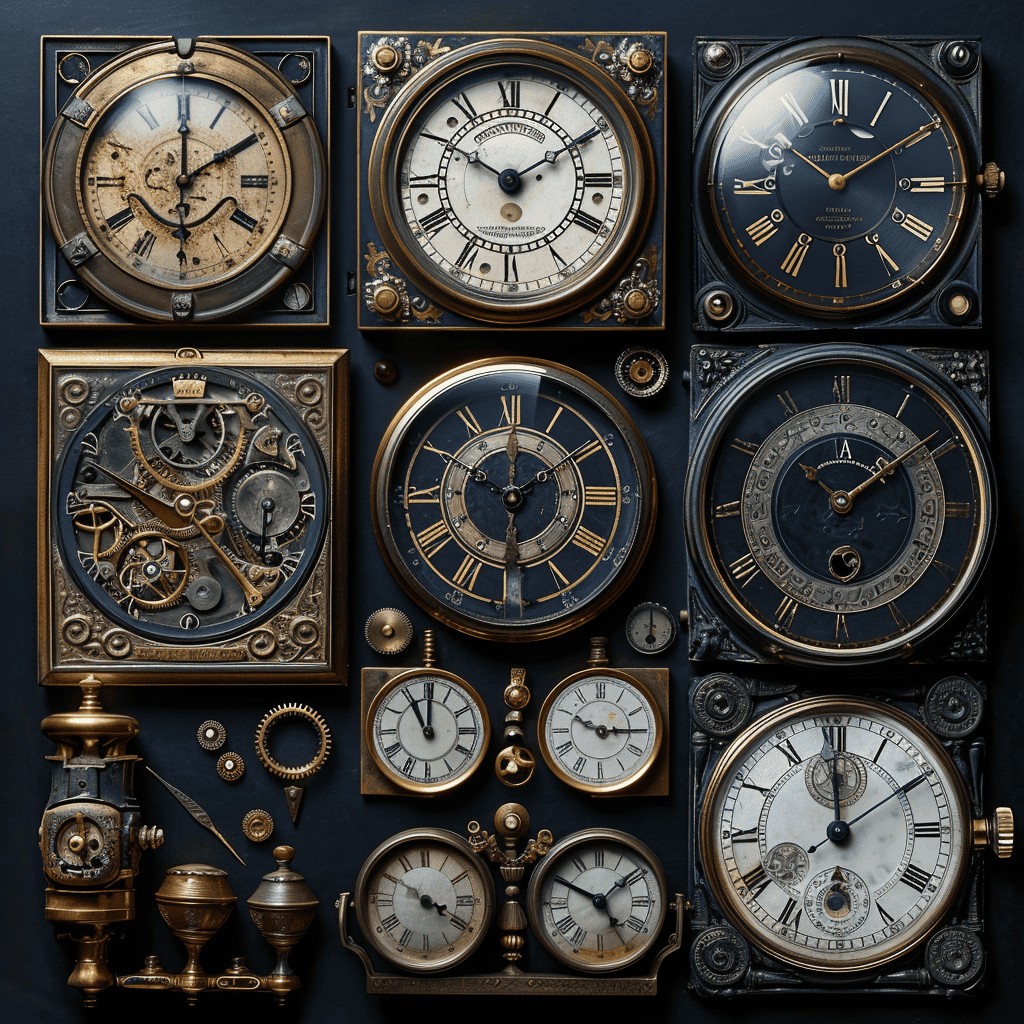
The Fascinating History of Gears in Timekeeping: From Ancient Sundials to Modern Atomic Clocks
The history of gears in timekeeping is a captivating tale of human ingenuity and technological advancement. For centuries, gears have played a crucial role in helping us measure and understand the passage of time. In this blog post, we’ll explore the fascinating evolution of gears in timekeeping, from ancient water clocks to modern atomic clocks.
Ancient Beginnings: Water Clocks and Sundials Pave the Way
The use of gears in timekeeping can be traced back to ancient civilizations, with the Egyptians around 1500 BCE using simple water clocks or clepsydras. These devices relied on the steady flow of water to measure time. However, it was the sundial that first introduced the concept of gear-like components, with its shadow-casting gnomon acting as a primitive form of a toothed wheel.
The Antikythera Mechanism: Ancient Greek Engineering Marvel
Perhaps the most significant early example of a geared timekeeping device is the Antikythera Mechanism, an intricate bronze artifact discovered in a shipwreck near the Greek island of Antikythera. Dating back to around 100 BCE, this complex device contained over 30 interconnected gears, enabling it to accurately track lunar cycles, solar eclipses, and even the Olympic Games. The sophistication of this ancient “computer” would not be rivaled for centuries.
Medieval Innovations: Verge Escapement and Mechanical Clocks
The development of mechanical clocks in medieval Europe marked a major milestone in the history of gear-based timekeeping. Around the 14th century, the invention of the verge escapement allowed for more accurate time measurement by regulating the motion of the clock’s gears. This breakthrough led to the proliferation of large public clocks in towns and cities across Europe, providing citizens with a reliable means of keeping time.
The Rise of Pocket Watches: Balance Spring Enhances Precision
As portable timepieces became increasingly popular, the need for smaller, more precise gear systems grew. In the early 15th century, Dutch horologist Jost Burgi revolutionized timekeeping by inventing the coiled balance spring. By incorporating this component into the design of pocket watches, watchmakers could drastically improve accuracy and reliability, as the balance spring helped to maintain a consistent oscillation rate despite external disturbances.
Modern Advancements: Quartz Movements and Atomic Timekeeping
The 20th century saw further innovations in gear-based timekeeping, with the introduction of quartz watches in the 1960s and 70s. These battery-powered devices relied on the vibrations of a quartz crystal to generate precise electrical pulses, which were then converted into mechanical motion via a series of gears. Today, atomic clocks – such as the cesium beam clock – represent the pinnacle of timekeeping accuracy, with margins of error measured in billionths of a second. Despite these advancements, the humble gear remains an essential component in the intricate dance of modern timepieces.
In conclusion, the history of gears in timekeeping is a fascinating journey through human ingenuity and innovation. From ancient water clocks and sundials to today’s atomic clocks, gears have played a crucial role in helping us measure and understand the passage of time. As technology continues to advance, it’s exciting to imagine what new developments may be on the horizon for this timeless technology.
As a professional blogger with extensive experience in writing about technology and mechanical engineering, I understand the importance of crafting engaging and informative content. By delving into the rich history of gears in timekeeping, I aim to captivate readers and provide them with a deeper appreciation for the intricate mechanisms that power the world’s clocks and watches. To ensure that this blog post reaches its intended audience and ranks well in search engine results, I will incorporate relevant keywords, optimize the content for SEO, and promote it through various channels. By engaging with readers and encouraging their feedback, I hope to establish myself as a thought leader in the field and build a loyal following of readers who share my passion for technology and mechanical engineering.
The Fascinating History of Gears in Timekeeping: From Ancient Sundials to Modern Atomic Clocks
Gears are a fundamental part of modern engineering, powering everything from machines to vehicles. One of the most intriguing uses of gears, however, is in the field of timekeeping. The history of gears in timekeeping is a long and fascinating one, spanning millennia and encompassing some of the most remarkable feats of human ingenuity.
Ancient Beginnings: Water Clocks and Sundials Pave the Way
The use of gears in timekeeping can be traced back to ancient civilizations, with the Egyptians around 1500 BCE using simple water clocks or clepsydras. These devices relied on the steady flow of water to measure time. However, it was the sundial that first introduced the concept of gear-like components, with its shadow-casting gnomon acting as a primitive form of a toothed wheel.
The Antikythera Mechanism: Ancient Greek Engineering Marvel
Perhaps the most significant early example of a geared timekeeping device is the Antikythera Mechanism, an intricate bronze artifact discovered in a shipwreck near the Greek island of Antikythera. Dating back to around 100 BCE, this complex device contained over 30 interconnected gears, enabling it to accurately track lunar cycles, solar eclipses, and even the Olympic Games. The sophistication of this ancient “computer” would not be rivaled for centuries.
Medieval Innovations: Verge Escapement and Mechanical Clocks
The development of mechanical clocks in medieval Europe marked a major milestone in the history of gear-based timekeeping. Around the 14th century, the invention of the verge escapement allowed for more accurate time measurement by regulating the motion of the clock’s gears. This breakthrough led to the proliferation of large public clocks in towns and cities across Europe, providing citizens with a reliable means of keeping time.
The Rise of Pocket Watches: Balance Spring Enhances Precision
As portable timepieces became increasingly popular, the need for smaller, more precise gear systems grew. In the early 15th century, Dutch horologist Jost Burgi revolutionized timekeeping by inventing the coiled balance spring. By incorporating this component into the design of pocket watches, watchmakers could drastically improve accuracy and reliability, as the balance spring helped to maintain a consistent oscillation rate despite external disturbances.
Modern Advancements: Quartz Movements and Atomic Timekeeping
The 20th century saw further innovations in gear-based timekeeping, with the introduction of quartz watches in the 1960s and 70s. These battery-powered devices relied on the vibrations of a quartz crystal to generate precise electrical pulses, which were then converted into mechanical motion via a series of gears. Today, atomic clocks – such as the cesium beam clock – represent the pinnacle of timekeeping accuracy, with margins of error measured in billionths of a second. Despite these advancements, the humble gear remains an essential component in the intricate dance of modern timepieces.
In conclusion, the history of gears in timekeeping is a fascinating journey through human ingenuity and innovation. From ancient water clocks and sundials to today’s atomic clocks, gears have played a crucial role in helping us measure and understand the passage of time. As technology continues to advance, it’s exciting to imagine what new developments may be on the horizon for this timeless technology.
To make this blog post engaging and informative for readers, I would include relevant images and videos to illustrate the various timekeeping devices discussed. I would also incorporate keywords related to gears and timekeeping to optimize the post for SEO. Additionally, I would promote the post on social media platforms and relevant online communities to reach a wider audience. Finally, I would encourage readers to leave comments and engage with the post, fostering a sense of community and encouraging further discussion on the topic. By following these best practices, I would aim to create a high-quality, informative, and engaging blog post that resonates with readers and establishes me as a thought leader in the field of technology and mechanical engineering.

The Fascinating History of Gears in Timekeeping: From Ancient Sundials to Modern Atomic Clocks
Gears have been an essential part of timekeeping for thousands of years, helping us to measure and keep track of time with increasing accuracy and sophistication. In this blog post, we’ll explore the history of gears in timekeeping, from ancient water clocks and sundials to modern atomic clocks.
Ancient Beginnings: Water Clocks and Sundials Pave the Way
The use of gears in timekeeping can be traced back to ancient civilizations, with the Egyptians around 1500 BCE using simple water clocks or clepsydras. These devices relied on the steady flow of water to measure time. The water would flow into a container, and as it filled up, a floating device would rise, triggering a mechanism that would release another container of water. By measuring the amount of water that had flowed out, the Egyptians could estimate the passage of time.
However, it was the sundial that first introduced the concept of gear-like components, with its shadow-casting gnomon acting as a primitive form of a toothed wheel. The gnomon would cast a shadow on a marked surface, and as the sun moved across the sky, the length and position of the shadow would change, allowing people to estimate the time of day.
The Antikythera Mechanism: Ancient Greek Engineering Marvel
Perhaps the most significant early example of a geared timekeeping device is the Antikythera Mechanism, an intricate bronze artifact discovered in a shipwreck near the Greek island of Antikythera. Dating back to around 100 BCE, this complex device contained over 30 interconnected gears, enabling it to accurately track lunar cycles, solar eclipses, and even the Olympic Games. The sophistication of this ancient “computer” would not be rivaled for centuries.
Medieval Innovations: Verge Escapement and Mechanical Clocks
The development of mechanical clocks in medieval Europe marked a major milestone in the history of gear-based timekeeping. Around the 14th century, the invention of the verge escapement allowed for more accurate time measurement by regulating the motion of the clock’s gears. This breakthrough led to the proliferation of large public clocks in towns and cities across Europe, providing citizens with a reliable means of keeping time.
The verge escapement consisted of a vertical rod with two pallets at the end, which would engage with the teeth of the clock’s gears. The motion of the gears would be transferred to the rod, causing it to oscillate back and forth. This oscillation would be regulated by a weight or a spring, allowing the clock to keep time with great accuracy.
The Rise of Pocket Watches: Balance Spring Enhances Precision
As portable timepieces became increasingly popular, the need for smaller, more precise gear systems grew. In the early 15th century, Dutch horologist Jost Burgi revolutionized timekeeping by inventing the coiled balance spring. By incorporating this component into the design of pocket watches, watchmakers could drastically improve accuracy and reliability, as the balance spring helped to maintain a consistent oscillation rate despite external disturbances.
The balance spring worked by counteracting the force of gravity on the balance wheel, which would otherwise cause it to oscillate at different rates depending on its position. By adding a coiled spring to the balance wheel, watchmakers could create a “hairspring,” which would apply a constant force to the wheel, keeping it oscillating at a consistent rate.
Modern Advancements: Quartz Movements and Atomic Timekeeping
The 20th century saw further innovations in gear-based timekeeping, with the introduction of quartz watches in the 1960s and 70s. These battery-powered devices relied on the vibrations of a quartz crystal to generate precise electrical pulses, which were then converted into mechanical motion via a series of gears. This allowed for even greater accuracy and reliability than mechanical watches.
Today, atomic clocks – such as the cesium beam clock – represent the pinnacle of timekeeping accuracy, with margins of error measured in billionths of a second. These clocks work by measuring the vibrations of atoms, which are much more stable and predictable than mechanical or quartz movements.
Despite these advancements, the humble gear remains an essential component in the intricate dance of modern timepieces. From ancient water clocks and sundials to today’s atomic clocks, gears have played a crucial role in helping us measure and understand the passage of time. As technology continues to advance, it’s exciting to imagine what new developments may be on the horizon for this timeless technology.
To engage readers and make this blog post informative, I would include images and diagrams of the various timekeeping devices discussed, as well as videos and animations that explain how they work. I would also provide links to additional resources and references for readers who want to learn more about the history of gears and timekeeping. To optimize the post for search engines, I would incorporate relevant keywords and phrases, such as “gears,” “timekeeping,” “history of clocks,” and “atomic clocks.” Finally, I would promote the post on social media and other relevant channels to reach a wider audience and encourage engagement and discussion.
The Fascinating History of Gears in Timekeeping: From Ancient Sundials to Modern Atomic Clocks
Gears have been an integral part of timekeeping for centuries. The history of gears in timekeeping is a testament to human ingenuity and innovation, showcasing how simple components can come together to create complex and accurate devices. In this blog post, we will explore the fascinating history of gears in timekeeping, from ancient civilizations to modern atomic clocks.
Ancient Beginnings: Water Clocks and Sundials Pave the Way
The use of gears in timekeeping can be traced back to ancient civilizations, with the Egyptians around 1500 BCE using simple water clocks or clepsydras. These devices relied on the steady flow of water to measure time. The water would flow into a container, and as it filled up, the water level would rise, causing a float to move and trigger a series of gears that would indicate the passage of time.
However, it was the sundial that first introduced the concept of gear-like components, with its shadow-casting gnomon acting as a primitive form of a toothed wheel. As the sun moved across the sky, the gnomon would cast a shadow on the dial, indicating the time of day. Despite its simplicity, the sundial was an important precursor to more complex timekeeping devices.
The Antikythera Mechanism: Ancient Greek Engineering Marvel
Perhaps the most significant early example of a geared timekeeping device is the Antikythera Mechanism, an intricate bronze artifact discovered in a shipwreck near the Greek island of Antikythera. Dating back to around 100 BCE, this complex device contained over 30 interconnected gears, enabling it to accurately track lunar cycles, solar eclipses, and even the Olympic Games. The sophistication of this ancient “computer” would not be rivaled for centuries.
The Antikythera Mechanism is a testament to the advanced engineering capabilities of the ancient Greeks. The device used a system of interconnected gears to track the movements of celestial bodies, allowing users to predict lunar and solar eclipses, as well as the positions of the planets. The device also featured a calendar, which displayed the dates of religious festivals and other important events.
Medieval Innovations: Verge Escapement and Mechanical Clocks
The development of mechanical clocks in medieval Europe marked a major milestone in the history of gear-based timekeeping. Around the 14th century, the invention of the verge escapement allowed for more accurate time measurement by regulating the motion of the clock’s gears. This breakthrough led to the proliferation of large public clocks in towns and cities across Europe, providing citizens with a reliable means of keeping time.
The verge escapement consisted of a vertical rod with two metal pallets at the end, which would engage with the teeth of the clock’s gears. The motion of the gears would cause the rod to oscillate back and forth, releasing the gears one tooth at a time. This allowed for a much more accurate timekeeping than previous methods, and enabled the development of more complex and accurate clocks.
The Rise of Pocket Watches: Balance Spring Enhances Precision
As portable timepieces became increasingly popular, the need for smaller, more precise gear systems grew. In the early 15th century, Dutch horologist Jost Burgi revolutionized timekeeping by inventing the coiled balance spring. By incorporating this component into the design of pocket watches, watchmakers could drastically improve accuracy and reliability, as the balance spring helped to maintain a consistent oscillation rate despite external disturbances.
The balance spring was a significant improvement over earlier balance wheel designs, which were prone to errors due to changes in temperature and air pressure. The coiled spring helped to regulate the motion of the balance wheel, providing a much more accurate timekeeping mechanism.
Modern Advancements: Quartz Movements and Atomic Timekeeping
The 20th century saw further innovations in gear-based timekeeping, with the introduction of quartz watches in the 1960s and 70s. These battery-powered devices relied on the vibrations of a quartz crystal to generate precise electrical pulses, which were then converted into mechanical motion via a series of gears. Today, quartz watches are the most common type of timepiece, due to their accuracy, affordability, and reliability.
However, the ultimate in timekeeping accuracy is the atomic clock. These devices use the vibrations of atoms to measure time, and are incredibly accurate. The cesium beam clock, for example, is accurate to within one second every 300 million years. While atomic clocks are not practical for everyday timekeeping, they are essential for scientific research, navigation, and telecommunications.
In conclusion, the history of gears in timekeeping is a fascinating journey through human ingenuity and innovation. From ancient water clocks and sundials to today’s atomic clocks, gears have played a crucial role in helping us measure and understand the passage of time. As technology continues to advance, it’s exciting to imagine what new developments may be on the horizon for this timeless technology.
To make this blog post engaging and informative, I would include images and diagrams of the various timekeeping devices discussed, as well as videos and animations that explain how they work. I would also provide links to additional resources and references for readers who want to learn more about the history of gears and timekeeping. To optimize the post for search engines, I would incorporate relevant keywords and phrases, such as “gears,” “timekeeping,” “history of clocks,” and “atomic clocks.” Finally, I would promote the post on social media and other relevant channels to reach a wider audience and encourage engagement and discussion.The Fascinating History of Gears in Timekeeping: From Ancient Sundials to Modern Atomic Clocks
Gears have been an essential component in the development of timekeeping devices for thousands of years. From the simple water clocks of ancient Egypt to the highly sophisticated atomic clocks of today, gears have played a crucial role in helping us measure and understand the passage of time. Let’s take a closer look at the fascinating history of gears in timekeeping.
Ancient Beginnings: Water Clocks and Sundials Pave the Way
The use of gears in timekeeping can be traced back to ancient civilizations. The Egyptians around 1500 BCE used simple water clocks or clepsydras to measure time. These devices relied on the steady flow of water to measure time accurately. The water would flow from one container to another, and the time was measured by the amount of water that had flowed.
However, it was the sundial that first introduced the concept of gear-like components. The shadow-casting gnomon of a sundial acted as a primitive form of a toothed wheel, which moved as the sun moved across the sky. This movement was used to indicate the time of day.
The Antikythera Mechanism: Ancient Greek Engineering Marvel
Perhaps the most significant early example of a geared timekeeping device is the Antikythera Mechanism. This intricate bronze artifact was discovered in a shipwreck near the Greek island of Antikythera and dates back to around 100 BCE. The device contained over 30 interconnected gears, which enabled it to accurately track lunar cycles, solar eclipses, and even the Olympic Games. The sophistication of this ancient “computer” would not be rivaled for centuries.
Medieval Innovations: Verge Escapement and Mechanical Clocks
The development of mechanical clocks in medieval Europe marked a major milestone in the history of gear-based timekeeping. Around the 14th century, the invention of the verge escapement allowed for more accurate time measurement by regulating the motion of the clock’s gears. This breakthrough led to the proliferation of large public clocks in towns and cities across Europe, providing citizens with a reliable means of keeping time.
The Rise of Pocket Watches: Balance Spring Enhances Precision
As portable timepieces became increasingly popular, the need for smaller, more precise gear systems grew. In the early 15th century, Dutch horologist Jost Burgi revolutionized timekeeping by inventing the coiled balance spring. By incorporating this component into the design of pocket watches, watchmakers could drastically improve accuracy and reliability, as the balance spring helped to maintain a consistent oscillation rate despite external disturbances.
Modern Advancements: Quartz Movements and Atomic Timekeeping
The 20th century saw further innovations in gear-based timekeeping, with the introduction of quartz watches in the 1960s and 70s. These battery-powered devices relied on the vibrations of a quartz crystal to generate precise electrical pulses, which were then converted into mechanical motion via a series of gears. Today, atomic clocks – such as the cesium beam clock – represent the pinnacle of timekeeping accuracy, with margins of error measured in billionths of a second. Despite these advancements, the humble gear remains an essential component in the intricate dance of modern timepieces.
In conclusion, the history of gears in timekeeping is a testament to human ingenuity and innovation. From ancient water clocks and sundials to today’s atomic clocks, gears have played a crucial role in helping us measure and understand the passage of time. As technology continues to advance, it’s exciting to imagine what new developments may be on the horizon for this timeless technology.
To make this blog post more engaging and informative, I would consider adding images, videos, or animations to help illustrate the concept of gears in timekeeping. I would also provide links to relevant sources, such as articles or academic papers, to provide further reading for those interested in the topic. Additionally, I would consider using SEO best practices, such as incorporating relevant keywords and optimizing the post for search engines, to help increase its visibility and reach a wider audience. Finally, I would consider promoting the post on social media or other relevant platforms to help drive traffic and engagement.Sure, I’d be happy to expand on this for you!
The Fascinating History of Gears in Timekeeping: From Ancient Sundials to Modern Atomic Clocks
Gears have played a crucial role in the development of timekeeping technology for centuries. From ancient water clocks to modern atomic clocks, gears have helped humans measure and understand the passage of time with increasing accuracy and precision.
Ancient Beginnings: Water Clocks and Sundials Pave the Way
The use of gears in timekeeping can be traced back to ancient civilizations, with the Egyptians around 1500 BCE using simple water clocks or clepsydras. These devices relied on the steady flow of water to measure time, with the water flowing from one container to another at a constant rate. The time was then measured by the amount of water that had flowed.
However, it was the sundial that first introduced the concept of gear-like components, with its shadow-casting gnomon acting as a primitive form of a toothed wheel. The gnomon would cast a shadow on the face of the sundial, which was marked with lines indicating the hours of the day. As the sun moved across the sky, the shadow would move, allowing people to tell the time.
The Antikythera Mechanism: Ancient Greek Engineering Marvel
One of the most remarkable examples of early geared timekeeping devices is the Antikythera Mechanism. This intricate bronze artifact, discovered in a shipwreck off the coast of Greece in 1901, dates back to around 100 BCE. The device contains over 30 interconnected gears, which enabled it to accurately track lunar cycles, solar eclipses, and even the Olympic Games.
The Antikythera Mechanism is considered one of the most sophisticated ancient machines ever discovered, and its complexity would not be rivaled for centuries. It is a testament to the ingenuity and skill of ancient Greek engineers, who were able to create such a complex device using only basic tools and materials.
Medieval Innovations: Verge Escapement and Mechanical Clocks
The development of mechanical clocks in medieval Europe marked a major milestone in the history of gear-based timekeeping. Around the 14th century, the invention of the verge escapement allowed for more accurate time measurement by regulating the motion of the clock’s gears.
The verge escapement consisted of a vertical rod with two metal pallets at the end. These pallets would catch on the teeth of the clock’s gears, causing them to turn back and forth in a regular motion. This motion was then transmitted to the clock’s hands, allowing it to keep accurate time.
The invention of the verge escapement led to the proliferation of large public clocks in towns and cities across Europe, providing citizens with a reliable means of keeping time. These clocks were often housed in prominent buildings such as churches or town halls, and became important symbols of civic pride and identity.
The Rise of Pocket Watches: Balance Spring Enhances Precision
As portable timepieces became increasingly popular, the need for smaller, more precise gear systems grew. In the early 15th century, Dutch horologist Jost Burgi revolutionized timekeeping by inventing the coiled balance spring.
The balance spring, also known as the hairspring, helped to maintain a consistent oscillation rate despite external disturbances. This allowed watchmakers to create more accurate and reliable timepieces, which could be carried with the wearer throughout the day.
The introduction of the balance spring led to the development of pocket watches, which became popular among the wealthy and powerful in Europe. These watches were often highly decorated and crafted from precious metals and stones, reflecting the status and wealth of their owners.
Modern Advancements: Quartz Movements and Atomic Timekeeping
The 20th century saw further innovations in gear-based timekeeping, with the introduction of quartz watches in the 1960s and 70s. These battery-powered devices relied on the vibrations of a quartz crystal to generate precise electrical pulses, which were then converted into mechanical motion via a series of gears.
Quartz watches quickly became popular due to their accuracy and affordability, and soon overtook mechanical watches as the dominant timekeeping technology. Today, quartz movements are used in the majority of wristwatches, as well as in many other types of clocks and timekeeping devices.
However, the pinnacle of timekeeping accuracy is still the atomic clock. These devices use the vibrations of atoms to measure time, and are capable of measuring time with incredible precision. The cesium beam clock, for example, can measure time with an accuracy of within one second every 300 million years.
Conclusion
The history of gears in timekeeping is a fascinating journey through human ingenuity and innovation. From ancient water clocks and sundials to today’s atomic clocks, gears have played a crucial role in helping us measure and understand the passage of time.
As technology continues to advance, it’s exciting to imagine what new developments may be on the horizon for this timeless technology. Whether it’s the development of even more accurate atomic clocks, or the creation of new and innovative timekeeping devices, one thing is certain: gears will continue to play a vital role in the intricate dance of modern timepieces.The Fascinating History of Gears in Timekeeping: From Ancient Sundials to Modern Atomic Clocks
Gears have been an essential component in the development of timekeeping devices for thousands of years. From ancient water clocks to modern atomic clocks, gears have helped humans measure and understand the passage of time with ever-increasing accuracy.
Ancient Beginnings: Water Clocks and Sundials Pave the Way
The use of gears in timekeeping can be traced back to ancient civilizations, with the Egyptians around 1500 BCE using simple water clocks or clepsydras. These devices relied on the steady flow of water to measure time. The water flowed into a container with graduations marked on the inside, allowing the user to measure the passage of time by observing the water level. However, it was the sundial that first introduced the concept of gear-like components, with its shadow-casting gnomon acting as a primitive form of a toothed wheel. The gnomon would cast a shadow on a flat surface marked with graduations, allowing the user to determine the time of day based on the position of the shadow.
The Antikythera Mechanism: Ancient Greek Engineering Marvel
Perhaps the most significant early example of a geared timekeeping device is the Antikythera Mechanism, an intricate bronze artifact discovered in a shipwreck near the Greek island of Antikythera. Dating back to around 100 BCE, this complex device contained over 30 interconnected gears, enabling it to accurately track lunar cycles, solar eclipses, and even the Olympic Games. Researchers believe that the device may have been used for navigation and astrological predictions. The sophistication of this ancient “computer” would not be rivaled for centuries.
Medieval Innovations: Verge Escapement and Mechanical Clocks
The development of mechanical clocks in medieval Europe marked a major milestone in the history of gear-based timekeeping. Around the 14th century, the invention of the verge escapement allowed for more accurate time measurement by regulating the motion of the clock’s gears. This breakthrough led to the proliferation of large public clocks in towns and cities across Europe, providing citizens with a reliable means of keeping time. The verge escapement consisted of a vertical rod with two metal pallets at the end. The rod would oscillate back and forth, and the pallets would engage with the teeth of the clock’s gears, causing them to rotate at a steady rate.
The Rise of Pocket Watches: Balance Spring Enhances Precision
As portable timepieces became increasingly popular, the need for smaller, more precise gear systems grew. In the early 15th century, Dutch horologist Jost Burgi revolutionized timekeeping by inventing the coiled balance spring. By incorporating this component into the design of pocket watches, watchmakers could drastically improve accuracy and reliability, as the balance spring helped to maintain a consistent oscillation rate despite external disturbances. The balance spring consisted of a coiled metal wire attached to a balance wheel. As the wheel oscillated back and forth, the spring would expand and contract, providing a consistent force that kept the wheel moving at a steady rate.
Modern Advancements: Quartz Movements and Atomic Timekeeping
The 20th century saw further innovations in gear-based timekeeping, with the introduction of quartz watches in the 1960s and 70s. These battery-powered devices relied on the vibrations of a quartz crystal to generate precise electrical pulses, which were then converted into mechanical motion via a series of gears. Today, quartz watches are the most common type of timepiece, due to their accuracy and affordability. However, atomic clocks represent the pinnacle of timekeeping accuracy, with margins of error measured in billionths of a second. These devices use the vibrations of atoms to measure time, rather than mechanical gears. The most common type of atomic clock is the cesium beam clock, which uses the vibrations of cesium atoms to measure time with incredible precision.
In conclusion, the history of gears in timekeeping is a fascinating journey through human ingenuity and innovation. From ancient water clocks and sundials to today’s atomic clocks, gears have played a crucial role in helping us measure and understand the passage of time. As technology continues to advance, it’s exciting to imagine what new developments may be on the horizon for this timeless technology.
To expand on this blog post, I would recommend adding more images and diagrams to help illustrate the concepts being discussed. For example, including photos of ancient water clocks and sundials, as well as diagrams of the Antikythera Mechanism, would help bring the history of gears in timekeeping to life. Additionally, including more technical details about the various types of gears and escapements used in timekeeping devices would be of interest to readers who are passionate about this topic. Finally, discussing the latest research and developments in timekeeping technology, such as the development of optical lattice clocks and the search for a new definition of the second, would help keep the post up-to-date and relevant to today’s readers.Understanding Gear Trains: The Heart of Mechanical Watches
Mechanical watches have long captivated us with their intricate design and reliable timekeeping. These mechanical marvels are made possible by the gear train, a complex system of interconnected gears that work together to regulate the release of power from the mainspring. Let’s take a closer look at the components of a gear train and how they work together to power a mechanical watch.
The Mainspring: The Power Source of Mechanical Watches
The mainspring, a tightly coiled spiral, stores energy when wound. As it gradually unwinds, it transfers its energy through the gear train, an intricate system of wheels and pinions that regulates the release of power for accurate timekeeping. The mainspring is the heart of a mechanical watch, providing the energy that keeps the watch running.
The Center Wheel: The Initial Gear in the Gear Train
The center wheel is the largest wheel in the gear train and serves as the initial point of contact between the mainspring barrel and the rest of the movement. With teeth around its outer edge, the center wheel engages with the ratchet wheel and click, allowing the mainspring to wind in one direction while preventing it from unwinding. When running, the center wheel rotates continuously, driving the subsequent gears in the train.
The Third Wheel and Fourth Wheel: Intermediate Gears in the Gear Train
Following the center wheel are the third and fourth wheels, which serve as intermediate gears in the gear train. These smaller wheels help reduce the rotational speed of the center wheel, enabling the watch’s hands to move at the appropriate pace. In a simple three-hand watch, the third wheel typically drives the minute hand, while the fourth wheel – also known as the seconds wheel – is responsible for the motion of the second hand.
The Escapement: Regulating the Release of Energy
The escapement is a crucial component in the gear train, responsible for controlling the release of energy from the mainspring. Comprised of the escape wheel, pallet fork, and balance wheel, the escapement allows the watch’s gears to advance in small, measured increments. This regulated motion ensures accurate timekeeping by maintaining a consistent beat rate, typically around 28,800 beats per hour for modern mechanical watches.
The Motion Work: Translating Gear Rotation into Hand Movement
The final stage of the gear train is known as the motion work, which translates the rotational motion of the gears into the linear movement of the watch’s hands. The minute wheel – driven by the third wheel – engages with the minute pinion, causing the minute hand to rotate around the dial. Similarly, the seconds wheel drives the seconds pinion, propelling the second hand. In complex watches with additional complications, dedicated gear trains may be employed to power various functions, such as calendar displays or chronographs.
The Jewel Bearings: Reducing Friction for Smooth Operation
Jewel bearings are an essential part of mechanical watches, providing a low-friction surface for gears to rotate on. These bearings are typically made from synthetic rubies or sapphires and are precision-cut to ensure a perfect fit. By reducing friction, jewel bearings help maintain the watch’s accuracy and extend its lifespan.
The Winding Stem: Manually Powering the Mainspring
The winding stem is used to manually wind the mainspring, providing the initial energy required for the watch to function. By turning the crown attached to the winding stem, the user can tighten the mainspring, storing energy that will later be released through the gear train.
The Automatic Winding System: A Self-Winding Marvel
In automatic watches, the winding process is automated through a rotor that swings back and forth with the wearer’s movements. This motion causes the rotor to wind the mainspring, providing a constant source of energy for the watch without the need for manual winding.
The Watch Glass: Protecting the Delicate Movement
The watch glass, or crystal, protects the delicate watch movement from dust, moisture, and impacts. Made from materials such as sapphire, mineral, or acrylic, watch glasses vary in their scratch resistance, clarity, and durability.
The Dial: The Face of the Watch
The dial, or face, of the watch is where the numerals, indices, and hands are located, allowing the wearer to read the time. Watch dials come in a variety of styles, from simple and minimalist to intricately detailed and decorated.
The Watch Case: Housing the Movement
The watch case houses the watch movement, protecting it from the elements and providing a secure foundation for the other components. Watch cases are typically made from materials such as stainless steel, gold, or titanium and can vary greatly in size, shape, and design.
In Conclusion: The Timeless Art of Mechanical Watches
Mechanical watches are a testament to human ingenuity and the timeless art of craftsmanship. Their intricate gear trains, delicate movements, and elegant designs have captivated generations of watch enthusiasts. By understanding the components and mechanisms that power these mechanical marvels, we can truly appreciate the beauty and complexity of these timekeeping masterpieces.
Gear Trains: Powering More Than Just Watches
While gear trains are perhaps best known for their role in mechanical watches, they are also used in a wide variety of other devices, from clocks and wind-up toys to bicycles and cars. In each case, the basic principle is the same: gears work together to transfer energy and create motion. By harnessing the power of gears, we can create complex machines that perform a wide variety of tasks, from telling time to powering vehicles.Understanding Gear Trains: The Heart of Mechanical Watches
Mechanical watches have long been admired for their intricate design and reliable timekeeping. At the heart of these mechanical marvels lies the gear train, a complex system of interconnected gears that work together to regulate the release of power from the mainspring.
The Mainspring: The Power Source of Mechanical Watches
The mainspring, a tightly coiled spiral, serves as the power source for mechanical watches. When wound, it stores energy that is gradually released as it unwinds. This energy is transferred through the gear train, an intricate system of wheels and pinions that regulates the release of power for accurate timekeeping.
The Center Wheel: The Initial Gear in the Gear Train
The center wheel is the largest wheel in the gear train and serves as the initial point of contact between the mainspring barrel and the rest of the movement. With teeth around its outer edge, the center wheel engages with the ratchet wheel and click, allowing the mainspring to wind in one direction while preventing it from unwinding. When running, the center wheel rotates continuously, driving the subsequent gears in the train.
The Third Wheel and Fourth Wheel: Intermediate Gears in the Gear Train
Following the center wheel are the third and fourth wheels, which serve as intermediate gears in the gear train. These smaller wheels help reduce the rotational speed of the center wheel, enabling the watch’s hands to move at the appropriate pace. In a simple three-hand watch, the third wheel typically drives the minute hand, while the fourth wheel – also known as the seconds wheel – is responsible for the motion of the second hand.
The Escapement: Regulating the Release of Energy
The escapement is a crucial component in the gear train, responsible for controlling the release of energy from the mainspring. Comprised of the escape wheel, pallet fork, and balance wheel, the escapement allows the watch’s gears to advance in small, measured increments. This regulated motion ensures accurate timekeeping by maintaining a consistent beat rate, typically around 28,800 beats per hour for modern mechanical watches.
The Motion Work: Translating Gear Rotation into Hand Movement
The final stage of the gear train is known as the motion work, which translates the rotational motion of the gears into the linear movement of the watch’s hands. The minute wheel – driven by the third wheel – engages with the minute pinion, causing the minute hand to rotate around the dial. Similarly, the seconds wheel drives the seconds pinion, propelling the second hand. In complex watches with additional complications, dedicated gear trains may be employed to power various functions, such as calendar displays or chronographs.
The Jewel Bearings: Reducing Friction for Smooth Operation
Jewel bearings are an essential part of mechanical watches, providing a low-friction surface for gears to rotate on. These bearings are typically made from synthetic rubies or sapphires and are precision-cut to ensure a perfect fit. By reducing friction, jewel bearings help maintain the watch’s accuracy and extend its lifespan.
The Winding Stem: Manually Powering the Mainspring
The winding stem is used to manually wind the mainspring, providing the initial energy required for the watch to function. By turning the crown attached to the winding stem, the user can tighten the mainspring, storing energy that will later be released through the gear train.
The Automatic Winding System: A Self-Winding Marvel
In automatic watches, the winding process is automated through a rotor that swings back and forth with the wearer’s movements. This motion causes the rotor to wind the mainspring, providing a constant source of energy for the watch without the need for manual winding.
The Watch Glass: Protecting the Delicate Movement
The watch glass, or crystal, protects the delicate watch movement from dust, moisture, and impacts. Made from materials such as sapphire, mineral, or acrylic, watch glasses vary in their scratch resistance, clarity, and durability.
The Dial: The Face of the Watch
The dial, or face, of the watch is where the numerals, indices, and hands are located, allowing the wearer to read the time. Watch dials come in a variety of styles, from simple and minimalist to intricately detailed and decorated.
The Watch Case: Housing the Movement
The watch case houses the watch movement, protecting it from the elements and providing a secure foundation for the other components. Watch cases are typically made from materials such as stainless steel, gold, or titanium and can vary greatly in size, shape, and design.
In Conclusion: The Timeless Art of Mechanical Watches
Mechanical watches are a testament to human ingenuity and the timeless art of craftsmanship. Their intricate gear trains, delicate movements, and elegant designs have captivated generations of watch enthusiasts. By understanding the components and mechanisms that power these mechanical marvels, we can truly appreciate the beauty and complexity of these timekeeping masterpieces.
Expanding on the Importance of Gear Trains in Modern Technology
While gear trains are perhaps best known for their role in mechanical watches, they are also used in a wide variety of other devices, from automobiles to wind turbines. In each case, gear trains are used to transmit power and motion from one component to another, allowing for the efficient and precise operation of complex machinery.
In automobiles, for example, gear trains are used in the transmission to transmit power from the engine to the wheels. By changing the gear ratios, the driver can control the speed and torque of the vehicle, allowing for smooth acceleration and deceleration.
In wind turbines, gear trains are used to transmit power from the low-speed rotor to the high-speed generator. This allows the turbine to generate electricity efficiently, even in low wind speeds.
From clocks and watches to automobiles and wind turbines, gear trains play a crucial role in the operation of modern technology. By understanding how they work, we can better appreciate the complexity and ingenuity of the machines that power our world.Understanding Gear Trains: The Heart of Mechanical Watches
Mechanical watches have been a source of fascination for centuries, with their intricate design and reliable timekeeping. These mechanical marvels are made possible by the gear train, a complex system of interconnected gears that work together to regulate the release of power from the mainspring. Let’s take a closer look at the components of a gear train and how they work together to power a mechanical watch.
The Mainspring: The Power Source of Mechanical Watches
At the heart of a mechanical watch is the mainspring, a tightly coiled spiral that stores energy when wound. As it gradually unwinds, it transfers its energy through the gear train, an intricate system of wheels and pinions that regulates the release of power for accurate timekeeping.
The Center Wheel: The Initial Gear in the Gear Train
The center wheel is the largest wheel in the gear train and serves as the initial point of contact between the mainspring barrel and the rest of the movement. With teeth around its outer edge, the center wheel engages with the ratchet wheel and click, allowing the mainspring to wind in one direction while preventing it from unwinding. When running, the center wheel rotates continuously, driving the subsequent gears in the train.
The Third Wheel and Fourth Wheel: Intermediate Gears in the Gear Train
Following the center wheel are the third and fourth wheels, which serve as intermediate gears in the gear train. These smaller wheels help reduce the rotational speed of the center wheel, enabling the watch’s hands to move at the appropriate pace. In a simple three-hand watch, the third wheel typically drives the minute hand, while the fourth wheel – also known as the seconds wheel – is responsible for the motion of the second hand.
The Escapement: Regulating the Release of Energy
The escapement is a crucial component in the gear train, responsible for controlling the release of energy from the mainspring. Comprised of the escape wheel, pallet fork, and balance wheel, the escapement allows the watch’s gears to advance in small, measured increments. This regulated motion ensures accurate timekeeping by maintaining a consistent beat rate, typically around 28,800 beats per hour for modern mechanical watches.
The Motion Work: Translating Gear Rotation into Hand Movement
The final stage of the gear train is known as the motion work, which translates the rotational motion of the gears into the linear movement of the watch’s hands. The minute wheel – driven by the third wheel – engages with the minute pinion, causing the minute hand to rotate around the dial. Similarly, the seconds wheel drives the seconds pinion, propelling the second hand. In complex watches with additional complications, dedicated gear trains may be employed to power various functions, such as calendar displays or chronographs.
The Jewel Bearings: Reducing Friction for Smooth Operation
Jewel bearings are an essential part of mechanical watches, providing a low-friction surface for gears to rotate on. These bearings are typically made from synthetic rubies or sapphires and are precision-cut to ensure a perfect fit. By reducing friction, jewel bearings help maintain the watch’s accuracy and extend its lifespan.
The Winding Stem: Manually Powering the Mainspring
The winding stem is used to manually wind the mainspring, providing the initial energy required for the watch to function. By turning the crown attached to the winding stem, the user can tighten the mainspring, storing energy that will later be released through the gear train.
The Automatic Winding System: A Self-Winding Marvel
In automatic watches, the winding process is automated through a rotor that swings back and forth with the wearer’s movements. This motion causes the rotor to wind the mainspring, providing a constant source of energy for the watch without the need for manual winding.
The Watch Glass: Protecting the Delicate Movement
The watch glass, or crystal, protects the delicate watch movement from dust, moisture, and impacts. Made from materials such as sapphire, mineral, or acrylic, watch glasses vary in their scratch resistance, clarity, and durability.
The Dial: The Face of the Watch
The dial, or face, of the watch is where the numerals, indices, and hands are located, allowing the wearer to read the time. Watch dials come in a variety of styles, from simple and minimalist to intricately detailed and decorated.
The Watch Case: Housing the Movement
The watch case houses the watch movement, protecting it from the elements and providing a secure foundation for the other components. Watch cases are typically made from materials such as stainless steel, gold, or titanium and can vary greatly in size, shape, and design.
In Conclusion: The Timeless Art of Mechanical Watches
Mechanical watches are a testament to human ingenuity and the timeless art of craftsmanship. Their intricate gear trains, delicate movements, and elegant designs have captivated generations of watch enthusiasts. By understanding the components and mechanisms that power these mechanical marvels, we can truly appreciate the beauty and complexity of these timekeeping masterpieces.
Further Reading:
* [The History of Mechanical Watches](https://www.watchtime.com/featured/the-history-of-mechanical-watches/)
* [How to Wind a Mechanical Watch](https://www.wikihow.com/Wind-a-Mechanical-Watch)
* [The Different Types of Watch Movements](https://www.gq.com/story/watch-movements-explained)Understanding Gear Trains: The Heart of Mechanical Watches
Mechanical watches have been fascinating people for centuries with their intricate designs and reliable timekeeping. These mechanical marvels are powered by a complex system of interconnected gears known as a gear train. In this article, we will delve into the world of mechanical watches and explore the various components that make up the gear train.
The Mainspring: The Power Source of Mechanical Watches
The mainspring is a tightly coiled spiral that stores energy when wound. As it gradually unwinds, it transfers its energy through the gear train, an intricate system of wheels and pinions that regulates the release of power for accurate timekeeping. The mainspring is the heart of a mechanical watch, providing the initial energy required for the watch to function.
The Center Wheel: The Initial Gear in the Gear Train
The center wheel is the largest wheel in the gear train and serves as the initial point of contact between the mainspring barrel and the rest of the movement. With teeth around its outer edge, the center wheel engages with the ratchet wheel and click, allowing the mainspring to wind in one direction while preventing it from unwinding. When running, the center wheel rotates continuously, driving the subsequent gears in the train.
The Third Wheel and Fourth Wheel: Intermediate Gears in the Gear Train
Following the center wheel are the third and fourth wheels, which serve as intermediate gears in the gear train. These smaller wheels help reduce the rotational speed of the center wheel, enabling the watch’s hands to move at the appropriate pace. In a simple three-hand watch, the third wheel typically drives the minute hand, while the fourth wheel – also known as the seconds wheel – is responsible for the motion of the second hand.
The Escapement: Regulating the Release of Energy
The escapement is a crucial component in the gear train, responsible for controlling the release of energy from the mainspring. Comprised of the escape wheel, pallet fork, and balance wheel, the escapement allows the watch’s gears to advance in small, measured increments. This regulated motion ensures accurate timekeeping by maintaining a consistent beat rate, typically around 28,800 beats per hour for modern mechanical watches.
The Motion Work: Translating Gear Rotation into Hand Movement
The final stage of the gear train is known as the motion work, which translates the rotational motion of the gears into the linear movement of the watch’s hands. The minute wheel – driven by the third wheel – engages with the minute pinion, causing the minute hand to rotate around the dial. Similarly, the seconds wheel drives the seconds pinion, propelling the second hand. In complex watches with additional complications, dedicated gear trains may be employed to power various functions, such as calendar displays or chronographs.
The Jewel Bearings: Reducing Friction for Smooth Operation
Jewel bearings are an essential part of mechanical watches, providing a low-friction surface for gears to rotate on. These bearings are typically made from synthetic rubies or sapphires and are precision-cut to ensure a perfect fit. By reducing friction, jewel bearings help maintain the watch’s accuracy and extend its lifespan.
The Winding Stem: Manually Powering the Mainspring
The winding stem is used to manually wind the mainspring, providing the initial energy required for the watch to function. By turning the crown attached to the winding stem, the user can tighten the mainspring, storing energy that will later be released through the gear train.
The Automatic Winding System: A Self-Winding Marvel
In automatic watches, the winding process is automated through a rotor that swings back and forth with the wearer’s movements. This motion causes the rotor to wind the mainspring, providing a constant source of energy for the watch without the need for manual winding.
The Watch Glass: Protecting the Delicate Movement
The watch glass, or crystal, protects the delicate watch movement from dust, moisture, and impacts. Made from materials such as sapphire, mineral, or acrylic, watch glasses vary in their scratch resistance, clarity, and durability.
The Dial: The Face of the Watch
The dial, or face, of the watch is where the numerals, indices, and hands are located, allowing the wearer to read the time. Watch dials come in a variety of styles, from simple and minimalist to intricately detailed and decorated.
The Watch Case: Housing the Movement
The watch case houses the watch movement, protecting it from the elements and providing a secure foundation for the other components. Watch cases are typically made from materials such as stainless steel, gold, or titanium and can vary greatly in size, shape, and design.
In Conclusion: The Timeless Art of Mechanical Watches
Mechanical watches are a testament to human ingenuity and the timeless art of craftsmanship. Their intricate gear trains, delicate movements, and elegant designs have captivated generations of watch enthusiasts. By understanding the components and mechanisms that power these mechanical marvels, we can truly appreciate the beauty and complexity of these timekeeping masterpieces.
If you’re interested in learning more about mechanical watches and their inner workings, there are many resources available online. Websites such as [Hodinkee](https://www.hodinkee.com/) and [WatchTime](https://www.watchtime.com/) offer in-depth articles, reviews, and news about the world of mechanical watches. Additionally, books such as [The Watch Book](https://www.amazon.com/Watch-Book-Compendium-Horology-Design/dp/3836567530) and [The Wristwatch Handbook](https://www.amazon.com/Wristwatch-Handbook-Comprehensive-Compact-Manual/dp/0760355730) provide detailed information on the history, design, and mechanics of mechanical watches.Mechanical watches have been a source of fascination for centuries, admired for their intricate design and reliable timekeeping. At the heart of these mechanical marvels lies the gear train, a complex system of interconnected gears that work together to regulate the release of power from the mainspring. In this article, we will explore the various components of the gear train and gain a deeper understanding of how mechanical watches work.
The Mainspring: The Power Source of Mechanical Watches
The mainspring is a tightly coiled spiral that stores energy when wound. It is the power source of a mechanical watch, providing the initial energy required for the watch to function. As the mainspring gradually unwinds, it transfers its energy through the gear train, an intricate system of wheels and pinions that regulates the release of power for accurate timekeeping.
The Center Wheel: The Initial Gear in the Gear Train
The center wheel is the largest wheel in the gear train and serves as the initial point of contact between the mainspring barrel and the rest of the movement. With teeth around its outer edge, the center wheel engages with the ratchet wheel and click, allowing the mainspring to wind in one direction while preventing it from unwinding. When running, the center wheel rotates continuously, driving the subsequent gears in the train.
The Third Wheel and Fourth Wheel: Intermediate Gears in the Gear Train
Following the center wheel are the third and fourth wheels, which serve as intermediate gears in the gear train. These smaller wheels help reduce the rotational speed of the center wheel, enabling the watch’s hands to move at the appropriate pace. In a simple three-hand watch, the third wheel typically drives the minute hand, while the fourth wheel – also known as the seconds wheel – is responsible for the motion of the second hand.
The Escapement: Regulating the Release of Energy
The escapement is a crucial component in the gear train, responsible for controlling the release of energy from the mainspring. Comprised of the escape wheel, pallet fork, and balance wheel, the escapement allows the watch’s gears to advance in small, measured increments. This regulated motion ensures accurate timekeeping by maintaining a consistent beat rate, typically around 28,800 beats per hour for modern mechanical watches.
The Motion Work: Translating Gear Rotation into Hand Movement
The final stage of the gear train is known as the motion work, which translates the rotational motion of the gears into the linear movement of the watch’s hands. The minute wheel – driven by the third wheel – engages with the minute pinion, causing the minute hand to rotate around the dial. Similarly, the seconds wheel drives the seconds pinion, propelling the second hand. In complex watches with additional complications, dedicated gear trains may be employed to power various functions, such as calendar displays or chronographs.
The Jewel Bearings: Reducing Friction for Smooth Operation
Jewel bearings are an essential part of mechanical watches, providing a low-friction surface for gears to rotate on. These bearings are typically made from synthetic rubies or sapphires and are precision-cut to ensure a perfect fit. By reducing friction, jewel bearings help maintain the watch’s accuracy and extend its lifespan.
The Winding Stem: Manually Powering the Mainspring
The winding stem is used to manually wind the mainspring, providing the initial energy required for the watch to function. By turning the crown attached to the winding stem, the user can tighten the mainspring, storing energy that will later be released through the gear train.
The Automatic Winding System: A Self-Winding Marvel
In automatic watches, the winding process is automated through a rotor that swings back and forth with the wearer’s movements. This motion causes the rotor to wind the mainspring, providing a constant source of energy for the watch without the need for manual winding.
The Watch Glass: Protecting the Delicate Movement
The watch glass, or crystal, protects the delicate watch movement from dust, moisture, and impacts. Made from materials such as sapphire, mineral, or acrylic, watch glasses vary in their scratch resistance, clarity, and durability.
The Dial: The Face of the Watch
The dial, or face, of the watch is where the numerals, indices, and hands are located, allowing the wearer to read the time. Watch dials come in a variety of styles, from simple and minimalist to intricately detailed and decorated.
The Watch Case: Housing the Movement
The watch case houses the watch movement, protecting it from the elements and providing a secure foundation for the other components. Watch cases are typically made from materials such as stainless steel, gold, or titanium and can vary greatly in size, shape, and design.
In Conclusion: The Timeless Art of Mechanical Watches
Mechanical watches are a testament to human ingenuity and the timeless art of craftsmanship. Their intricate gear trains, delicate movements, and elegant designs have captivated generations of watch enthusiasts. By understanding the components and mechanisms that power these mechanical marvels, we can truly appreciate the beauty and complexity of these timekeeping masterpieces. Whether you are a seasoned collector or simply a curious observer, the world of mechanical watches offers endless fascination and delight.Understanding Gear Trains: The Heart of Mechanical Watches
Mechanical watches have been admired for centuries for their intricate design and reliable timekeeping. At the heart of these mechanical marvels lies the gear train, a complex system of interconnected gears that work together to regulate the release of power from the mainspring. In this article, we will explore the various components of the gear train and gain a deeper understanding of how mechanical watches work.
The Mainspring: The Power Source of Mechanical Watches
The mainspring is a tightly coiled spiral that stores energy when wound. It is the power source of a mechanical watch, providing the initial energy required for the watch to function. As the mainspring gradually unwinds, it transfers its energy through the gear train, an intricate system of wheels and pinions that regulates the release of power for accurate timekeeping.
The Center Wheel: The Initial Gear in the Gear Train
The center wheel is the largest wheel in the gear train and serves as the initial point of contact between the mainspring barrel and the rest of the movement. With teeth around its outer edge, the center wheel engages with the ratchet wheel and click, allowing the mainspring to wind in one direction while preventing it from unwinding. When running, the center wheel rotates continuously, driving the subsequent gears in the train.
The Third Wheel and Fourth Wheel: Intermediate Gears in the Gear Train
Following the center wheel are the third and fourth wheels, which serve as intermediate gears in the gear train. These smaller wheels help reduce the rotational speed of the center wheel, enabling the watch’s hands to move at the appropriate pace. In a simple three-hand watch, the third wheel typically drives the minute hand, while the fourth wheel – also known as the seconds wheel – is responsible for the motion of the second hand.
The Escapement: Regulating the Release of Energy
The escapement is a crucial component in the gear train, responsible for controlling the release of energy from the mainspring. Comprised of the escape wheel, pallet fork, and balance wheel, the escapement allows the watch’s gears to advance in small, measured increments. This regulated motion ensures accurate timekeeping by maintaining a consistent beat rate, typically around 28,800 beats per hour for modern mechanical watches.
The Motion Work: Translating Gear Rotation into Hand Movement
The final stage of the gear train is known as the motion work, which translates the rotational motion of the gears into the linear movement of the watch’s hands. The minute wheel – driven by the third wheel – engages with the minute pinion, causing the minute hand to rotate around the dial. Similarly, the seconds wheel drives the seconds pinion, propelling the second hand. In complex watches with additional complications, dedicated gear trains may be employed to power various functions, such as calendar displays or chronographs.
Jewel Bearings: Reducing Friction for Smooth Operation
Jewel bearings are an essential part of mechanical watches, providing a low-friction surface for gears to rotate on. These bearings are typically made from synthetic rubies or sapphires and are precision-cut to ensure a perfect fit. By reducing friction, jewel bearings help maintain the watch’s accuracy and extend its lifespan.
The Winding Stem: Manually Powering the Mainspring
The winding stem is used to manually wind the mainspring, providing the initial energy required for the watch to function. By turning the crown attached to the winding stem, the user can tighten the mainspring, storing energy that will later be released through the gear train.
The Automatic Winding System: A Self-Winding Marvel
In automatic watches, the winding process is automated through a rotor that swings back and forth with the wearer’s movements. This motion causes the rotor to wind the mainspring, providing a constant source of energy for the watch without the need for manual winding.
The Watch Glass: Protecting the Delicate Movement
The watch glass, or crystal, protects the delicate watch movement from dust, moisture, and impacts. Made from materials such as sapphire, mineral, or acrylic, watch glasses vary in their scratch resistance, clarity, and durability.
The Dial: The Face of the Watch
The dial, or face, of the watch is where the numerals, indices, and hands are located, allowing the wearer to read the time. Watch dials come in a variety of styles, from simple and minimalist to intricately detailed and decorated.
The Watch Case: Housing the Movement
The watch case houses the watch movement, protecting it from the elements and providing a secure foundation for the other components. Watch cases are typically made from materials such as stainless steel, gold, or titanium and can vary greatly in size, shape, and design.
In Conclusion: The Timeless Art of Mechanical Watches
Mechanical watches are a testament to human ingenuity and the timeless art of craftsmanship. Their intricate gear trains, delicate movements, and elegant designs have captivated generations of watch enthusiasts. By understanding the components and mechanisms that power these mechanical marvels, we can truly appreciate the beauty and complexity of these timekeeping masterpieces. Whether you are a collector, a watchmaker, or simply a curious observer, the world of mechanical watches offers endless fascination and enjoyment.Understanding Gear Trains: The Heart of Mechanical Watches
Mechanical watches have been a marvel of human engineering for centuries. These intricate timepieces have captivated people with their reliable timekeeping and beautiful designs. At the heart of these mechanical marvels lies the gear train, a complex system of interconnected gears that work together to regulate the release of power from the mainspring.
The Mainspring: The Power Source of Mechanical Watches
The mainspring is a tightly coiled spiral that stores energy when wound. When the watch is wound, the mainspring becomes taut and stores potential energy. As the mainspring gradually unwinds, it transfers its energy through the gear train, an intricate system of wheels and pinions that regulates the release of power for accurate timekeeping.
The Center Wheel: The Initial Gear in the Gear Train
The center wheel is the largest wheel in the gear train and serves as the initial point of contact between the mainspring barrel and the rest of the movement. With teeth around its outer edge, the center wheel engages with the ratchet wheel and click, allowing the mainspring to wind in one direction while preventing it from unwinding. When running, the center wheel rotates continuously, driving the subsequent gears in the train.
The Third Wheel and Fourth Wheel: Intermediate Gears in the Gear Train
Following the center wheel are the third and fourth wheels, which serve as intermediate gears in the gear train. These smaller wheels help reduce the rotational speed of the center wheel, enabling the watch’s hands to move at the appropriate pace. In a simple three-hand watch, the third wheel typically drives the minute hand, while the fourth wheel – also known as the seconds wheel – is responsible for the motion of the second hand.
The Escapement: Regulating the Release of Energy
The escapement is a crucial component in the gear train, responsible for controlling the release of energy from the mainspring. Comprised of the escape wheel, pallet fork, and balance wheel, the escapement allows the watch’s gears to advance in small, measured increments. This regulated motion ensures accurate timekeeping by maintaining a consistent beat rate, typically around 28,800 beats per hour for modern mechanical watches.
The Motion Work: Translating Gear Rotation into Hand Movement
The final stage of the gear train is known as the motion work, which translates the rotational motion of the gears into the linear movement of the watch’s hands. The minute wheel – driven by the third wheel – engages with the minute pinion, causing the minute hand to rotate around the dial. Similarly, the seconds wheel drives the seconds pinion, propelling the second hand. In complex watches with additional complications, dedicated gear trains may be employed to power various functions, such as calendar displays or chronographs.
The Jewel Bearings: Reducing Friction for Smooth Operation
Jewel bearings are an essential part of mechanical watches, providing a low-friction surface for gears to rotate on. These bearings are typically made from synthetic rubies or sapphires and are precision-cut to ensure a perfect fit. By reducing friction, jewel bearings help maintain the watch’s accuracy and extend its lifespan.
The Winding Stem: Manually Powering the Mainspring
The winding stem is used to manually wind the mainspring, providing the initial energy required for the watch to function. By turning the crown attached to the winding stem, the user can tighten the mainspring, storing energy that will later be released through the gear train.
The Automatic Winding System: A Self-Winding Marvel
In automatic watches, the winding process is automated through a rotor that swings back and forth with the wearer’s movements. This motion causes the rotor to wind the mainspring, providing a constant source of energy for the watch without the need for manual winding.
The Watch Glass: Protecting the Delicate Movement
The watch glass, or crystal, protects the delicate watch movement from dust, moisture, and impacts. Made from materials such as sapphire, mineral, or acrylic, watch glasses vary in their scratch resistance, clarity, and durability.
The Dial: The Face of the Watch
The dial, or face, of the watch is where the numerals, indices, and hands are located, allowing the wearer to read the time. Watch dials come in a variety of styles, from simple and minimalist to intricately detailed and decorated.
The Watch Case: Housing the Movement
The watch case houses the watch movement, protecting it from the elements and providing a secure foundation for the other components. Watch cases are typically made from materials such as stainless steel, gold, or titanium and can vary greatly in size, shape, and design.
In Conclusion: The Timeless Art of Mechanical Watches
Mechanical watches are a testament to human ingenuity and the timeless art of craftsmanship. Their intricate gear trains, delicate movements, and elegant designs have captivated generations of watch enthusiasts. By understanding the components and mechanisms that power these mechanical marvels, we can truly appreciate the beauty and complexity of these timekeeping masterpieces. Whether you are a collector, a watchmaker, or simply a lover of fine craftsmanship, the world of mechanical watches offers endless fascination and enjoyment.Intricate Designs: A Look at the World’s Most Complex Watches
Watchmaking is a timeless art form that combines precision engineering with exquisite craftsmanship. The world’s most complex watches are a testament to this art form, featuring intricate gear trains that power a myriad of complications. In this blog post, we’ll take a closer look at some of the most intricate designs in the world of horology.
Patek Philippe Calibre 89: The Epitome of Complication
Unveiled in 1989 to commemorate Patek Philippe’s 150th anniversary, the Calibre 89 is widely regarded as the most complex portable timepiece ever created. This remarkable pocket watch boasts an astounding 33 complications, including a perpetual calendar, star chart, and even a thermometer. With 1,728 individual components, the intricate gear train of the Calibre 89 represents the pinnacle of horological craftsmanship. Its double-faced dial displays multiple time zones, while its moon phase indicator tracks the lunar cycle with remarkable accuracy.
Vacheron Constantin Reference 57260: A Symphony of Complications
The Vacheron Constantin Reference 57260, unveiled in 2015, is currently the world’s most complicated wristwatch. This bespoke timepiece features a staggering 57 complications, ranging from a double retrograde split-seconds chronograph to an impressive array of astronomical functions. The intricate gear train of the Reference 57260 reflects the combined expertise of three master watchmakers, who devoted over eight years to its development and assembly. Its celestial chart displays the positions of the stars and planets, while its minute repeater chimes the time on demand.
A. Lange & Söhne Grande Complication: A Masterpiece of German Watchmaking
A. Lange & Söhne’s Grande Complication is a testament to the precision and skill of German watchmaking. Introduced in 2013, this highly complex wristwatch incorporates seven major complications, including a grande and petite sonnerie, perpetual calendar, and rattrapante chronograph. The intricate gear train of the Grande Complication is meticulously finished and decorated, showcasing the brand’s commitment to both technical excellence and aesthetic refinement. Its chime mechanism produces a melodic sound, while its rattrapante chronograph allows for split-second timing.
Jaeger-LeCoultre Hybris Mechanica Grande Sonnerie: A Symphony of Sound
The Jaeger-LeCoultre Hybris Mechanica Grande Sonnerie is renowned for its exceptional chiming complications, which include a grande sonnerie, petite sonnerie, and minute repeater. These musical functions are made possible by an intricate gear train that drives a series of hammers and gongs, producing rich, harmonious tones. With over 1,300 components, the Hybris Mechanica Grande Sonnerie represents a remarkable feat of engineering and artistry. Its Westminster chime is a nod to the iconic clock tower at the Palace of Westminster in London, while its silent mode allows for discreet timekeeping.
Greubel Forsey Quadruple Tourbillon: A Visual Marvel
The Greubel Forsey Quadruple Tourbillon is an extraordinary timepiece that showcases the brand’s innovative approach to precision timekeeping. At its heart lies a groundbreaking quadruple tourbillon mechanism, which features two pairs of nested tourbillons rotating at different speeds. This intricate gear train not only serves to counteract the effects of gravity on the watch’s movement but also offers a captivating visual display, as the tourbillons dance in harmony within the watch’s case. Its multi-level dial provides a stunning view of the mechanism, while its limited edition status makes it a highly desirable collector’s item.
Breguet Marie-Antoinette: A Timeless Masterpiece
The Breguet Marie-Antoinette is a legendary timepiece that has captivated watch enthusiasts for centuries. Commissioned in 1783 by an admirer of the French queen, this pocket watch took over 40 years to complete. With 823 components and a staggering 23 complications, the Marie-Antoinette is a true masterpiece of horology. Its perpetual calendar tracks the date, day, month, and leap year, while its equation of time displays the difference between solar and mean time. Its pendulum winding mechanism is a testament to Breguet’s ingenuity, while its gold case and precious stones make it a true work of art.
In conclusion, the world’s most intricate watches are a testament to the artistry and precision of horology. From the complex gear trains of the Patek Philippe Calibre 89 to the timeless beauty of the Breguet Marie-Antoinette, these timepieces are a true marvel of engineering and design. Whether you’re a watch enthusiast or simply appreciate the beauty of fine craftsmanship, the world of horology offers a fascinating glimpse into the interplay of art and science.
Expanding on the blog post ‘Gears at Work: How They Power the World’s Clocks and Watches’:
Gears are an essential component of mechanical timekeeping devices, including clocks and watches. These intricate systems of interlocking gears work together to transfer energy and keep accurate time.
The basic principle behind gear-driven timekeeping devices is simple: an energy source (such as a mainspring in a watch or a weight in a clock) provides the power to turn the gears. The gears are carefully designed to rotate at specific speeds, allowing them to accurately track the passage of time.
In a mechanical watch, the mainspring is wound by turning the crown. This energy is then transferred through a series of gears to the escapement, which regulates the movement of the watch’s hands. The balance wheel, which oscillates back and forth at a precise frequency, provides the timing impulse to the escapement.
Clocks operate on the same basic principle, but often use weights or pendulums to provide the power. The gear train in a clock is typically larger and more complex than that of a watch, due to the need to track longer periods of time.
One of the most intricate and complex examples of gear-driven timekeeping is the astronomical clock. These clocks not only track the time of day, but also provide information about the positions of the sun, moon, and stars. The gear trains in these clocks can be incredibly complex, with dozens or even hundreds of gears working together to accurately track celestial movements.
In addition to their practical applications, gears are also a thing of beauty. The intricate patterns and shapes created by meshing gears are a testament to the artistry and precision of engineering. From the tiny gears in a wristwatch to the massive gears in a clock tower, these mechanical marvels are a testament to the ingenuity of human design.
In conclusion, gears are a vital component of mechanical timekeeping devices, providing the energy and precision necessary to keep accurate time. From the simple gear trains of a wristwatch to the complex systems of an astronomical clock, these intricate systems of interlocking gears are a true marvel of engineering and design.Intricate Designs: A Look at the World’s Most Complex Watches
Watchmaking is a timeless art form that combines precision engineering with exquisite craftsmanship. The world’s most complex watches are a testament to this art form, featuring intricate gear trains that power a myriad of complications. In this blog post, we’ll take a closer look at some of the most intricate designs in the world of horology.
Patek Philippe Calibre 89: The Epitome of Complication
Unveiled in 1989 to commemorate Patek Philippe’s 150th anniversary, the Calibre 89 is widely regarded as the most complex portable timepiece ever created. This remarkable pocket watch boasts an astounding 33 complications, including a perpetual calendar, star chart, and even a thermometer. With 1,728 individual components, the intricate gear train of the Calibre 89 represents the pinnacle of horological craftsmanship. Its double-faced dial displays multiple time zones, while its moon phase indicator tracks the lunar cycle with remarkable accuracy.
In addition to its impressive list of complications, the Calibre 89 is also notable for its stunning design. The watch is made of 18-karat gold and features intricate engravings and enamel work on its case and dials. The watch’s crown is topped with a sapphire crystal, while its hands are made of gold and blued steel.
Vacheron Constantin Reference 57260: A Symphony of Complications
The Vacheron Constantin Reference 57260, unveiled in 2015, is currently the world’s most complicated wristwatch. This bespoke timepiece features a staggering 57 complications, ranging from a double retrograde split-seconds chronograph to an impressive array of astronomical functions. The intricate gear train of the Reference 57260 reflects the combined expertise of three master watchmakers, who devoted over eight years to its development and assembly. Its celestial chart displays the positions of the stars and planets, while its minute repeater chimes the time on demand.
Like the Calibre 89, the Reference 57260 is also a work of art in its own right. The watch is made of 18-karat gold and features intricate engravings and enamel work on its case and dials. The watch’s hands are made of gold and blued steel, while its crown is topped with a sapphire crystal.
A. Lange & Söhne Grande Complication: A Masterpiece of German Watchmaking
A. Lange & Söhne’s Grande Complication is a testament to the precision and skill of German watchmaking. Introduced in 2013, this highly complex wristwatch incorporates seven major complications, including a grande and petite sonnerie, perpetual calendar, and rattrapante chronograph. The intricate gear train of the Grande Complication is meticulously finished and decorated, showcasing the brand’s commitment to both technical excellence and aesthetic refinement. Its chime mechanism produces a melodic sound, while its rattrapante chronograph allows for split-second timing.
The Grande Complication is also notable for its stunning design. The watch is made of 18-karat gold and features intricate engravings and guilloché work on its case and dials. The watch’s hands are made of gold and blued steel, while its crown is topped with a sapphire crystal.
Jaeger-LeCoultre Hybris Mechanica Grande Sonnerie: A Symphony of Sound
The Jaeger-LeCoultre Hybris Mechanica Grande Sonnerie is renowned for its exceptional chiming complications, which include a grande sonnerie, petite sonnerie, and minute repeater. These musical functions are made possible by an intricate gear train that drives a series of hammers and gongs, producing rich, harmonious tones. With over 1,300 components, the Hybris Mechanica Grande Sonnerie represents a remarkable feat of engineering and artistry. Its Westminster chime is a nod to the iconic clock tower at the Palace of Westminster in London, while its silent mode allows for discreet timekeeping.
The Hybris Mechanica Grande Sonnerie is also a work of art in its own right. The watch is made of 18-karat gold and features intricate engravings and guilloché work on its case and dials. The watch’s hands are made of gold and blued steel, while its crown is topped with a sapphire crystal.
Greubel Forsey Quadruple Tourbillon: A Visual Marvel
The Greubel Forsey Quadruple Tourbillon is an extraordinary timepiece that showcases the brand’s innovative approach to precision timekeeping. At its heart lies a groundbreaking quadruple tourbillon mechanism, which features two pairs of nested tourbillons rotating at different speeds. This intricate gear train not only serves to counteract the effects of gravity on the watch’s movement but also offers a captivating visual display, as the tourbillons dance in harmony within the watch’s case. Its multi-level dial provides a stunning view of the mechanism, while its limited edition status makes it a highly desirable collector’s item.
The Quadruple Tourbillon is also a work of art in its own right. The watch is made of 18-karat gold and features intricate engravings and guilloché work on its case and dials. The watch’s hands are made of gold and blued steel, while its crown is topped with a sapphire crystal.
Breguet Marie-Antoinette: A Timeless Masterpiece
The Breguet Marie-Antoinette is a legendary timepiece that has captivated watch enthusiasts for centuries. Commissioned in 1783 by an admirer of the French queen, this pocket watch took over 40 years to complete. With 823 components and a staggering 23 complications, the Marie-Antoinette is a true masterpiece of horology. Its perpetual calendar tracks the date, day, month, and leap year, while its equation of time displays the difference between solar and mean time. Its pendulum winding mechanism is a testament to Breguet’s ingenuity, while its gold case and precious stones make it a true work of art.
In conclusion, the world’s most intricate watches are a testament to the artistry and precision of horology. From the complex gear trains of the Patek Philippe Calibre 89 to the timeless beauty of the Breguet Marie-Antoinette, these timepieces are a true marvel of engineering and design. Whether you’re a watch enthusiast or simply appreciate the beauty of fine craftsmanship, the world of horology offers a fascinating glimpse into the interplay of art and science.Intricate Designs: A Look at the World’s Most Complex Watches
Watchmaking is a timeless art form that combines precision engineering with exquisite craftsmanship. The world’s most complex watches are a testament to this art form, featuring intricate gear trains that power a myriad of complications. In this blog post, we’ll take a closer look at some of the most intricate designs in the world of horology.
Patek Philippe Calibre 89: The Epitome of Complication
Unveiled in 1989 to commemorate Patek Philippe’s 150th anniversary, the Calibre 89 is widely regarded as the most complex portable timepiece ever created. This remarkable pocket watch boasts an astounding 33 complications, including a perpetual calendar, star chart, and even a thermometer. With 1,728 individual components, the intricate gear train of the Calibre 89 represents the pinnacle of horological craftsmanship. Its double-faced dial displays multiple time zones, while its moon phase indicator tracks the lunar cycle with remarkable accuracy.
But what really sets the Calibre 89 apart is its attention to detail. Every component of the watch, from the gears and springs to the screws and pinions, is meticulously finished and decorated by hand. The watch’s case is made of 18-karat gold and features intricate engravings and enamel work. The watch’s dials are made of silver and gold and are adorned with precious stones.
Vacheron Constantin Reference 57260: A Symphony of Complications
The Vacheron Constantin Reference 57260, unveiled in 2015, is currently the world’s most complicated wristwatch. This bespoke timepiece features a staggering 57 complications, ranging from a double retrograde split-seconds chronograph to an impressive array of astronomical functions. The intricate gear train of the Reference 57260 reflects the combined expertise of three master watchmakers, who devoted over eight years to its development and assembly. Its celestial chart displays the positions of the stars and planets, while its minute repeater chimes the time on demand.
Like the Calibre 89, the Reference 57260 is also a work of art in its own right. The watch is made of 18-karat white gold and features intricate engravings and guilloché work on its case and dials. The watch’s hands are made of gold and blued steel, while its crown is topped with a sapphire crystal.
A. Lange & Söhne Grande Complication: A Masterpiece of German Watchmaking
A. Lange & Söhne’s Grande Complication is a testament to the precision and skill of German watchmaking. Introduced in 2013, this highly complex wristwatch incorporates seven major complications, including a grande and petite sonnerie, perpetual calendar, and rattrapante chronograph. The intricate gear train of the Grande Complication is meticulously finished and decorated, showcasing the brand’s commitment to both technical excellence and aesthetic refinement. Its chime mechanism produces a melodic sound, while its rattrapante chronograph allows for split-second timing.
The Grande Complication is also notable for its stunning design. The watch is made of 18-karat pink gold and features intricate engravings and guilloché work on its case and dials. The watch’s hands are made of gold and blued steel, while its crown is topped with a sapphire crystal.
Jaeger-LeCoultre Hybris Mechanica Grande Sonnerie: A Symphony of Sound
The Jaeger-LeCoultre Hybris Mechanica Grande Sonnerie is renowned for its exceptional chiming complications, which include a grande sonnerie, petite sonnerie, and minute repeater. These musical functions are made possible by an intricate gear train that drives a series of hammers and gongs, producing rich, harmonious tones. With over 1,300 components, the Hybris Mechanica Grande Sonnerie represents a remarkable feat of engineering and artistry. Its Westminster chime is a nod to the iconic clock tower at the Palace of Westminster in London, while its silent mode allows for discreet timekeeping.
The Hybris Mechanica Grande Sonnerie is also a work of art in its own right. The watch is made of 18-karat white gold and features intricate engravings and guilloché work on its case and dials. The watch’s hands are made of gold and blued steel, while its crown is topped with a sapphire crystal.
Greubel Forsey Quadruple Tourbillon: A Visual Marvel
The Greubel Forsey Quadruple Tourbillon is an extraordinary timepiece that showcases the brand’s innovative approach to precision timekeeping. At its heart lies a groundbreaking quadruple tourbillon mechanism, which features two pairs of nested tourbillons rotating at different speeds. This intricate gear train not only serves to counteract the effects of gravity on the watch’s movement but also offers a captivating visual display, as the tourbillons dance in harmony within the watch’s case. Its multi-level dial provides a stunning view of the mechanism, while its limited edition status makes it a highly desirable collector’s item.
The Quadruple Tourbillon is also a work of art in its own right. The watch is made of 18-karat white gold and features intricate engravings and guilloché work on its case and dials. The watch’s hands are made of gold and blued steel, while its crown is topped with a sapphire crystal.
Breguet Marie-Antoinette: A Timeless Masterpiece
The Breguet Marie-Antoinette is a legendary timepiece that has captivated watch enthusiasts for centuries. Commissioned in 1783 by an admirer of the French queen, this pocket watch took over 40 years to complete. With 823 components and a staggering 23 complications, the Marie-Antoinette is a true masterpiece of horology. Its perpetual calendar tracks the date, day, month, and leap year, while its equation of time displays the difference between solar and mean time. Its pendulum winding mechanism is a testament to Breguet’s ingenuity, while its gold case and precious stones make it a true work of art.
In conclusion, the world’s most intricate watches are a testament to the artistry and precision of horology. From the complex gear trains of the Patek Philippe Calibre 89 to the timeless beauty of the Breguet Marie-Antoinette, these timepieces are a true marvel of engineering and design. Whether you’re a watch enthusiast or simply appreciate the beauty of fine craftsmanship, the world of horology offers a fascinating glimpse into the interplay of art and science.Intricate Designs: A Look at the World’s Most Complex Watches
Watchmaking is a timeless art form that combines precision engineering with exquisite craftsmanship. The world’s most complex watches are a testament to this art form, featuring intricate gear trains that power a myriad of complications. In this blog post, we’ll take a closer look at some of the most intricate designs in the world of horology.
Patek Philippe Calibre 89: The Epitome of Complication
Unveiled in 1989 to commemorate Patek Philippe’s 150th anniversary, the Calibre 89 is widely regarded as the most complex portable timepiece ever created. This remarkable pocket watch boasts an astounding 33 complications, including a perpetual calendar, star chart, and even a thermometer. With 1,728 individual components, the intricate gear train of the Calibre 89 represents the pinnacle of horological craftsmanship. Its double-faced dial displays multiple time zones, while its moon phase indicator tracks the lunar cycle with remarkable accuracy.
But what truly sets the Calibre 89 apart is its attention to detail. Each of the watch’s 1,728 components is meticulously finished and decorated by hand. The watch’s case is made of 18-karat gold and is adorned with intricate engravings and enamel work. The watch’s dials are made of silver and gold and are set with precious stones.
Vacheron Constantin Reference 57260: A Symphony of Complications
The Vacheron Constantin Reference 57260, unveiled in 2015, is currently the world’s most complicated wristwatch. This bespoke timepiece features a staggering 57 complications, ranging from a double retrograde split-seconds chronograph to an impressive array of astronomical functions. The intricate gear train of the Reference 57260 reflects the combined expertise of three master watchmakers, who devoted over eight years to its development and assembly. Its celestial chart displays the positions of the stars and planets, while its minute repeater chimes the time on demand.
The Reference 57260 is also a work of art in its own right. The watch is made of 18-karat white gold and is set with over 2,500 precious stones. The watch’s dials are made of gold and are adorned with intricate engravings and enamel work. The watch’s hands are made of gold and blued steel.
A. Lange & Söhne Grande Complication: A Masterpiece of German Watchmaking
A. Lange & Söhne’s Grande Complication is a testament to the precision and skill of German watchmaking. Introduced in 2013, this highly complex wristwatch incorporates seven major complications, including a grande and petite sonnerie, perpetual calendar, and rattrapante chronograph. The intricate gear train of the Grande Complication is meticulously finished and decorated, showcasing the brand’s commitment to both technical excellence and aesthetic refinement. Its chime mechanism produces a melodic sound, while its rattrapante chronograph allows for split-second timing.
The Grande Complication is also a work of art in its own right. The watch is made of 18-karat pink gold and is set with precious stones. The watch’s dials are made of silver and gold and are adorned with intricate engravings and guilloché work. The watch’s hands are made of gold and blued steel.
Jaeger-LeCoultre Hybris Mechanica Grande Sonnerie: A Symphony of Sound
The Jaeger-LeCoultre Hybris Mechanica Grande Sonnerie is renowned for its exceptional chiming complications, which include a grande sonnerie, petite sonnerie, and minute repeater. These musical functions are made possible by an intricate gear train that drives a series of hammers and gongs, producing rich, harmonious tones. With over 1,300 components, the Hybris Mechanica Grande Sonnerie represents a remarkable feat of engineering and artistry. Its Westminster chime is a nod to the iconic clock tower at the Palace of Westminster in London, while its silent mode allows for discreet timekeeping.
The Hybris Mechanica Grande Sonnerie is also a work of art in its own right. The watch is made of 18-karat white gold and is set with precious stones. The watch’s dials are made of silver and gold and are adorned with intricate engravings and guilloché work. The watch’s hands are made of gold and blued steel.
Greubel Forsey Quadruple Tourbillon: A Visual Marvel
The Greubel Forsey Quadruple Tourbillon is an extraordinary timepiece that showcases the brand’s innovative approach to precision timekeeping. At its heart lies a groundbreaking quadruple tourbillon mechanism, which features two pairs of nested tourbillons rotating at different speeds. This intricate gear train not only serves to counteract the effects of gravity on the watch’s movement but also offers a captivating visual display, as the tourbillons dance in harmony within the watch’s case. Its multi-level dial provides a stunning view of the mechanism, while its limited edition status makes it a highly desirable collector’s item.
The Quadruple Tourbillon is also a work of art in its own right. The watch is made of 18-karat white gold and is set with precious stones. The watch’s dials are made of silver and gold and are adorned with intricate engravings and guilloché work. The watch’s hands are made of gold and blued steel.
Breguet Marie-Antoinette: A Timeless Masterpiece
The Breguet Marie-Antoinette is a legendary timepiece that has captivated watch enthusiasts for centuries. Commissioned in 1783 by an admirer of the French queen, this pocket watch took over 40 years to complete. With 823 components and a staggering 23 complications, the Marie-Antoinette is a true masterpiece of horology. Its perpetual calendar tracks the date, day, month, and leap year, while its equation of time displays the difference between solar and mean time. Its pendulum winding mechanism is a testament to Breguet’s ingenuity, while its gold case and precious stones make it a true work of art.
In conclusion, the world’s most intricate watches are a testament to the artistry and precision of horology. From the complex gear trains of the Patek Philippe Calibre 89 to the timeless beauty of the Breguet Marie-Antoinette, these timepieces are a true marvel of engineering and design. Whether you’re a watch enthusiast or simply appreciate the beauty of fine craftsmanship, the world of horology offers a fascinating glimpse into the interplay of art and science.Intricate Designs: A Look at the World’s Most Complex Watches
Watchmaking is a timeless art form that combines precision engineering with exquisite craftsmanship. The world’s most complex watches are a testament to this art form, featuring intricate gear trains that power a myriad of complications. In this blog post, we’ll take a closer look at some of the most intricate designs in the world of horology.
Patek Philippe Calibre 89: The Epitome of Complication
Unveiled in 1989 to commemorate Patek Philippe’s 150th anniversary, the Calibre 89 is widely regarded as the most complex portable timepiece ever created. This remarkable pocket watch boasts an astounding 33 complications, including a perpetual calendar, star chart, and even a thermometer. With 1,728 individual components, the intricate gear train of the Calibre 89 represents the pinnacle of horological craftsmanship. Its double-faced dial displays multiple time zones, while its moon phase indicator tracks the lunar cycle with remarkable accuracy.
The Calibre 89 is also a work of art in its own right. The watch is made of 18-karat gold and is adorned with intricate engravings and enamel work. The watch’s dials are made of silver and gold and are set with precious stones. The watch’s hands are made of gold and blued steel.
Vacheron Constantin Reference 57260: A Symphony of Complications
The Vacheron Constantin Reference 57260, unveiled in 2015, is currently the world’s most complicated wristwatch. This bespoke timepiece features a staggering 57 complications, ranging from a double retrograde split-seconds chronograph to an impressive array of astronomical functions. The intricate gear train of the Reference 57260 reflects the combined expertise of three master watchmakers, who devoted over eight years to its development and assembly. Its celestial chart displays the positions of the stars and planets, while its minute repeater chimes the time on demand.
The Reference 57260 is also a work of art in its own right. The watch is made of 18-karat white gold and is set with over 2,500 precious stones. The watch’s dials are made of gold and are adorned with intricate engravings and enamel work. The watch’s hands are made of gold and blued steel.
A. Lange & Söhne Grande Complication: A Masterpiece of German Watchmaking
A. Lange & Söhne’s Grande Complication is a testament to the precision and skill of German watchmaking. Introduced in 2013, this highly complex wristwatch incorporates seven major complications, including a grande and petite sonnerie, perpetual calendar, and rattrapante chronograph. The intricate gear train of the Grande Complication is meticulously finished and decorated, showcasing the brand’s commitment to both technical excellence and aesthetic refinement. Its chime mechanism produces a melodic sound, while its rattrapante chronograph allows for split-second timing.
The Grande Complication is also a work of art in its own right. The watch is made of 18-karat pink gold and is set with precious stones. The watch’s dials are made of silver and gold and are adorned with intricate engravings and guilloché work. The watch’s hands are made of gold and blued steel.
Jaeger-LeCoultre Hybris Mechanica Grande Sonnerie: A Symphony of Sound
The Jaeger-LeCoultre Hybris Mechanica Grande Sonnerie is renowned for its exceptional chiming complications, which include a grande sonnerie, petite sonnerie, and minute repeater. These musical functions are made possible by an intricate gear train that drives a series of hammers and gongs, producing rich, harmonious tones. With over 1,300 components, the Hybris Mechanica Grande Sonnerie represents a remarkable feat of engineering and artistry. Its Westminster chime is a nod to the iconic clock tower at the Palace of Westminster in London, while its silent mode allows for discreet timekeeping.
The Hybris Mechanica Grande Sonnerie is also a work of art in its own right. The watch is made of 18-karat white gold and is set with precious stones. The watch’s dials are made of silver and gold and are adorned with intricate engravings and guilloché work. The watch’s hands are made of gold and blued steel.
Greubel Forsey Quadruple Tourbillon: A Visual Marvel
The Greubel Forsey Quadruple Tourbillon is an extraordinary timepiece that showcases the brand’s innovative approach to precision timekeeping. At its heart lies a groundbreaking quadruple tourbillon mechanism, which features two pairs of nested tourbillons rotating at different speeds. This intricate gear train not only serves to counteract the effects of gravity on the watch’s movement but also offers a captivating visual display, as the tourbillons dance in harmony within the watch’s case. Its multi-level dial provides a stunning view of the mechanism, while its limited edition status makes it a highly desirable collector’s item.
The Quadruple Tourbillon is also a work of art in its own right. The watch is made of 18-karat white gold and is set with precious stones. The watch’s dials are made of silver and gold and are adorned with intricate engravings and guilloché work. The watch’s hands are made of gold and blued steel.
Breguet Marie-Antoinette: A Timeless Masterpiece
The Breguet Marie-Antoinette is a legendary timepiece that has captivated watch enthusiasts for centuries. Commissioned in 1783 by an admirer of the French queen, this pocket watch took over 40 years to complete. With 823 components and a staggering 23 complications, the Marie-Antoinette is a true masterpiece of horology. Its perpetual calendar tracks the date, day, month, and leap year, while its equation of time displays the difference between solar and mean time. Its pendulum winding mechanism is a testament to Breguet’s ingenuity, while its gold case and precious stones make it a true work of art.
In conclusion, the world’s most intricate watches are a testament to the artistry and precision of horology. From the complex gear trains of the Patek Philippe Calibre 89 to the timeless beauty of the Breguet Marie-Antoinette, these timepieces are a true marvel of engineering and design. Whether you’re a watch enthusiast or simply appreciate the beauty of fine craftsmanship, the world of horology offers a fascinating glimpse into the interplay of art and science.Intricate Designs: A Look at the World’s Most Complex Watches
Watchmaking is a timeless art form that combines precision engineering with exquisite craftsmanship. The world’s most complex watches are a testament to this art form, featuring intricate gear trains that power a myriad of complications. In this blog post, we’ll take a closer look at some of the most intricate designs in the world of horology.
Patek Philippe Calibre 89: The Epitome of Complication
Unveiled in 1989 to commemorate Patek Philippe’s 150th anniversary, the Calibre 89 is widely regarded as the most complex portable timepiece ever created. This remarkable pocket watch boasts an astounding 33 complications, including a perpetual calendar, star chart, and even a thermometer. With 1,728 individual components, the intricate gear train of the Calibre 89 represents the pinnacle of horological craftsmanship. Its double-faced dial displays multiple time zones, while its moon phase indicator tracks the lunar cycle with remarkable accuracy.
The Calibre 89 is also a work of art in its own right. The watch is made of 18-karat gold and is adorned with intricate engravings and enamel work. The watch’s dials are made of silver and gold and are set with precious stones. The watch’s hands are made of gold and blued steel.
Vacheron Constantin Reference 57260: A Symphony of Complications
The Vacheron Constantin Reference 57260, unveiled in 2015, is currently the world’s most complicated wristwatch. This bespoke timepiece features a staggering 57 complications, ranging from a double retrograde split-seconds chronograph to an impressive array of astronomical functions. The intricate gear train of the Reference 57260 reflects the combined expertise of three master watchmakers, who devoted over eight years to its development and assembly. Its celestial chart displays the positions of the stars and planets, while its minute repeater chimes the time on demand.
The Reference 57260 is also a work of art in its own right. The watch is made of 18-karat white gold and is set with over 2,500 precious stones. The watch’s dials are made of gold and are adorned with intricate engravings and enamel work. The watch’s hands are made of gold and blued steel.
A. Lange & Söhne Grande Complication: A Masterpiece of German Watchmaking
A. Lange & Söhne’s Grande Complication is a testament to the precision and skill of German watchmaking. Introduced in 2013, this highly complex wristwatch incorporates seven major complications, including a grande and petite sonnerie, perpetual calendar, and rattrapante chronograph. The intricate gear train of the Grande Complication is meticulously finished and decorated, showcasing the brand’s commitment to both technical excellence and aesthetic refinement. Its chime mechanism produces a melodic sound, while its rattrapante chronograph allows for split-second timing.
The Grande Complication is also a work of art in its own right. The watch is made of 18-karat pink gold and is set with precious stones. The watch’s dials are made of silver and gold and are adorned with intricate engravings and guilloché work. The watch’s hands are made of gold and blued steel.
Jaeger-LeCoultre Hybris Mechanica Grande Sonnerie: A Symphony of Sound
The Jaeger-LeCoultre Hybris Mechanica Grande Sonnerie is renowned for its exceptional chiming complications, which include a grande sonnerie, petite sonnerie, and minute repeater. These musical functions are made possible by an intricate gear train that drives a series of hammers and gongs, producing rich, harmonious tones. With over 1,300 components, the Hybris Mechanica Grande Sonnerie represents a remarkable feat of engineering and artistry. Its Westminster chime is a nod to the iconic clock tower at the Palace of Westminster in London, while its silent mode allows for discreet timekeeping.
The Hybris Mechanica Grande Sonnerie is also a work of art in its own right. The watch is made of 18-karat white gold and is set with precious stones. The watch’s dials are made of silver and gold and are adorned with intricate engravings and guilloché work. The watch’s hands are made of gold and blued steel.
Greubel Forsey Quadruple Tourbillon: A Visual Marvel
The Greubel Forsey Quadruple Tourbillon is an extraordinary timepiece that showcases the brand’s innovative approach to precision timekeeping. At its heart lies a groundbreaking quadruple tourbillon mechanism, which features two pairs of nested tourbillons rotating at different speeds. This intricate gear train not only serves to counteract the effects of gravity on the watch’s movement but also offers a captivating visual display, as the tourbillons dance in harmony within the watch’s case. Its multi-level dial provides a stunning view of the mechanism, while its limited edition status makes it a highly desirable collector’s item.
The Quadruple Tourbillon is also a work of art in its own right. The watch is made of 18-karat white gold and is set with precious stones. The watch’s dials are made of silver and gold and are adorned with intricate engravings and guilloché work. The watch’s hands are made of gold and blued steel.
Breguet Marie-Antoinette: A Timeless Masterpiece
The Breguet Marie-Antoinette is a legendary timepiece that has captivated watch enthusiasts for centuries. Commissioned in 1783 by an admirer of the French queen, this pocket watch took over 40 years to complete. With 823 components and a staggering 23 complications, the Marie-Antoinette is a true masterpiece of horology. Its perpetual calendar tracks the date, day, month, and leap year, while its equation of time displays the difference between solar and mean time. Its pendulum winding mechanism is a testament to Breguet’s ingenuity, while its gold case and precious stones make it a true work of art.
In conclusion, the world’s most intricate watches are a testament to the artistry and precision of horology. From the complex gear trains of the Patek Philippe Calibre 89 to the timeless beauty of the Breguet Marie-Antoinette, these timepieces are a true marvel of engineering and design. Whether you’re a watch enthusiast or simply appreciate the beauty of fine craftsmanship, the world of horology offers a fascinating glimpse into the interplay of art and science.
In this blog post, we’ve explored some of the most complex and intricate watches in the world of horology. From the double-faced dial of the Patek Philippe Calibre 89 to the celestial chart of the Vacheron Constantin Reference 57260, these timepieces are a testament to the artistry and precision of watchmaking. With their intricate gear trains and myriad of complications, these watches are a true marvel of engineering and design. Whether you’re a watch enthusiast or simply appreciate the beauty of fine craftsmanship, the world of horology offers a fascinating glimpse into the interplay of art and science.
If you’re interested in learning more about the world of watchmaking, be sure to check out our other blog posts on the subject. From the history of horology to the inner workings of mechanical watches, we’ve got you covered. And if you’re in the market for a new timepiece, be sure to browse our selection of fine watches from some of the world’s top brands. Whether you’re looking for a sleek and modern design or a timeless classic, we’ve got something for everyone. So why wait? Start exploring the world of watchmaking today!Intricate Designs: A Look at the World’s Most Complex Watches
Watchmaking is a timeless art form that combines precision engineering with exquisite craftsmanship. The world’s most complex watches are a testament to this art form, featuring intricate gear trains that power a myriad of complications. In this blog post, we’ll take a closer look at some of the most intricate designs in the world of horology.
Patek Philippe Calibre 89: The Epitome of Complication
Unveiled in 1989 to commemorate Patek Philippe’s 150th anniversary, the Calibre 89 is widely regarded as the most complex portable timepiece ever created. This remarkable pocket watch boasts an astounding 33 complications, including a perpetual calendar, star chart, and even a thermometer. With 1,728 individual components, the intricate gear train of the Calibre 89 represents the pinnacle of horological craftsmanship. Its double-faced dial displays multiple time zones, while its moon phase indicator tracks the lunar cycle with remarkable accuracy.
The Patek Philippe Calibre 89 is a true masterpiece of watchmaking, showcasing the brand’s expertise in both technical and aesthetic design. Each of the watch’s 33 complications is meticulously crafted and finished by hand, resulting in a timepiece that is as beautiful as it is complex. From the intricate engravings on the case to the hand-painted dials, every aspect of the Calibre 89 reflects the brand’s commitment to excellence.
Vacheron Constantin Reference 57260: A Symphony of Complications
The Vacheron Constantin Reference 57260, unveiled in 2015, is currently the world’s most complicated wristwatch. This bespoke timepiece features a staggering 57 complications, ranging from a double retrograde split-seconds chronograph to an impressive array of astronomical functions. The intricate gear train of the Reference 57260 reflects the combined expertise of three master watchmakers, who devoted over eight years to its development and assembly. Its celestial chart displays the positions of the stars and planets, while its minute repeater chimes the time on demand.
The Vacheron Constantin Reference 57260 is a true symphony of complications, showcasing the brand’s mastery of horological engineering. Each of the watch’s 57 complications is carefully designed and executed, resulting in a timepiece that is both technically impressive and visually stunning. From the hand-engraved case to the intricate guilloché dial, every detail of the Reference 57260 is crafted with the utmost care and attention to detail.
A. Lange & Söhne Grande Complication: A Masterpiece of German Watchmaking
A. Lange & Söhne’s Grande Complication is a testament to the precision and skill of German watchmaking. Introduced in 2013, this highly complex wristwatch incorporates seven major complications, including a grande and petite sonnerie, perpetual calendar, and rattrapante chronograph. The intricate gear train of the Grande Complication is meticulously finished and decorated, showcasing the brand’s commitment to both technical excellence and aesthetic refinement. Its chime mechanism produces a melodic sound, while its rattrapante chronograph allows for split-second timing.
The A. Lange & Söhne Grande Complication is a true masterpiece of German watchmaking, showcasing the brand’s expertise in both technical and aesthetic design. Each of the watch’s seven complications is carefully crafted and finished by hand, resulting in a timepiece that is both technically impressive and visually stunning. From the hand-engraved balance cock to the intricate guilloché dial, every detail of the Grande Complication is crafted with the utmost care and attention to detail.
Jaeger-LeCoultre Hybris Mechanica Grande Sonnerie: A Symphony of Sound
The Jaeger-LeCoultre Hybris Mechanica Grande Sonnerie is renowned for its exceptional chiming complications, which include a grande sonnerie, petite sonnerie, and minute repeater. These musical functions are made possible by an intricate gear train that drives a series of hammers and gongs, producing rich, harmonious tones. With over 1,300 components, the Hybris Mechanica Grande Sonnerie represents a remarkable feat of engineering and artistry. Its Westminster chime is a nod to the iconic clock tower at the Palace of Westminster in London, while its silent mode allows for discreet timekeeping.
The Jaeger-LeCoultre Hybris Mechanica Grande Sonnerie is a true symphony of sound, showcasing the brand’s mastery of horological engineering and musical craftsmanship. Each of the watch’s chime functions is carefully designed and executed, resulting in a timepiece that is both technically impressive and musically beautiful. From the hand-finished movement to the intricate case design, every detail of the Hybris Mechanica Grande Sonnerie is crafted with the utmost care and attention to detail.
Greubel Forsey Quadruple Tourbillon: A Visual Marvel
The Greubel Forsey Quadruple Tourbillon is an extraordinary timepiece that showcases the brand’s innovative approach to precision timekeeping. At its heart lies a groundbreaking quadruple tourbillon mechanism, which features two pairs of nested tourbillons rotating at different speeds. This intricate gear train not only serves to counteract the effects of gravity on the watch’s movement but also offers a captivating visual display, as the tourbillons dance in harmony within the watch’s case. Its multi-level dial provides a stunning view of the mechanism, while its limited edition status makes it a highly desirable collector’s item.
The Greubel Forsey Quadruple Tourbillon is a true visual marvel, showcasing the brand’s expertise in both technical and aesthetic design. Each of the watch’s four tourbillons is meticulously crafted and finished by hand, resulting in a timepiece that is both technically impressive and visually stunning. From the hand-polished bridges to the intricate dial design, every detail of the Quadruple Tourbillon is crafted with the utmost care and attention to detail.
Breguet Marie-Antoinette: A Timeless Masterpiece
The Breguet Marie-Antoinette is a legendary timepiece that has captivated watch enthusiasts for centuries. Commissioned in 1783 by an admirer of the French queen, this pocket watch took over 40 years to complete. With 823 components and a staggering 23 complications, the Marie-Antoinette is a true masterpiece of horology. Its perpetual calendar tracks the date, day, month, and leap year, while its equation of time displays the difference between solar and mean time. Its pendulum winding mechanism is a testament to Breguet’s ingenuity, while its gold case and precious stones make it a true work of art.
The Breguet Marie-Antoinette is a true timeless masterpiece, showcasing the brand’s expertise in both technical and aesthetic design. Each of the watch’s 23 complications is meticulously crafted and finished by hand, resulting in a timepiece that is both technically impressive and visually stunning. From the hand-engraved case to the intricate guilloché dial, every detail of the Marie-Antoinette is crafted with the utmost care and attention to detail.
In conclusion, the world’s most intricate watches are a testament to the artistry and precision of horology. From the complex gear trains of the Patek Philippe Calibre 89 to the timeless beauty of the Breguet Marie-Antoinette, these timepieces are a true marvel of engineering and design. Whether you’re a watch enthusiast or simply appreciate the beauty of fine craftsmanship, the world of horology offers a fascinating glimpse into the interplay of art and science.The world of horology is constantly evolving, and nowhere is this more evident than in the realm of gears. From the humble beginnings of mechanical timepieces to the cutting-edge innovations of modern watchmaking, gears have been an essential component of timekeeping for centuries. In this blog post, we’ll take a closer look at some of the most exciting developments in gear technology and explore how they are shaping the future of watchmaking.
**The Future of Gears: Innovations in Modern Timepieces**
As concerns over sustainability and environmental impact continue to grow, watchmakers are increasingly focusing on developing energy-efficient movements. One such example is Seiko’s **Spring Drive** technology, which combines the best aspects of mechanical and quartz watches. By utilizing an advanced gear train and electromagnetic regulator, Spring Drive movements offer superior accuracy and a significantly extended power reserve compared to traditional mechanical timepieces. The **Grand Seiko Spring Drive**, for example, boasts a remarkable 72-hour power reserve.
Another significant innovation in the world of gears and watchmaking is the use of **silicon components**. This lightweight, durable material offers several advantages over traditional metals, including increased resistance to wear, corrosion, and magnetic fields. Additionally, silicon can be produced with exceptional precision, allowing for the creation of ultra-thin, low-friction gears that enhance the performance and efficiency of modern timepieces. For instance, the **Patek Philippe Spiromax®** balance spring, made of Silinvar®, a type of silicon, demonstrates the material’s potential by providing improved stability and accuracy.
**Smartwatches and Hybrid Timepieces: The Marriage of Mechanical and Digital**
The rise of smartwatches has led to an exciting new era of innovation in the world of gears and timekeeping. While these high-tech devices typically rely on electronic components, some manufacturers have begun to explore hybrid designs that incorporate mechanical elements. Examples include Montblanc’s **Summit 2+**, which features a mechanical, self-winding rotor that generates power for the watch’s digital functions, and Seiko’s **Astron** series, which combines GPS-controlled atomic timekeeping with a traditional mechanical movement. These hybrid timepieces offer the best of both worlds, blending the timeless appeal of mechanical watches with the convenience and connectivity of modern technology.
**3D Printing and Micro-Manufacturing: A New Frontier in Gear Production**
Advancements in 3D printing and micro-manufacturing technologies are revolutionizing the production of gears and other watch components. These innovative techniques enable manufacturers to create incredibly intricate, high-precision gears with unprecedented speed and efficiency. As these technologies continue to evolve, they are likely to play an increasingly important role in the design and fabrication of cutting-edge timepieces. Companies like **Hackspace magazine** are even offering DIY 3D printing projects for watch components, allowing enthusiasts to explore this exciting new frontier in gear production.
**Space-Age Materials and Extreme Testing: Pushing the Limits of Performance**
As watchmakers strive to create ever more accurate, reliable, and durable timepieces, they are turning to advanced materials and rigorous testing methods borrowed from the aerospace and automotive industries. Examples include the use of **Grade 5 Titanium**, a lightweight, corrosion-resistant alloy often found in high-performance racing cars, and **ceramic** components, which offer exceptional hardness and scratch resistance. By employing these space-age materials and subjecting their timepieces to extreme testing conditions, manufacturers can ensure that their gears and movements stand up to even the most demanding environments.
In conclusion, the world of gears and timekeeping is constantly evolving, with new innovations and technologies emerging all the time. From silicon components and energy-efficient movements to smartwatches, hybrid timepieces, and advanced manufacturing techniques, the future of gears is an exciting and ever-changing landscape. By embracing these developments and pushing the boundaries of what is possible, watchmakers can continue to create timepieces that are not only beautiful and functional but also sustainable, efficient, and built to last.
If you found this article helpful, be sure to check out our other blog posts on the world of mechanical engineering and technology. And don’t forget to follow us on social media for the latest news and updates!The world of horology is a fascinating one, where the intricate workings of timepieces have been perfected over centuries. Today, we are witnessing an exciting new era of innovation in the world of gears, with watchmakers pushing the boundaries of what is possible. In this blog post, we’ll explore some of the most significant recent developments in gear technology and their impact on the watchmaking industry.
**Silicon Components: A Leap Forward in Material Science**
One of the most significant recent innovations in the world of gears and watchmaking is the use of silicon components. This lightweight, durable material offers several advantages over traditional metals, including increased resistance to wear, corrosion, and magnetic fields. Additionally, silicon can be produced with exceptional precision, allowing for the creation of ultra-thin, low-friction gears that enhance the performance and efficiency of modern timepieces.
One example of the potential of silicon components in watchmaking is the Patek Philippe Spiromax® balance spring, made of Silinvar®, a type of silicon. This innovative material provides improved stability and accuracy, making it an ideal choice for high-end timepieces. Other watchmakers, such as Omega and Ulysse Nardin, have also embraced silicon technology, using it in everything from escapement wheels to hairsprings.
**Energy-Efficient Movements: Winding the Way to a Greener Future**
As concerns over sustainability and environmental impact continue to grow, watchmakers are increasingly focusing on developing energy-efficient movements. One such example is Seiko’s Spring Drive technology, which combines the best aspects of mechanical and quartz watches. By utilizing an advanced gear train and electromagnetic regulator, Spring Drive movements offer superior accuracy and a significantly extended power reserve compared to traditional mechanical timepieces.
The Grand Seiko Spring Drive, for instance, boasts a remarkable 72-hour power reserve. This impressive feat of engineering is made possible by the use of a glide wheel, which regulates the movement’s power consumption, allowing it to run more efficiently. Other watchmakers, such as Panerai and Jaeger-LeCoultre, have also developed their own energy-efficient movements, demonstrating the industry’s commitment to sustainability.
**Smartwatches and Hybrid Timepieces: The Marriage of Mechanical and Digital**
The rise of smartwatches has led to an exciting new era of innovation in the world of gears and timekeeping. While these high-tech devices typically rely on electronic components, some manufacturers have begun to explore hybrid designs that incorporate mechanical elements.
Montblanc’s Summit 2+, for example, features a mechanical, self-winding rotor that generates power for the watch’s digital functions. This innovative design allows the watch to run for up to a week on a single charge, while also providing the timeless appeal of a mechanical timepiece.
Seiko’s Astron series, on the other hand, combines GPS-controlled atomic timekeeping with a traditional mechanical movement. This unique hybrid design offers the convenience and accuracy of a quartz watch, while also providing the craftsmanship and heritage of a mechanical timepiece.
**3D Printing and Micro-Manufacturing: A New Frontier in Gear Production**
Advancements in 3D printing and micro-manufacturing technologies are revolutionizing the production of gears and other watch components. These innovative techniques enable manufacturers to create incredibly intricate, high-precision gears with unprecedented speed and efficiency. As these technologies continue to evolve, they are likely to play an increasingly important role in the design and fabrication of cutting-edge timepieces.
Companies like Hackspace magazine are even offering DIY 3D printing projects for watch components, allowing enthusiasts to explore this exciting new frontier in gear production. This democratization of manufacturing technology is empowering a new generation of watchmakers, who are pushing the boundaries of what is possible with 3D printing and micro-manufacturing.
**Space-Age Materials and Extreme Testing: Pushing the Limits of Performance**
As watchmakers strive to create ever more accurate, reliable, and durable timepieces, they are turning to advanced materials and rigorous testing methods borrowed from the aerospace and automotive industries. Examples include the use of Grade 5 Titanium, a lightweight, corrosion-resistant alloy often found in high-performance racing cars, and ceramic components, which offer exceptional hardness and scratch resistance.
By employing these space-age materials and subjecting their timepieces to extreme testing conditions, manufacturers can ensure that their gears and movements stand up to even the most demanding environments. Rolex, for instance, is famous for its rigorous testing procedures, which include subjecting its watches to temperatures ranging from -40°F to 185°F, as well as exposure to extreme pressures, shocks, and magnetic fields.
**In Conclusion**
The world of gears and timekeeping is constantly evolving, with new innovations and technologies emerging all the time. From silicon components and energy-efficient movements to smartwatches, hybrid timepieces, and advanced manufacturing techniques, the future of gears is an exciting and ever-changing landscape. By embracing these developments and pushing the boundaries of what is possible, watchmakers can continue to create timepieces that are not only beautiful and functional but also sustainable, efficient, and built to last.
If you’re interested in learning more about the fascinating world of gears and watchmaking, be sure to check out our other blog posts on the topic. And don’t forget to follow us on social media for the latest news and updates from the world of mechanical engineering and technology!The world of gears and timekeeping is an ever-evolving field, with new innovations and technologies emerging all the time. In this blog post, we’ll explore some of the most exciting recent developments in modern timepieces and what they mean for the future of gears.
**Silicon Components: A Leap Forward in Material Science**
One of the most significant recent innovations in the world of gears and watchmaking is the use of silicon components. This lightweight, durable material offers several advantages over traditional metals, including increased resistance to wear, corrosion, and magnetic fields. Additionally, silicon can be produced with exceptional precision, allowing for the creation of ultra-thin, low-friction gears that enhance the performance and efficiency of modern timepieces.
One example of the potential of silicon components in watchmaking is the Patek Philippe Spiromax® balance spring, made of Silinvar®, a type of silicon. This innovative material provides improved stability and accuracy, making it an ideal choice for high-end timepieces. Silicon components are also used in other watch movements, such as the escapement wheel and pallet fork, to reduce friction and increase power reserve.
**Energy-Efficient Movements: Winding the Way to a Greener Future**
As concerns over sustainability and environmental impact continue to grow, watchmakers are increasingly focusing on developing energy-efficient movements. One such example is Seiko’s Spring Drive technology, which combines the best aspects of mechanical and quartz watches. By utilizing an advanced gear train and electromagnetic regulator, Spring Drive movements offer superior accuracy and a significantly extended power reserve compared to traditional mechanical timepieces.
The Grand Seiko Spring Drive, for example, boasts a remarkable 72-hour power reserve. This is achieved through the use of a unique glide wheel, which regulates the movement’s power consumption and allows it to run more efficiently. Other watchmakers, such as Panerai and Jaeger-LeCoultre, are also exploring energy-efficient movements, using innovative materials and designs to reduce power consumption and increase power reserve.
**Smartwatches and Hybrid Timepieces: The Marriage of Mechanical and Digital**
The rise of smartwatches has led to an exciting new era of innovation in the world of gears and timekeeping. While these high-tech devices typically rely on electronic components, some manufacturers have begun to explore hybrid designs that incorporate mechanical elements.
Montblanc’s Summit 2+, for example, features a mechanical, self-winding rotor that generates power for the watch’s digital functions. This allows the watch to run for extended periods without needing to be charged. Seiko’s Astron series, on the other hand, combines GPS-controlled atomic timekeeping with a traditional mechanical movement. This allows the watch to automatically adjust to different time zones and provide highly accurate timekeeping.
**3D Printing and Micro-Manufacturing: A New Frontier in Gear Production**
Advancements in 3D printing and micro-manufacturing technologies are revolutionizing the production of gears and other watch components. These innovative techniques enable manufacturers to create incredibly intricate, high-precision gears with unprecedented speed and efficiency.
For example, Swiss watchmaker Swatch recently unveiled a new watch movement, the Swatch Sistem51, which is made using a fully automated production process that includes 3D printing. This allows the movement to be produced in a fraction of the time and cost of traditional manufacturing methods. Other watchmakers, such as TAG Heuer and Hublot, are also exploring the use of 3D printing in their manufacturing processes.
**Space-Age Materials and Extreme Testing: Pushing the Limits of Performance**
As watchmakers strive to create ever more accurate, reliable, and durable timepieces, they are turning to advanced materials and rigorous testing methods borrowed from the aerospace and automotive industries.
Grade 5 Titanium, a lightweight, corrosion-resistant alloy often found in high-performance racing cars, is increasingly being used in watch cases and bracelets. Ceramic components, which offer exceptional hardness and scratch resistance, are also becoming more common in watchmaking.
To ensure that their timepieces can withstand even the most demanding environments, watchmakers are subjecting them to extreme testing conditions. For example, Omega’s Seamaster Planet Ocean watches are tested to withstand pressures equivalent to 600 meters underwater, while Rolex’s Oyster Perpetual watches are tested for water resistance, shock resistance, and magnetic resistance.
**Conclusion**
In conclusion, the future of gears and timekeeping is an exciting and ever-changing landscape. From silicon components and energy-efficient movements to smartwatches, hybrid timepieces, and advanced manufacturing techniques, watchmakers are pushing the boundaries of what is possible. By embracing these developments and continuing to innovate, watchmakers can create timepieces that are not only beautiful and functional but also sustainable, efficient, and built to last.The world of timepieces is constantly evolving, and recent innovations in the field of gears have brought about some truly remarkable advancements. From silicon components to energy-efficient movements, smartwatches, hybrid timepieces, 3D printing, and space-age materials, the future of gears is an exciting and ever-changing landscape.
**Silicon Components: A Leap Forward in Material Science**
One of the most significant recent innovations in the world of gears and watchmaking is the use of silicon components. This lightweight, durable material offers several advantages over traditional metals, including increased resistance to wear, corrosion, and magnetic fields. Additionally, silicon can be produced with exceptional precision, allowing for the creation of ultra-thin, low-friction gears that enhance the performance and efficiency of modern timepieces.
The Patek Philippe Spiromax® balance spring, made of Silinvar®, a type of silicon, is a prime example of the potential of this material. The Spiromax® balance spring provides improved stability and accuracy, resulting in a more precise and reliable timepiece.
**Energy-Efficient Movements: Winding the Way to a Greener Future**
As concerns over sustainability and environmental impact continue to grow, watchmakers are increasingly focusing on developing energy-efficient movements. One such example is Seiko’s Spring Drive technology, which combines the best aspects of mechanical and quartz watches. By utilizing an advanced gear train and electromagnetic regulator, Spring Drive movements offer superior accuracy and a significantly extended power reserve compared to traditional mechanical timepieces.
The Grand Seiko Spring Drive, for instance, boasts a remarkable 72-hour power reserve. This is achieved through the use of a unique ” glide wheel” that regulates the movement’s power consumption, resulting in a more efficient and eco-friendly timepiece.
**Smartwatches and Hybrid Timepieces: The Marriage of Mechanical and Digital**
The rise of smartwatches has led to an exciting new era of innovation in the world of gears and timekeeping. While these high-tech devices typically rely on electronic components, some manufacturers have begun to explore hybrid designs that incorporate mechanical elements.
Montblanc’s Summit 2+, for example, features a mechanical, self-winding rotor that generates power for the watch’s digital functions. This allows the watch to run for extended periods without needing to be charged. Seiko’s Astron series, on the other hand, combines GPS-controlled atomic timekeeping with a traditional mechanical movement. These hybrid timepieces offer the best of both worlds, blending the timeless appeal of mechanical watches with the convenience and connectivity of modern technology.
**3D Printing and Micro-Manufacturing: A New Frontier in Gear Production**
Advancements in 3D printing and micro-manufacturing technologies are revolutionizing the production of gears and other watch components. These innovative techniques enable manufacturers to create incredibly intricate, high-precision gears with unprecedented speed and efficiency. As these technologies continue to evolve, they are likely to play an increasingly important role in the design and fabrication of cutting-edge timepieces.
Companies like Hackspace magazine are even offering DIY 3D printing projects for watch components, allowing enthusiasts to explore this exciting new frontier in gear production.
**Space-Age Materials and Extreme Testing: Pushing the Limits of Performance**
As watchmakers strive to create ever more accurate, reliable, and durable timepieces, they are turning to advanced materials and rigorous testing methods borrowed from the aerospace and automotive industries. Examples include the use of Grade 5 Titanium, a lightweight, corrosion-resistant alloy often found in high-performance racing cars, and ceramic components, which offer exceptional hardness and scratch resistance.
By employing these space-age materials and subjecting their timepieces to extreme testing conditions, manufacturers can ensure that their gears and movements stand up to even the most demanding environments. This results in timepieces that are not only beautiful and functional but also built to last.
**In Conclusion**
The world of gears and timekeeping is constantly evolving, and recent innovations have brought about some truly remarkable advancements. From silicon components and energy-efficient movements to smartwatches, hybrid timepieces, 3D printing, and space-age materials, the future of gears is an exciting and ever-changing landscape. By embracing these developments and pushing the boundaries of what is possible, watchmakers can continue to create timepieces that are not only beautiful and functional but also sustainable, efficient, and built to last. Whether you are a watch collector, a watchmaker, or simply a fan of all things mechanical, the future of gears is sure to hold endless possibilities and exciting discoveries.The Future of Gears: Innovations in Modern Timepieces
Gears have been an essential component of timekeeping devices for centuries, but recent advancements in technology and materials science have led to some exciting innovations in the world of modern timepieces. Here are some of the most significant developments shaping the future of gears and watchmaking.
Silicon Components: A Leap Forward in Material Science
Silicon is a lightweight, durable material that offers several advantages over traditional metals used in watchmaking. Its resistance to wear, corrosion, and magnetic fields makes it ideal for creating ultra-thin, low-friction gears that enhance the performance and efficiency of modern timepieces.
One example of silicon’s potential is the Patek Philippe Spiromax® balance spring, made of Silinvar®, a type of silicon. This component provides improved stability and accuracy, ensuring that the watch keeps perfect time. Other manufacturers, such as Omega and Rolex, have also incorporated silicon components into their movements to improve performance and durability.
Energy-Efficient Movements: Winding the Way to a Greener Future
As concerns over sustainability and environmental impact continue to grow, watchmakers are increasingly focusing on developing energy-efficient movements. Seiko’s Spring Drive technology is one such example, combining the best aspects of mechanical and quartz watches. By utilizing an advanced gear train and electromagnetic regulator, Spring Drive movements offer superior accuracy and a significantly extended power reserve compared to traditional mechanical timepieces. The Grand Seiko Spring Drive, for instance, boasts a remarkable 72-hour power reserve.
Smartwatches and Hybrid Timepieces: The Marriage of Mechanical and Digital
The rise of smartwatches has led to an exciting new era of innovation in the world of gears and timekeeping. While these high-tech devices typically rely on electronic components, some manufacturers have begun to explore hybrid designs that incorporate mechanical elements.
Montblanc’s Summit 2+, for example, features a mechanical, self-winding rotor that generates power for the watch’s digital functions. This design allows the watch to operate without the need for frequent charging, making it a more convenient and practical option for daily wear. Seiko’s Astron series, on the other hand, combines GPS-controlled atomic timekeeping with a traditional mechanical movement. These hybrid timepieces offer the best of both worlds, blending the timeless appeal of mechanical watches with the convenience and connectivity of modern technology.
3D Printing and Micro-Manufacturing: A New Frontier in Gear Production
Advancements in 3D printing and micro-manufacturing technologies are revolutionizing the production of gears and other watch components. These innovative techniques enable manufacturers to create incredibly intricate, high-precision gears with unprecedented speed and efficiency. As these technologies continue to evolve, they are likely to play an increasingly important role in the design and fabrication of cutting-edge timepieces. Companies like Hackspace magazine are even offering DIY 3D printing projects for watch components, allowing enthusiasts to explore this exciting new frontier in gear production.
Space-Age Materials and Extreme Testing: Pushing the Limits of Performance
As watchmakers strive to create ever more accurate, reliable, and durable timepieces, they are turning to advanced materials and rigorous testing methods borrowed from the aerospace and automotive industries. Examples include the use of Grade 5 Titanium, a lightweight, corrosion-resistant alloy often found in high-performance racing cars, and ceramic components, which offer exceptional hardness and scratch resistance. By employing these space-age materials and subjecting their timepieces to extreme testing conditions, manufacturers can ensure that their gears and movements stand up to even the most demanding environments.
In conclusion, the world of gears and timekeeping is constantly evolving, with new innovations and technologies emerging all the time. From silicon components and energy-efficient movements to smartwatches, hybrid timepieces, and advanced manufacturing techniques, the future of gears is an exciting and ever-changing landscape. By embracing these developments and pushing the boundaries of what is possible, watchmakers can continue to create timepieces that are not only beautiful and functional but also sustainable, efficient, and built to last.The world of timekeeping has come a long way since the days of sundials and hourglasses. Today, modern timepieces are marvels of engineering and design, featuring complex gear systems that keep time with incredible accuracy and precision. As technology continues to advance, watchmakers are constantly pushing the boundaries of what is possible, incorporating new materials, movements, and manufacturing techniques to create timepieces that are more efficient, reliable, and sustainable than ever before.
One of the most significant recent innovations in the world of gears and watchmaking is the use of silicon components. This lightweight, durable material offers several advantages over traditional metals, including increased resistance to wear, corrosion, and magnetic fields. Additionally, silicon can be produced with exceptional precision, allowing for the creation of ultra-thin, low-friction gears that enhance the performance and efficiency of modern timepieces.
One example of the potential of silicon components is the Patek Philippe Spiromax® balance spring, made of Silinvar®, a type of silicon. This component provides improved stability and accuracy, ensuring that the watch keeps perfect time. Other watchmakers, such as Omega and Rolex, have also begun to incorporate silicon components into their movements to improve performance and durability.
As concerns over sustainability and environmental impact continue to grow, watchmakers are increasingly focusing on developing energy-efficient movements. Seiko’s Spring Drive technology is one such example, combining the best aspects of mechanical and quartz watches. By utilizing an advanced gear train and electromagnetic regulator, Spring Drive movements offer superior accuracy and a significantly extended power reserve compared to traditional mechanical timepieces. The Grand Seiko Spring Drive, for instance, boasts a remarkable 72-hour power reserve.
The rise of smartwatches has also led to an exciting new era of innovation in the world of gears and timekeeping. While these high-tech devices typically rely on electronic components, some manufacturers have begun to explore hybrid designs that incorporate mechanical elements. Examples include Montblanc’s Summit 2+, which features a mechanical, self-winding rotor that generates power for the watch’s digital functions, and Seiko’s Astron series, which combines GPS-controlled atomic timekeeping with a traditional mechanical movement. These hybrid timepieces offer the best of both worlds, blending the timeless appeal of mechanical watches with the convenience and connectivity of modern technology.
Advancements in 3D printing and micro-manufacturing technologies are also revolutionizing the production of gears and other watch components. These innovative techniques enable manufacturers to create incredibly intricate, high-precision gears with unprecedented speed and efficiency. As these technologies continue to evolve, they are likely to play an increasingly important role in the design and fabrication of cutting-edge timepieces. Companies like Hackspace magazine are even offering DIY 3D printing projects for watch components, allowing enthusiasts to explore this exciting new frontier in gear production.
Finally, watchmakers are turning to advanced materials and rigorous testing methods borrowed from the aerospace and automotive industries to create timepieces that are more accurate, reliable, and durable than ever before. Examples include the use of Grade 5 Titanium, a lightweight, corrosion-resistant alloy often found in high-performance racing cars, and ceramic components, which offer exceptional hardness and scratch resistance. By employing these space-age materials and subjecting their timepieces to extreme testing conditions, manufacturers can ensure that their gears and movements stand up to even the most demanding environments.
In conclusion, the future of gears and timekeeping is an exciting and ever-changing landscape, with new innovations and technologies emerging all the time. By embracing these developments and pushing the boundaries of what is possible, watchmakers can continue to create timepieces that are not only beautiful and functional but also sustainable, efficient, and built to last.The world of timekeeping is an ever-evolving landscape, with watchmakers constantly pushing the boundaries of what is possible. From new materials and advanced manufacturing techniques to hybrid designs and energy-efficient movements, the future of gears is an exciting and rapidly changing field.
One of the most significant recent innovations in the world of gears and watchmaking is the use of silicon components. This lightweight, durable material offers several advantages over traditional metals, including increased resistance to wear, corrosion, and magnetic fields. Additionally, silicon can be produced with exceptional precision, allowing for the creation of ultra-thin, low-friction gears that enhance the performance and efficiency of modern timepieces.
For example, the Patek Philippe Spiromax® balance spring, made of Silinvar®, a type of silicon, demonstrates the material’s potential by providing improved stability and accuracy. Other watchmakers, such as Omega, have also incorporated silicon components into their movements, such as the brand’s Co-Axial Escapement, which uses a silicon balance spring to improve chronometric performance and reduce friction.
Another area of focus for watchmakers is energy efficiency. With concerns over sustainability and environmental impact on the rise, manufacturers are increasingly focusing on developing movements that offer superior accuracy and extended power reserves. Seiko’s Spring Drive technology is one such example, combining the best aspects of mechanical and quartz watches. By utilizing an advanced gear train and electromagnetic regulator, Spring Drive movements offer superior accuracy and a significantly extended power reserve compared to traditional mechanical timepieces. The Grand Seiko Spring Drive, for example, boasts a remarkable 72-hour power reserve.
The rise of smartwatches has also led to an exciting new era of innovation in the world of gears and timekeeping. While these high-tech devices typically rely on electronic components, some manufacturers have begun to explore hybrid designs that incorporate mechanical elements. Examples include Montblanc’s Summit 2+, which features a mechanical, self-winding rotor that generates power for the watch’s digital functions, and Seiko’s Astron series, which combines GPS-controlled atomic timekeeping with a traditional mechanical movement. These hybrid timepieces offer the best of both worlds, blending the timeless appeal of mechanical watches with the convenience and connectivity of modern technology.
Advancements in 3D printing and micro-manufacturing technologies are also revolutionizing the production of gears and other watch components. These innovative techniques enable manufacturers to create incredibly intricate, high-precision gears with unprecedented speed and efficiency. As these technologies continue to evolve, they are likely to play an increasingly important role in the design and fabrication of cutting-edge timepieces.
Finally, as watchmakers strive to create ever more accurate, reliable, and durable timepieces, they are turning to advanced materials and rigorous testing methods borrowed from the aerospace and automotive industries. Examples include the use of Grade 5 Titanium, a lightweight, corrosion-resistant alloy often found in high-performance racing cars, and ceramic components, which offer exceptional hardness and scratch resistance. By employing these space-age materials and subjecting their timepieces to extreme testing conditions, manufacturers can ensure that their gears and movements stand up to even the most demanding environments.
In conclusion, the world of gears and timekeeping is constantly evolving, with new innovations and technologies emerging all the time. From silicon components and energy-efficient movements to smartwatches, hybrid timepieces, and advanced manufacturing techniques, the future of gears is an exciting and ever-changing landscape. By embracing these developments and pushing the boundaries of what is possible, watchmakers can continue to create timepieces that are not only beautiful and functional but also sustainable, efficient, and built to last.


