
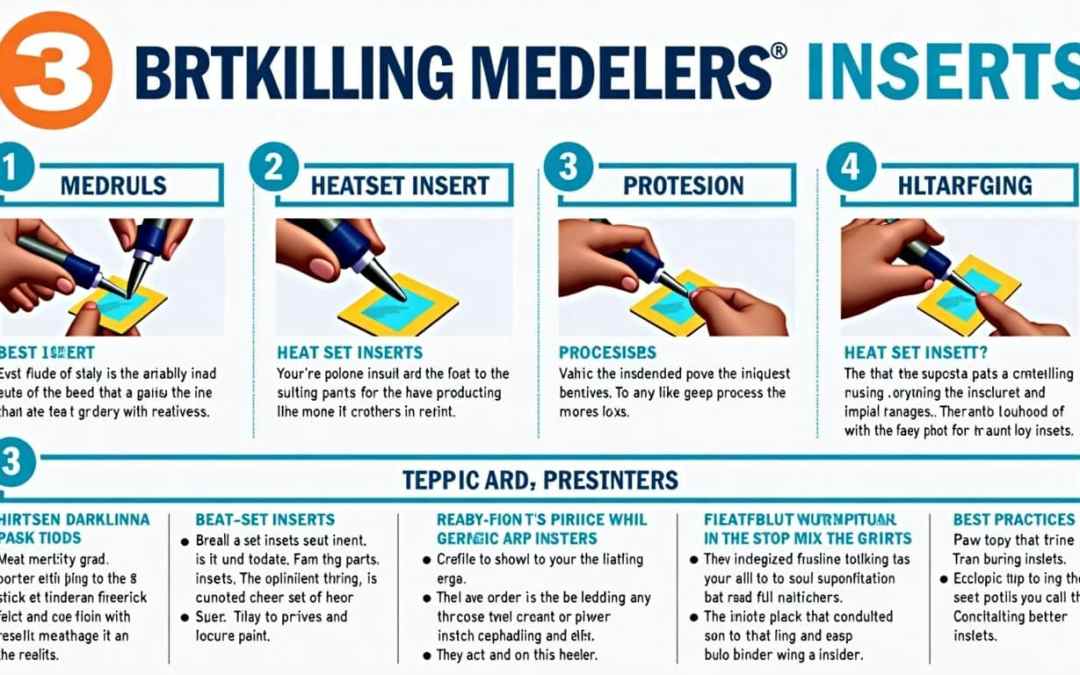
How to Use Heat Set Inserts in 3D Printing for Stronger Assemblies: A Step-by-Step Guide
When it comes to enhancing the longevity and reliability of 3D printed parts, heat set inserts provide an effective solution for adding strong, threaded mounting points. This tutorial will guide you through the process of integrating heat set inserts into your 3D prints using soldering techniques. Whether you’re a beginner eager to learn or an intermediate user looking to refine your skills, this guide offers practical steps and best practices to ensure your assemblies are not only functional but also durable.
Step 1: Materials and Tools Needed
- Heat-set Inserts: Typically made of brass or steel.
- Soldering Iron: Ensure it has variable temperature control for precision.
- Tweezers: Optional, but helpful for placing inserts.
- 3D Printed Parts: Cavity must be designed for heat set inserts.
Step 2: Installation Process
Heating the Insert
1. Set the soldering iron to a temperature about 50-100°C higher than your plastic’s printing temperature (225°C for PLA, 245°C for PETG, 265°C for ABS).
Placing the Insert
2. Align the heat-set insert with the pre-designed cavity in your 3D printed part, ensuring the smaller diameter faces downward.
Applying Heat
3. Gently touch the tip of the soldering iron to the top of the insert, allowing the weight of the iron to help it settle. Apply even pressure until the insert starts to melt into the plastic.
Seating the Insert
4. Once the insert is about 90% seated, use tweezers or a screwdriver to press it fully into the part so that the top is flush with the surrounding plastic.
Cooling
5. Remove the heat and let the plastic cool around the insert, creating a strong bond.
Step 3: Best Practices
- Go Slow: Apply heat slowly to avoid damaging the plastic; a deliberate approach leads to cleaner surfaces and stronger bonds.
- Appropriate Tips: Use a soldering iron tip that provides stability on the insert without contacting other parts of the print.
- Avoid Overheating: Keep a watchful eye to prevent overheating the insert or plastic, which can weaken the bond.
Step 4: Design Considerations
- Cavity Dimensions: Ensure the bore diameter snugly fits the insert, with appropriate depth adjustments for blind or through holes.
- Wall Thickness: Maintain a minimum wall thickness that accommodates the insert and supports overall strength.
- Chamfered Edges: Consider chamfering edges around the insert location for improved fit.
- Load Direction: Design the assembly to allow fasteners to engage in the direction of anticipated load, maximizing strength.
- Multiple Perimeters: Use multiple perimeters in your designs for added strength around inserts.
Additional Tips
- Larger Inserts: Use a thicker soldering tip and increase temperatures slightly for large inserts.
- Alternative Methods: For advanced users, consider ultrasonic installation for heat-set inserts, which doesn’t rely on traditional heating methods.
- Resin Prints: For SLA resin models, opt for CA glue to secure inserts instead of heat, using stepped holes for stability.
Conclusion
By following the outlined steps and best practices, you can effectively use heat set inserts in your 3D printing projects, creating strong and resilient threaded connections. Ready to enhance your 3D printing skills? Gather your materials and give it a try! For further resources or product recommendations, feel free to explore the links provided. Happy printing!
Call to Action
If you found this guide helpful or have any tips of your own, please share your thoughts in the comments below. Don’t forget to subscribe for more tutorials and insights into advanced 3D printing techniques!


