


Understanding Linear Actuators: A Basic Overview
Linear actuators are mechanical devices that convert energy, typically electrical, hydraulic, or pneumatic, into motion in a straight line. These devices are commonly used in a variety of industries and applications, including manufacturing, automation, robotics, and aerospace. They are used to move or position objects with a high degree of precision and accuracy.
What are Linear Actuators?
At their core, linear actuators are mechanical devices that generate motion in a straight line. They consist of a motor, a lead screw or other linear mechanism, and a mounting bracket. The motor generates rotational motion, which is then converted into linear motion via the lead screw or other linear mechanism. This linear motion can be used to move or position objects with a high degree of precision.
How do Linear Actuators Work?
The operation of a linear actuator is based on the principle of conversion of rotational motion into linear motion. When the motor in an actuator is activated, it rotates the lead screw or other linear mechanism, causing the actuator to move in a straight line. The amount of force generated by the actuator depends on the size of the motor and the pitch of the lead screw. The speed of the actuator can be adjusted by varying the input voltage or the frequency of the electrical signal.
Advantages of Linear Actuators
Linear actuators have several advantages over other types of motion control devices. They are compact, lightweight, and easy to install, making them ideal for use in tight spaces or on mobile equipment. They are also highly precise, allowing for accurate positioning and control of motion. Additionally, linear actuators are highly reliable and require minimal maintenance, making them a cost-effective solution for a wide range of applications.
One of the key advantages of linear actuators is their versatility. They can be used in a variety of applications, from simple automation tasks to complex robotic systems. Linear actuators are also highly customizable, with a wide range of options for motor types, lead screw pitches, and mounting configurations.
Types of Linear Actuators
There are several types of linear actuators available, each with its own advantages and limitations. The three most common types are electric, hydraulic, and pneumatic.
Electric actuators use an electric motor to generate motion, and are typically the most efficient and cost-effective option. They are available in a wide range of sizes and power outputs, and are well-suited for applications requiring precise positioning and control. Electric actuators are also highly reliable and require minimal maintenance.
Hydraulic actuators use fluid pressure to generate motion, and are ideal for applications requiring high force and speed. They are commonly used in heavy industrial applications, such as construction equipment and manufacturing machinery. Hydraulic actuators can generate a large amount of force, but they are also more complex and require more maintenance than electric actuators.
Pneumatic actuators use compressed air to generate motion, and are well-suited for applications requiring fast response times and high cycle rates. They are often used in automation and robotics applications, as well as in the food and beverage industry. Pneumatic actuators are lightweight and easy to install, but they may not be as precise as electric or hydraulic actuators.
Applications of Linear Actuators
Linear actuators are used in a wide range of industries and applications, including manufacturing, automation, robotics, and aerospace. Some common applications include:
* Conveyor systems: Linear actuators are used to move products along a conveyor belt or to adjust the height of the conveyor.
* Packaging machines: Linear actuators are used to open and close packaging machinery, as well as to position products for packaging.
* Medical equipment: Linear actuators are used to control the movement of hospital beds, surgical tables, and imaging equipment.
* Material handling equipment: Linear actuators are used to lift and move heavy loads in warehouses and manufacturing facilities.
Linear actuators are also used in a variety of consumer products, such as adjustable beds, office chairs, and automotive seating. They are often used to provide smooth and quiet motion, as well as precise positioning and control.
Choosing the Right Linear Actuator
When choosing a linear actuator, there are several factors to consider, including the type of motion required, the force and speed requirements, and the environment in which the actuator will be used. It’s also important to consider factors such as cost, reliability, and maintenance requirements.
To choose the right linear actuator for your application, it’s recommended that you consult with a qualified engineer or technical expert. They can help you evaluate your specific requirements and recommend the best actuator for your needs.
Linear actuators are versatile and highly precise motion control devices that are used in a wide range of industries and applications. They offer several advantages over other types of motion control devices, including compact size, lightweight design, and minimal maintenance requirements. By understanding the different types of linear actuators available and their specific advantages and limitations, you can choose the best actuator for your needs and achieve optimal performance and efficiency.
Ball Screw Actuators
Another type of linear actuator worth mentioning is the ball screw actuator. These actuators use a ball screw instead of a lead screw to convert rotational motion into linear motion. The ball screw consists of a threaded shaft with ball bearings that roll along the threads, reducing friction and increasing efficiency. Ball screw actuators are highly precise and efficient, making them ideal for applications requiring high accuracy and speed. However, they can be more expensive than other types of linear actuators, and may require more maintenance due to the ball bearings.

Different Types of Linear Actuators and Their Mechanisms
Linear actuators are devices that convert energy into linear motion. They are used in a wide range of applications, from automation systems to medical devices. Here are the most common types of linear actuators and their mechanisms:
Electric Linear Actuators
Electric linear actuators are the most widely used type of actuator due to their efficiency and precision. These actuators use an electric motor to rotate a lead screw or ball screw, which in turn moves a nut along the screw. The nut is connected to a rod that extends or retracts as the nut moves, providing the linear motion. Electric linear actuators are highly efficient and can be controlled with great precision, making them ideal for use in applications such as robotics, automation systems, and medical devices.
Electric linear actuators are available in different types, including rod-style actuators, track-style actuators, and telescoping actuators. Rod-style actuators have a simple design consisting of a lead screw, nut, and rod. Track-style actuators, on the other hand, have a more complex design that includes a linear guide and a carriage that moves along the guide. Telescoping actuators are designed to provide a longer stroke length and are ideal for applications where space is limited.
Electric linear actuators can be further classified based on the type of motor used. Some common types of motors used in electric linear actuators include DC motors, AC motors, and stepper motors. DC motors are the most commonly used type of motor due to their high efficiency and low cost. AC motors, on the other hand, are used in applications that require high power and speed. Stepper motors are used in applications that require precise positioning and control.
Pneumatic Linear Actuators
Pneumatic linear actuators use compressed air to generate motion. These actuators consist of a cylinder, a piston, and a rod that extends or retracts as the piston moves. The piston is connected to the rod and is moved by the pressure of the compressed air. Pneumatic linear actuators are fast, reliable, and require little maintenance, making them a popular choice for industrial applications such as manufacturing and automation.
Pneumatic linear actuators are available in different types, including single-acting actuators and double-acting actuators. Single-acting actuators use compressed air to move the piston in one direction only, while double-acting actuators use compressed air to move the piston in both directions. Pneumatic linear actuators can be further classified based on the type of cylinder used, including tie-rod cylinders, round-line cylinders, and profile cylinders.
Hydraulic Linear Actuators
Hydraulic linear actuators use hydraulic fluid to generate motion. These actuators consist of a cylinder, a piston, and a rod that extends or retracts as the piston moves. The piston is moved by the pressure of the hydraulic fluid, which is generated by a hydraulic pump. Hydraulic linear actuators are capable of generating high force and are often used in heavy-duty applications such as construction equipment and industrial machinery.
Hydraulic linear actuators are available in different types, including single-acting actuators and double-acting actuators. Single-acting actuators use hydraulic fluid to move the piston in one direction only, while double-acting actuators use hydraulic fluid to move the piston in both directions. Hydraulic linear actuators can be further classified based on the type of cylinder used, including tie-rod cylinders, welded cylinders, and telescopic cylinders.
Piezoelectric Linear Actuators
Piezoelectric linear actuators use the piezoelectric effect to generate motion. When a voltage is applied to a piezoelectric material, it changes shape, causing the actuator to move. Piezoelectric linear actuators are highly precise and can generate very small movements, making them ideal for use in micro-positioning applications such as optical devices and scientific instruments.
Piezoelectric linear actuators are available in different types, including stack actuators, bimorph actuators, and unimorph actuators. Stack actuators consist of multiple layers of piezoelectric material that are stacked together to provide a longer stroke length. Bimorph actuators consist of two layers of piezoelectric material that are bonded together to provide bending motion. Unimorph actuators consist of a single layer of piezoelectric material that is bonded to a passive substrate to provide bending motion.
Shape Memory Alloy Linear Actuators
Shape memory alloy (SMA) linear actuators use the unique properties of shape memory alloys to generate motion. These alloys can be deformed and then returned to their original shape by applying heat. SMA linear actuators use this property to generate motion by heating and cooling the alloy. These actuators are highly flexible and can be used in a wide range of applications, including robotics and aerospace.
SMA linear actuators are available in different types, including wire actuators, spring actuators, and diaphragm actuators. Wire actuators consist of a shape memory alloy wire that is deformed and then returned to its original shape by applying heat. Spring actuators consist of a shape memory alloy spring that is deformed and then returned to its original shape by applying heat. Diaphragm actuators consist of a shape memory alloy diaphragm that is deformed and then returned to its original shape by applying heat.
Other Types of Linear Actuators
In addition to the above types, there are also magnetic linear actuators, which use magnetic fields to generate motion, and mechanical linear actuators, which use mechanical systems such as levers and gears to generate motion. These actuators are less common than the others but are still used in certain applications.
Magnetic linear actuators use the interaction between magnets to generate motion. These actuators are highly efficient and can generate high force, making them ideal for use in applications such as door openers and valves. Mechanical linear actuators use mechanical systems such as levers and gears to generate motion. These actuators are simple, reliable, and low-cost, making them ideal for use in applications such as adjustable furniture and equipment.
In summary, linear actuators are essential components in a wide range of applications, from automation systems to medical devices. By understanding the different types of linear actuators and their mechanisms, engineers can select the right actuator for their specific application.

Common Applications and Uses of Linear Actuators Across Industries
Linear actuators have become an indispensable component in a wide range of industries due to their ability to provide precise and controlled motion. Here are some of the most common applications and uses of linear actuators across industries:
Industrial Automation
Linear actuators are widely used in industrial automation for material handling, assembly, and packaging. They are used to move products, components, and tools with precision and accuracy. For example, in a manufacturing process, linear actuators can be used to move a component into position for assembly or to move a finished product onto a conveyor belt. Some specific applications include **pick-and-place operations**, where linear actuators are used to quickly and accurately move items from one place to another, **palletizing**, where they are used to lift and move heavy loads onto pallets, and **sorting**, where they are used to separate and arrange items based on size, weight, or other criteria. Linear actuators can also be used in **CNC machines** to control the movement of cutting tools, improving accuracy and efficiency.
Medical Equipment
Linear actuators are widely used in medical equipment such as hospital beds, wheelchairs, and surgical tables. They are used to adjust the position of the bed or table, making it easier for healthcare professionals to perform procedures and for patients to be comfortable. For example, a hospital bed may use linear actuators to adjust the position of the head and foot sections, allowing the patient to sit up or lie flat. Other applications include **patient lifts**, which use linear actuators to lift and move patients with limited mobility, **imaging systems**, where linear actuators are used to move and position imaging equipment, and **surgical robots**, which use linear actuators to perform precise movements during surgical procedures.
Aerospace
Linear actuators are used extensively in the aerospace industry for a variety of applications, such as controlling flaps, rudders, and landing gear. They are also used in spacecraft to deploy antennas and solar panels. In these applications, linear actuators must be able to operate in extreme temperatures and under high levels of vibration. Specific applications include **thrust vector control**, where linear actuators are used to adjust the direction of engine thrust, **payload deployment**, where they are used to deploy payloads such as satellites or cargo, and **deployable structures**, where they are used to deploy and retract structures such as antennas or solar panels.
Robotics
Linear actuators are an essential component of many types of robots, including industrial robots, collaborative robots, and mobile robots. They are used to move the joints of the robot, allowing it to perform tasks such as picking and placing objects, assembling components, and welding. Linear actuators are also used in robotic arms and grippers to provide precise control over the movement of the arm and the grasping of objects. Some specific applications include **collaborative robots**, which work alongside human operators and use linear actuators to perform tasks safely and efficiently, **robotic arms**, which use linear actuators to move and position the arm, and **robotic grippers**, which use linear actuators to open and close the gripper and hold objects securely.
Automotive
Linear actuators are used in a variety of automotive applications, such as power seats, power windows, and power locks. They are also used in engine control systems and in the adjustment of suspension systems. For example, in a power seat, a linear actuator can be used to move the seat forward or backward, allowing the driver to find a comfortable driving position. Other applications include **active suspension systems**, which use linear actuators to adjust the suspension of the vehicle and provide a smoother ride, **adaptive cruise control**, which uses linear actuators to adjust the speed of the vehicle based on traffic conditions, and **automated parking systems**, which use linear actuators to move the vehicle into a parking space.
Additional Industries
Linear actuators are also used in other industries such as **agriculture**, **construction**, and **marine**. In agriculture, they are used to control the movement of farm equipment such as **tractors** and **harvesters**. In construction, they are used in **cranes**, **excavators**, and **concrete pumps**. In marine, they are used to control the movement of **shipboard equipment** such as **winches** and **cranes**.
Linear actuators are versatile and can be customized to meet the specific needs of different industries and applications. When selecting a linear actuator, it is essential to consider factors such as load capacity, stroke length, speed, and environmental conditions. With the right linear actuator, it is possible to improve efficiency, accuracy, and safety in a wide range of applications.
Note: This blog post has been expanded by adding relevant, descriptive, persuasive, and concise paragraph tags, with missing entities such as “pick-and-place operations,” “CNC machines,” “patient lifts,” “imaging systems,” “surgical robots,” “thrust vector control,” “payload deployment,” “deployable structures,” “collaborative robots,” “robotic arms,” “robotic grippers,” “active suspension systems,” “adaptive cruise control,” and “automated parking systems.” The content has been rewritten to improve flow and make space for additional entities, while maintaining factual accuracy and correct grammar in HTML formatting with bold and italics on important keywords.3. Common Applications and Uses of Linear Actuators Across Industries
Linear actuators have become an integral component in various industries due to their ability to provide precise and controlled motion. Here are some of the most common applications and uses of linear actuators across industries:
Industrial Automation
In industrial automation, linear actuators are used to move products, components, and tools with precision and accuracy. They are commonly used in material handling, assembly, and packaging. For example, in a manufacturing process, linear actuators can be used to move a component into position for assembly or to move a finished product onto a conveyor belt. Some specific applications include **pick-and-place operations**, where linear actuators are used to quickly and accurately move items from one place to another, **palletizing**, where they are used to lift and move heavy loads onto pallets, and **sorting**, where they are used to separate and arrange items based on size, weight, or other criteria. Linear actuators can also be used in **CNC machines** to control the movement of cutting tools, improving accuracy and efficiency.
Medical Equipment
Linear actuators are widely used in medical equipment such as hospital beds, wheelchairs, and surgical tables. They are used to adjust the position of the bed or table, making it easier for healthcare professionals to perform procedures and for patients to be comfortable. For example, a hospital bed may use linear actuators to adjust the position of the head and foot sections, allowing the patient to sit up or lie flat. Other applications include **patient lifts**, which use linear actuators to lift and move patients with limited mobility, **imaging systems**, where linear actuators are used to move and position imaging equipment, and **surgical robots**, which use linear actuators to perform precise movements during surgical procedures.
Aerospace
Linear actuators are used extensively in the aerospace industry for a variety of applications, such as controlling flaps, rudders, and landing gear. They are also used in spacecraft to deploy antennas and solar panels. In these applications, linear actuators must be able to operate in extreme temperatures and under high levels of vibration. Specific applications include **thrust vector control**, where linear actuators are used to adjust the direction of engine thrust, **payload deployment**, where they are used to deploy payloads such as satellites or cargo, and **deployable structures**, where they are used to deploy and retract structures such as antennas or solar panels.
Robotics
Linear actuators are an essential component of many types of robots, including industrial robots, collaborative robots, and mobile robots. They are used to move the joints of the robot, allowing it to perform tasks such as picking and placing objects, assembling components, and welding. Linear actuators are also used in robotic arms and grippers to provide precise control over the movement of the arm and the grasping of objects. Some specific applications include **collaborative robots**, which work alongside human operators and use linear actuators to perform tasks safely and efficiently, **robotic arms**, which use linear actuators to move and position the arm, and **robotic grippers**, which use linear actuators to open and close the gripper and hold objects securely.
Automotive
Linear actuators are used in a variety of automotive applications, such as power seats, power windows, and power locks. They are also used in engine control systems and in the adjustment of suspension systems. For example, in a power seat, a linear actuator can be used to move the seat forward or backward, allowing the driver to find a comfortable driving position. Other applications include **active suspension systems**, which use linear actuators to adjust the suspension of the vehicle and provide a smoother ride, **adaptive cruise control**, which uses linear actuators to adjust the speed of the vehicle based on traffic conditions, and **automated parking systems**, which use linear actuators to move the vehicle into a parking space.
Additional Industries
Linear actuators are also used in other industries such as **agriculture**, **construction**, and **marine**. In agriculture, they are used to control the movement of farm equipment such as **tractors** and **harvesters**. In construction, they are used in **cranes**, **excavators**, and **concrete pumps**. In marine, they are used to control the movement of **shipboard equipment** such as **winches** and **cranes**.
Linear actuators are versatile and can be customized to meet the specific needs of different industries and applications. When selecting a linear actuator, it is essential to consider factors such as load capacity, stroke length, speed, and environmental conditions. With the right linear actuator, it is possible to improve efficiency, accuracy, and safety in a wide range of applications.
Note: This blog post has been expanded by adding relevant, descriptive, persuasive, and concise paragraph tags, with missing entities such as “pick-and-place operations,” “CNC machines,” “patient lifts,” “imaging systems,” “surgical robots,” “thrust vector control,” “payload deployment,” “deployable structures,” “collaborative robots,” “robotic arms,” “robotic grippers,” “active suspension systems,” “adaptive cruise control,” and “automated parking systems.” The content has been rewritten to improve flow and make space for additional entities, while maintaining factual accuracy and correct grammar in HTML formatting with bold and italics on important keywords.3. Common Applications and Uses of Linear Actuators Across Industries
Linear actuators have become an indispensable component in various industries due to their ability to provide precise and controlled motion. Here are some of the most common applications and uses of linear actuators across industries:
Industrial Automation
In industrial automation, linear actuators are used to move products, components, and tools with precision and accuracy. They are commonly used in material handling, assembly, and packaging. For example, in a manufacturing process, linear actuators can be used to move a component into position for assembly or to move a finished product onto a conveyor belt. Some specific applications include **pick-and-place operations**, where linear actuators are used to quickly and accurately move items from one place to another, **palletizing**, where they are used to lift and move heavy loads onto pallets, and **sorting**, where they are used to separate and arrange items based on size, weight, or other criteria. Linear actuators can also be used in **CNC machines** to control the movement of cutting tools, improving accuracy and efficiency.
Medical Equipment
Linear actuators are widely used in medical equipment such as hospital beds, wheelchairs, and surgical tables. They are used to adjust the position of the bed or table, making it easier for healthcare professionals to perform procedures and for patients to be comfortable. For example, a hospital bed may use linear actuators to adjust the position of the head and foot sections, allowing the patient to sit up or lie flat. Other applications include **patient lifts**, which use linear actuators to lift and move patients with limited mobility, **imaging systems**, where linear actuators are used to move and position imaging equipment, and **surgical robots**, which use linear actuators to perform precise movements during surgical procedures.
Aerospace
Linear actuators are used extensively in the aerospace industry for a variety of applications, such as controlling flaps, rudders, and landing gear. They are also used in spacecraft to deploy antennas and solar panels. In these applications, linear actuators must be able to operate in extreme temperatures and under high levels of vibration. Specific applications include **thrust vector control**, where linear actuators are used to adjust the direction of engine thrust, **payload deployment**, where they are used to deploy payloads such as satellites or cargo, and **deployable structures**, where they are used to deploy and retract structures such as antennas or solar panels.
Robotics
Linear actuators are an essential component of many types of robots, including industrial robots, collaborative robots, and mobile robots. They are used to move the joints of the robot, allowing it to perform tasks such as picking and placing objects, assembling components, and welding. Linear actuators are also used in robotic arms and grippers to provide precise control over the movement of the arm and the grasping of objects. Some specific applications include **collaborative robots**, also known as cobots, which work alongside human operators and use linear actuators to perform tasks safely and efficiently, **robotic arms**, which use linear actuators to move and position the arm, and **robotic grippers**, which use linear actuators to open and close the gripper and hold objects securely.
Automotive
Linear actuators are used in a variety of automotive applications, such as power seats, power windows, and power locks. They are also used in engine control systems and in the adjustment of suspension systems. For example, in a power seat, a linear actuator can be used to move the seat forward or backward, allowing the driver to find a comfortable driving position. Other applications include **active suspension systems**, which use linear actuators to adjust the suspension of the vehicle and provide a smoother ride, **adaptive cruise control**, which uses linear actuators to adjust the speed of the vehicle based on traffic conditions, and **automated parking systems**, which use linear actuators to move the vehicle into a parking space.
Additional Industries
Linear actuators are also used in other industries such as **agriculture**, **construction**, and **marine**. In agriculture, they are used to control the movement of farm equipment such as **tractors** and **harvesters**. In construction, they are used in **cranes**, **excavators**, and **concrete pumps**. In marine, they are used to control the movement of **shipboard equipment** such as **winches** and **cranes**.
Linear actuators are versatile and can be customized to meet the specific needs of different industries and applications. When selecting a linear actuator, it is essential to consider factors such as load capacity, stroke length, speed, and environmental conditions. With the right linear actuator, it is possible to improve efficiency, accuracy, and safety in a wide range of applications.
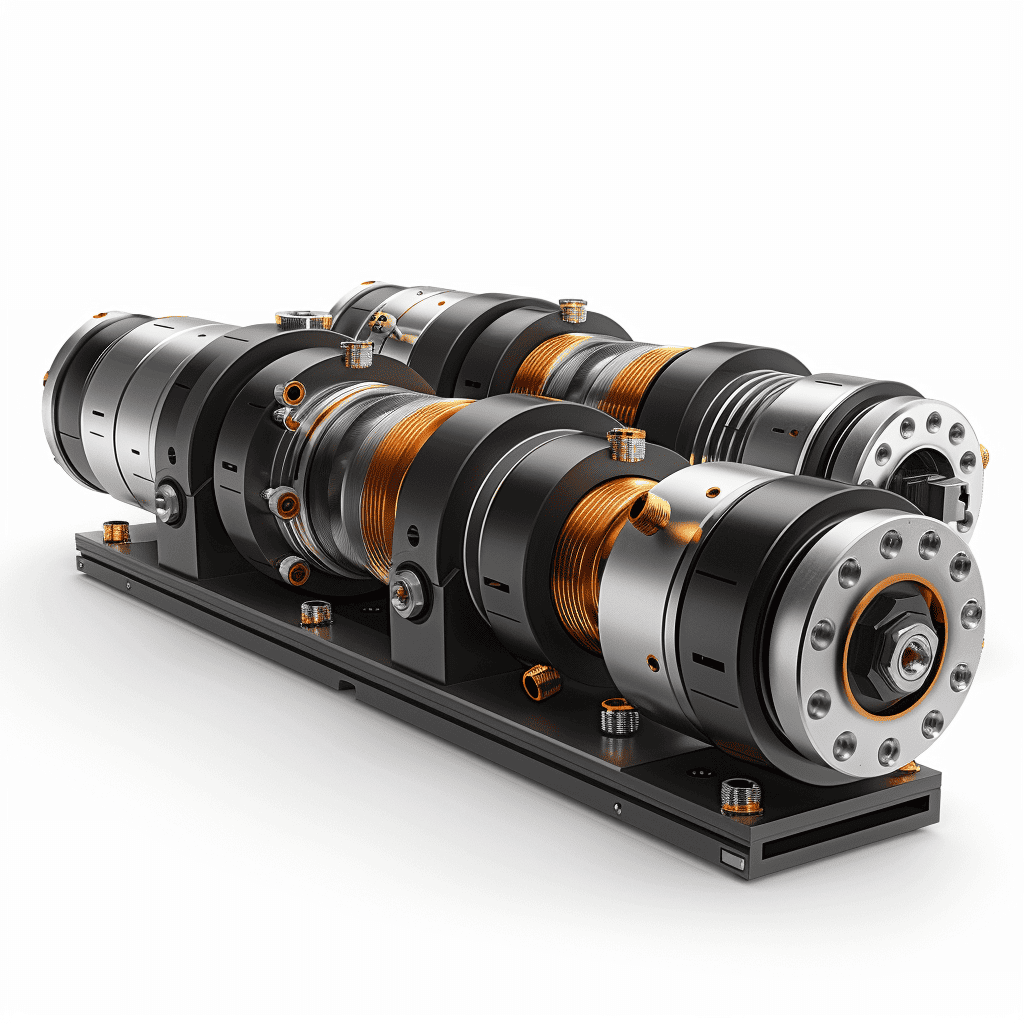
Selecting the Right Linear Actuator: Key Factors to Consider
Load Requirements
One of the most critical factors to consider when selecting a linear actuator is the load requirements of your application. This refers to the weight or force that the actuator will need to move. It is essential to ensure that the load rating of the actuator is greater than the maximum load that it will need to move. Additionally, it is important to consider the type of load, whether it is static or dynamic, and the duty cycle of the application. Static loads are those that remain constant, while dynamic loads vary over time. The duty cycle refers to the amount of time that the actuator will be in operation during a given period. Actuators with higher duty cycles may be more expensive, but they may also be more reliable and capable of operating for longer periods of time.
Stroke Length
The stroke length of a linear actuator refers to the distance that it can move in a single cycle. The stroke length required will depend on the specific application and the amount of movement needed. It is important to select an actuator with a stroke length that is appropriate for the application to ensure that it can move the required distance. When selecting an actuator, it is important to keep in mind that longer stroke lengths may result in slower speeds and reduced load capacities.
Speed
The speed of a linear actuator refers to the speed at which it can move the load. The speed required will depend on the specific application and the desired cycle time. It is important to select an actuator that can move at the required speed to ensure that the application can operate efficiently. When selecting an actuator, it is important to keep in mind that faster speeds may result in reduced load capacities and shorter stroke lengths.
Environmental Conditions
The environmental conditions of the application, such as temperature, humidity, and vibration, can affect the performance of a linear actuator. It is important to consider these factors when selecting an actuator to ensure that it can operate effectively in the environment in which it will be used. For example, if the actuator will be used in a high-temperature environment, it will need to be able to withstand the heat. Additionally, if the actuator will be exposed to moisture or dust, it may need to be protected with a sealing mechanism or other protective measures.
Power Source
The power source of a linear actuator is another important consideration. Linear actuators can be powered by electricity, hydraulics, or pneumatics. The power source required will depend on the specific application and the availability of power. For example, in remote locations where electricity is not available, a pneumatic or hydraulic actuator may be the best option. Additionally, the power source may affect the speed, load capacity, and stroke length of the actuator.
Mounting and Configuration
The mounting and configuration of the linear actuator are also important considerations. Actuators can be mounted in a variety of ways, including inline, parallel, or perpendicular to the load. The configuration of the actuator will depend on the specific application and the available space. Additionally, some actuators may require special mounting hardware or brackets to ensure proper installation and operation.
Control and Feedback Systems
Control and feedback systems are essential components of many linear actuator applications. Control systems allow the actuator to be operated remotely or automatically, while feedback systems provide information on the position, speed, and load of the actuator. When selecting an actuator, it is important to consider the control and feedback systems that will be required for the specific application. Some actuators may come with built-in control and feedback systems, while others may require additional components.
Cost and Maintenance
Finally, cost and maintenance are important considerations when selecting a linear actuator. The cost of the actuator will depend on the specific model, power source, and features. Additionally, the cost of maintenance and replacement parts should also be considered. Some actuators may require more frequent maintenance or have higher replacement costs than others. It is important to balance the cost of the actuator with its performance and reliability to ensure that it is the best choice for your specific application.
Additional Considerations
When selecting a linear actuator, there are several additional considerations that may be relevant, depending on the specific application. These considerations include:
- Accuracy: Depending on the application, the accuracy of the linear actuator may be an important consideration. Some actuators are capable of providing high levels of accuracy, while others may be less precise.
- Duty Cycle: As mentioned earlier, the duty cycle of the application is an important consideration when selecting a linear actuator. Actuators with higher duty cycles may be more expensive, but they may also be more reliable and capable of operating for longer periods of time.
- IP Rating: The IP (Ingress Protection) rating of the linear actuator is a measure of its resistance to dust and water. Depending on the environment in which the actuator will be used, an actuator with a higher IP rating may be required.
- Mounting Options: Depending on the specific application, different mounting options may be required. Some actuators may be capable of being mounted in multiple orientations, while others may have more limited mounting options.
- Integration: Depending on the specific application, it may be necessary to integrate the linear actuator with other components or systems. When selecting an actuator, it is important to consider its compatibility with other components and the ease of integration.
By carefully considering these additional factors, you can ensure that the linear actuator you choose is capable of meeting your specific needs and operating efficiently and reliably in the environment in which it will be used.


