
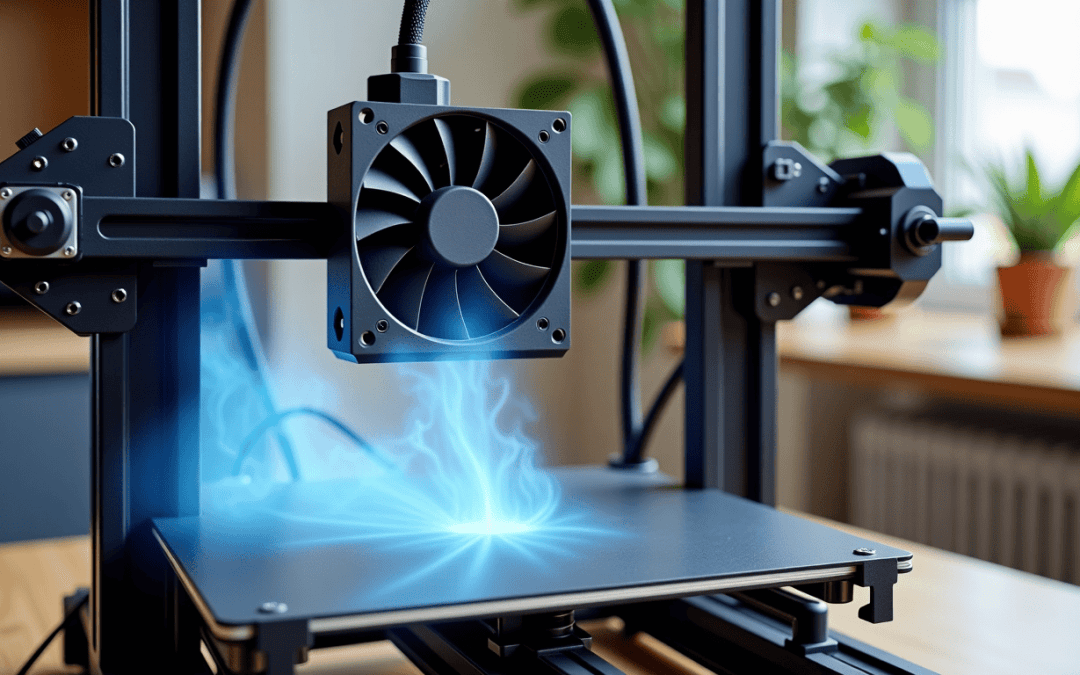
Mastering 3D Printer Cooling: A Comprehensive Deep Dive into Fan Duct Design
In the ever-evolving world of 3D printing, efficient cooling plays a pivotal role in ensuring quality and consistency. The fan duct, an often understated component, is crucial for directing airflow around the hotend. This guide explores the intricacies of designing effective fan ducts, drawing on insights from HVAC principles, CAD techniques, and cutting-edge materials to optimize performance.
Diving into Fan Duct Fundamentals
What Makes Fan Ducts Essential for Print Quality?
The fan duct directs airflow to critical areas of the hotend, preventing overheating and ensuring the integrity of the printed material. Proper cooling minimizes issues like stringing and warping, resulting in higher print precision and aesthetics.
The Art of Airflow: Understanding Fan Duct Design
Achieving optimal cooling requires an effective airflow pattern. A well-crafted fan duct harnesses fluid dynamics, creating smooth, consistent airflow. This foundation in HVAC design emphasizes gradual duct narrowing (avoiding more than 11 degrees) to optimize performance without throttling the fan.
Picking the Perfect Fan Duct Design
Tailoring Designs to Your Hotend
Not all hotends are created equal, and neither are duct designs. It’s vital to customize duct configurations to fit your hotend model for maximized cooling efficiency. Explore open-source designs for inspiration and adapt them to suit your needs.
Exploring Advanced Lofting Techniques
Lofting shapes in CAD programs can be utilized to ensure smooth airflow. By incorporating fluid dynamics principles, such as avoiding sharp turns and maintaining gradual cross-sectional shifts, lofting enhances duct shape efficiency.
Material Matters: Choosing the Right Filament
Unveiling Cutting-Edge Materials
Traditional ABS is being surpassed by materials like PETG, polycarbonate, PEEK, and ULTEM, known for their thermal stability and durability. These advanced materials withstand the high temperatures near the hotend, ensuring longer-lasting duct performance.
Balancing Filament Properties for Optimal Performance
Filament properties, such as melting points and thermal conductivity, significantly influence duct effectiveness. Selecting materials with higher thermal resistance prevents deformation, securing the duct’s structural integrity.
Perfecting Positioning and Alignment
The Impact of Precise Duct Positioning
Correctly positioning your fan duct is paramount; misalignment can lead to poor cooling performance, negatively affecting print quality. Ensure that airflow targets the HeatSink and nozzle accurately, avoiding bypass or obstruction.
Fine-Tuning Duct Angles for Diverse Scenarios
Adjust duct angles based on printing speeds and filament types. For high-speed prints, direct airflow may be crucial, while varying materials might require adjustments for optimal cooling.
Testing, Troubleshooting, and Iteration
Establishing Performance Benchmarks
Quantifying cooling efficiency involves monitoring temperature drops, print quality, and stability. Conduct test prints under varying conditions to vet the effectiveness of your design.
Embracing Simulations and Real-World Testing
Using CFD simulation software alongside empirical testing predicts performance and identifies potential issues. This iterative cycle allows for refinements before committing to physical prints, saving time and resources.
Exploring Advanced Cooling Techniques and Future Trends
Integrating IoT and Adaptive Cooling
Future fan duct designs may incorporate IoT capabilities, enhancing dynamic, real-time cooling adjustments. Smart sensors could adapt fan speeds and orientations based on precise, continuous temperature data.
Discovering Innovative Cooling Materials
Materials like cooling gels or phase change substances promise revolutionary leaps in fan duct efficiency by stabilizing temperatures through heat absorption and release.
Real-World Applications and Ethical Considerations
Learning from Case Studies
Examining successful industrial applications of custom duct designs sheds light on how these components improve production cycles and print quality in professional settings.
Navigating the Ethics of Design and Material Use
A commitment to environmentally conscious materials and ethical sharing practices ensures sustainable innovation. Encouraging recycling and acknowledging contributions fosters a responsible, collaborative community.
Conclusion
By understanding the fundamental principles of fan duct design and exploring advanced materials and techniques, you can significantly enhance your 3D printer’s cooling performance. Dive into the world of custom fan ducts with confidence, armed with the insights and tools to optimize your printing experience. For more technology deep dives and design insights, follow us to stay at the forefront of 3D printing innovation.
Explore further with us! Follow along for the latest in technology deep dives, and start transforming your 3D printing projects with the power of innovation.


