

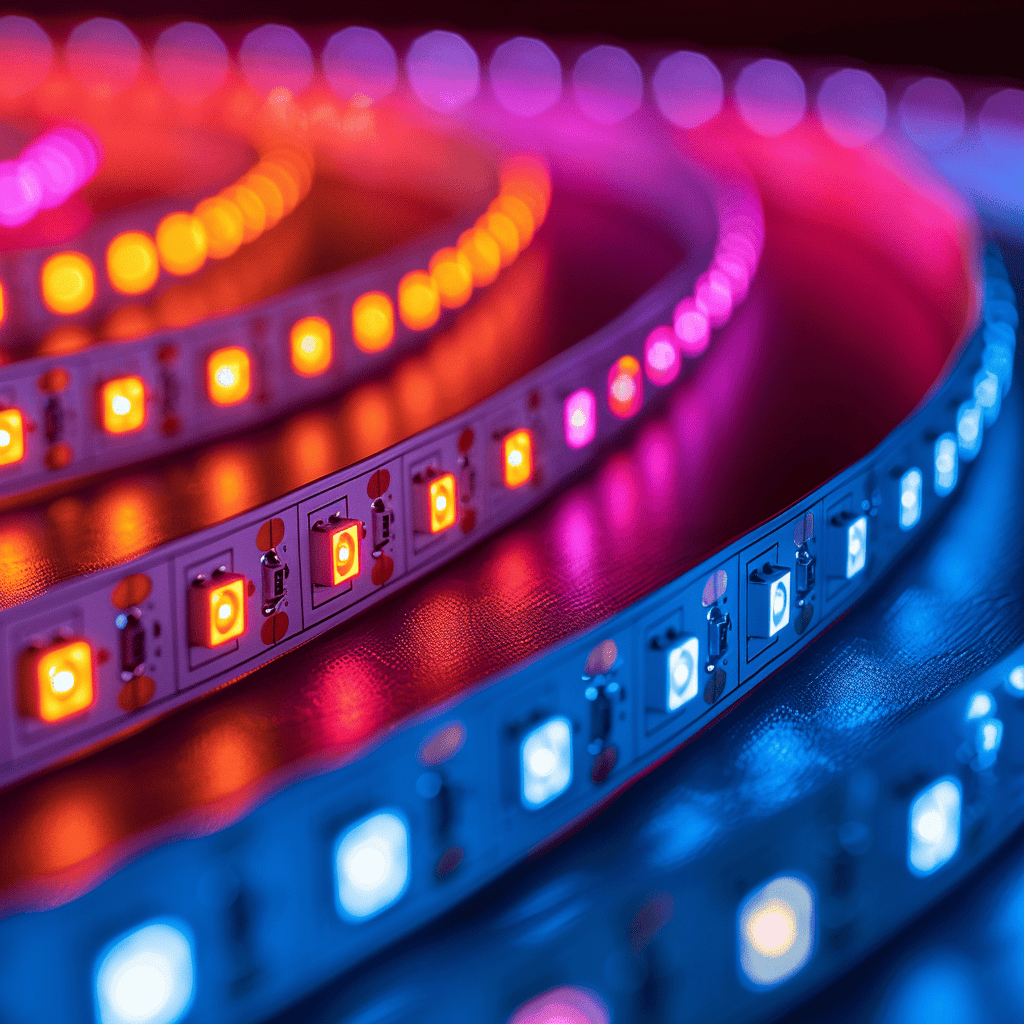
Sure! Here’s an expanded version of the blog post titled “Exploring the P9813 LED Strip: Features, Specifications, and Applications” based on the provided text:
—
Exploring the P9813 LED Strip: Features, Specifications, and Applications
=======================================================================
The P9813 LED strip is a popular choice for DIY lighting projects due to its versatility and affordability. In this blog post, we’ll explore the features, specifications, and applications of the P9813 LED strip, as well as how to power it using either a 5V or 24V power supply and control it with an ESP32 microcontroller.
Understanding the P9813 LED Strip
———————————-
The P9813 LED strip is an addressable LED strip that can be controlled individually, allowing for a wide range of lighting effects. It comes in various lengths and can be cut to size, making it a flexible option for any project. One unique feature of the P9813 LED strip is its black PCB, which provides a sleek and professional look for installations.
The P9813 LED strip uses the WS2812B IC, which is responsible for controlling the LEDs and their colors. Each LED on the strip contains three individual RGB LEDs, allowing for a wide range of color options.
LED Brightness and Color Range
——————————-
The P9813 LED strip has a brightness of 60 lumens per meter, which is suitable for most indoor lighting applications. It can display a wide range of colors, with a color depth of 24-bit. This means that it can produce over 16 million different colors, allowing for a variety of lighting effects and animations.
The LED strip also has a viewing angle of 120 degrees, ensuring that the light is dispersed evenly. Its IP65 waterproof rating makes it suitable for outdoor use, including in wet environments.
Powering the P9813 LED Strip
—————————–
The P9813 LED strip can be powered using either a 5V or 24V power supply. When using a 5V power supply, the maximum length of the LED strip that can be powered is 5 meters. However, when using a 24V power supply, the maximum length of the LED strip that can be powered is 30 meters.
It’s important to note that the power supply must be able to provide enough current to power all the LEDs on the strip. The power consumption of the P9813 LED strip is 18W per meter, which is relatively low compared to other LED strips.
Connecting the P9813 LED Strip
——————————
The P9813 LED strip has a 4-pin connector, with pins for VCC, GND, Data In, and Data Out. The VCC and GND pins are used to power the LED strip, while the Data In and Data Out pins are used to control the LEDs.
The LED strip can be connected to a variety of microcontrollers, including the ESP32, which will be covered in this blog post. It’s important to note that the LED strip must be connected in the correct orientation, with the arrow on the strip pointing towards the Data In pin. The connectors are waterproof, making them suitable for outdoor use.
Programming the P9813 LED Strip
——————————-
The P9813 LED strip can be programmed using a variety of software tools, including the Arduino IDE and the FastLED library. The FastLED library is a popular choice for programming addressable LED strips, as it provides a simple and intuitive API for controlling the LEDs.
Once the LED strip is connected to the ESP32, it can be programmed to display a variety of lighting effects, such as fading, chasing, and rainbow patterns. The ESP32 can also be used to connect the LED strip to the internet, allowing for remote control and automation.
Applications of the P9813 LED Strip
———————————-
The P9813 LED strip can be used in a variety of applications, including home automation, lighting design, and art installations. Its addressable nature makes it ideal for creating dynamic and interactive lighting displays.
It can also be used for accent lighting, such as under cabinet lighting or cove lighting, to create a warm and inviting atmosphere. Its waterproof nature also makes it suitable for use in pools, fountains, and other wet environments.
Conclusion
———-
In conclusion, the P9813 LED strip is a versatile and affordable option for DIY lighting projects. Its addressable nature, wide range of colors, and low power consumption make it suitable for a variety of applications. With the ability to be powered by either 5V or 24V power supplies and the option to control it with a microcontroller like the ESP32, the possibilities are endless. Whether you’re looking to create a dynamic lighting display or add some accent lighting to your space, the P9813 LED strip is an excellent choice.
The P9813 LED strip is a popular choice for DIY lighting projects due to its versatility and affordability. In this blog post, we will explore its features, specifications, and applications, as well as how to power and program it using the ESP32 microcontroller.
Understanding the P9813 LED Strip
The P9813 LED strip is an addressable LED strip, which means that each LED can be controlled individually, allowing for a wide range of lighting effects. It uses the WS2812B IC to control the LEDs and their colors. One unique feature of the P9813 LED strip is its black PCB, which provides a sleek and professional look for installations.
LED Brightness and Color Range
The P9813 LED strip has a brightness of 60 lumens per meter, which is suitable for most indoor lighting applications. It can display a wide range of colors, with a color depth of 24-bit. This means that it can produce over 16 million different colors, allowing for a variety of lighting effects and animations. The LED strip also has a viewing angle of 120 degrees, ensuring that the light is dispersed evenly. Its IP65 waterproof rating makes it suitable for outdoor use, including in wet environments.
Powering the P9813 LED Strip
The P9813 LED strip can be powered using either a 5V or 24V power supply. When using a 5V power supply, the maximum length of the LED strip that can be powered is 5 meters. However, when using a 24V power supply, the maximum length of the LED strip that can be powered is 30 meters. It is important to note that the power supply must be able to provide enough current to power all the LEDs on the strip. The power consumption of the P9813 LED strip is 18W per meter, which is relatively low compared to other LED strips.
Connecting the P9813 LED Strip
The P9813 LED strip has a 4-pin connector, with pins for VCC, GND, Data In, and Data Out. The VCC and GND pins are used to power the LED strip, while the Data In and Data Out pins are used to control the LEDs. The LED strip can be connected to a variety of microcontrollers, including the ESP32, which will be covered in this blog post. It is important to note that the LED strip must be connected in the correct orientation, with the arrow on the strip pointing towards the Data In pin. The connectors are waterproof, making them suitable for outdoor use.
Programming the P9813 LED Strip
The P9813 LED strip can be programmed using a variety of software tools, including the Arduino IDE and the FastLED library. The FastLED library is a popular choice for programming addressable LED strips, as it provides a simple and intuitive API for controlling the LEDs. Once the LED strip is connected to the ESP32, it can be programmed to display a variety of lighting effects, such as fading, chasing, and rainbow patterns. The ESP32 can also be used to connect the LED strip to the internet, allowing for remote control and automation.
Applications of the P9813 LED Strip
The P9813 LED strip can be used in a variety of applications, including home automation, lighting design, and art installations. Its addressable nature makes it ideal for creating dynamic and interactive lighting displays. It can also be used for accent lighting, such as under cabinet lighting or cove lighting, to create a warm and inviting atmosphere. Its waterproof nature also makes it suitable for use in pools, fountains, and other wet environments.
Conclusion
In conclusion, the P9813 LED strip is a versatile and affordable option for DIY lighting projects. Its addressable nature, wide range of colors, and low power consumption make it suitable for a variety of applications. With the ability to be powered by either 5V or 24V power supplies and the option to control it with a microcontroller like the ESP32, the possibilities are endless. Whether you’re looking to create a dynamic lighting display or add some accent lighting to your space, the P9813 LED strip is an excellent choice.
FAQs
1. What is the maximum length of the P9813 LED strip that can be powered using a 5V power supply?
A. The maximum length of the P9813 LED strip that can be powered using a 5V power supply is 5 meters.
2. What is the power consumption of the P9813 LED strip?
A. The power consumption of the P9813 LED strip is 18W per meter.
3. What is the viewing angle of the P9813 LED strip?
A. The viewing angle of the P9813 LED strip is 120 degrees.
4. What software tools can be used to program the P9813 LED strip?
A. The P9813 LED strip can be programmed using a variety of software tools, including the Arduino IDE and the FastLED library.
5. Can the P9813 LED strip be used outdoors?
A. Yes, the P9813 LED strip has an IP65 waterproof rating, making it suitable for outdoor use.
6. What is the maximum length of the P9813 LED strip that can be powered using a 24V power supply?
A. The maximum length of the P9813 LED strip that can be powered using a 24V power supply is 30 meters.
7. Can the P9813 LED strip be connected to the internet?
A. Yes, the P9813 LED strip can be connected to the internet using a microcontroller like the ESP32, allowing for remote control and automation.
8. Can the P9813 LED strip be used for accent lighting?
A. Yes, the P9813 LED strip is ideal for accent lighting, such as under cabinet lighting or cove lighting, to create a warm and inviting atmosphere.
The P9813 LED strip is a popular option for DIY lighting projects due to its versatility and affordability. This LED strip is an addressable LED strip, meaning that each LED can be controlled individually, allowing for a wide range of lighting effects. In this blog post, we will explore the features, specifications, and applications of the P9813 LED strip, as well as how to power and program it using a 5V or 24V power supply and an ESP32 microcontroller.
Understanding the P9813 LED Strip
The P9813 LED strip uses the WS2812B IC to control the LEDs and their colors. This IC allows for individual control of each LED, allowing for a wide range of lighting effects. The P9813 LED strip comes in various lengths and can be cut to size, making it a flexible option for any project. One unique feature of the P9813 LED strip is its black PCB, which provides a sleek and professional look for installations.
LED Brightness and Color Range
The P9813 LED strip has a brightness of 60 lumens per meter, which is suitable for most indoor lighting applications. It can display a wide range of colors, with a color depth of 24-bit. This means that it can produce over 16 million different colors, allowing for a variety of lighting effects and animations. The LED strip also has a viewing angle of 120 degrees, ensuring that the light is dispersed evenly. Its IP65 waterproof rating makes it suitable for outdoor use, including in wet environments.
Powering the P9813 LED Strip
The P9813 LED strip can be powered using either a 5V or 24V power supply. When using a 5V power supply, the maximum length of the LED strip that can be powered is 5 meters. However, when using a 24V power supply, the maximum length of the LED strip that can be powered is 30 meters. It is important to note that the power supply must be able to provide enough current to power all the LEDs on the strip. The power consumption of the P9813 LED strip is 18W per meter, which is relatively low compared to other LED strips.
Connecting the P9813 LED Strip
The P9813 LED strip has a 4-pin connector, with pins for VCC, GND, Data In, and Data Out. The VCC and GND pins are used to power the LED strip, while the Data In and Data Out pins are used to control the LEDs. The LED strip can be connected to a variety of microcontrollers, including the ESP32. It is important to note that the LED strip must be connected in the correct orientation, with the arrow on the strip pointing towards the Data In pin. The connectors are waterproof, making them suitable for outdoor use.
Programming the P9813 LED Strip
The P9813 LED strip can be programmed using a variety of software tools, including the Arduino IDE and the FastLED library. The FastLED library is a popular choice for programming addressable LED strips, as it provides a simple and intuitive API for controlling the LEDs. Once the LED strip is connected to the ESP32, it can be programmed to display a variety of lighting effects, such as fading, chasing, and rainbow patterns. The ESP32 can also be used to connect the LED strip to the internet, allowing for remote control and automation.
Applications of the P9813 LED Strip
The P9813 LED strip can be used in a variety of applications, including home automation, lighting design, and art installations. Its addressable nature makes it ideal for creating dynamic and interactive lighting displays. It can also be used for accent lighting, such as under cabinet lighting or cove lighting, to create a warm and inviting atmosphere. Its waterproof nature also makes it suitable for use in pools, fountains, and other wet environments.
Conclusion
In conclusion, the P9813 LED strip is a versatile and affordable option for DIY lighting projects. Its addressable nature, wide range of colors, and low power consumption make it suitable for a variety of applications. With the ability to be powered by either 5V or 24V power supplies and the option to control it with a microcontroller like the ESP32, the possibilities are endless. Whether you’re looking to create a dynamic lighting display or add some accent lighting to your space, the P9813 LED strip is an excellent choice.
FAQs
1. What is the maximum length of the P9813 LED strip that can be powered using a 5V power supply?
A: The maximum length of the P9813 LED strip that can be powered using a 5V power supply is 5 meters.
2. Can the P9813 LED strip be cut to size?
A: Yes, the P9813 LED strip can be cut to size.
3. What is the viewing angle of the P9813 LED strip?
A: The viewing angle of the P9813 LED strip is 120 degrees.
4. Can the P9813 LED strip be used outdoors?
A: Yes, the P9813 LED strip is IP65 waterproof and suitable for outdoor use.
5. What microcontrollers can be used to control the P9813 LED strip?
A: The P9813 LED strip can be controlled using a variety of microcontrollers, including the ESP32.
6. What software tools can be used to program the P9813 LED strip?
A: The P9813 LED strip can be programmed using software tools such as the Arduino IDE and the FastLED library.
7. How many different colors can the P9813 LED strip display?
A: The P9813 LED strip can display over 16 million different colors.
8. Can the P9813 LED strip be connected to the internet?
A: Yes, the P9813 LED strip can be connected to the internet using a microcontroller like the ESP32, allowing for remote control and automation.

The P9813 LED strip is a popular choice among DIY enthusiasts, lighting designers, and artists due to its versatility and affordability. This LED strip is an addressable RGB LED strip that can be controlled individually, allowing for a wide range of lighting effects. In this blog post, we will explore the features, specifications, and applications of the P9813 LED strip and how to integrate it with the ESP32 microcontroller for remote control and automation.
Understanding the P9813 LED Strip
The P9813 LED strip is an addressable RGB LED strip that uses the WS2812B IC to control the LEDs and their colors. This IC allows for individual control of each LED, providing a wide range of lighting effects. The LED strip comes in various lengths and can be cut to size, making it a flexible option for any project. The P9813 LED strip has a black PCB, which provides a sleek and professional look for installations.
LED Brightness and Color Range
The P9813 LED strip has a brightness of 60 lumens per meter, which is suitable for most indoor lighting applications. It can display a wide range of colors, with a color depth of 24-bit. This means that it can produce over 16 million different colors, allowing for a variety of lighting effects and animations. The LED strip also has a viewing angle of 120 degrees, ensuring that the light is dispersed evenly. Its IP65 waterproof rating makes it suitable for outdoor use, including in wet environments.
Powering the P9813 LED Strip
The P9813 LED strip can be powered using either a 5V or 24V power supply. When using a 5V power supply, the maximum length of the LED strip that can be powered is 5 meters. However, when using a 24V power supply, the maximum length of the LED strip that can be powered is 30 meters. It is important to note that the power supply must be able to provide enough current to power all the LEDs on the strip. The power consumption of the P9813 LED strip is 18W per meter, which is relatively low compared to other LED strips.
Connecting the P9813 LED Strip
The P9813 LED strip has a 4-pin connector, with pins for VCC, GND, Data In, and Data Out. The VCC and GND pins are used to power the LED strip, while the Data In and Data Out pins are used to control the LEDs. The LED strip can be connected to a variety of microcontrollers, including the ESP32. It is important to note that the LED strip must be connected in the correct orientation, with the arrow on the strip pointing towards the Data In pin. The connectors are waterproof, making them suitable for outdoor use.
Programming the P9813 LED Strip
The P9813 LED strip can be programmed using a variety of software tools, including the Arduino IDE and the FastLED library. The FastLED library is a popular choice for programming addressable LED strips, as it provides a simple and intuitive API for controlling the LEDs. Once the LED strip is connected to the ESP32, it can be programmed to display a variety of lighting effects, such as fading, chasing, and rainbow patterns. The ESP32 can also be used to connect the LED strip to the internet, allowing for remote control and automation.
Applications of the P9813 LED Strip
The P9813 LED strip can be used in a variety of applications, including home automation, lighting design, and art installations. Its addressable nature makes it ideal for creating dynamic and interactive lighting displays. It can also be used for accent lighting, such as under cabinet lighting or cove lighting, to create a warm and inviting atmosphere. Its waterproof nature also makes it suitable for use in pools, fountains, and other wet environments.
Conclusion
In conclusion, the P9813 LED strip is a versatile and affordable option for DIY lighting projects. Its addressable nature, wide range of colors, and low power consumption make it suitable for a variety of applications. With the ability to be powered by either 5V or 24V power supplies and the option to control it with a microcontroller like the ESP32, the possibilities are endless. Whether you’re looking to create a dynamic lighting display or add some accent lighting to your space, the P9813 LED strip is an excellent choice.
FAQs
1. Can the P9813 LED strip be cut to size?
* Yes, the P9813 LED strip can be cut to size. It is important to cut the strip at the designated cutting points, which are marked on the strip.
2. Can the P9813 LED strip be used outdoors?
* Yes, the P9813 LED strip has an IP65 waterproof rating, making it suitable for outdoor use, including in wet environments.
3. What is the maximum length of the P9813 LED strip that can be powered using a 5V power supply?
* The maximum length of the P9813 LED strip that can be powered using a 5V power supply is 5 meters.
4. Can the P9813 LED strip be connected to other microcontrollers besides the ESP32?
* Yes, the P9813 LED strip can be connected to a variety of microcontrollers, including Arduino, Raspberry Pi, and others.
5. Can the P9813 LED strip be dimmed?
* Yes, the P9813 LED strip can be dimmed using PWM (Pulse Width Modulation) control.
6. Can the P9813 LED strip display custom animations?
* Yes, the P9813 LED strip can display custom animations using software tools like the FastLED library.
7. Can the P9813 LED strip be connected to a smartphone for remote control?
* Yes, the ESP32 can be programmed to connect to a smartphone for remote control of the P9813 LED strip.
8. Can the P9813 LED strip be used to create a music visualizer?
* Yes, the P9813 LED strip can be used to create a music visualizer by analyzing the audio input and generating corresponding lighting effects.The P9813 LED strip is a popular choice for DIY lighting projects due to its versatility and affordability. This LED strip is an addressable LED strip, which means that each LED can be controlled individually, allowing for a wide range of lighting effects. In this blog post, we will explore the features, specifications, and applications of the P9813 LED strip and how to integrate it with the ESP32 microcontroller for remote control and automation.
Understanding the P9813 LED Strip
The P9813 LED strip is an addressable RGB LED strip that uses the WS2812B IC to control the LEDs and their colors. This IC is responsible for the communication between the microcontroller and the LED strip, allowing for individual control of each LED. The P9813 LED strip comes in various lengths and can be cut to size, making it a flexible option for any project. One unique feature of the P9813 LED strip is its black PCB, which provides a sleek and professional look for installations.
LED Brightness and Color Range
The P9813 LED strip has a brightness of 60 lumens per meter, which is suitable for most indoor lighting applications. It can display a wide range of colors, with a color depth of 24-bit. This means that it can produce over 16 million different colors, allowing for a variety of lighting effects and animations. The LED strip also has a viewing angle of 120 degrees, ensuring that the light is dispersed evenly. Its IP65 waterproof rating makes it suitable for outdoor use, including in wet environments.
Powering the P9813 LED Strip
The P9813 LED strip can be powered using either a 5V or 24V power supply. When using a 5V power supply, the maximum length of the LED strip that can be powered is 5 meters. However, when using a 24V power supply, the maximum length of the LED strip that can be powered is 30 meters. It is important to note that the power supply must be able to provide enough current to power all the LEDs on the strip. The power consumption of the P9813 LED strip is 18W per meter, which is relatively low compared to other LED strips.
Connecting the P9813 LED Strip
The P9813 LED strip has a 4-pin connector, with pins for VCC, GND, Data In, and Data Out. The VCC and GND pins are used to power the LED strip, while the Data In and Data Out pins are used to control the LEDs. The LED strip can be connected to a variety of microcontrollers, including the ESP32. It is important to note that the LED strip must be connected in the correct orientation, with the arrow on the strip pointing towards the Data In pin. The connectors are waterproof, making them suitable for outdoor use.
Programming the P9813 LED Strip
The P9813 LED strip can be programmed using a variety of software tools, including the Arduino IDE and the FastLED library. The FastLED library is a popular choice for programming addressable LED strips, as it provides a simple and intuitive API for controlling the LEDs. Once the LED strip is connected to the ESP32, it can be programmed to display a variety of lighting effects, such as fading, chasing, and rainbow patterns. The ESP32 can also be used to connect the LED strip to the internet, allowing for remote control and automation.
Applications of the P9813 LED Strip
The P9813 LED strip can be used in a variety of applications, including home automation, lighting design, and art installations. Its addressable nature makes it ideal for creating dynamic and interactive lighting displays. It can also be used for accent lighting, such as under cabinet lighting or cove lighting, to create a warm and inviting atmosphere. Its waterproof nature also makes it suitable for use in pools, fountains, and other wet environments.
Conclusion
In conclusion, the P9813 LED strip is a versatile and affordable option for DIY lighting projects. Its addressable nature, wide range of colors, and low power consumption make it suitable for a variety of applications. With the ability to be powered by either 5V or 24V power supplies and the option to control it with a microcontroller like the ESP32, the possibilities are endless. Whether you’re looking to create a dynamic lighting display or add some accent lighting to your space, the P9813 LED strip is an excellent choice.
FAQs
1. What is the maximum length of the P9813 LED strip that can be powered using a 5V power supply?
The maximum length of the P9813 LED strip that can be powered using a 5V power supply is 5 meters.
2. Can the P9813 LED strip be dimmed?
Yes, the P9813 LED strip can be dimmed using PWM (Pulse Width Modulation) control.
3. Can the P9813 LED strip be used outdoors?
Yes, the P9813 LED strip is IP65 rated, making it suitable for outdoor use, including in wet environments.
4. Can the P9813 LED strip be cut to size?
Yes, the P9813 LED strip can be cut to size at specified cutting points.
5. Can the P9813 LED strip be used with other microcontrollers besides the ESP32?
Yes, the P9813 LED strip can be used with other microcontrollers, such as Arduino and Raspberry Pi.
6. Can the P9813 LED strip be connected to a smartphone for remote control?
Yes, the P9813 LED strip can be connected to a smartphone for remote control using the ESP32 and a Wi-Fi or Bluetooth module.
7. Can the P9813 LED strip be used to create a music visualizer?
Yes, the P9813 LED strip can be used to create a music visualizer by analyzing the audio input and controlling the LEDs based on the sound.
8. Can the P9813 LED strip be used for video wall applications?
Yes, the P9813 LED strip can be used for video wall applications by connecting multiple strips together and controlling them using a video processor.The P9813 LED strip is a popular choice for DIY lighting projects due to its versatility and affordability. It is an addressable LED strip that can be controlled individually, allowing for a wide range of lighting effects. In this blog post, we will explore the features, specifications, and applications of the P9813 LED strip and how to integrate it with the ESP32 microcontroller for remote control and automation.
Understanding the P9813 LED Strip
The P9813 LED strip is an addressable RGB LED strip that uses the WS2812B IC to control the individual LEDs and their colors. The IC is a tiny microchip that receives data from the microcontroller and translates it into light patterns. The P9813 LED strip has a black PCB (printed circuit board), which gives it a sleek and professional look, making it ideal for installations where aesthetics are important.
LED Brightness and Color Range
The P9813 LED strip has a brightness of 60 lumens per meter, which is suitable for most indoor lighting applications. It can display a wide range of colors, with a color depth of 24-bit. This means that it can produce over 16 million different colors, allowing for a variety of lighting effects and animations. The LED strip also has a viewing angle of 120 degrees, ensuring that the light is dispersed evenly. Its IP65 waterproof rating makes it suitable for outdoor use, including in wet environments.
Powering the P9813 LED Strip
The P9813 LED strip can be powered using either a 5V or 24V power supply. When using a 5V power supply, the maximum length of the LED strip that can be powered is 5 meters. However, when using a 24V power supply, the maximum length of the LED strip that can be powered is 30 meters. It is important to note that the power supply must be able to provide enough current to power all the LEDs on the strip. The power consumption of the P9813 LED strip is 18W per meter, which is relatively low compared to other LED strips.
Connecting the P9813 LED Strip
The P9813 LED strip has a 4-pin connector, with pins for VCC, GND, Data In, and Data Out. The VCC and GND pins are used to power the LED strip, while the Data In and Data Out pins are used to control the LEDs. The LED strip can be connected to a variety of microcontrollers, including the ESP32. It is important to note that the LED strip must be connected in the correct orientation, with the arrow on the strip pointing towards the Data In pin. The connectors are waterproof, making them suitable for outdoor use.
Programming the P9813 LED Strip
The P9813 LED strip can be programmed using a variety of software tools, including the Arduino IDE and the FastLED library. The FastLED library is a popular choice for programming addressable LED strips, as it provides a simple and intuitive API for controlling the LEDs. Once the LED strip is connected to the ESP32, it can be programmed to display a variety of lighting effects, such as fading, chasing, and rainbow patterns. The ESP32 can also be used to connect the LED strip to the internet, allowing for remote control and automation.
Applications of the P9813 LED Strip
The P9813 LED strip can be used in a variety of applications, including home automation, lighting design, and art installations. Its addressable nature makes it ideal for creating dynamic and interactive lighting displays. It can also be used for accent lighting, such as under cabinet lighting or cove lighting, to create a warm and inviting atmosphere. Its waterproof nature also makes it suitable for use in pools, fountains, and other wet environments.
Conclusion
In conclusion, the P9813 LED strip is a versatile and affordable option for DIY lighting projects. Its addressable nature, wide range of colors, and low power consumption make it suitable for a variety of applications. With the ability to be powered by either 5V or 24V power supplies and the option to control it with a microcontroller like the ESP32, the possibilities are endless. Whether you’re looking to create a dynamic lighting display or add some accent lighting to your space, the P9813 LED strip is an excellent choice.
FAQs
1. Can the P9813 LED strip be cut to size?
Yes, the P9813 LED strip can be cut to size at specific points along the strip. These points are usually marked with a scissors icon or a copper pad.
2. What is the maximum data transfer rate of the P9813 LED strip?
The maximum data transfer rate of the P9813 LED strip is 800 Kbps.
3. Can the P9813 LED strip be used with other microcontrollers besides the ESP32?
Yes, the P9813 LED strip can be used with other microcontrollers, such as the Arduino or Raspberry Pi.
4. Can the P9813 LED strip be dimmed?
Yes, the P9813 LED strip can be dimmed using PWM (pulse width modulation) control.
5. Can the P9813 LED strip be used to create a music visualizer?
Yes, the P9813 LED strip can be used to create a music visualizer by analyzing the audio input and controlling the LEDs based on the sound.
6. Can the P9813 LED strip be used in a commercial setting?
Yes, the P9813 LED strip can be used in a commercial setting, such as in a bar or restaurant, to create dynamic and interactive lighting displays.
7. Can the P9813 LED strip be connected to a smartphone for remote control?
Yes, the P9813 LED strip can be connected to a smartphone for remote control using a Wi-Fi or Bluetooth module.
8. Can the P9813 LED strip be used with a motion sensor?
Yes, the P9813 LED strip can be used with a motion sensor to create a lighting display that responds to movement.Expanded version:
Exploring the P9813 LED Strip: Features, Specifications, and Applications
The P9813 LED strip is a popular choice for DIY lighting projects due to its versatility and affordability. It is an addressable LED strip that can be controlled individually, allowing for a wide range of lighting effects. This LED strip uses the WS2812B IC, which is responsible for controlling the LEDs and their colors. One unique feature of the P9813 LED strip is its black PCB, which provides a sleek and professional look for installations.
LED Brightness and Color Range
The P9813 LED strip has a brightness of 60 lumens per meter, which is suitable for most indoor lighting applications. It can display a wide range of colors, with a color depth of 24-bit. This means that it can produce over 16 million different colors, allowing for a variety of lighting effects and animations. The LED strip also has a viewing angle of 120 degrees, ensuring that the light is dispersed evenly. Its IP65 waterproof rating makes it suitable for outdoor use, including in wet environments.
Powering the P9813 LED Strip
The P9813 LED strip can be powered using either a 5V or 24V power supply. When using a 5V power supply, the maximum length of the LED strip that can be powered is 5 meters. However, when using a 24V power supply, the maximum length of the LED strip that can be powered is 30 meters. It is important to note that the power supply must be able to provide enough current to power all the LEDs on the strip. The power consumption of the P9813 LED strip is 18W per meter, which is relatively low compared to other LED strips.
Connecting the P9813 LED Strip
The P9813 LED strip has a 4-pin connector, with pins for VCC, GND, Data In, and Data Out. The VCC and GND pins are used to power the LED strip, while the Data In and Data Out pins are used to control the LEDs. The LED strip can be connected to a variety of microcontrollers, including the ESP32. It is important to note that the LED strip must be connected in the correct orientation, with the arrow on the strip pointing towards the Data In pin. The connectors are waterproof, making them suitable for outdoor use.
Programming the P9813 LED Strip
The P9813 LED strip can be programmed using a variety of software tools, including the Arduino IDE and the FastLED library. The FastLED library is a popular choice for programming addressable LED strips, as it provides a simple and intuitive API for controlling the LEDs. Once the LED strip is connected to the ESP32, it can be programmed to display a variety of lighting effects, such as fading, chasing, and rainbow patterns. The ESP32 can also be used to connect the LED strip to the internet, allowing for remote control and automation.
Applications of the P9813 LED Strip
The P9813 LED strip can be used in a variety of applications, including home automation, lighting design, and art installations. Its addressable nature makes it ideal for creating dynamic and interactive lighting displays. It can also be used for accent lighting, such as under cabinet lighting or cove lighting, to create a warm and inviting atmosphere. Its waterproof nature also makes it suitable for use in pools, fountains, and other wet environments.
Conclusion
In conclusion, the P9813 LED strip is a versatile and affordable option for DIY lighting projects. Its addressable nature, wide range of colors, and low power consumption make it suitable for a variety of applications. With the ability to be powered by either 5V or 24V power supplies and the option to control it with a microcontroller like the ESP32, the possibilities are endless. Whether you’re looking to create a dynamic lighting display or add some accent lighting to your space, the P9813 LED strip is an excellent choice.
Additional Tips and Resources:
* When cutting the LED strip, make sure to cut it at the designated cut lines to avoid damaging the LEDs or the circuit board.
* To ensure that the LED strip is properly connected to the power supply and microcontroller, double-check the wiring and polarity before powering up the strip.
* If you’re new to programming the ESP32 or the FastLED library, there are plenty of tutorials and resources available online to help you get started.
* When using the LED strip outdoors, make sure to use a suitable power supply and weatherproof enclosure to protect the electronics from the elements.
FAQs:
Q: How many LEDs are on the P9813 LED strip per meter?
A: There are 60 LEDs per meter on the P9813 LED strip.
Q: Can the P9813 LED strip be dimmed?
A: Yes, the P9813 LED strip can be dimmed using pulse width modulation (PWM) control.
Q: Can the P9813 LED strip be used with other microcontrollers besides the ESP32?
A: Yes, the P9813 LED strip can be used with other microcontrollers, such as the Arduino, Raspberry Pi, and Teensy.
Q: Can the P9813 LED strip be used in a commercial setting?
A: Yes, the P9813 LED strip can be used in commercial settings, such as bars, restaurants, and retail stores.
Q: Can the P9813 LED strip be connected to a smartphone or tablet for control?
A: Yes, the P9813 LED strip can be connected to a smartphone or tablet for control using a Wi-Fi or Bluetooth module and a compatible app.Sure! Here’s a possible expansion for the blog post:
Choosing the Right Power Supply: 5V vs. 24V for ESP32-Controlled P9813 LED Strips
Integrating P9813 LED strips into an ESP32-based project can be a fun and rewarding experience. However, one crucial decision that needs to be made is choosing the right power supply. In this blog post, we will explore the power requirements of P9813 LED strips, the differences between 5V and 24V power supplies, and how to choose the right voltage for your project.
Understanding the Power Requirements of the P9813 LED Strip
The P9813 LED strip is a popular choice for DIY lighting projects due to its high brightness and color accuracy. However, it has specific power requirements that must be met in order to operate properly. Each LED on the strip can draw up to 60mA of current when using a 5V power supply. This means that a 5-meter strip, with 150 LEDs, can draw up to 9 amps of current. Therefore, it is recommended to use a power supply with a minimum capacity of 6A to power a 5-meter P9813 LED strip.
On the other hand, when using a 24V power supply, each LED draws only 25mA of current, allowing for longer LED strip lengths to be powered using a single power supply. This can be particularly useful for larger projects that require more than 5 meters of LED strip.
Choosing the Right Voltage for Your Project
When choosing a power supply for your P9813 LED strip project, there are several factors to consider, such as the length of the LED strip and the desired brightness. If you are using a short LED strip (less than 5 meters), a 5V power supply is sufficient. However, if you are using a longer LED strip (up to 30 meters), a 24V power supply is recommended. Additionally, if you want to achieve maximum brightness, a 24V power supply will provide more power to the LED strip than a 5V power supply.
It is important to note that the ESP32 can handle both 5V and 3.3V power supplies, but the LED strip voltage must match the power supply voltage. This means that if you are using a 5V power supply, you will need to use a logic-level converter or a level shifter to ensure that the ESP32 receives the correct voltage.
Considering Power Efficiency
Another important factor to consider when choosing a power supply for your P9813 LED strip project is power efficiency. A 24V power supply is more power efficient than a 5V power supply, as it requires less current to power the same number of LEDs. This means that less heat is generated, which can extend the lifespan of the LED strip and the power supply. Additionally, a more power-efficient setup will also consume less energy, which can save you money in the long run.
To further improve power efficiency, consider using a power supply with voltage regulation and PFC (power factor correction), which can optimize the power supply’s output and reduce energy waste. When using a 24V power supply, it is also recommended to use a constant current driver to ensure that the LED strip receives a consistent current and to prevent over-driving.
Safety Considerations
When working with power supplies, safety should always be a top priority. It is important to choose a power supply that is rated for the voltage and current requirements of your P9813 LED strip project. Additionally, it is recommended to use a power supply with short-circuit protection and over-current protection to prevent damage to the LED strip and the power supply.
It is also recommended to use proper wiring techniques and to avoid running wires near sources of heat or moisture. Finally, it is important to ensure that the power supply is compatible with the ESP32 and the LED strip, and that it can provide enough power to both components without overloading.
Choosing the Right Power Supply for Your ESP32
When using an ESP32 to control your P9813 LED strip, it is important to choose a power supply that can provide enough power to both the ESP32 and the LED strip. The ESP32 requires a 3.3V power supply and can draw up to 250mA of current when running at full speed. Therefore, it is recommended to use a power supply that can provide at least 6A when using a 5-meter LED strip and a 5V power supply.
When using a 24V power supply, a lower current power supply can be used, as the LED strip requires less current at higher voltages. However, it is important to ensure that the power supply can provide enough current to power the LED strip and the ESP32 simultaneously.
It is also recommended to use a power supply with a stable output voltage, as voltage fluctuations can affect the performance of the ESP32 and the LED strip. Additionally, it is recommended to use a power supply with noise suppression to prevent electrical noise from interfering with the ESP32’s communication with the LED strip.
Conclusion
Choosing the right power supply for your P9813 LED strip and ESP32 project can be a complex decision, but it is an important one to ensure the proper functioning and longevity of your project. By considering factors such as power requirements, voltage, power efficiency, and safety, you can choose the right power supply for your needs. Additionally, by using a power supply with voltage regulation and PFC, you can improve power efficiency and reduce energy waste. Ultimately, the right power supply will depend on your specific project requirements, but by following the guidelines outlined in this post, you can make an informed decision and create a successful project.Choosing the Right Power Supply: 5V vs. 24V for ESP32-Controlled P9813 LED Strips
If you’re planning to use P9813 LED strips for your next DIY lighting project, it’s essential to choose the right power supply. In this post, we’ll discuss the power requirements of the P9813 LED strip, the differences between 5V and 24V power supplies, and how to choose the right voltage for your project.
Understanding the Power Requirements of the P9813 LED Strip
The P9813 LED strip is a popular choice for DIY lighting projects due to its high brightness and color accuracy. However, it has specific power requirements that must be met in order to operate properly. Each LED on the strip can draw up to 60mA of current when using a 5V power supply. This means that a 5-meter strip, with 150 LEDs, can draw up to 9 amps of current. Therefore, it is recommended to use a power supply with a minimum capacity of 6A to power a 5-meter P9813 LED strip. On the other hand, when using a 24V power supply, each LED draws only 25mA of current, allowing for longer LED strip lengths to be powered using a single power supply.
Choosing the Right Voltage for Your Project
When choosing a power supply for your P9813 LED strip project, there are several factors to consider, such as the length of the LED strip and the desired brightness. If you are using a short LED strip (less than 5 meters), a 5V power supply is sufficient. However, if you are using a longer LED strip (up to 30 meters), a 24V power supply is recommended. Additionally, if you want to achieve maximum brightness, a 24V power supply will provide more power to the LED strip than a 5V power supply. It is important to note that the ESP32 can handle both 5V and 3.3V power supplies, but the LED strip voltage must match the power supply voltage.
Considering Power Efficiency
Another important factor to consider when choosing a power supply for your P9813 LED strip project is power efficiency. A 24V power supply is more power efficient than a 5V power supply, as it requires less current to power the same number of LEDs. This means that less heat is generated, which can extend the lifespan of the LED strip and the power supply. Additionally, a more power-efficient setup will also consume less energy, which can save you money in the long run. To further improve power efficiency, consider using a power supply with voltage regulation and PFC (power factor correction), which can optimize the power supply’s output and reduce energy waste.
Safety Considerations
When working with power supplies, safety should always be a top priority. It is important to choose a power supply that is rated for the voltage and current requirements of your P9813 LED strip project. Additionally, it is recommended to use a power supply with short-circuit protection and over-current protection to prevent damage to the LED strip and the power supply. It is also recommended to use proper wiring techniques and to avoid running wires near sources of heat or moisture. Finally, it is important to ensure that the power supply is compatible with the ESP32 and the LED strip, and that it can provide enough power to both components without overloading.
Choosing the Right Power Supply for Your ESP32
When using an ESP32 to control your P9813 LED strip, it is important to choose a power supply that can provide enough power to both the ESP32 and the LED strip. The ESP32 requires a 3.3V power supply and can draw up to 250mA of current when running at full speed. Therefore, it is recommended to use a power supply that can provide at least 6A when using a 5-meter LED strip and a 5V power supply. When using a 24V power supply, a lower current power supply can be used, as the LED strip requires less current at higher voltages. It is important to ensure that the power supply is compatible with the ESP32 and the LED strip, and that it can provide enough power to both components without overloading. It is also recommended to use a power supply with a stable output voltage, as voltage fluctuations can affect the performance of the ESP32 and the LED strip.
Conclusion
Choosing the right power supply for your P9813 LED strip and ESP32 project can be a complex decision, but it is an important one to ensure the proper functioning and longevity of your project. By considering factors such as power requirements, voltage, power efficiency, and safety, you can choose the right power supply for your needs. Additionally, by using a power supply with voltage regulation and PFC, you can improve power efficiency and reduce energy waste. Ultimately, the right power supply will depend on your specific project requirements, but by following the guidelines outlined in this post, you can make an informed decision and create a successful project.
FAQs
1. Can I use a 12V power supply for my P9813 LED strip?
While a 12V power supply can technically be used for a P9813 LED strip, it is not recommended. The LED strip will not be as bright, and the power supply may not provide enough current to power the entire length of the strip.
2. Can I use a higher voltage power supply than what’s recommended?
Using a higher voltage power supply than what’s recommended can damage the LED strip and/or the ESP32. It is important to choose a power supply with the correct voltage rating for your project.
3. Can I use multiple power supplies for my P9813 LED strip?
Yes, you can use multiple power supplies for longer LED strip lengths. However, it is important to ensure that the power supplies are wired in parallel and that they are all providing the same voltage and current.
4. Can I use a battery to power my P9813 LED strip?
Yes, you can use a battery to power your P9813 LED strip. However, it is important to choose a battery with the correct voltage and capacity for your project. Additionally, it is recommended to use a battery management system to prevent over-discharging and to ensure safe operation.
5. How can I calculate the power requirements for my P9813 LED strip project?
To calculate the power requirements for your P9813 LED strip project, you need to know the length of the strip, the number of LEDs per meter, and the maximum current draw per LED. Multiply the length of the strip by the number of LEDs per meter to get the total number of LEDs. Then multiply the total number of LEDs by the maximum current draw per LED to get the total current draw. Finally, multiply the total current draw by the voltage of the power supply to get the total power requirement.Choosing the Right Power Supply: 5V vs. 24V for ESP32-Controlled P9813 LED Strips
When it comes to controlling P9813 LED strips with an ESP32 microcontroller, choosing the right power supply is crucial to ensure optimal performance and longevity. In this post, we’ll discuss the power requirements of the P9813 LED strip, the differences between 5V and 24V power supplies, and how to choose the right voltage for your project.
Understanding the Power Requirements of the P9813 LED Strip
The P9813 LED strip is a popular choice for DIY lighting projects due to its high brightness and color accuracy. However, it has specific power requirements that must be met in order to operate properly. When using a 5V power supply, each LED on the strip can draw up to 60mA of current. This means that a 5-meter strip, with 150 LEDs, can draw up to 9 amps of current. Therefore, it is recommended to use a power supply with a minimum capacity of 6A to power a 5-meter P9813 LED strip.
On the other hand, when using a 24V power supply, each LED draws only 25mA of current, allowing for longer LED strip lengths to be powered using a single power supply. This is because the higher voltage reduces the current flowing through the strip, which in turn reduces heat generation and increases efficiency.
Choosing the Right Voltage for Your Project
When choosing a power supply for your P9813 LED strip project, there are several factors to consider, such as the length of the LED strip and the desired brightness. If you are using a short LED strip (less than 5 meters), a 5V power supply is sufficient. However, if you are using a longer LED strip (up to 30 meters), a 24V power supply is recommended.
Additionally, if you want to achieve maximum brightness, a 24V power supply will provide more power to the LED strip than a 5V power supply. This is because the higher voltage allows for more current to flow through the strip, which in turn increases the brightness of the LEDs.
It is important to note that the ESP32 can handle both 5V and 3.3V power supplies, but the LED strip voltage must match the power supply voltage. This means that if you are using a 24V power supply, you will need to use a step-down voltage regulator to provide the ESP32 with the 3.3V it requires.
Considering Power Efficiency
Another important factor to consider when choosing a power supply for your P9813 LED strip project is power efficiency. A 24V power supply is more power efficient than a 5V power supply, as it requires less current to power the same number of LEDs. This means that less heat is generated, which can extend the lifespan of the LED strip and the power supply.
Additionally, a more power-efficient setup will also consume less energy, which can save you money in the long run. To further improve power efficiency, consider using a power supply with voltage regulation and PFC (power factor correction), which can optimize the power supply’s output and reduce energy waste.
Safety Considerations
When working with power supplies, safety should always be a top priority. It is important to choose a power supply that is rated for the voltage and current requirements of your P9813 LED strip project. Additionally, it is recommended to use a power supply with short-circuit protection and over-current protection to prevent damage to the LED strip and the power supply.
It is also recommended to use proper wiring techniques and to avoid running wires near sources of heat or moisture. Finally, it is important to ensure that the power supply is compatible with the ESP32 and the LED strip, and that it can provide enough power to both components without overloading.
Choosing the Right Power Supply for Your ESP32
When using an ESP32 to control your P9813 LED strip, it is important to choose a power supply that can provide enough power to both the ESP32 and the LED strip. The ESP32 requires a 3.3V power supply and can draw up to 250mA of current when running at full speed. Therefore, it is recommended to use a power supply that can provide at least 6A when using a 5-meter LED strip and a 5V power supply.
When using a 24V power supply, a lower current power supply can be used, as the LED strip requires less current at higher voltages. However, it is important to ensure that the power supply can still provide enough current to power the ESP32 and the LED strip without overloading.
It is also recommended to use a power supply with a stable output voltage, as voltage fluctuations can affect the performance of the ESP32 and the LED strip.
Conclusion
Choosing the right power supply for your P9813 LED strip and ESP32 project can be a complex decision, but it is an important one to ensure the proper functioning and longevity of your project. By considering factors such as power requirements, voltage, power efficiency, and safety, you can choose the right power supply for your needs.
Additionally, by using a power supply with voltage regulation and PFC, you can improve power efficiency and reduce energy waste. Ultimately, the right power supply will depend on your specific project requirements, but by following the guidelines outlined in this post, you can make an informed decision and create a successful project.Choosing the Right Power Supply: 5V vs. 24V for ESP32-Controlled P9813 LED Strips
When it comes to building a DIY lighting project with P9813 LED strips and an ESP32 controller, choosing the right power supply can be a critical decision. In this blog post, we will explore the power requirements of the P9813 LED strip, the advantages and disadvantages of 5V and 24V power supplies, power efficiency considerations, safety precautions, and how to choose the right power supply for your ESP32 controller.
Understanding the Power Requirements of the P9813 LED Strip
The P9813 LED strip is a popular choice for DIY lighting projects because it offers high brightness and color accuracy. However, it has specific power requirements that must be met to ensure proper operation. When using a 5V power supply, each LED on the strip can draw up to 60mA of current. This means that a 5-meter strip, with 150 LEDs, can draw up to 9 amps of current. Therefore, it is recommended to use a power supply with a minimum capacity of 6A to power a 5-meter P9813 LED strip. On the other hand, when using a 24V power supply, each LED draws only 25mA of current, allowing for longer LED strip lengths to be powered using a single power supply.
Choosing the Right Voltage for Your Project
When choosing a power supply for your P9813 LED strip project, there are several factors to consider, such as the length of the LED strip and the desired brightness. If you are using a short LED strip (less than 5 meters), a 5V power supply is sufficient. However, if you are using a longer LED strip (up to 30 meters), a 24V power supply is recommended. Additionally, if you want to achieve maximum brightness, a 24V power supply will provide more power to the LED strip than a 5V power supply. It is important to note that the ESP32 can handle both 5V and 3.3V power supplies, but the LED strip voltage must match the power supply voltage.
Considering Power Efficiency
Another important factor to consider when choosing a power supply for your P9813 LED strip project is power efficiency. A 24V power supply is more power efficient than a 5V power supply, as it requires less current to power the same number of LEDs. This means that less heat is generated, which can extend the lifespan of the LED strip and the power supply. Additionally, a more power-efficient setup will also consume less energy, which can save you money in the long run. To further improve power efficiency, consider using a power supply with voltage regulation and PFC (power factor correction), which can optimize the power supply’s output and reduce energy waste.
Safety Considerations
When working with power supplies, safety should always be a top priority. It is important to choose a power supply that is rated for the voltage and current requirements of your P9813 LED strip project. Additionally, it is recommended to use a power supply with short-circuit protection and over-current protection to prevent damage to the LED strip and the power supply. It is also recommended to use proper wiring techniques and to avoid running wires near sources of heat or moisture. Finally, it is important to ensure that the power supply is compatible with the ESP32 and the LED strip, and that it can provide enough power to both components without overloading.
Choosing the Right Power Supply for Your ESP32
When using an ESP32 to control your P9813 LED strip, it is important to choose a power supply that can provide enough power to both the ESP32 and the LED strip. The ESP32 requires a 3.3V power supply and can draw up to 250mA of current when running at full speed. Therefore, it is recommended to use a power supply that can provide at least 6A when using a 5-meter LED strip and a 5V power supply. When using a 24V power supply, a lower current power supply can be used, as the LED strip requires less current at higher voltages. It is important to ensure that the power supply is compatible with the ESP32 and the LED strip, and that it can provide enough power to both components without overloading. It is also recommended to use a power supply with a stable output voltage, as voltage fluctuations can affect the performance of the ESP32 and the LED strip.
Conclusion
Choosing the right power supply for your P9813 LED strip and ESP32 project can be a complex decision, but it is an important one to ensure the proper functioning and longevity of your project. By considering factors such as power requirements, voltage, power efficiency, and safety, you can choose the right power supply for your needs. Additionally, by using a power supply with voltage regulation and PFC, you can improve power efficiency and reduce energy waste. Ultimately, the right power supply will depend on your specific project requirements, but by following the guidelines outlined in this post, you can make an informed decision and create a successful project.Choosing the Right Power Supply: 5V vs. 24V for ESP32-Controlled P9813 LED Strips
When it comes to powering your P9813 LED strip project, choosing the right power supply can make all the difference. In this blog post, we’ll explore the power requirements of the P9813 LED strip, the differences between 5V and 24V power supplies, power efficiency, safety considerations, and choosing the right power supply for your ESP32.
Understanding the Power Requirements of the P9813 LED Strip
The P9813 LED strip is a popular choice for DIY lighting projects due to its high brightness and color accuracy. However, it has specific power requirements that must be met in order to operate properly. When using a 5V power supply, each LED on the strip can draw up to 60mA of current. This means that a 5-meter strip, with 150 LEDs, can draw up to 9 amps of current. Therefore, it is recommended to use a power supply with a minimum capacity of 6A to power a 5-meter P9813 LED strip. On the other hand, when using a 24V power supply, each LED draws only 25mA of current, allowing for longer LED strip lengths to be powered using a single power supply.
Choosing the Right Voltage for Your Project
When choosing a power supply for your P9813 LED strip project, there are several factors to consider, such as the length of the LED strip and the desired brightness. If you are using a short LED strip (less than 5 meters), a 5V power supply is sufficient. However, if you are using a longer LED strip (up to 30 meters), a 24V power supply is recommended. Additionally, if you want to achieve maximum brightness, a 24V power supply will provide more power to the LED strip than a 5V power supply. It is important to note that the ESP32 can handle both 5V and 3.3V power supplies, but the LED strip voltage must match the power supply voltage.
Considering Power Efficiency
Another important factor to consider when choosing a power supply for your P9813 LED strip project is power efficiency. A 24V power supply is more power efficient than a 5V power supply, as it requires less current to power the same number of LEDs. This means that less heat is generated, which can extend the lifespan of the LED strip and the power supply. Additionally, a more power-efficient setup will also consume less energy, which can save you money in the long run. To further improve power efficiency, consider using a power supply with voltage regulation and PFC (power factor correction), which can optimize the power supply’s output and reduce energy waste.
Safety Considerations
When working with power supplies, safety should always be a top priority. It is important to choose a power supply that is rated for the voltage and current requirements of your P9813 LED strip project. Additionally, it is recommended to use a power supply with short-circuit protection and over-current protection to prevent damage to the LED strip and the power supply. It is also recommended to use proper wiring techniques and to avoid running wires near sources of heat or moisture. Finally, it is important to ensure that the power supply is compatible with the ESP32 and the LED strip, and that it can provide enough power to both components without overloading.
Choosing the Right Power Supply for Your ESP32
When using an ESP32 to control your P9813 LED strip, it is important to choose a power supply that can provide enough power to both the ESP32 and the LED strip. The ESP32 requires a 3.3V power supply and can draw up to 250mA of current when running at full speed. Therefore, it is recommended to use a power supply that can provide at least 6A when using a 5-meter LED strip and a 5V power supply. When using a 24V power supply, a lower current power supply can be used, as the LED strip requires less current at higher voltages. It is important to ensure that the power supply is compatible with the ESP32 and the LED strip, and that it can provide enough power to both components without overloading. It is also recommended to use a power supply with a stable output voltage, as voltage fluctuations can affect the performance of the ESP32 and the LED strip.
Conclusion
Choosing the right power supply for your P9813 LED strip and ESP32 project can be a complex decision, but it is an important one to ensure the proper functioning and longevity of your project. By considering factors such as power requirements, voltage, power efficiency, and safety, you can choose the right power supply for your needs. Additionally, by using a power supply with voltage regulation and PFC, you can improve power efficiency and reduce energy waste. Ultimately, the right power supply will depend on your specific project requirements, but by following the guidelines outlined in this post, you can make an informed decision and create a successful project.
FAQs
1. What is the difference between 5V and 24V power supplies for P9813 LED strips?
The main difference between 5V and 24V power supplies for P9813 LED strips is the amount of current required to power the same number of LEDs. A 5V power supply requires more current than a 24V power supply, which can lead to more heat generation and lower power efficiency.
2. How many amps do I need to power a 5-meter P9813 LED strip?
A 5-meter P9813 LED strip with 150 LEDs can draw up to 9 amps of current when using a 5V power supply. Therefore, it is recommended to use a power supply with a minimum capacity of 6A.
3. Can I use a 5V power supply for a longer LED strip?
While it is possible to use a 5V power supply for longer LED strips, it is not recommended, as the higher current requirements can lead to voltage drops and decreased performance.
4. Can I use a 24V power supply for a shorter LED strip?
Yes, you can use a 24V power supply for a shorter LED strip. However, it is important to ensure that the power supply can provide enough current to power the LED strip.
5. Do I need a power supply with voltage regulation and PFC?
Using a power supply with voltage regulation and PFC can improve power efficiency and reduce energy waste. However, it is not strictly necessary, as long as the power supply meets the voltage and current requirements of your LED strip and ESP32.Choosing the Right Power Supply: 5V vs. 24V for ESP32-Controlled P9813 LED Strips
When it comes to powering your P9813 LED strip project, choosing the right power supply is crucial to ensure optimal performance and longevity. In this post, we’ll discuss the power requirements of the P9813 LED strip, the differences between 5V and 24V power supplies, power efficiency, safety considerations, and choosing the right power supply for your ESP32.
Understanding the Power Requirements of the P9813 LED Strip
The P9813 LED strip is a popular choice for DIY lighting projects due to its high brightness and color accuracy. However, it has specific power requirements that must be met to ensure proper operation. When using a 5V power supply, each LED on the strip can draw up to 60mA of current. This means that a 5-meter strip, with 150 LEDs, can draw up to 9 amps of current. Therefore, it is recommended to use a power supply with a minimum capacity of 6A to power a 5-meter P9813 LED strip. On the other hand, when using a 24V power supply, each LED draws only 25mA of current, allowing for longer LED strip lengths to be powered using a single power supply.
Choosing the Right Voltage for Your Project
When choosing a power supply for your P9813 LED strip project, there are several factors to consider, such as the length of the LED strip and the desired brightness. If you are using a short LED strip (less than 5 meters), a 5V power supply is sufficient. However, if you are using a longer LED strip (up to 30 meters), a 24V power supply is recommended. Additionally, if you want to achieve maximum brightness, a 24V power supply will provide more power to the LED strip than a 5V power supply. It is important to note that the ESP32 can handle both 5V and 3.3V power supplies, but the LED strip voltage must match the power supply voltage.
Considering Power Efficiency
Another important factor to consider when choosing a power supply for your P9813 LED strip project is power efficiency. A 24V power supply is more power efficient than a 5V power supply, as it requires less current to power the same number of LEDs. This means that less heat is generated, which can extend the lifespan of the LED strip and the power supply. Additionally, a more power-efficient setup will also consume less energy, which can save you money in the long run. To further improve power efficiency, consider using a power supply with voltage regulation and PFC (power factor correction), which can optimize the power supply’s output and reduce energy waste.
Safety Considerations
When working with power supplies, safety should always be a top priority. It is important to choose a power supply that is rated for the voltage and current requirements of your P9813 LED strip project. Additionally, it is recommended to use a power supply with short-circuit protection and over-current protection to prevent damage to the LED strip and the power supply. It is also recommended to use proper wiring techniques and to avoid running wires near sources of heat or moisture. Finally, it is important to ensure that the power supply is compatible with the ESP32 and the LED strip, and that it can provide enough power to both components without overloading.
Choosing the Right Power Supply for Your ESP32
When using an ESP32 to control your P9813 LED strip, it is important to choose a power supply that can provide enough power to both the ESP32 and the LED strip. The ESP32 requires a 3.3V power supply and can draw up to 250mA of current when running at full speed. Therefore, it is recommended to use a power supply that can provide at least 6A when using a 5-meter LED strip and a 5V power supply. When using a 24V power supply, a lower current power supply can be used, as the LED strip requires less current at higher voltages. It is important to ensure that the power supply is compatible with the ESP32 and the LED strip, and that it can provide enough power to both components without overloading. It is also recommended to use a power supply with a stable output voltage, as voltage fluctuations can affect the performance of the ESP32 and the LED strip.
Conclusion
Choosing the right power supply for your P9813 LED strip and ESP32 project can be a complex decision, but it is an important one to ensure the proper functioning and longevity of your project. By considering factors such as power requirements, voltage, power efficiency, and safety, you can choose the right power supply for your needs. Additionally, by using a power supply with voltage regulation and PFC, you can improve power efficiency and reduce energy waste. Ultimately, the right power supply will depend on your specific project requirements, but by following the guidelines outlined in this post, you can make an informed decision and create a successful project.
FAQs
1. What is the difference between 5V and 24V power supplies for P9813 LED strips?
The main difference between 5V and 24V power supplies for P9813 LED strips is the amount of current required to power the same number of LEDs. A 24V power supply requires less current than a 5V power supply to power the same number of LEDs, which can result in better power efficiency and less heat generation.
2. Can I use a 12V power supply for my P9813 LED strip project?
While it is possible to use a 12V power supply for your P9813 LED strip project, it is not recommended. A 12V power supply falls between 5V and 24V, and may not provide enough voltage to achieve maximum brightness or power longer LED strip lengths.
3. How do I calculate the power requirements for my P9813 LED strip project?
To calculate the power requirements for your P9813 LED strip project, you need to know the length of the LED strip and the desired brightness. Each LED on the strip can draw up to 60mA of current at full brightness, so you can multiply the number of LEDs by 0.06 to get the total current draw. Then, multiply the current draw by the voltage of the power supply to get the total power requirements.
4. What is PFC and why is it important for power supplies?
PFC (power factor correction) is a feature that can improve the power efficiency of a power supply by optimizing its output. A power supply with PFC can reduce energy waste and improve the stability of the power supply’s output, which can result in better performance and longer lifespan for your P9813 LED strip and ESP32.
5. Can I use a power bank to power my P9813 LED strip project?
While it is possible to use a power bank to power your P9813 LED strip project, it is not recommended unless the power bank is specifically designed for high current applications. Most power banks are not designed to provide the high current required by P9813 LED strips, and may overheat or shut down if used for extended periods of time. It is recommended to use a dedicated power supply for your P9813 LED strip project.Choosing the Right Power Supply for Your P9813 LED Strip and ESP32 Project: 5V vs. 24V Options
When it comes to powering your P9813 LED strip and ESP32 project, choosing the right power supply can make all the difference. In this post, we will discuss the power requirements of the P9813 LED strip, the advantages and disadvantages of using a 5V or 24V power supply, and other important factors to consider when selecting a power supply for your project.
Understanding the Power Requirements of the P9813 LED Strip
The P9813 LED strip is a popular choice for DIY lighting projects due to its high brightness and color accuracy. However, it has specific power requirements that must be met in order to operate properly. When using a 5V power supply, each LED on the strip can draw up to 60mA of current. This means that a 5-meter strip, with 150 LEDs, can draw up to 9 amps of current. Therefore, it is recommended to use a power supply with a minimum capacity of 6A to power a 5-meter P9813 LED strip. On the other hand, when using a 24V power supply, each LED draws only 25mA of current, allowing for longer LED strip lengths to be powered using a single power supply.
Choosing the Right Voltage for Your Project
When choosing a power supply for your P9813 LED strip project, there are several factors to consider, such as the length of the LED strip and the desired brightness. If you are using a short LED strip (less than 5 meters), a 5V power supply is sufficient. However, if you are using a longer LED strip (up to 30 meters), a 24V power supply is recommended. This is because longer LED strips require more power, and using a higher voltage power supply reduces the current required to deliver the same amount of power, which in turn reduces heat dissipation and increases efficiency. Additionally, if you want to achieve maximum brightness, a 24V power supply will provide more power to the LED strip than a 5V power supply.
Considering Power Efficiency
Another important factor to consider when choosing a power supply for your P9813 LED strip project is power efficiency. A 24V power supply is more power efficient than a 5V power supply, as it requires less current to power the same number of LEDs. This means that less heat is generated, which can extend the lifespan of the LED strip and the power supply. Additionally, a more power-efficient setup will also consume less energy, which can save you money in the long run. To further improve power efficiency, consider using a power supply with voltage regulation and PFC (power factor correction), which can optimize the power supply’s output and reduce energy waste.
Safety Considerations
When working with power supplies, safety should always be a top priority. It is important to choose a power supply that is rated for the voltage and current requirements of your P9813 LED strip project. Additionally, it is recommended to use a power supply with short-circuit protection and over-current protection to prevent damage to the LED strip and the power supply. It is also recommended to use proper wiring techniques and to avoid running wires near sources of heat or moisture. Finally, it is important to ensure that the power supply is compatible with the ESP32 and the LED strip, and that it can provide enough power to both components without overloading.
Choosing the Right Power Supply for Your ESP32
When using an ESP32 to control your P9813 LED strip, it is important to choose a power supply that can provide enough power to both the ESP32 and the LED strip. The ESP32 requires a 3.3V power supply and can draw up to 250mA of current when running at full speed. Therefore, it is recommended to use a power supply that can provide at least 6A when using a 5-meter LED strip and a 5V power supply. When using a 24V power supply, a lower current power supply can be used, as the LED strip requires less current at higher voltages. It is important to ensure that the power supply is compatible with the ESP32 and the LED strip, and that it can provide enough power to both components without overloading. It is also recommended to use a power supply with a stable output voltage, as voltage fluctuations can affect the performance of the ESP32 and the LED strip.
Conclusion
Choosing the right power supply for your P9813 LED strip and ESP32 project can be a complex decision, but it is an important one to ensure the proper functioning and longevity of your project. By considering factors such as power requirements, voltage, power efficiency, and safety, you can choose the right power supply for your needs. Additionally, by using a power supply with voltage regulation and PFC, you can improve power efficiency and reduce energy waste. Ultimately, the right power supply will depend on your specific project requirements, but by following the guidelines outlined in this post, you can make an informed decision and create a successful project.Connecting P9813 LED Strip to ESP32: A Comprehensive Step-by-Step Guide
If you’re looking to add some color and excitement to your projects, an LED strip is a great way to do it. P9813 LED strips are particularly popular due to their high brightness and wide range of colors. In this blog post, we’ll guide you through the process of connecting a P9813 LED strip to an ESP32 development board.
Preparing Your Materials
Before you start connecting your P9813 LED strip to your ESP32, make sure you have all the necessary materials. You will need an ESP32 development board, a P9813 LED strip, a power supply, jumper wires, and a breadboard. It is recommended to use a breadboard to make the connections, as this will allow you to easily modify your setup if needed.
Choosing the Right Power Supply
The P9813 LED strip comes in two voltage options: 5V and 24V. Make sure to choose the correct power supply for your LED strip. The 5V option can be powered by a standard USB power supply, while the 24V option will require a more powerful power supply. It’s important to note that using the wrong voltage can damage your LED strip and your ESP32.
Connecting the Power Supply
The first step is to connect your power supply to the P9813 LED strip. The LED strip has three wires: VCC (power), GND (ground), and DI (data in). Connect the VCC wire to the positive terminal of your power supply and the GND wire to the negative terminal. Make sure your power supply is set to the correct voltage (5V or 24V) before connecting it to the LED strip.
Connecting the Data Wire
Next, connect the DI wire of the P9813 LED strip to the ESP32. The DI wire carries the data signal that controls the LEDs. You can connect it to any available digital pin on the ESP32. For this guide, we will use pin D5. Connect the DI wire to pin D5 on the ESP32.
Connecting the Ground Wire
Connect the GND wire of the P9813 LED strip to the GND pin on the ESP32. This will provide a common ground between the ESP32 and the LED strip, which is necessary for communication between the two devices.
Testing Your Setup
Once you have connected your P9813 LED strip to your ESP32, it is time to test your setup. Upload the example code provided with the FastLED library to your ESP32. This code will cycle through a series of colors on the LED strip. If everything is connected correctly, you should see the LEDs light up and change colors.
Troubleshooting
If your LED strip is not lighting up, there are a few things you can check. Make sure your power supply is set to the correct voltage and that it is providing enough current. Check that all your connections are secure and that the wires are not damaged. You can also try resetting your ESP32 and uploading the code again. If you are still having trouble, you can consult the documentation for the FastLED library or search for solutions online.
Expanding Your Setup
Once you have successfully connected your P9813 LED strip to your ESP32, you can expand your setup by adding more LED strips or incorporating other sensors and devices. The FastLED library provides a wide range of effects and animations that you can use to create dynamic and interactive lighting displays. You can also use the ESP32 to connect your LED strip to the internet and control it remotely using a smartphone or computer.
Choosing the Right LED Strip
When choosing a P9813 LED strip, consider the number of LEDs per meter and the color options available. The P9813 LED strip comes in a variety of colors, including RGB, RGBW, and warm white. Choose the color that best fits your project needs.
Maximizing Your LED Strip’s Potential
The FastLED library provides a wide range of effects and animations that you can use to create dynamic and interactive lighting displays. Here are some examples of what you can do:
* Chase Effect: Create a chase effect where the LEDs light up one after the other, giving the impression of movement.
* Fade Effect: Fade the LEDs in and out to create a smooth transition between colors.
* Rainbow Effect: Cycle through all the colors of the rainbow to create a vibrant and eye-catching display.
* Music Sync: Use an external microphone to sync your LED strip to music, creating a dynamic light show that responds to the beat.
Incorporating Other Sensors and Devices
The ESP32 is a powerful microcontroller that can be used to connect your LED strip to other sensors and devices. Here are some examples of what you can do:
* Temperature Sensor: Use a temperature sensor to change the color of the LEDs based on the temperature reading.
* Motion Sensor: Use a motion sensor to trigger the LEDs when movement is detected.
* Button Input: Use a button input to switch between different lighting modes.
* Web Server: Use the ESP32’s built-in Wi-Fi capabilities to create a web server that allows you to control your LED strip remotely.
Conclusion
Connecting a P9813 LED strip to an ESP32 is a simple and fun project that can be completed by anyone with basic electronics knowledge. By following the steps outlined in this guide, you can create a dynamic and interactive lighting display that can be customized to fit your project needs. With the FastLED library, the possibilities are endless. Happy tinkering!Sure, here’s an expanded version of the blog post:
Connecting P9813 LED Strip to ESP32: A Comprehensive Step-by-Step Guide
Introduction:
If you’re looking to add some colorful lighting to your projects, LED strips are an excellent option. The P9813 LED strip, in particular, is a popular choice due to its high brightness and wide range of colors. In this guide, we’ll walk you through the process of connecting a P9813 LED strip to an ESP32 development board, allowing you to control your LED strip using code.
Preparing Your Materials:
Before you start connecting your P9813 LED strip to your ESP32, make sure you have all the necessary materials. You will need an ESP32 development board, a P9813 LED strip, a power supply, jumper wires, and a breadboard. It is recommended to use a breadboard to make the connections, as this will allow you to easily modify your setup if needed.
Choosing the Right Power Supply:
The P9813 LED strip comes in two voltage options: 5V and 24V. Make sure to choose the correct power supply for your LED strip. The 5V option can be powered by a standard USB power supply, while the 24V option will require a more powerful power supply. It’s important to note that using the wrong voltage can damage your LED strip and your ESP32.
Connecting the Power Supply:
The first step is to connect your power supply to the P9813 LED strip. The LED strip has three wires: VCC (power), GND (ground), and DI (data in). Connect the VCC wire to the positive terminal of your power supply and the GND wire to the negative terminal. Make sure your power supply is set to the correct voltage (5V or 24V) before connecting it to the LED strip.
Connecting the Data Wire:
Next, connect the DI wire of the P9813 LED strip to the ESP32. The DI wire carries the data signal that controls the LEDs. You can connect it to any available digital pin on the ESP32. For this guide, we will use pin D5. Connect the DI wire to pin D5 on the ESP32.
Connecting the Ground Wire:
Connect the GND wire of the P9813 LED strip to the GND pin on the ESP32. This will provide a common ground between the ESP32 and the LED strip, which is necessary for communication between the two devices.
Testing Your Setup:
Once you have connected your P9813 LED strip to your ESP32, it is time to test your setup. Upload the example code provided with the FastLED library to your ESP32. This code will cycle through a series of colors on the LED strip. If everything is connected correctly, you should see the LEDs light up and change colors.
Troubleshooting:
If your LED strip is not lighting up, there are a few things you can check. Make sure your power supply is set to the correct voltage and that it is providing enough current. Check that all your connections are secure and that the wires are not damaged. You can also try resetting your ESP32 and uploading the code again. If you are still having trouble, you can consult the documentation for the FastLED library or search for solutions online.
Expanding Your Setup:
Once you have successfully connected your P9813 LED strip to your ESP32, you can expand your setup by adding more LED strips or incorporating other sensors and devices. The FastLED library provides a wide range of effects and animations that you can use to create dynamic and interactive lighting displays. You can also use the ESP32 to connect your LED strip to the internet and control it remotely using a smartphone or computer.
Choosing the Right LED Strip:
When choosing a P9813 LED strip, consider the number of LEDs per meter and the color options available. The P9813 LED strip comes in a variety of colors, including RGB, RGBW, and warm white. Choose the color that best fits your project needs.
Maximizing Your LED Strip’s Potential:
The FastLED library provides a wide range of effects and animations that you can use to create dynamic and interactive lighting displays. Here are some examples of what you can do:
* Chase Effect: Create a chase effect where the LEDs light up one after the other, giving the impression of movement.
* Fade Effect: Fade the LEDs in and out to create a smooth transition between colors.
* Rainbow Effect: Cycle through all the colors of the rainbow to create a vibrant and eye-catching display.
* Music Sync: Use an external microphone to sync your LED strip to music, creating a dynamic light show that responds to the beat.
Incorporating Other Sensors and Devices:
The ESP32 is a powerful microcontroller that can be used to connect your LED strip to other sensors and devices. Here are some examples of what you can do:
* Temperature Sensor: Use a temperature sensor to change the color of the LEDs based on the temperature reading.
* Motion Sensor: Use a motion sensor to trigger the LEDs when movement is detected.
* Button Input: Use a button input to switch between different lighting modes.
* Web Server: Use the ESP32’s built-in Wi-Fi capabilities to create a web server that allows you to control your LED strip remotely.
Conclusion:
Connecting a P9813 LED strip to an ESP32 is a simple and fun project that can be completed by anyone with basic electronics knowledge. By following the steps outlined in this guide, you can create a dynamic and interactive lighting display that can be customized to fit your project needs. With the FastLED library, the possibilities are endless. Happy tinkering!Sure, here’s an expanded version of the blog post:
Connecting P9813 LED Strip to ESP32: A Comprehensive Step-by-Step Guide
If you’re interested in creating dynamic and interactive lighting displays, connecting a P9813 LED strip to an ESP32 development board is a great project to consider. In this guide, we’ll walk you through the process of connecting your LED strip to the ESP32 and provide some tips for troubleshooting and expanding your setup.
Preparing Your Materials
Before you start connecting your P9813 LED strip to your ESP32, make sure you have all the necessary materials. You will need an ESP32 development board, a P9813 LED strip, a power supply, jumper wires, and a breadboard. It is recommended to use a breadboard to make the connections, as this will allow you to easily modify your setup if needed.
Choosing the Right Power Supply
The P9813 LED strip comes in two voltage options: 5V and 24V. Make sure to choose the correct power supply for your LED strip. The 5V option can be powered by a standard USB power supply, while the 24V option will require a more powerful power supply. It’s important to note that using the wrong voltage can damage your LED strip and your ESP32.
Connecting the Power Supply
The first step is to connect your power supply to the P9813 LED strip. The LED strip has three wires: VCC (power), GND (ground), and DI (data in). Connect the VCC wire to the positive terminal of your power supply and the GND wire to the negative terminal. Make sure your power supply is set to the correct voltage (5V or 24V) before connecting it to the LED strip.
Connecting the Data Wire
Next, connect the DI wire of the P9813 LED strip to the ESP32. The DI wire carries the data signal that controls the LEDs. You can connect it to any available digital pin on the ESP32. For this guide, we will use pin D5. Connect the DI wire to pin D5 on the ESP32.
Connecting the Ground Wire
Connect the GND wire of the P9813 LED strip to the GND pin on the ESP32. This will provide a common ground between the ESP32 and the LED strip, which is necessary for communication between the two devices.
Testing Your Setup
Once you have connected your P9813 LED strip to your ESP32, it is time to test your setup. Upload the example code provided with the FastLED library to your ESP32. This code will cycle through a series of colors on the LED strip. If everything is connected correctly, you should see the LEDs light up and change colors.
Troubleshooting
If your LED strip is not lighting up, there are a few things you can check. Make sure your power supply is set to the correct voltage and that it is providing enough current. Check that all your connections are secure and that the wires are not damaged. You can also try resetting your ESP32 and uploading the code again. If you are still having trouble, you can consult the documentation for the FastLED library or search for solutions online.
Expanding Your Setup
Once you have successfully connected your P9813 LED strip to your ESP32, you can expand your setup by adding more LED strips or incorporating other sensors and devices. The FastLED library provides a wide range of effects and animations that you can use to create dynamic and interactive lighting displays. You can also use the ESP32 to connect your LED strip to the internet and control it remotely using a smartphone or computer.
Choosing the Right LED Strip
When choosing a P9813 LED strip, consider the number of LEDs per meter and the color options available. The P9813 LED strip comes in a variety of colors, including RGB, RGBW, and warm white. Choose the color that best fits your project needs.
Maximizing Your LED Strip’s Potential
The FastLED library provides a wide range of effects and animations that you can use to create dynamic and interactive lighting displays. Here are some examples of what you can do:
* Chase Effect: Create a chase effect where the LEDs light up one after the other, giving the impression of movement.
* Fade Effect: Fade the LEDs in and out to create a smooth transition between colors.
* Rainbow Effect: Cycle through all the colors of the rainbow to create a vibrant and eye-catching display.
* Music Sync: Use an external microphone to sync your LED strip to music, creating a dynamic light show that responds to the beat.
Incorporating Other Sensors and Devices
The ESP32 is a powerful microcontroller that can be used to connect your LED strip to other sensors and devices. Here are some examples of what you can do:
* Temperature Sensor: Use a temperature sensor to change the color of the LEDs based on the temperature reading.
* Motion Sensor: Use a motion sensor to trigger the LEDs when movement is detected.
* Button Input: Use a button input to switch between different lighting modes.
* Web Server: Use the ESP32’s built-in Wi-Fi capabilities to create a web server that allows you to control your LED strip remotely.
Conclusion
Connecting a P9813 LED strip to an ESP32 is a simple and fun project that can be completed by anyone with basic electronics knowledge. By following the steps outlined in this guide, you can create a dynamic and interactive lighting display that can be customized to fit your project needs. With the FastLED library, the possibilities are endless. Happy tinkering!Connecting a P9813 LED Strip to an ESP32: A Comprehensive Step-by-Step Guide
If you’re looking to add some colorful and dynamic lighting to your projects, a P9813 LED strip is a great option. These LED strips are highly customizable, easy to work with, and can be controlled using an ESP32 development board. In this guide, we’ll walk you through the process of connecting a P9813 LED strip to an ESP32 and show you how to create your own custom lighting effects using the FastLED library.
Preparing Your Materials
Before you get started, make sure you have all the necessary materials. Here’s what you’ll need:
* ESP32 development board
* P9813 LED strip (available in 5V or 24V options)
* Power supply (choose one that matches the voltage of your LED strip)
* Jumper wires
* Breadboard (optional)
Choosing the Right Power Supply
The P9813 LED strip comes in two voltage options: 5V and 24V. It’s important to choose the correct power supply for your LED strip, as using the wrong voltage can damage your components. If you’re working with a 5V LED strip, you can use a standard USB power supply. For 24V LED strips, you’ll need a more powerful power supply.
Connecting the Power Supply
Once you’ve chosen the correct power supply, it’s time to connect it to your LED strip. The LED strip has three wires: VCC (power), GND (ground), and DI (data in). Connect the VCC wire to the positive terminal of your power supply and the GND wire to the negative terminal. Make sure your power supply is set to the correct voltage (5V or 24V) before connecting it to the LED strip.
Connecting the Data Wire
Next, you’ll need to connect the DI wire of your LED strip to the ESP32. The DI wire carries the data signal that controls the LEDs. You can connect it to any available digital pin on the ESP32. For this guide, we’ll use pin D5. Connect the DI wire to pin D5 on the ESP32.
Connecting the Ground Wire
Connect the GND wire of the P9813 LED strip to the GND pin on the ESP32. This will provide a common ground between the ESP32 and the LED strip, which is necessary for communication between the two devices.
Testing Your Setup
Once you have connected your P9813 LED strip to your ESP32, it’s time to test your setup. Upload the example code provided with the FastLED library to your ESP32. This code will cycle through a series of colors on the LED strip. If everything is connected correctly, you should see the LEDs light up and change colors.
Troubleshooting
If your LED strip is not lighting up, there are a few things you can check. Make sure your power supply is set to the correct voltage and that it is providing enough current. Check that all your connections are secure and that the wires are not damaged. You can also try resetting your ESP32 and uploading the code again. If you are still having trouble, you can consult the documentation for the FastLED library or search for solutions online.
Expanding Your Setup
Once you have successfully connected your P9813 LED strip to your ESP32, you can expand your setup by adding more LED strips or incorporating other sensors and devices. The FastLED library provides a wide range of effects and animations that you can use to create dynamic and interactive lighting displays. You can also use the ESP32 to connect your LED strip to the internet and control it remotely using a smartphone or computer.
Choosing the Right LED Strip
When choosing a P9813 LED strip, consider the number of LEDs per meter and the color options available. The P9813 LED strip comes in a variety of colors, including RGB, RGBW, and warm white. Choose the color that best fits your project needs.
Maximizing Your LED Strip’s Potential
The FastLED library provides a wide range of effects and animations that you can use to create dynamic and interactive lighting displays. Here are some examples of what you can do:
* Chase Effect: Create a chase effect where the LEDs light up one after the other, giving the impression of movement.
* Fade Effect: Fade the LEDs in and out to create a smooth transition between colors.
* Rainbow Effect: Cycle through all the colors of the rainbow to create a vibrant and eye-catching display.
* Music Sync: Use an external microphone to sync your LED strip to music, creating a dynamic light show that responds to the beat.
Incorporating Other Sensors and Devices
The ESP32 is a powerful microcontroller that can be used to connect your LED strip to other sensors and devices. Here are some examples of what you can do:
* Temperature Sensor: Use a temperature sensor to change the color of the LEDs based on the temperature reading.
* Motion Sensor: Use a motion sensor to trigger the LEDs when movement is detected.
* Button Input: Use a button input to switch between different lighting modes.
* Web Server: Use the ESP32’s built-in Wi-Fi capabilities to create a web server that allows you to control your LED strip remotely.
Conclusion
Connecting a P9813 LED strip to an ESP32 is a simple and fun project that can be completed by anyone with basic electronics knowledge. By following the steps outlined in this guide, you can create a dynamic and interactive lighting display that can be customized to fit your project needs. With the FastLED library, the possibilities are endless. Happy tinkering!Connecting a P9813 LED strip to an ESP32 is a great way to create dynamic and interactive lighting displays. In this guide, we will walk you through the process of connecting your P9813 LED strip to an ESP32 development board and show you how to use the FastLED library to control the LEDs.
Preparing Your Materials
Before you start connecting your P9813 LED strip to your ESP32, make sure you have all the necessary materials. You will need an ESP32 development board, a P9813 LED strip, a power supply, jumper wires, and a breadboard. It is recommended to use a breadboard to make the connections, as this will allow you to easily modify your setup if needed.
Choosing the Right Power Supply
The P9813 LED strip comes in two voltage options: 5V and 24V. Make sure to choose the correct power supply for your LED strip. The 5V option can be powered by a standard USB power supply, while the 24V option will require a more powerful power supply. It’s important to note that using the wrong voltage can damage your LED strip and your ESP32.
Connecting the Power Supply
The first step is to connect your power supply to the P9813 LED strip. The LED strip has three wires: VCC (power), GND (ground), and DI (data in). Connect the VCC wire to the positive terminal of your power supply and the GND wire to the negative terminal. Make sure your power supply is set to the correct voltage (5V or 24V) before connecting it to the LED strip.
Connecting the Data Wire
Next, connect the DI wire of the P9813 LED strip to the ESP32. The DI wire carries the data signal that controls the LEDs. You can connect it to any available digital pin on the ESP32. For this guide, we will use pin D5. Connect the DI wire to pin D5 on the ESP32.
Connecting the Ground Wire
Connect the GND wire of the P9813 LED strip to the GND pin on the ESP32. This will provide a common ground between the ESP32 and the LED strip, which is necessary for communication between the two devices.
Testing Your Setup
Once you have connected your P9813 LED strip to your ESP32, it is time to test your setup. Upload the example code provided with the FastLED library to your ESP32. This code will cycle through a series of colors on the LED strip. If everything is connected correctly, you should see the LEDs light up and change colors.
Troubleshooting
If your LED strip is not lighting up, there are a few things you can check. Make sure your power supply is set to the correct voltage and that it is providing enough current. Check that all your connections are secure and that the wires are not damaged. You can also try resetting your ESP32 and uploading the code again. If you are still having trouble, you can consult the documentation for the FastLED library or search for solutions online.
Expanding Your Setup
Once you have successfully connected your P9813 LED strip to your ESP32, you can expand your setup by adding more LED strips or incorporating other sensors and devices. The FastLED library provides a wide range of effects and animations that you can use to create dynamic and interactive lighting displays. You can also use the ESP32 to connect your LED strip to the internet and control it remotely using a smartphone or computer.
Choosing the Right LED Strip
When choosing a P9813 LED strip, consider the number of LEDs per meter and the color options available. The P9813 LED strip comes in a variety of colors, including RGB, RGBW, and warm white. Choose the color that best fits your project needs.
Maximizing Your LED Strip’s Potential
The FastLED library provides a wide range of effects and animations that you can use to create dynamic and interactive lighting displays. Here are some examples of what you can do:
* Chase Effect: Create a chase effect where the LEDs light up one after the other, giving the impression of movement.
* Fade Effect: Fade the LEDs in and out to create a smooth transition between colors.
* Rainbow Effect: Cycle through all the colors of the rainbow to create a vibrant and eye-catching display.
* Music Sync: Use an external microphone to sync your LED strip to music, creating a dynamic light show that responds to the beat.
Incorporating Other Sensors and Devices
The ESP32 is a powerful microcontroller that can be used to connect your LED strip to other sensors and devices. Here are some examples of what you can do:
* Temperature Sensor: Use a temperature sensor to change the color of the LEDs based on the temperature reading.
* Motion Sensor: Use a motion sensor to trigger the LEDs when movement is detected.
* Button Input: Use a button input to switch between different lighting modes.
* Web Server: Use the ESP32’s built-in Wi-Fi capabilities to create a web server that allows you to control your LED strip remotely.
Conclusion
Connecting a P9813 LED strip to an ESP32 is a simple and fun project that can be completed by anyone with basic electronics knowledge. By following the steps outlined in this guide, you can create a dynamic and interactive lighting display that can be customized to fit your project needs. With the FastLED library, the possibilities are endless. Happy tinkering!
Some tips for working with P9813 LED strips:
* Make sure to power off the LED strip before making any connections or modifications to your setup.
* When cutting the LED strip, make sure to cut it at the designated cutting points.
* If you are using multiple LED strips, make sure to connect them in parallel to avoid overloading the data wire.
* If you are using a 24V LED strip, make sure to use a power supply that can provide enough current.
* If you are using a long LED strip, you may need to add additional power injection points to ensure consistent brightness.
* When using the FastLED library, make sure to adjust the LED strip configuration settings to match your specific LED strip.
We hope this guide has been helpful in getting you started with your P9813 LED strip and ESP32 project. If you have any questions or comments, please leave them below. Happy tinkering!Connecting a P9813 LED Strip to an ESP32: A Comprehensive Step-by-Step Guide
If you’re looking to add some color and lighting effects to your projects, a P9813 LED strip is a great option. These LED strips are highly customizable and can be controlled using an ESP32 development board. In this guide, we’ll walk you through the process of connecting your P9813 LED strip to your ESP32 and show you how to program it to create dynamic and interactive lighting displays.
Preparing Your Materials
Before you start connecting your P9813 LED strip to your ESP32, make sure you have all the necessary materials. You will need an ESP32 development board, a P9813 LED strip, a power supply, jumper wires, and a breadboard. It is recommended to use a breadboard to make the connections, as this will allow you to easily modify your setup if needed.
Choosing the Right Power Supply
The P9813 LED strip comes in two voltage options: 5V and 24V. Make sure to choose the correct power supply for your LED strip. The 5V option can be powered by a standard USB power supply, while the 24V option will require a more powerful power supply. It’s important to note that using the wrong voltage can damage your LED strip and your ESP32.
Connecting the Power Supply
The first step is to connect your power supply to the P9813 LED strip. The LED strip has three wires: VCC (power), GND (ground), and DI (data in). Connect the VCC wire to the positive terminal of your power supply and the GND wire to the negative terminal. Make sure your power supply is set to the correct voltage (5V or 24V) before connecting it to the LED strip.
Connecting the Data Wire
Next, connect the DI wire of the P9813 LED strip to the ESP32. The DI wire carries the data signal that controls the LEDs. You can connect it to any available digital pin on the ESP32. For this guide, we will use pin D5. Connect the DI wire to pin D5 on the ESP32.
Connecting the Ground Wire
Connect the GND wire of the P9813 LED strip to the GND pin on the ESP32. This will provide a common ground between the ESP32 and the LED strip, which is necessary for communication between the two devices.
Testing Your Setup
Once you have connected your P9813 LED strip to your ESP32, it is time to test your setup. Upload the example code provided with the FastLED library to your ESP32. This code will cycle through a series of colors on the LED strip. If everything is connected correctly, you should see the LEDs light up and change colors.
Troubleshooting
If your LED strip is not lighting up, there are a few things you can check. Make sure your power supply is set to the correct voltage and that it is providing enough current. Check that all your connections are secure and that the wires are not damaged. You can also try resetting your ESP32 and uploading the code again. If you are still having trouble, you can consult the documentation for the FastLED library or search for solutions online.
Expanding Your Setup
Once you have successfully connected your P9813 LED strip to your ESP32, you can expand your setup by adding more LED strips or incorporating other sensors and devices. The FastLED library provides a wide range of effects and animations that you can use to create dynamic and interactive lighting displays. You can also use the ESP32 to connect your LED strip to the internet and control it remotely using a smartphone or computer.
Choosing the Right LED Strip
When choosing a P9813 LED strip, consider the number of LEDs per meter and the color options available. The P9813 LED strip comes in a variety of colors, including RGB, RGBW, and warm white. Choose the color that best fits your project needs.
Maximizing Your LED Strip’s Potential
The FastLED library provides a wide range of effects and animations that you can use to create dynamic and interactive lighting displays. Here are some examples of what you can do:
* Chase Effect: Create a chase effect where the LEDs light up one after the other, giving the impression of movement.
* Fade Effect: Fade the LEDs in and out to create a smooth transition between colors.
* Rainbow Effect: Cycle through all the colors of the rainbow to create a vibrant and eye-catching display.
* Music Sync: Use an external microphone to sync your LED strip to music, creating a dynamic light show that responds to the beat.
Incorporating Other Sensors and Devices
The ESP32 is a powerful microcontroller that can be used to connect your LED strip to other sensors and devices. Here are some examples of what you can do:
* Temperature Sensor: Use a temperature sensor to change the color of the LEDs based on the temperature reading.
* Motion Sensor: Use a motion sensor to trigger the LEDs when movement is detected.
* Button Input: Use a button input to switch between different lighting modes.
* Web Server: Use the ESP32’s built-in Wi-Fi capabilities to create a web server that allows you to control your LED strip remotely.
Conclusion
Connecting a P9813 LED strip to an ESP32 is a simple and fun project that can be completed by anyone with basic electronics knowledge. By following the steps outlined in this guide, you can create a dynamic and interactive lighting display that can be customized to fit your project needs. With the FastLED library, the possibilities are endless. Happy tinkering!
FAQs
Q: Can I use a different LED strip with the ESP32?
A: Yes, you can use different LED strips with the ESP32 as long as they use a compatible protocol, such as WS2812 or SK6812.
Q: How many LED strips can I connect to the ESP32?
A: The number of LED strips you can connect to the ESP32 depends on the current draw and memory limitations of the board. As a general rule, you can connect up to 1000 LEDs per ESP32.
Q: Can I control the LED strip remotely using my smartphone?
A: Yes, you can use the ESP32’s built-in Wi-Fi capabilities to create a web server that allows you to control your LED strip remotely using a smartphone or computer.
Q: Can I use a different power supply for the LED strip?
A: Yes, you can use a different power supply for the LED strip as long as it provides the correct voltage and current. Make sure to choose a power supply that can handle the current draw of your LED strip.
Q: Can I use the ESP32 to control other devices besides LED strips?
A: Yes, the ESP32 is a versatile microcontroller that can be used to control a wide range of devices, including motors, sensors, and displays.Connecting a P9813 LED strip to an ESP32 is a great way to add dynamic and interactive lighting to your projects. In this guide, we will walk you through the process of connecting your P9813 LED strip to your ESP32 development board and controlling it using the FastLED library.
Preparing Your Materials
Before you start connecting your P9813 LED strip to your ESP32, make sure you have all the necessary materials. You will need an ESP32 development board, a P9813 LED strip, a power supply, jumper wires, and a breadboard. It is recommended to use a breadboard to make the connections, as this will allow you to easily modify your setup if needed.
Choosing the Right Power Supply
The P9813 LED strip comes in two voltage options: 5V and 24V. Make sure to choose the correct power supply for your LED strip. The 5V option can be powered by a standard USB power supply, while the 24V option will require a more powerful power supply. It’s important to note that using the wrong voltage can damage your LED strip and your ESP32.
Connecting the Power Supply
The first step is to connect your power supply to the P9813 LED strip. The LED strip has three wires: VCC (power), GND (ground), and DI (data in). Connect the VCC wire to the positive terminal of your power supply and the GND wire to the negative terminal. Make sure your power supply is set to the correct voltage (5V or 24V) before connecting it to the LED strip.
Connecting the Data Wire
Next, connect the DI wire of the P9813 LED strip to the ESP32. The DI wire carries the data signal that controls the LEDs. You can connect it to any available digital pin on the ESP32. For this guide, we will use pin D5. Connect the DI wire to pin D5 on the ESP32.
Connecting the Ground Wire
Connect the GND wire of the P9813 LED strip to the GND pin on the ESP32. This will provide a common ground between the ESP32 and the LED strip, which is necessary for communication between the two devices.
Testing Your Setup
Once you have connected your P9813 LED strip to your ESP32, it is time to test your setup. Upload the example code provided with the FastLED library to your ESP32. This code will cycle through a series of colors on the LED strip. If everything is connected correctly, you should see the LEDs light up and change colors.
Troubleshooting
If your LED strip is not lighting up, there are a few things you can check. Make sure your power supply is set to the correct voltage and that it is providing enough current. Check that all your connections are secure and that the wires are not damaged. You can also try resetting your ESP32 and uploading the code again. If you are still having trouble, you can consult the documentation for the FastLED library or search for solutions online.
Expanding Your Setup
Once you have successfully connected your P9813 LED strip to your ESP32, you can expand your setup by adding more LED strips or incorporating other sensors and devices. The FastLED library provides a wide range of effects and animations that you can use to create dynamic and interactive lighting displays. You can also use the ESP32 to connect your LED strip to the internet and control it remotely using a smartphone or computer.
Choosing the Right LED Strip
When choosing a P9813 LED strip, consider the number of LEDs per meter and the color options available. The P9813 LED strip comes in a variety of colors, including RGB, RGBW, and warm white. Choose the color that best fits your project needs.
Maximizing Your LED Strip’s Potential
The FastLED library provides a wide range of effects and animations that you can use to create dynamic and interactive lighting displays. Here are some examples of what you can do:
* Chase Effect: Create a chase effect where the LEDs light up one after the other, giving the impression of movement.
* Fade Effect: Fade the LEDs in and out to create a smooth transition between colors.
* Rainbow Effect: Cycle through all the colors of the rainbow to create a vibrant and eye-catching display.
* Music Sync: Use an external microphone to sync your LED strip to music, creating a dynamic light show that responds to the beat.
Incorporating Other Sensors and Devices
The ESP32 is a powerful microcontroller that can be used to connect your LED strip to other sensors and devices. Here are some examples of what you can do:
* Temperature Sensor: Use a temperature sensor to change the color of the LEDs based on the temperature reading.
* Motion Sensor: Use a motion sensor to trigger the LEDs when movement is detected.
* Button Input: Use a button input to switch between different lighting modes.
* Web Server: Use the ESP32’s built-in Wi-Fi capabilities to create a web server that allows you to control your LED strip remotely.
Conclusion
Connecting a P9813 LED strip to an ESP32 is a simple and fun project that can be completed by anyone with basic electronics knowledge. By following the steps outlined in this guide, you can create a dynamic and interactive lighting display that can be customized to fit your project needs. With the FastLED library, the possibilities are endless. Happy tinkering!
FAQs
Q: Can I use a different microcontroller instead of the ESP32?
A: Yes, you can use other microcontrollers that are compatible with the FastLED library, such as Arduino or Teensy.
Q: Can I use a different LED strip instead of the P9813?
A: Yes, you can use other LED strips that are compatible with the FastLED library, such as WS2812 or SK6812.
Q: How many LEDs can I connect to my ESP32?
A: The number of LEDs you can connect to your ESP32 depends on the current draw of the LED strip and the power supply. As a general rule, you can connect up to 60 LEDs per amp of current.
Q: Can I connect multiple LED strips to my ESP32?
A: Yes, you can connect multiple LED strips to your ESP32 by using additional data wires and power supplies.
Q: How can I control my LED strip remotely?
A: You can use the ESP32’s built-in Wi-Fi capabilities to create a web server that allows you to control your LED strip remotely using a smartphone or computer.Sure, here is an expanded version of the blog post:
Programming Your ESP32 for P9813 LED Strip Control
Setting Up Your Arduino IDE
Before you can start programming your ESP32 for P9813 LED strip control, you need to set up your Arduino Integrated Development Environment (IDE). Open the Arduino IDE and go to File > Preferences. In the Additional Boards Manager URLs field, add the following URL:
Installing the FastLED Library
The FastLED library is a popular library for controlling addressable LED strips, including the P9813 LED strip. To install the library, go to Sketch > Include Library > Manage Libraries. Search for FastLED and install the library by Daniel Garcia.
Connecting Your LED Strip
Connect your P9813 LED strip to your ESP32 board. The LED strip has three wires: VCC (power), GND (ground), and DI (data in). Connect the VCC wire to a 5V or 24V power supply, depending on your setup. Connect the GND wire to a GND pin on the ESP32 board. Connect the DI wire to a digital pin on the ESP32 board. For this example, we will use pin 5.
Writing Your Code
Open a new sketch in the Arduino IDE and include the FastLED library at the top of your code. Define the number of LEDs in your strip and the pin you connected it to. For example:
#include

#define LED_PIN 5
#define NUM_LEDS 150
In the setup() function, initialize the LED strip and set the brightness:
void setup() {
  FastLED.addLeds(leds, NUM_LEDS);
  FastLED.setBrightness(64);
}
In the loop() function, use the FastLED library functions to control your LED strip. For example, you can use the fadeToBlackBy() function to fade all LEDs to black over a certain period of time:
void loop() {
  FastLED.fadeToBlackBy(leds, NUM_LEDS, 30);
}
This will fade all LEDs to black over 30 frames (approximately one second). You can also use other FastLED functions to create different effects, such as chases, fades, and color transitions.
Uploading Your Code
Once you have written your code, compile it and upload it to your ESP32 board. Open the Tools > Port menu and select the port corresponding to your ESP32 board. Click the Upload button to compile and upload your code.
Testing Your Code
After uploading your code, power your LED strip and observe the results. If everything is working correctly, your LED strip should be displaying the effects you programmed in your code.
Troubleshooting
If your LED strip is not working as expected, there are a few things you can try. Double-check your connections and make sure everything is connected properly. Check your code for errors and make sure you are using the correct pin and LED strip type. Try reducing the number of LEDs in your strip or increasing the power supply voltage to ensure you are not exceeding the maximum current draw.
Expanding Your Project
With the FastLED library, you can create a wide variety of effects and animations for your P9813 LED strip. You can also add other sensors and devices to your project, such as buttons, potentiometers, or temperature sensors, to create interactive light displays.
Adding a Potentiometer for Brightness Control
To add a potentiometer for brightness control, connect the potentiometer to the ESP32 board. Connect one end of the potentiometer to a 3.3V pin on the ESP32 board, the other end to a GND pin, and the middle pin to an analog pin on the ESP32 board. For this example, we will use pin A0.
#define BRIGHTNESS_PIN A0
int brightness = map(analogRead(BRIGHTNESS_PIN), 0, 1023, 0, 255);
FastLED.setBrightness(brightness);
This code maps the analog input from the potentiometer to a brightness value between 0 and 255, and sets the brightness of the LED strip accordingly.
Adding a Button for Mode Selection
To add a button for mode selection, connect the button to the ESP32 board. Connect one end of the button to a digital pin on the ESP32 board, and the other end to a GND pin. For this example, we will use pin 18.
#define BUTTON_PIN 18
int buttonState = digitalRead(BUTTON_PIN);
if (buttonState == HIGH) {
  // Switch to next mode
}
This code reads the state of the button and switches to the next mode when the button is pressed.
5V vs 24V Power Supply
When choosing a power supply for your P9813 LED strip, it is important to consider the voltage and current requirements. A 5V power supply is sufficient for short lengths of LED strip, but for longer lengths, a 24V power supply may be necessary to prevent voltage drops and ensure consistent brightness.
Here are some factors to consider when choosing a power supply:
- LED strip length: The longer the LED strip, the more power it will require.
- LED density: The more LEDs per meter, the more power the strip will require.
- LED brightness: The brighter the LEDs, the more power they will require.
- Power supply efficiency: A more efficient power supply will generate less heat and provide more consistent power.
It is always a good idea to consult the LED strip manufacturer’s specifications and choose a power supply with a higher current rating than the maximum current draw of the LED strip.
Conclusion
The P9813 LED strip is a versatile and affordable option for adding addressable RGB LED lighting to your projects. With the FastLED library and ESP32 board, you can easily control the LED strip and create a wide variety of effects and animations. By adding sensors and other devices, you can create interactive light displays that respond to the environment or user input. With the tips and tricks in this guide, you should be well on your way to creating your own P9813 LED strip project.
Sure, here’s an expanded version of that blog post:
—
**Programming Your ESP32 for P9813 LED Strip Control**
Adding addressable RGB LED strips to your projects can create stunning lighting effects and animations. In this tutorial, we’ll show you how to program an ESP32 board to control a P9813 LED strip using the FastLED library.
**Setting Up Your Arduino IDE**
Before you can start programming your ESP32 for P9813 LED strip control, you need to set up your Arduino IDE. Open the Arduino IDE and go to File > Preferences. In the Additional Boards Manager URLs field, add the following URL:
**Installing the FastLED Library**
The FastLED library is a popular library for controlling addressable LED strips, including the P9813 LED strip. To install the library, go to Sketch > Include Library > Manage Libraries. Search for FastLED and install the library by Daniel Garcia.
**Connecting Your LED Strip**
Connect your P9813 LED strip to your ESP32 board. The LED strip has three wires: VCC (power), GND (ground), and DI (data in). Connect the VCC wire to a 5V or 24V power supply, depending on your setup. Connect the GND wire to a GND pin on the ESP32 board. Connect the DI wire to a digital pin on the ESP32 board. For this example, we will use pin 5.
**Writing Your Code**
Open a new sketch in the Arduino IDE and include the FastLED library at the top of your code. Define the number of LEDs in your strip and the pin you connected it to. For example:
#include

#define LED_PIN 5
#define NUM_LEDS 150
In the setup() function, initialize the LED strip and set the brightness:
void setup() {
  FastLED.addLeds(leds, NUM_LEDS);
  FastLED.setBrightness(64);
}
In the loop() function, use the FastLED library functions to control your LED strip. For example, you can use the fadeToBlackBy() function to fade all LEDs to black over a certain period of time:
void loop() {
  FastLED.fadeToBlackBy(leds, NUM_LEDS, 30);
}
This will fade all LEDs to black over 30 frames (approximately one second).
**Uploading Your Code**
Once you have written your code, compile it and upload it to your ESP32 board. Open the Tools > Port menu and select the port corresponding to your ESP32 board. Click the Upload button to compile and upload your code.
**Testing Your Code**
After uploading your code, power your LED strip and observe the results. If everything is working correctly, your LED strip should be displaying the effects you programmed in your code.
**Troubleshooting**
If your LED strip is not working as expected, there are a few things you can try. Double-check your connections and make sure everything is connected properly. Check your code for errors and make sure you are using the correct pin and LED strip type. Try reducing the number of LEDs in your strip or increasing the power supply voltage to ensure you are not exceeding the maximum current draw.
**Expanding Your Project**
With the FastLED library, you can create a wide variety of effects and animations for your P9813 LED strip. You can also add other sensors and devices to your project, such as buttons, potentiometers, or temperature sensors, to create interactive light displays.
**Adding a Potentiometer for Brightness Control**
To add a potentiometer for brightness control, connect the potentiometer to the ESP32 board. Connect one end of the potentiometer to a 3.3V pin on the ESP32 board, the other end to a GND pin, and the middle pin to an analog pin on the ESP32 board. For this example, we will use pin A0.
#define BRIGHTNESS_PIN A0
int brightness = map(analogRead(BRIGHTNESS_PIN), 0, 1023, 0, 255);
FastLED.setBrightness(brightness);
This code maps the analog input from the potentiometer to a brightness value between 0 and 255, and sets the brightness of the LED strip accordingly.
**Adding a Button for Mode Selection**
To add a button for mode selection, connect the button to the ESP32 board. Connect one end of the button to a digital pin on the ESP32 board, and the other end to a GND pin. For this example, we will use pin 18.
#define BUTTON_PIN 18
int buttonState = digitalRead(BUTTON_PIN);
if (buttonState == HIGH) {
  // Switch to next mode
}
This code reads the state of the button and switches to the next mode when the button is pressed.
**5V vs 24V Power Supply**
When choosing a power supply for your P9813 LED strip, it is important to consider the voltage and current requirements. A 5V power supply is sufficient for short lengths of LED strip, but for longer lengths, a 24V power supply may be necessary to prevent voltage drops and ensure consistent brightness.
Here are some factors to consider when choosing a power supply:
* LED strip length: The longer the LED strip, the more power it will require.
* LED density: The more LEDs per meter, the more power the strip will require.
* LED brightness: The brighter the LEDs, the more power they will require.
* Power supply efficiency: A more efficient power supply will generate less heat and provide more consistent power.
It is always a good idea to consult the LED strip manufacturer’s specifications and choose a power supply with a higher current rating than the maximum current draw of the LED strip.
**Conclusion**
The P9813 LED strip is a versatile and affordable option for adding addressable RGB LED lighting to your projects. With the FastLED library and ESP32 board, you can easily control the LED strip and create a wide variety of effects and animations. By adding sensors and other devices, you can create interactive light displays that respond to the environment or user input. With the tips and tricks in this guide, you should be well on your way to creating your own P9813 LED strip project.Sure, here’s an expanded version of the blog post:
—
**Programming Your ESP32 for P9813 LED Strip Control**
In this tutorial, we’ll show you how to program an ESP32 board to control a P9813 LED strip. We’ll cover setting up the Arduino IDE, installing the necessary libraries, writing the code, and adding additional sensors and devices to create interactive light displays.
**Setting Up Your Arduino IDE**
Before you can start programming your ESP32 for P9813 LED strip control, you need to set up your Arduino IDE. Open the Arduino IDE and go to File > Preferences. In the Additional Boards Manager URLs field, add the following URL:
**Installing the FastLED Library**
The FastLED library is a popular library for controlling addressable LED strips, including the P9813 LED strip. To install the library, go to Sketch > Include Library > Manage Libraries. Search for FastLED and install the library by Daniel Garcia.
**Connecting Your LED Strip**
Connect your P9813 LED strip to your ESP32 board. The LED strip has three wires: VCC (power), GND (ground), and DI (data in). Connect the VCC wire to a 5V or 24V power supply, depending on your setup. Connect the GND wire to a GND pin on the ESP32 board. Connect the DI wire to a digital pin on the ESP32 board. For this example, we will use pin 5.
**Writing Your Code**
Open a new sketch in the Arduino IDE and include the FastLED library at the top of your code. Define the number of LEDs in your strip and the pin you connected it to. For example:
#include

#define LED_PIN 5
#define NUM_LEDS 150
In the setup() function, initialize the LED strip and set the brightness:
void setup() {
  FastLED.addLeds(leds, NUM_LEDS);
  FastLED.setBrightness(64);
}
In the loop() function, use the FastLED library functions to control your LED strip. For example, you can use the fadeToBlackBy() function to fade all LEDs to black over a certain period of time:
void loop() {
  FastLED.fadeToBlackBy(leds, NUM_LEDS, 30);
}
This will fade all LEDs to black over 30 frames (approximately one second).
**Uploading Your Code**
Once you have written your code, compile it and upload it to your ESP32 board. Open the Tools > Port menu and select the port corresponding to your ESP32 board. Click the Upload button to compile and upload your code.
**Testing Your Code**
After uploading your code, power your LED strip and observe the results. If everything is working correctly, your LED strip should be displaying the effects you programmed in your code.
**Troubleshooting**
If your LED strip is not working as expected, there are a few things you can try. Double-check your connections and make sure everything is connected properly. Check your code for errors and make sure you are using the correct pin and LED strip type. Try reducing the number of LEDs in your strip or increasing the power supply voltage to ensure you are not exceeding the maximum current draw.
**Expanding Your Project**
With the FastLED library, you can create a wide variety of effects and animations for your P9813 LED strip. You can also add other sensors and devices to your project, such as buttons, potentiometers, or temperature sensors, to create interactive light displays.
**Adding a Potentiometer for Brightness Control**
To add a potentiometer for brightness control, connect the potentiometer to the ESP32 board. Connect one end of the potentiometer to a 3.3V pin on the ESP32 board, the other end to a GND pin, and the middle pin to an analog pin on the ESP32 board. For this example, we will use pin A0.
#define BRIGHTNESS_PIN A0
int brightness = map(analogRead(BRIGHTNESS_PIN), 0, 1023, 0, 255);
FastLED.setBrightness(brightness);
This code maps the analog input from the potentiometer to a brightness value between 0 and 255, and sets the brightness of the LED strip accordingly.
**Adding a Button for Mode Selection**
To add a button for mode selection, connect the button to the ESP32 board. Connect one end of the button to a digital pin on the ESP32 board, and the other end to a GND pin. For this example, we will use pin 18.
#define BUTTON_PIN 18
int buttonState = digitalRead(BUTTON_PIN);
if (buttonState == HIGH) {
  // Switch to next mode
}
This code reads the state of the button and switches to the next mode when the button is pressed.
**5V vs 24V Power Supply**
When choosing a power supply for your P9813 LED strip, it is important to consider the voltage and current requirements. A 5V power supply is sufficient for short lengths of LED strip, but for longer lengths, a 24V power supply may be necessary to prevent voltage drops and ensure consistent brightness.
Here are some factors to consider when choosing a power supply:
* LED strip length: The longer the LED strip, the more power it will require.
* LED density: The more LEDs per meter, the more power the strip will require.
* LED brightness: The brighter the LEDs, the more power they will require.
* Power supply efficiency: A more efficient power supply will generate less heat and provide more consistent power.
It is always a good idea to consult the LED strip manufacturer’s specifications and choose a power supply with a higher current rating than the maximum current draw of the LED strip.
**Conclusion**
The P9813 LED strip is a versatile and affordable option for adding addressable RGB LED lighting to your projects. With the FastLED library and ESP32 board, you can easily control the LED strip and create a wide variety of effects and animations. By adding sensors and other devices, you can create interactive light displays that respond to the environment or user input. With the tips and tricks in this guide, you should be well on your way to creating your own P9813 LED strip project.
—
I hope this expanded version of the blog post helps you create your own P9813 LED strip project with the ESP32 board. If you have any questions or need further assistance, feel free to ask. Happy coding!Programming Your ESP32 for P9813 LED Strip Control: A Step-by-Step Guide
Are you looking to add some dazzling lighting effects to your projects? Look no further than the P9813 LED strip! This addressable RGB LED strip is a versatile and affordable option for creating stunning light displays. In this guide, we’ll show you how to program your ESP32 board to control a P9813 LED strip using the FastLED library.
**Setting Up Your Arduino IDE**
Before you can start programming your ESP32 for P9813 LED strip control, you need to set up your Arduino IDE. Here are the steps to follow:
1. Open the Arduino IDE and go to File > Preferences.
2. In the Additional Boards Manager URLs field, add the following URL:
3. Click OK and then go to Tools > Board > Boards Manager.
4. Search for ESP32 and install the ESP32 board platform by Espressif Systems.
Once you have installed the ESP32 board platform, you can select the ESP32 board from the Tools > Board menu.
**Installing the FastLED Library**
The FastLED library is a popular library for controlling addressable LED strips, including the P9813 LED strip. Here’s how to install it:
1. Go to Sketch > Include Library > Manage Libraries.
2. Search for FastLED and install the library by Daniel Garcia.
Once you have installed the FastLED library, you can include it at the top of your code using the following line:
#include **Connecting Your LED Strip**
Connect your P9813 LED strip to your ESP32 board. The LED strip has three wires: VCC (power), GND (ground), and DI (data in). Here’s how to connect them:
1. Connect the VCC wire to a 5V or 24V power supply, depending on your setup.
2. Connect the GND wire to a GND pin on the ESP32 board.
3. Connect the DI wire to a digital pin on the ESP32 board. For this example, we will use pin 5.
**Writing Your Code**
Open a new sketch in the Arduino IDE and include the FastLED library at the top of your code. Define the number of LEDs in your strip and the pin you connected it to. For example:
#include

#define LED_PIN 5
#define NUM_LEDS 150
In the setup() function, initialize the LED strip and set the brightness:
void setup() {
  FastLED.addLeds(leds, NUM_LEDS);
  FastLED.setBrightness(64);
}
In the loop() function, use the FastLED library functions to control your LED strip. For example, you can use the fadeToBlackBy() function to fade all LEDs to black over a certain period of time:
void loop() {
  FastLED.fadeToBlackBy(leds, NUM_LEDS, 30);
}
This will fade all LEDs to black over 30 frames (approximately one second).
**Uploading Your Code**
Once you have written your code, compile it and upload it to your ESP32 board. Open the Tools > Port menu and select the port corresponding to your ESP32 board. Click the Upload button to compile and upload your code.
**Testing Your Code**
After uploading your code, power your LED strip and observe the results. If everything is working correctly, your LED strip should be displaying the effects you programmed in your code.
**Troubleshooting**
If your LED strip is not working as expected, there are a few things you can try. Double-check your connections and make sure everything is connected properly. Check your code for errors and make sure you are using the correct pin and LED strip type. Try reducing the number of LEDs in your strip or increasing the power supply voltage to ensure you are not exceeding the maximum current draw.
**Expanding Your Project**
With the FastLED library, you can create a wide variety of effects and animations for your P9813 LED strip. You can also add other sensors and devices to your project, such as buttons, potentiometers, or temperature sensors, to create interactive light displays.
**Adding a Potentiometer for Brightness Control**
To add a potentiometer for brightness control, connect the potentiometer to the ESP32 board. Connect one end of the potentiometer to a 3.3V pin on the ESP32 board, the other end to a GND pin, and the middle pin to an analog pin on the ESP32 board. For this example, we will use pin A0.
Use the following code to map the analog input from the potentiometer to a brightness value between 0 and 255, and set the brightness of the LED strip accordingly:
#define BRIGHTNESS_PIN A0
int brightness = map(analogRead(BRIGHTNESS_PIN), 0, 1023, 0, 255);
FastLED.setBrightness(brightness);
**Adding a Button for Mode Selection**
To add a button for mode selection, connect the button to the ESP32 board. Connect one end of the button to a digital pin on the ESP32 board, and the other end to a GND pin. For this example, we will use pin 18.
Use the following code to read the state of the button and switch to the next mode when the button is pressed:
#define BUTTON_PIN 18
int buttonState = digitalRead(BUTTON_PIN);
if (buttonState == HIGH) {
  // Switch to next mode
}
**5V vs 24V Power Supply**
When choosing a power supply for your P9813 LED strip, it is important to consider the voltage and current requirements. A 5V power supply is sufficient for short lengths of LED strip, but for longer lengths, a 24V power supply may be necessary to prevent voltage drops and ensure consistent brightness.
Here are some factors to consider when choosing a power supply:
* LED strip length: The longer the LED strip, the more power it will require.
* LED density: The more LEDs per meter, the more power the strip will require.
* LED brightness: The brighter the LEDs, the more power they will require.
* Power supply efficiency: A more efficient power supply will generate less heat and provide more consistent power.
It is always a good idea to consult the LED strip manufacturer’s specifications and choose a power supply with a higher current rating than the maximum current draw of the LED strip.
**Conclusion**
The P9813 LED strip is a versatile and affordable option for adding addressable RGB LED lighting to your projects. With the FastLED library and ESP32 board, you can easily control the LED strip and create a wide variety of effects and animations. By adding sensors and other devices, you can create interactive light displays that respond to the environment or user input. With the tips and tricks in this guide, you should be well on your way to creating your own P9813 LED strip project. Happy coding!Programming Your ESP32 for P9813 LED Strip Control: A Step-by-Step Guide
Are you looking to add some colorful and dynamic lighting to your projects? Look no further than the P9813 LED strip. This addressable RGB LED strip is a popular choice for creating eye-catching lighting effects, and with the ESP32 board, you can easily control it and create a wide variety of animations and interactions.
In this guide, we’ll walk you through the process of programming your ESP32 board to control a P9813 LED strip. We’ll cover everything from setting up your Arduino IDE to writing code and troubleshooting common issues.
Setting Up Your Arduino IDE
Before you can start programming your ESP32 board, you need to set up your Arduino IDE. Here’s how:
1. Open the Arduino IDE and go to File > Preferences.
2. In the Additional Boards Manager URLs field, add the following URL:
3. Click OK and then go to Tools > Board > Boards Manager.
4. Search for ESP32 and install the ESP32 board platform by Espressif Systems.
Installing the FastLED Library
The FastLED library is a popular library for controlling addressable LED strips, including the P9813 LED strip. Here’s how to install it:
1. Go to Sketch > Include Library > Manage Libraries.
2. Search for FastLED and install the library by Daniel Garcia.
Connecting Your LED Strip
Connect your P9813 LED strip to your ESP32 board. The LED strip has three wires: VCC (power), GND (ground), and DI (data in). Here’s how to connect them:
1. Connect the VCC wire to a 5V or 24V power supply, depending on your setup.
2. Connect the GND wire to a GND pin on the ESP32 board.
3. Connect the DI wire to a digital pin on the ESP32 board. For this example, we will use pin 5.
Writing Your Code
Open a new sketch in the Arduino IDE and include the FastLED library at the top of your code. Define the number of LEDs in your strip and the pin you connected it to. For example:
#include

#define LED_PIN 5
#define NUM_LEDS 150
In the setup() function, initialize the LED strip and set the brightness:
void setup() {
  FastLED.addLeds(leds, NUM_LEDS);
  FastLED.setBrightness(64);
}
In the loop() function, use the FastLED library functions to control your LED strip. For example, you can use the fadeToBlackBy() function to fade all LEDs to black over a certain period of time:
void loop() {
  FastLED.fadeToBlackBy(leds, NUM_LEDS, 30);
}
This will fade all LEDs to black over 30 frames (approximately one second).
Uploading Your Code
Once you have written your code, compile it and upload it to your ESP32 board. Open the Tools > Port menu and select the port corresponding to your ESP32 board. Click the Upload button to compile and upload your code.
Testing Your Code
After uploading your code, power your LED strip and observe the results. If everything is working correctly, your LED strip should be displaying the effects you programmed in your code.
Troubleshooting
If your LED strip is not working as expected, there are a few things you can try. Double-check your connections and make sure everything is connected properly. Check your code for errors and make sure you are using the correct pin and LED strip type. Try reducing the number of LEDs in your strip or increasing the power supply voltage to ensure you are not exceeding the maximum current draw.
Expanding Your Project
With the FastLED library, you can create a wide variety of effects and animations for your P9813 LED strip. You can also add other sensors and devices to your project, such as buttons, potentiometers, or temperature sensors, to create interactive light displays.
Adding a Potentiometer for Brightness Control
To add a potentiometer for brightness control, connect the potentiometer to the ESP32 board. Connect one end of the potentiometer to a 3.3V pin on the ESP32 board, the other end to a GND pin, and the middle pin to an analog pin on the ESP32 board. For this example, we will use pin A0.
Use the following code to map the analog input from the potentiometer to a brightness value between 0 and 255, and set the brightness of the LED strip accordingly:
#define BRIGHTNESS_PIN A0
int brightness = map(analogRead(BRIGHTNESS_PIN), 0, 1023, 0, 255);
FastLED.setBrightness(brightness);
Adding a Button for Mode Selection
To add a button for mode selection, connect the button to the ESP32 board. Connect one end of the button to a digital pin on the ESP32 board, and the other end to a GND pin. For this example, we will use pin 18.
Use the following code to read the state of the button and switch to the next mode when the button is pressed:
#define BUTTON_PIN 18
int buttonState = digitalRead(BUTTON_PIN);
if (buttonState == HIGH) {
  // Switch to next mode
}
5V vs 24V Power Supply
When choosing a power supply for your P9813 LED strip, it is important to consider the voltage and current requirements. A 5V power supply is sufficient for short lengths of LED strip, but for longer lengths, a 24V power supply may be necessary to prevent voltage drops and ensure consistent brightness.
Here are some factors to consider when choosing a power supply:
* LED strip length: The longer the LED strip, the more power it will require.
* LED density: The more LEDs per meter, the more power the strip will require.
* LED brightness: The brighter the LEDs, the more power they will require.
* Power supply efficiency: A more efficient power supply will generate less heat and provide more consistent power.
It is always a good idea to consult the LED strip manufacturer’s specifications and choose a power supply with a higher current rating than the maximum current draw of the LED strip.
Conclusion
The P9813 LED strip is a versatile and affordable option for adding addressable RGB LED lighting to your projects. With the FastLED library and ESP32 board, you can easily control the LED strip and create a wide variety of effects and animations. By adding sensors and other devices, you can create interactive light displays that respond to the environment or user input. With the tips and tricks in this guide, you should be well on your way to creating your own P9813 LED strip project.Programming Your ESP32 for P9813 LED Strip Control: A Step-by-Step Guide
If you’re looking to add some dazzling lighting effects to your projects, the P9813 LED strip is a great option. This addressable RGB LED strip can be easily controlled using the ESP32 board and the FastLED library. In this guide, we’ll walk you through the steps to set up your Arduino IDE, install the necessary libraries, connect your LED strip, write your code, and troubleshoot any issues.
Setting Up Your Arduino IDE
Before you can start programming your ESP32 for P9813 LED strip control, you need to set up your Arduino IDE. Here’s how:
1. Open the Arduino IDE and go to File > Preferences.
2. In the Additional Boards Manager URLs field, add the following URL:
3. Click OK and then go to Tools > Board > Boards Manager.
4. Search for ESP32 and install the ESP32 board platform by Espressif Systems.
Installing the FastLED Library
The FastLED library is a popular library for controlling addressable LED strips, including the P9813 LED strip. Here’s how to install it:
1. Go to Sketch > Include Library > Manage Libraries.
2. Search for FastLED and install the library by Daniel Garcia.
Connecting Your LED Strip
Connect your P9813 LED strip to your ESP32 board. The LED strip has three wires: VCC (power), GND (ground), and DI (data in). Here’s how to connect them:
1. Connect the VCC wire to a 5V or 24V power supply, depending on your setup.
2. Connect the GND wire to a GND pin on the ESP32 board.
3. Connect the DI wire to a digital pin on the ESP32 board. For this example, we will use pin 5.
Writing Your Code
Open a new sketch in the Arduino IDE and include the FastLED library at the top of your code. Define the number of LEDs in your strip and the pin you connected it to. For example:
#include

#define LED_PIN 5
#define NUM_LEDS 150
In the setup() function, initialize the LED strip and set the brightness:
void setup() {
  FastLED.addLeds(leds, NUM_LEDS);
  FastLED.setBrightness(64);
}
In the loop() function, use the FastLED library functions to control your LED strip. For example, you can use the fadeToBlackBy() function to fade all LEDs to black over a certain period of time:
void loop() {
  FastLED.fadeToBlackBy(leds, NUM_LEDS, 30);
}
This will fade all LEDs to black over 30 frames (approximately one second).
Uploading Your Code
Once you have written your code, compile it and upload it to your ESP32 board. Open the Tools > Port menu and select the port corresponding to your ESP32 board. Click the Upload button to compile and upload your code.
Testing Your Code
After uploading your code, power your LED strip and observe the results. If everything is working correctly, your LED strip should be displaying the effects you programmed in your code.
Troubleshooting
If your LED strip is not working as expected, there are a few things you can try. Double-check your connections and make sure everything is connected properly. Check your code for errors and make sure you are using the correct pin and LED strip type. Try reducing the number of LEDs in your strip or increasing the power supply voltage to ensure you are not exceeding the maximum current draw.
Expanding Your Project
With the FastLED library, you can create a wide variety of effects and animations for your P9813 LED strip. You can also add other sensors and devices to your project, such as buttons, potentiometers, or temperature sensors, to create interactive light displays.
Adding a Potentiometer for Brightness Control
To add a potentiometer for brightness control, connect the potentiometer to the ESP32 board. Connect one end of the potentiometer to a 3.3V pin on the ESP32 board, the other end to a GND pin, and the middle pin to an analog pin on the ESP32 board. For this example, we will use pin A0.
Use the following code to map the analog input from the potentiometer to a brightness value between 0 and 255, and set the brightness of the LED strip accordingly:
#define BRIGHTNESS_PIN A0
int brightness = map(analogRead(BRIGHTNESS_PIN), 0, 1023, 0, 255);
FastLED.setBrightness(brightness);
Adding a Button for Mode Selection
To add a button for mode selection, connect the button to the ESP32 board. Connect one end of the button to a digital pin on the ESP32 board, and the other end to a GND pin. For this example, we will use pin 18.
Use the following code to read the state of the button and switch to the next mode when the button is pressed:
#define BUTTON_PIN 18
int buttonState = digitalRead(BUTTON_PIN);
if (buttonState == HIGH) {
  // Switch to next mode
}
5V vs 24V Power Supply
When choosing a power supply for your P9813 LED strip, it is important to consider the voltage and current requirements. A 5V power supply is sufficient for short lengths of LED strip, but for longer lengths, a 24V power supply may be necessary to prevent voltage drops and ensure consistent brightness.
Here are some factors to consider when choosing a power supply:
* LED strip length: The longer the LED strip, the more power it will require.
* LED density: The more LEDs per meter, the more power the strip will require.
* LED brightness: The brighter the LEDs, the more power they will require.
* Power supply efficiency: A more efficient power supply will generate less heat and provide more consistent power.
It is always a good idea to consult the LED strip manufacturer’s specifications and choose a power supply with a higher current rating than the maximum current draw of the LED strip.
Conclusion
The P9813 LED strip is a versatile and affordable option for adding addressable RGB LED lighting to your projects. With the FastLED library and ESP32 board, you can easily control the LED strip and create a wide variety of effects and animations. By adding sensors and other devices, you can create interactive light displays that respond to the environment or user input. With the tips and tricks in this guide, you should be well on your way to creating your own P9813 LED strip project.Programming Your ESP32 for P9813 LED Strip Control: A Comprehensive Guide
Introduction
The P9813 LED strip is a popular choice for DIY lighting projects due to its affordability and versatility. With the ESP32 board and the FastLED library, you can easily control the LED strip and create stunning effects and animations. In this guide, we will walk you through the process of programming your ESP32 for P9813 LED strip control.
Setting Up Your Arduino IDE
Before you can start programming your ESP32, you need to set up your Arduino IDE. Here are the steps to follow:
1. Open the Arduino IDE and go to File > Preferences.
2. In the Additional Boards Manager URLs field, add the following URL:
3. Click OK and then go to Tools > Board > Boards Manager.
4. Search for ESP32 and install the ESP32 board platform by Espressif Systems.
Installing the FastLED Library
The FastLED library is a popular library for controlling addressable LED strips, including the P9813 LED strip. Here’s how to install it:
1. Go to Sketch > Include Library > Manage Libraries.
2. Search for FastLED and install the library by Daniel Garcia.
Connecting Your LED Strip
Connect your P9813 LED strip to your ESP32 board. The LED strip has three wires: VCC (power), GND (ground), and DI (data in). Here’s how to connect them:
1. Connect the VCC wire to a 5V or 24V power supply, depending on your setup.
2. Connect the GND wire to a GND pin on the ESP32 board.
3. Connect the DI wire to a digital pin on the ESP32 board. For this example, we will use pin 5.
Writing Your Code
Open a new sketch in the Arduino IDE and include the FastLED library at the top of your code. Define the number of LEDs in your strip and the pin you connected it to. For example:
#include

#define LED_PIN 5
#define NUM_LEDS 150
In the setup() function, initialize the LED strip and set the brightness:
void setup() {
  FastLED.addLeds(leds, NUM_LEDS);
  FastLED.setBrightness(64);
}
In the loop() function, use the FastLED library functions to control your LED strip. For example, you can use the fadeToBlackBy() function to fade all LEDs to black over a certain period of time:
void loop() {
  FastLED.fadeToBlackBy(leds, NUM_LEDS, 30);
}
This will fade all LEDs to black over 30 frames (approximately one second).
Uploading Your Code
Once you have written your code, compile it and upload it to your ESP32 board. Open the Tools > Port menu and select the port corresponding to your ESP32 board. Click the Upload button to compile and upload your code.
Testing Your Code
After uploading your code, power your LED strip and observe the results. If everything is working correctly, your LED strip should be displaying the effects you programmed in your code.
Troubleshooting
If your LED strip is not working as expected, there are a few things you can try. Double-check your connections and make sure everything is connected properly. Check your code for errors and make sure you are using the correct pin and LED strip type. Try reducing the number of LEDs in your strip or increasing the power supply voltage to ensure you are not exceeding the maximum current draw.
Expanding Your Project
With the FastLED library, you can create a wide variety of effects and animations for your P9813 LED strip. You can also add other sensors and devices to your project, such as buttons, potentiometers, or temperature sensors, to create interactive light displays.
Adding a Potentiometer for Brightness Control
To add a potentiometer for brightness control, connect the potentiometer to the ESP32 board. Connect one end of the potentiometer to a 3.3V pin on the ESP32 board, the other end to a GND pin, and the middle pin to an analog pin on the ESP32 board. For this example, we will use pin A0.
Use the following code to map the analog input from the potentiometer to a brightness value between 0 and 255, and set the brightness of the LED strip accordingly:
#define BRIGHTNESS_PIN A0
int brightness = map(analogRead(BRIGHTNESS_PIN), 0, 1023, 0, 255);
FastLED.setBrightness(brightness);
Adding a Button for Mode Selection
To add a button for mode selection, connect the button to the ESP32 board. Connect one end of the button to a digital pin on the ESP32 board, and the other end to a GND pin. For this example, we will use pin 18.
Use the following code to read the state of the button and switch to the next mode when the button is pressed:
#define BUTTON_PIN 18
int buttonState = digitalRead(BUTTON_PIN);
if (buttonState == HIGH) {
  // Switch to next mode
}
5V vs 24V Power Supply
When choosing a power supply for your P9813 LED strip, it is important to consider the voltage and current requirements. A 5V power supply is sufficient for short lengths of LED strip, but for longer lengths, a 24V power supply may be necessary to prevent voltage drops and ensure consistent brightness.
Here are some factors to consider when choosing a power supply:
* LED strip length: The longer the LED strip, the more power it will require.
* LED density: The more LEDs per meter, the more power the strip will require.
* LED brightness: The brighter the LEDs, the more power they will require.
* Power supply efficiency: A more efficient power supply will generate less heat and provide more consistent power.
It is always a good idea to consult the LED strip manufacturer’s specifications and choose a power supply with a higher current rating than the maximum current draw of the LED strip.
Conclusion
The P9813 LED strip is a versatile and affordable option for adding addressable RGB LED lighting to your projects. With the FastLED library and ESP32 board, you can easily control the LED strip and create a wide variety of effects and animations. By adding sensors and other devices, you can create interactive light displays that respond to the environment or user input. With the tips and tricks in this guide, you should be well on your way to creating your own P9813 LED strip project.


