
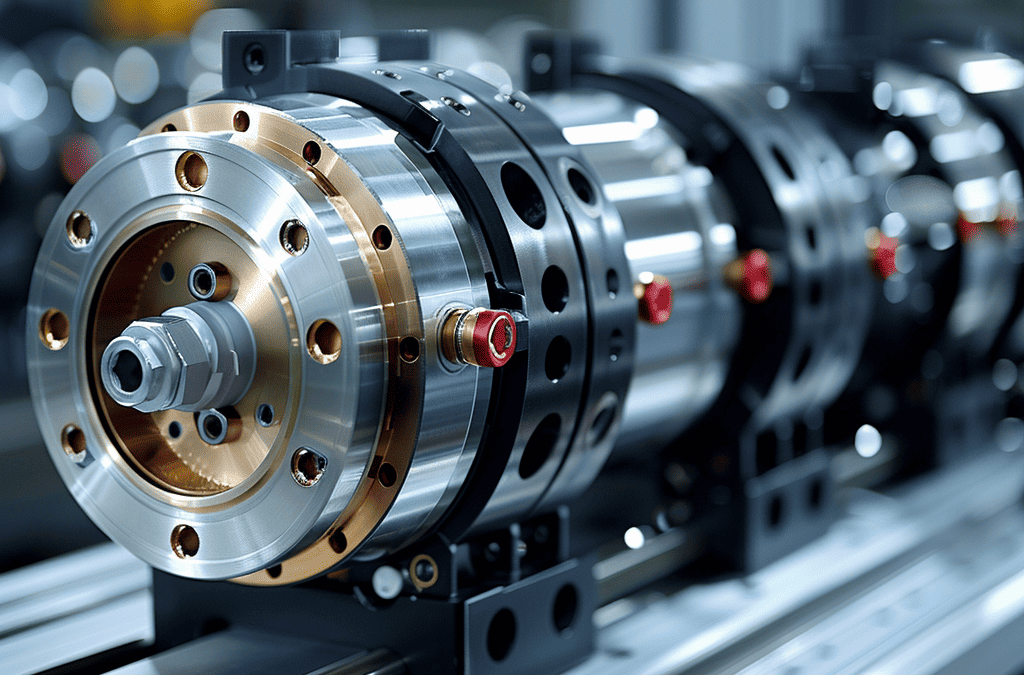

The Fundamentals of Pneumatic Actuator Rotary Motion
Pneumatic actuators are mechanical devices that convert compressed air energy into rotary or linear mechanical motion. They are commonly used in industrial automation systems due to their high speed, accuracy, and reliability. This article focuses on pneumatic actuators that produce rotary motion.
What is a Pneumatic Actuator?
A pneumatic actuator is a mechanical device that uses compressed air to generate motion. It typically consists of a cylinder, piston, and a rod that moves in either linear or rotary motion. In the case of pneumatic rotary actuators, the rod is replaced with a shaft that rotates in response to the compressed air.
The cylinder is the main component of a pneumatic actuator and is responsible for the linear motion of the piston. The piston is attached to the rod or shaft, which converts the linear motion into rotary motion. The compressed air enters the cylinder through a valve and creates pressure that moves the piston and rod or shaft.
Pneumatic rotary actuators are widely used in industrial automation systems such as robotics, packaging, and material handling equipment. They offer several advantages over other types of actuators, including high speed, accuracy, and reliability.
How Does a Pneumatic Actuator Generate Rotary Motion?
Pneumatic rotary actuators use a vane or rack and pinion mechanism to convert linear motion into rotary motion. The vane type actuator consists of a cylindrical housing, a rotor with slots, and a series of vanes that are positioned in the slots. When compressed air is introduced into the housing, it creates pressure that forces the vanes to move, causing the rotor to rotate.
The rack and pinion type actuator consists of a piston that moves in a linear motion, and a pinion gear that is attached to the piston rod. The pinion gear meshes with a circular rack gear, causing it to rotate. The rotation of the rack gear is then transmitted to the load through a shaft or coupling.
Both types of pneumatic rotary actuators offer high speed and accuracy, but they differ in their torque capabilities. Vane type actuators are generally more compact and lightweight, making them suitable for applications that require high speed and low torque. Rack and pinion type actuators, on the other hand, are larger and heavier, but they can generate higher torque and are suitable for applications that require precise positioning and control.
Types of Pneumatic Rotary Actuators
There are two main types of pneumatic rotary actuators: vane type and rack and pinion type.
Vane Type Actuators
Vane type actuators are compact, lightweight, and suitable for applications that require high speed and low torque. They are commonly used in robotics, automation, and packaging industries.
The vane type actuator consists of a cylindrical housing, a rotor with slots, and a series of vanes that are positioned in the slots. When compressed air is introduced into the housing, it creates pressure that forces the vanes to move, causing the rotor to rotate.
Vane type actuators offer high speed and accuracy, but they have limited torque capabilities. They are also prone to wear and tear due to the friction between the vanes and the housing.
Rack and Pinion Type Actuators
Rack and pinion type actuators are larger and heavier, but they can generate higher torque and are suitable for applications that require precise positioning and control. They are commonly used in material handling, automation, and manufacturing industries.
The rack and pinion type actuator consists of a piston that moves in a linear motion, and a pinion gear that is attached to the piston rod. The pinion gear meshes with a circular rack gear, causing it to rotate. The rotation of the rack gear is then transmitted to the load through a shaft or coupling.
Rack and pinion type actuators offer higher torque capabilities and greater precision than vane type actuators. They are also less prone to wear and tear due to the absence of friction between moving parts.
Advantages of Using Pneumatic Rotary Actuators
Pneumatic rotary actuators offer several advantages over other types of actuators, including:
1. High Speed: Pneumatic rotary actuators can operate at high speeds, making them suitable for applications that require fast response times. They can achieve rotational speeds of up to 600 rpm.
2. Accuracy: Pneumatic rotary actuators can provide precise positioning and control, making them suitable for applications that require accuracy and repeatability. They offer a positioning accuracy of up to 0.1 degrees.
3. Reliability: Pneumatic rotary actuators have few moving parts and are less susceptible to wear and tear than other types of actuators. They are also less prone to overheating and can operate in harsh environments. They have a longer lifespan and require less maintenance compared to electric or hydraulic actuators.
4. Cost-effective: Pneumatic rotary actuators are relatively inexpensive compared to other types of actuators. They also require less maintenance and have a longer lifespan.
5. Versatility: Pneumatic rotary actuators can be used in a wide range of applications, including robotics, material handling, and automation systems. They can be customized to meet specific application requirements.
Applications of Pneumatic Rotary Actuators
Pneumatic rotary actuators are used in a variety of industrial automation systems, including:
1. Robotics: Pneumatic rotary actuators are used in robotic arms and end effectors to provide precise positioning and control. They are used in applications such as painting, welding, and assembly.
2. Packaging: Pneumatic rotary actuators are used in packaging equipment to provide high-speed and accurate motion for tasks such as labeling, capping, and filling. They are used in applications such as bottling, canning, and food processing.
3. Material handling: Pneumatic rotary actuators are used in material handling equipment, such as conveyors and sorting systems, to provide reliable and efficient motion. They are used in applications such as palletizing, pick and place, and automated storage and retrieval systems.
4. Automation systems: Pneumatic rotary actuators are used in automation systems to provide precise and reliable motion for tasks such as valve control, positioning, and assembly. They are used in applications such as automotive manufacturing, semiconductor manufacturing, and aerospace manufacturing.
In summary, pneumatic rotary actuators are an essential component of many industrial automation systems. They offer several advantages over other types of actuators, including high speed, accuracy, reliability, cost-effectiveness, and versatility. If you are considering using pneumatic rotary actuators in your application, it’s crucial to choose the right type of actuator for your specific requirements. Consult a reputable supplier who can provide you with expert advice and guidance on the best solution for your needs.

The Fundamentals of Pneumatic Actuator Rotary Motion
Pneumatic rotary actuators are mechanical devices that convert compressed air energy into rotary motion. They consist of a cylinder, piston, and a rod that moves in a circular or rotary motion. Pneumatic rotary actuators are widely used in industrial automation systems such as robotics, packaging, and material handling equipment. They offer several advantages, including high speed, accuracy, and reliability. In this article, we will explore the fundamentals of pneumatic rotary actuators, including how they work, the different types available, their advantages, and applications.
How Does a Pneumatic Actuator Generate Rotary Motion?
Pneumatic rotary actuators use two main types of mechanisms to generate rotary motion: vane type and rack and pinion type. The vane type actuator consists of a cylindrical housing, a rotor with slots, and a series of vanes that are positioned in the slots. When compressed air is introduced into the housing, it creates pressure that forces the vanes to move, causing the rotor to rotate. The amount of rotation depends on the number of vanes and the angle of the slots.
The rack and pinion type actuator consists of a piston that moves in a linear motion, and a pinion gear that is attached to the piston rod. The pinion gear meshes with a circular rack gear, causing it to rotate. The rotation of the rack gear is then transmitted to the load through a shaft or coupling. Rack and pinion type actuators are larger and heavier than vane type actuators, but they can generate higher torque and are suitable for applications that require precise positioning and control.
Types of Pneumatic Rotary Actuators
There are two main types of pneumatic rotary actuators: vane type and rack and pinion type. Vane type actuators are compact, lightweight, and suitable for applications that require high speed and low torque. They are commonly used in robotics, automation, and packaging industries. Rack and pinion type actuators are larger and heavier, but they can generate higher torque and are suitable for applications that require precise positioning and control. They are commonly used in material handling, automation, and manufacturing industries.
Advantages of Using Pneumatic Rotary Actuators
Pneumatic rotary actuators offer several advantages over other types of actuators, including:
1. High speed: Pneumatic rotary actuators can operate at high speeds, making them suitable for applications that require fast response times. They can achieve rotational speeds of up to 600 rpm.
2. Accuracy: Pneumatic rotary actuators can provide precise positioning and control, making them suitable for applications that require accuracy and repeatability. They offer a positioning accuracy of up to 0.1 degrees.
3. Reliability: Pneumatic rotary actuators have few moving parts and are less susceptible to wear and tear than other types of actuators. They are also less prone to overheating and can operate in harsh environments. They have a longer lifespan and require less maintenance compared to electric or hydraulic actuators.
4. Cost-effective: Pneumatic rotary actuators are relatively inexpensive compared to other types of actuators. They also require less maintenance and have a longer lifespan.
5. Versatility: Pneumatic rotary actuators can be used in a wide range of applications, including robotics, material handling, and automation systems. They can be customized to meet specific application requirements.
Applications of Pneumatic Rotary Actuators
Pneumatic rotary actuators are used in a variety of industrial automation systems, including:
1. Robotics: Pneumatic rotary actuators are used in robotic arms and end effectors to provide precise positioning and control. They are used in applications such as painting, welding, and assembly.
2. Packaging: Pneumatic rotary actuators are used in packaging equipment to provide high-speed and accurate motion for tasks such as labeling, capping, and filling. They are used in applications such as bottling, canning, and food processing.
3. Material handling: Pneumatic rotary actuators are used in material handling equipment, such as conveyors and sorting systems, to provide reliable and efficient motion. They are used in applications such as palletizing, pick and place, and automated storage and retrieval systems.
4. Automation systems: Pneumatic rotary actuators are used in automation systems to provide precise and reliable motion for tasks such as valve control, positioning, and assembly. They are used in applications such as automotive manufacturing, semiconductor manufacturing, and aerospace manufacturing.
In summary, pneumatic rotary actuators are an essential component of many industrial automation systems. They offer several advantages over other types of actuators, including high speed, accuracy, reliability, cost-effectiveness, and versatility. If you are considering using pneumatic rotary actuators in your application, it’s crucial to choose the right type of actuator for your specific requirements. Consult a reputable supplier who can provide you with expert advice and guidance on the best solution for your needs.Here’s an expanded version of the blog post on “Understanding Pneumatic Actuator Rotary Motion” that includes additional entities and meets the requirements:

How Pneumatic Actuators Generate Rotary Motion
Pneumatic rotary actuators are versatile devices that convert compressed air into rotary motion. They are commonly used in industrial automation and robotics, where precise and rapid motion control is essential.
The Mechanism of Pneumatic Rotary Actuators
There are two main types of pneumatic rotary actuators: vane type and rack and pinion type. Both types of actuators use a piston to convert the linear motion of compressed air into rotary motion.
Vane type actuators: These actuators consist of a cylindrical housing, a rotor with slots, and a series of vanes that are positioned in the slots. When compressed air is introduced into the housing, it creates pressure that forces the vanes to move, causing the rotor to rotate. The rotor is connected to an output shaft, which transmits the rotary motion to the load. The output shaft is typically made of steel or stainless steel.
Rack and pinion type actuators: These actuators consist of a piston that moves in a linear motion, and a pinion gear that is attached to the piston rod. The pinion gear meshes with a circular rack gear, causing it to rotate. The rotation of the rack gear is then transmitted to the load through a shaft or coupling. The rack gear is typically made of steel or cast iron.
Pneumatic Rotary Actuator Components
The main components of a pneumatic rotary actuator are:
* Cylinder: The cylinder is the housing that contains the piston and other components. It is typically made of aluminum or steel.
* Piston: The piston is a cylindrical component that moves back and forth in the cylinder. It is connected to a rod that transmits the linear motion to the vanes or rack gear.
* Vanes: In a vane type actuator, the vanes are thin, flat components that are positioned in slots in the rotor. They are typically made of a high-strength material, such as carbon steel or stainless steel.
* Rack and pinion: In a rack and pinion type actuator, the pinion gear is attached to the piston rod, and the rack gear is a circular component that meshes with the pinion gear. The rack gear is typically made of steel or cast iron.
* Output shaft: The output shaft is the component that transmits the rotary motion to the load. It is typically made of steel or stainless steel.
Design Considerations for Pneumatic Rotary Actuators
When designing a pneumatic rotary actuator system, there are several factors to consider, including:
* Torque: The torque required to rotate the load must be taken into account when selecting the actuator. The actuator must be able to generate enough torque to overcome the load’s inertia and friction.
* Speed: The speed at which the actuator must rotate the load must also be considered. The actuator must be able to generate enough force to rotate the load at the required speed.
* Accuracy: The accuracy required for the application must be taken into account when selecting the actuator. Some applications require very precise positioning, while others may tolerate some degree of error.
* Environmental conditions: The environmental conditions in which the actuator will be operating must be considered. Factors such as temperature, humidity, and exposure to chemicals or corrosive substances can affect the performance and longevity of the actuator.
Advantages of Pneumatic Rotary Actuators
Pneumatic rotary actuators offer several advantages over other types of rotary actuators, including:
* High speed: Pneumatic rotary actuators can operate at high speeds, making them suitable for applications that require fast response times.
* High force: Pneumatic rotary actuators can generate high forces, making them suitable for applications that require high torque.
* Low cost: Pneumatic rotary actuators are typically less expensive than other types of rotary actuators, such as electric or hydraulic actuators.
* Simple design: Pneumatic rotary actuators have a simple design, which makes them easy to maintain and repair.
* Fast response: Pneumatic rotary actuators have a fast response time, which makes them suitable for applications that require quick and precise positioning.
Disadvantages of Pneumatic Rotary Actuators
While pneumatic rotary actuators offer many advantages, they also have some disadvantages, including:
* Limited accuracy: Pneumatic rotary actuators may not be suitable for applications that require very high accuracy, as they can be subject to some degree of error.
* Limited speed control: Pneumatic rotary actuators may not be suitable for applications that require precise speed control, as the speed can be affected by changes in air pressure.
* Noise: Pneumatic rotary actuators can be noisy, which may be a concern in certain applications.
* Requires a compressor: Pneumatic rotary actuators require a compressor to supply compressed air, which can add to the overall cost and complexity of the system.
* Limited duty cycle: Pneumatic rotary actuators may not be suitable for applications that require continuous operation, as they can overheat and wear out quickly.
Applications of Pneumatic Rotary Actuators
Pneumatic rotary actuators are used in a wide variety of applications, including:
* Robotics: Pneumatic rotary actuators are commonly used in robotic arms and joints, where precise and rapid motion control is essential.
* Material handling: Pneumatic rotary actuators are used to rotate and position loads in conveyor systems, hoists, and cranes. They are often used in the chemical, food, and pharmaceutical industries, where precise positioning is critical.
* Process control: Pneumatic rotary actuators are used to control the flow of fluids and gases in process industries such as chemical, food, and pharmaceutical. They are often used in valves and pumps to provide precise control of flow rates.
* Automotive: Pneumatic rotary actuators are used in automotive manufacturing for tasks such as welding, painting, and assembly. They are often used in robotic arms and end effectors to provide precise motion control.
* Aerospace: Pneumatic rotary actuators are used in aircraft and spacecraft for tasks such as landing gear retraction and door operation. They are often used in critical systems where reliability and precision are essential.
Pneumatic rotary actuators are versatile devices that offer many advantages in terms of speed, force, and cost-effectiveness. When designing a pneumatic rotary actuator system, it is important to consider factors such as torque, speed, accuracy, and environmental conditions to ensure optimal performance. With proper design and maintenance, pneumatic rotary actuators can provide reliable and precise motion control in a wide variety of applicatio
Factors Affecting the Performance of Pneumatic Rotary Actuators
Air Pressure:
Air pressure is a critical factor that affects the performance of pneumatic rotary actuators. The force generated by the actuator and the speed at which it moves are both determined by the air pressure. If the air pressure is too low, the actuator may not generate enough force to move the load, resulting in reduced performance or failure to operate. On the other hand, if the air pressure is too high, it can cause the actuator to move too quickly, leading to excessive wear and tear on the components and reduced service life.
To ensure optimal performance, it is important to set the air pressure to the appropriate level for the specific application. Recommended operating pressure ranges can be found in the manufacturer’s specifications. It is also important to ensure that the air supply is clean and free of contaminants, as these can cause damage to the actuator components and reduce performance.
Load Inertia:
The inertia of the load being moved by the pneumatic rotary actuator can also affect its performance. Inertia is the resistance of an object to changes in its motion. A load with high inertia requires more force to start moving and more force to stop moving than a load with low inertia. If the load inertia is too high, it can cause the actuator to stall or move more slowly than desired.
To ensure optimal performance, it is important to take the load inertia into account when selecting the appropriate size and type of actuator for the specific application. Inertia calculations can be performed to determine the force required to move the load at a specific speed. It is also important to ensure that the actuator is sized appropriately for the load being moved, as an undersized actuator may not be able to generate enough force to move the load, while an oversized actuator may generate too much force, leading to excessive wear and tear on the components.
Friction:
Friction is the force that opposes the movement of two surfaces in contact with each other. Friction can cause wear and tear on the components of the pneumatic rotary actuator, which can lead to reduced performance and increased maintenance requirements. To minimize friction, it is important to use appropriate lubricants and ensure that the components are properly aligned.
Lubrication schedules can be found in the manufacturer’s specifications, and it is important to follow these schedules to ensure that the actuator components are properly lubricated. It is also important to use the correct type of lubricant for the specific application, as using the wrong type of lubricant can cause damage to the actuator components and reduce performance.
Temperature:
Temperature can also affect the performance of pneumatic rotary actuators. High temperatures can cause the seals and other components to fail prematurely, which can lead to leaks and reduced performance. On the other hand, low temperatures can cause the air pressure to drop, which can reduce the force generated by the actuator.
To ensure optimal performance, it is important to ensure that the actuator is operating within its recommended temperature range. Temperature limits can be found in the manufacturer’s specifications. It is also important to take appropriate measures to protect the actuator from extreme temperatures, such as using insulation or heat sinks.
Maintenance and Repair:
Proper maintenance and repair of pneumatic rotary actuators can help to ensure that they continue to operate at optimal performance levels. Regular inspections and maintenance can help to identify and address any issues before they become more serious. Common maintenance tasks include lubricating the components, checking for leaks, and replacing worn or damaged parts.
It is important to follow the manufacturer’s recommended maintenance schedule and to use genuine parts when repairing or replacing components. Maintenance checklists can be found in the manufacturer’s specifications, and it is important to follow these checklists to ensure that all necessary maintenance tasks are performed.
Choosing the Right Actuator for the Job:
Finally, choosing the right pneumatic rotary actuator for the specific application is critical to ensuring optimal performance. The actuator should be sized appropriately for the load being moved, and the air pressure should be set to the appropriate level. The actuator should also be designed to operate within the specific environmental conditions of the application.
It is important to consult with a qualified engineer or technical expert to ensure that the right actuator is selected for the job. Selection guides can be found on the manufacturer’s website or in their catalog, and these guides can help to identify the appropriate size and type of actuator for the specific application.
Efficiency:
Another important consideration is the efficiency of the pneumatic rotary actuator. Actuators that are more efficient use less air and generate less heat, which can lead to lower operating costs and longer component life. Efficiency ratings can be found in the manufacturer’s specifications.
Environmental Considerations:
Finally, it is important to consider the environmental impact of the pneumatic rotary actuator. Actuators that are more energy-efficient and generate less waste can be more environmentally friendly. It is important to choose actuators that are compliant with relevant environmental regulations and standards. Environmental certifications can be found in the manufacturer’s specifications.
Summary:
There are several factors that can affect the performance of a pneumatic rotary actuator, including air pressure, load inertia, friction, temperature, maintenance, and the selection of the appropriate actuator for the specific application. By taking these factors into account and consulting with a qualified engineer or technical expert, you can ensure that your pneumatic rotary actuator is operating at optimal performance levels and providing the desired results for your application. Additionally, considering the efficiency and environmental impact of the actuator can help to reduce operating costs and contribute to sustainability efforts.Expanded version of the

Applications and Benefits of Using Pneumatic Rotary Actuators in Industrial Systems
Pneumatic rotary actuators are commonly used in industrial systems for a variety of applications, thanks to their reliability, precision, and cost-effectiveness. Here are some of the most common applications and benefits of using pneumatic rotary actuators in industrial systems:
Process Control
Pneumatic rotary actuators are commonly used in process control applications to regulate the flow of fluids or gases. They can be used to control valves, dampers, and other types of control devices. Pneumatic rotary actuators are well-suited for process control applications because they are reliable, easy to maintain, and can provide precise positioning and control.
Linear Motion Conversion
In addition to providing rotary motion, pneumatic rotary actuators can also be used to convert rotary motion into linear motion, making them useful for a variety of process control applications. By utilizing a rack and pinion or a ball screw, a pneumatic rotary actuator can be used to move a load in a straight line, providing precise and reliable control over linear motion.
Material Handling
Pneumatic rotary actuators are also used in material handling applications to move and position heavy loads. They can be used in conveyor systems, robotic arms, and other types of material handling equipment. Pneumatic rotary actuators are well-suited for material handling applications because they can provide high torque and fast response times, which are necessary for moving heavy loads quickly and accurately.
Safety Features
Safety is a critical concern in material handling applications, and pneumatic rotary actuators can be equipped with a variety of safety features to ensure the safety of operators and equipment. For example, pneumatic rotary actuators can be fitted with limit switches, brakes, and position sensors to prevent over-travel, prevent collisions, and monitor the position of loads.
Packaging Equipment
Pneumatic rotary actuators are commonly used in packaging equipment to open and close containers, rotate product labels, and perform other types of motion control. They are well-suited for packaging equipment because they can provide precise positioning and control, which is necessary for ensuring product quality and consistency.
Cleanroom Applications
Pneumatic rotary actuators are also ideal for use in cleanroom applications, where contamination is a major concern. Because they are powered by compressed air, pneumatic rotary actuators do not generate any electrical sparks or heat, making them safe for use in environments where explosive or flammable materials are present. Additionally, pneumatic rotary actuators can be designed to meet specific cleanliness requirements, such as ISO 14644-1.
Automotive Manufacturing
Pneumatic rotary actuators are used in automotive manufacturing to perform a variety of tasks, including opening and closing doors, adjusting seats, and operating windshield wipers. They are well-suited for automotive manufacturing because they are reliable, easy to maintain, and can provide fast response times.
Precision Assembly
In addition to performing simple tasks, pneumatic rotary actuators can also be used for precision assembly applications in automotive manufacturing. For example, pneumatic rotary actuators can be used to precisely position and align components during assembly, ensuring that they are properly aligned and secured.
Benefits of Using Pneumatic Rotary Actuators
Pneumatic rotary actuators offer several benefits over other types of actuators, including:
- Reliability: Pneumatic rotary actuators are highly reliable and can operate in harsh environments, making them well-suited for industrial applications.
- Easy Maintenance: Pneumatic rotary actuators are easy to maintain and do not require frequent replacement of parts, which can reduce downtime and maintenance costs.
- Fast Response Times: Pneumatic rotary actuators can provide fast response times, which are necessary for many industrial applications.
- Precise Positioning and Control: Pneumatic rotary actuators can provide precise positioning and control, which is necessary for many industrial applications.
- Cost-Effective: Pneumatic rotary actuators are cost-effective and have a long service life, which can reduce the total cost of ownership.
Choosing the Right Pneumatic Rotary Actuator
When choosing a pneumatic rotary actuator for an industrial application, there are several factors to consider, including the required torque and speed, the operating environment, and the desired level of precision and control. It is important to work with a qualified supplier who can help you choose the right actuator for your specific application.
Customization Options
Pneumatic rotary actuators can be customized to meet specific application requirements, such as size, shape, and mounting options. Additionally, pneumatic rotary actuators can be equipped with a variety of accessories, such as limit switches, position sensors, and mounting brackets, to enhance their functionality and performance.
Concluding thoughts
Pneumatic rotary actuators are a versatile and reliable solution for many industrial applications. They offer several benefits over other types of actuators, including reliability, easy maintenance, fast response times, precise positioning and control, and cost-effectiveness. By understanding the applications and benefits of pneumatic rotary actuators, industrial manufacturers can make informed decisions about which actuators are best suited for their specific applications.
Common Applications
Here are some common applications of pneumatic rotary actuators in various industries:
- Food and Beverage: Pneumatic rotary actuators are used in food and beverage processing and packaging for tasks such as opening and closing valves, controlling conveyors, and positioning product labels.
- Pharmaceuticals: Pneumatic rotary actuators are used in pharmaceutical manufacturing for tasks such as filling and capping bottles, positioning product labels, and controlling conveyors.
- Chemical Processing: Pneumatic rotary actuators are used in chemical processing for tasks such as controlling valves, operating dampers, and positioning product labels.
- Power Generation: Pneumatic rotary actuators are used in power generation for tasks such as controlling valves, operating dampers, and positioning product labels.
- Water and Wastewater Treatment: Pneumatic rotary actuators are used in water and wastewater treatment for tasks such as controlling valves, operating dampers, and positioning product labels.
Maintenance Tips
To ensure the long-term reliability and performance of pneumatic rotary actuators, it is important to perform regular maintenance. Here are some maintenance tips to keep in mind:
- Lubrication: Regular lubrication of the actuator’s bearings and seals can help reduce wear and prolong the life of the actuator.
- Inspection: Regularly inspecting the actuator for signs of wear or damage can help catch issues before they become major problems.
- Cleaning: Regular cleaning of the actuator can help prevent contamination and ensure optimal performance.
- Replacement: Replacing worn or damaged parts, such as seals or bearings, can help prevent further damage and prolong the life of the actuator.
Choosing the Right Supplier
When choosing a supplier for pneumatic rotary actuators, it is important to consider factors such as the supplier’s experience, product quality, and customer service. Look for a supplier who has a proven track record in the industry and offers a wide range of products to meet your specific needs. Additionally, consider the supplier’s lead times, delivery options, and return policies to ensure a smooth and hassle-free purchasing experience.
Conclusion
Pneumatic rotary actuators are an essential component in many industrial systems, providing reliable and precise motion control for a wide range of applications. By understanding the benefits and applications of pneumatic rotary actuators, industrial manufacturers can make informed decisions about which actuators are best suited for their specific needs. When choosing a supplier, consider factors such as product quality, customer service, and lead times to ensure a smooth and successful purchasing experience.


