
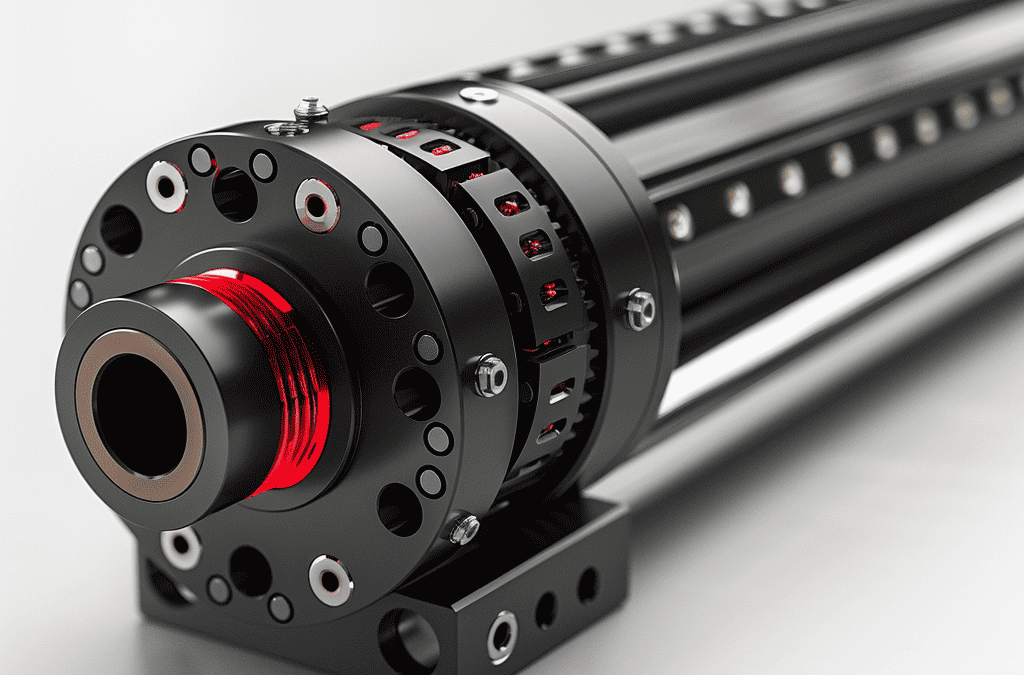

Understanding Pneumatic Actuators and Linear Motion
Pneumatic actuators are mechanical devices that use compressed air to generate force and motion. They are commonly used in industrial automation to convert energy into linear or rotary motion. Linear actuators, which generate force in a straight line, are the most common type of pneumatic actuator.
How Pneumatic Actuators Work
Pneumatic actuators work by using compressed air to move a piston or diaphragm inside a cylinder. The compressed air enters the cylinder through an inlet valve and pushes against the piston or diaphragm, causing it to move. This movement is then transferred to a rod or shaft, which generates the linear or rotary motion required for the application.
The direction of motion can be controlled by using different valves to direct the compressed air to different parts of the cylinder. This allows for precise control over the motion of the actuator. For example, a 4-way valve can be used to control the extension and retraction of a double-acting actuator.
Advantages of Pneumatic Actuators
Pneumatic actuators have several advantages over other types of actuators:
1. Lightweight and compact design: Pneumatic actuators are smaller and lighter than hydraulic or electric actuators, making them easy to install and maintain.
2. Fast and efficient operation: Pneumatic actuators have response times of milliseconds and can generate high force and speed.
3. Immunity to electrical interference: Pneumatic actuators are not affected by electrical noise or interference, making them ideal for use in hazardous environments.
4. Self-lubricating design: Pneumatic actuators are self-lubricating, reducing wear and tear and extending their lifespan.
5. Easy to control and integrate: Pneumatic actuators can be easily integrated with other automation systems and are easy to control using pneumatic valves.
Disadvantages of Pneumatic Actuators
While pneumatic actuators have many advantages, they also have some disadvantages:
1. Less precise than other actuators: Pneumatic actuators are not as precise as electric or hydraulic actuators, making them less suitable for applications that require high precision.
2. Less efficient than other actuators: Pneumatic actuators are less efficient than hydraulic or electric actuators, as compressed air is lost during operation.
3. Require a constant supply of compressed air: Pneumatic actuators require a constant supply of compressed air, which can be costly and require additional equipment.
4. Noisy operation: Pneumatic actuators can be noisy, which may be a concern in some applications.
Applications of Pneumatic Actuators
Pneumatic actuators are used in a wide range of applications, including:
1. Material handling systems: Pneumatic actuators are commonly used in conveyors, lifts, and other material handling systems to provide fast and reliable motion control.
2. Packaging machines: Pneumatic actuators are used in packaging machines to open and close doors, move product trays, and control valves.
3. Robotics: Pneumatic actuators are used in robotic arms and grippers to provide motion control and precision.
4. Transportation systems: Pneumatic actuators are used in braking systems and suspension systems to provide precise control and response.
Types of Pneumatic Actuators
There are several types of pneumatic actuators, including:
1. Single-acting actuators: These actuators use compressed air to move in one direction and a spring to return to the original position.
2. Double-acting actuators: These actuators use compressed air to move in both directions.
3. Rodless cylinders: These actuators do not have a rod extending from the cylinder, making them ideal for applications where space is limited.
4. Through-rod cylinders: These actuators have a rod extending from both ends of the cylinder, providing additional support and stability.
Choosing the Right Pneumatic Actuator
When selecting a pneumatic actuator, it is important to consider several factors, including:
1. Force and speed requirements: The actuator must be able to generate the required force and speed for the application.
2. Operating environment: The actuator must be suitable for the operating environment, including temperature, humidity, and exposure to chemicals or other hazards.
3. Duty cycle: The actuator must be able to handle the duty cycle required for the application.
4. Cost and maintenance requirements: The actuator must be cost-effective and easy to maintain.
By considering these factors, you can choose the right pneumatic actuator for your application and ensure reliable and efficient operation.
Pneumatic actuators are a versatile and cost-effective solution for generating linear motion in industrial automation applications. They offer several advantages over other types of actuators, including fast and efficient operation, immunity to electrical interference, and easy integration with other automation systems. However, they also have some disadvantages, such as less precision and efficiency compared to hydraulic or electric actuators. By understanding the basics of pneumatic actuators and considering the factors that affect their performance, you can choose the right actuator for your application and ensure reliable and efficient operation.Pneumatic actuators are mechanical devices that utilize compressed air to generate force and motion. They are widely used in industrial automation to convert energy into linear or rotary motion. Linear actuators, which generate force in a straight line, are the most common type of pneumatic actuator.
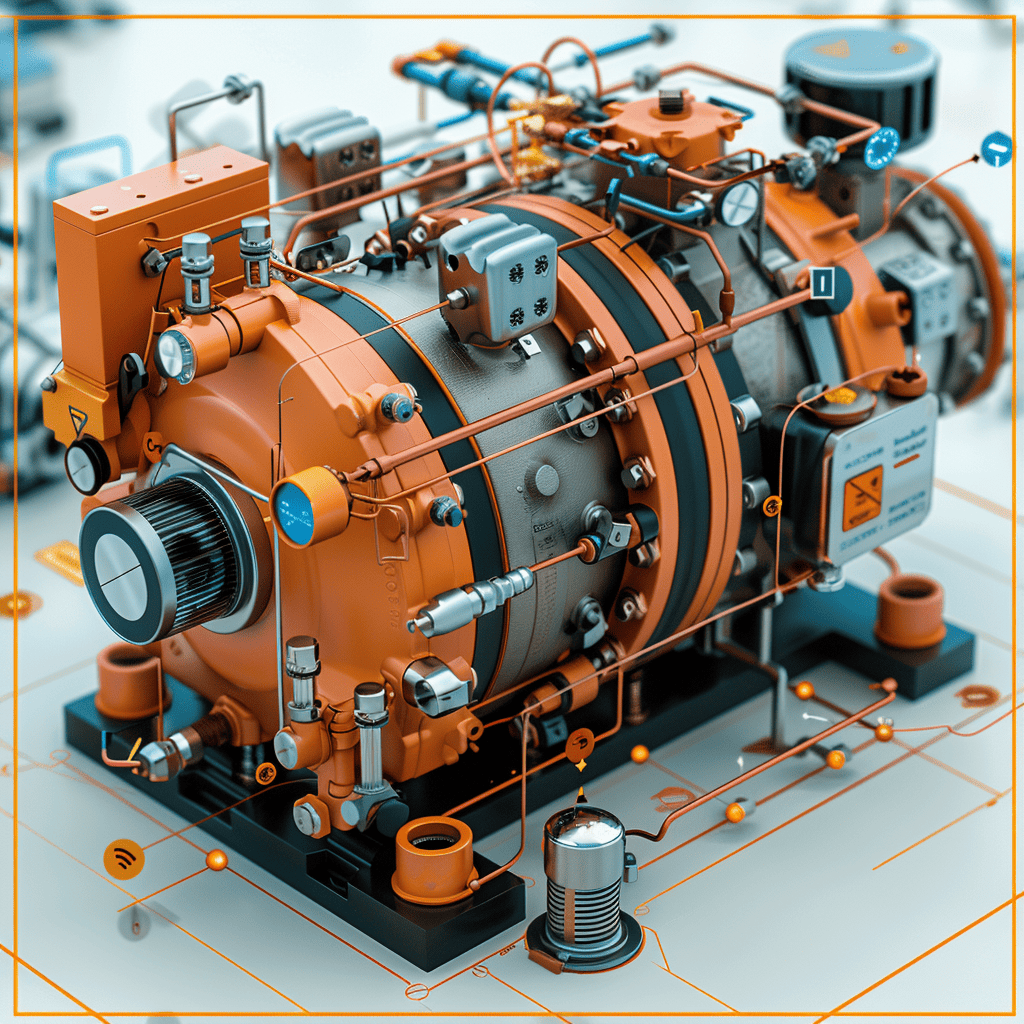
Key Components of Pneumatic Actuator Systems
Cylinders
Cylinders are the most important component of pneumatic actuator systems, responsible for converting compressed air energy into linear motion. They consist of a cylindrical tube, a piston or diaphragm, and an end cap or rod. The size and bore of the cylinder determine the amount of force it can generate. It is essential to select the appropriate cylinder size to match the load and operating conditions for optimal performance. Cylinders can be single-acting or double-acting, with the latter using compressed air to move the piston in both directions. Single-acting cylinders use the force of gravity or a spring to return the piston to its original position, while double-acting cylinders use compressed air to move the piston in both directions.
Valves
Valves are critical components that control the flow of compressed air to the cylinder. Manual or automated valves can be used to open, close, or direct the flow of compressed air. Valves can be classified based on their function, such as directional control valves, pressure control valves, and flow control valves. Directional control valves are the most common type of valve used in pneumatic actuator systems. They control the direction of airflow to the cylinder, allowing precise control of the cylinder’s movement. Directional control valves can have two, three, or four positions, and two, three, or four ports. The number of positions and ports determines the valve’s functionality and the number of actuators it can control.
Fittings and Tubing
Fittings and tubing connect the different components of the pneumatic actuator system. Fittings are used to join cylinders to valves and valves to compressed air sources, while tubing transports compressed air from the source to the valve and from the valve to the cylinder. Properly sized fittings and tubing ensure efficient and safe system operation. Swivel fittings can be used to reduce stress on the tube and prevent twisting, especially in applications where the tubing may be subject to movement or vibration. Quick disconnect fittings make maintenance and repair easier, allowing for quick and easy disconnection of components without the need for tools.
Accessories
Accessories can enhance the performance and functionality of the pneumatic actuator system. Position sensors monitor the position of the cylinder and provide feedback to the control system, improving system accuracy and reducing the risk of over-travel. Limit switches prevent the cylinder from moving beyond its travel limits, protecting the system from damage and reducing wear and tear. Cushioning devices absorb the impact of the cylinder at the end of its stroke, reducing noise and vibration, and extending the life of the system. Pressure regulators can be used to maintain a consistent air pressure, improving system accuracy and reducing energy consumption.
Control Systems
Control systems monitor and control the operation of the pneumatic actuator system. They can range from simple on/off switches to complex programmable logic controllers (PLCs). Manual control systems allow operators to control the system using switches or levers, while automated control systems can be programmed to perform specific tasks. Control systems can integrate with other automation systems, providing for more efficient and effective operations. Advanced control systems can provide real-time monitoring and diagnostics, improving system performance and reducing downtime.
Overall, pneumatic actuator systems are versatile and cost-effective solutions for a wide range of applications. By selecting the proper components and accessories, you can achieve precise, reliable linear motion, making them ideal for use in manufacturing, automation, and robotics. Proper maintenance and repair can extend the life of the system and reduce downtime, making it important to work with a knowledgeable and experienced supplier or service provider. Additionally, considering factors such as the operating environment, duty cycle, and required accuracy can help ensure the selection of the most appropriate components for the specific application.

Benefits and Applications of Pneumatic Actuator Linear Motion
Benefits of Pneumatic Actuator Linear Motion
Pneumatic actuator linear motion systems offer several benefits over other types of motion control systems. Here are some of the most significant advantages:
Simplicity and Reliability: Pneumatic actuator linear motion systems are simple in design, which makes them easy to install, operate, and maintain. They require few moving parts, which reduces the risk of mechanical failure and downtime. Additionally, pneumatic actuators are highly reliable and can operate continuously for long periods without requiring maintenance.
Cost-effectiveness: Pneumatic actuator linear motion systems are cost-effective compared to other motion control systems. They use compressed air as their power source, which is widely available and inexpensive. Additionally, pneumatic actuators are energy-efficient and can help reduce energy costs in the long run.
High Forces and Speeds: Pneumatic actuator linear motion systems can generate high forces and speeds, making them suitable for a wide range of industrial applications. They can handle heavy loads and accelerate quickly, which is essential for applications that require fast and precise motion control.
Environmental Resistance: Pneumatic actuator linear motion systems can operate in harsh environments, such as high temperatures, dust, and humidity, without the need for specialized components. They are highly resistant to corrosion and can handle exposure to chemicals and other contaminants.
Material Handling
Pneumatic actuator linear motion systems are widely used in material handling applications, where fast and precise motion control is essential. Here are some examples:
Conveyor Systems: Pneumatic actuators are used in conveyor systems to move materials efficiently and accurately. They provide fast and precise motion control, which is essential for applications that require high throughput and minimal downtime.
Sorting Machines: Pneumatic actuators are used in sorting machines to separate and classify materials based on size, weight, and shape. They provide fast and accurate motion control, which is essential for applications that require high precision and accuracy.
Packaging Equipment: Pneumatic actuators are used in packaging equipment to move, position, and secure materials for shipping. They provide fast and precise motion control, which is essential for applications that require high throughput and minimal damage to the products.
Automation
Pneumatic actuator linear motion systems are commonly used in automation applications, where fast and precise motion control is essential. Here are some examples:
Robotics: Pneumatic actuators are commonly used in robotics applications to provide fast and precise motion control. They are highly reliable and can withstand the rigors of continuous operation in industrial environments.
Assembly Lines: Pneumatic actuators are used in assembly lines to automate tasks that would otherwise require manual labor. They provide fast and precise motion control, which is essential for applications that require high throughput and minimal errors.
Pick-and-Place Machines: Pneumatic actuators are used in pick-and-place machines to move and position components quickly and accurately. They are highly reliable and can handle repetitive motion tasks with ease.
Manufacturing
Pneumatic actuator linear motion systems are widely used in manufacturing applications, where fast and precise motion control is essential. Here are some examples:
Machine Tools: Pneumatic actuators are used in machine tools to provide fast and precise motion control. They are highly reliable and can withstand the rigors of continuous operation in industrial environments.
Presses: Pneumatic actuators are used in presses to apply high forces and pressures. They provide fast and precise motion control, which is essential for applications that require high accuracy and repeatability.
Molds: Pneumatic actuators are used in molds to provide fast and precise motion control. They are highly reliable and can withstand the high temperatures and pressures required for molding applications.
Food and Beverage Processing
Pneumatic actuator linear motion systems are widely used in food and beverage processing applications, where fast and precise motion control is essential. Here are some examples:
Bottling and Canning Lines: Pneumatic actuators are widely used in bottling and canning lines to provide fast and precise motion control. They are highly reliable and can operate in wet and humid conditions, making them suitable for use in washdown areas.
Mixing and Blending Equipment: Pneumatic actuators are used in mixing and blending equipment to provide fast and precise motion control. They are highly reliable and can operate in clean environments, making them suitable for use in food and beverage processing applications.
Packaging Machines: Pneumatic actuators are used in packaging machines to move, position, and secure food and beverage products for shipping. They provide fast and precise motion control, which is essential for applications that require high throughput and minimal damage to the products.
Control Accuracy
Pneumatic actuator linear motion systems provide high control accuracy, which is essential for applications that require precise motion control. Here are some examples:
Automation and Robotics: Pneumatic actuator linear motion systems can be easily integrated with sensors and control systems to provide a complete motion control solution. They are ideal for use in automation and robotics applications, where precise motion control is essential.
Medical Equipment: Pneumatic actuator linear motion systems are used in medical equipment, such as surgical robots and infusion pumps, to provide precise motion control. They are highly reliable and can operate in sterile environments.
Semiconductor Manufacturing: Pneumatic actuator linear motion systems are used in semiconductor manufacturing to provide precise motion control. They are highly reliable and can operate in clean environments, where contamination is a significant concern.
Aerospace: Pneumatic actuator linear motion systems are used in aerospace applications, such as aircraft landing gear and satellite deployment mechanisms, to provide precise motion control. They are highly reliable and can operate in extreme environments.
Common Challenges and Solutions in Pneumatic Actuator Linear Motion Systems
Pneumatic actuators are widely used in linear motion systems due to their advantages such as cost-effectiveness, simplicity, and high power-to-weight ratio. However, they also face several challenges that can affect their performance and efficiency. Here are some of the most common challenges and their solutions.
Leakage
Leakage is a common challenge in pneumatic actuator linear motion systems. Leaks can occur in fittings, hoses, and cylinders, resulting in reduced system performance and increased energy consumption. To address this challenge, it is important to use high-quality components and regularly inspect the system for signs of wear or damage. Leak detection devices, such as ultrasonic detectors, can also be used to identify and locate leaks in the system. Additionally, using sealants and lubricants can help prevent leaks and extend the life of the components. Sealants can be applied to the fittings, hoses, and cylinders to prevent air leaks. Lubricants can be used to reduce friction and wear on moving parts, such as pistons and rods.
Contamination
Contamination is another common challenge in pneumatic actuator linear motion systems. Contaminants, such as dirt, dust, and moisture, can enter the system through the air supply or the environment, causing damage to components and reducing system performance. To address this challenge, it is important to use filters and regulators to remove contaminants from the air supply. Additionally, using desiccant air dryers can help remove moisture from the air and prevent corrosion. Regular maintenance and cleaning can also help to prevent contamination and ensure that the system is operating at peak performance. Filters can be used to remove particulate matter from the air supply, while regulators can be used to control the air pressure and prevent damage to components. Desiccant air dryers can be used to remove moisture from the air, which can cause corrosion and damage to components.
Wear and Tear
Wear and tear is a natural consequence of the operation of pneumatic actuator linear motion systems. Components, such as seals, bearings, and cylinders, can wear out over time, resulting in reduced system performance and increased maintenance costs. To address this challenge, it is important to use high-quality components and regularly inspect the system for signs of wear or damage. Additionally, using hardened or coated components can help reduce wear and extend the life of the system. Regular maintenance and replacement of worn components can also help to extend the life of the system and reduce maintenance costs. Hardened components, such as hardened rods and cylinders, can withstand wear and tear better than standard components. Coated components, such as chrome-plated rods and cylinders, can also reduce wear and extend the life of the system.
Noise
Noise is a common challenge in pneumatic actuator linear motion systems. The operation of the system can generate noise, which can be disruptive and potentially harmful to workers. To address this challenge, it is important to use components that are designed to reduce noise, such as quiet air compressors and mufflers. Additionally, using sound-absorbing materials can help reduce noise levels and create a safer and more comfortable work environment. Regular maintenance and lubrication can also help to reduce noise levels and ensure that the system is operating smoothly. Sound-absorbing materials, such as foam or rubber, can be used to reduce noise levels. Mufflers can be used to reduce the noise generated by the air compressor.
Energy Efficiency
Energy efficiency is an important consideration in pneumatic actuator linear motion systems. The operation of the system can consume significant amounts of energy, resulting in increased operating costs and reduced sustainability. To address this challenge, it is important to use components that are designed to reduce energy consumption, such as energy-efficient air compressors and cylinders. Additionally, using variable speed drives can help optimize the air supply and reduce energy consumption. Regular maintenance and optimization of the system can also help to reduce energy consumption and improve overall efficiency. Energy-efficient air compressors can reduce energy consumption by up to 30%. Variable speed drives can adjust the air supply to match the system demand, reducing energy consumption and wear on components.
Overall, addressing these common challenges in pneumatic actuator linear motion systems requires a proactive approach to maintenance, the use of high-quality components and accessories, and regular monitoring and optimization of the system. By taking these steps, it is possible to improve system performance, reduce maintenance costs, and increase energy efficiency, resulting in a more reliable and cost-effective system.


