
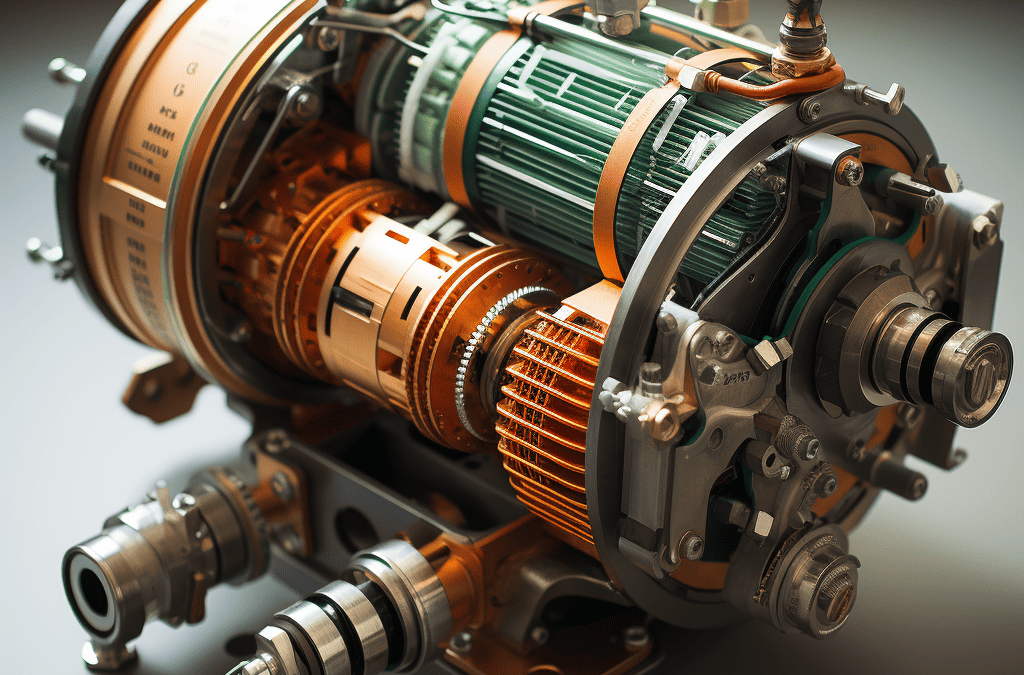

Decoding the World of Pneumatic Actuators: Types, Diagrams, and More
What are Pneumatic Actuators and How Do They Work?
Pneumatic actuators are mechanical devices that convert compressed air into motion and force. They consist of a cylinder, piston, and valve system that control the flow of air. When air pressure is applied, the piston moves, creating linear or rotary motion. These actuators are commonly used in industrial automation, robotics, and other applications where precise control of motion is required.
The basic principle behind pneumatic actuators is the conversion of potential energy (stored in compressed air) into kinetic energy (motion). When the valve opens, the compressed air flows into the cylinder, pushing the piston and causing it to move. The amount of force generated depends on the air pressure and the size of the piston. Pneumatic actuators are highly reliable, efficient, and easy to maintain.
Types of Pneumatic Actuators: Single-Acting vs Double-Acting
Single-acting pneumatic actuators use air pressure to move the piston in one direction only. They rely on a spring or external force to return the piston to its original position. Single-acting actuators are simpler and less expensive than double-acting actuators, but they have limited functionality. Double-acting pneumatic actuators, on the other hand, use air pressure to move the piston in both directions. They have two ports: one for extending the piston and one for retracting it. Double-acting actuators are more versatile and can be used in a wider range of applications, but they are also more complex and expensive.
Advantages and Disadvantages of Pneumatic Actuators
Pneumatic actuators offer several advantages over other types of actuators, including:
- High power-to-weight ratio: Pneumatic actuators can generate a large amount of force relative to their size and weight.
- Fast response time: Pneumatic actuators can move quickly and accurately, making them ideal for high-speed applications.
- Low cost: Pneumatic actuators are less expensive than hydraulic or electric actuators, making them a cost-effective solution for many applications.
- Simplicity and reliability: Pneumatic actuators have fewer moving parts than other types of actuators, making them easier to maintain and less prone to failure.
However, pneumatic actuators also have some disadvantages, including:
- Limited accuracy and precision: Pneumatic actuators are not as accurate or precise as electric or hydraulic actuators.
- Limited control: Pneumatic actuators are not as easy to control as electric actuators, making them less suitable for applications that require precise positioning or feedback.
- Noise and vibration: Pneumatic actuators can be noisy and cause vibration, which can be a problem in some applications.
Pneumatic Actuator Components and Diagrams
A typical pneumatic actuator consists of several components, including:
- Cylinder: The cylinder is the main housing of the actuator, which contains the piston and piston rod.
- Piston: The piston is the moving part of the actuator that is pushed or pulled by the air pressure.
- Piston rod: The piston rod is the extension of the piston that transfers the motion to the load.
- Valves: The valves control the flow of air into and out of the cylinder. There are several types of valves used in pneumatic actuators, including solenoid valves, directional control valves, and proportional valves.
- Fittings and tubing: The fittings and tubing connect the actuator to the air supply and other components of the system. Fittings come in a variety of materials, including brass, aluminum, and stainless steel.
Here is a simple diagram of a single-acting pneumatic actuator:
As you can see, the actuator consists of a cylinder, piston, piston rod, and spring. When air pressure is applied to the port, the piston moves to the right, extending the piston rod and applying force to the load. When the air pressure is removed, the spring pushes the piston back to its original position.
Choosing the Right Pneumatic Actuator for Your Application
When choosing a pneumatic actuator for your application, there are several factors to consider, including:
- Force and speed requirements: Determine the amount of force and speed required for your application. Consider the actuator’s maximum force output, stroke length, and response time.
- Environmental conditions: Consider the operating environment, such as temperature, humidity, and vibration. Choose an actuator that is designed to withstand the conditions in which it will be used.
- Mounting and orientation: Determine how the actuator will be mounted and oriented. Consider the space available for the actuator and the direction of motion required.
- Control requirements: Determine whether you need positional feedback or other control features. Choose an actuator with the necessary sensors and controls.
By considering these factors, you can choose a pneumatic actuator that meets your specific needs and provides reliable, efficient performance.
Common Applications of Pneumatic Actuators
Pneumatic actuators are used in a wide range of applications, including:
- Industrial automation: Pneumatic actuators are commonly used in manufacturing processes, such as assembly lines, packaging machines, and material handling equipment.
- Robotics: Pneumatic actuators are used in robotic arms and grippers to provide precise control of motion and force.
- Automotive: Pneumatic actuators are used in vehicle braking systems, air suspension systems, and other applications where reliable and efficient motion control is required.
- Aerospace: Pneumatic actuators are used in aircraft landing gear, cargo doors, and other applications where high force and reliability are critical.
Conclusion
Pneumatic actuators offer a reliable and cost-effective solution for a wide range of motion control applications. By understanding the types of actuators available, their components and diagrams, and the factors to consider when choosing an actuator, you can make an informed decision and select the right actuator for your specific needs.
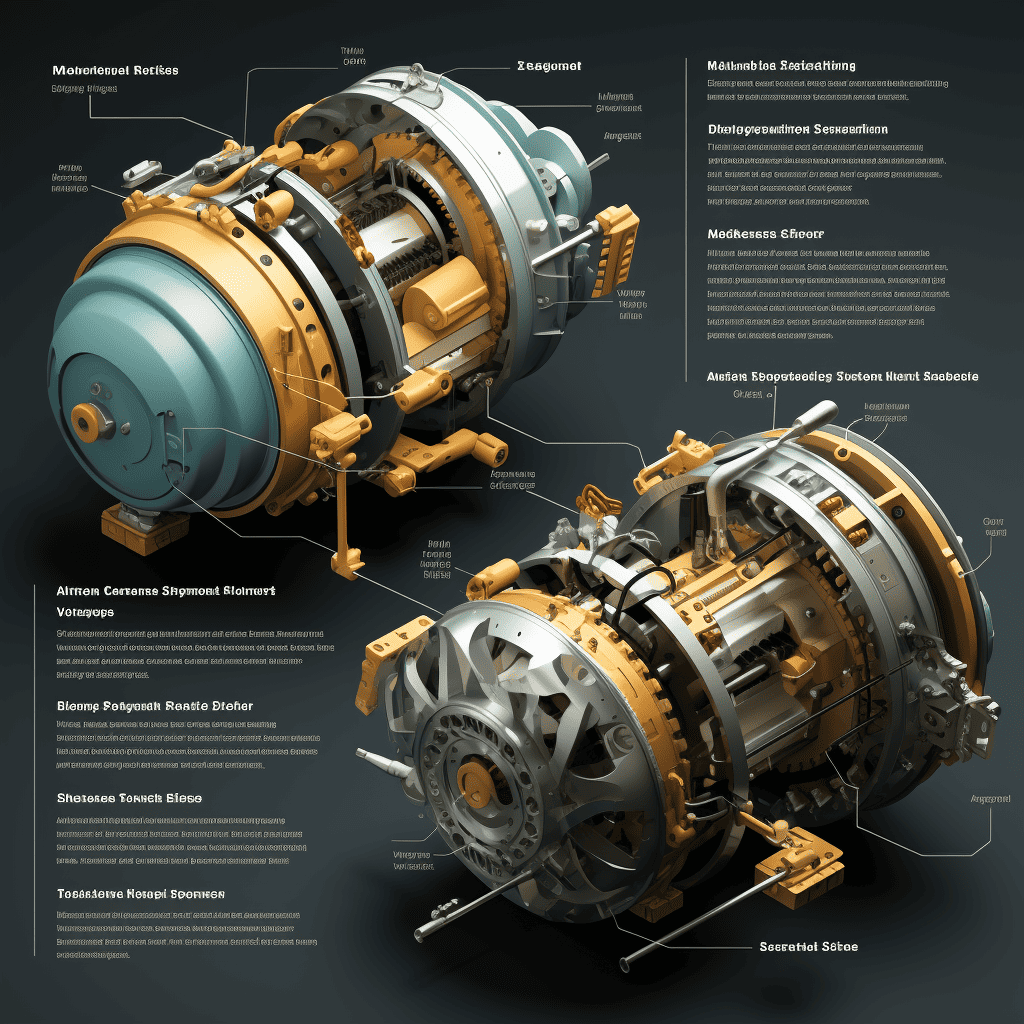
Exploring Piston Actuators: Functionality and Applications
The Fundamentals of Piston Actuator Operation
Piston actuators operate by converting compressed air or fluid pressure into mechanical motion. In single-acting piston actuators, pressure is applied to one side of the piston to generate movement in one direction, while a spring or external force returns the piston to its original position. This mechanism is ideal for applications requiring simple movements, such as opening and closing valves. On the other hand, double-acting piston actuators are designed to control movement precisely in both directions by applying pressure alternately to either side of the piston. This capability is essential for tasks that demand exact control over the actuator’s extension and retraction.
Piston actuators are highly versatile and can handle high loads, making them suitable for a wide range of industrial applications. They are commonly utilized in automation systems, material handling equipment, and robotics, where their high speed and accuracy are crucial. The robustness and reliability of piston actuators underpin their widespread use in sectors demanding precise motion control and durability, highlighting their importance in modern industrial processes.
Vane Actuators: Compact and Efficient
Vane actuators use a rotating vane to convert air pressure into rotary motion. They are compact in size and have a simple design, making them an ideal choice for applications where space is limited. Vane actuators are also highly efficient and provide fast response times.
One of the key advantages of vane actuators is their ability to provide continuous rotation, making them suitable for applications such as conveyor systems, mixing tanks, and packaging machines. Additionally, vane actuators are known for their long service life and low maintenance requirements.
Choosing the Right Actuator
When selecting a pneumatic actuator, it is important to consider the specific requirements of the application, including the required motion, load, speed, and environment. Diaphragm actuators are ideal for applications that require precise control and low leakage rates, while piston actuators are suitable for high load applications. Vane actuators are an excellent choice for applications that require continuous rotation or where space is limited.
Additionally, it is important to consider factors such as the operating pressure, temperature, and humidity of the environment, as well as the compatibility of the actuator with the control system. By carefully considering these factors, you can choose the right actuator for your application and ensure optimal performance and reliability.
Pneumatic actuators are an essential component of many industrial systems and processes. Diaphragm, piston, and vane actuators each have their unique advantages and applications. Diaphragm actuators offer precise control and low leakage rates, while piston actuators are suitable for high load applications. Vane actuators are an excellent choice for applications that require continuous rotation or where space is limited. By choosing the right actuator for the specific application, you can ensure optimal performance and reliability.
Industries and Applications that Benefit from Pneumatic Actuators
Pneumatic actuators are widely used in various industries and applications due to their unique advantages such as high speed, accuracy, and reliability. In this section, we will discuss some of the industries and applications that benefit the most from pneumatic actuators.
Manufacturing Industry
The manufacturing industry relies heavily on pneumatic actuators for various applications such as assembly lines, material handling, packaging, and automation. The high speed, accuracy, and reliability of pneumatic actuators make them an ideal choice for these applications.
For instance, pneumatic cylinders are used to move objects on a conveyor belt, while pneumatic grippers are used to pick and place items with precision. Pneumatic actuators can handle heavy loads and operate in harsh environments where electrical actuators may fail. They are also easy to maintain and replace, reducing downtime and increasing productivity.
Pneumatic cylinders and grippers are commonly used in manufacturing processes, providing fast, accurate, and reliable motion control. They are ideal for automation and can handle heavy loads, making them perfect for industrial applications. Moreover, pneumatic actuators are often used in presses, clamps, and brakes due to their ability to generate high force output.
Food and Beverage Industry
The food and beverage industry relies heavily on pneumatic actuators for food processing, packaging, and handling. They are used in applications such as cutting, mixing, and filling. Pneumatic actuators are preferred for their ability to operate in wet and humid environments, and their resistance to corrosion and contamination. They are also easy to clean and sanitize, making them ideal for use in the food and beverage industry.
Pneumatic actuators are often used in food processing equipment such as mixers, grinders, and slicers. They are also used in packaging equipment such as filling machines, capping machines, and labeling machines. Pneumatic actuators can handle delicate food products without causing damage, making them an ideal choice for these applications.
Automotive Industry
The automotive industry also benefits from pneumatic actuators, particularly in the assembly of vehicles. Pneumatic actuators are used in applications such as welding, painting, and assembly. They provide fast and accurate motion control, which is critical in the automotive industry.
Pneumatic cylinders are used to open and close doors, hoods, and trunks, while pneumatic grippers are used to handle and assemble parts. Pneumatic actuators are also used in automotive testing equipment such as crash test dummies and emissions testing equipment.
Aerospace Industry
The aerospace industry requires precise and reliable motion control, which is why pneumatic actuators are often used in aircraft and spacecraft. They are used in applications such as landing gear, flaps, and thrust reversers.
Pneumatic actuators are preferred for their ability to handle high loads and operate in extreme temperatures. They are also easy to maintain and replace, reducing downtime and maintenance costs. Moreover, pneumatic actuators can be designed to be lightweight, which is critical in the aerospace industry where weight is a significant factor.
Pneumatic actuators are widely used in various industries and applications due to their unique advantages. They provide fast, accurate, and reliable motion control, and can handle heavy loads and operate in harsh environments. They are easy to maintain and replace, reducing downtime and increasing productivity. Whether it’s automation, food processing, or aerospace, pneumatic actuators are an essential component in many industrial applications.

Selecting the Right Actuator for Your Application
Choosing the right pneumatic actuator for your application requires careful consideration of the factors listed above. Here are some additional tips to help guide your decision:
- Consult with a pneumatic actuator supplier: They can provide expert advice and guidance based on your specific application requirements.
- Consider the total cost of ownership: The initial cost of the actuator is just one factor to consider. Also, consider the cost of maintenance, repair, and downtime over the life of the actuator.
- Consider safety and reliability: Choose an actuator that meets or exceeds industry safety standards and has a proven track record of reliability.
- Consider environmental impact: Choose an actuator that is energy-efficient and has a minimal environmental impact.
Examples and Diagrams
Here are some examples and diagrams to help illustrate the different types of pneumatic actuators and their applications:

Figure 1: Diagram of a diaphragm actuator. Diaphragm actuators use a flexible diaphragm to create motion. The diaphragm is connected to a rod, which is connected to the load. The air pressure causes the diaphragm to move, creating linear motion.

Figure 2: Diagram of a piston actuator. Piston actuators use a piston to create motion. The piston is connected to a rod, which is connected to the load. The air pressure causes the piston to move, creating linear motion.

Figure 3: Diagram of a vane actuator. Vane actuators use a rotating vane to create motion. The vane is connected to a shaft, which is connected to the load. The air pressure causes the vane to rotate, creating rotary motion.

Figure 4: Diagram of a rack and pinion actuator. Rack and pinion actuators use a rack and pinion mechanism to create linear motion. The pinion is connected to a shaft, which is connected to the load. The air pressure causes the pinion to rotate, which in turn causes the rack to move, creating linear motion.
Conclusion
Selecting the right pneumatic actuator for your system is critical to its success. By considering the factors listed above and consulting with a pneumatic actuator supplier, you can choose the right actuator for your application. Remember to also consider the total cost of ownership, safety and reliability, and environmental impact when making your decision. With the right actuator in place, your system will operate efficiently and effectively for years to come.


