

Bolt Basics: Guide on How Screw Threads Work
Check out the world of screw threads, the mechanical marvels that are leverage in simple bottle caps to the high-tech space shuttles. This post aims to shed light on their complexities, revealing their significance and wide-ranging applications in our daily lives.
Screw Threads: What They Are and How They Work
Screw threads are spiraling grooves engraved into the body of screws or bolts that allow them to burrow into materials or attach to nuts. These helical structures resist pressure by converting rotational force into strong linear force, leveraging friction and the ‘wedge’ action of each thread.
Curious to learn more about the pivotal role of springs in various applications. Then stick around as we spiral deeper into their design, function, and their remarkable ability to hold pressure.
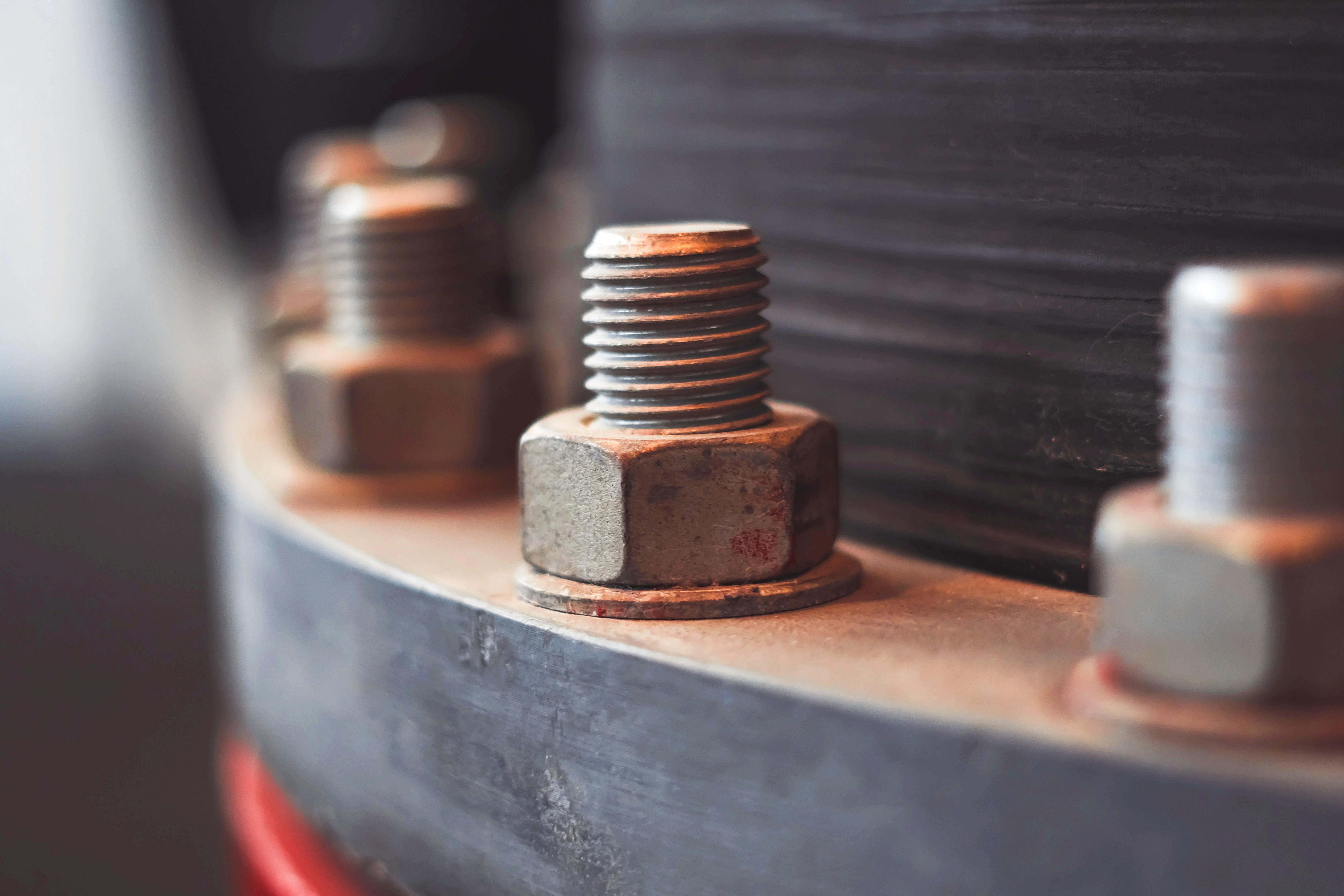
The Unseen Strength in Spirals
Screw threads, a fundamental tool in engineering, are the helical ridges or grooves formed on a cylindrical or conical surface. A simple yet crucial invention, these helical structures are a unique blend of art and engineering, etched into the body of a screw or bolt. In the language of mathematics, a screw thread can be defined using the equation of a helix, which is a three-dimensional curve.
The core purpose of a screw thread is to convert rotational motion into linear motion or to fasten objects together. Imagine them as carefully crafted paths, guiding the screw or bolt into its intended place, efficiently converting mechanical torque into a linear force.
To dig deeper into this topic, it’s worth noting that not all threaded fasteners—screws and bolts—are created equal.
Screws are typically turned directly into a material. They are often self-tapping, meaning they can form their own threads as they’re driven into material.
On the other hand, bolts are designed to fasten two unthreaded components together with the help of a nut. This fastener assembly passes through pre-drilled holes in the components being joined, and the nut is threaded onto the bolt from the opposite side to create a strong connection.
In the realm of mechanical engineering, there are various types of screw threads designed for specific applications, the most common being metric, unified, and British standard threads.
Metric threads, as the name implies, are defined in millimeters and widely accepted worldwide. On the other hand, unified threads—categorized as UNC (Unified National Coarse), UNF (Unified National Fine), and UNEF (Unified National Extra Fine)—are prevalent in the United States.
British standard threads, including Whitworth and British Association (BA) types, are primarily employed in the United Kingdom.
Now, how does a screw thread hold pressure? The answer lies in the principle of friction and the mechanical advantage of the inclined plane (the thread).
When a screw or bolt is tightened, the mating threads come into contact, creating a pressure normal to the thread contact surface. This normal pressure, combined with the friction coefficient between the threads, results in a frictional force that prevents spontaneous movement or loosening.
Thus, from enabling robust constructions to holding pressure, screw threads play an indispensable role in our daily lives. The beauty of their utility lies in their simplicity and the precise mathematics that define them. With the basic understanding of screw threads established, you’re well on your way to uncovering the wonders of mechanical engineering!
How screw threads hold pressure (Clamping force): Insight into their geometry and forces
Parameters of Interest: Diving Deeper into the DNA of Screw Threads
For the uninitiated, screw threads might seem like a straightforward piece of hardware. But, a closer inspection reveals that there’s a universe of design and physics behind this tiny component. To fully grasp its function and effectiveness, it’s crucial to understand some essential parameters. Let’s jump right in and unpack these terms, establishing why they’re fundamental to our exploration of screw threads.
1. Thread Angle (φ)
Symbolic Representation: ϕ
The thread angle, often symbolically represented as , is a vital geometry in the design of screw threads. Essentially, it is the angle between the two sides of the thread when viewed in a cross-sectional diagram. A thread angle of 60 degrees is typical for metric threads, but why does this angle matter?
The thread angle impacts several aspects:
- Strength: A larger angle (closer to 90 degrees) will have a wider base, making the thread physically stronger.
- Efficiency: A smaller angle (like 30 degrees) may make it easier for the screw to be turned, but might compromise on holding strength.
- Wear: Different angles can lead to uneven wear, which can affect the longevity of the thread.
2. Moment Arm Length
Symbolic Representation: L_arm
Think of the moment arm length as a lever that helps turn the screw. Symbolically represented as L_arm, it’s the distance from the point where force is applied to the center of the screw. A longer moment arm requires less force to turn the screw, making the task more manageable. The mathematical relationship is expressed as:
Torque (T)=Force (F)×Moment Arm Length (L)=Force (F)×Moment Arm Length (L_arm)
In layman’s terms, this equation explains how even a small force, when applied at the end of a longer lever (or moment arm), can generate a significant turning effect or torque on the screw.
3. Screw Pitch
Symbolic Representation: p
The screw pitch, represented symbolically as , is the distance from one thread to the next. This simple distance holds a lot of importance:
- Speed vs. Strength: A larger pitch will cause the screw to advance faster when turned but might reduce the screw’s holding power.
- Precision: A finer pitch (shorter distance between threads) allows for more precise adjustments. Think of a microscope’s adjustment knob – it often uses a very fine pitch to provide detailed focus.
The relationship between the pitch and the advancement of the screw is:
Lead (L)=Number of Threads×Pitch (p)=Number of Threads×Pitch (p)
For a single-threaded screw (like the one we are discussing), the lead is the same as the pitch.
The Force Applied to the Screw: Getting a Grip
Having established the key geometric parameters, it’s time to delve into the heart of the matter – how force is applied to the screw, and how that force is responsible for the screw’s behavior. This is where the magical transformation of rotational motion to linear action happens!
1. Hand Force (F_h)
Symbolic Representation: F_h
The hand force, represented by , is simply the force you apply to turn the screw. In an ideal world, this is the only force you’d need to consider. But in the real world, we also have to account for factors like friction and resistance (more on those later!).
2. Force Applied to the Screw (F_screw)
Symbolic Representation:
The force applied to the screw, symbolically represented as , is the force the screw experiences as a result of you turning it. This force is determined by the hand force and the radius of the screw, according to the equation:
F_screw=Lr×F_h=rL×F_h
In this equation, is the moment arm length, r is the screw radius, and is the hand force. Basically, this equation tells us that a smaller screw radius or a larger moment arm length can amplify the force applied to the screw, much like how a longer lever makes it easier to lift a heavy object.
The transformation from hand force to screw force is a critical step in understanding how a simple turn of a screw can result in powerful clamping force or movement.
Screw Geometry 101: Calculating the Lead Angle
Now that we understand the force applied to the screw, let’s move to another fundamental aspect that defines a screw thread – its geometry. Specifically, let’s focus on the lead angle, which plays a crucial role in how the screw functions.
1. Thread Pitch (p)
Symbolic Representation:
The thread pitch, symbolized as , is the distance between the crests of two consecutive threads. It’s a key measurement that tells us how tightly or loosely the threads of the screw are spaced. A small pitch means the threads are close together, while a larger pitch means they’re spaced out.
2. Lead (L)
Symbolic Representation: L
The lead, symbolized as L, is the distance a screw advances linearly with one full turn. If you have a single-start thread (one continuous thread spiraling along the screw’s length), then the lead and pitch are identical. However, for multiple-start threads (more than one thread spiraling around the screw), the lead would be greater than the pitch.
3. Lead Angle (λ)
Symbolic Representation: λ
The lead angle, symbolized by , is the angle between the direction of the thread (the helix) and a plane perpendicular to the screw axis. This angle is instrumental in determining how far the screw advances for each turn.
The lead angle can be calculated using the equation:
λ=arctan(Lπd)=arctan(πdL)
where d is the screw’s diameter. This equation reveals that a larger lead (L) or a smaller diameter (d) results in a steeper lead angle, making the screw advance more quickly with each turn.
So, why is the lead angle essential when it comes to understanding screw threads? The answer lies in how it influences the screw’s mechanical behavior. A larger lead angle means the screw advances more with each turn, which could be useful in applications requiring quick movement. However, this also means a lower mechanical advantage, making it harder to resist external forces. On the other hand, a smaller lead angle offers a higher mechanical advantage, making the screw harder to turn but better at resisting external forces.
The Big Reveal: Clamping Force
So far, we’ve delved into the fascinating world of screw threads, discussing everything from the force applied to a screw to the importance of the lead angle. Now, let’s turn our attention to the main event – the clamping force. This force, derived from all the previous concepts, is the key to understanding the power and utility of screw threads.
1. Defining Clamping Force
Symbolic Representation: F_c
The clamping force, represented as Fc, is the force that a screw exerts on the objects it is fastening together. In other words, it’s the force that holds everything in place. For a screw to perform its job effectively, the clamping force must be greater than any external forces trying to separate the objects.
2. Calculating Clamping Force
The clamping force can be calculated using the formula:
F_c=F_screwtan(λ+ϕ)=tan(λ+ϕ)F_screw
where crew is the force applied to the screw (calculated earlier), is the lead angle, and is the thread angle.
This equation highlights the interplay between the force applied to the screw and the screw’s geometry. A greater force on the screw or a smaller lead or thread angle can result in a larger clamping force. Conversely, a smaller force applied to the screw or a larger lead or thread angle can result in a smaller clamping force.
3. The Role of Friction
In addition to the force applied and the geometry of the screw, friction plays a significant role in the clamping force. The friction between the threads of the screw and the material it’s fastened into resists movement and helps maintain the clamping force. A higher coefficient of friction can lead to a stronger clamping force.

Material Matters: How Material Selection Influences Screw Thread Performance
Material choice can dramatically impact the performance and longevity of screw threads. Let’s start with the strength factor – harder materials like steel or titanium offer great tensile strength, making them ideal for high-stress applications. However, softer materials such as brass or plastic, while less durable, can be more suitable for applications where resistance to wear or chemical corrosion is paramount.
Temperature tolerance is another key aspect to consider. Some materials retain their strength and shape under extreme heat or cold, while others may become brittle or warp. For example, steel can withstand high temperatures but may be prone to rust, while stainless steel offers better corrosion resistance but may not be as strong.
Corrosion resistance is a major factor too. Materials like stainless steel, brass, or aluminum are commonly used in environments prone to rust or chemical exposure.
Materials play an essential role in determining the functionality and durability of screw threads. Different materials bring their unique characteristics into play, affecting the screw threads’ strength, resistance to corrosion, and temperature tolerance.
For instance, steel screws are often used due to their impressive strength, making them an excellent choice for heavy-duty applications. Stainless steel threads, specifically, are highly resistant to corrosion and are thus ideal for outdoor use or in environments where the screw threads are exposed to corrosive elements.
Brass screw threads are often chosen for their good corrosion resistance and aesthetic appeal, but they are not as strong as their steel counterparts. They are therefore more suitable for decorative applications or for use in electrical components due to brass’s superior electrical conductivity.
Aluminum screw threads are lightweight and resistant to rust, but not as strong as steel. They are often used in automotive and aerospace applications where weight reduction is a priority.
Plastic screw threads, on the other hand, offer excellent resistance to corrosion but have lower strength. They are suitable for use in applications where weight and corrosion resistance are significant considerations, such as in electronics and certain types of machinery.
In addition to the intrinsic properties of the material, the manufacturing process also has an impact on the screw threads’ performance. For instance, heat treatments can enhance the hardness and strength of steel screws, making them even more suitable for heavy-duty applications.
In the same vein, the coating or finishing applied to the screw can significantly influence its performance. A common example is galvanized steel, where a layer of zinc is added to the steel to improve its resistance to rust. There are also various other coatings such as chrome or nickel plating which not only enhance the corrosion resistance but also add an aesthetic appeal to the screw.
It’s worth mentioning that, although the material’s properties play a major role, the design of the thread itself also significantly influences its performance. The geometry, pitch, and angle of the threads can be optimized based on the intended application and material to maximize their holding power and resistance to stripping.
To wrap up, the impact of material on screw threads is multifaceted and requires careful consideration. From the physical properties of the material, manufacturing implications, possible chemical interactions to the overall functionality, several factors come into play. A well-informed decision about the appropriate material can enhance the performance, lifespan, and effectiveness of the screw threads in their specific application.
Staying Tight: Vibration Resistance and Optimal Thread Selection in Screw Threads
Vibrations, especially when recurrent and of high-frequency, can pose a significant challenge to the holding capacity of screw threads. This is because the continuous movement can lead to a gradual loosening of the threads, thus reducing the clamping force that keeps components secured together.
You might be wondering, how exactly does this happen? Well, when vibrations occur, the energy from the movement can propagate through the material of the bolt or screw, causing a recurring motion in the threads. Over time, this can cause the threads to rotate slightly and lose their tight fit, even if the initial installation was perfect.
However, all is not lost. There are ways to mitigate the effects of vibrations on screw threads. One key technique involves the careful selection of screw or bolt material and design, as some are more resilient to vibrations than others. The correct choice can significantly improve the ability of the threads to maintain their hold under vibratory conditions.
One commonly used type is the “self-locking” or “locking” thread. These threads include features that increase friction between mating threads or create interference, preventing the screw from vibrating loose. Some types of self-locking threads include wedge ramp, spiralock, and trilobular thread forms.
Wedge ramp threads: These are designed such that the thread form includes a wedge at the root that gets tightly wedged under load, creating a locking action and preventing the screw from loosening due to vibrations.
Spiralock threads: Spiralock is a brand of threaded fasteners and nuts that have a unique 30-degree wedge ramp at the root of the thread. This ramp allows the bolt to spin freely while being tightened, but once the bolt is under tension, the crests of the standard male thread are drawn tightly against the wedge ramp, preventing the bolt from loosening under vibration.
Trilobular threads: Trilobular screws, also known as thread-rolling screws or TAPTITE® screws, have a triangular cross-section. When these screws are threaded into a hole, they displace material around the hole, forming a mating thread that resists vibration loosening. These are often used in metals and thermoplastic materials.
While these threads can significantly resist vibrations, they are not 100% immune, especially under extreme conditions. In such cases, additional measures might be required, such as using thread-locking compounds or locknuts.
Another crucial aspect is torque control. Proper torque application during installation is vital to ensure the threads are adequately tensioned, enabling them to resist the loosening effects of vibrations. In some instances, the use of thread-locking compounds or specialized mechanical devices can provide additional resistance to vibrational loosening.
Remember, understanding the effects of vibration on screw threads and how to counteract them is essential in applications where high vibrational loads are anticipated. It’s all part of ensuring your threaded assemblies remain secure, even in the most challenging environments.
Choosing Between Coarse and Fine Threads: Optimizing for Application and Performance
Navigating the world of screw threads often leads to the crucial decision between using fine threads and coarse threads. The choice is not just a matter of preference, but of understanding the strengths and weaknesses of each and aligning these with the task at hand.
Coarse threads, characterized by their wider spacing, offer significant advantages in durability. They are less prone to accidental cross-threading and stripping, both common issues that can compromise the structural integrity of assemblies. Moreover, coarse threads are quicker to assemble and disassemble due to their larger pitch. These benefits make coarse threads a fitting choice for construction, where screws often need to withstand tough handling and be driven into soft materials such as wood or plaster.
Conversely, fine threads are defined by their closer spacing, which allows for a greater number of threads per unit length. This increased thread count means that fine threads can bear larger loads than coarse threads of the same size. Furthermore, fine threads allow for more precise tension adjustments, making them ideal for applications that require a high degree of accuracy, such as in automotive and machinery assemblies. Their small helix angle also provides better resistance against loosening from vibration, which can be especially beneficial in high-vibration environments.
However, it’s essential to note that fine threads can be more prone to stripping and are more difficult to tap or thread. They can also seize more easily due to a process called “galling”.
However, there are trade-offs. Fine threads can be more challenging to assemble, and are more susceptible to stripping, especially when used with soft materials. They also pose a higher risk of seizing due to galling – a form of wear caused by adhesion between sliding surfaces.
That being said, there isn’t a definitive ‘best’ when it comes to screw threads. The ideal choice depends largely on the specific application and the conditions under which the screw or bolt will be used. Engineers must consider factors such as the material into which the screw will be driven, the loads the screw will need to bear, the need for precision, and the operating environment, among others. By considering these factors carefully, one can make an informed choice that optimizes performance and reliability. So, whether it’s a coarse thread for your next construction project or a fine thread for your car repair, understanding these characteristics will help you make an informed decision.
Decoding Thread Standards: Recognizing Common Thread Forms
Screw threads standards define key features like the angle, pitch, and shape of thread, essential for universal understanding and use. The Metric system, widely used globally, specifies threads per millimeter and diameters in millimeters, suitable for many engineering applications due to its simplicity and universality.
The Unified Thread Standard (UTS), includes UNC (Unified National Coarse) and UNF (Unified National Fine), is predominantly used in the United States. UNC threads are robust, making them apt for construction where ease of assembly is critical. UNF threads, with more threads per inch, are utilized in precision applications like aerospace.
The British Standard Whitworth (BSW) threads, though less common now, have a unique 55-degree thread angle, offering certain advantages in stress distribution.
Each thread standard comes with its unique pros and cons. Selection primarily depends on the application, region, and industry. Engineers should choose a thread standard that aligns with their requirements in terms of precision, durability, compatibility, and ease of use.
In addition to the above, there are some specialized thread standards for specific applications. For example, the National Pipe Thread (NPT) is used for plumbing in North America, designed to allow the threads to seal through a wedging action. Acme threads, with a trapezoidal design, are prevalent in applications requiring heavy loads or high accuracy, such as in mechanical jacks and lead screws of lathes.
Another category includes the buttress threads, which have a sawtooth design making them adept at handling high axial forces in one direction. These are commonly found in high-pressure applications such as vices and presses.
Lastly, there’s the square thread form, typically used in applications where high power transmission is needed, such as in clamps, vises, and jacks. They are difficult to manufacture, however, so they’re not as common as the other types.
Telling the difference between various types of threads can often be a challenge, especially when you’re dealing with the naked eye. Here are some quick ways to help you differentiate:
Measure the Pitch: The pitch, or the distance from one thread to the next, is a key differentiator among thread types. You can use a pitch gauge, which has teeth that match different thread pitches, to measure this.
Examine the Thread Profile: This involves looking at the shape of the thread itself. Some threads, like the Whitworth, have rounded crests and roots, while others like the metric threads have a flat top and a sharp V profile.
Count the Threads: Particularly in the case of UNC (coarse) and UNF (fine) threads, counting the number of threads per inch can help differentiate between them. A thread gauge can be useful for this.
Thread Angle: The angle between the thread flanks is another characteristic that differs among thread types. For example, metric threads have a 60-degree angle, while Whitworth threads have a 55-degree angle.
Use a Thread Identifier Kit: These kits contain nuts and bolts of different thread types, and by trying to screw your mystery fastener into these, you can often identify its type.
Remember, while these methods can be helpful, for precise identification or critical applications, it’s always advisable to use professional measuring tools or seek expert advice.
Understanding and Preventing Screw Thread Failure: From Over-tightening to Corrosion and Beyond
One of the key aspects of working with screw threads is knowing the potential modes of failure. By understanding these risks, you can make better decisions about material selection, assembly techniques, and maintenance schedules. Here’s what you need to know about how screw threads can fail, and how you can prevent these problems.
Over-tightening: A Matter of Too Much Pressure
Over-tightening is a common issue that can lead to thread failure. The torque applied to a screw thread translates into tension – a force that pulls the screw along its axis. If this tension exceeds the yield strength of the screw material, the screw can deform plastically (it won’t return to its original shape after the load is removed) or even break.
To prevent over-tightening, it’s crucial to follow the manufacturer’s recommendations for tightening torque. Torque wrenches and similar tools can ensure you apply the correct amount of force.
Corrosion: A Silent Threat
Corrosion, or the chemical reaction between the screw material and its environment, can eat away at the material over time, reducing its strength. This is particularly common in environments with high moisture or chemical exposure.
Selecting the right materials for the job is critical in preventing corrosion. For example, stainless steel screws are often used in wet environments due to their high resistance to corrosion. Additionally, protective coatings or finishes can also help resist corrosion.
Fatigue: The Wear and Tear of Repeated Stress
Fatigue refers to the weakening of a material caused by repeatedly applied loads. In screw threads, fatigue can occur due to cyclical loads, which can cause microscopic cracks at the root of the threads. Over time, these cracks can propagate, leading to eventual failure.
The key to preventing fatigue is understanding the load conditions the screw thread will be subjected to. If the load is likely to vary significantly over time, it may be necessary to choose a screw made of a material with a high fatigue strength. Regular inspection and maintenance can also help detect early signs of fatigue.
Thread Stripping: The Shear Threat
Thread stripping is another failure mode, where the forces acting on the threads exceed the shear strength of the material, causing the threads to be stripped off. This often occurs when a hard bolt is screwed into a softer material.
To avoid this, ensure that the material of the nut or the tapped hole can withstand the shear forces exerted by the screw threads. The bolt and nut (or tapped hole) materials should have comparable strength.
By understanding these potential failure modes, you can take proactive steps to prevent them. Material selection, assembly techniques, and preventative maintenance are all crucial aspects of ensuring the longevity and reliability of screw threads.
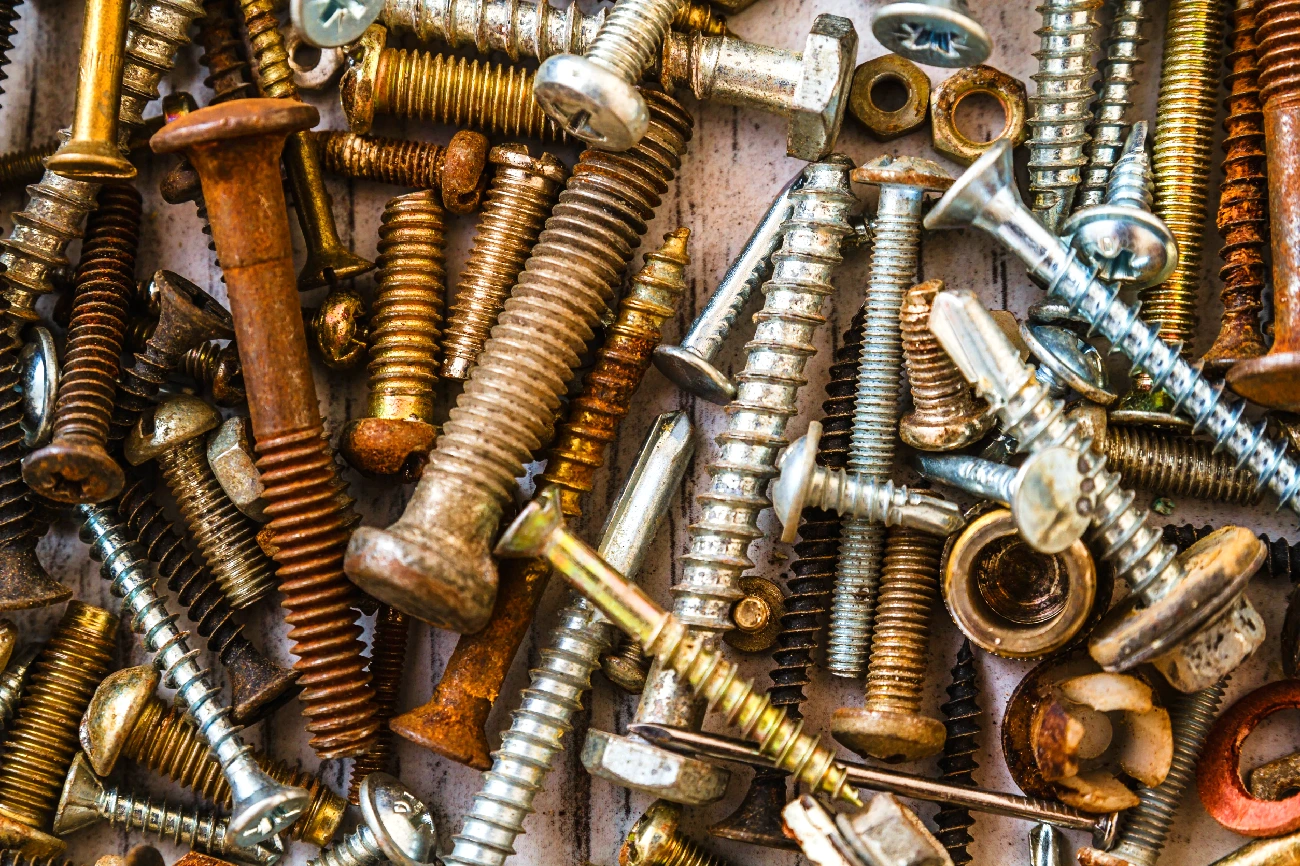
Concluding Thoughts on the In-depth Exploration of Screw Threads
Over the course of this blog post, we’ve delved into the world of screw threads. We’ve examined their basic principles, understood the key role of torque, explored how they can hold pressure, and even discussed the impact of material choice. We’ve also delved into how different thread types are suited for varied applications, navigated through common thread standards, and understood how to identify them. Finally, we’ve addressed the critical topic of screw thread failure and its prevention.
With this comprehensive knowledge, you’re well-equipped to navigate the choices and challenges that screw threads present, be it in engineering, construction, automotive or any other industry. Remember, the secret lies in understanding the nuances of thread types, material selection, and appropriate use.
We hope this in-depth look at screw threads has been informative and enlightening. Do you have more questions? Curious about another aspect of screw threads we haven’t covered? Feel free to leave your queries or comments below. We’re here to help deepen your understanding and answer your questions. Thank you for joining us in this journey into the world of screw threads!