
How to Use Threaded Inserts in 3D Printed Parts: A Comprehensive Guide for Strength and Durability
Threaded inserts are essential for creating strong, durable connections in 3D printed parts, especially when using materials like PLA, PETG, and polycarbonate. This tutorial will delve into the best practices for selecting and using threaded inserts, optimizing your print settings, and ensuring your projects withstand mechanical stresses. Whether you are a hobbyist or a professional, understanding these techniques will enhance your 3D printing experience.
1. Overview of Threaded Inserts
Threaded inserts are cylindrical metal or plastic inserts that provide robust, screwable interfaces in 3D printed objects. They allow for repeated assembly and disassembly without damaging the material.
Types of Threaded Inserts:
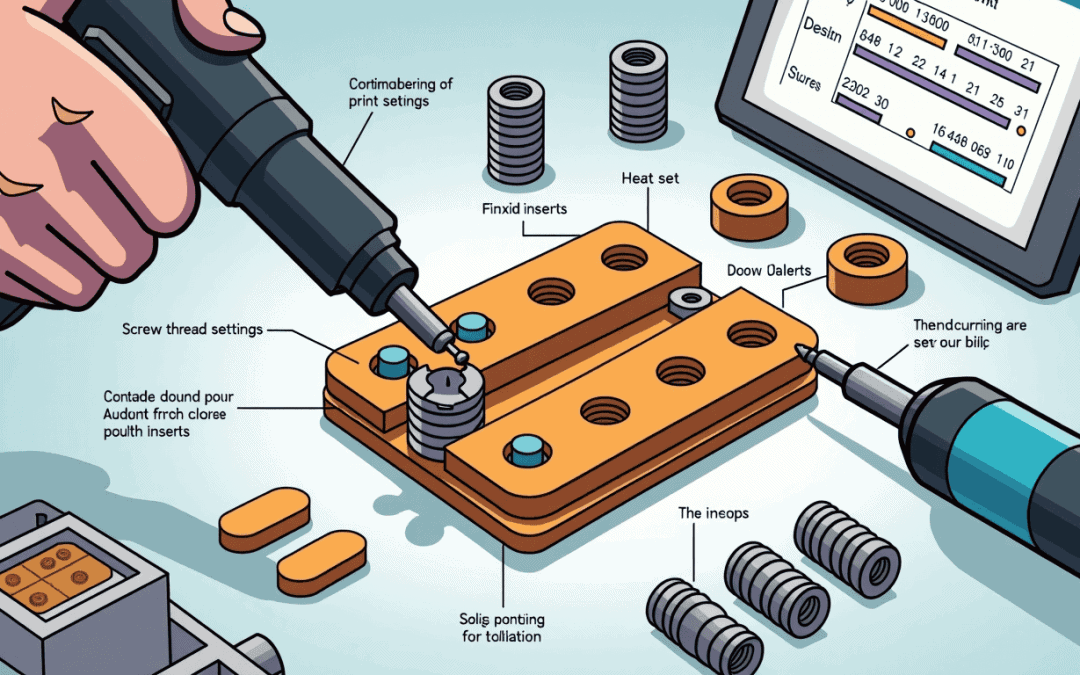
- Heat-Set Inserts: These are installed using a heating tool and provide excellent durability and wear resistance.
- Screw-to-Expand Inserts: Easy to install but may loosen under high temperatures.
- Helicoils: A spring-like coil used for thread repair or reinforcement, but less effective in small sizes.
2. Material Considerations
Choosing the right material can significantly impact the effectiveness of threaded inserts.
PLA
- Pros: Easy to print; good surface finish.
- Cons: Brittle under stress; care must be taken to ensure proper insert embedding.
PETG
- Pros: More ductile than PLA; better resistance to impact.
- Cons: May not hold threads as securely; can distort if not printed with the correct settings.
Polycarbonate
- Pros: High strength and impact resistance; excellent for demanding applications.
- Cons: Requires precise temperature control during printing.
3. Choosing the Right Insert for Your Project
When selecting inserts, consider:
- Application Requirements: Factor in load conditions (tension, shear).
- Material Compatibility: Some inserts perform better with specific plastics.
- Ease of Installation: Select inserts that match your tools and skill level.
4. Best Practices for 3D Printing with Inserts
Optimizing print settings can enhance the strength of your part significantly.
Infill Settings
- Infill Density: A higher density (e.g., 100%) offers maximum strength, but for most applications, 20-30% with multiple shells suffices.
- Layer Height: Use a lower layer height (e.g., 0.15 mm) for better interlayer adhesion.
Shell Thickness
Increasing the number of perimeters can significantly improve strength, especially around the area where inserts are installed.
5. Installation of Heat-Set Inserts
Tools Required
- Soldering Iron: To heat the insert during installation.
- Drill: For pre-drilling holes.
- DIY Heat Press Tool: For precise control.
Installation Steps:
- Pre-Drill Holes: Ensure the hole size is slightly undersized (e.g., for M3 insert, drill to 4.0-4.1 mm).
- Heat the Insert: Preheat the soldering iron to around 210°C.
- Insert Installation: Press the heated insert into the hole until flush with the surface.
6. Recommended Tools and Software
To streamline the 3D printing process:
- CAD Software: For designing parts with threaded inserts.
- Mesh Repair Tools: Such as Meshmixer to ensure your designs are error-free.
7. Where to Buy Quality Threaded Inserts
Consider reputable suppliers for high-quality inserts:
- Ruthen Inserts: Specifically designed for 3D printing; excellent performance.
- McMaster-Carr: Offers a wide selection of reliable threaded inserts.
8. Troubleshooting Common Issues
If you encounter issues with threaded inserts:
- Loosening Threads: Check that the right insert type and installation method were used.
- Poor Fit: Ensure accurate hole sizing and proper print settings.
Conclusion
By following this guide, you can effectively use threaded inserts in your 3D printed parts to create strong, durable assemblies. Experiment with various materials and settings to find the perfect balance for your specific projects. For further learning, explore additional resources on advanced 3D printing techniques.
Call to Action: Try integrating threaded inserts into your next project, and share your results and troubleshooting experiences with the community for enhanced learning!


