

Delving into the Fundamentals of Pump Systems: A Comprehensive Guide
Pumps, the indispensable mechanical devices, play a pivotal role in transferring various types of fluids, including water, oil, and chemicals. Their designs and functionalities vary widely, catering to specific tasks and environments. Gaining a solid understanding of different pump types and their applications is crucial to selecting the most efficient and suitable pump for your needs.
The world of pumps is vast and diverse, but they can be primarily classified into two categories: Positive Displacement Pumps and Centrifugal Pumps. Each category is further divided into specialized subtypes. This blog post will focus on a subclass of Positive Displacement Pumps – Rotary Pumps.
The Realm of Positive Displacement Pumps: An In-Depth Analysis
Positive Displacement Pumps hold a significant place in the wide array of pump types. They operate by trapping a fixed amount of fluid and then forcing it through the system. Let’s explore the various types of rotary pumps that fall under this category.
Understanding Rotary Pumps: The Workhorses of Positive Displacement Pumps
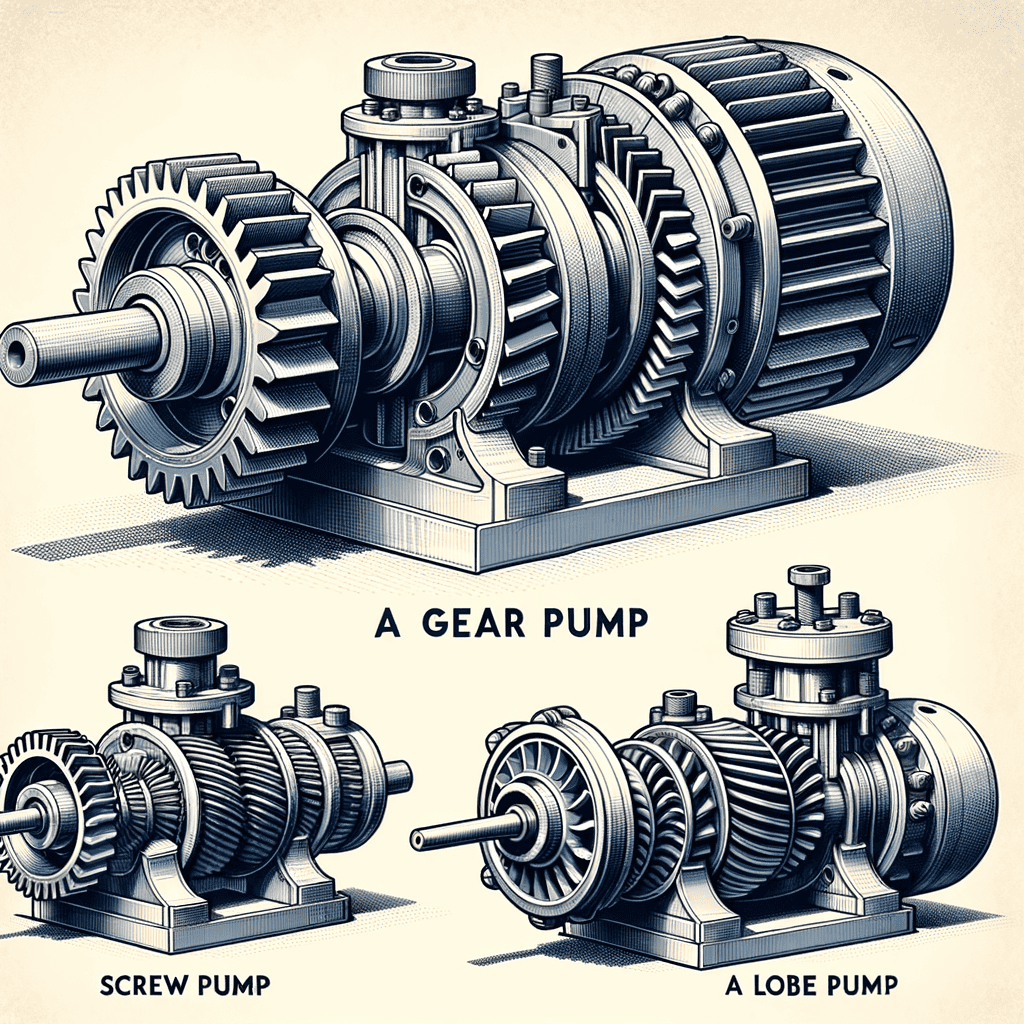
Rotary pumps, the stalwarts among Positive Displacement Pumps, utilize rotating mechanisms to transfer fluids. They are known for their efficiency, reliability, and versatility. The sub-categories of rotary pumps include Gear Pumps, Screw Pumps, and Lobe Pumps.
Gear Pumps: Gear Pumps are built with intricate intermeshing gears working in perfect harmony. They are the go-to choice for handling low to medium viscosity fluids. These pumps excel in high-pressure situations, reaching up to 1000 psi. Their applications are widespread, from hydraulic systems and fuel injection setups to chemical processing units.
Screw Pumps: Equipped with two or more synchronized helical screws, Screw Pumps are adept at managing high viscosity fluids. They boast an impressive capacity to handle large volumes of liquid, with rates of up to 50,000 GPM. The oil and gas industry frequently employs Screw Pumps to handle substances like crude oil and other high viscosity fluids.
Lobe Pumps: Lobe Pumps feature two or more external rotating lobes that are renowned for their gentle handling of fluids. This ensures that even the most delicate substances remain unharmed. Ideal for low to medium viscosity fluids, they are a staple in industries that demand precision and care, such as food processing, pharmaceuticals, and cosmetics.
Choosing the Right Rotary Pump: Factors to Consider
Selecting the appropriate rotary pump for your needs involves considering several factors, including:
- Fluid viscosity: Determine the fluid’s viscosity to choose the most suitable pump type, whether it’s a Gear, Screw, or Lobe Pump.
- Flow rate: Assess the required flow rate to ensure the pump can handle the necessary volume of fluid.
- Operating pressure: Evaluate the system’s operating pressure to select a pump that can withstand the force.
- Temperature: Consider the fluid’s temperature, as certain pump materials may not be suitable for extreme heat or cold.
- Contamination: Factor in the potential for contamination, as some pumps are better equipped to handle solids or particulates in the fluid.
In summary, understanding the various types of rotary pumps and their applications is essential in selecting the most efficient and reliable solution for your specific requirements. By considering factors such as fluid viscosity, flow rate, operating pressure, temperature, and contamination, you can make an informed decision and ensure optimal performance and longevity for your pump system.

Centrifugal Pumps: An In-depth Guide
Centrifugal pumps are the most commonly used type of pump in various industries due to their high efficiency, adaptability, and ease of maintenance. They operate by transferring energy from a rotating impeller to the fluid, which is then moved through the pump casing and discharged at a higher pressure. This comprehensive guide will delve into the three main types of centrifugal pumps: radial flow, mixed flow, and axial flow pumps.
The Indispensable Radial Flow Pumps
At the heart of the centrifugal pump family lies the widely-used Radial flow pumps. These pump types boast a unique mechanical design that sets them apart from other centrifugal pumps. By pivoting around an impeller, radial flow pumps demonstrate their impressive ability to initiate fluid movement.
The fluid is absorbed axially, or along the shaft of the pump, and then discharged outwardly, following the impeller’s radial direction. This efficient design allows radial flow pumps to deliver high flow rates at relatively low pressure heads, making them an indispensable tool in many industrial applications.
Key Components of Radial Flow Pumps
To better understand the functionality of radial flow pumps, let’s take a closer look at their key components:
1. Impeller: The rotating component of the pump, which transfers energy to the fluid, causing it to move. The impeller’s vanes play a crucial role in generating the centrifugal force that propels the fluid.
2. Casing: The stationary component that encloses the impeller and directs the fluid as it exits the pump. The casing’s design is essential for maintaining pressure and preventing backflow.
3. Shaft: The component that connects the impeller to the motor or other power source, allowing the impeller to rotate. The shaft must be strong and balanced to ensure smooth operation and minimize wear.
4. Bearings: The components that support the shaft and allow it to rotate smoothly with minimal friction. Proper lubrication of the bearings is essential for maintaining the pump’s efficiency and longevity.
5. Seals: The components that prevent fluid leakage between the pump casing and the shaft. Effective sealing is crucial for preventing contamination and maintaining pressure within the pump.
Advantages of Radial Flow Pumps
Radial flow pumps offer numerous advantages, which contribute to their widespread use in various industries:
1. High efficiency: Radial flow pumps are known for their high energy conversion efficiency, making them an economical choice for many applications.
2. Adaptability: These pumps can handle a wide range of fluids, including liquids with suspended solids, viscous liquids, and corrosive liquids.
3. Low maintenance: Radial flow pumps are designed with simplicity in mind, making them easy to maintain and repair.
4. Ease of operation: With their straightforward construction and simple control systems, radial flow pumps are easy to operate and require minimal training.
Applications of Radial Flow Pumps
Radial flow pumps are employed in various industries due to their versatility and high performance. Some common applications include:
1. Water treatment and supply: Radial flow pumps are extensively used in water treatment plants, municipal water supply systems, and fire protection systems.
2. Chemical processing: These pumps are suitable for handling corrosive and abrasive fluids in chemical processing plants.
3. Power generation: Radial flow pumps are utilized in power plants for boiler feedwater, condensate, and cooling water applications.
4. Food and beverage processing: These pumps are used in the food and beverage industry for various applications, such as transferring liquids, mixing, and cleaning-in-place (CIP) processes.
5. HVAC systems: Radial flow pumps are often used in heating, ventilation, and air conditioning (HVAC) systems for circulating water and other fluids.
An Overview of Mixed Flow Pumps
Mixed flow pumps strike an ideal balance between radial and axial flow pumps, offering the benefits of both designs. In mixed flow pumps, the fluid follows a similar path, entering the impeller axially. However, unlike radial flow pumps, it exits at an inclination, forming both centrifugal and axial forces to generate efficient fluid movement.
This hybrid design allows mixed flow pumps to handle medium viscosity fluids while achieving impressive flow rates up to 50,000 GPM. Given their versatility, mixed flow pumps are valuable in various applications, including wastewater treatment, slurry handling, and flood control systems.
Key Components of Mixed Flow Pumps
Mixed flow pumps share many components with radial flow pumps but have a few unique features:
1. Impeller: The mixed flow impeller has vanes that are curved and angled to create both radial and axial forces, allowing for efficient fluid movement.
2. Casing: The casing in mixed flow pumps is designed to accommodate the angled discharge of the fluid, maintaining pressure and preventing backflow.
3. Guide vanes: Some mixed flow pumps incorporate guide vanes to help direct the fluid and improve efficiency.
Advantages of Mixed Flow Pumps
Mixed flow pumps offer several advantages over radial and axial flow pumps:
1. High efficiency: Mixed flow pumps provide a greater efficiency than radial flow pumps at higher flow rates, thanks to their hybrid design.
2. Versatility: These pumps can handle a wide range of fluids, including medium viscosity liquids, making them suitable for various industrial applications.
3. Lower NPSH requirements: Mixed flow pumps typically have lower Net Positive Suction Head (NPSH) requirements compared to radial flow pumps, reducing the risk of cavitation.
Applications of Mixed Flow Pumps
Mixed flow pumps are employed in various industries due to their unique combination of high flow rates and manageable pressure heads. Some common applications include:
1. Wastewater treatment: Mixed flow pumps are often used in wastewater treatment plants for primary sludge transfer and mixed liquor recirculation.
2. Slurry handling: These pumps can effectively handle slurries with suspended solids, making them ideal for mining, mineral processing, and other similar applications.
3. Flood control systems: Mixed flow pumps are used in flood control systems to move large volumes of water quickly and efficiently.
Diving into Axial Flow Pumps
Axial flow pumps champion their own design variation within the centrifugal pump family. Using an impeller to direct the fluid just like their cousins, these pumps, however, have it enter and exit in the axial direction exclusively. This distinctive design translates into an axial force, the driving factor behind its fluid movement.
Key Components of Axial Flow Pumps
Axial flow pumps have a few unique components that differentiate them from radial and mixed flow pumps:
1. Propeller: Instead of an impeller, axial flow pumps use a propeller to create an axial force that drives fluid movement.
2. Casing: The casing in axial flow pumps is designed to accommodate the axial flow of the fluid, maintaining pressure and preventing backflow.
3. Guide vanes: Some axial flow pumps incorporate guide vanes to help direct the fluid and improve efficiency.
Advantages of Axial Flow Pumps
Axial flow pumps offer several advantages, especially in applications that require high flow rates and low pressure heads:
1. High flow rates: Axial flow pumps can achieve impressive flow rates, making them suitable for applications that require large volumes of fluid to be moved quickly.
2. Low power consumption: These pumps are known for their energy efficiency, as they require less power to move fluids compared to radial or mixed flow pumps.
3. Compact design: Axial flow pumps have a smaller footprint compared to other centrifugal pumps, making them ideal for space-constrained applications.
Applications of Axial Flow Pumps
Axial flow pumps are employed in various industries due to their ability to handle high flow rates and high viscosity fluids:
1. Dredging: Axial flow pumps are commonly used in dredging applications, where they efficiently move large volumes of water and sediment.
2. Mining: These pumps are used in mining operations to transport slurries and other high viscosity fluids.
3. Irrigation: Axial flow pumps are employed in irrigation systems to move large volumes of water efficiently.
In conclusion, radial flow, mixed flow, and axial flow pumps each offer unique advantages and applications within the centrifugal pump family. Understanding the key components, advantages, and applications of each type will enable professionals to make informed decisions when selecting the right pump for their specific needs. By harnessing the power of these pumps, industries can optimize their fluid handling processes and improve overall efficiency.

Specialty Pumps: Engineered for Challenging Fluid Transfer
Magnetic Drive Pumps: Leak-Free and Sealless Design
Magnetic drive pumps are engineered as sealless mechanisms, utilizing a magnetic field to transfer diverse fluid types. This innovative design eliminates the need for mechanical seals, making it a leak-free and environmentally safer solution for processing hazardous or toxic fluids. Ideal for handling low to medium viscosity fluids, magnetic drive pumps can manage moderate flow rates of up to 500 GPM, making them a reliable choice for various industrial applications, including chemical processing, pharmaceuticals, and food and beverage production.
Peristaltic Pumps: Precision and Gentle Handling
Peristaltic pumps are classified as positive displacement pumps that use a flexible tube for fluid movement. They operate by creating a vacuum effect through compression, which draws in the fluid, and later expands the tube to dispense it. This design allows for gentle handling of delicate fluids, ensuring no mechanical damage occurs. Specifically designed for low viscosity fluids, peristaltic pumps can handle flow rates up to 50 GPM. Their robust and precise operation makes them a preferred choice in laboratory procedures, medical equipment utility, and meeting stringent hygiene standards in food and beverage processing.
Submersible Pumps: Heavy-Duty Performance and Versatility
As their name suggests, submersible pumps are fully submerged in the fluid they are pumping, making them ideal for applications with spatial limitations or requiring fluid extraction from deep wells or extensive tanks. With the capacity to pump low to medium viscosity fluids and manage medium to high flow rates of up to 100,000 GPM, submersible pumps are the preferred choice in heavy-duty industries such as construction, mining operations, and wastewater treatment. Their robust resistance and versatility set new benchmarks for operational efficiency in demanding conditions.
Selecting the Right Specialty Pump for Your Application
Choosing the appropriate specialty pump for your specific application is crucial for ensuring reliable, efficient, and safe fluid transfer operations. Factors to consider include the type of fluid being transferred, flow rate requirements, and operating conditions. Consulting with a pump specialist can help ensure that the selected pump is suitable for your application and adheres to safety and regulatory requirements. By selecting the right specialty pump, you can optimize performance and reduce maintenance costs, ultimately improving your bottom line.

Types of Pumps
Pumps are an essential component in a wide range of industries and applications. They are used to move fluids, including liquids and gases, from one place to another. In this blog post, we will explore the different types of pumps and their functions.
Vacuum Pumps
Vacuum pumps are a specialized type of pump that are used to remove air or gas molecules from a sealed container, creating a vacuum. They are commonly used in industries such as manufacturing, laboratory research, and food processing. Vacuum pumps are designed to handle gases with precision and efficiency, making them a crucial component in many applications.
There are several types of vacuum pumps, each with its unique features and capabilities. Here are some of the most common types of vacuum pumps:
1. Rotary Vane Pumps: Rotary vane pumps use a rotating vane to create a vacuum. The vane is mounted on an off-center rotor, which creates a chamber that expands and contracts as the rotor turns. This motion draws in gas molecules and expels them through an exhaust port.
2. Diaphragm Pumps: Diaphragm pumps use a flexible diaphragm to create a vacuum. The diaphragm is moved back and forth by a motor, creating a pumping action that draws in gas molecules and expels them through an exhaust port.
3. Scroll Pumps: Scroll pumps use two interleaved scrolls to create a vacuum. The scrolls are rotated in opposite directions, creating a series of chambers that expand and contract. This motion draws in gas molecules and expels them through an exhaust port.
4. Turbomolecular Pumps: Turbomolecular pumps use a series of rotating blades to create a vacuum. The blades are arranged in a spiral pattern, creating a high-speed flow of gas that is compressed and expelled through an exhaust port.
5. Cryopumps: Cryopumps use cold temperatures to create a vacuum. The pump is cooled to cryogenic temperatures, causing gas molecules to condense on the surface of the pump. This process removes gas molecules from the container, creating a vacuum.
Centrifugal Pumps
Centrifugal pumps are the most common type of pump used in industrial applications. They use a rotating impeller to create a flow of fluid. The impeller is mounted on a shaft and rotated at high speeds, creating centrifugal force that draws in fluid and expels it through an outlet.
Centrifugal pumps are available in several different configurations, including:
1. Radial Flow Pumps: Radial flow pumps use an impeller with blades that are perpendicular to the shaft. As the impeller rotates, fluid is drawn in along the axis of the shaft and expelled radially outward.
2. Axial Flow Pumps: Axial flow pumps use an impeller with blades that are parallel to the shaft. As the impeller rotates, fluid is drawn in along the axis of the shaft and expelled axially along the length of the pump.
3. Mixed Flow Pumps: Mixed flow pumps use an impeller with blades that are angled between radial and axial. This design creates a combination of radial and axial flow, making it more efficient than either radial or axial flow pumps alone.
Positive Displacement Pumps
Positive displacement pumps use a mechanical mechanism to move fluid by displacing a fixed volume of fluid with each stroke. There are several types of positive displacement pumps, including:
1. Reciprocating Pumps: Reciprocating pumps use a piston or plunger to move fluid through a cylinder. The piston or plunger is moved back and forth, creating a vacuum that draws in fluid and expels it through an outlet.
2. Rotary Pumps: Rotary pumps use a rotating mechanism to move fluid through a cavity. The cavity expands and contracts as the mechanism rotates, drawing in fluid and expelling it through an outlet.
3. Diaphragm Pumps: Diaphragm pumps use a flexible diaphragm to move fluid through a chamber. The diaphragm is moved back and forth by a motor, creating a pumping action that draws in fluid and expels it through an outlet.
4. Peristaltic Pumps: Peristaltic pumps use a flexible tube to move fluid through a pump. The tube is squeezed by rollers, creating a peristaltic motion that draws in fluid and expels it through an outlet.
Conclusion
In conclusion, pumps are an essential component in a wide range of industries and applications. There are several types of pumps, each with its unique features and capabilities. Vacuum pumps are used to create a vacuum by removing air or gas molecules from a sealed container. Centrifugal pumps use a rotating impeller to create a flow of fluid, while positive displacement pumps use a mechanical mechanism to move fluid by displacing a fixed volume of fluid with each stroke. Understanding the different types of pumps and their functions can help you choose the right pump for your application.


