


Understanding Vertical Wind Turbines: The Basics and Their Advantages
Vertical wind turbines (VWTs) are an innovative solution for harnessing wind energy. Unlike traditional horizontal wind turbines, VWTs have a vertical rotor axis, making them more compact and suitable for urban environments. In this blog post, we will explore the basics of VWTs and their advantages.
What are Vertical Wind Turbines?
Vertical wind turbines are a type of wind turbine that has a rotor axis arranged vertically instead of the traditional horizontal orientation. They come in various designs, including Darrieus, Savonius, and Giromill turbines. The Darrieus turbine, also known as an “eggbeater” turbine, is the most common type of VWT due to its sleek, aerodynamic design. Savonius turbines, on the other hand, have a simple and robust structure with S-shaped blades, making them suitable for low wind speed environments. The Giromill turbine is a hybrid of the Darrieus and Savonius designs, combining the best features of both.
The History and Evolution of Vertical Wind Turbines
The concept of vertical wind turbines dates back to the early 20th century when French engineer Georges Jean Marie Darrieus patented his design in 1929. However, it wasn’t until the 1970s oil crisis that interest in VWTs gained momentum as an alternative source of energy. Researchers and engineers began developing and refining VWT designs to improve their efficiency and performance. Today, vertical wind turbines are considered a viable option for generating renewable energy, particularly in urban environments.
Key Components of Vertical Wind Turbines
A typical vertical wind turbine consists of several essential components, including the rotor blades, the generator, the tower, and the control system. The rotor blades are designed to capture the wind’s kinetic energy and convert it into rotational motion. The generator then converts this mechanical energy into electrical energy. The tower supports the turbine and allows it to reach higher wind speeds, while the control system regulates the turbine’s operation to optimize its efficiency and prevent damage during high wind events.
Advantages of Vertical Wind Turbines
Vertical wind turbines offer several advantages over their horizontal counterparts. They are less intrusive visually, making them more suitable for urban environments. Additionally, they can operate effectively in turbulent wind conditions, unlike horizontal wind turbines that require steady wind to function optimally. VWTs are also easier to maintain and install since their components are located near the ground level, reducing the need for specialized equipment and personnel.
Moreover, vertical wind turbines can be installed in close proximity to each other, increasing the energy production density compared to horizontal turbines that require more space between them. Additionally, VWTs have lower noise emissions, making them more suitable for residential areas. Some modern VWTs also feature advanced aerodynamics, such as airfoil-shaped blades, to increase efficiency and reduce drag.
Challenges and Limitations of Vertical Wind Turbines
Despite their advantages, vertical wind turbines face several challenges and limitations. They generally have lower efficiency compared to horizontal wind turbines due to the slower rotational speeds of their rotor blades. Additionally, VWTs are more susceptible to wind direction changes, which can cause fluctuations in power output. Finally, the materials used in constructing VWTs are often more expensive than those used in horizontal turbines, which can increase their overall cost.
Applications of Vertical Wind Turbines
Vertical wind turbines have various applications, including residential, commercial, and industrial use. They can be installed on rooftops, balconies, and other small spaces, making them an ideal solution for urban environments. Additionally, VWTs can be used in off-grid applications, such as remote telecommunications sites and isolated communities, providing a reliable source of renewable energy.
Understanding vertical wind turbines is essential for appreciating their potential as a renewable energy source. With their unique design and benefits, VWTs offer an attractive alternative to traditional horizontal wind turbines, particularly in urban environments where space is limited, and aesthetics are important. However, it is crucial to recognize their challenges and limitations to optimize their performance and efficiency. By leveraging recent advancements in technology and design, vertical wind turbines can become a more viable and cost-effective source of renewable energy.

How Do Vertical Wind Turbines Work? A Comprehensive Guide to Harnessing Wind Energy
Wind Energy Conversion Principles
Vertical wind turbines (VWTs) operate based on the same principles as horizontal wind turbines: they convert the kinetic energy of the wind into mechanical energy, which is then transformed into electrical energy. However, VWTs have a unique advantage: their rotor blades are arranged vertically, allowing them to capture wind energy from any direction. This feature makes VWTs particularly suitable for urban environments where wind directions can be highly variable and space is limited.
Types of Vertical Wind Turbines
Vertical wind turbines come in various designs, each with its unique characteristics and advantages. The most common types are the Darrieus, Savonius, and Giromill turbines.
Darrieus turbines, also known as “eggbeater” turbines, feature an aerodynamic, aerofoil-shaped design that allows them to generate power at higher wind speeds. The aerofoil shape of the blades creates lift, which drives the rotor’s rotation. These turbines are often used in large-scale wind farms due to their high efficiency and ability to generate power at low wind speeds.
Savonius turbines have a simple and robust structure with S-shaped blades that make them suitable for low wind speed environments. The drag force generated by the blades’ curvature propels the rotor’s rotation. Savonius turbines are highly reliable, can operate in turbulent wind conditions, and are ideal for urban settings and rooftop installations.
Giromill turbines are a hybrid design that combines elements of both the Darrieus and Savonius turbines. They have multiple vertical blades arranged in a circular pattern, which allows them to capture wind energy from any direction while generating power at higher wind speeds than Savonius turbines. Giromill turbines are known for their self-starting capabilities and excellent performance in variable wind conditions.
The Role of Rotor Blades in Vertical Wind Turbines
The rotor blades of a vertical wind turbine play a crucial role in capturing wind energy and converting it into rotational motion. The design of the rotor blades determines the turbine’s efficiency, power output, and ability to withstand varying wind conditions.
Darrieus turbines typically have two or three aerofoil-shaped blades, which are twisted to optimize lift and reduce drag. The blades’ curvature and twist also help to minimize the turbulence generated by the rotor, which can improve the turbine’s overall performance.
Savonius turbines have two or three S-shaped blades, which create a large surface area for capturing wind energy. The blades’ curvature generates drag force, which drives the rotor’s rotation.
Giromill turbines have multiple vertical blades arranged in a circular pattern. The blades’ shape and orientation allow them to capture wind energy from any direction while generating lift and minimizing drag.
Converting Mechanical Energy into Electrical Energy
Once the rotor blades of a vertical wind turbine capture wind energy and convert it into rotational motion, the mechanical energy is transferred to the generator, where it is transformed into electrical energy.
The generator consists of a rotor (also known as the armature) and a stator. As the rotor spins, it generates an electromagnetic field that induces an electrical current in the stator windings. The electrical energy is then transmitted to an inverter, which converts the alternating current (AC) into direct current (DC) or synchronizes it with the grid’s AC frequency.
Optimizing Vertical Wind Turbine Performance
To optimize the performance of vertical wind turbines, various control strategies can be employed. These strategies include yaw control, pitch control, and stall control.
Yaw control involves adjusting the turbine’s orientation to face the incoming wind direction, which helps to maximize power output and reduce turbulence. This is particularly important for Darrieus and Giromill turbines, which rely on lift to generate power.
Pitch control involves changing the angle of the rotor blades to optimize power output. By adjusting the pitch angle of the blades, the turbine can maintain a constant rotational speed and generate maximum power across a range of wind speeds. This control strategy is commonly used in Darrieus turbines to improve their efficiency and power output.
Stall control utilizes aerodynamic stall to limit the rotor speed and prevent damage during high wind events. By intentionally inducing stall at high wind speeds, the turbine can maintain safe operating conditions while minimizing wear and tear on the components. This control strategy is often employed in Savonius turbines to ensure their reliability and longevity in adverse wind conditions.
Benefits of Vertical Wind Turbines
Vertical wind turbines offer several advantages over traditional horizontal wind turbines. Their ability to capture wind energy from any direction makes them ideal for urban environments where wind directions can be highly variable and space is limited. Their compact design also makes them suitable for use in small spaces, such as rooftops and balconies. Additionally, VWTs are quieter and less visually intrusive than traditional wind turbines, which can make them more acceptable to local communities and regulatory authorities.
Furthermore, vertical wind turbines can be installed closer together than horizontal turbines, allowing for higher energy density and more efficient use of land. This feature is particularly beneficial in urban areas where space is at a premium.
Challenges and Limitations of Vertical Wind Turbines
Despite their numerous advantages, vertical wind turbines also face some challenges and limitations:
1. Lower efficiency: Generally, VWTs have lower efficiency ratings compared to horizontal wind turbines, particularly at higher wind speeds. However, ongoing research and development efforts aim to improve the efficiency of VWTs and narrow the performance gap.
2. Complexity: Some VWT designs, such as the Darrieus turbine, can be more complex and expensive to manufacture due to their curved blades. This complexity can also make maintenance and repair more challenging.
3. Vibrations: The rotation of the blades in a VWT can cause vibrations, which may lead to structural fatigue and increased wear on the components over time. Proper design and material selection can help mitigate these issues and ensure the long-term reliability of the turbine.
4. Wind shear: In urban environments, wind speeds can vary significantly with height above ground level. This phenomenon, known as wind shear, can affect the performance of VWTs installed at lower heights. Careful site selection and turbine placement can help minimize the impact of wind shear on turbine performance.
The Future of Vertical Wind Turbines
As technology continues to advance, engineers and researchers are working on innovative solutions to overcome the challenges faced by vertical wind turbines. Improvements in aerodynamic design, materials, and manufacturing processes have the potential to increase the efficiency and reliability of VWTs, making them a more viable option for harnessing wind energy in various applications.
Furthermore, the growing demand for clean, renewable energy sources and the need for distributed power generation in urban environments present exciting opportunities for the development and deployment of vertical wind turbines. With continued research and innovation, vertical wind turbines may play an increasingly important role in our transition towards a sustainable energy future.
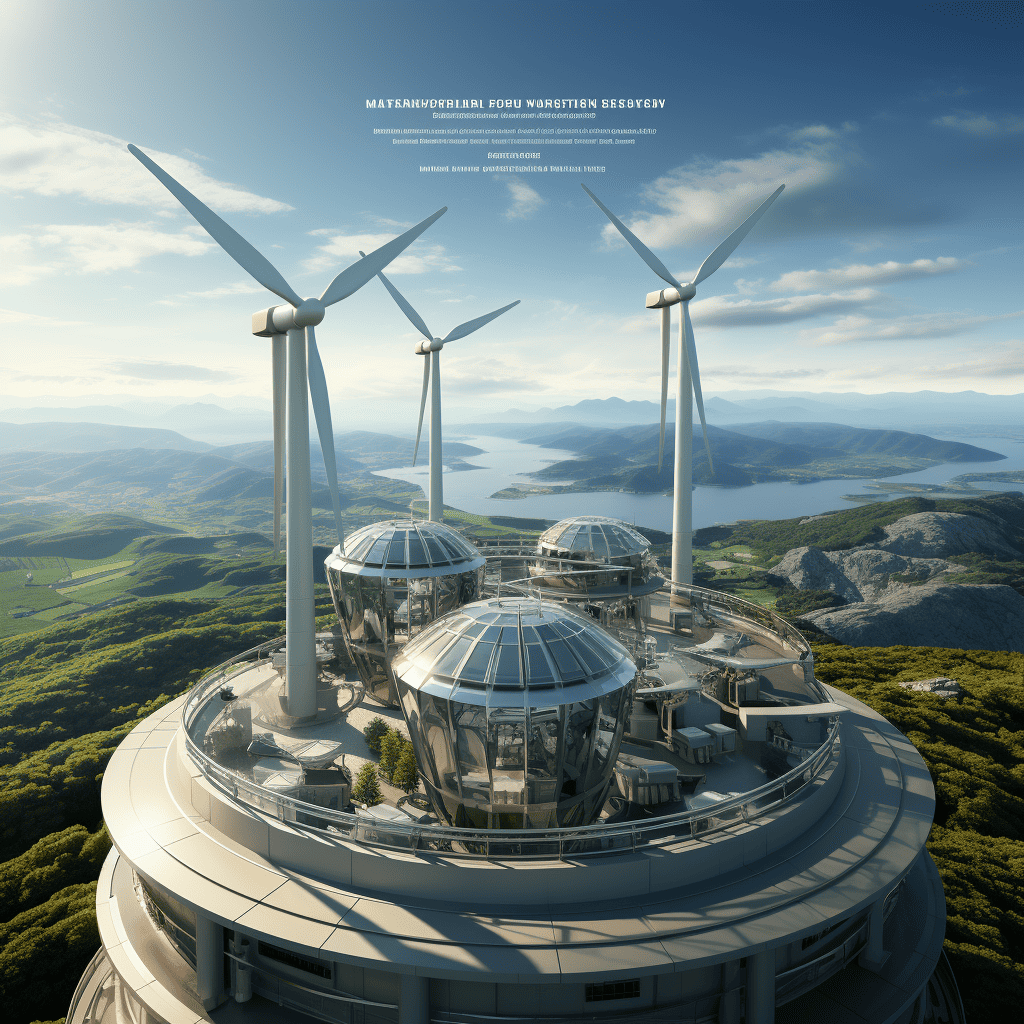
Advantages of Vertical Wind Turbines Over Horizontal Ones: An In-Depth Look at Their Unique Features and Benefits
When it comes to wind energy, vertical wind turbines (VWTs) offer several advantages over traditional horizontal wind turbines (HWTs). In this blog post, we will delve deeper into the key benefits of VWTs and explore their unique features that set them apart from HWTs.
Omnidirectional Wind Energy Capture
Darrieus turbine
One of the primary advantages of VWTs is their ability to capture wind energy from any direction, thanks to their unique design. Unlike HWTs, which rely on a yaw mechanism to adjust their orientation towards the wind, VWTs can operate efficiently without the need for complex systems. The most common type of VWT is the Darrieus turbine, which has an eggbeater-like design that allows it to capture wind energy from any direction.
Lower Noise and Visual Impact
Residential areas
VWTs are generally quieter than their horizontal counterparts, making them more suitable for urban and residential areas where noise pollution is a concern. The lower noise levels are attributed to the slower rotational speeds of the rotor blades and the absence of gearboxes. Additionally, VWTs have a smaller visual impact due to their slender and compact design, making them less obtrusive and more aesthetically pleasing compared to the large and imposing structures of HWTs. This makes VWTs an ideal choice for residential areas, where aesthetics and noise pollution are important considerations.
Easier Installation and Maintenance
Ground-based
Vertical wind turbines are easier to install and maintain than horizontal wind turbines due to their simpler design and smaller size. The components of VWTs are often located near ground level, making them more accessible for inspection, repair, and replacement. Moreover, the absence of yaw systems and gearboxes in VWTs reduces the risk of mechanical failures and minimizes maintenance costs. The lower installation height of VWTs also reduces the need for specialized equipment and personnel, further reducing installation costs. This makes VWTs an attractive option for ground-based installations, where accessibility and cost-effectiveness are important factors.
Safer for Wildlife and Aviation
Slower rotational speeds
Vertical wind turbines pose a lower risk to wildlife, particularly birds and bats, compared to horizontal wind turbines. The slower rotational speeds and smaller blade swept area of VWTs make them less likely to cause collisions and fatalities. Additionally, VWTs are less visible to birds and bats due to their smaller size and lack of movement at the nacelle. In terms of aviation safety, VWTs are less likely to interfere with radar systems and pose fewer hazards to low-flying aircraft due to their lower height and smaller rotor diameter. The slower rotational speeds of VWTs also make them safer for maintenance personnel, who are less likely to be injured by the blades.
Better Suited for Urban and Rooftop Installations
Turbulent wind conditions
Vertical wind turbines are better suited for urban and rooftop installations due to their smaller size, lower noise levels, and ability to operate in turbulent wind conditions. The compact design of VWTs allows them to be installed on rooftops, balconies, and other small spaces, making them an attractive option for residential and commercial buildings. Moreover, the omnidirectional capability of VWTs enables them to capture wind energy from any direction, making them more efficient in urban environments where wind patterns can be complex and variable. The ability of VWTs to operate in turbulent wind conditions also makes them an ideal choice for rooftop installations, where wind speeds can be highly variable.
Lower Turbulence and Wake Effect
Array spacing
Vertical wind turbines produce less turbulence and wake effect than horizontal wind turbines, which makes them an ideal choice for wind farms and other large-scale installations. The wake effect is the reduction in wind speed and increase in turbulence that occurs behind a wind turbine. VWTs produce less wake effect than HWTs, which means that they can be installed closer together without compromising their performance. This reduces the amount of land required for wind farms and increases their energy output.
Reduced Material Usage and Lower Costs
Blade materials
Vertical wind turbines use less material than horizontal wind turbines, which makes them more cost-effective to manufacture and install. The blades of VWTs are typically made of lightweight materials such as aluminum, carbon fiber, or fiberglass, which reduces their weight and cost compared to the heavier blades used in HWTs. Additionally, the simpler design of VWTs reduces the number of components required, further reducing their manufacturing and maintenance costs.
Suitable for Distributed Energy Systems
Microgrids
Vertical wind turbines are well-suited for distributed energy systems, where multiple small turbines are used to generate power for a local area or building. This decentralized approach to energy production can help reduce dependence on traditional power sources and increase energy resilience. VWTs are particularly suitable for microgrids, which are localized power grids that can operate independently of the larger grid. The ability of VWTs to operate in turbulent wind conditions and their lower noise levels make them an ideal choice for urban microgrids.
Other Types of Vertical Wind Turbines
Savonius turbine
In addition to the Darrieus turbine, there are other types of vertical wind turbines that offer unique advantages. The Savonius turbine, for example, features a curved, “S”-shaped design that is highly efficient in low wind speeds. Savonius turbines are often used in urban environments where wind speeds are typically lower than in rural areas. The unique design of Savonius turbines allows them to capture wind energy from any direction, making them an ideal choice for urban rooftop installations.
Giromill turbine
Another type of vertical wind turbine is the Giromill turbine, which features a helical design that allows it to capture wind energy from any direction. Giromill turbines are particularly suitable for offshore installations, where wind speeds are typically higher and more consistent than on land. The helical design of Giromill turbines reduces the loads on the turbine’s components, making them more durable and reliable in harsh offshore environments.
\Cycloturbine
The Cycloturbine is a type of vertical wind turbine that uses a series of cylindrical blades arranged in a circular pattern. The Cycloturbine is highly efficient in low wind speeds and is well-suited for urban environments where wind speeds are typically lower than in rural areas. The circular design of the Cycloturbine allows it to capture wind energy from any direction, making it an ideal choice for rooftop installations.
Vertical wind turbines offer several advantages over traditional horizontal wind turbines, including their ability to capture wind energy from any direction, lower noise and visual impact, easier installation and maintenance, reduced risk to wildlife and aviation, suitability for urban and rooftop installations, lower turbulence and wake effect, reduced material usage and lower costs, and suitability for distributed energy systems. Additionally, there are several types of vertical wind turbines that offer unique advantages, such as the Savonius turbine, Giromill turbine, and Cycloturbine. As the demand for renewable energy continues to grow, vertical wind turbines are likely to play an increasingly important role in meeting our energy needs in a sustainable and environmentally friendly manner.

Exploring the Benefits of Vertical Wind Turbines for Urban Areas: A Game-Changer for Renewable Energy Generation
As urban areas continue to expand, finding sustainable and efficient ways to generate energy becomes increasingly important. **Vertical wind turbines (VWTs)** offer a viable and innovative solution to the challenges of renewable energy generation in urban environments. Unlike traditional wind turbines, VWTs have a compact design and the ability to capture wind energy from any direction, making them suitable for installation on rooftops, balconies, and other small spaces. Moreover, their lower noise levels and visual impact make them more acceptable to residents and city planners.
Energy Generation in Urban Environments
VWTs can generate power even in turbulent wind conditions, making them an attractive option for urban areas where wind patterns are complex. Their compact design allows for installation in small spaces, making them ideal for urban environments where space is limited. By harnessing wind energy, VWTs can significantly contribute to the energy needs of urban areas, reducing dependence on fossil fuels and lowering greenhouse gas emissions.
Reduced Noise Pollution
Noise pollution is a significant concern in urban areas, where traffic, construction, and other sources of noise can have detrimental effects on human health and well-being. VWTs produce less noise than horizontal wind turbines due to their slower rotational speeds and smaller blade swept area. This reduced noise pollution makes VWTs a more attractive option for urban environments, where noise levels are already high. Moreover, the quieter operation of VWTs minimizes disturbance to wildlife and contributes to a more harmonious coexistence between humans and nature.
Lower Visual Impact
Urban areas are characterized by dense populations, tall buildings, and limited green spaces. The visual impact of renewable energy installations is, therefore, an important consideration in urban planning. VWTs have a smaller visual footprint than horizontal wind turbines due to their slender and compact design. This reduced visual impact makes VWTs more acceptable to residents and city planners, who are often concerned about the aesthetic implications of renewable energy installations. Moreover, the absence of large rotating blades in VWTs reduces the risk of bird collisions and minimizes the visual disturbance to wildlife.
Improved Energy Security
Energy security is a critical concern for urban areas, where reliable and affordable energy is essential for economic growth and social development. VWTs can contribute to improved energy security by providing a decentralized and distributed source of renewable energy. The compact design and modular nature of VWTs enable them to be installed close to the point of use, reducing transmission losses and improving the resilience of the energy system. Moreover, the ability of VWTs to operate in turbulent wind conditions and at lower wind speeds makes them more reliable and efficient in urban environments, where wind patterns can be complex and variable.
Promoting Sustainable Urban Development
Sustainable urban development is a key priority for cities around the world, as they seek to reduce their carbon footprint, improve air quality, and enhance the quality of life for their residents. VWTs can contribute to sustainable urban development by providing a clean and renewable source of energy that reduces greenhouse gas emissions and dependence on fossil fuels. Moreover, the installation of VWTs on buildings and other structures can contribute to the creation of green spaces and the improvement of urban aesthetics. By promoting sustainable urban development, cities can enhance their competitiveness, attractiveness, and livability, while also contributing to the global effort to address climate change.
Energy Efficiency and Cost-Effectiveness
VWTs offer significant advantages in terms of energy efficiency and cost-effectiveness compared to traditional wind turbines. Their compact design allows for installation in small spaces, reducing the need for land acquisition and minimizing the impact on the natural environment. Moreover, the ability of VWTs to operate in turbulent wind conditions and at lower wind speeds makes them more efficient in urban environments, where wind patterns can be complex and variable. Additionally, the lower maintenance costs associated with VWTs make them a cost-effective option for renewable energy generation in urban areas.
Exploring the Benefits of Vertical Wind Turbines for Urban Areas: A Game-Changer for Renewable Energy Generation
As urban areas continue to expand, finding sustainable and efficient ways to generate energy becomes increasingly important. **Vertical wind turbines (VWTs)** offer a viable and innovative solution to the challenges of renewable energy generation in urban environments. Unlike traditional wind turbines, VWTs have a compact design and the ability to capture wind energy from any direction, making them suitable for installation on rooftops, balconies, and other small spaces. Moreover, their lower noise levels and visual impact make them more acceptable to residents and city planners.
Energy Generation in Urban Environments
VWTs can generate power even in turbulent wind conditions, making them an attractive option for urban areas where wind patterns are complex. Their compact design allows for installation in small spaces, making them ideal for urban environments where space is limited. By harnessing wind energy, VWTs can significantly contribute to the energy needs of urban areas, reducing dependence on fossil fuels and lowering greenhouse gas emissions.
Reduced Noise Pollution
Noise pollution is a significant concern in urban areas, where traffic, construction, and other sources of noise can have detrimental effects on human health and well-being. VWTs produce less noise than horizontal wind turbines due to their slower rotational speeds and smaller blade swept area. This reduced noise pollution makes VWTs a more attractive option for urban environments, where noise levels are already high. Moreover, the quieter operation of VWTs minimizes disturbance to wildlife and contributes to a more harmonious coexistence between humans and nature.
Lower Visual Impact
Urban areas are characterized by dense populations, tall buildings, and limited green spaces. The visual impact of renewable energy installations is, therefore, an important consideration in urban planning. VWTs have a smaller visual footprint than horizontal wind turbines due to their slender and compact design. This reduced visual impact makes VWTs more acceptable to residents and city planners, who are often concerned about the aesthetic implications of renewable energy installations. Moreover, the absence of large rotating blades in VWTs reduces the risk of bird collisions and minimizes the visual disturbance to wildlife.
Improved Energy Security
Energy security is a critical concern for urban areas, where reliable and affordable energy is essential for economic growth and social development. VWTs can contribute to improved energy security by providing a decentralized and distributed source of renewable energy. The compact design and modular nature of VWTs enable them to be installed close to the point of use, reducing transmission losses and improving the resilience of the energy system. Moreover, the ability of VWTs to operate in turbulent wind conditions and at lower wind speeds makes them more reliable and efficient in urban environments, where wind patterns can be complex and variable.
Promoting Sustainable Urban Development
Sustainable urban development is a key priority for cities around the world, as they seek to reduce their carbon footprint, improve air quality, and enhance the quality of life for their residents. VWTs can contribute to sustainable urban development by providing a clean and renewable source of energy that reduces greenhouse gas emissions and dependence on fossil fuels. Moreover, the installation of VWTs on buildings and other structures can contribute to the creation of green spaces and the improvement of urban aesthetics. By promoting sustainable urban development, cities can enhance their competitiveness, attractiveness, and livability, while also contributing to the global effort to address climate change.
Energy Efficiency and Cost-Effectiveness
VWTs offer significant advantages in terms of energy efficiency and cost-effectiveness compared to traditional wind turbines. Their compact design allows for installation in small spaces, reducing the need for land acquisition and minimizing the impact on the natural environment. Moreover, the ability of VWTs to operate in turbulent wind conditions and at lower wind speeds makes them more efficient in urban environments, where wind patterns can be complex and variable. Additionally, the lower maintenance costs associated with VWTs make them a cost-effective option for renewable energy generation in urban areas.


