
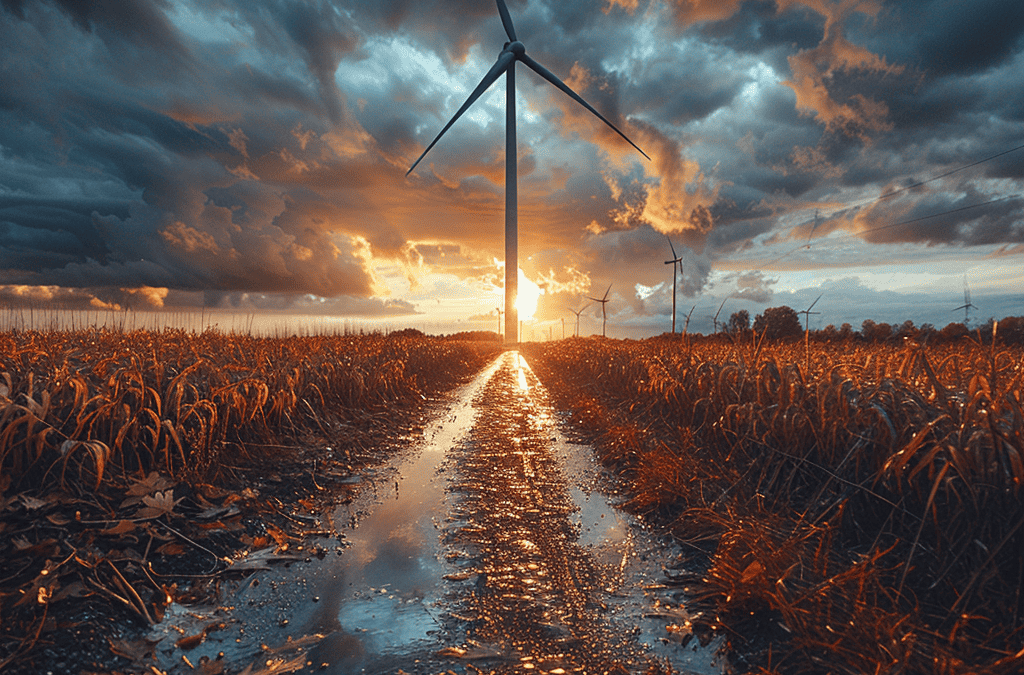

Sure! Here’s an expanded version of the blog post on wind energy:
—
1. Harnessing the Power of Wind: An Introduction to Wind Energy
Wind energy is a renewable source of power that harnesses the natural kinetic energy of the wind to generate electricity. As the wind blows, it turns the blades of a wind turbine, which spins a generator to produce electricity. This form of energy is environmentally friendly, as it produces no greenhouse gas emissions or harmful pollutants.
Understanding Wind Energy: What it is and How it Works
Wind energy works by converting the kinetic energy of the wind into mechanical energy, which is then converted into electrical energy. This is accomplished using a wind turbine, which consists of a rotor, a generator, and a tower. The rotor is made up of three or more blades that are attached to a hub. When the wind blows, it turns the blades, which causes the hub to rotate. This rotation is then transferred to the generator, which produces electricity.
Wind farms, which are large collections of wind turbines, are often used to generate electricity on a larger scale. The electricity produced by a wind farm is then transmitted to the power grid and distributed to homes and businesses.
The History of Wind Energy: From Ancient Times to Modern Day
The use of wind energy dates back thousands of years, with the earliest known windmills used for grinding grains and pumping water. In the modern era, wind energy began to gain traction in the 1970s as a response to the oil crisis and growing concerns about the environment.
Today, wind energy is a rapidly growing industry, with more than 650 GW of installed capacity worldwide. This is equivalent to the power generated by more than 650 large nuclear power plants.
The Benefits of Wind Energy: Economic, Environmental, and Social
Wind energy offers numerous benefits, including reduced dependence on fossil fuels, lower greenhouse gas emissions, and created jobs in the renewable energy sector. Additionally, wind energy is a cost-effective source of power, with costs continuing to decline as technology advances.
Wind energy also provides a stable source of power, as it is not subject to the same price volatility as fossil fuels. In fact, wind energy is now the cheapest source of new electricity in many parts of the world.
Furthermore, wind energy is a scalable source of power, meaning that it can be easily increased or decreased to meet changing demand. This is in contrast to traditional power plants, which are often large and inflexible.
The Challenges of Wind Energy: Environmental and Technical
While wind energy offers many benefits, there are also challenges that must be addressed. Environmental concerns include the potential impact on wildlife, noise pollution, and visual impact on the landscape. Technical challenges include the need for backup power sources, as wind energy is an intermittent source of power, and the need for reliable and efficient wind turbine technology.
However, many of these challenges are being addressed through advances in technology and changes in policy. For example, new wind turbine designs are being developed to reduce the impact on wildlife and the environment, and energy storage technologies are being developed to address the intermittency of wind energy.
The Future of Wind Energy: Advancements and Opportunities
Despite these challenges, the future of wind energy looks bright. Advancements in technology are leading to more efficient and cost-effective wind turbines, and innovations such as offshore wind farms offer new opportunities for growth. Additionally, as more countries commit to reducing their greenhouse gas emissions, the demand for renewable sources of power like wind energy is expected to continue to grow.
In fact, the International Energy Agency (IEA) predicts that wind energy could supply up to 30% of the world’s electricity by 2050, up from just 4% today. This would require significant investment in wind energy infrastructure, but the benefits would be substantial, including reduced greenhouse gas emissions, improved energy security, and job creation.
Overall, wind energy offers a promising solution to the world’s energy needs, providing a clean, renewable, and cost-effective source of power. As technology continues to advance and more countries invest in renewable energy, the future of wind energy looks bright.
—
Here are some potential subtopics that could be expanded on in the blog post:
* Types of wind turbines: horizontal axis vs. vertical axis, onshore vs. offshore
* Energy storage solutions for wind energy: batteries, pumped hydro storage, compressed air energy storage
* Wind energy and the job market: the number of jobs created by the wind energy industry and the skills required for those jobs
* Environmental impact assessments for wind energy projects: how they are conducted and what they entail
* Comparing wind energy to other renewable energy sources: advantages and disadvantages of wind energy compared to solar, hydro, and geothermal energy.
By including these subtopics, the blog post could provide a more comprehensive overview of wind energy and its role in the global energy landscape.

Sure, I can expand on the blog post titled ‘Wind Energy’ as follows:
1. Harnessing the Power of Wind: An Introduction to Wind Energy
Wind energy is a clean, renewable, and cost-effective source of power that harnesses the natural kinetic energy of the wind to generate electricity. Unlike traditional power sources that rely on burning fossil fuels, wind energy produces no greenhouse gas emissions or harmful pollutants, making it an environmentally friendly alternative. As the world looks to reduce its carbon footprint and transition to a more sustainable energy future, wind energy is becoming an increasingly attractive option.
1. Understanding Wind Energy: What it is and How it Works
Wind energy works by converting the kinetic energy of the wind into mechanical energy, which is then converted into electrical energy. This is accomplished using a wind turbine, which consists of a rotor, a generator, and a tower. The rotor is made up of three or more blades that are attached to a hub. When the wind blows, it turns the blades, which causes the hub to rotate. This rotation is then transferred to the generator, which produces electricity.
Wind farms, which are large collections of wind turbines, are often used to generate electricity on a larger scale. The electricity produced by a wind farm is then transmitted to the power grid and distributed to homes and businesses.
1. The History of Wind Energy: From Ancient Times to Modern Day
The use of wind energy dates back thousands of years, with the earliest known windmills used for grinding grains and pumping water. In the modern era, wind energy began to gain traction in the 1970s as a response to the oil crisis and growing concerns about the environment.
Today, wind energy is a rapidly growing industry, with more than 650 GW of installed capacity worldwide. This is equivalent to the power generated by more than 650 large nuclear power plants.
1. The Benefits of Wind Energy: Economic, Environmental, and Social
Wind energy offers numerous benefits, including:
* Reduced dependence on fossil fuels: Wind energy provides a clean and renewable alternative to traditional power sources that rely on burning fossil fuels.
* Lower greenhouse gas emissions: Wind energy produces no greenhouse gas emissions or harmful pollutants, making it an environmentally friendly alternative to traditional power sources.
* Created jobs in the renewable energy sector: The wind energy industry is creating jobs and driving economic growth in communities around the world.
* Cost-effective source of power: Wind energy is now the cheapest source of new electricity in many parts of the world, making it a cost-effective alternative to traditional power sources.
* Stable source of power: Wind energy is not subject to the same price volatility as fossil fuels, making it a stable source of power.
* Scalable source of power: Wind energy is a scalable source of power, meaning that it can be easily increased or decreased to meet changing demand.
1. The Challenges of Wind Energy: Environmental and Technical
While wind energy offers many benefits, there are also challenges that must be addressed. These include:
* Potential impact on wildlife: Wind turbines can pose a risk to birds and bats, which can collide with the blades or be displaced from their habitats.
* Noise pollution: Wind turbines can produce noise, which can be a concern for nearby communities.
* Visual impact on the landscape: Wind turbines can alter the visual landscape, which can be a concern for some communities.
* Intermittent source of power: Wind energy is an intermittent source of power, meaning that it is not always available when it is needed.
* Need for backup power sources: Wind energy requires backup power sources to ensure a reliable supply of electricity.
* Need for reliable and efficient wind turbine technology: Wind turbines must be reliable and efficient to ensure that they can generate electricity effectively.
However, many of these challenges are being addressed through advances in technology and changes in policy. For example, new wind turbine designs are being developed to reduce the impact on wildlife and the environment, and energy storage technologies are being developed to address the intermittency of wind energy.
1. The Future of Wind Energy: Advancements and Opportunities
Despite these challenges, the future of wind energy looks bright. Advancements in technology are leading to more efficient and cost-effective wind turbines, and innovations such as offshore wind farms offer new opportunities for growth. Additionally, as more countries commit to reducing their greenhouse gas emissions, the demand for renewable sources of power like wind energy is expected to continue to grow.
In fact, the International Energy Agency (IEA) predicts that wind energy could supply up to 30% of the world’s electricity by 2050, up from just 4% today. This would require significant investment in wind energy infrastructure, but the benefits would be substantial, including reduced greenhouse gas emissions, improved energy security, and job creation.
Overall, wind energy offers a promising solution to the world’s energy needs, providing a clean, renewable, and cost-effective source of power. As technology continues to advance and more countries invest in renewable energy, the future of wind energy looks bright.
Some potential sub-topics that could be expanded upon in the blog post include:
* The different types of wind turbines and their advantages and disadvantages
* The environmental impact of wind energy, including its effects on wildlife, noise pollution, and visual impact on the landscape
* The economic benefits of wind energy, including job creation and economic growth in communities
* The technical challenges of wind energy, including the need for backup power sources and energy storage technologies
* The future of wind energy, including advancements in technology and the potential for offshore wind farms.

Sure! Here’s an expanded version of the blog post:
—
1. Harnessing the Power of Wind: An Introduction to Wind Energy
Wind energy is a renewable source of power that harnesses the natural kinetic energy of the wind to generate electricity. As the wind blows, it turns the blades of a wind turbine, which spins a generator to produce electricity. This form of energy is environmentally friendly, as it produces no greenhouse gas emissions or harmful pollutants.
Wind energy is becoming an increasingly popular source of power around the world due to its many benefits. In this article, we’ll explore the history of wind energy, how it works, its benefits, challenges, and future opportunities.
1. Understanding Wind Energy: What it is and How it Works
Wind energy works by converting the kinetic energy of the wind into mechanical energy, which is then converted into electrical energy. This is accomplished using a wind turbine, which consists of a rotor, a generator, and a tower. The rotor is made up of three or more blades that are attached to a hub. When the wind blows, it turns the blades, which causes the hub to rotate. This rotation is then transferred to the generator, which produces electricity.
The amount of electricity produced by a wind turbine depends on the speed and consistency of the wind. Wind farms, which are large collections of wind turbines, are often used to generate electricity on a larger scale. The electricity produced by a wind farm is then transmitted to the power grid and distributed to homes and businesses.
1. The History of Wind Energy: From Ancient Times to Modern Day
The use of wind energy dates back thousands of years, with the earliest known windmills used for grinding grains and pumping water. In the modern era, wind energy began to gain traction in the 1970s as a response to the oil crisis and growing concerns about the environment.
Today, wind energy is a rapidly growing industry, with more than 650 GW of installed capacity worldwide. This is equivalent to the power generated by more than 650 large nuclear power plants.
1. The Benefits of Wind Energy: Economic, Environmental, and Social
Wind energy offers numerous benefits, including reduced dependence on fossil fuels, lower greenhouse gas emissions, and created jobs in the renewable energy sector. Additionally, wind energy is a cost-effective source of power, with costs continuing to decline as technology advances.
Wind energy also provides a stable source of power, as it is not subject to the same price volatility as fossil fuels. In fact, wind energy is now the cheapest source of new electricity in many parts of the world.
Furthermore, wind energy is a scalable source of power, meaning that it can be easily increased or decreased to meet changing demand. This is in contrast to traditional power plants, which are often large and inflexible.
1. The Challenges of Wind Energy: Environmental and Technical
While wind energy offers many benefits, there are also challenges that must be addressed. Environmental concerns include the potential impact on wildlife, noise pollution, and visual impact on the landscape. Technical challenges include the need for backup power sources, as wind energy is an intermittent source of power, and the need for reliable and efficient wind turbine technology.
However, many of these challenges are being addressed through advances in technology and changes in policy. For example, new wind turbine designs are being developed to reduce the impact on wildlife and the environment, and energy storage technologies are being developed to address the intermittency of wind energy.
1. The Future of Wind Energy: Advancements and Opportunities
Despite these challenges, the future of wind energy looks bright. Advancements in technology are leading to more efficient and cost-effective wind turbines, and innovations such as offshore wind farms offer new opportunities for growth. Additionally, as more countries commit to reducing their greenhouse gas emissions, the demand for renewable sources of power like wind energy is expected to continue to grow.
In fact, the International Energy Agency (IEA) predicts that wind energy could supply up to 30% of the world’s electricity by 2050, up from just 4% today. This would require significant investment in wind energy infrastructure, but the benefits would be substantial, including reduced greenhouse gas emissions, improved energy security, and job creation.
1. Expanding on the Benefits of Wind Energy
The benefits of wind energy are numerous and wide-ranging. Here are some additional benefits to consider:
* Wind energy is a renewable and sustainable source of power that can help reduce our reliance on finite fossil fuels.
* Wind energy can help diversify our energy mix and reduce our dependence on a single source of power.
* Wind energy can help create jobs and stimulate economic growth, particularly in rural areas where wind farms are often located.
* Wind energy can help reduce energy costs for consumers by providing a cost-effective source of power.
* Wind energy can help improve energy security by providing a domestic source of power that is not subject to geopolitical risks.
1. Addressing the Challenges of Wind Energy
While wind energy offers many benefits, there are also challenges that must be addressed. Here are some ways to address these challenges:
* Wildlife impact: Wind turbines can pose a risk to birds and bats, particularly during migration. Solutions include siting wind farms away from migratory pathways and using radar technology to detect and deter birds and bats from approaching wind turbines.
* Noise pollution: Wind turbines can generate noise, particularly during periods of high wind. Solutions include using quieter turbine designs and siting wind farms away from populated areas.
* Visual impact: Wind turbines can be seen as a visual intrusion in natural landscapes. Solutions include using smaller, less intrusive turbines and siting wind farms in areas where they will have minimal impact on the landscape.
* Intermittency: Wind energy is an intermittent source of power, meaning that it is not always available when it is needed. Solutions include using energy storage technologies, such as batteries, to store excess energy for use when the wind is not blowing.
* Technical challenges: Wind turbines require regular maintenance and repair to ensure they are operating efficiently. Solutions include using remote monitoring and predictive maintenance technologies to identify and address issues before they become major problems.
1. The Future of Wind Energy: Opportunities and Innovations
The future of wind energy looks bright, with many opportunities and innovations on the horizon. Here are some areas to watch:
* Offshore wind: Offshore wind farms are located in the ocean and can take advantage of stronger and more consistent winds. The potential for offshore wind energy is enormous, and many countries are investing heavily in this technology.
* Distributed wind: Distributed wind energy refers to small-scale wind turbines that are used to power individual homes, businesses, and communities. This technology is becoming increasingly popular, particularly in rural areas where access to the power grid is limited.
* Advanced materials: New materials, such as carbon fiber and advanced composites, are being developed to make wind turbine blades lighter, stronger, and more efficient.
* Energy storage: Energy storage technologies, such as batteries and flywheels, are being developed to store excess energy from wind turbines for use when the wind is not blowing.
* Artificial intelligence: Artificial intelligence and machine learning are being used to optimize wind turbine performance, reduce maintenance costs, and improve energy forecasting.
In conclusion, wind energy offers a clean, renewable, and cost-effective source of power that can help address many of the challenges facing our energy system. While there are challenges to be addressed, advances in technology and policy are making wind energy an increasingly attractive option for many countries around the world. With continued investment and innovation, the future of wind energy looks bright.

Sure, I can expand on the blog post “Harnessing the Power of Wind: An Introduction to Wind Energy” for you. Here’s a possible expansion:
—
1. Harnessing the Power of Wind: An Introduction to Wind Energy
Wind energy is a renewable source of power that harnesses the natural kinetic energy of the wind to generate electricity. As the wind blows, it turns the blades of a wind turbine, which spins a generator to produce electricity. This form of energy is environmentally friendly, as it produces no greenhouse gas emissions or harmful pollutants.
1.1 Understanding Wind Energy: What it is and How it Works
Wind energy works by converting the kinetic energy of the wind into mechanical energy, which is then converted into electrical energy. This is accomplished using a wind turbine, which consists of a rotor, a generator, and a tower. The rotor is made up of three or more blades that are attached to a hub. When the wind blows, it turns the blades, which causes the hub to rotate. This rotation is then transferred to the generator, which produces electricity.
Wind farms, which are large collections of wind turbines, are often used to generate electricity on a larger scale. The electricity produced by a wind farm is then transmitted to the power grid and distributed to homes and businesses.
1.2 The History of Wind Energy: From Ancient Times to Modern Day
The use of wind energy dates back thousands of years, with the earliest known windmills used for grinding grains and pumping water. In the modern era, wind energy began to gain traction in the 1970s as a response to the oil crisis and growing concerns about the environment.
Today, wind energy is a rapidly growing industry, with more than 650 GW of installed capacity worldwide. This is equivalent to the power generated by more than 650 large nuclear power plants.
1.3 The Benefits of Wind Energy: Economic, Environmental, and Social
Wind energy offers numerous benefits, including reduced dependence on fossil fuels, lower greenhouse gas emissions, and created jobs in the renewable energy sector. Additionally, wind energy is a cost-effective source of power, with costs continuing to decline as technology advances.
Wind energy also provides a stable source of power, as it is not subject to the same price volatility as fossil fuels. In fact, wind energy is now the cheapest source of new electricity in many parts of the world.
Furthermore, wind energy is a scalable source of power, meaning that it can be easily increased or decreased to meet changing demand. This is in contrast to traditional power plants, which are often large and inflexible.
1.4 The Challenges of Wind Energy: Environmental and Technical
While wind energy offers many benefits, there are also challenges that must be addressed. Environmental concerns include the potential impact on wildlife, noise pollution, and visual impact on the landscape. Technical challenges include the need for backup power sources, as wind energy is an intermittent source of power, and the need for reliable and efficient wind turbine technology.
However, many of these challenges are being addressed through advances in technology and changes in policy. For example, new wind turbine designs are being developed to reduce the impact on wildlife and the environment, and energy storage technologies are being developed to address the intermittency of wind energy.
1.5 The Future of Wind Energy: Advancements and Opportunities
Despite these challenges, the future of wind energy looks bright. Advancements in technology are leading to more efficient and cost-effective wind turbines, and innovations such as offshore wind farms offer new opportunities for growth.
Offshore wind farms are located in the ocean, where wind speeds are typically higher and more consistent than on land. This makes offshore wind farms an attractive option for generating large amounts of electricity. However, offshore wind farms also present unique challenges, such as the need for specialized equipment to install and maintain turbines in deep water.
Another area of innovation in wind energy is the development of energy storage technologies. Energy storage is important because wind energy is an intermittent source of power, meaning that it is not always available when it is needed. By storing excess electricity generated by wind turbines during periods of high wind, energy storage systems can help ensure that electricity is available when demand is high.
1.6 Conclusion: Harnessing the Power of Wind for a Sustainable Future
Wind energy offers a promising solution to the world’s energy needs, providing a clean, renewable, and cost-effective source of power. As technology continues to advance and more countries invest in renewable energy, the future of wind energy looks bright.
However, it is important to address the challenges associated with wind energy, such as the need for backup power sources and the potential impact on wildlife and the environment. By working together to develop innovative solutions to these challenges, we can harness the power of wind to create a sustainable energy future for all.
Here are some possible subtopics that could be added to each section:
1.1 Understanding Wind Energy: What it is and How it Works
* How wind turbines work: an in-depth look at the components of a wind turbine and how they work together to generate electricity
* Types of wind turbines: an overview of the different types of wind turbines, including horizontal-axis and vertical-axis turbines
* Wind resource assessment: how wind speeds and patterns are measured to determine the feasibility of a wind energy project
1.2 The History of Wind Energy: From Ancient Times to Modern Day
* Early uses of wind energy: a brief history of how wind energy was used for milling and water pumping in ancient times
* The modern wind energy industry: a timeline of key events and developments in the wind energy industry, from the first wind turbine in 1888 to the present day
* Wind energy around the world: a look at the countries and regions that are leading the way in wind energy development and deployment
1.3 The Benefits of Wind Energy: Economic, Environmental, and Social
* Economic benefits of wind energy: how wind energy can create jobs, reduce energy costs, and stimulate economic development
* Environmental benefits of wind energy: how wind energy can reduce greenhouse gas emissions, air pollution, and water use compared to traditional fossil fuels
* Social benefits of wind energy: how wind energy can improve energy security, provide affordable electricity, and support community development
1.4 The Challenges of Wind Energy: Environmental and Technical
* Environmental impacts of wind energy: a look at the potential impacts of wind energy on wildlife, habitats, and landscapes, and how these impacts can be mitigated
* Technical challenges of wind energy: a discussion of the technical challenges associated with wind energy, such as intermittency, variability, and grid integration
* Policy and regulatory challenges of wind energy: an overview of the policy and regulatory challenges associated with wind energy, including permitting, zoning, and incentives
1.5 The Future of Wind Energy: Advancements and Opportunities
* Advances in wind turbine technology: a look at the latest innovations in wind turbine design and materials, including larger blades, advanced controls, and lighter materials
* Offshore wind energy: an overview of the potential of offshore wind energy, including the challenges and opportunities associated with developing wind farms in the ocean
* Energy storage and grid integration: a discussion of how energy storage technologies and grid integration strategies can help address the intermittency of wind energy and improve the reliability and resilience of the power grid
1.6 Conclusion: Harnessing the Power of Wind for a Sustainable Future
* Summary of key points: a recap of the main points covered in the article
* Call to action: a call to readers to support wind energy and take action to promote a sustainable energy future.Sure, I’d be happy to help you expand on that blog post about wind energy! Here’s a possible revised version:
—
**1. Harnessing the Power of Wind: An Introduction to Wind Energy**
**Wind energy** is a renewable source of power that harnesses the natural kinetic energy of the wind to generate electricity. As the wind blows, it turns the blades of a **wind turbine**, which spins a generator to produce electricity. This form of energy is environmentally friendly, as it produces no greenhouse gas emissions or harmful pollutants.
**Understanding Wind Energy: What it is and How it Works**
Wind energy works by converting the kinetic energy of the wind into mechanical energy, which is then converted into electrical energy. This is accomplished using a **wind turbine**, which consists of a rotor, a generator, and a tower. The rotor is made up of three or more blades that are attached to a hub. When the wind blows, it turns the blades, which causes the hub to rotate. This rotation is then transferred to the generator, which produces electricity.
**Wind farms**, which are large collections of wind turbines, are often used to generate electricity on a larger scale. The electricity produced by a wind farm is then transmitted to the power grid and distributed to homes and businesses.
**The History of Wind Energy: From Ancient Times to Modern Day**
The use of wind energy dates back thousands of years, with the earliest known windmills used for grinding grains and pumping water. In the modern era, wind energy began to gain traction in the 1970s as a response to the oil crisis and growing concerns about the environment.
Today, wind energy is a rapidly growing industry, with more than 650 GW of installed capacity worldwide. This is equivalent to the power generated by more than 650 large nuclear power plants.
**The Benefits of Wind Energy: Economic, Environmental, and Social**
Wind energy offers numerous benefits, including:
* Reduced dependence on fossil fuels: Wind energy is a renewable source of power that can help reduce dependence on fossil fuels, which are finite and contribute to climate change.
* Lower greenhouse gas emissions: Wind energy produces no greenhouse gas emissions, which can help reduce the overall carbon footprint of the energy sector.
* Created jobs in the renewable energy sector: The wind energy industry has created thousands of jobs in manufacturing, installation, and maintenance.
* Cost-effective source of power: Wind energy is now the cheapest source of new electricity in many parts of the world, making it a cost-effective source of power for consumers.
* Stable source of power: Wind energy is not subject to the same price volatility as fossil fuels, making it a more stable source of power.
* Scalable source of power: Wind energy is a scalable source of power, meaning that it can be easily increased or decreased to meet changing demand. This is in contrast to traditional power plants, which are often large and inflexible.
**The Challenges of Wind Energy: Environmental and Technical**
While wind energy offers many benefits, there are also challenges that must be addressed. Environmental concerns include the potential impact on wildlife, noise pollution, and visual impact on the landscape. Technical challenges include the need for backup power sources, as wind energy is an intermittent source of power, and the need for reliable and efficient wind turbine technology.
However, many of these challenges are being addressed through advances in technology and changes in policy. For example, new wind turbine designs are being developed to reduce the impact on wildlife and the environment, and energy storage technologies are being developed to address the intermittency of wind energy.
**The Future of Wind Energy: Advancements and Opportunities**
Despite these challenges, the future of wind energy looks bright. Advancements in technology are leading to more efficient and cost-effective wind turbines, and innovations such as offshore wind farms offer new opportunities for growth. Additionally, as more countries commit to reducing their greenhouse gas emissions, the demand for renewable sources of power like wind energy is expected to continue to grow.
In fact, the International Energy Agency (IEA) predicts that wind energy could supply up to 30% of the world’s electricity by 2050, up from just 4% today. This would require significant investment in wind energy infrastructure, but the benefits would be substantial, including reduced greenhouse gas emissions, improved energy security, and job creation.
**Conclusion**
Overall, wind energy offers a promising solution to the world’s energy needs, providing a clean, renewable, and cost-effective source of power. As technology continues to advance and more countries invest in renewable energy, the future of wind energy looks bright.
—
Here are some possible subtopics you could expand on in each section:
**Understanding Wind Energy**
* How wind turbines work: This section could go into more detail about the different components of a wind turbine and how they work together to generate electricity.
* Types of wind turbines: There are several types of wind turbines, including horizontal-axis and vertical-axis turbines. This section could explain the differences between them and their advantages and disadvantages.
* Offshore wind energy: This section could discuss the benefits and challenges of offshore wind energy, including the potential for higher wind speeds and the need for specialized equipment and infrastructure.
**The History of Wind Energy**
* Early uses of wind energy: This section could explore the history of wind energy in more detail, including its use in ancient civilizations and the development of the first windmills.
* The modern wind energy industry: This section could discuss the growth of the wind energy industry in the 20th and 21st centuries, including the development of modern wind turbines and the expansion of wind energy capacity around the world.
**The Benefits of Wind Energy**
* Economic benefits: This section could discuss the economic benefits of wind energy in more detail, including job creation, cost savings for consumers, and the potential for economic development in rural areas.
* Environmental benefits: This section could discuss the environmental benefits of wind energy in more detail, including its potential to reduce greenhouse gas emissions and improve air quality.
* Social benefits: This section could discuss the social benefits of wind energy, including its potential to provide energy independence and improve energy security.
**The Challenges of Wind Energy**
* Environmental challenges: This section could discuss the environmental challenges of wind energy in more detail, including its potential impact on wildlife, noise pollution, and visual impact on the landscape.
* Technical challenges: This section could discuss the technical challenges of wind energy in more detail, including the need for backup power sources, the intermittency of wind energy, and the need for reliable and efficient wind turbine technology.
* Policy challenges: This section could discuss the policy challenges of wind energy, including the need for supportive policies and regulations to promote the development of wind energy infrastructure.
**The Future of Wind Energy**
* Emerging technologies: This section could discuss emerging technologies in wind energy, including advances in energy storage, blade design, and materials science.
* Global trends: This section could discuss global trends in wind energy, including the growth of wind energy capacity in different regions of the world and the potential for wind energy to contribute to global climate goals.
* Investment opportunities: This section could discuss investment opportunities in wind energy, including the potential for returns on investment and the risks and challenges associated with investing in wind energy infrastructure.Sure, I’d be happy to help you expand on this blog post about wind energy! Here’s a revised version with additional information and subheadings:
—
**Harnessing the Power of Wind: An Introduction to Wind Energy**
**What is Wind Energy and How Does it Work?**
Wind energy is a renewable source of power that harnesses the natural kinetic energy of the wind to generate electricity. As the wind blows, it turns the blades of a wind turbine, which spins a generator to produce electricity. This form of energy is environmentally friendly, as it produces no greenhouse gas emissions or harmful pollutants.
**The Components of a Wind Turbine**
A wind turbine consists of a rotor, a generator, and a tower. The rotor is made up of three or more blades that are attached to a hub. When the wind blows, it turns the blades, which causes the hub to rotate. This rotation is then transferred to the generator, which produces electricity.
**Wind Farms and the Power Grid**
Wind farms, which are large collections of wind turbines, are often used to generate electricity on a larger scale. The electricity produced by a wind farm is then transmitted to the power grid and distributed to homes and businesses.
**The History of Wind Energy**
The use of wind energy dates back thousands of years, with the earliest known windmills used for grinding grains and pumping water. In the modern era, wind energy began to gain traction in the 1970s as a response to the oil crisis and growing concerns about the environment.
Today, wind energy is a rapidly growing industry, with more than 650 GW of installed capacity worldwide. This is equivalent to the power generated by more than 650 large nuclear power plants.
**The Benefits of Wind Energy**
Wind energy offers numerous benefits, including:
* **Reduced Dependence on Fossil Fuels:** Wind energy can help reduce our reliance on fossil fuels, which are finite and contribute to climate change.
* **Lower Greenhouse Gas Emissions:** Wind energy produces no greenhouse gas emissions or harmful pollutants, making it a cleaner alternative to fossil fuels.
* **Job Creation:** The wind energy industry has created thousands of jobs in manufacturing, installation, maintenance, and related fields.
* **Cost-Effective Power:** Wind energy is now the cheapest source of new electricity in many parts of the world, making it a cost-effective source of power for consumers.
* **Stable Power:** Wind energy is not subject to the same price volatility as fossil fuels, providing a stable source of power for the grid.
* **Scalable Power:** Wind energy is a scalable source of power, meaning that it can be easily increased or decreased to meet changing demand. This is in contrast to traditional power plants, which are often large and inflexible.
**The Challenges of Wind Energy**
While wind energy offers many benefits, there are also challenges that must be addressed. These include:
* **Environmental Concerns:** Wind turbines can have an impact on wildlife, particularly birds and bats. Noise pollution and visual impact on the landscape are also concerns.
* **Technical Challenges:** Wind energy is an intermittent source of power, meaning that it is not always available when it is needed. Energy storage technologies are being developed to address this challenge.
**Advances in Wind Energy Technology**
Despite these challenges, the future of wind energy looks bright. Advancements in technology are leading to more efficient and cost-effective wind turbines, and innovations such as offshore wind farms offer new opportunities for growth.
One exciting area of research is the development of new wind turbine designs that can reduce the impact on wildlife and the environment. For example, some turbines are being designed with blades that are more bird-friendly and less likely to cause collisions.
**Energy Storage Technologies**
Another area of research is the development of energy storage technologies to address the intermittency of wind energy. Energy can be stored during periods of high wind and released during periods of low wind or high demand.
One promising energy storage technology is batteries. Lithium-ion batteries, in particular, are becoming increasingly popular due to their high energy density, long life span, and declining cost.
**The Future of Wind Energy**
The International Energy Agency (IEA) predicts that wind energy could supply up to 30% of the world’s electricity by 2050, up from just 4% today. This would require significant investment in wind energy infrastructure, but the benefits would be substantial, including reduced greenhouse gas emissions, improved energy security, and job creation.
**Conclusion**
Overall, wind energy offers a promising solution to the world’s energy needs, providing a clean, renewable, and cost-effective source of power. As technology continues to advance and more countries invest in renewable energy, the future of wind energy looks bright.
—
I hope this expanded version helps! Let me know if you have any further questions or suggestions.Harnessing the Power of Wind: An Introduction to Wind Energy
Wind energy is a clean and renewable source of power that is becoming increasingly popular across the globe. By harnessing the natural kinetic energy of the wind, wind turbines generate electricity without producing harmful greenhouse gas emissions or pollutants. In this blog post, we will explore the basics of wind energy, its history, benefits, challenges, and the future outlook of this promising source of power.
Understanding Wind Energy: What it is and How it Works
Wind energy works by converting the kinetic energy of the wind into mechanical energy, which is then converted into electrical energy. This is accomplished using a wind turbine, which consists of a rotor, a generator, and a tower. The rotor is made up of three or more blades that are attached to a hub. When the wind blows, it turns the blades, which causes the hub to rotate. This rotation is then transferred to the generator, which produces electricity.
Wind farms, which are large collections of wind turbines, are often used to generate electricity on a larger scale. The electricity produced by a wind farm is then transmitted to the power grid and distributed to homes and businesses.
The History of Wind Energy: From Ancient Times to Modern Day
The use of wind energy dates back thousands of years, with the earliest known windmills used for grinding grains and pumping water. In the modern era, wind energy began to gain traction in the 1970s as a response to the oil crisis and growing concerns about the environment.
Today, wind energy is a rapidly growing industry, with more than 650 GW of installed capacity worldwide. This is equivalent to the power generated by more than 650 large nuclear power plants.
The Benefits of Wind Energy: Economic, Environmental, and Social
Wind energy offers numerous benefits, including reduced dependence on fossil fuels, lower greenhouse gas emissions, and job creation in the renewable energy sector. Additionally, wind energy is a cost-effective source of power, with costs continuing to decline as technology advances. In fact, wind energy is now the cheapest source of new electricity in many parts of the world.
Wind energy also provides a stable source of power, as it is not subject to the same price volatility as fossil fuels. Furthermore, wind energy is a scalable source of power, meaning that it can be easily increased or decreased to meet changing demand. This is in contrast to traditional power plants, which are often large and inflexible.
The Challenges of Wind Energy: Environmental and Technical
While wind energy offers many benefits, there are also challenges that must be addressed. Environmental concerns include the potential impact on wildlife, noise pollution, and visual impact on the landscape. Technical challenges include the need for backup power sources, as wind energy is an intermittent source of power, and the need for reliable and efficient wind turbine technology.
However, many of these challenges are being addressed through advances in technology and changes in policy. For example, new wind turbine designs are being developed to reduce the impact on wildlife and the environment, and energy storage technologies are being developed to address the intermittency of wind energy.
The Future of Wind Energy: Advancements and Opportunities
Despite these challenges, the future of wind energy looks bright. Advancements in technology are leading to more efficient and cost-effective wind turbines, and innovations such as offshore wind farms offer new opportunities for growth. Additionally, as more countries commit to reducing their greenhouse gas emissions, the demand for renewable sources of power like wind energy is expected to continue to grow.
In fact, the International Energy Agency (IEA) predicts that wind energy could supply up to 30% of the world’s electricity by 2050, up from just 4% today. This would require significant investment in wind energy infrastructure, but the benefits would be substantial, including reduced greenhouse gas emissions, improved energy security, and job creation.
Overall, wind energy offers a promising solution to the world’s energy needs, providing a clean, renewable, and cost-effective source of power. As technology continues to advance and more countries invest in renewable energy, the future of wind energy looks bright.
Expanding on Benefits of Wind Energy: Economic, Environmental, and Social
The economic benefits of wind energy are significant. Wind energy is now the cheapest source of new electricity in many parts of the world, and as costs continue to decline, it is becoming increasingly competitive with traditional sources of power. Additionally, wind energy creates jobs in the renewable energy sector, from manufacturing and installation to maintenance and operations.
The environmental benefits of wind energy are also substantial. Wind energy produces no greenhouse gas emissions or pollutants, and it uses significantly less water than traditional power plants. This makes wind energy an important part of efforts to address climate change and improve air and water quality.
Furthermore, wind energy has social benefits as well. By reducing dependence on fossil fuels, wind energy can help improve energy security and reduce the volatility of energy prices. Additionally, wind energy projects can provide economic benefits to local communities, including lease payments to landowners and tax revenues for local governments.
Expanding on The Challenges of Wind Energy: Environmental and Technical
While wind energy offers many benefits, there are also challenges that must be addressed. One of the primary environmental concerns is the potential impact on wildlife, particularly birds and bats. Wind turbines can pose a risk to these animals, and efforts are being made to minimize this risk through careful siting and design of wind farms.
Noise pollution is another environmental concern associated with wind energy. While modern wind turbines are quieter than older models, they can still produce noise that is noticeable to nearby communities. Efforts are being made to reduce noise levels through improved design and siting of wind farms.
Visual impact on the landscape is also a concern for some communities. Wind turbines can be large and visible from a distance, and some people feel that they detract from the natural beauty of the landscape. Careful siting and design can help minimize this impact, and many people feel that the benefits of wind energy outweigh the visual impact.
Technical challenges associated with wind energy include the need for backup power sources and the intermittency of wind power. Because wind energy is dependent on the availability of wind, it is not a consistent source of power. This means that backup power sources, such as natural gas or batteries, are needed to ensure a reliable supply of electricity. Energy storage technologies are being developed to address this challenge and make wind energy a more reliable source of power.
Expanding on The Future of Wind Energy: Advancements and Opportunities
Advancements in technology are leading to more efficient and cost-effective wind turbines. For example, new designs are being developed that use longer blades and taller towers to capture more wind energy. Additionally, advances in materials science are leading to lighter and stronger turbine components, which can reduce costs and improve performance.
Innovations such as offshore wind farms offer new opportunities for growth in the wind energy sector. Offshore wind farms can take advantage of stronger and more consistent winds, and they can be located further from shore to minimize visual impact. However, offshore wind farms also present unique challenges, such as the need for specialized equipment and infrastructure to install and maintain turbines in a marine environment.
As more countries commit to reducing their greenhouse gas emissions, the demand for renewable sources of power like wind energy is expected to continue to grow. This presents significant opportunities for the wind energy sector, both in terms of job creation and economic growth. However, it also requires significant investment in wind energy infrastructure, including transmission lines and energy storage technologies.
Conclusion
Wind energy offers a promising solution to the world’s energy needs, providing a clean, renewable, and cost-effective source of power. While there are challenges associated with wind energy, advances in technology and changes in policy are helping to address these challenges. As more countries invest in renewable energy, the future of wind energy looks bright, with significant opportunities for job creation, economic growth, and environmental benefits.Sure, here is an expanded version of the blog post titled “Wind Energy”:
2. The Benefits and Drawbacks of Wind Energy: A Comprehensive Analysis
Wind energy is a clean, renewable source of power that has gained significant attention in recent years. It offers numerous benefits, including reduced carbon emissions, job creation, and energy independence. However, like any form of energy, wind power also has its drawbacks. In this blog post, we will explore the benefits and drawbacks of wind energy in detail.
Environmental Benefits: Reduced Carbon Emissions and Improved Air Quality
One of the most significant advantages of wind energy is its positive impact on the environment. Unlike fossil fuels, wind energy is a clean, renewable source of power that produces no greenhouse gas emissions or harmful pollutants. By generating electricity from wind, we can significantly reduce our carbon footprint and improve air quality, which has numerous health benefits. According to the American Wind Energy Association (AWEA), the wind energy industry avoided 42 million metric tons of CO2 emissions in 2019 alone, which is equivalent to taking 9 million cars off the road.
Economic Benefits: Job Creation and Cost-Effective Energy
Wind energy also offers economic benefits, including job creation in the renewable energy sector. The International Renewable Energy Agency (IRENA) reports that the global wind energy industry employed more than 1.1 million people in 2018. As technology advances, wind energy is becoming increasingly cost-effective, making it an attractive option for both utilities and consumers. In fact, according to a report by Lazard, the levelized cost of energy (LCOE) for wind power is now cheaper than coal and gas in many parts of the world.
Social Benefits: Energy Independence and Rural Development
Wind energy can also provide social benefits, such as energy independence and rural development. By generating our own electricity from wind, we can reduce our dependence on foreign oil and other fossil fuels, enhancing our energy security. This can also lead to economic development in rural areas, where wind farms are often located. Wind energy can provide a new source of income for farmers and landowners, who can lease their land for wind turbines. According to the National Renewable Energy Laboratory (NREL), wind energy projects can provide significant economic benefits to local communities, including increased tax revenue and job creation.
Environmental Drawbacks: Impact on Wildlife and Noise Pollution
While wind energy offers many benefits, there are also environmental drawbacks that must be considered. One of the main concerns is the potential impact on wildlife, particularly birds and bats. Wind turbines can pose a threat to these animals, who may collide with the blades or be affected by changes in air pressure. According to the National Wind Coordinating Collaborative (NWCC), it is estimated that wind turbines kill between 140,000 and 500,000 birds in the United States each year. Additionally, wind turbines can produce noise pollution, which can be a nuisance for nearby residents. The AWEA recommends that wind turbines be located at least 1,500 feet away from homes to minimize noise impact.
Technical Drawbacks: Intermittency and Backup Power
There are also technical challenges associated with wind energy. One of the main issues is the intermittency of wind power, as wind speeds can vary greatly and are not always predictable. This means that wind energy may not be a reliable source of power, and backup power sources may be needed to ensure a stable supply of electricity. Additionally, the cost of backup power can add to the overall cost of wind energy. According to the U.S. Energy Information Administration (EIA), wind power has a capacity factor of about 35%, which means that it operates at only 35% of its maximum capacity over the course of a year. This is lower than the capacity factor of traditional fossil fuel power plants, which can operate at up to 90% of their maximum capacity. To address this issue, wind energy can be combined with other renewable energy sources, such as solar power, to provide a more reliable and sustainable energy supply.
Innovations in Wind Energy Technology
Despite the technical challenges associated with wind energy, there are many innovations in wind energy technology that are improving the efficiency and reliability of wind power. For example, advances in turbine design and materials are enabling wind turbines to operate at higher wind speeds and in more extreme weather conditions. Additionally, new technologies such as energy storage and demand response are being developed to address the intermittency of wind power and provide a more reliable and stable energy supply.
Conclusion: The Future of Wind Energy
In conclusion, wind energy offers numerous benefits, including reduced carbon emissions, job creation, and energy independence. However, there are also drawbacks, such as the potential impact on wildlife and the intermittency of wind power. With continued advancements in technology and careful planning, wind energy can be a valuable part of our energy mix. According to the Global Wind Energy Council (GWEC), the global wind energy market is expected to grow by more than 50% over the next five years, with new wind energy capacity being added in countries around the world. As we transition to a more sustainable and renewable energy future, wind energy will play an increasingly important role in powering our homes, businesses, and communities.Expanding on the Benefits and Drawbacks of Wind Energy:
2. The Benefits and Drawbacks of Wind Energy: A Comprehensive Analysis
Wind energy is an increasingly popular source of renewable energy that offers numerous benefits and drawbacks. In this blog post, we will explore the environmental, economic, social, and technical aspects of wind energy to provide a comprehensive analysis of its advantages and disadvantages.
Environmental Benefits: Reduced Carbon Emissions and Improved Air Quality
One of the primary benefits of wind energy is its positive impact on the environment. Unlike fossil fuels, wind energy is a clean, renewable source of power that produces no greenhouse gas emissions or harmful pollutants. By generating electricity from wind, we can significantly reduce our carbon footprint and improve air quality, which has numerous health benefits. According to the American Wind Energy Association (AWEA), the wind energy industry avoided 42 million metric tons of CO2 emissions in 2019 alone, which is equivalent to taking 9 million cars off the road. Additionally, wind energy requires no water for cooling, making it a more sustainable option than conventional power plants.
Economic Benefits: Job Creation and Cost-Effective Energy
Wind energy also offers economic benefits, including job creation in the renewable energy sector. The International Renewable Energy Agency (IRENA) reports that the global wind energy industry employed more than 1.1 million people in 2018. As technology advances, wind energy is becoming increasingly cost-effective, making it an attractive option for both utilities and consumers. In fact, according to a report by Lazard, the levelized cost of energy (LCOE) for wind power is now cheaper than coal and gas in many parts of the world. This cost-effectiveness is driving the growth of the wind energy market, which is expected to reach $126.9 billion by 2026.
Social Benefits: Energy Independence and Rural Development
Wind energy can also provide social benefits, such as energy independence and rural development. By generating our own electricity from wind, we can reduce our dependence on foreign oil and other fossil fuels, enhancing our energy security. This can also lead to economic development in rural areas, where wind farms are often located. Wind energy can provide a new source of income for farmers and landowners, who can lease their land for wind turbines. According to the National Renewable Energy Laboratory (NREL), wind energy projects can provide significant economic benefits to local communities, including increased tax revenue and job creation.
Environmental Drawbacks: Impact on Wildlife and Noise Pollution
While wind energy offers many benefits, there are also environmental drawbacks that must be considered. One of the main concerns is the potential impact on wildlife, particularly birds and bats. Wind turbines can pose a threat to these animals, who may collide with the blades or be affected by changes in air pressure. According to the National Wind Coordinating Collaborative (NWCC), it is estimated that wind turbines kill between 140,000 and 500,000 birds in the United States each year. Additionally, wind turbines can produce noise pollution, which can be a nuisance for nearby residents. The American Wind Energy Association (AWEA) recommends that wind turbines be located at least 1,500 feet away from homes to minimize noise impact.
Technical Drawbacks: Intermittency and Backup Power
There are also technical challenges associated with wind energy. One of the main issues is the intermittency of wind power, as wind speeds can vary greatly and are not always predictable. This means that wind energy may not be a reliable source of power, and backup power sources may be needed to ensure a stable supply of electricity. Additionally, the cost of backup power can add to the overall cost of wind energy. According to the U.S. Energy Information Administration (EIA), wind power has a capacity factor of about 35%, which means that it operates at only 35% of its maximum capacity over the course of a year. This is lower than the capacity factor of traditional fossil fuel power plants, which can operate at up to 90% of their maximum capacity. To address this issue, wind energy can be combined with other renewable energy sources, such as solar power, to provide a more reliable and sustainable energy supply.
Innovations in Wind Energy Technology
Despite the technical challenges associated with wind energy, there are many innovations in wind energy technology that are improving the efficiency and reliability of wind power. For example, advances in turbine design and materials are enabling wind turbines to operate at higher wind speeds and in more extreme weather conditions. Additionally, new technologies such as energy storage and demand response are being developed to address the intermittency of wind power and provide a more reliable and stable energy supply. Energy storage systems, such as batteries and flywheels, can store excess wind energy for use during periods of low wind production. Demand response programs can also help to balance the supply and demand of wind energy by adjusting the electricity consumption of customers in response to changes in wind production.
Conclusion: The Future of Wind Energy
In conclusion, wind energy offers numerous benefits, including reduced carbon emissions, job creation, and energy independence. However, there are also drawbacks, such as the potential impact on wildlife and the intermittency of wind power. With continued advancements in technology and careful planning, wind energy can be a valuable part of our energy mix. According to the Global Wind Energy Council (GWEC), the global wind energy market is expected to grow by more than 50% over the next five years, with new wind energy capacity being added in countries around the world. As we transition to a more sustainable and renewable energy future, wind energy will play an increasingly important role in powering our homes, businesses, and communities.2. The Benefits and Drawbacks of Wind Energy: A Comprehensive Analysis
Wind energy is a promising source of renewable power that has gained significant attention in recent years. As the world looks for ways to reduce greenhouse gas emissions and transition to a more sustainable energy system, wind power has emerged as a viable option. However, like any energy source, wind power has its benefits and drawbacks. In this blog post, we will take a closer look at the advantages and disadvantages of wind energy.
Environmental Benefits: Reduced Carbon Emissions and Improved Air Quality
One of the most significant advantages of wind energy is its positive impact on the environment. Unlike fossil fuels, wind energy is a clean, renewable source of power that produces no greenhouse gas emissions or harmful pollutants. By generating electricity from wind, we can significantly reduce our carbon footprint and improve air quality, which has numerous health benefits. According to the American Wind Energy Association (AWEA), the wind energy industry avoided 42 million metric tons of CO2 emissions in 2019 alone, which is equivalent to taking 9 million cars off the road. Additionally, wind power requires no water for cooling, making it a more sustainable option than traditional fossil fuel power plants, which can consume large amounts of water.
Economic Benefits: Job Creation and Cost-Effective Energy
Wind energy also offers economic benefits, including job creation in the renewable energy sector. The International Renewable Energy Agency (IRENA) reports that the global wind energy industry employed more than 1.1 million people in 2018. As technology advances, wind energy is becoming increasingly cost-effective, making it an attractive option for both utilities and consumers. In fact, according to a report by Lazard, the levelized cost of energy (LCOE) for wind power is now cheaper than coal and gas in many parts of the world. This is due to a combination of factors, including technological advances, economies of scale, and government policies that support renewable energy.
Social Benefits: Energy Independence and Rural Development
Wind energy can also provide social benefits, such as energy independence and rural development. By generating our own electricity from wind, we can reduce our dependence on foreign oil and other fossil fuels, enhancing our energy security. This can also lead to economic development in rural areas, where wind farms are often located. Wind energy can provide a new source of income for farmers and landowners, who can lease their land for wind turbines. According to the National Renewable Energy Laboratory (NREL), wind energy projects can provide significant economic benefits to local communities, including increased tax revenue and job creation.
Environmental Drawbacks: Impact on Wildlife and Noise Pollution
While wind energy offers many benefits, there are also environmental drawbacks that must be considered. One of the main concerns is the potential impact on wildlife, particularly birds and bats. Wind turbines can pose a threat to these animals, who may collide with the blades or be affected by changes in air pressure. According to the National Wind Coordinating Collaborative (NWCC), it is estimated that wind turbines kill between 140,000 and 500,000 birds in the United States each year. Additionally, wind turbines can produce noise pollution, which can be a nuisance for nearby residents. The AWEA recommends that wind turbines be located at least 1,500 feet away from homes to minimize noise impact.
Technical Drawbacks: Intermittency and Backup Power
There are also technical challenges associated with wind energy. One of the main issues is the intermittency of wind power, as wind speeds can vary greatly and are not always predictable. This means that wind energy may not be a reliable source of power, and backup power sources may be needed to ensure a stable supply of electricity. Additionally, the cost of backup power can add to the overall cost of wind energy. According to the U.S. Energy Information Administration (EIA), wind power has a capacity factor of about 35%, which means that it operates at only 35% of its maximum capacity over the course of a year. This is lower than the capacity factor of traditional fossil fuel power plants, which can operate at up to 90% of their maximum capacity. To address this issue, wind energy can be combined with other renewable energy sources, such as solar power, to provide a more reliable and sustainable energy supply.
Innovations in Wind Energy Technology
Despite the technical challenges associated with wind energy, there are many innovations in wind energy technology that are improving the efficiency and reliability of wind power. For example, advances in turbine design and materials are enabling wind turbines to operate at higher wind speeds and in more extreme weather conditions. Additionally, new technologies such as energy storage and demand response are being developed to address the intermittency of wind power and provide a more reliable and stable energy supply. Energy storage systems, such as batteries and pumped hydro, can store excess wind energy for use during periods of low wind. Demand response programs can also help to balance the supply and demand of wind power by adjusting the electricity consumption of customers in response to changes in wind output.
Conclusion: The Future of Wind Energy
In conclusion, wind energy offers numerous benefits, including reduced carbon emissions, job creation, and energy independence. However, there are also drawbacks, such as the potential impact on wildlife and the intermittency of wind power. With continued advancements in technology and careful planning, wind energy can be a valuable part of our energy mix. According to the Global Wind Energy Council (GWEC), the global wind energy market is expected to grow by more than 50% over the next five years, with new wind energy capacity being added in countries around the world. As we transition to a more sustainable and renewable energy future, wind energy will play an increasingly important role in powering our homes, businesses, and communities.Wind energy has emerged as a promising source of renewable power, offering numerous environmental, economic, and social benefits. However, like any energy source, wind power also has its drawbacks. In this blog post, we will take a comprehensive look at the benefits and drawbacks of wind energy.
Environmental Benefits: Reduced Carbon Emissions and Improved Air Quality
One of the most significant advantages of wind energy is its positive impact on the environment. Unlike fossil fuels, wind energy is a clean, renewable source of power that produces no greenhouse gas emissions or harmful pollutants. By generating electricity from wind, we can significantly reduce our carbon footprint and improve air quality, which has numerous health benefits. According to the American Wind Energy Association (AWEA), the wind energy industry avoided 42 million metric tons of CO2 emissions in 2019 alone, which is equivalent to taking 9 million cars off the road. Wind energy also requires no water for cooling, unlike coal and nuclear power plants, making it a more sustainable option.
Economic Benefits: Job Creation and Cost-Effective Energy
Wind energy also offers economic benefits, including job creation in the renewable energy sector. According to the International Renewable Energy Agency (IRENA), the global wind energy industry employed more than 1.1 million people in 2018. As technology advances, wind energy is becoming increasingly cost-effective, making it an attractive option for both utilities and consumers. In fact, according to a report by Lazard, the levelized cost of energy (LCOE) for wind power is now cheaper than coal and gas in many parts of the world. This means that wind energy is not only good for the environment but also for the economy.
Social Benefits: Energy Independence and Rural Development
Wind energy can also provide social benefits, such as energy independence and rural development. By generating our own electricity from wind, we can reduce our dependence on foreign oil and other fossil fuels, enhancing our energy security. This can also lead to economic development in rural areas, where wind farms are often located. Wind energy can provide a new source of income for farmers and landowners, who can lease their land for wind turbines. According to the National Renewable Energy Laboratory (NREL), wind energy projects can provide significant economic benefits to local communities, including increased tax revenue and job creation.
Environmental Drawbacks: Impact on Wildlife and Noise Pollution
While wind energy offers many benefits, there are also environmental drawbacks that must be considered. One of the main concerns is the potential impact on wildlife, particularly birds and bats. Wind turbines can pose a threat to these animals, who may collide with the blades or be affected by changes in air pressure. According to the National Wind Coordinating Collaborative (NWCC), it is estimated that wind turbines kill between 140,000 and 500,000 birds in the United States each year. Additionally, wind turbines can produce noise pollution, which can be a nuisance for nearby residents. The AWEA recommends that wind turbines be located at least 1,500 feet away from homes to minimize noise impact.
Technical Drawbacks: Intermittency and Backup Power
There are also technical challenges associated with wind energy. One of the main issues is the intermittency of wind power, as wind speeds can vary greatly and are not always predictable. This means that wind energy may not be a reliable source of power, and backup power sources may be needed to ensure a stable supply of electricity. Additionally, the cost of backup power can add to the overall cost of wind energy. According to the U.S. Energy Information Administration (EIA), wind power has a capacity factor of about 35%, which means that it operates at only 35% of its maximum capacity over the course of a year. This is lower than the capacity factor of traditional fossil fuel power plants, which can operate at up to 90% of their maximum capacity. To address this issue, wind energy can be combined with other renewable energy sources, such as solar power, to provide a more reliable and sustainable energy supply.
Innovations in Wind Energy Technology
Despite the technical challenges associated with wind energy, there are many innovations in wind energy technology that are improving the efficiency and reliability of wind power. For example, advances in turbine design and materials are enabling wind turbines to operate at higher wind speeds and in more extreme weather conditions. Additionally, new technologies such as energy storage and demand response are being developed to address the intermittency of wind power and provide a more reliable and stable energy supply. Energy storage systems, such as batteries and pumped hydro storage, can store excess wind energy for use during periods of low wind. Demand response programs can also help to balance the supply and demand of wind power by reducing energy consumption during periods of high demand.
Conclusion: The Future of Wind Energy
In conclusion, wind energy offers numerous benefits, including reduced carbon emissions, job creation, and energy independence. However, there are also drawbacks, such as the potential impact on wildlife and the intermittency of wind power. With continued advancements in technology and careful planning, wind energy can be a valuable part of our energy mix. According to the Global Wind Energy Council (GWEC), the global wind energy market is expected to grow by more than 50% over the next five years, with new wind energy capacity being added in countries around the world. As we transition to a more sustainable and renewable energy future, wind energy will play an increasingly important role in powering our homes, businesses, and communities. By addressing the technical and environmental challenges associated with wind energy and continuing to invest in innovative technologies, we can harness the power of the wind to create a cleaner, more sustainable energy future.2. The Benefits and Drawbacks of Wind Energy: A Comprehensive Analysis
Wind energy is a growing source of renewable energy that offers many benefits, but also has some drawbacks that must be considered. In this section, we will explore the advantages and disadvantages of wind energy in more detail.
Environmental Benefits: Reduced Carbon Emissions and Improved Air Quality
One of the most significant advantages of wind energy is its positive impact on the environment. Unlike fossil fuels, wind energy is a clean, renewable source of power that produces no greenhouse gas emissions or harmful pollutants. By generating electricity from wind, we can significantly reduce our carbon footprint and improve air quality, which has numerous health benefits.
According to the American Wind Energy Association (AWEA), the wind energy industry avoided 42 million metric tons of CO2 emissions in 2019 alone, which is equivalent to taking 9 million cars off the road. Additionally, wind energy requires no water for cooling, unlike fossil fuel and nuclear power plants, which can have a significant impact on local water resources.
Economic Benefits: Job Creation and Cost-Effective Energy
Wind energy also offers economic benefits, including job creation in the renewable energy sector. According to the International Renewable Energy Agency (IRENA), the global wind energy industry employed more than 1.1 million people in 2018. As technology advances, wind energy is becoming increasingly cost-effective, making it an attractive option for both utilities and consumers.
In fact, according to a report by Lazard, the levelized cost of energy (LCOE) for wind power is now cheaper than coal and gas in many parts of the world. This means that wind energy can provide cost-effective electricity for consumers, while also reducing dependence on fossil fuels.
Social Benefits: Energy Independence and Rural Development
Wind energy can also provide social benefits, such as energy independence and rural development. By generating our own electricity from wind, we can reduce our dependence on foreign oil and other fossil fuels, enhancing our energy security. This can also lead to economic development in rural areas, where wind farms are often located.
Wind energy can provide a new source of income for farmers and landowners, who can lease their land for wind turbines. According to the National Renewable Energy Laboratory (NREL), wind energy projects can provide significant economic benefits to local communities, including increased tax revenue and job creation.
Environmental Drawbacks: Impact on Wildlife and Noise Pollution
While wind energy offers many benefits, there are also environmental drawbacks that must be considered. One of the main concerns is the potential impact on wildlife, particularly birds and bats. Wind turbines can pose a threat to these animals, who may collide with the blades or be affected by changes in air pressure.
According to the National Wind Coordinating Collaborative (NWCC), it is estimated that wind turbines kill between 140,000 and 500,000 birds in the United States each year. Additionally, wind turbines can produce noise pollution, which can be a nuisance for nearby residents. The AWEA recommends that wind turbines be located at least 1,500 feet away from homes to minimize noise impact.
Technical Drawbacks: Intermittency and Backup Power
There are also technical challenges associated with wind energy. One of the main issues is the intermittency of wind power, as wind speeds can vary greatly and are not always predictable. This means that wind energy may not be a reliable source of power, and backup power sources may be needed to ensure a stable supply of electricity.
Additionally, the cost of backup power can add to the overall cost of wind energy. According to the U.S. Energy Information Administration (EIA), wind power has a capacity factor of about 35%, which means that it operates at only 35% of its maximum capacity over the course of a year. This is lower than the capacity factor of traditional fossil fuel power plants, which can operate at up to 90% of their maximum capacity.
To address this issue, wind energy can be combined with other renewable energy sources, such as solar power, to provide a more reliable and sustainable energy supply. Energy storage technologies, such as batteries and pumped hydro storage, can also be used to store excess wind power for use during periods of low wind.
Innovations in Wind Energy Technology
Despite the technical challenges associated with wind energy, there are many innovations in wind energy technology that are improving the efficiency and reliability of wind power. For example, advances in turbine design and materials are enabling wind turbines to operate at higher wind speeds and in more extreme weather conditions.
Additionally, new technologies such as energy storage and demand response are being developed to address the intermittency of wind power and provide a more reliable and stable energy supply. Demand response programs can help to reduce energy demand during periods of high wind power production, while energy storage technologies can store excess wind power for use during periods of low wind.
Conclusion: The Future of Wind Energy
In conclusion, wind energy offers numerous benefits, including reduced carbon emissions, job creation, and energy independence. However, there are also drawbacks, such as the potential impact on wildlife and the intermittency of wind power. With continued advancements in technology and careful planning, wind energy can be a valuable part of our energy mix.
According to the Global Wind Energy Council (GWEC), the global wind energy market is expected to grow by more than 50% over the next five years, with new wind energy capacity being added in countries around the world. As we transition to a more sustainable and renewable energy future, wind energy will play an increasingly important role in powering our homes, businesses, and communities.Wind energy is a rapidly growing source of renewable energy that offers a number of benefits for the environment, economy, and society. In this blog post, we will take a comprehensive look at the benefits and drawbacks of wind energy, as well as the latest innovations in wind energy technology.
Environmental Benefits: Reduced Carbon Emissions and Improved Air Quality
One of the most significant advantages of wind energy is its positive impact on the environment. Unlike fossil fuels, wind energy is a clean, renewable source of power that produces no greenhouse gas emissions or harmful pollutants. By generating electricity from wind, we can significantly reduce our carbon footprint and improve air quality, which has numerous health benefits.
According to the American Wind Energy Association (AWEA), the wind energy industry avoided 42 million metric tons of CO2 emissions in 2019 alone, which is equivalent to taking 9 million cars off the road. In addition, wind energy requires no water for cooling, unlike traditional power plants, which can have a significant impact on local water resources.
Economic Benefits: Job Creation and Cost-Effective Energy
Wind energy also offers economic benefits, including job creation in the renewable energy sector. According to the International Renewable Energy Agency (IRENA), the global wind energy industry employed more than 1.1 million people in 2018. As technology advances, wind energy is becoming increasingly cost-effective, making it an attractive option for both utilities and consumers.
In fact, according to a report by Lazard, the levelized cost of energy (LCOE) for wind power is now cheaper than coal and gas in many parts of the world. This means that wind energy can provide cost-effective energy for consumers and businesses, while also reducing dependence on fossil fuels.
Social Benefits: Energy Independence and Rural Development
Wind energy can also provide social benefits, such as energy independence and rural development. By generating our own electricity from wind, we can reduce our dependence on foreign oil and other fossil fuels, enhancing our energy security. This can also lead to economic development in rural areas, where wind farms are often located.
Wind energy can provide a new source of income for farmers and landowners, who can lease their land for wind turbines. According to the National Renewable Energy Laboratory (NREL), wind energy projects can provide significant economic benefits to local communities, including increased tax revenue and job creation.
Environmental Drawbacks: Impact on Wildlife and Noise Pollution
While wind energy offers many benefits, there are also environmental drawbacks that must be considered. One of the main concerns is the potential impact on wildlife, particularly birds and bats. Wind turbines can pose a threat to these animals, who may collide with the blades or be affected by changes in air pressure.
According to the National Wind Coordinating Collaborative (NWCC), it is estimated that wind turbines kill between 140,000 and 500,000 birds in the United States each year. Additionally, wind turbines can produce noise pollution, which can be a nuisance for nearby residents. The AWEA recommends that wind turbines be located at least 1,500 feet away from homes to minimize noise impact.
Technical Drawbacks: Intermittency and Backup Power
There are also technical challenges associated with wind energy. One of the main issues is the intermittency of wind power, as wind speeds can vary greatly and are not always predictable. This means that wind energy may not be a reliable source of power, and backup power sources may be needed to ensure a stable supply of electricity.
Additionally, the cost of backup power can add to the overall cost of wind energy. According to the U.S. Energy Information Administration (EIA), wind power has a capacity factor of about 35%, which means that it operates at only 35% of its maximum capacity over the course of a year. This is lower than the capacity factor of traditional fossil fuel power plants, which can operate at up to 90% of their maximum capacity.
To address this issue, wind energy can be combined with other renewable energy sources, such as solar power, to provide a more reliable and sustainable energy supply. Energy storage technologies, such as batteries and pumped hydro storage, can also be used to store excess wind power for later use.
Innovations in Wind Energy Technology
Despite the technical challenges associated with wind energy, there are many innovations in wind energy technology that are improving the efficiency and reliability of wind power. For example, advances in turbine design and materials are enabling wind turbines to operate at higher wind speeds and in more extreme weather conditions.
Additionally, new technologies such as energy storage and demand response are being developed to address the intermittency of wind power and provide a more reliable and stable energy supply. Energy storage systems can store excess wind power for later use, while demand response programs can encourage consumers to reduce their energy use during periods of high demand.
Conclusion: The Future of Wind Energy
In conclusion, wind energy offers numerous benefits, including reduced carbon emissions, job creation, and energy independence. However, there are also drawbacks, such as the potential impact on wildlife and the intermittency of wind power. With continued advancements in technology and careful planning, wind energy can be a valuable part of our energy mix.
According to the Global Wind Energy Council (GWEC), the global wind energy market is expected to grow by more than 50% over the next five years, with new wind energy capacity being added in countries around the world. As we transition to a more sustainable and renewable energy future, wind energy will play an increasingly important role in powering our homes, businesses, and communities.2. The Benefits and Drawbacks of Wind Energy: A Comprehensive Analysis
Wind energy has emerged as a major player in the global effort to transition to renewable energy sources and reduce greenhouse gas emissions. However, like any energy source, wind power has its advantages and disadvantages. In this section, we will explore the benefits and drawbacks of wind energy in greater detail.
Environmental Benefits: Reduced Carbon Emissions and Improved Air Quality
One of the most significant advantages of wind energy is its positive impact on the environment. Wind energy is a clean, renewable source of power that produces no greenhouse gas emissions or harmful pollutants. By generating electricity from wind, we can significantly reduce our carbon footprint and improve air quality, which has numerous health benefits.
According to the American Wind Energy Association (AWEA), the wind energy industry avoided 42 million metric tons of CO2 emissions in 2019 alone, which is equivalent to taking 9 million cars off the road. Additionally, wind energy requires no water for cooling, unlike conventional power plants that use fossil fuels. This means that wind energy can help conserve water resources and reduce the strain on local water supplies.
Economic Benefits: Job Creation and Cost-Effective Energy
Wind energy also offers economic benefits, including job creation in the renewable energy sector. According to the International Renewable Energy Agency (IRENA), the global wind energy industry employed more than 1.1 million people in 2018. This number is expected to grow as the demand for wind energy increases.
Moreover, wind energy is becoming increasingly cost-effective, making it an attractive option for both utilities and consumers. In fact, according to a report by Lazard, the levelized cost of energy (LCOE) for wind power is now cheaper than coal and gas in many parts of the world. This means that wind energy can provide affordable, reliable power to communities and businesses.
Social Benefits: Energy Independence and Rural Development
Wind energy can also provide social benefits, such as energy independence and rural development. By generating our own electricity from wind, we can reduce our dependence on foreign oil and other fossil fuels, enhancing our energy security. This can also lead to economic development in rural areas, where wind farms are often located.
Wind energy can provide a new source of income for farmers and landowners, who can lease their land for wind turbines. According to the National Renewable Energy Laboratory (NREL), wind energy projects can provide significant economic benefits to local communities, including increased tax revenue and job creation.
Environmental Drawbacks: Impact on Wildlife and Noise Pollution
While wind energy offers many benefits, there are also environmental drawbacks that must be considered. One of the main concerns is the potential impact on wildlife, particularly birds and bats. Wind turbines can pose a threat to these animals, who may collide with the blades or be affected by changes in air pressure.
According to the National Wind Coordinating Collaborative (NWCC), it is estimated that wind turbines kill between 140,000 and 500,000 birds in the United States each year. Additionally, wind turbines can produce noise pollution, which can be a nuisance for nearby residents. The AWEA recommends that wind turbines be located at least 1,500 feet away from homes to minimize noise impact.
Technical Drawbacks: Intermittency and Backup Power
There are also technical challenges associated with wind energy. One of the main issues is the intermittency of wind power, as wind speeds can vary greatly and are not always predictable. This means that wind energy may not be a reliable source of power, and backup power sources may be needed to ensure a stable supply of electricity.
Additionally, the cost of backup power can add to the overall cost of wind energy. According to the U.S. Energy Information Administration (EIA), wind power has a capacity factor of about 35%, which means that it operates at only 35% of its maximum capacity over the course of a year. This is lower than the capacity factor of traditional fossil fuel power plants, which can operate at up to 90% of their maximum capacity.
To address this issue, wind energy can be combined with other renewable energy sources, such as solar power, to provide a more reliable and sustainable energy supply. Energy storage technologies, such as batteries and pumped hydro storage, can also help to address the intermittency of wind power by storing excess energy for use when the wind is not blowing.
Innovations in Wind Energy Technology
Despite the technical challenges associated with wind energy, there are many innovations in wind energy technology that are improving the efficiency and reliability of wind power. For example, advances in turbine design and materials are enabling wind turbines to operate at higher wind speeds and in more extreme weather conditions.
Additionally, new technologies such as energy storage and demand response are being developed to address the intermittency of wind power and provide a more reliable and stable energy supply. For example, demand response programs can incentivize customers to reduce their energy usage during periods of high demand, which can help to stabilize the grid and reduce the need for backup power.
Conclusion: The Future of Wind Energy
In conclusion, wind energy offers numerous benefits, including reduced carbon emissions, job creation, and energy independence. However, there are also drawbacks, such as the potential impact on wildlife and the intermittency of wind power. With continued advancements in technology and careful planning, wind energy can be a valuable part of our energy mix.
According to the Global Wind Energy Council (GWEC), the global wind energy market is expected to grow by more than 50% over the next five years, with new wind energy capacity being added in countries around the world. As we transition to a more sustainable and renewable energy future, wind energy will play an increasingly important role in powering our homes, businesses, and communities.Certainly! Here’s an expanded version of the blog post on wind turbine design:
3. Wind Turbine Design: Innovations and Advancements for Optimal Efficiency
Wind energy is a rapidly growing industry, and advancements in wind turbine design are crucial for improving efficiency and reducing costs. The following are some of the most important factors that go into the design of modern wind turbines.
Blade Design: Aerodynamics and Materials
The blades of a wind turbine are perhaps the most critical component, as they are responsible for capturing the energy of the wind. Advanced aerodynamics are used to optimize the shape and angles of the blades, allowing them to capture as much energy as possible. The use of lightweight and durable materials, such as fiberglass or carbon fiber, also plays a crucial role in reducing the weight of the blades and increasing their strength.
One of the most significant innovations in blade design is the use of airfoils, which are shapes designed to reduce drag and increase lift. By incorporating airfoils into the blade design, wind turbines can capture more energy from the wind and operate more efficiently. Additionally, the use of twisted blades, which have a curved shape that twists along their length, can further improve aerodynamics and increase energy capture.
Another important factor in blade design is the size of the blades. Larger blades can capture more energy, but they also require more material and are more difficult to transport and install. As a result, blade designers must balance the benefits of larger blades with the costs and logistical challenges associated with their production and installation.
Tower Design: Height and Materials
The height of a wind turbine tower is another important factor in overall efficiency. Taller towers allow the turbine to access stronger and more consistent winds, which can significantly increase energy production. The tower must be made from strong and durable materials, such as steel or concrete, to withstand the forces of the wind and the weight of the turbine.
One of the most significant innovations in tower design is the use of hybrid towers, which combine steel and concrete components to create a more cost-effective and durable tower. By using concrete for the lower portion of the tower and steel for the upper portion, hybrid towers can reduce the amount of steel required and improve the overall stability of the tower.
Another important factor in tower design is the foundation. Wind turbines must be securely anchored to the ground to prevent them from toppling over in high winds. The foundation must be designed to distribute the weight of the turbine evenly across a large area, reducing the pressure on the soil and preventing subsidence.
Control Systems: Pitch and Yaw Control
Advanced control systems are used to optimize the performance of wind turbines by adjusting the pitch and yaw of the blades. Pitch control adjusts the angle of the blades relative to the wind, allowing the turbine to operate at its optimal efficiency point. Yaw control adjusts the direction of the turbine to face into the wind, ensuring that the blades are always perpendicular to the wind.
One of the most significant innovations in control systems is the use of active control systems, which use sensors and actuators to continuously monitor and adjust the turbine’s performance. Active control systems can detect changes in wind speed and direction and adjust the pitch and yaw of the blades in real-time, improving the overall efficiency of the turbine.
Another important factor in control systems is the use of fail-safe mechanisms, which can shut down the turbine in the event of a fault or failure. Fail-safe mechanisms can prevent damage to the turbine and ensure the safety of personnel and equipment.
Generator Design: Direct Drive and Geared Systems
The generator is responsible for converting the mechanical energy of the wind turbine into electrical energy. Direct drive generators have a simpler design and fewer moving parts, which can reduce maintenance costs and increase reliability. However, geared systems, which use a gearbox to increase the rotational speed of the generator, can produce higher energy output.
One of the most significant innovations in generator design is the use of permanent magnet generators, which use magnets instead of electromagnets to generate electricity. Permanent magnet generators are more efficient and reliable than traditional generators and can reduce maintenance costs and improve the overall performance of the turbine.
Another important factor in generator design is the use of power electronics, which can convert the variable frequency and voltage output of the generator into a stable and consistent electrical current. Power electronics can also allow the turbine to operate at its optimal efficiency point, regardless of the wind speed.
Innovations in Wind Turbine Design: Offshore Wind Farms and Vertical Axis Wind Turbines
New innovations in wind turbine design are helping to increase efficiency and reduce costs. Offshore wind farms, which are located in the ocean, can take advantage of stronger and more consistent winds, allowing for higher energy production. Vertical axis wind turbines, which use a vertical rotor instead of a horizontal one, can operate in a wider range of wind speeds and directions, making them more versatile and efficient.
One of the most significant challenges associated with offshore wind farms is the cost and logistics of installation and maintenance. As a result, many offshore wind farms are now being built using floating platforms, which can reduce the cost and complexity of installation and maintenance.
Vertical axis wind turbines are another innovative design that can operate in a wider range of wind speeds and directions, making them more versatile and efficient. Additionally, vertical axis wind turbines can be installed in urban environments, where space is limited and traditional wind turbines may not be feasible.
Emerging Technologies: Blade Coating and Smart Grid Integration
There are also emerging technologies that are being developed to further improve the efficiency and reliability of wind turbines. For example, blade coating technology can reduce the drag and improve the aerodynamics of the blades, while smart grid integration allows wind turbines to more effectively feed energy into the electrical grid.
Blade coating technology involves the application of a thin layer of material to the surface of the blades, which can reduce drag and improve aerodynamics. By reducing drag, blade coating technology can improve the overall efficiency of the turbine and reduce maintenance costs.
Smart grid integration is another emerging technology that can improve the efficiency and reliability of wind turbines. By integrating wind turbines into the electrical grid, they can provide more stable and consistent power, reducing the need for backup power sources and improving overall grid stability.
In conclusion, the design of wind turbines is constantly evolving to improve efficiency and reduce costs. From advanced aerodynamics and materials to innovative control systems and generator designs, these advancements are helping to make wind energy a more competitive and reliable source of power. Additionally, new innovations such as offshore wind farms and vertical axis wind turbines, as well as emerging technologies like blade coating and smart grid integration, are providing new opportunities for growth and expansion in the wind energy industry.Here is an expanded version of the blog post on wind turbine design:
3. Wind Turbine Design: Innovations and Advancements for Optimal Efficiency
Wind energy is a rapidly growing industry, and advancements in wind turbine design are crucial for improving efficiency and reducing costs. The following are some of the most important factors that go into the design of modern wind turbines.
Blade Design: Aerodynamics and Materials
The blades of a wind turbine are perhaps the most critical component, as they are responsible for capturing the energy of the wind. Advanced aerodynamics are used to optimize the shape and angles of the blades, allowing them to capture as much energy as possible. The use of lightweight and durable materials, such as fiberglass or carbon fiber, also plays a crucial role in reducing the weight of the blades and increasing their strength.
The design of wind turbine blades has evolved significantly over the years. Early wind turbines had simple, flat blades that were not very efficient at capturing wind energy. Today’s wind turbines have aerodynamically-designed blades that are curved and twisted to optimize lift and reduce drag. The use of advanced materials such as carbon fiber has also allowed for the development of longer, lighter blades that are more efficient at capturing wind energy.
One of the challenges of blade design is balancing the need for efficiency with the need for durability. Wind turbines are subjected to a wide range of wind speeds and weather conditions, and the blades must be able to withstand these forces without breaking or deforming. As a result, blade designers must carefully consider the trade-offs between efficiency and durability when designing wind turbine blades.
Tower Design: Height and Materials
The height of a wind turbine tower is another important factor in overall efficiency. Taller towers allow the turbine to access stronger and more consistent winds, which can significantly increase energy production. The tower must be made from strong and durable materials, such as steel or concrete, to withstand the forces of the wind and the weight of the turbine.
The height of a wind turbine tower is often limited by the surrounding environment. In areas with tall trees or buildings, the tower must be tall enough to clear these obstructions and access the wind. In open areas, taller towers can access stronger winds, but they also require more material and are more expensive to construct.
The materials used to construct wind turbine towers must be strong enough to withstand the forces of the wind and the weight of the turbine. Steel is the most commonly used material for wind turbine towers due to its strength and durability. However, concrete and composite materials are also used in some cases.
Control Systems: Pitch and Yaw Control
Advanced control systems are used to optimize the performance of wind turbines by adjusting the pitch and yaw of the blades. Pitch control adjusts the angle of the blades relative to the wind, allowing the turbine to operate at its optimal efficiency point. Yaw control adjusts the direction of the turbine to face into the wind, ensuring that the blades are always perpendicular to the wind.
Pitch control is used to regulate the power output of the turbine by adjusting the angle of the blades. When the wind speed is high, the pitch of the blades can be adjusted to reduce the power output and prevent damage to the turbine. When the wind speed is low, the pitch of the blades can be adjusted to increase the power output and maximize energy capture.
Yaw control is used to ensure that the turbine is always facing into the wind. This is important because wind direction can change quickly, and if the turbine is not facing into the wind, it will not be able to capture energy efficiently. Yaw control systems use sensors to detect changes in wind direction and adjust the position of the turbine accordingly.
Generator Design: Direct Drive and Geared Systems
The generator is responsible for converting the mechanical energy of the wind turbine into electrical energy. Direct drive generators have a simpler design and fewer moving parts, which can reduce maintenance costs and increase reliability. However, geared systems, which use a gearbox to increase the rotational speed of the generator, can produce higher energy output.
Direct drive generators are becoming increasingly popular in wind turbine design due to their simplicity and reliability. These generators use a permanent magnet rotor that is directly connected to the turbine shaft, eliminating the need for a gearbox. This reduces the number of moving parts and the need for maintenance.
Geared systems are still used in some cases because they can produce higher energy output. These systems use a gearbox to increase the rotational speed of the generator, allowing it to produce more power. However, gearboxes require more maintenance than direct drive systems and can be a source of failure.
Innovations in Wind Turbine Design: Offshore Wind Farms and Vertical Axis Wind Turbines
New innovations in wind turbine design are helping to increase efficiency and reduce costs. Offshore wind farms, which are located in the ocean, can take advantage of stronger and more consistent winds, allowing for higher energy production. Vertical axis wind turbines, which use a vertical rotor instead of a horizontal one, can operate in a wider range of wind speeds and directions, making them more versatile and efficient.
Offshore wind farms are becoming increasingly popular due to their ability to capture more energy than onshore wind farms. Wind speeds are typically higher and more consistent over the ocean, and turbines can be built taller and larger without the constraints of the surrounding environment. However, offshore wind farms are also more expensive to construct and maintain due to the challenges of working in a marine environment.
Vertical axis wind turbines are another innovation in wind turbine design. These turbines use a vertical rotor instead of a horizontal one, allowing them to operate in a wider range of wind speeds and directions. This makes them more versatile and efficient than traditional horizontal axis wind turbines. However, vertical axis wind turbines are still not as common as horizontal axis wind turbines due to their lower energy output and higher cost.
Emerging Technologies: Blade Coating and Smart Grid Integration
There are also emerging technologies that are being developed to further improve the efficiency and reliability of wind turbines. For example, blade coating technology can reduce drag and improve the aerodynamics of the blades, while smart grid integration allows wind turbines to more effectively feed energy into the electrical grid.
Blade coating technology is a promising innovation that can improve the performance of wind turbine blades. These coatings are applied to the surface of the blades to reduce drag and improve aerodynamics. This can increase energy capture and reduce wear and tear on the blades.
Smart grid integration is another emerging technology that is helping to improve the efficiency and reliability of wind energy. Smart grids use advanced technology to manage the flow of electricity between wind turbines and the electrical grid. This can help to optimize energy production and reduce waste, making wind energy a more reliable and cost-effective source of power.
In conclusion, the design of wind turbines is constantly evolving to improve efficiency and reduce costs. By taking advantage of advanced aerodynamics and materials, taller towers, innovative control systems, and generator designs, wind turbines can capture more energy and operate more efficiently. Offshore wind farms and vertical axis wind turbines are two exciting innovations that are providing new opportunities for growth and expansion in the wind energy industry. And with emerging technologies like blade coating and smart grid integration, the future of wind energy is looking brighter than ever.
When it comes to wind turbine design, there are several key factors that must be taken into consideration. The blades, tower, control systems, and generator all play crucial roles in optimizing efficiency and reducing costs. Advanced aerodynamics and materials are used to maximize the energy captured by the blades, while taller towers allow turbines to access stronger and more consistent winds. Advanced control systems ensure that the blades are always operating at their optimal efficiency point, while generator designs must balance reliability with energy output.
One of the most exciting innovations in wind turbine design is the development of offshore wind farms. By locating turbines in the ocean, they can take advantage of stronger and more consistent winds, allowing for higher energy production. Vertical axis wind turbines are another innovative design that can operate in a wider range of wind speeds and directions, making them more versatile and efficient.
Emerging technologies are also being developed to further improve the efficiency and reliability of wind turbines. Blade coating technology, for example, can reduce drag and improve aerodynamics, while smart grid integration allows wind turbines to more effectively feed energy into the electrical grid. As the wind energy industry continues to grow, these technologies will play an increasingly important role in ensuring that wind energy is a competitive and reliable source of power.
In conclusion, the design of wind turbines is constantly evolving to improve efficiency and reduce costs. By taking advantage of advanced aerodynamics and materials, taller towers, innovative control systems, and generator designs, wind turbines can capture more energy and operate more efficiently. Offshore wind farms and vertical axis wind turbines are two exciting innovations that are providing new opportunities for growth and expansion in the wind energy industry. And with emerging technologies like blade coating and smart grid integration, the future of wind energy is looking brighter than ever.Sure, here’s an expanded version of the blog post on wind turbine design:
3. Wind Turbine Design: Innovations and Advancements for Optimal Efficiency
Wind energy is a rapidly growing industry, and advancements in wind turbine design are crucial for improving efficiency and reducing costs. The following are some of the most important factors that go into the design of modern wind turbines.
Blade Design: Aerodynamics and Materials
The blades of a wind turbine are perhaps the most critical component, as they are responsible for capturing the energy of the wind. Advanced aerodynamics are used to optimize the shape and angles of the blades, allowing them to capture as much energy as possible. The use of lightweight and durable materials, such as fiberglass or carbon fiber, also plays a crucial role in reducing the weight of the blades and increasing their strength.
When designing wind turbine blades, engineers must take into account a number of factors, including the wind speed and direction, the size and weight of the turbine, and the desired power output. The blades must be able to withstand extreme weather conditions, such as high winds and heavy rain, and must be resistant to wear and tear. To achieve this, engineers often use advanced materials, such as carbon fiber or reinforced plastics, which are lightweight and strong.
Tower Design: Height and Materials
The height of a wind turbine tower is another important factor in overall efficiency. Taller towers allow the turbine to access stronger and more consistent winds, which can significantly increase energy production. The tower must be made from strong and durable materials, such as steel or concrete, to withstand the forces of the wind and the weight of the turbine.
When designing wind turbine towers, engineers must consider the tower’s height, diameter, and shape. Taller towers are more expensive to build and maintain, but they can significantly increase energy production. The tower must also be able to withstand the weight of the turbine and the forces of the wind. To achieve this, engineers often use high-strength steel or concrete.
Control Systems: Pitch and Yaw Control
Advanced control systems are used to optimize the performance of wind turbines by adjusting the pitch and yaw of the blades. Pitch control adjusts the angle of the blades relative to the wind, allowing the turbine to operate at its optimal efficiency point. Yaw control adjusts the direction of the turbine to face into the wind, ensuring that the blades are always perpendicular to the wind.
Pitch control is essential for maximizing energy production and reducing wear and tear on the turbine. By adjusting the angle of the blades, the turbine can operate at its optimal efficiency point, regardless of the wind speed. Yaw control, on the other hand, helps to ensure that the blades are always perpendicular to the wind, which can significantly increase energy production.
Generator Design: Direct Drive and Geared Systems
The generator is responsible for converting the mechanical energy of the wind turbine into electrical energy. Direct drive generators have a simpler design and fewer moving parts, which can reduce maintenance costs and increase reliability. However, geared systems, which use a gearbox to increase the rotational speed of the generator, can produce higher energy output.
Direct drive generators are becoming increasingly popular due to their simplicity and reliability. These generators use permanent magnets and have fewer moving parts, which can reduce maintenance costs and increase efficiency. However, they are typically larger and heavier than geared systems. Geared systems, on the other hand, use a gearbox to increase the rotational speed of the generator, which can produce higher energy output. However, they have more moving parts, which can increase maintenance costs and reduce reliability.
Innovations in Wind Turbine Design: Offshore Wind Farms and Vertical Axis Wind Turbines
New innovations in wind turbine design are helping to increase efficiency and reduce costs. Offshore wind farms, which are located in the ocean, can take advantage of stronger and more consistent winds, allowing for higher energy production. Vertical axis wind turbines, which use a vertical rotor instead of a horizontal one, can operate in a wider range of wind speeds and directions, making them more versatile and efficient.
Offshore wind farms are becoming increasingly popular due to their ability to access stronger and more consistent winds. These wind farms can be located further offshore than traditional wind farms, which can reduce visual and noise pollution. However, they are more expensive to build and maintain than traditional wind farms.
Vertical axis wind turbines are another innovative design that can operate in a wider range of wind speeds and directions. These turbines use a vertical rotor instead of a horizontal one, which can reduce drag and increase efficiency. However, they are typically less efficient than traditional wind turbines at high wind speeds.
Emerging Technologies: Blade Coating and Smart Grid Integration
There are also emerging technologies that are being developed to further improve the efficiency and reliability of wind turbines. For example, blade coating technology can reduce drag and improve the aerodynamics of the blades, while smart grid integration allows wind turbines to more effectively feed energy into the electrical grid.
Blade coating technology involves applying a special coating to the surface of the blades, which can reduce drag and improve aerodynamics. This can increase energy production and reduce wear and tear on the turbine. Smart grid integration, on the other hand, allows wind turbines to feed energy into the electrical grid more effectively. This can help to reduce energy waste and increase efficiency.
In conclusion, the design of wind turbines is constantly evolving to improve efficiency and reduce costs. By taking advantage of advanced aerodynamics and materials, taller towers, innovative control systems, and generator designs, wind turbines can capture more energy and operate more efficiently. Offshore wind farms and vertical axis wind turbines are two exciting innovations that are providing new opportunities for growth and expansion in the wind energy industry. And with emerging technologies like blade coating and smart grid integration, the future of wind energy is looking brighter than ever.3. Wind Turbine Design: Innovations and Advancements for Optimal Efficiency
Wind energy is a rapidly growing industry, and advancements in wind turbine design are crucial for improving efficiency and reducing costs. In this section, we will explore some of the most important factors that go into the design of modern wind turbines.
Blade Design: Aerodynamics and Materials
The blades of a wind turbine are the most critical component, as they are responsible for capturing the energy of the wind. Advanced aerodynamics are used to optimize the shape and angles of the blades, allowing them to capture as much energy as possible. The use of lightweight and durable materials, such as fiberglass or carbon fiber, also plays a crucial role in reducing the weight of the blades and increasing their strength.
The shape of the blades is designed to create lift, similar to the wings of an airplane. The angle of attack of the blades can be adjusted to optimize energy capture in different wind speeds. Additionally, the blades are often twisted along their length to maintain the optimal angle of attack across the entire blade surface.
Tower Design: Height and Materials
The height of a wind turbine tower is another important factor in overall efficiency. Taller towers allow the turbine to access stronger and more consistent winds, which can significantly increase energy production. The tower must be made from strong and durable materials, such as steel or concrete, to withstand the forces of the wind and the weight of the turbine.
In recent years, there has been a trend towards taller towers to take advantage of higher wind speeds at greater altitudes. However, taller towers also present logistical challenges, such as transportation and installation. As a result, some manufacturers are exploring alternative tower designs, such as lattice towers, which can be constructed on-site and are less expensive to transport.
Control Systems: Pitch and Yaw Control
Advanced control systems are used to optimize the performance of wind turbines by adjusting the pitch and yaw of the blades. Pitch control adjusts the angle of the blades relative to the wind, allowing the turbine to operate at its optimal efficiency point. Yaw control adjusts the direction of the turbine to face into the wind, ensuring that the blades are always perpendicular to the wind.
Pitch control is essential for maximizing energy capture and protecting the turbine from damage in high winds. By adjusting the pitch angle of the blades, the turbine can maintain its optimal rotational speed and prevent overloading. Yaw control is also important for maintaining energy capture, as even small misalignments between the blades and the wind can result in significant energy loss.
Generator Design: Direct Drive and Geared Systems
The generator is responsible for converting the mechanical energy of the wind turbine into electrical energy. Direct drive generators have a simpler design and fewer moving parts, which can reduce maintenance costs and increase reliability. However, geared systems, which use a gearbox to increase the rotational speed of the generator, can produce higher energy output.
Direct drive generators are becoming increasingly popular due to their simplicity and reliability. By eliminating the need for a gearbox, direct drive generators have fewer moving parts, reducing maintenance requirements and increasing lifespan. However, they are typically larger and heavier than geared systems, which can present logistical challenges for transportation and installation.
Innovations in Wind Turbine Design: Offshore Wind Farms and Vertical Axis Wind Turbines
New innovations in wind turbine design are helping to increase efficiency and reduce costs. Offshore wind farms, which are located in the ocean, can take advantage of stronger and more consistent winds, allowing for higher energy production. Vertical axis wind turbines, which use a vertical rotor instead of a horizontal one, can operate in a wider range of wind speeds and directions, making them more versatile and efficient.
Offshore wind farms are becoming increasingly popular due to their ability to access stronger and more consistent winds, which can result in higher energy production. However, they also present unique challenges, such as the need for specialized equipment for installation and maintenance, and the potential impact on marine ecosystems.
Vertical axis wind turbines are another innovative design that is gaining popularity. They are less susceptible to damage from high winds, as they can be designed to automatically align themselves with the wind direction. Additionally, they are more compact and can be installed in urban environments or in locations with limited space.
Emerging Technologies: Blade Coating and Smart Grid Integration
There are also emerging technologies that are being developed to further improve the efficiency and reliability of wind turbines. For example, blade coating technology can reduce drag and improve aerodynamics, while smart grid integration allows wind turbines to more effectively feed energy into the electrical grid.
Blade coating technology involves applying a special coating to the blades that can reduce drag and improve aerodynamics, resulting in higher energy capture and reduced wear and tear on the blades. Smart grid integration, on the other hand, allows wind turbines to communicate with the electrical grid and adjust their output to match demand, improving overall grid stability and reducing energy waste.
In conclusion, the design of wind turbines is constantly evolving to improve efficiency and reduce costs. By taking advantage of advanced aerodynamics and materials, taller towers, innovative control systems, and generator designs, wind turbines can capture more energy and operate more efficiently. Offshore wind farms and vertical axis wind turbines are two exciting innovations that are providing new opportunities for growth and expansion in the wind energy industry. And with emerging technologies like blade coating and smart grid integration, the future of wind energy is looking brighter than ever.
When it comes to wind turbine design, there are several key factors that must be taken into consideration. The blades, tower, control systems, and generator all play crucial roles in optimizing efficiency and reducing costs. Advanced aerodynamics and materials are used to maximize the energy captured by the blades, while taller towers allow turbines to access stronger and more consistent winds. Advanced control systems ensure that the blades are always operating at their optimal efficiency point, while generator designs must balance reliability with energy output.
One of the most exciting innovations in wind turbine design is the development of offshore wind farms. By locating turbines in the ocean, they can take advantage of stronger and more consistent winds, allowing for higher energy production. Vertical axis wind turbines are another innovative design that can operate in a wider range of wind speeds and directions, making them more versatile and efficient.
Emerging technologies are also being developed to further improve the efficiency and reliability of wind turbines. Blade coating technology, for example, can reduce drag and improve aerodynamics, while smart grid integration allows wind turbines to more effectively feed energy into the electrical grid. As the wind energy industry continues to grow, these technologies will play an increasingly important role in ensuring that wind energy is a competitive and reliable source of power.
In conclusion, the design of wind turbines is constantly evolving to improve efficiency and reduce costs. By taking advantage of advanced aerodynamics and materials, taller towers, innovative control systems, and generator designs, wind turbines can capture more energy and operate more efficiently. Offshore wind farms and vertical axis wind turbines are two exciting innovations that are providing new opportunities for growth and expansion in the wind energy industry. And with emerging technologies like blade coating and smart grid integration, the future of wind energy is looking brighter than ever.3. Wind Turbine Design: Innovations and Advancements for Optimal Efficiency
Wind energy is a rapidly growing industry, and advancements in wind turbine design are crucial for improving efficiency and reducing costs. Here are some of the most important factors that go into the design of modern wind turbines.
Blade Design: Aerodynamics and Materials
The blades of a wind turbine are perhaps the most critical component, as they are responsible for capturing the energy of the wind. Advanced aerodynamics are used to optimize the shape and angles of the blades, allowing them to capture as much energy as possible. The use of lightweight and durable materials, such as fiberglass or carbon fiber, also plays a crucial role in reducing the weight of the blades and increasing their strength.
To design efficient wind turbine blades, engineers must take into account factors such as wind speed, air density, and turbulence. They use sophisticated computer simulations to analyze the aerodynamics of the blades and optimize their shape, size, and angle of attack. Additionally, blade designers must consider the structural integrity of the blades and ensure that they can withstand the loads and stresses caused by the wind.
Tower Design: Height and Materials
The height of a wind turbine tower is another important factor in overall efficiency. Taller towers allow the turbine to access stronger and more consistent winds, which can significantly increase energy production. The tower must be made from strong and durable materials, such as steel or concrete, to withstand the forces of the wind and the weight of the turbine.
To optimize tower design, engineers must consider factors such as wind speed, turbulence, and site-specific conditions. They use computer simulations to analyze the structural integrity of the tower and ensure that it can withstand the loads and stresses caused by the wind. Additionally, tower designers must consider factors such as transportation, installation, and maintenance costs when selecting materials and designing the tower.
Control Systems: Pitch and Yaw Control
Advanced control systems are used to optimize the performance of wind turbines by adjusting the pitch and yaw of the blades. Pitch control adjusts the angle of the blades relative to the wind, allowing the turbine to operate at its optimal efficiency point. Yaw control adjusts the direction of the turbine to face into the wind, ensuring that the blades are always perpendicular to the wind.
To design efficient control systems, engineers must take into account factors such as wind speed, direction, and turbulence. They use sensors and actuators to monitor the wind conditions and adjust the pitch and yaw of the blades in real-time. Additionally, control system designers must consider factors such as reliability, maintenance costs, and system complexity when selecting components and designing the control system.
Generator Design: Direct Drive and Geared Systems
The generator is responsible for converting the mechanical energy of the wind turbine into electrical energy. Direct drive generators have a simpler design and fewer moving parts, which can reduce maintenance costs and increase reliability. However, geared systems, which use a gearbox to increase the rotational speed of the generator, can produce higher energy output.
To design efficient generators, engineers must consider factors such as wind speed, turbine size, and electrical grid requirements. They use computer simulations to analyze the electrical and thermal performance of the generator and optimize its design for maximum efficiency and reliability. Additionally, generator designers must consider factors such as cost, weight, and size when selecting materials and components.
Innovations in Wind Turbine Design: Offshore Wind Farms and Vertical Axis Wind Turbines
New innovations in wind turbine design are helping to increase efficiency and reduce costs. Offshore wind farms, which are located in the ocean, can take advantage of stronger and more consistent winds, allowing for higher energy production. Vertical axis wind turbines, which use a vertical rotor instead of a horizontal one, can operate in a wider range of wind speeds and directions, making them more versatile and efficient.
Offshore wind farms are becoming increasingly popular due to their ability to produce large amounts of energy without taking up valuable land space. Engineers are developing new technologies to make offshore wind farms more efficient and cost-effective, such as floating platforms, larger turbines, and advanced control systems.
Vertical axis wind turbines are another promising innovation in wind turbine design. They have several advantages over traditional horizontal axis wind turbines, including lower noise levels, less bird mortality, and the ability to operate in turbulent wind conditions. Engineers are working to optimize the design of vertical axis wind turbines for maximum efficiency and reliability.
Emerging Technologies: Blade Coating and Smart Grid Integration
There are also emerging technologies that are being developed to further improve the efficiency and reliability of wind turbines. For example, blade coating technology can reduce drag and improve aerodynamics, while smart grid integration allows wind turbines to more effectively feed energy into the electrical grid.
Blade coating technology involves applying a thin layer of material to the surface of the blades to reduce drag and improve aerodynamics. This can increase energy production and reduce maintenance costs, as the blades will be subjected to less wear and tear.
Smart grid integration is another emerging technology that is helping to improve the efficiency and reliability of wind energy. By integrating wind turbines into the electrical grid using smart grid technologies, wind energy can be more effectively managed and distributed, reducing energy waste and improving grid stability.
In conclusion, the design of wind turbines is constantly evolving to improve efficiency and reduce costs. By taking advantage of advanced aerodynamics and materials, taller towers, innovative control systems, and generator designs, wind turbines can capture more energy and operate more efficiently. Offshore wind farms and vertical axis wind turbines are two exciting innovations that are providing new opportunities for growth and expansion in the wind energy industry. And with emerging technologies like blade coating and smart grid integration, the future of wind energy is looking brighter than ever.Here’s an expanded version of the blog post on wind turbine design:
Wind turbines have come a long way since their early days as simple windmills used for grinding grains. Today, they are sophisticated machines that use advanced aerodynamics and materials to capture as much energy as possible from the wind. Here are some of the most important factors that go into the design of modern wind turbines:
Blade Design: Aerodynamics and Materials
The blades of a wind turbine are the most critical component, as they are responsible for capturing the energy of the wind. Advanced aerodynamics are used to optimize the shape and angles of the blades, allowing them to capture as much energy as possible. The use of lightweight and durable materials, such as fiberglass or carbon fiber, also plays a crucial role in reducing the weight of the blades and increasing their strength.
The design of wind turbine blades is a complex process that involves careful consideration of factors such as wind speed, air density, and turbulence. Engineers use computer simulations to model the airflow around the blades and optimize their shape and angle for maximum efficiency. They also take into account the structural loads on the blades and use materials that can withstand those loads while still being lightweight and cost-effective.
Tower Design: Height and Materials
The height of a wind turbine tower is another important factor in overall efficiency. Taller towers allow the turbine to access stronger and more consistent winds, which can significantly increase energy production. The tower must be made from strong and durable materials, such as steel or concrete, to withstand the forces of the wind and the weight of the turbine.
The height of the tower is limited by factors such as the strength of the materials used and the cost of construction. Engineers must also consider factors such as the stability of the tower in high winds and the potential impact on wildlife, such as birds and bats.
Control Systems: Pitch and Yaw Control
Advanced control systems are used to optimize the performance of wind turbines by adjusting the pitch and yaw of the blades. Pitch control adjusts the angle of the blades relative to the wind, allowing the turbine to operate at its optimal efficiency point. Yaw control adjusts the direction of the turbine to face into the wind, ensuring that the blades are always perpendicular to the wind.
Control systems must be able to respond quickly to changes in wind speed and direction to ensure that the turbine is operating at maximum efficiency. They must also be able to detect and respond to potential faults or failures in the system to ensure safe operation.
Generator Design: Direct Drive and Geared Systems
The generator is responsible for converting the mechanical energy of the wind turbine into electrical energy. Direct drive generators have a simpler design and fewer moving parts, which can reduce maintenance costs and increase reliability. However, geared systems, which use a gearbox to increase the rotational speed of the generator, can produce higher energy output.
Direct drive generators have become increasingly popular in recent years due to their simplicity and reliability. They eliminate the need for a gearbox, which can be a source of maintenance and failure. However, they do require larger and heavier generators to produce the same amount of energy as geared systems.
Innovations in Wind Turbine Design: Offshore Wind Farms and Vertical Axis Wind Turbines
New innovations in wind turbine design are helping to increase efficiency and reduce costs. Offshore wind farms, which are located in the ocean, can take advantage of stronger and more consistent winds, allowing for higher energy production. Vertical axis wind turbines, which use a vertical rotor instead of a horizontal one, can operate in a wider range of wind speeds and directions, making them more versatile and efficient.
Offshore wind farms have the potential to produce much more energy than onshore wind farms due to the stronger and more consistent winds available offshore. However, they also present unique challenges, such as the need for specialized construction and maintenance equipment and the potential impact on marine life.
Vertical axis wind turbines are still a relatively new technology, but they have the potential to be more efficient and versatile than traditional horizontal axis wind turbines. They can operate in a wider range of wind speeds and directions, making them more suitable for urban environments or other locations with variable wind conditions.
Emerging Technologies: Blade Coating and Smart Grid Integration
There are also emerging technologies that are being developed to further improve the efficiency and reliability of wind turbines. For example, blade coating technology can reduce drag and improve aerodynamics, while smart grid integration allows wind turbines to more effectively feed energy into the electrical grid.
Blade coating technology involves applying a specialized coating to the blades of a wind turbine to reduce drag and improve aerodynamics. This can increase energy production and reduce maintenance costs.
Smart grid integration allows wind turbines to communicate with the electrical grid and adjust their output to match demand. This can help to smooth out fluctuations in wind energy production and improve the overall stability of the grid.
In conclusion, the design of wind turbines is constantly evolving to improve efficiency and reduce costs. By taking advantage of advanced aerodynamics and materials, taller towers, innovative control systems, and generator designs, wind turbines can capture more energy and operate more efficiently. Offshore wind farms and vertical axis wind turbines are two exciting innovations that are providing new opportunities for growth and expansion in the wind energy industry. And with emerging technologies like blade coating and smart grid integration, the future of wind energy is looking brighter than ever.
When it comes to wind turbine design, there are several key factors that must be taken into consideration. The blades, tower, control systems, and generator all play crucial roles in optimizing efficiency and reducing costs. Advanced aerodynamics and materials are used to maximize the energy captured by the blades, while taller towers allow turbines to access stronger and more consistent winds. Advanced control systems ensure that the blades are always operating at their optimal efficiency point, while generator designs must balance reliability with energy output.
One of the most exciting innovations in wind turbine design is the development of offshore wind farms. By locating turbines in the ocean, they can take advantage of stronger and more consistent winds, allowing for higher energy production. Vertical axis wind turbines are another innovative design that can operate in a wider range of wind speeds and directions, making them more versatile and efficient.
Emerging technologies are also being developed to further improve the efficiency and reliability of wind turbines. Blade coating technology, for example, can reduce drag and improve aerodynamics, while smart grid integration allows wind turbines to more effectively feed energy into the electrical grid. As the wind energy industry continues to grow, these technologies will play an increasingly important role in ensuring that wind energy is a competitive and reliable source of power.
In conclusion, the design of wind turbines is constantly evolving to improve efficiency and reduce costs. By taking advantage of advanced aerodynamics and materials, taller towers, innovative control systems, and generator designs, wind turbines can capture more energy and operate more efficiently. Offshore wind farms and vertical axis wind turbines are two exciting innovations that are providing new opportunities for growth and expansion in the wind energy industry. And with emerging technologies like blade coating and smart grid integration, the future of wind energy is looking brighter than ever.Here’s an expanded version of the blog post on wind turbine design:
Wind energy is becoming an increasingly popular source of renewable energy, and advancements in wind turbine design are crucial for improving efficiency and reducing costs. In this blog post, we’ll explore some of the most important factors that go into the design of modern wind turbines.
Blade Design: Aerodynamics and Materials
The blades of a wind turbine are responsible for capturing the energy of the wind and converting it into mechanical energy that can be used to generate electricity. Advanced aerodynamics are used to optimize the shape and angles of the blades, allowing them to capture as much energy as possible. The use of lightweight and durable materials, such as fiberglass or carbon fiber, also plays a crucial role in reducing the weight of the blades and increasing their strength.
One of the key challenges in blade design is balancing aerodynamic performance with structural integrity. The blades must be strong enough to withstand the forces of the wind, but they also need to be lightweight enough to reduce the amount of energy required to turn the turbine. In addition, the blades must be designed to minimize noise and vibration, which can be a concern for nearby residents.
Tower Design: Height and Materials
The height of a wind turbine tower is another important factor in overall efficiency. Taller towers allow the turbine to access stronger and more consistent winds, which can significantly increase energy production. The tower must be made from strong and durable materials, such as steel or concrete, to withstand the forces of the wind and the weight of the turbine.
The design of the tower must also take into account factors such as wind loads, seismic activity, and transportation logistics. In addition, the tower must be designed to allow for easy maintenance and repair of the turbine components.
Control Systems: Pitch and Yaw Control
Advanced control systems are used to optimize the performance of wind turbines by adjusting the pitch and yaw of the blades. Pitch control adjusts the angle of the blades relative to the wind, allowing the turbine to operate at its optimal efficiency point. Yaw control adjusts the direction of the turbine to face into the wind, ensuring that the blades are always perpendicular to the wind.
Pitch control is particularly important in variable wind conditions, as it allows the turbine to adapt to changes in wind speed and direction. Yaw control is essential for maximizing energy production and reducing wear and tear on the turbine components.
Generator Design: Direct Drive and Geared Systems
The generator is responsible for converting the mechanical energy of the wind turbine into electrical energy. Direct drive generators have a simpler design and fewer moving parts, which can reduce maintenance costs and increase reliability. However, geared systems, which use a gearbox to increase the rotational speed of the generator, can produce higher energy output.
Direct drive generators are becoming increasingly popular due to their simplicity and reliability. However, they are typically larger and heavier than geared systems, which can be a concern for transportation and installation costs. Geared systems, on the other hand, are more compact and lighter, but they require more maintenance due to the presence of the gearbox.
Innovations in Wind Turbine Design: Offshore Wind Farms and Vertical Axis Wind Turbines
One of the most exciting innovations in wind turbine design is the development of offshore wind farms. By locating turbines in the ocean, they can take advantage of stronger and more consistent winds, allowing for higher energy production. Offshore wind farms also have the advantage of being located away from populated areas, which can reduce opposition from local residents.
Another innovation in wind turbine design is the use of vertical axis wind turbines (VAWTs), which use a vertical rotor instead of a horizontal one. VAWTs can operate in a wider range of wind speeds and directions, making them more versatile and efficient. They are also less likely to interfere with radar systems and are less visible than traditional wind turbines.
Emerging Technologies: Blade Coating and Smart Grid Integration
There are also emerging technologies that are being developed to further improve the efficiency and reliability of wind turbines. For example, blade coating technology can reduce drag and improve aerodynamics, while smart grid integration allows wind turbines to more effectively feed energy into the electrical grid.
Blade coating technology involves applying a special coating to the blades of the turbine, which can reduce drag and improve aerodynamics. This can lead to increased energy production and reduced wear and tear on the turbine components.
Smart grid integration involves connecting wind turbines to the electrical grid in a more intelligent and efficient way. This can help to ensure that energy is generated and distributed in the most efficient way possible, reducing waste and maximizing energy production.
In conclusion, the design of wind turbines is constantly evolving to improve efficiency and reduce costs. By taking advantage of advanced aerodynamics and materials, taller towers, innovative control systems, and generator designs, wind turbines can capture more energy and operate more efficiently. Offshore wind farms and vertical axis wind turbines are two exciting innovations that are providing new opportunities for growth and expansion in the wind energy industry. And with emerging technologies like blade coating and smart grid integration, the future of wind energy is looking brighter than ever.Sure! Here’s an expanded version of the `
` tag:
4. The Future of Wind Energy: Harnessing the Power of Innovation, Offshore Opportunities, and Energy Storage to Address Intermittency and Regulatory Challenges
Wind energy is poised for significant growth in the coming years, driven by a rising demand for clean and sustainable energy sources. According to the International Energy Agency (IEA), renewable energy is expected to be the fastest-growing source of electricity generation in the coming decades, with wind energy playing a major role. However, the wind industry also faces challenges related to intermittency, policy and regulatory issues, and the need for advanced technologies and innovations.
Rising Demand for Clean and Sustainable Energy
As the world grapples with the increasingly pressing issues of climate change and air pollution, the demand for clean and sustainable energy sources, such as wind, is on the rise. In fact, the global wind energy market is projected to grow at a compound annual growth rate (CAGR) of 7.2% from 2021 to 2028, reaching a total installed capacity of 1,413.9 GW by 2028.
Technological Innovations Driving Efficiency and Cost-Effectiveness
Technological advancements are also driving the future of wind energy. Innovations in turbine design, materials, and control systems are making wind energy more efficient, reliable, and cost-effective. For example, the use of advanced aerodynamics and lightweight materials is allowing for larger and more powerful turbines, while new control systems are improving the performance of wind farms. Additionally, the development of smart grids and energy storage technologies are enabling the integration of wind energy into the broader electrical grid, improving the overall stability and reliability of the system.
Offshore Wind Energy: Harnessing the Power of the Ocean
Offshore wind energy is a particularly promising area of growth for the wind industry. Offshore wind farms can take advantage of stronger and more consistent winds, allowing for higher energy production. Additionally, offshore wind farms can be located closer to major population centers, reducing the need for long-distance transmission lines. However, the development of offshore wind farms presents unique challenges, such as higher construction and maintenance costs, as well as environmental concerns related to marine ecosystems and navigation.
Energy Storage: Overcoming the Intermittency Challenge
One of the challenges facing the wind industry is the intermittency of wind power. Wind energy production can be affected by changes in wind speed and direction, making it difficult to rely on as a consistent source of power. To address this challenge, energy storage technologies such as batteries and pumped hydro storage are being developed to store excess energy and release it when needed. Energy storage solutions can help to smooth out the variability of wind energy, providing a more stable and predictable source of power. Additionally, the development of advanced forecasting tools is enabling more accurate predictions of wind energy production, further improving the reliability of the system.
Policy and Regulatory Challenges: Navigating the Complex Landscape
Finally, policy and regulatory challenges will continue to shape the future of wind energy. Governments around the world are implementing policies to support the growth of renewable energy, including tax incentives, subsidies, and renewable portfolio standards. However, these policies can be subject to change, creating uncertainty for the wind industry. Additionally, regulations related to land use, permitting, and environmental impact assessments can also create challenges for the development of wind farms. To overcome these challenges, the wind industry will need to work closely with policymakers, regulators, and other stakeholders to develop effective and sustainable policies that support the growth of wind energy while addressing the needs of local communities and the environment.
Conclusion
In conclusion, the future of wind energy is bright, with growing demand for clean and sustainable energy, advancements in technology, and new opportunities in offshore wind. However, the industry will also face challenges related to intermittency and policy and regulatory issues. By addressing these challenges and continuing to innovate, the wind industry can continue to grow and contribute to a cleaner and more sustainable energy future.
Additional Entities to Consider
Here are some additional entities that could be considered when discussing the future of wind energy:
- Compound annual growth rate (CAGR): The projected growth rate of the wind energy market over a specified time period.
- Smart grids: Advanced electrical grids that can intelligently manage the distribution and consumption of electricity, including the integration of renewable energy sources.
- Marine ecosystems: The ecological systems found in the ocean, which can be impacted by the development of offshore wind farms.
- Advanced forecasting tools: Technologies that can accurately predict wind energy production, enabling more efficient and reliable energy management.
- Renewable portfolio standards: Government policies that require utilities to obtain a certain percentage of their electricity from renewable sources.
- Environmental impact assessments: Assessments of the potential environmental impacts of wind farm development, including impacts on wildlife, habitats, and ecosystems.
- Stakeholders: Individuals, groups, or organizations that have an interest or stake in the development of wind energy, including local communities, environmental groups, and industry associations.
4. The Future of Wind Energy: Harnessing the Power of Innovation, Offshore Opportunities, and Energy Storage to Address Intermittency and Regulatory Challenges
As the world seeks to transition to cleaner and more sustainable sources of energy, wind power is poised to play an increasingly important role. According to the International Energy Agency (IEA), renewable energy is expected to be the fastest-growing source of electricity generation in the coming decades, with wind energy playing a major part in this growth. In fact, the global wind energy market is projected to grow at a compound annual growth rate (CAGR) of 7.2% from 2021 to 2028, reaching a total installed capacity of 1,413.9 GW by 2028.
Technological Innovations Driving Efficiency and Cost-Effectiveness
Technological advancements are driving the future of wind energy, making it more efficient, reliable, and cost-effective. For example, the use of advanced aerodynamics and lightweight materials is allowing for larger and more powerful turbines, while new control systems are improving the performance of wind farms. Additionally, the development of smart grids and energy storage technologies are enabling the integration of wind energy into the broader electrical grid, improving the overall stability and reliability of the system.
Offshore Wind Energy: Harnessing the Power of the Ocean
Offshore wind energy is a particularly promising area of growth for the wind industry. Offshore wind farms can take advantage of stronger and more consistent winds, allowing for higher energy production. Additionally, offshore wind farms can be located closer to major population centers, reducing the need for long-distance transmission lines. According to the Global Wind Energy Council, offshore wind energy could potentially supply up to 18 times the current global electricity demand. However, the development of offshore wind farms presents unique challenges, such as higher construction and maintenance costs, as well as environmental concerns related to marine ecosystems and navigation.
Energy Storage: Overcoming the Intermittency Challenge
One of the challenges facing the wind industry is the intermittency of wind power. Wind energy production can be affected by changes in wind speed and direction, making it difficult to rely on as a consistent source of power. To address this challenge, energy storage technologies such as batteries and pumped hydro storage are being developed to store excess energy and release it when needed. Energy storage solutions can help to smooth out the variability of wind energy, providing a more stable and predictable source of power. Additionally, the development of advanced forecasting tools is enabling more accurate predictions of wind energy production, further improving the reliability of the system.
Policy and Regulatory Challenges: Navigating the Complex Landscape
Finally, policy and regulatory challenges will continue to shape the future of wind energy. Governments around the world are implementing policies to support the growth of renewable energy, including tax incentives, subsidies, and renewable portfolio standards. However, these policies can be subject to change, creating uncertainty for the wind industry. Additionally, regulations related to land use, permitting, and environmental impact assessments can also create challenges for the development of wind farms. To overcome these challenges, the wind industry will need to work closely with policymakers, regulators, and other stakeholders to develop effective and sustainable policies that support the growth of wind energy while addressing the needs of local communities and the environment.
In conclusion, the future of wind energy is bright, with growing demand for clean and sustainable energy, advancements in technology, and new opportunities in offshore wind. However, the industry will also face challenges related to intermittency and policy and regulatory issues. By addressing these challenges and continuing to innovate, the wind industry can continue to grow and contribute to a cleaner and more sustainable energy future.
Additional entities to consider in the discussion of wind energy include:
* Compound annual growth rate (CAGR)
* Smart grids
* Marine ecosystems
* Advanced forecasting tools
* Renewable portfolio standards
* Environmental impact assessments
* Stakeholders
These entities are important to consider when discussing the future of wind energy as they will play a crucial role in shaping the industry’s growth and development. For example, smart grids and advanced forecasting tools will be essential in integrating wind energy into the broader electrical grid, while environmental impact assessments and marine ecosystems will need to be carefully considered when planning offshore wind farms. Additionally, stakeholders such as policymakers, regulators, and local communities will need to be engaged in the decision-making process to ensure that the growth of wind energy is sustainable and meets the needs of all parties involved.The future of wind energy is a promising one, as the demand for clean and sustainable energy sources continues to grow. According to the International Energy Agency (IEA), renewable energy is expected to be the fastest-growing source of electricity generation in the coming decades, with wind energy playing a major role. In fact, the global wind energy market is projected to grow at a compound annual growth rate (CAGR) of 7.2% from 2021 to 2028, reaching a total installed capacity of 1,413.9 GW by 2028.
Technological innovations are also driving the future of wind energy, making it more efficient, reliable, and cost-effective. For example, the use of advanced aerodynamics and lightweight materials is allowing for larger and more powerful turbines, while new control systems are improving the performance of wind farms. Additionally, the development of smart grids and energy storage technologies are enabling the integration of wind energy into the broader electrical grid, improving the overall stability and reliability of the system.
Offshore wind energy is a particularly promising area of growth for the wind industry. Offshore wind farms can take advantage of stronger and more consistent winds, allowing for higher energy production. Additionally, offshore wind farms can be located closer to major population centers, reducing the need for long-distance transmission lines. According to the Global Wind Energy Council, offshore wind energy could potentially supply up to 18 times the current global electricity demand. However, the development of offshore wind farms presents unique challenges, such as higher construction and maintenance costs, as well as environmental concerns related to marine ecosystems and navigation.
One of the challenges facing the wind industry is the intermittency of wind power. Wind energy production can be affected by changes in wind speed and direction, making it difficult to rely on as a consistent source of power. To address this challenge, energy storage technologies such as batteries and pumped hydro storage are being developed to store excess energy and release it when needed. Energy storage solutions can help to smooth out the variability of wind energy, providing a more stable and predictable source of power. Additionally, the development of advanced forecasting tools is enabling more accurate predictions of wind energy production, further improving the reliability of the system.
Policy and regulatory challenges will continue to shape the future of wind energy. Governments around the world are implementing policies to support the growth of renewable energy, including tax incentives, subsidies, and renewable portfolio standards. However, these policies can be subject to change, creating uncertainty for the wind industry. Additionally, regulations related to land use, permitting, and environmental impact assessments can also create challenges for the development of wind farms. To overcome these challenges, the wind industry will need to work closely with policymakers, regulators, and other stakeholders to develop effective and sustainable policies that support the growth of wind energy while addressing the needs of local communities and the environment.
In conclusion, the future of wind energy is bright, with growing demand for clean and sustainable energy, advancements in technology, and new opportunities in offshore wind. However, the industry will also face challenges related to intermittency and policy and regulatory issues. By addressing these challenges and continuing to innovate, the wind industry can continue to grow and contribute to a cleaner and more sustainable energy future.
Additional entities that are important in the context of wind energy include:
* Compound annual growth rate (CAGR): This is a measure of an investment’s annual growth rate over a certain period of time, taking into account compounding.
* Smart grids: These are electrical grids that use advanced technologies to improve the efficiency, reliability, and flexibility of the power system.
* Marine ecosystems: These are ecosystems that exist in the ocean, and they can be affected by the development of offshore wind farms.
* Advanced forecasting tools: These are tools that can accurately predict wind energy production, allowing for better planning and operation of wind farms.
* Renewable portfolio standards: These are policies that require utilities to obtain a certain percentage of their electricity from renewable sources, such as wind energy.
* Environmental impact assessments: These are assessments of the potential environmental impacts of a proposed wind farm, including impacts on wildlife, habitats, and ecosystems.
* Stakeholders: These are individuals or groups that have an interest in the development of wind energy, including local communities, environmental organizations, and industry groups.The Future of Wind Energy: Harnessing the Power of Innovation, Offshore Opportunities, and Energy Storage to Address Intermittency and Regulatory Challenges
As the world grapples with the increasingly pressing issues of climate change and air pollution, the demand for clean and sustainable energy sources, such as wind, is on the rise. According to the International Energy Agency (IEA), renewable energy is expected to be the fastest-growing source of electricity generation in the coming decades, with wind energy playing a major role. In fact, the global wind energy market is projected to grow at a compound annual growth rate (CAGR) of 7.2% from 2021 to 2028, reaching a total installed capacity of 1,413.9 GW by 2028.
Technological Innovations Driving Efficiency and Cost-Effectiveness
Technological advancements are also driving the future of wind energy. Innovations in turbine design, materials, and control systems are making wind energy more efficient, reliable, and cost-effective. For example, the use of advanced aerodynamics and lightweight materials is allowing for larger and more powerful turbines, while new control systems are improving the performance of wind farms. Additionally, the development of smart grids and energy storage technologies are enabling the integration of wind energy into the broader electrical grid, improving the overall stability and reliability of the system.
Offshore Wind Energy: Harnessing the Power of the Ocean
Offshore wind energy is a particularly promising area of growth for the wind industry. Offshore wind farms can take advantage of stronger and more consistent winds, allowing for higher energy production. Additionally, offshore wind farms can be located closer to major population centers, reducing the need for long-distance transmission lines. According to the Global Wind Energy Council, offshore wind energy could potentially supply up to 18 times the current global electricity demand. However, the development of offshore wind farms presents unique challenges, such as higher construction and maintenance costs, as well as environmental concerns related to marine ecosystems and navigation.
To address these challenges, the offshore wind industry is investing in research and development to improve the efficiency and cost-effectiveness of offshore wind farms. For example, new turbine designs are being developed that can operate in deeper waters and harsher weather conditions. Additionally, advances in foundation and installation technologies are reducing the time and cost required to construct offshore wind farms.
Energy Storage: Overcoming the Intermittency Challenge
One of the challenges facing the wind industry is the intermittency of wind power. Wind energy production can be affected by changes in wind speed and direction, making it difficult to rely on as a consistent source of power. To address this challenge, energy storage technologies such as batteries and pumped hydro storage are being developed to store excess energy and release it when needed. Energy storage solutions can help to smooth out the variability of wind energy, providing a more stable and predictable source of power.
Advanced forecasting tools are also being developed to improve the accuracy of wind energy predictions. These tools use data from weather models, turbine performance data, and other sources to provide more accurate predictions of wind energy production. This information can be used to optimize the operation of wind farms and energy storage systems, improving the overall efficiency and reliability of the system.
Policy and Regulatory Challenges: Navigating the Complex Landscape
Finally, policy and regulatory challenges will continue to shape the future of wind energy. Governments around the world are implementing policies to support the growth of renewable energy, including tax incentives, subsidies, and renewable portfolio standards. However, these policies can be subject to change, creating uncertainty for the wind industry. Additionally, regulations related to land use, permitting, and environmental impact assessments can also create challenges for the development of wind farms.
To overcome these challenges, the wind industry will need to work closely with policymakers, regulators, and other stakeholders to develop effective and sustainable policies that support the growth of wind energy while addressing the needs of local communities and the environment. This will require a collaborative approach that takes into account the interests of all stakeholders, including landowners, utilities, environmental groups, and local governments.
In conclusion, the future of wind energy is bright, with growing demand for clean and sustainable energy, advancements in technology, and new opportunities in offshore wind. However, the industry will also face challenges related to intermittency and policy and regulatory issues. By addressing these challenges and continuing to innovate, the wind industry can continue to grow and contribute to a cleaner and more sustainable energy future.
Additional entities:
* Compound annual growth rate (CAGR)
* Smart grids
* Marine ecosystems
* Advanced forecasting tools
* Renewable portfolio standards
* Environmental impact assessments
* Stakeholders
These entities are important to consider when discussing the future of wind energy. For example, smart grids can help to integrate wind energy into the broader electrical grid, while marine ecosystems and environmental impact assessments are important considerations for offshore wind development. Renewable portfolio standards and policy incentives can also play a critical role in supporting the growth of the wind industry. Finally, stakeholders such as local communities, utilities, and environmental groups will all have a role to play in shaping the future of wind energy.The Future of Wind Energy: Harnessing the Power of Innovation, Offshore Opportunities, and Energy Storage to Address Intermittency and Regulatory Challenges
Rising Demand for Clean and Sustainable Energy
As the world grapples with the increasingly pressing issues of climate change and air pollution, the demand for clean and sustainable energy sources, such as wind, is on the rise. The International Energy Agency (IEA) reports that renewable energy is expected to be the fastest-growing source of electricity generation in the coming decades, with wind energy playing a major role. In fact, the global wind energy market is projected to grow at a compound annual growth rate (CAGR) of 7.2% from 2021 to 2028, reaching a total installed capacity of 1,413.9 GW by 2028.
Technological Innovations Driving Efficiency and Cost-Effectiveness
Technological advancements are also driving the future of wind energy. Innovations in turbine design, materials, and control systems are making wind energy more efficient, reliable, and cost-effective. For example, the use of advanced aerodynamics and lightweight materials is allowing for larger and more powerful turbines. These turbines are able to capture more wind energy and generate more electricity, making wind energy an increasingly attractive option for power generation.
New control systems are also improving the performance of wind farms. Advanced control systems can optimize the performance of individual turbines and the overall wind farm, reducing downtime and increasing energy production. Additionally, the development of smart grids and energy storage technologies are enabling the integration of wind energy into the broader electrical grid, improving the overall stability and reliability of the system.
Offshore Wind Energy: Harnessing the Power of the Ocean
Offshore wind energy is a particularly promising area of growth for the wind industry. Offshore wind farms can take advantage of stronger and more consistent winds, allowing for higher energy production. Additionally, offshore wind farms can be located closer to major population centers, reducing the need for long-distance transmission lines. The Global Wind Energy Council reports that offshore wind energy could potentially supply up to 18 times the current global electricity demand.
However, the development of offshore wind farms presents unique challenges, such as higher construction and maintenance costs, as well as environmental concerns related to marine ecosystems and navigation. To address these challenges, the wind industry is investing in research and development to improve the efficiency and cost-effectiveness of offshore wind farms. For example, new foundation designs and installation techniques are being developed to reduce the cost and time required to install offshore wind turbines.
Energy Storage: Overcoming the Intermittency Challenge
One of the challenges facing the wind industry is the intermittency of wind power. Wind energy production can be affected by changes in wind speed and direction, making it difficult to rely on as a consistent source of power. To address this challenge, energy storage technologies such as batteries and pumped hydro storage are being developed to store excess energy and release it when needed. Energy storage solutions can help to smooth out the variability of wind energy, providing a more stable and predictable source of power.
Additionally, the development of advanced forecasting tools is enabling more accurate predictions of wind energy production, further improving the reliability of the system. Advanced forecasting tools use machine learning algorithms and data from weather models to predict wind speeds and energy production. These tools can help utilities and grid operators to better plan for energy demand and optimize the use of wind energy.
Policy and Regulatory Challenges: Navigating the Complex Landscape
Finally, policy and regulatory challenges will continue to shape the future of wind energy. Governments around the world are implementing policies to support the growth of renewable energy, including tax incentives, subsidies, and renewable portfolio standards. However, these policies can be subject to change, creating uncertainty for the wind industry. Additionally, regulations related to land use, permitting, and environmental impact assessments can also create challenges for the development of wind farms.
To overcome these challenges, the wind industry will need to work closely with policymakers, regulators, and other stakeholders to develop effective and sustainable policies that support the growth of wind energy while addressing the needs of local communities and the environment. This will require a collaborative approach that takes into account the interests of all parties involved.
Additional Entities to Consider
* Compound annual growth rate (CAGR)
* Smart grids
* Marine ecosystems
* Advanced forecasting tools
* Renewable portfolio standards
* Environmental impact assessments
* Stakeholders
Conclusion
In conclusion, the future of wind energy is bright, with growing demand for clean and sustainable energy, advancements in technology, and new opportunities in offshore wind. However, the industry will also face challenges related to intermittency and policy and regulatory issues. By addressing these challenges and continuing to innovate, the wind industry can continue to grow and contribute to a cleaner and more sustainable energy future. The wind industry will need to work closely with policymakers, regulators, and other stakeholders to develop effective and sustainable policies that support the growth of wind energy while addressing the needs of local communities and the environment. With the right policies and continued innovation, wind energy can play a critical role in meeting the world’s energy needs while reducing greenhouse gas emissions and promoting sustainable development.The Future of Wind Energy: Harnessing the Power of Innovation, Offshore Opportunities, and Energy Storage to Address Intermittency and Regulatory Challenges
As the world faces the pressing issues of climate change and air pollution, the demand for clean and sustainable energy sources is on the rise. Wind energy has emerged as a major player in the renewable energy sector, with technological advancements and offshore opportunities driving its growth. However, challenges related to intermittency and policy and regulatory issues remain. In this blog post, we will explore the future of wind energy and how it can contribute to a cleaner and more sustainable energy future.
Rising Demand for Clean and Sustainable Energy
According to the International Energy Agency (IEA), renewable energy is expected to be the fastest-growing source of electricity generation in the coming decades, with wind energy playing a major role. The global wind energy market is projected to grow at a compound annual growth rate (CAGR) of 7.2% from 2021 to 2028, reaching a total installed capacity of 1,413.9 GW by 2028. This growth is driven by increasing demand for clean and sustainable energy sources, as well as declining costs and technological advancements.
Technological Innovations Driving Efficiency and Cost-Effectiveness
Technological advancements are also driving the future of wind energy. Innovations in turbine design, materials, and control systems are making wind energy more efficient, reliable, and cost-effective. For example, the use of advanced aerodynamics and lightweight materials is allowing for larger and more powerful turbines, while new control systems are improving the performance of wind farms.
One area of innovation is the development of smart grids and energy storage technologies. Smart grids are advanced electrical grids that can more efficiently distribute electricity and integrate renewable energy sources. Energy storage technologies, such as batteries and pumped hydro storage, can store excess energy produced by wind turbines and release it when needed, helping to address the intermittency challenge.
Offshore Wind Energy: Harnessing the Power of the Ocean
Offshore wind energy is a particularly promising area of growth for the wind industry. Offshore wind farms can take advantage of stronger and more consistent winds, allowing for higher energy production. Additionally, offshore wind farms can be located closer to major population centers, reducing the need for long-distance transmission lines. According to the Global Wind Energy Council, offshore wind energy could potentially supply up to 18 times the current global electricity demand.
However, the development of offshore wind farms presents unique challenges, such as higher construction and maintenance costs, as well as environmental concerns related to marine ecosystems and navigation. To address these challenges, the wind industry is investing in research and development to improve the efficiency and cost-effectiveness of offshore wind farms.
Energy Storage: Overcoming the Intermittency Challenge
One of the challenges facing the wind industry is the intermittency of wind power. Wind energy production can be affected by changes in wind speed and direction, making it difficult to rely on as a consistent source of power. To address this challenge, energy storage technologies such as batteries and pumped hydro storage are being developed to store excess energy and release it when needed. Energy storage solutions can help to smooth out the variability of wind energy, providing a more stable and predictable source of power.
Additionally, the development of advanced forecasting tools is enabling more accurate predictions of wind energy production, further improving the reliability of the system. Advanced forecasting tools use machine learning algorithms and weather data to predict wind speeds and energy production, allowing grid operators to better plan for energy demand and supply.
Policy and Regulatory Challenges: Navigating the Complex Landscape
Finally, policy and regulatory challenges will continue to shape the future of wind energy. Governments around the world are implementing policies to support the growth of renewable energy, including tax incentives, subsidies, and renewable portfolio standards. However, these policies can be subject to change, creating uncertainty for the wind industry.
Additionally, regulations related to land use, permitting, and environmental impact assessments can also create challenges for the development of wind farms. To overcome these challenges, the wind industry will need to work closely with policymakers, regulators, and other stakeholders to develop effective and sustainable policies that support the growth of wind energy while addressing the needs of local communities and the environment.
Conclusion
In conclusion, the future of wind energy is bright, with growing demand for clean and sustainable energy, advancements in technology, and new opportunities in offshore wind. However, the industry will also face challenges related to intermittency and policy and regulatory issues. By addressing these challenges and continuing to innovate, the wind industry can continue to grow and contribute to a cleaner and more sustainable energy future.
Additional entities:
* Compound annual growth rate (CAGR)
* Smart grids
* Marine ecosystems
* Advanced forecasting tools
* Renewable portfolio standards
* Environmental impact assessments
* StakeholdersThe Future of Wind Energy: Harnessing the Power of Innovation, Offshore Opportunities, and Energy Storage to Address Intermittency and Regulatory Challenges
Rising Demand for Clean and Sustainable Energy
As the world grapples with the increasingly pressing issues of climate change and air pollution, the demand for clean and sustainable energy sources, such as wind, is on the rise. According to the International Energy Agency (IEA), renewable energy is expected to be the fastest-growing source of electricity generation in the coming decades, with wind energy playing a major role. In fact, the global wind energy market is projected to grow at a compound annual growth rate (CAGR) of 7.2% from 2021 to 2028, reaching a total installed capacity of 1,413.9 GW by 2028.
This growth is being driven by a number of factors, including increasing concerns about climate change, the declining cost of wind energy technology, and government policies that support the development of renewable energy. As the world transitions to a cleaner and more sustainable energy future, wind energy is poised to play a critical role in meeting this demand.
Technological Innovations Driving Efficiency and Cost-Effectiveness
Technological advancements are also driving the future of wind energy. Innovations in turbine design, materials, and control systems are making wind energy more efficient, reliable, and cost-effective. For example, the use of advanced aerodynamics and lightweight materials is allowing for larger and more powerful turbines, while new control systems are improving the performance of wind farms.
Additionally, the development of smart grids and energy storage technologies are enabling the integration of wind energy into the broader electrical grid, improving the overall stability and reliability of the system. Smart grids use advanced communication and control technologies to optimize the distribution of electricity, reducing energy losses and improving the efficiency of the grid. Energy storage technologies, such as batteries and pumped hydro storage, can store excess energy generated by wind turbines and release it when needed, smoothing out the variability of wind energy.
Offshore Wind Energy: Harnessing the Power of the Ocean
Offshore wind energy is a particularly promising area of growth for the wind industry. Offshore wind farms can take advantage of stronger and more consistent winds, allowing for higher energy production. Additionally, offshore wind farms can be located closer to major population centers, reducing the need for long-distance transmission lines. According to the Global Wind Energy Council, offshore wind energy could potentially supply up to 18 times the current global electricity demand.
However, the development of offshore wind farms presents unique challenges, such as higher construction and maintenance costs, as well as environmental concerns related to marine ecosystems and navigation. To address these challenges, the wind industry is investing in new technologies and approaches, such as floating wind turbines that can be installed in deeper waters, and advanced monitoring and mitigation measures to protect marine life.
Energy Storage: Overcoming the Intermittency Challenge
One of the challenges facing the wind industry is the intermittency of wind power. Wind energy production can be affected by changes in wind speed and direction, making it difficult to rely on as a consistent source of power. To address this challenge, energy storage technologies such as batteries and pumped hydro storage are being developed to store excess energy and release it when needed. Energy storage solutions can help to smooth out the variability of wind energy, providing a more stable and predictable source of power.
Additionally, the development of advanced forecasting tools is enabling more accurate predictions of wind energy production, further improving the reliability of the system. By combining energy storage with advanced forecasting, wind energy can become a more reliable and predictable source of power, helping to address concerns about the intermittency of renewable energy.
Policy and Regulatory Challenges: Navigating the Complex Landscape
Finally, policy and regulatory challenges will continue to shape the future of wind energy. Governments around the world are implementing policies to support the growth of renewable energy, including tax incentives, subsidies, and renewable portfolio standards. However, these policies can be subject to change, creating uncertainty for the wind industry.
Additionally, regulations related to land use, permitting, and environmental impact assessments can also create challenges for the development of wind farms. To overcome these challenges, the wind industry will need to work closely with policymakers, regulators, and other stakeholders to develop effective and sustainable policies that support the growth of wind energy while addressing the needs of local communities and the environment.
In conclusion, the future of wind energy is bright, with growing demand for clean and sustainable energy, advancements in technology, and new opportunities in offshore wind. However, the industry will also face challenges related to intermittency and policy and regulatory issues. By addressing these challenges and continuing to innovate, the wind industry can continue to grow and contribute to a cleaner and more sustainable energy future.
Additional entities:
* Compound annual growth rate (CAGR)
* Smart grids
* Marine ecosystems
* Advanced forecasting tools
* Renewable portfolio standards
* Environmental impact assessments
* Stakeholders


