


Historical Development: Early Wind Turbines and Their Shorter Blades
The Dawn of Wind Energy: Ancient Windmills and their Short Sails
Wind energy has a rich history that dates back to ancient times when windmills were used for grinding grains and pumping water. These early windmills had short sails made from materials like cloth, wood, or reeds. The design was simple yet effective for the time, harnessing the power of the wind to perform mechanical tasks.
The first known windmills were used in Persia (modern-day Iran) around 644 AD and later spread to Europe during the Middle Ages. These early windmills played a crucial role in agriculture and industry, helping to drive economic growth and development.
The Evolution of Wind Turbines: From Short Blades to Longer Ones
As technology advanced, so too did the design of wind turbines. In the 19th century, wind turbines with longer blades began to appear. These longer blades allowed turbines to capture more wind energy and generate more power.
One of the earliest examples of a wind turbine with longer blades was the American windmill, which was developed in the United States in the 1850s. These windmills were used primarily for pumping water on farms and ranches. They had long, slender blades made from wood or metal, which allowed them to capture more wind energy than earlier designs.
In the early 20th century, larger wind turbines with even longer blades began to be developed. These turbines were used to generate electricity, and they played a key role in the development of rural electrification programs in the United States and other countries.
Advantages and Disadvantages of Shorter Blades
While longer blades are generally more efficient at capturing wind energy, shorter blades have their own advantages. Shorter blades are less expensive to manufacture and install than longer ones, and they are also easier to transport and maintain.
Shorter blades are also less susceptible to damage from high winds and extreme weather conditions. This makes them a good choice for wind turbines that are located in areas with unpredictable weather patterns or where wind speeds can be variable.
On the other hand, shorter blades are less efficient at capturing wind energy than longer ones. This means that wind turbines with shorter blades may need to be larger overall in order to generate the same amount of power as turbines with longer blades.
The Future of Wind Energy: Longer Blades and Beyond
Today, wind energy is a major source of renewable energy, and modern wind turbines are larger and more efficient than ever before. The trend towards longer blades is likely to continue, as longer blades allow turbines to capture more wind energy and generate more power.
However, there are also new designs and technologies being developed that may change the way we think about wind turbines. For example, some researchers are exploring the use of vertical axis wind turbines, which can capture wind energy from any direction and may be more suitable for urban environments.
Overall, the future of wind energy is bright, and it is likely that we will continue to see innovation and advancements in the design and technology of wind turbines in the years to come.
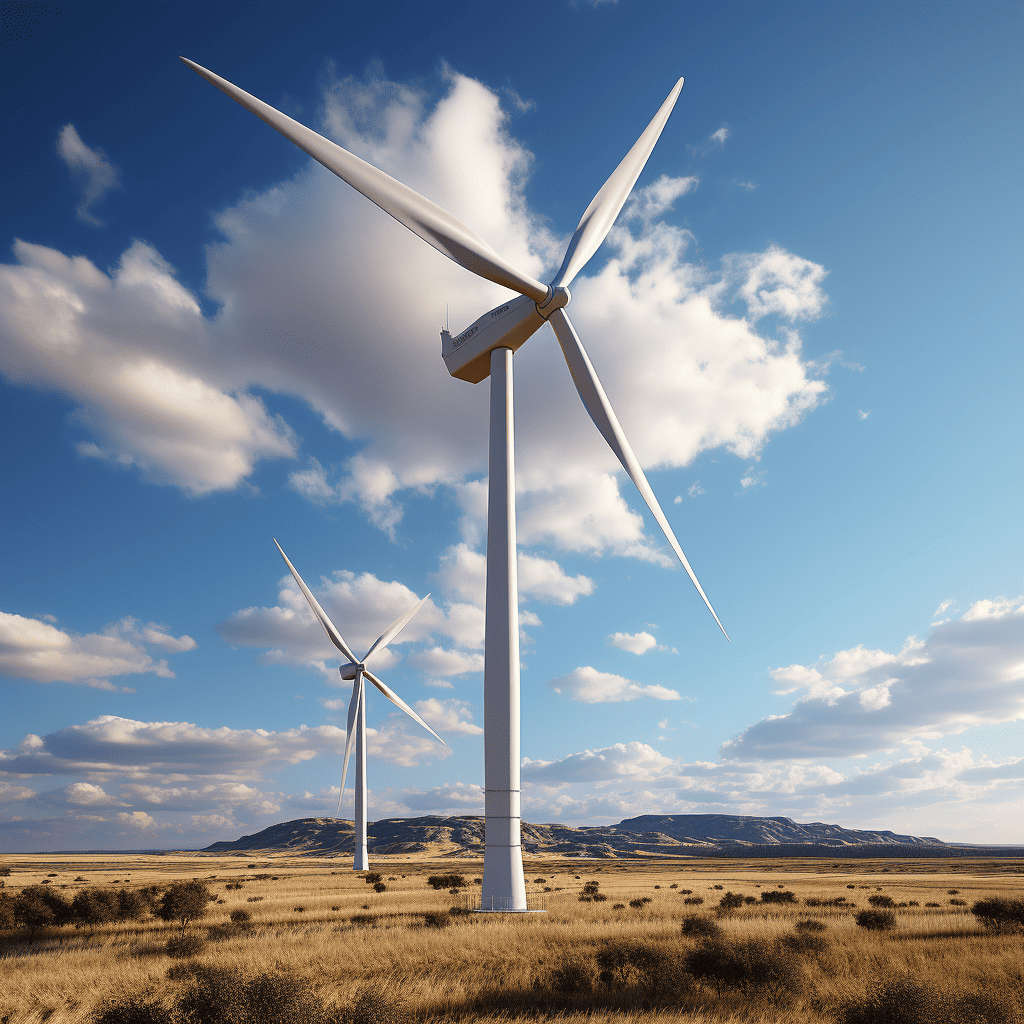
The Shift Towards Longer Blades: A Game Changer in Efficiency
As the demand for renewable energy continues to grow, wind turbine technology has made significant strides in recent decades. One of the most notable advancements in this field is the increase in blade length, which has led to improved efficiency and greater energy production.
The 1980s: The Age of Giant Leaps in Blade Length
The 1980s marked a turning point in the evolution of wind turbine blade length. As researchers gained a better understanding of aerodynamics and materials science, they began to design longer and more efficient blades. During this time, blade length increased from an average of 15 meters to over 30 meters. This increase in size allowed for the capture of more wind energy, resulting in a significant boost in power output.
The Benefits of Longer Blades
Longer blades have several advantages over shorter ones. The most obvious benefit is that they can capture more wind energy. This is because longer blades have a larger swept area, which means they can intercept more wind. Additionally, longer blades can operate at lower wind speeds, making them more efficient in areas with less consistent wind patterns.
Another advantage of longer blades is that they can be used to generate more power at lower rotational speeds. This is important because it reduces the amount of stress placed on the turbine’s components, increasing their lifespan and reducing maintenance costs.
The Challenges of Longer Blades
Despite their many benefits, longer blades also present some challenges. One of the biggest challenges is transportation. As blades get longer, they become more difficult to transport, particularly in areas with narrow roads or bridges with low clearance. This can add significant costs to the installation process.
Another challenge is manufacturing. Longer blades require more advanced materials and manufacturing techniques to ensure they are strong enough to withstand the forces generated by the wind. This can add to the cost of production and make it more difficult to scale up production.
The Future of Wind Turbine Blade Length
Despite these challenges, the trend towards longer blades is expected to continue. Researchers are working on developing new materials and manufacturing techniques that will allow for the production of even longer blades. They are also exploring new blade designs, such as tapered blades and airfoils, to improve efficiency and reduce costs.
In addition, there is growing interest in offshore wind turbines, which can take advantage of stronger and more consistent wind patterns. These turbines can be larger than their land-based counterparts, allowing for even longer blades and greater energy production.
The shift towards longer wind turbine blades has been a game changer in terms of efficiency and energy production. While there are challenges associated with longer blades, researchers are working on developing new materials and manufacturing techniques to overcome these obstacles. As the demand for renewable energy continues to grow, it is likely that we will see even more advancements in this field in the coming years.

Modern wind turbines represent the pinnacle of engineering innovation, combining sophisticated design principles with advanced materials and control technologies to maximize energy capture, enhance efficiency, and extend lifespan. The integration of active and passive blade control systems is a testament to the evolution of wind turbines, allowing them to adapt to varying wind conditions and maintain optimal performance. Here’s a closer look at these control systems and their impact on wind turbine technology:
Active Control Systems
– **Functionality**: Utilize sensors and actuators to monitor environmental and operational parameters such as wind speed, wind direction, rotor speed, and power output. This data informs real-time adjustments to blade pitch angles, optimizing the turbine’s performance.
– **Advantages**: Enhance the turbine’s responsiveness to changing wind conditions, increase energy production efficiency, and help manage loads on the turbine structure. Active systems are crucial for maximizing energy capture in variable wind environments and protecting the turbine during high wind events by regulating power output.
– **Implementation**: Often involves complex algorithms and control mechanisms that continuously analyze data and adjust the blades accordingly. This requires a robust sensor network and reliable actuator mechanisms to ensure precise control over blade pitch.
Passive Control Systems
– **Functionality**: Depend on the aerodynamic forces acting on the blades and the inherent material properties of the blades themselves. These systems do not require external energy inputs or active monitoring to adjust the blades.
– **Advantages**: Offer a simpler, maintenance-free approach to blade control, reducing the overall complexity and potential points of failure within the turbine system. Passive adaptations, like flexible trailing edges, allow blades to automatically respond to changes in wind speed and direction, improving performance and reducing structural loads.
– **Implementation**: Involves the strategic design of blade materials and structures to ensure that aerodynamic forces naturally adjust the blade’s behavior. This can include the use of advanced composite materials that have the necessary flexibility and strength to withstand operational stresses.
Impact of Control Systems on Wind Turbine Performance
– **Energy Capture**: By optimizing the angle and behavior of the blades, both active and passive control systems enable turbines to operate more efficiently across a broad spectrum of wind conditions, capturing more energy.
– **Operational Efficiency**: Advanced control mechanisms contribute to the turbine’s ability to maintain optimal rotational speeds, ensuring consistent power output and operational efficiency.
– **Durability and Longevity**: Managing the loads on turbine blades and structures helps mitigate wear and tear, extending the lifespan of the turbine and reducing maintenance requirements.
The synergistic application of active and passive blade control systems in modern wind turbines underscores the industry’s commitment to technological advancement and sustainability. These innovations not only enhance the performance and reliability of wind turbines but also solidify wind power’s role as a cornerstone of the global transition to clean, renewable energy sources.

Future Trends: What’s Next for Wind Turbine Blade Length?
The wind energy sector is constantly evolving, with innovations and advancements driving the growth of renewable energy sources. One such trend that has been gaining momentum is the development of longer wind turbine blades. As the demand for clean, renewable energy continues to grow, so too will the push for longer blades. This article explores the future trends in wind turbine blade length and their implications for the wind energy industry.
Bigger is Better: The Pursuit of Even Longer Blades
The trend towards longer wind turbine blades is not new. Over the past few decades, blade length has been increasing steadily, with the average length now exceeding 60 meters. This trend is expected to continue, with some manufacturers already developing blades that are over 100 meters long.
The reason for this is simple: longer blades enable turbines to capture more energy from the wind, reducing the levelized cost of electricity (LCOE) and making wind power increasingly competitive with traditional fossil fuel sources. Moreover, longer blades also allow turbines to be installed in areas with lower wind speeds, expanding the potential for wind energy generation.
Technological Innovations Driving the Trend
The development of longer blades is being made possible by advancements in materials science, manufacturing processes, and design technologies. For instance, researchers are developing new materials such as carbon fiber and advanced composites that are lighter, stronger, and more durable than traditional materials like steel and aluminum. These materials enable the construction of longer blades that are still lightweight and cost-effective.
Manufacturers are also investing in new manufacturing processes that enable the production of longer blades more efficiently and at a lower cost. For instance, some companies are using automated manufacturing systems and robotics to improve the precision and speed of blade production. Others are using 3D printing and additive manufacturing techniques to produce complex blade shapes and structures that were previously impossible to achieve.
Design innovations are also playing a critical role in the development of longer blades. For instance, some manufacturers are using aerodynamic shapes and designs to reduce drag and increase lift, enabling the blades to capture more energy from the wind. Others are using advanced sensors and control systems to optimize the performance of the blades and reduce wear and tear.
Implications for the Wind Energy Industry
The trend towards longer wind turbine blades has significant implications for the wind energy industry. For one, it is expected to drive down the cost of wind energy, making it even more competitive with traditional fossil fuel sources. This, in turn, is likely to spur greater investment in wind energy and accelerate its growth.
Longer blades are also expected to enable the construction of larger wind turbines, with higher capacity factors and greater energy output. This will make wind energy a more attractive option for utilities and other large energy consumers, who are looking for reliable and cost-effective sources of renewable energy.
However, the trend towards longer blades also presents some challenges. For instance, longer blades require larger and more powerful cranes for installation, which can be costly and difficult to transport. Additionally, longer blades can create more noise and shadow flicker, which can be a concern for local communities and wildlife.
Conclusion
The trend towards longer wind turbine blades is a promising development for the wind energy industry. Longer blades enable turbines to capture more energy from the wind, reducing the cost of wind energy and making it increasingly competitive with traditional fossil fuel sources. While there are challenges associated with longer blades, advancements in materials science, manufacturing processes, and design technologies are making it possible to overcome these challenges and unlock the full potential of wind energy. As the demand for clean, renewable energy continues to grow, the trend towards longer wind turbine blades is likely to continue, driving innovation and growth in the wind energy sector.


