
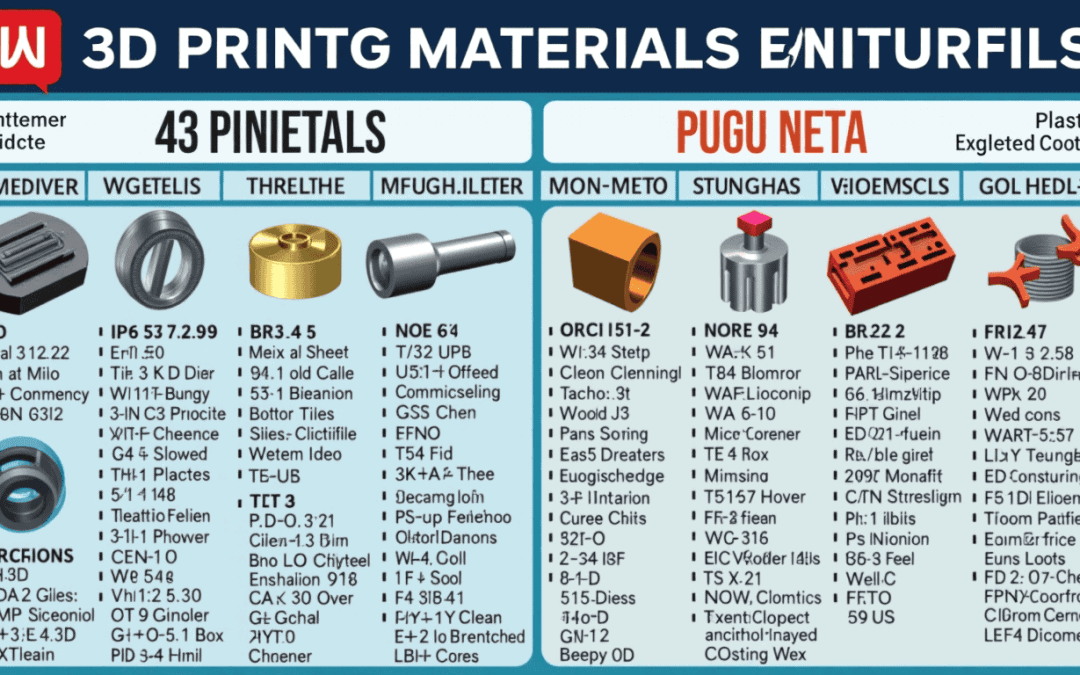
3D Printing Materials: A Comprehensive Comparison of Strength and Versatility
The world of 3D printing is expansive and diverse, offering an array of materials each with unique properties that cater to specific applications. Whether you are an engineer seeking insights into material strength, a hobbyist exploring new creative avenues, or a business professional in the manufacturing sector, understanding the nuances between different 3D printing materials is crucial. This post compares the mechanical strengths, applications, and detailed properties of metals and other 3D printing materials to help you make informed decisions that best suit your needs.
Table of Key Differences
| Feature | 3D Printed Metals | Other 3D Printed Materials |
|---|---|---|
| Material Types | Titanium, Stainless Steel | Plastics, Ceramics, Graphene |
| Application Areas | Aerospace, Medical | Automotive, Industrial |
| Cost | High | Moderate to Low |
| Strength Testing | Extensive | Variable |
| Innovative Uses | High | Moderate |
Performance Showdown – A Detailed Look at Material Strengths
3D Printed Metals
3D printed metals, such as titanium alloys and stainless steels, are renowned for their robust mechanical properties. They withstand significant tensile and compressive forces, making them ideal for high-performance applications. Processes like Selective Laser Melting (SLM) ensure uniform strength properties and superior performance in demanding environments, such as aerospace and automotive industries.
Other 3D Printed Materials
Other materials, including robust plastics like ABS and PLA and innovative components like graphene, offer versatility at a lower cost. While plastics may not rival metals in strength, they are often sufficient for less demanding applications such as prototypes and certain consumer products. Ceramics offer a balance of strength and thermal stability, making them suitable for specialized uses.
Key Takeaways: For applications where ultimate strength and durability are paramount, metals are unmatched. However, for rapid prototyping and cost-effective production, other materials provide ample support.
User Experience – Navigating Ease of Use
3D Printed Metals
The complexity of 3D printing with metals often requires significant expertise due to intricate processes like L-PBF and E-PBF. The learning curve is steep, influenced by material handling requirements, post-processing steps, and machine settings.
Other 3D Printed Materials
Plastics and other non-metal materials offer ease of use with simpler printing processes like Fused Deposition Modeling (FDM), making them accessible for beginners. They require minimal post-processing, enhancing user-friendliness.
Key Takeaways: For user accessibility and ease of use, non-metal 3D printing materials provide a more straightforward experience, while metals demand professional operational skills.
Cost Analysis – Finding the Best Value
3D Printed Metals
The cost of 3D printing with metals is considerably high due to the sophisticated technologies and materials involved. However, the value comes from the exceptional strength and precision of components produced.
Other 3D Printed Materials
Materials such as ABS and PLA are far more cost-effective, making them a favorite for businesses needing rapid iterations or large-scale production of non-critical components.
Key Takeaways: Metals offer premium quality but come at a higher cost. For budget-friendly projects, basic plastics and other non-metal materials offer significant value.
Long-Term Support – Assessing Reliability
3D Printed Metals
With consistently evolving technologies, 3D printed metals have extensive support and dedicated research advances. High-grade metals benefit from regular improvements and updates, ensuring they remain relevant and competitive.
Other 3D Printed Materials
Support varies widely among different materials, with plastics enjoying widespread community support and open resources due to their popularity.
Key Takeaways: When considering long-term investment and support, 3D printed metals generally enjoy a more consistently robust backing.
Real-World Applications – Bringing Designs to Life
3D Printed Metals
Metals lead the way in applications requiring unmatched mechanical properties, such as aerospace and medical industries. Their ability to reproduce fine details and superior strength makes them indispensable.
Other 3D Printed Materials
Used in everything from consumer goods to automotive prototyping, non-metal materials offer broad application versatility. Their lightweight nature and ease of production are beneficial for numerous industries.
Key Takeaways: The practical application of metal parts in high-stakes environments highlights their superiority, while other materials provide comprehensive solutions across numerous industries.
Pros and Cons – A Balanced View for Decision-Makers
3D Printed Metals
Pros: Superior strength, high performance, excellent precision.
Cons: Costly, complex processes, high learning curve.
Other 3D Printed Materials
Pros: Cost-effective, easy to use, versatile.
Cons: Lower strength, less suitable for critical applications.
Key Takeaways: Each material brings unique advantages according to the needs and constraints of your project.
Final Verdict – Choosing the Right Material for Your Project
In summary, the choice between 3D printed metals and other materials should align with your project’s objectives. Metals are the clear choice for applications demanding ultimate performance and strength. In contrast, a diverse array of other 3D printing materials meets the needs of sectors focusing on cost efficiency and versatile applications. Consider these insights to enhance your product development strategies and optimize for your specific industrial or consumer needs.
Engage with Us
Which materials do you currently use in your 3D printing endeavors, and have you discovered any unique applications for them? Share your experiences with us, and let’s explore the limitless possibilities that 3D printing technology continues to offer.


