
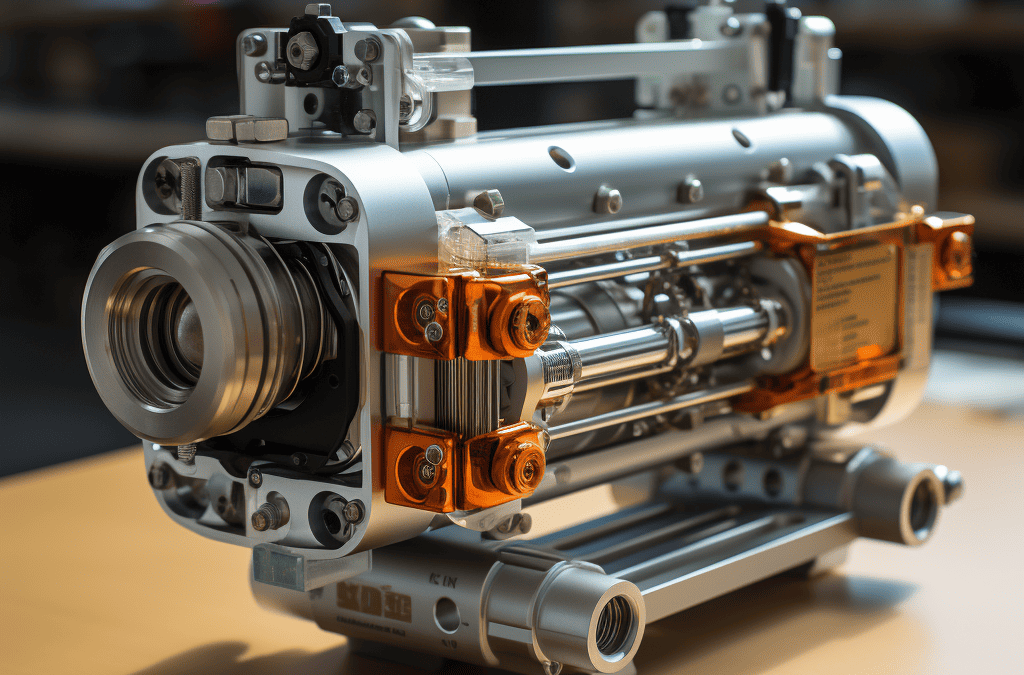

Double-acting pneumatic actuators provide a dynamic solution for a wide range of industrial automation tasks, thanks to their ability to exert force in both extending and retracting directions. This bi-directional capability significantly enhances the versatility and applicability of double-acting actuators in various settings and operations. Here’s a closer look at how these actuators work and their advantages:
How Double-Acting Pneumatic Actuators Work
– **Bi-Directional Movement**: Unlike single-acting actuators that rely on a spring or external force to return to their original position, double-acting actuators use compressed air to move in both directions. This is achieved by having two ports that alternately introduce compressed air to move the piston and attached rod.
– **Piston and Cylinder Mechanism**: Inside the cylinder, a piston is connected to a rod that extends outside the cylinder through one of its ends. The movement of the piston within the cylinder is controlled by directing compressed air through either of the two ports, pushing the piston and consequently moving the rod in the desired direction.
– **Controlled Operation**: The direction, speed, and force of the actuator’s movement can be precisely controlled by regulating the amount of air pressure and the flow rate into each port, allowing for precise manipulation of loads or tools attached to the actuator’s rod.
Advantages of Double-Acting Pneumatic Actuators
– **Versatility**: The ability to actively control movement in both directions makes double-acting actuators suitable for a broader range of applications, including clamping, pressing, and precise positioning tasks.
– **Control and Precision**: Double-acting actuators offer enhanced control over the motion, allowing for adjustments in speed, force, and position, which is crucial in applications requiring fine manipulation.
– **Higher Force Output**: Because both extending and retracting movements are powered, double-acting actuators can generate higher force outputs compared to single-acting actuators, especially when retracting.
– **No Need for External Return Mechanism**: The reliance on compressed air for both directions of movement eliminates the need for external springs or weights to return the actuator to its starting position, simplifying the system and reducing potential failure points.
– **Efficiency in Automated Systems**: Their capability to perform complex tasks with precision and reliability makes double-acting pneumatic actuators ideal for automated systems, enhancing productivity and reducing manual intervention.
Double-acting pneumatic actuators stand out for their dynamic control and adaptability, making them indispensable in modern industrial operations. Whether the task involves material handling, automated assembly, or precision machining, these actuators provide the necessary power, control, and versatility to meet the demands of sophisticated and varied applications.
Advantages of Double Acting Pneumatic Actuators
Double acting pneumatic actuators offer several advantages over single acting actuators. They provide more precise control over linear motion, as they can move in both directions. They also offer faster response times and higher force output, making them ideal for high-speed automation processes. Additionally, double acting pneumatic actuators are highly reliable, as they use compressed air as their power source, which is less prone to failure than electric motors.
Applications of Double Acting Pneumatic Actuators
Double acting pneumatic actuators are used in a wide range of applications, including:
- Manufacturing: They are used in assembly lines, packaging machines, and material handling equipment to move parts and materials.
- Food and Beverage: They are used in processing equipment, such as mixing tanks and conveyors, to ensure food safety and quality.
- Oil and Gas: They are used in drilling equipment, valves, and pumps to control the flow of oil and gas.
- Chemical Processing: They are used in mixing and blending equipment, as well as in valves and pumps, to ensure precise control over chemical processes.
- Pharmaceutical: They are used in manufacturing equipment, such as tablet presses and capsule filling machines, to ensure consistent product quality.
Choosing the Right Double Acting Pneumatic Actuator
When choosing a double acting pneumatic actuator, there are several factors to consider, including:
- Force Output: The force output of the actuator should match the requirements of the application.
- Speed: The speed of the actuator should match the requirements of the application.
- Stroke Length: The stroke length of the actuator should match the requirements of the application.
- Environmental Conditions: The actuator should be able to withstand the environmental conditions of the application, such as temperature, humidity, and corrosion.
- Mounting Options: The actuator should have the appropriate mounting options for the application.
Double acting pneumatic actuators are essential components in industrial automation, providing precise control over linear motion in a wide range of applications. By understanding the mechanics behind these actuators, engineers and technicians can choose the right actuator for their application, ensuring reliable and efficient operation. When selecting a double acting pneumatic actuator, it is important to consider factors such as force output, speed, stroke length, environmental conditions, and mounting options to ensure optimal performance.
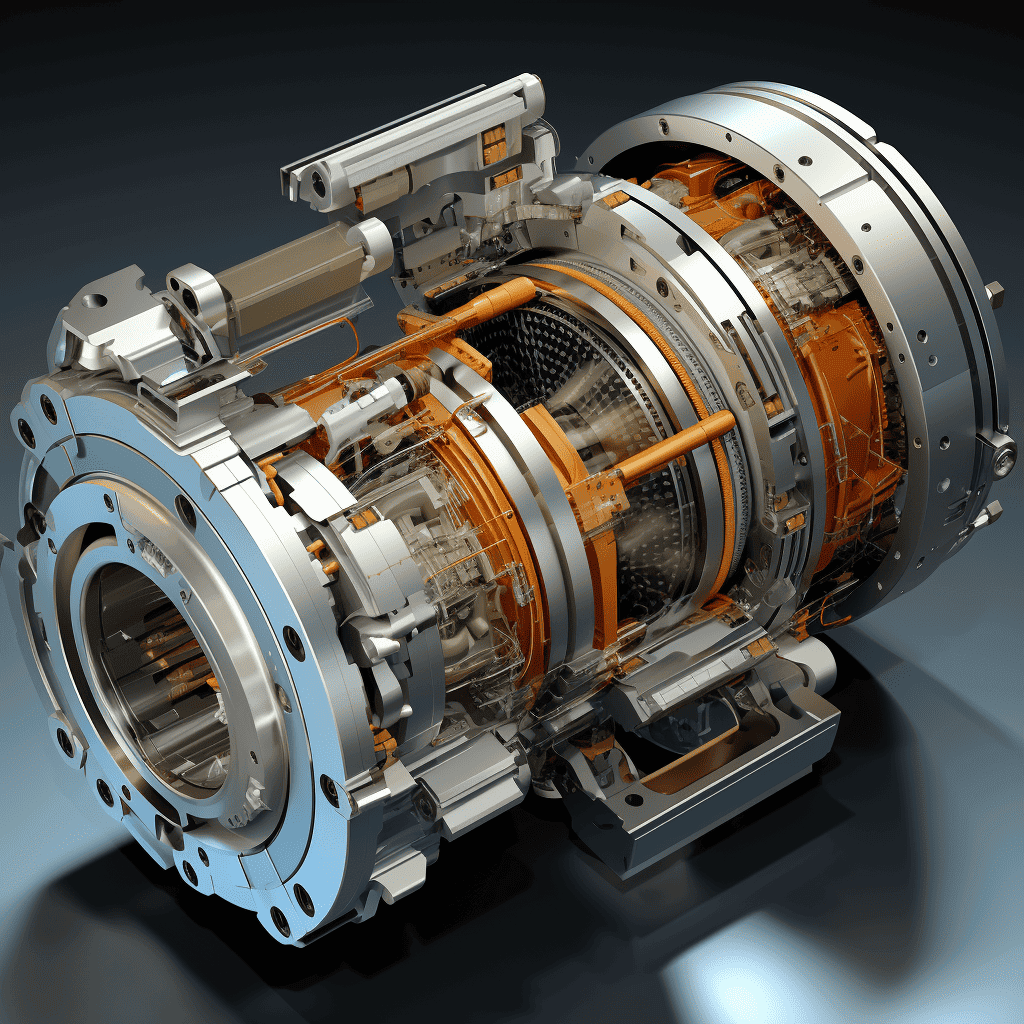
Double-acting pneumatic actuators are integral components in various industrial automation processes, providing the necessary motion and force for a wide range of applications. By breaking down the actuator into its fundamental components, we gain a deeper understanding of its operation and the considerations needed for its effective use. Here’s a concise overview of each component and its role within the actuator system:
The Piston
– **Function**: Serves as the primary moving part, converting compressed air into mechanical motion.
– **Materials**: Made from wear-resistant materials like aluminum, steel, or composites for durability.
– **Importance**: The diameter affects the force output, while its position determines the stroke length of the actuator.
The Piston Rod
– **Function**: Acts as the connector transmitting the piston’s force to the external load.
– **Materials**: Typically constructed from strong, corrosion-resistant materials such as stainless steel.
– **Importance**: Its length dictates the actuator’s stroke and the range of motion available for moving the load.
The Air Supply
– **Function**: Provides the compressed air that drives the piston movement.
– **Source**: Can come from an air compressor, air tank, or direct air line.
– **Importance**: Air pressure and flow rate directly influence the actuator’s speed and the magnitude of force applied.
The Valves
– **Function**: Control the entry and exit of compressed air into the cylinder, regulating the piston’s movement.
– **Type**: Can be manual or automated, tailored to specific application needs.
– **Importance**: Essential for directing the actuator’s movement and adjusting its speed and responsiveness.
The Mounting
– **Function**: Secures the actuator within the system, providing a stable base for operation.
– **Design**: Varies from simple brackets to complex arrangements, depending on application requirements.
– **Importance**: Must be robust to support the actuator’s operation while minimizing vibration and stress.
The Accessories
– **Function**: Enhance the actuator’s functionality or performance. Includes sensors, switches, and regulators.
– **Examples**: Position sensors for feedback, limit switches for range control, flow valves for speed adjustment, and pressure regulators for force modulation.
– **Importance**: Tailored to the application, these components enable precise control and integration with broader system controls.
Understanding the components of a double-acting pneumatic actuator and their collective function allows for optimized system design and maintenance. This knowledge is crucial for engineers and technicians tasked with creating efficient, reliable, and safe automated solutions across diverse industrial landscapes.
While double-acting pneumatic actuators are highly valued for their versatility and ability to provide controlled force in both extension and retraction movements, they do present certain limitations that may impact their suitability for specific applications. Here’s a summary of the disadvantages associated with these actuators:
Reliance on Compressed Air
– **Continuous Air Supply Needed**: Pneumatic systems require a constant supply of compressed air, which necessitates the use of compressors and air preparation equipment. This can add complexity and cost to the system setup.
Limited Speed Control
– **Fixed Speed Range**: The speed of double-acting pneumatic actuators is primarily influenced by air pressure and flow rate. While flow control valves can provide some degree of speed adjustment, precise control over a wide range of speeds can be challenging to achieve compared to electric actuators.
Lower Energy Efficiency
– **Energy Losses**: The process of compressing air is inherently less energy efficient than direct electrical power usage. Energy is lost in the form of heat during compression, and leaks in the pneumatic system can further reduce efficiency, leading to higher operational costs over time.
Noise and Air Pollution
– **Operational Noise**: The release of compressed air can generate significant noise, posing challenges in noise-sensitive environments.
– **Contaminant Release**: Depending on the quality of air preparation, the exhaust air from pneumatic actuators may contain oil mist or other contaminants, raising concerns about air quality and worker safety.
Sensitivity to Environmental Conditions
– **Temperature and Humidity Effects**: Pneumatic actuators can be sensitive to extreme temperatures and changes in humidity. Cold temperatures can lead to freezing of moisture in the system, while high humidity can cause condensation and water accumulation, affecting performance and reliability.
Despite these disadvantages, double-acting pneumatic actuators are widely used across various industries due to their strengths, such as precise control, high force output, and fast response times. The choice between pneumatic and other types of actuators, such as electric or hydraulic, will depend on the specific requirements of the application, including considerations of speed, force, environmental conditions, and cost. Careful selection and proper system design can help mitigate some of the disadvantages and harness the full potential of double-acting pneumatic actuators for optimal performance in a given application.

Double-acting pneumatic actuators play a pivotal role in enhancing efficiency, safety, and precision across a diverse array of industrial applications. Their unique capability to exert force in both extension and retraction movements, coupled with their reliability and versatility, makes them indispensable in modern industrial automation. Here’s a closer look at their impact across various sectors:
Material Handling
In logistics and material handling, double-acting pneumatic actuators automate the movement of goods, streamlining operations in warehouses and distribution centers. This automation not only boosts productivity but also minimizes the physical strain on workers, significantly reducing the risk of workplace injuries.
Assembly and Manufacturing
These actuators are vital in assembly lines and manufacturing processes, where they execute tasks like opening and closing molds, transferring components between stations, and securing fasteners. Their precise control over motion is particularly beneficial in applications requiring detailed manipulation and positioning of parts.
Food and Beverage Processing
The food and beverage industry benefits from the hygiene and efficiency offered by double-acting pneumatic actuators. They play a crucial role in automating mixing, blending, filling, and packaging processes, ensuring consistent product quality while adhering to strict hygiene standards.
Process Control
In process control, double-acting pneumatic actuators are essential for managing the flow of fluids, gases, and solids in sectors such as oil and gas, chemical processing, and power generation. Their application in controlling valves and pumps is critical for maintaining optimal operating conditions and ensuring process safety.
Automotive Industry
The automotive sector utilizes these actuators in assembly operations, painting, and quality testing. They facilitate the movement of large components, automate the assembly process, and ensure precision in tasks like fastening, contributing to the efficiency and quality of automotive manufacturing.
Mining and Construction
For the heavy-duty demands of the mining and construction industries, double-acting pneumatic actuators offer the robust performance needed for excavating, drilling, and demolition activities. They enable precise control over heavy machinery, enhancing safety and operational efficiency in challenging environments.
The widespread adoption of double-acting pneumatic actuators across various industries underscores their critical role in modern industrial automation. By offering precise control, reliability, and adaptability, these actuators significantly contribute to the optimization of industrial processes, enhancing productivity, safety, and quality across numerous sectors.


