
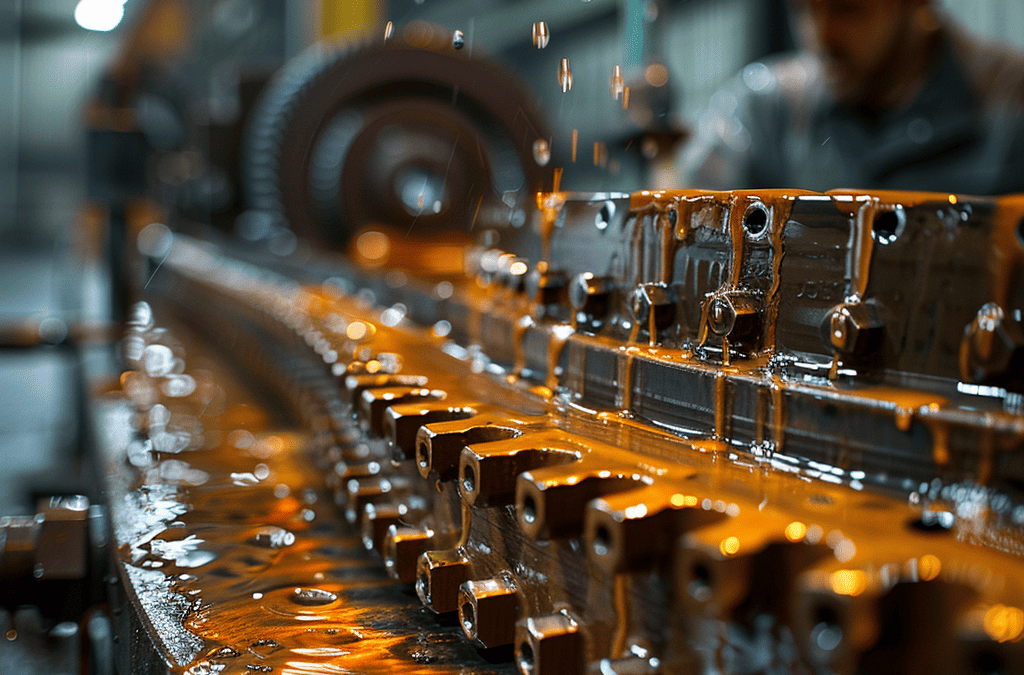

Unlocking the Secrets of Heat Treatment for Gear Toughness: A Comprehensive Guide
The Science Behind Heat Treatment and Gear Toughness
Heat treatment is a thermal processing technique used to alter the physical and mechanical properties of materials, including gears. It plays a crucial role in improving the **toughness** of gears, which is their ability to withstand impact and resist fracture. This is achieved by manipulating the microstructure of the gear material through heating and cooling cycles, which can alter the size, shape, and distribution of its constituent grains and phases. By carefully controlling these factors, it is possible to enhance the gear’s resistance to wear, fatigue, and other forms of failure.
Grain structure: The arrangement of grains in a material can significantly affect its properties. Heat treatment can alter the size and shape of grains, thereby improving the gear’s toughness and wear resistance. For example, smaller grains can increase the strength and hardness of the material, while larger grains can improve its ductility. Annealing and normalizing are common heat treatment processes used to refine the grain structure of gears.
Phase transformations: Heat treatment can also induce phase transformations in the gear material, leading to the formation of new phases that enhance its mechanical properties. For example, quenching and tempering can transform the structure of steel from a softer, more ductile state to a harder, more brittle state. By carefully controlling the cooling rate and temperature during quenching and the temperature during tempering, it is possible to achieve a balance between hardness and toughness.
The Role of Heat Treatment in Gear Design and Manufacturing
Heat treatment is an essential consideration in the **design and manufacturing process** of gears. Proper heat treatment can ensure that the gear meets the required performance specifications, such as torque capacity, speed, and load-carrying ability. It can also extend the gear’s service life by reducing the risk of premature failure due to wear, fatigue, or other forms of damage. Furthermore, heat treatment can improve the manufacturability of gears by reducing the risk of distortion, cracking, and other defects during machining and assembly.
Performance specifications: The required performance specifications for a gear depend on its intended application. Heat treatment can be tailored to meet these specifications, ensuring optimal performance and durability. For example, a gear used in a high-speed application will require different heat treatment than a gear used in a low-speed application.
Manufacturability: Heat treatment can improve the manufacturability of gears by reducing the risk of distortion, cracking, and other defects during machining and assembly. This is particularly important for large or complex gears. Heat treatment can also improve the machinability of the gear material, making it easier to achieve the required dimensional accuracy and finish.
The Benefits of Heat Treatment for Gear Performance
Heat treatment can provide numerous benefits for gear performance, including:
* Improved wear resistance: Heat treatment can harden the gear’s surface, making it more resistant to wear and tear. This is particularly important for gears that operate under high loads and speeds, where wear can lead to premature failure.
* Enhanced fatigue strength: Heat treatment can increase the gear’s fatigue strength, which is its ability to withstand cyclic loading. This is crucial for gears that are subjected to varying loads or that operate under fluctuating conditions.
* Increased toughness: Heat treatment can improve the gear’s toughness, which is its ability to absorb energy and resist fracture. This is important for gears that are subjected to impact or shock loading.
* Better dimensional stability: Heat treatment can improve the gear’s dimensional stability, reducing the risk of distortion or warping during machining and assembly. This is crucial for ensuring accurate gear mesh and smooth operation.
Surface hardness: Heat treatment can increase the surface hardness of gears, making them more resistant to wear and tear.
Core toughness: Heat treatment can also enhance the core toughness of gears, improving their ability to withstand impact and shock loading.
The Challenges of Heat Treatment for Gear Toughness
While heat treatment offers numerous benefits for gear toughness, it also presents some challenges. For example, heat treatment can introduce residual stresses and distortions in the gear, which can negatively impact its performance and durability. Additionally, heat treatment can be time-consuming and costly, particularly for large or complex gears. Furthermore, heat treatment can have varying effects on different materials, so it is important to carefully select the appropriate heat treatment process for the specific gear material and application.
Residual stresses: Residual stresses can result from heat treatment and can negatively impact the gear’s performance and durability. It is important to minimize these stresses through proper heat treatment techniques, such as stress relieving and shot peening.
Distortion: Heat treatment can also cause distortion in the gear, which can affect its dimensional accuracy and performance. Proper fixturing and heat treatment techniques can help mitigate this risk.
Selecting the Right Heat Treatment Process for Gear Toughness
There are several heat treatment processes that can be used to enhance gear toughness, including carburizing, nitriding, and induction hardening. Each process has its own advantages and disadvantages, and the selection of the appropriate process depends on several factors, such as the gear material, size, shape, and required properties.
Carburizing: Carburizing is a heat treatment process that involves adding carbon to the surface of the gear, creating a hard, wear-resistant layer. This process is commonly used for steel gears. It can be done in a vacuum, in a gas atmosphere, or in a liquid medium, such as oil or salt. The process involves heating the gear to a high temperature, typically between 850 and 950°C, and then cooling it rapidly to create a hard, wear-resistant surface.
Nitriding: Nitriding is a low-temperature heat treatment process that can improve the fatigue strength and corrosion resistance of gears made from certain materials, such as stainless steel or alloy steel. The process involves introducing nitrogen into the surface of the gear, creating a hard, wear-resistant layer. Nitriding is typically carried out at temperatures between 480 and 520°C. The process can be done in a vacuum, in a gas atmosphere, or in a liquid medium, such as salt.
Induction hardening: Induction hardening is a rapid, flexible heat treatment process that can selectively harden specific areas of the gear, such as the teeth or root fillet, to improve its wear resistance and fatigue strength. This process uses an alternating electromagnetic field to heat the gear, which can be focused on specific areas to achieve precise control over the hardness profile. Induction hardening is a fast process, typically taking only a few seconds, which makes it well suited for high-volume production.
Heat treatment is a crucial aspect of gear manufacturing that can greatly enhance the performance and durability of gears. By understanding the science behind heat treatment and carefully selecting the appropriate process for the specific gear material and application, it is possible to optimize gear toughness and ensure long-term reliability. It’s important to keep in mind the challenges of heat treatment, such as residual stresses and distortions, and to use proper techniques to minimize these risks. With proper heat treatment, gears can withstand even the most demanding operating conditions, providing reliable and efficient power transmission for a wide range of applications.

Common Heat Treatment Processes for Enhancing Gear Durability
Gears are critical components in many mechanical systems, and their durability and performance can be significantly improved through heat treatment. In this blog post, we’ll explore some of the most common heat treatment processes used to enhance gear toughness and wear resistance, including carburizing, nitriding, induction hardening, and vacuum heat treatment.
Carburizing: A Popular Heat Treatment Process
Carburizing is a heat treatment process that involves introducing carbon into the surface of the gear material, typically steel, to increase its hardness and wear resistance. During carburizing, the gear is heated to a high temperature in the presence of a carbon-rich atmosphere, such as methane or propane. The carbon atoms diffuse into the surface of the gear, forming a hard, wear-resistant layer known as the case. The core of the gear remains relatively soft and tough, providing good impact resistance and fatigue strength. After carburizing, the gear is typically quenched in oil or water to harden the case, and then tempered to reduce residual stresses and improve toughness.
One of the benefits of carburizing is that it can be used to achieve a high hardness and wear resistance in the surface of the gear, while maintaining a tough and ductile core. This makes it an ideal heat treatment process for gears that are subjected to high loads and wear, such as those used in automotive and industrial applications.
Carburizing can also improve the gear’s resistance to pitting and spalling, which are common types of wear that can occur in gears subjected to high loads and stresses. Additionally, carburizing can improve the gear’s resistance to scuffing and galling, which are types of wear that can occur when two surfaces are in sliding contact with each other.
Nitriding: A Low-Temperature Heat Treatment Process
Nitriding is a low-temperature heat treatment process that involves introducing nitrogen into the surface of the gear material, typically steel or alloy steel, to improve its fatigue strength and corrosion resistance. During nitriding, the gear is heated to a relatively low temperature, typically between 500 and 550°C, in the presence of ammonia or a nitrogen-rich atmosphere. The nitrogen atoms diffuse into the surface of the gear, forming a hard, wear-resistant layer known as the compound layer, as well as a diffusion zone beneath the surface. Unlike carburizing, nitriding does not require quenching, and the gear can be left in the nitriding furnace for an extended period to achieve the desired depth of the compound layer.
Nitriding offers several advantages over other heat treatment processes, including its ability to improve the fatigue strength and corrosion resistance of the gear material without affecting its dimensional stability. This makes it an ideal heat treatment process for gears that are subjected to cyclic loading and corrosive environments.
Nitriding can also improve the gear’s resistance to wear, galling, and seizure, which are all types of wear that can occur in gears subjected to high loads and sliding contact. Additionally, nitriding can improve the gear’s surface finish, which can reduce friction and improve efficiency.
Induction Hardening: A Rapid and Flexible Heat Treatment Process
Induction hardening is a rapid and flexible heat treatment process that involves selectively heating the surface of the gear using an induction coil. The induction coil generates an electromagnetic field that induces eddy currents in the gear material, causing it to heat up rapidly. The gear is then quenched to harden the surface, typically using water or oil. Induction hardening can be used to selectively harden specific areas of the gear, such as the teeth or root fillet, to improve its wear resistance and fatigue strength. This is particularly useful for large or complex gears, where it may be difficult or impractical to heat treat the entire gear using other methods.
Induction hardening offers several advantages over other heat treatment processes, including its ability to harden specific areas of the gear without affecting the rest of the material. This allows for precise control over the hardness and wear resistance of the gear, resulting in improved performance and durability.
Induction hardening can also improve the gear’s resistance to wear, galling, and seizure, which are all types of wear that can occur in gears subjected to high loads and sliding contact. Additionally, induction hardening can improve the gear’s resistance to bending and torsional fatigue, which are common types of fatigue that can occur in gears subjected to cyclic loading.
Vacuum Heat Treatment: A Clean and Precise Heat Treatment Process
Vacuum heat treatment is a clean and precise heat treatment process that involves heating the gear in a vacuum or controlled atmosphere to minimize oxidation and contamination. During vacuum heat treatment, the gear is placed in a vacuum chamber, which is then evacuated to remove any air or contaminants. The gear is then heated to the desired temperature using electrical resistance or induction heating, and held at that temperature for a specified time to allow the desired microstructural changes to occur. After heat treatment, the gear is typically quenched in oil or gas to harden the surface, and then tempered to improve toughness.
Vacuum heat treatment offers several advantages over other heat treatment processes, including its ability to minimize oxidation and contamination, resulting in a cleaner and more precise heat treatment. This is particularly useful for gears that require tight tolerances and high-precision performance.
Vacuum heat treatment can also improve the gear’s resistance to wear, galling, and seizure, which are all types of wear that can occur in gears subjected to high loads and sliding contact. Additionally, vacuum heat treatment can improve the gear’s resistance to corrosion, which can occur in gears subjected to harsh environments.
Quenching and Tempering: Essential Steps in Heat Treatment
Quenching and tempering are essential steps in the heat treatment process that are used to harden the gear material and improve its toughness. Quenching involves rapidly cooling the gear after heat treatment to transform the austenitic structure into a hard, martensitic structure. The quenching medium can be water, oil, or gas, depending on the gear material and the desired hardness. After quenching, the gear is typically tempered to reduce residual stresses and improve toughness. Tempering involves reheating the gear to a lower temperature and holding it at that temperature for a specified time. The tempering temperature and time depend on the gear material and the desired properties, and can range from a few hundred to several hundred degrees Celsius. By carefully controlling the quenching and tempering parameters, it is possible to optimize the gear’s performance and durability for its specific application.
Quenching and tempering are critical steps in the heat treatment process, as they determine the final properties of the gear material. By controlling the quenching and tempering parameters, it is possible to achieve a balance between hardness and toughness, resulting in a gear that is both wear-resistant and durable.
Heat treatment is a critical process for enhancing the durability and performance of gears. By selecting the appropriate heat treatment process and carefully controlling the process parameters, it is possible to optimize the gear’s properties for its specific application. In this blog post, we’ve explored some of the most common heat treatment processes used to enhance gear toughness and wear resistance, including carburizing, nitriding, induction hardening, and vacuum heat treatment. We’ve also discussed the importance of quenching and tempering in the heat treatment process, and how they can be used to optimize the gear’s properties for its specific application.
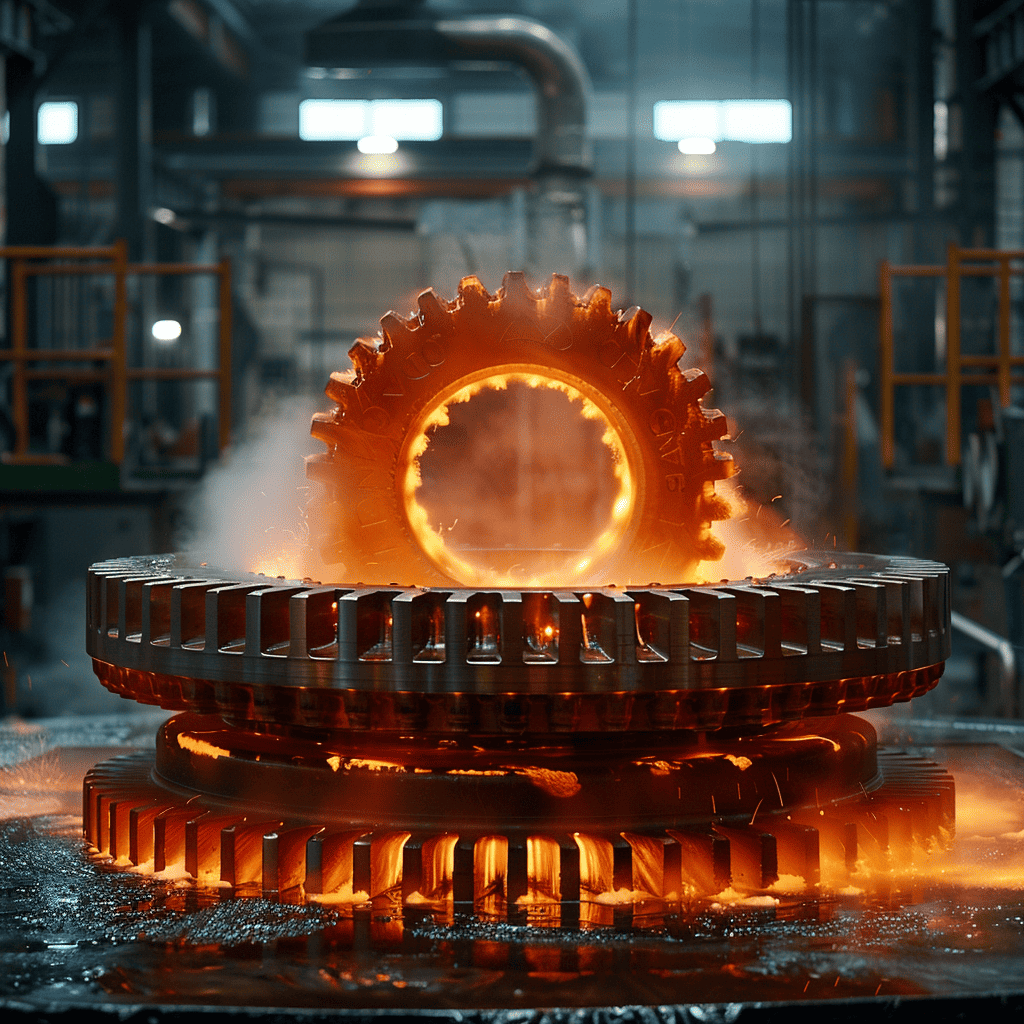
Benefits of Carburizing for Gear Toughness
Carburizing offers numerous benefits for gear toughness, making it an ideal heat treatment process for gears used in various industrial applications. Here are some of the key benefits of carburizing:
* Improved wear resistance: The hard, wear-resistant case formed during carburizing significantly improves the gear’s resistance to wear, prolonging its service life and reducing the need for maintenance and replacement.
* Increased fatigue strength: The soft, tough core of the gear provides good fatigue strength, allowing it to withstand cyclic loading and resist failure.
* Enhanced surface properties: Carburizing can improve the surface properties of the gear, such as its lubricity and corrosion resistance, further enhancing its durability and performance.
* Cost-effective: Carburizing is a cost-effective heat treatment process, as it can be performed on a large scale and does not require specialized equipment or materials.
How Carburizing Works
The carburizing process involves several steps, including:
1. Preparation: The gear is cleaned and inspected to ensure that it is free of contaminants and defects that could affect the carburizing process.
2. Packing: The gear is placed in a container with a carbon-rich material, such as charcoal or carbon powder, and sealed.
3. Heating: The container is heated to a high temperature, typically between 850 and 950°C, for several hours to allow the carbon atoms to diffuse into the surface of the gear.
4. Quenching: The gear is removed from the container and quenched in oil or water to harden the case.
5. Tempering: The gear is reheated to a lower temperature, typically between 150 and 250°C, and held at that temperature for a specified time to reduce residual stresses and improve toughness.
Types of Carburizing Processes
There are several types of carburizing processes, including:
* Gas carburizing: This process involves heating the gear in a furnace filled with a carbon-rich gas, such as methane or propane.
* Liquid carburizing: This process involves submerging the gear in a molten salt bath containing carbon.
* Vacuum carburizing: This process involves heating the gear in a vacuum or controlled atmosphere to minimize oxidation and contamination.
Choosing the Right Carburizing Process for Your Gear
Choosing the right carburizing process for your gear depends on several factors, including the gear material, size, shape, and required properties. Here are some considerations to keep in mind when selecting a carburizing process:
* Gear material: Different gear materials may require different carburizing processes. For example, gas carburizing is often used for high-alloy steels, while liquid carburizing is used for low-carbon steels.
* Gear size and shape: The size and shape of the gear can also affect the carburizing process. For example, gas carburizing is a popular choice for large or complex gears, as it allows for precise control of the carbon content and case depth. Liquid carburizing, on the other hand, is a fast and efficient process that is well-suited for smaller, simpler gears.
* Required properties: The required properties of the gear, such as surface hardness, case depth, and core toughness, will also play a role in selecting the appropriate carburizing process. For example, vacuum carburizing is often used for high-performance gears that require minimal distortion and contamination.
Carburizing is a powerful heat treatment process that can significantly improve the wear resistance and durability of gears used in various industrial applications. By carefully selecting the appropriate carburizing process and optimizing the process parameters, it is possible to achieve the desired surface hardness, case depth, and core toughness for your specific gear application. Whether you choose gas carburizing, liquid carburizing, or vacuum carburizing, the benefits of carburizing are clear: improved wear resistance, increased fatigue strength, enhanced surface properties, and cost-effectiveness. So if you’re looking to enhance the performance and durability of your gears, consider incorporating carburizing into your heat treatment processes.
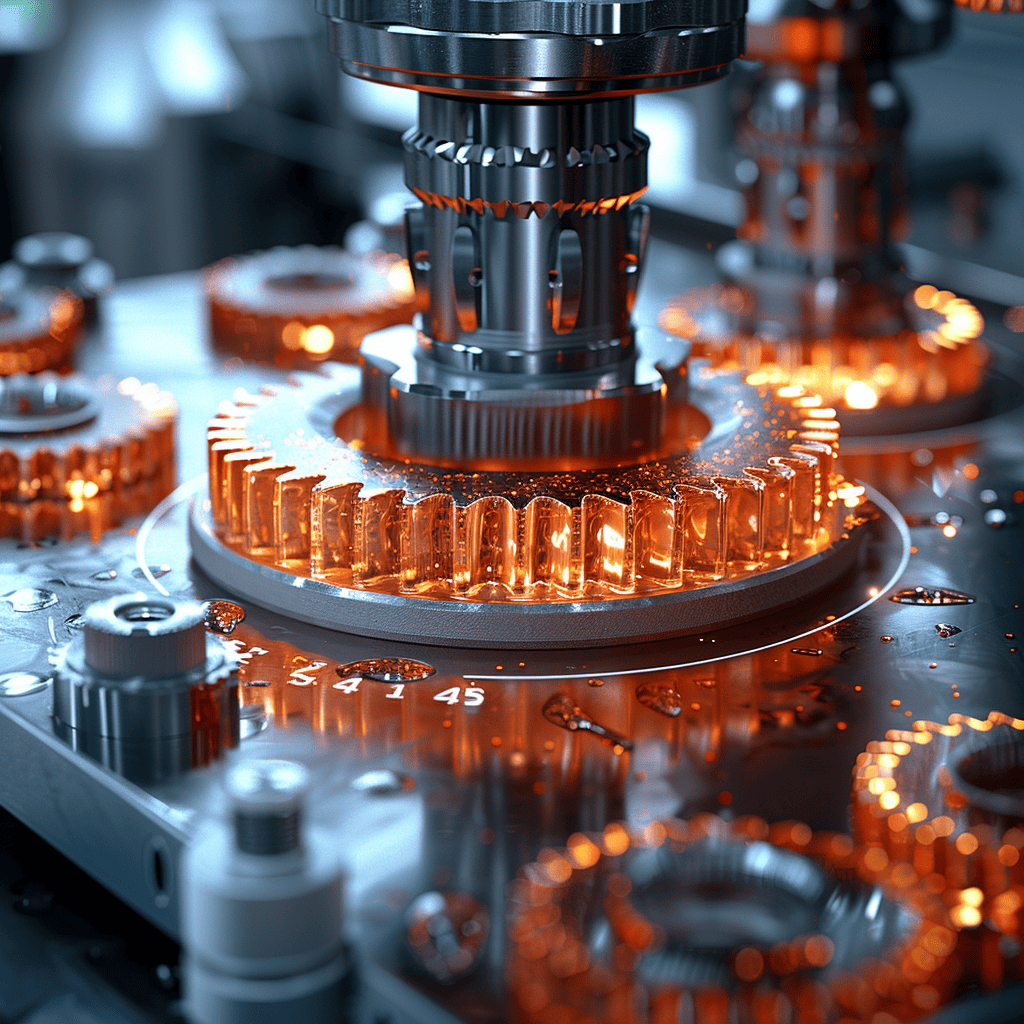
Case Hardening and Tempering: Essential Techniques for Robust Gears
Gears are critical components in many mechanical systems, subject to significant stresses and wear. To ensure their longevity and optimal performance, heat treatment processes such as case hardening and tempering are essential.
Case hardening is a process that hardens the surface of the gear, while tempering relieves internal stresses and improves toughness. Together, these techniques enhance the gear’s durability, wear resistance, and fatigue strength.
Case hardening is a heat treatment process that involves introducing carbon, nitrogen, or other elements into the surface of the gear material, typically steel, and then quenching it to form a hard, wear-resistant case. The core of the gear remains relatively soft and tough, providing good impact resistance and fatigue strength. Case hardening can be achieved using several methods, including carburizing, nitriding, and carbonitriding.
Carburizing is a popular case hardening method that involves heating the gear in a carbon-rich atmosphere, causing carbon to diffuse into the surface. This process achieves a deep case and high hardness, making it ideal for large gears that require high load-bearing capacity.
During carburizing, the gear is heated to a temperature between 850 and 950°C (1560 and 1750°F) in a furnace filled with a carbon-rich gas, such as methane or propane. The carbon atoms then diffuse into the surface of the gear, forming a hard, wear-resistant case. The depth of the case can be controlled by adjusting the carburizing time and temperature.
After carburizing, the gear is quenched in oil, water, or a polymer solution to harden the case. This rapid cooling process transforms the austenite in the case into martensite, a hard and brittle form of steel. The core of the gear remains relatively soft and tough, providing good impact resistance and fatigue strength.
Nitriding is a low-temperature case hardening process that introduces nitrogen into the surface of the gear. Unlike carburizing, nitriding does not require quenching, reducing the risk of distortion and cracking. Nitriding is also well-suited for high-alloy steels and can improve corrosion resistance.
During nitriding, the gear is heated to a temperature between 480 and 590°C (900 and 1100°F) in a nitrogen-rich atmosphere, such as ammonia gas. The nitrogen atoms then diffuse into the surface of the gear, forming a hard, wear-resistant case. The depth of the case is typically shallower than that achieved through carburizing, but the process is less likely to cause distortion or cracking.
Carbonitriding is a combination of carburizing and nitriding that achieves a shallow case and high hardness. This process is ideal for small gears that require high surface hardness and good fatigue strength.
During carbonitriding, the gear is heated to a temperature between 750 and 850°C (1380 and 1560°F) in a furnace filled with a gas mixture that contains both carbon and nitrogen. The carbon and nitrogen atoms then diffuse into the surface of the gear, forming a shallow, hard case that provides good wear resistance and fatigue strength.
Tempering is a heat treatment process that relieves residual stresses and improves the toughness of gears. It involves reheating the gear to a lower temperature, typically between 150 and 650°C, and holding it at that temperature for a specified time. The tempering process helps to reduce the brittleness of the hardened case and improve the gear’s resistance to impact and fatigue.
Tempering can be achieved using different methods, including oven tempering, induction tempering, and flame tempering. Oven tempering is a slow and steady process that provides consistent results, while induction and flame tempering offer faster processing times.
During oven tempering, the gear is heated to the desired temperature in an oven and then held at that temperature for a specified time. This process helps to relieve residual stresses and improve the toughness of the gear. Induction tempering, on the other hand, uses an electromagnetic field to heat the gear, while flame tempering uses a direct flame. Both of these methods offer faster processing times than oven tempering, but they may not provide as consistent results.
The benefits of case hardening and tempering for gear toughness are numerous. They include:
- Improved wear resistance: The hard, wear-resistant case formed during case hardening can significantly improve the gear’s resistance to wear, prolonging its service life and reducing the need for maintenance and replacement.
- Increased fatigue strength: The soft, tough core of the gear provides good fatigue strength, allowing it to withstand cyclic loading and resist failure.
- Enhanced surface properties: Case hardening can improve the surface properties of the gear, such as its lubricity and corrosion resistance, further enhancing its durability and performance.
- Cost-effective: Case hardening and tempering are cost-effective heat treatment processes, as they can be performed on a large scale and do not require specialized equipment or materials.
Choosing the right case hardening and tempering process for your gear depends on several factors, including the gear material, size, shape, and required properties. A careful analysis of these factors can help you select the most appropriate process to optimize the gear’s performance and durability for its specific application.
For example, carburizing may be the best choice for large gears that require high load-bearing capacity, while nitriding may be ideal for high-alloy steels that require improved corrosion resistance. Similarly, oven tempering may be the best choice for consistent results, while induction or flame tempering may be preferred for faster processing times.
It’s important to note that case hardening and tempering are not one-size-fits-all processes. The specific parameters used, such as temperature, time, and atmosphere composition, will depend on the gear material and desired properties. Therefore, it’s essential to work with a knowledgeable heat treatment provider who can tailor the process to your specific needs.
In summary, case hardening and tempering are essential techniques for producing robust, long-lasting gears. By carefully selecting the appropriate heat treatment process, it is possible to optimize the gear’s performance and durability for its specific application, resulting in improved mechanical system reliability and reduced maintenance costs.
Types of Tempering
There are different types of tempering processes, each with its advantages and disadvantages. Here are some of the most common types of tempering:
- Oven Tempering: This is a slow and steady process that provides consistent results. However, it can be time-consuming and may not be suitable for large-scale production.
- Induction Tempering: This process uses an electromagnetic field to heat the gear, offering faster processing times than oven tempering. However, it may not provide as consistent results.
- Flame Tempering: This process uses a direct flame to heat the gear, providing the fastest processing times of all tempering methods. However, it may not be suitable for all gear materials and can result in uneven heating.
Choosing the right tempering method for your gear depends on several factors, including the gear material, size, shape, and required properties. Your heat treatment provider can help you select the most appropriate tempering method for your specific needs.
Conclusion
Case hardening and tempering are critical processes for ensuring the longevity and optimal performance of gears in mechanical systems. By introducing carbon, nitrogen, or other elements into the surface of the gear material and then quenching it to form a hard, wear-resistant case, case hardening can significantly improve the gear’s resistance to wear, prolonging its service life and reducing the need for maintenance and replacement. Meanwhile, tempering can relieve residual stresses and improve the toughness of the gear, further enhancing its durability and performance.
When selecting a heat treatment process for your gears, it’s essential to work with a knowledgeable provider who can tailor the process to your specific needs. With the right heat treatment process, you can optimize your gear’s performance and durability for its specific application, resulting in improved mechanical system reliability and reduced maintenance costs.


