
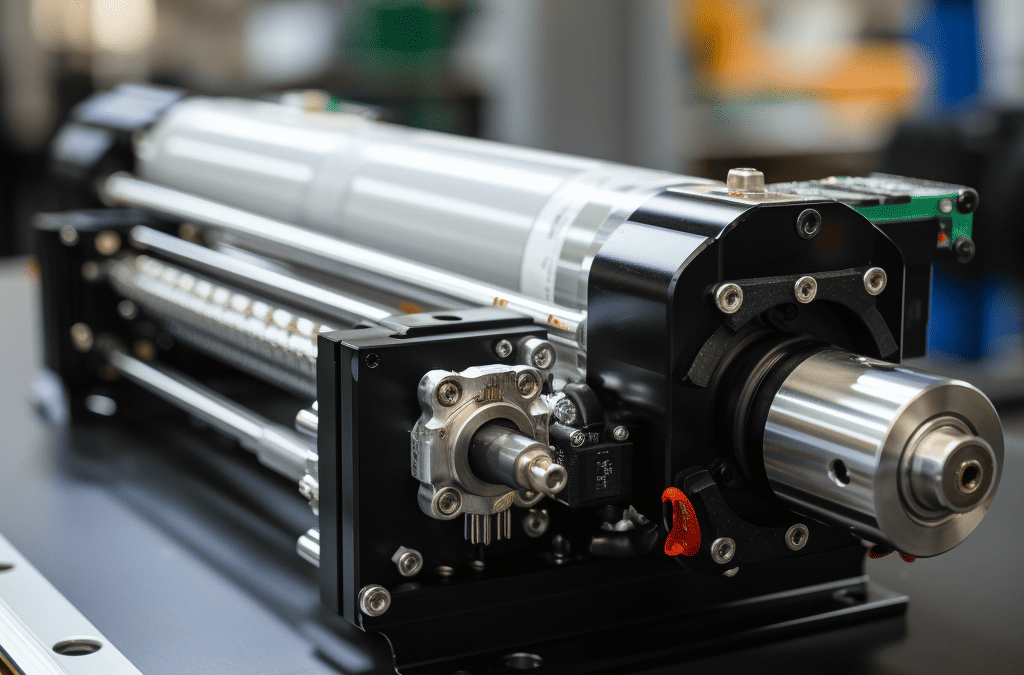
The Role of Pneumatic Cylinder Actuators in Revolutionizing Industrial Automation
Pneumatic cylinder actuators are crucial components in modern manufacturing processes, providing dependable and efficient automation solutions. These actuators use compressed air to generate linear motion, which is essential for various industrial applications, such as material handling, assembly, and packaging. By automating these processes, manufacturers can significantly increase production rates, reduce labor costs, and improve overall product quality.
Streamlining Manufacturing Processes with Pneumatic Actuators
Pneumatic cylinder actuators have become the go-to solution for manufacturers seeking to streamline their processes. These actuators offer several advantages over traditional automation methods, including lower energy costs, improved safety, and enhanced precision. They can generate linear motion with high levels of accuracy and repeatability, making them ideal for applications where repeated and precise movements are required, such as in CNC machining, robotics, and automated assembly lines.
One of the primary benefits of using pneumatic actuators is their energy efficiency. Unlike hydraulic systems, which require large amounts of energy to generate pressure, pneumatic systems use compressed air, which is a much more cost-effective and sustainable energy source. This results in lower operating costs and reduced environmental impact.
Pneumatic actuators are also known for their safety features. They are designed to fail in a safe position, minimizing the risk of injury or damage to equipment. Additionally, pneumatic systems are less prone to leaks and spills than hydraulic systems, reducing the risk of environmental contamination and ensuring a cleaner workplace.
Enhancing Precision and Accuracy in Industrial Operations
One of the primary advantages of using pneumatic cylinder actuators in industrial automation is their ability to provide high levels of precision and accuracy. This is particularly important in applications where repeated and precise movements are required, such as in CNC machining, robotics, and automated assembly lines. Pneumatic actuators offer consistent and reliable performance, ensuring that each operation is carried out with the same level of accuracy, which ultimately leads to improved product quality and reduced waste.
Pneumatic actuators can also be easily integrated with sensors, controllers, and other automation components, allowing for precise control and monitoring of the manufacturing process. This enables manufacturers to quickly identify and address any issues that may arise, reducing downtime and increasing overall efficiency.
Improving Safety and Reducing Downtime with Pneumatic Actuators
Pneumatic cylinder actuators are also known for their inherent safety features, making them an ideal choice for applications where worker safety is a top priority. These actuators are designed to fail in a safe position, minimizing the risk of injury or damage to equipment. Additionally, pneumatic actuators are less susceptible to wear and tear than hydraulic systems, reducing the risk of unexpected failures and downtime.
Pneumatic systems are also easier to maintain than hydraulic systems. They require fewer moving parts, which means there are fewer components that can fail or require maintenance. This results in lower maintenance costs and reduced downtime, which can have a significant impact on overall productivity and profitability.
Pneumatic cylinder actuators play a critical role in modern manufacturing processes, providing reliable, efficient, and safe automation solutions. By streamlining manufacturing processes, enhancing precision and accuracy, and improving safety and reducing downtime, pneumatic actuators are revolutionizing industrial automation and driving innovation in manufacturing.is the distance the piston rod travels from its fully retracted position to its fully extended position. To determine the appropriate stroke length, you need to consider the size of the workpiece or load and the required movement distance. It is essential to select an actuator with a stroke length that meets your application’s needs without causing excessive wear or energy waste.
Force, on the other hand, refers to the amount of pressure required to move the load. To calculate the necessary force, you need to take into account the weight of the load and any additional forces it may encounter, such as friction or inertia. The actuator you choose should be able to generate enough force to move the load smoothly and efficiently while maintaining the required speed and accuracy.
Choosing the Right Actuator Type
Pneumatic cylinder actuators come in various types, including single-acting, double-acting, and rodless cylinders. Each type has unique features and benefits that make it suitable for specific applications.
- Single-acting cylinders use compressed air to extend the piston rod and rely on springs or external forces to retract it. They are ideal for applications that require simple linear motion and have limited space requirements.
- Double-acting cylinders use compressed air for both extension and retraction, providing greater control and precision. They are suitable for applications that require bidirectional movement and high force output.
- Rodless cylinders are designed to minimize the overall size and weight of the actuator by eliminating the piston rod. Instead, they use a flexible cable or magnetically coupled system to transfer force. Rodless cylinders are ideal for applications that require long stroke lengths, compact designs, and smooth, continuous motion.
Considering Mounting Options and Configuration
Proper mounting of the pneumatic cylinder actuator is essential for ensuring safe and efficient operation. Actuators come with various mounting options, including flange, trunnion, and clevis mounts. Choose the mounting option that best suits your application’s requirements and available space.
Additionally, consider the actuator’s configuration, such as the orientation of the ports, rod, and piston. Ensure that the chosen configuration is compatible with your system’s layout and allows for easy installation and maintenance.
Evaluating Actuator Materials and Finishes
Selecting the appropriate materials and finishes for your pneumatic cylinder actuator is crucial to ensuring its durability and longevity in your specific application. Consider factors such as the operating environment, chemical exposure, and temperature range when choosing materials and finishes.
Common materials used in pneumatic cylinder actuators include aluminum, steel, and stainless steel. Each material offers different benefits in terms of strength, weight, and corrosion resistance. Additionally, various finishes, such as anodizing or plating, can be applied to enhance the actuator’s resistance to wear and tear.
Assessing Actuator Accessories and Controls
Pneumatic cylinder actuators often require additional accessories and controls to optimize their performance and functionality. Common accessories include position sensors, flow controls, and end-of-stroke cushioning devices. Carefully evaluate your application’s needs and choose the appropriate accessories to enhance the actuator’s capabilities and efficiency.
Additionally, consider the type of control system required for your application, such as manual, semi-automatic, or fully automatic. Ensure that the chosen control system is compatible with the actuator and provides the necessary level of precision and control for your specific operation.
Comparing Actuator Brands and Prices
Finally, compare different brands and prices when selecting a pneumatic cylinder actuator for your application. While it may be tempting to choose the least expensive option, consider factors such as product quality, durability, and customer support. A higher upfront cost may result in lower long-term maintenance and replacement costs, ultimately providing better value for your investment.
Research various manufacturers and read reviews from other users to gain insights into each brand’s reputation and performance. By carefully evaluating all aspects of the actuator, you can make an informed decision that ensures optimal efficiency and reliability in your industrial operations.
Advanced pneumatic actuator technologies have significantly enhanced the capabilities of these systems, enabling more precise control and increased efficiency in various industrial applications. Among these advancements, the integration of position feedback sensors stands out as a key innovation.
Position Feedback Sensors in Pneumatic Actuators
Position feedback sensors are integral components that monitor the exact position of the pneumatic actuator’s piston at any given moment. This real-time data is invaluable for several reasons:
– **Precision Control**: With the exact position known, control systems can make immediate adjustments to the actuator’s operation, ensuring movements are executed with high precision. This is crucial in applications requiring intricate positioning, such as in robotic assembly lines, where even minor deviations can lead to product defects or machine damage.
– **Efficiency and Energy Savings**: By preventing overshooting or undershooting the target position, position feedback sensors minimize the need for corrective actions, which can be time-consuming and consume additional energy. This optimization of movement not only saves energy but also speeds up operations, contributing to overall process efficiency.
– **Enhanced System Integration**: These sensors allow pneumatic actuators to be integrated more seamlessly into automated systems that require precise synchronization between different components. For example, in packaging lines where actuators are responsible for positioning items for labeling, real-time position feedback ensures that each item is accurately aligned, enhancing the consistency and speed of the process.
– **Predictive Maintenance**: The data from position feedback sensors can also be used to predict and prevent failures by analyzing patterns that may indicate wear or impending malfunction. This proactive approach to maintenance can reduce downtime and extend the lifespan of the actuator.
– **Customization and Flexibility**: With the aid of position feedback sensors, pneumatic actuators can be easily adapted to a wide range of tasks and environments, from cleanrooms in pharmaceutical manufacturing to harsh conditions in metal fabrication processes. This flexibility makes them an invaluable tool across industries.
The adoption of position feedback sensors in pneumatic actuator technology exemplifies the industry’s move towards more intelligent, efficient, and reliable automation solutions. By leveraging these advanced features, businesses can achieve greater accuracy in their operations, optimize their energy use, and enhance the overall productivity of their systems.
Another advanced technology is the use of energy-efficient actuators. These actuators are designed to use less compressed air than traditional actuators, reducing energy costs and improving overall efficiency. Some energy-efficient actuators even utilize regenerative technology, which captures and reuses energy that would otherwise be wasted.
Additionally, the use of smart actuators can also greatly improve efficiency and productivity. Smart actuators are equipped with advanced electronics and communication capabilities, allowing for remote monitoring and control. This enables predictive maintenance and reduces downtime by allowing for quick identification and resolution of issues.
By utilizing advanced pneumatic actuator technologies such as position feedback sensors, energy-efficient actuators, and smart actuators, industrial operations can greatly improve efficiency and productivity. These technologies not only provide precise control and energy savings, but also enable predictive maintenance and remote monitoring and control. By investing in these advanced technologies, companies can stay ahead of the competition and ensure the success of their operations.
Furthermore, industries can also consider using actuators with integrated safety features such as safety valves and brakes. These features provide an added layer of protection for workers and equipment, reducing the risk of accidents and costly downtime. Additionally, using actuators with self-diagnostic capabilities can help to quickly identify and troubleshoot issues, further improving efficiency and productivity.
In summary, by investing in advanced pneumatic actuator technologies, industries can gain a competitive edge and ensure the success of their operations. From position feedback sensors and energy-efficient actuators to smart actuators and integrated safety features, these technologies provide the precision, energy savings, and safety needed to maximize efficiency and productivity.age. During installation, make sure the actuator is securely mounted and aligned properly. Misalignment can cause excessive wear and tear on the actuator, leading to premature failure.
It’s also important to ensure that the actuator is installed in a clean and dry environment. Dust and moisture can cause contamination and corrosion, which can damage the actuator and reduce its lifespan.
Proper Operating Conditions
Operating pneumatic cylinder actuators within their recommended parameters can help ensure long-term performance and prevent damage. This includes operating within the actuator’s rated pressure, temperature, and speed limits.
Exceeding these limits can cause excessive wear and tear on the actuator, leading to premature failure. Additionally, it’s important to ensure that the air supply is clean and dry to prevent contamination and moisture from entering the actuator.
Regular Cleaning and Filter Maintenance
Regular cleaning of pneumatic cylinder actuators can help remove dirt, dust, and other contaminants that can cause wear and tear. This includes cleaning the actuator’s exterior and interior components, such as the cylinder bore and piston rod.
Additionally, regular maintenance of air filters can help ensure that the air supply is clean and free of contaminants. Dirty or clogged filters can restrict airflow and cause excessive wear on the actuator.
Timely Replacement of Worn Parts
Despite regular maintenance, some parts of pneumatic cylinder actuators may eventually wear out and need to be replaced. This includes seals, bearings, and piston rings.
Replacing worn parts promptly can help prevent further damage and ensure optimal performance. It’s important to consult the manufacturer’s guidelines for recommendations on when to replace specific parts.
Training and Education
Finally, training and education of personnel who operate and maintain pneumatic cylinder actuators can help ensure that they are used and maintained properly. This includes training on proper installation, operation, and maintenance procedures.
Regular training and education can also help identify potential issues before they become major problems, reducing downtime and improving the longevity of the actuator.
In conclusion, proper maintenance is essential for ensuring the long-term performance and reliability of pneumatic cylinder actuators in industrial operations. By following these maintenance tips, you can help minimize downtime, reduce repair costs, and improve the overall efficiency of your operations.


