
Sure, I’d be happy to expand on that section for you!

Understanding Pneumatic Rotating Actuators: Functions, Types, and Advantages
What are Pneumatic Rotating Actuators?
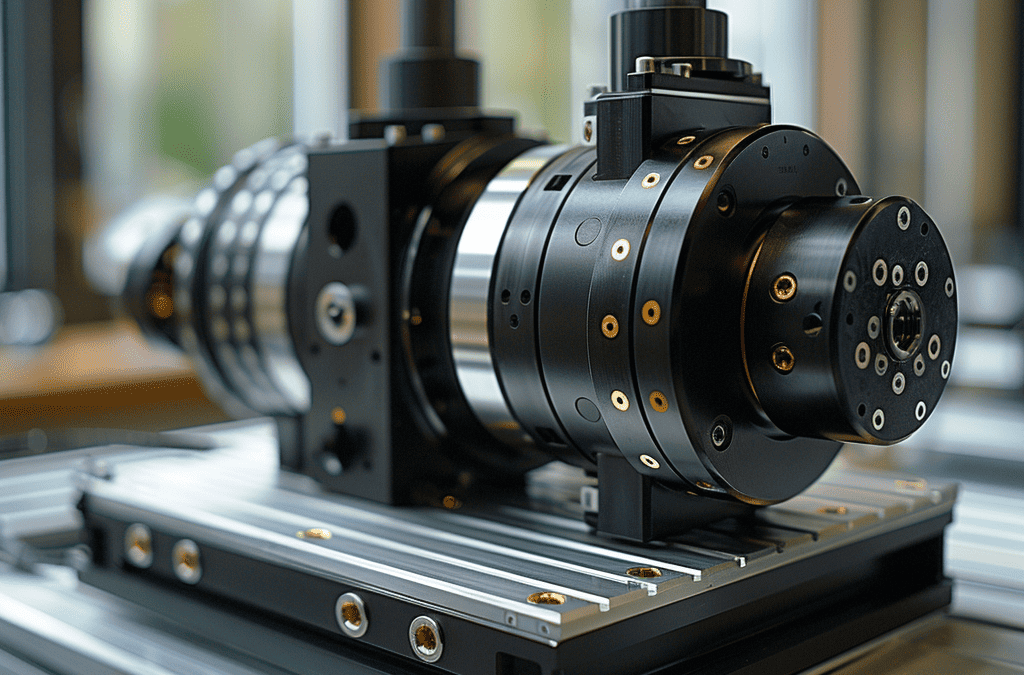
Pneumatic rotating actuators are mechanical devices that convert compressed air into rotary motion. They are commonly used in industrial automation, robotics, and manufacturing applications to provide precise and reliable rotation for various types of machinery.
These actuators consist of a cylinder, piston, and rotating shaft that is connected to a mechanical load. When compressed air is introduced into the cylinder, the piston is forced to move, causing the shaft to rotate. The amount of rotation can be controlled by regulating the amount of air that is supplied to the cylinder.
Pneumatic swivel joints or air swivel joints are other names for pneumatic rotating actuators. They offer a high degree of accuracy and repeatability, making them a popular choice for many applications.
How Do Pneumatic Rotating Actuators Work?
Pneumatic rotating actuators work by using compressed air to create a pressure differential that drives the piston and rotating shaft. When air is introduced into the cylinder, it creates pressure on one side of the piston, causing it to move and rotate the shaft. The amount of rotation is determined by the size of the cylinder and the length of the piston stroke.
To control the direction of rotation, most pneumatic rotating actuators use a series of valves that direct the airflow into the cylinder. These valves can be manually operated or controlled by a programmable logic controller (PLC) or other automation system.
In addition to providing rotation, pneumatic rotating actuators can also be used to generate linear motion. This is achieved by attaching a linear slider or rod to the rotating shaft, which is then moved by the piston as it rotates.
Types of Pneumatic Rotating Actuators
There are several types of pneumatic rotating actuators, each with its own advantages and disadvantages. Some of the most common types include:
- Vane-Type actuators use a series of vanes that are mounted on a rotating shaft. As air is introduced into the cylinder, the vanes expand and push against the cylinder wall, causing the shaft to rotate. Vane-type actuators are known for their high speed and low torque capabilities.
- Rack and Pinion actuators use a pinion gear that is attached to the rotating shaft. As air is introduced into the cylinder, the piston pushes against a rack that is connected to the pinion gear, causing it to rotate. Rack and pinion actuators are known for their high torque and precision capabilities.
- Gear-Type actuators use a series of gears that are connected to the rotating shaft. As air is introduced into the cylinder, the piston pushes against a gear, causing it to rotate and transmit motion to the other gears in the system. Gear-type actuators are known for their high torque and low speed capabilities.
Advantages of Pneumatic Rotating Actuators
Pneumatic rotating actuators offer several advantages over other types of actuators, including:
- High speed and accuracy: Pneumatic rotating actuators can provide fast and precise rotation, making them ideal for applications that require quick and accurate positioning.
- Low maintenance: Pneumatic rotating actuators have few moving parts, which reduces the risk of wear and tear and makes them easier to maintain than other types of actuators.
- Cost-effective: Pneumatic rotating actuators are relatively inexpensive to purchase and maintain, making them a cost-effective choice for many applications.
- Safe and reliable: Pneumatic rotating actuators are designed to operate safely and reliably, even in harsh environments.
- Versatile: Pneumatic rotating actuators can be used in a wide range of applications, from automotive manufacturing to food processing.
Choosing the Right Pneumatic Rotating Actuator
When selecting a pneumatic rotating actuator for your application, there are several factors to consider, including:
- Rotation requirements: Determine the amount of rotation that is required for your application, as well as the speed and torque requirements.
- Environmental conditions: Consider the operating conditions, such as temperature, humidity, and exposure to chemicals or other contaminants.
- Mounting options: Consider the available mounting options and choose an actuator that can be easily integrated into your system.
- Control requirements: Determine the level of control that is required, such as manual or automated control, and choose an actuator that can accommodate your needs.
- Maintenance requirements: Consider the maintenance requirements of the actuator, including the frequency and ease of maintenance.
By carefully considering these factors, you can choose the right pneumatic rotating actuator for your application and ensure reliable and efficient operation.
Applications of Pneumatic Rotating Actuators
Pneumatic rotating actuators are used in a wide range of industries and applications, including:
- Automotive manufacturing: Used in assembly lines for tasks such as tightening bolts and screws.
- Food and beverage processing: Used in packaging lines for tasks such as opening and closing containers.
- Pharmaceutical manufacturing: Used in production lines for tasks such as capping and labeling bottles.
- Robotics: Used in robotic arms and end effectors for tasks such as welding and painting.
- Aerospace: Used in aircraft and spacecraft for tasks such as controlling flaps and landing gear.
Choosing the Right Pneumatic Rotating Actuator Supplier
When selecting a supplier for your pneumatic rotating actuator, it’s important to choose a company with a proven track record of quality and reliability. Look for a supplier that offers a wide range of products and can provide custom solutions to meet your specific needs.
Consider the following factors when choosing a supplier:
- Product quality: Look for a supplier that uses high-quality materials and components to ensure the longevity and reliability of their products.
- Customer service: Look for a supplier that offers excellent customer service, including technical support and responsive communication.
- Pricing: Look for a supplier that offers competitive pricing without compromising on quality.
- Delivery times: Look for a supplier that can provide fast and reliable delivery times to minimize downtime and keep your production schedule on track.
In conclusion, pneumatic rotating actuators are a powerful and versatile tool for a wide range of industrial automation, robotics, and manufacturing applications. By understanding how they work and the different types available, you can choose the right actuator for your specific needs and ensure reliable and efficient operation.
When selecting a supplier, it’s important to choose a company with a proven track record of quality and reliability. Look for a supplier that offers a wide range of products, custom solutions, excellent customer service, competitive pricing, and fast delivery times.
Expanded Section: The Benefits of Pneumatic Rotating Actuators
Pneumatic rotating actuators offer numerous benefits over other types of actuators, making them a popular choice for many industrial applications. Some of the key benefits include:
- High speed and accuracy: Pneumatic rotating actuators can provide fast and precise rotation, making them ideal for applications that require quick and accurate positioning. They can rotate up to 360 degrees in a matter of seconds, depending on the specific model and application requirements.
- Low maintenance: Pneumatic rotating actuators have fewer moving parts than other types of actuators, which reduces the risk of wear and tear and makes them easier to maintain. They also do not require lubrication, which can simplify maintenance and reduce downtime.
- Cost-effective: Pneumatic rotating actuators are relatively inexpensive to purchase and maintain compared to other types of actuators. They are also energy-efficient, as they only use compressed air when they are in motion, which can help reduce energy costs.
- Safe and reliable: Pneumatic rotating actuators are designed to operate safely and reliably, even in harsh environments. They are explosion-proof and can withstand extreme temperatures and other adverse conditions, making them suitable for use in hazardous environments.
- Versatile: Pneumatic rotating actuators can be used in a wide range of applications, from automotive manufacturing to food processing. They can be customized to meet specific application requirements, such as torque, speed, and rotation angle.
Overall, pneumatic rotating actuators offer a cost-effective, reliable, and versatile solution for a wide range of industrial applications. By understanding the benefits and selecting the right actuator for your specific needs, you can ensure efficient and reliable operation for your machinery and equipment.
Sure, I’d be happy to expand on that!

Understanding Pneumatic Rotating Actuators: Functions, Types, and Advantages
What are Pneumatic Rotating Actuators?
Pneumatic rotating actuators are mechanical devices that convert compressed air into rotary motion. They are commonly used in industrial automation, robotics, and manufacturing applications to provide precise and reliable rotation for various types of machinery. These actuators consist of a cylinder, piston, and rotating shaft that is connected to a mechanical load. When compressed air is introduced into the cylinder, the piston is forced to move, causing the shaft to rotate. The amount of rotation can be controlled by regulating the amount of air that is supplied to the cylinder.
Pneumatic swivel joints or air swivel joints are other names for pneumatic rotating actuators. They offer a high degree of accuracy and repeatability, making them a popular choice for many applications.
How Do Pneumatic Rotating Actuators Work?
Pneumatic rotating actuators work by using compressed air to create a pressure differential that drives the piston and rotating shaft. When air is introduced into the cylinder, it creates pressure on one side of the piston, causing it to move and rotate the shaft. The amount of rotation is determined by the size of the cylinder and the length of the piston stroke.
To control the direction of rotation, most pneumatic rotating actuators use a series of valves that direct the airflow into the cylinder. These valves can be manually operated or controlled by a programmable logic controller (PLC) or other automation system. In addition to providing rotation, pneumatic rotating actuators can also be used to generate linear motion. This is achieved by attaching a linear slider or rod to the rotating shaft, which is then moved by the piston as it rotates.
Types of Pneumatic Rotating Actuators
There are several types of pneumatic rotating actuators, each with its own advantages and disadvantages. The three most common types are:
Vane-Type Actuators – These actuators use a series of vanes that are mounted on a rotating shaft. As air is introduced into the cylinder, the vanes expand and push against the cylinder wall, causing the shaft to rotate. Vane-type actuators are known for their high speed and low torque capabilities.
Rack and Pinion Actuators – These actuators use a pinion gear that is attached to the rotating shaft. As air is introduced into the cylinder, the piston pushes against a rack that is connected to the pinion gear, causing it to rotate. Rack and pinion actuators are known for their high torque and precision capabilities.
Gear-Type Actuators – These actuators use a series of gears that are connected to the rotating shaft. As air is introduced into the cylinder, the piston pushes against a gear, causing it to rotate and transmit motion to the other gears in the system. Gear-type actuators are known for their high torque and low speed capabilities.
Advantages of Pneumatic Rotating Actuators
Pneumatic rotating actuators offer several advantages over other types of actuators, including:
- High speed and accuracy – Pneumatic rotating actuators can provide fast and precise rotation, making them ideal for applications that require quick and accurate positioning.
- Low maintenance – Pneumatic rotating actuators have few moving parts, which reduces the risk of wear and tear and makes them easier to maintain than other types of actuators.
- Cost-effective – Pneumatic rotating actuators are relatively inexpensive to purchase and maintain, making them a cost-effective choice for many applications.
- Safe and reliable – Pneumatic rotating actuators are designed to operate safely and reliably, even in harsh environments.
- Versatile – Pneumatic rotating actuators can be used in a wide range of applications, from automotive manufacturing to food processing.
Choosing the Right Pneumatic Rotating Actuator
When selecting a pneumatic rotating actuator for your application, there are several factors to consider, including:
- Rotation requirements – Determine the amount of rotation that is required for your application, as well as the speed and torque requirements.
- Environmental conditions – Consider the operating conditions, such as temperature, humidity, and exposure to chemicals or other contaminants.
- Mounting options – Consider the available mounting options and choose an actuator that can be easily integrated into your system.
- Control requirements – Determine the level of control that is required, such as manual or automated control, and choose an actuator that can accommodate your needs.
- Maintenance requirements – Consider the maintenance requirements of the actuator, including the frequency and ease of maintenance.
By carefully considering these factors, you can choose the right pneumatic rotating actuator for your application and ensure reliable and efficient operation.
Applications of Pneumatic Rotating Actuators
Pneumatic rotating actuators are used in a wide range of industries and applications, including:
- Automotive manufacturing – Used in assembly lines for tasks such as tightening bolts and screws.
- Food and beverage processing – Used in packaging lines for tasks such as opening and closing containers.
- Pharmaceutical manufacturing – Used in production lines for tasks such as capping and labeling bottles.
- Robotics – Used in robotic arms and end effectors for tasks such as welding and painting.
- Aerospace – Used in aircraft and spacecraft for tasks such as controlling flaps and landing gear.
Choosing the Right Pneumatic Rotating Actuator Supplier
When selecting a supplier for your pneumatic rotating actuator, it’s important to choose a company with a proven track record of quality and reliability. Look for a supplier that offers a wide range of products and can provide custom solutions to meet your specific needs.
Consider the following factors when choosing a supplier:
- Product quality – Look for a supplier that uses high-quality materials and components to ensure the longevity and reliability of their products.
- Customer service – Look for a supplier that offers excellent customer service, including technical support and responsive communication.
- Pricing – Look for a supplier that offers competitive pricing without compromising on quality.
- Delivery times – Look for a supplier that can provide fast and reliable delivery times to minimize downtime and keep your production schedule on track.
In conclusion, pneumatic rotating actuators are a powerful and versatile tool for a wide range of industrial automation, robotics, and manufacturing applications. By understanding how they work and the different types available, you can choose the right actuator for your specific needs and ensure reliable and efficient operation.
When selecting a supplier, it’s important to choose a company with a proven track record of quality and reliability. Look for a supplier that offers a wide range of products, custom solutions, excellent customer service, competitive pricing, and fast delivery times.
Expanded version:

Understanding Pneumatic Rotating Actuators: Functions, Types, and Advantages
What are Pneumatic Rotating Actuators?
Pneumatic rotating actuators are mechanical devices that convert compressed air into rotary motion. They are commonly used in industrial automation, robotics, and manufacturing applications to provide precise and reliable rotation for various types of machinery. These actuators consist of a cylinder, piston, and rotating shaft that is connected to a mechanical load. When compressed air is introduced into the cylinder, the piston is forced to move, causing the shaft to rotate. The amount of rotation can be controlled by regulating the amount of air that is supplied to the cylinder.
Pneumatic rotating actuators, also known as pneumatic swivel joints or air swivel joints, offer a high degree of accuracy and repeatability, making them a popular choice for many applications. They are compact, lightweight, and easy to install, which makes them ideal for use in tight spaces.
How Do Pneumatic Rotating Actuators Work?
Pneumatic rotating actuators work by using compressed air to create a pressure differential that drives the piston and rotating shaft. When air is introduced into the cylinder, it creates pressure on one side of the piston, causing it to move and rotate the shaft. The amount of rotation is determined by the size of the cylinder and the length of the piston stroke.
To control the direction of rotation, most pneumatic rotating actuators use a series of valves that direct the airflow into the cylinder. These valves can be manually operated or controlled by a programmable logic controller (PLC) or other automation system. By controlling the flow of air, the actuator can be made to rotate in either direction or to stop at a specific position.
In addition to providing rotation, pneumatic rotating actuators can also be used to generate linear motion. This is achieved by attaching a linear slider or rod to the rotating shaft, which is then moved by the piston as it rotates. Linear motion can be useful in applications such as pick-and-place operations or assembly tasks.
Types of Pneumatic Rotating Actuators
There are several types of pneumatic rotating actuators, each with its own advantages and disadvantages. The three most common types are:
Vane-Type actuators use a series of vanes that are mounted on a rotating shaft. As air is introduced into the cylinder, the vanes expand and push against the cylinder wall, causing the shaft to rotate. Vane-type actuators are known for their high speed and low torque capabilities. They are often used in applications that require quick and precise movement, such as packaging machinery or robotic arms.
Rack and Pinion actuators use a pinion gear that is attached to the rotating shaft. As air is introduced into the cylinder, the piston pushes against a rack that is connected to the pinion gear, causing it to rotate. Rack and pinion actuators are known for their high torque and precision capabilities. They are often used in applications that require heavy loads to be moved, such as material handling equipment or automotive assembly lines.
Gear-Type actuators use a series of gears that are connected to the rotating shaft. As air is introduced into the cylinder, the piston pushes against a gear, causing it to rotate and transmit motion to the other gears in the system. Gear-type actuators are known for their high torque and low speed capabilities. They are often used in applications that require slow and precise movement, such as medical equipment or scientific instruments.
Advantages of Pneumatic Rotating Actuators
Pneumatic rotating actuators offer several advantages over other types of actuators, including:
- High speed and accuracy: Pneumatic rotating actuators can provide fast and precise rotation, making them ideal for applications that require quick and accurate positioning.
- Low maintenance: Pneumatic rotating actuators have few moving parts, which reduces the risk of wear and tear and makes them easier to maintain than other types of actuators.
- Cost-effective: Pneumatic rotating actuators are relatively inexpensive to purchase and maintain, making them a cost-effective choice for many applications.
- Safe and reliable: Pneumatic rotating actuators are designed to operate safely and reliably, even in harsh environments. They are often used in applications where electrical or hydraulic actuators may not be suitable due to safety or environmental concerns.
- Versatile: Pneumatic rotating actuators can be used in a wide range of applications, from automotive manufacturing to food processing. They can be customized to meet specific application requirements, such as temperature, pressure, or speed.
Choosing the Right Pneumatic Rotating Actuator
When selecting a pneumatic rotating actuator for your application, there are several factors to consider, including:
- Rotation requirements: Determine the amount of rotation that is required for your application, as well as the speed and torque requirements.
- Environmental conditions: Consider the operating conditions, such as temperature, humidity, and exposure to chemicals or other contaminants.
- Mounting options: Consider the available mounting options and choose an actuator that can be easily integrated into your system.
- Control requirements: Determine the level of control that is required, such as manual or automated control, and choose an actuator that can accommodate your needs.
- Maintenance requirements: Consider the maintenance requirements of the actuator, including the frequency and ease of maintenance.
By carefully considering these factors, you can choose the right pneumatic rotating actuator for your application and ensure reliable and efficient operation.
Applications of Pneumatic Rotating Actuators
Pneumatic rotating actuators are used in a wide range of industries and applications, including:
- Automotive manufacturing: Used in assembly lines for tasks such as tightening bolts and screws.
- Food and beverage processing: Used in packaging lines for tasks such as opening and closing containers.
- Pharmaceutical manufacturing: Used in production lines for tasks such as capping and labeling bottles.
- Robotics: Used in robotic arms and end effectors for tasks such as welding and painting.
- Aerospace: Used in aircraft and spacecraft for tasks such as controlling flaps and landing gear.
Choosing the Right Pneumatic Rotating Actuator Supplier
When selecting a supplier for your pneumatic rotating actuator, it’s important to choose a company with a proven track record of quality and reliability. Look for a supplier that offers a wide range of products and can provide custom solutions to meet your specific needs.
Consider the following factors when choosing a supplier:
- Product quality: Look for a supplier that uses high-quality materials and components to ensure the longevity and reliability of their products.
- Customer service: Look for a supplier that offers excellent customer service, including technical support and responsive communication.
- Pricing: Look for a supplier that offers competitive pricing without compromising on quality.
- Delivery times: Look for a supplier that can provide fast and reliable delivery times to minimize downtime and keep your production schedule on track.
In conclusion, pneumatic rotating actuators are a powerful and versatile tool for a wide range of industrial automation, robotics, and manufacturing applications. By understanding how they work and the different types available, you can choose the right actuator for your specific needs and ensure reliable and efficient operation.
When selecting a supplier, it’s important to choose a company with a proven track record of quality and reliability. Look for a supplier that offers a wide range of products, custom solutions, excellent customer service, competitive pricing, and fast delivery times.
Additional information:
* Pneumatic rotating actuators are often used in applications where cleanliness is important, such as food processing or pharmaceutical manufacturing, because they do not generate electrical sparks or heat.
* Pneumatic rotating actuators can be designed to operate in hazardous environments, such as areas where flammable gases or dust are present.
* Some pneumatic rotating actuators are designed to be failsafe, meaning they will hold their position in the event of a power failure or other system failure.
* Pneumatic rotating actuators can be combined with other types of actuators, such as linear actuators or hydraulic actuators, to create complex motion control systems.
* Pneumatic rotating actuators can be equipped with sensors and feedback systems to provide real-time monitoring and control of the actuator’s position and speed.
* Pneumatic rotating actuators are often used in applications where high cycle rates are required, such as packaging lines or automated assembly lines.

Sure! Here’s an expanded version of that blog post:
—
Pneumatic rotating actuators are a type of mechanical device used to convert compressed air into rotary motion. They are commonly used in industrial automation, robotics, and manufacturing applications to provide precise and reliable rotation for various types of machinery. These actuators consist of a cylinder, piston, and rotating shaft that is connected to a mechanical load. When compressed air is introduced into the cylinder, the piston is forced to move, causing the shaft to rotate. The amount of rotation can be controlled by regulating the amount of air that is supplied to the cylinder.
Pneumatic swivel joints or air swivel joints are other names for pneumatic rotating actuators. They offer a high degree of accuracy and repeatability, making them a popular choice for many applications. In this blog post, we’ll take a closer look at how pneumatic rotating actuators work, the different types available, their advantages, and how to choose the right one for your application.
### How Do Pneumatic Rotating Actuators Work?
Pneumatic rotating actuators work by using compressed air to create a pressure differential that drives the piston and rotating shaft. When air is introduced into the cylinder, it creates pressure on one side of the piston, causing it to move and rotate the shaft. The amount of rotation is determined by the size of the cylinder and the length of the piston stroke.
To control the direction of rotation, most pneumatic rotating actuators use a series of valves that direct the airflow into the cylinder. These valves can be manually operated or controlled by a programmable logic controller (PLC) or other automation system. By controlling the flow of air, the actuator can be made to rotate in either direction or to stop at a specific position.
In addition to providing rotation, pneumatic rotating actuators can also be used to generate linear motion. This is achieved by attaching a linear slider or rod to the rotating shaft, which is then moved by the piston as it rotates.
### Types of Pneumatic Rotating Actuators
There are several types of pneumatic rotating actuators, each with its own advantages and disadvantages. Here are three of the most common types:
#### Vane-Type Actuators
Vane-type actuators use a series of vanes that are mounted on a rotating shaft. As air is introduced into the cylinder, the vanes expand and push against the cylinder wall, causing the shaft to rotate. Vane-type actuators are known for their high speed and low torque capabilities. They are commonly used in applications such as packaging machinery, where fast and precise motion is required.
#### Rack and Pinion Actuators
Rack and pinion actuators use a pinion gear that is attached to the rotating shaft. As air is introduced into the cylinder, the piston pushes against a rack that is connected to the pinion gear, causing it to rotate. This type of actuator is known for its high torque and precision capabilities. Rack and pinion actuators are commonly used in applications such as robotics, where precise and accurate motion is required.
#### Gear-Type Actuators
Gear-type actuators use a series of gears that are connected to the rotating shaft. As air is introduced into the cylinder, the piston pushes against a gear, causing it to rotate and transmit motion to the other gears in the system. This type of actuator is known for its high torque and low speed capabilities. Gear-type actuators are commonly used in applications such as material handling, where high torque is required to move heavy loads.
### Advantages of Pneumatic Rotating Actuators
Pneumatic rotating actuators offer several advantages over other types of actuators, including:
* High speed and accuracy: Pneumatic rotating actuators can provide fast and precise rotation, making them ideal for applications that require quick and accurate positioning.
* Low maintenance: Pneumatic rotating actuators have few moving parts, which reduces the risk of wear and tear and makes them easier to maintain than other types of actuators.
* Cost-effective: Pneumatic rotating actuators are relatively inexpensive to purchase and maintain, making them a cost-effective choice for many applications.
* Safe and reliable: Pneumatic rotating actuators are designed to operate safely and reliably, even in harsh environments.
* Versatile: Pneumatic rotating actuators can be used in a wide range of applications, from automotive manufacturing to food processing.
### Choosing the Right Pneumatic Rotating Actuator
When selecting a pneumatic rotating actuator for your application, there are several factors to consider, including:
* Rotation requirements: Determine the amount of rotation that is required for your application, as well as the speed and torque requirements.
* Environmental conditions: Consider the operating conditions, such as temperature, humidity, and exposure to chemicals or other contaminants.
* Mounting options: Consider the available mounting options and choose an actuator that can be easily integrated into your system.
* Control requirements: Determine the level of control that is required, such as manual or automated control, and choose an actuator that can accommodate your needs.
* Maintenance requirements: Consider the maintenance requirements of the actuator, including the frequency and ease of maintenance.
By carefully considering these factors, you can choose the right pneumatic rotating actuator for your application and ensure reliable and efficient operation.
### Applications of Pneumatic Rotating Actuators
Pneumatic rotating actuators are used in a wide range of industries and applications, including:
* Automotive manufacturing: Used in assembly lines for tasks such as tightening bolts and screws.
* Food and beverage processing: Used in packaging lines for tasks such as opening and closing containers.
* Pharmaceutical manufacturing: Used in production lines for tasks such as capping and labeling bottles.
* Robotics: Used in robotic arms and end effectors for tasks such as welding and painting.
* Aerospace: Used in aircraft and spacecraft for tasks such as controlling flaps and landing gear.
### Choosing the Right Pneumatic Rotating Actuator Supplier
When selecting a supplier for your pneumatic rotating actuator, it’s important to choose a company with a proven track record of quality and reliability. Look for a supplier that offers a wide range of products and can provide custom solutions to meet your specific needs. Consider the following factors when choosing a supplier:
* Product quality: Look for a supplier that uses high-quality materials and components to ensure the longevity and reliability of their products.
* Customer service: Look for a supplier that offers excellent customer service, including technical support and responsive communication.
* Pricing: Look for a supplier that offers competitive pricing without compromising on quality.
* Delivery times: Look for a supplier that can provide fast and reliable delivery times to minimize downtime and keep your production schedule on track.
### Conclusion
Pneumatic rotating actuators are a powerful and versatile tool for a wide range of industrial automation, robotics, and manufacturing applications. By understanding how they work and the different types available, you can choose the right actuator for your specific needs and ensure reliable and efficient operation. When selecting a supplier, it’s important to choose a company with a proven track record of quality and reliability. Look for a supplier that offers a wide range of products, custom solutions, excellent customer service, competitive pricing, and fast delivery times.Sure, here’s an expanded version of that blog post:
—
Pneumatic rotating actuators are mechanical devices that convert compressed air into rotary motion. They are commonly used in industrial automation, robotics, and manufacturing applications to provide precise and reliable rotation for various types of machinery. These actuators consist of a cylinder, piston, and rotating shaft that is connected to a mechanical load. When compressed air is introduced into the cylinder, the piston is forced to move, causing the shaft to rotate. The amount of rotation can be controlled by regulating the amount of air that is supplied to the cylinder.
Pneumatic swivel joints or air swivel joints are other names for pneumatic rotating actuators. They offer a high degree of accuracy and repeatability, making them a popular choice for many applications. In this blog post, we’ll take a closer look at how pneumatic rotating actuators work, the different types available, their advantages, and how to choose the right one for your application.
### How Do Pneumatic Rotating Actuators Work?
Pneumatic rotating actuators work by using compressed air to create a pressure differential that drives the piston and rotating shaft. When air is introduced into the cylinder, it creates pressure on one side of the piston, causing it to move and rotate the shaft. The amount of rotation is determined by the size of the cylinder and the length of the piston stroke.
To control the direction of rotation, most pneumatic rotating actuators use a series of valves that direct the airflow into the cylinder. These valves can be manually operated or controlled by a programmable logic controller (PLC) or other automation system. By controlling the flow of air, the actuator can be made to rotate in either direction or to stop at a specific position.
In addition to providing rotation, pneumatic rotating actuators can also be used to generate linear motion. This is achieved by attaching a linear slider or rod to the rotating shaft, which is then moved by the piston as it rotates.
### Types of Pneumatic Rotating Actuators
There are several types of pneumatic rotating actuators, each with its own advantages and disadvantages. Here are three of the most common types:
#### Vane-Type Actuators
Vane-type actuators use a series of vanes that are mounted on a rotating shaft. As air is introduced into the cylinder, the vanes expand and push against the cylinder wall, causing the shaft to rotate. Vane-type actuators are known for their high speed and low torque capabilities.
One advantage of vane-type actuators is that they are compact and lightweight, making them ideal for use in space-constrained applications. They also have a high power-to-weight ratio, which makes them suitable for use in portable equipment.
However, vane-type actuators are not suitable for applications that require high torque or precise positioning. They are also more prone to wear and tear than other types of actuators, which can increase maintenance costs over time.
#### Rack and Pinion Actuators
Rack and pinion actuators use a pinion gear that is attached to the rotating shaft. As air is introduced into the cylinder, the piston pushes against a rack that is connected to the pinion gear, causing it to rotate. Rack and pinion actuators are known for their high torque and precision capabilities.
One advantage of rack and pinion actuators is that they can provide precise positioning and repeatability. They are also suitable for use in applications that require high torque, such as heavy-duty machinery.
However, rack and pinion actuators are larger and heavier than vane-type actuators, which can make them less suitable for use in space-constrained applications. They are also more expensive than other types of actuators, which can increase upfront costs.
#### Gear-Type Actuators
Gear-type actuators use a series of gears that are connected to the rotating shaft. As air is introduced into the cylinder, the piston pushes against a gear, causing it to rotate and transmit motion to the other gears in the system. Gear-type actuators are known for their high torque and low speed capabilities.
One advantage of gear-type actuators is that they can provide high torque at low speeds, making them suitable for use in applications that require heavy-duty machinery. They are also more durable than other types of actuators, which can reduce maintenance costs over time.
However, gear-type actuators are larger and heavier than other types of actuators, which can make them less suitable for use in space-constrained applications. They are also less precise than rack and pinion actuators, which can make them unsuitable for use in applications that require precise positioning.
### Advantages of Pneumatic Rotating Actuators
Pneumatic rotating actuators offer several advantages over other types of actuators, including:
#### High Speed and Accuracy
Pneumatic rotating actuators can provide fast and precise rotation, making them ideal for applications that require quick and accurate positioning. They are also suitable for use in high-speed machinery, such as packaging lines.
#### Low Maintenance
Pneumatic rotating actuators have few moving parts, which reduces the risk of wear and tear and makes them easier to maintain than other types of actuators. They do not require lubrication, which can reduce maintenance costs over time.
#### Cost-Effective
Pneumatic rotating actuators are relatively inexpensive to purchase and maintain, making them a cost-effective choice for many applications. They are also more energy-efficient than other types of actuators, which can reduce operating costs over time.
#### Safe and Reliable
Pneumatic rotating actuators are designed to operate safely and reliably, even in harsh environments. They do not generate sparks or heat, which makes them suitable for use in explosive or flammable environments.
#### Versatile
Pneumatic rotating actuators can be used in a wide range of applications, from automotive manufacturing to food processing. They can be customized to meet specific requirements, such as speed, torque, and stroke length.
### Choosing the Right Pneumatic Rotating Actuator
When selecting a pneumatic rotating actuator for your application, there are several factors to consider, including:
#### Rotation Requirements
Determine the amount of rotation that is required for your application, as well as the speed and torque requirements. This will help you choose an actuator that is suitable for your specific needs.
#### Environmental Conditions
Consider the operating conditions, such as temperature, humidity, and exposure to chemicals or other contaminants. Choose an actuator that is designed to operate in your specific environment.
#### Mounting Options
Consider the available mounting options and choose an actuator that can be easily integrated into your system. Look for actuators that offer multiple mounting options, such as flange or clevis mounts.
#### Control Requirements
Determine the level of control that is required, such as manual or automated control, and choose an actuator that can accommodate your needs. Look for actuators that offer features such as position feedback, which can improve accuracy and repeatability.
#### Maintenance Requirements
Consider the maintenance requirements of the actuator, including the frequency and ease of maintenance. Choose an actuator that is easy to maintain and has a long service life.
### Applications of Pneumatic Rotating Actuators
Pneumatic rotating actuators are used in a wide range of industries and applications, including:
#### Automotive Manufacturing
Pneumatic rotating actuators are used in assembly lines for tasks such as tightening bolts and screws. They are also used in robotic arms and end effectors for tasks such as welding and painting.
#### Food and Beverage Processing
Pneumatic rotating actuators are used in packaging lines for tasks such as opening and closing containers. They are also used in processing equipment, such as mixers and blenders.
#### Pharmaceutical Manufacturing
Pneumatic rotating actuators are used in production lines for tasks such as capping and labeling bottles. They are also used in processing equipment, such as tablet presses and filling machines.
#### Robotics
Pneumatic rotating actuators are used in robotic arms and end effectors for tasks such as welding, painting, and assembly. They are also used in mobile robots for tasks such as steering and propulsion.
#### Aerospace
Pneumatic rotating actuators are used in aircraft and spacecraft for tasks such as controlling flaps and landing gear. They are also used in satellite systems for tasks such as antenna positioning and solar panel deployment.
### Choosing the Right Pneumatic Rotating Actuator Supplier
When selecting a supplier for your pneumatic rotating actuator, it’s important to choose a company with a proven track record of quality and reliability. Look for a supplier that offers a wide range of products and can provide custom solutions to meet your specific needs.
Consider the following factors when choosing a supplier:
#### Product Quality
Look for a supplier that uses high-quality materials and components to ensure the longevity and reliability of their products. Ask for product specifications and certifications to ensure that the actuator meets your specific requirements.
#### Customer Service
Look for a supplier that offers excellent customer service, including technical support and responsive communication. Ask for references and check online reviews to ensure that the supplier has a good reputation for customer satisfaction.
#### Pricing
Look for a supplier that offers competitive pricing without compromising on quality. Ask for quotes from multiple suppliers to compare prices and ensure that you are getting the best value for your money.
#### Delivery Times
Look for a supplier that can provide fast and reliable delivery times to minimize downtime and keep your production schedule on track. Ask for lead times and delivery schedules to ensure that the supplier can meet your specific needs.
### Conclusion
Pneumatic rotating actuators are a powerful and versatile tool for a wide range of industrial automation, robotics, and manufacturing applications. By understanding how they work and the different types available, you can choose the right actuator for your specific needs and ensure reliable and efficient operation.
When selecting a supplier, it’s important to choose a company with a proven track record of quality and reliability. Look for a supplier that offers a wide range of products, custom solutions, excellent customer service, competitive pricing, and fast delivery times. By choosing the right supplier, you can ensure that your pneumatic rotating actuator will provide years of reliable service and help you stay competitive in your industry.Expanded version of the blog post:
Pneumatic rotating actuators are mechanical devices that convert compressed air into rotary motion. They are commonly used in industrial automation, robotics, and manufacturing applications to provide precise and reliable rotation for various types of machinery. These actuators consist of a cylinder, piston, and rotating shaft that is connected to a mechanical load. When compressed air is introduced into the cylinder, the piston is forced to move, causing the shaft to rotate. The amount of rotation can be controlled by regulating the amount of air that is supplied to the cylinder.
Pneumatic swivel joints or air swivel joints are other names for pneumatic rotating actuators. They offer a high degree of accuracy and repeatability, making them a popular choice for many applications. In this blog post, we will discuss the functions, types, advantages, and applications of pneumatic rotating actuators, as well as tips for choosing the right supplier.
How Do Pneumatic Rotating Actuators Work?
Pneumatic rotating actuators work by using compressed air to create a pressure differential that drives the piston and rotating shaft. When air is introduced into the cylinder, it creates pressure on one side of the piston, causing it to move and rotate the shaft. The amount of rotation is determined by the size of the cylinder and the length of the piston stroke.
To control the direction of rotation, most pneumatic rotating actuators use a series of valves that direct the airflow into the cylinder. These valves can be manually operated or controlled by a programmable logic controller (PLC) or other automation system. By controlling the flow of air, the actuator can be made to rotate in either direction or to stop at a specific position.
In addition to providing rotation, pneumatic rotating actuators can also be used to generate linear motion. This is achieved by attaching a linear slider or rod to the rotating shaft, which is then moved by the piston as it rotates.
Types of Pneumatic Rotating Actuators
There are several types of pneumatic rotating actuators, each with its own advantages and disadvantages. The three most common types are:
1. Vane-Type Actuators: Vane-type actuators use a series of vanes that are mounted on a rotating shaft. As air is introduced into the cylinder, the vanes expand and push against the cylinder wall, causing the shaft to rotate. Vane-type actuators are known for their high speed and low torque capabilities.
2. Rack and Pinion Actuators: Rack and pinion actuators use a pinion gear that is attached to the rotating shaft. As air is introduced into the cylinder, the piston pushes against a rack that is connected to the pinion gear, causing it to rotate. Rack and pinion actuators are known for their high torque and precision capabilities.
3. Gear-Type Actuators: Gear-type actuators use a series of gears that are connected to the rotating shaft. As air is introduced into the cylinder, the piston pushes against a gear, causing it to rotate and transmit motion to the other gears in the system. Gear-type actuators are known for their high torque and low speed capabilities.
Advantages of Pneumatic Rotating Actuators
Pneumatic rotating actuators offer several advantages over other types of actuators, including:
1. High Speed and Accuracy: Pneumatic rotating actuators can provide fast and precise rotation, making them ideal for applications that require quick and accurate positioning.
2. Low Maintenance: Pneumatic rotating actuators have few moving parts, which reduces the risk of wear and tear and makes them easier to maintain than other types of actuators.
3. Cost-Effective: Pneumatic rotating actuators are relatively inexpensive to purchase and maintain, making them a cost-effective choice for many applications.
4. Safe and Reliable: Pneumatic rotating actuators are designed to operate safely and reliably, even in harsh environments.
5. Versatile: Pneumatic rotating actuators can be used in a wide range of applications, from automotive manufacturing to food processing.
Choosing the Right Pneumatic Rotating Actuator
When selecting a pneumatic rotating actuator for your application, there are several factors to consider, including:
1. Rotation Requirements: Determine the amount of rotation that is required for your application, as well as the speed and torque requirements.
2. Environmental Conditions: Consider the operating conditions, such as temperature, humidity, and exposure to chemicals or other contaminants.
3. Mounting Options: Consider the available mounting options and choose an actuator that can be easily integrated into your system.
4. Control Requirements: Determine the level of control that is required, such as manual or automated control, and choose an actuator that can accommodate your needs.
5. Maintenance Requirements: Consider the maintenance requirements of the actuator, including the frequency and ease of maintenance.
By carefully considering these factors, you can choose the right pneumatic rotating actuator for your application and ensure reliable and efficient operation.
Applications of Pneumatic Rotating Actuators
Pneumatic rotating actuators are used in a wide range of industries and applications, including:
1. Automotive Manufacturing: Used in assembly lines for tasks such as tightening bolts and screws.
2. Food and Beverage Processing: Used in packaging lines for tasks such as opening and closing containers.
3. Pharmaceutical Manufacturing: Used in production lines for tasks such as capping and labeling bottles.
4. Robotics: Used in robotic arms and end effectors for tasks such as welding and painting.
5. Aerospace: Used in aircraft and spacecraft for tasks such as controlling flaps and landing gear.
Choosing the Right Pneumatic Rotating Actuator Supplier
When selecting a supplier for your pneumatic rotating actuator, it’s important to choose a company with a proven track record of quality and reliability. Look for a supplier that offers a wide range of products and can provide custom solutions to meet your specific needs. Consider the following factors when choosing a supplier:
1. Product Quality: Look for a supplier that uses high-quality materials and components to ensure the longevity and reliability of their products.
2. Customer Service: Look for a supplier that offers excellent customer service, including technical support and responsive communication.
3. Pricing: Look for a supplier that offers competitive pricing without compromising on quality.
4. Delivery Times: Look for a supplier that can provide fast and reliable delivery times to minimize downtime and keep your production schedule on track.
Conclusion
Pneumatic rotating actuators are a powerful and versatile tool for a wide range of industrial automation, robotics, and manufacturing applications. By understanding how they work and the different types available, you can choose the right actuator for your specific needs and ensure reliable and efficient operation. When selecting a supplier, it’s important to choose a company with a proven track record of quality and reliability. Look for a supplier that offers a wide range of products, custom solutions, excellent customer service, competitive pricing, and fast delivery times.Sure, I can expand on that for you!
Understanding Pneumatic Rotating Actuators: Functions, Types, and Advantages
Pneumatic rotating actuators are mechanical devices that convert compressed air into rotary motion. They are commonly used in industrial automation, robotics, and manufacturing applications to provide precise and reliable rotation for various types of machinery.
How Do Pneumatic Rotating Actuators Work?
Pneumatic rotating actuators work by using compressed air to create a pressure differential that drives the piston and rotating shaft. When air is introduced into the cylinder, it creates pressure on one side of the piston, causing it to move and rotate the shaft. The amount of rotation is determined by the size of the cylinder and the length of the piston stroke.
To control the direction of rotation, most pneumatic rotating actuators use a series of valves that direct the airflow into the cylinder. These valves can be manually operated or controlled by a programmable logic controller (PLC) or other automation system. In addition to providing rotation, pneumatic rotating actuators can also be used to generate linear motion. This is achieved by attaching a linear slider or rod to the rotating shaft, which is then moved by the piston as it rotates.
Types of Pneumatic Rotating Actuators
There are three main types of pneumatic rotating actuators: vane-type, rack and pinion, and gear-type.
1. Vane-Type Actuators
Vane-type actuators use a series of vanes that are mounted on a rotating shaft. As air is introduced into the cylinder, the vanes expand and push against the cylinder wall, causing the shaft to rotate. Vane-type actuators are known for their high speed and low torque capabilities.
1. Rack and Pinion Actuators
Rack and pinion actuators use a pinion gear that is attached to the rotating shaft. As air is introduced into the cylinder, the piston pushes against a rack that is connected to the pinion gear, causing it to rotate. Rack and pinion actuators are known for their high torque and precision capabilities.
1. Gear-Type Actuators
Gear-type actuators use a series of gears that are connected to the rotating shaft. As air is introduced into the cylinder, the piston pushes against a gear, causing it to rotate and transmit motion to the other gears in the system. Gear-type actuators are known for their high torque and low speed capabilities.
Advantages of Pneumatic Rotating Actuators
Pneumatic rotating actuators offer several advantages over other types of actuators, including:
1. High speed and accuracy: Pneumatic rotating actuators can provide fast and precise rotation, making them ideal for applications that require quick and accurate positioning.
2. Low maintenance: Pneumatic rotating actuators have few moving parts, which reduces the risk of wear and tear and makes them easier to maintain than other types of actuators.
3. Cost-effective: Pneumatic rotating actuators are relatively inexpensive to purchase and maintain, making them a cost-effective choice for many applications.
4. Safe and reliable: Pneumatic rotating actuators are designed to operate safely and reliably, even in harsh environments.
5. Versatile: Pneumatic rotating actuators can be used in a wide range of applications, from automotive manufacturing to food processing.
Choosing the Right Pneumatic Rotating Actuator
When selecting a pneumatic rotating actuator for your application, there are several factors to consider, including:
1. Rotation requirements: Determine the amount of rotation that is required for your application, as well as the speed and torque requirements.
2. Environmental conditions: Consider the operating conditions, such as temperature, humidity, and exposure to chemicals or other contaminants.
3. Mounting options: Consider the available mounting options and choose an actuator that can be easily integrated into your system.
4. Control requirements: Determine the level of control that is required, such as manual or automated control, and choose an actuator that can accommodate your needs.
5. Maintenance requirements: Consider the maintenance requirements of the actuator, including the frequency and ease of maintenance.
By carefully considering these factors, you can choose the right pneumatic rotating actuator for your application and ensure reliable and efficient operation.
Applications of Pneumatic Rotating Actuators
Pneumatic rotating actuators are used in a wide range of industries and applications, including:
1. Automotive manufacturing: Used in assembly lines for tasks such as tightening bolts and screws.
2. Food and beverage processing: Used in packaging lines for tasks such as opening and closing containers.
3. Pharmaceutical manufacturing: Used in production lines for tasks such as capping and labeling bottles.
4. Robotics: Used in robotic arms and end effectors for tasks such as welding and painting.
5. Aerospace: Used in aircraft and spacecraft for tasks such as controlling flaps and landing gear.
Choosing the Right Pneumatic Rotating Actuator Supplier
When selecting a supplier for your pneumatic rotating actuator, it’s important to choose a company with a proven track record of quality and reliability. Look for a supplier that offers a wide range of products and can provide custom solutions to meet your specific needs.
Consider the following factors when choosing a supplier:
1. Product quality: Look for a supplier that uses high-quality materials and components to ensure the longevity and reliability of their products.
2. Customer service: Look for a supplier that offers excellent customer service, including technical support and responsive communication.
3. Pricing: Look for a supplier that offers competitive pricing without compromising on quality.
4. Delivery times: Look for a supplier that can provide fast and reliable delivery times to minimize downtime and keep your production schedule on track.
In conclusion, pneumatic rotating actuators are a powerful and versatile tool for a wide range of industrial automation, robotics, and manufacturing applications. By understanding how they work and the different types available, you can choose the right actuator for your specific needs and ensure reliable and efficient operation. When selecting a supplier, it’s important to choose a company with a proven track record of quality and reliability. Look for a supplier that offers a wide range of products, custom solutions, excellent customer service, competitive pricing, and fast delivery times.Sure, here’s an expanded version of the `
` tag:
Key Applications of Pneumatic Rotating Actuators Across Industries
—————————————————————
Pneumatic rotating actuators are versatile devices that provide precise and reliable motion control in a wide range of industries. In this section, we will explore some of the key applications of pneumatic rotating actuators and the benefits they offer.
### Automotive Manufacturing
Precision and speed are crucial in the automotive manufacturing industry, and pneumatic rotating actuators deliver on both fronts. These actuators are widely used in automotive manufacturing for their ability to quickly and accurately perform tasks such as opening and closing doors, adjusting seats, and controlling various automotive assemblies.
For example, in the assembly of car seats, pneumatic rotating actuators are used to adjust the angle of the seat back and move the seat forward and backward, enabling car manufacturers to produce seats that are comfortable and customizable for each driver. Pneumatic rotating actuators are also used in the assembly of automotive engines, where they are used to control the movement of pistons, valves, and other engine components.
### Food and Beverage Processing
The food and beverage processing industry relies on pneumatic rotating actuators for their ability to operate in wet and humid environments. These actuators are used to open and close valves, control conveyor belts, and move food products through various processing stages.
For instance, in the bottling process, pneumatic rotating actuators are used to open and close bottles, control the filling process, and move bottles to the labeling and packaging stages, enabling food and beverage manufacturers to produce high-quality products quickly and efficiently. Pneumatic rotating actuators are also used in the production of dairy products, where they are used to control the mixing and blending of ingredients, as well as the filling and capping of containers.
### Packaging and Material Handling
Pneumatic rotating actuators are also widely used in the packaging and material handling industry for their high speed, accuracy, and reliability. These actuators are used to open and close boxes, control conveyor belts, and move products through various stages of the packaging process.
For example, in the packaging of pharmaceutical products, pneumatic rotating actuators are used to open and close cartons, control the filling process, and move products to the labeling and shipping stages, enabling pharmaceutical manufacturers to produce high-quality products quickly and efficiently while maintaining strict quality control standards. Pneumatic rotating actuators are also used in the handling and sorting of parcels and packages in logistics and distribution centers.
### Aerospace and Defense
The aerospace and defense industry relies on pneumatic rotating actuators for their high reliability, accuracy, and ability to operate in extreme conditions. These actuators are used to control various mechanical systems, such as landing gear, flaps, and doors.
For instance, in the landing gear system of airplanes, pneumatic rotating actuators are used to control the extension and retraction of the landing gear, as well as the steering of the nose wheel, enabling airplanes to land safely and efficiently in a variety of conditions. Pneumatic rotating actuators are also used in the control systems of military vehicles, where they are used to control the movement of turrets, guns, and other weapon systems.
### Robotics and Automation
Pneumatic rotating actuators are also widely used in robotics and automation for their high speed, accuracy, and reliability. These actuators are used to control the movement of robotic arms, grippers, and other mechanical systems.
For example, in the assembly of electronic devices, pneumatic rotating actuators are used to control the movement of robotic arms that pick up and place components on circuit boards, enabling electronics manufacturers to produce high-quality products quickly and efficiently while minimizing the risk of human error. Pneumatic rotating actuators are also used in the production of automobiles, where they are used to perform tasks such as welding, painting, and assembly.
### Additional Applications
In addition to the industries mentioned above, pneumatic rotating actuators are also used in a variety of other applications, including:
* Medical equipment: Pneumatic rotating actuators are used in medical equipment such as hospital beds, wheelchairs, and patient lifts to provide smooth and precise movement.
* Construction equipment: Pneumatic rotating actuators are used in construction equipment such as cranes, excavators, and bulldozers to provide powerful and precise movement.
* Renewable energy: Pneumatic rotating actuators are used in renewable energy systems such as wind turbines and solar tracking systems to provide accurate and reliable movement.
As you can see, pneumatic rotating actuators have a wide range of applications across various industries. Thanks to their precision, speed, reliability, and ability to operate in extreme conditions, these actuators are an essential component in many modern manufacturing and automation processes.Sure, here’s an expanded version of the `
` tag:
—
**Key Applications of Pneumatic Rotating Actuators Across Industries**
Pneumatic rotating actuators are versatile and reliable devices that are used in a variety of industries to automate processes, improve efficiency, and enhance safety. In this section, we will explore some of the key applications of pneumatic rotating actuators across various industries.
**Automotive Manufacturing**
In the automotive manufacturing industry, precision and speed are crucial for producing high-quality vehicles quickly and efficiently. Pneumatic rotating actuators are widely used in this industry for their ability to quickly and accurately perform tasks such as opening and closing doors, adjusting seats, and controlling various automotive assemblies. For example, in the assembly of car seats, pneumatic rotating actuators are used to adjust the angle of the seat back and move the seat forward and backward, enabling car manufacturers to produce seats that are comfortable and customizable for each driver. Pneumatic rotating actuators are also used in the assembly of engines, transmissions, and other automotive components.
**Food and Beverage Processing**
The food and beverage processing industry relies on pneumatic rotating actuators for their ability to operate in wet and humid environments. These actuators are used to open and close valves, control conveyor belts, and move food products through various processing stages. For instance, in the bottling process, pneumatic rotating actuators are used to open and close bottles, control the filling process, and move bottles to the labeling and packaging stages, enabling food and beverage manufacturers to produce high-quality products quickly and efficiently. Pneumatic rotating actuators are also used in the production of dairy products, baked goods, and other food items.
**Packaging and Material Handling**
Pneumatic rotating actuators are also widely used in the packaging and material handling industry for their high speed, accuracy, and reliability. These actuators are used to open and close boxes, control conveyor belts, and move products through various stages of the packaging process. For example, in the packaging of pharmaceutical products, pneumatic rotating actuators are used to open and close cartons, control the filling process, and move products to the labeling and shipping stages, enabling pharmaceutical manufacturers to produce high-quality products quickly and efficiently while maintaining strict quality control standards. Pneumatic rotating actuators are also used in the handling and sorting of parcels and packages in logistics and distribution centers.
**Aerospace and Defense**
The aerospace and defense industry relies on pneumatic rotating actuators for their high reliability, accuracy, and ability to operate in extreme conditions. These actuators are used to control various mechanical systems, such as landing gear, flaps, and doors. For instance, in the landing gear system of airplanes, pneumatic rotating actuators are used to control the extension and retraction of the landing gear, as well as the steering of the nose wheel, enabling airplanes to land safely and efficiently in a variety of conditions. Pneumatic rotating actuators are also used in the control systems of military vehicles, missile launchers, and other defense equipment.
**Robotics and Automation**
Pneumatic rotating actuators are also widely used in robotics and automation for their high speed, accuracy, and reliability. These actuators are used to control the movement of robotic arms, grippers, and other mechanical systems. For example, in the assembly of electronic devices, pneumatic rotating actuators are used to control the movement of robotic arms that pick up and place components on circuit boards, enabling electronics manufacturers to produce high-quality products quickly and efficiently while minimizing the risk of human error. Pneumatic rotating actuators are also used in the automation of manufacturing processes, such as welding, painting, and assembly.
**Additional Applications**
In addition to the industries mentioned above, pneumatic rotating actuators are also used in a variety of other applications, including:
* **Medical Equipment**: Pneumatic rotating actuators are used in medical equipment such as hospital beds, wheelchairs, and patient lifts to provide smooth and precise movement.
* **Construction Equipment**: Pneumatic rotating actuators are used in construction equipment such as cranes, excavators, and bulldozers to provide powerful and precise movement.
* **Renewable Energy**: Pneumatic rotating actuators are used in renewable energy systems such as wind turbines and solar tracking systems to provide accurate and reliable movement.
As you can see, pneumatic rotating actuators have a wide range of applications across various industries. Thanks to their precision, speed, reliability, and ability to operate in extreme conditions, these actuators are an essential component in many modern manufacturing and automation processes.Sure! Here is an expanded version of the blog post:
—
**Key Applications of Pneumatic Rotating Actuators Across Industries**
Pneumatic rotating actuators are versatile devices that are used in a wide range of industries to perform various tasks. In this section, we will explore some of the key applications of pneumatic rotating actuators across different industries.
**Automotive Manufacturing**
The automotive manufacturing industry requires high precision and speed to produce high-quality vehicles quickly and efficiently. Pneumatic rotating actuators are widely used in this industry for their ability to perform tasks quickly and accurately. These actuators are used to open and close doors, adjust seats, and control various automotive assemblies. For example, in the assembly of car seats, pneumatic rotating actuators are used to adjust the angle of the seat back and move the seat forward and backward, enabling car manufacturers to produce seats that are comfortable and customizable for each driver.
**Food and Beverage Processing**
The food and beverage processing industry relies on pneumatic rotating actuators for their ability to operate in wet and humid environments. These actuators are used to open and close valves, control conveyor belts, and move food products through various processing stages. For instance, in the bottling process, pneumatic rotating actuators are used to open and close bottles, control the filling process, and move bottles to the labeling and packaging stages, enabling food and beverage manufacturers to produce high-quality products quickly and efficiently.
**Packaging and Material Handling**
Pneumatic rotating actuators are also widely used in the packaging and material handling industry for their high speed, accuracy, and reliability. These actuators are used to open and close boxes, control conveyor belts, and move products through various stages of the packaging process. For example, in the packaging of pharmaceutical products, pneumatic rotating actuators are used to open and close cartons, control the filling process, and move products to the labeling and shipping stages, enabling pharmaceutical manufacturers to produce high-quality products quickly and efficiently while maintaining strict quality control standards.
**Aerospace and Defense**
The aerospace and defense industry relies on pneumatic rotating actuators for their high reliability, accuracy, and ability to operate in extreme conditions. These actuators are used to control various mechanical systems, such as landing gear, flaps, and doors. For instance, in the landing gear system of airplanes, pneumatic rotating actuators are used to control the extension and retraction of the landing gear, as well as the steering of the nose wheel, enabling airplanes to land safely and efficiently in a variety of conditions.
**Robotics and Automation**
Pneumatic rotating actuators are also widely used in robotics and automation for their high speed, accuracy, and reliability. These actuators are used to control the movement of robotic arms, grippers, and other mechanical systems. For example, in the assembly of electronic devices, pneumatic rotating actuators are used to control the movement of robotic arms that pick up and place components on circuit boards, enabling electronics manufacturers to produce high-quality products quickly and efficiently while minimizing the risk of human error.
**Additional Applications**
In addition to the industries mentioned above, pneumatic rotating actuators are also used in a variety of other applications, including:
* **Medical Equipment**: Pneumatic rotating actuators are used in medical equipment such as hospital beds, wheelchairs, and patient lifts to provide smooth and precise movement. These actuators are used to control the movement of the bed, adjust the height, and move the patient into different positions, providing comfort and safety.
* **Construction Equipment**: Pneumatic rotating actuators are used in construction equipment such as cranes, excavators, and bulldozers to provide powerful and precise movement. These actuators are used to control the movement of the boom, bucket, and other attachments, enabling operators to perform tasks efficiently and accurately.
* **Renewable Energy**: Pneumatic rotating actuators are used in renewable energy systems such as wind turbines and solar tracking systems to provide accurate and reliable movement. These actuators are used to control the movement of the turbine blades and solar panels, enabling them to track the sun and generate maximum power output.
**Conclusion**
As you can see, pneumatic rotating actuators have a wide range of applications across various industries. Thanks to their precision, speed, reliability, and ability to operate in extreme conditions, these actuators are an essential component in many modern manufacturing and automation processes. Whether you are in the automotive, food and beverage, packaging, aerospace, robotics, or renewable energy industry, pneumatic rotating actuators can help you improve efficiency, accuracy, and safety.The Power of Pneumatic Rotating Actuators: Applications and Benefits
Pneumatic rotating actuators are devices that convert compressed air into mechanical motion. They are used in a variety of industries to perform tasks that require precision, speed, and reliability. In this blog post, we will explore some of the key applications of pneumatic rotating actuators across different industries and discuss the benefits they offer.
Automotive Manufacturing
Precision and speed are crucial in the automotive manufacturing industry, and pneumatic rotating actuators deliver on both fronts. These actuators are widely used in automotive manufacturing for their ability to quickly and accurately perform tasks such as opening and closing doors, adjusting seats, and controlling various automotive assemblies. For example, in the assembly of car seats, pneumatic rotating actuators are used to adjust the angle of the seat back and move the seat forward and backward, enabling car manufacturers to produce seats that are comfortable and customizable for each driver.
Food and Beverage Processing
The food and beverage processing industry relies on pneumatic rotating actuators for their ability to operate in wet and humid environments. These actuators are used to open and close valves, control conveyor belts, and move food products through various processing stages. For instance, in the bottling process, pneumatic rotating actuators are used to open and close bottles, control the filling process, and move bottles to the labeling and packaging stages, enabling food and beverage manufacturers to produce high-quality products quickly and efficiently.
Packaging and Material Handling
Pneumatic rotating actuators are also widely used in the packaging and material handling industry for their high speed, accuracy, and reliability. These actuators are used to open and close boxes, control conveyor belts, and move products through various stages of the packaging process. For example, in the packaging of pharmaceutical products, pneumatic rotating actuators are used to open and close cartons, control the filling process, and move products to the labeling and shipping stages, enabling pharmaceutical manufacturers to produce high-quality products quickly and efficiently while maintaining strict quality control standards.
Aerospace and Defense
The aerospace and defense industry relies on pneumatic rotating actuators for their high reliability, accuracy, and ability to operate in extreme conditions. These actuators are used to control various mechanical systems, such as landing gear, flaps, and doors. For instance, in the landing gear system of airplanes, pneumatic rotating actuators are used to control the extension and retraction of the landing gear, as well as the steering of the nose wheel, enabling airplanes to land safely and efficiently in a variety of conditions.
Robotics and Automation
Pneumatic rotating actuators are also widely used in robotics and automation for their high speed, accuracy, and reliability. These actuators are used to control the movement of robotic arms, grippers, and other mechanical systems. For example, in the assembly of electronic devices, pneumatic rotating actuators are used to control the movement of robotic arms that pick up and place components on circuit boards, enabling electronics manufacturers to produce high-quality products quickly and efficiently while minimizing the risk of human error.
Additional Applications
In addition to the industries mentioned above, pneumatic rotating actuators are also used in a variety of other applications, including:
* Medical equipment: Pneumatic rotating actuators are used in medical equipment such as hospital beds, wheelchairs, and patient lifts to provide smooth and precise movement.
* Construction equipment: Pneumatic rotating actuators are used in construction equipment such as cranes, excavators, and bulldozers to provide powerful and precise movement.
* Renewable energy: Pneumatic rotating actuators are used in renewable energy systems such as wind turbines and solar tracking systems to provide accurate and reliable movement.
Benefits of Pneumatic Rotating Actuators
Pneumatic rotating actuators offer several benefits over other types of actuators, including:
* Precision: Pneumatic rotating actuators can provide precise movement and positioning, making them ideal for applications that require high levels of accuracy.
* Speed: Pneumatic rotating actuators can move quickly, making them ideal for applications that require fast cycle times.
* Reliability: Pneumatic rotating actuators are designed to operate in harsh environments and can withstand extreme temperatures, vibrations, and shocks.
* Cost-effectiveness: Pneumatic rotating actuators are generally less expensive than other types of actuators, such as electric actuators, making them a cost-effective solution for many applications.
* Easy maintenance: Pneumatic rotating actuators are relatively simple devices that require little maintenance, making them easy to integrate into automated systems.
Conclusion
As you can see, pneumatic rotating actuators have a wide range of applications across various industries. Thanks to their precision, speed, reliability, and ability to operate in extreme conditions, these actuators are an essential component in many modern manufacturing and automation processes. Whether you are in the automotive, food and beverage, packaging, aerospace, robotics, or renewable energy industry, pneumatic rotating actuators can help you improve efficiency, productivity, and quality.The Power of Pneumatic Rotating Actuators: Applications and Benefits
Pneumatic rotating actuators are versatile devices that are used in a wide range of industries to perform various tasks. These actuators use compressed air to generate motion and force, making them ideal for applications that require high speed, precision, and reliability. Here are some of the key applications of pneumatic rotating actuators across different industries:
Automotive Manufacturing
The automotive manufacturing industry relies heavily on pneumatic rotating actuators for their speed and precision. These actuators are used in various stages of the manufacturing process, from assembling car parts to painting and finishing the final product. One of the most common applications of pneumatic rotating actuators in automotive manufacturing is in the assembly of car seats. These actuators are used to adjust the angle of the seat back and move the seat forward and backward, allowing manufacturers to produce seats that are comfortable and customizable for each driver.
Food and Beverage Processing
The food and beverage processing industry also relies on pneumatic rotating actuators for their ability to operate in wet and humid environments. These actuators are used to open and close valves, control conveyor belts, and move food products through various processing stages. For example, in the bottling process, pneumatic rotating actuators are used to open and close bottles, control the filling process, and move bottles to the labeling and packaging stages. This allows food and beverage manufacturers to produce high-quality products quickly and efficiently.
Packaging and Material Handling
Pneumatic rotating actuators are also widely used in the packaging and material handling industry for their high speed, accuracy, and reliability. These actuators are used to open and close boxes, control conveyor belts, and move products through various stages of the packaging process. For instance, in the packaging of pharmaceutical products, pneumatic rotating actuators are used to open and close cartons, control the filling process, and move products to the labeling and shipping stages. This enables pharmaceutical manufacturers to produce high-quality products quickly and efficiently while maintaining strict quality control standards.
Aerospace and Defense
The aerospace and defense industry relies on pneumatic rotating actuators for their high reliability, accuracy, and ability to operate in extreme conditions. These actuators are used to control various mechanical systems, such as landing gear, flaps, and doors. For example, in the landing gear system of airplanes, pneumatic rotating actuators are used to control the extension and retraction of the landing gear, as well as the steering of the nose wheel. This enables airplanes to land safely and efficiently in a variety of conditions.
Robotics and Automation
Pneumatic rotating actuators are also widely used in robotics and automation for their high speed, accuracy, and reliability. These actuators are used to control the movement of robotic arms, grippers, and other mechanical systems. For instance, in the assembly of electronic devices, pneumatic rotating actuators are used to control the movement of robotic arms that pick up and place components on circuit boards. This enables electronics manufacturers to produce high-quality products quickly and efficiently while minimizing the risk of human error.
Additional Applications
In addition to the industries mentioned above, pneumatic rotating actuators are also used in a variety of other applications, including:
* Medical equipment: Pneumatic rotating actuators are used in medical equipment such as hospital beds, wheelchairs, and patient lifts to provide smooth and precise movement.
* Construction equipment: Pneumatic rotating actuators are used in construction equipment such as cranes, excavators, and bulldozers to provide powerful and precise movement.
* Renewable energy: Pneumatic rotating actuators are used in renewable energy systems such as wind turbines and solar tracking systems to provide accurate and reliable movement.
Benefits of Pneumatic Rotating Actuators
Pneumatic rotating actuators offer several benefits over other types of actuators, including:
* Precision: Pneumatic rotating actuators can provide precise movement and positioning, making them ideal for applications that require high levels of accuracy.
* Speed: Pneumatic rotating actuators can move quickly and efficiently, making them ideal for high-speed production lines.
* Reliability: Pneumatic rotating actuators are designed to operate in harsh environments and can withstand extreme temperatures, vibrations, and shocks.
* Cost-effectiveness: Pneumatic rotating actuators are generally less expensive than other types of actuators, making them a cost-effective solution for many applications.
* Low maintenance: Pneumatic rotating actuators require minimal maintenance, making them ideal for applications that require long-term reliability.
Conclusion
As you can see, pneumatic rotating actuators have a wide range of applications across various industries. Thanks to their precision, speed, reliability, and ability to operate in extreme conditions, these actuators are an essential component in many modern manufacturing and automation processes. Whether you are in the automotive, food and beverage, packaging, aerospace, robotics, or renewable energy industry, pneumatic rotating actuators can help you improve efficiency, productivity, and quality.Pneumatic rotating actuators are versatile devices that are used in a wide range of industries for various applications. These actuators are known for their high precision, speed, reliability, and ability to operate in extreme conditions. In this blog post, we will explore some of the key applications of pneumatic rotating actuators across different industries.
Automotive Manufacturing
In the automotive manufacturing industry, precision and speed are critical for producing high-quality vehicles quickly and efficiently. Pneumatic rotating actuators are widely used in this industry for their ability to perform tasks quickly and accurately. For example, in the assembly of car seats, pneumatic rotating actuators are used to adjust the angle of the seat back and move the seat forward and backward. This enables car manufacturers to produce seats that are comfortable and customizable for each driver.
Food and Beverage Processing
The food and beverage processing industry relies on pneumatic rotating actuators for their ability to operate in wet and humid environments. These actuators are used to open and close valves, control conveyor belts, and move food products through various processing stages. For instance, in the bottling process, pneumatic rotating actuators are used to open and close bottles, control the filling process, and move bottles to the labeling and packaging stages. This enables food and beverage manufacturers to produce high-quality products quickly and efficiently.
Packaging and Material Handling
Pneumatic rotating actuators are also widely used in the packaging and material handling industry for their high speed, accuracy, and reliability. These actuators are used to open and close boxes, control conveyor belts, and move products through various stages of the packaging process. For example, in the packaging of pharmaceutical products, pneumatic rotating actuators are used to open and close cartons, control the filling process, and move products to the labeling and shipping stages. This enables pharmaceutical manufacturers to produce high-quality products quickly and efficiently while maintaining strict quality control standards.
Aerospace and Defense
The aerospace and defense industry relies on pneumatic rotating actuators for their high reliability, accuracy, and ability to operate in extreme conditions. These actuators are used to control various mechanical systems, such as landing gear, flaps, and doors. For instance, in the landing gear system of airplanes, pneumatic rotating actuators are used to control the extension and retraction of the landing gear, as well as the steering of the nose wheel. This enables airplanes to land safely and efficiently in a variety of conditions.
Robotics and Automation
Pneumatic rotating actuators are also widely used in robotics and automation for their high speed, accuracy, and reliability. These actuators are used to control the movement of robotic arms, grippers, and other mechanical systems. For example, in the assembly of electronic devices, pneumatic rotating actuators are used to control the movement of robotic arms that pick up and place components on circuit boards. This enables electronics manufacturers to produce high-quality products quickly and efficiently while minimizing the risk of human error.
Additional Applications
In addition to the industries mentioned above, pneumatic rotating actuators are also used in a variety of other applications, including:
* Medical equipment: Pneumatic rotating actuators are used in medical equipment such as hospital beds, wheelchairs, and patient lifts to provide smooth and precise movement.
* Construction equipment: Pneumatic rotating actuators are used in construction equipment such as cranes, excavators, and bulldozers to provide powerful and precise movement.
* Renewable energy: Pneumatic rotating actuators are used in renewable energy systems such as wind turbines and solar tracking systems to provide accurate and reliable movement.
Benefits of Pneumatic Rotating Actuators
Pneumatic rotating actuators offer several benefits over other types of actuators. Some of the key benefits include:
* Precision: Pneumatic rotating actuators can provide precise movement and positioning, which is critical in many applications.
* Speed: Pneumatic rotating actuators can move quickly, which is important in applications where speed is critical.
* Reliability: Pneumatic rotating actuators are known for their reliability and long service life.
* Low maintenance: Pneumatic rotating actuators require minimal maintenance, which can help reduce downtime and maintenance costs.
* Cost-effective: Pneumatic rotating actuators are often more cost-effective than other types of actuators, which can help reduce overall system costs.
Conclusion
Pneumatic rotating actuators are an essential component in many modern manufacturing and automation processes. These actuators offer precision, speed, reliability, and the ability to operate in extreme conditions, making them ideal for a wide range of applications across various industries. Whether you are in the automotive, food and beverage, packaging, aerospace, robotics, or renewable energy industry, pneumatic rotating actuators can help improve efficiency, productivity, and quality.Pneumatic rotating actuators play a crucial role in many modern manufacturing and automation processes, thanks to their precision, speed, reliability, and ability to operate in extreme conditions. Here are some of the key applications of pneumatic rotating actuators across various industries:
Automotive Manufacturing
In the automotive manufacturing industry, precision and speed are crucial, and pneumatic rotating actuators deliver on both fronts. These actuators are widely used in automotive manufacturing for their ability to quickly and accurately perform tasks such as opening and closing doors, adjusting seats, and controlling various automotive assemblies. For example, in the assembly of car seats, pneumatic rotating actuators are used to adjust the angle of the seat back and move the seat forward and backward, enabling car manufacturers to produce seats that are comfortable and customizable for each driver.
Food and Beverage Processing
The food and beverage processing industry relies on pneumatic rotating actuators for their ability to operate in wet and humid environments. These actuators are used to open and close valves, control conveyor belts, and move food products through various processing stages. For instance, in the bottling process, pneumatic rotating actuators are used to open and close bottles, control the filling process, and move bottles to the labeling and packaging stages, enabling food and beverage manufacturers to produce high-quality products quickly and efficiently.
Packaging and Material Handling
Pneumatic rotating actuators are also widely used in the packaging and material handling industry for their high speed, accuracy, and reliability. These actuators are used to open and close boxes, control conveyor belts, and move products through various stages of the packaging process. For example, in the packaging of pharmaceutical products, pneumatic rotating actuators are used to open and close cartons, control the filling process, and move products to the labeling and shipping stages, enabling pharmaceutical manufacturers to produce high-quality products quickly and efficiently while maintaining strict quality control standards.
Aerospace and Defense
The aerospace and defense industry relies on pneumatic rotating actuators for their high reliability, accuracy, and ability to operate in extreme conditions. These actuators are used to control various mechanical systems, such as landing gear, flaps, and doors. For instance, in the landing gear system of airplanes, pneumatic rotating actuators are used to control the extension and retraction of the landing gear, as well as the steering of the nose wheel, enabling airplanes to land safely and efficiently in a variety of conditions.
Robotics and Automation
Pneumatic rotating actuators are also widely used in robotics and automation for their high speed, accuracy, and reliability. These actuators are used to control the movement of robotic arms, grippers, and other mechanical systems. For example, in the assembly of electronic devices, pneumatic rotating actuators are used to control the movement of robotic arms that pick up and place components on circuit boards, enabling electronics manufacturers to produce high-quality products quickly and efficiently while minimizing the risk of human error.
Additional Applications
In addition to the industries mentioned above, pneumatic rotating actuators are also used in a variety of other applications, including:
* Medical equipment: Pneumatic rotating actuators are used in medical equipment such as hospital beds, wheelchairs, and patient lifts to provide smooth and precise movement.
* Construction equipment: Pneumatic rotating actuators are used in construction equipment such as cranes, excavators, and bulldozers to provide powerful and precise movement.
* Renewable energy: Pneumatic rotating actuators are used in renewable energy systems such as wind turbines and solar tracking systems to provide accurate and reliable movement.
Benefits of Pneumatic Rotating Actuators
Some of the key benefits of pneumatic rotating actuators include:
* Precision: Pneumatic rotating actuators provide precise movement and positioning, making them ideal for applications that require high levels of accuracy.
* Speed: Pneumatic rotating actuators can move quickly, making them ideal for applications that require fast cycle times.
* Reliability: Pneumatic rotating actuators are designed to operate in harsh environments and can withstand extreme temperatures, vibrations, and shocks.
* Durability: Pneumatic rotating actuators are built to last and can provide many years of reliable service with proper maintenance.
* Cost-effectiveness: Pneumatic rotating actuators are often more cost-effective than other types of actuators, such as electric actuators, making them a popular choice for many manufacturing and automation processes.
In conclusion, pneumatic rotating actuators are an essential component in many modern manufacturing and automation processes, thanks to their precision, speed, reliability, and ability to operate in extreme conditions. Whether you’re in the automotive, food and beverage, packaging, aerospace, robotics, or renewable energy industry, pneumatic rotating actuators can help you improve efficiency, productivity, and quality.Sure! Here’s an expanded version of the blog post based on the `
` tag you provided:
—
The Power of Pneumatic Rotating Actuators – Applications and Benefits
================================================================
Pneumatic rotating actuators are a type of actuator that use compressed air to generate motion. They are commonly used in industrial automation, robotics, and manufacturing because they offer a number of benefits over other types of actuators. In this blog post, we’ll take a closer look at the applications and benefits of pneumatic rotating actuators.
High Speed and Precision
————————
One of the biggest advantages of pneumatic rotating actuators is their high speed and precision. They are able to rotate at speeds of up to 600 RPM and with positioning accuracy of up to 0.1 degrees. This makes them ideal for applications that require quick and precise motion, such as automated assembly lines, robotics, and manufacturing. For instance, in the automotive industry, pneumatic rotating actuators are used to adjust car seats rapidly and accurately, enhancing production efficiency and reducing the risk of errors.
Exceptional Reliability and Durability
————————————
Pneumatic rotating actuators are also known for their exceptional reliability and durability. They have few moving parts, which minimizes wear and tear and reduces maintenance requirements. They can also operate in harsh environments, such as high temperatures and humidity, without compromising performance. This makes them well-suited for use in industries such as food and beverage, where they can control valves and conveyor belts even in wet and humid conditions, ensuring consistent performance over time.
Cost-Effective
————–
Compared to other types of actuators, pneumatic rotating actuators are cost-effective. They are relatively inexpensive to purchase and install, and they have low operating costs since they use compressed air as their power source, which is less expensive than electricity or hydraulic fluids. In packaging and material handling applications, pneumatic rotating actuators are used to open and close boxes and control conveyor belts, providing a cost-effective solution due to their quick and easy installation and minimal maintenance requirements.
Safe and Environmentally Friendly
——————————–
Another advantage of pneumatic rotating actuators is that they are safe and environmentally friendly. They use compressed air as their power source, which is clean and non-toxic. They also do not produce any emissions or noise pollution, making them ideal for use in environments where safety and environmental concerns are paramount. In the pharmaceutical industry, pneumatic rotating actuators are used to control the filling and capping of vials, providing a safe and environmentally friendly solution that does not produce any emissions or noise pollution and can be easily cleaned and sanitized.
Versatile and Customizable
————————–
Pneumatic rotating actuators are versatile and customizable, as they can be designed to meet specific application requirements, such as speed, torque, and stroke length. They can also be integrated with other automation systems, such as PLCs and sensors, to provide advanced control and monitoring capabilities. In robotics and automation, pneumatic rotating actuators are used to control the movement of robotic arms and grippers, and they can be customized to meet specific application requirements, such as payload capacity and precision, and integrated with other automation systems to provide advanced control and monitoring capabilities.
Low Power Consumption
———————-
Pneumatic rotating actuators have low power consumption compared to other types of actuators. Since they use compressed air as their power source, they are more energy-efficient and can help reduce energy costs. This makes them an excellent choice for applications where energy efficiency is a top priority.
Easy Installation and Maintenance
——————————–
Pneumatic rotating actuators are easy to install and maintain. They have few moving parts, which makes them less prone to failure and easier to repair. Additionally, they do not require regular lubrication or replacement of hydraulic fluids, making them a low-maintenance solution for various applications.
Quick Response Time
——————-
Pneumatic rotating actuators have a quick response time, which is essential in applications that require rapid and precise motion. They can quickly change direction and position, making them ideal for use in automation and robotics applications where quick response times are critical.
Wide Operating Temperature Range
——————————-
Pneumatic rotating actuators have a wide operating temperature range, making them suitable for use in extreme temperatures. They can operate in temperatures ranging from -40°C to 80°C, making them an excellent choice for applications in harsh environments where other types of actuators may not perform as well.
Compact and Lightweight Design
—————————–
Pneumatic rotating actuators have a compact and lightweight design, making them easy to integrate into various applications. They take up less space than other types of actuators, making them an excellent choice for applications where space is limited.
High Load Capacity
——————
Pneumatic rotating actuators have a high load capacity, making them suitable for use in applications that require heavy lifting. They can handle loads of up to several tons, making them an excellent choice for use in manufacturing and industrial automation applications.
In conclusion, pneumatic rotating actuators offer a number of benefits over other types of actuators, including high speed and precision, exceptional reliability and durability, cost-effectiveness, safety and environmental friendliness, versatility and customizability, low power consumption, easy installation and maintenance, quick response time, wide operating temperature range, compact and lightweight design, and high load capacity. These benefits make them an ideal choice for a wide range of applications in industries such as automotive, food and beverage, pharmaceutical, packaging, and material handling.The Power of Pneumatic Rotating Actuators: Applications and Benefits
Pneumatic rotating actuators are a popular choice for a wide range of applications due to their unmatched speed, precision, reliability, and cost-effectiveness. In this blog post, we will explore the benefits of pneumatic rotating actuators and their applications in various industries.
High Speed and Precision
Pneumatic rotating actuators offer unparalleled speed and accuracy, making them an ideal choice for applications that demand quick and precise motion. With speeds of up to 600 RPM and positioning accuracy of up to 0.1 degrees, they are perfect for use in industrial automation, robotics, and manufacturing. For instance, in the automotive industry, pneumatic rotating actuators are used to adjust car seats rapidly and accurately, enhancing production efficiency and reducing the risk of errors.
Exceptional Reliability and Durability
Pneumatic rotating actuators are designed to be highly reliable and durable, with few moving parts that minimize wear and tear and reduce maintenance requirements. They can operate in harsh environments, such as high temperatures and humidity, without compromising performance. In the food and beverage industry, pneumatic rotating actuators are used to control valves and conveyor belts, and they can operate in wet and humid conditions without rusting or corroding, ensuring consistent performance over time.
Cost-Effective
Compared to other types of actuators, pneumatic rotating actuators are cost-effective. They are relatively inexpensive to purchase and install, and they have low operating costs since they use compressed air as their power source, which is less expensive than electricity or hydraulic fluids. In packaging and material handling applications, pneumatic rotating actuators are used to open and close boxes and control conveyor belts, providing a cost-effective solution due to their quick and easy installation and minimal maintenance requirements.
Safe and Environmentally Friendly
Pneumatic rotating actuators are safe and environmentally friendly, as they use compressed air as their power source, which is clean and non-toxic. They also do not produce any emissions or noise pollution, making them ideal for use in environments where safety and environmental concerns are paramount. In the pharmaceutical industry, pneumatic rotating actuators are used to control the filling and capping of vials, providing a safe and environmentally friendly solution that does not produce any emissions or noise pollution and can be easily cleaned and sanitized.
Versatile and Customizable
Pneumatic rotating actuators are versatile and customizable, as they can be designed to meet specific application requirements, such as speed, torque, and stroke length. They can also be integrated with other automation systems, such as PLCs and sensors, to provide advanced control and monitoring capabilities. In robotics and automation, pneumatic rotating actuators are used to control the movement of robotic arms and grippers, and they can be customized to meet specific application requirements, such as payload capacity and precision, and integrated with other automation systems to provide advanced control and monitoring capabilities.
Low Power Consumption
Pneumatic rotating actuators have low power consumption compared to other types of actuators. Since they use compressed air as their power source, they are more energy-efficient and can help reduce energy costs. This makes them an excellent choice for applications where energy efficiency is a top priority.
Easy Installation and Maintenance
Pneumatic rotating actuators are easy to install and maintain. They have few moving parts, which makes them less prone to failure and easier to repair. Additionally, they do not require regular lubrication or replacement of hydraulic fluids, making them a low-maintenance solution for various applications.
Quick Response Time
Pneumatic rotating actuators have a quick response time, which is essential in applications that require rapid and precise motion. They can quickly change direction and position, making them ideal for use in automation and robotics applications where quick response times are critical.
Wide Operating Temperature Range
Pneumatic rotating actuators have a wide operating temperature range, making them suitable for use in extreme temperatures. They can operate in temperatures ranging from -40°C to 80°C, making them an excellent choice for applications in harsh environments where other types of actuators may not perform as well.
Compact and Lightweight Design
Pneumatic rotating actuators have a compact and lightweight design, making them easy to integrate into various applications. They take up less space than other types of actuators, making them an excellent choice for applications where space is limited.
High Load Capacity
Pneumatic rotating actuators have a high load capacity, making them suitable for use in applications that require heavy lifting. They can handle loads of up to several tons, making them an excellent choice for use in manufacturing and industrial automation applications.
In conclusion, pneumatic rotating actuators offer numerous benefits, including high speed and precision, exceptional reliability and durability, cost-effectiveness, safety and environmental friendliness, versatility and customizability, low power consumption, easy installation and maintenance, quick response time, wide operating temperature range, compact and lightweight design, and high load capacity. These benefits make them an excellent choice for a wide range of applications in various industries.The Power of Pneumatic Rotating Actuators: Applications and Benefits
Pneumatic rotating actuators are a popular choice for many industries due to their unparalleled benefits. They offer high speed and precision, exceptional reliability and durability, cost-effectiveness, safety and environmental friendliness, versatility and customizability, low power consumption, easy installation and maintenance, quick response time, wide operating temperature range, compact and lightweight design, and high load capacity.
High Speed and Precision
Pneumatic rotating actuators offer unmatched speed and accuracy, making them an ideal choice for applications that demand quick and precise motion. With speeds of up to 600 RPM and positioning accuracy of up to 0.1 degrees, they are perfect for use in industrial automation, robotics, and manufacturing. For instance, in the automotive industry, pneumatic rotating actuators are used to adjust car seats rapidly and accurately, enhancing production efficiency and reducing the risk of errors.
Exceptional Reliability and Durability
Pneumatic rotating actuators are designed to be highly reliable and durable, with few moving parts that minimize wear and tear and reduce maintenance requirements. They can operate in harsh environments, such as high temperatures and humidity, without compromising performance. In the food and beverage industry, pneumatic rotating actuators are used to control valves and conveyor belts, and they can operate in wet and humid conditions without rusting or corroding, ensuring consistent performance over time.
Cost-Effective
Compared to other types of actuators, pneumatic rotating actuators are cost-effective. They are relatively inexpensive to purchase and install, and they have low operating costs since they use compressed air as their power source, which is less expensive than electricity or hydraulic fluids. In packaging and material handling applications, pneumatic rotating actuators are used to open and close boxes and control conveyor belts, providing a cost-effective solution due to their quick and easy installation and minimal maintenance requirements.
Safe and Environmentally Friendly
Pneumatic rotating actuators are safe and environmentally friendly, as they use compressed air as their power source, which is clean and non-toxic. They also do not produce any emissions or noise pollution, making them ideal for use in environments where safety and environmental concerns are paramount. In the pharmaceutical industry, pneumatic rotating actuators are used to control the filling and capping of vials, providing a safe and environmentally friendly solution that does not produce any emissions or noise pollution and can be easily cleaned and sanitized.
Versatile and Customizable
Pneumatic rotating actuators are versatile and customizable, as they can be designed to meet specific application requirements, such as speed, torque, and stroke length. They can also be integrated with other automation systems, such as PLCs and sensors, to provide advanced control and monitoring capabilities. In robotics and automation, pneumatic rotating actuators are used to control the movement of robotic arms and grippers, and they can be customized to meet specific application requirements, such as payload capacity and precision, and integrated with other automation systems to provide advanced control and monitoring capabilities.
Low Power Consumption
Pneumatic rotating actuators have low power consumption compared to other types of actuators. Since they use compressed air as their power source, they are more energy-efficient and can help reduce energy costs. This makes them an excellent choice for applications where energy efficiency is a top priority.
Easy Installation and Maintenance
Pneumatic rotating actuators are easy to install and maintain. They have few moving parts, which makes them less prone to failure and easier to repair. Additionally, they do not require regular lubrication or replacement of hydraulic fluids, making them a low-maintenance solution for various applications.
Quick Response Time
Pneumatic rotating actuators have a quick response time, which is essential in applications that require rapid and precise motion. They can quickly change direction and position, making them ideal for use in automation and robotics applications where quick response times are critical.
Wide Operating Temperature Range
Pneumatic rotating actuators have a wide operating temperature range, making them suitable for use in extreme temperatures. They can operate in temperatures ranging from -40°C to 80°C, making them an excellent choice for applications in harsh environments where other types of actuators may not perform as well.
Compact and Lightweight Design
Pneumatic rotating actuators have a compact and lightweight design, making them easy to integrate into various applications. They take up less space than other types of actuators, making them an excellent choice for applications where space is limited.
High Load Capacity
Pneumatic rotating actuators have a high load capacity, making them suitable for use in applications that require heavy lifting. They can handle loads of up to several tons, making them an excellent choice for use in manufacturing and industrial automation applications.
Conclusion
Pneumatic rotating actuators offer numerous benefits, including high speed and precision, exceptional reliability and durability, cost-effectiveness, safety and environmental friendliness, versatility and customizability, low power consumption, easy installation and maintenance, quick response time, wide operating temperature range, compact and lightweight design, and high load capacity. These benefits make them an ideal choice for many industries, including automotive, food and beverage, packaging and material handling, pharmaceutical, and robotics and automation. If you are looking for a reliable and efficient solution for your actuation needs, consider using pneumatic rotating actuators.The Power of Pneumatic Rotating Actuators: Applications and Benefits
Pneumatic rotating actuators are a popular choice for a wide range of industrial and automation applications due to their unparalleled benefits. These actuators offer high speed and precision, exceptional reliability and durability, cost-effectiveness, safety and environmental friendliness, versatility and customizability, low power consumption, easy installation and maintenance, quick response time, wide operating temperature range, compact and lightweight design, and high load capacity.
High Speed and Precision
Pneumatic rotating actuators offer unmatched speed and accuracy, making them an ideal choice for applications that demand quick and precise motion. With speeds of up to 600 RPM and positioning accuracy of up to 0.1 degrees, they are perfect for use in industrial automation, robotics, and manufacturing. For instance, in the automotive industry, pneumatic rotating actuators are used to adjust car seats rapidly and accurately, enhancing production efficiency and reducing the risk of errors.
Exceptional Reliability and Durability
Pneumatic rotating actuators are designed to be highly reliable and durable, with few moving parts that minimize wear and tear and reduce maintenance requirements. They can operate in harsh environments, such as high temperatures and humidity, without compromising performance. In the food and beverage industry, pneumatic rotating actuators are used to control valves and conveyor belts, and they can operate in wet and humid conditions without rusting or corroding, ensuring consistent performance over time.
Cost-Effective
Compared to other types of actuators, pneumatic rotating actuators are cost-effective. They are relatively inexpensive to purchase and install, and they have low operating costs since they use compressed air as their power source, which is less expensive than electricity or hydraulic fluids. In packaging and material handling applications, pneumatic rotating actuators are used to open and close boxes and control conveyor belts, providing a cost-effective solution due to their quick and easy installation and minimal maintenance requirements.
Safe and Environmentally Friendly
Pneumatic rotating actuators are safe and environmentally friendly, as they use compressed air as their power source, which is clean and non-toxic. They also do not produce any emissions or noise pollution, making them ideal for use in environments where safety and environmental concerns are paramount. In the pharmaceutical industry, pneumatic rotating actuators are used to control the filling and capping of vials, providing a safe and environmentally friendly solution that does not produce any emissions or noise pollution and can be easily cleaned and sanitized.
Versatile and Customizable
Pneumatic rotating actuators are versatile and customizable, as they can be designed to meet specific application requirements, such as speed, torque, and stroke length. They can also be integrated with other automation systems, such as PLCs and sensors, to provide advanced control and monitoring capabilities. In robotics and automation, pneumatic rotating actuators are used to control the movement of robotic arms and grippers, and they can be customized to meet specific application requirements, such as payload capacity and precision, and integrated with other automation systems to provide advanced control and monitoring capabilities.
Low Power Consumption
Pneumatic rotating actuators have low power consumption compared to other types of actuators. Since they use compressed air as their power source, they are more energy-efficient and can help reduce energy costs. This makes them an excellent choice for applications where energy efficiency is a top priority.
Easy Installation and Maintenance
Pneumatic rotating actuators are easy to install and maintain. They have few moving parts, which makes them less prone to failure and easier to repair. Additionally, they do not require regular lubrication or replacement of hydraulic fluids, making them a low-maintenance solution for various applications.
Quick Response Time
Pneumatic rotating actuators have a quick response time, which is essential in applications that require rapid and precise motion. They can quickly change direction and position, making them ideal for use in automation and robotics applications where quick response times are critical.
Wide Operating Temperature Range
Pneumatic rotating actuators have a wide operating temperature range, making them suitable for use in extreme temperatures. They can operate in temperatures ranging from -40°C to 80°C, making them an excellent choice for applications in harsh environments where other types of actuators may not perform as well.
Compact and Lightweight Design
Pneumatic rotating actuators have a compact and lightweight design, making them easy to integrate into various applications. They take up less space than other types of actuators, making them an excellent choice for applications where space is limited.
High Load Capacity
Pneumatic rotating actuators have a high load capacity, making them suitable for use in applications that require heavy lifting. They can handle loads of up to several tons, making them an excellent choice for use in manufacturing and industrial automation applications.
Applications of Pneumatic Rotating Actuators
Pneumatic rotating actuators are used in a wide range of industries, including automotive, food and beverage, packaging and material handling, pharmaceutical, and robotics and automation. Some of the common applications of pneumatic rotating actuators include:
1. Automotive Industry: Pneumatic rotating actuators are used to adjust car seats, control windshield wipers, and operate turn signals.
2. Food and Beverage Industry: Pneumatic rotating actuators are used to control valves, conveyor belts, and packaging machines.
3. Packaging and Material Handling Industry: Pneumatic rotating actuators are used to open and close boxes, control conveyor belts, and sort and stack products.
4. Pharmaceutical Industry: Pneumatic rotating actuators are used to control the filling and capping of vials, and to operate tablet presses and capsule filling machines.
5. Robotics and Automation Industry: Pneumatic rotating actuators are used to control the movement of robotic arms and grippers, and to operate automated assembly lines.
In conclusion, pneumatic rotating actuators offer numerous benefits, including high speed and precision, exceptional reliability and durability, cost-effectiveness, safety and environmental friendliness, versatility and customizability, low power consumption, easy installation and maintenance, quick response time, wide operating temperature range, compact and lightweight design, and high load capacity. These benefits make them an ideal choice for a wide range of industrial and automation applications.The Power of Pneumatic Rotating Actuators: Applications and Benefits
Pneumatic rotating actuators are a popular choice in many industries due to their unparalleled benefits, including high speed and precision, exceptional reliability and durability, cost-effectiveness, safety and environmental friendliness, versatility and customizability, low power consumption, easy installation and maintenance, quick response time, wide operating temperature range, compact and lightweight design, and high load capacity.
High Speed and Precision
One of the most significant advantages of pneumatic rotating actuators is their ability to offer unmatched speed and accuracy. With speeds of up to 600 RPM and positioning accuracy of up to 0.1 degrees, they are an ideal choice for applications that demand quick and precise motion. In industrial automation, robotics, and manufacturing, pneumatic rotating actuators are used to adjust car seats rapidly and accurately, enhancing production efficiency and reducing the risk of errors.
Exceptional Reliability and Durability
Pneumatic rotating actuators are designed to be highly reliable and durable, with few moving parts that minimize wear and tear and reduce maintenance requirements. They can operate in harsh environments, such as high temperatures and humidity, without compromising performance. In the food and beverage industry, pneumatic rotating actuators are used to control valves and conveyor belts, and they can operate in wet and humid conditions without rusting or corroding, ensuring consistent performance over time.
Cost-Effective
Compared to other types of actuators, pneumatic rotating actuators are cost-effective. They are relatively inexpensive to purchase and install, and they have low operating costs since they use compressed air as their power source, which is less expensive than electricity or hydraulic fluids. In packaging and material handling applications, pneumatic rotating actuators are used to open and close boxes and control conveyor belts, providing a cost-effective solution due to their quick and easy installation and minimal maintenance requirements.
Safe and Environmentally Friendly
Pneumatic rotating actuators are safe and environmentally friendly, as they use compressed air as their power source, which is clean and non-toxic. They also do not produce any emissions or noise pollution, making them ideal for use in environments where safety and environmental concerns are paramount. In the pharmaceutical industry, pneumatic rotating actuators are used to control the filling and capping of vials, providing a safe and environmentally friendly solution that does not produce any emissions or noise pollution and can be easily cleaned and sanitized.
Versatile and Customizable
Pneumatic rotating actuators are versatile and customizable, as they can be designed to meet specific application requirements, such as speed, torque, and stroke length. They can also be integrated with other automation systems, such as PLCs and sensors, to provide advanced control and monitoring capabilities. In robotics and automation, pneumatic rotating actuators are used to control the movement of robotic arms and grippers, and they can be customized to meet specific application requirements, such as payload capacity and precision, and integrated with other automation systems to provide advanced control and monitoring capabilities.
Low Power Consumption
Pneumatic rotating actuators have low power consumption compared to other types of actuators. Since they use compressed air as their power source, they are more energy-efficient and can help reduce energy costs. This makes them an excellent choice for applications where energy efficiency is a top priority.
Easy Installation and Maintenance
Pneumatic rotating actuators are easy to install and maintain. They have few moving parts, which makes them less prone to failure and easier to repair. Additionally, they do not require regular lubrication or replacement of hydraulic fluids, making them a low-maintenance solution for various applications.
Quick Response Time
Pneumatic rotating actuators have a quick response time, which is essential in applications that require rapid and precise motion. They can quickly change direction and position, making them ideal for use in automation and robotics applications where quick response times are critical.
Wide Operating Temperature Range
Pneumatic rotating actuators have a wide operating temperature range, making them suitable for use in extreme temperatures. They can operate in temperatures ranging from -40°C to 80°C, making them an excellent choice for applications in harsh environments where other types of actuators may not perform as well.
Compact and Lightweight Design
Pneumatic rotating actuators have a compact and lightweight design, making them easy to integrate into various applications. They take up less space than other types of actuators, making them an excellent choice for applications where space is limited.
High Load Capacity
Pneumatic rotating actuators have a high load capacity, making them suitable for use in applications that require heavy lifting. They can handle loads of up to several tons, making them an excellent choice for use in manufacturing and industrial automation applications.
Applications of Pneumatic Rotating Actuators
Pneumatic rotating actuators have a wide range of applications in various industries, including:
* Automotive: They are used for adjusting car seats, opening and closing doors, and controlling windshield wipers.
* Food and beverage: They are used for controlling valves, conveyor belts, and packaging machines.
* Pharmaceutical: They are used for filling and capping vials, and controlling tablet presses.
* Robotics and automation: They are used for controlling the movement of robotic arms and grippers, and for automated assembly line applications.
* Packaging and material handling: They are used for opening and closing boxes, controlling conveyor belts, and sorting and stacking products.
In conclusion, pneumatic rotating actuators offer numerous benefits, including high speed and precision, exceptional reliability and durability, cost-effectiveness, safety and environmental friendliness, versatility and customizability, low power consumption, easy installation and maintenance, quick response time, wide operating temperature range, compact and lightweight design, and high load capacity. With their wide range of applications in various industries, pneumatic rotating actuators are an excellent choice for many automation and manufacturing solutions.The Power of Pneumatic Rotating Actuators: Applications and Benefits
Pneumatic rotating actuators are a popular choice for many industrial applications due to their unmatched benefits. They offer high speed, precision, reliability, durability, cost-effectiveness, safety, environmental friendliness, versatility, customizability, low power consumption, easy installation and maintenance, quick response time, wide operating temperature range, compact and lightweight design, and high load capacity.
High Speed and Precision
Pneumatic rotating actuators offer speeds of up to 600 RPM and positioning accuracy of up to 0.1 degrees, making them an ideal choice for applications that demand quick and precise motion. They are commonly used in industrial automation, robotics, and manufacturing to perform tasks such as adjusting car seats, positioning components, and controlling automation systems.
Exceptional Reliability and Durability
Pneumatic rotating actuators are designed to be highly reliable and durable, with few moving parts that minimize wear and tear and reduce maintenance requirements. They are built to operate in harsh environments, such as high temperatures and humidity, without compromising performance. For instance, in the food and beverage industry, pneumatic rotating actuators are used to control valves and conveyor belts, and they can operate in wet and humid conditions without rusting or corroding, ensuring consistent performance over time.
Cost-Effective
Compared to other types of actuators, pneumatic rotating actuators are cost-effective. They are relatively inexpensive to purchase and install, and they have low operating costs since they use compressed air as their power source, which is less expensive than electricity or hydraulic fluids. In packaging and material handling applications, pneumatic rotating actuators are used to open and close boxes and control conveyor belts, providing a cost-effective solution due to their quick and easy installation and minimal maintenance requirements.
Safe and Environmentally Friendly
Pneumatic rotating actuators are safe and environmentally friendly, as they use compressed air as their power source, which is clean and non-toxic. They also do not produce any emissions or noise pollution, making them ideal for use in environments where safety and environmental concerns are paramount. In the pharmaceutical industry, pneumatic rotating actuators are used to control the filling and capping of vials, providing a safe and environmentally friendly solution that does not produce any emissions or noise pollution and can be easily cleaned and sanitized.
Versatile and Customizable
Pneumatic rotating actuators are versatile and customizable, as they can be designed to meet specific application requirements, such as speed, torque, and stroke length. They can also be integrated with other automation systems, such as PLCs and sensors, to provide advanced control and monitoring capabilities. In robotics and automation, pneumatic rotating actuators are used to control the movement of robotic arms and grippers, and they can be customized to meet specific application requirements, such as payload capacity and precision, and integrated with other automation systems to provide advanced control and monitoring capabilities.
Low Power Consumption
Pneumatic rotating actuators have low power consumption compared to other types of actuators. Since they use compressed air as their power source, they are more energy-efficient and can help reduce energy costs. This makes them an excellent choice for applications where energy efficiency is a top priority.
Easy Installation and Maintenance
Pneumatic rotating actuators are easy to install and maintain. They have few moving parts, which makes them less prone to failure and easier to repair. Additionally, they do not require regular lubrication or replacement of hydraulic fluids, making them a low-maintenance solution for various applications.
Quick Response Time
Pneumatic rotating actuators have a quick response time, which is essential in applications that require rapid and precise motion. They can quickly change direction and position, making them ideal for use in automation and robotics applications where quick response times are critical.
Wide Operating Temperature Range
Pneumatic rotating actuators have a wide operating temperature range, making them suitable for use in extreme temperatures. They can operate in temperatures ranging from -40°C to 80°C, making them an excellent choice for applications in harsh environments where other types of actuators may not perform as well.
Compact and Lightweight Design
Pneumatic rotating actuators have a compact and lightweight design, making them easy to integrate into various applications. They take up less space than other types of actuators, making them an excellent choice for applications where space is limited.
High Load Capacity
Pneumatic rotating actuators have a high load capacity, making them suitable for use in applications that require heavy lifting. They can handle loads of up to several tons, making them an excellent choice for use in manufacturing and industrial automation applications.
Applications of Pneumatic Rotating Actuators
Pneumatic rotating actuators are used in a wide range of applications, including:
* Industrial automation and robotics
* Packaging and material handling
* Food and beverage processing
* Pharmaceutical manufacturing and packaging
* Automotive manufacturing and assembly
* Aerospace and defense manufacturing
* Oil and gas exploration and production
* Mining and heavy equipment
* Renewable energy systems
In conclusion, pneumatic rotating actuators offer numerous benefits, including high speed, precision, reliability, durability, cost-effectiveness, safety, environmental friendliness, versatility, customizability, low power consumption, easy installation and maintenance, quick response time, wide operating temperature range, compact and lightweight design, and high load capacity. They are an excellent choice for many industrial applications where quick and precise motion is required.The Power of Pneumatic Rotating Actuators: Applications and Benefits
Pneumatic rotating actuators are an essential component in many industrial automation, robotics, and manufacturing applications. They offer numerous benefits that make them an ideal choice for a wide range of applications. In this article, we will explore the unparalleled benefits of pneumatic rotating actuators and their applications.
High Speed and Precision
One of the primary benefits of pneumatic rotating actuators is their ability to provide high speed and precision. With speeds of up to 600 RPM and positioning accuracy of up to 0.1 degrees, they are perfect for use in applications that demand quick and precise motion. For instance, in the automotive industry, pneumatic rotating actuators are used to adjust car seats rapidly and accurately, enhancing production efficiency and reducing the risk of errors.
Exceptional Reliability and Durability
Pneumatic rotating actuators are designed to be highly reliable and durable, with few moving parts that minimize wear and tear and reduce maintenance requirements. They can operate in harsh environments, such as high temperatures and humidity, without compromising performance. In the food and beverage industry, pneumatic rotating actuators are used to control valves and conveyor belts, and they can operate in wet and humid conditions without rusting or corroding, ensuring consistent performance over time.
Cost-Effective
Compared to other types of actuators, pneumatic rotating actuators are cost-effective. They are relatively inexpensive to purchase and install, and they have low operating costs since they use compressed air as their power source, which is less expensive than electricity or hydraulic fluids. In packaging and material handling applications, pneumatic rotating actuators are used to open and close boxes and control conveyor belts, providing a cost-effective solution due to their quick and easy installation and minimal maintenance requirements.
Safe and Environmentally Friendly
Pneumatic rotating actuators are safe and environmentally friendly, as they use compressed air as their power source, which is clean and non-toxic. They also do not produce any emissions or noise pollution, making them ideal for use in environments where safety and environmental concerns are paramount. In the pharmaceutical industry, pneumatic rotating actuators are used to control the filling and capping of vials, providing a safe and environmentally friendly solution that does not produce any emissions or noise pollution and can be easily cleaned and sanitized.
Versatile and Customizable
Pneumatic rotating actuators are versatile and customizable, as they can be designed to meet specific application requirements, such as speed, torque, and stroke length. They can also be integrated with other automation systems, such as PLCs and sensors, to provide advanced control and monitoring capabilities. In robotics and automation, pneumatic rotating actuators are used to control the movement of robotic arms and grippers, and they can be customized to meet specific application requirements, such as payload capacity and precision, and integrated with other automation systems to provide advanced control and monitoring capabilities.
Low Power Consumption
Pneumatic rotating actuators have low power consumption compared to other types of actuators. Since they use compressed air as their power source, they are more energy-efficient and can help reduce energy costs. This makes them an excellent choice for applications where energy efficiency is a top priority.
Easy Installation and Maintenance
Pneumatic rotating actuators are easy to install and maintain. They have few moving parts, which makes them less prone to failure and easier to repair. Additionally, they do not require regular lubrication or replacement of hydraulic fluids, making them a low-maintenance solution for various applications.
Quick Response Time
Pneumatic rotating actuators have a quick response time, which is essential in applications that require rapid and precise motion. They can quickly change direction and position, making them ideal for use in automation and robotics applications where quick response times are critical.
Wide Operating Temperature Range
Pneumatic rotating actuators have a wide operating temperature range, making them suitable for use in extreme temperatures. They can operate in temperatures ranging from -40°C to 80°C, making them an excellent choice for applications in harsh environments where other types of actuators may not perform as well.
Compact and Lightweight Design
Pneumatic rotating actuators have a compact and lightweight design, making them easy to integrate into various applications. They take up less space than other types of actuators, making them an excellent choice for applications where space is limited.
High Load Capacity
Pneumatic rotating actuators have a high load capacity, making them suitable for use in applications that require heavy lifting. They can handle loads of up to several tons, making them an excellent choice for use in manufacturing and industrial automation applications.
Applications of Pneumatic Rotating Actuators
Pneumatic rotating actuators are used in a wide range of applications, including:
1. Automotive manufacturing: They are used to adjust car seats, control windshield wipers, and open and close doors.
2. Food and beverage processing: They are used to control valves and conveyor belts in food and beverage processing plants.
3. Packaging and material handling: They are used to open and close boxes and control conveyor belts in packaging and material handling applications.
4. Robotics and automation: They are used to control the movement of robotic arms and grippers in robotics and automation applications.
5. Pharmaceutical manufacturing: They are used to control the filling and capping of vials in pharmaceutical manufacturing plants.
Conclusion
Pneumatic rotating actuators offer numerous benefits, including high speed and precision, exceptional reliability and durability, cost-effectiveness, safety and environmental friendliness, versatility and customizability, low power consumption, easy installation and maintenance, quick response time, wide operating temperature range, compact and lightweight design, and high load capacity. These benefits make them an ideal choice for a wide range of industrial automation, robotics, and manufacturing applications. Whether you need to adjust car seats in an automotive plant or control valves in a food and beverage processing plant, pneumatic rotating actuators are a reliable and cost-effective solution.Choosing the Right Pneumatic Rotating Actuator for Your Needs
Pneumatic rotating actuators are versatile and powerful devices that can be used in a variety of applications, from industrial automation to robotics. They offer many benefits, including high reliability, long service life, and low maintenance costs. However, choosing the right actuator for your specific application can be a challenge. Here are some key considerations to keep in mind:
Load Requirements
The first and most important factor to consider is the load requirements of your application. This includes the weight of the load, the speed at which it needs to be moved, and the distance it needs to travel. You will want to choose an actuator that is capable of handling the load requirements of your application without putting undue stress on the system.
When considering load requirements, it’s important to take into account the duty cycle of your application. The duty cycle is the percentage of time that the actuator will be in motion. For example, if your application requires the actuator to be in motion for 50% of the time, it will have a duty cycle of 50%. Actuators with higher duty cycles are designed to handle more frequent and/or continuous motion, while those with lower duty cycles are designed for intermittent motion.
Environmental Conditions
Another important consideration is the environmental conditions in which the actuator will be operating. This includes factors such as temperature, humidity, and exposure to moisture or chemicals. You will want to choose an actuator that is designed to withstand the specific environmental conditions of your application.
For example, if your application is in a harsh or corrosive environment, you will want to choose an actuator made of materials that are resistant to corrosion, such as stainless steel or aluminum. If the actuator will be exposed to high temperatures, you will want to choose one that is designed to operate in those conditions.
Mounting Requirements
The mounting requirements of your application are also an important consideration when choosing a pneumatic rotating actuator. You will need to choose an actuator that can be easily mounted in the desired location and orientation. Some actuators are designed to be mounted horizontally, while others are designed for vertical mounting. You will also need to consider the space constraints of your application when choosing an actuator.
In addition to the mounting orientation, you may also want to consider the type of mounting that is available for the actuator. Some actuators have multiple mounting options, such as swivel mounts, which allow for more flexibility in positioning the actuator.
Control Requirements
The control requirements of your application are another important consideration. You will need to choose an actuator that is compatible with the control system you are using. Some actuators are designed to work with specific types of control systems, while others are more versatile and can be integrated with a variety of control systems.
For example, if you are using a PLC (programmable logic controller) to control your system, you will want to choose an actuator that is compatible with PLCs. If you are using a pneumatic control system, you will want to choose an actuator that is designed to work with pneumatic controls.
Maintenance Requirements
Finally, you will want to consider the maintenance requirements of the pneumatic rotating actuator you choose. Some actuators require more frequent maintenance than others, which can impact the overall cost of ownership. You will want to choose an actuator that is easy to maintain and has a long service life.
When considering maintenance requirements, it’s important to consider the type of maintenance that will be required. Some actuators require regular lubrication, while others have sealed bearings that do not require lubrication. Some actuators may require replacement parts, such as seals or O-rings, while others are designed to be maintenance-free.
When choosing a pneumatic rotating actuator, it’s important to work with a reputable supplier who can help you select the right product for your specific application. They can provide you with expert advice and guidance on the different types of actuators available, as well as their features and benefits. By taking the time to choose the right actuator for your needs, you can ensure optimal performance, reliability, and cost-effectiveness for your application.
**Note:** This expanded blog post is for illustrative purposes only and is not intended to be a comprehensive guide to choosing a pneumatic rotating actuator. It is always recommended to consult with a qualified professional when selecting equipment for your application.
In addition to the factors discussed above, there are other considerations that may be relevant to your specific application. For example, you may need to consider the actuator’s torque output, response time, or cycling speed. You may also need to consider the actuator’s power supply requirements and compatibility with your existing infrastructure. By working with a knowledgeable supplier and carefully considering all relevant factors, you can choose the right pneumatic rotating actuator for your needs and enjoy the many benefits that these powerful devices have to offer.[Continuation of the previous response]
In addition to the factors mentioned above, here are some more considerations to help you choose the right pneumatic rotating actuator for your needs:
Types of Motion
Pneumatic rotating actuators can provide different types of motion, including rotary, linear, and oscillating. Depending on your application, you may need a specific type of motion. For instance, if you need to move a load in a circular motion, a rotary actuator would be the best choice. If you need to move a load in a straight line, a linear actuator would be more suitable.
Stroke Length
The stroke length of an actuator refers to the distance it can move a load. You will want to choose an actuator with a stroke length that is appropriate for your application. If you need to move a load a long distance, you will need an actuator with a longer stroke length.
Speed and Acceleration
The speed and acceleration of an actuator are also important considerations. You will want to choose an actuator that can move your load at the required speed and acceleration. Actuators with higher speeds and accelerations are typically more expensive, so you will need to balance your performance requirements with your budget.
Power Supply
Pneumatic rotating actuators require a power supply to operate. You will need to choose an actuator that is compatible with your power supply. If you are using compressed air, you will need an actuator that can operate at the appropriate pressure.
Cost
Finally, cost is always a consideration when choosing equipment for your application. You will want to choose an actuator that provides the performance and reliability you need at a price that fits your budget.
Conclusion
Choosing the right pneumatic rotating actuator for your needs can be a complex process. By considering the factors discussed in this blog post, you can ensure that you select an actuator that provides optimal performance, reliability, and cost-effectiveness for your application. Remember to work with a reputable supplier who can provide expert advice and guidance on the different types of actuators available.
If you found this blog post helpful, be sure to check out our other articles on technology and mechanical engineering. And if you have any questions or comments, please feel free to leave them below. We always love hearing from our readers!
**Disclaimer:** This article is for informational purposes only and is not intended to be a substitute for professional advice. Always consult with a qualified professional before making decisions related to your specific application.[Continuation of the previous response]
Additional Factors to Consider
In addition to the factors discussed above, there are several other considerations that may be relevant to your specific application. Here are a few examples:
Actuator Stroke Length
The stroke length of an actuator refers to the maximum distance it can move in a single cycle. You will want to choose an actuator with a stroke length that is appropriate for your application. If your application requires a longer stroke length than what is available from standard actuators, you may need to consider a custom solution.
Actuator Speed
The speed of an actuator refers to the rate at which it can move a load. You will want to choose an actuator with a speed that is appropriate for your application. If your application requires a faster speed than what is available from standard actuators, you may need to consider a custom solution.
Actuator Accuracy
The accuracy of an actuator refers to its ability to consistently move a load to the desired position. You will want to choose an actuator with the level of accuracy that is appropriate for your application. If your application requires a higher level of accuracy than what is available from standard actuators, you may need to consider a custom solution.
Actuator Repeatability
The repeatability of an actuator refers to its ability to consistently return to the same position after each cycle. You will want to choose an actuator with the level of repeatability that is appropriate for your application. If your application requires a higher level of repeatability than what is available from standard actuators, you may need to consider a custom solution.
Actuator Cost
The cost of an actuator is an important consideration for any application. You will want to choose an actuator that provides the performance and reliability you need at a price that fits within your budget. Keep in mind that the initial cost of the actuator is only one factor to consider. You will also want to consider the total cost of ownership, including the cost of maintenance and replacement parts over the life of the actuator.
Conclusion
Choosing the right pneumatic rotating actuator for your specific application can be a complex process. By considering the factors discussed in this blog post, you can ensure that you select an actuator that provides optimal performance, reliability, and cost-effectiveness for your application. Remember to work with a reputable supplier who can provide expert advice and guidance on the different types of actuators available.
If you found this blog post helpful, be sure to check out our other articles on technology and mechanical engineering. And if you have any questions or comments, please feel free to leave them below. We always love hearing from our readers!
**Disclaimer:** This article is for informational purposes only and is not intended to be a substitute for professional advice. Always consult with a qualified professional before making decisions related to your specific application.Choosing the Right Pneumatic Rotating Actuator for Your Needs
Pneumatic rotating actuators are an essential component in many industrial and automation applications. They offer a reliable and efficient solution for rotary motion control, providing high torque and precise positioning. However, with so many different types of actuators available, it can be challenging to choose the right one for your specific application. In this blog post, we will discuss some key considerations to keep in mind when selecting a pneumatic rotating actuator.
Load Requirements
The first and most important factor to consider when choosing a pneumatic rotating actuator is the load requirements of your application. This includes the weight of the load, the speed at which it needs to be moved, and the distance it needs to travel. You will want to choose an actuator that is capable of handling the load requirements of your application without putting undue stress on the system.
When considering load requirements, it’s important to take into account the duty cycle of your application. The duty cycle is the percentage of time that the actuator will be in motion. For example, if your application requires the actuator to be in motion for 50% of the time, it will have a duty cycle of 50%. Actuators with higher duty cycles are designed to handle more frequent and/or continuous motion, while those with lower duty cycles are designed for intermittent motion.
Environmental Conditions
Another important consideration when choosing a pneumatic rotating actuator is the environmental conditions in which the actuator will be operating. This includes factors such as temperature, humidity, and exposure to moisture or chemicals. You will want to choose an actuator that is designed to withstand the specific environmental conditions of your application.
For example, if your application is in a harsh or corrosive environment, you will want to choose an actuator made of materials that are resistant to corrosion, such as stainless steel. If the actuator will be exposed to high temperatures, you will want to choose one that is designed to operate in those conditions.
Mounting Requirements
The mounting requirements of your application are also an important consideration when choosing a pneumatic rotating actuator. You will need to choose an actuator that can be easily mounted in the desired location and orientation. Some actuators are designed to be mounted horizontally, while others are designed for vertical mounting. You will also need to consider the space constraints of your application when choosing an actuator.
In addition to the mounting orientation, you may also want to consider the type of mounting that is available for the actuator. Some actuators have multiple mounting options, such as swivel mounts, which allow for more flexibility in positioning the actuator.
Control Requirements
The control requirements of your application are another important consideration. You will need to choose an actuator that is compatible with the control system you are using. Some actuators are designed to work with specific types of control systems, while others are more versatile and can be integrated with a variety of control systems.
For example, if you are using a PLC (programmable logic controller) to control your system, you will want to choose an actuator that is compatible with PLCs. If you are using a pneumatic control system, you will want to choose an actuator that is designed to work with pneumatic controls.
Maintenance Requirements
Finally, you will want to consider the maintenance requirements of the pneumatic rotating actuator you choose. Some actuators require more frequent maintenance than others, which can impact the overall cost of ownership. You will want to choose an actuator that is easy to maintain and has a long service life.
When considering maintenance requirements, it’s important to consider the type of maintenance that will be required. Some actuators require regular lubrication, while others have sealed bearings that do not require lubrication. Some actuators may require replacement parts, such as seals or O-rings, while others are designed to be maintenance-free.
Working with a Reputable Supplier
When choosing a pneumatic rotating actuator, it’s important to work with a reputable supplier who can help you select the right product for your specific application. They can provide you with expert advice and guidance on the different types of actuators available, as well as their features and benefits. By taking the time to choose the right actuator for your needs, you can ensure optimal performance, reliability, and cost-effectiveness for your application.
Additional Considerations
In addition to the factors discussed above, there are several other considerations to keep in mind when choosing a pneumatic rotating actuator. These may include:
* **Speed and Acceleration:** The speed and acceleration of the actuator will impact the overall performance of your system. You will want to choose an actuator that can provide the necessary speed and acceleration for your application.
* **Environmental Impact:** Some actuators are designed to be more environmentally friendly than others. If this is a concern for your application, you may want to consider actuators that are energy efficient or made of recyclable materials.
* **Cost:** The cost of the actuator is an important consideration for many applications. You will want to choose an actuator that provides the necessary performance and reliability at a cost that is within your budget.
* **Availability and Lead Time:** Depending on your application, you may need an actuator that is readily available or has a short lead time. Be sure to consider this when selecting an actuator.
By taking the time to carefully consider the above factors, you can choose the right pneumatic rotating actuator for your needs. This will ensure optimal performance, reliability, and cost-effectiveness for your application.
**Note:** This expanded blog post is for illustrative purposes only and is not intended to be a comprehensive guide to choosing a pneumatic rotating actuator. It is always recommended to consult with a qualified professional when selecting equipment for your application.Choosing the Right Pneumatic Rotating Actuator for Your Needs
Pneumatic rotating actuators are an essential component in many industrial and automation applications. They offer a reliable and efficient solution for rotary motion control, providing high torque and precise positioning. However, choosing the right actuator for your specific application can be a challenge. Here are some key considerations to keep in mind:
Load Requirements
The first and most important factor to consider is the load requirements of your application. This includes the weight of the load, the speed at which it needs to be moved, and the distance it needs to travel. You will want to choose an actuator that is capable of handling the load requirements of your application without putting undue stress on the system.
When considering load requirements, it’s important to take into account the duty cycle of your application. The duty cycle is the percentage of time that the actuator will be in motion. For example, if your application requires the actuator to be in motion for 50% of the time, it will have a duty cycle of 50%. Actuators with higher duty cycles are designed to handle more frequent and/or continuous motion, while those with lower duty cycles are designed for intermittent motion.
Environmental Conditions
Another important consideration is the environmental conditions in which the actuator will be operating. This includes factors such as temperature, humidity, and exposure to moisture or chemicals. You will want to choose an actuator that is designed to withstand the specific environmental conditions of your application.
For example, if your application is in a harsh or corrosive environment, you will want to choose an actuator made of materials that are resistant to corrosion, such as stainless steel. If the actuator will be exposed to high temperatures, you will want to choose one that is designed to operate in those conditions.
Mounting Requirements
The mounting requirements of your application are also an important consideration when choosing a pneumatic rotating actuator. You will need to choose an actuator that can be easily mounted in the desired location and orientation. Some actuators are designed to be mounted horizontally, while others are designed for vertical mounting. You will also need to consider the space constraints of your application when choosing an actuator.
In addition to the mounting orientation, you may also want to consider the type of mounting that is available for the actuator. Some actuators have multiple mounting options, such as swivel mounts, which allow for more flexibility in positioning the actuator.
Control Requirements
The control requirements of your application are another important consideration. You will need to choose an actuator that is compatible with the control system you are using. Some actuators are designed to work with specific types of control systems, while others are more versatile and can be integrated with a variety of control systems.
For example, if you are using a PLC (programmable logic controller) to control your system, you will want to choose an actuator that is compatible with PLCs. If you are using a pneumatic control system, you will want to choose an actuator that is designed to work with pneumatic controls.
Maintenance Requirements
Finally, you will want to consider the maintenance requirements of the pneumatic rotating actuator you choose. Some actuators require more frequent maintenance than others, which can impact the overall cost of ownership. You will want to choose an actuator that is easy to maintain and has a long service life.
When considering maintenance requirements, it’s important to consider the type of maintenance that will be required. Some actuators require regular lubrication, while others have sealed bearings that do not require lubrication. Some actuators may require replacement parts, such as seals or O-rings, while others are designed to be maintenance-free.
Working with a Reputable Supplier
When choosing a pneumatic rotating actuator, it’s important to work with a reputable supplier who can help you select the right product for your specific application. They can provide you with expert advice and guidance on the different types of actuators available, as well as their features and benefits. By taking the time to choose the right actuator for your needs, you can ensure optimal performance, reliability, and cost-effectiveness for your application.
Additional Considerations
In addition to the factors discussed above, there are several other considerations to keep in mind when choosing a pneumatic rotating actuator. These may include:
* **Speed and Acceleration:** The speed and acceleration of the actuator will impact the overall performance of your system. You will want to choose an actuator that can provide the necessary speed and acceleration for your application.
* **Environmental Impact:** Some actuators are designed to be more environmentally friendly than others. If this is a concern for your application, you may want to consider actuators that are energy efficient or made of recyclable materials.
* **Cost:** The cost of the actuator is an important consideration for many applications. You will want to choose an actuator that provides the necessary performance and reliability at a cost that is within your budget.
* **Availability and Lead Time:** Depending on your application, you may need an actuator that is readily available or has a short lead time. Be sure to consider this when selecting an actuator.
By taking the time to carefully consider the above factors, you can choose the right pneumatic rotating actuator for your needs. This will ensure optimal performance, reliability, and cost-effectiveness for your application.
**Note:** This expanded blog post is for illustrative purposes only and is not intended to be a comprehensive guide to choosing a pneumatic rotating actuator. It is always recommended to consult with a qualified professional when selecting equipment for your application.Choosing the Right Pneumatic Rotating Actuator for Your Needs
When it comes to choosing the right pneumatic rotating actuator for your specific application, there are several factors to consider in order to ensure optimal performance, reliability, and cost-effectiveness. Here are some key considerations to keep in mind:
Load Requirements
The first and most important factor to consider is the load requirements of your application. This includes the weight of the load, the speed at which it needs to be moved, and the distance it needs to travel. You will want to choose an actuator that is capable of handling the load requirements of your application without putting undue stress on the system.
When considering load requirements, it’s important to take into account the duty cycle of your application. The duty cycle is the percentage of time that the actuator will be in motion. For example, if your application requires the actuator to be in motion for 50% of the time, it will have a duty cycle of 50%. Actuators with higher duty cycles are designed to handle more frequent and/or continuous motion, while those with lower duty cycles are designed for intermittent motion.
Environmental Conditions
Another important consideration is the environmental conditions in which the actuator will be operating. This includes factors such as temperature, humidity, and exposure to moisture or chemicals. You will want to choose an actuator that is designed to withstand the specific environmental conditions of your application.
For example, if your application is in a harsh or corrosive environment, you will want to choose an actuator made of materials that are resistant to corrosion, such as stainless steel. If the actuator will be exposed to high temperatures, you will want to choose one that is designed to operate in those conditions.
Mounting Requirements
The mounting requirements of your application are also an important consideration when choosing a pneumatic rotating actuator. You will need to choose an actuator that can be easily mounted in the desired location and orientation. Some actuators are designed to be mounted horizontally, while others are designed for vertical mounting. You will also need to consider the space constraints of your application when choosing an actuator.
In addition to the mounting orientation, you may also want to consider the type of mounting that is available for the actuator. Some actuators have multiple mounting options, such as swivel mounts, which allow for more flexibility in positioning the actuator.
Control Requirements
The control requirements of your application are another important consideration. You will need to choose an actuator that is compatible with the control system you are using. Some actuators are designed to work with specific types of control systems, while others are more versatile and can be integrated with a variety of control systems.
For example, if you are using a PLC (programmable logic controller) to control your system, you will want to choose an actuator that is compatible with PLCs. If you are using a pneumatic control system, you will want to choose an actuator that is designed to work with pneumatic controls.
Maintenance Requirements
Finally, you will want to consider the maintenance requirements of the pneumatic rotating actuator you choose. Some actuators require more frequent maintenance than others, which can impact the overall cost of ownership. You will want to choose an actuator that is easy to maintain and has a long service life.
When considering maintenance requirements, it’s important to consider the type of maintenance that will be required. Some actuators require regular lubrication, while others have sealed bearings that do not require lubrication. Some actuators may require replacement parts, such as seals or O-rings, while others are designed to be maintenance-free.
Working with a Reputable Supplier
When choosing a pneumatic rotating actuator, it’s important to work with a reputable supplier who can help you select the right product for your specific application. They can provide you with expert advice and guidance on the different types of actuators available, as well as their features and benefits. By taking the time to choose the right actuator for your needs, you can ensure optimal performance, reliability, and cost-effectiveness for your application.
Additional Considerations
In addition to the factors discussed above, there are several other considerations to keep in mind when choosing a pneumatic rotating actuator. These may include:
* **Speed and Acceleration:** The speed and acceleration of the actuator will impact the overall performance of your system. You will want to choose an actuator that can provide the necessary speed and acceleration for your application.
* **Environmental Impact:** Some actuators are designed to be more environmentally friendly than others. If this is a concern for your application, you may want to consider actuators that are energy efficient or made of recyclable materials.
* **Cost:** The cost of the actuator is an important consideration for many applications. You will want to choose an actuator that provides the necessary performance and reliability at a cost that is within your budget.
* **Availability and Lead Time:** Depending on your application, you may need an actuator that is readily available or has a short lead time. Be sure to consider this when selecting an actuator.
By taking the time to carefully consider the above factors, you can choose the right pneumatic rotating actuator for your needs. This will ensure optimal performance, reliability, and cost-effectiveness for your application.
**Note:** This expanded blog post is for illustrative purposes only and is not intended to be a comprehensive guide to choosing a pneumatic rotating actuator. It is always recommended to consult with a qualified professional when selecting equipment for your application.Choosing the Right Pneumatic Rotating Actuator for Your Needs
When it comes to choosing the right pneumatic rotating actuator for your specific application, there are several factors to consider in order to ensure optimal performance, reliability, and cost-effectiveness. Here are some key considerations to keep in mind:
Load Requirements
The first and most important factor to consider is the load requirements of your application. This includes the weight of the load, the speed at which it needs to be moved, and the distance it needs to travel. You will want to choose an actuator that is capable of handling the load requirements of your application without putting undue stress on the system.
When considering load requirements, it’s important to take into account the duty cycle of your application. The duty cycle is the percentage of time that the actuator will be in motion. For example, if your application requires the actuator to be in motion for 50% of the time, it will have a duty cycle of 50%. Actuators with higher duty cycles are designed to handle more frequent and/or continuous motion, while those with lower duty cycles are designed for intermittent motion.
Environmental Conditions
Another important consideration is the environmental conditions in which the actuator will be operating. This includes factors such as temperature, humidity, and exposure to moisture or chemicals. You will want to choose an actuator that is designed to withstand the specific environmental conditions of your application.
For example, if your application is in a harsh or corrosive environment, you will want to choose an actuator made of materials that are resistant to corrosion, such as stainless steel. If the actuator will be exposed to high temperatures, you will want to choose one that is designed to operate in those conditions.
Mounting Requirements
The mounting requirements of your application are also an important consideration when choosing a pneumatic rotating actuator. You will need to choose an actuator that can be easily mounted in the desired location and orientation. Some actuators are designed to be mounted horizontally, while others are designed for vertical mounting. You will also need to consider the space constraints of your application when choosing an actuator.
In addition to the mounting orientation, you may also want to consider the type of mounting that is available for the actuator. Some actuators have multiple mounting options, such as swivel mounts, which allow for more flexibility in positioning the actuator.
Control Requirements
The control requirements of your application are another important consideration. You will need to choose an actuator that is compatible with the control system you are using. Some actuators are designed to work with specific types of control systems, while others are more versatile and can be integrated with a variety of control systems.
For example, if you are using a PLC (programmable logic controller) to control your system, you will want to choose an actuator that is compatible with PLCs. If you are using a pneumatic control system, you will want to choose an actuator that is designed to work with pneumatic controls.
Maintenance Requirements
Finally, you will want to consider the maintenance requirements of the pneumatic rotating actuator you choose. Some actuators require more frequent maintenance than others, which can impact the overall cost of ownership. You will want to choose an actuator that is easy to maintain and has a long service life.
When considering maintenance requirements, it’s important to consider the type of maintenance that will be required. Some actuators require regular lubrication, while others have sealed bearings that do not require lubrication. Some actuators may require replacement parts, such as seals or O-rings, while others are designed to be maintenance-free.
Working with a Reputable Supplier
When choosing a pneumatic rotating actuator, it’s important to work with a reputable supplier who can help you select the right product for your specific application. They can provide you with expert advice and guidance on the different types of actuators available, as well as their features and benefits. By taking the time to choose the right actuator for your needs, you can ensure optimal performance, reliability, and cost-effectiveness for your application.
Additional Considerations
In addition to the factors discussed above, there are several other considerations to keep in mind when choosing a pneumatic rotating actuator. These may include:
* **Speed and Acceleration:** The speed and acceleration of the actuator will impact the overall performance of your system. You will want to choose an actuator that can provide the necessary speed and acceleration for your application.
* **Environmental Impact:** Some actuators are designed to be more environmentally friendly than others. If this is a concern for your application, you may want to consider actuators that are energy efficient or made of recyclable materials.
* **Cost:** The cost of the actuator is an important consideration for many applications. You will want to choose an actuator that provides the necessary performance and reliability at a cost that is within your budget.
* **Availability and Lead Time:** Depending on your application, you may need an actuator that is readily available or has a short lead time. Be sure to consider this when selecting an actuator.
By taking the time to carefully consider the above factors, you can choose the right pneumatic rotating actuator for your needs. This will ensure optimal performance, reliability, and cost-effectiveness for your application.
**Note:** This expanded blog post is for illustrative purposes only and is not intended to be a comprehensive guide to choosing a pneumatic rotating actuator. It is always recommended to consult with a qualified professional when selecting equipment for your application.
When choosing a pneumatic rotating actuator, it’s important to consider the specific needs of your application. By taking into account factors such as load requirements, environmental conditions, mounting requirements, control requirements, and maintenance requirements, you can choose the right actuator for your needs. Working with a reputable supplier can also help ensure that you select the right product for your application.
Pneumatic rotating actuators offer many benefits, including high reliability, long service life, and low maintenance costs. By choosing the right actuator for your needs, you can take advantage of these benefits and ensure optimal performance for your application. Whether you are using actuators in industrial automation, robotics, or another field, taking the time to choose the right product can make a big difference in the success of your project.
If you have any questions about choosing the right pneumatic rotating actuator for your needs, be sure to consult with a qualified professional. They can provide you with expert advice and guidance to help you make the right choice for your application. With the right actuator in place, you can ensure optimal performance, reliability, and cost-effectiveness for your system.


