

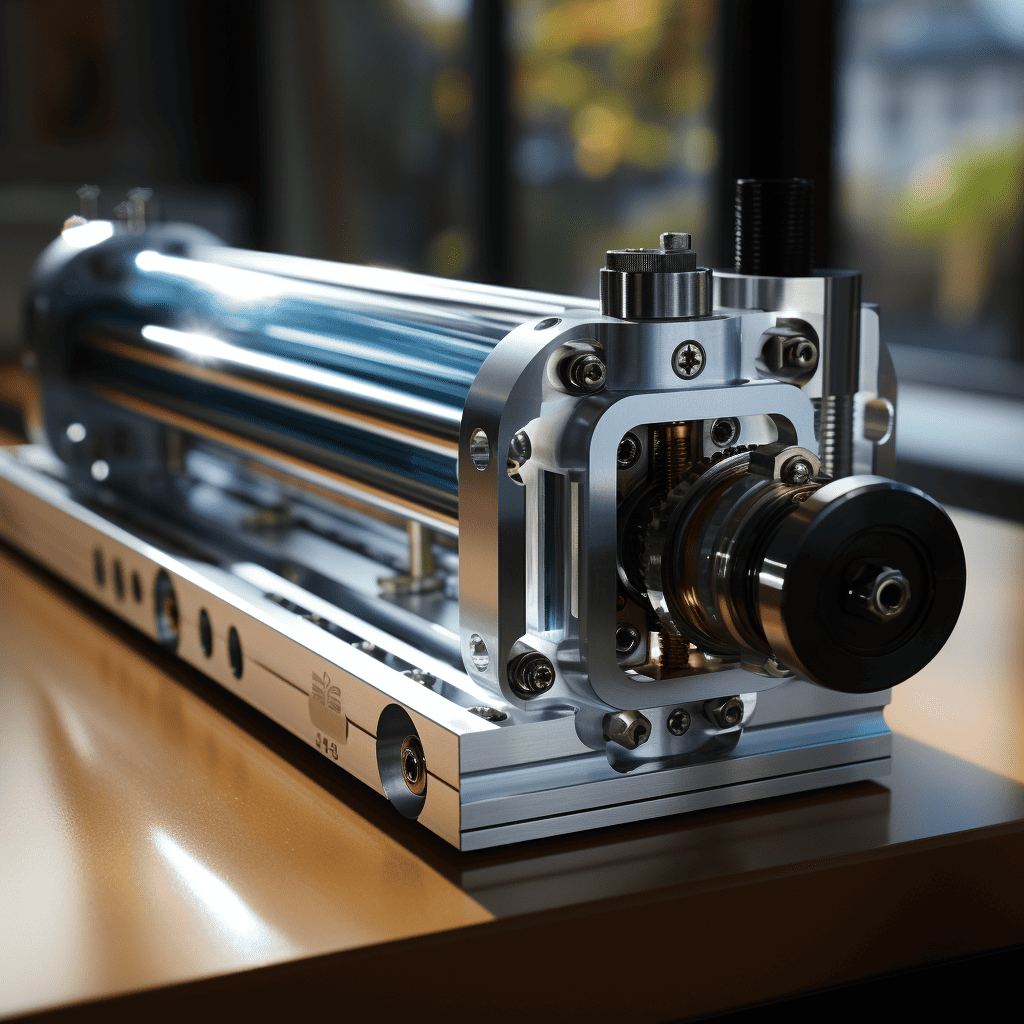
screws, belts, chains, and hydraulic or pneumatic cylinders. The choice of mechanism depends on the application, the required speed, force, and accuracy of the motion.
Screw-based actuators use a threaded rod that rotates to move the shaft in a linear motion. The rotation of the motor is converted into linear motion by the screw thread, which moves the nut along the rod. The speed and force of the motion depend on the pitch of the screw thread and the size of the motor.
Belt and chain actuators use a belt or chain to connect a motor to a linear shaft. The motor turns a pulley or sprocket, which moves the belt or chain, causing the shaft to move in a linear motion. These types of actuators are commonly used in high-speed applications where accuracy and precision are not critical.
Hydraulic and pneumatic actuators use fluid power to generate linear motion. A hydraulic cylinder uses hydraulic fluid to create pressure, which moves a piston in a linear motion. Pneumatic cylinders use compressed air to move a piston. These types of actuators are commonly used in heavy-duty applications where high force and high speed are required.
Types of Linear Actuators
There are many types of linear actuators, each with its unique advantages and disadvantages. Some of the most common types of linear actuators include:
1. Electric Linear Actuators: These actuators use an electric motor to generate linear motion. They are compact, lightweight, and easy to install. They are commonly used in industrial machinery, automation, and robotics applications.
2. Hydraulic Linear Actuators: These actuators use hydraulic fluid to generate linear motion. They are powerful and can generate high forces, making them ideal for heavy-duty applications such as construction equipment and manufacturing machinery.
3. Pneumatic Linear Actuators: These actuators use compressed air to generate linear motion. They are lightweight, fast, and cost-effective, making them ideal for automation and assembly applications.
4. Piezoelectric Linear Actuators: These actuators use piezoelectric crystals to generate linear motion. They are highly accurate and can generate very small movements. They are commonly used in micro-positioning applications, such as in optical systems and nanotechnology.
5. Lead Screw Actuators: These actuators use a lead screw to convert rotational motion into linear motion. They are compact and offer high precision and accuracy. They are commonly used in robotics, automation, and medical equipment applications.
Applications of Linear Actuators
Linear actuators are used in a wide range of applications, from simple mechanical systems to complex industrial machinery. Some of the most common applications of linear actuators include:
1. Industrial Machinery: Linear actuators are used in many industrial machines, including packaging equipment, printing presses, and assembly lines. They are used to move components, open and close valves, and perform other tasks.
2. Automation: Linear actuators are used in many automation applications, including robotics, conveyor systems, and material handling equipment. They are used to move components, position tools, and perform other tasks.
3. Medical Equipment: Linear actuators are used in many medical applications, including hospital beds, X-ray machines, and surgical equipment. They are used to move components, adjust positions, and perform other tasks.
4. Aerospace: Linear actuators are used in many aerospace applications, including aircraft, spacecraft, and satellites. They are used to move components, open and close doors and panels, and perform other tasks.
5. Automotive: Linear actuators are used in many automotive applications, including power seats, power windows, and power locks. They are used to move components, adjust positions, and perform other tasks.
Advantages of Linear Actuators
Linear actuators offer many advantages over other types of actuators. Some of the most significant advantages of linear actuators include:
1. Precision: Linear actuators can provide precise and accurate linear motion, making them ideal for applications that require high precision.
2. Speed: Linear actuators can move quickly and efficiently, making them ideal for applications that require high speed.
3. Force: Linear actuators can generate high forces, making them ideal for heavy-duty applications.
4. Durability: Linear actuators are designed to be durable and long-lasting, making them ideal for applications that require reliable performance.
5. Cost-effective: Linear actuators are cost-effective and can help to reduce maintenance costs and downtime.
Linear actuators are essential components in many mechanical systems, providing precise and accurate linear motion. They come in many forms and sizes, making them suitable for a wide range of applications. By understanding the basics of linear actuators, you can choose the right type of actuator for your needs and ensure optimal performance.
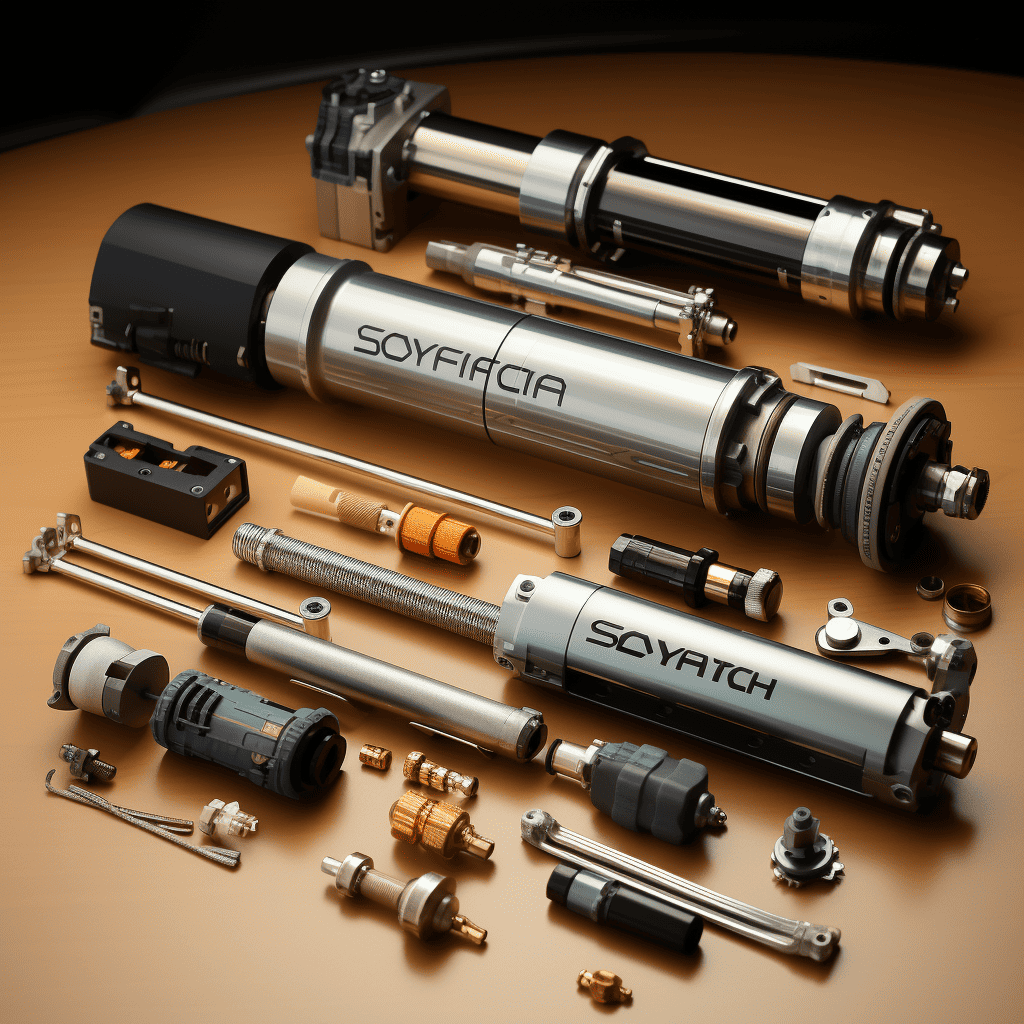
Electromechanical Linear Actuators
Electromechanical linear actuators use an electric motor to generate linear motion. They are ideal for applications that require precise control and positioning, such as in CNC machines and automated assembly lines. Electromechanical actuators are highly efficient, reliable, and can operate in a wide range of temperatures.
Key features: Precise control and positioning, efficient, reliable, wide operating temperature range.
Typical applications: CNC machines, automated assembly lines, automated testing equipment, and aerospace and defense applications.
Piezoelectric Linear Actuators
Piezoelectric linear actuators use a piezoelectric material to generate linear motion. They are ideal for applications that require high precision and fast response times, such as in atomic force microscopes and inkjet printers. Piezoelectric actuators are compact, lightweight, and can operate in a vacuum.
Key features: High precision, fast response times, compact, lightweight, suitable for vacuum environments.
Typical applications: Atomic force microscopes, inkjet printers, optical devices, and semiconductor manufacturing equipment.
Servo Linear Actuators
Servo linear actuators use a servo motor to generate linear motion. They are ideal for applications that require precise control and positioning, such as in robotics and automation. Servo actuators are highly accurate, efficient, and can operate in a wide range of temperatures.
Key features: High accuracy, efficient, wide operating temperature range.
Typical applications: Robotics and automation, CNC machines, automated testing equipment, and aerospace and defense applications.
Linear actuators are essential components in many industries, and choosing the right type of actuator for a particular application can make a significant difference in performance and efficiency. In this article, we have explored the different types of linear actuators and their typical applications. When selecting a linear actuator, it’s important to consider factors such as force output, speed, accuracy, and environmental conditions to ensure optimal performance.
Common Applications and Uses of Linear Actuators
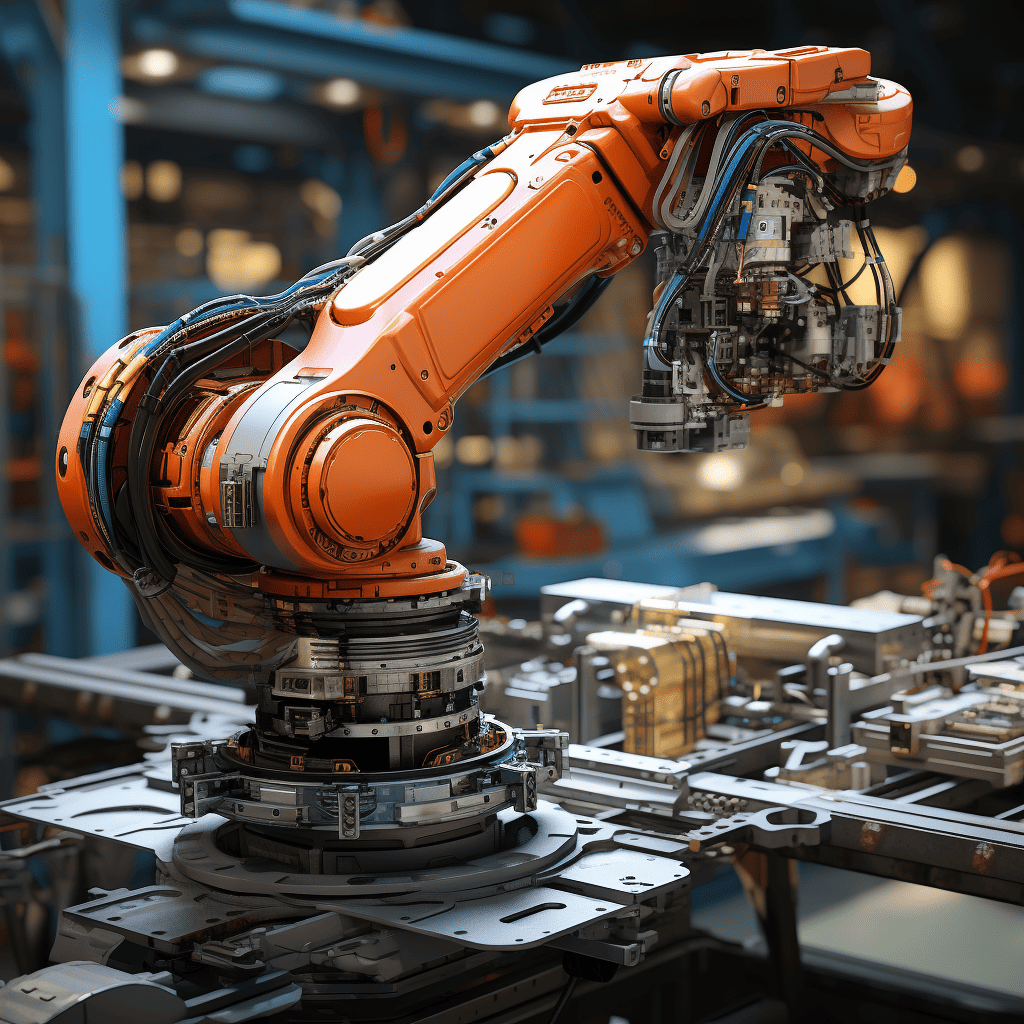
Linear actuators are versatile mechanical devices that convert rotary motion into linear motion. They are used in a wide range of industries to perform tasks that require precise, accurate, and automated movement. Here are some of the most common applications and uses of linear actuators:
Industrial Automation
Manufacturing plants, warehouses, and logistics centers are just a few examples of industrial automation systems that use linear actuators. Linear actuators provide the precise and accurate movement needed for these systems to function efficiently and reduce the risk of human error. They are also used in material handling applications, such as conveyor belts and sorting machines, to move heavy objects and materials. Linear actuators are essential for automated assembly lines, where they provide the necessary movement to precisely position and assemble components.
Medical Equipment
Linear actuators are used in a variety of medical equipment, including patient beds, surgical tables, and imaging machines. They provide smooth and precise movement, which is essential for patient comfort and safety. Linear actuators are also used in medical equipment to improve accuracy and reduce the risk of contamination. For example, they are used in surgical robots to perform precise movements during surgery and in pharmaceutical dispensing machines to accurately dispense medication. Linear actuators are also used in dental chairs to adjust the position of the patient and in medical carts to move equipment around the hospital.
Furniture and Home Automation
Linear actuators are used in furniture and home automation for tasks such as lifting tables, adjusting chairs, and opening doors. They provide smooth and quiet movement, which is essential for comfort and convenience. Linear actuators are also used in home automation to improve energy efficiency and reduce the need for manual operation. For example, they are used in smart beds to adjust the position of the mattress for optimal comfort and in home theater systems to raise and lower the projector screen. Linear actuators are also used in kitchen appliances, such as automated cabinets and pop-up countertops, to provide additional storage and workspace.
Agricultural Equipment
Linear actuators are used in agricultural equipment for tasks such as crop planting, harvesting, and irrigation. They provide precise and accurate movement, which is essential for maximizing crop yields and reducing waste. Linear actuators are also used in agricultural equipment to improve efficiency and reduce the need for manual labor. For example, they are used in tractor-mounted seeders to accurately plant seeds and in automated irrigation systems to control the flow of water to crops. Linear actuators are also used in livestock management systems to automate feeding and watering, as well as in greenhouses to control temperature and humidity.
Marine and Offshore
Linear actuators are used in marine and offshore applications for tasks such as controlling the movement of ship stabilizers, thrusters, and anchor winches. They provide reliable and precise movement, even in harsh environments. Linear actuators are also used in marine and offshore applications to improve safety and reduce the need for manual operation. For example, they are used in offshore drilling rigs to control the movement of the drilling equipment and in oil and gas platforms to automate the process of extracting and transporting resources.
Automotive Industry
Linear actuators are used in the automotive industry for a variety of applications, including adjustable seats, power windows and doors, and sunroofs. They provide smooth and quiet operation, which improves the overall driving experience for the user. Linear actuators are also used in engine and transmission systems to provide precise movement and control. For example, they are used in automatic transmissions to control the movement of the gears and in engine valves to control the flow of air and fuel.
Linear actuators have a wide range of applications and uses in various industries. Their ability to provide precise and accurate movement makes them an ideal solution for tasks that require automation, efficiency, and safety. By understanding the common applications and uses of linear actuators, you can determine whether they are the right solution for your specific needs.

This is typically measured in inches or millimeters per second. Depending on your application, you may need an actuator that can move the load quickly or slowly.
Consider Your Environmental Conditions
Another important factor to consider when choosing a linear actuator is the environment in which it will be operating. Different actuators are designed to handle different environmental conditions, such as temperature, humidity, and exposure to dust or moisture.
Temperature
The temperature of the environment in which the actuator will be operating can affect its performance. If your application requires operation in extreme temperatures, you need to choose an actuator that is designed to handle those conditions.
Humidity
Similarly, if your application requires operation in a humid environment, you need to choose an actuator that is designed to resist corrosion and moisture ingress.
Dust and Debris
If your application involves exposure to dust or debris, you need to choose an actuator that is designed to resist contamination and maintain its performance.
Decide on the Type of Actuator
There are several types of linear actuators available, each with its own advantages and disadvantages. The most common types are electric, hydraulic, and pneumatic actuators.
Electric Actuators
Electric actuators are powered by an electric motor and are ideal for applications that require precise control and positioning. They are also energy-efficient and require little maintenance.
Hydraulic Actuators
Hydraulic actuators are powered by hydraulic fluid and are ideal for applications that require high force and speed. They are also durable and can operate in extreme temperatures.
Pneumatic Actuators
Pneumatic actuators are powered by compressed air and are ideal for applications that require rapid and repetitive motion. They are also lightweight and easy to install.
Consider Your Budget
Finally, you need to consider your budget when choosing a linear actuator. Different actuators have different price points, and it’s important to choose one that fits within your budget while still meeting your load and environmental requirements.
Cost of Initial Purchase
The cost of the initial purchase is an important consideration, but it’s also important to consider the long-term costs of ownership, such as maintenance and repair costs.
Maintenance and Repair Costs
Different actuators have different maintenance and repair requirements, which can affect their overall cost of ownership. You need to choose an actuator that is cost-effective to maintain and repair over the long term.
Conclusion
Choosing the right linear actuator for your specific needs can be a complex process, but by considering the factors outlined in this buyer’s guide, you can make an informed decision and select the best actuator for your application. Remember to consider your load requirements, environmental conditions, type of actuator, and budget when making your selection. With the right linear actuator, you can achieve optimal performance and reliability for your application.


