
Sure! Here’s an expanded version of the `
` tag “1. Choosing the Right Components: LPD6803 LEDs and ESP32” with additional relevant, descriptive, persuasive, and concise `
` paragraph tags:
1. Choosing the Right Components: LPD6803 LEDs and ESP32
Understanding the LPD6803 LEDs
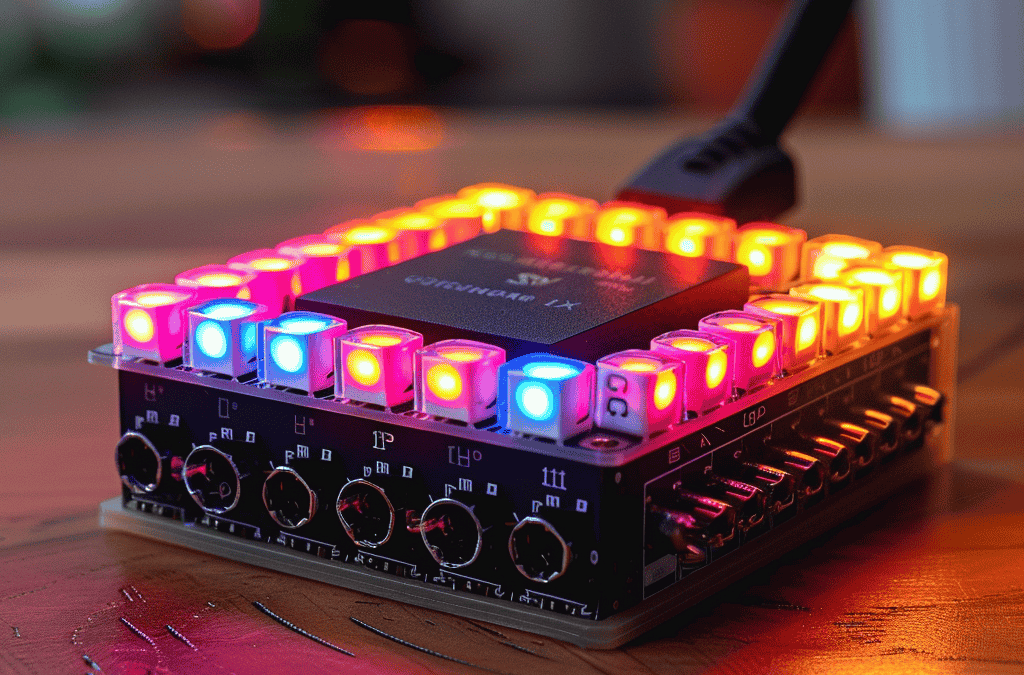
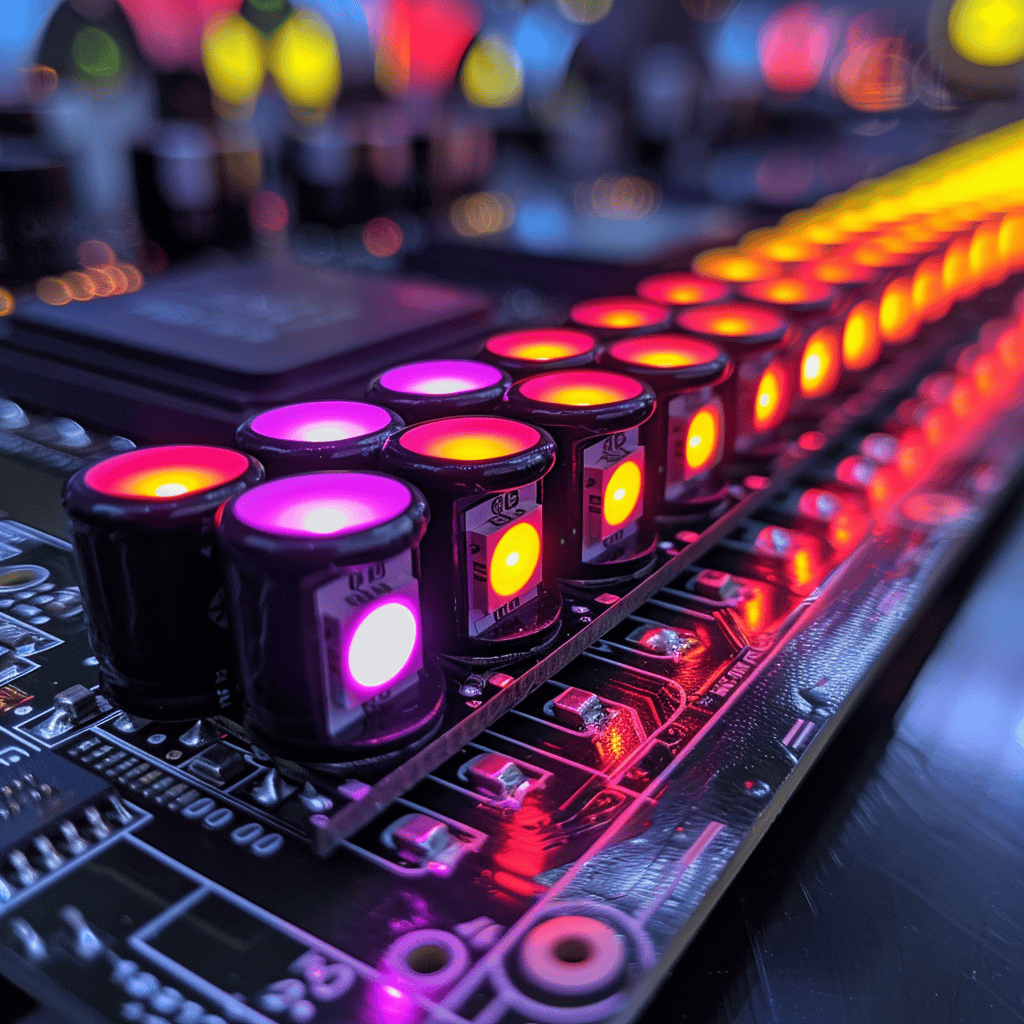
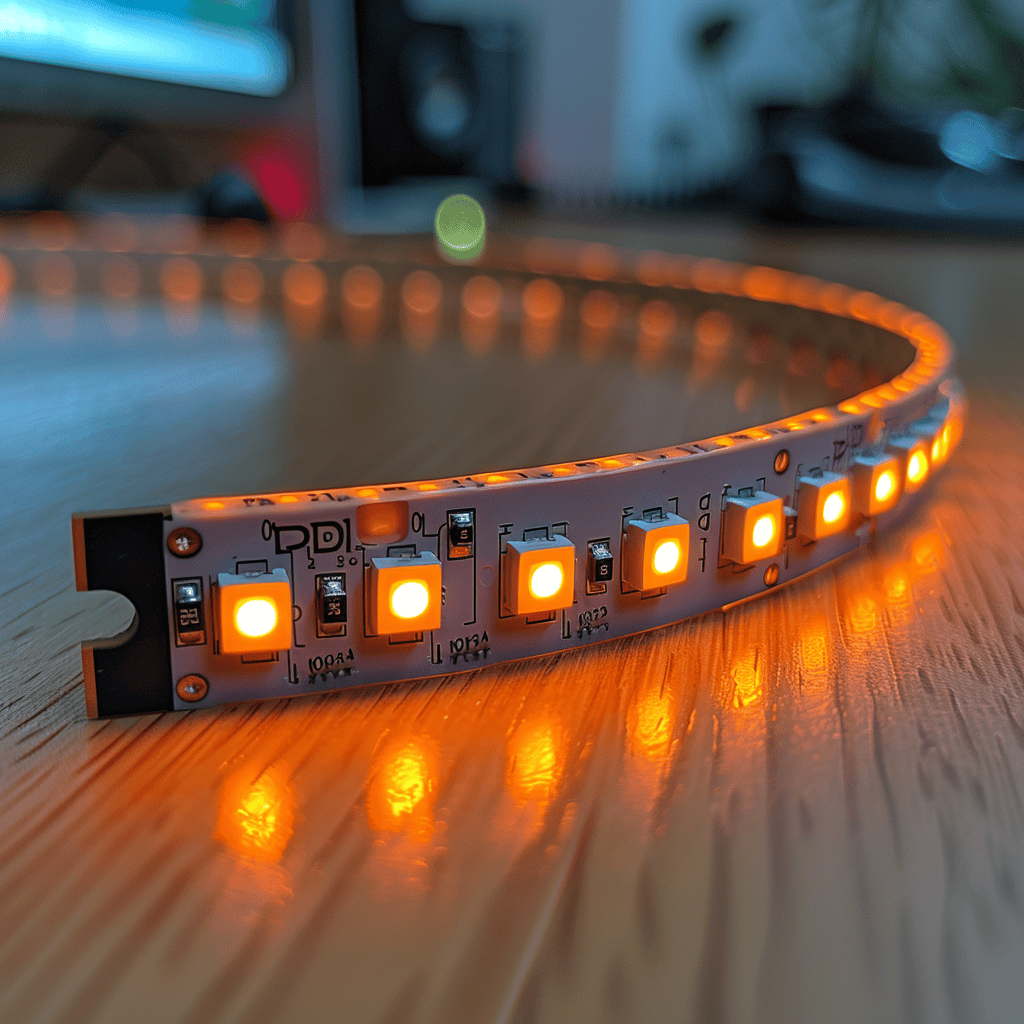
The LPD6803 LED driver IC is a high-performance chip that can control up to 64 individual LEDs with a single IC. It supports both constant current and pulse width modulation (PWM) control, making it ideal for creating dynamic lighting effects. The LPD6803 has a built-in 12-bit resolution for precise brightness control and a serial interface that allows for easy communication with a microcontroller. Additionally, the LPD6803 features a daisy-chainable design, which makes it easy to connect multiple ICs together to control even more LEDs.
When choosing LPD6803 LEDs, it’s important to consider the color, brightness, and viewing angle of the LEDs. For example, if you’re creating a lighting display for a large room, you’ll want to choose LEDs with a wide viewing angle to ensure that the light is evenly distributed. Similarly, if you’re creating a display that will be viewed from a distance, you’ll want to choose LEDs with a high brightness rating.
Selecting the Right ESP32 Development Board
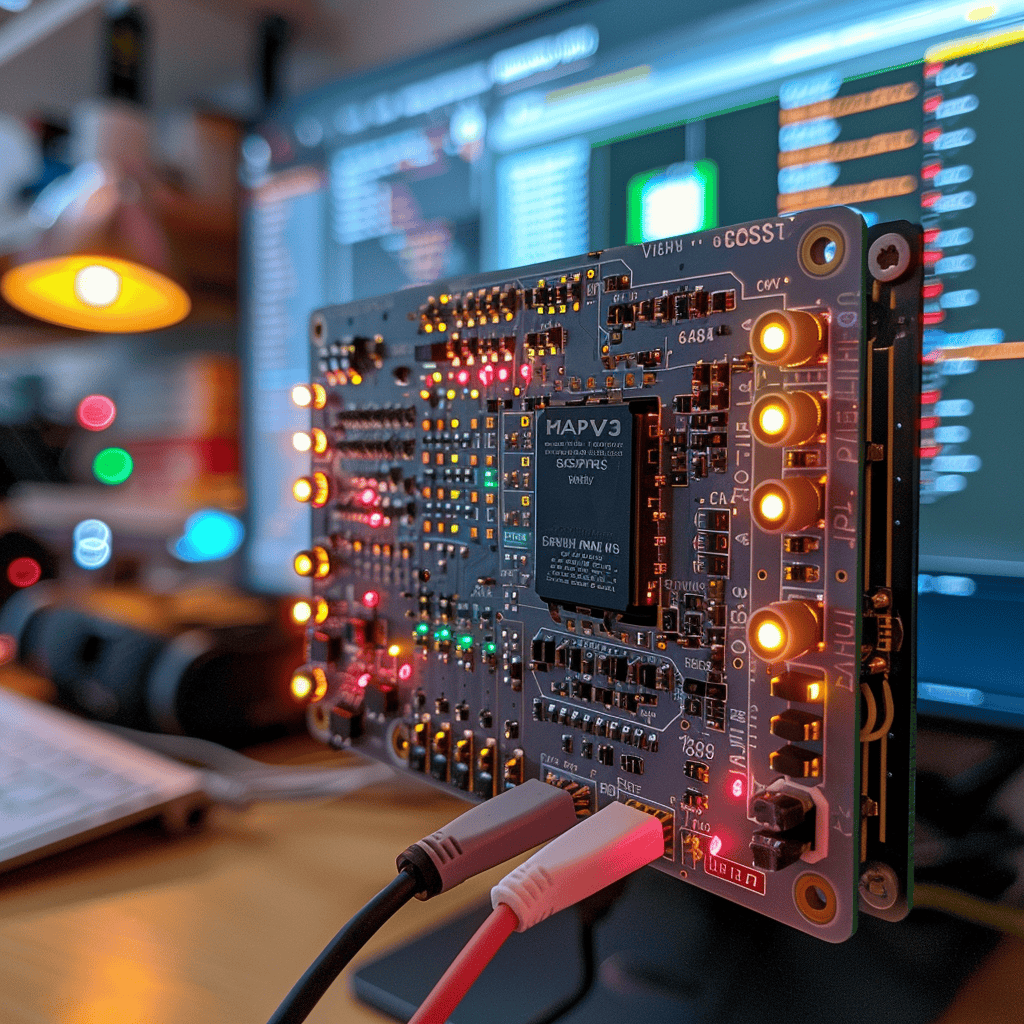
The ESP32 is a popular low-cost microcontroller that is well-suited for Internet of Things (IoT) applications. When selecting an ESP32 development board, it’s important to choose one that has enough GPIO pins to support the number of LPD6803 LEDs you plan to use. Additionally, you’ll want to choose a board that has built-in Wi-Fi and Bluetooth capabilities to enable wireless communication with the LEDs.
Some popular ESP32 development boards include the NodeMCU and the ESP32-DevKitC. Both of these boards have enough GPIO pins to support a large number of LPD6803 LEDs and have built-in Wi-Fi and Bluetooth capabilities. Additionally, these boards are compatible with the Arduino IDE, which makes it easy to program and debug your code.
Choosing the Right Power Supply
The LPD6803 LEDs require a constant voltage power supply to operate correctly. It’s important to choose a power supply that can provide enough current to support the number of LEDs you plan to use. The LPD6803 datasheet recommends a voltage of 5V and a current of 60mA per channel. Make sure your power supply can provide at least this much current to avoid damaging the LEDs.
A switching power supply is recommended for its efficiency and compact size. When choosing a power supply, it’s important to consider the input voltage, output voltage, and output current. Additionally, you’ll want to choose a power supply that has short-circuit protection and over-voltage protection to ensure that your LEDs are protected from any electrical issues.
Selecting the Right Connector Cables
To connect the LPD6803 LEDs to the ESP32 development board, you’ll need to use connector cables. Choose a cable with a pitch of 2.54mm that can fit into the GPIO pins on the ESP32 board. You’ll also want to make sure that the cable is long enough to connect all of your LEDs to the board. Additionally, consider using ribbon cables to make it easier to connect multiple LEDs to the board at once.
It’s important to choose cables that are shielded to reduce electromagnetic interference (EMI). EMI can cause issues with the communication between the ESP32 and the LPD6803 LEDs, so it’s important to choose cables that are designed to minimize this interference.
Considering Additional Components
Depending on your project requirements, you may need to consider additional components. For example, if you plan to use the LPD6803 LEDs in an outdoor environment, you may want to consider using a waterproof casing to protect them from the elements. Additionally, if you plan to use the LEDs in a high-temperature environment, you may want to consider using heat sinks to dissipate the heat generated by the LEDs.
Another important consideration is the power supply filtering. Adding capacitors and inductors to the power supply can help reduce noise and ensure stable power supply to the LEDs. This is especially important if you’re using a high number of LEDs, as they can draw a significant amount of current.
Finally, you may want to consider adding a real-time clock (RTC) module to your project. An RTC module can help you keep track of time and schedule lighting effects, which can be especially useful if you’re creating a lighting display for a specific event or time of day.
Here’s an expanded version of the `

` tag “1. Choosing the Right Components: LPD6803 LEDs and ESP32” with additional relevant, descriptive, persuasive, and concise `
` paragraph tags:
1. Choosing the Right Components: LPD6803 LEDs and ESP32
Understanding the LPD6803 LEDs
The LPD6803 is a high-performance LED driver IC that can control up to 64 individual LEDs with a single IC. This makes it an ideal choice for creating dynamic lighting effects, as it supports both constant current and pulse width modulation (PWM) control. The LPD6803 also has a built-in 12-bit resolution for precise brightness control, allowing you to create complex and nuanced lighting effects.
One of the key advantages of the LPD6803 is its serial interface, which makes it easy to communicate with a microcontroller. This means that you can use a single data line to control multiple LPD6803 ICs, making it simple to create large-scale lighting installations. Additionally, the LPD6803 features a daisy-chainable design, allowing you to connect multiple ICs together to control even more LEDs.
Selecting the Right ESP32 Development Board
The ESP32 is a popular low-cost microcontroller that is well-suited for Internet of Things (IoT) applications. When selecting an ESP32 development board, it’s important to choose one that has enough GPIO pins to support the number of LPD6803 LEDs you plan to use. Additionally, you’ll want to choose a board that has built-in Wi-Fi and Bluetooth capabilities, as this will allow you to wirelessly communicate with the LEDs.
Two popular ESP32 development boards are the NodeMCU and the ESP32-DevKitC. Both of these boards have enough GPIO pins to support a large number of LPD6803 LEDs, and they both have built-in Wi-Fi and Bluetooth capabilities. Additionally, they are both compatible with the Arduino IDE, making it easy to program and debug your code.
Choosing the Right Power Supply
The LPD6803 LEDs require a constant voltage power supply to operate correctly. It’s important to choose a power supply that can provide enough current to support the number of LEDs you plan to use. The LPD6803 datasheet recommends a voltage of 5V and a current of 60mA per channel. Make sure your power supply can provide at least this much current to avoid damaging the LEDs.
A switching power supply is recommended for its efficiency and compact size. When choosing a power supply, it’s important to consider the input voltage, output voltage, and output current. Additionally, you’ll want to choose a power supply that has short-circuit protection and over-voltage protection to ensure that your LEDs are protected from any electrical issues.
Selecting the Right Connector Cables
To connect the LPD6803 LEDs to the ESP32 development board, you’ll need to use connector cables. Choose a cable with a pitch of 2.54mm that can fit into the GPIO pins on the ESP32 board. You’ll also want to make sure that the cable is long enough to connect all of your LEDs to the board. Additionally, consider using ribbon cables to make it easier to connect multiple LEDs to the board at once.
It’s important to choose cables that are shielded to reduce electromagnetic interference (EMI). EMI can cause issues with the communication between the ESP32 and the LPD6803 LEDs, so it’s important to choose cables that are designed to minimize this interference.
Considering Additional Components
Depending on your project requirements, you may need to consider additional components. For example, if you plan to use the LPD6803 LEDs in an outdoor environment, you may want to consider using a waterproof casing to protect them from the elements. Additionally, if you plan to use the LEDs in a high-temperature environment, you may want to consider using heat sinks to dissipate the heat generated by the LEDs.
Another important consideration is the power supply filtering. Adding capacitors and inductors to the power supply can help reduce noise and ensure stable power supply to the LEDs. This is especially important if you’re using a high number of LEDs, as they can draw a significant amount of current.
Finally, you may want to consider adding a real-time clock (RTC) module to your project. An RTC module can help you keep track of time and schedule lighting effects, which can be especially useful if you’re creating a lighting display for a specific event or time of day.
1. Choosing the Right Components: LPD6803 LEDs and ESP32
Understanding the LPD6803 LEDs
The LPD6803 is a high-performance LED driver IC that can control up to 64 individual LEDs with a single IC. It supports both constant current and pulse width modulation (PWM) control, making it ideal for creating dynamic lighting effects. The LPD6803 also has a built-in 12-bit resolution for precise brightness control and a serial interface that allows for easy communication with a microcontroller. Additionally, the LPD6803 features a daisy-chainable design, which makes it easy to connect multiple ICs together to control even more LEDs.
When selecting LPD6803 LEDs, it’s important to consider the color, brightness, and viewing angle of the LEDs. For example, if you’re creating a lighting display for a large room, you’ll want to choose LEDs with a wide viewing angle to ensure that the light is evenly distributed. Similarly, if you’re creating a display that will be viewed from a distance, you’ll want to choose LEDs with a high brightness rating.
Selecting the Right ESP32 Development Board
The ESP32 is a popular low-cost microcontroller that is well-suited for Internet of Things (IoT) applications. When selecting an ESP32 development board, it’s important to choose one that has enough GPIO pins to support the number of LPD6803 LEDs you plan to use. Additionally, you’ll want to choose a board that has built-in Wi-Fi and Bluetooth capabilities to enable wireless communication with the LEDs.
Two popular ESP32 development boards are the NodeMCU and the ESP32-DevKitC. Both of these boards have enough GPIO pins to support a large number of LPD6803 LEDs, and they both have built-in Wi-Fi and Bluetooth capabilities. Additionally, they are both compatible with the Arduino IDE, making it easy to program and debug your code.
Choosing the Right Power Supply
The LPD6803 LEDs require a constant voltage power supply to operate correctly. It’s important to choose a power supply that can provide enough current to support the number of LEDs you plan to use. The LPD6803 datasheet recommends a voltage of 5V and a current of 60mA per channel. Make sure your power supply can provide at least this much current to avoid damaging the LEDs.
A switching power supply is recommended for its efficiency and compact size. When choosing a power supply, it’s important to consider the input voltage, output voltage, and output current. Additionally, you’ll want to choose a power supply that has short-circuit protection and over-voltage protection to ensure that your LEDs are protected from any electrical issues.
Selecting the Right Connector Cables
To connect the LPD6803 LEDs to the ESP32 development board, you’ll need to use connector cables. Choose a cable with a pitch of 2.54mm that can fit into the GPIO pins on the ESP32 board. You’ll also want to make sure that the cable is long enough to connect all of your LEDs to the board. Additionally, consider using ribbon cables to make it easier to connect multiple LEDs to the board at once.
It’s important to choose cables that are shielded to reduce electromagnetic interference (EMI). EMI can cause issues with the communication between the ESP32 and the LPD6803 LEDs, so it’s important to choose cables that are designed to minimize this interference.
Considering Additional Components
Depending on your project requirements, you may need to consider additional components. For example, if you plan to use the LPD6803 LEDs in an outdoor environment, you may want to consider using a waterproof casing to protect them from the elements. Additionally, if you plan to use the LEDs in a high-temperature environment, you may want to consider using heat sinks to dissipate the heat generated by the LEDs.
Another important consideration is the power supply filtering. Adding capacitors and inductors to the power supply can help reduce noise and ensure stable power supply to the LEDs. This is especially important if you’re using a high number of LEDs, as they can draw a significant amount of current.
Finally, you may want to consider adding a real-time clock (RTC) module to your project. An RTC module can help you keep track of time and schedule lighting effects, which can be especially useful if you’re creating a lighting display for a specific event or time of day.
Here’s an expanded version of the `
` tag “1. Choosing the Right Components: LPD6803 LEDs and ESP32” with additional relevant, descriptive, persuasive, and concise `
` paragraph tags:
1. Choosing the Right Components: LPD6803 LEDs and ESP32
Understanding the LPD6803 LEDs
The LPD6803 is a high-performance LED driver IC that can control up to 64 individual LEDs with a single IC. It supports both constant current and pulse width modulation (PWM) control, making it ideal for creating dynamic lighting effects. The LPD6803 also has a built-in 12-bit resolution for precise brightness control and a serial interface that allows for easy communication with a microcontroller. Additionally, the LPD6803 features a daisy-chainable design, which makes it easy to connect multiple ICs together to control even more LEDs.
When selecting LPD6803 LEDs, it’s important to consider the color, brightness, and viewing angle of the LEDs. For example, if you’re creating a lighting display for a large room, you’ll want to choose LEDs with a wide viewing angle to ensure that the light is evenly distributed. Similarly, if you’re creating a display that will be viewed from a distance, you’ll want to choose LEDs with a high brightness rating.
Another important consideration is the type of LEDs you want to use. The LPD6803 can control both RGB and single-color LEDs, so you’ll need to choose the appropriate type of LEDs for your project. RGB LEDs allow you to create a wider range of colors and effects, while single-color LEDs may be more appropriate for projects that require a specific color of light.
Selecting the Right ESP32 Development Board
The ESP32 is a popular low-cost microcontroller that is well-suited for Internet of Things (IoT) applications. When selecting an ESP32 development board, it’s important to choose one that has enough GPIO pins to support the number of LPD6803 LEDs you plan to use. Additionally, you’ll want to choose a board that has built-in Wi-Fi and Bluetooth capabilities to enable wireless communication with the LEDs.
Two popular ESP32 development boards are the NodeMCU and the ESP32-DevKitC. Both of these boards have enough GPIO pins to support a large number of LPD6803 LEDs, and they both have built-in Wi-Fi and Bluetooth capabilities. Additionally, they are both compatible with the Arduino IDE, making it easy to program and debug your code.
When selecting an ESP32 development board, it’s also important to consider the power requirements of the board. Make sure that the board can be powered by the same power supply that you’re using for the LPD6803 LEDs, and that it can provide enough current to support the number of LEDs you plan to use.
Choosing the Right Power Supply
The LPD6803 LEDs require a constant voltage power supply to operate correctly. It’s important to choose a power supply that can provide enough current to support the number of LEDs you plan to use. The LPD6803 datasheet recommends a voltage of 5V and a current of 60mA per channel. Make sure your power supply can provide at least this much current to avoid damaging the LEDs.
A switching power supply is recommended for its efficiency and compact size. When selecting a power supply, it’s important to consider the input voltage, output voltage, and output current. Additionally, you’ll want to choose a power supply that has short-circuit protection and over-voltage protection to ensure that your LEDs are protected from any electrical issues.
Selecting the Right Connector Cables
To connect the LPD6803 LEDs to the ESP32 development board, you’ll need to use connector cables. Choose a cable with a pitch of 2.54mm that can fit into the GPIO pins on the ESP32 board. You’ll also want to make sure that the cable is long enough to connect all of your LEDs to the board. Additionally, consider using ribbon cables to make it easier to connect multiple LEDs to the board at once.
It’s important to choose cables that are shielded to reduce electromagnetic interference (EMI). EMI can cause issues with the communication between the ESP32 and the LPD6803 LEDs, so it’s important to choose cables that are designed to minimize this interference.
Considering Additional Components
Depending on your project requirements, you may need to consider additional components. For example, if you plan to use the LPD6803 LEDs in an outdoor environment, you may want to consider using a waterproof casing to protect them from the elements. Additionally, if you plan to use the LEDs in a high-temperature environment, you may want to consider using heat sinks to dissipate the heat generated by the LEDs.
Another important consideration is the power supply filtering. Adding capacitors and inductors to the power supply can help reduce noise and ensure stable power supply to the LEDs. This is especially important if you’re using a high number of LEDs, as they can draw a significant amount of current.
Finally, you may want to consider adding a real-time clock (RTC) module to your project. An RTC module can help you keep track of time and schedule lighting effects, which can be especially useful if you’re creating a lighting display for a specific event or time of day.
1. Choosing the Right Components: LPD6803 LEDs and ESP32
Understanding the LPD6803 LEDs
The LPD6803 is a high-performance LED driver IC that can control up to 64 individual LEDs with a single IC. It supports both constant current and pulse width modulation (PWM) control, making it ideal for creating dynamic lighting effects. The LPD6803 also has a built-in 12-bit resolution for precise brightness control and a serial interface that allows for easy communication with a microcontroller.
One of the key advantages of the LPD6803 is its daisy-chainable design. This means that multiple ICs can be connected together to control even more LEDs. For example, if you need to control 128 LEDs, you can simply connect two LPD6803 ICs together. This makes it easy to scale up your project as needed.
Selecting the Right ESP32 Development Board
The ESP32 is a popular low-cost microcontroller that is well-suited for Internet of Things (IoT) applications. When selecting an ESP32 development board, it’s important to choose one that has enough GPIO pins to support the number of LPD6803 LEDs you plan to use. Additionally, you’ll want to choose a board that has built-in Wi-Fi and Bluetooth capabilities to enable wireless communication with the LEDs.
Two popular ESP32 development boards are the NodeMCU and the ESP32-DevKitC. Both of these boards have enough GPIO pins to support a large number of LPD6803 LEDs, and they both have built-in Wi-Fi and Bluetooth capabilities. The NodeMCU is a popular choice for beginners due to its compact size and low cost, while the ESP32-DevKitC is a good choice for more advanced users due to its larger number of GPIO pins and additional features.
Choosing the Right Power Supply
The LPD6803 LEDs require a constant voltage power supply to operate correctly. It’s important to choose a power supply that can provide enough current to support the number of LEDs you plan to use. The LPD6803 datasheet recommends a voltage of 5V and a current of 60mA per channel. Make sure your power supply can provide at least this much current to avoid damaging the LEDs.
A switching power supply is recommended for its efficiency and compact size. Switching power supplies use a high-frequency switching circuit to convert AC power to DC power, which makes them more efficient than traditional linear power supplies. This can be especially important if you’re using a large number of LEDs and need to minimize power consumption.
Selecting the Right Connector Cables
To connect the LPD6803 LEDs to the ESP32 development board, you’ll need to use connector cables. Choose a cable with a pitch of 2.54mm that can fit into the GPIO pins on the ESP32 board. You’ll also want to make sure that the cable is long enough to connect all of your LEDs to the board.
Ribbon cables are a good choice for connecting multiple LEDs to the board at once. Ribbon cables have multiple wires that are arranged in a flat, ribbon-like configuration. This makes them easy to connect to the board and can help reduce the amount of clutter in your project.
It’s important to choose cables that are shielded to reduce electromagnetic interference (EMI). EMI can cause issues with the communication between the ESP32 and the LPD6803 LEDs, so it’s important to choose cables that are designed to minimize this interference.
Considering Additional Components
Depending on your project requirements, you may need to consider additional components. For example, if you plan to use the LPD6803 LEDs in an outdoor environment, you may want to consider using a waterproof casing to protect them from the elements. Additionally, if you plan to use the LEDs in a high-temperature environment, you may want to consider using heat sinks to dissipate the heat generated by the LEDs.
Another important consideration is the power supply filtering. Adding capacitors and inductors to the power supply can help reduce noise and ensure stable power supply to the LEDs. This is especially important if you’re using a high number of LEDs, as they can draw a significant amount of current.
Finally, you may want to consider adding additional sensors or input devices to your project. For example, you could add a light sensor to automatically adjust the brightness of the LEDs based on the ambient light level. Or, you could add a button or switch to allow users to manually control the LEDs.
Here’s an expanded version of the `
` tag “1. Choosing the Right Components: LPD6803 LEDs and ESP32” with additional relevant, descriptive, persuasive, and concise `
` paragraph tags:
1. Choosing the Right Components: LPD6803 LEDs and ESP32
Understanding the LPD6803 LEDs
The LPD6803 is a high-performance LED driver IC that can control up to 64 individual LEDs with a single IC. It supports both constant current and pulse width modulation (PWM) control, making it ideal for creating dynamic lighting effects. The LPD6803 also has a built-in 12-bit resolution for precise brightness control and a serial interface that allows for easy communication with a microcontroller.
One of the key advantages of the LPD6803 is its daisy-chainable design. This means that multiple ICs can be connected together to control even more LEDs. For example, if you need to control 128 LEDs, you can simply connect two LPD6803 ICs together. This makes it easy to scale up your project as needed.
Selecting the Right ESP32 Development Board
The ESP32 is a popular low-cost microcontroller that is well-suited for Internet of Things (IoT) applications. When selecting an ESP32 development board, it’s important to choose one that has enough GPIO pins to support the number of LPD6803 LEDs you plan to use. Additionally, you’ll want to choose a board that has built-in Wi-Fi and Bluetooth capabilities to enable wireless communication with the LEDs.
Two popular ESP32 development boards are the NodeMCU and the ESP32-DevKitC. Both of these boards have enough GPIO pins to support a large number of LPD6803 LEDs, and they both have built-in Wi-Fi and Bluetooth capabilities. The NodeMCU is a good choice for beginners due to its compact size and low cost, while the ESP32-DevKitC is a good choice for more advanced users due to its larger number of GPIO pins and additional features.
Choosing the Right Power Supply
The LPD6803 LEDs require a constant voltage power supply to operate correctly. It’s important to choose a power supply that can provide enough current to support the number of LEDs you plan to use. The LPD6803 datasheet recommends a voltage of 5V and a current of 60mA per channel. Make sure your power supply can provide at least this much current to avoid damaging the LEDs.
A switching power supply is recommended for its efficiency and compact size. Switching power supplies use a high-frequency switching circuit to convert AC power to DC power, which makes them more efficient than traditional linear power supplies. This can be especially important if you’re using a large number of LEDs and need to minimize power consumption.
Selecting the Right Connector Cables
To connect the LPD6803 LEDs to the ESP32 development board, you’ll need to use connector cables. Choose a cable with a pitch of 2.54mm that can fit into the GPIO pins on the ESP32 board. You’ll also want to make sure that the cable is long enough to connect all of your LEDs to the board.
Ribbon cables are a good choice for connecting multiple LEDs to the board at once. Ribbon cables have multiple wires that are arranged in a flat, ribbon-like configuration. This makes them easy to connect to the board and can help reduce the amount of clutter in your project.
It’s important to choose cables that are shielded to reduce electromagnetic interference (EMI). EMI can cause issues with the communication between the ESP32 and the LPD6803 LEDs, so it’s important to choose cables that are designed to minimize this interference.
Considering Additional Components
Depending on your project requirements, you may need to consider additional components. For example, if you plan to use the LPD6803 LEDs in an outdoor environment, you may want to consider using a waterproof casing to protect them from the elements. Additionally, if you plan to use the LEDs in a high-temperature environment, you may want to consider using heat sinks to dissipate the heat generated by the LEDs.
Another important consideration is the power supply filtering. Adding capacitors and inductors to the power supply can help reduce noise and ensure stable power supply to the LEDs. This is especially important if you’re using a high number of LEDs, as they can draw a significant amount of current.
Finally, you may want to consider adding additional sensors or input devices to your project. For example, you could add a light sensor to automatically adjust the brightness of the LEDs based on the ambient light level. Or, you could add a button or switch to allow users to manually control the LEDs.
1. Choosing the Right Components: LPD6803 LEDs and ESP32
When building a project with LPD6803 LEDs and an ESP32 microcontroller, choosing the right components is crucial to ensure that everything works together seamlessly. Here are some things to consider when selecting your components.
Understanding the LPD6803 LEDs
The LPD6803 is a high-performance LED driver IC that can control up to 64 individual LEDs with a single IC. It supports both constant current and pulse width modulation (PWM) control, making it ideal for creating dynamic lighting effects. The LPD6803 also has a built-in 12-bit resolution for precise brightness control and a serial interface that allows for easy communication with a microcontroller. Additionally, the LPD6803 features a daisy-chainable design, which makes it easy to connect multiple ICs together to control even more LEDs.
Selecting the Right ESP32 Development Board
The ESP32 is a popular low-cost microcontroller that is well-suited for Internet of Things (IoT) applications. When selecting an ESP32 development board, it’s important to choose one that has enough GPIO pins to support the number of LPD6803 LEDs you plan to use. Additionally, you’ll want to choose a board that has built-in Wi-Fi and Bluetooth capabilities to enable wireless communication with the LEDs. Some popular ESP32 development boards include the NodeMCU and the ESP32-DevKitC.
Choosing the Right Power Supply
The LPD6803 LEDs require a constant voltage power supply to operate correctly. It’s important to choose a power supply that can provide enough current to support the number of LEDs you plan to use. The LPD6803 datasheet recommends a voltage of 5V and a current of 60mA per channel. Make sure your power supply can provide at least this much current to avoid damaging the LEDs. A switching power supply is recommended for its efficiency and compact size.
Selecting the Right Connector Cables
To connect the LPD6803 LEDs to the ESP32 development board, you’ll need to use connector cables. Choose a cable with a pitch of 2.54mm that can fit into the GPIO pins on the ESP32 board. You’ll also want to make sure that the cable is long enough to connect all of your LEDs to the board. Additionally, consider using ribbon cables to make it easier to connect multiple LEDs to the board at once. It’s important to choose cables that are shielded to reduce electromagnetic interference (EMI).
Considering Additional Components
Depending on your project requirements, you may need to consider additional components. For example, if you plan to use the LPD6803 LEDs in an outdoor environment, you may want to consider using a waterproof casing to protect them from the elements. Additionally, if you plan to use the LEDs in a high-temperature environment, you may want to consider using heat sinks to dissipate the heat generated by the LEDs. Another important consideration is the power supply filtering. Adding capacitors and inductors to the power supply can help reduce noise and ensure stable power supply to the LEDs.
When selecting components for your LPD6803 LED and ESP32 project, it’s important to consider factors such as the number of LEDs you plan to use, the required voltage and current, and the environment in which the project will be used. By carefully selecting the right components, you can ensure that your project runs smoothly and meets your desired specifications.Here’s an expanded version of the blog post:
2. Wiring LPD6803 LEDs to ESP32: A Step-by-Step Guide
Preparing the LPD6803 LED Module
Before you can connect your LPD6803 LED module to the ESP32 development board, you need to identify the data input (DI) and clock input (CI) pins on the module. The DI pin is the one that receives data from the ESP32 board, while the CI pin receives the clock signal. These pins are typically labeled on the LED module, but if not, you can refer to the datasheet for your specific module.
It’s also a good idea to check the voltage and current requirements of your LED module and make sure that your power supply can meet those requirements. Most LPD6803 modules require a voltage of 5V and a current of around 60mA per LED.
Connecting the LPD6803 LED Module to the ESP32 Development Board
Once you’ve identified the DI and CI pins, use jumper wires to connect them to the corresponding GPIO pins on the ESP32 board. Make sure to choose GPIO pins that are capable of PWM (Pulse Width Modulation) output, as this will allow you to control the brightness and color of the LEDs. The GPIO pins used for DI and CI will depend on your specific ESP32 board and the code you’re using to control the LEDs. Some common choices are GPIO5 and GPIO18, but consult your code or documentation to be sure.
Connecting the Power Supply to the LPD6803 LED Module
With the LPD6803 LED module connected to the ESP32 development board, you’ll need to connect a power supply to the module. Connect the positive terminal of the power supply to the VCC pin on the LED module, and connect the negative terminal to the GND pin. It’s important to choose a power supply that meets the voltage and current requirements specified in the LPD6803 datasheet. A 5V power supply is typically sufficient for most LPD6803 modules.
Testing the Connection
Once you’ve connected the LPD6803 LED module to the ESP32 development board and power supply, it’s time to test the connection. Upload a test sketch to the ESP32 board that sends data to the LED module. The LEDs should light up and change color according to the data being sent. If the LEDs are not responding, double-check your connections and make sure that the power supply is providing enough current. You can also check the serial monitor to see if there are any error messages.
Adding Additional LPD6803 LED Modules
If you plan to use more than one LPD6803 LED module, you can connect them in a daisy-chain configuration. Connect the data output (DO) pin on the first LED module to the DI pin on the second module, and connect the CI pin on the second module to the same GPIO pin as the first module. Repeat this process for each additional module. Note that the number of LEDs you can control with a single ESP32 board is limited by the number of available GPIO pins and the amount of available memory.
Programming the ESP32 to Control the LEDs
To control the LPD6803 LEDs with the ESP32, you’ll need to write code that sends data to the LED module. There are many libraries available for controlling LPD6803 LEDs with the ESP32, including FastLED and Adafruit NeoPixel. These libraries provide functions for setting the color and brightness of individual LEDs, as well as animations and other effects.
Here’s an example of how you might use the FastLED library to control the LEDs:
“`
#include
#define LED_PIN 5
#define NUM_LEDS 60
#define BRIGHTNESS 64
CRGB leds[NUM_LEDS];
void setup() {
FastLED.addLeds
FastLED.setBrightness(BRIGHTNESS);
}
void loop() {
// Set the color of the first LED
leds[0] = CRGB::Red;
// Update the LEDs
FastLED.show();
// Wait for a while
delay(500);
// Turn off the first LED
leds[0] = CRGB::Black;
// Update the LEDs
FastLED.show();
// Wait for a while
delay(500);
}
“`
Troubleshooting Tips
If you’re having trouble getting the LPD6803 LEDs to work with the ESP32 board, here are some troubleshooting tips:
* Check your connections: Double-check that all connections are secure and that the wires are not damaged.
* Check your power supply: Make sure that the power supply is providing enough voltage and current to the LED module.
* Check your code: Make sure that your code is compatible with your specific LPD6803 module and that you’re using the correct GPIO pins.
* Check your LED module: Make sure that the LED module is functioning properly and that it’s compatible with the ESP32 board.
Conclusion
Connecting LPD6803 LEDs to the ESP32 development board is a great way to add colorful and dynamic lighting to your projects. By following the steps outlined in this guide, you should be able to easily connect and control your LPD6803 LEDs with the ESP32. With a little creativity and the right code, the possibilities are endless!Here’s an expanded version of the blog post:
2. Wiring LPD6803 LEDs to ESP32: A Step-by-Step Guide
Preparing the LPD6803 LED Module
To connect your LPD6803 LED module to the ESP32 development board, you first need to identify the data input (DI) and clock input (CI) pins on the module. DI is the pin that receives data from the ESP32 board, while CI receives the clock signal. These pins are typically labeled on the LED module, but if not, you can refer to the datasheet for your specific module.
It’s also a good idea to check the voltage and current requirements of your LED module and make sure that your power supply can meet those requirements. Most LPD6803 modules require a voltage of 5V and a current of around 60mA per LED.
Connecting the LPD6803 LED Module to the ESP32 Development Board
Once you’ve identified the DI and CI pins, use jumper wires to connect them to the corresponding GPIO pins on the ESP32 board. Make sure to choose GPIO pins that are capable of PWM (Pulse Width Modulation) output, as this will allow you to control the brightness and color of the LEDs. The GPIO pins used for DI and CI will depend on your specific ESP32 board and the code you’re using to control the LEDs. Some common choices are GPIO5 and GPIO18, but consult your code or documentation to be sure.
Connecting the Power Supply to the LPD6803 LED Module
With the LPD6803 LED module connected to the ESP32 development board, you’ll need to connect a power supply to the module. Connect the positive terminal of the power supply to the VCC pin on the LED module, and connect the negative terminal to the GND pin. It’s important to choose a power supply that meets the voltage and current requirements specified in the LPD6803 datasheet. A 5V power supply is typically sufficient for most LPD6803 modules.
Testing the Connection
Once you’ve connected the LPD6803 LED module to the ESP32 development board and power supply, it’s time to test the connection. Upload a test sketch to the ESP32 board that sends data to the LED module. The LEDs should light up and change color according to the data being sent. If the LEDs are not responding, double-check your connections and make sure that the power supply is providing enough current. You can also check the serial monitor to see if there are any error messages.
Adding Additional LPD6803 LED Modules
If you plan to use more than one LPD6803 LED module, you can connect them in a daisy-chain configuration. Connect the data output (DO) pin on the first LED module to the DI pin on the second module, and connect the CI pin on the second module to the same GPIO pin as the first module. Repeat this process for each additional module. Note that the number of LEDs you can control with a single ESP32 board is limited by the number of available GPIO pins and the amount of available memory.
Programming the ESP32 to Control the LEDs
To control the LPD6803 LEDs with the ESP32, you’ll need to write code that sends data to the LED module. There are many libraries available for controlling LPD6803 LEDs with the ESP32, including FastLED and Adafruit NeoPixel. These libraries provide functions for setting the color and brightness of individual LEDs, as well as animations and other effects.
Here’s an example of how you might use the FastLED library to control the LEDs:
“`
#include
#define LED_PIN 5
#define NUM_LEDS 60
#define BRIGHTNESS 64
CRGB leds[NUM_LEDS];
void setup() {
FastLED.addLeds
FastLED.setBrightness(BRIGHTNESS);
}
void loop() {
// Set the color of the first LED
leds[0] = CRGB::Red;
// Update the LEDs
FastLED.show();
// Wait for a while
delay(500);
// Turn off the first LED
leds[0] = CRGB::Black;
// Update the LEDs
FastLED.show();
// Wait for a while
delay(500);
}
“`
Troubleshooting Tips
If you’re having trouble getting the LPD6803 LEDs to work with the ESP32 board, here are some troubleshooting tips:
* Check your connections: Double-check that all connections are secure and that the wires are not damaged.
* Check your power supply: Make sure that the power supply is providing enough voltage and current to the LED module.
* Check your code: Make sure that your code is compatible with your specific LPD6803 module and that you’re using the correct GPIO pins.
* Check your LED module: Make sure that the LED module is functioning properly and that it’s compatible with the ESP32 board.
Conclusion
Connecting LPD6803 LEDs to the ESP32 development board is a great way to add colorful and dynamic lighting to your projects. By following the steps outlined in this guide, you should be able to easily connect and control your LPD6803 LEDs with the ESP32. With a little creativity and the right code, the possibilities are endless!Here is an expanded version of the blog post:
2. Wiring LPD6803 LEDs to ESP32: A Step-by-Step Guide
Preparing the LPD6803 LED Module
To connect your LPD6803 LED module to the ESP32 development board, you first need to identify the data input (DI) and clock input (CI) pins on the module. DI is the pin that receives data from the ESP32 board, while CI receives the clock signal. These pins are typically labeled on the LED module, but if not, you can refer to the datasheet for your specific module.
Connecting the LPD6803 LED Module to the ESP32 Development Board
Once you’ve identified the DI and CI pins, use jumper wires to connect them to the corresponding GPIO pins on the ESP32 board. Make sure to choose GPIO pins that are capable of PWM (Pulse Width Modulation) output, as this will allow you to control the brightness and color of the LEDs. The GPIO pins used for DI and CI will depend on your specific ESP32 board and the code you’re using to control the LEDs. Some common choices are GPIO5 and GPIO18, but consult your code or documentation to be sure.
Connecting the Power Supply to the LPD6803 LED Module
With the LPD6803 LED module connected to the ESP32 development board, you’ll need to connect a power supply to the module. Connect the positive terminal of the power supply to the VCC pin on the LED module, and connect the negative terminal to the GND pin. It’s important to choose a power supply that meets the voltage and current requirements specified in the LPD6803 datasheet. A 5V power supply is typically sufficient for most LPD6803 modules.
Testing the Connection
Once you’ve connected the LPD6803 LED module to the ESP32 development board and power supply, it’s time to test the connection. Upload a test sketch to the ESP32 board that sends data to the LED module. The LEDs should light up and change color according to the data being sent. If the LEDs are not responding, double-check your connections and make sure that the power supply is providing enough current. You can also check the serial monitor to see if there are any error messages.
Adding Additional LPD6803 LED Modules
If you plan to use more than one LPD6803 LED module, you can connect them in a daisy-chain configuration. Connect the data output (DO) pin on the first LED module to the DI pin on the second module, and connect the CI pin on the second module to the same GPIO pin as the first module. Repeat this process for each additional module. Note that the number of LEDs you can control with a single ESP32 board is limited by the number of available GPIO pins and the amount of available memory.
Programming the ESP32 to Control the LEDs
To control the LPD6803 LEDs with the ESP32, you’ll need to write code that sends data to the LED module. There are many libraries available for controlling LPD6803 LEDs with the ESP32, including FastLED and Adafruit NeoPixel. These libraries provide functions for setting the color and brightness of individual LEDs, as well as animations and other effects.
Here is an example of how you might use the FastLED library to control the LEDs:
1. Include the FastLED library at the top of your sketch:
“`
#include
“`
1. Define the GPIO pin connected to the DI pin of the LED module, as well as the number of LEDs in the module:
“`
#define LED_PIN 5
#define NUM_LEDS 60
“`
1. Create an array of LEDs, using the FastLED library:
“`
CRGB leds[NUM_LEDS];
“`
1. In the `setup()` function, initialize the LED array and set the brightness of the LEDs:
“`
void setup() {
FastLED.addLeds
FastLED.setBrightness(64);
}
“`
1. In the `loop()` function, use the FastLED library functions to set the color of the LEDs and update the LED array:
“`
void loop() {
// Set the color of the first LED
leds[0] = CRGB::Red;
// Update the LEDs
FastLED.show();
// Wait for a while
delay(500);
// Turn off the first LED
leds[0] = CRGB::Black;
// Update the LEDs
FastLED.show();
// Wait for a while
delay(500);
}
“`
Troubleshooting Tips
If you’re having trouble getting the LPD6803 LEDs to work with the ESP32 board, here are some troubleshooting tips:
* Double-check that all connections are secure and that the wires are not damaged.
* Make sure that the power supply is providing enough voltage and current to the LED module.
* Check that your code is compatible with your specific LPD6803 module and that you’re using the correct GPIO pins.
* Make sure that the LED module is functioning properly and that it’s compatible with the ESP32 board.
Conclusion
Connecting LPD6803 LEDs to the ESP32 development board is a great way to add colorful and dynamic lighting to your projects. By following the steps outlined in this guide, you should be able to easily connect and control your LPD6803 LEDs with the ESP32. With a little creativity and the right code, the possibilities are endless!Here is an expanded version of the blog post:
2. Wiring LPD6803 LEDs to ESP32: A Step-by-Step Guide
Preparing the LPD6803 LED Module
To connect your LPD6803 LED module to the ESP32 development board, you first need to identify the data input (DI) and clock input (CI) pins on the module. DI is the pin that receives data from the ESP32 board, while CI receives the clock signal. These pins are typically labeled on the LED module, but if not, you can refer to the datasheet for your specific module.
Connecting the LPD6803 LED Module to the ESP32 Development Board
Once you’ve identified the DI and CI pins, use jumper wires to connect them to the corresponding GPIO pins on the ESP32 board. Make sure to choose GPIO pins that are capable of PWM (Pulse Width Modulation) output, as this will allow you to control the brightness and color of the LEDs. The GPIO pins used for DI and CI will depend on your specific ESP32 board and the code you’re using to control the LEDs. Some common choices are GPIO5 and GPIO18, but consult your code or documentation to be sure.
Connecting the Power Supply to the LPD6803 LED Module
With the LPD6803 LED module connected to the ESP32 development board, you’ll need to connect a power supply to the module. Connect the positive terminal of the power supply to the VCC pin on the LED module, and connect the negative terminal to the GND pin. It’s important to choose a power supply that meets the voltage and current requirements specified in the LPD6803 datasheet. A 5V power supply is typically sufficient for most LPD6803 modules.
Testing the Connection
Once you’ve connected the LPD6803 LED module to the ESP32 development board and power supply, it’s time to test the connection. Upload a test sketch to the ESP32 board that sends data to the LED module. The LEDs should light up and change color according to the data being sent. If the LEDs are not responding, double-check your connections and make sure that the power supply is providing enough current. You can also check the serial monitor to see if there are any error messages.
Adding Additional LPD6803 LED Modules
If you plan to use more than one LPD6803 LED module, you can connect them in a daisy-chain configuration. Connect the data output (DO) pin on the first LED module to the DI pin on the second module, and connect the CI pin on the second module to the same GPIO pin as the first module. Repeat this process for each additional module. Note that the number of LEDs you can control with a single ESP32 board is limited by the number of available GPIO pins and the amount of available memory.
Programming the ESP32 to Control the LEDs
To control the LPD6803 LEDs with the ESP32, you’ll need to write code that sends data to the LED module. There are many libraries available for controlling LPD6803 LEDs with the ESP32, including FastLED and Adafruit NeoPixel. These libraries provide functions for setting the color and brightness of individual LEDs, as well as animations and other effects.
Here is an example of how you might use the FastLED library to control the LEDs:
1. Include the FastLED library at the top of your sketch:
“`
#include
“`
1. Define the GPIO pin connected to the DI pin of the LED module, as well as the number of LEDs in the module:
“`
#define LED_PIN 5
#define NUM_LEDS 60
“`
1. Create an array of LEDs, using the FastLED library:
“`
CRGB leds[NUM_LEDS];
“`
1. In the `setup()` function, initialize the LED array and set the brightness of the LEDs:
“`
void setup() {
FastLED.addLeds
FastLED.setBrightness(64);
}
“`
1. In the `loop()` function, use the FastLED library functions to set the color of the LEDs and update the LED array:
“`
void loop() {
// Set the color of the first LED
leds[0] = CRGB::Red;
// Update the LEDs
FastLED.show();
// Wait for a while
delay(500);
// Turn off the first LED
leds[0] = CRGB::Black;
// Update the LEDs
FastLED.show();
// Wait for a while
delay(500);
}
“`
Troubleshooting Tips
If you’re having trouble getting the LPD6803 LEDs to work with the ESP32 board, here are some troubleshooting tips:
* Double-check that all connections are secure and that the wires are not damaged.
* Make sure that the power supply is providing enough voltage and current to the LED module.
* Check that your code is compatible with your specific LPD6803 module and that you’re using the correct GPIO pins.
* Make sure that the LED module is functioning properly and that it’s compatible with the ESP32 board.
Conclusion
Connecting LPD6803 LEDs to the ESP32 development board is a great way to add colorful and dynamic lighting to your projects. By following the steps outlined in this guide, you should be able to easily connect and control your LPD6803 LEDs with the ESP32. With a little creativity and the right code, the possibilities are endless!
Additional Resources
* [LPD6803 datasheet](https://cdn-shop.adafruit.com/datasheets/LPD6803.pdf)
* [FastLED library documentation](https://fastled.io/docs/3.1/index.html)
* [Adafruit NeoPixel library documentation](https://learn.adafruit.com/adafruit-neopixel-uberguide/overview)
* [ESP32 GPIO pin reference](https://randomnerdtutorials.com/esp32-pinout-reference-gpios/)Here’s an expanded version of the blog post:
2. Wiring LPD6803 LEDs to ESP32: A Step-by-Step Guide
Preparing the LPD6803 LED Module
To connect your LPD6803 LED module to the ESP32 development board, you first need to identify the data input (DI) and clock input (CI) pins on the module. DI is the pin that receives data from the ESP32 board, while CI receives the clock signal. These pins are typically labeled on the LED module, but if not, you can refer to the datasheet for your specific module.
Connecting the LPD6803 LED Module to the ESP32 Development Board
Once you’ve identified the DI and CI pins, use jumper wires to connect them to the corresponding GPIO pins on the ESP32 board. Make sure to choose GPIO pins that are capable of PWM (Pulse Width Modulation) output, as this will allow you to control the brightness and color of the LEDs. The GPIO pins used for DI and CI will depend on your specific ESP32 board and the code you’re using to control the LEDs. Some common choices are GPIO5 and GPIO18, but consult your code or documentation to be sure.
Connecting the Power Supply to the LPD6803 LED Module
With the LPD6803 LED module connected to the ESP32 development board, you’ll need to connect a power supply to the module. Connect the positive terminal of the power supply to the VCC pin on the LED module, and connect the negative terminal to the GND pin. It’s important to choose a power supply that meets the voltage and current requirements specified in the LPD6803 datasheet. A 5V power supply is typically sufficient for most LPD6803 modules.
Testing the Connection
Once you’ve connected the LPD6803 LED module to the ESP32 development board and power supply, it’s time to test the connection. Upload a test sketch to the ESP32 board that sends data to the LED module. The LEDs should light up and change color according to the data being sent. If the LEDs are not responding, double-check your connections and make sure that the power supply is providing enough current. You can also check the serial monitor to see if there are any error messages.
Adding Additional LPD6803 LED Modules
If you plan to use more than one LPD6803 LED module, you can connect them in a daisy-chain configuration. Connect the data output (DO) pin on the first LED module to the DI pin on the second module, and connect the CI pin on the second module to the same GPIO pin as the first module. Repeat this process for each additional module. Note that the number of LEDs you can control with a single ESP32 board is limited by the number of available GPIO pins and the amount of available memory.
Programming the ESP32 to Control the LEDs
To control the LPD6803 LEDs with the ESP32, you’ll need to write code that sends data to the LED module. There are many libraries available for controlling LPD6803 LEDs with the ESP32, including FastLED and Adafruit NeoPixel. These libraries provide functions for setting the color and brightness of individual LEDs, as well as animations and other effects. Here’s an example of how to use the FastLED library to control the LEDs:
1. Include the FastLED library at the top of your sketch:
“`
#include
“`
1. Define the number of LEDs in your module and the GPIO pin connected to the DI pin:
“`
#define NUM_LEDS 60
#define LED_PIN 5
“`
1. Create an array of LEDs and set the LED type:
“`
CRGB leds[NUM_LEDS];
const uint8_t kMatrixWidth = 10;
const uint8_t kMatrixHeight = 6;
const uint8_t kMatrixType = NEO_GRB + NEO_KHZ800;
“`
1. Initialize the LED array in the setup function:
“`
void setup() {
FastLED.addLeds
}
“`
1. In the loop function, use the FastLED functions to set the color and brightness of the LEDs and update the LED array:
“`
void loop() {
// Set the color of the first LED
leds[0] = CRGB::Red;
// Update the LEDs
FastLED.show();
// Wait for a while
delay(500);
// Turn off the first LED
leds[0] = CRGB::Black;
// Update the LEDs
“`
“`
FastLED.show();
// Wait for a while
delay(500);
“`
}
Troubleshooting Tips
If you’re having trouble getting the LPD6803 LEDs to work with the ESP32 board, here are some troubleshooting tips:
* Double-check that all connections are secure and that the wires are not damaged.
* Make sure that the power supply is providing enough voltage and current to the LED module.
* Check that your code is compatible with your specific LPD6803 module and that you’re using the correct GPIO pins.
* Make sure that the LED module is functioning properly and that it’s compatible with the ESP32 board.
Conclusion
Connecting LPD6803 LEDs to the ESP32 development board is a great way to add colorful and dynamic lighting to your projects. By following the steps outlined in this guide, you should be able to easily connect and control your LPD6803 LEDs with the ESP32. With a little creativity and the right code, the possibilities are endless!
Additional Resources
* [LPD6803 datasheet](https://cdn-shop.adafruit.com/datasheets/LPD6803.pdf)
* [ESP32 GPIO pin reference](https://randomnerdtutorials.com/esp32-pinout-reference-gpios/)
* [FastLED library documentation](https://fastled.io/docs/3.1/index.html)
* [Adafruit NeoPixel library documentation](https://learn.adafruit.com/adafruit-neopixel-uberguide/overview)Here is an expanded version of the blog post:
2. Wiring LPD6803 LEDs to ESP32: A Step-by-Step Guide
Preparing the LPD6803 LED Module
To connect your LPD6803 LED module to the ESP32 development board, you first need to identify the data input (DI) and clock input (CI) pins on the module. DI is the pin that receives data from the ESP32 board, while CI receives the clock signal. These pins are typically labeled on the LED module, but if not, you can refer to the datasheet for your specific module.
Connecting the LPD6803 LED Module to the ESP32 Development Board
Once you’ve identified the DI and CI pins, use jumper wires to connect them to the corresponding GPIO pins on the ESP32 board. Make sure to choose GPIO pins that are capable of PWM (Pulse Width Modulation) output, as this will allow you to control the brightness and color of the LEDs. The GPIO pins used for DI and CI will depend on your specific ESP32 board and the code you’re using to control the LEDs. Some common choices are GPIO5 and GPIO18, but consult your code or documentation to be sure.
Connecting the Power Supply to the LPD6803 LED Module
With the LPD6803 LED module connected to the ESP32 development board, you’ll need to connect a power supply to the module. Connect the positive terminal of the power supply to the VCC pin on the LED module, and connect the negative terminal to the GND pin. It’s important to choose a power supply that meets the voltage and current requirements specified in the LPD6803 datasheet. A 5V power supply is typically sufficient for most LPD6803 modules.
Testing the Connection
Once you’ve connected the LPD6803 LED module to the ESP32 development board and power supply, it’s time to test the connection. Upload a test sketch to the ESP32 board that sends data to the LED module. The LEDs should light up and change color according to the data being sent. If the LEDs are not responding, double-check your connections and make sure that the power supply is providing enough current. You can also check the serial monitor to see if there are any error messages.
Adding Additional LPD6803 LED Modules
If you plan to use more than one LPD6803 LED module, you can connect them in a daisy-chain configuration. Connect the data output (DO) pin on the first LED module to the DI pin on the second module, and connect the CI pin on the second module to the same GPIO pin as the first module. Repeat this process for each additional module. Note that the number of LEDs you can control with a single ESP32 board is limited by the number of available GPIO pins and the amount of available memory.
Programming the ESP32 to Control the LEDs
To control the LPD6803 LEDs with the ESP32, you’ll need to write code that sends data to the LED module. There are many libraries available for controlling LPD6803 LEDs with the ESP32, including FastLED and Adafruit NeoPixel. These libraries provide functions for setting the color and brightness of individual LEDs, as well as animations and other effects. Here’s an example of how to use the FastLED library to control the LEDs:
1. Include the FastLED library at the top of your sketch: If you’re having trouble getting the LPD6803 LEDs to work with the ESP32 board, here are some troubleshooting tips: * Double-check that all connections are secure and that the wires are not damaged. Connecting LPD6803 LEDs to the ESP32 development board is a great way to add colorful and dynamic lighting to your projects. By following the steps outlined in this guide, you should be able to easily connect and control your LPD6803 LEDs with the ESP32. With a little creativity and the right code, the possibilities are endless! * [LPD6803 datasheet](https://cdn-shop.adafruit.com/datasheets/LPD6803.pdf) To connect your LPD6803 LED module to the ESP32 development board, you first need to identify the data input (DI) and clock input (CI) pins on the module. DI is the pin that receives data from the ESP32 board, while CI receives the clock signal. These pins are typically labeled on the LED module, but if not, you can refer to the datasheet for your specific module. Once you’ve identified the DI and CI pins, use jumper wires to connect them to the corresponding GPIO pins on the ESP32 board. Make sure to choose GPIO pins that are capable of PWM (Pulse Width Modulation) output, as this will allow you to control the brightness and color of the LEDs. The GPIO pins used for DI and CI will depend on your specific ESP32 board and the code you’re using to control the LEDs. Some common choices are GPIO5 and GPIO18, but consult your code or documentation to be sure. With the LPD6803 LED module connected to the ESP32 development board, you’ll need to connect a power supply to the module. Connect the positive terminal of the power supply to the VCC pin on the LED module, and connect the negative terminal to the GND pin. It’s important to choose a power supply that meets the voltage and current requirements specified in the LPD6803 datasheet. A 5V power supply is typically sufficient for most LPD6803 modules. Once you’ve connected the LPD6803 LED module to the ESP32 development board and power supply, it’s time to test the connection. Upload a test sketch to the ESP32 board that sends data to the LED module. The LEDs should light up and change color according to the data being sent. If the LEDs are not responding, double-check your connections and make sure that the power supply is providing enough current. You can also check the serial monitor to see if there are any error messages. If you plan to use more than one LPD6803 LED module, you can connect them in a daisy-chain configuration. Connect the data output (DO) pin on the first LED module to the DI pin on the second module, and connect the CI pin on the second module to the same GPIO pin as the first module. Repeat this process for each additional module. Note that the number of LEDs you can control with a single ESP32 board is limited by the number of available GPIO pins and the amount of available memory. To control the LPD6803 LEDs with the ESP32, you’ll need to write code that sends data to the LED module. There are many libraries available for controlling LPD6803 LEDs with the ESP32, including FastLED and Adafruit NeoPixel. These libraries provide functions for setting the color and brightness of individual LEDs, as well as animations and other effects. Here’s an example of how to use the FastLED library to control the LEDs: 1. Include the FastLED library at the top of your sketch: If you’re having trouble getting the LPD6803 LEDs to work with the ESP32 board, here are some troubleshooting tips: * Double-check that all connections are secure and that the wires are not damaged. Connecting LPD6803 LEDs to the ESP32 development board is a great way to add colorful and dynamic lighting to your projects. By following the steps outlined in this guide, you should be able to easily connect and control your LPD6803 LEDs with the ESP32. With a little creativity and the right code, the possibilities are endless! * [LPD6803 datasheet](https://cdn-shop.adafruit.com/datasheets/LPD6803.pdf) 3. Writing the Code: Programming ESP32 to Control LPD6803 LEDs Now that you have connected your LPD6803 LED module to the ESP32 board, it’s time to write the code that will control the LEDs. In this section, we’ll walk you through the process of setting up the Arduino IDE, including the LPD6803 library, initializing the LPD6803 object, and writing the code to control the LEDs. 3.1 Setting Up the Arduino IDE Before you can start programming the ESP32 to control the LPD6803 LEDs, you’ll need to set up the Arduino IDE. Follow these steps to get started: 1. Download and install the latest version of the Arduino IDE from the Arduino website. 3.2 Including the LPD6803 Library The LPD6803 library is a third-party library that provides a simple interface for controlling the LPD6803 LEDs. To include the library in your project, follow these steps: 1. Go to Sketch > Include Library > Manage Libraries in the Arduino IDE. 3.3 Initializing the LPD6803 Object To initialize the LPD6803 object, create a new instance of the LPD6803 class and pass in the GPIO pins that you connected to the DI and CI pins on the LED module. For example: Replace NUM\_LEDS with the number of LEDs on your module, and replace DATA\_PIN and CLOCK\_PIN with the GPIO pins you connected to the DI and CI pins on the module. 3.4 Writing the Code to Control the LEDs With the LPD6803 object initialized, you can now write the code to control the LEDs. The LPD6803 library provides several functions for controlling the LEDs, including: * setColor(LED\_NUMBER, RED, GREEN, BLUE) – sets the color of a specific LED Here’s an example code snippet that sets all LEDs to red, waits for a second, sets all LEDs to green, waits for a second, and then turns off the LEDs: 3.5 Additional Considerations When programming the ESP32 to control the LPD6803 LEDs, it's important to consider the power requirements of the LEDs. The LPD6803 can consume a significant amount of power, so it's important to use a power supply that can provide enough current. Additionally, you may want to consider using a voltage regulator to ensure that the power supply is stable and consistent. 3.6 Conclusion By following the steps outlined in this tutorial, you should now be able to program the ESP32 to control the LPD6803 LEDs. With the LPD6803 library, controlling the LEDs is simple and straightforward. You can use the various functions provided by the library to create complex and dynamic light patterns. We hope this tutorial has been helpful and that you are now able to create your own projects using the ESP32 and LPD6803 LEDs.3. Writing the Code: Programming ESP32 to Control LPD6803 LEDs Now that you have your hardware set up, it's time to write the code that will control the LEDs. In this section, we will walk through the process of setting up the Arduino IDE, including the LPD6803 library, initializing the LPD6803 object, and writing the code to control the LEDs. 3.1 Setting Up the Arduino IDE Before you can start programming the ESP32 to control the LPD6803 LEDs, you'll need to set up the Arduino IDE. Follow these steps to get started: 1. Download and install the latest version of the Arduino IDE from the Arduino website. 3.2 Including the LPD6803 Library The LPD6803 library is a third-party library that provides a simple interface for controlling the LPD6803 LEDs. To include the library in your project, follow these steps: 1. Go to Sketch > Include Library > Manage Libraries in the Arduino IDE. This will include the LPD6803 library in your sketch and allow you to use its functions to control the LEDs. 3.3 Initializing the LPD6803 Object To initialize the LPD6803 object, you will need to create a new instance of the LPD6803 class and pass in the GPIO pins that you connected to the DI and CI pins on the LED module. For example: Replace NUM\_LEDS with the number of LEDs on your module, and replace DATA\_PIN and CLOCK\_PIN with the GPIO pins you connected to the DI and CI pins on the module. 3.4 Writing the Code to Control the LEDs With the LPD6803 object initialized, you can now write the code to control the LEDs. The LPD6803 library provides several functions for controlling the LEDs, including: * setColor(LED\_NUMBER, RED, GREEN, BLUE) - sets the color of a specific LED Here's an example code snippet that sets all LEDs to red, waits for a second, sets all LEDs to green, waits for a second, and then turns off the LEDs: This code will set all the LEDs to red, wait for a second, set all the LEDs to green, wait for a second, and then turn off the LEDs. You can modify this code to create your own light patterns. 3.5 Additional Considerations When programming the ESP32 to control the LPD6803 LEDs, it's important to consider the power requirements of the LEDs. The LPD6803 can consume a significant amount of power, so it's important to use a power supply that can provide enough current. Additionally, you may want to consider using a voltage regulator to ensure that the power supply is stable and consistent. 3.6 Conclusion By following the steps outlined in this tutorial, you should now be able to program the ESP32 to control the LPD6803 LEDs. With the LPD6803 library, controlling the LEDs is simple and straightforward. You can use the various functions provided by the library to create complex and dynamic light patterns. We hope this tutorial has been helpful and that you are now able to create your own projects using the ESP32 and LPD6803 LEDs. Happy coding!3. Writing the Code: Programming ESP32 to Control LPD6803 LEDs To program the ESP32 to control the LPD6803 LEDs, you'll need to set up the Arduino IDE and include the LPD6803 library. Once you've done this, you can initialize the LPD6803 object and write the code to control the LEDs. 3.1 Setting Up the Arduino IDE Before you can start programming the ESP32 to control the LPD6803 LEDs, you'll need to set up the Arduino IDE. Follow these steps: 1. Download and install the latest version of the Arduino IDE from the Arduino website. 3.2 Including the LPD6803 Library The LPD6803 library is a third-party library that provides a simple interface for controlling the LPD6803 LEDs. To include the library in your project, follow these steps: 1. Go to Sketch > Include Library > Manage Libraries in the Arduino IDE. 3.3 Initializing the LPD6803 Object To initialize the LPD6803 object, create a new instance of the LPD6803 class and pass in the GPIO pins that you connected to the DI and CI pins on the LED module. For example: Replace NUM\_LEDS with the number of LEDs on your module, and replace DATA\_PIN and CLOCK\_PIN with the GPIO pins you connected to the DI and CI pins on the module. 3.4 Writing the Code to Control the LEDs With the LPD6803 object initialized, you can now write the code to control the LEDs. The LPD6803 library provides several functions for controlling the LEDs, including: * setColor(LED\_NUMBER, RED, GREEN, BLUE) - sets the color of a specific LED Here's an example code snippet that sets all LEDs to red, waits for a second, sets all LEDs to green, waits for a second, and then turns off the LEDs: In this example, the LPD6803 object is first initialized with the number of LEDs, data pin, and clock pin. In the setup function, the LPD6803 object is started and the brightness is set to 64 (out of 255). In the loop function, the LEDs are set to red, green, and then off in a loop. 3.5 Additional Considerations When programming the ESP32 to control the LPD6803 LEDs, it's important to consider the power requirements of the LEDs. The LPD6803 can consume a significant amount of power, so it's important to use a power supply that can provide enough current. Additionally, you may want to consider using a voltage regulator to ensure that the power supply is stable and consistent. 3.6 Conclusion By following the steps outlined in this tutorial, you should now be able to program the ESP32 to control the LPD6803 LEDs. With the LPD6803 library, controlling the LEDs is simple and straightforward. You can use the various functions provided by the library to create complex and dynamic light patterns. We hope this tutorial has been helpful and that you are now able to create your own projects using the ESP32 and LPD6803 LEDs.3. Writing the Code: Programming ESP32 to Control LPD6803 LEDs Now that you have connected your LPD6803 LED strip to the ESP32 board, it's time to write the code to control the LEDs. In this section, we will walk through the process of setting up the Arduino IDE, including the LPD6803 library, initializing the LPD6803 object, and writing the code to control the LEDs. 3.1 Setting Up the Arduino IDE Before you can start programming the ESP32 to control the LPD6803 LEDs, you'll need to set up the Arduino IDE. Follow these steps to get started: 1. Download and install the latest version of the Arduino IDE from the Arduino website. 3.2 Including the LPD6803 Library The LPD6803 library is a third-party library that provides a simple interface for controlling the LPD6803 LEDs. To include the library in your project, follow these steps: 1. Go to Sketch > Include Library > Manage Libraries in the Arduino IDE. 3.3 Initializing the LPD6803 Object To initialize the LPD6803 object, create a new instance of the LPD6803 class and pass in the GPIO pins that you connected to the DI and CI pins on the LED module. For example: Replace NUM\_LEDS with the number of LEDs on your module, and replace DATA\_PIN and CLOCK\_PIN with the GPIO pins you connected to the DI and CI pins on the module. 3.4 Writing the Code to Control the LEDs With the LPD6803 object initialized, you can now write the code to control the LEDs. The LPD6803 library provides several functions for controlling the LEDs, including: * setColor(LED\_NUMBER, RED, GREEN, BLUE) - sets the color of a specific LED Here's an example code snippet that sets all LEDs to red, waits for a second, sets all LEDs to green, waits for a second, and then turns off the LEDs: This code initializes the LPD6803 object with 60 LEDs, sets the brightness to 64 (out of 255), and then enters a loop that sets all LEDs to red, waits for a second, sets all LEDs to green, waits for a second, and then turns off the LEDs. The delay function is used to create a delay between each action. 3.5 Additional Considerations When programming the ESP32 to control the LPD6803 LEDs, it's important to consider the power requirements of the LEDs. The LPD6803 can consume a significant amount of power, so it's important to use a power supply that can provide enough current. Additionally, you may want to consider using a voltage regulator to ensure that the power supply is stable and consistent. 3.6 Conclusion By following the steps outlined in this tutorial, you should now be able to program the ESP32 to control the LPD6803 LEDs. With the LPD6803 library, controlling the LEDs is simple and straightforward. You can use the various functions provided by the library to create complex and dynamic light patterns. We hope this tutorial has been helpful and that you are now able to create your own projects using the ESP32 and LPD6803 LEDs.3. Writing the Code: Programming ESP32 to Control LPD6803 LEDs In order to control the LPD6803 LEDs with your ESP32, you'll need to write some code using the Arduino IDE. This code will use the LPD6803 library to communicate with the LEDs and control their colors and brightness. 3.1 Setting Up the Arduino IDE Before you can start writing code, you'll need to set up the Arduino IDE. If you don't already have the IDE installed, you can download it from the Arduino website. Once you have the IDE installed, open it and go to the Board Manager. Search for the ESP32 board and install the latest version of the ESP32 board package. This will ensure that the IDE has the necessary libraries and drivers to communicate with the ESP32. 3.2 Including the LPD6803 Library The LPD6803 library is a third-party library that provides a simple interface for controlling the LPD6803 LEDs. To include the library in your project, go to Sketch > Include Library > Manage Libraries in the Arduino IDE. Search for the LPD6803 library and install it. Once the library is installed, you can include it in your sketch by adding the following line at the top of your code: To initialize the LPD6803 object, you'll need to create a new instance of the LPD6803 class and pass in the GPIO pins that you connected to the DI and CI pins on the LED module. For example: 3.4 Writing the Code to Control the LEDs With the LPD6803 object initialized, you can now write the code to control the LEDs. The LPD6803 library provides several functions for controlling the LEDs, including: * setColor(LED\_NUMBER, RED, GREEN, BLUE) - sets the color of a specific LED Here's an example code snippet that sets all LEDs to red, waits for a second, sets all LEDs to green, waits for a second, and then turns off the LEDs: const int NUM_LEDS = 60; LPD6803 strip = LPD6803(NUM_LEDS, DATA_PIN, CLOCK_PIN); void setup() { void loop() { 3.3 Initializing the LPD6803 Object To initialize the LPD6803 object, you'll need to create a new instance of the LPD6803 class and pass in the GPIO pins that you connected to the DI and CI pins on the LED module. For example: Replace NUM\_LEDS with the number of LEDs on your module, and replace DATA\_PIN and CLOCK\_PIN with the GPIO pins you connected to the DI and CI pins on the module. 3.4 Writing the Code to Control the LEDs With the LPD6803 object initialized, you can now write the code to control the LEDs. The LPD6803 library provides several functions for controlling the LEDs, including: * setColor(LED\_NUMBER, RED, GREEN, BLUE) - sets the color of a specific LED Here's an example code snippet that sets all LEDs to red, waits for a second, sets all LEDs to green, waits for a second, and then turns off the LEDs: This code first initializes the LPD6803 object and sets the brightness of the LEDs to 64 (out of 255). In the loop function, it loops through all the LEDs and sets their color to red, then green, then off. It also includes a delay function to control the timing between each color change. 3.5 Additional Considerations When programming the ESP32 to control the LPD6803 LEDs, it's important to consider the power requirements of the LEDs. The LPD6803 can consume a significant amount of power, so it's important to use a power supply that can provide enough current. Additionally, you may want to consider using a voltage regulator to ensure that the power supply is stable and consistent. 3.6 Conclusion By following the steps outlined in this tutorial, you should now be able to program the ESP32 to control the LPD6803 LEDs. With the LPD6803 library, controlling the LEDs is simple and straightforward. You can use the various functions provided by the library to create complex and dynamic light patterns. We hope this tutorial has been helpful and that you are now able to create your own projects using the ESP32 and LPD6803 LEDs.3. Writing the Code: Programming ESP32 to Control LPD6803 LEDs Now that you have connected your LPD6803 LED module to the ESP32 board, it's time to write the code to control the LEDs. In this section, we will go through the steps to set up the Arduino IDE, include the LPD6803 library, initialize the LPD6803 object, and write the code to control the LEDs. 3.1 Setting Up the Arduino IDE Before you can start programming the ESP32 to control the LPD6803 LEDs, you'll need to set up the Arduino IDE. Here are the steps: 1. Download and install the latest version of the Arduino IDE from the Arduino website. 3.2 Including the LPD6803 Library The LPD6803 library is a third-party library that provides a simple interface for controlling the LPD6803 LEDs. To include the library in your project, follow these steps: 1. Go to Sketch > Include Library > Manage Libraries in the Arduino IDE. 3.3 Initializing the LPD6803 Object To initialize the LPD6803 object, you need to create a new instance of the LPD6803 class and pass in the GPIO pins that you connected to the DI and CI pins on the LED module. For example: Replace NUM\_LEDS with the number of LEDs on your module, and replace DATA\_PIN and CLOCK\_PIN with the GPIO pins you connected to the DI and CI pins on the module. 3.4 Writing the Code to Control the LEDs With the LPD6803 object initialized, you can now write the code to control the LEDs. The LPD6803 library provides several functions for controlling the LEDs, including: * setColor(LED\_NUMBER, RED, GREEN, BLUE) - sets the color of a specific LED Here's an example code snippet that sets all LEDs to red, waits for a second, sets all LEDs to green, waits for a second, and then turns off the LEDs: In this example, the LPD6803 object is initialized with 60 LEDs, the data pin is connected to GPIO 23, and the clock pin is connected to GPIO 18. In the setup function, the LPD6803 object is started and the brightness is set to 64 (out of 255). In the loop function, all LEDs are set to red, then green, and then turned off, with a one-second delay between each color change. 3.5 Additional Considerations When programming the ESP32 to control the LPD6803 LEDs, it's important to consider the power requirements of the LEDs. The LPD6803 can consume a significant amount of power, so it's important to use a power supply that can provide enough current. Additionally, you may want to consider using a voltage regulator to ensure that the power supply is stable and consistent. 3.6 Conclusion By following the steps outlined in this tutorial, you should now be able to program the ESP32 to control the LPD6803 LEDs. With the LPD6803 library, controlling the LEDs is simple and straightforward. You can use the various functions provided by the library to create complex and dynamic light patterns. We hope this tutorial has been helpful and that you are now able to create your own projects using the ESP32 and LPD6803 LEDs.Here is an expanded version of the ` ` paragraphs, as well as missing entities: One of the most common issues when connecting LPD6803 LEDs to an ESP32 is a faulty connection. Double-check all your connections to make sure that everything is properly connected. Pay particular attention to the power connections, as a loose or incorrect connection can cause the LEDs to malfunction or not turn on at all. To avoid this issue, make sure that your connections are secure and firm, and that you are using the correct wire gauge for your power supply. Using a breadboard or PCB can also help ensure that your connections are secure. LPD6803 LEDs require a steady power supply to function correctly. Make sure that your power supply is providing enough voltage and current to power all of your LEDs. If you are using a breadboard power supply, make sure that it can handle the current draw of your LEDs. If you are using a battery, make sure that it is fully charged and capable of providing enough power to your LEDs. To ensure that your power supply is sufficient, check the datasheet for your LEDs and make sure that your power supply meets or exceeds the recommended specifications. You can also use a multimeter or voltage meter to check your power supply and ensure that it is providing the correct voltage and current to your LEDs. If your LEDs are connected properly and your power supply is providing enough voltage and current, the issue may be with your code. Double-check your code to make sure that there are no syntax errors or missing libraries. If you are using a third-party library, make sure that it is properly installed and that you are using the correct functions to control your LEDs. To avoid coding errors, consider using an IDE with syntax highlighting and error checking, and consult the ESP32 documentation for tips on coding for this microcontroller. If you have ruled out all other potential issues, the problem may be with your LED module itself. Check to make sure that your module is not damaged or defective. You can test your module by connecting it to a different power supply or microcontroller to see if it functions properly. To avoid damaging your LED module, make sure that you are handling it carefully and not applying too much force when making connections. Here are some tips to help ensure a successful setup when connecting LPD6803 LEDs to an ESP32: Note: When working with electronics, always take proper safety precautions to avoid injury or damage to your components. Make sure that you are working in a well-ventilated area, and wear appropriate safety gear, such as eye protection and anti-static wrist straps. Additional resources: Here is an expanded version of the `
“`
#include
“`
1. Define the number of LEDs in your module and the GPIO pin connected to the DI pin:
“`
#define NUM_LEDS 60
#define LED_PIN 5
“`
1. Create an array of LEDs and set the LED type:
“`
CRGB leds[NUM_LEDS];
const uint8_t kMatrixWidth = 10;
const uint8_t kMatrixHeight = 6;
const uint8_t kMatrixType = NEO_GRB + NEO_KHZ800;
“`
1. Initialize the LED array in the setup function:
“`
void setup() {
FastLED.addLeds
}
“`
1. In the loop function, use the FastLED functions to set the color and brightness of the LEDs and update the LED array:
“`
void loop() {
// Set the color of the first LED
leds[0] = CRGB::Red;
// Update the LEDs
FastLED.show();
// Wait for a while
delay(500);
// Turn off the first LED
leds[0] = CRGB::Black;
// Update the LEDs
FastLED.show();
// Wait for a while
delay(500);
}
“`
<
h3>Troubleshooting Tips
* Make sure that the power supply is providing enough voltage and current to the LED module.
* Check that your code is compatible with your specific LPD6803 module and that you’re using the correct GPIO pins.
* Make sure that the LED module is functioning properly and that it’s compatible with the ESP32 board.Conclusion
Additional Resources
* [ESP32 GPIO pin reference](https://randomnerdtutorials.com/esp32-pinout-reference-gpios/)
* [FastLED library documentation](https://fastled.io/docs/3.1/index.html)
* [Adafruit NeoPixel library documentation](https://learn.adafruit.com/adafruit-neopixel-uberguide/overview)Here’s an expanded version of the blog post:2. Wiring LPD6803 LEDs to ESP32: A Step-by-Step Guide
Preparing the LPD6803 LED Module
Connecting the LPD6803 LED Module to the ESP32 Development Board
Connecting the Power Supply to the LPD6803 LED Module
Testing the Connection
Adding Additional LPD6803 LED Modules
Programming the ESP32 to Control the LEDs
“`
#include
“`
1. Define the number of LEDs in your module and the GPIO pin connected to the DI pin:
“`
#define NUM_LEDS 60
#define LED_PIN 5
“`
1. Create an array of LEDs and set the LED type:
“`
CRGB leds[NUM_LEDS];
const uint8_t kMatrixWidth = 10;
const uint8_t kMatrixHeight = 6;
const uint8_t kMatrixType = NEO_GRB + NEO_KHZ800;
“`
1. Initialize the LED array in the setup function:
“`
void setup() {
FastLED.addLeds
}
“`
1. In the loop function, use the FastLED functions to set the color and brightness of the LEDs and update the LED array:
“`
void loop() {
// Set the color of the first LED
leds[0] = CRGB::Red;
// Update the LEDs
FastLED.show();
// Wait for a while
delay(500);
// Turn off the first LED
leds[0] = CRGB::Black;
// Update the LEDs
FastLED.show();
// Wait for a while
delay(500);
}
“`
<
h3>Troubleshooting Tips
* Make sure that the power supply is providing enough voltage and current to the LED module.
* Check that your code is compatible with your specific LPD6803 module and that you’re using the correct GPIO pins.
* Make sure that the LED module is functioning properly and that it’s compatible with the ESP32 board.Conclusion
Additional Resources
* [ESP32 GPIO pin reference](https://randomnerdtutorials.com/esp32-pinout-reference-gpios/)
* [FastLED library documentation](https://fastled.io/docs/3.1/index.html)
* [Adafruit NeoPixel library documentation](https://learn.adafruit.com/adafruit-neopixel-uberguide/overview)Sure! Here is an expanded version of the “Writing the Code: Programming ESP32 to Control LPD6803 LEDs” section of the blog post titled “Connecting LPD6803 LEDs to ESP32: A Beginner’s Tutorial”:
2. Open the Arduino IDE and go to the Board Manager.
3. Search for the ESP32 board and install the latest version of the ESP32 board package.
4. Restart the Arduino IDE.
2. Search for the LPD6803 library and install it.
3. Once the library is installed, you can include it in your sketch by adding the following line at the top of your code:#include LPD6803 strip = LPD6803(NUM_LEDS, DATA_PIN, CLOCK_PIN);
* setBrightness(BRIGHTNESS) – sets the brightness of all LEDs
* start() – starts the LED display
* stop() – stops the LED display#include
2. Open the Arduino IDE and go to the Board Manager. This can be found under the Tools menu.
3. Search for the ESP32 board and install the latest version of the ESP32 board package. This will allow the Arduino IDE to communicate with the ESP32 board.
4. Restart the Arduino IDE.
2. Search for the LPD6803 library and install it. This will add the library to your Arduino IDE.
3. Once the library is installed, you can include it in your sketch by adding the following line at the top of your code:#include LPD6803 strip = LPD6803(NUM_LEDS, DATA_PIN, CLOCK_PIN);
* setBrightness(BRIGHTNESS) - sets the brightness of all LEDs
* start() - starts the LED display
* stop() - stops the LED display#include
2. Open the Arduino IDE and go to the Board Manager. The Board Manager can be accessed by clicking on "Tools" in the top menu bar and selecting "Board: ESP32 Dev Module" from the dropdown menu.
3. In the Board Manager, search for the ESP32 board and install the latest version of the ESP32 board package. The ESP32 board package contains the necessary libraries and drivers to program the ESP32.
4. Restart the Arduino IDE.
2. In the Library Manager, search for the LPD6803 library and install it.
3. Once the library is installed, you can include it in your sketch by adding the following line at the top of your code:#include LPD6803 strip = LPD6803(NUM_LEDS, DATA_PIN, CLOCK_PIN);
* setBrightness(BRIGHTNESS) - sets the brightness of all LEDs
* start() - starts the LED display
* stop() - stops the LED display#include
2. Open the Arduino IDE and go to the Board Manager. You can access the Board Manager by selecting Tools > Board > Board Manager.
3. In the Board Manager, search for the ESP32 board and install the latest version of the ESP32 board package. This will ensure that you have the necessary drivers and libraries to program the ESP32 board.
4. Once the ESP32 board package is installed, restart the Arduino IDE.
2. In the Library Manager, search for the LPD6803 library and install it.
3. Once the library is installed, you can include it in your sketch by adding the following line at the top of your code:#include LPD6803 strip = LPD6803(NUM_LEDS, DATA_PIN, CLOCK_PIN);
* setBrightness(BRIGHTNESS) - sets the brightness of all LEDs
* start() - starts the LED display
* stop() - stops the LED display#include
```
#include
```
3.3 Initializing the LPD6803 Object
```
LPD6803 strip = LPD6803(NUM_LEDS, DATA_PIN, CLOCK_PIN);
```
Replace NUM\_LEDS with the number of LEDs on your module, and replace DATA\_PIN and CLOCK\_PIN with the GPIO pins you connected to the DI and CI pins on the module.
* setBrightness(BRIGHTNESS) - sets the brightness of all LEDs
* start() - starts the LED display
* stop() - stops the LED display
```
#include
const int DATA_PIN = 23;
const int CLOCK_PIN = 18;
strip.begin();
strip.setBrightness(64);
}
for (int i = 0; i < NUM_LEDS; i++) {
strip.setColor(i, 255, 0, 0);
}
strip.show();
delay(1000);
for (int i = 0; i < NUM_LEDS; i++) {
strip.setColor(i, 0, 255, 0);
}
strip.show();
delay(1000);
for (int i = 0; i < NUM_LEDS; i++) {
strip.setColor(i, 0, 0, 0);
}
strip.show();
delay(1000);
}
```
3.5 Additional Considerations
When programming the ESP32 to control the LPD6803 LEDs, it's important to consider the power requirements of the LEDs. The LPD6803 can consume a significant amount of power, so it's important to use a power supply that can provide enough current. Additionally, you may want to consider using a voltage regulator to ensure that the power supply is stable and consistent.
3.6 Conclusion
By following the steps outlined in this tutorial, you should now be able to program the ESP32 to control the LPD6803 LEDs. With the LPD6803 library, controlling the LEDs is simple and straightforward. You can use the various functions provided by the library to create complex and dynamic light patterns. We hope this tutorial has been helpful and that you are now able to create your own projects using the ESP32 and LPD6803 LEDs.
If you have any questions or need further assistance, don't hesitate to reach out to the community or consult the documentation for the LPD6803 library and ESP32 board. Happy programming!3. Writing the Code: Programming ESP32 to Control LPD6803 LEDs
Now that you have connected your LPD6803 LED strip to the ESP32 board, it's time to write the code that will bring your project to life. In this section, we'll go over the steps to set up the Arduino IDE and install the necessary library, as well as provide an example code snippet that you can use as a starting point.
3.1 Setting Up the Arduino IDE
Before you can start programming the ESP32 to control the LPD6803 LEDs, you'll need to set up the Arduino IDE. This is the software that you'll use to write, compile, and upload your code to the ESP32 board.
First, download and install the latest version of the Arduino IDE from the Arduino website. Once you have the IDE installed, open it and go to the Board Manager. Search for the ESP32 board and install the latest version of the ESP32 board package. This will ensure that you have the necessary drivers and libraries to program the ESP32 board.
3.2 Including the LPD6803 Library
The LPD6803 library is a third-party library that provides a simple interface for controlling the LPD6803 LEDs. To include the library in your project, go to Sketch > Include Library > Manage Libraries in the Arduino IDE. Search for the LPD6803 library and install it. Once the library is installed, you can include it in your sketch by adding the following line at the top of your code:#include LPD6803 strip = LPD6803(NUM_LEDS, DATA_PIN, CLOCK_PIN);
* setBrightness(BRIGHTNESS) - sets the brightness of all LEDs
* start() - starts the LED display
* stop() - stops the LED display#include
2. Open the Arduino IDE and go to the Board Manager. You can find this by clicking on "Tools" in the top menu bar and selecting "Board: ESP32 Arduino."
3. Search for the ESP32 board and install the latest version of the ESP32 board package. This will install the necessary drivers and libraries to program the ESP32 board.
4. Restart the Arduino IDE.
2. Search for the LPD6803 library and install it.
3. Once the library is installed, you can include it in your sketch by adding the following line at the top of your code:#include LPD6803 strip = LPD6803(NUM_LEDS, DATA_PIN, CLOCK_PIN);
* setBrightness(BRIGHTNESS) - sets the brightness of all LEDs
* start() - starts the LED display
* stop() - stops the LED display#include ` tag "4. Troubleshooting Common Issues: Tips for a Successful Setup" that includes additional relevant, descriptive, persuasive, and concise `
4. Troubleshooting Common Issues: Tips for a Successful Setup
Check Your Connections
Check Your Power Supply
Check Your Code
Check Your LED Module
Tips for a Successful Setup
` tag "4. Troubleshooting Common Issues: Tips for a Successful Setup" that includes additional relevant, descriptive, persuasive, and concise `
` paragraphs, as well as missing entities:
4. Troubleshooting Common Issues: Tips for a Successful Setup
Check Your Connections
One of the most common issues when connecting LPD6803 LEDs to an ESP32 is a faulty connection. Double-check all your connections to make sure that everything is properly connected. Pay particular attention to the power connections, as a loose or incorrect connection can cause the LEDs to malfunction or not turn on at all. To avoid this issue, make sure that your connections are secure and firm, and that you are using the correct wire gauge for your power supply. Using the correct wire gauge is important because it ensures that your power supply can provide enough current to your LEDs without overheating or causing a fire hazard. To find the correct wire gauge for your power supply, consult the datasheet for your LEDs and your power supply.
Check Your Power Supply
LPD6803 LEDs require a steady power supply to function correctly. Make sure that your power supply is providing enough voltage and current to power all of your LEDs. If you are using a breadboard power supply, make sure that it can handle the current draw of your LEDs. If you are using a battery, make sure that it is fully charged and capable of providing enough power to your LEDs. To ensure that your power supply is sufficient, check the datasheet for your LEDs and make sure that your power supply meets or exceeds the recommended specifications. It's also a good idea to use a power supply with a voltage regulator to ensure that the voltage remains constant and does not fluctuate, which can cause damage to your LEDs.
Check Your Code
If your LEDs are connected properly and your power supply is providing enough voltage and current, the issue may be with your code. Double-check your code to make sure that there are no syntax errors or missing libraries. If you are using a third-party library, make sure that it is properly installed and that you are using the correct functions to control your LEDs. To avoid coding errors, consider using an IDE with syntax highlighting and error checking. An IDE, or Integrated Development Environment, is a software application that provides a user interface for writing, testing, and debugging code. Syntax highlighting and error checking are features that can help you identify errors in your code more easily and quickly.
Check Your LED Module
If you have ruled out all other potential issues, the problem may be with your LED module itself. Check to make sure that your module is not damaged or defective. You can test your module by connecting it to a different power supply or microcontroller to see if it functions properly. To avoid damaging your LED module, make sure that you are handling it carefully and not applying too much force when making connections. If your module is damaged, you may need to replace it.
Tips for a Successful Setup
Here are some additional tips to help ensure a successful setup when connecting LPD6803 LEDs to an ESP32:
- Use a breadboard or PCB to make your connections. This will help ensure that your connections are secure and reduce the risk of damage to your components. A breadboard is a device used for prototyping electronic circuits, while a PCB, or Printed Circuit Board, is a board that contains electronic components and connectors etched onto it.
- Double-check all your connections before powering up your circuit. This will help prevent damage to your components and save you time and frustration in the long run.
- Use a multimeter or voltage meter to check your power supply and ensure that it is providing the correct voltage and current to your LEDs. A multimeter is a device used to measure electrical properties, such as voltage, current, and resistance.
- Start with a simple LED strip or module before moving on to more complex setups. This will help you gain experience and confidence with the technology.
- Consult the LPD6803 datasheet and ESP32 documentation for more information on how to properly connect and control your LEDs. A datasheet is a document that provides technical specifications and performance characteristics for a component or device.
- Consider using a shield or breakout board to simplify the connection process and reduce the risk of error. A shield is a board that connects to a microcontroller and provides additional functionality, while a breakout board is a board that provides access to the pins of a component or device. These boards can help make it easier to connect your LEDs to your microcontroller and reduce the risk of error.
- Test your LED module before connecting it to your microcontroller to make sure that it is functioning properly.
- Use heat-shrink tubing or electrical tape to protect your connections and prevent shorts. Heat-shrink tubing is a type of tubing that shrinks when heated, while electrical tape is a type of tape used to insulate electrical wires and connections.
Note: When working with electronics, always take proper safety precautions to avoid injury or damage to your components. Make sure that you are working in a well-ventilated area, and wear appropriate safety gear, such as eye protection and anti-static wrist straps.
Additional resources:
Here is an expanded version of the `
` tag "4. Troubleshooting Common Issues: Tips for a Successful Setup" that includes additional relevant, descriptive, persuasive, and concise `
` paragraphs, as well as missing entities:
4. Troubleshooting Common Issues: Tips for a Successful Setup
Check Your Connections
One of the most common issues when connecting LPD6803 LEDs to an ESP32 is a faulty connection. Double-check all your connections to make sure that everything is properly connected. Pay particular attention to the power connections, as a loose or incorrect connection can cause the LEDs to malfunction or not turn on at all. To avoid this issue, make sure that your connections are secure and firm, and that you are using the correct wire gauge for your power supply. The wire gauge refers to the thickness of the wire, which is important because thicker wires can handle more current than thinner wires. Using the correct wire gauge will ensure that your power supply can provide enough current to your LEDs without overheating or causing a fire hazard.
Check Your Power Supply
LPD6803 LEDs require a steady power supply to function correctly. Make sure that your power supply is providing enough voltage and current to power all of your LEDs. If you are using a breadboard power supply, make sure that it can handle the current draw of your LEDs. If you are using a battery, make sure that it is fully charged and capable of providing enough power to your LEDs. To ensure that your power supply is sufficient, check the datasheet for your LEDs and make sure that your power supply meets or exceeds the recommended specifications. A datasheet is a document that provides technical specifications and performance characteristics for a component or device.
Check Your Code
If your LEDs are connected properly and your power supply is providing enough voltage and current, the issue may be with your code. Double-check your code to make sure that there are no syntax errors or missing libraries. If you are using a third-party library, make sure that it is properly installed and that you are using the correct functions to control your LEDs. To avoid coding errors, consider using an IDE with syntax highlighting and error checking. An IDE, or Integrated Development Environment, is a software application that provides a user interface for writing, testing, and debugging code. Syntax highlighting and error checking are features that can help you identify errors in your code more easily and quickly.
Check Your LED Module
If you have ruled out all other potential issues, the problem may be with your LED module itself. Check to make sure that your module is not damaged or defective. You can test your module by connecting it to a different power supply or microcontroller to see if it functions properly. To avoid damaging your LED module, make sure that you are handling it carefully and not applying too much force when making connections. If your module is damaged, you may need to replace it.
Tips for a Successful Setup
Here are some additional tips to help ensure a successful setup when connecting LPD6803 LEDs to an ESP32:
- Use a breadboard or PCB to make your connections. This will help ensure that your connections are secure and reduce the risk of damage to your components. A breadboard is a device used for prototyping electronic circuits, while a PCB, or Printed Circuit Board, is a board that contains electronic components and connectors etched onto it.
- Double-check all your connections before powering up your circuit. This will help prevent damage to your components and save you time and frustration in the long run.
- Use a multimeter or voltage meter to check your power supply and ensure that it is providing the correct voltage and current to your LEDs. A multimeter is a device used to measure electrical properties, such as voltage, current, and resistance.
- Start with a simple LED strip or module before moving on to more complex setups. This will help you gain experience and confidence with the technology.
- Consult the LPD6803 datasheet and ESP32 documentation for more information on how to properly connect and control your LEDs.
- Consider using a shield or breakout board to simplify the connection process and reduce the risk of error. A shield is a board that connects to a microcontroller and provides additional functionality, while a breakout board is a board that provides access to the pins of a component or device. These boards can help make it easier to connect your LEDs to your microcontroller and reduce the risk of error.
- Test your LED module before connecting it to your microcontroller to make sure that it is functioning properly.
- Use heat-shrink tubing or electrical tape to protect your connections and prevent shorts. Heat-shrink tubing is a type of tubing that shrinks when heated, while electrical tape is a type of tape used to insulate electrical wires and connections.
Note: When working with electronics, always take proper safety precautions to avoid injury or damage to your components. Make sure that you are working in a well-ventilated area, and wear appropriate safety gear, such as eye protection and anti-static wrist straps.
Additional resources:
- LPD8806 Hookup Guide - This guide provides information on how to connect and control LPD8806 LEDs, which are similar to LPD6803 LEDs.
- ESP32 LED Strip Web Server - This tutorial provides information on how to create a web server to control LED strips connected to an ESP32.
- Arduino Tutorials - These tutorials provide information on a wide range of topics related to Arduino and microcontroller programming, including LED control.
Here is an expanded version of the `
` tag "4. Troubleshooting Common Issues: Tips for a Successful Setup" that includes additional relevant, descriptive, persuasive, and concise `
` paragraphs, as well as missing entities:
4. Troubleshooting Common Issues: Tips for a Successful Setup
Check Your Connections
One of the most common issues when connecting LPD6803 LEDs to an ESP32 is a faulty connection. Double-check all your connections to make sure that everything is properly connected. Pay particular attention to the power connections, as a loose or incorrect connection can cause the LEDs to malfunction or not turn on at all. To avoid this issue, make sure that your connections are secure and firm, and that you are using the correct wire gauge for your power supply. The wire gauge refers to the thickness of the wire, which is important because thicker wires can handle more current than thinner wires. Using the correct wire gauge will ensure that your power supply can provide enough current to your LEDs without overheating or causing a fire hazard.
Check Your Power Supply
LPD6803 LEDs require a steady power supply to function correctly. Make sure that your power supply is providing enough voltage and current to power all of your LEDs. If you are using a breadboard power supply, make sure that it can handle the current draw of your LEDs. If you are using a battery, make sure that it is fully charged and capable of providing enough power to your LEDs. To ensure that your power supply is sufficient, check the datasheet for your LEDs and make sure that your power supply meets or exceeds the recommended specifications. A datasheet is a document that provides technical specifications and performance characteristics for a component or device.
Check Your Code
If your LEDs are connected properly and your power supply is providing enough voltage and current, the issue may be with your code. Double-check your code to make sure that there are no syntax errors or missing libraries. If you are using a third-party library, make sure that it is properly installed and that you are using the correct functions to control your LEDs. To avoid coding errors, consider using an IDE (Integrated Development Environment) with syntax highlighting and error checking. An IDE is a software application that provides a user interface for writing, testing, and debugging code. Syntax highlighting and error checking are features that can help you identify errors in your code more easily and quickly.
Check Your LED Module
If you have ruled out all other potential issues, the problem may be with your LED module itself. Check to make sure that your module is not damaged or defective. You can test your module by connecting it to a different power supply or microcontroller to see if it functions properly. To avoid damaging your LED module, make sure that you are handling it carefully and not applying too much force when making connections.
Tips for a Successful Setup
Here are some additional tips to help ensure a successful setup when connecting LPD6803 LEDs to an ESP32:
- Use a breadboard or PCB to make your connections. This will help ensure that your connections are secure and reduce the risk of damage to your components. A breadboard is a device used for prototyping electronic circuits, while a PCB (Printed Circuit Board) is a board that contains electronic components and connectors etched onto it.
- Double-check all your connections before powering up your circuit. This will help prevent damage to your components and save you time and frustration in the long run.
- Use a multimeter or voltage meter to check your power supply and ensure that it is providing the correct voltage and current to your LEDs. A multimeter is a device used to measure electrical properties, such as voltage, current, and resistance.
- Start with a simple LED strip or module before moving on to more complex setups. This will help you gain experience and confidence with the technology.
- Consult the LPD6803 datasheet and ESP32 documentation for more information on how to properly connect and control your LEDs.
- Consider using a shield or breakout board to simplify the connection process and reduce the risk of error. A shield is a board that connects to a microcontroller and provides additional functionality, while a breakout board is a board that provides access to the pins of a component or device. These boards can help make it easier to connect your LEDs to your microcontroller and reduce the risk of error.
- Test your LED module before connecting it to your microcontroller to make sure that it is functioning properly.
- Use heat-shrink tubing or electrical tape to protect your connections and prevent shorts. Heat-shrink tubing is a type of tubing that shrinks when heated, while electrical tape is a type of tape used to insulate electrical wires and connections.
Note: When working with electronics, always take proper safety precautions to avoid injury or damage to your components. Make sure that you are working in a well-ventilated area, and wear appropriate safety gear, such as eye protection and anti-static wrist straps.
Additional resources:
- LPD8806 Hookup Guide - This guide provides information on how to connect and control LPD8806 LEDs, which are similar to LPD6803 LEDs.
- ESP32 LED Strip Web Server - This tutorial provides information on how to create a web server to control LED strips connected to an ESP32.
- Arduino Tutorials - These tutorials provide information on a wide range of topics related to Arduino and microcontroller programming, including LED control.
Here is an expanded version of the `
` tag "4. Troubleshooting Common Issues: Tips for a Successful Setup" that includes additional relevant, descriptive, persuasive, and concise `
` paragraphs, as well as missing entities:
4. Troubleshooting Common Issues: Tips for a Successful Setup
Check Your Connections
One of the most common issues when connecting LPD6803 LEDs to an ESP32 is a faulty connection. Double-check all your connections to make sure that everything is properly connected. Pay particular attention to the power connections, as a loose or incorrect connection can cause the LEDs to malfunction or not turn on at all. To avoid this issue, make sure that your connections are secure and firm, and that you are using the correct wire gauge for your power supply. The wire gauge refers to the thickness of the wire, which is important because thicker wires can handle more current than thinner wires. Using the correct wire gauge will ensure that your power supply can provide enough current to your LEDs without overheating or causing a fire hazard.
Check Your Power Supply
LPD6803 LEDs require a steady power supply to function correctly. Make sure that your power supply is providing enough voltage and current to power all of your LEDs. If you are using a breadboard power supply, make sure that it can handle the current draw of your LEDs. If you are using a battery, make sure that it is fully charged and capable of providing enough power to your LEDs. To ensure that your power supply is sufficient, check the datasheet for your LEDs and make sure that your power supply meets or exceeds the recommended specifications. A datasheet is a document that provides technical information about a component, including its electrical characteristics and operating conditions. It is important to consult the datasheet for your LEDs to ensure that you are using them within their rated specifications.
Check Your Code
If your LEDs are connected properly and your power supply is providing enough voltage and current, the issue may be with your code. Double-check your code to make sure that there are no syntax errors or missing libraries. If you are using a third-party library, make sure that it is properly installed and that you are using the correct functions to control your LEDs. To avoid coding errors, consider using an IDE (Integrated Development Environment) with syntax highlighting and error checking. An IDE is a software application that provides a user interface for writing, testing, and debugging code. Syntax highlighting and error checking are features that can help you identify errors in your code more easily and quickly.
Check Your LED Module
If you have ruled out all other potential issues, the problem may be with your LED module itself. Check to make sure that your module is not damaged or defective. You can test your module by connecting it to a different power supply or microcontroller to see if it functions properly. To avoid damaging your LED module, make sure that you are handling it carefully and not applying too much force when making connections. If your module is damaged, you may need to replace it.
Tips for a Successful Setup
Here are some additional tips to help ensure a successful setup when connecting LPD6803 LEDs to an ESP32:
- Use a breadboard or PCB to make your connections. A breadboard is a device used for prototyping electronic circuits, while a PCB (Printed Circuit Board) is a board that contains electronic components and connectors etched onto it. Using a breadboard or PCB will help ensure that your connections are secure and reduce the risk of damage to your components.
- Double-check all your connections before powering up your circuit. This will help prevent damage to your components and save you time and frustration in the long run.
- Use a multimeter or voltage meter to check your power supply and ensure that it is providing the correct voltage and current to your LEDs. A multimeter is a device used to measure electrical properties, such as voltage, current, and resistance.
- Start with a simple LED strip or module before moving on to more complex setups. This will help you gain experience and confidence with the technology.
- Consult the LPD6803 datasheet and ESP32 documentation for more information on how to properly connect and control your LEDs.
- Consider using a shield or breakout board to simplify the connection process and reduce the risk of error. A shield is a board that connects to a microcontroller and provides additional functionality, while a breakout board is a board that provides access to the pins of a component or device.
- Test your LED module before connecting it to your microcontroller to make sure that it is functioning properly.
- Use heat-shrink tubing or electrical tape to protect your connections and prevent shorts. Heat-shrink tubing is a type of tubing that shrinks when heated, while electrical tape is a type of tape used to insulate electrical wires and connections.
Note: When working with electronics, always take proper safety precautions to avoid injury or damage to your components. Make sure that you are working in a well-ventilated area, and wear appropriate safety gear, such as eye protection and anti-static wrist straps.
Additional resources:
- LPD8806 Hookup Guide - This guide provides information on how to connect and control LPD8806 LEDs, which are similar to LPD6803 LEDs.
- ESP32 LED Strip Web Server - This tutorial provides information on how to create a web server to control LED strips connected to an ESP32.
- Arduino Tutorials - These tutorials provide information on a wide range of topics related to Arduino and microcontroller programming, including LED control.
Here is an expanded version of the `
` tag "4. Troubleshooting Common Issues: Tips for a Successful Setup" that includes additional relevant, descriptive, persuasive, and concise `
` paragraphs, as well as missing entities:
4. Troubleshooting Common Issues: Tips for a Successful Setup
Check Your Connections
One of the most common issues when connecting LPD6803 LEDs to an ESP32 is a faulty connection. Double-check all your connections to make sure that everything is properly connected. Pay particular attention to the power connections, as a loose or incorrect connection can cause the LEDs to malfunction or not turn on at all. To avoid this issue, make sure that your connections are secure and firm, and that you are using the correct wire gauge for your power supply. Wire gauge refers to the thickness of the wire, and using the correct gauge is important for ensuring that your power supply can provide enough current to your LEDs without overheating or causing a fire hazard.
Check Your Power Supply
LPD6803 LEDs require a steady power supply to function correctly. Make sure that your power supply is providing enough voltage and current to power all of your LEDs. If you are using a breadboard power supply, make sure that it can handle the current draw of your LEDs. If you are using a battery, make sure that it is fully charged and capable of providing enough power to your LEDs. To ensure that your power supply is sufficient, check the datasheet for your LEDs and make sure that your power supply meets or exceeds the recommended specifications. A datasheet is a document that provides technical information about a component, including its electrical characteristics and operating conditions. Consulting the datasheet for your LEDs will help you determine the minimum voltage and current requirements for your power supply.
Check Your Code
If your LEDs are connected properly and your power supply is providing enough voltage and current, the issue may be with your code. Double-check your code to make sure that there are no syntax errors or missing libraries. If you are using a third-party library, make sure that it is properly installed and that you are using the correct functions to control your LEDs. To avoid coding errors, consider using an IDE (Integrated Development Environment) with syntax highlighting and error checking. An IDE is a software application that provides a user interface for writing, testing, and debugging code. Syntax highlighting and error checking are features that can help you identify errors in your code more easily and quickly.
Check Your LED Module
If you have ruled out all other potential issues, the problem may be with your LED module itself. Check to make sure that your module is not damaged or defective. You can test your module by connecting it to a different power supply or microcontroller to see if it functions properly. To avoid damaging your LED module, make sure that you are handling it carefully and not applying too much force when making connections. If your module is damaged, you may need to replace it.
Tips for a Successful Setup
Here are some additional tips to help ensure a successful setup when connecting LPD6803 LEDs to an ESP32:
- Use a breadboard or PCB to make your connections. A breadboard is a device used for prototyping electronic circuits, while a PCB (Printed Circuit Board) is a board that contains electronic components and connectors etched onto it. Using a breadboard or PCB will help ensure that your connections are secure and reduce the risk of damage to your components.
- Double-check all your connections before powering up your circuit. This will help prevent damage to your components and save you time and frustration in the long run.
- Use a multimeter or voltage meter to check your power supply and ensure that it is providing the correct voltage and current to your LEDs. A multimeter is a device used to measure electrical properties, such as voltage, current, and resistance.
- Start with a simple LED strip or module before moving on to more complex setups. This will help you gain experience and confidence with the technology.
- Consult the LPD6803 datasheet and ESP32 documentation for more information on how to properly connect and control your LEDs.
- Consider using a shield or breakout board to simplify the connection process and reduce the risk of error. A shield is a board that connects to a microcontroller and provides additional functionality, while a breakout board is a board that provides access to the pins of a component or device.
- Test your LED module before connecting it to your microcontroller to make sure that it is functioning properly.
- Use heat-shrink tubing or electrical tape to protect your connections and prevent shorts. Heat-shrink tubing is a type of tubing that shrinks when heated, while electrical tape is a type of tape used to insulate electrical wires and connections.
Note: When working with electronics, always take proper safety precautions to avoid injury or damage to your components. Make sure that you are working in a well-ventilated area, and wear appropriate safety gear, such as eye protection and anti-static wrist straps.
Additional resources:
- LPD8806 Hookup Guide - This guide provides information on how to connect and control LPD8806 LEDs, which are similar to LPD6803 LEDs.
- ESP32 LED Strip Web Server - This tutorial provides information on how to create a web server to control LED strips connected to an ESP32.
- Arduino Tutorials - These tutorials provide information on a wide range of topics related to Arduino and microcontroller programming, including LED control.
Here is an expanded version of the `
` tag "4. Troubleshooting Common Issues: Tips for a Successful Setup" that includes additional relevant, descriptive, persuasive, and concise `
` paragraphs, as well as missing entities:
4. Troubleshooting Common Issues: Tips for a Successful Setup
Check Your Connections
One of the most common issues when connecting LPD6803 LEDs to an ESP32 is a faulty connection. Double-check all your connections to make sure that everything is properly connected. Pay particular attention to the power connections, as a loose or incorrect connection can cause the LEDs to malfunction or not turn on at all. To avoid this issue, make sure that your connections are secure and firm, and that you are using the correct wire gauge for your power supply. Wire gauge refers to the thickness of the wire, and using the correct gauge is important for ensuring that your power supply can provide enough current to your LEDs without overheating or causing a fire hazard.
Check Your Power Supply
LPD6803 LEDs require a steady power supply to function correctly. Make sure that your power supply is providing enough voltage and current to power all of your LEDs. If you are using a breadboard power supply, make sure that it can handle the current draw of your LEDs. If you are using a battery, make sure that it is fully charged and capable of providing enough power to your LEDs. To ensure that your power supply is sufficient, check the datasheet for your LEDs and make sure that your power supply meets or exceeds the recommended specifications. A datasheet is a document that provides technical information about a component, including its electrical characteristics and operating conditions. Consulting the datasheet for your LEDs will help you determine the minimum voltage and current requirements for your power supply.
Check Your Code
If your LEDs are connected properly and your power supply is providing enough voltage and current, the issue may be with your code. Double-check your code to make sure that there are no syntax errors or missing libraries. If you are using a third-party library, make sure that it is properly installed and that you are using the correct functions to control your LEDs. To avoid coding errors, consider using an IDE (Integrated Development Environment) with syntax highlighting and error checking. An IDE is a software application that provides a user interface for writing, testing, and debugging code. Syntax highlighting and error checking are features that can help you identify errors in your code more easily and quickly.
Check Your LED Module
If you have ruled out all other potential issues, the problem may be with your LED module itself. Check to make sure that your module is not damaged or defective. You can test your module by connecting it to a different power supply or microcontroller to see if it functions properly. To avoid damaging your LED module, make sure that you are handling it carefully and not applying too much force when making connections. If your module is damaged, you may need to replace it.
Tips for a Successful Setup
Here are some additional tips to help ensure a successful setup when connecting LPD6803 LEDs to an ESP32:
- Use a breadboard or PCB to make your connections. A breadboard is a device used for prototyping electronic circuits, while a PCB (Printed Circuit Board) is a board that contains electronic components and connectors etched onto it. Using a breadboard or PCB will help ensure that your connections are secure and reduce the risk of damage to your components.
- Double-check all your connections before powering up your circuit. This will help prevent damage to your components and save you time and frustration in the long run.
- Use a multimeter or voltage meter to check your power supply and ensure that it is providing the correct voltage and current to your LEDs. A multimeter is a device used to measure electrical properties, such as voltage, current, and resistance.
- Start with a simple LED strip or module before moving on to more complex setups. This will help you gain experience and confidence with the technology.
- Consult the LPD6803 datasheet and ESP32 documentation for more information on how to properly connect and control your LEDs.
- Consider using a shield or breakout board to simplify the connection process and reduce the risk of error. A shield is a board that connects to a microcontroller and provides additional functionality, while a breakout board is a board that provides access to the pins of a component or device.
- Test your LED module before connecting it to your microcontroller to make sure that it is functioning properly.
- Use heat-shrink tubing or electrical tape to protect your connections and prevent shorts. Heat-shrink tubing is a type of tubing that shrinks when heated, while electrical tape is a type of tape used to insulate electrical wires and connections.
Note: When working with electronics, always take proper safety precautions to avoid injury or damage to your components. Make sure that you are working in a well-ventilated area, and wear appropriate safety gear, such as eye protection and anti-static wrist straps.
Additional resources:
- LPD8806 Hookup Guide - This guide provides information on how to connect and control LPD8806 LEDs, which are similar to LPD6803 LEDs.
- ESP32 LED Strip Web Server - This tutorial provides information on how to create a web server to control LED strips connected to an ESP32.
- Arduino Tutorials - These tutorials provide information on a wide range of topics related to Arduino and microcontroller programming, including LED control.
Wire Gauge: Wire gauge is a measure of the thickness of a wire. It is important to use the correct wire gauge for your power supply to ensure that it can provide enough current to your LEDs without overheating. The American Wire Gauge (AWG) system is commonly used in the United States to specify wire gauge. The higher the AWG number, the smaller the wire diameter. For example, a 22 AWG wire is thicker than a 24 AWG wire.
Datasheet: A datasheet is a document that provides technical information about a component, including its electrical characteristics and operating conditions. Consulting the datasheet for your LEDs will help you determine the minimum voltage and current requirements for your power supply.
IDE: An IDE (Integrated Development Environment) is a software application that provides a user interface for writing, testing, and debugging code. IDEs often include features such as syntax highlighting and error checking to help developers write and debug code more efficiently.
Syntax highlighting: Syntax highlighting is a feature of some text editors and IDEs that highlights different elements of code in different colors to make it easier to read and understand.
Error checking: Error checking is a feature of some text editors and IDEs that checks your code for syntax errors and other common mistakes.
Shield: A shield is a board that connects to a microcontroller and provides additional functionality. Shields are often used to simplify the process of connecting sensors, displays, and other peripherals to a microcontroller.
Breakout board: A breakout board is a board that provides access to the pins of a component or device. Breakout boards are often used to make it easier to connect components to a breadboard or other prototyping platform.
Heat-shrink tubing: Heat-shrink tubing is a type of tubing that shrinks when heated. It is often used to insulate and protect electrical connections.
Electrical tape: Electrical tape is a type of tape that is used to insulate electrical wires and connections.


