
Understanding the Basics of Rotary Actuators
Rotary actuators are mechanical devices that are used to convert linear motion into rotary motion or vice versa. They are commonly used in various industries such as industrial automation, robotics, aerospace, and automotive industries. In this article, we will discuss the basics of rotary actuators, including their definition, working principle, and types.
What is a Rotary Actuator?
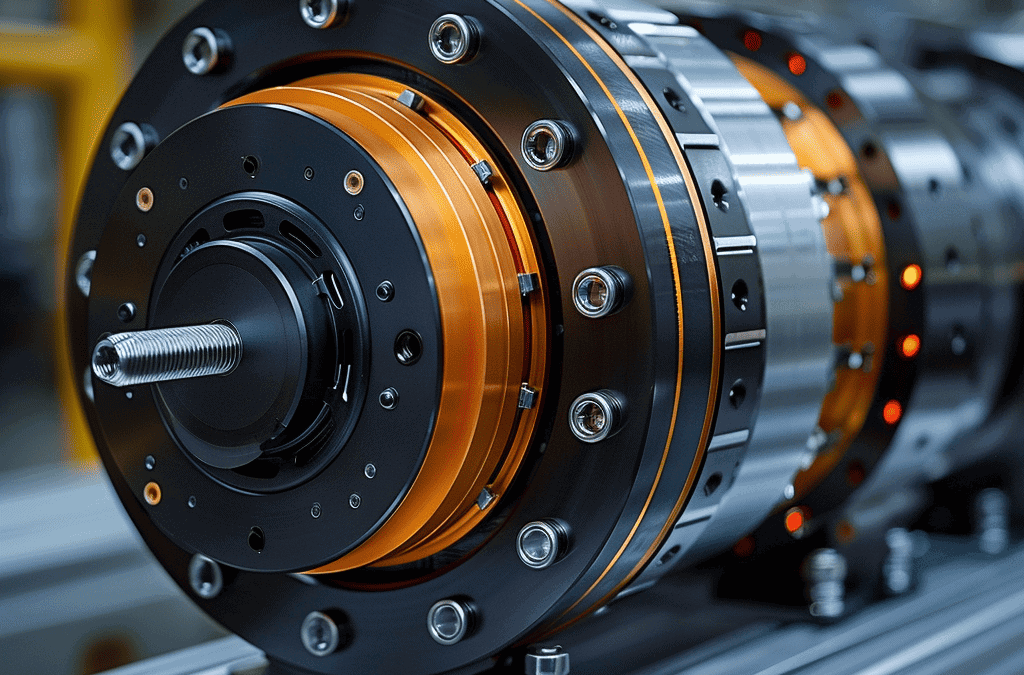
A rotary actuator is a device that is used to move or control a mechanism through a limited range of rotation, typically between 90 to 360 degrees. It consists of a rotating shaft that is connected to a motor or a fluid cylinder, which generates the force required to rotate the shaft. The rotation of the shaft is then transmitted to the load through a series of gears or a direct drive mechanism.
Rotary actuators come in different shapes and sizes, depending on the application. They are typically powered by electricity, hydraulics, or pneumatics. Electric rotary actuators use a motor to generate torque, while hydraulic and pneumatic rotary actuators use fluid pressure to generate torque. The type of power source used can affect the performance, efficiency, and cost of the rotary actuator.
How Does a Rotary Actuator Work?
A rotary actuator works by using a rotating shaft to convert linear motion into rotary motion. The shaft is connected to a motor or a fluid cylinder, which generates the force required to rotate the shaft. The rotation of the shaft is then transmitted to the load through a series of gears or a direct drive mechanism.
In a hydraulic or pneumatic rotary actuator, the fluid pressure is used to generate a linear force on a piston, which then rotates the shaft through a series of gears or a rack and pinion mechanism. The fluid pressure can be controlled using valves, which allow the actuator to move in either direction or to hold a position.
In an electric rotary actuator, the motor generates a rotary force directly, which is then transmitted to the load through a series of gears or a direct drive mechanism. The speed and torque of the motor can be controlled using electronic circuits, which allow the actuator to move with precision and accuracy.
Types of Rotary Actuators
There are many types of rotary actuators, this blog will introduce two: rotary vane actuators and rack and pinion actuators.
Rotary Vane Actuators: Rotary vane actuators use a series of vanes that are mounted on a rotor to convert linear motion into rotary motion. The vanes are moved by fluid pressure, which causes the rotor to rotate. Rotary vane actuators are commonly used in applications that require high torque and low speed. They are also known for their compact size and high reliability.
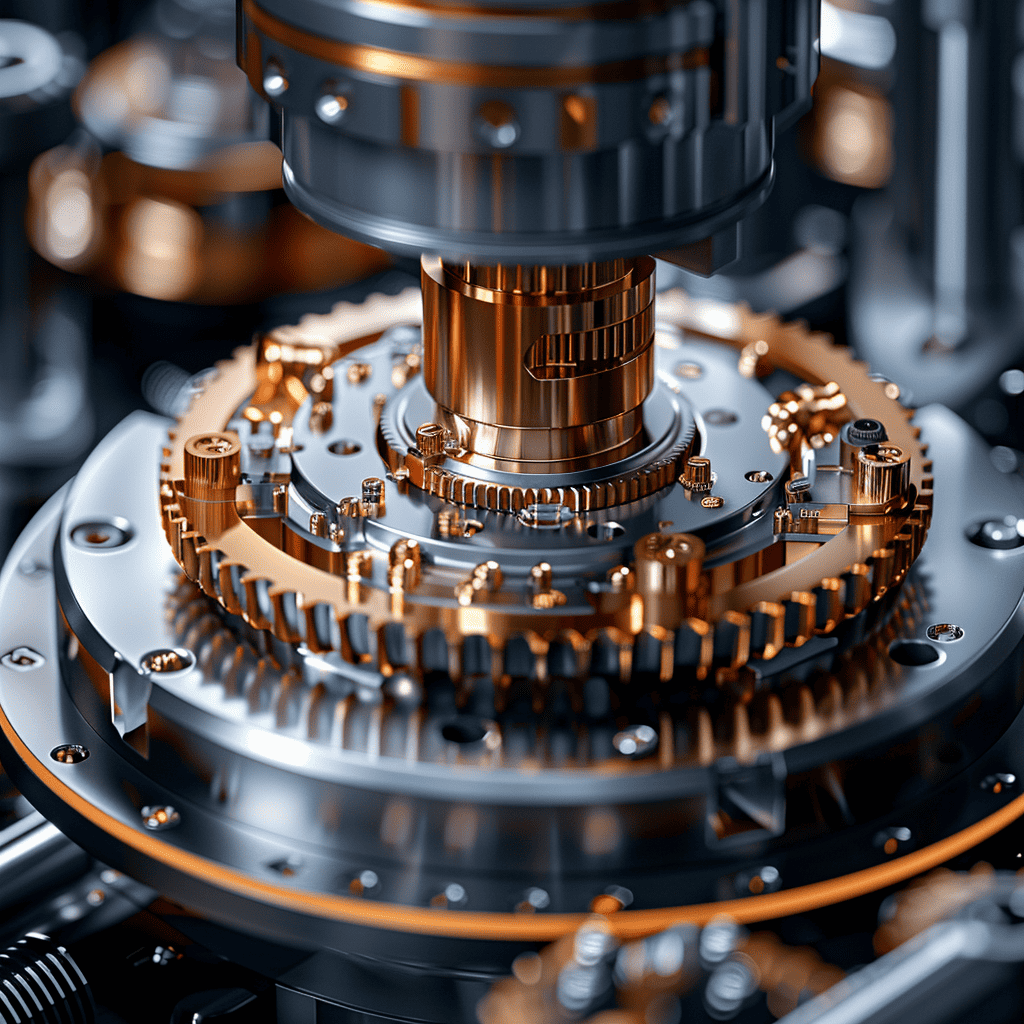
Rack and Pinion Actuators: Rack and pinion actuators use a pinion gear that meshes with a rack to convert linear motion into rotary motion. The pinion gear is mounted on a shaft that is connected to a motor or a fluid cylinder. Rack and pinion actuators are commonly used in applications that require high speed and low torque. They are also known for their simplicity and low cost.
Choosing the Right Rotary Actuator
When choosing a rotary actuator, it is important to consider the required torque, speed, and precision of the application. Electric rotary actuators are typically used in applications that require high precision and accuracy, while hydraulic and pneumatic rotary actuators are used in applications that require high torque and power. Rotary vane actuators are suitable for applications that require high torque and low speed, while rack and pinion actuators are suitable for applications that require high speed and low torque.
Rotary actuators are essential components in many mechanical systems, and understanding their basics is crucial for selecting the right actuator for a particular application. By considering the required torque, speed, and precision, engineers can choose the right type of rotary actuator to achieve optimal performance and efficiency.

Factors to Consider When Choosing a Rotary Actuator: A Comprehensive Guide
Load Requirements
The load requirements are the most critical factor to consider when choosing a rotary actuator. Accurately determining the load requirements, including the maximum torque and speed required to move the load, as well as any accuracy or repeatability requirements, is essential to ensure reliable and safe operation. To determine the load requirements of your application, consider the weight and size of the load, the distance and angle it needs to be moved, and any external factors that may affect the load, such as friction or wind resistance. Select a rotary actuator that can handle the maximum load requirements of your application to ensure optimal performance and safety.
Operating Environment
The operating environment is another crucial factor to consider when choosing a rotary actuator. This includes the temperature, humidity, and exposure to corrosive substances. You should select a rotary actuator that is designed to operate in the specific environment of your application to ensure optimal performance and reliability. For example, if your application involves exposure to high temperatures or corrosive substances, you may need to choose a rotary actuator that is made from materials that are resistant to these conditions. Similarly, if your application involves exposure to moisture or humidity, you may need to choose a rotary actuator that is designed to prevent the ingress of water.
Power Source
The power source is a critical factor to consider when choosing a rotary actuator. Rotary actuators can be powered by electricity, hydraulics, or pneumatics. Each power source has its advantages and disadvantages, so you should choose the one that best meets your application requirements and budget constraints. Electric rotary actuators are typically more energy efficient and quieter than hydraulic or pneumatic rotary actuators. They are also easier to control and maintain. However, they may not be suitable for applications that require high torque or force. Hydraulic rotary actuators are capable of producing high torque and force, making them ideal for heavy-duty applications. They are also highly reliable and durable. However, they may require regular maintenance and are more expensive than electric rotary actuators. Pneumatic rotary actuators are lightweight and compact, making them ideal for applications where space is limited. They are also easy to install and maintain. However, they may not be suitable for applications that require high precision or accuracy.
Control Options
Another important factor to consider when choosing a rotary actuator is the control options. Rotary actuators can be controlled manually, electrically, or pneumatically. The choice of control option depends on the specific application requirements. For example, if precision and speed are critical factors, an electric control system may be the best choice. However, if cost is a concern, a manual control system may be more appropriate.
Feedback Options
Feedback options are also an important consideration when choosing a rotary actuator. Feedback options include analog or digital signals that provide information about the position, velocity, or torque of the actuator. Feedback options are critical for applications that require precise control or monitoring of the actuator’s performance.
Mounting Options
The mounting options are another important factor to consider when choosing a rotary actuator. Rotary actuators can be mounted in various ways, depending on the specific application and installation requirements. You should choose a rotary actuator that is compatible with your mounting requirements to ensure optimal performance and reliability. Some common mounting options for rotary actuators include clevis, trunnion, and flange mounts. Clevis mounts are used for applications that require a simple and quick installation. Trunnion mounts are used for applications that require a high degree of accuracy and stability. Flange mounts are used for applications that require a high degree of rigidity and strength.
Safety Features
Finally, safety features are an essential consideration when choosing a rotary actuator. Rotary actuators can be equipped with a variety of safety features, including overload protection, emergency stop functions, and fail-safe mechanisms. These safety features can help prevent accidents and injuries, as well as protect the actuator from damage.
Maintenance and Repair
Lastly, it is important to consider the maintenance and repair requirements of the rotary actuator when choosing a model. You should choose a rotary actuator that is easy to maintain and repair, and that has a long service life. This will help to reduce downtime and maintenance costs over the life of the actuator. When considering maintenance and repair, you should also consider the availability of spare parts and the cost of replacement components. You should choose a rotary actuator that has a wide range of spare parts available, and that has a reasonable cost of replacement components.
Additional Considerations
In addition to the factors listed above, there are several other considerations that may be relevant when choosing a rotary actuator. These may include:
- Cycle time: The time it takes for the actuator to complete one cycle, including both the extension and retraction strokes.
- Duty cycle: The percentage of time that the actuator is in motion, as opposed to being at rest.
- Environmental regulations: Some applications may be subject to environmental regulations that limit the use of certain materials or power sources.
- Cost: The purchase price, installation costs, and ongoing maintenance costs should all be considered when choosing a rotary actuator.
By carefully considering all of these factors, you can choose the right rotary actuator for your specific application, ensuring optimal performance, safety, and reliability.
Popular Rotary Actuator Manufacturers
Here are some popular rotary actuator manufacturers to consider:
- Rotork: A global manufacturer of electric, hydraulic, and pneumatic rotary actuators.
- SMC Corporation: A leading manufacturer of pneumatic rotary actuators.
- Tolomatic: A manufacturer of electric and pneumatic rotary actuators for industrial applications.
- Thomson Industries: A manufacturer of electric rotary actuators and motion control systems.
- Festo: A global manufacturer of pneumatic and electric rotary actuators.
- Parker Hannifin: A global manufacturer of hydraulic and pneumatic rotary actuators.
When researching these manufacturers, be sure to look for product specifications, customer reviews, and industry certifications to ensure that you are selecting a high-quality and reliable rotary actuator for your application.
Choosing the right rotary actuator for your application is critical to ensure optimal performance, safety, and reliability. By carefully considering the load requirements, operating environment, power source, control and feedback options, mounting options, safety features, maintenance and repair requirements, and other relevant factors, you can select the right rotary actuator for your specific application. Popular rotary actuator manufacturers include Rotork, SMC Corporation, Tolomatic, Thomson Industries, Festo, and Parker Hannifin. When researching these manufacturers, be sure to look for product specifications, customer reviews, and industry certifications to ensure that you are selecting a high-quality and reliable rotary actuator for your application.

Comparing Different Types of Rotary Actuators: A Comprehensive Guide
When selecting a rotary actuator for your application, it’s crucial to understand the unique advantages and disadvantages of various types. By comparing electric, hydraulic, pneumatic, and vane rotary actuators, you can determine the ideal solution for your specific needs.
Electric Rotary Actuators: Precision and Efficiency
Servo motor
Electric rotary actuators utilize an electric motor to generate rotary motion, with DC, AC, and stepper motors being common configurations. For applications requiring high precision and efficiency, electric rotary actuators excel due to their compact size and low maintenance requirements.
Electric rotary actuators offer high accuracy, speed, and efficiency, making them suitable for applications such as robotics, automation, and manufacturing. They can be easily integrated with control systems for precise motion control.
Brushless vs. brushed DC motors
When selecting an electric rotary actuator, consider the motor type. Brushed DC motors are less expensive and simpler to control but may not offer the same level of performance as brushless DC motors. Brushless DC motors are more efficient, reliable, and provide higher torque and speed, but come at a higher cost and require more complex control systems.
Hydraulic Rotary Actuators: Power and Durability
Hydraulic cylinder
Hydraulic rotary actuators harness hydraulic fluid to produce rotary motion, making them ideal for heavy-duty applications requiring high torque and force. Their durability and reliability make them suitable for harsh environments, such as construction or mining.
However, hydraulic rotary actuators are typically larger and heavier than electric or pneumatic actuators, making them less suitable for applications with space constraints. Regular maintenance, including fluid changes and filter replacements, is necessary to ensure longevity and optimal performance.
Single vs. double-acting hydraulic cylinders
Hydraulic rotary actuators can be either single-acting or double-acting. Single-acting actuators use hydraulic fluid to extend the rod, while the rod retracts under spring or gravity force. Double-acting actuators use hydraulic fluid for both extension and retraction, providing better control and precision.
Pneumatic Rotary Actuators: Compact and Lightweight
Air compressor
Pneumatic rotary actuators employ compressed air to generate rotary motion, making them suitable for applications with space and weight limitations. These actuators exhibit high reliability and require minimal maintenance, making them a popular choice for various industries.
However, pneumatic rotary actuators may not provide the same level of torque or force as hydraulic or electric actuators. Additionally, they may produce noise during operation and require a reliable source of compressed air, such as an air compressor, which can contribute to overall system costs.
Relevant Entity: Single vs. double-acting pneumatic cylinders
Like hydraulic rotary actuators, pneumatic rotary actuators can be single-acting or double-acting. Single-acting actuators use compressed air to extend the rod, while the rod retracts under spring or gravity force. Double-acting actuators use compressed air for both extension and retraction, providing greater control and precision.
Vane Rotary Actuators: High Efficiency and Accuracy
Vane design
Vane rotary actuators use a series of vanes to convert linear motion into rotary motion, making them highly efficient and accurate. They are commonly used in hydraulic and pneumatic systems for applications requiring high torque and force.
Vane rotary actuators offer advantages such as minimal vibration, low noise levels, and high durability. However, they tend to be more complex and expensive than other rotary actuator types.
Balanced vs. unbalanced vanes
Vane rotary actuators can feature balanced or unbalanced vanes. Balanced vanes provide equal force on both sides of the rotor, reducing vibration and noise. Unbalanced vanes generate greater force but may produce more vibration and noise.
Rack and Pinion Rotary Actuators: High Accuracy and Control
Gear ratio
Rack and pinion rotary actuators use a rack (linear gear) and a pinion (circular gear) to convert linear motion into rotary motion. These actuators are commonly used in electric and hydraulic systems for applications requiring high accuracy and control.
Rack and pinion rotary actuators offer several advantages, including high accuracy, high torque and force, and a long service life. However, they may require more frequent maintenance due to wear and tear on the gears.
Self-locking vs. non-self-locking
Rack and pinion rotary actuators can be either self-locking or non-self-locking. Self-locking actuators use a worm gear design that locks the actuator in place when power is removed, preventing unwanted movement. Non-self-locking actuators do not have this feature and may require additional measures to prevent movement when power is removed.
Choosing the Right Rotary Actuator for Your Application
When comparing different rotary actuators, consider the specific requirements of your application, including load requirements, operating environment, power source, mounting options, and maintenance and repair. By carefully evaluating your needs and comparing the features and benefits of different rotary actuator types, you can choose the right model for your application.
In summary, electric rotary actuators are known for their precision, efficiency, and ease of integration with control systems. Hydraulic rotary actuators excel in heavy-duty applications that require high torque and force, while pneumatic rotary actuators are suitable for applications with space and weight limitations. Vane rotary actuators offer high efficiency and accuracy, and rack and pinion rotary actuators provide high accuracy and control. By understanding the unique advantages and disadvantages of each type, you can make an informed decision and select the ideal rotary actuator for your specific application.

Top Rotary Actuator Brands and Models on the Market Today
When it comes to choosing the right rotary actuator for your application, there are a number of top brands and models to consider. Here are five of the best rotary actuators on the market today, along with a brief overview of their key features and benefits.
1. Tolomatic
Tolomatic is a leading manufacturer of electric and pneumatic rotary actuators, known for their high performance and reliability. Their rotary actuators are designed for a variety of industries, including automotive, food and beverage, and packaging. Tolomatic offers a wide range of products, including their popular RSA and ERS series.
The RSA series is a compact and cost-effective electric rotary actuator that offers high torque and speed. It is available in both single and dual axis configurations and can be customized to meet specific application requirements. The ERS series is a high-performance electric rotary actuator that offers precise positioning and long life. It is suitable for use in demanding applications that require high accuracy and repeatability.
2. THK
THK is a global manufacturer of linear motion guides and rotary actuators, known for their high precision and reliability. Their rotary actuators are suitable for a wide range of industries, including automotive, aerospace, and medical equipment. THK offers a wide range of rotary actuators, including their popular RBA and RCA series.
The RBA series is a compact and lightweight electric rotary actuator that offers high torque and speed. It is available in a variety of configurations and can be customized to meet specific application requirements. The RCA series is a high-performance electric rotary actuator that offers precise positioning and long life. It is suitable for use in demanding applications that require high accuracy and repeatability.
3. SMC
SMC is a leading manufacturer of pneumatic components, including rotary actuators. Their rotary actuators are designed for a variety of industries, including automotive, food and beverage, and packaging. SMC offers a wide range of products, including their popular RAR and LRA series.
The RAR series is a compact and lightweight pneumatic rotary actuator that offers high torque and speed. It is available in a variety of configurations and can be customized to meet specific application requirements. The LRA series is a high-performance pneumatic rotary actuator that offers precise positioning and long life. It is suitable for use in demanding applications that require high accuracy and repeatability.
4. Moog
Moog is a global manufacturer of motion control solutions, including rotary actuators. Their products are known for their high precision and reliability. Moog offers a wide range of rotary actuators, including their popular RK2 and RK3 series.
The RK2 series is a compact and lightweight electric rotary actuator that offers high torque and speed. It is available in a variety of configurations and can be customized to meet specific application requirements. The RK3 series is a high-performance electric rotary actuator that offers precise positioning and long life. It is suitable for use in demanding applications that require high accuracy and repeatability.
5. Rotork
Rotork is a global manufacturer of electric, hydraulic, and pneumatic actuators. Their products are designed for a variety of industries, including oil and gas, power generation, and water treatment. Rotork offers a wide range of rotary actuators, including their popular IQ and MA series.
The IQ series is a compact and lightweight electric rotary actuator that offers high torque and speed. It is available in a variety of configurations and can be customized to meet specific application requirements. The MA series is a high-performance electric rotary actuator that offers precise positioning and long life. It is suitable for use in demanding applications that require high accuracy and repeatability.
When choosing a rotary actuator, it is important to consider the specific requirements of your application. Factors such as load requirements, operating environment, power source, mounting options, and maintenance and repair should all be taken into account. By carefully evaluating your needs and comparing the features and benefits of different brands and models, you can choose the right rotary actuator for your application. The brands and models listed above are some of the top rotary actuators on the market today and are known for their high performance, reliability, and precision.
Additional considerations
In addition to the factors listed above, there are a few other considerations to keep in mind when choosing a rotary actuator. These include:
* Environmental conditions: Some rotary actuators are designed to withstand harsh environments, such as extreme temperatures, moisture, or dust. If your application will be exposed to these conditions, be sure to choose a rotary actuator that is rated for them.
* Mounting options: Rotary actuators can be mounted in a variety of ways, including flange, shaft, or clevis. Be sure to choose a rotary actuator that offers the mounting options you need for your application.
* Control options: Some rotary actuators offer a range of control options, such as manual, electric, or pneumatic. Choose a rotary actuator that offers the control options you need for your application.
* Maintenance and repair: Rotary actuators require regular maintenance and occasional repair. Be sure to choose a rotary actuator that is easy to maintain and repair, and that offers readily available replacement parts.
By considering all of these factors, you can choose the right rotary actuator for your application and ensure reliable, long-lasting performance.
Applications
Rotary actuators are used in a variety of applications, including:
* Industrial automation: Rotary actuators are used to automate a variety of processes, including assembly, packaging, and material handling.
* Process control: Rotary actuators are used to control valves, pumps, and other process equipment in industries such as oil and gas, power generation, and water treatment.
* Robotics: Rotary actuators are used in robotics applications to provide precise motion control.
* Medical equipment: Rotary actuators are used in medical equipment to provide precise motion control and positioning.
* Aerospace: Rotary actuators are used in aerospace applications to control valves, pumps, and other equipment.
By carefully evaluating your needs and comparing the features and benefits of different brands and models, you can choose the right rotary actuator for your application.
Maintenance and repair
Regular maintenance and occasional repair are essential to ensure reliable, long-lasting performance from your rotary actuator. Some tips for maintaining and repairing your rotary actuator include:
* Regularly inspect your rotary actuator: Inspect your rotary actuator regularly for signs of wear and tear, such as leaks, loose connections, or unusual noise.
* Lubricate your rotary actuator: Make sure to lubricate your rotary actuator regularly according to the manufacturer’s recommendations.
* Replace worn parts: Replace worn parts, such as seals and bearings, as needed to ensure reliable performance.
* Keep your rotary actuator clean: Keep your rotary actuator clean and free of debris to prevent damage and ensure reliable performance.
* Follow the manufacturer’s recommendations: Always follow the manufacturer’s recommendations for maintenance and repair to ensure reliable, long-lasting performance.
By following these tips, you can ensure that your rotary actuator continues to perform reliably and efficiently for years to come.
Conclusion
When it comes to choosing the right rotary actuator for your application, there are a number of top brands and models to consider. By carefully evaluating your needs and comparing the features and benefits of different brands and models, you can choose the right rotary actuator for your application and ensure reliable, long-lasting performance. The brands and models listed above are some of the top rotary actuators on the market today and are known for their high performance, reliability, and precision.


