
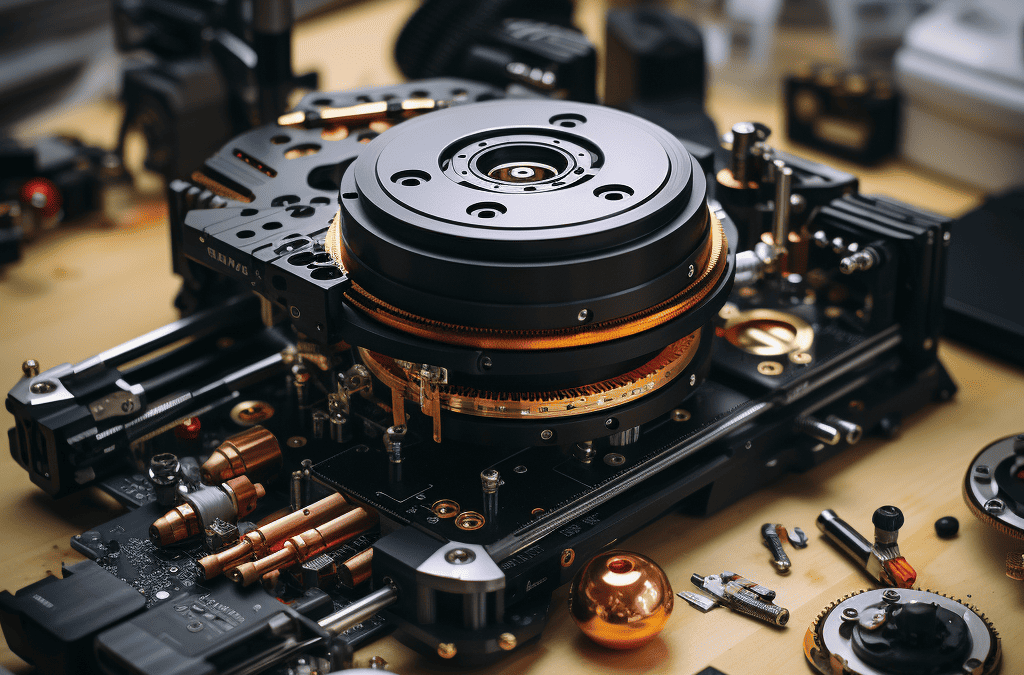

Types of Rotary Actuators
There are several types of rotary actuators, each with its unique advantages and applications. The most common types include:
- Rack and Pinion Actuators: These actuators use a rack and pinion gear system to convert linear motion into rotary motion. They are compact, reliable, and suitable for high-speed applications.
- Vane Actuators: These actuators use a vane to convert hydraulic pressure into rotary motion. They are highly efficient and suitable for heavy-duty applications.
- Ball Screw Actuators: These actuators use a ball screw to convert linear motion into rotary motion. They are highly precise and suitable for applications that require precise positioning.
- Gear Actuators: These actuators use a gear system to convert linear motion into rotary motion. They are suitable for low-speed, high-torque applications.
- Electric Actuators: These actuators use an electric motor to convert electrical energy into rotary motion. They are highly precise and suitable for applications that require precise positioning and control.
Applications of Rotary Actuators
Rotary actuators have a wide range of applications in various industries, including:
- Robotics: Rotary actuators are used in robotic arms to provide precise control over movement and positioning.
- Material Handling: Rotary actuators are used in conveyor systems, hoists, and cranes to move and position heavy loads.
- Manufacturing: Rotary actuators are used in CNC machines, assembly lines, and packaging equipment to provide precise control over movement and positioning.
- Automotive: Rotary actuators are used in power steering systems, brake systems, and seating adjustments to provide smooth and precise control over movement.
- Aerospace: Rotary actuators are used in aircraft landing gear, cargo doors, and flight control surfaces to provide precise control over movement and positioning.
Advantages of Rotary Actuators
Rotary actuators offer several advantages over other types of actuators, including:
- Precision: Rotary actuators are highly precise and can provide accurate positioning and control over movement.
- Versatility: Rotary actuators are available in various types, sizes, and configurations to suit different applications.
- Reliability: Rotary actuators are highly reliable and require minimal maintenance.
- Efficiency: Rotary actuators are highly efficient and can provide high torque and speed with minimal energy consumption.
- Longevity: Rotary actuators are designed to withstand heavy use and have a long service life.
Factors to Consider When Choosing a Rotary Actuator
When choosing a rotary actuator, there are several factors to consider, including:
- Load requirements: The rotary actuator must be able to handle the load requirements of the application, including the weight, size, and shape of the load.
- Speed requirements: The rotary actuator must be able to provide the required speed and acceleration for the application.
- Environmental conditions: The rotary actuator must be suitable for the environmental conditions of the application, including temperature, humidity, and exposure to dust or corrosive substances.
- Power source: The rotary actuator must be compatible with the power source available for the application.
- Maintenance requirements: The rotary actuator must have minimal maintenance requirements and be easy to service and repair.
Rotary actuators are essential components in many mechanical systems, where they are used to provide precise control over the movement of a load. They are highly versatile and can be used in a wide range of applications, from robotics to material handling. When choosing a rotary actuator, it is essential to consider the load requirements, speed requirements, environmental conditions, power source, and maintenance requirements of the application to ensure that the actuator meets the needs of the system.Here is an expanded version of the blog post with additional entities and paragraphs:

Types and Applications of Rotary Actuators
Rotary actuators are mechanical devices that convert linear motion into rotary motion. They are used in a wide range of industries and applications, including robotics, automated manufacturing, material handling, and valve control systems. In this blog post, we will explore the different types of rotary actuators and their applications.
Rack and Pinion Actuators
Rack and pinion actuators are the most common type of rotary actuators. They consist of a circular gear (pinion) that engages with a linear gear (rack) to produce rotary motion. Rack and pinion actuators are often used in applications that require high power, speed, and accuracy, such as robotics and automated manufacturing. They are also commonly used in steering systems for heavy machinery and vehicles.
One advantage of rack and pinion actuators is their compact size, which makes them suitable for use in tight spaces. They are also relatively easy to maintain, as the rack and pinion components can be easily replaced if they become worn or damaged.
Worm Gear Actuators
Worm gear actuators are another type of rotary actuator that uses a worm gear and a worm wheel to produce rotary motion. They are often used in applications that require high torque and precise positioning, such as valve control systems. Worm gear actuators are also commonly used in lifting and loading equipment, as they are able to lift heavy loads with a small amount of input force.
One advantage of worm gear actuators is their self-locking mechanism, which helps to prevent backlash and maintain the actuator’s position even when the input force is removed. This makes them suitable for use in safety-critical applications, such as braking systems and emergency shut-off valves.
Vane Actuators
Vane actuators are a type of rotary actuator that uses a series of vanes to convert linear motion into rotary motion. They are often used in applications that require high speed and are suitable for use in both dry and wet environments. Vane actuators are commonly used in pumping systems, as they are able to handle high flow rates and viscous fluids.
One advantage of vane actuators is their compact size, which makes them suitable for use in tight spaces. They are also relatively low maintenance, as there are no gears or bearings that can become worn or damaged.
Rotary actuators are an essential component in many industrial and automation applications. By understanding the different types and their applications, engineers and designers can choose the right actuator for their specific needs. Whether it’s high power, speed, accuracy, torque, or compact size that’s required, there is a rotary actuator that can meet the challenge.
For example, electric rotary actuators are generally more efficient, quieter, and easier to control than hydraulic or pneumatic actuators. They also require less maintenance and are better suited for applications that require precise positioning and control. However, electric actuators may not be able to provide the same level of power or speed as hydraulic or pneumatic actuators.
Hydraulic rotary actuators, on the other hand, can provide high torque and speed, making them ideal for heavy-duty applications. They are also more durable and can operate in harsh environments. However, hydraulic actuators are typically larger and heavier than electric or pneumatic actuators, and they require more maintenance.
Pneumatic rotary actuators are a good compromise between electric and hydraulic actuators. They are lightweight, compact, and easy to install, making them ideal for applications where space is limited. They are also less expensive than hydraulic actuators and require less maintenance. However, pneumatic actuators may not be able to provide the same level of precision or control as electric actuators.
Mounting Options
The mounting options of a rotary actuator are also an important consideration. Rotary actuators can be mounted in various ways, including direct, flange, and clevis mounting. Direct mounting is the simplest and most common method, where the actuator is mounted directly to the load. Flange mounting is used when the load is too large to be directly mounted to the actuator, and clevis mounting is used when the load requires a pivot point. Choosing the right mounting option will ensure that the actuator is securely attached to the load and can operate safely and effectively.
Control Options
The control options of a rotary actuator are also an important consideration. Rotary actuators can be controlled manually, electronically, or through a combination of both. Manual control is simple and cost-effective, but it may not be suitable for applications that require precise positioning or automation. Electronic control, on the other hand, allows for precise positioning and automation, but it may be more complex and expensive. Choosing the right control option will depend on the specific needs of your application.
Cost
Finally, cost is always a factor to consider when choosing a rotary actuator. The cost of a rotary actuator will depend on various factors, including its size, type, power source, and control options. While it may be tempting to choose the cheapest option available, it’s important to consider the total cost of ownership, including installation, maintenance, and repair costs. Choosing a high-quality rotary actuator that meets the specific needs of your application will ultimately save you time and money in the long run.
When selecting a rotary actuator, it’s important to consider the load requirements, operating environment, power source, mounting options, control options, and cost of the actuator. By carefully considering these factors, you can choose a rotary actuator that will provide reliable, efficient, and safe operation for your specific application.

Regular Inspections
Regular inspections are crucial for identifying any potential issues with your rotary actuator before they become major problems. During an inspection, check for any signs of wear and tear, such as leaks, cracks, or damage to the seals. Also, look for any unusual noises or vibrations that could indicate a problem. If you notice any issues, address them immediately to prevent further damage.
Cleaning
Cleaning is an essential part of maintaining your rotary actuator. Dirt and debris can accumulate on the actuator’s moving parts, causing friction and wear. Regular cleaning can help prevent this buildup and ensure that your actuator operates smoothly. Use a soft cloth or brush to clean the actuator and avoid using harsh chemicals that could damage the actuator’s seals or other components.
Proper Alignment
Proper alignment is critical for the optimal performance of rotary actuators. Misalignment can cause unnecessary wear and tear on the actuator’s moving parts, leading to premature failure. Ensure that the actuator is properly aligned with the connected components, and check for any signs of misalignment during regular inspections. Adjust the actuator as needed to maintain proper alignment.
Temperature Monitoring
Temperature monitoring is essential for preventing overheating, which can cause damage to the actuator’s internal components. Check the actuator’s temperature regularly and ensure that it is operating within the manufacturer’s recommended temperature range. If the actuator is consistently operating at high temperatures, consider adding a cooling system to prevent overheating.
Replacement of Worn Parts
Replacing worn parts is an important part of maintaining your rotary actuator. Worn parts can cause unnecessary wear and tear on other components, leading to premature failure. Regularly inspect the actuator’s moving parts, such as bearings and seals, and replace them as needed. Keeping up with regular maintenance and replacing worn parts can extend the lifespan of your rotary actuator and prevent costly repairs.
Training and Education
Training and education are crucial for ensuring that your rotary actuator is operated and maintained correctly. Provide training to anyone who will be operating or maintaining the actuator, including information on proper operation, regular maintenance, and troubleshooting. This can help prevent operator error and ensure that your rotary actuator operates at peak performance.
Conclusion
Proper maintenance is essential for ensuring that your rotary actuator operates at peak performance and extends its lifespan. By following a regular maintenance schedule, including proper lubrication, regular inspections, cleaning, proper alignment, temperature monitoring, replacement of worn parts, and training and education, you can keep your rotary actuator running smoothly and prevent costly repairs. Remember to always refer to the manufacturer’s recommendations for maintenance and operation.


