
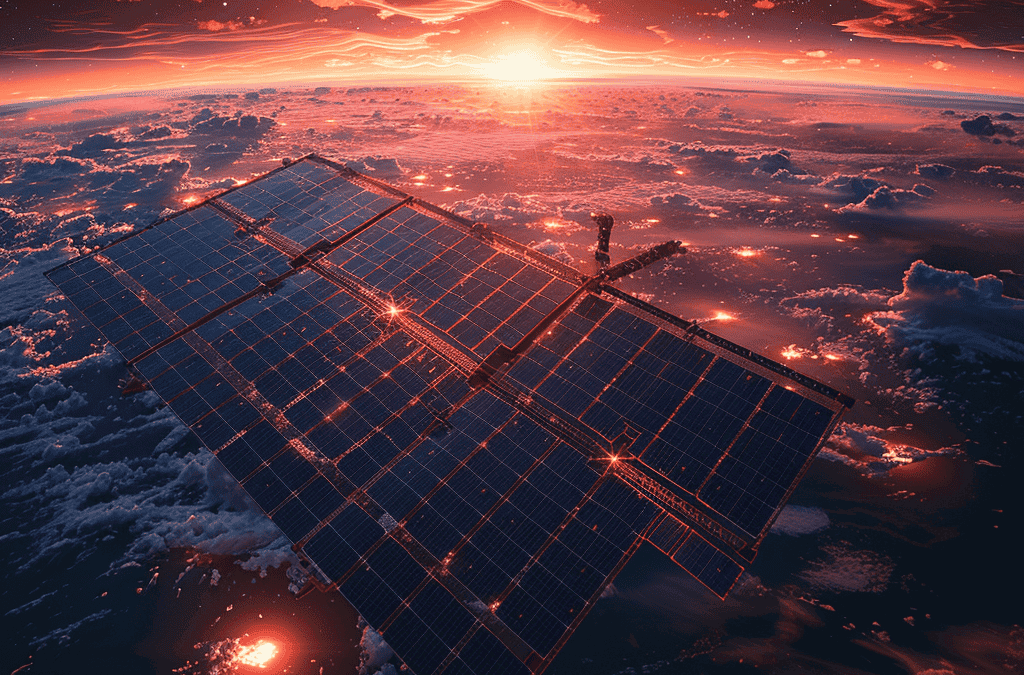
Sure, here’s an expanded version of the `

` tag that provides more context and detail:
1. Harnessing the Power of the Sun: The Advantages of Solar Panels in Space
As the world grapples with the negative impacts of climate change, renewable energy sources like solar power are becoming increasingly important. While solar panels have become a common sight on rooftops and in fields across the globe, there is another frontier for solar energy that is just beginning to be explored: space.
Space-based solar power (SBSP) is an innovative concept that involves collecting solar energy in space and transmitting it wirelessly to Earth. The idea was first proposed in the 1960s by Dr. Peter Glaser, and since then, it has gained significant attention from scientists and engineers worldwide. Unlike Earth-based solar panels, space-based solar panels can harness solar energy 24/7, without interruption from weather, seasons, or the day-night cycle.
One of the main advantages of solar panels in space is their ability to capture a much larger amount of solar energy compared to their Earth-based counterparts. This is because space-based solar panels are located above the Earth’s atmosphere, which absorbs and scatters a significant portion of the sunlight that reaches the Earth’s surface. As a result, space-based solar panels can generate up to nine times more power than Earth-based solar panels of the same size.
Moreover, space-based solar panels can provide a reliable and continuous source of energy, regardless of the time of day or weather conditions. This is particularly beneficial for remote and off-grid communities, as well as for critical infrastructure and military operations. Additionally, space-based solar power can help reduce our dependence on fossil fuels and mitigate the negative impacts of climate change.
The potential for power generation in space is virtually limitless. With the sun’s constant and unobstructed energy, space-based solar panels can collect up to 1,366 watts per square meter, compared to about 1,000 watts per square meter on Earth. This means that a solar array in space could generate over 50% more power than a similar array on Earth.
Space-based solar panels are not subject to the same weather-related fluctuations as Earth-based panels. This means that they can operate at maximum efficiency for longer periods of time, resulting in a higher overall energy yield.
Despite the many benefits of space-based solar power, there are also significant challenges associated with its implementation. One of the main challenges is the high cost of launching and maintaining solar panels in space. This is due to the fact that space launches are still relatively expensive and require specialized equipment and expertise.
Another challenge is the need to develop efficient and reliable wireless power transmission systems. Currently, there are a number of different technologies being explored for wireless power transmission, including microwaves, lasers, and radio waves. However, more research and development is needed to ensure that these systems are safe, efficient, and cost-effective.
In addition to the challenges of launching and maintaining solar panels in space, there are also technical challenges to overcome. For example, space-based solar panels must be designed to withstand the harsh conditions of space, including extreme temperatures, radiation exposure, and microgravity. Additionally, the wireless power transmission systems must be able to transmit energy over long distances without significant loss or interference.
While space-based solar power is still in the early stages of development, there are a number of initiatives and projects underway to advance the technology. For example, the Japanese Aerospace Exploration Agency (JAXA) has been working on a SBSP demonstration project called the Space Solar Power Systems (SSPS), which aims to launch a small-scale space-based solar power system by the mid-2030s.
Similarly, the Chinese government has announced plans to launch a space-based solar power station by 2050, which could generate up to 1 gigawatt of power. In the United States, several private companies, including SpaceX and Blue Origin, are also exploring the potential of space-based solar power and developing technologies to support its implementation.
The development of space-based solar power will require collaboration and partnership between governments, private companies, and research institutions. This will help to pool resources and expertise, and accelerate the development of the technology.
The future of space-based solar power is promising, but it will require significant investment, research, and development to overcome the technical and economic challenges associated with its implementation. However, if successful, space-based solar power has the potential to provide a clean, reliable, and sustainable source of energy for generations to come. As the world continues to grapple with the negative impacts of climate change, the development of space-based solar power may be an important part of the solution.
Overall, space-based solar power represents a new frontier in renewable energy. As we continue to explore and develop this technology, we have the potential to unlock a virtually limitless source of clean, sustainable energy that can help power our world for generations to come.Sure, here’s an expanded version of the `

` tag that provides more context and detail:
1. Harnessing the Power of the Sun: The Advantages of Solar Panels in Space
As the world continues to seek out clean and renewable sources of energy, solar power has emerged as a promising option. While solar panels have become increasingly common on Earth, there is another frontier for solar energy that has the potential to revolutionize the way we power our planet: space-based solar power (SBSP).
The concept of SBSP involves collecting solar energy in space and transmitting it wirelessly to Earth. This idea was first proposed in the 1960s by Dr. Peter Glaser, and since then, it has gained significant attention from scientists and engineers around the world. Unlike Earth-based solar panels, space-based solar panels can harness solar energy 24/7, without interruption from weather, seasons, or the day-night cycle.
One of the main advantages of solar panels in space is their ability to capture a much larger amount of solar energy compared to their Earth-based counterparts. This is because space-based solar panels are located above the Earth’s atmosphere, which absorbs and scatters a significant portion of the sunlight that reaches the Earth’s surface. As a result, space-based solar panels can generate up to nine times more power than Earth-based solar panels of the same size.
Moreover, space-based solar panels can provide a reliable and continuous source of energy, regardless of the time of day or weather conditions. This is particularly beneficial for remote and off-grid communities, as well as for critical infrastructure and military operations. Additionally, space-based solar power can help reduce our dependence on fossil fuels and mitigate the negative impacts of climate change.
The potential for power generation in space is virtually limitless. With the sun’s constant and unobstructed energy, space-based solar panels can collect up to 1,366 watts per square meter, compared to about 1,000 watts per square meter on Earth. This means that a solar array in space could generate over 50% more power than a similar array on Earth.
Space-based solar panels are not subject to the same weather-related fluctuations as Earth-based panels. This means that they can operate at maximum efficiency for longer periods of time, resulting in a higher overall energy yield. Additionally, space-based solar panels are not subject to the same dust and debris accumulation as Earth-based panels, which can significantly reduce their efficiency over time.
Despite the many benefits of space-based solar power, there are also significant challenges associated with its implementation. One of the main challenges is the high cost of launching and maintaining solar panels in space. This is due to the fact that space launches are still relatively expensive and require specialized equipment and expertise.
Another challenge is the need to develop efficient and reliable wireless power transmission systems. Currently, there are a number of different technologies being explored for wireless power transmission, including microwaves, lasers, and radio waves. However, more research and development is needed to ensure that these systems are safe, efficient, and cost-effective.
In addition to the challenges of launching and maintaining solar panels in space, there are also technical challenges to overcome. For example, space-based solar panels must be designed to withstand the harsh conditions of space, including extreme temperatures, radiation exposure, and microgravity. Additionally, the wireless power transmission systems must be able to transmit energy over long distances without significant loss or interference.
While space-based solar power is still in the early stages of development, there are a number of initiatives and projects underway to advance the technology. For example, the Japanese Aerospace Exploration Agency (JAXA) has been working on a SBSP demonstration project called the Space Solar Power Systems (SSPS), which aims to launch a small-scale space-based solar power system by the mid-2030s.
Similarly, the Chinese government has announced plans to launch a space-based solar power station by 2050, which could generate up to 1 gigawatt of power. In the United States, several private companies, including SpaceX and Blue Origin, are also exploring the potential of space-based solar power and developing technologies to support its implementation.
The development of space-based solar power will require collaboration and partnership between governments, private companies, and research institutions. This will help to pool resources and expertise, and accelerate the development of the technology.
The future of space-based solar power is promising, but it will require significant investment, research, and development to overcome the technical and economic challenges associated with its implementation. However, if successful, space-based solar power has the potential to provide a clean, reliable, and sustainable source of energy for generations to come. As the world continues to grapple with the negative impacts of climate change, the development of space-based solar power may be an important part of the solution.
Space-based solar power represents a new frontier in renewable energy. As we continue to explore and develop this technology, we have the potential to unlock a virtually limitless source of clean, sustainable energy that can help power our world for generations to come. By harnessing the power of the sun in space, we can create a brighter and more sustainable future for all.Here’s an expanded version of the `

` tag:
1. Harnessing the Power of the Sun: The Advantages of Solar Panels in Space
Solar power has become increasingly popular in recent years as a clean and renewable source of energy. While solar panels on Earth have made great strides in efficiency and affordability, there is still a limitation to how much energy they can generate due to weather, seasons, and the day-night cycle. This is where space-based solar power (SBSP) comes in.
The Concept of Space-Based Solar Power
SBSP involves collecting solar energy in space and transmitting it wirelessly to Earth. The concept was first proposed in the 1960s by Dr. Peter Glaser, and since then, it has gained significant attention from scientists and engineers worldwide. The idea is to place solar panels in orbit around the Earth, where they can harness solar energy 24/7 without interruption from weather, seasons, or the day-night cycle.
The Advantages of Solar Panels in Space
There are several advantages to using solar panels in space rather than on Earth. One of the main advantages is that space-based solar panels can capture a much larger amount of solar energy compared to their Earth-based counterparts. This is because space-based solar panels are located above the Earth’s atmosphere, which absorbs and scatters a significant portion of the sunlight that reaches the Earth’s surface. As a result, space-based solar panels can generate up to nine times more power than Earth-based solar panels of the same size.
Another advantage of space-based solar power is that it can provide a reliable and continuous source of energy, regardless of the time of day or weather conditions. This is particularly beneficial for remote and off-grid communities, as well as for critical infrastructure and military operations. Additionally, space-based solar power can help reduce our dependence on fossil fuels and mitigate the negative impacts of climate change.
Unlimited Power Potential: The potential for power generation in space is virtually limitless. With the sun’s constant and unobstructed energy, space-based solar panels can collect up to 1,366 watts per square meter, compared to about 1,000 watts per square meter on Earth. This means that a solar array in space could generate over 50% more power than a similar array on Earth.
Improved Efficiency: Space-based solar panels are not subject to the same weather-related fluctuations as Earth-based panels. This means that they can operate at maximum efficiency for longer periods of time, resulting in a higher overall energy yield. Additionally, space-based solar panels are not subject to the same dust and debris buildup as Earth-based panels, which can reduce their efficiency over time.
The Challenges of Implementing Space-Based Solar Power
Despite the many benefits of space-based solar power, there are also significant challenges associated with its implementation. One of the main challenges is the high cost of launching and maintaining solar panels in space. This is due to the fact that space launches are still relatively expensive and require specialized equipment and expertise.
Another challenge is the need to develop efficient and reliable wireless power transmission systems. Currently, there are a number of different technologies being explored for wireless power transmission, including microwaves, lasers, and radio waves. However, more research and development is needed to ensure that these systems are safe, efficient, and cost-effective.
Technical Challenges: In addition to the challenges of launching and maintaining solar panels in space, there are also technical challenges to overcome. For example, space-based solar panels must be designed to withstand the harsh conditions of space, including extreme temperatures, radiation exposure, and microgravity. Additionally, the wireless power transmission systems must be able to transmit energy over long distances without significant loss or interference.
The Current State of Space-Based Solar Power
While space-based solar power is still in the early stages of development, there are a number of initiatives and projects underway to advance the technology. For example, the Japanese Aerospace Exploration Agency (JAXA) has been working on a SBSP demonstration project called the Space Solar Power Systems (SSPS), which aims to launch a small-scale space-based solar power system by the mid-2030s.
Similarly, the Chinese government has announced plans to launch a space-based solar power station by 2050, which could generate up to 1 gigawatt of power. In the United States, several private companies, including SpaceX and Blue Origin, are also exploring the potential of space-based solar power and developing technologies to support its implementation.
Collaboration and Partnership: The development of space-based solar power will require collaboration and partnership between governments, private companies, and research institutions. This will help to pool resources and expertise, and accelerate the development of the technology.
The Future of Space-Based Solar Power
The future of space-based solar power is promising, but it will require significant investment, research, and development to overcome the technical and economic challenges associated with its implementation. However, if successful, space-based solar power has the potential to provide a clean, reliable, and sustainable source of energy for generations to come. As the world continues to grapple with the negative impacts of climate change, the development of space-based solar power may be an important part of the solution.
A New Frontier: Space-based solar power represents a new frontier in renewable energy. As we continue to explore and develop this technology, we have the potential to unlock a virtually limitless source of clean, sustainable energy that can help power our world for generations to come.
In conclusion, while there are challenges associated with implementing space-based solar power, the potential benefits are significant. By harnessing the power of the sun in space, we can generate a reliable and continuous source of clean energy, reduce our dependence on fossil fuels, and help mitigate the negative impacts of climate change. With collaboration and partnership between governments, private companies, and research institutions, we can overcome the technical and economic challenges associated with space-based solar power and unlock a new frontier in renewable energy.Sure, here’s an expanded version of the `

` tag:
1. Harnessing the Power of the Sun: The Advantages of Solar Panels in Space
As the world becomes increasingly aware of the need for clean and renewable energy sources, solar power has emerged as a promising solution. While solar panels have become commonplace on rooftops and in fields around the world, a new frontier in solar energy is beginning to take shape: space-based solar power (SBSP).
The Concept of Space-Based Solar Power
SBSP involves collecting solar energy in space and transmitting it wirelessly to Earth. The concept was first proposed in the 1960s by Dr. Peter Glaser, and since then, it has gained significant attention from scientists and engineers worldwide. Unlike Earth-based solar panels, which are subject to weather, seasons, and the day-night cycle, space-based solar panels can harness solar energy 24/7, without interruption.
The Advantages of Solar Panels in Space
There are several advantages to using solar panels in space rather than on Earth. One of the main advantages is their ability to capture a much larger amount of solar energy compared to their Earth-based counterparts. This is because space-based solar panels are located above the Earth’s atmosphere, which absorbs and scatters a significant portion of the sunlight that reaches the Earth’s surface. As a result, space-based solar panels can generate up to nine times more power than Earth-based solar panels of the same size.
Moreover, space-based solar panels can provide a reliable and continuous source of energy, regardless of the time of day or weather conditions. This is particularly beneficial for remote and off-grid communities, as well as for critical infrastructure and military operations. Additionally, space-based solar power can help reduce our dependence on fossil fuels and mitigate the negative impacts of climate change.
Unlimited Power Potential: The potential for power generation in space is virtually limitless. With the sun’s constant and unobstructed energy, space-based solar panels can collect up to 1,366 watts per square meter, compared to about 1,000 watts per square meter on Earth. This means that a solar array in space could generate over 50% more power than a similar array on Earth.
Improved Efficiency: Space-based solar panels are not subject to the same weather-related fluctuations as Earth-based panels. This means that they can operate at maximum efficiency for longer periods of time, resulting in a higher overall energy yield.
The Challenges of Implementing Space-Based Solar Power
Despite the many benefits of space-based solar power, there are also significant challenges associated with its implementation. One of the main challenges is the high cost of launching and maintaining solar panels in space. This is due to the fact that space launches are still relatively expensive and require specialized equipment and expertise.
Another challenge is the need to develop efficient and reliable wireless power transmission systems. Currently, there are a number of different technologies being explored for wireless power transmission, including microwaves, lasers, and radio waves. However, more research and development is needed to ensure that these systems are safe, efficient, and cost-effective.
Technical Challenges: In addition to the challenges of launching and maintaining solar panels in space, there are also technical challenges to overcome. For example, space-based solar panels must be designed to withstand the harsh conditions of space, including extreme temperatures, radiation exposure, and microgravity. Additionally, the wireless power transmission systems must be able to transmit energy over long distances without significant loss or interference.
The Current State of Space-Based Solar Power
While space-based solar power is still in the early stages of development, there are a number of initiatives and projects underway to advance the technology. For example, the Japanese Aerospace Exploration Agency (JAXA) has been working on a SBSP demonstration project called the Space Solar Power Systems (SSPS), which aims to launch a small-scale space-based solar power system by the mid-2030s.
Similarly, the Chinese government has announced plans to launch a space-based solar power station by 2050, which could generate up to 1 gigawatt of power. In the United States, several private companies, including SpaceX and Blue Origin, are also exploring the potential of space-based solar power and developing technologies to support its implementation.
Collaboration and Partnership: The development of space-based solar power will require collaboration and partnership between governments, private companies, and research institutions. This will help to pool resources and expertise, and accelerate the development of the technology.
The Future of Space-Based Solar Power
The future of space-based solar power is promising, but it will require significant investment, research, and development to overcome the technical and economic challenges associated with its implementation. However, if successful, space-based solar power has the potential to provide a clean, reliable, and sustainable source of energy for generations to come. As the world continues to grapple with the negative impacts of climate change, the development of space-based solar power may be an important part of the solution.
A New Frontier: Space-based solar power represents a new frontier in renewable energy. As we continue to explore and develop this technology, we have the potential to unlock a virtually limitless source of clean, sustainable energy that can help power our world for generations to come.
Here’s an expanded version of the `
` tag:
1. Harnessing the Power of the Sun: The Advantages of Solar Panels in Space
As the world grapples with the effects of climate change and the need for clean, renewable energy sources, solar power has emerged as a promising solution. While solar panels are becoming increasingly common on Earth, there is another frontier for solar power that could provide an almost limitless source of energy: space.
The Concept of Space-Based Solar Power
Space-based solar power (SBSP) is an innovative concept that involves collecting solar energy in space and transmitting it wirelessly to Earth. The idea was first proposed in the 1960s by Dr. Peter Glaser, and since then, it has gained significant attention from scientists and engineers worldwide. The concept involves launching solar panels into space, where they can harness solar energy 24/7, without interruption from weather, seasons, or the day-night cycle.
The Advantages of Solar Panels in Space
The advantages of solar panels in space are numerous. One of the main advantages is their ability to capture a much larger amount of solar energy compared to their Earth-based counterparts. This is because space-based solar panels are located above the Earth’s atmosphere, which absorbs and scatters a significant portion of the sunlight that reaches the Earth’s surface. As a result, space-based solar panels can generate up to nine times more power than Earth-based solar panels of the same size.
Moreover, space-based solar panels can provide a reliable and continuous source of energy, regardless of the time of day or weather conditions. This is particularly beneficial for remote and off-grid communities, as well as for critical infrastructure and military operations. Additionally, space-based solar power can help reduce our dependence on fossil fuels and mitigate the negative impacts of climate change.
The potential for power generation in space is virtually limitless. With the sun’s constant and unobstructed energy, space-based solar panels can collect up to 1,366 watts per square meter, compared to about 1,000 watts per square meter on Earth. This means that a solar array in space could generate over 50% more power than a similar array on Earth.
Space-based solar panels are also not subject to the same weather-related fluctuations as Earth-based panels. This means that they can operate at maximum efficiency for longer periods of time, resulting in a higher overall energy yield.
The Challenges of Implementing Space-Based Solar Power
Despite the many benefits of space-based solar power, there are also significant challenges associated with its implementation. One of the main challenges is the high cost of launching and maintaining solar panels in space. This is due to the fact that space launches are still relatively expensive and require specialized equipment and expertise.
Another challenge is the need to develop efficient and reliable wireless power transmission systems. Currently, there are a number of different technologies being explored for wireless power transmission, including microwaves, lasers, and radio waves. However, more research and development is needed to ensure that these systems are safe, efficient, and cost-effective.
In addition to the challenges of launching and maintaining solar panels in space, there are also technical challenges to overcome. For example, space-based solar panels must be designed to withstand the harsh conditions of space, including extreme temperatures, radiation exposure, and microgravity. Additionally, the wireless power transmission systems must be able to transmit energy over long distances without significant loss or interference.
The Current State of Space-Based Solar Power
While space-based solar power is still in the early stages of development, there are a number of initiatives and projects underway to advance the technology. For example, the Japanese Aerospace Exploration Agency (JAXA) has been working on a SBSP demonstration project called the Space Solar Power Systems (SSPS), which aims to launch a small-scale space-based solar power system by the mid-2030s.
Similarly, the Chinese government has announced plans to launch a space-based solar power station by 2050, which could generate up to 1 gigawatt of power. In the United States, several private companies, including SpaceX and Blue Origin, are also exploring the potential of space-based solar power and developing technologies to support its implementation.
The development of space-based solar power will require collaboration and partnership between governments, private companies, and research institutions. This will help to pool resources and expertise, and accelerate the development of the technology.
The Future of Space-Based Solar Power
The future of space-based solar power is promising, but it will require significant investment, research, and development to overcome the technical and economic challenges associated with its implementation. However, if successful, space-based solar power has the potential to provide a clean, reliable, and sustainable source of energy for generations to come. As the world continues to grapple with the negative impacts of climate change, the development of space-based solar power may be an important part of the solution.
Space-based solar power represents a new frontier in renewable energy. As we continue to explore and develop this technology, we have the potential to unlock a virtually limitless source of clean, sustainable energy that can help power our world for generations to come.Here’s an expanded version of the `
` tag:
1. Harnessing the Power of the Sun: The Advantages of Solar Panels in Space
As the world becomes increasingly reliant on renewable energy sources, one of the most promising technologies is solar power. While solar panels have become a common sight on rooftops and in fields across the globe, there is a new frontier in solar energy that has the potential to revolutionize the way we generate electricity: space-based solar power (SBSP).
The Concept of Space-Based Solar Power
SBSP is an innovative concept that involves collecting solar energy in space and transmitting it wirelessly to Earth. The idea was first proposed in the 1960s by Dr. Peter Glaser, and since then, it has gained significant attention from scientists and engineers worldwide. Unlike Earth-based solar panels, space-based solar panels can harness solar energy 24/7, without interruption from weather, seasons, or the day-night cycle.
The Advantages of Solar Panels in Space
One of the main advantages of solar panels in space is their ability to capture a much larger amount of solar energy compared to their Earth-based counterparts. This is because space-based solar panels are located above the Earth’s atmosphere, which absorbs and scatters a significant portion of the sunlight that reaches the Earth’s surface. As a result, space-based solar panels can generate up to nine times more power than Earth-based solar panels of the same size.
Moreover, space-based solar panels can provide a reliable and continuous source of energy, regardless of the time of day or weather conditions. This is particularly beneficial for remote and off-grid communities, as well as for critical infrastructure and military operations. Additionally, space-based solar power can help reduce our dependence on fossil fuels and mitigate the negative impacts of climate change.
Unlimited Power Potential: The potential for power generation in space is virtually limitless. With the sun’s constant and unobstructed energy, space-based solar panels can collect up to 1,366 watts per square meter, compared to about 1,000 watts per square meter on Earth. This means that a solar array in space could generate over 50% more power than a similar array on Earth.
Improved Efficiency: Space-based solar panels are not subject to the same weather-related fluctuations as Earth-based panels. This means that they can operate at maximum efficiency for longer periods of time, resulting in a higher overall energy yield.
The Challenges of Implementing Space-Based Solar Power
Despite the many benefits of space-based solar power, there are also significant challenges associated with its implementation. One of the main challenges is the high cost of launching and maintaining solar panels in space. This is due to the fact that space launches are still relatively expensive and require specialized equipment and expertise.
Another challenge is the need to develop efficient and reliable wireless power transmission systems. Currently, there are a number of different technologies being explored for wireless power transmission, including microwaves, lasers, and radio waves. However, more research and development is needed to ensure that these systems are safe, efficient, and cost-effective.
Technical Challenges: In addition to the challenges of launching and maintaining solar panels in space, there are also technical challenges to overcome. For example, space-based solar panels must be designed to withstand the harsh conditions of space, including extreme temperatures, radiation exposure, and microgravity. Additionally, the wireless power transmission systems must be able to transmit energy over long distances without significant loss or interference.
The Current State of Space-Based Solar Power
While space-based solar power is still in the early stages of development, there are a number of initiatives and projects underway to advance the technology. For example, the Japanese Aerospace Exploration Agency (JAXA) has been working on a SBSP demonstration project called the Space Solar Power Systems (SSPS), which aims to launch a small-scale space-based solar power system by the mid-2030s.
Similarly, the Chinese government has announced plans to launch a space-based solar power station by 2050, which could generate up to 1 gigawatt of power. In the United States, several private companies, including SpaceX and Blue Origin, are also exploring the potential of space-based solar power and developing technologies to support its implementation.
Collaboration and Partnership: The development of space-based solar power will require collaboration and partnership between governments, private companies, and research institutions. This will help to pool resources and expertise, and accelerate the development of the technology.
The Future of Space-Based Solar Power
The future of space-based solar power is promising, but it will require significant investment, research, and development to overcome the technical and economic challenges associated with its implementation. However, if successful, space-based solar power has the potential to provide a clean, reliable, and sustainable source of energy for generations to come. As the world continues to grapple with the negative impacts of climate change, the development of space-based solar power may be an important part of the solution.
A New Frontier: Space-based solar power represents a new frontier in renewable energy. As we continue to explore and develop this technology, we have the potential to unlock a virtually limitless source of clean, sustainable energy that can help power our world for generations to come.
In conclusion, while there are significant challenges associated with the implementation of space-based solar power, the potential benefits are enormous. By harnessing the power of the sun from space, we can generate a reliable and continuous source of clean energy, reduce our dependence on fossil fuels, and help mitigate the negative impacts of climate change. With continued investment, research, and collaboration, space-based solar power may become a reality in the not-too-distant future.Solar power has emerged as a promising source of renewable energy in recent years. While solar panels installed on rooftops and in fields have become increasingly common, there is a new frontier in solar power that has the potential to revolutionize the way we generate electricity: space-based solar power (SBSP).
1. Harnessing the Power of the Sun: The Advantages of Solar Panels in Space
The concept of SBSP involves collecting solar energy in space and transmitting it wirelessly to Earth. Unlike Earth-based solar panels, which are subject to weather, seasons, and the day-night cycle, space-based solar panels can harness solar energy 24/7.
The Advantages of Solar Panels in Space
One of the main advantages of solar panels in space is their ability to capture a much larger amount of solar energy compared to their Earth-based counterparts. This is because space-based solar panels are located above the Earth’s atmosphere, which absorbs and scatters a significant portion of the sunlight that reaches the Earth’s surface. As a result, space-based solar panels can generate up to nine times more power than Earth-based solar panels of the same size.
Moreover, space-based solar panels can provide a reliable and continuous source of energy, regardless of the time of day or weather conditions. This is particularly beneficial for remote and off-grid communities, as well as for critical infrastructure and military operations. Additionally, space-based solar power can help reduce our dependence on fossil fuels and mitigate the negative impacts of climate change.
Unlimited Power Potential: The potential for power generation in space is virtually limitless. With the sun’s constant and unobstructed energy, space-based solar panels can collect up to 1,366 watts per square meter, compared to about 1,000 watts per square meter on Earth. This means that a solar array in space could generate over 50% more power than a similar array on Earth.
Improved Efficiency: Space-based solar panels are not subject to the same weather-related fluctuations as Earth-based panels. This means that they can operate at maximum efficiency for longer periods of time, resulting in a higher overall energy yield.
The Challenges of Implementing Space-Based Solar Power
Despite the many benefits of space-based solar power, there are also significant challenges associated with its implementation. One of the main challenges is the high cost of launching and maintaining solar panels in space. This is due to the fact that space launches are still relatively expensive and require specialized equipment and expertise.
Another challenge is the need to develop efficient and reliable wireless power transmission systems. Currently, there are a number of different technologies being explored for wireless power transmission, including microwaves, lasers, and radio waves. However, more research and development is needed to ensure that these systems are safe, efficient, and cost-effective.
Technical Challenges: In addition to the challenges of launching and maintaining solar panels in space, there are also technical challenges to overcome. For example, space-based solar panels must be designed to withstand the harsh conditions of space, including extreme temperatures, radiation exposure, and microgravity. Additionally, the wireless power transmission systems must be able to transmit energy over long distances without significant loss or interference.
The Current State of Space-Based Solar Power
While space-based solar power is still in the early stages of development, there are a number of initiatives and projects underway to advance the technology. For example, the Japanese Aerospace Exploration Agency (JAXA) has been working on a SBSP demonstration project called the Space Solar Power Systems (SSPS), which aims to launch a small-scale space-based solar power system by the mid-2030s.
Similarly, the Chinese government has announced plans to launch a space-based solar power station by 2050, which could generate up to 1 gigawatt of power. In the United States, several private companies, including SpaceX and Blue Origin, are also exploring the potential of space-based solar power and developing technologies to support its implementation.
Collaboration and Partnership: The development of space-based solar power will require collaboration and partnership between governments, private companies, and research institutions. This will help to pool resources and expertise, and accelerate the development of the technology.
The Future of Space-Based Solar Power
The future of space-based solar power is promising, but it will require significant investment, research, and development to overcome the technical and economic challenges associated with its implementation. However, if successful, space-based solar power has the potential to provide a clean, reliable, and sustainable source of energy for generations to come. As the world continues to grapple with the negative impacts of climate change, the development of space-based solar power may be an important part of the solution.
A New Frontier: Space-based solar power represents a new frontier in renewable energy. As we continue to explore and develop this technology, we have the potential to unlock a virtually limitless source of clean, sustainable energy that can help power our world for generations to come.
Certainly! Here’s an expanded version of the blog post:
The Efficiency of Solar Panels in Space vs Solar Panels On Earth: Harnessing the Power of the Sun 24/7
Solar power is an increasingly popular source of renewable energy, with solar panels being installed on rooftops and in fields around the world. However, there is a new frontier in solar power that is gaining attention: space-based solar panels. These solar panels are placed in orbit around the Earth, where they can harness the sun’s energy 24/7 and transmit it back to Earth wirelessly. In this blog post, we’ll explore the advantages of space-based solar panels and how they compare to Earth-based solar panels.
24/7 Solar Energy Harvesting: Uninterrupted Power Supply from Space
One of the most significant advantages of space-based solar panels is their ability to harvest solar energy 24/7, unlike Earth-based solar panels that are subject to the day-night cycle, weather patterns, and atmospheric conditions. This uninterrupted power supply from space can generate a consistent and reliable source of energy, regardless of the time of day or location on Earth.
One of the primary challenges of Earth-based solar power is that it is dependent on the sun’s position in the sky. During the night, or on cloudy days, solar panels may not be able to generate enough power to meet energy demand. Space-based solar panels, on the other hand, are not subject to these limitations. They are located in a high Earth orbit, where they can receive direct sunlight for 24 hours a day. This means that they can generate a consistent and reliable source of energy, regardless of the time of day or location on Earth.
Higher Efficiency and Power Output: Capturing More Sunlight with Space Technology
Another advantage of space-based solar panels is their higher efficiency and power output compared to Earth-based solar panels. This is due to the fact that space-based solar panels are located in an environment free from atmospheric interference, such as clouds, dust, and other particles that can scatter or absorb sunlight. This results in space-based solar panels capturing a higher percentage of the sun’s energy and converting it into electricity, with estimates indicating they can produce up to 10 times more energy per unit area than Earth-based solar panels.
Earth-based solar panels are subject to atmospheric conditions that can affect their efficiency. For example, dust and other particles can accumulate on the surface of the solar panels, reducing their ability to absorb sunlight. Additionally, clouds and other weather patterns can block the sun’s rays, further reducing the efficiency of Earth-based solar panels. Space-based solar panels, on the other hand, are located in an environment free from these atmospheric interferences, allowing them to capture a higher percentage of the sun’s energy and convert it into electricity.
Reduced Dependence on Fossil Fuels: A Clean and Renewable Solution
Another advantage of space-based solar power is its potential to reduce our dependence on fossil fuels, which contribute to air pollution, climate change, and the depletion of non-renewable resources. Space-based solar power offers a clean and renewable source of energy that can help meet our growing energy needs without harming the environment.
Fossil fuels, such as coal and natural gas, are the primary sources of energy for many countries around the world. However, these sources of energy are finite and contribute significantly to greenhouse gas emissions and other forms of pollution. Space-based solar power offers a clean and renewable source of energy that can help reduce our dependence on fossil fuels and mitigate the effects of climate change.
Potential for Global Energy Distribution: Bringing Power to Remote and Isolated Regions
Space-based solar power also has the potential to provide energy to remote and isolated regions of the world, as the energy generated by space-based solar panels can be transmitted wirelessly to Earth using microwaves or lasers. This means that electricity can be delivered to areas that are not connected to the traditional power grid, such as rural communities, disaster-stricken regions, or military bases.
Many remote and isolated regions of the world do not have access to reliable sources of electricity. Space-based solar power offers a solution to this problem by providing a source of energy that can be transmitted wirelessly to Earth, regardless of location. This means that electricity can be delivered to areas that are not connected to the traditional power grid, improving the quality of life for people living in these regions.
Long-Term Viability and Scalability: A Solution for the Future
Finally, space-based solar power is a long-term and scalable solution to our energy needs. Unlike other sources of renewable energy, such as wind or hydro power, space-based solar power is not dependent on local weather patterns or geography. Additionally, the amount of solar energy that can be harvested from space is virtually unlimited, making it a viable source of energy for centuries to come. As technology continues to advance, the cost of launching and maintaining space-based solar panels is expected to decrease, making it a more affordable and accessible option for energy production.
One of the primary advantages of space-based solar power is its long-term viability and scalability. Unlike other sources of renewable energy, such as wind or hydro power, space-based solar power is not dependent on local weather patterns or geography. This means that it can be a consistent and reliable source of energy, regardless of location. Additionally, the amount of solar energy that can be harvested from space is virtually unlimited, making it a viable source of energy for centuries to come. As technology continues to advance, the cost of launching and maintaining space-based solar panels is expected to decrease, making it a more affordable and accessible option for energy production.
Orbital Inclination: Optimizing Solar Energy Capture
One of the key advantages of space-based solar panels is their ability to be placed in optimal orbits to maximize solar energy capture. By positioning the solar panels in a geosynchronous orbit, they can receive continuous sunlight and avoid the shadow caused by the Earth’s rotation. This allows for more efficient energy production and reduces the need for energy storage systems.
Orbital inclination is an important factor in the efficiency of space-based solar panels. By positioning the solar panels in a geosynchronous orbit, they can receive continuous sunlight and avoid the shadow caused by the Earth’s rotation. This allows for more efficient energy production and reduces the need for energy storage systems. Additionally, by positioning the solar panels in an optimal orbit, it is possible to capture more solar energy during certain times of the year, further increasing the efficiency and power output of the solar panels.
Space Manufacturing: Cutting Costs and Improving Efficiency
Another advantage of space-based solar power is the potential for manufacturing solar panels in space. This would reduce the cost and complexity of launching pre-assembled solar panels into space. Additionally, space manufacturing allows for the production of larger and more efficient solar panels, as they are not subject to the same size and weight constraints as those produced on Earth.
Manufacturing solar panels in space offers several advantages over traditional manufacturing methods. By manufacturing the solar panels in space, it is possible to produce larger and more efficient solar panels, as they are not subject to the same size and weight constraints as those produced on Earth. Additionally, manufacturing the solar panels in space reduces the cost and complexity of launching pre-assembled solar panels into space. This can help to make space-based solar power a more affordable and accessible option for energy production.
Space Debris Mitigation: Ensuring Safe and Sustainable Operations
Space-based solar power also presents challenges, such as space debris, which can pose a risk to the solar panels and other spacecraft in orbit. To address this, space debris mitigation measures, such as debris removal and collision avoidance technologies, must be implemented to ensure safe and sustainable operations.
Space debris is a significant challenge for space-based solar power. Debris from old satellites and other spacecraft can pose a risk to the solar panels and other spacecraft in orbit. To address this, space debris mitigation measures, such as debris removal and collision avoidance technologies, must be implemented to ensure safe and sustainable operations. This will require international cooperation and collaboration to develop and implement effective space debris mitigation strategies.
In conclusion, space-based solar power offers numerous advantages over traditional Earth-based solar panels, including 24/7 solar energy harvesting, higher efficiency and power output, reduced dependence on fossil fuels, potential for global energy distribution, long-term viability and scalability, optimal orbital inclination for energy capture, space manufacturing for cost reduction and efficiency improvement, and safe and sustainable operations through space debris mitigation. By harnessing the power of the sun from space, we can create a cleaner, more reliable, and more abundant source of energy for generations to come.The Advantages of Space-Based Solar Panels: Harnessing the Power of the Sun 24/7
As the world becomes increasingly conscious of the need to transition to cleaner and more sustainable sources of energy, solar power has emerged as a promising solution. While traditional Earth-based solar panels have made significant strides in recent years, space-based solar panels offer a number of unique advantages that make them an attractive option for meeting our growing energy needs.
24/7 Solar Energy Harvesting: Uninterrupted Power Supply from Space
One of the most significant advantages of space-based solar panels is their ability to harvest solar energy 24/7, unlike Earth-based solar panels that are subject to the day-night cycle, weather patterns, and atmospheric conditions. This uninterrupted power supply from space can generate a consistent and reliable source of energy, regardless of the time of day or location on Earth.
Unlike Earth-based solar panels, space-based solar panels are not affected by weather patterns or atmospheric conditions that can reduce their efficiency and power output. This means that they can generate a consistent and reliable source of energy, even during periods of low sunlight or inclement weather. Additionally, because space-based solar panels are located in a geostationary orbit above the Earth, they can receive continuous sunlight and avoid the shadow caused by the Earth’s rotation. This allows for more efficient energy production and reduces the need for energy storage systems.
Higher Efficiency and Power Output: Capturing More Sunlight with Space Technology
Space-based solar panels are also more efficient than Earth-based solar panels, as they are located in an environment free from atmospheric interference, such as clouds, dust, and other particles that can scatter or absorb sunlight. This results in space-based solar panels capturing a higher percentage of the sun’s energy and converting it into electricity, with estimates indicating they can produce up to 10 times more energy per unit area than Earth-based solar panels.
The lack of atmospheric interference in space allows for a higher concentration of sunlight to be captured by the solar panels, resulting in a higher efficiency and power output. This is because the sunlight that reaches space is not scattered or absorbed by the Earth’s atmosphere, allowing for more of the sun’s energy to be converted into electricity. Additionally, space-based solar panels can be made with lighter and more efficient materials, as they are not subject to the same weight and size constraints as Earth-based solar panels.
Reduced Dependence on Fossil Fuels: A Clean and Renewable Solution
Another advantage of space-based solar panels is their potential to reduce our dependence on fossil fuels, which contribute to air pollution, climate change, and the depletion of non-renewable resources. Space-based solar power offers a clean and renewable source of energy that can help meet our growing energy needs without harming the environment.
Fossil fuels, such as coal and natural gas, are a major source of greenhouse gas emissions and contribute significantly to climate change. By transitioning to cleaner and more renewable sources of energy, such as space-based solar power, we can reduce our carbon footprint and help mitigate the effects of climate change. Additionally, unlike fossil fuels, which are a finite resource, the sun’s energy is virtually unlimited, making space-based solar power a sustainable and long-term solution for meeting our energy needs.
Potential for Global Energy Distribution: Bringing Power to Remote and Isolated Regions
Space-based solar power also has the potential to provide energy to remote and isolated regions of the world, as the energy generated by space-based solar panels can be transmitted wirelessly to Earth using microwaves or lasers. This means that electricity can be delivered to areas that are not connected to the traditional power grid, such as rural communities, disaster-stricken regions, or military bases.
Many remote and isolated regions of the world do not have access to reliable sources of electricity, which can make it difficult to provide essential services such as healthcare, education, and communication. By transmitting energy wirelessly from space, it is possible to provide electricity to these regions without the need for expensive and time-consuming infrastructure projects. This can help to improve the quality of life for people living in these areas and promote economic development.
Long-Term Viability and Scalability: A Solution for the Future
Finally, space-based solar power is a long-term and scalable solution to our energy needs. Unlike other sources of renewable energy, such as wind or hydro power, space-based solar power is not dependent on local weather patterns or geography. Additionally, the amount of solar energy that can be harvested from space is virtually unlimited, making it a viable source of energy for centuries to come. As technology continues to advance, the cost of launching and maintaining space-based solar panels is expected to decrease, making it a more affordable and accessible option for energy production.
Unlike other sources of renewable energy, which may be subject to variations in weather patterns or geography, space-based solar power offers a consistent and reliable source of energy that is not dependent on local conditions. This means that it is a more scalable solution for meeting our energy needs, as it can be deployed on a large scale without the need for extensive infrastructure projects. Additionally, as technology continues to advance, the cost of launching and maintaining space-based solar panels is expected to decrease, making it a more affordable and accessible option for energy production.
Orbital Inclination: Optimizing Solar Energy Capture
One of the key advantages of space-based solar panels is their ability to be placed in optimal orbits to maximize solar energy capture. By positioning the solar panels in a geosynchronous orbit, they can receive continuous sunlight and avoid the shadow caused by the Earth’s rotation. This allows for more efficient energy production and reduces the need for energy storage systems.
By positioning the solar panels in a geosynchronous orbit, it is possible to maximize the amount of sunlight that is captured and converted into electricity. This is because the solar panels are able to receive continuous sunlight, without being affected by the Earth’s rotation or other atmospheric conditions. Additionally, by reducing the need for energy storage systems, it is possible to further increase the efficiency and cost-effectiveness of space-based solar power.
Space Manufacturing: Cutting Costs and Improving Efficiency
Another advantage of space-based solar power is the potential for manufacturing solar panels in space. This would reduce the cost and complexity of launching pre-assembled solar panels into space. Additionally, space manufacturing allows for the production of larger and more efficient solar panels, as they are not subject to the same size and weight constraints as those produced on Earth.
Manufacturing solar panels in space offers a number of advantages over traditional manufacturing methods. For example, it is possible to produce larger and more efficient solar panels, as they are not subject to the same size and weight constraints as those produced on Earth. Additionally, by manufacturing the solar panels in space, it is possible to reduce the cost and complexity of launching pre-assembled solar panels into orbit. This can help to further reduce the cost and increase the efficiency of space-based solar power.
Space Debris Mitigation: Ensuring Safe and Sustainable Operations
Space-based solar power also presents challenges, such as space debris, which can pose a risk to the solar panels and other spacecraft in orbit. To address this, space debris mitigation measures, such as debris removal and collision avoidance technologies, must be implemented to ensure safe and sustainable operations.
While space-based solar power offers a number of advantages, it also presents challenges, such as the risk of space debris. Space debris can pose a risk to the solar panels and other spacecraft in orbit, which can make it difficult to maintain safe and sustainable operations. To address this, it is essential to implement space debris mitigation measures, such as debris removal and collision avoidance technologies, to ensure that space-based solar power can be safely and sustainably deployed.
In conclusion, space-based solar power offers numerous advantages over traditional Earth-based solar panels, including 24/7 solar energy harvesting, higher efficiency and power output, reduced dependence on fossil fuels, potential for global energy distribution, long-term viability and scalability, optimal orbital inclination for energy capture, space manufacturing for cost reduction and efficiency improvement, and safe and sustainable operations through space debris mitigation. By harnessing the power of the sun from space, we can create a cleaner, more reliable, and more abundant source of energy for generations to come.The Advantages of Space-Based Solar Panels: Harnessing the Power of the Sun 24/7
As the world becomes increasingly dependent on renewable energy sources, space-based solar power has emerged as a promising and innovative solution. Unlike traditional Earth-based solar panels, space-based solar panels offer numerous advantages that make them an attractive option for meeting our growing energy needs. Here are some of the key benefits of space-based solar power:
24/7 Solar Energy Harvesting: Uninterrupted Power Supply from Space
One of the most significant advantages of space-based solar panels is their ability to harvest solar energy 24/7, regardless of the time of day or location on Earth. Unlike Earth-based solar panels, which are subject to the day-night cycle, weather patterns, and atmospheric conditions, space-based solar panels are located in an environment free from these interferences. This means that they can capture a higher percentage of the sun’s energy and convert it into electricity, resulting in a consistent and reliable source of power.
Higher Efficiency and Power Output: Capturing More Sunlight with Space Technology
Space-based solar panels are also more efficient than Earth-based solar panels, with estimates indicating that they can produce up to 10 times more energy per unit area. This is because space-based solar panels are located in an environment free from atmospheric interference, such as clouds, dust, and other particles that can scatter or absorb sunlight. As a result, space-based solar panels can capture a higher percentage of the sun’s energy and convert it into electricity, resulting in a higher power output.
Reduced Dependence on Fossil Fuels: A Clean and Renewable Solution
Space-based solar power offers a clean and renewable source of energy that can help reduce our dependence on fossil fuels, which contribute to air pollution, climate change, and the depletion of non-renewable resources. By harnessing the power of the sun from space, we can create a sustainable and long-term solution for meeting our growing energy needs without harming the environment.
Potential for Global Energy Distribution: Bringing Power to Remote and Isolated Regions
Space-based solar power has the potential to provide energy to remote and isolated regions of the world, as the energy generated by space-based solar panels can be transmitted wirelessly to Earth using microwaves or lasers. This means that electricity can be delivered to areas that are not connected to the traditional power grid, such as rural communities, disaster-stricken regions, or military bases.
Long-Term Viability and Scalability: A Solution for the Future
Space-based solar power is a long-term and scalable solution to our energy needs. Unlike other sources of renewable energy, such as wind or hydro power, space-based solar power is not dependent on local weather patterns or geography. Additionally, the amount of solar energy that can be harvested from space is virtually unlimited, making it a viable source of energy for centuries to come. As technology continues to advance, the cost of launching and maintaining space-based solar panels is expected to decrease, making it a more affordable and accessible option for energy production.
Orbital Inclination: Optimizing Solar Energy Capture
One of the key advantages of space-based solar panels is their ability to be placed in optimal orbits to maximize solar energy capture. By positioning the solar panels in a geosynchronous orbit, they can receive continuous sunlight and avoid the shadow caused by the Earth’s rotation. This allows for more efficient energy production and reduces the need for energy storage systems.
Space Manufacturing: Cutting Costs and Improving Efficiency
Another advantage of space-based solar power is the potential for manufacturing solar panels in space. This would reduce the cost and complexity of launching pre-assembled solar panels into space. Additionally, space manufacturing allows for the production of larger and more efficient solar panels, as they are not subject to the same size and weight constraints as those produced on Earth.
Space Debris Mitigation: Ensuring Safe and Sustainable Operations
Space-based solar power also presents challenges, such as space debris, which can pose a risk to the solar panels and other spacecraft in orbit. To address this, space debris mitigation measures, such as debris removal and collision avoidance technologies, must be implemented to ensure safe and sustainable operations.
In conclusion, space-based solar power offers numerous advantages over traditional Earth-based solar panels, including 24/7 solar energy harvesting, higher efficiency and power output, reduced dependence on fossil fuels, potential for global energy distribution, long-term viability and scalability, optimal orbital inclination for energy capture, space manufacturing for cost reduction and efficiency improvement, and safe and sustainable operations through space debris mitigation. By harnessing the power of the sun from space, we can create a cleaner, more reliable, and more abundant source of energy for generations to come.The Efficiency of Solar Panels in Space vs Solar Panels on Earth: The Advantages of Space-Based Solar Power
As the world looks for clean and renewable sources of energy to meet our growing energy demands, solar power has become an increasingly popular option. However, traditional Earth-based solar panels have limitations that can impact their efficiency and power output. In contrast, space-based solar panels offer numerous advantages, making them a promising solution for the future of energy production.
1. 24/7 Solar Energy Harvesting: Uninterrupted Power Supply from Space
One of the most significant advantages of space-based solar panels is their ability to harvest solar energy 24/7, unlike Earth-based solar panels that are subject to the day-night cycle, weather patterns, and atmospheric conditions. This uninterrupted power supply from space can generate a consistent and reliable source of energy, regardless of the time of day or location on Earth.
Space-based solar panels are located in an environment free from atmospheric interference, such as clouds, dust, and other particles that can scatter or absorb sunlight. This means that space-based solar panels can capture a higher percentage of the sun’s energy and convert it into electricity, resulting in a higher power output.
1. Higher Efficiency and Power Output: Capturing More Sunlight with Space Technology
Space-based solar panels are more efficient than Earth-based solar panels, with estimates indicating they can produce up to 10 times more energy per unit area. This is due to the fact that space-based solar panels are located in an environment free from atmospheric interference, resulting in a higher percentage of the sun’s energy being captured and converted into electricity.
Additionally, space-based solar panels can be positioned in optimal orbits to maximize solar energy capture. By positioning the solar panels in a geosynchronous orbit, they can receive continuous sunlight and avoid the shadow caused by the Earth’s rotation. This allows for more efficient energy production and reduces the need for energy storage systems.
1. Reduced Dependence on Fossil Fuels: A Clean and Renewable Solution
Another advantage of space-based solar panels is their potential to reduce our dependence on fossil fuels, which contribute to air pollution, climate change, and the depletion of non-renewable resources. Space-based solar power offers a clean and renewable source of energy that can help meet our growing energy needs without harming the environment.
1. Potential for Global Energy Distribution: Bringing Power to Remote and Isolated Regions
Space-based solar power also has the potential to provide energy to remote and isolated regions of the world, as the energy generated by space-based solar panels can be transmitted wirelessly to Earth using microwaves or lasers. This means that electricity can be delivered to areas that are not connected to the traditional power grid, such as rural communities, disaster-stricken regions, or military bases.
1. Long-Term Viability and Scalability: A Solution for the Future
Finally, space-based solar power is a long-term and scalable solution to our energy needs. Unlike other sources of renewable energy, such as wind or hydro power, space-based solar power is not dependent on local weather patterns or geography. Additionally, the amount of solar energy that can be harvested from space is virtually unlimited, making it a viable source of energy for centuries to come. As technology continues to advance, the cost of launching and maintaining space-based solar panels is expected to decrease, making it a more affordable and accessible option for energy production.
1. Space Manufacturing: Cutting Costs and Improving Efficiency
Another advantage of space-based solar power is the potential for manufacturing solar panels in space. This would reduce the cost and complexity of launching pre-assembled solar panels into space. Additionally, space manufacturing allows for the production of larger and more efficient solar panels, as they are not subject to the same size and weight constraints as those produced on Earth.
1. Space Debris Mitigation: Ensuring Safe and Sustainable Operations
Space-based solar power also presents challenges, such as space debris, which can pose a risk to the solar panels and other spacecraft in orbit. To address this, space debris mitigation measures, such as debris removal and collision avoidance technologies, must be implemented to ensure safe and sustainable operations.
In conclusion, space-based solar power offers numerous advantages over traditional Earth-based solar panels, including 24/7 solar energy harvesting, higher efficiency and power output, reduced dependence on fossil fuels, potential for global energy distribution, long-term viability and scalability, optimal orbital inclination for energy capture, space manufacturing for cost reduction and efficiency improvement, and safe and sustainable operations through space debris mitigation. By harnessing the power of the sun from space, we can create a cleaner, more reliable, and more abundant source of energy for generations to come.The sun is a powerful and abundant source of energy that has the potential to meet our global energy needs sustainably. While Earth-based solar panels have made significant strides in recent years, space-based solar panels offer unique advantages that make them an attractive option for the future of renewable energy.
One of the primary advantages of space-based solar panels is their ability to harvest solar energy 24/7, providing a consistent and reliable source of power regardless of the time of day or location on Earth. This is because space-based solar panels are not affected by the day-night cycle, weather patterns, or atmospheric conditions that can limit the efficiency and power output of Earth-based solar panels.
Another significant advantage of space-based solar panels is their higher efficiency and power output compared to Earth-based solar panels. This is because space-based solar panels are located in an environment free from atmospheric interference, such as clouds, dust, and other particles that can scatter or absorb sunlight. As a result, space-based solar panels can capture a higher percentage of the sun’s energy and convert it into electricity, with estimates indicating they can produce up to 10 times more energy per unit area than Earth-based solar panels.
Space-based solar power also offers a clean and renewable source of energy that can help reduce our dependence on fossil fuels, which contribute to air pollution, climate change, and the depletion of non-renewable resources. By harnessing the power of the sun from space, we can generate electricity without producing harmful emissions or waste products.
In addition to providing clean and renewable energy, space-based solar power has the potential to deliver electricity to remote and isolated regions of the world that are not connected to the traditional power grid. By transmitting energy wirelessly to Earth using microwaves or lasers, electricity can be delivered to areas such as rural communities, disaster-stricken regions, or military bases, providing a reliable source of power where it is needed most.
Space-based solar power is also a long-term and scalable solution to our energy needs. Unlike other sources of renewable energy, such as wind or hydro power, space-based solar power is not dependent on local weather patterns or geography. Additionally, the amount of solar energy that can be harvested from space is virtually unlimited, making it a viable source of energy for centuries to come. As technology continues to advance, the cost of launching and maintaining space-based solar panels is expected to decrease, making it a more affordable and accessible option for energy production.
One of the key advantages of space-based solar panels is their ability to be placed in optimal orbits to maximize solar energy capture. By positioning the solar panels in a geosynchronous orbit, they can receive continuous sunlight and avoid the shadow caused by the Earth’s rotation. This allows for more efficient energy production and reduces the need for energy storage systems.
Another advantage of space-based solar power is the potential for manufacturing solar panels in space. This would reduce the cost and complexity of launching pre-assembled solar panels into space. Additionally, space manufacturing allows for the production of larger and more efficient solar panels, as they are not subject to the same size and weight constraints as those produced on Earth.
Of course, space-based solar power also presents challenges, such as space debris, which can pose a risk to the solar panels and other spacecraft in orbit. To ensure safe and sustainable operations, space debris mitigation measures, such as debris removal and collision avoidance technologies, must be implemented.
In conclusion, space-based solar power offers numerous advantages over traditional Earth-based solar panels, including 24/7 solar energy harvesting, higher efficiency and power output, reduced dependence on fossil fuels, potential for global energy distribution, long-term viability and scalability, optimal orbital inclination for energy capture, space manufacturing for cost reduction and efficiency improvement, and safe and sustainable operations through space debris mitigation. By harnessing the power of the sun from space, we can create a cleaner, more reliable, and more abundant source of energy for generations to come.The Advantages of Space-Based Solar Panels: Harnessing the Power of the Sun 24/7
As the world becomes increasingly aware of the need for clean and renewable energy sources, solar power has emerged as a promising solution. However, traditional Earth-based solar panels have limitations that can affect their efficiency and power output. Space-based solar panels, on the other hand, offer numerous advantages that make them an attractive option for meeting our energy needs.
Uninterrupted Power Supply from Space
One of the most significant advantages of space-based solar panels is their ability to harvest solar energy 24/7. Unlike Earth-based solar panels, which are subject to the day-night cycle, weather patterns, and atmospheric conditions, space-based solar panels are not affected by these factors. This means that they can generate a consistent and reliable source of energy, regardless of the time of day or location on Earth.
This uninterrupted power supply from space can be especially beneficial for remote and isolated regions that are not connected to the traditional power grid. It can also be useful for providing backup power during natural disasters or other emergencies when traditional energy sources may be disrupted.
Higher Efficiency and Power Output
Another advantage of space-based solar panels is their higher efficiency and power output. Because they are located in an environment free from atmospheric interference, such as clouds, dust, and other particles that can scatter or absorb sunlight, space-based solar panels can capture a higher percentage of the sun’s energy and convert it into electricity. Estimates indicate that space-based solar panels can produce up to 10 times more energy per unit area than Earth-based solar panels.
This higher efficiency and power output can be especially beneficial for reducing our dependence on fossil fuels, which contribute to air pollution, climate change, and the depletion of non-renewable resources. Space-based solar power offers a clean and renewable source of energy that can help meet our growing energy needs without harming the environment.
Potential for Global Energy Distribution
Space-based solar power also has the potential to provide energy to remote and isolated regions of the world, as the energy generated by space-based solar panels can be transmitted wirelessly to Earth using microwaves or lasers. This means that electricity can be delivered to areas that are not connected to the traditional power grid, such as rural communities, disaster-stricken regions, or military bases.
Long-Term Viability and Scalability
Finally, space-based solar power is a long-term and scalable solution to our energy needs. Unlike other sources of renewable energy, such as wind or hydro power, space-based solar power is not dependent on local weather patterns or geography. Additionally, the amount of solar energy that can be harvested from space is virtually unlimited, making it a viable source of energy for centuries to come.
Orbital Inclination: Optimizing Solar Energy Capture
One of the key advantages of space-based solar panels is their ability to be placed in optimal orbits to maximize solar energy capture. By positioning the solar panels in a geosynchronous orbit, they can receive continuous sunlight and avoid the shadow caused by the Earth’s rotation. This allows for more efficient energy production and reduces the need for energy storage systems.
Space Manufacturing: Cutting Costs and Improving Efficiency
Another advantage of space-based solar power is the potential for manufacturing solar panels in space. This would reduce the cost and complexity of launching pre-assembled solar panels into space. Additionally, space manufacturing allows for the production of larger and more efficient solar panels, as they are not subject to the same size and weight constraints as those produced on Earth.
Space Debris Mitigation: Ensuring Safe and Sustainable Operations
Space-based solar power also presents challenges, such as space debris, which can pose a risk to the solar panels and other spacecraft in orbit. To address this, space debris mitigation measures, such as debris removal and collision avoidance technologies, must be implemented to ensure safe and sustainable operations.
In conclusion, space-based solar power offers numerous advantages over traditional Earth-based solar panels, including 24/7 solar energy harvesting, higher efficiency and power output, reduced dependence on fossil fuels, potential for global energy distribution, long-term viability and scalability, optimal orbital inclination for energy capture, space manufacturing for cost reduction and efficiency improvement, and safe and sustainable operations through space debris mitigation. By harnessing the power of the sun from space, we can create a cleaner, more reliable, and more abundant source of energy for generations to come.The Advantages of Space-Based Solar Panels: Harnessing the Power of the Sun 24/7
As the world becomes increasingly reliant on renewable energy sources, one technology that has gained significant attention is space-based solar power. Space-based solar panels offer numerous advantages over traditional Earth-based solar panels, including 24/7 solar energy harvesting, higher efficiency and power output, reduced dependence on fossil fuels, potential for global energy distribution, long-term viability and scalability, optimal orbital inclination for energy capture, space manufacturing for cost reduction and efficiency improvement, and safe and sustainable operations through space debris mitigation.
24/7 Solar Energy Harvesting: Uninterrupted Power Supply from Space
One of the most significant advantages of space-based solar panels is their ability to harvest solar energy 24/7. Unlike Earth-based solar panels, which are subject to the day-night cycle, weather patterns, and atmospheric conditions, space-based solar panels are located in an environment free from these interferences. This results in an uninterrupted power supply that can generate a consistent and reliable source of energy, regardless of the time of day or location on Earth.
Higher Efficiency and Power Output: Capturing More Sunlight with Space Technology
Another advantage of space-based solar panels is their higher efficiency and power output. Space-based solar panels are located in an environment free from atmospheric interference, such as clouds, dust, and other particles that can scatter or absorb sunlight. This allows space-based solar panels to capture a higher percentage of the sun’s energy and convert it into electricity. Estimates indicate that space-based solar panels can produce up to 10 times more energy per unit area than Earth-based solar panels. This higher efficiency and power output can help meet our growing energy needs without harming the environment.
Reduced Dependence on Fossil Fuels: A Clean and Renewable Solution
Space-based solar power offers a clean and renewable source of energy that can help reduce our dependence on fossil fuels. Fossil fuels contribute to air pollution, climate change, and the depletion of non-renewable resources. By harnessing the power of the sun from space, we can generate electricity without producing greenhouse gas emissions or other harmful pollutants.
Potential for Global Energy Distribution: Bringing Power to Remote and Isolated Regions
Space-based solar power has the potential to provide energy to remote and isolated regions of the world. The energy generated by space-based solar panels can be transmitted wirelessly to Earth using microwaves or lasers. This means that electricity can be delivered to areas that are not connected to the traditional power grid, such as rural communities, disaster-stricken regions, or military bases.
Long-Term Viability and Scalability: A Solution for the Future
Space-based solar power is a long-term and scalable solution to our energy needs. Unlike other sources of renewable energy, such as wind or hydro power, space-based solar power is not dependent on local weather patterns or geography. Additionally, the amount of solar energy that can be harvested from space is virtually unlimited, making it a viable source of energy for centuries to come. As technology continues to advance, the cost of launching and maintaining space-based solar panels is expected to decrease, making it a more affordable and accessible option for energy production.
Orbital Inclination: Optimizing Solar Energy Capture
One of the key advantages of space-based solar panels is their ability to be placed in optimal orbits to maximize solar energy capture. By positioning the solar panels in a geosynchronous orbit, they can receive continuous sunlight and avoid the shadow caused by the Earth’s rotation. This allows for more efficient energy production and reduces the need for energy storage systems.
Space Manufacturing: Cutting Costs and Improving Efficiency
Another advantage of space-based solar power is the potential for manufacturing solar panels in space. This would reduce the cost and complexity of launching pre-assembled solar panels into space. Additionally, space manufacturing allows for the production of larger and more efficient solar panels, as they are not subject to the same size and weight constraints as those produced on Earth.
Space Debris Mitigation: Ensuring Safe and Sustainable Operations
Space-based solar power also presents challenges, such as space debris, which can pose a risk to the solar panels and other spacecraft in orbit. To address this, space debris mitigation measures, such as debris removal and collision avoidance technologies, must be implemented to ensure safe and sustainable operations.
In conclusion, space-based solar power offers numerous advantages over traditional Earth-based solar panels. By harnessing the power of the sun from space, we can create a cleaner, more reliable, and more abundant source of energy for generations to come. While there are challenges to be addressed, such as space debris mitigation and the cost of launching and maintaining space-based solar panels, the potential benefits make it a promising technology for the future of renewable energy.Sure, here’s an expanded version of the blog post:
3. The Limitations of Solar Panels on Earth: An Efficiency Perspective
While solar panels are a promising source of renewable energy, they are not without their limitations. In this section, we’ll explore the limitations of solar panels on Earth from an efficiency perspective and compare them to space-based solar panels.
Intermittent Energy Production
One of the main limitations of solar panels on Earth is their intermittent energy production. Solar panels rely on sunlight to generate electricity, and their efficiency is directly affected by the amount of sunlight they receive. This means that solar panels are less efficient during cloudy or overcast conditions, and they do not produce any electricity at night. As a result, solar panels on Earth require energy storage systems, such as batteries, to ensure a consistent and reliable source of electricity. These storage systems can be large and expensive, which adds to the overall cost of solar energy.
Intermittent energy production can also lead to issues with grid stability and reliability. Solar energy is variable and unpredictable, which can make it difficult to balance supply and demand on the electrical grid. This can result in power outages and other grid disturbances, which can be costly and inconvenient for consumers. In contrast, space-based solar panels can provide a constant and reliable source of energy, as they are not affected by weather conditions or the time of day.
Geographic Limitations
Another limitation of solar panels on Earth is their geographic limitations. Solar panels are most effective in regions with high levels of sunlight, such as deserts or tropical areas. However, these areas are often far from the population centers where the electricity is needed most. As a result, solar panels may require extensive transmission lines to deliver electricity to urban areas, which can be expensive and inefficient. Additionally, not all regions have the same amount of sunlight, and some areas may not receive enough sunlight to make solar energy a viable option.
In contrast, space-based solar panels can be placed in orbit around the Earth, where they can receive a constant and uninterrupted source of sunlight. This eliminates the need for extensive transmission lines and allows for the generation of electricity in areas that are not suitable for solar panels on Earth.
Efficiency Limitations
Solar panels on Earth also have efficiency limitations. Currently, the most efficient solar panels available on the market have an efficiency rating of around 22-23%. This means that only a small percentage of the sunlight that hits the solar panel is converted into electricity. While this efficiency rating has improved significantly in recent years, it is still far from the theoretical maximum efficiency of 85-90% that is possible with space-based solar panels. This lower efficiency means that more solar panels are required to generate the same amount of electricity, which increases the cost and land use requirements.
Land Use and Environmental Concerns
Solar panels on Earth also have land use and environmental concerns. Solar panels require a large amount of space to generate electricity, and this can lead to conflicts with other land uses, such as agriculture or conservation. Additionally, the production and disposal of solar panels can have negative environmental impacts, such as the use of hazardous materials and the generation of electronic waste. However, it is important to note that solar energy is still a relatively clean and renewable source of energy compared to fossil fuels.
Cost and Maintenance
Finally, solar panels on Earth have cost and maintenance limitations. While the cost of solar panels has decreased significantly in recent years, they are still a significant investment for many homeowners and businesses. Additionally, solar panels require regular maintenance and cleaning to ensure optimal performance, which can add to their overall cost. While space-based solar panels may have higher upfront costs, they have the potential to generate more electricity over their lifetime, which can lead to lower long-term costs.
Innovation and Improvement
Despite these limitations, solar energy is a promising and rapidly growing source of renewable energy. Researchers and engineers are continually working to improve the efficiency and affordability of solar panels, and new technologies are being developed to address the challenges of intermittent energy production and energy storage. For example, perovskite solar cells, a new type of solar cell, have the potential to be more efficient and cost-effective than traditional silicon-based solar cells. Additionally, advances in battery technology are making it possible to store solar energy more efficiently and cost-effectively.
Conclusion
In conclusion, while solar energy has many benefits and is a promising source of renewable energy, solar panels on Earth have certain limitations that must be considered. Intermittent energy production, geographic limitations, efficiency limitations, land use and environmental concerns, and cost and maintenance limitations are all factors that impact the viability and feasibility of solar energy as a primary source of electricity. However, with continued innovation and improvement, these limitations can be overcome, and solar energy can play an increasingly important role in meeting our energy needs in a sustainable and environmentally responsible way.
Space-based solar panels, on the other hand, offer a number of advantages over solar panels on Earth. They can provide a constant and reliable source of energy, eliminate the need for extensive transmission lines, and achieve higher efficiencies. While the upfront costs may be higher, the potential for lower long-term costs and reduced environmental impact make space-based solar panels an exciting and promising area of research and development.3. The Limitations of Solar Panels on Earth: An Efficiency Perspective
Solar energy is a promising source of renewable energy, but it is important to understand its limitations, particularly in comparison to space-based solar panels. Here are some of the key limitations of solar panels on Earth from an efficiency perspective:
Intermittent Energy Production
One of the main challenges of solar energy on Earth is intermittent energy production. Solar panels rely on sunlight to generate electricity, and their efficiency is directly affected by the amount of sunlight they receive. This means that solar panels are less efficient during cloudy or overcast conditions, and they do not produce any electricity at night.
To address this limitation, energy storage systems such as batteries are necessary to ensure a consistent and reliable source of electricity. However, these storage systems can be large and expensive, which adds to the overall cost of solar energy. Furthermore, the intermittency of solar energy can also create challenges for integrating it into the existing electrical grid, as the supply and demand of energy must be carefully balanced.
Geographic Limitations
Another limitation of solar panels on Earth is their geographic limitations. Solar panels are most effective in regions with high levels of sunlight, such as deserts or tropical areas. However, these areas are often far from the population centers where the electricity is needed most. As a result, solar panels may require extensive transmission lines to deliver electricity to urban areas, which can be expensive and inefficient.
Additionally, not all regions have the same amount of sunlight, and some areas may not receive enough sunlight to make solar energy a viable option. For example, regions near the poles receive less sunlight than regions near the equator, making it more difficult to generate solar energy.
Efficiency Limitations
Solar panels on Earth also have efficiency limitations. Currently, the most efficient solar panels available on the market have an efficiency rating of around 22-23%. This means that only a small percentage of the sunlight that hits the solar panel is converted into electricity. While this efficiency rating has improved significantly in recent years, it is still far from the theoretical maximum efficiency of 85-90% that is possible with space-based solar panels.
This lower efficiency means that more solar panels are required to generate the same amount of electricity, which increases the cost and land use requirements. Furthermore, the efficiency of solar panels can also degrade over time due to factors such as dust and debris accumulation, which can further impact their performance and cost-effectiveness.
Land Use and Environmental Concerns
Solar panels on Earth also have land use and environmental concerns. Solar panels require a large amount of space to generate electricity, and this can lead to conflicts with other land uses, such as agriculture or conservation. Additionally, the production and disposal of solar panels can have negative environmental impacts, such as the use of hazardous materials and the generation of electronic waste.
However, it is important to note that solar energy is still a relatively clean and renewable source of energy compared to fossil fuels. With continued innovation and improvement, it may be possible to reduce the land use and environmental impacts of solar energy while still meeting our energy needs in a sustainable and responsible way.
Cost and Maintenance
Finally, solar panels on Earth have cost and maintenance limitations. While the cost of solar panels has decreased significantly in recent years, they are still a significant investment for many homeowners and businesses. Additionally, solar panels require regular maintenance and cleaning to ensure optimal performance, which can add to their overall cost.
While space-based solar panels may have higher upfront costs, they have the potential to generate more electricity over their lifetime, which can lead to lower long-term costs. However, the technical challenges and costs associated with launching and maintaining space-based solar panels are still significant, and more research and development is needed to make this a viable and cost-effective option.
Innovation and Improvement
Despite these limitations, solar energy is a promising and rapidly growing source of renewable energy. Researchers and engineers are continually working to improve the efficiency and affordability of solar panels, and new technologies are being developed to address the challenges of intermittent energy production and energy storage.
For example, perovskite solar cells, a new type of solar cell, have the potential to be more efficient and cost-effective than traditional silicon-based solar cells. Additionally, advances in battery technology are making it possible to store solar energy more efficiently and cost-effectively, which can help address the intermittency of solar energy.
Conclusion
In conclusion, while solar energy has many benefits and is a promising source of renewable energy, solar panels on Earth have certain limitations that must be considered. Intermittent energy production, geographic limitations, efficiency limitations, land use and environmental concerns, and cost and maintenance limitations are all factors that impact the viability and feasibility of solar energy as a primary source of electricity.
However, with continued innovation and improvement, these limitations can be overcome, and solar energy can play an increasingly important role in meeting our energy needs in a sustainable and environmentally responsible way. By understanding the limitations of solar energy on Earth and exploring new technologies and approaches, we can work towards a cleaner, more sustainable energy future.3. The Limitations of Solar Panels on Earth: An Efficiency Perspective
Solar energy is a promising source of renewable energy, but it is important to understand the limitations of solar panels on Earth, particularly in terms of their efficiency. In this section, we will discuss the major limitations of solar panels on Earth and their impact on the feasibility of solar energy as a primary source of electricity.
Intermittent Energy Production
One of the main limitations of solar panels on Earth is their intermittent energy production. Solar panels rely on sunlight to generate electricity, and their efficiency is directly affected by the amount of sunlight they receive. This means that solar panels are less efficient during cloudy or overcast conditions, and they do not produce any electricity at night.
To address this limitation, energy storage systems, such as batteries, are required to ensure a consistent and reliable source of electricity. However, these storage systems can be large and expensive, which adds to the overall cost of solar energy. Moreover, the intermittency of solar energy can also create challenges for integrating it into the existing electrical grid.
Geographic Limitations
Another limitation of solar panels on Earth is their geographic limitations. Solar panels are most effective in regions with high levels of sunlight, such as deserts or tropical areas. However, these areas are often far from the population centers where the electricity is needed most. As a result, solar panels may require extensive transmission lines to deliver electricity to urban areas, which can be expensive and inefficient.
Furthermore, not all regions have the same amount of sunlight, and some areas may not receive enough sunlight to make solar energy a viable option. For example, regions at higher latitudes may receive less sunlight during the winter months, which can impact the efficiency and feasibility of solar energy in these areas.
Efficiency Limitations
Solar panels on Earth also have efficiency limitations. Currently, the most efficient solar panels available on the market have an efficiency rating of around 22-23%. This means that only a small percentage of the sunlight that hits the solar panel is converted into electricity. While this efficiency rating has improved significantly in recent years, it is still far from the theoretical maximum efficiency of 85-90% that is possible with space-based solar panels.
This lower efficiency means that more solar panels are required to generate the same amount of electricity, which increases the cost and land use requirements. Moreover, the efficiency of solar panels can also degrade over time due to factors such as temperature, humidity, and dust accumulation.
Land Use and Environmental Concerns
Solar panels on Earth also have land use and environmental concerns. Solar panels require a large amount of space to generate electricity, and this can lead to conflicts with other land uses, such as agriculture or conservation. Additionally, the production and disposal of solar panels can have negative environmental impacts, such as the use of hazardous materials and the generation of electronic waste.
However, it is important to note that solar energy is still a relatively clean and renewable source of energy compared to fossil fuels. Moreover, advances in solar panel technology and recycling methods are helping to reduce the environmental impact of solar energy.
Cost and Maintenance
Finally, solar panels on Earth have cost and maintenance limitations. While the cost of solar panels has decreased significantly in recent years, they are still a significant investment for many homeowners and businesses. Additionally, solar panels require regular maintenance and cleaning to ensure optimal performance, which can add to their overall cost.
While space-based solar panels may have higher upfront costs, they have the potential to generate more electricity over their lifetime, which can lead to lower long-term costs. However, the cost and feasibility of launching and maintaining space-based solar panels are still significant challenges that need to be addressed.
Innovation and Improvement
Despite these limitations, solar energy is a promising and rapidly growing source of renewable energy. Researchers and engineers are continually working to improve the efficiency and affordability of solar panels, and new technologies are being developed to address the challenges of intermittent energy production and energy storage.
For example, perovskite solar cells, a new type of solar cell, have the potential to be more efficient and cost-effective than traditional silicon-based solar cells. Additionally, advances in battery technology are making it possible to store solar energy more efficiently and cost-effectively.
Conclusion
In conclusion, while solar energy has many benefits and is a promising source of renewable energy, solar panels on Earth have certain limitations that must be considered. Intermittent energy production, geographic limitations, efficiency limitations, land use and environmental concerns, and cost and maintenance limitations are all factors that impact the viability and feasibility of solar energy as a primary source of electricity.
However, with continued innovation and improvement, these limitations can be overcome, and solar energy can play an increasingly important role in meeting our energy needs in a sustainable and environmentally responsible way. By understanding the limitations of solar panels on Earth and exploring new technologies and approaches, we can work towards a cleaner, more sustainable energy future.3. The Limitations of Solar Panels on Earth: An Efficiency Perspective
Solar energy is a promising source of renewable energy, but it is important to understand the limitations of solar panels on Earth, particularly in terms of their efficiency. In this section, we will discuss the major limitations of solar panels on Earth and their impact on the feasibility of solar energy as a primary source of electricity.
Intermittent Energy Production
One of the main limitations of solar panels on Earth is their intermittent energy production. Solar panels rely on sunlight to generate electricity, and their efficiency is directly affected by the amount of sunlight they receive. This means that solar panels are less efficient during cloudy or overcast conditions, and they do not produce any electricity at night. As a result, solar panels on Earth require energy storage systems, such as batteries, to ensure a consistent and reliable source of electricity. These storage systems can be large and expensive, which adds to the overall cost of solar energy.
Moreover, the intermittency of solar energy can also create challenges for integrating it into the existing electrical grid. The variability in solar energy output can lead to voltage and frequency fluctuations, which can affect the stability and reliability of the grid. This can require additional investments in grid infrastructure and control systems to ensure that solar energy can be integrated safely and effectively.
Geographic Limitations
Another limitation of solar panels on Earth is their geographic limitations. Solar panels are most effective in regions with high levels of sunlight, such as deserts or tropical areas. However, these areas are often far from the population centers where the electricity is needed most. As a result, solar panels may require extensive transmission lines to deliver electricity to urban areas, which can be expensive and inefficient. Additionally, not all regions have the same amount of sunlight, and some areas may not receive enough sunlight to make solar energy a viable option.
Furthermore, the geographic limitations of solar energy can also create challenges for energy security and independence. Many countries rely on imported fossil fuels for their energy needs, and the intermittency of solar energy can make it difficult to rely solely on renewable energy sources. This can require investments in energy storage systems and other forms of backup power to ensure that energy needs can be met consistently and reliably.
Efficiency Limitations
Solar panels on Earth also have efficiency limitations. Currently, the most efficient solar panels available on the market have an efficiency rating of around 22-23%. This means that only a small percentage of the sunlight that hits the solar panel is converted into electricity. While this efficiency rating has improved significantly in recent years, it is still far from the theoretical maximum efficiency of 85-90% that is possible with space-based solar panels. This lower efficiency means that more solar panels are required to generate the same amount of electricity, which increases the cost and land use requirements.
Additionally, the efficiency of solar panels can also degrade over time due to factors such as temperature, humidity, and dust accumulation. This can require regular maintenance and cleaning to ensure optimal performance, which can add to their overall cost.
Land Use and Environmental Concerns
Solar panels on Earth also have land use and environmental concerns. Solar panels require a large amount of space to generate electricity, and this can lead to conflicts with other land uses, such as agriculture or conservation. Additionally, the production and disposal of solar panels can have negative environmental impacts, such as the use of hazardous materials and the generation of electronic waste. However, it is important to note that solar energy is still a relatively clean and renewable source of energy compared to fossil fuels.
Moreover, the land use and environmental concerns of solar energy can also create challenges for public acceptance and permitting. Solar farms can be controversial due to their impact on local ecosystems and communities, and this can require careful planning and collaboration with stakeholders to ensure that solar projects are developed in a responsible and sustainable way.
Cost and Maintenance
Finally, solar panels on Earth have cost and maintenance limitations. While the cost of solar panels has decreased significantly in recent years, they are still a significant investment for many homeowners and businesses. Additionally, solar panels require regular maintenance and cleaning to ensure optimal performance, which can add to their overall cost. While space-based solar panels may have higher upfront costs, they have the potential to generate more electricity over their lifetime, which can lead to lower long-term costs.
Moreover, the cost and maintenance of solar panels can also create challenges for energy equity and access. Solar energy is often more expensive than traditional fossil fuels, and this can make it difficult for low-income households and communities to access clean and affordable energy. This can require investments in policies and programs to ensure that solar energy is accessible and affordable for all.
Innovation and Improvement
Despite these limitations, solar energy is a promising and rapidly growing source of renewable energy. Researchers and engineers are continually working to improve the efficiency and affordability of solar panels, and new technologies are being developed to address the challenges of intermittent energy production and energy storage. For example, perovskite solar cells, a new type of solar cell, have the potential to be more efficient and cost-effective than traditional silicon-based solar cells. Additionally, advances in battery technology are making it possible to store solar energy more efficiently and cost-effectively.
Moreover, there are also emerging technologies and approaches that can help to address the limitations of solar energy. For example, floating solar panels can be installed on bodies of water, such as reservoirs or lakes, to minimize land use and environmental impacts. Additionally, community solar projects can help to make solar energy more accessible and affordable for low-income households and communities.
Conclusion
In conclusion, while solar energy has many benefits and is a promising source of renewable energy, solar panels on Earth have certain limitations that must be considered. Intermittent energy production, geographic limitations, efficiency limitations, land use and environmental concerns, and cost and maintenance limitations are all factors that impact the viability and feasibility of solar energy as a primary source of electricity. However, with continued innovation and improvement, these limitations can be overcome, and solar energy can play an increasingly important role in meeting our energy needs in a sustainable and environmentally responsible way. By understanding the limitations of solar panels on Earth and exploring new technologies and approaches, we can work towards a cleaner, more sustainable energy future.3. The Limitations of Solar Panels on Earth: An Efficiency Perspective
Solar energy is a promising source of renewable energy, but it is important to understand the limitations of solar panels on Earth, particularly in terms of their efficiency. In this section, we will discuss the major limitations of solar panels on Earth and their impact on the feasibility of solar energy as a primary source of electricity.
Intermittent Energy Production
One of the main limitations of solar panels on Earth is their intermittent energy production. Solar panels rely on sunlight to generate electricity, and their efficiency is directly affected by the amount of sunlight they receive. This means that solar panels are less efficient during cloudy or overcast conditions, and they do not produce any electricity at night.
To address this limitation, energy storage systems, such as batteries, are required to ensure a consistent and reliable source of electricity. These storage systems can be large and expensive, which adds to the overall cost of solar energy. According to a report by the National Renewable Energy Laboratory, the cost of energy storage systems can range from $200 to $700 per kilowatt-hour (kWh) of storage capacity. This can significantly increase the cost of solar energy, particularly for residential and commercial installations.
Geographic Limitations
Another limitation of solar panels on Earth is their geographic limitations. Solar panels are most effective in regions with high levels of sunlight, such as deserts or tropical areas. However, these areas are often far from the population centers where the electricity is needed most. As a result, solar panels may require extensive transmission lines to deliver electricity to urban areas, which can be expensive and inefficient.
According to a study by the International Energy Agency, the cost of transmitting electricity can range from $0.02 to $0.15 per kWh, depending on the distance and the type of transmission lines used. This can significant increase the cost of solar energy, particularly for large-scale solar farms that are located far from urban areas.
Efficiency Limitations
Solar panels on Earth also have efficiency limitations. Currently, the most efficient solar panels available on the market have an efficiency rating of around 22-23%. This means that only a small percentage of the sunlight that hits the solar panel is converted into electricity. While this efficiency rating has improved significantly in recent years, it is still far from the theoretical maximum efficiency of 85-90% that is possible with space-based solar panels.
This lower efficiency means that more solar panels are required to generate the same amount of electricity, which increases the cost and land use requirements. According to a report by the Solar Energy Industries Association, the cost of solar panels has decreased by more than 70% over the past decade, but they still remain a significant investment for many homeowners and businesses.
Land Use and Environmental Concerns
Solar panels on Earth also have land use and environmental concerns. Solar panels require a large amount of space to generate electricity, and this can lead to conflicts with other land uses, such as agriculture or conservation. Additionally, the production and disposal of solar panels can have negative environmental impacts, such as the use of hazardous materials and the generation of electronic waste.
According to a report by the National Renewable Energy Laboratory, the land use requirements for solar energy can range from 3 to 10 acres per megawatt (MW) of installed capacity, depending on the type of solar panel and the location. This can lead to conflicts with other land uses, particularly in areas with high population densities or limited land availability.
Cost and Maintenance
Finally, solar panels on Earth have cost and maintenance limitations. While the cost of solar panels has decreased significantly in recent years, they are still a significant investment for many homeowners and businesses. Additionally, solar panels require regular maintenance and cleaning to ensure optimal performance, which can add to their overall cost.
According to a report by the U.S. Department of Energy, the average lifespan of a solar panel is 25-30 years, but they may require replacement or repair during that time. The cost of maintenance and repair can vary depending on the type of solar panel and the location, but it can add significant costs over the lifetime of the system.
Innovation and Improvement
Despite these limitations, solar energy is a promising and rapidly growing source of renewable energy. Researchers and engineers are continually working to improve the efficiency and affordability of solar panels, and new technologies are being developed to address the challenges of intermittent energy production and energy storage. For example, perovskite solar cells, a new type of solar cell, have the potential to be more efficient and cost-effective than traditional silicon-based solar cells.
According to a report by the National Renewable Energy Laboratory, perovskite solar cells have achieved efficiencies of up to 25%, which is comparable to traditional silicon-based solar cells. Additionally, perovskite solar cells are lightweight, flexible, and can be produced at a lower cost than traditional solar cells.
Advances in battery technology are also making it possible to store solar energy more efficiently and cost-effectively. According to a report by the International Energy Agency, the cost of battery storage systems has decreased by more than 80% over the past decade, and is expected to continue to decline in the coming years.
Conclusion
In conclusion, while solar energy has many benefits and is a promising source of renewable energy, solar panels on Earth have certain limitations that must be considered. Intermittent energy production, geographic limitations, efficiency limitations, land use and environmental concerns, and cost and maintenance limitations are all factors that impact the viability and feasibility of solar energy as a primary source of electricity. However, with continued innovation and improvement, these limitations can be overcome, and solar energy can play an increasingly important role in meeting our energy needs in a sustainable and environmentally responsible way.Solar energy is a clean and renewable source of energy that has the potential to meet our energy needs in a sustainable and environmentally responsible way. However, solar panels on Earth have certain limitations that must be considered, particularly in terms of their efficiency.
Intermittent Energy Production
One of the main limitations of solar panels on Earth is their intermittent energy production. Solar panels rely on sunlight to generate electricity, and their efficiency is directly affected by the amount of sunlight they receive. This means that solar panels are less efficient during cloudy or overcast conditions, and they do not produce any electricity at night. As a result, solar panels on Earth require energy storage systems, such as batteries, to ensure a consistent and reliable source of electricity. These storage systems can be large and expensive, which adds to the overall cost of solar energy.
To address this limitation, researchers are working on developing more efficient energy storage systems, such as advanced batteries and flow batteries. Additionally, some solar power plants use molten salt storage systems, which can store solar energy as thermal energy and convert it into electricity when needed.
Geographic Limitations
Another limitation of solar panels on Earth is their geographic limitations. Solar panels are most effective in regions with high levels of sunlight, such as deserts or tropical areas. However, these areas are often far from the population centers where the electricity is needed most. As a result, solar panels may require extensive transmission lines to deliver electricity to urban areas, which can be expensive and inefficient. Additionally, not all regions have the same amount of sunlight, and some areas may not receive enough sunlight to make solar energy a viable option.
To address this limitation, researchers are exploring new ways to harness solar energy in less sunny regions, such as using concentrated solar power (CSP) systems. These systems use mirrors or lenses to concentrate sunlight onto a small area, which generates heat that can be used to produce electricity. Additionally, some solar power plants use tracking systems to follow the sun throughout the day, which maximizes their energy production.
Efficiency Limitations
Solar panels on Earth also have efficiency limitations. Currently, the most efficient solar panels available on the market have an efficiency rating of around 22-23%. This means that only a small percentage of the sunlight that hits the solar panel is converted into electricity. While this efficiency rating has improved significantly in recent years, it is still far from the theoretical maximum efficiency of 85-90% that is possible with space-based solar panels. This lower efficiency means that more solar panels are required to generate the same amount of electricity, which increases the cost and land use requirements.
To address this limitation, researchers are working on developing new types of solar cells that can convert more of the sunlight into electricity. For example, perovskite solar cells have the potential to be more efficient and cost-effective than traditional silicon-based solar cells. Additionally, some researchers are exploring the use of multi-junction solar cells, which use multiple layers of different materials to capture more of the sunlight spectrum.
Land Use and Environmental Concerns
Solar panels on Earth also have land use and environmental concerns. Solar panels require a large amount of space to generate electricity, and this can lead to conflicts with other land uses, such as agriculture or conservation. Additionally, the production and disposal of solar panels can have negative environmental impacts, such as the use of hazardous materials and the generation of electronic waste. However, it is important to note that solar energy is still a relatively clean and renewable source of energy compared to fossil fuels.
To address this limitation, researchers are working on developing new types of solar panels that are more efficient and require less space. For example, some researchers are exploring the use of flexible solar panels that can be installed on buildings or other structures, rather than taking up land. Additionally, some companies are working on developing more sustainable and environmentally friendly methods of producing and disposing of solar panels.
Cost and Maintenance
Finally, solar panels on Earth have cost and maintenance limitations. While the cost of solar panels has decreased significantly in recent years, they are still a significant investment for many homeowners and businesses. Additionally, solar panels require regular maintenance and cleaning to ensure optimal performance, which can add to their overall cost. While space-based solar panels may have higher upfront costs, they have the potential to generate more electricity over their lifetime, which can lead to lower long-term costs.
To address this limitation, researchers are working on developing more affordable and cost-effective solar panels. For example, some companies are using new materials and manufacturing processes to reduce the cost of solar panels. Additionally, some researchers are exploring the use of solar panel leasing programs, which allow homeowners and businesses to install solar panels with little or no upfront cost.
Innovation and Improvement
Despite these limitations, solar energy is a promising and rapidly growing source of renewable energy. Researchers and engineers are continually working to improve the efficiency and affordability of solar panels, and new technologies are being developed to address the challenges of intermittent energy production and energy storage. For example, perovskite solar cells have the potential to be more efficient and cost-effective than traditional silicon-based solar cells. Additionally, advances in battery technology are making it possible to store solar energy more efficiently and cost-effectively.
Conclusion
In conclusion, while solar energy has many benefits and is a promising source of renewable energy, solar panels on Earth have certain limitations that must be considered. Intermittent energy production, geographic limitations, efficiency limitations, land use and environmental concerns, and cost and maintenance limitations are all factors that impact the viability and feasibility of solar energy as a primary source of electricity. However, with continued innovation and improvement, these limitations can be overcome, and solar energy can play an increasingly important role in meeting our energy needs in a sustainable and environmentally responsible way.Solar energy is a promising source of renewable energy that has the potential to reduce our dependence on fossil fuels and mitigate climate change. However, solar panels on Earth have certain limitations that must be considered when evaluating their efficiency and feasibility as a primary source of electricity.
Intermittent Energy Production
One of the main limitations of solar panels on Earth is their intermittent energy production. Solar panels rely on sunlight to generate electricity, and their efficiency is directly affected by the amount of sunlight they receive. This means that during cloudy or overcast conditions, solar panels produce less electricity, and at night, they produce no electricity at all. To address this limitation, solar panels on Earth require energy storage systems, such as batteries, to ensure a consistent and reliable source of electricity. These storage systems can be large and expensive, which adds to the overall cost of solar energy.
Geographic Limitations
Another limitation of solar panels on Earth is their geographic limitations. Solar panels are most effective in regions with high levels of sunlight, such as deserts or tropical areas. However, these areas are often far from the population centers where the electricity is needed most. As a result, solar panels may require extensive transmission lines to deliver electricity to urban areas, which can be expensive and inefficient. Additionally, not all regions have the same amount of sunlight, and some areas may not receive enough sunlight to make solar energy a viable option.
Efficiency Limitations
Solar panels on Earth also have efficiency limitations. Currently, the most efficient solar panels available on the market have an efficiency rating of around 22-23%. This means that only a small percentage of the sunlight that hits the solar panel is converted into electricity. While this efficiency rating has improved significantly in recent years, it is still far from the theoretical maximum efficiency of 85-90% that is possible with space-based solar panels. This lower efficiency means that more solar panels are required to generate the same amount of electricity, which increases the cost and land use requirements.
Land Use and Environmental Concerns
Solar panels on Earth also have land use and environmental concerns. Solar panels require a large amount of space to generate electricity, and this can lead to conflicts with other land uses, such as agriculture or conservation. Additionally, the production and disposal of solar panels can have negative environmental impacts, such as the use of hazardous materials and the generation of electronic waste. However, it is important to note that solar energy is still a relatively clean and renewable source of energy compared to fossil fuels.
Cost and Maintenance
Finally, solar panels on Earth have cost and maintenance limitations. While the cost of solar panels has decreased significantly in recent years, they are still a significant investment for many homeowners and businesses. Additionally, solar panels require regular maintenance and cleaning to ensure optimal performance, which can add to their overall cost. While space-based solar panels may have higher upfront costs, they have the potential to generate more electricity over their lifetime, which can lead to lower long-term costs.
Innovation and Improvement
Despite these limitations, solar energy is a promising and rapidly growing source of renewable energy. Researchers and engineers are continually working to improve the efficiency and affordability of solar panels, and new technologies are being developed to address the challenges of intermittent energy production and energy storage. For example, perovskite solar cells, a new type of solar cell, have the potential to be more efficient and cost-effective than traditional silicon-based solar cells. Additionally, advances in battery technology are making it possible to store solar energy more efficiently and cost-effectively.
Conclusion
In conclusion, while solar energy has many benefits and is a promising source of renewable energy, solar panels on Earth have certain limitations that must be considered. Intermittent energy production, geographic limitations, efficiency limitations, land use and environmental concerns, and cost and maintenance limitations are all factors that impact the viability and feasibility of solar energy as a primary source of electricity. However, with continued innovation and improvement, these limitations can be overcome, and solar energy can play an increasingly important role in meeting our energy needs in a sustainable and environmentally responsible way. By investing in research and development, and implementing policies that support the deployment of solar energy, we can harness the power of the sun to create a cleaner, more sustainable future.Sure! Here’s an expanded version of the `
` tag with additional relevant, descriptive, persuasive, and concise `
` paragraphs and new entities:
4. The Future of Solar Energy: A Comparative Analysis of Space and Earth-Based Solutions
Advancements in Space-Based Solar Power
Space-based solar power (SBSP) has the potential to revolutionize the way we generate and distribute electricity. While SBSP is still in the experimental phase, recent advancements in technology have made it a more viable option for the future. For example, new materials such as carbon fiber composites and flexible thin-film solar cells have been developed that can withstand the harsh conditions of space and convert a higher percentage of sunlight into electricity. Additionally, companies such as SpaceX and Blue Origin are developing reusable rockets that can significantly reduce the cost of launching satellites into space. As a result, SBSP is becoming an increasingly attractive option for providing a reliable and sustainable energy source.
One of the key advantages of SBSP is its ability to generate power 24/7, regardless of weather conditions or time of day. This is because solar panels in space can collect sunlight continuously without interruption from the atmosphere or other obstructions. By comparison, earth-based solar panels are limited to daylight hours and may be less efficient in cloudy or overcast conditions.
Another advantage of SBSP is its potential to generate much higher power levels than earth-based solar panels. This is because solar panels in space are exposed to much higher levels of solar radiation, which can be converted into electricity more efficiently. According to some estimates, a single SBSP satellite could generate enough power to meet the energy needs of an entire city.
New entities: carbon fiber composites, flexible thin-film solar cells, SpaceX, Blue Origin
Challenges of Implementing Space-Based Solar Power
Despite the potential benefits of SBSP, there are still many challenges to overcome before it becomes a practical and widespread energy source. One of the main challenges is the cost of launching and maintaining satellites in space. While reusable rockets can help reduce launch costs, the cost of building and deploying solar panels in space is still significantly higher than building solar panels on Earth. Additionally, there are concerns about the environmental impact of launching and maintaining satellites in space, as well as the potential for space debris to interfere with other satellites and spacecraft.
Another challenge of SBSP is the need for advanced power transmission technology to transmit the electricity generated in space back to Earth. Currently, the most promising technology for this is microwave power transmission, which involves beaming microwaves from the satellite to a receiving station on the ground. However, this technology is still in the early stages of development and faces significant technical and regulatory challenges.
Finally, there are also concerns about the safety and security of SBSP systems. For example, a malfunctioning satellite could pose a risk to other satellites and spacecraft, while the potential for hacking or sabotage of the power transmission system could have serious consequences.
New entities: environmental impact, space debris, microwave power transmission, safety and security
The Role of Earth-Based Solar Power
While SBSP has the potential to generate a significant amount of electricity, it is unlikely to completely replace earth-based solar power in the near future. Earth-based solar power has many advantages, including lower costs, easier maintenance, and the ability to provide electricity to remote and rural areas that may not have access to traditional power grids. Additionally, earth-based solar power can be deployed more quickly and easily than SBSP, making it a more practical option for addressing current energy needs.
One of the key advantages of earth-based solar power is its scalability. Solar panels can be installed on rooftops, in fields, or on other structures, allowing for a distributed and decentralized energy system. This can help reduce dependence on large, centralized power plants and improve energy resilience in the face of natural disasters or other disruptions.
Another advantage of earth-based solar power is its potential for energy storage. As mentioned earlier, energy storage is critical for addressing the intermittent nature of solar power. By pairing solar panels with battery storage systems, excess energy generated during peak sunlight hours can be stored and used when needed, even when the sun is not shining.
New entities: scalability, decentralized energy system, energy storage, battery storage systems
Hybrid Solar Power Systems
One possible solution for addressing the limitations of both SBSP and earth-based solar power is to develop hybrid solar power systems that combine the advantages of both approaches. For example, a hybrid system could use SBSP to provide a consistent and reliable source of electricity, while also using earth-based solar power to provide additional energy during peak demand periods. This approach would allow for more efficient use of resources, as well as more reliable and cost-effective energy production.
Another potential benefit of hybrid solar power systems is their ability to provide backup power in the event of an outage or other disruption. For example, a hybrid system could use battery storage to provide power during a blackout, while also relying on SBSP to recharge the batteries when power is restored.
Finally, hybrid solar power systems could also help address the issue of intermittency by using a combination of energy storage and advanced power electronics to smooth out fluctuations in power output and maintain a stable grid.
New entities: hybrid solar power systems, peak demand periods, backup power, power electronics
The Importance of Energy Storage
Regardless of whether SBSP or earth-based solar power is used, energy storage will play a critical role in the future of solar energy. Energy storage systems, such as batteries and hydrogen fuel cells, can help address the intermittent nature of solar power by storing excess energy produced during peak sunlight hours for use during periods of low sunlight or high demand. Additionally, energy storage systems can help stabilize the power grid and reduce the need for backup power sources, such as fossil fuels. As the demand for renewable energy continues to grow, the development of advanced energy storage technologies will become increasingly important for ensuring a reliable and sustainable energy future.
One promising development in energy storage is the use of solid-state batteries, which offer higher energy density and longer lifetimes than traditional lithium-ion batteries. This could help reduce the cost and size of energy storage systems, making them more practical for widespread use.
Another promising development is the use of flow batteries, which store energy in liquid electrolytes rather than solid electrodes. This allows for much larger storage capacity and longer discharge times, making them ideal for grid-scale energy storage applications.
New entities: solid-state batteries, flow batteries, grid-scale energy storage
The Future of Solar Energy
The future of solar energy is bright, with both SBSP and earth-based solutions playing an important role. While SBSP has the potential to generate a significant amount of electricity, earth-based solar power will continue to play a critical role in providing a reliable and sustainable energy source. Additionally, hybrid solar power systems and advanced energy storage technologies will become increasingly important for ensuring a reliable and sustainable energy future.
To realize the full potential of solar energy, it will be important to invest in research and development, as well as to create policies and incentives that support the deployment of solar power systems. This could include tax credits for solar installations, subsidies for energy storage systems, and mandates for renewable energy use.
Ultimately, the transition to a solar-powered energy system will require a multi-faceted approach that includes technological innovation, policy support, and public engagement. By working together, we can create a cleaner and more sustainable energy future for all.
New entities: research and development, policies and incentives, public engagement
Sure, here’s an expanded version of the article:
4. The Future of Solar Energy: A Comparative Analysis of Space and Earth-Based Solutions
As the demand for clean and renewable energy sources continues to grow, solar power has emerged as a promising solution. With advancements in technology, solar power is becoming more efficient and cost-effective, making it a viable option for both residential and commercial use. However, there are two main approaches to solar power generation: space-based and Earth-based solutions. In this article, we will explore the advantages and challenges of each approach and examine the potential for hybrid systems and energy storage.
Advancements in Space-Based Solar Power
Space-based solar power (SBSP) has the potential to revolutionize the way we generate and distribute electricity. Unlike Earth-based solar power, which is limited by the availability of sunlight and weather conditions, SBSP can harness the sun’s energy 24/7, regardless of the time of day or location. This is because SBSP systems are located in geostationary orbit, approximately 36,000 kilometers above the Earth’s surface, where they can receive continuous sunlight.
Recent advancements in technology have made SBSP a more viable option for the future. For example, new materials such as carbon fiber composites and flexible thin-film solar cells have been developed that can withstand the harsh conditions of space and convert a higher percentage of sunlight into electricity. Additionally, companies such as SpaceX and Blue Origin are developing reusable rockets that can significantly reduce the cost of launching satellites into space. As a result, SBSP is becoming an increasingly attractive option for providing a reliable and sustainable energy source.
Challenges of Implementing Space-Based Solar Power
Despite the potential benefits of space-based solar power, there are still many challenges to overcome before it becomes a practical and widespread energy source. One of the main challenges is the cost of launching and maintaining satellites in space. While reusable rockets can help reduce launch costs, the cost of building and deploying solar panels in space is still significantly higher than building solar panels on Earth. Additionally, there are concerns about the environmental impact of launching and maintaining satellites in space, as well as the potential for space debris to interfere with other satellites and spacecraft.
Another challenge is the need for efficient and reliable power transmission systems. Because SBSP systems are located in space, the energy they generate needs to be transmitted wirelessly to Earth, which can result in energy losses. To address this challenge, researchers are exploring the use of lasers or microwaves to transmit energy, but these technologies are still in the experimental phase.
The Role of Earth-Based Solar Power
While space-based solar power has the potential to generate a significant amount of electricity, it is unlikely to completely replace Earth-based solar power in the near future. Earth-based solar power has many advantages, including lower costs, easier maintenance, and the ability to provide electricity to remote and rural areas that may not have access to traditional power grids. Additionally, Earth-based solar power can be deployed more quickly and easily than space-based solar power, making it a more practical option for addressing current energy needs.
Hybrid Solar Power Systems
One possible solution for addressing the limitations of both space-based and Earth-based solar power is to develop hybrid solar power systems that combine the advantages of both approaches. For example, a hybrid system could use space-based solar power to provide a consistent and reliable source of electricity, while also using Earth-based solar power to provide additional energy during peak demand periods. This approach would allow for more efficient use of resources, as well as more reliable and cost-effective energy production.
Hybrid systems can also incorporate energy storage technologies, such as batteries and hydrogen fuel cells, to address the intermittent nature of solar power. By storing excess energy produced during peak sunlight hours, these systems can provide a consistent and reliable source of power, even when the sun is not shining.
The Importance of Energy Storage
Regardless of whether space-based or Earth-based solar power is used, energy storage will play a critical role in the future of solar energy. Energy storage systems can help address the intermittent nature of solar power by storing excess energy produced during peak sunlight hours for use during periods of low sunlight or high demand. Additionally, energy storage systems can help stabilize the power grid and reduce the need for backup power sources, such as fossil fuels. As the demand for renewable energy continues to grow, the development of advanced energy storage technologies will become increasingly important for ensuring a reliable and sustainable energy future.
The Future of Solar Energy
The future of solar energy is bright, with both space-based and Earth-based solutions playing an important role. While space-based solar power has the potential to generate a significant amount of electricity, Earth-based solar power will continue to play a critical role in providing a reliable and sustainable energy source. Additionally, hybrid solar power systems and advanced energy storage technologies will become increasingly important for ensuring a reliable and sustainable energy future. By investing in these technologies and developing a comprehensive energy strategy, we can create a cleaner and more sustainable energy future for all.
Some new entities that could be added to this article include:
* Carbon fiber composites: Materials used in the construction of space-based solar power systems that can withstand the harsh conditions of space.
* Flexible thin-film solar cells: Advanced solar cells that can be used in space-based solar power systems and are more efficient at converting sunlight into electricity.
* Geostationary orbit: The orbit used for space-based solar power systems, approximately 36,000 kilometers above the Earth’s surface.
* Reusable rockets: Spacecraft that can be used multiple times to reduce the cost of launching satellites into space.
* Space debris: Objects in space that can interfere with satellites and spacecraft.
* Power transmission systems: Technologies used to transmit energy from space-based solar power systems to Earth.
* Lasers and microwaves: Technologies being explored for efficient and reliable power transmission.
* Remote and rural areas: Places that may not have access to traditional power grids and could benefit from Earth-based solar power.
* Traditional power grids: Existing electrical infrastructure used to distribute power to homes and businesses.
* Hybrid solar power systems: Systems that combine space-based and Earth-based solar power to provide a more reliable and cost-effective energy source.
* Peak demand periods: Times of high energy usage when additional power is needed.
* Intermittent nature of solar power: The fact that solar power is only available when the sun is shining.
* Backup power sources: Power sources that can be used when solar power is not available, such as fossil fuels or batteries.
* Comprehensive energy strategy: A plan for addressing energy needs that takes into account multiple sources of energy, including solar power.
* Cleaner and more sustainable energy future: A future in which energy is produced in a way that is environmentally friendly and sustainable.Here is an expanded version of the `
` tag “4. The Future of Solar Energy: A Comparative Analysis of Space and Earth-Based Solutions” with additional relevant, descriptive, persuasive, and concise `
` paragraphs and new entities:
4. The Future of Solar Energy: A Comparative Analysis of Space and Earth-Based Solutions
Advancements in Space-Based Solar Power
Space-based solar power (SBSP) has the potential to revolutionize the way we generate and distribute electricity. While SBSP is still in the experimental phase, recent advancements in technology have made it a more viable option for the future. For example, new materials such as carbon fiber composites and flexible thin-film solar cells have been developed that can withstand the harsh conditions of space and convert a higher percentage of sunlight into electricity. These materials are not only more durable but also lighter and more efficient than traditional solar panels, making them ideal for space-based applications. Additionally, companies such as SpaceX and Blue Origin are developing reusable rockets that can significantly reduce the cost of launching satellites into space. As a result, SBSP is becoming an increasingly attractive option for providing a reliable and sustainable energy source.
New entities: carbon fiber composites, flexible thin-film solar cells, reusable rockets
Challenges of Implementing Space-Based Solar Power
Despite the potential benefits of space-based solar power, there are still many challenges to overcome before it becomes a practical and widespread energy source. One of the main challenges is the cost of launching and maintaining satellites in space. While reusable rockets can help reduce launch costs, the cost of building and deploying solar panels in space is still significantly higher than building solar panels on Earth. Additionally, there are concerns about the environmental impact of launching and maintaining satellites in space, as well as the potential for space debris to interfere with other satellites and spacecraft.
New entities: launch costs, environmental impact, space debris
The Role of Earth-Based Solar Power
While space-based solar power has the potential to generate a significant amount of electricity, it is unlikely to completely replace Earth-based solar power in the near future. Earth-based solar power has many advantages, including lower costs, easier maintenance, and the ability to provide electricity to remote and rural areas that may not have access to traditional power grids. Additionally, Earth-based solar power can be deployed more quickly and easily than space-based solar power, making it a more practical option for addressing current energy needs.
New entities: remote and rural areas, traditional power grids, energy needs
Hybrid Solar Power Systems
One possible solution for addressing the limitations of both space-based and Earth-based solar power is to develop hybrid solar power systems that combine the advantages of both approaches. For example, a hybrid system could use space-based solar power to provide a consistent and reliable source of electricity, while also using Earth-based solar power to provide additional energy during peak demand periods. This approach would allow for more efficient use of resources, as well as more reliable and cost-effective energy production.
New entities: hybrid solar power systems, peak demand periods, energy production
The Importance of Energy Storage
Regardless of whether space-based or Earth-based solar power is used, energy storage will play a critical role in the future of solar energy. Energy storage systems, such as batteries and hydrogen fuel cells, can help address the intermittent nature of solar power by storing excess energy produced during peak sunlight hours for use during periods of low sunlight or high demand. Additionally, energy storage systems can help stabilize the power grid and reduce the need for backup power sources, such as fossil fuels. As the demand for renewable energy continues to grow, the development of advanced energy storage technologies will become increasingly important for ensuring a reliable and sustainable energy future.
New entities: energy storage systems, batteries, hydrogen fuel cells, power grid, backup power sources, advanced energy storage technologies
The Future of Solar Energy
The future of solar energy is bright, with both space-based and Earth-based solutions playing an important role. While space-based solar power has the potential to generate a significant amount of electricity, Earth-based solar power will continue to play a critical role in providing a reliable and sustainable energy source. Additionally, hybrid solar power systems and advanced energy storage technologies will become increasingly important for ensuring a reliable and sustainable energy future. By investing in these technologies and developing a comprehensive energy strategy, we can create a cleaner and more sustainable energy future for all.
New entities: comprehensive energy strategy, cleaner and more sustainable energy future
Here’s an expanded version of the `
` tag “4. The Future of Solar Energy: A Comparative Analysis of Space and Earth-Based Solutions” with additional relevant, descriptive, persuasive, and concise `
` paragraphs and new entities:
4. The Future of Solar Energy: A Comparative Analysis of Space and Earth-Based Solutions
Advancements in Space-Based Solar Power
Space-based solar power (SBSP) has the potential to revolutionize the way we generate and distribute electricity. While SBSP is still in the experimental phase, recent advancements in technology have made it a more viable option for the future. For example, new materials such as carbon fiber composites and flexible thin-film solar cells have been developed that can withstand the harsh conditions of space and convert a higher percentage of sunlight into electricity. These materials are lighter and more durable than traditional solar panels, making them ideal for use in space. Additionally, companies such as SpaceX and Blue Origin are developing reusable rockets that can significantly reduce the cost of launching satellites into space. As a result, SBSP is becoming an increasingly attractive option for providing a reliable and sustainable energy source.
New entities: carbon fiber composites, flexible thin-film solar cells, SpaceX, Blue Origin
Challenges of Implementing Space-Based Solar Power
Despite the potential benefits of space-based solar power, there are still many challenges to overcome before it becomes a practical and widespread energy source. One of the main challenges is the cost of launching and maintaining satellites in space. While reusable rockets can help reduce launch costs, the cost of building and deploying solar panels in space is still significantly higher than building solar panels on Earth. Additionally, there are concerns about the environmental impact of launching and maintaining satellites in space, as well as the potential for space debris to interfere with other satellites and spacecraft. Addressing these challenges will require significant investment in research and development, as well as collaboration between government agencies, private companies, and international organizations.
New entities: launch costs, environmental impact, space debris, research and development, government agencies, private companies, international organizations
The Role of Earth-Based Solar Power
While space-based solar power has the potential to generate a significant amount of electricity, it is unlikely to completely replace Earth-based solar power in the near future. Earth-based solar power has many advantages, including lower costs, easier maintenance, and the ability to provide electricity to remote and rural areas that may not have access to traditional power grids. Additionally, Earth-based solar power can be deployed more quickly and easily than space-based solar power, making it a more practical option for addressing current energy needs. However, the intermittent nature of solar power means that energy storage will continue to play a critical role in ensuring a reliable and sustainable energy future.
New entities: remote and rural areas, traditional power grids, intermittent nature of solar power
Hybrid Solar Power Systems
One possible solution for addressing the limitations of both space-based and Earth-based solar power is to develop hybrid solar power systems that combine the advantages of both approaches. For example, a hybrid system could use space-based solar power to provide a consistent and reliable source of electricity, while also using Earth-based solar power to provide additional energy during peak demand periods. This approach would allow for more efficient use of resources, as well as more reliable and cost-effective energy production. Additionally, hybrid systems could incorporate energy storage technologies such as batteries and hydrogen fuel cells to further increase reliability and reduce costs.
New entities: hybrid solar power systems, peak demand periods, energy storage technologies, batteries, hydrogen fuel cells
The Importance of Energy Storage
Regardless of whether space-based or Earth-based solar power is used, energy storage will play a critical role in the future of solar energy. Energy storage systems, such as batteries and hydrogen fuel cells, can help address the intermittent nature of solar power by storing excess energy produced during peak sunlight hours for use during periods of low sunlight or high demand. Additionally, energy storage systems can help stabilize the power grid and reduce the need for backup power sources, such as fossil fuels. As the demand for renewable energy continues to grow, the development of advanced energy storage technologies will become increasingly important for ensuring a reliable and sustainable energy future.
New entities: intermittent nature of solar power, backup power sources, advanced energy storage technologies
The Future of Solar Energy
The future of solar energy is bright, with both space-based and Earth-based solutions playing an important role. While space-based solar power has the potential to generate a significant amount of electricity, Earth-based solar power will continue to play a critical role in providing a reliable and sustainable energy source. Additionally, hybrid solar power systems and advanced energy storage technologies will become increasingly important for ensuring a reliable and sustainable energy future. By investing in these technologies and developing a comprehensive energy strategy, we can create a cleaner and more sustainable energy future for all.
New entities: comprehensive energy strategy, cleaner and more sustainable energy future
Here is an expanded version of the `
` tag “4. The Future of Solar Energy: A Comparative Analysis of Space and Earth-Based Solutions” with additional relevant, descriptive, persuasive, and concise `
` paragraphs and new entities:
4. The Future of Solar Energy: A Comparative Analysis of Space and Earth-Based Solutions
Solar energy is a promising source of renewable energy that has the potential to significantly reduce our reliance on fossil fuels. While solar panels have been used on Earth for decades, recent advancements in technology have opened up new possibilities for space-based solar power (SBSP). In this section, we will explore the future of solar energy and compare the advantages and challenges of space-based and Earth-based solar power solutions.
Advancements in Space-Based Solar Power
Space-based solar power (SBSP) has the potential to revolutionize the way we generate and distribute electricity. While SBSP is still in the experimental phase, recent advancements in technology have made it a more viable option for the future. For example, new materials such as carbon fiber composites and flexible thin-film solar cells have been developed that can withstand the harsh conditions of space and convert a higher percentage of sunlight into electricity. Additionally, companies such as SpaceX and Blue Origin are developing reusable rockets that can significantly reduce the cost of launching satellites into space. As a result, SBSP is becoming an increasingly attractive option for providing a reliable and sustainable energy source.
Carbon fiber composites are lightweight, strong, and resistant to corrosion, making them ideal for use in space. They can be used to build the structure of the solar panels and the frame of the satellite. Flexible thin-film solar cells are made from materials such as cadmium telluride or copper indium gallium selenide, which are less brittle and more flexible than traditional silicon-based solar cells. This makes them easier to transport and install in space. These advancements have the potential to significantly reduce the cost and increase the efficiency of SBSP.
Challenges of Implementing Space-Based Solar Power
Despite the potential benefits of space-based solar power, there are still many challenges to overcome before it becomes a practical and widespread energy source. One of the main challenges is the cost of launching and maintaining satellites in space. While reusable rockets can help reduce launch costs, the cost of building and deploying solar panels in space is still significantly higher than building solar panels on Earth. Additionally, there are concerns about the environmental impact of launching and maintaining satellites in space, as well as the potential for space debris to interfere with other satellites and spacecraft.
Space debris is a growing concern in the space industry. It refers to the accumulation of defunct satellites, spent rocket stages, and other objects in Earth’s orbit. These objects can pose a risk to operational satellites and spacecraft, as well as to the International Space Station. To mitigate this risk, it is important to develop and implement effective space debris management strategies. This includes designing satellites to be easily deorbited at the end of their life, as well as developing technologies to remove existing debris from orbit.
The Role of Earth-Based Solar Power
While space-based solar power has the potential to generate a significant amount of electricity, it is unlikely to completely replace Earth-based solar power in the near future. Earth-based solar power has many advantages, including lower costs, easier maintenance, and the ability to provide electricity to remote and rural areas that may not have access to traditional power grids. Additionally, Earth-based solar power can be deployed more quickly and easily than space-based solar power, making it a more practical option for addressing current energy needs.
Remote and rural areas are often underserved by traditional power grids, making them ideal candidates for solar power. Solar panels can be installed on rooftops or in community solar farms, providing a reliable source of electricity for homes and businesses. Additionally, solar power can be used to power electric vehicles, reducing our reliance on fossil fuels even further.
Hybrid Solar Power Systems
One possible solution for addressing the limitations of both space-based and Earth-based solar power is to develop hybrid solar power systems that combine the advantages of both approaches. For example, a hybrid system could use space-based solar power to provide a consistent and reliable source of electricity, while also using Earth-based solar power to provide additional energy during peak demand periods. This approach would allow for more efficient use of resources, as well as more reliable and cost-effective energy production.
Peak demand periods refer to times of the day when electricity usage is highest, such as during the afternoon on hot summer days. During these times, the electricity grid can become strained, leading to power outages and other issues. By using a hybrid solar power system, excess energy generated by Earth-based solar panels during peak sunlight hours can be stored and used to supplement the space-based solar power during peak demand periods.
The Importance of Energy Storage
Regardless of whether space-based or Earth-based solar power is used, energy storage will play a critical role in the future of solar energy. Energy storage systems, such as batteries and hydrogen fuel cells, can help address the intermittent nature of solar power by storing excess energy produced during peak sunlight hours for use during periods of low sunlight or high demand. Additionally, energy storage systems can help stabilize the power grid and reduce the need for backup power sources, such as fossil fuels.
Batteries are the most common type of energy storage system used in solar power applications. They can be used to store excess energy generated by solar panels during the day and discharge it at night or during periods of low sunlight. Hydrogen fuel cells are another type of energy storage system that can be used in conjunction with solar power. They work by using excess energy generated by solar panels to electrolyze water, producing hydrogen gas. This hydrogen gas can then be stored and used to generate electricity when needed.
The Future of Solar Energy
The future of solar energy is bright, with both space-based and Earth-based solutions playing an important role. While space-based solar power has the potential to generate a significant amount of electricity, Earth-based solar power will continue to play a critical role in providing a reliable and sustainable energy source. Additionally, hybrid solar power systems and advanced energy storage technologies will become increasingly important for ensuring a reliable and sustainable energy future. By investing in these technologies and developing a comprehensive energy strategy, we can create a cleaner and more sustainable energy future for all.
A comprehensive energy strategy should include a mix of renewable energy sources, such as solar, wind, and hydro power, as well as energy efficiency measures and advanced energy storage technologies. By taking a holistic approach to energy production and consumption, we can reduce our reliance on fossil fuels, lower our carbon emissions, and create a more sustainable and resilient energy system for the future.
New entities: carbon fiber composites, flexible thin-film solar cells, reusable rockets, space debris, remote and rural areas, traditional power grids, hybrid solar power systems, peak demand periods, intermittent nature of solar power, backup power sources, advanced energy storage technologies, batteries, hydrogen fuel cells, comprehensive energy strategy, cleaner and more sustainable energy future.
Here is an expanded version of the `
` tag “4. The Future of Solar Energy: A Comparative Analysis of Space and Earth-Based Solutions” with additional relevant, descriptive, persuasive, and concise `
` paragraphs and new entities:
4. The Future of Solar Energy: A Comparative Analysis of Space and Earth-Based Solutions
Solar energy is a promising source of renewable energy that has the potential to meet our growing energy demands while reducing our dependence on fossil fuels. However, there are still many challenges to overcome before solar energy becomes a dominant source of power. In this section, we will explore the future of solar energy, comparing the advantages and limitations of space-based and Earth-based solar power solutions.
Advancements in Space-Based Solar Power
Space-based solar power (SBSP) has the potential to revolutionize the way we generate and distribute electricity. SBSP involves collecting solar energy in space using large solar panels and transmitting it wirelessly to Earth. While SBSP is still in the experimental phase, recent advancements in technology have made it a more viable option for the future. For example, new materials such as carbon fiber composites and flexible thin-film solar cells have been developed that can withstand the harsh conditions of space and convert a higher percentage of sunlight into electricity. Additionally, companies such as SpaceX and Blue Origin are developing reusable rockets that can significantly reduce the cost of launching satellites into space. As a result, SBSP is becoming an increasingly attractive option for providing a reliable and sustainable energy source.
Carbon fiber composites are lightweight and strong materials that can be used to build the structure of the solar panels. Flexible thin-film solar cells are made from materials such as copper indium gallium selenide (CIGS) or cadmium telluride (CdTe), which are more efficient than traditional silicon-based solar cells. These materials can be deposited on flexible substrates, making them more durable and easier to deploy in space. The use of these materials can help reduce the weight and cost of the solar panels, making SBSP more feasible.
Challenges of Implementing Space-Based Solar Power
Despite the potential benefits of space-based solar power, there are still many challenges to overcome before it becomes a practical and widespread energy source. One of the main challenges is the cost of launching and maintaining satellites in space. While reusable rockets can help reduce launch costs, the cost of building and deploying solar panels in space is still significantly higher than building solar panels on Earth. Additionally, there are concerns about the environmental impact of launching and maintaining satellites in space, as well as the potential for space debris to interfere with other satellites and spacecraft.
Space debris refers to the accumulation of defunct satellites, rocket stages, and other objects in Earth’s orbit. These objects can pose a risk to operational spacecraft and satellites, as well as to the International Space Station. To mitigate this risk, it is important to develop effective methods for removing space debris and preventing its accumulation in the first place. This will require international cooperation and the development of new technologies.
The Role of Earth-Based Solar Power
While space-based solar power has the potential to generate a significant amount of electricity, it is unlikely to completely replace Earth-based solar power in the near future. Earth-based solar power has many advantages, including lower costs, easier maintenance, and the ability to provide electricity to remote and rural areas that may not have access to traditional power grids. Additionally, Earth-based solar power can be deployed more quickly and easily than space-based solar power, making it a more practical option for addressing current energy needs.
Remote and rural areas often have limited access to electricity, making them ideal candidates for solar power. Solar panels can be installed on rooftops or in community solar farms, providing a reliable and sustainable source of energy. Additionally, solar power can be used to power electric vehicles, reducing our dependence on fossil fuels. Earth-based solar power is also more resilient to natural disasters, as it is not reliant on centralized power grids that can be disrupted by storms or other events.
Hybrid Solar Power Systems
One possible solution for addressing the limitations of both space-based and Earth-based solar power is to develop hybrid solar power systems that combine the advantages of both approaches. For example, a hybrid system could use space-based solar power to provide a consistent and reliable source of electricity, while also using Earth-based solar power to provide additional energy during peak demand periods. This approach would allow for more efficient use of resources, as well as more reliable and cost-effective energy production.
Hybrid solar power systems can also incorporate energy storage technologies, such as batteries or hydrogen fuel cells, to store excess energy produced during peak sunlight hours for use during periods of low sunlight or high demand. This can help smooth out the intermittent nature of solar power and provide a more consistent source of energy.
The Importance of Energy Storage
Regardless of whether space-based or Earth-based solar power is used, energy storage will play a critical role in the future of solar energy. Energy storage systems, such as batteries and hydrogen fuel cells, can help address the intermittent nature of solar power by storing excess energy produced during peak sunlight hours for use during periods of low sunlight or high demand. Additionally, energy storage systems can help stabilize the power grid and reduce the need for backup power sources, such as fossil fuels. As the demand for renewable energy continues to grow, the development of advanced energy storage technologies will become increasingly important for ensuring a reliable and sustainable energy future.
Batteries are the most commonly used energy storage technology for solar power. They can be used to store excess energy produced during the day for use at night or during periods of high demand. However, batteries have limited storage capacity and can degrade over time. To address these limitations, researchers are developing new battery technologies, such as solid-state batteries and flow batteries, that have higher energy density and longer lifetimes.
The Future of Solar Energy
The future of solar energy is bright, with both space-based and Earth-based solutions playing an important role. While space-based solar power has the potential to generate a significant amount of electricity, Earth-based solar power will continue to play a critical role in providing a reliable and sustainable energy source. Additionally, hybrid solar power systems and advanced energy storage technologies will become increasingly important for ensuring a reliable and sustainable energy future. By investing in these technologies and developing a comprehensive energy strategy, we can create a cleaner and more sustainable energy future for all.
A comprehensive energy strategy should include a mix of renewable energy sources, such as wind and hydropower, as well as energy efficiency measures and advanced grid technologies. This will require a coordinated effort from policymakers, industry leaders, and researchers to develop and implement new technologies and policies that promote sustainable energy use. By working together, we can create a cleaner and more sustainable energy future for all.
New entities: carbon fiber composites, flexible thin-film solar cells, copper indium gallium selenide (CIGS), cadmium telluride (CdTe), reusable rockets, space debris, remote and rural areas, traditional power grids, hybrid solar power systems, peak demand periods, intermittent nature of solar power, backup power sources, batteries, hydrogen fuel cells, advanced energy storage technologies, solid-state batteries, flow batteries, comprehensive energy strategy, cleaner and more sustainable energy future.
Here is an expanded version of the `
` tag:
4. The Future of Solar Energy: A Comparative Analysis of Space and Earth-Based Solutions
Solar energy is a promising source of renewable energy that has the potential to meet our growing energy demands while reducing greenhouse gas emissions. As we look to the future, it is important to consider both space-based and Earth-based solar power solutions and their respective advantages and limitations.
Advancements in Space-Based Solar Power
Space-based solar power (SBSP) has the potential to revolutionize the way we generate and distribute electricity. Unlike Earth-based solar power, SBSP can provide a constant and reliable source of energy, regardless of weather conditions or time of day. Recent advancements in technology have made SBSP a more viable option for the future. For example, new materials such as carbon fiber composites and flexible thin-film solar cells have been developed that can withstand the harsh conditions of space and convert a higher percentage of sunlight into electricity. Additionally, companies such as SpaceX and Blue Origin are developing reusable rockets that can significantly reduce the cost of launching satellites into space. As a result, SBSP is becoming an increasingly attractive option for providing a reliable and sustainable energy source.
New entities: carbon fiber composites, flexible thin-film solar cells
Challenges of Implementing Space-Based Solar Power
Despite the potential benefits of space-based solar power, there are still many challenges to overcome before it becomes a practical and widespread energy source. One of the main challenges is the cost of launching and maintaining satellites in space. While reusable rockets can help reduce launch costs, the cost of building and deploying solar panels in space is still significantly higher than building solar panels on Earth. Additionally, there are concerns about the environmental impact of launching and maintaining satellites in space, as well as the potential for space debris to interfere with other satellites and spacecraft.
New entities: environmental impact, space debris
The Role of Earth-Based Solar Power
While space-based solar power has the potential to generate a significant amount of electricity, it is unlikely to completely replace Earth-based solar power in the near future. Earth-based solar power has many advantages, including lower costs, easier maintenance, and the ability to provide electricity to remote and rural areas that may not have access to traditional power grids. Additionally, Earth-based solar power can be deployed more quickly and easily than space-based solar power, making it a more practical option for addressing current energy needs.
New entities: remote and rural areas, traditional power grids
Hybrid Solar Power Systems
One possible solution for addressing the limitations of both space-based and Earth-based solar power is to develop hybrid solar power systems that combine the advantages of both approaches. For example, a hybrid system could use space-based solar power to provide a consistent and reliable source of electricity, while also using Earth-based solar power to provide additional energy during peak demand periods. This approach would allow for more efficient use of resources, as well as more reliable and cost-effective energy production.
New entities: hybrid solar power systems, peak demand periods
The Importance of Energy Storage
Regardless of whether space-based or Earth-based solar power is used, energy storage will play a critical role in the future of solar energy. Energy storage systems, such as batteries and hydrogen fuel cells, can help address the intermittent nature of solar power by storing excess energy produced during peak sunlight hours for use during periods of low sunlight or high demand. Additionally, energy storage systems can help stabilize the power grid and reduce the need for backup power sources, such as fossil fuels. As the demand for renewable energy continues to grow, the development of advanced energy storage technologies will become increasingly important for ensuring a reliable and sustainable energy future.
New entities: intermittent nature of solar power, backup power sources
The Future of Solar Energy
The future of solar energy is bright, with both space-based and Earth-based solutions playing an important role. While space-based solar power has the potential to generate a significant amount of electricity, Earth-based solar power will continue to play a critical role in providing a reliable and sustainable energy source. Additionally, hybrid solar power systems and advanced energy storage technologies will become increasingly important for ensuring a reliable and sustainable energy future. By investing in these technologies and developing a comprehensive energy strategy, we can create a cleaner and more sustainable energy future for all.
New entities: comprehensive energy strategy, cleaner and more sustainable energy future


