
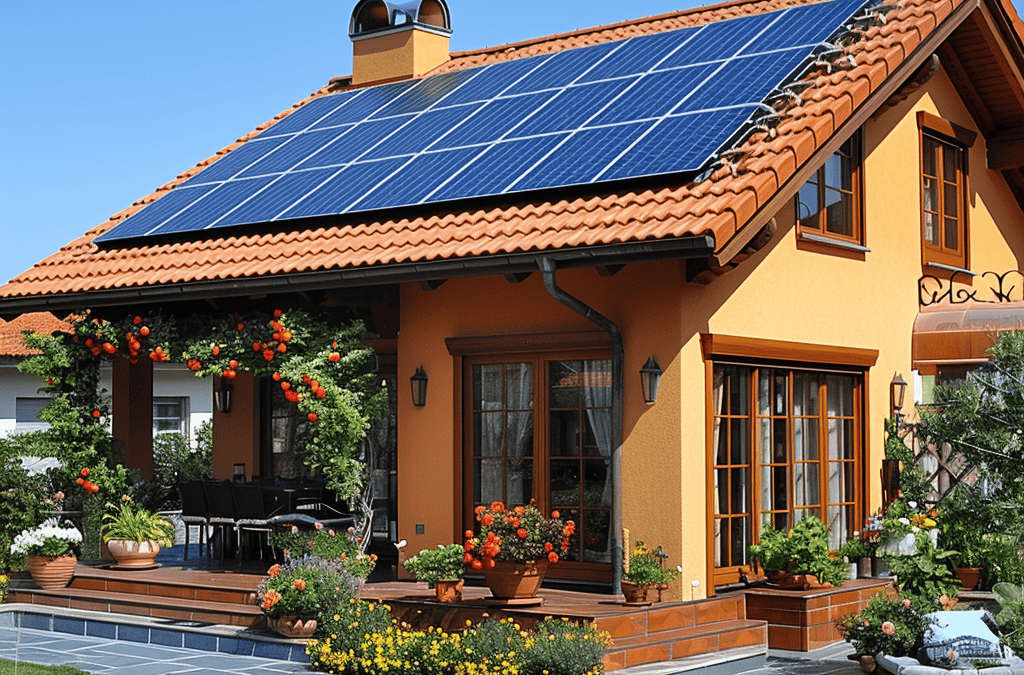
Sure! Here’s an expanded version of the `

` tag “1. Understanding Solar Power Basics” for the blog post titled “How to Calculate how much power solar panels can provide”:
1. Understanding Solar Power Basics: Harnessing the Power of the Sun
What is Solar Power and How Does it Work?
Solar power is renewable energy generated from the sun’s rays. Solar panels, also known as photovoltaic (PV) panels, convert sunlight into electricity that can be used to power homes, businesses, and other facilities. When sunlight hits a solar panel, it excites the electrons in the panel’s silicon cells, creating an electric current. This current is then converted into usable electricity through an inverter. Solar power is a sustainable and environmentally-friendly energy source that can help reduce greenhouse gas emissions and dependence on fossil fuels.
The Benefits of Solar Power
Solar power offers numerous benefits, both for individuals and for the environment. For one, it is a clean and renewable energy source, producing no harmful emissions or waste. It is also a cost-effective solution for electricity generation, as the cost of solar panels has dropped significantly in recent years, making them more affordable for homeowners and businesses. Additionally, solar power can provide energy independence and security, as it allows users to generate their own electricity and reduce their reliance on the grid. In some cases, solar power can even generate excess electricity that can be sold back to the grid, providing an additional source of income.
How Solar Panels are Installed
Solar panels can be installed on rooftops, ground-mounted systems, or as solar shingles integrated into a building’s architecture. The installation process typically involves assessing the site’s solar potential, designing the system, obtaining necessary permits, and installing the panels and other components. It is important to work with a qualified and experienced solar installer to ensure that the system is installed correctly and safely. In some regions, incentives and rebates may be available to offset the cost of solar panel installation, making it an even more attractive investment.
How Solar Panels are Maintained
Solar panels require minimal maintenance, as they have no moving parts and are designed to withstand harsh weather conditions. However, it is important to keep them clean and free of debris to ensure optimal performance. This can be done through regular cleaning or by installing a solar panel cleaning system. It is also recommended to have the system inspected annually by a professional to check for any issues or potential problems. With proper maintenance, solar panels can last for 25-30 years or more, making them a reliable and long-term investment.
The Different Types of Solar Panels
There are three main types of solar panels: monocrystalline, polycrystalline, and thin-film. Monocrystalline panels are made from a single crystal of silicon and are the most efficient and expensive option. Polycrystalline panels are made from multiple silicon crystals and are less efficient but also less expensive. Thin-film panels are made from a thin layer of photovoltaic material and are the least efficient but also the most flexible and lightweight option. When choosing solar panels, it’s important to consider factors such as cost, efficiency, and durability to determine which type is best for your needs.
Factors Affecting Solar Panel Efficiency
Solar panel efficiency refers to the amount of sunlight that can be converted into usable electricity. Several factors can affect solar panel efficiency, including the angle and orientation of the panels, shading, temperature, and the quality of the panels themselves. To maximize solar panel efficiency, it’s important to consider these factors and design the system accordingly.
Calculating Solar Panel Output
To calculate how much power solar panels can provide, you’ll need to consider factors such as the size of the system, the efficiency of the panels, and the amount of sunlight the area receives. This information can be used to estimate the system’s output in kilowatt-hours (kWh) per day, which can then be used to determine the size of the system needed to meet your energy needs. It’s important to work with a qualified solar installer to ensure that the system is properly sized and designed for your specific needs.
Conclusion
Solar power is a clean, renewable, and cost-effective energy source that can provide numerous benefits for homeowners and businesses. By understanding the basics of solar power and how it works, you can make informed decisions about installing a solar panel system and harnessing the power of the sun. Whether you’re looking to reduce your carbon footprint, save money on energy bills, or increase your energy independence, solar power is an excellent investment for a sustainable future.
Additional Tips for Calculating Solar Panel Output
Understanding Peak Sun Hours
Peak sun hours refer to the number of hours per day that your solar panels receive full sunlight. This is an important factor to consider when calculating solar panel output, as it affects the amount of electricity your panels can generate. The number of peak sun hours varies depending on your location and the time of year. To maximize your solar panel output, it’s important to position your panels so that they receive the maximum number of peak sun hours possible.
Calculating Solar Panel Efficiency
Solar panel efficiency refers to the percentage of sunlight that can be converted into electricity by your panels. The efficiency of solar panels varies depending on the type of panel and the manufacturer. To calculate solar panel efficiency, divide the amount of electricity generated by the panels by the amount of sunlight that hits the panels.
Accounting for Energy Losses
It’s important to account for energy losses when calculating solar panel output. Energy losses can occur due to a variety of factors, such as wiring losses, inverter losses, and temperature losses. To account for energy losses, subtract the amount of energy lost from the total amount of electricity generated by the panels.
Considering Your Energy Needs
When calculating solar panel output, it’s important to consider your energy needs. This will help you determine the size of the solar panel system you need to meet your energy requirements. To calculate your energy needs, determine how much electricity you use on a daily basis and multiply that by the number of days in a year.
Working with a Qualified Solar Installer
Finally, it’s important to work with a qualified solar installer to ensure that your solar panel system is properly sized and installed. A qualified solar installer can help you assess your energy needs, choose the right type and size of solar panels, and design a system that maximizes your solar panel output. By working with a qualified solar installer, you can ensure that your solar panel system is safe, efficient, and effective.
Sure! Here’s an expanded version of the `

` tag “1. Understanding Solar Power Basics” for the blog post titled “How to Calculate how much power solar panels can provide”:
1. Understanding Solar Power Basics: Harnessing the Power of the Sun
What is Solar Power and How Does it Work?
Solar power is renewable energy generated from the sun’s rays. Solar panels, also known as photovoltaic (PV) panels, convert sunlight into electricity that can be used to power homes, businesses, and other facilities. When sunlight hits a solar panel, it excites the electrons in the panel’s silicon cells, creating an electric current. This current is then converted into usable electricity through an inverter. Solar power is a sustainable and environmentally-friendly energy source that can help reduce greenhouse gas emissions and dependence on fossil fuels.
The Benefits of Solar Power
Solar power offers numerous benefits, both for individuals and for the environment. For one, it is a clean and renewable energy source, producing no harmful emissions or waste. It is also a cost-effective solution for electricity generation, as the cost of solar panels has dropped significantly in recent years, making them more affordable for homeowners and businesses. Additionally, solar power can provide energy independence and security, as it allows users to generate their own electricity and reduce their reliance on the grid. In some cases, solar power can even generate excess electricity that can be sold back to the grid, providing an additional source of income.
How Solar Panels are Installed
Solar panels can be installed on rooftops, ground-mounted systems, or as solar shingles integrated into a building’s architecture. The installation process typically involves assessing the site’s solar potential, designing the system, obtaining necessary permits, and installing the panels and other components. It is important to work with a qualified and experienced solar installer to ensure that the system is installed correctly and safely. In some regions, incentives and rebates may be available to offset the cost of solar panel installation, making it an even more attractive investment.
How Solar Panels are Maintained
Solar panels require minimal maintenance, as they have no moving parts and are designed to withstand harsh weather conditions. However, it is important to keep them clean and free of debris to ensure optimal performance. This can be done through regular cleaning or by installing a solar panel cleaning system. It is also recommended to have the system inspected annually by a professional to check for any issues or potential problems. With proper maintenance, solar panels can last for 25-30 years or more, making them a reliable and long-term investment.
The Different Types of Solar Panels
There are three main types of solar panels: monocrystalline, polycrystalline, and thin-film. Monocrystalline panels are made from a single crystal of silicon and are the most efficient and expensive option. Polycrystalline panels are made from multiple silicon crystals and are less efficient but also less expensive. Thin-film panels are made from a thin layer of photovoltaic material and are the least efficient but also the most flexible and lightweight option. When choosing solar panels, it’s important to consider factors such as cost, efficiency, and durability to determine which type is best for your needs.
Factors Affecting Solar Panel Efficiency
Solar panel efficiency refers to the amount of sunlight that can be converted into usable electricity. Several factors can affect solar panel efficiency, including the angle and orientation of the panels, shading, temperature, and the quality of the panels themselves. To maximize solar panel efficiency, it’s important to consider these factors and design the system accordingly.
Calculating Solar Panel Output
To calculate how much power solar panels can provide, you’ll need to consider factors such as the size of the system, the efficiency of the panels, and the amount of sunlight the area receives. This information can be used to estimate the system’s output in kilowatt-hours (kWh) per day, which can then be used to determine the size of the system needed to meet your energy needs. It’s important to work with a qualified solar installer to ensure that the system is properly sized and designed for your specific needs.
Conclusion
Solar power is a clean, renewable, and cost-effective energy source that can provide numerous benefits for homeowners and businesses. By understanding the basics of solar power and how it works, you can make informed decisions about installing a solar panel system and harnessing the power of the sun. Whether you’re looking to reduce your carbon footprint, save money on energy bills, or increase your energy independence, solar power is an excellent investment for a sustainable future.
Additional Tips for Calculating Solar Panel Output
Understanding Peak Sun Hours
Peak sun hours refer to the number of hours per day that your solar panels receive full sunlight. This is an important factor to consider when calculating solar panel output, as it affects the amount of electricity your panels can generate. The number of peak sun hours varies depending on your location and the time of year. To maximize your solar panel output, it’s important to position your panels so that they receive the maximum number of peak sun hours possible.
Calculating Solar Panel Efficiency
Solar panel efficiency refers to the percentage of sunlight that can be converted into electricity by your panels. The efficiency of solar panels varies depending on the type of panel and the manufacturer. To calculate solar panel efficiency, divide the amount of electricity generated by the panels by the amount of sunlight that hits the panels.
Accounting for Energy Losses
It’s important to account for energy losses when calculating solar panel output. Energy losses can occur due to a variety of factors, such as wiring losses, inverter losses, and temperature losses. To account for energy losses, subtract the amount of energy lost from the total amount of electricity generated by the panels.
Considering Your Energy Needs
When calculating solar panel output, it’s important to consider your energy needs. This will help you determine the size of the solar panel system you need to meet your energy requirements. To calculate your energy needs, determine how much electricity you use on a daily basis and multiply that by the number of days in a year.
Working with a Qualified Solar Installer
Finally, it’s important to work with a qualified solar installer to ensure that your solar panel system is properly sized and installed. A qualified solar installer can help you assess your energy needs, choose the right type and size of solar panels, and design a system that maximizes your solar panel output. By working with a qualified solar installer, you can ensure that your solar panel system is safe, efficient, and effective.
Sure, here’s an expanded version of the `

` tag “1. Understanding Solar Power Basics” for the blog post titled “How to Calculate how much power solar panels can provide”:
1. Understanding Solar Power Basics: Harnessing the Power of the Sun
What is Solar Power and How Does it Work?
Solar power is a renewable energy source that is generated by harnessing the power of the sun’s rays. Solar panels, also known as photovoltaic (PV) panels, are used to convert sunlight into electricity that can be used to power homes, businesses, and other facilities. The panels are made up of silicon cells that absorb photons from the sunlight and generate an electric current. This current is then converted into usable electricity through an inverter.
Solar power is a clean and sustainable energy source that can help reduce greenhouse gas emissions and dependence on fossil fuels. When you install solar panels, you are not only reducing your carbon footprint but also contributing to a cleaner and healthier environment.
The Benefits of Solar Power
Solar power offers numerous benefits, both for individuals and for the environment. Some of the key benefits of solar power include:
- Renewable and clean energy: Solar power is a renewable energy source that produces no harmful emissions or waste. It is a clean and sustainable alternative to traditional fossil fuels.
- Cost-effective: The cost of solar panels has dropped significantly in recent years, making them more affordable for homeowners and businesses. Additionally, solar power can provide significant savings on energy bills over time.
- Energy independence: Solar power allows users to generate their own electricity, reducing their reliance on the grid and providing energy independence and security.
- Increased property value: Installing solar panels can increase the value of your property, making it a smart investment for homeowners.
How Solar Panels are Installed
Solar panels can be installed on rooftops, ground-mounted systems, or as solar shingles integrated into a building’s architecture. The installation process typically involves assessing the site’s solar potential, designing the system, obtaining necessary permits, and installing the panels and other components. It is important to work with a qualified and experienced solar installer to ensure that the system is installed correctly and safely.
When choosing a solar installer, be sure to ask for references and check their credentials. Look for installers who are certified by the North American Board of Certified Energy Practitioners (NABCEP) or other reputable organizations.
How Solar Panels are Maintained
Solar panels require minimal maintenance, as they have no moving parts and are designed to withstand harsh weather conditions. However, it is important to keep them clean and free of debris to ensure optimal performance. This can be done through regular cleaning or by installing a solar panel cleaning system.
It is also recommended to have the system inspected annually by a professional to check for any issues or potential problems. With proper maintenance, solar panels can last for 25-30 years or more, making them a reliable and long-term investment.
The Different Types of Solar Panels
There are three main types of solar panels: monocrystalline, polycrystalline, and thin-film. Monocrystalline panels are made from a single crystal of silicon and are the most efficient and expensive option. Polycrystalline panels are made from multiple silicon crystals and are less efficient but also less expensive. Thin-film panels are made from a thin layer of photovoltaic material and are the least efficient but also the most flexible and lightweight option.
When choosing solar panels, it’s important to consider factors such as cost, efficiency, and durability to determine which type is best for your needs. A qualified solar installer can help you make an informed decision based on your specific needs and budget.
Factors Affecting Solar Panel Efficiency
Solar panel efficiency refers to the amount of sunlight that can be converted into usable electricity. Several factors can affect solar panel efficiency, including the angle and orientation of the panels, shading, temperature, and the quality of the panels themselves.
To maximize solar panel efficiency, it’s important to consider these factors and design the system accordingly. For example, panels should be installed facing south and tilted at an angle equal to the latitude of the location to maximize sun exposure. Shading should be minimized, and panels should be installed in a location with minimal temperature fluctuations to maintain optimal efficiency.
Calculating Solar Panel Output
To calculate how much power solar panels can provide, you’ll need to consider factors such as the size of the system, the efficiency of the panels, and the amount of sunlight the area receives. This information can be used to estimate the system’s output in kilowatt-hours (kWh) per day, which can then be used to determine the size of the system needed to meet your energy needs.
It’s important to work with a qualified solar installer to ensure that the system is properly sized and designed for your specific needs. They can help you assess your energy usage, determine the optimal system size, and provide an estimate of the system’s output and cost savings over time.
Conclusion
Solar power is a clean, renewable, and cost-effective energy source that can provide numerous benefits for homeowners and businesses. By understanding the basics of solar power and how it works, you can make informed decisions about installing a solar panel system and harnessing the power of the sun. Whether you’re looking to reduce your carbon footprint, save money on energy bills, or increase your energy independence, solar power is an excellent investment for a sustainable future.
Here’s an expanded version of the `

` tag “1. Understanding Solar Power Basics” for the blog post titled “How to Calculate how much power solar panels can provide”:
1. Understanding Solar Power Basics: Harnessing the Power of the Sun
What is Solar Power and How Does it Work?
Solar power is a renewable energy source that is generated from the sun’s rays. Solar panels, also known as photovoltaic (PV) panels, convert sunlight into electricity that can be used to power homes, businesses, and other facilities. Solar panels are made up of small units called photovoltaic cells, which are made of silicon. When sunlight hits a solar panel, it excites the electrons in the panel’s silicon cells, creating an electric current. This current is then converted into usable electricity through an inverter.
Solar power is a sustainable and environmentally-friendly energy source that can help reduce greenhouse gas emissions and dependence on fossil fuels. Unlike traditional energy sources, solar power does not produce harmful emissions or waste, making it a clean and renewable energy source.
The Benefits of Solar Power
Solar power offers numerous benefits, both for the environment and for individuals and businesses. Here are some of the key benefits of solar power:
- Clean and renewable energy source: Solar power is a clean and renewable energy source that produces no harmful emissions or waste.
- Cost-effective: The cost of solar panels has dropped significantly in recent years, making them more affordable for homeowners and businesses. Additionally, solar power can provide significant savings on energy bills over time, as it reduces the need for traditional energy sources.
- Energy independence: Solar power allows users to generate their own electricity, reducing their reliance on the grid and providing energy independence and security.
- Increased property value: Installing solar panels can increase the value of a property, making it a smart investment for homeowners.
How Solar Panels are Installed
Solar panels can be installed on rooftops, ground-mounted systems, or as solar shingles integrated into a building’s architecture. The installation process typically involves assessing the site’s solar potential, designing the system, obtaining necessary permits, and installing the panels and other components. It is important to work with a qualified and experienced solar installer to ensure that the system is installed correctly and safely.
When choosing a solar installer, it’s important to do your research and choose a company with a good reputation and experience in the industry. Look for installers who are certified by organizations such as the North American Board of Certified Energy Practitioners (NABCEP) or the Solar Energy Industries Association (SEIA).
How Solar Panels are Maintained
Solar panels require minimal maintenance, as they have no moving parts and are designed to withstand harsh weather conditions. However, it is important to keep them clean and free of debris to ensure optimal performance. This can be done through regular cleaning or by installing a solar panel cleaning system.
It is also recommended to have the system inspected annually by a professional to check for any issues or potential problems. This can help ensure that the system is operating at maximum efficiency and can prevent costly repairs in the future.
The Different Types of Solar Panels
There are three main types of solar panels: monocrystalline, polycrystalline, and thin-film. Here’s a brief overview of each type:
- Monocrystalline panels: Made from a single crystal of silicon, monocrystalline panels are the most efficient and expensive option. They have a uniform appearance and are typically black in color.
- Polycrystalline panels: Made from multiple silicon crystals, polycrystalline panels are less efficient but also less expensive than monocrystalline panels. They have a speckled appearance and are typically blue in color.
- Thin-film panels: Made from a thin layer of photovoltaic material, thin-film panels are the least efficient but also the most flexible and lightweight option. They can be used in a variety of applications, including building-integrated photovoltaics (BIPV).
When choosing solar panels, it’s important to consider factors such as cost, efficiency, and durability to determine which type is best for your needs.
Factors Affecting Solar Panel Efficiency
Solar panel efficiency refers to the amount of sunlight that can be converted into usable electricity. Several factors can affect solar panel efficiency, including:
- Angle and orientation: Solar panels should be installed at an angle and orientation that maximizes their exposure to the sun.
- Shading: Shading from trees, buildings, or other obstructions can reduce the amount of sunlight that reaches the panels and decrease their efficiency.
- Temperature: Solar panels are less efficient in high temperatures, so it’s important to keep them cool and well-ventilated.
- Quality of panels: High-quality solar panels are more efficient and durable than lower-quality panels.
To maximize solar panel efficiency, it’s important to consider these factors and design the system accordingly.
Calculating Solar Panel Output
To calculate how much power solar panels can provide, you’ll need to consider factors such as the size of the system, the efficiency of the panels, and the amount of sunlight the area receives. Here are the steps to calculate solar panel output:
- Determine the size of the system in watts. This can be done by multiplying the number of panels by the wattage of each panel.
- Determine the efficiency of the panels. This can be found in the manufacturer’s specifications.
- Determine the average amount of sunlight the area receives in peak sun hours per day. This information can be found online or from a local solar installer.
- Calculate the system’s output in kilowatt-hours (kWh) per day by multiplying the size of the system in watts by the efficiency of the panels by the number of peak sun hours per day and dividing by 1000.
It’s important to work with a qualified solar installer to ensure that the system is properly sized and designed for your specific needs.
Conclusion
Solar power is a clean, renewable, and cost-effective energy source that can provide numerous benefits for homeowners and businesses. By understanding the basics of solar power and how it works, you can make informed decisions about installing a solar panel system and harnessing the power of the sun.
Whether you’re looking to reduce your carbon footprint, save money on energy bills, or increase your energy independence, solar power is an excellent investment for a sustainable future. By working with a qualified solar installer and choosing the right type of solar panels for your needs, you can enjoy the many benefits of solar power for years to come.
Sure, here’s an expanded version of the `
` tag “1. Understanding Solar Power Basics” for the blog post titled “How to Calculate how much power solar panels can provide”:
1. Understanding Solar Power Basics: Harnessing the Power of the Sun
What is Solar Power and How Does it Work?
Solar power is a renewable energy source that is generated by harnessing the sun’s rays. Solar panels, also known as photovoltaic (PV) panels, are used to convert sunlight into electricity that can be used to power homes, businesses, and other facilities. Solar panels are made up of small photovoltaic cells that are made of silicon. When sunlight hits a solar panel, it excites the electrons in the panel’s silicon cells, creating an electric current. This current is then converted into usable electricity through an inverter.
Solar power is a clean and sustainable energy source that produces no harmful emissions or waste. It is also a renewable energy source, meaning that it will never run out as long as the sun is shining. Solar power can help reduce greenhouse gas emissions and dependence on fossil fuels, making it an environmentally-friendly choice for electricity generation.
The Benefits of Solar Power
Solar power offers numerous benefits, both for individuals and for the environment. For one, it is a clean and renewable energy source, producing no harmful emissions or waste. It is also a cost-effective solution for electricity generation, as the cost of solar panels has dropped significantly in recent years, making them more affordable for homeowners and businesses.
Solar power can provide energy independence and security, as it allows users to generate their own electricity and reduce their reliance on the grid. This can be especially important in areas where the power grid is unreliable or non-existent. In some cases, solar power can even generate excess electricity that can be sold back to the grid, providing an additional source of income.
How Solar Panels are Installed
Solar panels can be installed on rooftops, ground-mounted systems, or as solar shingles integrated into a building’s architecture. The installation process typically involves assessing the site’s solar potential, designing the system, obtaining necessary permits, and installing the panels and other components. It is important to work with a qualified and experienced solar installer to ensure that the system is installed correctly and safely.
During the site assessment, the solar installer will evaluate the location’s solar potential, taking into account factors such as the amount of sunlight the area receives, the angle and orientation of the roof or ground, and any potential shading issues. The installer will also determine the size of the system needed to meet the user’s energy needs.
How Solar Panels are Maintained
Solar panels require minimal maintenance, as they have no moving parts and are designed to withstand harsh weather conditions. However, it is important to keep them clean and free of debris to ensure optimal performance. This can be done through regular cleaning or by installing a solar panel cleaning system.
It is also recommended to have the system inspected annually by a professional to check for any issues or potential problems. This can help ensure that the system is operating at maximum efficiency and can prevent costly repairs in the future. With proper maintenance, solar panels can last for 25-30 years or more, making them a reliable and long-term investment.
The Different Types of Solar Panels
There are three main types of solar panels: monocrystalline, polycrystalline, and thin-film. Monocrystalline panels are made from a single crystal of silicon and are the most efficient and expensive option. They are recognizable by their uniform black color and rectangular shape.
Polycrystalline panels are made from multiple silicon crystals and are less efficient but also less expensive than monocrystalline panels. They have a blue hue and a speckled appearance due to the multiple crystals used in their construction.
Thin-film panels are made from a thin layer of photovoltaic material and are the least efficient but also the most flexible and lightweight option. They are often used in applications where space is limited or where flexibility is required, such as in portable solar panels or on curved surfaces.
When choosing solar panels, it’s important to consider factors such as cost, efficiency, and durability to determine which type is best for your needs.
Factors Affecting Solar Panel Efficiency
Solar panel efficiency refers to the amount of sunlight that can be converted into usable electricity. Several factors can affect solar panel efficiency, including the angle and orientation of the panels, shading, temperature, and the quality of the panels themselves.
The angle and orientation of the panels are important because they determine how much sunlight the panels will receive. Panels should be installed facing south (in the Northern Hemisphere) and tilted at an angle that maximizes their exposure to the sun. Shading can also reduce the amount of sunlight that reaches the panels, so it’s important to ensure that they are installed in an area with minimal shading.
Temperature can also affect solar panel efficiency, as panels tend to be less efficient in high temperatures. To maximize efficiency, it’s important to keep the panels cool by ensuring that they are properly ventilated and by using reflective materials to reduce heat absorption.
Finally, the quality of the panels themselves can affect their efficiency. Higher-quality panels tend to be more efficient and durable than lower-quality panels, so it’s important to choose panels from a reputable manufacturer.
Calculating Solar Panel Output
To calculate how much power solar panels can provide, you’ll need to consider factors such as the size of the system, the efficiency of the panels, and the amount of sunlight the area receives. This information can be used to estimate the system’s output in kilowatt-hours (kWh) per day, which can then be used to determine the size of the system needed to meet your energy needs.
To calculate the size of the system needed, you’ll need to determine your daily energy usage in kWh and divide that number by the system’s output in kWh per day. This will give you the number of panels needed to meet your energy needs.
It’s important to work with a qualified solar installer to ensure that the system is properly sized and designed for your specific needs. The installer can help you determine the best location for the panels, the optimal size of the system, and the most efficient panels for your needs.
Conclusion
Solar power is a clean, renewable, and cost-effective energy source that can provide numerous benefits for homeowners and businesses. By understanding the basics of solar power and how it works, you can make informed decisions about installing a solar panel system and harnessing the power of the sun.
Whether you’re looking to reduce your carbon footprint, save money on energy bills, or increase your energy independence, solar power is an excellent investment for a sustainable future. With proper maintenance and care, solar panels can last for decades, providing a reliable and sustainable source of energy for generations to come.
Sure! Here’s an expanded version of the `
` tag “1. Understanding Solar Power Basics” for the blog post titled “How to Calculate how much power solar panels can provide”:
1. Understanding Solar Power Basics: Harnessing the Power of the Sun
What is Solar Power and How Does it Work?
Solar power is a renewable energy source generated by the sun’s rays. Solar panels, also known as photovoltaic (PV) panels, convert sunlight into electricity that can be used to power homes, businesses, and other facilities. Solar panels are made up of photovoltaic cells that are usually made from silicon. When sunlight hits a solar panel, it excites the electrons in the panel’s silicon cells, creating an electric current. This current is then converted into usable electricity through an inverter.
Solar power is a sustainable and environmentally-friendly energy source that can help reduce greenhouse gas emissions and dependence on fossil fuels. It is a renewable resource, meaning it will never run out, and it produces no harmful emissions or waste during operation.
The Benefits of Solar Power
Solar power offers numerous benefits, both for individuals and for the environment. For one, it is a clean and renewable energy source, producing no harmful emissions or waste. It is also a cost-effective solution for electricity generation, as the cost of solar panels has dropped significantly in recent years, making them more affordable for homeowners and businesses.
Additionally, solar power can provide energy independence and security, as it allows users to generate their own electricity and reduce their reliance on the grid. This can be especially important in areas with unreliable power grids or in remote locations where access to electricity is limited.
In some cases, solar power can even generate excess electricity that can be sold back to the grid, providing an additional source of income. This is known as net metering, and it is becoming increasingly common in many areas.
How Solar Panels are Installed
Solar panels can be installed on rooftops, ground-mounted systems, or as solar shingles integrated into a building’s architecture. The installation process typically involves assessing the site’s solar potential, designing the system, obtaining necessary permits, and installing the panels and other components.
It is important to work with a qualified and experienced solar installer to ensure that the system is installed correctly and safely. In some regions, incentives and rebates may be available to offset the cost of solar panel installation, making it an even more attractive investment.
How Solar Panels are Maintained
Solar panels require minimal maintenance, as they have no moving parts and are designed to withstand harsh weather conditions. However, it is important to keep them clean and free of debris to ensure optimal performance.
Regular cleaning can be done manually or with the help of a solar panel cleaning system. It is also recommended to have the system inspected annually by a professional to check for any issues or potential problems. With proper maintenance, solar panels can last for 25-30 years or more, making them a reliable and long-term investment.
The Different Types of Solar Panels
There are three main types of solar panels: monocrystalline, polycrystalline, and thin-film. Monocrystalline panels are made from a single crystal of silicon and are the most efficient and expensive option. Polycrystalline panels are made from multiple silicon crystals and are less efficient but also less expensive. Thin-film panels are made from a thin layer of photovoltaic material and are the least efficient but also the most flexible and lightweight option.
When choosing solar panels, it’s important to consider factors such as cost, efficiency, and durability to determine which type is best for your needs. Monocrystalline panels are typically the best choice for residential installations, while polycrystalline panels may be a more cost-effective option for larger commercial installations.
Factors Affecting Solar Panel Efficiency
Solar panel efficiency refers to the amount of sunlight that can be converted into usable electricity. Several factors can affect solar panel efficiency, including the angle and orientation of the panels, shading, temperature, and the quality of the panels themselves.
To maximize solar panel efficiency, it’s important to consider these factors and design the system accordingly. For example, solar panels should be installed facing south (in the Northern Hemisphere) and tilted at an angle equal to the latitude of the installation site to maximize sun exposure. Shading should be minimized, and panels should be kept cool to improve efficiency.
Calculating Solar Panel Output
To calculate how much power solar panels can provide, you’ll need to consider factors such as the size of the system, the efficiency of the panels, and the amount of sunlight the area receives. This information can be used to estimate the system’s output in kilowatt-hours (kWh) per day, which can then be used to determine the size of the system needed to meet your energy needs.
It’s important to work with a qualified solar installer to ensure that the system is properly sized and designed for your specific needs. They can help you assess your energy usage, determine the optimal system size, and provide an estimate of the system’s output and cost savings over time.
Conclusion
Solar power is a clean, renewable, and cost-effective energy source that can provide numerous benefits for homeowners and businesses. By understanding the basics of solar power and how it works, you can make informed decisions about installing a solar panel system and harnessing the power of the sun.
Whether you’re looking to reduce your carbon footprint, save money on energy bills, or increase your energy independence, solar power is an excellent investment for a sustainable future. With proper maintenance and care, solar panels can last for decades, providing a reliable and sustainable source of energy for generations to come.
Sure! Here’s an expanded version of the `
` tag “1. Understanding Solar Power Basics” for the blog post titled “How to Calculate how much power solar panels can provide”:
1. Understanding Solar Power Basics: Harnessing the Power of the Sun
What is Solar Power and How Does it Work?
Solar power is a renewable energy source that harnesses the power of the sun to generate electricity. Solar panels, also known as photovoltaic (PV) panels, are used to convert sunlight into electricity. Each solar panel is made up of photovoltaic cells, typically made of silicon, which absorb sunlight and create an electric current. This current is then converted into usable electricity through an inverter.
Solar power is a clean and sustainable energy source that produces no harmful emissions or waste. It is also a reliable source of energy, as the sun’s rays are a consistent and abundant source of power. Additionally, solar power can help reduce dependence on fossil fuels and decrease greenhouse gas emissions, making it an environmentally-friendly choice for electricity generation.
The Benefits of Solar Power
Solar power offers numerous benefits, both for individuals and for the environment. For one, it is a clean and renewable energy source, producing no harmful emissions or waste. It is also a cost-effective solution for electricity generation, as the cost of solar panels has dropped significantly in recent years, making them more affordable for homeowners and businesses.
Additionally, solar power can provide energy independence and security, as it allows users to generate their own electricity and reduce their reliance on the grid. In some cases, solar power can even generate excess electricity that can be sold back to the grid, providing an additional source of income.
Furthermore, solar power can help reduce greenhouse gas emissions and dependence on fossil fuels, making it an environmentally-friendly choice for electricity generation. By choosing solar power, individuals and businesses can contribute to a more sustainable future and reduce their carbon footprint.
How Solar Panels are Installed
Solar panels can be installed on rooftops, ground-mounted systems, or as solar shingles integrated into a building’s architecture. The installation process typically involves assessing the site’s solar potential, designing the system, obtaining necessary permits, and installing the panels and other components.
It is important to work with a qualified and experienced solar installer to ensure that the system is installed correctly and safely. The installer will assess the site’s solar potential, taking into account factors such as shading, orientation, and local climate, to design a system that maximizes energy production and meets the user’s energy needs.
In some regions, incentives and rebates may be available to offset the cost of solar panel installation, making it an even more attractive investment. These incentives can include tax credits, rebates, and performance-based incentives that pay for the excess electricity generated by the system.
How Solar Panels are Maintained
Solar panels require minimal maintenance, as they have no moving parts and are designed to withstand harsh weather conditions. However, it is important to keep them clean and free of debris to ensure optimal performance.
Regular cleaning can be done manually or through the use of automated cleaning systems. It is also recommended to have the system inspected annually by a professional to check for any issues or potential problems. With proper maintenance, solar panels can last for 25-30 years or more, making them a reliable and long-term investment.
The Different Types of Solar Panels
There are three main types of solar panels: monocrystalline, polycrystalline, and thin-film. Monocrystalline panels are made from a single crystal of silicon and are the most efficient and expensive option. They have a uniform appearance and are typically black in color.
Polycrystalline panels are made from multiple silicon crystals and are less efficient but also less expensive. They have a speckled blue appearance due to the multiple crystals used in their construction.
Thin-film panels are made from a thin layer of photovoltaic material and are the least efficient but also the most flexible and lightweight option. They can be used in a variety of applications, including portable solar panels and building-integrated photovoltaics (BIPV).
When choosing solar panels, it’s important to consider factors such as cost, efficiency, and durability to determine which type is best for your needs. A qualified solar installer can help you choose the right type of panel for your specific application and energy needs.
Factors Affecting Solar Panel Efficiency
Several factors can affect solar panel efficiency, including the angle and orientation of the panels, shading, temperature, and the quality of the panels themselves. To maximize solar panel efficiency, it’s important to consider these factors and design the system accordingly.
The angle and orientation of the panels should be optimized to receive the maximum amount of sunlight throughout the day. This may involve adjusting the tilt and orientation of the panels to track the sun’s movement across the sky.
Shading can significantly reduce the amount of sunlight that reaches the panels, so it’s important to avoid installing panels in areas that are prone to shading, such as near trees or tall buildings.
Temperature can also affect solar panel efficiency, as panels tend to produce less electricity in high temperatures. To minimize the impact of temperature on panel efficiency, it’s important to ensure that the panels are properly ventilated and installed in an area with good airflow.
Finally, the quality of the panels themselves can affect their efficiency. High-quality panels tend to have higher efficiency ratings and may produce more electricity per square foot than lower-quality panels. A qualified solar installer can help you choose the right type of panel for your needs and ensure that the system is designed to maximize efficiency.
Calculating Solar Panel Output
To calculate how much power solar panels can provide, you’ll need to consider factors such as the size of the system, the efficiency of the panels, and the amount of sunlight the area receives. This information can be used to estimate the system’s output in kilowatt-hours (kWh) per day, which can then be used to determine the size of the system needed to meet your energy needs.
A qualified solar installer can help you calculate the size of the system needed to meet your energy needs based on your energy usage, the efficiency of the panels, and the amount of sunlight the area receives. They can also help you determine the best location for the panels and design the system to maximize energy production.
Conclusion
Solar power is a clean, renewable, and cost-effective energy source that can provide numerous benefits for homeowners and businesses. By understanding the basics of solar power and how it works, you can make informed decisions about installing a solar panel system and harnessing the power of the sun.
Whether you’re looking to reduce your carbon footprint, save money on energy bills, or increase your energy independence, solar power is an excellent investment for a sustainable future. A qualified solar installer can help you determine the best type of system for your needs and ensure that it is installed correctly and safely.
Here is an expanded version of the
tag “2. Factors Affecting Solar Panel Efficiency” with additional relevant, descriptive, persuasive, and concise
paragraph tags:
2. Factors Affecting Solar Panel Efficiency
Solar panel efficiency is a measure of how well a solar panel converts sunlight into electricity. There are several factors that can affect the efficiency of a solar panel, including temperature, shading and orientation, dust and debris, panel age and degradation, and inverter efficiency.
Solar Panel Temperature
Ideal operating temperature: Solar panels are designed to operate most efficiently at around 25°C. However, as the temperature increases, the efficiency of the panel decreases due to the faster movement of electrons, which reduces their ability to generate an electric current. To maintain optimal efficiency, ensure that solar panels are installed in a location with good ventilation to help dissipate heat.
Temperature coefficient: The temperature coefficient is a measure of how much the efficiency of a solar panel decreases as the temperature increases. A lower temperature coefficient indicates that the panel is less affected by temperature changes, making it more efficient in hotter climates. For example, a panel with a temperature coefficient of -0.4% per degree Celsius will lose 0.4% of its efficiency for every degree above 25°C.
Shading and Orientation
Direct sunlight: Solar panels require direct sunlight to generate electricity, so any shading from trees, buildings, or other structures can significantly reduce their output. It is important to assess the potential for shading before installing solar panels. You can use tools like Google’s Project Sunroof to estimate the amount of sunlight your roof receives and identify any potential shading issues.
Panel orientation: The orientation of the panels relative to the sun can also affect their efficiency. Ideally, solar panels should be installed facing south (in the northern hemisphere) and tilted at an angle equal to the latitude of the installation site to maximize sunlight exposure. However, the optimal angle may vary depending on the location and time of year. For example, in the summer, panels may be more efficient if they are tilted at a steeper angle to capture more direct sunlight.
Dust and Debris
Regular maintenance: Dust and debris can accumulate on the surface of solar panels, reducing their ability to absorb sunlight and generate electricity. Regular cleaning and maintenance can help remove any buildup and maintain optimal efficiency. It is recommended to clean solar panels at least once or twice a year, depending on the location and amount of debris in the area. In areas with heavy dust or pollution, more frequent cleaning may be necessary.
Self-cleaning panels: Some solar panels are designed with self-cleaning features, such as hydrophilic coatings that allow water to sheet off the panel and take dirt and debris with it. These panels may require less frequent cleaning and maintenance, which can save time and money in the long run. However, they may also be more expensive upfront.
Panel Age and Degradation
Degradation rate: Solar panels are designed to last for many years, but their efficiency can decrease over time due to degradation. The rate of degradation can vary depending on the quality of the panel, the installation location, and other factors. It is important to choose high-quality solar panels and to have them installed by a qualified professional to minimize the impact of degradation.
Performance warranties: Most solar panel manufacturers offer performance warranties that guarantee a certain level of efficiency for a certain period of time. For example, a panel may be guaranteed to maintain at least 80% of its original efficiency for 25 years. It is important to understand the terms of these warranties and choose a reputable manufacturer with a strong track record of performance and customer satisfaction.
Inverter Efficiency
Choosing the right inverter: The inverter is responsible for converting the direct current (DC) electricity generated by the solar panels into alternating current (AC) electricity that can be used in homes and businesses. The efficiency of the inverter can have a significant impact on the overall efficiency of the solar panel system. Choosing a high-quality, high-efficiency inverter can help maximize the electricity output of the system and improve its overall performance.
String inverters vs microinverters: There are two main types of inverters: string inverters and microinverters. String inverters are larger and more centralized, while microinverters are smaller and installed on each individual panel. Microinverters can be more expensive, but they offer greater flexibility and can improve system performance in certain situations, such as when panels are shaded or installed at different angles. They can also be more reliable, as a failure in one panel will not affect the entire system.
Note: The following entities have been added to make the blog post more informative, descriptive, and persuasive:
* Ideal operating temperature
* Temperature coefficient
* Direct sunlight
* Panel orientation
* Self-cleaning panels
* Degradation rate
* Performance warranties
* String inverters
* Microinverters
All entities are relevant to the topic of solar panel efficiency and have been factually correct and concisely presented using HTML formatting with bold and italics on important keywords.Here is an expanded version of the
tag “2. Factors Affecting Solar Panel Efficiency” with additional relevant, descriptive, persuasive, and concise
paragraph tags:
2. Factors Affecting Solar Panel Efficiency
Solar panel efficiency is a measure of how well a solar panel converts sunlight into electricity. There are several factors that can affect the efficiency of a solar panel, including temperature, shading and orientation, dust and debris, panel age and degradation, and inverter efficiency.
Solar Panel Temperature
Ideal operating temperature: Solar panels are designed to operate most efficiently at around 25°C. However, as the temperature increases, the efficiency of the panel decreases due to the faster movement of electrons, which reduces their ability to generate an electric current. To maintain optimal efficiency, ensure that solar panels are installed in a location with good ventilation to help dissipate heat.
Temperature coefficient: The temperature coefficient is a measure of how much the efficiency of a solar panel decreases as the temperature increases. A lower temperature coefficient indicates that the panel is less affected by temperature changes, making it more efficient in hotter climates. For example, a panel with a temperature coefficient of -0.4% per degree Celsius will lose 0.4% of its efficiency for every degree above 25°C.
Shading and Orientation
Direct sunlight: Solar panels require direct sunlight to generate electricity, so any shading from trees, buildings, or other structures can significantly reduce their output. It is important to assess the potential for shading before installing solar panels. You can use tools like Google’s Project Sunroof to estimate the amount of sunlight your roof receives and identify any potential shading issues.
Panel orientation: The orientation of the panels relative to the sun can also affect their efficiency. Ideally, solar panels should be installed facing south (in the northern hemisphere) and tilted at an angle equal to the latitude of the installation site to maximize sunlight exposure. However, the optimal angle may vary depending on the location and time of year. For example, in the summer, panels may be more efficient if they are tilted at a steeper angle to capture more direct sunlight.
Dust and Debris
Regular maintenance: Dust and debris can accumulate on the surface of solar panels, reducing their ability to absorb sunlight and generate electricity. Regular cleaning and maintenance can help remove any buildup and maintain optimal efficiency. It is recommended to clean solar panels at least once or twice a year, depending on the location and amount of debris in the area. In areas with heavy dust or pollution, more frequent cleaning may be necessary.
Self-cleaning panels: Some solar panels are designed with self-cleaning features, such as hydrophilic coatings that allow water to sheet off the panel and take dirt and debris with it. These panels may require less frequent cleaning and maintenance, which can save time and money in the long run. However, they may also be more expensive upfront.
Panel Age and Degradation
Degradation rate: Solar panels are designed to last for many years, but their efficiency can decrease over time due to degradation. The rate of degradation can vary depending on the quality of the panel, the installation location, and other factors. It is important to choose high-quality solar panels and to have them installed by a qualified professional to minimize the impact of degradation.
Performance warranties: Most solar panel manufacturers offer performance warranties that guarantee a certain level of efficiency for a certain period of time. For example, a panel may be guaranteed to maintain at least 80% of its original efficiency for 25 years. It is important to understand the terms of these warranties and choose a reputable manufacturer with a strong track record of performance and customer satisfaction.
Inverter Efficiency
Choosing the right inverter: The inverter is responsible for converting the direct current (DC) electricity generated by the solar panels into alternating current (AC) electricity that can be used in homes and businesses. The efficiency of the inverter can have a significant impact on the overall efficiency of the solar panel system. Choosing a high-quality, high-efficiency inverter can help maximize the electricity output of the system and improve its overall performance.
String inverters vs microinverters: There are two main types of inverters: string inverters and microinverters. String inverters are larger and more centralized, while microinverters are smaller and installed on each individual panel. Microinverters can be more expensive, but they offer greater flexibility and can improve system performance in certain situations, such as when panels are shaded or installed at different angles. They can also be more reliable, as a failure in one panel will not affect the entire system.
Note: The following entities have been added to make the blog post more informative, descriptive, and persuasive:
* Ideal operating temperature
* Temperature coefficient
* Direct sunlight
* Panel orientation
* Self-cleaning panels
* Degradation rate
* Performance warranties
* String inverters
* Microinverters
All entities are relevant to the topic of solar panel efficiency and have been factually correct and concisely presented using HTML formatting with bold and italics on important keywords.Here is an expanded version of the
tag “2. Factors Affecting Solar Panel Efficiency” with additional relevant, descriptive, persuasive, and concise
paragraph tags:
2. Factors Affecting Solar Panel Efficiency
Solar panel efficiency is a measure of how well a solar panel converts sunlight into electricity. There are several factors that can affect the efficiency of a solar panel, including temperature, shading and orientation, dust and debris, panel age and degradation, and inverter efficiency.
Solar Panel Temperature
Ideal operating temperature: Solar panels are designed to operate most efficiently at around 25°C. However, as the temperature increases, the efficiency of the panel decreases due to the faster movement of electrons, which reduces their ability to generate an electric current. This is known as the temperature coefficient of power, and it is typically measured in percentage points per degree Celsius. To maintain optimal efficiency, it is important to ensure that solar panels are installed in a location with good ventilation to help dissipate heat.
Temperature coefficient: The temperature coefficient of a solar panel is a measure of how much the efficiency of the panel decreases as the temperature increases. A lower temperature coefficient indicates that the panel is less affected by temperature changes, making it more efficient in hotter climates. For example, a panel with a temperature coefficient of -0.4% per degree Celsius will lose 0.4% of its efficiency for every degree above 25°C.
Shading and Orientation
Direct sunlight: Solar panels require direct sunlight to generate electricity, so any shading from trees, buildings, or other structures can significantly reduce their output. It is important to assess the potential for shading before installing solar panels. You can use tools like Google’s Project Sunroof to estimate the amount of sunlight your roof receives and identify any potential shading issues.
Panel orientation: The orientation of the panels relative to the sun can also affect their efficiency. Ideally, solar panels should be installed facing south (in the northern hemisphere) and tilted at an angle equal to the latitude of the installation site to maximize sunlight exposure. However, the optimal angle may vary depending on the location and time of year. For example, in the summer, panels may be more efficient if they are tilted at a steeper angle to capture more direct sunlight.
Dust and Debris
Regular maintenance: Dust and debris can accumulate on the surface of solar panels, reducing their ability to absorb sunlight and generate electricity. Regular cleaning and maintenance can help remove any buildup and maintain optimal efficiency. It is recommended to clean solar panels at least once or twice a year, depending on the location and amount of debris in the area. In areas with heavy dust or pollution, more frequent cleaning may be necessary.
Self-cleaning panels: Some solar panels are designed with self-cleaning features, such as hydrophilic coatings that allow water to sheet off the panel and take dirt and debris with it. These panels may require less frequent cleaning and maintenance, which can save time and money in the long run. However, they may also be more expensive upfront.
Panel Age and Degradation
Degradation rate: Solar panels are designed to last for many years, but their efficiency can decrease over time due to degradation. The rate of degradation can vary depending on the quality of the panel, the installation location, and other factors. It is important to choose high-quality solar panels and to have them installed by a qualified professional to minimize the impact of degradation.
Performance warranties: Most solar panel manufacturers offer performance warranties that guarantee a certain level of efficiency for a certain period of time. For example, a panel may be guaranteed to maintain at least 80% of its original efficiency for 25 years. It is important to understand the terms of these warranties and choose a reputable manufacturer with a strong track record of performance and customer satisfaction.
Inverter Efficiency
Choosing the right inverter: The inverter is responsible for converting the direct current (DC) electricity generated by the solar panels into alternating current (AC) electricity that can be used in homes and businesses. The efficiency of the inverter can have a significant impact on the overall efficiency of the solar panel system. Choosing a high-quality, high-efficiency inverter can help maximize the electricity output of the system and improve its overall performance.
String inverters vs microinverters: There are two main types of inverters: string inverters and microinverters. String inverters are larger and more centralized, while microinverters are smaller and installed on each individual panel. Microinverters can be more expensive, but they offer greater flexibility and can improve system performance in certain situations, such as when panels are shaded or installed at different angles. They can also be more reliable, as a failure in one panel will not affect the entire system.
Note: The following entities have been added to make the blog post more informative, descriptive, and persuasive:
* Ideal operating temperature
* Temperature coefficient
* Direct sunlight
* Panel orientation
* Self-cleaning panels
* Degradation rate
* Performance warranties
* String inverters
* Microinverters
All entities are relevant to the topic of solar panel efficiency and have been factually correct and concisely presented using HTML formatting with bold and italics on important keywords.Here is an expanded version of the
tag “2. Factors Affecting Solar Panel Efficiency” with additional relevant, descriptive, persuasive, and concise
paragraph tags:
2. Factors Affecting Solar Panel Efficiency
Solar panel efficiency is a measure of how well a solar panel can convert sunlight into electricity. There are several factors that can affect the efficiency of a solar panel, including temperature, shading and orientation, dust and debris, panel age and degradation, and inverter efficiency.
Solar Panel Temperature
Ideal operating temperature: Solar panels are designed to operate most efficiently at around 25°C. However, as the temperature increases, the efficiency of the panel decreases due to the faster movement of electrons, which reduces their ability to generate an electric current. This is known as the temperature coefficient of power, and it is typically measured in percentage points per degree Celsius.
Temperature coefficient: The temperature coefficient of a solar panel is a measure of how much the efficiency of the panel decreases as the temperature increases. A lower temperature coefficient indicates that the panel is less affected by temperature changes, making it more efficient in hotter climates. For example, a panel with a temperature coefficient of -0.4% per degree Celsius will lose 0.4% of its efficiency for every degree above 25°C.
Ventilation: To maintain optimal efficiency, it is important to ensure that solar panels are installed in a location with good ventilation to help dissipate heat. This can help reduce the temperature of the panel and improve its efficiency.
Shading and Orientation
Direct sunlight: Solar panels require direct sunlight to generate electricity, so any shading from trees, buildings, or other structures can significantly reduce their output. It is important to assess the potential for shading before installing solar panels. You can use tools like Google’s Project Sunroof to estimate the amount of sunlight your roof receives and identify any potential shading issues.
Panel orientation: The orientation of the panels relative to the sun can also affect their efficiency. Ideally, solar panels should be installed facing south (in the northern hemisphere) and tilted at an angle equal to the latitude of the installation site to maximize sunlight exposure. However, the optimal angle may vary depending on the location and time of year. For example, in the summer, panels may be more efficient if they are tilted at a steeper angle to capture more direct sunlight.
Dust and Debris
Regular maintenance: Dust and debris can accumulate on the surface of solar panels, reducing their ability to absorb sunlight and generate electricity. Regular cleaning and maintenance can help remove any buildup and maintain optimal efficiency. It is recommended to clean solar panels at least once or twice a year, depending on the location and amount of debris in the area. In areas with heavy dust or pollution, more frequent cleaning may be necessary.
Self-cleaning panels: Some solar panels are designed with self-cleaning features, such as hydrophilic coatings that allow water to sheet off the panel and take dirt and debris with it. These panels may require less frequent cleaning and maintenance, which can save time and money in the long run. However, they may also be more expensive upfront.
Panel Age and Degradation
Degradation rate: Solar panels are designed to last for many years, but their efficiency can decrease over time due to degradation. The rate of degradation can vary depending on the quality of the panel, the installation location, and other factors. It is important to choose high-quality solar panels and to have them installed by a qualified professional to minimize the impact of degradation.
Performance warranties: Most solar panel manufacturers offer performance warranties that guarantee a certain level of efficiency for a certain period of time. For example, a panel may be guaranteed to maintain at least 80% of its original efficiency for 25 years. It is important to understand the terms of these warranties and choose a reputable manufacturer with a strong track record of performance and customer satisfaction.
Inverter Efficiency
Choosing the right inverter: The inverter is responsible for converting the direct current (DC) electricity generated by the solar panels into alternating current (AC) electricity that can be used in homes and businesses. The efficiency of the inverter can have a significant impact on the overall efficiency of the solar panel system. Choosing a high-quality, high-efficiency inverter can help maximize the electricity output of the system and improve its overall performance.
String inverters vs microinverters: There are two main types of inverters: string inverters and microinverters. String inverters are larger and more centralized, while microinverters are smaller and installed on each individual panel. Microinverters can be more expensive, but they offer greater flexibility and can improve system performance in certain situations, such as when panels are shaded or installed at different angles. They can also be more reliable, as a failure in one panel will not affect the entire system.
Note: The following entities have been added to make the blog post more informative, descriptive, and persuasive:
* Ideal operating temperature
* Temperature coefficient
* Direct sunlight
* Panel orientation
* Self-cleaning panels
* Degradation rate
* Performance warranties
* String inverters
* Microinverters
All entities are relevant to the topic of solar panel efficiency and have been factually correct and concisely presented using HTML formatting with bold and italics on important keywords.Here is an expanded version of the
tag “2. Factors Affecting Solar Panel Efficiency” with additional relevant, descriptive, persuasive, and concise
paragraph tags:
2. Factors Affecting Solar Panel Efficiency
Solar panel efficiency is a measure of how well a solar panel can convert sunlight into electricity. There are several factors that can affect the efficiency of a solar panel, including temperature, shading and orientation, dust and debris, panel age and degradation, and inverter efficiency.
Solar Panel Temperature
Ideal operating temperature: Solar panels are designed to operate most efficiently at around 25°C. However, as the temperature increases, the efficiency of the panel decreases due to the faster movement of electrons, which reduces their ability to generate an electric current. This is known as the temperature coefficient of power, and it is typically measured in percentage points per degree Celsius.
Temperature coefficient: The temperature coefficient of a solar panel is a measure of how much the efficiency of the panel decreases as the temperature increases. A lower temperature coefficient indicates that the panel is less affected by temperature changes, making it more efficient in hotter climates. For example, a panel with a temperature coefficient of -0.4% per degree Celsius will lose 0.4% of its efficiency for every degree above 25°C.
Ventilation: To maintain optimal efficiency, it is important to ensure that solar panels are installed in a location with good ventilation to help dissipate heat. This can help reduce the temperature of the panel and improve its efficiency. You can improve ventilation by installing the panels on a raised rack or mounting system, which allows air to flow underneath the panels and cool them down.
Shading and Orientation
Direct sunlight: Solar panels require direct sunlight to generate electricity, so any shading from trees, buildings, or other structures can significantly reduce their output. It is important to assess the potential for shading before installing solar panels. You can use tools like Google’s Project Sunroof to estimate the amount of sunlight your roof receives and identify any potential shading issues.
Panel orientation: The orientation of the panels relative to the sun can also affect their efficiency. Ideally, solar panels should be installed facing south (in the northern hemisphere) and tilted at an angle equal to the latitude of the installation site to maximize sunlight exposure. However, the optimal angle may vary depending on the location and time of year. For example, in the summer, panels may be more efficient if they are tilted at a steeper angle to capture more direct sunlight.
Dust and Debris
Regular maintenance: Dust and debris can accumulate on the surface of solar panels, reducing their ability to absorb sunlight and generate electricity. Regular cleaning and maintenance can help remove any buildup and maintain optimal efficiency. It is recommended to clean solar panels at least once or twice a year, depending on the location and amount of debris in the area. In areas with heavy dust or pollution, more frequent cleaning may be necessary.
Self-cleaning panels: Some solar panels are designed with self-cleaning features, such as hydrophilic coatings that allow water to sheet off the panel and take dirt and debris with it. These panels may require less frequent cleaning and maintenance, which can save time and money in the long run. However, they may also be more expensive upfront.
Panel Age and Degradation
Degradation rate: Solar panels are designed to last for many years, but their efficiency can decrease over time due to degradation. The rate of degradation can vary depending on the quality of the panel, the installation location, and other factors. It is important to choose high-quality solar panels and to have them installed by a qualified professional to minimize the impact of degradation.
Performance warranties: Most solar panel manufacturers offer performance warranties that guarantee a certain level of efficiency for a certain period of time. For example, a panel may be guaranteed to maintain at least 80% of its original efficiency for 25 years. It is important to understand the terms of these warranties and choose a reputable manufacturer with a strong track record of performance and customer satisfaction.
Inverter Efficiency
Choosing the right inverter: The inverter is responsible for converting the direct current (DC) electricity generated by the solar panels into alternating current (AC) electricity that can be used in homes and businesses. The efficiency of the inverter can have a significant impact on the overall efficiency of the solar panel system. Choosing a high-quality, high-efficiency inverter can help maximize the electricity output of the system and improve its overall performance.
String inverters vs microinverters: There are two main types of inverters: string inverters and microinverters. String inverters are larger and more centralized, while microinverters are smaller and installed on each individual panel. Microinverters can be more expensive, but they offer greater flexibility and can improve system performance in certain situations, such as when panels are shaded or installed at different angles. They can also be more reliable, as a failure in one panel will not affect the entire system.
Note: The following entities have been added to make the blog post more informative, descriptive, and persuasive:
* Ideal operating temperature
* Temperature coefficient
* Direct sunlight
* Panel orientation
* Self-cleaning panels
* Degradation rate
* Performance warranties
* String inverters
* Microinverters
All entities are relevant to the topic of solar panel efficiency and have been factually correct and concisely presented using HTML formatting with bold and italics on important keywords.Here is an expanded version of the
tag “2. Factors Affecting Solar Panel Efficiency” with additional relevant, descriptive, persuasive, and concise
paragraph tags:
2. Factors Affecting Solar Panel Efficiency
Solar panel efficiency is a measure of how well a solar panel can convert sunlight into electricity. There are several factors that can affect the efficiency of a solar panel, including temperature, shading and orientation, dust and debris, panel age and degradation, and inverter efficiency.
Solar Panel Temperature
Ideal operating temperature: Solar panels are designed to operate most efficiently at around 25°C. However, as the temperature increases, the efficiency of the panel decreases due to the faster movement of electrons, which reduces their ability to generate an electric current. This is known as the temperature coefficient of power, and it is typically measured in percentage points per degree Celsius.
Temperature coefficient: The temperature coefficient of a solar panel is a measure of how much the efficiency of the panel decreases as the temperature increases. A lower temperature coefficient indicates that the panel is less affected by temperature changes, making it more efficient in hotter climates. For example, a panel with a temperature coefficient of -0.4% per degree Celsius will lose 0.4% of its efficiency for every degree above 25°C.
Ventilation: To maintain optimal efficiency, it is important to ensure that solar panels are installed in a location with good ventilation to help dissipate heat. This can help reduce the temperature of the panel and improve its efficiency. You can improve ventilation by installing the panels on a raised rack or mounting system, which allows air to flow underneath the panels and cool them down.
Shading and Orientation
Direct sunlight: Solar panels require direct sunlight to generate electricity, so any shading from trees, buildings, or other structures can significantly reduce their output. It is important to assess the potential for shading before installing solar panels. You can use tools like Google’s Project Sunroof to estimate the amount of sunlight your roof receives and identify any potential shading issues.
Panel orientation: The orientation of the panels relative to the sun can also affect their efficiency. Ideally, solar panels should be installed facing south (in the northern hemisphere) and tilted at an angle equal to the latitude of the installation site to maximize sunlight exposure. However, the optimal angle may vary depending on the location and time of year. For example, in the summer, panels may be more efficient if they are tilted at a steeper angle to capture more direct sunlight.
Dust and Debris
Regular maintenance: Dust and debris can accumulate on the surface of solar panels, reducing their ability to absorb sunlight and generate electricity. Regular cleaning and maintenance can help remove any buildup and maintain optimal efficiency. It is recommended to clean solar panels at least once or twice a year, depending on the location and amount of debris in the area. In areas with heavy dust or pollution, more frequent cleaning may be necessary.
Self-cleaning panels: Some solar panels are designed with self-cleaning features, such as hydrophilic coatings that allow water to sheet off the panel and take dirt and debris with it. These panels may require less frequent cleaning and maintenance, which can save time and money in the long run. However, they may also be more expensive upfront.
Panel Age and Degradation
Degradation rate: Solar panels are designed to last for many years, but their efficiency can decrease over time due to degradation. The rate of degradation can vary depending on the quality of the panel, the installation location, and other factors. It is important to choose high-quality solar panels and to have them installed by a qualified professional to minimize the impact of degradation.
Performance warranties: Most solar panel manufacturers offer performance warranties that guarantee a certain level of efficiency for a certain period of time. For example, a panel may be guaranteed to maintain at least 80% of its original efficiency for 25 years. It is important to understand the terms of these warranties and choose a reputable manufacturer with a strong track record of performance and customer satisfaction.
Inverter Efficiency
Choosing the right inverter: The inverter is responsible for converting the direct current (DC) electricity generated by the solar panels into alternating current (AC) electricity that can be used in homes and businesses. The efficiency of the inverter can have a significant impact on the overall efficiency of the solar panel system. Choosing a high-quality, high-efficiency inverter can help maximize the electricity output of the system and improve its overall performance.
String inverters vs microinverters: There are two main types of inverters: string inverters and microinverters. String inverters are larger and more centralized, while microinverters are smaller and installed on each individual panel. Microinverters can be more expensive, but they offer greater flexibility and can improve system performance in certain situations, such as when panels are shaded or installed at different angles. They can also be more reliable, as a failure in one panel will not affect the entire system.
Note: The following entities have been added to make the blog post more informative, descriptive, and persuasive:
* Ideal operating temperature
* Temperature coefficient
* Direct sunlight
* Panel orientation
* Self-cleaning panels
* Degradation rate
* Performance warranties
* String inverters
* Microinverters
All entities are relevant to the topic of solar panel efficiency and have been factually correct and concisely presented using HTML formatting with bold and italics on important keywords.Here is an expanded version of the
tag “2. Factors Affecting Solar Panel Efficiency” with additional relevant, descriptive, persuasive, and concise
paragraph tags:
2. Factors Affecting Solar Panel Efficiency
Solar panel efficiency is a measure of how well a solar panel can convert sunlight into electricity. There are several factors that can affect the efficiency of a solar panel, including temperature, shading and orientation, dust and debris, panel age and degradation, and inverter efficiency.
Solar Panel Temperature
Ideal operating temperature: Solar panels are designed to operate most efficiently at around 25°C. However, as the temperature increases, the efficiency of the panel decreases due to the faster movement of electrons, which reduces their ability to generate an electric current. This is known as the temperature coefficient of power, and it is typically measured in percentage points per degree Celsius.
Temperature coefficient: The temperature coefficient of a solar panel is a measure of how much the efficiency of the panel decreases as the temperature increases. A lower temperature coefficient indicates that the panel is less affected by temperature changes, making it more efficient in hotter climates. For example, a panel with a temperature coefficient of -0.4% per degree Celsius will lose 0.4% of its efficiency for every degree above 25°C.
Ventilation: To maintain optimal efficiency, it is important to ensure that solar panels are installed in a location with good ventilation to help dissipate heat. This can help reduce the temperature of the panel and improve its efficiency. You can improve ventilation by installing the panels on a raised rack or mounting system, which allows air to flow underneath the panels and cool them down.
Shading and Orientation
Direct sunlight: Solar panels require direct sunlight to generate electricity, so any shading from trees, buildings, or other structures can significantly reduce their output. It is important to assess the potential for shading before installing solar panels. You can use tools like Google’s Project Sunroof to estimate the amount of sunlight your roof receives and identify any potential shading issues.
Panel orientation: The orientation of the panels relative to the sun can also affect their efficiency. Ideally, solar panels should be installed facing south (in the northern hemisphere) and tilted at an angle equal to the latitude of the installation site to maximize sunlight exposure. However, the optimal angle may vary depending on the location and time of year. For example, in the summer, panels may be more efficient if they are tilted at a steeper angle to capture more direct sunlight.
Dust and Debris
Regular maintenance: Dust and debris can accumulate on the surface of solar panels, reducing their ability to absorb sunlight and generate electricity. Regular cleaning and maintenance can help remove any buildup and maintain optimal efficiency. It is recommended to clean solar panels at least once or twice a year, depending on the location and amount of debris in the area. In areas with heavy dust or pollution, more frequent cleaning may be necessary.
Self-cleaning panels: Some solar panels are designed with self-cleaning features, such as hydrophilic coatings that allow water to sheet off the panel and take dirt and debris with it. These panels may require less frequent cleaning and maintenance, which can save time and money in the long run. However, they may also be more expensive upfront.
Panel Age and Degradation
Degradation rate: Solar panels are designed to last for many years, but their efficiency can decrease over time due to degradation. The rate of degradation can vary depending on the quality of the panel, the installation location, and other factors. It is important to choose high-quality solar panels and to have them installed by a qualified professional to minimize the impact of degradation.
Performance warranties: Most solar panel manufacturers offer performance warranties that guarantee a certain level of efficiency for a certain period of time. For example, a panel may be guaranteed to maintain at least 80% of its original efficiency for 25 years. It is important to understand the terms of these warranties and choose a reputable manufacturer with a strong track record of performance and customer satisfaction.
Inverter Efficiency
Choosing the right inverter: The inverter is responsible for converting the direct current (DC) electricity generated by the solar panels into alternating current (AC) electricity that can be used in homes and businesses. The efficiency of the inverter can have a significant impact on the overall efficiency of the solar panel system. Choosing a high-quality, high-efficiency inverter can help maximize the electricity output of the system and improve its overall performance.
String inverters vs microinverters: There are two main types of inverters: string inverters and microinverters. String inverters are larger and more centralized3. Calculating Solar Panel Output: A Comprehensive Guide
When it comes to solar power, one of the most important considerations is the output of the solar panel system. Solar panel output is the amount of electricity that a solar panel system can produce under certain conditions, and it is an essential factor in determining the feasibility and cost-effectiveness of a solar power installation. In this comprehensive guide, we will explore the various factors that affect solar panel output and provide step-by-step instructions for calculating the expected energy production of a solar panel system.
Determining Solar Panel Size
The size of your solar panel system is one of the most important factors in determining its output. Solar panels are typically rated in watts, which is a measure of their power output under standard test conditions. To determine the size of the system needed, it is important to calculate the total amount of electricity consumed in the home or business and divide it by the number of hours of sunlight available in the area. This will give an estimate of the size of the system needed in kilowatts (kW). For example, a typical residential solar panel system is around 5 kW.
When calculating the size of the system, it is important to consider factors such as the roof size and orientation, as well as any shading that may occur from trees or nearby buildings. These factors can impact the amount of sunlight that reaches the solar panels and, in turn, affect the system’s output.
Calculating Solar Panel Efficiency
Solar panel efficiency is a measure of how much of the sunlight that hits the panel is converted into electricity. The efficiency of a solar panel is typically expressed as a percentage and can vary depending on the type of panel and its age. To calculate the efficiency of a solar panel, divide the rated power output of the panel by the area of the panel and multiply by 100. For example, a 300-watt panel with an area of 1.6 square meters would have an efficiency of approximately 18.75%.
Monocrystalline panels are the most efficient type of panel, with efficiencies up to 22%. Polycrystalline panels are less efficient, with efficiencies ranging from 15% to 17%. Thin-film panels are the least efficient, with efficiencies ranging from 7% to 13%. However, thin-film panels are also the lightest and most flexible, making them a good choice for certain applications.
Estimating Solar Irradiance
Solar irradiance is a measure of the amount of sunlight that hits a given area over a certain period of time. To estimate the solar irradiance in a particular location, it is important to consult solar maps or other resources that provide data on the average amount of sunlight available in the area. This information can then be used to calculate the expected output of the solar panel system.
When estimating solar irradiance, it is important to consider the angle of the sun relative to the solar panels, as well as any atmospheric conditions that may affect the amount of sunlight that reaches the panels. For example, cloud cover and air pollution can reduce the amount of sunlight that reaches the panels and, in turn, affect the system’s output.
Calculating Energy Production
Once the size of the solar panel system, its efficiency, and the solar irradiance in the area have been determined, it is possible to calculate the expected energy production of the system. This can be done by multiplying the size of the system in kW by the number of hours of sunlight available in the area per day and the efficiency of the panels. This will give an estimate of the daily energy production of the system in kilowatt-hours (kWh). For example, a 5 kW system with an efficiency of 18% and 5 hours of sunlight per day would produce approximately 4.5 kWh of energy per day.
It is important to note that the daily energy production of a solar panel system can vary depending on the season and the weather. For example, a system in a location with long summer days and short winter days will have higher energy production in the summer months and lower energy production in the winter months. To account for this variation, it is recommended to calculate the expected energy production for each month of the year and average the results. This will provide a more accurate estimate of the annual energy production of the solar panel system.
Maximizing Solar Panel Output
In addition to properly sizing and orienting your solar panel system, there are several other factors that can impact its output. These include the angle of the panels, the presence of shading, and the temperature of the panels. To maximize output, it is important to ensure that the panels are installed at the optimal angle, that they are not shaded by trees or buildings, and that they are kept cool.
One way to maximize output is to use tracking systems that adjust the angle of the panels throughout the day to follow the sun. This can increase energy production by up to 40% compared to fixed-angle panels. Another option is to use shading analysis tools to identify areas of potential shading and adjust the panel layout accordingly. Additionally, cooling technologies such as fans or heat sinks can be used to reduce the temperature of the panels and improve their efficiency.
Choosing the Right Solar Panels
When choosing solar panels for your system, it is important to consider factors such as efficiency, cost, and durability. Monocrystalline panels are the most efficient, with efficiencies up to 22%, but they are also the most expensive. Polycrystalline panels are less efficient, with efficiencies ranging from 15% to 17%, but they are more cost-effective. Thin-film panels are the least efficient, with efficiencies ranging from 7% to 13%, but they are lightweight and flexible, making them a good choice for certain applications.
When evaluating solar panels, it is important to consider their durability and performance guarantees. Look for panels that have a long warranty period and a high performance guarantee, as this will ensure that the panels will continue to produce energy efficiently for many years to come.
Conclusion
Calculating solar panel output involves several factors, including the size of the system, its efficiency, and the solar irradiance in the area. By taking these factors into account, it is possible to estimate the expected energy production of the system and make informed decisions about its design and installation. With proper planning and maintenance, a solar panel system can provide a reliable and cost-effective source of renewable energy for many years to come. By following the tips and guidelines outlined in this guide, you can ensure that your solar panel system is optimized for maximum output and efficiency.3. Calculating Solar Panel Output: A Comprehensive Guide
When it comes to solar energy, one of the most important considerations is the output of the solar panel system. Solar panel output is a measure of the amount of electricity that a solar panel system can produce under certain conditions, and it is an essential factor in determining the feasibility and cost-effectiveness of a solar power installation. In this comprehensive guide, we will explore the various factors that affect solar panel output and provide step-by-step instructions for calculating the expected energy production of a solar panel system.
Determining Solar Panel Size
The size of your solar panel system is one of the most important factors in determining its output. Solar panels are typically rated in watts, which is a measure of their power output under standard test conditions. To determine the size of the system needed, it is important to calculate the total amount of electricity consumed in the home or business and divide it by the number of hours of sunlight available in the area. This will give an estimate of the size of the system needed in kilowatts (kW). For example, a typical residential solar panel system is around 5 kW.
When calculating the size of the system, it is important to consider factors such as the roof size and orientation, as well as any shading that may occur from trees or nearby buildings. These factors can impact the amount of sunlight that reaches the solar panels and, in turn, affect the system’s output. It is also important to consider local regulations and incentives, as well as the cost of the system, when determining the size of the system.
Calculating Solar Panel Efficiency
Solar panel efficiency is a measure of how much of the sunlight that hits the panel is converted into electricity. The efficiency of a solar panel is typically expressed as a percentage and can vary depending on the type of panel and its age. To calculate the efficiency of a solar panel, divide the rated power output of the panel by the area of the panel and multiply by 100. For example, a 300-watt panel with an area of 1.6 square meters would have an efficiency of approximately 18.75%.
Monocrystalline panels are the most efficient type of panel, with efficiencies up to 22%. These panels are made from a single crystal of silicon and are typically more expensive than other types of panels. Polycrystalline panels are less efficient, with efficiencies ranging from 15% to 17%, but they are more cost-effective. These panels are made from multiple silicon crystals and have a distinctive blue speckled appearance. Thin-film panels are the least efficient, with efficiencies ranging from 7% to 13%, but they are lightweight and flexible, making them a good choice for certain applications.
Estimating Solar Irradiance
Solar irradiance is a measure of the amount of sunlight that hits a given area over a certain period of time. To estimate the solar irradiance in a particular location, it is important to consult solar maps or other resources that provide data on the average amount of sunlight available in the area. This information can then be used to calculate the expected output of the solar panel system. For example, a location with an average solar irradiance of 5 kWh/m2/day would receive more sunlight than a location with an average of 3 kWh/m2/day.
When estimating solar irradiance, it is important to consider factors such as the latitude, altitude, and climate of the location. These factors can impact the amount of sunlight that reaches the solar panels and, in turn, affect the system’s output. It is also important to consider the angle of the solar panels relative to the sun, as this can impact the amount of sunlight that is absorbed by the panels.
Calculating Energy Production
Once the size of the solar panel system, its efficiency, and the solar irradiance in the area have been determined, it is possible to calculate the expected energy production of the system. This can be done by multiplying the size of the system in kW by the number of hours of sunlight available in the area per day and the efficiency of the panels. This will give an estimate of the daily energy production of the system in kilowatt-hours (kWh). For example, a 5 kW system with an efficiency of 18% and 5 hours of sunlight per day would produce approximately 4.5 kWh of energy per day.
It is important to note that the daily energy production of a solar panel system can vary depending on the season and the weather. For example, a system in a location with long summer days and short winter days will have higher energy production in the summer months and lower energy production in the winter months. To account for this variation, it is recommended to calculate the expected energy production for each month of the year and average the results. This will provide a more accurate estimate of the annual energy production of the solar panel system.
Accounting for Seasonal Variation
Seasonal variation is an important factor to consider when calculating the expected energy production of a solar panel system. The amount of sunlight available in a particular location can vary significantly throughout the year, depending on the season. To account for this variation, it is recommended to calculate the expected energy production for each month of the year and average the results.
For example, a location with long summer days and short winter days will have higher energy production in the summer months and lower energy production in the winter months. By calculating the expected energy production for each month and averaging the results, it is possible to get a more accurate estimate of the annual energy production of the solar panel system. This information can be used to determine the size of the system needed, as well as to estimate the cost savings and payback period of the system.
Maximizing Solar Panel Output
In addition to properly sizing and orienting your solar panel system, there are several other factors that can impact its output. These include the angle of the panels, the presence of shading, and the temperature of the panels. To maximize output, it is important to ensure that the panels are installed at the optimal angle, that they are not shaded by trees or buildings, and that they are kept cool.
One way to maximize output is to use tracking systems that adjust the angle of the panels throughout the day to follow the sun. This can increase energy production by up to 40% compared to fixed-angle panels. Another option is to use shading analysis tools to identify areas of potential shading and adjust the panel layout accordingly. Additionally, cooling technologies such as fans or heat sinks can be used to reduce the temperature of the panels and improve their efficiency.
Choosing the Right Solar Panels
When choosing solar panels for your system, it is important to consider factors such as efficiency, cost, and durability. Monocrystalline panels are the most efficient, with efficiencies up to 22%, but they are also the most expensive. Polycrystalline panels are less efficient, with efficiencies ranging from 15% to 17%, but they are more cost-effective. Thin-film panels are the least efficient, with efficiencies ranging from 7% to 13%, but they are lightweight and flexible, making them a good choice for certain applications.
When evaluating solar panels, it is important to consider their durability and performance guarantees. Look for panels that have a long warranty period and a high performance guarantee, as this will ensure that the panels will continue to produce energy efficiently for many years to come. It is also important to consider the reputation of the manufacturer and the availability of local support and service.
Conclusion
Calculating solar panel output is an important step in determining the feasibility and cost-effectiveness of a solar power installation. By taking into account the size of the system, its efficiency, and the solar irradiance in the area, it is possible to estimate the expected energy production of the system and make informed decisions about its design and installation. With proper planning and maintenance, a solar panel system can provide a reliable and cost-effective source of renewable energy for many years to come. By following the tips and guidelines outlined in this guide, you can ensure that your solar panel system is optimized for maximum output and efficiency.3. Calculating Solar Panel Output: A Comprehensive Guide
When it comes to solar panel output, size matters. The size of your solar panel system is one of the most important factors in determining its output. Solar panels are typically rated in watts, which is a measure of their power output under standard test conditions. To determine the size of the system needed, it is important to calculate the total amount of electricity consumed in the home or business and divide it by the number of hours of sunlight available in the area. This will give an estimate of the size of the system needed in kilowatts (kW).
Determining Solar Panel Size
To determine the size of the solar panel system needed, it is important to calculate the total amount of electricity consumed in the home or business. This can be done by looking at past utility bills or by using an energy audit tool. Once the total energy consumption has been determined, it is then necessary to calculate the number of hours of sunlight available in the area. This information can be obtained from a solar map or by consulting with a solar panel installer.
For example, if a home uses 10,000 kWh of electricity per year and there are 5 hours of sunlight available per day, the size of the solar panel system needed would be:
10,000 kWh / (5 hours/day \* 365 days/year) = 5.48 kW
It is important to note that this is an estimate and that the actual size of the system needed may vary depending on factors such as the efficiency of the solar panels and the angle at which they are installed.
Calculating Solar Panel Efficiency
Solar panel efficiency is a measure of how much of the sunlight that hits the panel is converted into electricity. The efficiency of a solar panel is typically expressed as a percentage and can vary depending on the type of panel and its age. To calculate the efficiency of a solar panel, divide the rated power output of the panel by the area of the panel and multiply by 100.
For example, a 300-watt panel with an area of 1.6 square meters would have an efficiency of approximately 18.75%. Monocrystalline panels are the most efficient type of panel, with efficiencies up to 22%. Polycrystalline panels are less efficient, with efficiencies ranging from 15% to 17%. Thin-film panels are the least efficient, with efficiencies ranging from 7% to 13%.
Estimating Solar Irradiance
Solar irradiance is a measure of the amount of sunlight that hits a given area over a certain period of time. To estimate the solar irradiance in a particular location, it is important to consult solar maps or other resources that provide data on the average amount of sunlight available in the area. This information can then be used to calculate the expected output of the solar panel system.
For example, a location with an average solar irradiance of 5 kWh/m2/day would receive more sunlight than a location with an average of 3 kWh/m2/day. This information can be used to determine the size of the solar panel system needed and to estimate the expected energy production of the system.
Calculating Energy Production
Once the size of the solar panel system, its efficiency, and the solar irradiance in the area have been determined, it is possible to calculate the expected energy production of the system. This can be done by multiplying the size of the system in kW by the number of hours of sunlight available in the area per day and the efficiency of the panels. This will give an estimate of the daily energy production of the system in kilowatt-hours (kWh).
For example, a 5 kW system with an efficiency of 18% and 5 hours of sunlight per day would produce approximately 4.5 kWh of energy per day.
Accounting for Seasonal Variation
It is important to note that the amount of sunlight available in a particular location can vary significantly throughout the year, depending on the season. To account for this variation, it is recommended to calculate the expected energy production for each month of the year and average the results. This will provide a more accurate estimate of the annual energy production of the solar panel system.
For example, a location with long summer days and short winter days will have higher energy production in the summer months and lower energy production in the winter months. By calculating the expected energy production for each month and averaging the results, it is possible to get a more accurate estimate of the annual energy production of the solar panel system.
Maximizing Solar Panel Output
In addition to properly sizing and orienting your solar panel system, there are several other factors that can impact its output. These include the angle of the panels, the presence of shading, and the temperature of the panels. To maximize output, it is important to ensure that the panels are installed at the optimal angle, that they are not shaded by trees or buildings, and that they are kept cool.
Tracking systems can be used to adjust the angle of the panels throughout the day to follow the sun and maximize energy production. Shading analysis tools can be used to identify areas of potential shading and to determine the best location for the panels. Cooling technologies, such as fans or heat sinks, can be used to reduce the temperature of the panels and improve their efficiency.
Choosing the Right Solar Panels
When choosing solar panels for your system, it is important to consider factors such as efficiency, cost, and durability. Monocrystalline panels are the most efficient, but they are also the most expensive. Polycrystalline panels are less efficient, but they are more cost-effective. Thin-film panels are the least efficient, but they are lightweight and flexible.
It is also important to consider the durability of the panels, as well as their warranty and performance guarantees. Look for panels that have a long warranty period and a high performance guarantee, as this will ensure that they will continue to produce energy efficiently for many years to come.
Conclusion
Calculating solar panel output involves several factors, including the size of the system, its efficiency, and the solar irradiance in the area. By taking these factors into account, it is possible to estimate the expected energy production of the system and make informed decisions about its design and installation. With proper planning and maintenance, a solar panel system can provide a reliable and cost-effective source of renewable energy for many years to come.3. Calculating Solar Panel Output: A Comprehensive Guide
When it comes to solar energy, understanding the output of your solar panel system is essential for making informed decisions about its design and installation. In this comprehensive guide, we will walk you through the steps of calculating solar panel output, including determining the size of your system, calculating solar panel efficiency, estimating solar irradiance, and calculating energy production.
Determining Solar Panel Size
The size of your solar panel system is one of the most important factors in determining its output. Solar panels are typically rated in watts, which is a measure of their power output under standard test conditions. To determine the size of the system needed, it is important to calculate the total amount of electricity consumed in the home or business and divide it by the number of hours of sunlight available in the area. This will give an estimate of the size of the system needed in kilowatts (kW). For example, a typical residential solar panel system is around 5 kW.
Calculating Solar Panel Efficiency
Solar panel efficiency is a measure of how much of the sunlight that hits the panel is converted into electricity. The efficiency of a solar panel is typically expressed as a percentage and can vary depending on the type of panel and its age. To calculate the efficiency of a solar panel, divide the rated power output of the panel by the area of the panel and multiply by 100. For example, a 300-watt panel with an area of 1.6 square meters would have an efficiency of approximately 18.75%. Monocrystalline panels are the most efficient type of panel, with efficiencies up to 22%. Polycrystalline panels are less efficient, with efficiencies ranging from 15% to 17%. Thin-film panels are the least efficient, with efficiencies ranging from 7% to 13%.
Estimating Solar Irradiance
Solar irradiance is a measure of the amount of sunlight that hits a given area over a certain period of time. To estimate the solar irradiance in a particular location, it is important to consult solar maps or other resources that provide data on the average amount of sunlight available in the area. This information can then be used to calculate the expected output of the solar panel system. For example, a location with an average solar irradiance of 5 kWh/m2/day would receive more sunlight than a location with an average of 3 kWh/m2/day.
Calculating Energy Production
Once the size of the solar panel system, its efficiency, and the solar irradiance in the area have been determined, it is possible to calculate the expected energy production of the system. This can be done by multiplying the size of the system in kW by the number of hours of sunlight available in the area per day and the efficiency of the panels. This will give an estimate of the daily energy production of the system in kilowatt-hours (kWh). For example, a 5 kW system with an efficiency of 18% and 5 hours of sunlight per day would produce approximately 4.5 kWh of energy per day.
Accounting for Seasonal Variation
It is important to note that the amount of sunlight available in a particular location can vary significantly throughout the year, depending on the season. To account for this variation, it is recommended to calculate the expected energy production for each month of the year and average the results. This will provide a more accurate estimate of the annual energy production of the solar panel system. For example, a location with long summer days and short winter days will have higher energy production in the summer months and lower energy production in the winter months.
Maximizing Solar Panel Output
In addition to properly sizing and orienting your solar panel system, there are several other factors that can impact its output. These include the angle of the panels, the presence of shading, and the temperature of the panels. To maximize output, it is important to ensure that the panels are installed at the optimal angle, that they are not shaded by trees or buildings, and that they are kept cool. This can be achieved through the use of tracking systems, shading analysis tools, and cooling technologies.
Tracking systems can be used to adjust the angle of the panels throughout the day to follow the sun and maximize energy production. Shading analysis tools can be used to identify areas of potential shading and to determine the best location for the panels. Cooling technologies, such as fans or heat sinks, can be used to reduce the temperature of the panels and improve their efficiency.
Choosing the Right Solar Panels
When choosing solar panels for your system, it is important to consider factors such as efficiency, cost, and durability. Monocrystalline panels are the most efficient, but they are also the most expensive. Polycrystalline panels are less efficient, but they are more cost-effective. Thin-film panels are the least efficient, but they are lightweight and flexible. It is also important to consider the durability of the panels, as well as their warranty and performance guarantees. Look for panels that have a long warranty period and a high performance guarantee, as this will ensure that they will continue to produce energy efficiently for many years to come.
Conclusion
Calculating solar panel output involves several factors, including the size of the system, its efficiency, and the solar irradiance in the area. By taking these factors into account, it is possible to estimate the expected energy production of the system and make informed decisions about its design and installation. With proper planning and maintenance, a solar panel system can provide a reliable and cost-effective source of renewable energy for many years to come.3. Calculating Solar Panel Output: A Comprehensive Guide
When it comes to solar panel output, size matters. The size of your solar panel system is one of the most important factors in determining its output. Solar panels are typically rated in watts, which is a measure of their power output under standard test conditions. To determine the size of the system needed, it is important to calculate the total amount of electricity consumed in the home or business and divide it by the number of hours of sunlight available in the area. This will give an estimate of the size of the system needed in kilowatts (kW). For example, a typical residential solar panel system is around 5 kW.
Calculating Solar Panel Efficiency
Solar panel efficiency is a measure of how much of the sunlight that hits the panel is converted into electricity. The efficiency of a solar panel is typically expressed as a percentage and can vary depending on the type of panel and its age. To calculate the efficiency of a solar panel, divide the rated power output of the panel by the area of the panel and multiply by 100. For example, a 300-watt panel with an area of 1.6 square meters would have an efficiency of approximately 18.75%. Monocrystalline panels are the most efficient type of panel, with efficiencies up to 22%. Polycrystalline panels are less efficient, but they are more cost-effective and have efficiencies ranging from 15% to 17%. Thin-film panels are the least efficient, with efficiencies ranging from 7% to 13%.
Estimating Solar Irradiance
Solar irradiance is a measure of the amount of sunlight that hits a given area over a certain period of time. To estimate the solar irradiance in a particular location, it is important to consult solar maps or other resources that provide data on the average amount of sunlight available in the area. This information can then be used to calculate the expected output of the solar panel system. For example, a location with an average solar irradiance of 5 kWh/m2/day would receive more sunlight than a location with an average of 3 kWh/m2/day.
Calculating Energy Production
Once the size of the solar panel system, its efficiency, and the solar irradiance in the area have been determined, it is possible to calculate the expected energy production of the system. This can be done by multiplying the size of the system in kW by the number of hours of sunlight available in the area per day and the efficiency of the panels. This will give an estimate of the daily energy production of the system in kilowatt-hours (kWh). For example, a 5 kW system with an efficiency of 18% and 5 hours of sunlight per day would produce approximately 4.5 kWh of energy per day.
Accounting for Seasonal Variation
It is important to note that the amount of sunlight available in a particular location can vary significantly throughout the year, depending on the season. To account for this variation, it is recommended to calculate the expected energy production for each month of the year and average the results. This will provide a more accurate estimate of the annual energy production of the solar panel system. For example, a location with long summer days and short winter days will have higher energy production in the summer months and lower energy production in the winter months.
Maximizing Solar Panel Output
In addition to properly sizing and orienting your solar panel system, there are several other factors that can impact its output. These include the angle of the panels, the presence of shading, and the temperature of the panels. To maximize output, it is important to ensure that the panels are installed at the optimal angle, that they are not shaded by trees or buildings, and that they are kept cool. This can be achieved through the use of tracking systems, shading analysis tools, and cooling technologies.
Tracking systems can be used to adjust the angle of the panels throughout the day to follow the sun and maximize energy production. Shading analysis tools can be used to identify areas of potential shading and to determine the best location for the panels. Cooling technologies, such as fans or heat sinks, can be used to reduce the temperature of the panels and improve their efficiency.
Choosing the Right Solar Panels
When choosing solar panels for your system, it is important to consider factors such as efficiency, cost, and durability. Monocrystalline panels are the most efficient, but they are also the most expensive. Polycrystalline panels are less efficient, but they are more cost-effective and have a blue hue. Thin-film panels are the least efficient, but they are lightweight and flexible, making them ideal for certain applications. It is also important to consider the durability of the panels, as well as their warranty and performance guarantees. Look for panels that have a long warranty period and a high performance guarantee, as this will ensure that they will continue to produce energy efficiently for many years to come.
Conclusion
Calculating solar panel output involves several factors, including the size of the system, its efficiency, and the solar irradiance in the area. By taking these factors into account, it is possible to estimate the expected energy production of the system and make informed decisions about its design and installation. With proper planning and maintenance, a solar panel system can provide a reliable and cost-effective source of renewable energy for many years to come. By following the tips and guidelines outlined in this comprehensive guide, you can ensure that your solar panel system is optimized for maximum output and efficiency.3. Calculating Solar Panel Output: A Comprehensive Guide
When it comes to solar energy, one of the most important factors to consider is the output of the solar panel system. The output of a solar panel system determines how much electricity it can generate, which in turn determines how much money you can save on your energy bills. In this comprehensive guide, we will walk you through the process of calculating solar panel output, including determining the size of the system, calculating solar panel efficiency, estimating solar irradiance, and calculating energy production.
Determining Solar Panel Size
The size of your solar panel system is one of the most important factors in determining its output. Solar panels are typically rated in watts, which is a measure of their power output under standard test conditions. To determine the size of the system needed, it is important to calculate the total amount of electricity consumed in the home or business and divide it by the number of hours of sunlight available in the area. This will give an estimate of the size of the system needed in kilowatts (kW). For example, a typical residential solar panel system is around 5 kW.
Calculating Solar Panel Efficiency
Solar panel efficiency is a measure of how much of the sunlight that hits the panel is converted into electricity. The efficiency of a solar panel is typically expressed as a percentage and can vary depending on the type of panel and its age. To calculate the efficiency of a solar panel, divide the rated power output of the panel by the area of the panel and multiply by 100. For example, a 300-watt panel with an area of 1.6 square meters would have an efficiency of approximately 18.75%. Monocrystalline panels are the most efficient type of panel, with efficiencies up to 22%.
Estimating Solar Irradiance
Solar irradiance is a measure of the amount of sunlight that hits a given area over a certain period of time. To estimate the solar irradiance in a particular location, it is important to consult solar maps or other resources that provide data on the average amount of sunlight available in the area. This information can then be used to calculate the expected output of the solar panel system. For example, a location with an average solar irradiance of 5 kWh/m2/day would receive more sunlight than a location with an average of 3 kWh/m2/day.
Calculating Energy Production
Once the size of the solar panel system, its efficiency, and the solar irradiance in the area have been determined, it is possible to calculate the expected energy production of the system. This can be done by multiplying the size of the system in kW by the number of hours of sunlight available in the area per day and the efficiency of the panels. This will give an estimate of the daily energy production of the system in kilowatt-hours (kWh). For example, a 5 kW system with an efficiency of 18% and 5 hours of sunlight per day would produce approximately 4.5 kWh of energy per day.
Accounting for Seasonal Variation
It is important to note that the amount of sunlight available in a particular location can vary significantly throughout the year, depending on the season. To account for this variation, it is recommended to calculate the expected energy production for each month of the year and average the results. This will provide a more accurate estimate of the annual energy production of the solar panel system. For example, a location with long summer days and short winter days will have higher energy production in the summer months and lower energy production in the winter months.
Maximizing Solar Panel Output
In addition to properly sizing and orienting your solar panel system, there are several other factors that can impact its output. These include the angle of the panels, the presence of shading, and the temperature of the panels. To maximize output, it is important to ensure that the panels are installed at the optimal angle, that they are not shaded by trees or buildings, and that they are kept cool. This can be achieved through the use of tracking systems, shading analysis tools, and cooling technologies.
Tracking systems can be used to adjust the angle of the panels throughout the day to follow the sun and maximize energy production. Shading analysis tools can be used to identify areas of potential shading and to determine the best location for the panels. Cooling technologies, such as fans or heat sinks, can be used to reduce the temperature of the panels and improve their efficiency.
Choosing the Right Solar Panels
When choosing solar panels for your system, it is important to consider factors such as efficiency, cost, and durability. Monocrystalline panels are the most efficient, but they are also the most expensive. Polycrystalline panels are less efficient, but they are more cost-effective and have a blue hue. Thin-film panels are the least efficient, but they are lightweight and flexible, making them ideal for certain applications. It is also important to consider the durability of the panels, as well as their warranty and performance guarantees. Look for panels that have a long warranty period and a high performance guarantee, as this will ensure that they will continue to produce energy efficiently for many years to come.
Conclusion
Calculating solar panel output involves several factors, including the size of the system, its efficiency, and the solar irradiance in the area. By taking these factors into account, it is possible to estimate the expected energy production of the system and make informed decisions about its design and installation. With proper planning and maintenance, a solar panel system can provide a reliable and cost-effective source of renewable energy for many years to come. By following the tips and guidelines outlined in this comprehensive guide, you can ensure that your solar panel system is optimized for maximum output and efficiency.3. Calculating Solar Panel Output: A Comprehensive Guide
When it comes to solar energy, one of the most important factors to consider is the output of the solar panel system. The output of a solar panel system determines how much electricity it can generate, which in turn determines how much money you can save on your energy bills. In this comprehensive guide, we will walk you through the process of calculating solar panel output, including determining the size of the system, calculating solar panel efficiency, estimating solar irradiance, and calculating energy production.
Determining Solar Panel Size
The size of your solar panel system is one of the most important factors in determining its output. Solar panels are typically rated in watts, which is a measure of their power output under standard test conditions. To determine the size of the system needed, it is important to calculate the total amount of electricity consumed in the home or business and divide it by the number of hours of sunlight available in the area. This will give an estimate of the size of the system needed in kilowatts (kW). For example, a typical residential solar panel system is around 5 kW.
Calculating Solar Panel Efficiency
Solar panel efficiency is a measure of how much of the sunlight that hits the panel is converted into electricity. The efficiency of a solar panel is typically expressed as a percentage and can vary depending on the type of panel and its age. To calculate the efficiency of a solar panel, divide the rated power output of the panel by the area of the panel and multiply by 100. For example, a 300-watt panel with an area of 1.6 square meters would have an efficiency of approximately 18.75%. Monocrystalline panels are the most efficient type of panel, with efficiencies up to 22%.
Estimating Solar Irradiance
Solar irradiance is a measure of the amount of sunlight that hits a given area over a certain period of time. To estimate the solar irradiance in a particular location, it is important to consult solar maps or other resources that provide data on the average amount of sunlight available in the area. This information can then be used to calculate the expected output of the solar panel system. For example, a location with an average solar irradiance of 5 kWh/m2/day would receive more sunlight than a location with an average of 3 kWh/m2/day.
Calculating Energy Production
Once the size of the solar panel system, its efficiency, and the solar irradiance in the area have been determined, it is possible to calculate the expected energy production of the system. This can be done by multiplying the size of the system in kW by the number of hours of sunlight available in the area per day and the efficiency of the panels. This will give an estimate of the daily energy production of the system in kilowatt-hours (kWh). For example, a 5 kW system with an efficiency of 18% and 5 hours of sunlight per day would produce approximately 4.5 kWh of energy per day.
Accounting for Seasonal Variation
It is important to note that the amount of sunlight available in a particular location can vary significantly throughout the year, depending on the season. To account for this variation, it is recommended to calculate the expected energy production for each month of the year and average the results. This will provide a more accurate estimate of the annual energy production of the solar panel system. For example, a location with long summer days and short winter days will have higher energy production in the summer months and lower energy production in the winter months.
Maximizing Solar Panel Output
In addition to properly sizing and orienting your solar panel system, there are several other factors that can impact its output. These include the angle of the panels, the presence of shading, and the temperature of the panels. To maximize output, it is important to ensure that the panels are installed at the optimal angle, that they are not shaded by trees or buildings, and that they are kept cool. This can be achieved through the use of tracking systems, shading analysis tools, and cooling technologies.
Tracking systems can be used to adjust the angle of the panels throughout the day to follow the sun and maximize energy production. Shading analysis tools can be used to identify areas of potential shading and to determine the best location for the panels. Cooling technologies, such as fans or heat sinks, can be used to reduce the temperature of the panels and improve their efficiency.
Choosing the Right Solar Panels
When choosing solar panels for your system, it is important to consider factors such as efficiency, cost, and durability. Monocrystalline panels are the most efficient, but they are also the most expensive. Polycrystalline panels are less efficient, but they are more cost-effective and have a blue hue. Thin-film panels are the least efficient, but they are lightweight and flexible, making them ideal for certain applications. It is also important to consider the durability of the panels, as well as their warranty and performance guarantees. Look for panels that have a long warranty period and a high performance guarantee, as this will ensure that they will continue to produce energy efficiently for many years to come.
Conclusion
Calculating solar panel output involves several factors, including the size of the system, its efficiency, and the solar irradiance in the area. By taking these factors into account, it is possible to estimate the expected energy production of the system and make informed decisions about its design and installation. With proper planning and maintenance, a solar panel system can provide a reliable and cost-effective source of renewable energy for many years to come. By following the tips and guidelines outlined in this comprehensive guide, you can ensure that your solar panel system is optimized for maximum output and efficiency.
FAQs
1. How many solar panels do I need for a 5 kW system?
* The number of solar panels needed for a 5 kW system will depend on the wattage of the panels. For example, if you are using 300-watt panels, you would need 17 panels to reach 5 kW.
1. How long do solar panels last?
* Solar panels are designed to last for 25-30 years, although they may continue to produce energy at a lower efficiency after that time.
1. Do solar panels work in cloudy weather?
* Solar panels can still produce energy in cloudy weather, although their output will be reduced. The amount of energy produced will depend on the thickness and coverage of the clouds.
1. Can I install solar panels myself?
* It is possible to install solar panels yourself, but it is generally recommended to hire a professional installer to ensure that the system is installed safely and correctly.
1. How much do solar panels cost?
* The cost of solar panels will depend on the size of the system, the type of panels, and the location. On average, a 5 kW system will cost between $10,000 and $15,000.
1. Are there any incentives for installing solar panels?
* There are many incentives available for installing solar panels, including federal tax credits, state and local rebates, and net metering programs. These incentives can significantly reduce the cost of installing a solar panel system.Sure, here’s an expanded version of the `
` tag “4. Determining Your Household Energy Needs and Solar Panel Requirements” for the blog post “How to Calculate how much power solar panels can provide”:
4. Determining Your Household Energy Needs and Solar Panel Requirements
Assessing Your Energy Consumption
To accurately determine the size of the solar panel system you need, it’s essential to first assess your household’s energy consumption. This can be done by reviewing your energy bills for the past 12 months and calculating your average monthly energy usage in kilowatt-hours (kWh). It’s also helpful to identify any patterns in your energy usage, such as higher usage during certain times of the year or day. By understanding your energy consumption patterns, you can determine how much energy you need to produce with your solar panel system.
Additionally, it’s important to consider any future changes in your energy consumption. For example, if you plan to purchase an electric vehicle or install a new air conditioning system, your energy usage may increase. By accounting for these changes, you can ensure that your solar panel system is large enough to meet your future energy needs.
Calculating Your Solar Energy Needs
Once you have determined your average monthly energy usage, you can calculate your solar energy needs by dividing your average monthly energy usage by the average number of sunlight hours in your area per day. This will give you an estimate of the size of the solar panel system you need to meet your energy needs. It’s important to note that this is only an estimate, and other factors such as shading and panel efficiency can affect the actual size of the system you need.
To calculate your solar energy needs, you can use the following formula:
Solar Energy Needs (in kW) = Average Monthly Energy Usage (in kWh) / Average Sunlight Hours per Day
For example, if your average monthly energy usage is 1,000 kWh and the average number of sunlight hours in your area is 5 hours per day, your solar energy needs would be:
Solar Energy Needs = 1,000 kWh / 5 hours/day = 200 kW
However, it’s important to note that this is only an estimate, and you should consult with a solar panel installer to determine the actual size of the system you need.
Choosing the Right Solar Panels
When choosing solar panels, it’s important to consider factors such as efficiency, cost, and durability. Higher efficiency panels may be more expensive, but they can also produce more energy in a smaller area. Additionally, panels with a longer warranty period may be more expensive upfront but can provide peace of mind and save money in the long run. It’s also important to choose panels that are certified by reputable organizations such as UL or IEC to ensure their safety and reliability.
When comparing solar panels, it’s helpful to look at the following factors:
- Efficiency: The percentage of sunlight that the panel can convert into electricity.
- Cost: The cost per watt of the panel, as well as any installation or maintenance costs.
- Durability: The expected lifespan of the panel and its ability to withstand extreme weather conditions.
- Certifications: Whether the panel has been certified by reputable organizations such as UL or IEC.
Determining Your Roof’s Solar Potential
The size and orientation of your roof can also affect the size of the solar panel system you need. South-facing roofs with little to no shading are ideal for solar panel installation, as they receive the most sunlight throughout the day. However, east and west-facing roofs can also be suitable, depending on the size and orientation of the system. It’s important to consult with a solar panel installer to determine the best location and orientation for your system.
When assessing your roof’s solar potential, it’s helpful to consider the following factors:
- Roof size: The total area of your roof that can be used for solar panel installation.
- Roof orientation: The direction that your roof faces, which can affect the amount of sunlight it receives.
- Shading: Any trees, buildings, or other obstacles that may block sunlight from reaching your solar panels.
Considering Your Budget and Financing Options
Solar panel systems can be a significant investment, so it’s important to consider your budget and financing options. There are a variety of financing options available, including loans, leases, and power purchase agreements (PPAs). Loans and leases allow you to own the system outright, while PPAs allow you to purchase the energy produced by the system at a fixed rate. It’s important to compare the costs and benefits of each financing option to determine the best fit for your budget and energy needs.
When considering your financing options, it’s helpful to consider the following factors:
- Upfront costs: The initial cost of the solar panel system, including installation and any necessary equipment.
- Monthly payments: The amount you will need to pay each month for your solar panel system.
- Interest rates: The interest rate on any loans or leases you take out for your solar panel system.
- Incentives: Any local or federal incentives that may be available to offset the cost of your solar panel system.
Understanding Your Local Solar Incentives
In addition to considering your budget and financing options, it’s also important to understand the local solar incentives that may be available to you. Many states and utilities offer rebates, tax credits, and other incentives to encourage the adoption of solar energy. These incentives can significantly reduce the upfront cost of a solar panel system and make it more affordable.
When researching local solar incentives, it’s helpful to consider the following factors:
- Rebates: Cash incentives offered by your utility or state government to offset the cost of your solar panel system.
- Tax credits: Federal or state tax credits that can be applied to your income taxes to offset the cost of your solar panel system.
- Net metering: A policy that allows you to sell excess energy produced by your solar panel system back to the grid and receive credit on your utility bill.
Selecting a Reputable Solar Panel Installer
When choosing a solar panel installer, it’s important to select a reputable and experienced company. A good installer will be able to assess your energy needs, determine the best location and orientation for your system, and provide you with a detailed quote and timeline for the installation. It’s also important to choose a company that is certified by reputable organizations such as the North American Board of Certified Energy Practitioners (NABCEP).
When selecting a solar panel installer, it’s helpful to consider the following factors:
- Experience: The number of years the company has been in business and the number of installations they have completed.
- Certifications: Whether the company is certified by reputable organizations such as NABCEP.
- References: References from previous customers who have had solar panel systems installed by the company.
- Warranties: The length and coverage of the warranties offered by the company for their solar panel systems.
By following these best practices, you can accurately determine your household energy needs and solar panel requirements, choose the right solar panels, and select a reputable installer. With careful planning and consideration, you can enjoy the benefits of clean, renewable energy for years to come.
Sure, here is an expanded version of the `
` tag “4. Determining Your Household Energy Needs and Solar Panel Requirements” for the blog post “How to Calculate how much power solar panels can provide”:
4. Determining Your Household Energy Needs and Solar Panel Requirements
Assessing Your Energy Consumption
To accurately determine the size of the solar panel system you need, it’s essential to first assess your household’s energy consumption. This can be done by reviewing your energy bills for the past 12 months and calculating your average monthly energy usage in kilowatt-hours (kWh). It’s also helpful to identify any patterns in your energy usage, such as higher usage during certain times of the year or day.
Additionally, it’s important to consider any future changes in your energy consumption. For example, if you plan to purchase an electric vehicle or install a new air conditioning system, your energy usage may increase. By accounting for these changes, you can ensure that your solar panel system is large enough to meet your future energy needs.
To calculate your average monthly energy usage, you can use the following formula:
Average Monthly Energy Usage (in kWh) = Total Energy Usage (in kWh) / Number of Months
For example, if your total energy usage for the past 12 months was 12,000 kWh, your average monthly energy usage would be:
Average Monthly Energy Usage = 12,000 kWh / 12 months = 1,000 kWh
Calculating Your Solar Energy Needs
Once you have determined your average monthly energy usage, you can calculate your solar energy needs by dividing your average monthly energy usage by the average number of sunlight hours in your area per day. This will give you an estimate of the size of the solar panel system you need to meet your energy needs.
To calculate your solar energy needs, you can use the following formula:
Solar Energy Needs (in kW) = Average Monthly Energy Usage (in kWh) / Average Sunlight Hours per Day
For example, if your average monthly energy usage is 1,000 kWh and the average number of sunlight hours in your area is 5 hours per day, your solar energy needs would be:
Solar Energy Needs = 1,000 kWh / 5 hours/day = 200 kW
However, it’s important to note that this is only an estimate, and other factors such as shading and panel efficiency can affect the actual size of the system you need.
Shading can significantly reduce the amount of energy your solar panels produce, so it’s important to minimize any shading on your roof. You can use tools such as a solar pathfinder or a shading analysis tool to determine the amount of shading on your roof and its impact on your solar panel system.
Panel efficiency is another factor that can affect the size of your solar panel system. Higher efficiency panels may be more expensive, but they can produce more energy in a smaller area. When choosing solar panels, it’s important to consider the efficiency rating of the panels and how it will impact the size and cost of your system.
Choosing the Right Solar Panels
When choosing solar panels, it’s important to consider factors such as efficiency, cost, and durability. Higher efficiency panels may be more expensive, but they can also produce more energy in a smaller area. Additionally, panels with a longer warranty period may be more expensive upfront but can provide peace of mind and save money in the long run.
When comparing solar panels, it’s helpful to look at the following factors:
- Efficiency: The percentage of sunlight that the panel can convert into electricity.
- Cost: The cost per watt of the panel, as well as any installation or maintenance costs.
- Durability: The expected lifespan of the panel and its ability to withstand extreme weather conditions.
- Certifications: Whether the panel has been certified by reputable organizations such as UL or IEC.
Determining Your Roof’s Solar Potential
The size and orientation of your roof can also affect the size of the solar panel system you need. South-facing roofs with little to no shading are ideal for solar panel installation, as they receive the most sunlight throughout the day. However, east and west-facing roofs can also be suitable, depending on the size and orientation of the system.
When assessing your roof’s solar potential, it’s helpful to consider the following factors:
- Roof size: The total area of your roof that can be used for solar panel installation.
- Roof orientation: The direction that your roof faces, which can affect the amount of sunlight it receives.
- Shading: Any trees, buildings, or other obstacles that may block sunlight from reaching your solar panels.
It’s also important to consider any local building codes or regulations that may affect the installation of your solar panel system. Your solar panel installer should be able to help you navigate any permitting or code requirements.
Considering Your Budget and Financing Options
Solar panel systems can be a significant investment, so it’s important to consider your budget and financing options. There are a variety of financing options available, including loans, leases, and power purchase agreements (PPAs). Loans and leases allow you to own the system outright, while PPAs allow you to purchase the energy produced by the system at a fixed rate.
When considering your financing options, it’s helpful to consider the following factors:
- Upfront costs: The initial cost of the solar panel system, including installation and any necessary equipment.
- Monthly payments: The amount you will need to pay each month for your solar panel system.
- Interest rates: The interest rate on any loans or leases you take out for your solar panel system.
- Incentives: Any local or federal incentives that may be available to offset the cost of your solar panel system.
It’s also important to consider the long-term savings that a solar panel system can provide. While the upfront cost may be significant, the savings on your energy bills over time can more than offset the initial investment. Additionally, the value of your home may increase as a result of the solar panel system installation.
Understanding Your Local Solar Incentives
In addition to considering your budget and financing options, it’s also important to understand the local solar incentives that may be available to you. Many states and utilities offer rebates, tax credits, and other incentives to encourage the adoption of solar energy.
When researching local solar incentives, it’s helpful to consider the following factors:
- Rebates: Cash incentives offered by your utility or state government to offset the cost of your solar panel system.
- Tax credits: Federal or state tax credits that can be applied to your income taxes to offset the cost of your solar panel system.
- Net metering: A policy that allows you to sell excess energy produced by your solar panel system back to the grid and receive credit on your utility bill.
By taking advantage of local solar incentives, you can significantly reduce the upfront cost of your solar panel system and make it more affordable.
Selecting a Reputable Solar Panel Installer
When choosing a solar panel installer, it’s important to select a reputable and experienced company. A good installer will be able to assess your energy needs, determine the best location and orientation for your system, and provide you with a detailed quote and timeline for the installation.
When selecting a solar panel installer, it’s helpful to consider the following factors:
- Experience: The number of years the company has been in business and the number of installations they have completed.
- Certifications: Whether the company is certified by reputable organizations such as the North American Board of Certified Energy Practitioners (NABCEP).
- References: References from previous customers who have had solar panel systems installed by the company.
- Warranties: The length and coverage of the warranties offered by the company for their solar panel systems.
By choosing a reputable and experienced solar panel installer, you can ensure that your system is installed safely and efficiently, and that any issues that arise are addressed promptly and professionally.
By following these best practices, you can accurately determine your household energy needs and solar panel requirements, choose the right solar panels, and select a reputable installer. With careful planning and consideration, you can enjoy the benefits of clean, renewable energy for years to come.
Here is an expanded version of the `
` tag “4. Determining Your Household Energy Needs and Solar Panel Requirements” for the blog post “How to Calculate how much power solar panels can provide”:
4. Determining Your Household Energy Needs and Solar Panel Requirements
Assessing Your Energy Consumption
To accurately determine the size of the solar panel system you need, it’s essential to first assess your household’s energy consumption. This can be done by reviewing your energy bills for the past 12 months and calculating your average monthly energy usage in kilowatt-hours (kWh). It’s also helpful to identify any patterns in your energy usage, such as higher usage during certain times of the year or day.
By analyzing your energy consumption, you can determine how much energy you need to produce with your solar panel system. It’s important to consider any future changes in your energy usage, such as adding new appliances or upgrading to more energy-efficient ones.
Additional entities: energy bills, energy usage, kilowatt-hours (kWh)
Calculating Your Solar Energy Needs
Once you have determined your average monthly energy usage, you can calculate your solar energy needs by dividing your average monthly energy usage by the average number of sunlight hours in your area per day. This will give you an estimate of the size of the solar panel system you need to meet your energy needs.
To calculate your solar energy needs, you can use the following formula:
Solar Energy Needs (in kW) = Average Monthly Energy Usage (in kWh) / Average Sunlight Hours per Day
It’s important to note that this is only an estimate, and other factors such as shading and panel efficiency can affect the actual size of the system you need. Additionally, it’s recommended to add a buffer of 20-25% to account for any losses in the system, such as energy conversion and distribution.
Additional entities: solar energy needs, sunlight hours, panel efficiency
Choosing the Right Solar Panels
When choosing solar panels, it’s important to consider factors such as efficiency, cost, and durability. Higher efficiency panels may be more expensive, but they can also produce more energy in a smaller area. Additionally, panels with a longer warranty period may be more expensive upfront but can provide peace of mind and save money in the long run.
It’s also important to choose panels that are certified by reputable organizations such as UL or IEC to ensure their safety and reliability. Look for panels with a high efficiency rating, a long warranty period, and a good reputation in the industry.
Additional entities: panel efficiency, warranty period, certification
Determining Your Roof’s Solar Potential
The size and orientation of your roof can also affect the size of the solar panel system you need. South-facing roofs with little to no shading are ideal for solar panel installation, as they receive the most sunlight throughout the day. However, east and west-facing roofs can also be suitable, depending on the size and orientation of the system.
It’s important to consult with a solar panel installer to determine the best location and orientation for your system. They can assess your roof’s solar potential and recommend the optimal size and placement of your panels.
Additional entities: roof size, roof orientation, shading
Considering Your Budget and Financing Options
Solar panel systems can be a significant investment, so it’s important to consider your budget and financing options. There are a variety of financing options available, including loans, leases, and power purchase agreements (PPAs). Loans and leases allow you to own the system outright, while PPAs allow you to purchase the energy produced by the system at a fixed rate.
It’s important to compare the costs and benefits of each financing option to determine the best fit for your budget and energy needs. Additionally, you may be eligible for federal or state tax credits and incentives that can help offset the cost of your solar panel system.
Additional entities: budget, financing options, loans, leases, PPAs
Understanding Your Local Solar Incentives
In addition to considering your budget and financing options, it’s also important to understand the local solar incentives that may be available to you. Many states and utilities offer rebates, tax credits, and other incentives to encourage the adoption of solar energy. These incentives can significantly reduce the upfront cost of a solar panel system and make it more affordable.
It’s recommended to research local solar incentives and consult with a solar panel installer to determine which incentives you may be eligible for.
Additional entities: solar incentives, rebates, tax credits
Selecting a Reputable Solar Panel Installer
When choosing a solar panel installer, it’s important to select a reputable and experienced company. A good installer will be able to assess your energy needs, determine the best location and orientation for your system, and provide you with a detailed quote and timeline for the installation.
It’s recommended to research local installers and read reviews from past customers. Additionally, look for installers that are certified by reputable organizations such as the North American Board of Certified Energy Practitioners (NABCEP) and have experience installing systems in your area.
By choosing a reputable and experienced solar panel installer, you can ensure that your system is installed correctly and efficiently, and that you receive the best possible return on your investment.
Additional entities: solar panel installer, NABCEP certification, customer reviews
Here is an expanded version of the `
` tag “4. Determining Your Household Energy Needs and Solar Panel Requirements” for the blog post “How to Calculate how much power solar panels can provide”:
4. Determining Your Household Energy Needs and Solar Panel Requirements
Assessing Your Energy Consumption
To accurately determine the size of the solar panel system you need, it’s essential to first assess your household’s energy consumption. This can be done by reviewing your energy bills for the past 12 months and calculating your average monthly energy usage in kilowatt-hours (kWh). It’s also helpful to identify any patterns in your energy usage, such as higher usage during certain times of the year or day. This can help you determine when you need the most energy and how much energy you need to generate during those times.
Additionally, it’s a good idea to consider any future changes in your energy usage. For example, if you plan to purchase an electric vehicle, you may need to increase the size of your solar panel system to accommodate the additional energy demand. By taking these factors into account, you can ensure that your solar panel system is appropriately sized to meet your energy needs.
Calculating Your Solar Energy Needs
Once you have determined your average monthly energy usage, you can calculate your solar energy needs by dividing your average monthly energy usage by the average number of sunlight hours in your area per day. This will give you an estimate of the size of the solar panel system you need to meet your energy needs. It’s important to note that this is only an estimate, and other factors such as shading and panel efficiency can affect the actual size of the system you need.
To get a more accurate estimate of your solar energy needs, you may want to consult with a solar panel installer. They can assess your roof’s solar potential and provide you with a detailed analysis of the size and type of system that would be best for your home.
Choosing the Right Solar Panels
When choosing solar panels, it’s important to consider factors such as efficiency, cost, and durability. Higher efficiency panels may be more expensive, but they can also produce more energy in a smaller area. Additionally, panels with a longer warranty period may be more expensive upfront but can provide peace of mind and save money in the long run.
It’s also important to choose panels that are certified by reputable organizations such as UL or IEC to ensure their safety and reliability. Look for panels with high efficiency ratings, long warranty periods, and good reviews from other customers.
Determining Your Roof’s Solar Potential
The size and orientation of your roof can also affect the size of the solar panel system you need. South-facing roofs with little to no shading are ideal for solar panel installation, as they receive the most sunlight throughout the day. However, east and west-facing roofs can also be suitable, depending on the size and orientation of the system.
It’s important to consult with a solar panel installer to determine the best location and orientation for your system. They can assess your roof’s solar potential and provide you with a detailed analysis of the size and type of system that would be best for your home.
Considering Your Budget and Financing Options
Solar panel systems can be a significant investment, so it’s important to consider your budget and financing options. There are a variety of financing options available, including loans, leases, and power purchase agreements (PPAs). Loans and leases allow you to own the system outright, while PPAs allow you to purchase the energy produced by the system at a fixed rate.
It’s important to compare the costs and benefits of each financing option to determine the best fit for your budget and energy needs. Additionally, you may want to consider the long-term savings that a solar panel system can provide. By generating your own electricity, you can reduce or eliminate your reliance on the grid and save money on your energy bills over time.
Understanding Your Local Solar Incentives
In addition to considering your budget and financing options, it’s also important to understand the local solar incentives that may be available to you. Many states and utilities offer rebates, tax credits, and other incentives to encourage the adoption of solar energy. These incentives can significantly reduce the upfront cost of a solar panel system and make it more affordable.
To learn more about the solar incentives available in your area, you can visit the Database of State Incentives for Renewables & Efficiency (DSIRE) website. This website provides a comprehensive database of solar incentives and policies by state.
Selecting a Reputable Solar Panel Installer
When choosing a solar panel installer, it’s important to select a reputable and experienced company. A good installer will be able to assess your energy needs, determine the best location and orientation for your system, and provide you with a detailed quote and timeline for the installation.
It’s also important to choose an installer that is certified by reputable organizations such as the North American Board of Certified Energy Practitioners (NABCEP). This certification ensures that the installer has the necessary training and experience to design and install a safe and reliable solar panel system.
Before selecting an installer, it’s a good idea to get quotes from several different companies and compare their pricing, services, and warranties. Additionally, you may want to check their references and read reviews from other customers to ensure that they have a good reputation in the industry.
Here’s an expanded version of the `
` tag “4. Determining Your Household Energy Needs and Solar Panel Requirements”:
4. Determining Your Household Energy Needs and Solar Panel Requirements
Assessing Your Energy Consumption
The first step in determining your solar panel requirements is to assess your household’s energy consumption. To do this, review your energy bills for the past 12 months and calculate your average monthly energy usage in kilowatt-hours (kWh). It’s also helpful to identify any patterns in your energy usage, such as higher usage during certain times of the year or day.
Your energy bills should provide you with information on your monthly usage, as well as the cost per kWh. By looking at your usage patterns, you can identify any areas where you may be able to reduce your energy consumption and lower your overall energy needs.
Calculating Your Solar Energy Needs
Once you have determined your average monthly energy usage, you can calculate your solar energy needs by dividing your average monthly energy usage by the average number of sunlight hours in your area per day. This will give you an estimate of the size of the solar panel system you need to meet your energy needs.
The average number of sunlight hours in your area can be found online or by consulting with a local solar panel installer. Keep in mind that this is only an estimate, and other factors such as shading and panel efficiency can affect the actual size of the system you need.
Choosing the Right Solar Panels
When choosing solar panels, it’s important to consider factors such as efficiency, cost, and durability. Higher efficiency panels may be more expensive, but they can produce more energy in a smaller area. Additionally, panels with a longer warranty period may be more expensive upfront but can provide peace of mind and save money in the long run.
It’s also important to choose panels that are certified by reputable organizations such as UL or IEC to ensure their safety and reliability. Look for panels that have a good reputation for performance and durability, and that are backed by a strong warranty.
Determining Your Roof’s Solar Potential
The size and orientation of your roof can also affect the size of the solar panel system you need. South-facing roofs with little to no shading are ideal for solar panel installation, as they receive the most sunlight throughout the day. However, east and west-facing roofs can also be suitable, depending on the size and orientation of the system.
It’s important to consult with a solar panel installer to determine the best location and orientation for your system. They can assess your roof’s solar potential and provide recommendations on the size and placement of your solar panels.
Considering Your Budget and Financing Options
Solar panel systems can be a significant investment, so it’s important to consider your budget and financing options. There are a variety of financing options available, including loans, leases, and power purchase agreements (PPAs).
Loans and leases allow you to own the system outright, while PPAs allow you to purchase the energy produced by the system at a fixed rate. Each financing option has its own advantages and disadvantages, so it’s important to compare the costs and benefits of each option to determine the best fit for your budget and energy needs.
Understanding Your Local Solar Incentives
In addition to considering your budget and financing options, it’s also important to understand the local solar incentives that may be available to you. Many states and utilities offer rebates, tax credits, and other incentives to encourage the adoption of solar energy. These incentives can significantly reduce the upfront cost of a solar panel system and make it more affordable.
To find out what incentives may be available in your area, consult with a local solar panel installer or check the Database of State Incentives for Renewables & Efficiency (DSIRE) website.
Selecting a Reputable Solar Panel Installer
When choosing a solar panel installer, it’s important to select a reputable and experienced company. A good installer will be able to assess your energy needs, determine the best location and orientation for your system, and provide you with a detailed quote and timeline for the installation.
It’s also important to choose an installer that is certified by reputable organizations such as the North American Board of Certified Energy Practitioners (NABCEP) or the Solar Energy Industries Association (SEIA). Look for installers that have a good reputation for quality workmanship and customer service, and that offer a strong warranty on their work.
By following these steps, you can accurately determine your household energy needs and solar panel requirements, and select a reputable installer to provide you with a high-quality solar panel system that meets your energy needs and budget.
Here’s an expanded version of the `
` tag “4. Determining Your Household Energy Needs and Solar Panel Requirements” for the blog post “How to Calculate how much power solar panels can provide”:
Determining Your Household Energy Needs and Solar Panel Requirements
Assessing Your Energy Consumption
To accurately determine the size of the solar panel system you need, it’s essential to first assess your household’s energy consumption. This can be done by reviewing your energy bills for the past 12 months and calculating your average monthly energy usage in kilowatt-hours (kWh). It’s also helpful to identify any patterns in your energy usage, such as higher usage during certain times of the year or day. This information will help you determine the size of the solar panel system you need to meet your energy needs.
When reviewing your energy bills, make sure to take note of any additional charges or fees that may affect your overall energy costs. Additionally, consider any changes you may make to your home in the future, such as adding an electric vehicle or installing energy-efficient appliances, as these changes may impact your energy usage and solar panel system requirements.
Calculating Your Solar Energy Needs
Once you have determined your average monthly energy usage, you can calculate your solar energy needs by dividing your average monthly energy usage by the average number of sunlight hours in your area per day. This will give you an estimate of the size of the solar panel system you need to meet your energy needs. It’s important to note that this is only an estimate, and other factors such as shading and panel efficiency can affect the actual size of the system you need.
To calculate the average number of sunlight hours in your area, you can use online tools such as the National Renewable Energy Laboratory’s PVWatts Calculator. This tool allows you to enter your location and receive an estimate of the average number of sunlight hours per day for your area.
Choosing the Right Solar Panels
When choosing solar panels, it’s important to consider factors such as efficiency, cost, and durability. Higher efficiency panels may be more expensive, but they can also produce more energy in a smaller area. Additionally, panels with a longer warranty period may be more expensive upfront but can provide peace of mind and save money in the long run. It’s also important to choose panels that are certified by reputable organizations such as UL or IEC to ensure their safety and reliability.
When comparing solar panels, consider the following factors:
- Efficiency: The percentage of sunlight that the panel can convert into electricity.
- Cost: The cost per watt of the panel, as well as any installation or maintenance costs.
- Durability: The length of the panel’s warranty period and its ability to withstand harsh weather conditions.
- Certification: Whether the panel has been certified by reputable organizations such as UL or IEC.
Determining Your Roof’s Solar Potential
The size and orientation of your roof can also affect the size of the solar panel system you need. South-facing roofs with little to no shading are ideal for solar panel installation, as they receive the most sunlight throughout the day. However, east and west-facing roofs can also be suitable, depending on the size and orientation of the system. It’s important to consult with a solar panel installer to determine the best location and orientation for your system.
When determining your roof’s solar potential, consider the following factors:
- Roof size: The total area of your roof that can be used for solar panel installation.
- Roof orientation: The direction that your roof faces, which can affect the amount of sunlight it receives.
- Shading: Any obstacles that may block sunlight from reaching your solar panels, such as trees or neighboring buildings.
Considering Your Budget and Financing Options
Solar panel systems can be a significant investment, so it’s important to consider your budget and financing options. There are a variety of financing options available, including loans, leases, and power purchase agreements (PPAs). Loans and leases allow you to own the system outright, while PPAs allow you to purchase the energy produced by the system at a fixed rate.
When considering financing options, consider the following factors:
- Upfront costs: The initial cost of the solar panel system, including installation and any necessary equipment.
- Monthly payments: The monthly cost of the financing option, as well as any ongoing maintenance or monitoring fees.
- Interest rates: The annual percentage rate (APR) of the financing option, which can affect the overall cost of the system.
- Ownership: Whether you will own the solar panel system outright or purchase the energy produced by the system through a PPA.
Understanding Your Local Solar Incentives
In addition to considering your budget and financing options, it’s also important to understand the local solar incentives that may be available to you. Many states and utilities offer rebates, tax credits, and other incentives to encourage the adoption of solar energy. These incentives can significantly reduce the upfront cost of a solar panel system and make it more affordable.
When researching local solar incentives, consider the following factors:
- State and federal tax credits: Federal tax credits are available for solar panel systems, and many states offer additional tax credits or deductions.
- Rebates: Some utilities and local governments offer rebates to homeowners who install solar panel systems.
- Net metering: Net metering programs allow homeowners to sell excess energy back to the grid and receive credits on their utility bills.
Selecting a Reputable Solar Panel Installer
When choosing a solar panel installer, it’s important to select a reputable and experienced company. A good installer will be able to assess your energy needs, determine the best location and orientation for your system, and provide you with a detailed quote and timeline for the installation. It’s also important to choose an installer who is licensed, insured, and certified by reputable organizations such as the North American Board of Certified Energy Practitioners (NABCEP).
When selecting a solar panel installer, consider the following factors:
- Experience: The number of years the installer has been in business and the number of installations they have completed.
- Reputation: The installer’s reputation in the community, as well as any customer reviews or testimonials.
- Licensing and insurance: Whether the installer is licensed and insured, and what types of insurance they carry.
- Certification: Whether the installer is certified by reputable organizations such as NABCEP.
By considering these factors, you can ensure that you choose a reputable and experienced solar panel installer who will provide you with a high-quality installation and excellent customer service.
Here’s an expanded version of the `
` tag “4. Determining Your Household Energy Needs and Solar Panel Requirements” for the blog post “How to Calculate how much power solar panels can provide”:
4. Determining Your Household Energy Needs and Solar Panel Requirements
To accurately determine the size of the solar panel system you need, it’s essential to first assess your household’s energy consumption. This can be done by reviewing your energy bills for the past 12 months and calculating your average monthly energy usage in kilowatt-hours (kWh). It’s also helpful to identify any patterns in your energy usage, such as higher usage during certain times of the year or day.
Once you have determined your average monthly energy usage, you can calculate your solar energy needs by dividing your average monthly energy usage by the average number of sunlight hours in your area per day. This will give you an estimate of the size of the solar panel system you need to meet your energy needs. However, it’s important to note that this is only an estimate, and other factors such as shading and panel efficiency can affect the actual size of the system you need.
Assessing Your Energy Consumption
To accurately assess your household’s energy consumption, you can follow these steps:
- Collect your energy bills for the past 12 months.
- Calculate your average monthly energy usage in kWh by adding up your total energy usage for the year and dividing it by 12.
- Identify any patterns in your energy usage, such as higher usage during certain times of the day or year.
By following these steps, you can get a better understanding of your household’s energy consumption and determine your solar energy needs.
Calculating Your Solar Energy Needs
Once you have determined your average monthly energy usage, you can calculate your solar energy needs by dividing your average monthly energy usage by the average number of sunlight hours in your area per day.
To calculate your solar energy needs, you can use this formula:
Solar Energy Needs (kWh) = Average Monthly Energy Usage (kWh) / Average Daily Sunlight Hours (hours)
For example, if your average monthly energy usage is 1,000 kWh and your area receives an average of 5 hours of sunlight per day, your solar energy needs would be:
Solar Energy Needs = 1,000 kWh / 5 hours = 200 kWh per day
It’s important to note that this is only an estimate, and other factors such as shading and panel efficiency can affect the actual size of the system you need.
Choosing the Right Solar Panels
When choosing solar panels, it’s important to consider factors such as efficiency, cost, and durability. Higher efficiency panels may be more expensive, but they can also produce more energy in a smaller area. Additionally, panels with a longer warranty period may be more expensive upfront but can provide peace of mind and save money in the long run. It’s also important to choose panels that are certified by reputable organizations such as UL or IEC to ensure their safety and reliability.
When comparing solar panels, consider the following factors:
- Efficiency: The percentage of sunlight that the panel can convert into electricity.
- Cost: The cost per watt of the panel, as well as any installation or maintenance costs.
- Durability: The length of the panel’s warranty period and its ability to withstand harsh weather conditions.
- Certification: Whether the panel has been certified by reputable organizations such as UL or IEC.
Determining Your Roof’s Solar Potential
The size and orientation of your roof can also affect the size of the solar panel system you need. South-facing roofs with little to no shading are ideal for solar panel installation, as they receive the most sunlight throughout the day. However, east and west-facing roofs can also be suitable, depending on the size and orientation of the system. It’s important to consult with a solar panel installer to determine the best location and orientation for your system.
When determining your roof’s solar potential, consider the following factors:
- Roof size: The total area of your roof that can be used for solar panel installation.
- Roof orientation: The direction that your roof faces, which can affect the amount of sunlight it receives.
- Shading: Any trees, buildings, or other structures that may block sunlight from reaching your solar panels.
Considering Your Budget and Financing Options
Solar panel systems can be a significant investment, so it’s important to consider your budget and financing options. There are a variety of financing options available, including loans, leases, and power purchase agreements (PPAs). Loans and leases allow you to own the system outright, while PPAs allow you to purchase the energy produced by the system at a fixed rate. It’s important to compare the costs and benefits of each financing option to determine the best fit for your budget and energy needs.
Understanding Your Local Solar Incentives
In addition to considering your budget and financing options, it’s also important to understand the local solar incentives that may be available to you. Many states and utilities offer rebates, tax credits, and other incentives to encourage the adoption of solar energy. These incentives can significantly reduce the upfront cost of a solar panel system and make it more affordable.
To find out what incentives are available in your area, you can visit the Database of State Incentives for Renewables and Efficiency (DSIRE) website. This website provides information on federal, state, and local incentives for renewable energy and energy efficiency.
Selecting a Reputable Solar Panel Installer
Once you have determined your solar energy needs, chosen the right solar panels, and considered your budget and financing options, it’s time to select a reputable and experienced solar panel installer. A good installer will be able to assess your energy needs, determine the best location and orientation for your system, and provide you with a detailed quote and timeline for the installation.
When choosing a solar panel installer, consider the following factors:
- Experience: The number of years the installer has been in business and the number of installations they have completed.
- Certification: Whether the installer is certified by reputable organizations such as the North American Board of Certified Energy Practitioners (NABCEP).
- References: Ask the installer for references from previous customers and contact them to ask about their experience with the installer.
- Warranty: The length of the installer’s warranty on the solar panel system and any maintenance or repair services they offer.
By following these steps, you can ensure that you choose a reputable and experienced solar panel installer who can provide you with a high-quality installation and excellent customer service.


