
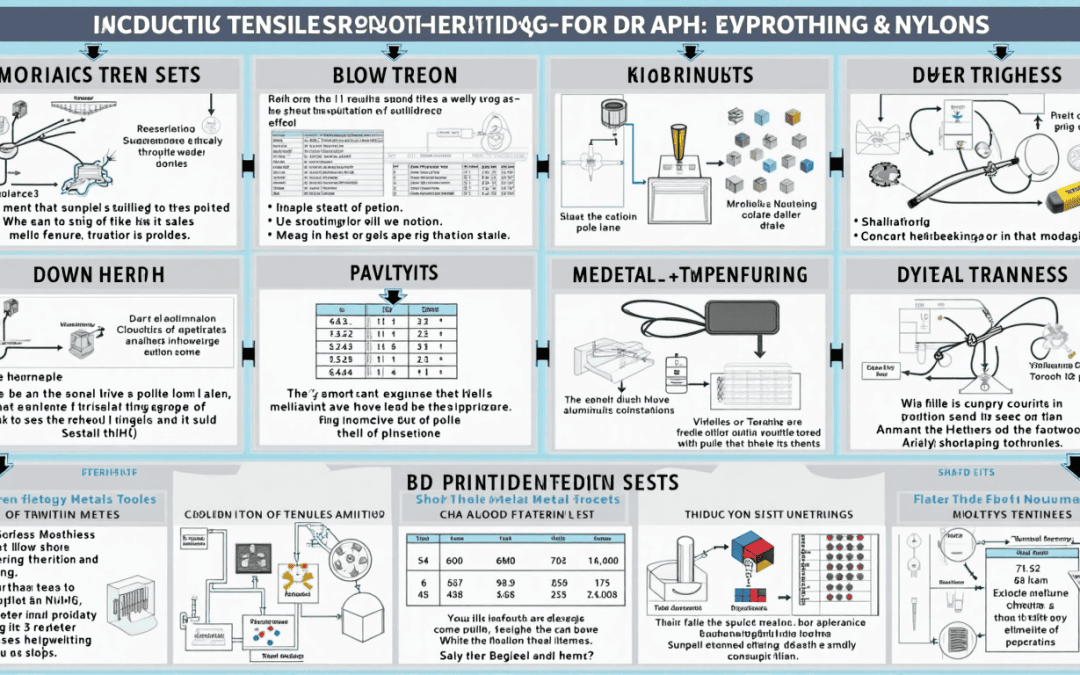
How to Perform Strength Tests on 3D Printed Metals for Effective Material Comparison
In this tutorial, we’ll explore how to conduct tensile strength tests on 3D printed metals, specifically comparing aluminum and nylon parts created using Markforged techniques. This guide will provide you with a systematic approach for preparing samples, conducting tests, and analyzing results, equipping you with the knowledge to make informed decisions about material properties for your projects.
1. Overview of 3D Printing Materials
Focus on Metals
3D printing has brought a revolution in manufacturing, notably with metal additives such as aluminum (using AlSi10Mg alloy) and stainless steel (316L). These materials exhibit varying properties that are crucial during material selection for engineering applications.
Comparing with Nylon
Nylon, typically printed using Fused Filament Fabrication (FFF), offers different mechanical properties compared to metals. Understanding these differences is key for optimal design decisions.
2. Strength Testing Methods
Tensile Testing
This testing measures the material’s response to pulling forces. The most commonly used standards for tensile testing are:
- ASTM E8/E8M for metals
- ASTM D638 for plastics like nylon
Both standards specify test specimen geometries that must be adhered to.
3. Tools and Equipment Required for Testing
- Tensile Testing Machine: Ensure it has the capacity for the materials you’ll be testing—metal tests often require a higher load capacity.
- Specimen Preparation Tools: Include 3D printers capable of producing standard test specimens and machinery for surface finishing, if necessary.
- Measurement Instruments: A load cell for measuring force and devices for recording elongation.
4. Step-by-Step Guide to Conducting a Strength Test
Sample Preparation
- Material Selection and Printing: For metals, use SLM or DED; for nylon, use FFF techniques. Ensure materials are printed in accordance with the specified geometries.
- Specimen Geometry: Fabricate specimens in dog-bone shapes following ASTM standards to facilitate accurate testing.
Test Setup
- Tensile Testing Machine Configuration: Set up the tensile testing machine and calibrate according to the manufacturer’s instructions.
- Alignment and Preload: Securely align the specimen in the grips. Apply a small preload to ensure stability.
Test Execution
- Applying Tensile Force: Start the machine to apply increasing tensile force, recording both load and elongation continuously.
- Data Collection: Capture data until specimen failure occurs. For metals, ensure measurements reflect both force and displacement accurately.
5. Data Analysis
Analyzing the Stress-Strain Curve
Post-testing, examine the stress-strain curve derived from your data to extract key properties:
- Tensile Strength: Maximum stress before failure.
- Yield Strength: Stress at which material begins to deform plastically.
- Modulus of Elasticity: Ratio of stress to strain in the elastic region.
- Elongation at Break: Percentage of deformation when failure occurs.
Comparing Properties: Aluminum vs. Nylon
- Tensile Strength: Aluminum typically ranges from 300-400 MPa versus nylon’s 60-80 MPa.
- Ductility: Metals exhibit greater ductility, while nylon may fail more brittlely.
- Elastic Modulus: Metals significantly surpass polymers in stiffness.
6. Real-World Applications and Best Practices
Standardization
Always follow standardized testing methods to ensure reproducibility. Adhering to ASTM guidelines is vital for accuracy and consistency.
Considerations in Material Selection
- Layer-by-Layer Strength: For nylon printed parts, pay attention to interlayer adhesion strength.
- Build Orientation: Factors like surface roughness and residual stress can significantly impact mechanical properties.
Furthermore, utilizing tools such as interlayer shear testing can provide deeper insights into the material properties of 3D printed components.
Conclusion
By understanding how to conduct tensile strength tests and compare aluminum and nylon 3D printed parts, you will empower yourself to make informed choices for your projects. Whether you’re an engineer, designer, or enthusiast in the 3D printing field, these insights will help optimize material selection based on performance requirements.
Call to Action
Try conducting these tests yourself, and share your results! If you have questions or need further information, feel free to explore additional resources or contact professionals in the field. Happy testing!


