
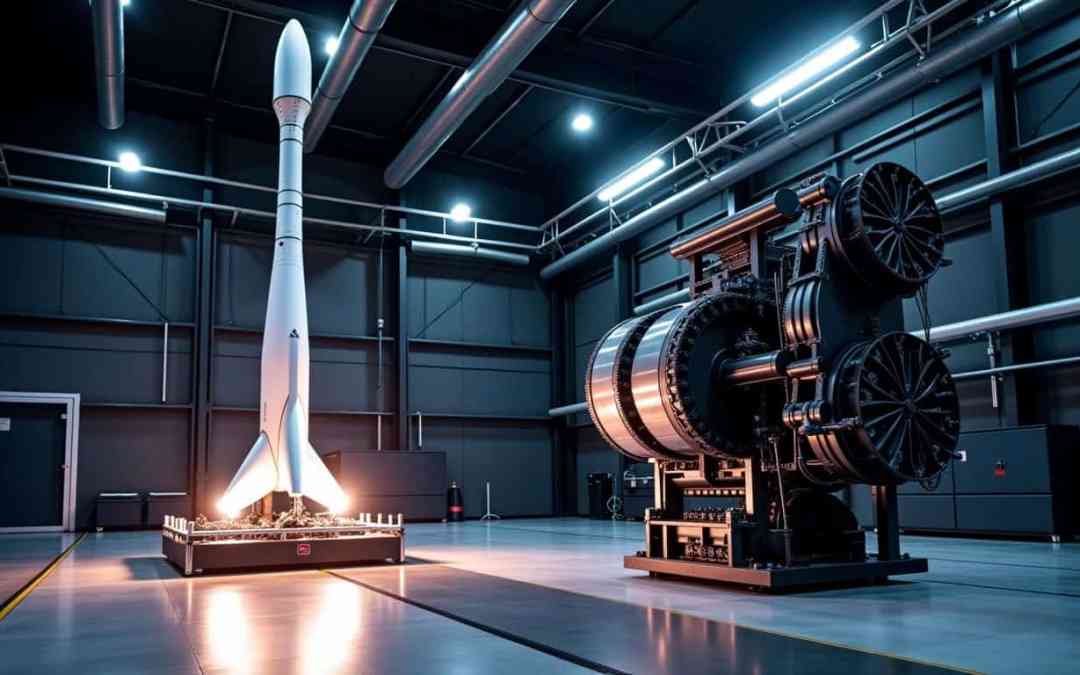
Rocket Revolution: Comparing Rocket Lab’s Neutron Launch Vehicle and Archimedes Engine
Introduction
In the fiercely competitive field of aerospace engineering, innovation travels at the speed of light. Rocket Lab, a key player in this arena, is making bold strides with its Neutron Launch Vehicle and the Archimedes Engine. These technologies are designed to enhance the efficiency, cost-effectiveness, and reusability of space launch services. In this post, we’ll delve into the nuances of these technological marvels, providing a comparative analysis tailored for engineers and aerospace enthusiasts looking to understand the future of space exploration.
Table of Key Differences
| Feature | Neutron Launch Vehicle | Archimedes Engine |
|---|---|---|
| Role | Medium-Lift Launch Vehicle | Engine powering the Neutron |
| Height | 43 meters | N/A |
| Payload Capacity | 13,000 kg to LEO | N/A |
| Engine Type | Two-Stage | Oxidizer-Rich Staged Combustion |
| Propellant | Liquid Oxygen & Methane | Liquid Oxygen & Methane |
| Reusability | Yes, with efficient return mechanisms | Up to 20 launches per engine |
| Diameter | 7 meters | N/A |
| Structure | Carbon Composite Structure | Extensive use of 3D Printing |
Performance Showdown: Which Idea Delivers More?
Neutron Launch Vehicle
The Neutron stands out with a height of 43 meters and a unique design that focuses on stability without the usual deployable landing legs. It can carry substantial payloads up to 13,000 kg to Low Earth Orbit, making it apt for medium-class launches including mega constellation and deep space missions. Its tapered and wide-based design enables efficient landings directly at the launch site, negating the need for costly ocean-based recovery.
Archimedes Engine
The backbone of Neutron’s performance capabilities, the Archimedes engine utilizes a cryogenic propellant mix of liquid oxygen and methane. Its oxidizer-rich staged combustion cycle provides improved performance and reusability. The engine’s design allows for precise control necessary during launch and reentry, and achieves a thrust of up to 200,000 lbf in a vacuum.
Key Takeaways: Both technologies prioritize performance, but the Neutron excels in payload capacity and design, while the Archimedes engine shines in propulsion efficiency.
User Experience: Navigating Ease of Use
Neutron Launch Vehicle
Engineered with a carbon composite structure, the Neutron is made using automated fiber placement technology, reducing production time. Its ‘Hungry Hippo’ design simplifies the second stage, making it lighter and improving satellite deployment efficiency. These features aim to make the Neutron intuitive for both operation and manufacturing.
Archimedes Engine
The Archimedes engine, through its extensive use of 3D printing, offers a more efficient manufacturing process. This approach reduces production costs and time significantly, potentially simplifying the assembly procedure for engineers and technicians.
Key Takeaways: While the Neutron offers a more user-friendly experience in terms of deployment and production, the Archimedes engine enhances manufacturing efficiency.
Cost Analysis: Getting the Best Value
Neutron Launch Vehicle
Designed for cost-effectiveness, the Neutron’s reusable design cuts down on production and launch costs. Its ability to return to the launch site reduces additional expenses related to recovery.
Archimedes Engine
The use of 3D printing and efficient design principles in the Archimedes engine reduces development and production costs, while its reusability ensures long-term operational savings.
Key Takeaways: Both innovations are cost-effective, but the Neutron’s holistic approach to reusable infrastructure offers a broader scope of savings.
Long-Term Support: Reliability Over Time
Neutron Launch Vehicle
With Rocket Lab’s advanced facilities and focus on rapid production ramp-up, the Neutron promises extensive support and maintenance. The integration of AFP technology ensures consistency and reliability in long-term use.
Archimedes Engine
The planned infrastructure for production and testing at NASA’s Stennis Space Center and other facilities ensures that the Archimedes engine will receive continuous updates and improvements.
Key Takeaways: Reliability and support are central to both products, but the Neutron benefits from Rocket Lab’s robust production infrastructure.
Putting Ideas Into Practice: Real-World Applications
Neutron Launch Vehicle
Targeted for the mega constellation market and deep space missions, Neutron is expected to impact various projects from satellite deployments to human spaceflight, making it versatile for commercial and research applications.
Archimedes Engine
Its precise throttle control and ability to perform complex orbital maneuvers make the Archimedes engine ideal for missions requiring high maneuverability, including satellite adjustments and extended missions.
Key Takeaways: Both technologies have strong real-world applications, with the Neutron offering broader mission capabilities.
Weighing the Advantages and Disadvantages
Neutron Launch Vehicle
Pros:
- High payload capacity
- Innovative reusable design
- Cost-effective launch solution
Cons:
- Scheduled for future deployment, pending proof of innovation
Archimedes Engine
Pros:
- High thrust and efficient design
- Focus on reusability
- Cost-effective manufacturing
Cons:
- Complexity in cutting-edge propulsion systems
Key Takeaways: Neutron and Archimedes both offer significant advantages with minimal drawbacks, projecting a promising future in aerospace technologies.
Final Verdict: Choosing the Right Idea for You
Summary
Both Rocket Lab’s Neutron launch vehicle and the Archimedes engine represent significant advancements in space technology. Neutron focuses on innovative design for payload efficiency and cost reductions, while Archimedes provides sustainability and effective propulsion.
Recommendations
For those interested in launching medium-class payloads with complex satellite deployments, Neutron offers a comprehensive solution. Conversely, the Archimedes engine is ideal for those seeking efficient and reliable propulsion systems in advanced space missions.
Call to Action
We invite you to engage with this comparison, share your insights, and explore how these technologies align with your space mission objectives. Leave comments, share your experiences, or delve deeper into the possibilities that Rocket Lab offers through its remarkable innovations.


